Chris Knight's Blog
December 21, 2023
Bruce Nevin responds to 'The Two Chomskys'
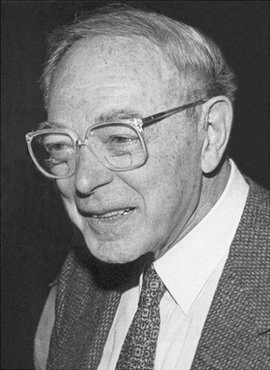
[Image: Zellig Harris]
Chris Knight’s explanation for why Noam’s successive models of language are asocial, abstract, and impracticable may have merit. Who can say? Attribution of intent is a dicey business. But there are other sources of the abstractness and uselessness.
Chris, you said “The essence of science is abstraction.” This is wrong. Science proceeds by generalization from particulars to principles. Generalization is not the same as abstraction. To confuse these is a category error.
Now, mathematics in itself is an abstract system, though its applications are not. This is perhaps the source of the confusion that leads to this category error. "Mathematics may be applied in [a] complex situation to figure out" how a principle of science works out in detail, but "very little mathematics is needed for the simple fundamental character of the basic laws." I am quoting here from Richard Feynman’s lecture “The Relation of Mathematics to Physics”, which is the second lecture printed in The Character of Physical Law (1965 London: BBC; 12th printing 1985 Cambridge: MIT Press). Mr. Feynman is, I think, a sound reference point for our physics envy.
The law of gravitation was not found by abstraction, it was found by study of a great deal of data of various kinds and finding a succinct way to characterize a general property of them. The mathematical statement of that generalization is an application of mathematics. Op. cit., the first lecture. The complicated facts of apparent planetary motions was explained by complicated calculations deriving from this principle ― again, applied mathematics. The statement of the principle itself is quite simple. Followers of Ptolemy had a pretty accurate way of explaining planetary motions by complicated calculations of cycles and epicycles. This was based on more complicated assumptions involving nested spheres, with less complete and careful observational data. The law of gravity that Newton worked out expresses ― ‘captures’, as some folks like to say ― a generalization over a very much larger domain of observations and data from which predictions have been made about things not yet observed but subsequently confirmed. But the law of gravity is not an abstraction, it is a generalization expressed using the abstractions of mathematics. And to the present point, Newton did not posit the principle first and then look for data, nor did he reach into mathematics or logic for a pre-existing system of abstract statements that was analogous to the movements of planets and then look for anecdotal planetary data to support or refute various candidate mathematical models. Science does not work that way. And Noam is no scientist.
Logicians and mathematicians developed the syntax of logic as a formal system analogous to language. Noam has assumed that those pre-existing systems, with their crystalline tidiness, must be the underlying Real form of language in all its messiness. That assumption leads to abstractness and uselessness.
A little tour of the history
Zellig Harris developed the science of language from a little mathematics, set theory and linear algebra. Descriptive linguistics identifies sets of morphemes and words generalizing their mutual privileges of occurrence—what can co-occur with what. This is called distributional methodology, and in the eclipsing polemics of the 1960s was derided as 'taxonomic'. Algebraic symbols may represent these sets, e.g. N for nouns and V for verbs, and subsets of them. The sets and subsets are generalizations of distributional data, and the symbols are not abstractions, they are abbreviatory representations of generalizations. A 'sentence form' is a sequence of these representing a set of sentences that conform to the given sequence of form-classes (sets of words) and constants (individual words), as e.g. the sentence form N t be V-en by N (where t is the set of tense morphology). In linear algebra, 'transformation' is one name for a mapping from one (sub)set to another. Harris's transformations were mappings from sentence-form to sentence-form.
Such was the world of transformational analysis that Zellig had been teaching since the late 1930s when Noam became his student in 1945. Zellig was then 36, Noam 17. The Harris and Chomsky families were friends, immigrants from Odessa. According to Naomi Sager, Zellig had been Noam's protector (her word). Noam's father had asked Zellig to take Noam under his wing. Zellig sponsored the young undergraduate to logicians Richard Martin and Nelson Goodman and encouraged their interest in him.
During that period, Zellig was publishing a series of 'structural restatements' of descriptive grammars of languages. This was a test of the comprehensiveness and consistency of his systematization of descriptive methods which had appeared piecemeal in various papers and had been circulated in the book manuscript titled Methods in Descriptive Linguistics. As stated, it was also a demonstration that beneath their relatively superficial differences of notation and style these descriptions were commensurate with each other, kind of analogous perhaps to prenex normal form in logic. He indicated ramifications and applications of this which are out of scope for this overview.
It is important to note that ENIAC, the first demonstration of an electronic general-purpose digital computing machine, was right there at Penn in 1945. (Analog computers had been around for some time.) Mathematical logic is foundational to the architecture, functioning, and programming of digital computers. The computational metaphor, the assumption that the human brain is analogous to the hardware and software of a digital computer, very quickly pervaded many fields as a background assumption. It enabled the ‘cognitive revolution’ in psychology very much in tandem with the ‘generative revolution’ in linguistics.
Cognitive™ psychology folks say cognition is a matter of symbolic rule manipulation and point down the hall where their friends the "Generative™ linguists will talk about how language is an example.
Generative™ linguists point back down the hall to their friends the cognitive psychologists for confirmation of the psychological reality of abstract rule systems for language.
As a student of Martin and Goodman, Noam became deeply involved with the grammar of symbolic logic as developed by Carnap and others. Logic is concerned with the form of inferences that preserve truth value irrespective of the lexical or semantic content. The syntax of logical systems employs rules that manipulate symbols which are abstract. They are not derived from generalizations of data, and to work with them no particular referents for the symbols need be stated. Noam has said that he tried to find a way that Zellig’s distributional methods could lead to a formal grammar of this sort, that he was frustrated that he could not, and that therefore he developed transformational grammar. In the various retellings of the Origin Story, the timing of transitions and influences have become obscure. Indications may be seen in the difference between his descriptive statement of the morphophonemics of Modern Hebrew and the radical revisions of it that he made in the early 1950s under the influence of a new friend, the logician Jehoshua Bar-Hillel.
It would not be surprising that Noam took Zellig’s structural restatements as a model of how one does linguistics. Zellig gave Noam data and descriptive analyses which he had done of both historic and modern stages of Hebrew, some of which was published. Noam’s undergraduate and MA study of Hebrew morphophonemics was a restatement of that material. (Zellig had lived extensively in Israel and was fluent in the language; Noam had not, and was not and is not fluent in Hebrew, but says he did some informant work.)
Noam’s phrase-structure grammar (PSG) is a formalization of (a simplified form of) Leonard Bloomfield's descriptive method called immediate constituent (IC) analysis using 'rewrite rules', an invention that tragic figure of mathematics, Emil Post; e.g. S → NP VP. IC analysis derives from the assertion in gestalt psychology that people intuitively know how to analyze a complex situation into components, each of which they might further analyze. In IC analysis a sentence was first divided into a noun phrase and a verb phrase, and these were further subdivided step by step, until individual words and morphemes are reached. (Zellig (1946) had reformulated the method as word-expansions, which Noam adapted to PSG formalisms only many years later as X-bar notation.) On the analogy of Zellig’s sequences of form-class labels in descriptive linguistics (labels like N and V for classes of words), Noam provided symbols for classes of phrases, e.g. VP for a verb phrase of indeterminate length. The steps of analysis are turned around to steps of synthesis or ‘generation’, beginning with the abstract symbol S for 'sentence'. The sequence of steps is represented atemporally in the form of a directed, rooted tree graph with S at the root, abstract phrase labels at the preterminal nodes, and sequences of form-classes at the terminal ends of the branches. (Or alternatively with labeled brackets, but that notational variant is scarcely ever used.)
All of this probably is utterly familiar material to anthropologists and philosophers as well as to linguists. The reason for recapitulating is to exemplify the distinction between generalization and abstraction. In the formalization of IC analysis, each phrase is represented by a symbol which (except in the simplest cases just prior to terminal symbols) is defined as a string of other such phrase-symbols, with no principled limit on the depth of the resulting pseudo-hierarchy.
At this stage of development, PSG could still claim that the symbols for classes of phrases correspond to generalizations over language data. But the as with the abstract symbols of mathematical logic no referents are specified for the preterminal symbols. There is no lexical content and no semantic value until the terminal symbols have words associated with them, particular members of the form-classes designated by the form-class labels on the lowest branches of the tree.
Soon, the requirements of the rule systems led to frank abstraction and the retroactive valorization of abstractness for its own sake.
Noam’s transformations were a restatement of Zellig's transformations, formulated as operations on PSG trees rather than as algebraic mappings from subset to subset of sentences. Language data took a subsidiary role, anecdotal examples supporting or contradicting some particular rule formulation. At center stage instead were the trees themselves and the rules specifying the operations on trees. As work on this project of restatement proceeded, transformational mappings were empirically found which such rules could not reach without positing abstract symbols with no direct counterpart in actually encountered or plausible strings of words. I will not illustrate the point, the literature speaks for itself.
For example, an enormity disputation has concerned rules that move branches of trees from one node to another, and metarules constraining such movement. In Zellig’s analysis, transposition plays a very small part, and the appearance of movement falls out naturally from reductions coincident with word entry in the construction of a sentence. I have written about that elsewhere.
Abstractness became a cardinal virtue, the distributional basis of all of this was denied and denigrated as ‘taxonomic linguistics’, Noam scoffed at such concerns as ‘data bound’. Instead of writing descriptions of languages, students turned to the mining of fragmentary descriptions for anecdotal examples and counter-examples respecting the properties of Universal Grammar. This is why there are no (zero) broad-coverage Generative™ grammars of any language.
Results in corpus linguistics have long cast all this in doubt. The work of Maurice Gross and colleagues is not the earliest, though his 1990 “On the failure of Generative Grammar” is certainly explicit (Language 55.4:859-885). Today’s Large Language Models (LLMs) have an exclusively distributional basis, an existence proof of Harrisian methodology. A naive computational metaphor is still foundational in Cognitive™ psychology and Generative™ linguistics, but support for this metaphor in neuroscience, never more than presumptive at best, has dwindled to virtually zero over the past decade or two. The brain does not manipulate symbolic representations of the world by rules and operations analogous to those that specify the syntax of symbolic logic and programming 'languages.'
Universal Grammar rests on a 3-legged stool: Paucity of data, cognitive deficiency, and abstract complexity. The great complexity and abstractness of Generative™ grammar is unnecessary, and this has been demonstrated in a number of ways. Infants have been shown to have far greater cognitive capacities than were attributed to them in the 1950s and 1960s when Noam's ideas set. And children are exposed to forms of language ('motherese', etc.) which are explicitly supportive in learning regularities and generalizations and their exceptions and in correcting overgeneralizations and other departures from current norms. Statistical learning theory provides a good account of language (and other) learning as well as of LLMs. The amazing architecture of the cerebellar system is probably instrumental.
No doubt Captains both military and industrial wanted the Star Trek scenario, "Computah! What is the disposition of the enemy in quadrant three, their likely strategy, and our best response?" The generalization of LLMs from large language corpora to nonverbal data of many kinds may afford them this ― if these 'AI' systems can be assured truthful. But I don’t think a case could be made that Noam’s long animosity to Zellig’s work was to delay acquisition of powers we cannot safely manage. Hillary Putnam once started to tell me he had an idea what was behind it, but then cut himself off, saying he did not want to risk losing Noam’s friendship. I have speculated too much about this elsewhere, while trying to avoid psychologizing. Who can say? Attribution of intent is a dicey business. And as my grandfather used to say, people are funny monkeys.
Bruce Nevin, December 21, 2023


December 8, 2023
Sources for ‘The Two Chomskys’, Aeon magazine
My new article for Aeon magazine does not include all the sources that I would have used in a properly footnoted article. Here are the sources I had to leave out:
Wiesner was a self-described ‘military technologist’ who had helped set up the Sandia nuclear weapons laboratory and was now the director of MIT’s Research Laboratory of Electronics. ...
As he has confirmed in various interviews, MIT was ‘90 per cent Pentagon funded’, ‘almost everybody’ was involved in defence research and he himself ‘was in a military lab’. ...
He refused to get security clearance and made no attempt to understand electronic devices, describing himself as a ‘technophobe’ who can’t even handle a tape recorder. ...
In 1971, Gaines referred to the kind of language research that Chomsky had pioneered in these words: ‘We sponsored linguistic research in order to learn how to build command and control ...
As many as ten of Chomsky’s students played ‘a key role’ in MITRE’s linguistics research – research that was always intended to enhance ‘the design and development of US Air Force-supplied command and control systems.’ ...
MITRE’s role in that war included overseeing the technical side of the McNamara Line. ...
As Partee says: ‘For a while, the Air Force was convinced that supporting pure research in generative grammar was a national priority ...
Researchers at the System Development Corporation were also trying to develop machines that could understand English commands, examples being ‘Blue fighter go to Boston’ ...
Evidently, these generals were following in the tradition of General Eisenhower who, in 1946, directed that military scientists must be given ‘the greatest possible freedom to carry out their research’.
Consider his response when his wife Carol began working on an Air Force project in 1959. This MIT-based project was intended to enable people to communicate with computers in ‘natural language’, one aim being to enhance ‘military command and control systems’. We have it from the project’s head, Bert Green, that Noam was ‘very nervous’ about all this ...
Take MIT’s vice-president in the early 1960s, General James McCormack. He supervised the university’s Center for Communication Sciences which naturally included MIT’s linguists. ...
After all, he was the general who had supervised the creation of the Pentagon’s entire nuclear weapons stockpile. ...
Or take Jerome Wiesner, who not only recruited Chomsky to MIT but who, in 1960, co-founded the university’s linguistics programme. ...
But, again, I doubt it considering he played a significant role in setting up the Pentagon’s entire nuclear missile program as well as its computerised air defence systems. ...
According to one of his MIT colleagues, Wiesner was well-suited for the role as he was ‘soaked’ in military work such as ‘submarine warfare, air defense, atom bombs ...
By the mid-1960s Wiesner’s air defence research at MIT had evolved into what Life magazine described as ‘the backbone of the American field communications in Vietnam’. ...
Meanwhile, various laboratories at MIT continued to research helicopter design, radar, smart bombs and counter-insurgency techniques for use in that brutal war. ...
By 1968, he admitted not only that he feel ‘guilty’ for waiting so long before protesting against the Vietnam War, but that he felt ‘guilty most of the time’. ...
As Chomsky himself says, academics and students were moving between MIT’s campus and its off-campus military labs ‘all the time’.
But to imply that MIT’s natural scientists weren’t also complicit is quite wrong, especially when we know that Wiesner recruited eleven natural scientists from MIT to work on the McNamara Line. ...
On this basis, bizarrely, Chomsky has now extended his claims to the languages of extraterrestrials, arguing that Universal Grammar may prove to be universal ...
Some years ago, the prominent evolutionary linguist and child psychologist Michael Tomasello summed up the prevailing consensus by observing that Chomsky’s ‘universal grammar appears to have reached a final impasse.’
Chris Knight
Why did Chomsky work with a Pentagon contractor during his retirement?
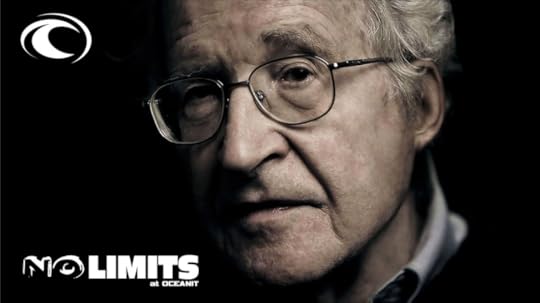
Noam Chomsky’s admirers are often surprised to hear that he spent the first decades of his MIT career working for the Pentagon. Many will be even more surprised to hear that he continued to work with a Pentagon contractor even after retiring from MIT.
In 2021, the military-funded research company Oceanit hosted an online lecture by Noam Chomsky. The lecture was introduced by Oceanit’s CEO, Patrick Sullivan, followed by its Director of Artificial Intelligence, Dr. Jeffrey Watumull.
Introducing the eminent linguist, Dr. Watumull explained:
[Chomsky] has worked with with us at Oceanit on AI programs to push precise ideas to absurd but successful conclusions and applications in this process that [Patrick Sullivan] describes as Intellectual Anarchy.
Chomsky repeated this striking phrase in his lecture, telling his audience:
What's needed is Patrick's Intellectual Anarchy, [a] willingness to challenge established doctrine with better ideas.
Intellectual Anarchy is also the title of Sullivan’s 2020 book – a book written to describe the ‘Intellectual Anarchy methodology followed at Oceanit’.
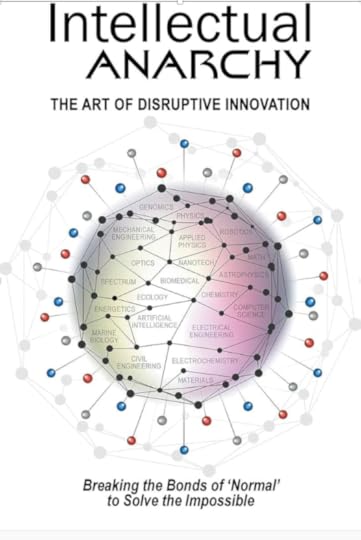
More recently, in October 2023, Sullivan gave a talk to a US Army roundtable on ‘Intellectual Anarchy’ and the need for ‘disruptive innovation’. Oceanit’s report of this talk points out that:
With ongoing conflicts and upheavals in places like Ukraine and Israel, gaining a competitive edge through disruptive innovations within the Army could act as a deterrent to other nations contemplating military aggression.
This whole concept of Intellectual Anarchy is reminiscent of Jerome Wiesner’s enthusiasm for the ‘anarchy of science’, ‘scientific anarchy’ and ‘planning for anarchy’ – all of which he saw as crucial in order to encourage the ‘free’ environment necessary for scientific creativity. As readers may know, Wiesner was the influential military scientist and lab director who in 1955 first recruited Chomsky to MIT.

In 2021, Patrick Sullivan contributed to another book, AI at War: How Big Data, Artificial Intelligence, and Machine Learning Are Changing Naval Warfare. In this book, Sullivan and his Oceanit co-authors (which presumably include Watumull) made several references to Chomsky’s work and closed their contribution with these words:
… the beginning of anthronoetic AI could be the end of war, and that surely is the ultimate objective of the US military.
Although this anthronoetic, or human-like, AI is inspired by Chomsky’s linguistics, it would be hard to think of a sentence that contrasts more with Chomsky’s passionately anti-militarist politics. Yet this didn’t stop Chomsky working with Oceanit. As the company’s website explains:
Oceanit has been working with Professor Chomsky for around five years, developing a linguistics-based Artificial Intelligence that we affectionately called NoME. NoME stands for Noetic Mathematical Engine, but is pronounced in the same way as its namesake.
Other Oceanit webpages reveal that this NoME system is intended for use in ‘war games’ and ‘cyberwarfare’. We also learn that the company has worked on ‘hundreds’ of US Government contracts. It appears that at least 90 of these were military contracts. Indeed, Sullivan himself says that Oceanit’s AI systems are ‘mostly in industrial and military applications’.
The actual Pentagon contracts that use this ‘anthronoetic AI’ are still more revealing. One 2020 contract is entitled: ‘Navy Technology Acceleration - Machine Learning (ML) and Artificial Intelligence (AI) to develop capabilities and impact mission success’. The abstract for this contract is as follows:
Consistent with the Navy objective, Oceanit is working from foundations in cognitive science, philosophy, and the mathematics of computability theory to create anthronoetic AI (a.k.a. strong AI): human-level/human-style AI capacitated with the linguistic competence to generate causal explanatory models via the Popperian philosophy of critical rationalism: given a set of big or small data, Oceanit’s AI – named NoME (the noetic mathematical engine) – constructs a Chomskyan ‘grammar’ (i.e., explicit theories/programs) to model causal relations, thereby transcending (but obviously including) descriptions that answer what is being observed, transforming data into evidence for/against conjectured explanations that answer why and how the data – or, to be precise, the phenomena underlying the data – exist and behave.

According to the contract, Jeffrey Watumull is the ‘senior scientist’ on the project.
Dr. Watumull was, apparently, Chomsky’s last PhD student. By 2017, he had become the ‘senior scientist’ on a million-dollar US Army project to develop a ‘virtual staff element … to provide a commander both organizational and operational recommendations to meet mission objectives.’
Today, Watumull is a 'principal investigator on programs for DARPA', the Department of Defense’s Advanced Research Projects Agency.
Although it is possible that Chomsky simply overlooked Watumull’s involvement with the US military, this is unlikely considering Chomsky has worked with Watumull on a co-authored book, Life, Information, Language, Intelligence, as well as on several linguistics articles.
Indeed, the author description for one of these articles explains that Watumull is presently a ‘principal investigator’ on both a DARPA seedling and an Office for Naval Research research proposal.
Another Watamull/Chomsky article is referenced in a 2022 US Navy proposal to ‘develop a human-level/human-style artificial intelligence (AI) that can perceive and explain signals ... to achieve long-range detection, tracking, and classification of maritime surface and subsurface contacts.’
This proposal – which explicitly invokes ‘Chomskyan grammar’ – concludes with the hope that it will ‘complete final testing and perform necessary integration and transition for use in antisubmarine and countermine warfare, counter surveillance … and future combat systems.’
So what’s going on here? Why has Chomsky continued to work with someone who is so clearly involved with the US military — despite his own passionate and heartfelt opposition to that same military? Could it be that in his eighties and nineties, Chomsky has been manipulated by a younger and smarter colleague?
I doubt it! Anyone who has watched Chomsky’s numerous YouTube lectures in recent years will know that he retained his wits and intelligence right up until the summer of 2023. Although he seemed to be letting Watumull do much of the writing, Chomsky was still quite capable of authorising texts written in his name.
So, could it be that Chomsky just doesn’t care if his linguistic theories are being used to benefit the US military? Perhaps he believes, as does Dr. Watumull, that it would be preferable for the military to work with ‘responsible defense contractors’ – i.e. those who are working on intelligent Chomskyan AI, as opposed to unintelligent AI. Again, I doubt it.
Rather, it seems, having become accustomed to Pentagon funding for so long – and having defended this funding for so long – Chomsky just got used to the risk that his work might one day prove useful to the military. The fact that his linguistics has always proved completely unworkable for the Pentagon, or indeed anyone else, has only reinforced Chomsky’s willingness to take such a risk.
March 31, 2020
Covid Crisis Reading List

In the plethora of commentaries on the present crisis these writers stand out:
Dr. Richard Horton:'Scientists have been sounding the alarm on coronavirus for months. Why did Britain fail to act?' (The Guardian)'The editor of the Lancet speaks out on Corona Virus' – Labour Briefing
'In defence of Richard Horton (and Karl Marx)' – Labour Briefing
Mike Davis:'The Coronavirus crisis is a monster fueled by capitalism' (In These Times)
'Mike Davis on the Politics of Coronavirus' (Jacobin). In this video, Davis makes these crucial points:
Social distancing: yes! But not at the price of protest. There's no reason that a single line of ten people holding picket signs, standing three metres apart, is endangering anybody's life. …
[We need] to take leadership from unionized frontline medical workers. ... Nurses are the social conscience of this country ... We have to broaden the definition of who are frontline medical workers because it also includes nursing home staff, janitors, people who pick up garbage. It includes the Amazon warehouse workers without protection.
These people are not only our heroes right now - we should broadcast in every way our solidarity - but as Marxists, as socialists, we should recognize their historical agency. They've become an immensely powerful progressive force, working-class force, for change.
Dr. Yaneer Bar-Yam:
'The UK's coronavirus policy may sound scientific. It isn't' (The Guardian)
'We need an immediate five-week national lockdown to defeat coronavirus in America' (USA Today)
Nat Dyer:‘Complex modelling fuelled the financial crisis. Now it has delayed action on COVID-19' (openDemocracy)
‘Noam Chomsky: Coronavirus - What is at stake?’
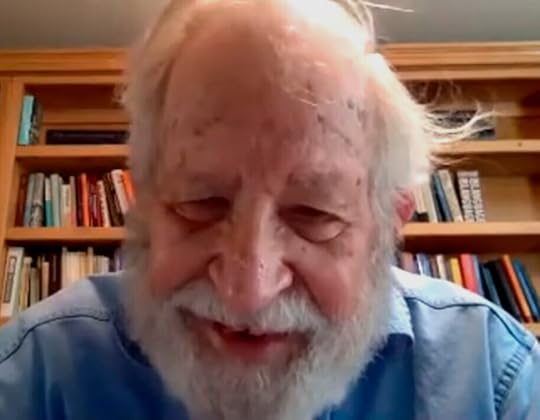
The coronavirus is serious enough but it's worth recalling that there is a much greater horror approaching. We are racing to the edge of disaster, far worse than anything that's happened in human history. And Donald Trump and his minions are in the lead in racing to the abyss.
In fact there are two immense threats that we are facing. One is the growing threat of nuclear war, which the US has exacerbated by tearing up what's left of the arms control regime. And the other, of course, is the growing threat of global warming.
Both threats can be dealt with, but there isn't a lot of time. The coronavirus is horrible, and can have terrifying consequences, but there will be recovery. While for the others there won't be recovery. It's finished. If we don't deal with them, we're done. …
Bear in mind that with current tendencies, if they persist, South Asia is going to be unliveable in a few decades. The temperature reached 50 degrees centigrade in Rajasthan this summer - and it's increasing.
The water’s running out, it could get even worse. There's two nuclear powers [in the region], they're going to be fighting over restricting reduced water supplies.
I mean the coronavirus is very serious, we can't underestimate it, but we have to remember that it's a fraction, small fraction of major crises, that are coming along. They may not disrupt life to the extent that the coronavirus does today, but they will disrupt life to the point of making the species unsurvivable - and not in the very distant future.
So we have many problems to deal with: immediate ones, coronavirus is serious, it has to be dealt with and much larger ones, vastly larger ones, they're looming. …
We have handed over our fate to private tyrannies, called corporations, which are unaccountable to the public: in this case, big Pharma. And for them making new body creams is more profitable, than that of finding a vaccine that will protect people from total destruction. …
This coronavirus epidemic could have been prevented. The information was there to be read. In fact it was well known in October 2019, just before the outbreak.
There was a large scale simulation, high level simulation in the United States, in the world, of the possible pandemic of this kind. Nothing was done. Now the crisis was then made worse by the treachery of the political systems which didn’t pay attention to the information that they were aware of.
On December 31, China informed the World Health Organisation of pneumonia-like symptoms with unknown etiology. A week later, some Chinese scientists identified it as a coronavirus. Furthermore they sequenced it and gave the information to the world.
By then virologists and others who were bothering to read World Health Organization reports knew that this was a coronavirus and they knew how to deal with it. Did they do anything? Well yes, some did. The countries in the area - China, South Korea, Taiwan, Singapore - began to do something and they have sort of pretty much, it seems, contained at least the first surge of the crisis. In Europe, to some extent, that's happened. Germany … [has achieved] a reasonable containment.
Other countries just ignored it. The worst of them was the United Kingdom. And the worst of all was the United States, which happens to be led by a lunatic who says, one day, ‘there's no crisis, it's just like flu’, the next day, ‘it's a terrible crisis, I knew it all along’, the next day ‘we have to give in to business, because I have to win the election.’
The idea that the world is in these hands, is shocking. But the point is that it started with a colossal market failure [and] fundamental problems with the socio-economic order, made much worse by the neoliberal plague. And it continues because of the collapse of the kinds of institutional structures that could deal with it, if they were functioning.
September 19, 2019
THE TIMES HIGHER EDUCATIONAL SUPPLEMENT reviews 'The Responsibility of Intellectuals: Reflections by Noam Chomsky and others after 50 years''
September 19, 2019 By Matthew Reisz (See original version at THES website HERE)
Now 90 years old, Noam Chomsky remains one of the best-known intellectuals and critics of American foreign policy in the world. One of his first major interventions, from the time of the Vietnam War, was his celebrated essay “The Responsibility of Intellectuals”. At least for those sympathetic to his politics, it remains a classic statement of the case for academics and others to speak truth to power and to resist the ever-present pressures and temptations of being co-opted. The essay formed the subject of a conference at UCL marking its 50th anniversary in 2017, at which activists and academics explored what we can still learn from it as well as where it needs rethinking.
The results have now been published in a collection, edited by Nicholas Allott, Chris Knight and Neil Smith, The Responsibility of Intellectuals: Reflections by Noam Chomsky and Others after 50 Years, which is available for sale but can also be downloaded for free from UCL Press. Chomsky’s broad position is well known, but he remains reliably provocative. Asked over a video link to the conference about the boycott, divestment and sanctions campaign against Israel, for example, he expressed support for “efforts to block all military aid to Israel” but pointed to “a strong and obvious taint of hypocrisy” in plans for academic boycotts: “If we’re boycotting Tel Aviv University, why not boycott Harvard and Oxford, let’s say, which are involved in much more serious crime?”
The issue of universities’ relationship with power is also central to a ferocious intellectual dispute at the heart of the book. The contribution by co-editor Chris Knight, a research fellow in anthropology at UCL, reflects on why “many people – including myself – find [Chomsky’s] political contributions so inspiring”. Since Chomsky made his career from 1955 at the Massachusetts Institute of Technology, Knight goes on, he was working “within the belly of the beast” and “as both an insider and an outsider of the US military-industrial complex”. As a result, he “breaks the mould by speaking truth to power even when denouncing the activities of his own colleagues and friends”.
This may sound like praise, even if Knight also expresses reservations about Chomsky’s celebrated work in linguistics. Given all the other things going on at MIT, he argues, Chomsky had moral scruples that “impelled [him] to clarify that his work was restricted to pure science”. He therefore distanced himself from potential military involvement by producing abstract “models of language” that were unrealistic, since “completely removed from social usage, communication or any kind of technological application”.
In a savage response, Chomsky decries the “vulgar exercises of defamation” Knight has allegedly produced here and elsewhere, calling them valueless “except, perhaps, as an indication of how some intellectuals perceive their responsibility”. He would be quite able, he adds, to “detail how supportive ‘MIT’s managers’ were not only of me personally, but of the department generally, including all of us who were intensively engaged in political action, including very public resistance activities”.
Academic spats tend to be as long-lasting as they are acrimonious. Who can be surprised that Knight should go on to post a response to Chomsky’s response on his website?
November 28, 2018
Noam Chomsky’s 'The Responsibility of Intellectuals', 50 years on - Video of conference at University College London
Nicholas Allott (co-author of Chomsky, Ideas and Ideals) – Introductory remarks: https://mediacentral.ucl.ac.uk/Play/5829
Jackie Walker (former vice-chair of Momentum) – A black, Jewish activist’s take on the responsibility of intellectuals: https://mediacentral.ucl.ac.uk/Play/5830 (and Q&A: https://mediacentral.ucl.ac.uk/Play/5831)
Kriszta Szendroi (senior lecturer in linguistics at UCL) – Value-system and intensity; a tribute to the late Tanya Reinhart: https://mediacentral.ucl.ac.uk/Play/5832 and (Q&A) https://mediacentral.ucl.ac.uk/Play/5833
Milan Rai (author of Chomsky’s Politics) – The propaganda model and the British nuclear weapons debate: https://mediacentral.ucl.ac.uk/Play/5834 and (Q&A) https://mediacentral.ucl.ac.uk/Play/5835
Chris Knight (author of Decoding Chomsky) – Speaking truth to power from within the heart of the Empire: https://mediacentral.ucl.ac.uk/Play/5836 and (Q&A) https://mediacentral.ucl.ac.uk/Play/5837
Craig Murray (former UK ambassador to Uzbekistan) – The abdication of responsibility: https://mediacentral.ucl.ac.uk/Play/5838 and (Q&A) https://mediacentral.ucl.ac.uk/Play/5839
Noam Chomsky – Video from Arizona: https://mediacentral.ucl.ac.uk/Play/5840
To see Chris Knight's response to Chomsky's comments about MIT's war research, click HERE .
November 9, 2018
Fritz Newmeyer, Randy Allen Harris, Wolfgang Sperlich and others join the debate at Open Democracy
Chris Knight, 'Chomsky's choice: how the linguist's early military work led to a life of campaigning against the military.' (March 28, 2018)
Frederick Newmeyer, 'Chomsky's linguistics and military funding: a non-issue.' (April 15, 2018)
Chris Knight, 'Why Chomsky felt "guilty most of the time": war research and linguistics at MIT.' (April 24, 2018)
Randy Allen Harris, 'The history of science: unreliable narrators and how science moves on.' (May 9, 2018)
Chris Knight, 'Explaining Chomsky’s strange science: a reply to Randy Allen Harris' (6 September, 2018)
Les Levidow, 'The Chomsky paradox: the responsibility of intellectuals, revisited' (6 September, 2018)
David Golumbia, ‘The Chomskyan revolution and the politics of linguistics’ (25 September, 2018)
Wolfgang Sperlich, ‘The latter day critics of Noam Chomsky’ (15 October, 2018)
Peter Jones, ‘Gaining perspective on Chomsky’s linguistics’ (8 November 2018)
Randy Allen Harris, ‘A response to Wolfgang Sperlich on “The latter day critics of Noam Chomsky”’ (8 November 2018)
Fritz Newmeyer, Randy Allen Harris, Les Levidow, David Golumbia, Wolfgang Sperlich and Peter Jones join the debate
Chris Knight, 'Chomsky's choice: how the linguist's early military work led to a life of campaigning against the military.' (March 28, 2018)
Frederick Newmeyer, 'Chomsky's linguistics and military funding: a non-issue.' (April 15, 2018)
Chris Knight, 'Why Chomsky felt "guilty most of the time": war research and linguistics at MIT.' (April 24, 2018)
Randy Allen Harris, 'The history of science: unreliable narrators and how science moves on.' (May 9, 2018)
Chris Knight, 'Explaining Chomsky’s strange science: a reply to Randy Allen Harris' (6 September, 2018)
Les Levidow, 'The Chomsky paradox: the responsibility of intellectuals, revisited' (6 September, 2018)
David Golumbia, ‘The Chomskyan revolution and the politics of linguistics’ (25 September, 2018)
Wolfgang Sperlich, ‘The latter day critics of Noam Chomsky’ (15 October, 2018)
Peter Jones, ‘Gaining perspective on Chomsky’s linguistics’ (8 November 2018)
Randy Allen Harris, ‘A response to Wolfgang Sperlich on “The latter day critics of Noam Chomsky”’ (8 November 2018)
October 24, 2018
REVIEW OF 'DECODING CHOMSKY' IN THE TIMES LITERARY SUPPLEMENT
Double AgentSome contradictions between linguistic and political philosophy
Times Literary Supplement, October 6, 2017
Noam Chomsky has led an unusually public double life, as both a ground-breaking linguistic scholar and a trenchant political polemicist. Over the years he has taken pains to stress that these two métiers have occupied wholly distinct spheres, but Chris Knight begs to differ: Decoding Chomsky: Science and revolutionary politics avers that Chomsky’s linguistics work was inextricably bound up in politics, often in ways that ran counter to his left-wing beliefs. If the suggestion that Chomsky was ethically compromised by his decades-long association with the Massachusetts Institute of Technology – with its deep connections to the US military-industrial complex – is hardly new, Knight’s contention that his linguistic theories are implicitly reactionary in themselves is altogether more intriguing.
At the heart of Chomsky’s theory is the proposition that our capacity for language and the basic structures that underpin it are innate. Knight, who is an anthropologist at University College London, traces the genealogy of this idea back to the revolutionary futurism of the Russian formalists. The poetic visionary Velimir Khlebnikov (1885-1922) believed in the existence of a universal language rooted in laws of nature – a kind of skeleton key whereby each speech sound, vowel or consonant, has its own intrinsic meaning, transcending national or local variations; this concept resurfaced in the work of Roman Jakobson (1896-1982), who conceived of a universal alphabet of ‘distinctive features’. Knight dismisses this as scientifically unfounded ‘delightful nonsense’; what interests him is how these ideas, which originated in a vision of anti-militarist, internationalist utopianism, found themselves enlisted in the service of US geo-strategic policy in the latter half of the twentieth century.
By repudiating the then-prevalent behaviourist ideas associated with B. F. Skinner – which prioritized environmental factors in the shaping of language and culture – Chomsky played his part in what would come to be known as the ‘cognitive revolution’, which brought together psychology, anthropology and linguistics to spur the development of the emergent fields of artificial intelligence and computer science. This coincided with the stepping up of US Army interest in precisely these domains: at the dawn of the Cold War, it was increasingly clear that electromechanical military systems – in which the human soldier is merely a subordinate cog in the technological machinery – would be the future of warfare. Knight contends that the demise of behaviourism was the product of ‘Corporate America’s urgent need for a mind-centred psychology’.
Chomsky’s assertion that language is essentially a scientific phenomenon, the product not of human interaction but of biology, was also expedient on the ideological battlefield. Never mind whether it relieved him of any pangs of conscience regarding his work at MIT (because, so the argument goes, if linguistics is mere science, then it is politically neutral by definition); more importantly, this divorcing of mind from matter has profound philosophical implications, turning on its head Marx and Engels’s dictum that ‘life is not determined by consciousness, but consciousness by life’. The mutability of mankind has been a longstanding kernel of progressive thought, whereas dogmatic talk of human nature belongs to the pessimistic vernacular of conservatism. Knight even discerns, in Chomsky’s emphasis on the separateness of human ontology from questions of materiality and society, a degree of overlap with religious mysticism. Invited to address a Vatican audience in Rome in 2014, Chomsky gave a talk in which he suggested that the origin of language evolution was likely to remain a mystery. Here, then, was a most unusual thing: a scholar, a scientific thinker, seemingly deferring to the unknowability of truths.
Having begun his inquiry in a tone of friendly scepticism, Knight proceeds to quietly eviscerate Chomsky’s entire system of thought, highlighting a number of lacunae. By the late 1970s, Chomsky himself had disowned his notion of a ‘deep structure’ of semantics hidden within the ‘syntactic component’ of the digital blueprint. Conversely, he has staunchly defended the idea that even such words as ‘carburettor’ have been genetically programmed in humans for thousands of years before the objects they denoted had even come into being. Knight argues that once you strip away from the theory all the caveats, qualifications and vacillations that have accumulated over the years, there is very little left of it.
The suggestion that Chomsky’s elimination of politics from linguistics was essentially instrumental and self-serving will be attractive to his detractors, who will doubtless enjoy the irony of seeing him subjected to precisely the kind of critique – apropos of his proximity to power – he is known for dishing out. The proposition that his entire oeuvre has been one long exercise in making a virtue of necessity is enticing, but ultimately speculative and futile. Chris Knight is nevertheless to be commended for this engaging and thought-provoking intellectual history of a thesis that remains hotly contested – and the reverberations of which, as he rightly observes, resonate far beyond academia.
* * * * * *