Carla Conti's Blog
April 21, 2026
🎥 Uncovering the Truth: THE JACKLIGHTER Official Trailer
Some mysteries are buried deep, but they never truly disappear.
For the past year, I’ve been immersed in the cold, hard details of a case that’s haunted me since I first started researching it three decades ago. Bringing The Jacklighter to life has been an exercise in reconstruction—sifting through old boxes of evidence, documents, and now thousands of pages of court transcripts.
For me, visuals are key to understanding a story, and this new Jacklighter video sets the tone and atmosphere of what happened to attorney Martin Dillon in Pennsylvania’s Endless Mountains in 1976. Below the video, you’ll find a few select panels from the trailer that further define this tale of obsession and the thin line between justice and vengeance.
June 2, 2026, marks 50 years since Martin Dillon went into the Pennsylvania woods and never came home. The Jacklighter is the book this case has always deserved.
 Watch the official JACKLIGHTER trailer
A stolen life. A buried secret.
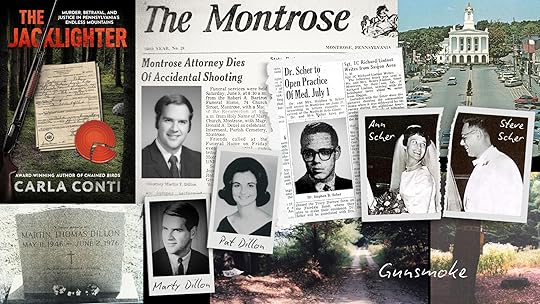 The Jacklighter: Murder, Betrayal, and Justice in Pennsylvania’s Endless Mountains is Carla Conti’s second true crime book. It releases in 2026.
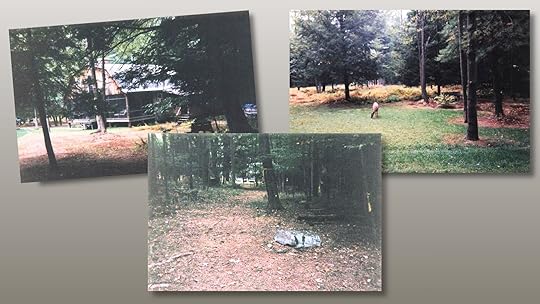 Gunsmoke: family hunting camp of Martin Dillon and site of his 1976 “accidental shooting” death by Dr. Stephen Scher during an afternoon of skeet shooting.
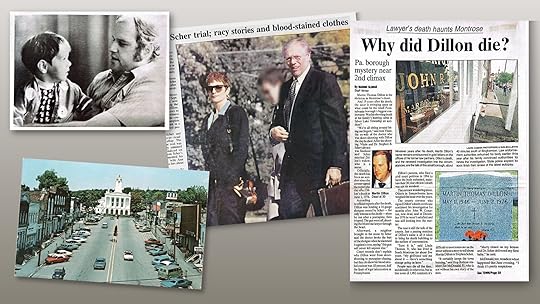 The Jacklighter is the true crime story of secrets, obsession, and murder in Pennsylvania’s Endless Mountains.The Jacklighter launches this fall—Amazon pre-orders are coming soon
The Jacklighter releases this fall. Stay tuned to this space for ongoing research updates as I count down to the launch. You can also subscribe to my free CRIMEMOIR CONFIDENTIAL newsletter for publication-day news and more true crime behind-the-scenes reporting.
 Subscribers can read the first two chapters for free
 Read the first two chapters of The Jacklighter for free when you become a Friend of the Flock subscriber.
The post 🎥 Uncovering the Truth: THE JACKLIGHTER Official Trailer appeared first on Carla Conti.


April 19, 2026
THE JACKLIGHTER Kickstarter: Fully Funded and Coming in 2026
I’m still pinching myself.
When I launched the Kickstarter campaign for The Jacklighter: Murder, Betrayal, and Justice in Pennsylvania’s Endless Mountains, I hoped for the best and prepared for the worst. But my Backer Besties came through and fully funded (and then some!) my first Kickstarter campaign 
To every single backer who pledged, shared the campaign, cheered me on, or simply spread the word: thank you. You gave The Jacklighter a real pathway to existing in the world.
This case, which spans 50 years, has stayed with me for three decades since I first started writing about it in my husband’s hometown of Montrose, Pa. The Endless Mountains in northeast Pennsylvania hold a lot of secrets, and this one—wrapped in hunting culture, small-town loyalty, and a betrayal that shattered a family—is one I can’t wait to share with you. I’m pouring everything into this book, and I’m so grateful it’s going to find its readers.
Watch the official JACKLIGHTER book trailerAmazon pre-orders are coming soon
Pre-orders will be coming soon on Amazon, so stay tuned for that announcement. You can also join my free Substack newsletter for publication-day updates and get some behind-the-scenes true crime reporting as a bonus. The Jackligher is on track for release by the end of 2026, and I’ll be keeping you posted every step of the way.
With so much gratitude 
Carla
The post THE JACKLIGHTER Kickstarter: Fully Funded and Coming in 2026 appeared first on Carla Conti.
March 30, 2026
🎙️Chained Birds Mini-Documentary Begins with a Chilling Video 🎬
When UK true crime podcaster Tom Clarke of Caught Up In Crime reached out to interview me about Chained Birds, I said yes immediately. Tom has a gift for getting to the heart of a story, and we took a deep dive into how I gained access to a whistleblower inside one of America’s most notorious federal prisons.
Tom’s brilliant documentary-style episode, “The Snowball,” dropped last week, and it has a permanent place on this blog, my social media, and Substack archive.
This cinematic re-telling of my true crime memoir, exposing federal prison gang violence and penal corruption, is the most dramatic adaptation of my work. I’m honored that Tom chose Chained Birds as one of his twice-a-month podcast subjects, and I’m pretty sure I’m his number one fan now across the pond 
Watch the video above, then listen to the full 35-minute episode:
Listen on Caught up in Crime Listen on SpotifyListen on Apple Podcasts(I included the complete transcript in this related post.)
 Learn More: The Story Behind the Story
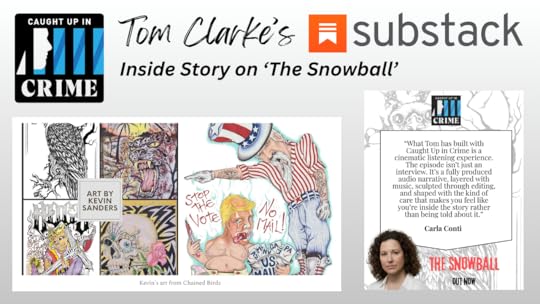 Go inside the making of Tom Clarke’s “The Snowball” episode, featuring my true crime memoir Chained Birds, on Tom’s Substack.
As a bonus, Tom offered his own deep dive into the making of “The Snowball” on his Substack, and it’s a great read. He explains why he chose to feature me on Caught up in Crime (his standard: the author has to be part of the story, not just a chronicler of it), walks through the pivotal ‘snowball’ moment that set the whole tragic chain of events in motion, and shares some of the extraordinary prison artwork that Kevin Sanders created while incarcerated — the same artwork that appears throughout Chained Birds.
Tom also reflects on why he makes narrative podcasts the hard way, with music, layered editing, and cinematic production, even when the simpler interview format would be easier. It’s a generous, thoughtful piece, and I’m grateful he wrote it.
Spoiler alert: this is probably not the last time you’ll hear about Tom Clarke and his Caught up in Crime podcast in this space … he and I plan to circle back later this year when my next true crime book, The Jacklighter, is released 
 Pre-orders for signed print copies of The Jacklighter end April 14, 2026 on Kickstarter.

The post 🎙️Chained Birds Mini-Documentary Begins with a Chilling Video 🎬 appeared first on Carla Conti.
March 24, 2026
How Tom Clarke Turned My True Crime Story Into a Must-Listen Episode
I’ve done more than a dozen podcast interviews about Chained Birds, and I say that with deep gratitude. But this one is different. This one stopped me in my tracks … and that was before I saw Tom Clarke’s video intro to his cinematic-for-the-ear episode called “The Snowball.”
Caught Up in Crime is the brainchild of Tom Clarke, a UK-based podcaster, writer, and content strategist who came to true crime by a wonderfully circuitous route. In 1999, he began a corporate communications career almost by accident, then spent 16 years at PR Newswire, and then in 2016, took a freelance pivot that let him pursue his twin passions: press releases and, yes, true crime. He lives in Chesham, Buckinghamshire, with his wife and two daughters, and he also somehow finds time to write crime fiction and bleed loyally as a West Ham United supporter … Suffice it to say, the man was born to tell stories—and to suffer. 
What Tom has built with Caught Up in Crime is something I genuinely didn’t expect: a cinematic listening experience. The episode isn’t just an interview. It’s a fully produced audio narrative, layered with music, sculpted through editing, and shaped with the kind of care that makes you feel like you’re inside the story rather than being told about it. Tom has a rare gift for listening between the lines of what a guest says and pulling out the best, dramatic bits underneath. He doesn’t just ask questions, he builds a world around the answers.
Episode 18 is called “The Snowball,” and if you know the book, you’ll understand why that title is so perfect. What Tom has done here—his storytelling about my storytelling—is something I’m still processing. He frames Chained Birds and my decade-long odyssey with a clarity and rhythm I didn’t know the story could have in audio form. I am truly honored 
You can find the listen links below, and the full transcript follows for those who prefer to read … but truly, you’ll miss out if you don’t experience Tom’s audio showpiece
Carla: [00:00:00] I was very glad to be on the other side of the country, but I was worried, scared, paranoid, you know, looking over my shoulder and in my rear view mirror all the time. In my mind, I thought, there is no way I’m writing this book because he said everybody in the prison system knew I was writing this book. He had told everyone …
Carla: Because, of course, if you’re in prison and somebody’s gonna write a book about you, you’re gonna brag about that. So I think he bragged about it to everybody on the bus. And we think there was at least one Montañista spy that had traveled with him from the Florida prison to his release off that bus.
Carla: Our first call, was him telling me that my life was in danger.
Tom: Every crime journalist dreams of that one story that’ll help them hit the big time, but sometimes you can get dragged in way too deep. I’m Tom Clark, and this is Caught up in Crime, a podcast about ordinary people who suddenly find themselves caught in the crosshairs of a bitter dispute between warring prison gangs.
Tom: This is episode 18—“The Snowball.”
Carla: Well, my name is Carla Conti. I am an award-winning true crime author with my debut book called Chained Birds: A Crimemoir.
Tom: Actually, Carla isn’t Carla, at least that isn’t her real name. When I met her on Zoom, the name on the screen was entirely different. Protecting her true identity has been the price she’s had to pay for success.
Tom: Writing her debut book, Chained Birds has been life-changing professionally, but it’s also opened her up to dangers from the violent gangs that run America’s federal prisons and their shady connections on the outside world. It’s all a far cry from her old life as a local journalist.
Carla: I did enjoy my journalism career, uh, early after college and in my early married days, I was a reporter in the Midwest for a series of newspapers. And aside from crime and court reporting, we covered all kinds of silly stories. I remember sitting in a graveyard one time with our photographer and a colleague, and we were waiting for, I don’t know, some scary thing that was supposed to appear, which of course didn’t appear, but we wasted a whole night in a graveyard.
Carla: I enjoyed those kind of weird things, so I guess it’s not surprising I ended up writing True Crime.
Tom: Carla worked these local stories for years, writing up court bulletins and camping out in graveyards. Dreaming of that one big story that might turn her into a published author. But as is often the case with these things, when the moment came, the initial pitch didn’t sound too promising.
Carla: I got involved back in 2011 because of my high school friend Scott Powell, who was, at that time, kind of a washed-up public defender and was the defense attorney for the character at the heart of this story, federal inmate Kevin Sanders.
Tom: Scott evidently had the gift of the gab. Because he’d known Carla since high school, he knew exactly which buttons to press.
Carla: So it was Scott who kind of dragged me into the case a little bit. I was reluctant at the beginning, but he knew my journalism background and I also knew how to make websites, and he wanted the combination of those two skills. He wanted me to make a website and write about his client to try to raise money for his defense and also bring awareness to a really terrible experimental prison program that was happening in Lewisburg at the Special Management Unit in [00:05:00] Lewisburg, Pennsylvania. That’s where his client, the inmate at the heart of this book, Kevin Sanders, was incarcerated.
Tom: Carla talks about this early introduction to Kevin’s case at the beginning of Chained Birds, and when I read it, I was immediately struck by the camaraderie of Carla’s old school gang. It’s something I’m sure most of us can relate to. You could be apart for years, but at every get together, you’re immediately back reeling off the old stories, finishing off each other’s sentences.
Tom: It was maybe because of this closeness that Scott was able to coax Carla into joining the team.
Carla: He really sort of pestered me over the course of a few months. “Oh, you should really write about my client. He’s involved in some really interesting things at this prison …” And he talked about prison stabbings and the Aryan Brotherhood, and I was just thinking, no way do I want to get involved with that.
Carla: So I would always say no, always say no. And, he just kind of wore me down a little bit, but I could tell he needed help also. He was a lone defense attorney, trying to defend this client. He had no investigator, you know, he wasn’t getting any funding or any help from the judge who oversaw the case.
Tom: Despite her reservations, Carla had to admit that Kevin’s case intrigued her. As a favor to Scott, she wrote the article and designed the website, and before she knew it, there was no turning back.
Carla: And one thing led to another, and then suddenly I became part of the defense team because he sent me a letter and a dollar, and that was my payment. And technically, that had me become part of the defense team, and I was like sworn to not reveal our secrets, et cetera. It was just kind of an odyssey.
Tom: As you might have guessed, although this is a story about the federal prison system in the United States and the gang violence that’s rife within it, at its heart is one man. Kevin Sanders is the central character in Chained Birds. And for more than a decade, Carla was his advocate, his biographer, his friend.
Carla: When I met Kevin, he was 36 years old. He had been incarcerated for most of his adult life for nonviolent drug crimes and petty theft crimes as a juvenile, things to help support a drug habit.
Carla: He grew up in California in not the best of environments. His mother was an alcoholic. He was shuttled back and forth between his mother and—he actually didn’t even meet his real father until he was about 11—and he kind of begged his father to be able to go live with him because his mother did not provide stability.
Carla: They lived out of their car a lot. They were homeless due to her alcoholism. So he moved in with his father, who was a Hell’s Angels Chapter President.
Carla: … I don’t know if in the UK you know who the Hell’s Angels are, but here that’s a biker gang.
Tom: I think, um, I think Hell’s Angels in the UK are just a staple of every Hollywood film where there’s a bar brawl and the kind of guys with big hair and big leather jackets, necking beer, and then beating each other up over a pool table. That’s kind of how it goes.
Carla: There you go. That sounds about right.
Carla: So he was in this environment from the age of 11, and drugs were plentiful, beer was plentiful.
Tom: It wasn’t all bar brawls and motorcycles. Kevin showed glimpses of real creativity amid the madness.
Carla: He was naturally gifted as an artist. So his father was a tattoo artist, and his father also painted and airbrushed designs on car hoods and the fenders of Harley’s. And so Kevin picked up the skill from his father, and he already had the natural ability. So that actually ended up serving him for many years, the years that he was not in prison. But then also, when he was in prison, he was a prison tattoo artist.
Tom: But his father’s real legacy was passing to Kevin, his other gift.
Carla: And as he grew into an older teenager and a young man, his father taught him how to cook [00:10:00] meth.
Tom: If you’re picturing something out of Breaking Bad, well, that’s about right. Almost inevitably, Kevin’s trailer was raided by the ATF, the Alcohol, Tobacco, and Firearms Agency of the Department of Justice.
Tom: Ironically, it wasn’t the A or the T or even the piles of meth that got him in trouble. It was the F.
Carla: Even though there were all kinds of drugs and drug paraphernalia on the property, he was found to have a sawed-off shotgun.
Tom: For reasons that even Carla isn’t quite clear about, the police were tipped off about the gun by Kevin’s own father. Before that raid, Kevin’s issues with the law had mainly been drug-related and handled at a state level, but the gun charge changed all of that.
Carla: He received a big gun charge because of that, and that is what sent him into the federal system and into the Pennsylvania prison where he got embroiled in everything that led into Changed Birds.
Tom: Kevin would spend the next seven years at the Allenwood State Penitentiary in Pennsylvania. And he soon found out that if he was gonna survive, he needed protection. Kevin was white, but he spoke fluent Spanish after running with a Hispanic gang back in California. And to him, the only choice once inside Allenwood was to join a group called the Montañistas.
Carla: So he rose to a certain level of responsibility with the Montañistas, to the point where he actually was running the yard, as they call it, the prison yard. He was in charge of lots of activities for the all gang members. You know, making sure that they did their exercises and they suited up when they needed to.
Carla: And this was a gang that had very strict no-drug policies, and he adhered to all that, and he just kind of had to help keep people in line, but also take orders from the shot-callers: the people who were in charge of this gang.
Tom: In prison, these shot-callers rule the roost. Kevin knew not to cross them, but for a nonviolent inmate like him, trying to keep your head down and stay out of trouble was easier said than done.
Tom: Things came to a head when he was ordered to assault a fellow inmate. He refused—a decision that might have eased his conscience, but didn’t cut it with the shot-caller. The Montañistas turned on him and he was placed in solitary confinement for his own safety. The authorities knew that a hit order was out on him, so they had to get him out of there fast.
Carla: So he transferred to Lewisburg, Pennsylvania, which was like 12 miles away … I called it an experimental prison program. It had just opened, they called it the Special Management Unit.
Tom: Lewisburg was one of the most notorious federal prisons in the country. In the 1960s and 1970s it was home to mafia royalty like John Gotti, Jimmy Hoffer, and Henry Hill, the man made famous by the film Goodfellas.
Carla: And it was really meant for hardcore violent criminals, who either committed seriously violent crimes to get there: murder, rape, major assaults, and then continued assaulting and causing these kinds of troubles while behind bars. And Kevin did not fit that criteria. He had never been incarcerated for anything violent.
Tom: A new prison meant a new gang, new allies, new enemies.
Carla: Because he was white and he had to align with another racial gang, the Caucasians got hold of him, and that was the Aryan Brotherhood. He was assigned to cell with a Nazi Low Rider, which is one of the many foot soldiers of the Aryan Brotherhood here. And he found himself embroiled in an orchestrated recreational cage assault.
Tom: Kevin didn’t know it at the time, but he and his cellmate, the Nazi Low Rider, known as Arson, because of his short temper, rather than any pyromaniac tendencies, were about to be tested to prove their loyalty to the Aryan Brotherhood.
Tom: They were exercising one morning in a cramped cage in the yard. When a third inmate named Oakie was sent in to join them by a grim-faced guard, who then locked the door and swiftly retreated. Kevin’s heart sank. He instantly recognized the gravity of the situation. Oakie was a sworn enemy of the brotherhood, and this was a chance for the gang to leave their mark.
Carla: And when they were in [00:15:00] this rec cage, the orders were being called out from the windows to “hit this guy, get this guy,” meaning that Kevin and Kevin’s cellmate had to attack Oakie.
Tom: Arson produced a makeshift shank and began punching and stabbing the interloper. Kevin, unarmed, piled in beside his cellmate, raining down blows in a stabbing motion, hoping to appease both Arson and their Aryan Brotherhood shot-callers, who were hanging out of the windows banging for blood.
Tom: The guards hung back for some time before eventually dragging Kevin and Arson away, leaving Oakie in a pool of blood in the cage.
Tom: In that moment, Kevin knew he was in big trouble. What he didn’t realize was what had happened to put him in that cage in the first place. How a single seemingly childish and innocent moment several months before had left him facing a new fight for his life and his freedom.
Carla: Basically, this whole entire Chained Birds story I realized started with a snowball fight.
Carla: It was a momentary act of defiance on the part of an inmate nicknamed Oakie (because he was from Oklahoma) … he happened to see a prison guard that he knew from a different prison. The guard had just transferred to Lewisburg, where Oakie was, and he had been abused by that guard. And so Oakie threw a snowball at this guard, Captain McDonald, and Captain McDonald, after the scuffle, vowed vengeance. He said, “Who around here can I put you in a cage with?”
Carla: And not long after that, he made good on that threat. And coincidentally, Oakie was not in good standing with the Aryan Brotherhood—he had caused some trouble for them on the inside. So the two entities conspired with each other, Captain McDonald and the Aryan Brotherhood, to put Oakie in a rec cage where he would be assaulted. And who ended up in that rec cage, but Kevin and Kevin’s cellmate, Arson.
Tom: Okie survived the attack, but only just.
Carla: He had a punctured lung, and he spent a few days in the hospital. Lots of scrapes and cuts and stab wounds—all on the side where Kevin’s cellmate, Arson, had been attacking him. There were no stab wounds on the side where Kevin was, because Kevin did not have a shank, but he was making it look good for anybody who was watching.
Carla: So that rec cage fight led to assault charges, which is what led my friend Scott to become Kevin’s public defender, and that’s how I was brought in to the case.
Tom: Kevin and Arson were both charged over the assault on Oakie, and were looking at an additional 10 years in prison. For Kevin, that was out of the question.
Carla: At the time of the rec cage assault charge, Kevin was what they would call “short” quote unquote, meaning he was just a few years away from completing his sentence, and that was that 10-year gun charge sentence. So he was very angry that he had been put in that position of—you know, kill or be killed, assault, or be assaulted – situation. And he wanted to tell the truth in open court, he wanted people to know, and Scott was not sure that that was the right course of action. Typically, most of these kinds of cases are pleaded out, and he had in front of him a plea deal from the prosecutor for five years—and, you know, you’re done.
Carla: His cellmate, Arson, took the five-year plea deal, and Kevin convinced Scott that he wanted to take it all the way to trial because he wanted the truth to come out.
Tom: In many ways, Kevin was lucky to have Scott as his public defender. Often these cases involving career criminals don’t exactly invoke empathy with the lawyers hired to represent them.
Tom: But there was something about Kevin that lit a [00:20:00] fire inside Scott and in Carla too. And so it was that the two old school friends and another lawyer named Jack Bear dropped everything else in their lives to work on Kevin’s defense.
Carla: It was pivotal because I felt like I was contributing …this was my job, so to speak. I wasn’t getting paid for it, but it was something that I was contributing toward, and I know I was helpful.
Tom: It was an intense period in Carla’s life and an eye-opening one. Kevin’s experiences highlighted a system that was clearly broken, where brutal gangs and corrupt guards could literally get away with murder, and where the legal system was either too damaged or too indifferent to do anything about it.
Tom: Still, they thought they had a pretty good case and they made a good team.
Carla: We were so glad to have Jack join the team as pro bono because he was more experienced than Scott, older than Scott, and we really relied on his prior knowledge. He was very experienced with federal criminal cases as well, and this had been Scott’s first federal criminal case.
Tom: Kevin’s defense was built on a combination of solid evidence and mitigating circumstances. The team argued that once he and Arson were locked in that cage with Oakie, Kevin had no choice but to fight. If he’d stayed passive, there would’ve been deadly consequences at the hands of his Aryan Brotherhood, shot-callers. It was kill or be killed.
Tom: It also showed that the stab wounds were clearly inflicted by arson, not Kevin. They show that Kevin’s record to that point had been entirely nonviolent. He’d risked his life inside Allenwood by refusing to assault a fellow inmate, remember? So this was a guy who tried to avoid violence at all costs. They even found an expert who agreed to testify about gang culture to prove that Kevin was merely a pawn in a conspiracy to get revenge on Oakie after he threw that snowball.
Carla: There was some exculpatory evidence on the video surveillance tape that we felt was missing at the very beginning, where Kevin made very clear motions to the prison guard, not to even put Oakie in the rec cage to begin with.
Tom: Unfortunately, the jury never got to see that footage, nor did they get to hear from the expert witness because the judge denied Scott the expenses needed to bring him to court to testify.
Tom: Throughout, there was a feeling that Scott and Jack and Carla were being punished simply for challenging the system and for standing up for a man like Kevin.
Carla: And typically, a jury is not really predisposed to want to believe or have sympathy for a prisoner, an inmate who’s covered in tattoos.
Tom: By the end of the trial, there was a brutal inevitability about the result.
Carla: From all of those challenges, we did lose at trial, and we did appeal. We had a big Brady violation, which I’m not sure if your UK folks know, but you have something similar, where exculpatory evidence has to be revealed to the defense side. Despite all that, we lost the appeal as well, and he got seven more years.
Tom: Seven more years. Even Arson, the guy who’d done the actual stabbing, would be out in five, as he’d taken the plea deal when it was first offered without dragging Lewisburg’s name through the dirt. Even more serious was the damage to Kevin’s reputation. He’d become a narc, a whistleblower against the natural order of the federal prison system, and that made him enemies across the board.
Carla: Before the trial and appeal process was completed, he was sent to an interim prison in Colorado, where an Aryan Brotherhood of Texas associate tried to kill him. He was ordered to try to kill him, because Kevin had testified at trial about the gang, and Kevin knew that testifying at trial would put him in that position … and Kevin narrowly escaped being stabbed in the heart by this Aryan Brotherhood of Texas associate.
Tom: Kevin transferred to another federal prison this time in Florida. The time was dragging, but at least he was out of Lewisburg and the Special Management Unit. [00:25:00] In a bizarre twist, he befriended the legendary Boston crime boss, Whitey Bulger, and they developed a close bond, but his friendship with Carla ran deeper.
Tom: By now, she was committed to writing a book, to telling his story, and that allowed him to dream of what life might be like when he finally got out.
Carla: I maintained a friendship and a connection with Kevin—I was basically his advocate on the outside. He wrote me letters, we had phone calls, I sent him things, I put money on his books for the commissary. And I think one of the things that kept him going was the idea that he and I were writing this book together, that he was contributing to a book that would reveal all of these things that he wanted people to know about.
Carla: I felt good about that, giving him a purpose. He made wonderful drawings and sketches that he sent me all the time, that he always hoped would be in the book, and they are. So I basically followed his odyssey for those seven years that he served out in that Florida prison. And a lot of crazy things happened to him there just because it’s federal prison.
Tom: Kevin was released from the Florida prison in April, 2021. At that time, COVID was still rife and it limited his options as to where he could be released to. He’d been scheduled to go to a halfway house, but the policy was abandoned due to national restrictions. Carla thinks that if he’d been given that opportunity, things might have turned out differently.
Carla: He was only able to be released to the place that he came from, which was California, which was a hotbed of gang activity and not the best place for him. Scott and I tried to see if the Bureau of Prisons would release him into Scott’s care, for instance, where Scott was living, and we wrote letters and had phone calls … And the Bureau of Prisons just—they had their processes, and nothing was going to change. And so Kevin was released back to California, on a one-way bus ticket.
Tom: Carla and Scott had a brief meeting with Kevin at a diner in Pittsburgh, partway through his 40-hour bus journey back home to California. Kevin was thrilled to see them. He devoured a huge burger and spoke positively about the future, but as they waved him off, Carla had a nagging feeling that all was not well.
Carla: We learned that as soon as he got off the bus in California, the Montañistas were waiting. And he ended up going to a motel where there was quite a bloody brawl—and more than a brawl …
Carla: He told me, that in defending himself, other people lost their lives, and the police were called, and there was a chase, and it was all very dramatic. But then the bodies were not there to be found, in theory, because the Hispanic gang removed the bodies, because it was in their own best interest, because they didn’t want the police investigating them.
Carla: We learned about all of this through phone calls, because we were so far away, Scott and I, and there was just so much drama. He was free for like five hours before some of this stuff started happening.
Tom: Carla’s contact with Kevin during this period was patchy, but she learned that his charges on the motel violence were eventually dropped and that he was free again for a bit.
Tom: He got a job then lost it. Found a girl then lost her. And all the while Carla was half a country away, helplessly watching the whirlwind, unable to intervene.
Carla: He was very charming—he is very charming—and very confident, and he had no problem finding a girlfriend right away. And he attempted to start a new life … [00:30:00]
Carla: Unfortunately, some of his demons from his past life as a substance abuser, those came back to haunt him. He had another chance to start over, and even with help, he just couldn’t get past that addiction.
Tom: As Kevin’s life unraveled, Carla was getting cold feet about publishing her book. Kevin still had hits out on him from both the Montañistas and the Aryan Brotherhood.
Tom: And as you heard at the beginning of this episode, there were times when he warned Carla that her own life was in serious danger too. He was worried that the Montañistas had got hold of his address book during the bloody brawl in California. That book contained all of Carla’s personal details. If she published Chain Birds now, would that put her in the firing line?
Tom: It wasn’t a straightforward decision.
Carla: It nagged at me. It was kind of like I needed some closure, but I wasn’t sure how to close this really weird chapter in my life, and Scott had always wanted me to write this book.
Tom: Although Chained Birds was largely Kevin’s story and an exposé of the brutality of federal prisons, it was also deeply personal to Carla herself. She’d invested so much into the previous decade, and so much had happened in her own life. Her great friend and colleague on the defense team, Jack Bear, died suddenly in 2017. She and Scott, comrades in arms for so long, fell out for a while over politics and COVID. The threads of the story needed pulling together.
Carla: And just collecting the files, putting them away, and organizing them to move on with my life … I came across a notepad where I had taken notes from a phone call I had had with Oakie, the guy who threw the snowball. And I had underlined snowball and I thought about that, and I thought, holy crap, that snowball started everything—and I hadn’t thought about it in years. Then I started thinking like a storyteller, like a writer, and I’m like, damn, that’d be a great way to start this book, wouldn’t it?
Tom: Carla hasn’t spoken to Kevin since 2023. He lost his phone and along with it, her number. She doesn’t know where he is now, if he’s managed to turn his life around, if he’s back inside, if he’s alive or dead. Maybe it’s better that way. This story was never gonna have a neat and tidy ending. But it’s clear that even though they’re no longer in touch, Kevin will never be far from Carla’s thoughts, the Chained Bird that changed her life.
Carla: I call us unlikely friends. It was an unlikely friendship. I mean, when would I ever befriend an inmate at a federal prison in maximum security, who ran a prison yard for a prison gang? It opened my eyes to a whole other world, and I know that he appreciated me as his friend and advocate on the outside.
Carla: And I helped make his last stretch of prison time more bearable and gave him a focus. and I don’t regret any of that.
Tom: Do you think he’s read the book?
Carla: I don’t think he’s aware of it. I think if he is aware of it, he would’ve been able to reach me through the publisher.
Tom: What, what would you feel like if he did contact you again? Is that something that you’ve thought about, or is it something that you’re now just thinking—that’s in the past?
Carla: Well, I would certainly receive a call or a letter from him, but I think … in his current state—or the state that I was aware he was in—he was probably too embarrassed to try to reach me like that, because he was always trying to better himself until he wasn’t able to.
Carla: And so I don’t think he really wanted me to be fully aware of the sorry state that he devolved into.
Tom: Caught up in Crime is written and produced by me, Tom Clarke. Spencer Wilson created the artwork for the series, and music is by Premium Beat. Details of the individual tracks featured in this episode are in the show notes.
Tom: I can highly recommend Carla Conti’s book, Chained Birds, which features Kevin’s story and contains lots of his original artwork. It’s available from her website: https://carlajeanconti.com. And that’s also where you can pre-order her next book, The Jacklighter. There’s a link in the show notes. [00:35:00]
Tom: Caught Up in Crime is a completely independent podcast, so please subscribe or follow the show wherever you’re listening right now. And if you could take a moment to leave a rating or review, it’ll help more people find it. Finally, if you have any story ideas for future episodes, you can email them to caughtupincrime@gmail.com or contact me on social media.
Tom: Again, the details are in the show notes. Thanks for listening.
The post How Tom Clarke Turned My True Crime Story Into a Must-Listen Episode appeared first on Carla Conti.
March 23, 2026
Murder, a 20-Year Cover-Up, and a Cold Case That Wouldn’t Die: My Interview on Crime Beat
Last week I had the pleasure of joining the legendary Ron Chepesiuk for a full hour on his award-nominated show, Crime Beat—and it was the best conversation I’ve had about The Jacklighter so far.
We covered a lot of ground: how I first stumbled onto this story nearly 30 years ago in my husband’s hometown of Montrose, Pennsylvania; why I was scooped the first time around; and why I’m convinced my more complete version is the best one. We also talked about the remarkable chain of forensic breakthroughs, from a pig-skin shooting reconstruction to Henry Lee’s blood spatter analysis, that finally brought a killer to justice two decades after the crime.
You can listen to the abridged 45-minute radio interview below, and the full transcript follows for those who prefer to read. My interview portion begins after Scott Sliger’s announcements … Scott has announced Ron’s show for 15 years.
Ron is an incredible host, and if you’re not already a regular listener of Crime Beat, this is a great place to start. You can read more about Ron on his website, and the entire hour-long show is hosted on the Crime Beat page of the ArtistFirst Radio Network.
The Jacklighter: Murder, Betrayal, and Justice in Pennsylvania’s Endless Mountains is now available for pre-order on Kickstarter.
Carla Conti on Crime Beat with Ron Chepesiuk, March 19, 2026https://carlajeanconti.com/wp-content/uploads/2026/03/Carla-Conti-on-Crime-Beat-3-19-26.mp3Abridged Radio Interview Transcript
Scott: [00:00:00] Welcome to another broadcast of Crime Beat with Ron Chepesuik. The show that puts you, the listener, into the back alleys and boardrooms of the world’s most fascinating subject, crime. Crime Beat brings you a lineup of dynamic and provocative guests who allow you to experience their lives and learn more about crime. AL Prophet, the noted crime documentarian, says Crime Beat is the best show of its kind for the thinking listener, both entertaining and educational. Let me introduce the host of Crime Beat, a native of Thunder Bay, Canada, Ron Chepesuik. He’s an award-winning author, documentary producer and director, publisher, and screenwriter.
Scott: He’s the author of more than three dozen books and 4,000 published magazine, newspaper, and internet articles. Ron is a two-time Fulbright scholar to Bangladesh and Indonesia, was a consultant to the History Channel’s Gangland TV series, and has worked as an instructor in UCLA’s extension journalism program. Four of Ron’s books and several of his screenplays have been optioned for movies. For more information, visit RonChepesuik.com. Given his publications, extensive travels, and in-depth interviews, Ron Chepesuik today is the leading expert on the fascinating world of crime. Here he is, your host, Mr. Ron Chepesuik.
Ron: Thank you, Scott, for that nice introduction. Good evening, world. Well, this is our 744th episode of our award-nominated Crime Beat show … We have Carla Conti back, and she’s going to be discussing her new book, The Jacklighter: Murder, Betrayal, and Justice in Pennsylvania’s Endless Mountains. It’s a pretty fascinating story. Here’s the background. In 1976, attorney Martin Dillon went hunting with his best friend in Pennsylvania’s Endless Mountains and never came home. The only witness, Dr. Steven Scher, the man who was having an affair with Dillon’s wife. After investigators called in an accident, nothing happened. Nothing happened. But then Scher married the widow, and he raised her two children as his own. He lived a stolen life for 20 years until Dillon’s body was exhumed and everything unraveled.
Ron: Carla is the award-winning author of the true crime memoir Chained Birds: A Crimemoir, a prison abuse exposé about justice and survival in federal prison. It took Carla 10 years to write that as she balanced the safety of her story participants, including herself, in this tell-all thriller of prison gang hit orders and corrupt officials. We had her on the show to discuss that book, and now Carla is publishing The Jacklighter, and she’s back on again. Welcome to the show, Carla Conti.
Carla: Thank you, Ron. Thanks for having me back. [00:10:00] Actually, the book’s not out yet, it’s coming out this fall. But it can be pre-ordered.
Ron: I know. I’m amazed at all the work you’re doing for this book. Tell us a little about the background.
Carla: Well, this is a story that I actually got a hold of about 30 years ago when I was a really young writer trying to dip my toe into the true crime field. My background was as a reporter, and I used to cover the police beat, criminal courts, and things like that. And this story was taking place in Northeastern Pennsylvania in my husband’s hometown, a very tiny little hamlet called Montrose. And everyone in his family knew that I wanted to write true crime; they knew what my background was, and they said, “Carla, you should get up here and check out this case.” And that’s what started it all about 30 years ago.
Ron: Wow. So, why did it take you so long to write the book?
Carla: Good question. Well, I almost—and I’m holding my fingers about two inches apart—I almost got this story published 30 years ago as my first true crime book, which in itself is kind of a little side story to The Jacklighter.
Carla: But, but it’s relevant because, when this love-triangle-cold-case-murder story kind of exploded on the national news scene in the mid-1990s, numerous writers and authors were descending upon Montrose, and they wanted to write a book about this. So it really was a race to see who could be the first one to do it.
Carla: I had a literary agent in New York City at the time, and I gave him my proposal for this book, and I told him that I had a lot of unique access to the players in this story because of my, so-called, you know, inside status, which really was totally due to my husband’s family connections. I was like an “almost insider”… And the story was getting picked up by People magazine, the Wall Street Journal, Time, and TV crews were coming out to do filming for it as it was ramping up and getting close to trial. So. I was one of those writers who thought they had an inside track on it.
Carla: And I worked on it for a couple of years. And kind of at the last minute, the woman who was writing for People magazine, covering the case, she had already written some true crime books—Maria Eftimiades. I had not published any books at that point. And she decided she was going to make that case her next true crime book. She already had a relationship established with a publisher, and St. Martin’s Press came out with a paperback book on this case shortly after the trial. So, you know, once it was announced that a publisher already had a deal with somebody, I was SOL as they say, you know?
Carla: So that’s why I didn’t get that story written. And, you know, life happens. Thirty years go by. And then of course, I got embroiled in the Chained Birds story in the early 2010s. So that’s how it happened.
Ron: Right. Well, do you think, after waiting 30 years, you got a better story?
Carla: Well, yes, actually I do have a much better story and I have a complete story.
Ron: Uh huh
Carla: Because the first book that came out, Secrets From the Grave, by Maria Eftimiades, in 1998, ended at the trial in 1997. But there were 10 more years of legal events and things that occurred, one of which was the killer was released from prison. A Pennsylvania court overturned his conviction and he was allowed to go free. [00:15:00] And, so there was plenty more to write about. That first book, by no means, is a full account of the case. Plus I have an awful lot of original reporting and unique things to my story that are not in the public domain, from the relationships that I’ve developed with sources and people close to the case. So, I feel like my book will be better.
Ron: Right. How do the people that you interviewed and are involved in the story feel about you, 30 years later, getting this book published?
Carla: Well, some of them are no longer alive. I have the confidence and the friendship of one of the main participants. This is the ex-wife of Dr. Scher, the doctor convicted in Marty Dillon’s death. I developed a relationship with her 30 years ago, and I renewed that relationship just last summer when I decided that I was going to write this book for good. She’s been a terrific source and very supportive of me wanting to get my version out there.
Ron: Right.
Carla: I’ve also talked to the victim’s sister, who has chosen not to be interviewed. She has said that the memories of that entire era and what happened with her brother and to her family, it is just too painful. She doesn’t want to revisit it, and I completely respect that. But she has pointed me to other kinds of written sources and things that I can use. And there’s a lot in the public domain about her, you know, that I’m able to use instead. So, you know, it’s been kind of mixed. Some people feel one way and other people are happy to participate or don’t mind participating.
Ron: Right. The Jacklighter, that’s an intriguing title, but what does it mean and why did you choose it?
Carla: Well, it is a hunting term. And the murder occurred during a skeet shooting—or trap shooting, as some people call it—event, between the two men in the case. So, you know, Marty is the attorney and he was married to a nurse, Pat. And Pat was having the affair with the doctor, Dr. Steve Scher. And he and Marty went skeet shooting one day, and only Steve Scher walked out of the woods alive. So, The Jacklighter is taken from the hunting term “jacklighting.” I can read the definition that appears at the beginning of the book …
Ron: Sure, go ahead.
Carla: It’s a hunter’s amoral killing of defenseless prey, also called illegal spotlighting. It’s a hunting method of shining artificial light on animals to stun or immobilize them, making them easier to kill. This unsportsmanlike conduct is illegal in most states, including Pennsylvania, where it was declared a crime in the late 1800s. [00:20:00]
Carla: The term ‘jacklighting’ dates back to colonial times when people went deer hunting at night with baskets of jack pine knots lit on fire. The knots were the hard, durable parts of jack pine wood, which contained a sticky resin that made for the best illumination. So the practice, which produces that deer in the headlights effect, gives hunters an unfair advantage over wildlife and is contrary to fair chase principles that form the ethical foundations of hunting.
Carla: So I call the murderer in this case a jacklighter, because this occurred in the woods while hunting, when his victim was completely defenseless, and it was a very cowardly way to kill.
Ron: Right. Well, given the time period of 30 years, were there any documents or interviews that changed your understanding of the case or make your story better?
Carla: Well, yes, I actually just learned from a source this week about a district attorney, in the very late 1980s and early 1990s, who refused to reopen the case. As you mentioned, the death was considered an accident for a long time. The doctor told a story of how the gun had discharged accidentally when Marty had been running with it and chasing a porcupine. That was the official story.
Ron: He changed his story later …
Carla: Yes, he changed his story later, but for a couple of decades, he kept to that story … over the years, people wanted to investigate it, but they just couldn’t really get enough evidence together. There were some officials who were thinking maybe they couldn’t get enough evidence for a conviction, and other people wanted to go full steam ahead, including the victim’s family. It was really the victim’s parents—Marty’s father especially—who pressed for this so hard that made it happen.
Carla: But I did learn about one district attorney who presented the shooting case with photographs and the original autopsy to a panel of forensic scientists in Philadelphia at the University of Pennsylvania in May of 1989. And a vote was taken by a show of hands as to the manner of death. The D.A. brought that information back to Montrose and told the victim’s family that most of the scientists voted that it was either an accident or possibly a suicide, and that he did not have a basis to reopen the case.
Carla: So what happened six years later, as Dr. Scher is finally being charged and they’re heading toward his trial in Montrose, is a forensic scientist testified at a hearing to exhume the body for another autopsy. A defense attorney asked this scientist if he was aware of how this forensic panel in Philadelphia voted—was he aware that the panel voted that it was either suicide or an accident?
Carla: And the scientist, on the stand, said, “I’m aware exactly how they voted. The vote was 28 to 2 that it was a homicide, because I was there.”
Ron: Oh.
Carla: And the district attorney was caught in a big lie.
Ron: Oh wow.
Carla: And I just learned this week that there’s a cassette tape of this forensic panel meeting. I’m trying to get a hold of that or meeting notes. I also heard through my source, which I am trying to confirm, that the district attorney did not willingly step down, but that he was forced to step down and not run for office again and turn over all of his materials, including the cassette, in lieu of being prosecuted for obstruction of justice.
Carla: He is the one official where there seemed to be—I’m not sure nefarious is the right word—but, you know, [00:25:00] bad faith behind not reopening the case. Otherwise, it just was kind of years of not the right people investigating, not having the right evidence, technology catching up, that kind of a thing.
Ron: Well, why would it be suicide? That’s the weirdest place to commit suicide. You go skeet shooting with a friend …
Carla: Right. Well, that was a strategy that the defense was floating at the trial. They wanted to portray Marty as being very depressed and despondent. He knew his wife was having an affair, and the doctor even came up with a story about treating him for depression.
Ron: And he goes hunting with him! He knows he’s having an affair with his wife, and he’s going hunting with him!
Carla: I know, I know. That’s a great question. Like, why, why would you go hunting with the guy who’s having an affair with your wife? I know. And nobody knows the answer to that question …
Ron: And what about the wife? Was she involved in any way in the event?
Carla: There’s no evidence that she was aware of anything that might be happening. And in fact, there is evidence that Marty gave her an ultimatum shortly before this “hunting incident” where he told her she had to choose between the doctor or him. Now they also had two small children, a 3-year-old and a 5-year-old, and both Marty and his wife Pat were very staunchly Catholic and divorce was unheard of, out of the question, for Pat, at least. And I believe she struggled with the decision and even told a friend that she loved both men, that she wasn’t sure what she would do. But the prevailing theory is that she told Marty she would return to the marriage, the affair would be over, and this was not acceptable to the doctor, who was used to getting his way.
Ron: Right. Right.
Carla: And the day of the shooting, there were supposed to be at least three other guys with them skeet shooting, because this was an every-other-Wednesday event amongst professionals in this small circle in Montrose. They called themselves the Wednesday Afternoon Club, but for various reasons, some of them just couldn’t make it that day. It was one guy’s wife’s birthday, he needed to take her out to dinner. Somebody else had too much work and couldn’t make it, and it just ended up being Steve Scher, the doctor, and Marty, and both of them went forward with the plans. They didn’t change the plans, and at some point, you know, murder crossed his mind as the way to get Pat for himself because she would never divorce Marty.
Ron: Right. Do you think it was a spur-of-the-moment decision to commit murder?
Carla: It’s hard to know. I have some theories that I’m exploring towards the end of the book. I’m laying them out and talking with other people. We do know what some of their conversations likely were. The doctor testified to what conversations they had, not that you can believe that testimony, but he did say they discussed a big murder trial that Marty was going to be the defense attorney for coming up in a couple of days. So, oddly, they were discussing murder, and the doctor was an opportunist.
Ron: Mm-hmm.
Carla: And at some point, he decided he was going take his chance.
Ron: Right. The prosecutor described Dr. Scher as an arrogant man with a God complex. Do you agree with that?
Carla: Yes. Well, he was very arrogant and used to getting his way. And he even had conversations with people who testified [00:30:00] about how he would say, “I’m used to getting what I want, and I’ll do whatever I need to do.”
Ron: Yeah. Well, wasn’t that part of the reason why investigators initially ruled Dillon’s death an accident—his reputation within the community? You know, a man of his stature couldn’t possibly have committed this murder so reasonably?
Carla: Exactly. Yes. He was a well-respected doctor. The coroner who came out to the shooting scene was told by the doctor that Marty had been running after a porcupine, tripped with the gun, and it discharged accidentally. The coroner didn’t have experience seeing that kind of gunshot wound, knew the doctor, and, of course, just took the doctor’s word for it. And then the coroner translated that story to a rookie trooper who was next on the scene, and the story just became ingrained pretty much except for a very savvy, hard scrabble county detective named Jock Collier. He got a hold of the case and brought the doctor in for questioning a couple of days later, and smelled a rat.
Carla: Jock Collier tried for years to get his boss, the county D.A., to press charges against the doctor, and he couldn’t get his boss to do it. He couldn’t get anyone to follow through on it. The D.A. at the time felt that they didn’t have enough evidence and, you know, people believed the doctor, and he just didn’t think that they could get a conviction.
Ron: Right. Did Dillon’s wife believe that he was innocent? Because she married him, which was amazing.
Carla: Well, if you believe her story at a press conference years later, as they got close to trial time, she said at the press conference, that she never had to ask him because he was a “healer.” She watched him care for patients. And he was a good, kind man—and he had found religion at that point—and she never had to ask him that question. If you can believe it, she never asked. She never asked him that question … This is what she said at a press conference. Who knows what their pillow talk may have been?
Ron: Well, what about the kids? They were very young when it happened, but when they grew up, did they believe it? That their stepfather was innocent?
Carla: They did believe his story, and they were staunch supporters of him through that trial. They were young adults at the time … And actually, that’s one of the reasons that Marty’s father waited enough years to really try and press authorities to reopen his son’s case, to get his own investigation going as part of it, because he wanted those kids to be adults. He didn’t want to lose them and harm the relationship that he had with them. But when the trial came, the kids were firmly in the doctor’s corner because they had been raised by him. They really didn’t have memories of their father, Marty. And by all accounts, Steve Scher was a very good stepfather to them.
Carla: The daughter inherited some life insurance money from her father, Marty, and she turned it over, $65,000, to his defense. That’s how much she believed in him.
Ron: Well. It almost sounds like a cult.
Carla: Yes. You know, the real tragic part of all of that for the family is that they risked everything to get justice for their son, their brother, and in the process, they did lose those children. Pat made sure that they never had a relationship after charges were brought because they knew that this was spearheaded by Marty’s father. And the children were so [00:35:00] brainwashed, for lack of a better term, and just seemingly turned a blind eye to all the blatant evidence that he was guilty … just disassociated from it. And they haven’t ever wanted anything to do with their Montrose family ever again. That’s a really tragic part of the story.
Ron: Did you manage to interview them?
Carla: I have not found them yet. They live in another part of the country. One of them has changed their name. I’m going to do my best to make contact, see if they would like to have input on this story, and let them know what I’m doing. I suspect they would not like to hear from me, but, you know, I’ll do my best.
Ron: Well, let’s stop there. We’ll continue this story after we take this break.
Scott: This is Crime Beat on the ArtistFirst Radio Network. Send us your questions and comments: Crimebeat123@yahoo.com. Back to your host, Ron Chepesuik.
Ron: Thank you, Scott. We’re here with Carla Conti. We’re discussing your fascinating book, The Jacklighter: Murder, Betrayal, and Justice in Pennsylvania’s Endless Mountains, and the killing of Martin Dillon by Steven Scher. The book is not out yet, right, Carla? But where can people find the book, and when is it going to come out?
Carla: Well, people can find it right now on Kickstarter. It just went live for getting pre-orders this week. So anybody can go to the Kickstarter platform and just look up The Jacklighter, or my name, Carla Conti, and you’ll find it. It’s essentially a campaign for pre-ordering and getting special bundles … maybe some people like to have the audiobook along with the paperback etc. A lot of the bundles include my first book, Changed Birds, so people can go to Kickstarter to pre-order it. Now, I am saying it’s coming out by the end of the year, but I think it will be out in the early fall.
Ron: Okay. Let us know, and [00:40:00] we’ll broadcast it on our show. Getting back to our show discussion … after Dillon’s death, Scher marries his widow, and he does he manage to rebuild his life successfully. What was his reputation like? And what do the townspeople do? I mean, how can you live with this for 20 years and, you know, still build a remarkable life?
Carla: Well, he moved away. He married Marty Dillon’s widow, Pat, and they moved to New Mexico for a while, and then they moved to North Carolina. And in both places, he had very successful practices, and patients quite liked him. In fact, he had a lot of patients and people from those communities testify to his character. Back in the 1970s, when this murder happened, he claimed to be an atheist, and he also kind of complained that he was one of the only Jewish people in town. And then he became very religious after he married the widow, and started going to the Catholic church in both locations, and became quite a benefactor, contributing a lot of money. So he really had a whole different lifestyle or, shall we say, persona, afterward.
Ron: Right. And the marriage went well?
Carla: Yeah. She stuck with him the whole time.
Ron: Oh, wow. On that then, what changed 20 years later … I guess the family was relentless in saying that Scher was guilty and they wanted justice, right? Was that the main factor getting them to reopen the case?
Carla: Yes. And there was also a very important person who helped get the case to its next level, where he was finally charged, and that was Marty’s secretary, a woman named Bonnie Mead. Bonnie was a young secretary in her twenties when Marty was killed, and she was very fond of her boss. And in the late 1980s, while working at an insurance firm, she helped bring into the firm somebody who performed accident reconstruction for automobiles. And she started thinking and wondering if this accident reconstructionist couldn’t then possibly try to reconstruct that shooting. And the reconstructionist, who was a local guy and had gone to school with one of the family members, really did try to re-stage the shooting using pig skin filled with red dye, to simulate human skin. And they were able to determine that the shotgun had to be at a certain angle and much farther away than the original story indicated.
Carla: That [00:45:00] was one of the first things that got the ball rolling. And then a succession of Pennsylvania police investigators would kind of dive into it, and then something would happen, that investigator would get transferred or retire, or whatever, and then the next one would take it on. And at that point, technology was starting to catch up. You know, they didn’t really know much about blood spatter and things like that back in the 1970s. One of the things that led to charges and his trial was a very famous forensic scientist, Henry Lee—you may remember his name from the O.J. …
Ron: The one in the O.J. Simpson trial?. Yeah. Right.
Carla: Yes. So he examined the shotgun, the boots that the doctor was wearing, a tree stump that was spattered with blood, and clothing that the doctor and victim were wearing. All of these things had remained in an evidence locker because of that detective I told you about, Jock Collier, who unfortunately died before this could ever be resolved. The detective made sure that all of those pieces of evidence remained sealed in a locker. So Henry Lee was able to look at these things and determine that blood spatter happened at a certain point and trajectory … the doctor’s boots and the bottom of his jeans had this blood spatter on it.
Carla: So how could Scher be farther away from the shooting location, down the path where he said he was, when Marty was chasing a porcupine and the gun went off? Well, the blood spatter shows the doctor was there, and that Marty was probably either kneeling or sitting on that tree stump when he was shot, getting ready to load more clay pigeons into the trap flinger.
Ron: Right.
Carla: And also, Marty was wearing ear protectors and sunglasses at the time, and those were spattered, and that tells its own story as well.
Ron: So, how did the defense counterattack that theory?
Carla: Well, because of the rules of Discovery, where the defense is allowed to see what materials the prosecution has, they knew that the prosecution had all of this blood spatter evidence, and that the original story was not going to hold up. So what did he do? He changed his story on the witness stand. And his story was that the topic of the affair did come up, and they got into an argument, and the doctor was almost worried about what Marty was going to do with the shotgun that they struggled over, that he thought Marty might have intended to harm himself with it because he was so distraught over this affair … and they struggled and the gun went off.
Carla: Shocker, that was his story. That’s how he changed it. But guess what? He forgot something. [00:50:00] He forgot that Marty was wearing ear protectors. Now, does someone have an argument with somebody else while wearing earmuffs, and you can’t hear them talk?
Ron: Ah ha, so how did the defense counteract that?
Carla: They ignored it. They ignored it because they just didn’t plan for that, and the jury saw right through it.
Ron: Right. I mean, they’re not dumb. That’s amazing. Amazing. So that’s why they reached a verdict so quickly?
Carla: It was about five hours. And they had an alternate juror who was seated after they started deliberating because one of the female jurors, for whatever reason, could not continue on, and I think she even locked herself in the bathroom. It was a little dramatic. And so one of the alternates had to go in. And believe it or not, that formed the basis of a successful appeal.
Ron: Mm-hmm.
Carla: Because the defense at the time was not able to quote unquote “reinterview” that alternate—even though all the jurors and alternates had been interviewed in voir dire … so two years later, a Superior Court in Pennsylvania overturned that conviction because of that alternate juror going in at deliberations, and he was released.
Ron: Oh my God. He went back to his business and life?
Carla: He lost his medical license, but he did regain his freedom … I’m not going to give away the ending, because there were two more legal events that happened after that. That’s why my book is the definitive full accounting of this story, whereas the first book, you know, left off after the 1997 trial.
Ron: Yeah. That’s really amazing. So how did the Dillon family react?
Carla: Well, they had two frames of mind. In 1997, they were just desperately pleased to finally have justice for their beloved son and brother. But at the same time, they lost two grandchildren, their niece and nephew, through the whole situation, so that was devastating for them. Now Marty’s father died before the Superior Court overturned the conviction, so he died with the knowledge that his son’s killer was brought to justice and would go to prison. Some people think that was a good thing. But it was tumultuous for everyone and the town to go through this roller coaster of emotions, you know?
Ron: Yeah, exactly.
Carla: “We thought this conviction stood—what happened? How could this be?” There was no question that he was guilty. And so another court eventually ordered a new trial, and everyone had go through all of this again. So that’s where I’ll leave that mystery for you.
Ron: Right on that. Well, we’ve only got a couple of minutes left. Are there any lessons that investigators can take away from this case, if they studied it?
Carla: Well, you know, it’s hard to think of lessons when you’re talking about a case that originated in the 1970s, when they didn’t have certain technology.
Ron: Right.
Carla: But also, the county detective at the time, Jock Collier, definitely smelled a rat. He knew about the affair. The whole entire town knew that the doctor and the nurse were having this affair, and he still could not get the D.A. to think about convicting this well-respected physician. So I’m not sure there are any lessons, except that it’s just a real snapshot in time of where prosecutions were and how stories get ingrained and believed. I find it all fascinating, actually. [00:55:00]
Ron: Well, we’ve got a question or two left in the last couple of minutes. Did writing The Jacklighter have any effect on you? Has it changed you or made you think about certain things?
Carla: Well, okay, I’ve had these boxes in my basement, or I should say basements plural, because I’ve moved around over the 30 years since I started this story. And then I unearthed these boxes, and inside was my original book proposal—proposals are summaries of each chapter, a very condensed version …
Ron: Probably typewritten.
Carla: Yes, definitely typewritten. But I did complete a final last chapter, and when I read it again, I was shocked to see that, with a little editing, it was still the perfect ending for The Jacklighter—it’s going to be my epilogue. And I actually got a little emotional as I added it into my current manuscript, because it’s a narrative that I hadn’t fully remembered. It’s based on a meeting that I had with the victim’s parents at the hunting camp called Gunsmoke, where the murder took place. So it was very emotional to read it. I’m so glad that I kept all my notes, and now it’s going to be part of the book 30 years later.
Ron: Great. Everybody has a happy ending. And with that, we’re going to end the show tonight. It’s been a real pleasure having you back on the show again, Carla Conti. The book is The Jacklighter: Murder, Betrayal, and Justice in Pennsylvania’s Endless Mountains–the killing of Martin Dillon by Steven Scher. The book’s not out yet, it’s going to be out by the end of the year. Carla will let us know when the book comes out, and we’ll announce it on our show. Thank you so much, Carla, for coming back on again. It’s been a really great experience.
Carla: Oh, it’s been my pleasure, Ron. Thanks for having me back.
Ron: Thank you. Have a great evening.
Carla: You too.
Ron: Thank you. Wow, that’s a really great story. We’ll get the book when it comes out. Just a reminder that the next program is March 26th, 2026. We’ll have Anthony Arillotta and Joseph Bradley to discuss their book, The South End Syndicate: How I Took over the Genovese Springfield Crew. We hope you enjoyed Crime Beat this evening, on the ArtistFirst Radio Network. Wherever you are tonight, I’d like to thank all of you for listening to our broadcast this evening.
Ron: In the meantime, we welcome your emails and thoughts about our program. Email us at crimebeat123@yahoo.com, and please spread the word about our show. And until next week … we hope you tune in to Crime Beat next Thursday, same time at 8:00 PM for our 745th show. That’s Eastern Standard Time, where you’ll have a front row seat to the fascinating world of crime. Sleep tight, everybody.
The post Murder, a 20-Year Cover-Up, and a Cold Case That Wouldn’t Die: My Interview on Crime Beat appeared first on Carla Conti.
March 13, 2026
The Bride. The Groom. The Only Witness. A new JACKLIGHTER excerpt.
This week, I found a photo I forgot I had.
It’s a 3½-inch-square, faded color snapshot of a glorious 1968 wedding party—nearly 20 people posed on a sunlit lawn in Binghamton, NY, the bride stunning in white lace and a full veil, the groom beaming beside her. Two flower girls in floor-length dresses. Seven bridesmaids in pink chiffon. Seven groomsmen in dark tuxedos. And one small ring bearer in a child’s dark suit, white knee socks, and a flowing pilgrim collar, holding the ring pillow like his life depended on it.
I have this photo because that ring bearer was my husband’s childhood best friend (and still is).
The groom’s name was Marty Dillon. Eight years after this photo was taken, Marty died in a 1976 “hunting accident”—with one witness. Then that witness, Dr. Steve Scher, married Marty’s widow and raised her two children, living a stolen life for 20 years. Meanwhile, Marty’s father, Larry Dillon, the town’s mayor, never stopped fighting for justice.
That’s the story at the heart of my new true crime book, THE JACKLIGHTER.
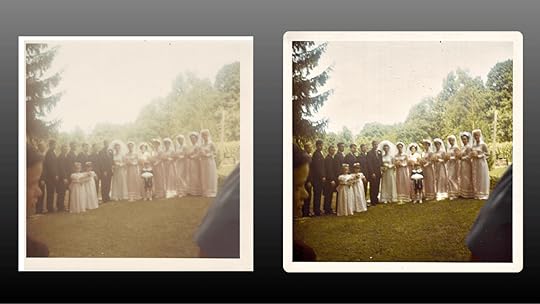 Original scanned photo on left, and digitally restored version on right
My research for this book goes back more than 30 years—first as a journalist in the mid-1990s, then as an indie author who finally has the tools, the time, and the determination to get it done. Back then, I was, by marriage, an almost-insider in Montrose, the small Pennsylvania town where this drama played out, where everyone knew everyone, and nothing about this case stayed secret forever.
Finding this photo inspired me to write a new narrative passage for the book:
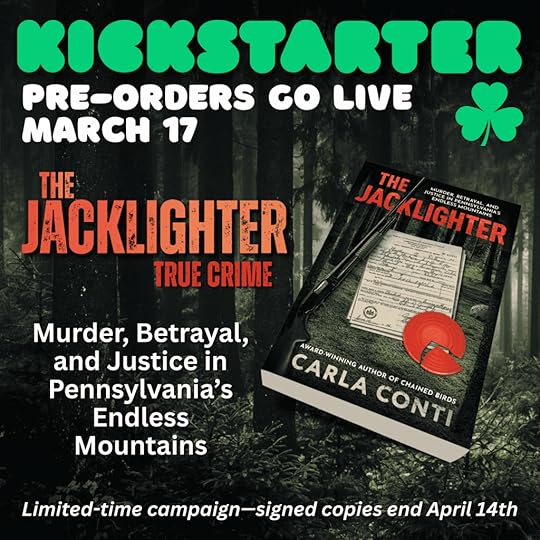
THE JACKLIGHTER can be pre-ordered on Kickstarter right now
My husband’s best friend growing up, a neighbor of the Karveller family, was Patty’s and Marty’s adorable ring bearer in 1968, and the reason I possess a 3½-inch square, faded photo of the couple’s glorious wedding party.
Marty and his new wife, Patty, stunning in her white lace gown and full veil, are flanked on one side by seven bridesmaids (including Marty’s sister Joann), all of whom wore smaller veils and pink chiffon gowns with pilgrim collars and three ribbons of lace at the hem. On the other side of the smiling couple are seven groomsmen, outfitted in dark tuxedos and bow ties to match Marty’s. Two sweet flower girls in floor-length lace dresses and gloves stand in front of the groomsmen, while my husband’s boyhood friend, in a child’s dark suit with shorts, white knee socks, and a flowing pilgrim collar, holds the ring pillow in front of the bridesmaids.
In 2026, when I unearthed this long-forgotten photo and a second close-up of the three youngest participants, I immediately texted copies to the grown-up ring bearer and his wife. This spawned a good one-hour chuckle over vintage outfits, a bowl haircut, and cherub faces that graced a now somewhat infamous wedding party nearly 60 years ago.

If you’ve been following along, this is the moment. If you’re new here, this is a deeply reported true crime book about murder, betrayal, and justice in Pennsylvania’s Endless Mountains — and your pledge, at any level, helps make it real.
 Pre-order and pledge for THE JACKLIGHTER on Kickstarter
As always, thank you for your support
— Carla
The post The Bride. The Groom. The Only Witness. A new JACKLIGHTER excerpt. appeared first on Carla Conti.
February 24, 2026
My First Contest! Win the Audiobook on Spotify & Score a Free eBook 🎁
 Win CHAINED BIRDS on Spotify — Plus Get a Free eBook Just for Sharing!
I’ve always wanted to do this. 
As an indie author who loves connecting with readers, I’ve dreamed of running contests and giveaways — not just as a one-time thing, but as an ongoing way to celebrate my books and build excitement for what’s coming next. Well, that day is finally here, and I’m now set up to run contests throughout the year!
Here’s what’s up for grabs: 10 lucky winners will receive a Spotify Premium audiobook code for Chained Birds: A Crimemoir,  Critics have called my award-winning true crime memoir “eye-opening,” “captivating,” and one that reads like a thriller. The contest runs through March 16th, so don’t wait!
 Click here to enter the contest!
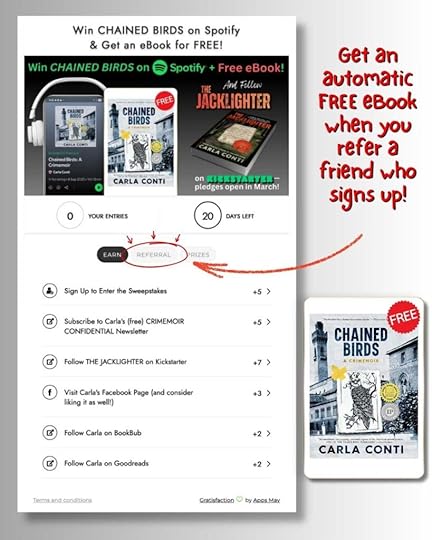 Get an automatic FREE eBook of CHAINED BIRDS when a friend you refer signs up for the contest too!
Entering is simple. Just sign up at the link above or on my Contests & Giveaways page, and you’ll earn entries by completing easy actions like subscribing to my newsletter, following me on BookBub or Goodreads, visiting my Facebook page, and — most importantly — following The Jacklighter on Kickstarter (more on that in a moment!). The more actions you complete, the more entries you earn.
Get a FREE eBook Just for Referring a Friend — No Need to Win!Here’s my favorite part of this contest, and honestly the reason I built it the way I did: you don’t have to win the drawing to walk away with something free.
When you refer a friend who also signs up for the sweepstakes using your personal referral code, you’ll automatically receive a FREE eBook of Chained Birds: A Crimemoir (a $9.99 value) as a thank-you gift. Your unique sharing code is available right on the Referral tab of the contest widget, and you can share it by email, text, messages, or on your social media.
This is currently the only place to get a free copy of the Chained Birds eBook (it is NOT on Kindle Unlimited), so if you’ve been curious about the book, this is your moment. 
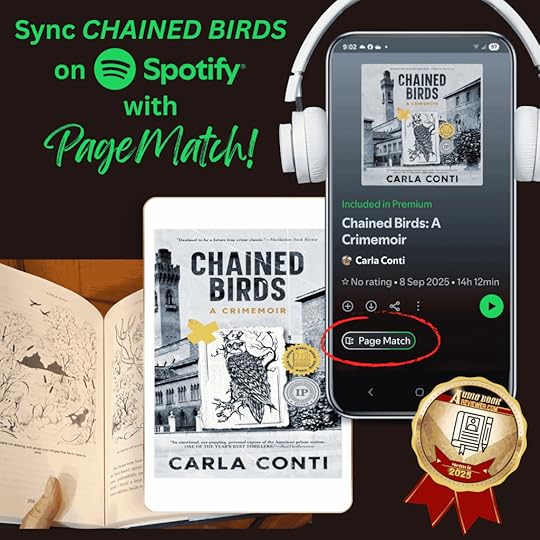
If you already own the eBook (or pick it up through this giveaway) AND you listen to the Chained Birds audiobook on Spotify, you’ll want to know about Spotify’s brand-new PageMatch feature — which I wrote about in this post. PageMatch syncs your place between reading and listening, similar to Amazon’s Whispersync but on Spotify. So you can pick up exactly where you left off, whether you’re reading or listening. Pretty game-changing for multi-format readers!
A Note for Spotify Premium Subscribers
If you have Spotify Premium, the audiobook prize code for Chained Birds can be used for the book, meaning your 15 monthly hours of Premium listening are freed up for another audiobook of your choice. It’s a win-win for audiobook lovers who want to stretch their listening time!
And Speaking of Things Worth Following …
You may have noticed that one of the contest actions is to follow The Jacklighter on Kickstarter — and that’s by design. 

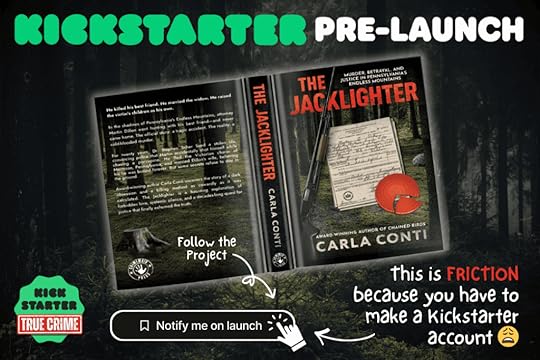 In marketing, friction refers to anything that slows down or discourages a person from taking action — even a small one, like clicking a button, and especially when having to make an account by giving an email, etc., as in Kickstarter.
Here’s something I’ve been learning a lot about in the indie publishing world lately: the concept of “friction.” In marketing, friction refers to anything that slows down or discourages a person from taking action — even a small one, like clicking a button, and especially when having to make an account by giving an email, etc., as in Kickstarter. I know that asking people to follow a Kickstarter campaign is not a trivial ask, but every follower genuinely signals to the Kickstarter algorithm that there’s interest in this project — and that matters when pledging opens in March.
The good news? The Jacklighter’s pre-launch page has already attracted a healthy number of visitors, and the early momentum has been wonderful. This contest is simply another way I’m reducing that friction — giving people a fun reason to stop by and explore what’s coming. Many visitors naturally become backers once they see what the campaign is about, and I’m betting that the true crime fans who love Chained Birds will be just as excited about The Jacklighter.
So if you haven’t yet, take a peek! Follow The Jacklighter on Kickstarter — pledges open next month, and there will be Early Bird rewards for followers. 
Head to my Contests & Giveaways page, sign up, and share your referral link with a friend who loves true crime. The contest ends March 16th — good luck!
The post My First Contest! Win the Audiobook on Spotify & Score a Free eBook 🎁 appeared first on Carla Conti.
February 15, 2026
Sync CHAINED BIRDS Audiobook and Print with Spotify’s New PageMatch Feature
To add to this month’s publishing news for indie authors …
Just when I thought February couldn’t get any better for Chained Birds — after celebrating the book’s availability in ALL formats on Bookshop.org — Spotify dropped a game-changing feature called PageMatch that’s giving Amazon’s whispersync a run for its money 
If you’ve ever been torn between reading a physical book at home and switching to the audiobook during your commute (or vice versa), Spotify just solved that problem. Their new PageMatch feature lets you seamlessly sync your progress between print and digital book versions … as in a paperback of Chained Birds and my author-narrated audiobook on Spotify. (It’s under Spotify Premium, included at no extra cost if you’re a subscriber).
Yes, you read that right. You can now scan a page from your physical book with your phone’s camera, and Spotify will jump to that exact spot in the audiobook. Or if you’re listening and want to pick up reading where you left off, PageMatch will guide you to the precise sentence in your book.
This is basically magic.
 In a related post, see how Taylor Swift inspired me to reclaim my publishing rights to Chained Birds (and why I’m so proud to share a platform with her ).How PageMatch Works: The Tech Behind the Magic
PageMatch uses computer vision and optical character recognition (OCR) to match text passages with the audiobook’s timestamp. Because it’s matching text rather than page numbers, it works across different editions — whether you’ve got the Chained Birds premium 6×9 hardcover with dust jacket from Bookshop.org or are reading the eBook version on your phone or tablet (also available from Bookshop.org.)
PageMatch Versus Amazon’s Whispersync for VoiceAmazon’s Whispersync for Voice has been doing something similar since 2012. Whispersync is the Everything Store’s cloud-based synchronization service that automatically aligns your “furthest page read” on a Kindle eBook to its Audible audiobook counterpart. But this only works in the Amazon ecosystem.
The beauty of Spotify’s PageMatch is that you can sync any book print copy with any eBook/eReader version, purchased from anywhere, to the audiobook on Spotify.
How to PageMatch Switch from Book to AudiobookHere’s how to make the jump when you’re ready to go hands-free:
Open the Mobile App: Launch Spotify and navigate to the audiobook you’re listening to. If PageMatch is enabled, it will say so as shown in the screenshot of the Chained Birds audiobook.Tap Page Match: Look for the Page Match button (or “Scan to listen”) on the book’s detail page.Scan the Page: Point your camera at the physical book or e-reader page you’re currently reading.Sync and Play: Once Spotify matches the text, you’ll see a “Play from here” option to resume the story in audio format — right where you left off in the text.How to PageMatch Switch from Audiobook to BookHeading home and want to curl up with the physical book? Here’s how to find your spot:
Select “Scan to Read”: Within the Page Match menu, select the option to find your place in the physical book.Scan Any Page: Scan any page in your physical copy or e-reader so the app can orient itself.Follow Navigation: The app will guide you by telling you to flip forward or backward.Find the Passage: Spotify will highlight the exact sentence on your screen or display “Page matched!” once you reach the correct spot.Pretty cool, right? 
Availability: PageMatch is rolling out to all users globally and is expected to be fully available for most English-language titles by February 23, 2026. So if you don’t see it quite yet, check back in a few days.
Lighting Matters: For the best results, use bright, even lighting and ensure your book pages are flat to avoid glare or distortion. (I learned this the hard way while testing it out in my dimly lit reading nook.  )
)
I’d be remiss if I didn’t mention that in December 2025, my author-narrated audiobook of Chained Birds was by AudiobookReviewer.com. That award means the world to me, especially because narrating my own story was one of the most vulnerable creative experiences of my life.
Now, with PageMatch, more readers can experience that narration — and switch effortlessly between formats as their day (or mood) demands.
Bookshop.org + Spotify: A Match Made in Indie HeavenAnd speaking of partnerships that make my indie author heart sing — Bookshop.org is teaming up with Spotify to bring a “get a copy for your bookshelf” feature coming this spring. From what I understand, this means listeners on Spotify will be able to click a link that takes them directly to Bookshop.org to purchase the print version.
So not only can you listen to Chained Birds through Spotify Premium, but you’ll soon be able to grab a physical copy to support your local indie bookstore — all without leaving the app. This is the kind of reader-first, author-friendly, bookstore-supporting ecosystem I am here for. 
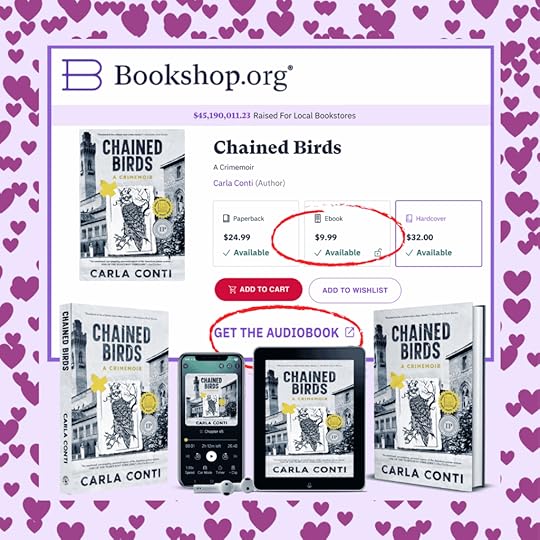 Chained Birds Is Now on Bookshop.org in ALL Formats — And Every Purchase Supports Local Bookstores!
Between Bookshop.org adding eBooks to their platform (as I wrote about last week), Draft2Digital expanding distribution options, and now Spotify rolling out PageMatch, this is an incredible time to be an indie author. These platforms are building tools that prioritize readers and creators — not just the Everything Store’s bottom line.
When I reclaimed my publishing rights last summer and went independent under Crimemoir Press, I knew I’d be doing everything myself. But I also knew I’d have the freedom to partner with platforms that share my values. Moments like this — seeing Chained Birds available in every format, on platforms that support indie bookstores and innovative reading experiences — remind me why I made that leap.
Try PageMatch with CHAINED BIRDS TodayIf you’re a Spotify Premium subscriber, Chained Birds: A Crimemoir is already included at no extra cost. Click that link or search for it in the app, hit play, and when you’re ready to test out PageMatch, grab your physical copy and give it a try.
And if you don’t have a physical copy yet? Well, Bookshop.org has you covered in every format — paperback, hardcover, eBook, and audiobook — with every purchase supporting local independent bookstores.
Here’s to reading (and listening) however the heck you want. 
Take a look and “Follow” for updates to be the first to know when the campaign goes from pre-launch to live-for-backing 
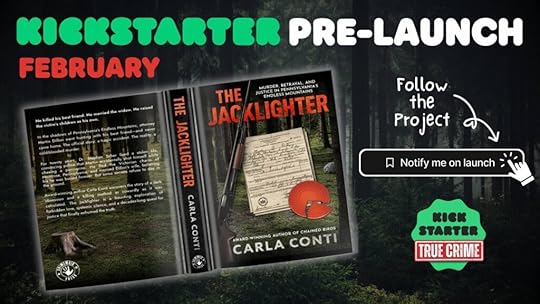 “Follow” THE JACKLIGHTER campaign on Kickstarter for an exclusive Early Bird reward and to boost the Kickstarter algorithm with your support!
The post Sync CHAINED BIRDS Audiobook and Print with Spotify’s New PageMatch Feature appeared first on Carla Conti.
February 14, 2026
CHAINED BIRDS: Now in ALL Formats on Bookshop.org!
 Happy Valentine’s Day, Book Lovers! In celebration of indie authors and local bookstores, I have a shout-out for Bookstore.org, which announced some big publishing news last week about bringing eBooks to their platform. And I noticed that my award-winning debut, Chained Birds: A Crimemoir, was an immediate beneficiary.
If you’ve been following my indie publishing journey, you know I’m all about getting Chained Birds into readers’ hands through as many channels as possible. So I’m thrilled to share that my book is now available on Bookshop.org in every format — paperback, hardcover, eBook, and audiobook — and every purchase directly supports independent bookstores.
Let me say that again for the people in the back: every purchase supports local bookstores.
Also, there’s no markup on the $9.99 eBook, which is the same price as listed in the Everything Store
Last week, both Bookshop.org and Draft2Digital (D2D) announced a partnership to bring eBooks to the Bookshop.org online store. This is huge news for indie authors and readers alike. D2D has been my distribution partner for wide eBook distribution, and seeing that partnership extend to Bookshop.org — a platform built on the mission of supporting indie bookstores — feels like a perfect alignment of values.
For those unfamiliar, Bookshop.org was founded in 2020 (and really took off during Covid) to offer an alternative to the Everything Store, giving readers a way to shop online while funneling profits back to local, independent bookshops. So far, Bookshop.org has raised over $45 M for local bookstores — that’s “M” as in million
As someone who took the leap into indie publishing last summer after my “friendly divorce” from my traditional publisher, I am all in on platforms that champion independent voices — whether those voices belong to authors or booksellers.
The Hardcover Edition Bookshop.org Got Right (That Amazon Won’t Fix )
)
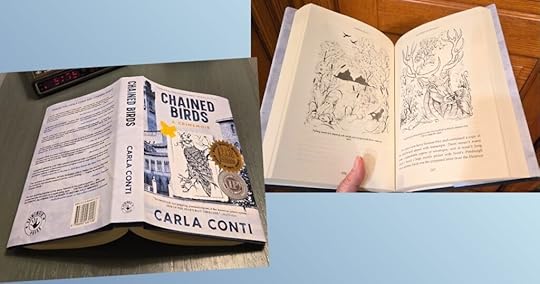 Bookshop.org carries the premium 6×9 Chained Birds Hardcover with dust jacket (for the same price as Amazon), and every purchase benefits local independent bookstores!
If you visit Chained Birds on Bookshop.org, you’ll see a link to buy my beautiful 6 x 9 hardcover edition with dust jacket — the “Author’s Cut” version with 20+ new images — properly featured and competitively priced at $32. That’s the same price point as Amazon.
Now, if you visit Amazon … well, let’s just say it’s a mess. Amazon has mucked up my hardcover offerings. They’re still featuring my old cover from my previous publisher — a version that isn’t even supposed to be available anymore. I have tried exhaustively to get them to remove it. I’ve submitted requests. I’ve escalated cases. I’ve even involved my former publisher directly. And Amazon. Won’t. Budge. 
So if you want the correct hardcover edition of Chained Birds — the one I painstakingly re-launched under my own Crimemoir Press imprint — Bookshop.org has it right.
 I have a special offer for anyone who sends me purchase proof of the premium hardcover edition of Chained Birds: I’ll mail you a signed bookplate, bookmark, and the two award seal stickers you can overlay on the cover The Audiobook Deal You Didn’t Know You Needed
 Here’s another reason to love Bookshop.org: they’ve got a one-click “Buy the Audiobook” button that takes you straight to a Libro FM page where my author-narrated audiobook is priced at $15.74 — or just $14.99 with a Libro FM membership.
Compare that to Amazon, where the same audiobook costs $21.83 for an individual purchase. That’s a savings of over six bucks, folks. And again, your purchase supports independent bookstores rather than … well, you know. 
None of this would be possible without the indie partnerships I’ve built since going independent. D2D (Draft2Digital) handles my wide eBook distribution, getting Chained Birds onto platforms beyond just Amazon’s Kindle ecosystem. And Author’s Republic distributes my audiobook widely, which is how it landed on Libro FM in the first place.
When I reclaimed my publishing rights last summer — inspired in part by what Taylor Swift taught me about fighting for creative rights — I knew the road ahead would be harder in some ways. I’d be doing everything myself. But moments like this remind me why I made that choice. I get to partner with platforms that share my values. I get to offer readers competitive pricing. And I get to support the bookstore ecosystem that nurtures all of us who love the written word.
Take a look and “Follow” for updates to be the first to know when the campaign goes from pre-launch to live-for-backing
“Follow” THE JACKLIGHTER campaign on Kickstarter for an exclusive Early Bird reward and to boost the Kickstarter algorithm with your support!
The post CHAINED BIRDS: Now in ALL Formats on Bookshop.org! appeared first on Carla Conti.
February 12, 2026
Kickstarter Day 3: The Jacklighter Hits #6 in Nonfiction—Watch the Trailer!
It’s Day 3 of THE JACKLIGHTER’s pre-launch phase on Kickstarter, and I’m thrilled to report that things are already off to a promising start.
As of this writing, The Jacklighter is trending #6 out of 206 projects in Kickstarter’s “most popular upcoming nonfiction” publishing category—and I have my fabulous first 11 followers to thank for that early momentum. (If you’re one of them, I see you and I appreciate you! )
But I need more followers to keep climbing.
If you haven’t yet visited the campaign page, now’s a great time—the official book trailer is front and center, and it’s the fastest way to get a feel for this chilling true crime story of murder, betrayal, and a two-decade fight for justice in Pennsylvania’s Endless Mountains. You can watch it right on the Kickstarter page.
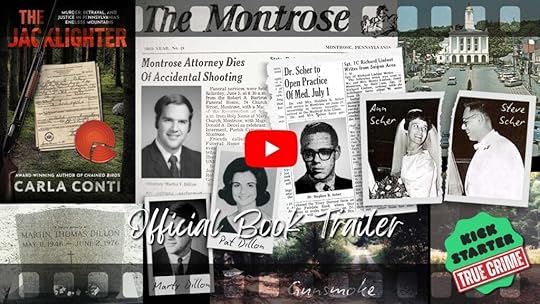
 Tickets are FREE! Watch the official Jacklighter video trailer on Kickstarter
I’ve been geeking out on the platform’s numbers, so here’s a snapshot of the publishing world on Kickstarter right now: There are currently 339 live publishing projects across the platform—everything from comics and graphic novels (Kickstarter’s bread and butter) to poetry chapbooks, children’s books, anthologies, and literary fiction. Behind those live campaigns sit a whopping 1,378 projects in pre-launch, just like The Jacklighter. Not all of them will advance to a live backing phase—some creators pause or pull their projects if the pre-launch following doesn’t materialize.
Zooming into nonfiction specifically, there are 79 live nonfiction projects and 206 in pre-launch (that’s the pool where The Jacklighter is currently sitting at #6  ). And here’s a fun stat: across Kickstarter’s entire history, there are 71,896 publishing projects on the platform—because Kickstarter pages live forever, even for campaigns that didn’t successfully fund. It’s a massive, vibrant ecosystem for books, and I’m excited to be part of it.
As I explained in my full Kickstarter announcement post, becoming a follower now sets you up for some great rewards when the 30-day backing campaign goes live in March:
 Limited Early Bird signed books (only 100 per format—bookplates for paperbacks and hardcovers) at special launch-only prices Special bundles combining print, eBook, and audiobook at reduced prices compared to future retail A FREE copy of Chained Birds for every backer—eBook, audiobook, or both, depending on your reward tierHow to Follow (It Takes 30 Seconds)
Here’s my one ask: head to The Jacklighter on Kickstarter and click “Notify me on launch.” Yes, Kickstarter does require you to create a free profile with an email address—I know, it’s a tiny speed bump —but the whole signup process honestly takes less than 30 seconds. And once you’re in, there are tons of fascinating creative projects to browse beyond mine.
Every new follower boosts the project in Kickstarter’s algorithm, which means better visibility, which means a stronger launch when backing opens next month. Your follow has a direct impact on whether this book gets funded.
Thank you for your support! Let’s keep The Jacklighter climbing. 
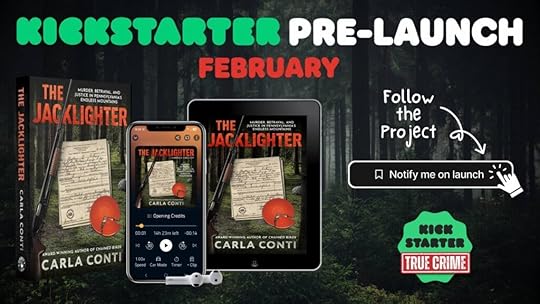 “Follow” THE JACKLIGHTER campaign for exclusive Early Bird rewards, book bundles, and to boost the Kickstarter algorithm!
The post Kickstarter Day 3: The Jacklighter Hits #6 in Nonfiction—Watch the Trailer! appeared first on Carla Conti.