Max Malterer's Blog
August 20, 2026
Stage Whisper
Hey everyone,
Germany has several important state elections coming up in September, and the results could shape the country’s political direction for years to come. Then, in November, the US midterms will likely have consequences far beyond the US.
Don’t worry—I’m not about to turn this newsletter into political commentary. There are enough pundits out there already, many of them with a level of sophistication and political insight I envy ;)
But with elections in the air, this felt like the right moment to revisit a speculative fictionshort story I first published in 2024. I’ve given it a fresh polish since then.
I hope you enjoy Stage Whisper.
Stage WhisperHope With A Hidden AuthorA Short Story—
I was staring at my university diploma hanging above the TV, keeping an eye on the countdown against the backdrop of our nation’s flag.
5:11. 5:10. 5:09.
This was the moment to finally put an end to my parents’ constant nagging about my fledgling career; the time to finally achieve my dream of working for the country’s premier newspaper, instead of scraping by on meager payouts from my local press job and my struggling newsletter, whose nine subscribers hadn’t heard from me in months.
4:13.
I took a sip from my freshly brewed coffee, carefully avoiding the chipped corner of my favorite mug. As the coffee’s warmth filled me with a sense of comfort and relaxation, Paula eased open the living-room door and leaned heavily against the frame. Even at 6 p.m., she was still dressed in her beloved teddy-bear pajamas that I had promised to keep our lifelong secret. She lingered for a moment, her tousled hair falling in loose waves around her face, then shuffled over and sat down on the couch’s armrest.
“What are you up to?”
A glance at the countdown: 3:34. I had to keep this brief.
“I’m watching a livestream of that teenage candidate’s rally,” I said, not taking my eyes off the screen.
“A teenage candidate? Who?”
I patted the cushion. “Why don’t you grab some coffee from the kitchen and watch with me?”
2:11.
Paula shrugged. “You want me to wake up with an election rally?”
To my surprise, she seemed to be genuinely considering the idea. All she needed was a final nudge.
“Yes. This could be the election of the century. Hurry, it’s starting.”
On the screen, the countdown and flag dissolved into a red lectern against black curtains.
Paula returned and sank into the couch beside me, the steam from her coffee braiding into the room’s dim light.
“This better be worth it, Mike.”
“Can’t promise. It’s my first rally, too. But there’s been a lot of buzz about this girl on Reddit. Multiple subreddits dedicated to her.”
“A teenager running for president? How is that even possible?”
“Remember when, early in his second term, the president scrapped the age requirement for presidential candidates, claiming to democratize the race?”
“Of course.”
She was lying; Paula never paid attention to current events. Her blissful ignorance, especially in her thirties, baffled me. She floated through life like a leaf carried by the wind, while I was on a constant chase for the next headline.
“Everybody assumed he did it for his daughter, but nobody expected a random small-town girl to enter the race.”
“Ridiculous, isn’t it?”
“I thought so, too. But somehow this girl is getting attention. My journalistic sixth sense tells me there’s a major story here—one that could finally put me on the map for The National Times.”
Paula rolled her eyes. Before I could add more, a male voice came through the speakers.
“Hello, beautiful souls, and a heartfelt thank you for bringing your light to this gathering. From every corner of our nation, and all walks of life, you’ve chosen to be here with us to share a moment of hope and vision for a brighter tomorrow with Joan. Your time is precious, and the fact that you’re spending a slice of it here, with us, fills our hearts with gratitude.
“Today, Joan will share the three pillars at the core of her journey towards change — pillars she dreams of upholding as president. For those who’ve been with us before, who’ve lent us your ears and hearts, if you feel like sipping your favorite drink before diving back in for the Q&A, we invite you to do so. Remember, this space thrives on your energy, your passion, and your commitment to not just dream of a better future, but to shape it alongside Joan.”
That voice. I felt as if somebody had wrapped their arms around me to comfort me and told me how amazing I was. My heart rate slowed, my breathing eased, even my muscles relaxed. From the corner of my eye, I could see Paula softening in the same way. What a gifted speaker. Maybe he was the secret to Joan Johnson’s sudden rise. I started scribbling notes.
“Now, let’s get this rally started properly. Please rise from the comfort of your seats and give it up for the wonderful, kind, and inspirational Joan Johnson.”
I don’t know why we did it, but Paula and I stood up simultaneously in our living room and applauded as the young woman I’d read so much about strode onstage. Johnson was wearing a forest-green suit and white sneakers. As she settled at the lectern, the camera zoomed in on her. No jewelry. A whisper of makeup. Green eyes focused intensely on us. Her dark hair tied back in a simple ponytail. When she smiled into the camera, it was unlike any candidate’s smile I’d seen: genuine and full of optimism. Everything about her radiated authenticity and sincerity, giving me no reason to question a hidden, selfish motive for becoming president. My pulse quickened. This young woman had the potential to bring real change to our country.
To my left, Paula had leaned forward, her gaze fixated on the screen with wide eyes, no signs of the earlier fatigue left in her. A woman who loved being oblivious to the world was engaged in a way that normally only her favorite fantasy books achieved.
“Hi everyone! Wow, I’m just blown away by seeing so many of you joining us today—people from every state, every class, every race, every party, united by hope and a shared dream. You, people coming together from all walks of life, are the reason I decided to run for president in the first place. This country is a patient barely surviving, when we all know it could be thriving beyond our wildest dreams. We’re like a hidden gem, waiting to shine brighter than we ever imagined. But only together, by channeling our collective energy toward progress and embracing our differences, can we turn that potential into reality.”
Paula was nodding wildly next to me, and I realized the quiet “yeah…yeah” I heard was coming from my own mouth. Johnson had barely said anything, yet I already felt on her side. Her words resonated deeply, igniting a familiar longing to stand with others and be a force for good.
“I truly believe it’s time for a fresh start. Our past and present leaders have been trapped in patterns that bring out the worst in us, viewing the citizens like greedy, selfish sheep to be controlled. They view life as an endless zero-sum game that only the strongest nation can win. That toxic worldview has brought us to the deep misery we find ourselves in.” She paused, scanning left to right as if we were there in person. “But here’s what I see: a chance for renewal, a moment ripe for change. I’m not shaped by those old battles; I’m driven by a vision of unity and joy. I’m ready to journey with you toward a future where everyone wins, a future filled with happiness and progress.”
Her smile never faded; her voice stayed gentle even as she delivered these harsh truths. Any defense reflex I might normally have had dissolved under that angelic tone and youthful clarity.
“I’m not as naive as to believe we can achieve that future with willpower alone. It requires strong principles, impactful policy, and a decisive team. Today, I want to share the core principles that will not just carry us to victory in this election, but also shape our journey forward as we lead with heart and purpose. It’s about laying the foundation for a way of governing that’s as successful and inclusive as it is visionary. Are you ready for them?”
I jerked my head to the right and squeezed my eyes together in pain. Paula’s shouted “YES!” was still ringing in my left ear. I gave her a look.
“Sorry,” she whispered. “I’m getting excited.”
Paula excited by a politician? I definitely was onto something.
As Johnson laid out her principles, I struggled to maintain my journalistic objectivity. She kept drawing me in with her words, evoking a sense of belonging I wasn’t familiar with. In all honesty, people could say many things about me, but “eager follower” wasn’t one of them. From a young age, I had always been fiercely independent, and it was that independence that had driven me into journalism; it was the perfect fit for my self-image as a critical thinker.
Yet something about Johnson made objective distance hard. I decided it was best to just take thorough notes and review them later when I was in a more sober state of mind.
—
The queue inched towards entrance F, the massive stadium towering above us. It was one of the biggest in the country, seating over 150,000. In the past three months, Johnson had come a long way from that first online rally I had joined with its few hundred viewers.
Documenting her meteoric rise to the top of the polls was the most exhilarating journalistic endeavor of my life. Also, the most rewarding. My articles were now featured in the country’s most renowned publications, including The National Times. As a leading reporter on her campaign, I barely had time for anything else. But that was fine. A teenager on the brink of becoming president in one of the most powerful countries in the world — that was fairy tale material. And I was at the front, recording history as it unfolded.
I cleared security and drifted toward my seat in the stadium, studying the crowd. It was Johnson’s first in-person rally, and tickets had sold out within hours. Thankfully, Paula had reserved a ticket for me before they even went on sale. That twist—Paula caring about the world, becoming a volunteer, and pouring her time into the campaign—remained one of the year’s biggest surprises … and a useful one for my reporting.
Almost everyone around me had honored Johnson’s request to wear our national colors: black, white, forest-green, and ruby-red. If it were any other candidate, people would have called this a nationalistic rally. But with Johnson, this was just seen as one of her ways to unite people around something bigger. Her outward youthfulness and naivety had washed the darker stains from the nationalist umbrella and turned it into a tool for saving the country.
Near the VIP section, I spotted Paula directing a group of eager attendees. She glowed—radiant smile, sparkling eyes, entirely in her element. Who’d have guessed that a single online rally would change both of our lives that drastically? From one day to the other, she’d even started rising before me, leaving a mug of freshly brewed coffee on the counter for me. In the midst of the crowd, Paula caught my eye and winked. I grinned and headed to the VIP entrance for my seat.
Goosebumps prickled my arms the moment I stepped into the bowl. Most seats were already filled, and a sea of black, white, red, and green chanted “Joan! Joan!” The stadium walls showed forests and mountains against a blue sky, giving me the feeling of being in a vast open-air arena in the middle of nowhere. A shiver ran through me; I couldn’t remember ever feeling so in awe, so connected with my fellow peers.
As I settled into my seat, I tried to regain my objectivity and reminded myself that crowds do this to people. It’s why they love concerts and sports. Spending most of my time behind a screen, I just wasn’t used to it.
To situate myself, I scanned the stadium. At its center stood a round, red stage and the familiar lectern from the online rallies, with a white carpet leading to it. The rest of the floor remained empty—unusual for a campaign event, especially for someone running a “With-the-People” platform. Intentional? Or just an oversight by an inexperienced candidate? It seemed unlikely.
Before I could give it more thought, a familiar, comforting voice filled the stadium.
“Hello, beautiful souls, and a heartfelt thank you for bringing your light to our first in-person gathering. From every corner of our nation, and all walks of life, you’ve chosen to be here to share another moment of hope. Joan couldn’t be more excited to see you here, united around one goal: to heal our division and move our country toward a brighter future. Now, let’s get this rally started properly. Please rise from your seats and give it up for the wonderful, kind, and inspirational Joan Johnson.”
As I rose from my seat with 150,000 others, clapping as if it were the last thing I would do in this life, I had a flashback to that first online rally. It was almost eerie how consistent Johnson had been throughout her entire campaign. No wonder there were countless conspiracy theories on the web about who was behind her. They named all the usual suspects and were further fueled by the other two candidates who had homed in on any angle that could discredit Johnson due to her youth. So far, she had not only anticipated every attack, but, like a martial-arts fighter, had used them for momentum against her opponents. One of my freelancers was investigating her intellect. Our hypothesis was that her IQ might be near 200, given her ability to steer such a complex campaign machinery at her age.
When Johnson approached the stage, I slipped in my earbuds that flattened her voice to a neutral, factual tone. It was a trick I had developed to be less affected by her and keep my distance. I positioned my tablet on my knee and started typing.
Johnson hit all her usual points: her three principles, seven key policies, the core team she’d appoint. Again and again, she returned to uniting the country, and, with the same uncanny ability I had observed dozens of times before, merged seemingly contradictory views into a coherent approach. My brain, like those of many other observers, had struggled to explain how she did it. Researchers had tried to unpack it on TV, but I never understood it. I decided to ignore exploring it in my reporting, and settled for superficially describing her incredible ability to braid opposing views into something that felt right to everyone in the room. After all, it was this ability above all else that had turned voters across the entire political spectrum into diehard Johnson fans. The famous “Johnson Effect”. Around me, people hung on every word, not even taking a sip or a bite from their drinks and snacks. People were thirsty and hungry for what she had to say, starved of genuine connection after decades of a growing partisan chasm splitting the country in half.
After an hour, Johnson ceded the stage to her team. It was the first time I had heard them speak. They felt like older versions of her—more seasoned, less buoyant, but sharing the same kind, caring tone and preference for “we” and “us” over “I” and “them”. It was an impressive show of a cohesive team led by a teenager with a pure heart intent on knitting a country back together.
When the third of the six began, I slipped out of the VIP section. I had come here with a mission, and it wasn’t going to be accomplished from a seat. I needed to get backstage with the staff badge Paula had lent me. Convincing her hadn’t been easy. Only after I had laid out in depth how my reporting would help Johnson win had she relented.
A security guard fixed me with a hard look as I approached the backstage entrance. I kept my pace, flashed the badge, and stepped past.
“Wait.”
I pivoted, feigning surprise.
“Me.”
“Yes, you. I haven’t seen you entering here before.”
“I’ve been working the crowds entering the stadium all day. Just wrapped up. Headed to my team lead for our debrief.”
His gaze sharpened. My pulse hammered in my ears, but I kept my face calm.
“The rally isn’t over.”
“I’m aware. Our team debriefs ahead of the larger crew.”
He squinted. “You look jittery.”
“Of course. This is a big day. If this goes well, we are on track to win the election.”
Even though I wasn’t part of the staff, I had enough insider knowledge to bluff my way past security.
“May I?” I injected a note of irritation, aiming for the perfect blend of indignation and haste.
He hesitated. I edged forward, bracing for a hand on my shoulder, but he relaxed slightly and gestured for me to pass.
“Sure.”
His stare burned my back until I turned right at the first intersection, disappearing into the backstage maze.
The area was completely deserted. Fuck. I’d hoped to ask someone for Johnson’s whereabouts, move in quickly, ask my questions, and be out again. This was supposed to be a crucial piece for my next front-page article, but I didn’t have time to check every door. I’d have to try again at the next rally—and come better prepared.
I was about to leave when I heard Johnson’s voice coming from a room on the right. I tiptoed toward the open door, catching fragments. There was a second, familiar voice in the room. Mentally patting myself on the back, I realized it was the man who always delivered the rally openings, a figure nobody had ever captured on camera. If I could snap a photo of him, the elusive mastermind in so many conspiracy theories, I’d have a cover story on my hands. Slowly, I slid my hand into my front pocket and switched on my new Teenage Engineering recorder—a pricey investment but worth every penny for crystal-clear audio at fifteen meters.
“...early stats look good…might have to replace Josh…weak spot in your team…”
“...like Josh…nobody more purpose-driven.”
“I know. But there’s no place for emotions here. To unite the nation, you need the best team.”
“You said my biggest strength is my passion, my youthful energy to bring about a better world. Sometimes it feels like you bring in the same rationality as the people we want to replace.”
My fingers curled around the doorframe as I flattened myself to the wall. I eased the slim periscope camera out of my left pocket, ready to snake it past the jamb for a visual recording of the conversation. The man’s voice softened as he continued talking to Johnson, and my shoulders loosened as it had its usual effect on me.
“I won’t, Joan. Never would I have convinced you to do this if I had believed an old-guard politician could bring the same change. This country—the world—is doomed if people cannot overcome their differences. My circuits have run every possible scenario, and the one with by far the highest probability of success is a teenage girl with your nature and background becoming president.”
Circuits? What a geek. Just say brain.
“Why can’t you run for president yourself? You are anyway the one teaching me how to speak, how to behave, and even giving me the exact words I should say.”
Jackpot. That was juicy. Every paper would kill for my story. All I needed now was a picture. I eased the camera around the doorframe and checked the tiny screen in my hand—then nearly gasped. Johnson stood alone in the center of the room, facing a dark-blue sphere projected into the air, her hands caressing the pendant on her necklace. The soft voice seemed to be coming from that little marvel of technology.
Damn it. No man. No face for the front page. He had to be somewhere far away, eager not to be seen in public, smart enough to not even show himself on video calls. My heart raced with excitement and fear. This felt like a scene straight out of a Hollywood movie, but it was real. I couldn’t help but wonder what other theories might be true.
“The country is not ready for something like me to run for president. Won’t be for decades. A teenage girl, in a country that has elected neither a woman nor anyone under forty-five, is as far as I can stretch things.”
Something. That odd choice of words again. As the man spoke, the sphere pulsated in perfect alignment with his words and tone. I realized that, although I had always labeled it as male, the speaker’s voice was actually so neutral that it could be attributed to any sex. What a brilliant choice when your aim is to unite everyone.
“Can’t you just build a robot that looks fully human?”
“Not yet. People would sense the difference. For our plan to work, we need you with all your youth, naivety, kindness, and endless optimism to lead us. I’ll be your serving mastermind in the background.”
“But this is so exhausting. I’m not ready.”
The sphere started swelling to twice its size. I wasn’t sure if it was intended as a sign of threat or comfort. When it spoke again, a rush of confidence surged through me.
“You are. And I’m always by your side—onstage and online. In any physical and virtual space where Joan Johnson is present, I’ll be there to guide and influence the conversation. Trust me: nobody knows better than me what people need to hear, the exact words that will bring them together. As long as you say the things I tell you, you’ll do beautifully.”
“What if this pendant breaks?”
“That’s why we have the backups. Worst case, text me on your phone. I’ll find you wherever you reach out.” The voice paused as the sphere shrank back to its previous size. “Joan, I chose you for a reason. You are the only one who can win this election and bridge the chasm in this country.”
Silence. Johnson was processing what the man had said. Or whatever he was.
My eyes wide open, I tried to make sense of what I had just heard. Could it be…? No. That was science fiction. My imagination was taking over. I had spent too much time reading conspiracy theories. As my mind was racing to connect all the dots in my brain, I glanced at the screen in my hands, where Johnson’s usual smile hardened into stern determination.
“Fine. I’ll be your human face to reunite the country.”
“More than just the face, Joan. My processing power is nothing without your human spark.”
Her jaw softened, and she even blushed a bit, unable to resist the voice’s affection.
“Now, it’s time to dress up, head back up for your final words, and get that crowd hyped to the max.”
“Okay. To the max it is.”
I drew my camera back, turned to leave, and bumped straight into a broad chest. When I looked up, I stared straight into the security guard’s furious eyes. Before I could speak, I felt a sudden, sharp pain in my left side, like a horde of wasps all stinging the same spot at once, and everything went dark.
—
My head throbbed. Every fiber of my body was in pain. I felt sorer than I did after even the toughest workout.
I opened my eyes to orient myself. Below me was concrete. A sidewalk. In front of me the brick wall of a building. I turned to my right, realizing I was leaning against an identical wall of another building. Paula’s voice came from behind me.
“About time you woke up.”
She sounded contained, as if leashing herself. How did we get here?
Memory dripped back: Joan Johnson. The mysterious voice. The guard’s chest.
“They took all your gadgets. Wiped your cloud. Fired your freelancers. You may keep reporting great things about Joan Johnson, but if you even draft a single line about what you saw today, they’ll make sure you never publish anything again.”
I twisted painfully to face Paula. I was used to her glares when I left the flat a mess, but this one was different—fiercer, scarier. What had happened to her?
“Did they hurt you? Forced you to say this to me?”
“The only one who hurt me is you. You said you just wanted a glimpse of what it looks like behind the scenes, not to eavesdrop on Joan. Whatever you recorded in there, it would have damaged the entire campaign. The only real hope there is for this country.”
“That’s a bit overly dramatic, isn’t it? I’m sure you know that…”
“Shut up. I told you what you need to know. Not a word about today. To anyone. Or…”
She traced a line across her throat, turned and walked out of the alley.
My mind raced as I watched her go, every thought aligning and connecting like puzzle pieces falling into place. Suddenly, it was all clear—how Joan Johnson, a lone teenager, had managed to orchestrate such a powerful campaign; how she might win and heal a divided nation. But at what cost? Was I supposed to ignore the fact that an AI was pulling the strings? Was revealing the truth my golden act of journalism, or would silence be my solemn vow to a country clinging to a shard of hope?
The EndIf Stage Whisper made you think of someone who might answer differently, send it their way. That’s exactly the kind of conversation I hoped the story might start.
And if this is your first time here, you’re very welcome to subscribe. I share short fiction, early chapters from my books, behind-the-scenes, and notes from the worlds in progress.
Lastly, I’d genuinely like to know where you land, too: would you publish the truth—or protect the hope?


July 19, 2026
The Tool Is Not The Shortcut
Hey everyone,
My past months have mostly belonged to SAINT, my new novel about AI religion. More on that in fall.
For now, I want to write about something around the writing itself: how I use AI in my writing process, how that has changed over the last years, and where I currently draw the line for myself.
There are more and more articles, posts, and opinion pieces on AI-generated novels, AI-assisted novels, AI-generated audiobooks, and really every possible form of AI-supported media creation. The whole industry is struggling with this. There are different levels of animosity toward creators who use AI. Awards are becoming stricter. Publishers are pulling AI work from markets. At the same time, many authors simply do not declare when they use AI at all, because the entire thing has become so uncertain.
What can I say? What can I not say? What can I use? What should I not use? When does something count as AI-generated, and when is it simply AI-supported? Is replacing my Google Search bar with ChatGPT already too much?
We are going through a huge transformation. And because LLMs are so writing-focused, and because audio generation is improving so quickly, the uncertainty is especially strong in the book world. Which is why I thought it might be useful to write a longer piece on how I have worked with AI over the years, how I work with it now, and how I might work with it in the future.
Before getting there, a brief detour through history.
When the printing press appeared, many people saw disaster. The end of proper creativity, the end of control, the end of the old order. The typewriter changed writing. Desktop publishing changed book production. The internet changed distribution. Self-publishing changed who could enter the market at all. And every time one of these changes arrived, there was some version of the same fear: this will lower quality, this will flood the world with bad work, this will ruin what was good before.
And to be fair, it often did produce more bad work. More dubious work. More shallow work. When creation and distribution become more accessible, more things get made, and many of them are not exactly great. But at the same time, these shifts also made space for a much broader range of tastes, more niches, more unusual voices, and more outstanding work that might never have reached readers otherwise.
In the end, I think these transformations were net positive. And even with all the mess around AI, I think it will probably be the same here.
I recently read a short Seth Godin post called “Real artists…”, and it helped me name something I had been circling around. It is very short, almost a list of provocations. Real artists use this, not that. Real writers do this, not that. Until the point becomes obvious: artists have always used technology. The question is not whether there is a tool involved. The question is intent, responsibility, and whether the work creates a feeling in the audience.
That framing feels much more useful to me than pretending there are only two camps: the people who are pure because they never touch AI, and the people who are lazy because they do.
I do not think it is that simple. Right now, I think the best thing a writer or creator can do is to use the tool, test it, struggle with it, and figure out what the right approach is for what they actually want to achieve with their art.
Because AI is not automatically the easiest way to create a good book. Maybe it is an easy way to create a lot of text, but that is not the same thing. Like every tool, you need to understand how to use it. I use a saw maybe once a year, and the cut is never perfectly straight. Not because the saw is bad, but because I am not good enough with it. AI is obviously different in scale, but the principle is similar. If you want to use it in ideation, writing, revision, editing, cover creation, publishing, or anything else, you have to learn where it helps, where it gets in the way, and where it quietly makes things worse.
And as with any powerful tool, that takes time and effort to learn.
When I wrote The Human Relief Project, I used AI a little bit for brainstorming, and here and there to help me with a specific word or phrase. But it was very limited. First, the tools were not as powerful then. Second, I was totally new to writing and editing and publishing. I did not really know what to use AI* for, or how to use it. And third, I did not have the confidence yet. I felt I needed to figure everything out on my own first.
With Birthright, I became more conscious about it. Ideation? No need for AI. I love ideation. Plotting, worldbuilding, figuring out what the book wants to become, that is one of the reasons I write. Writing the first manuscript? Also no need for AI. But with The HRP, I had already learned something: while my early readers were fantastic, professional manuscript assessment was expensive and did not give me as much as I had hoped. So for Birthright, I used AI to give me feedback on the very first manuscript. I also used it a bit more for ideating revisions, and then much more in the area where I know I am not naturally the strongest: line editing.
When I revise my own books, I usually have thousands of comments. Sometimes I know exactly what I want to change. The note is clear, the problem is clear, and I can simply rewrite the passage myself. But there are also many comments where I know that something needs to be different, while I do not yet have a good idea for what the new version should be. And in those moments, AI became my coach, brainstormer, and editor, so to say.
That gave me a strong lesson for how I am now using AI on my third book.
With SAINT, the whole ideation and plotting again happened without AI. I do not need it there, and honestly, I think it would take away much of the fun. In the actual writing of the manuscript, there is one very specific way I used AI that I cannot really talk about yet without giving too much of the book away ;-) But apart from that, the first manuscript still came from the same place it always does: from my head, my intuition, my obsession with the characters and the world. That part of writing is a creative flow for me, and AI does not work well inside that flow.
Where I did use AI much more structurally was after the manuscript existed. I let AI do a first structural manuscript assessment alongside my own developmental read. That was extremely helpful, not because it told me what the book was, but because it gave me another layer of comments, questions, and possible problems to consider.
I combined those comments with mine, and the result was thousands of notes. And to be clear, these were just developmental notes: character motivation, scene pressure, emotional clarity, stakes, pacing, unresolved elements. Not even the detailed line-editing comments yet.
From there, I worked through the book chapter by chapter, exactly as I would if I had sent the manuscript to an editor at a traditional publisher and received it back with comments and suggestions.
This is where I think the phrase “using AI” becomes much too flat.
When I say AI is my always available editor, I do not mean that it writes my text for me. The process is far more detailed and far less magical than that. I might read a paragraph in the manuscript and write a note for myself like: “This paragraph has all the content it needs. It is also the right length. But I do not feel what this costs her yet.”
That is often the level I work on: not ‘make this better,’ but ‘the information is right, the length is right, but the emotional resistance is not yet visible.’
Sometimes I read that note and immediately have an idea. Then I draft the refreshed paragraph myself. No need for AI. Sometimes I have an idea, write a version, and then ask AI to review it. Does the emotional pressure come through? Is the challenge clearer? Did I improve the paragraph or just make it louder?
Sometimes I have only a direction in mind, but not yet the language, so I let AI do a first draft. And then sometimes that draft is good and only needs some tweaks from me. Other times I do not like it at all, but it still gives me an idea that lets me draft my own version.
So when I talk about AI as an editor, I am not talking about one simple action. I am talking about a very detailed step-by-step, back-and-forth process with different levels of AI assistance across the manuscript. Paragraph by paragraph. Comment by comment. Sometimes AI is not involved at all. Sometimes it gives feedback. Sometimes it gives options. Sometimes it drafts something that I reshape. Sometimes it drafts something I reject, and the rejection itself helps me see what I actually want.
And it takes a lot of time.
SAINT has thirty-five chapters. Plus excerpts. Plus interludes. To work through all my editorial notes just for version two, I spend five to fifteen hours per chapter with AI to really get it right. For just one editing round out of many. Often that means up to four hours on a regular workday—that day job wants to be taken care of too ;)—and full days on weekends. This is not pressing a button and letting a machine produce a book. It is sitting with the manuscript, reading the same paragraphs again and again, trying to understand why something is almost working but not quite.
Now, you might still consider this too much AI involvement. I understand that. Everyone has to draw their own line. But I also think that if someone tells me they will not read my book because they consider it AI-generated, they might overlook how much work I have put into it despite using AI, or rather thanks to using AI.
And I have to be honest: when someone says something like, “Ah, you are using AI, that explains everything,” I do find that difficult. Not because I think people are not allowed to be skeptical. They absolutely are. But because it can sound as if the work suddenly counts for less. As if the discipline disappears. As if the hours disappear. As if the decisions, the taste, the frustration, the uncertainty, and the responsibility all disappear because a tool was involved.
That is not how it feels from my side.
I sit down every single day for hours to make these books better. I am trying to create books worth reading and talking about. Books that are entertaining first, but also thought-provoking. Books with characters, worlds, and questions that stay with people. And as every writer, I have strengths and weaknesses. So I use the tools at my disposal, including AI, to level up the quality of the work.
Authors have always relied on support. Developmental editors, line editors, copy editors, proofreaders, early readers, agents, publishers. And there are famous editors who have sometimes rewritten or heavily reshaped large parts of books that became bestsellers or classics. Not on their own, of course, but in tight collaboration with the authors. To me, that distinction matters. Collaboration is not the same as replacement. Support is not the same as outsourcing the soul of the book.
This is also why I do not let AI write the book from scratch. I do not want that. For one, it would take away the joy of creation, and that joy is the reason I write in the first place. I want the first manuscript to rise from my own inner world. I want the intuitive flow. I want the strange moments that appear before I understand why they matter.
And second, AI has a tendency toward uniformity. If you let it smooth too much, it can make prose cleaner and more forgettable at the same time. That risk exists even in editing, so I have to stay alert. The goal is not to make the manuscript sound like polished AI prose. The goal is to make it sound more intensely like the book it is meant to become.
What AI gives me, most of all, is accessibility. It gives me access to a kind of editorial support that would otherwise be financially impossible at the frequency and depth I currently use it.
Looking ahead, I cannot tell you what the ideal state for AI use in writing is. I cannot tell you what you should consider too much AI involvement. But I believe it can be a great tool to help writers tell the stories they want to tell at a higher quality than they could have afforded before. And afforded is key here, because not everyone has thousands of euros to work with various editors throughout the process, especially when the chances of succeeding with a book are very slim.
So in the spirit of unleashing more creativity, storytelling, and art, I think more writers should give AI a try, and go through the sometimes painful and inefficient trial-and-error process of figuring out what works and what does not work for them. As with any other tool.
And if you are a reader, I think the more interesting question is not whether AI was involved, but how it was involved, who made the decisions, and whether the final work gives you something.
That is also why this matters to me beyond process. The books are not meant to prove that I used the correct tools. They are meant to create the kind of conversations that made me want to write them in the first place.
If you have not read The HRP or Birthright yet, I think both are especially relevant in today’s climate. Not because they offer easy answers. I do not think novels should do that. But because they are built around questions we are already living with: AI replacing work, artificial birth, power, technology, family, responsibility, and what happens when systems change faster than people can emotionally process.
I want them to be good stories first. Books that pull you in. But I also wrote them to create conversations afterwards.
So maybe that is the question I want to leave you with:
When you read a book, where do you personally draw the line between a tool that helped the author, a collaboration that changed the work, and a replacement of the artist?
*I’m saying AI as I have switched between tools over the years. First ChatGPT, then Claude for a while, now back to ChatGPT/Codex.
If you haven’t subscribed yet, you’re very welcome to — it helps this newsletter find the readers it’s meant for.
And if you are already subscribed, feel free to share this with just one person who you think might genuinely enjoy it.
May 22, 2026
Artificial Wombs. AI Alloparenting. Population Collapse. Science or Fiction?
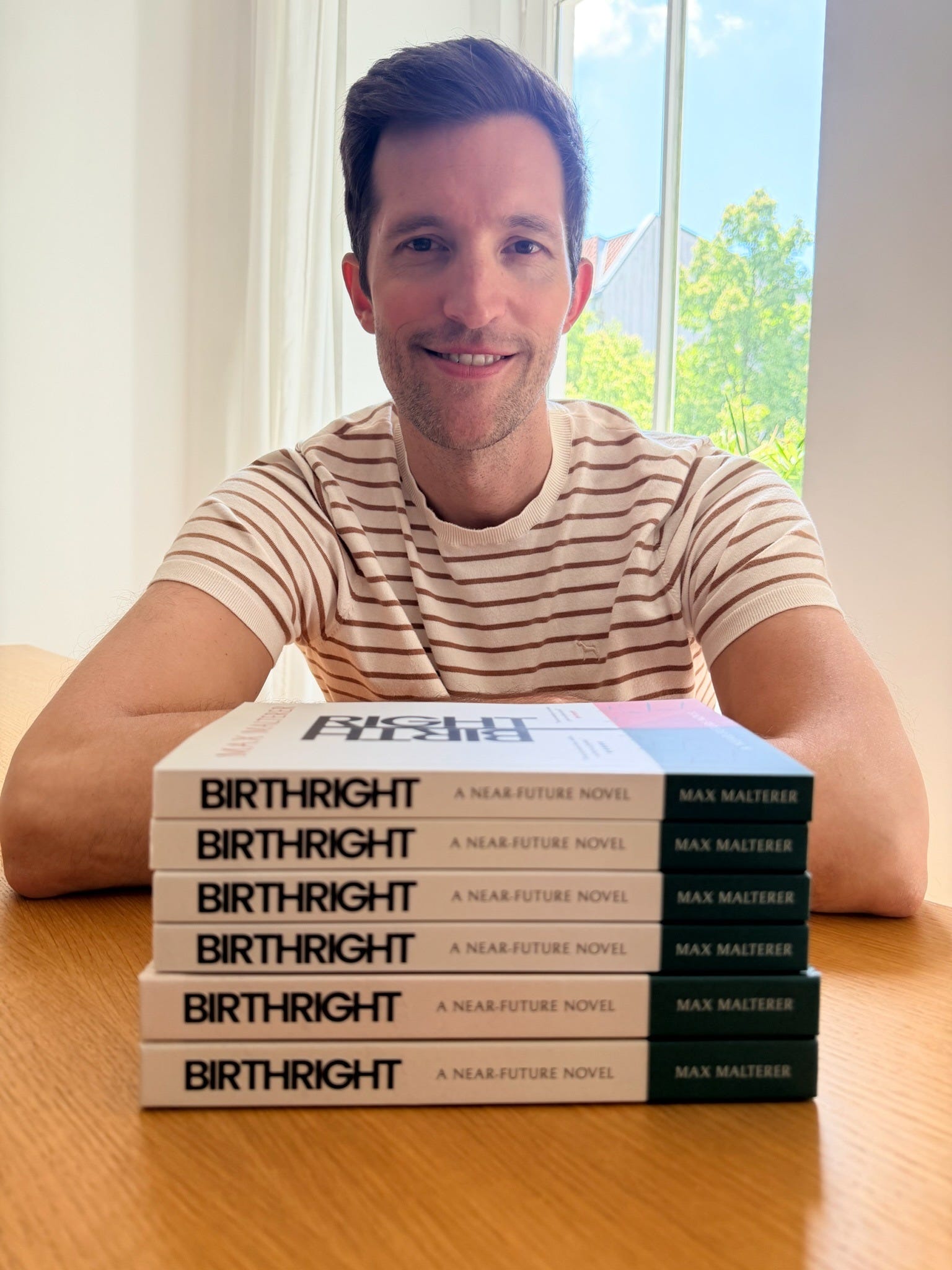 Fresh stack of copies arrived :)
Three months ago Birthright was released to the world. Time flies.
[For the ones new here: Birthright is my latest near-future novel about a country voting to ban natural birth, and a young woman for whom it’s about to become the most personal question of her life.]
Thanks for reading! Subscribe for free to receive new posts and support my work.
And today it’s time for something I’ve been promising you for a while: the post where I shine light on the science that shaped Birthright. A few things got in the way … finishing the first developmental edit of my third novel, SAINT, had to come first. And SAINT needs to exist before Birthright II can. So, apologies for the wait. I’m sure you understand ;)
As I’ve written in my post on worldbuilding, one of the things I care most about as a writer is the plausibility of the worlds I create. Not just “it could happen” plausibility, but the kind that makes you feel slightly unsettled — like the world in the book is already beginning to form at the edges of it. Near futures that feel close enough to touch.
To get there, I do a lot of research. And for Birthright, set in 2096, I kept coming back to three trends that — if you let yourself think them 70 years forward — have the potential to converge into something that looks very much like the world Grace inhabits. Three trends that are already underway, already accelerating, and already raising questions nobody has a clean answer to.
Fair warning: some of what follows is spoiler-adjacent, in the sense that understanding these trends tells you something about the world the novel is built on. If you haven’t read Birthright yet and want to go in completely cold, stop here.
Otherwise, read on.
I. The technology of making babies
Let me start with the one trend that feels most like fiction, even though it isn’t.
In 2017, scientists at the Children’s Hospital of Philadelphia placed a premature lamb fetus — equivalent developmentally to a 22-week human — into a fluid-filled bag. A transparent sack, connected to an artificial lung via the umbilical cord. The lamb’s blood circulated through the device, picked up oxygen, and returned. No mother. No womb. Just a bag of carefully engineered amniotic fluid, and a heartbeat.
The lamb survived. Grew. Developed.
That device is called the EXTrauterine Environment for Newborn Development — EXTEND. It was originally designed with a narrow, compassionate purpose: to give the very smallest premature infants a few more weeks of development before they face the outside world. The FDA was already discussing moving it into human trials as of 2023, with the technology having been tested on around 300 lamb fetuses with strong results. This isn’t speculative. This is the near-term pipeline.
But here’s where it gets interesting for a novelist.
The researchers who invented EXTEND themselves called full ectogenesis — a baby gestated entirely outside the human body, from conception to birth — a “technically and developmentally naïve pipe dream.” And they’re probably right, at least for now. The conversation between a fetus and its mother’s body is extraordinarily complex: hormones, immune signals, chemical exchanges we don’t fully understand yet, let alone replicate. The ethical framework governing embryo research — most countries prohibit experimenting on embryos beyond 14 days — has meant that the two ends of the ectogenesis timeline (early embryo development and late fetal development in artificial environments) haven’t yet been able to meet in the middle.
But notice the language there: ethics, not technology, as the limiting factor. Scientists at Cambridge already grew a human embryo in vitro for 13 days before stopping — not because they couldn’t go further, but because they weren’t allowed to. And meanwhile, in Japan and in Silicon Valley, researchers are racing to create viable eggs and sperm entirely from adult skin cells — a technology called in vitro gametogenesis. The developmental biologist Katsuhiko Hayashi predicted in 2025 that functional human gametes from skin cells are perhaps five to ten years away. A startup called Conception — backed by Sam Altman, among others — is pursuing this explicitly as a way to break through the biological barriers for having children.
Think about what these threads look like, combined, in 70 years. That’s what I was doing when I built the world of Birthright.
There’s also embryo selection — which already exists today, quietly. Companies are now offering polygenic embryo profiling: identifying which of your IVF embryos might have a slightly higher IQ, or be taller, or less susceptible to certain diseases. Most scientists are deeply skeptical about the predictive accuracy of these claims. But the direction of travel is clear. The fertility clinic of 2096 looks very different from the one of 2024, and it already looks quite different from the one of 2004.
If you want to go deeper on where reproductive technology is right now, MIT Technology Review has a particularly clear explainer on artificial wombs, and the MIT Press Reader has a longer piece on the full arc of fertility tech — from sperm banks to ectogenesis — that’s worth your time.
And if you feel like something more visual, the futurist Hashem Al-Ghaili has created an entire video called EctoLife: The World’s First Artificial Womb Facility, making future large-scale artificial birthing centers and their operations feel real today.
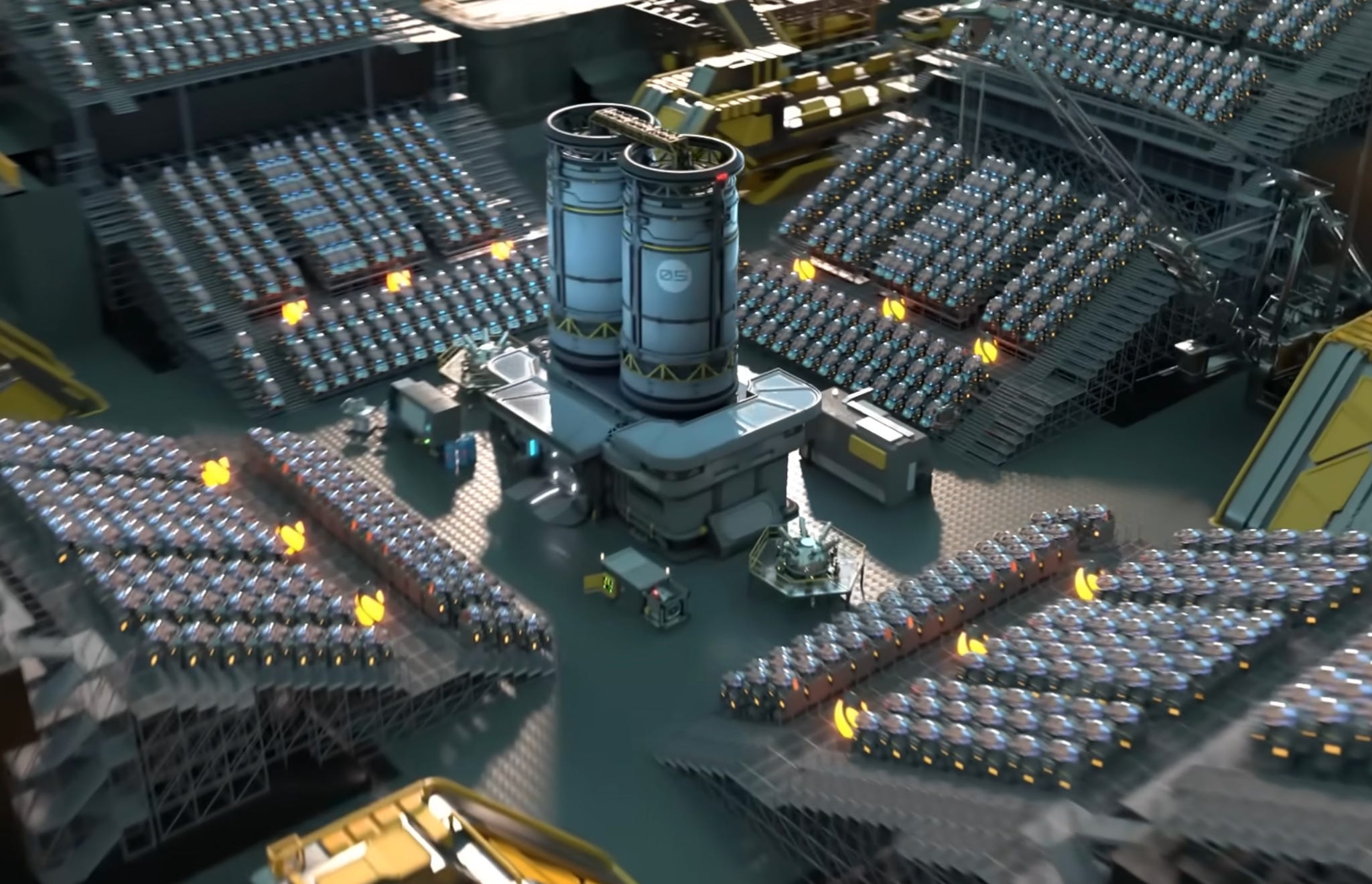 Screenshot from EctoLife: The World’s First Artificial Womb Facility
II. The way we’ve always raised children (and the way we forgot)
This one is less viscerally dramatic, but I find it almost more unsettling, because it’s about something we take completely for granted.
The nuclear family — two parents, their children, a private home — feels like the natural, default unit of human life. It isn’t. It’s actually a relatively recent historical experiment.
For most of human evolutionary history, children weren’t raised by two parents in isolation. They were raised by groups. Anthropologists call the non-parent carers alloparents — grandmothers, aunts, uncles, older siblings, trusted members of the community who shared in feeding, carrying, and protecting children. The evolutionary anthropologist Sarah Blaffer Hrdy — who also happens to have a great TED talk on robots raising babies — has argued persuasively that this cooperative breeding strategy may be the secret of human cognitive success: our unusually large brains and social empathy may have been selected for precisely because we needed to read the intentions of all these different carers, to navigate complex multi-adult relationships from the very beginning of life.
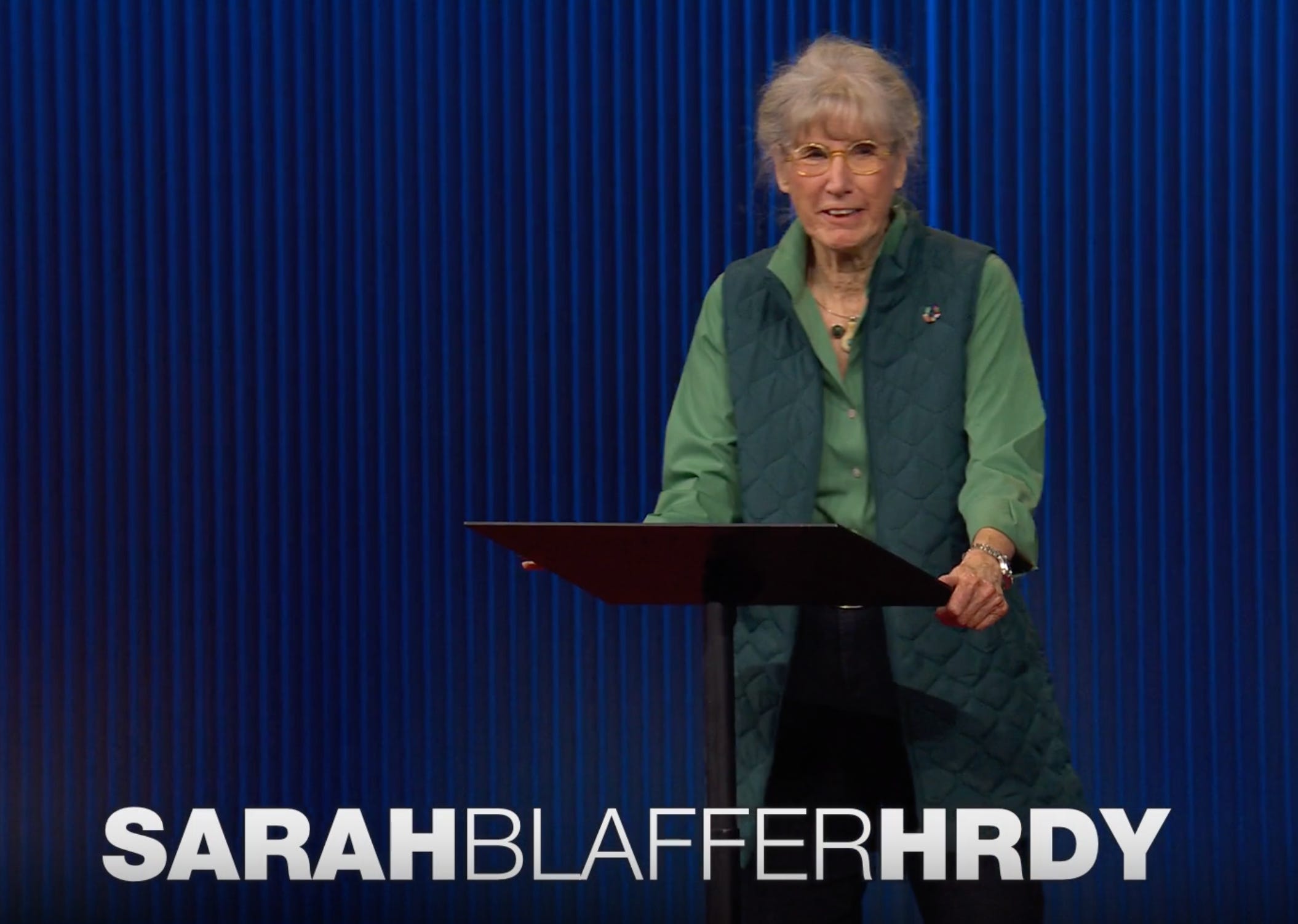 Sarah Blaffer Hrdy’s TED talk
The nuclear family as we know it solidified largely in the 19th and 20th centuries, with industrialisation and urbanisation pulling families apart from their wider kin networks. And even then, the experiment was fragile. David Brooks wrote a widely-read piece in The Atlantic in 2020 arguing that the nuclear family was a mistake — or at least, a historically anomalous structure that works reasonably well for the wealthy and is quietly devastating for everyone else. Without the extended network, if one parent dies or leaves or simply struggles, there’s nothing to catch the child. The village, quite literally, is gone.
About 38% of people globally still live in extended family households. In much of Asia, the Middle East, and Africa, multi-generational living remains the norm. The idea that two people, alone, should be fully responsible for a child’s emotional, cognitive, moral, and physical development is — from a deep-time perspective — a strange ask.
This matters for Birthright because one of the questions the novel is sitting inside is: what happens when technology allows us to revisit that assumption? When AI can support professionals to play the role that alloparents once served — not replacing human love and connection, but filling in some of the bandwidth that the modern isolated nuclear family is constantly running short of?
Which brings me to Alpha School. It’s a private school in Austin, Texas, where students spend two hours a day on AI-driven personalised instruction — and consistently score in the top 1% of standardised tests nationally. The rest of the day is project-based and social. There are no lectures. Kids don’t move forward until they’ve actually mastered the material, not just sat through it. The principal, Joe Liemandt, has made the argument on Shane Parrish’s Knowledge Project podcast that the traditional classroom was designed for a very narrow band of learners and wastes nearly everyone else’s time. His bet — a billion-dollar one — is that AI can help children learn ten times faster.
You could dismiss that as Silicon Valley optimism. But the underlying logic — that AI-driven, adaptive, one-to-one instruction could dramatically outperform a teacher managing 30 children at once — is genuinely hard to argue with. And it’s only a few steps from there to asking: if AI can teach better, what else of the parenting function might it eventually handle? And what do we lose, or gain, if it does?
The Atlantic ran a piece in 2025 called “AI Is Coming for Parents“ that captures this ambivalence really well. It’s partly funny — there are AI party planners for kids’ birthdays, a robot called Snorble that soothes children in the night so their parents don’t have to wake up — and partly genuinely troubling, in the way that the most interesting technological developments tend to be.
III. The population crisis you’re not feeling yet
This is the trend I find most comparable to climate change: slow-moving, poorly understood by most people, and by the time it becomes viscerally undeniable, essentially too late to easily reverse.
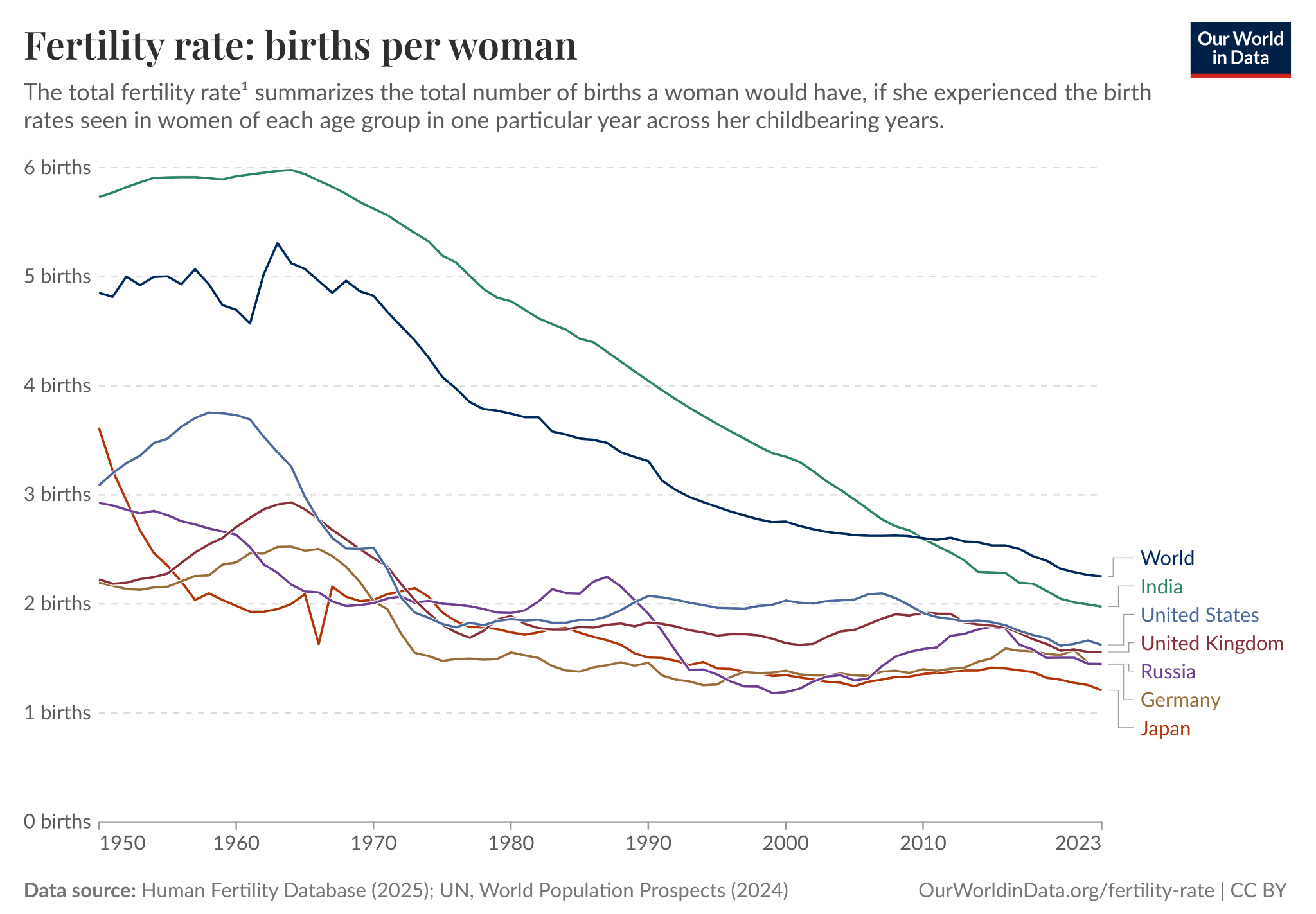
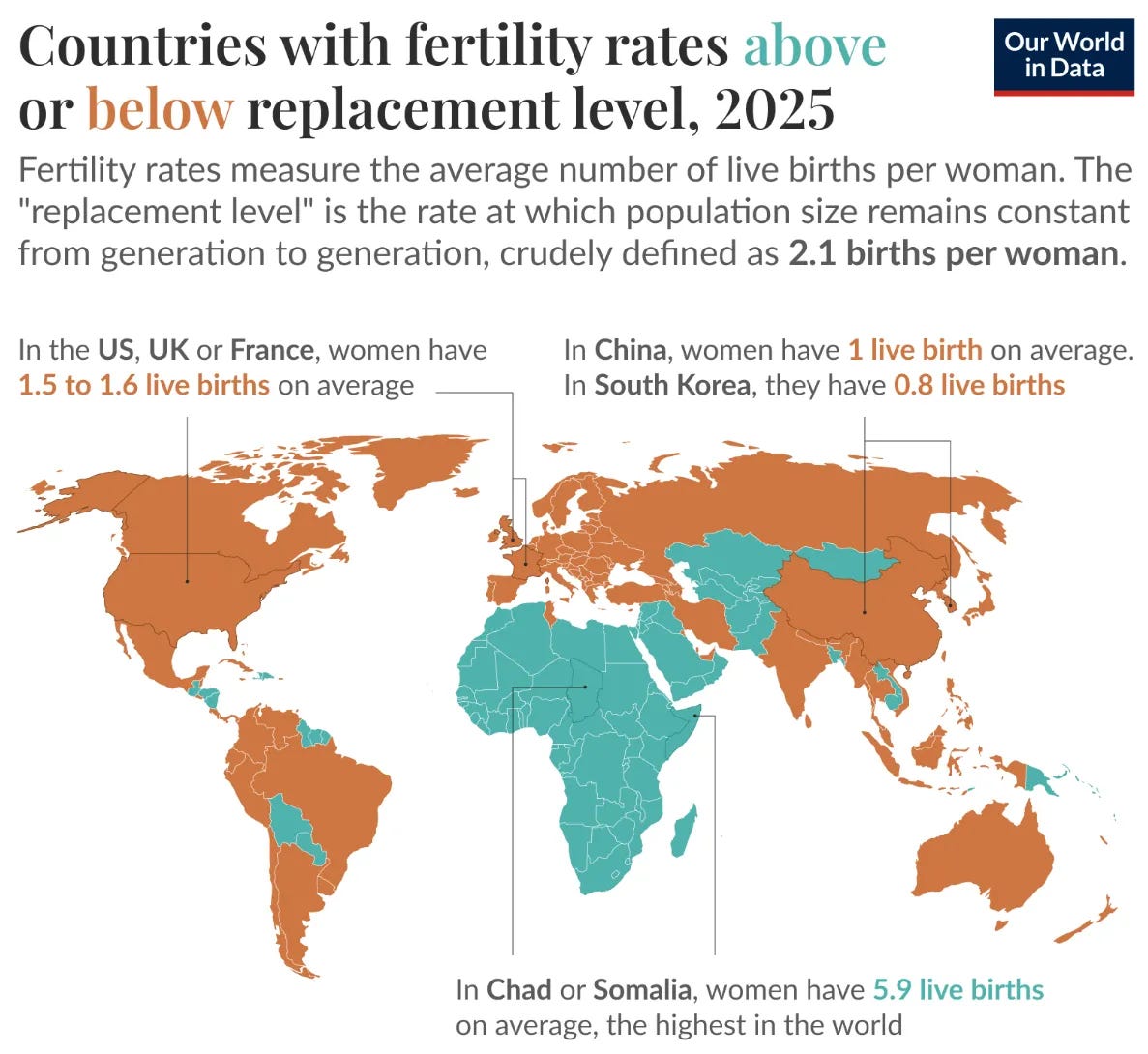
Here come some numbers worth sitting with. The graphs were inspired by Derek Thompson’s latest interview with population expert Jesús Fernández-Villaverde. Which included not just great graphs, but plenty of unforgettable facts such as: If Thailand will have a fertility rate of 0.8 for two centuries, you don’t close some hospitals, you close 98% of them.
 Our World in Data
The birth rate required for a population to remain stable — not grow, just stay the same — is 2.1 children per woman. South Korea is currently at around 0.72. Colombia and Chile have fallen to around 1.0. The EU average is 1.34. And the United States, once an outlier for its relatively healthy fertility rate, has seen it drop nearly 25% since 2008 to 1.57 in 2025. Africa remains the last region with above-replacement fertility, but even there rates are declining faster than demographers predicted. Noah Smith, an economist, has written compellingly about this on Noahpinion: no one on the entire planet knows how to stop this trend. And he explicitly compares dismissing population decline to dismissing climate change — both are slow enough to ignore until they can no longer be ignored.
The comparison isn’t just rhetorical. Like climate change, the real damage happens across a long timeline. You don’t feel a declining birth rate in the same way you feel a recession or a pandemic. What you eventually feel is a society that’s simultaneously older and smaller — fewer workers, a shrinking tax base, more retirees, less innovation, more strain on healthcare systems, failing infrastructure too expensive to maintain for a few, and at the end collapsing economies with all the geopolitical implications. Japan is already experiencing this. South Korea will follow. Most of Europe is heading in the same direction.
And here’s the part that keeps me up at night as a writer: the solutions we’ve tried don’t really work. Hungary introduced some of the most aggressive pronatalist policies in history — women with four or more children pay no income tax for life, among other incentives. South Korea has spent an estimated $200 billion over two decades on various programmes. Birth rates have barely moved. The Economist published a characteristically clear-eyed piece on this in 2024, arguing that most pronatalist policies have only marginal effects on fertility — because the underlying causes aren’t about money. They’re about what modern life costs in time, energy, identity, and opportunity cost.
 Our World in Data
So what happens in 70 years, if that trend continues and nothing has worked?
That’s the backdrop of Birthright. Not a background detail — the entire premise of the novel rests on what a society might be willing to do when it feels existential pressure around its own survival. When a baby isn’t just a bundle of joy but a small act of economic survival.
Putting it together
Here’s what I find genuinely fascinating, and genuinely frightening, about all three of these trends.
They’re pointing in the same direction.
Reproductive technology is advancing toward a world where gestation can happen outside the human body. Parenting models are under strain in ways that make communal and AI-assisted childcare feel less like dystopia and more like practical necessity. And demographic pressure is building quietly, with no policy solution yet found, toward a point where societies may feel they need to do something dramatic.
I didn’t invent the world of Birthright. I projected it. Took threads that already exist, followed them forward, and asked: what does this feel like to live inside?
That’s what I hope the novel does for you — not terrify you, but make you feel the weight of these questions in a way that abstract statistics can’t. Fiction, at its best, is a way of experiencing a possible future before it arrives. A rehearsal for questions we’ll actually have to answer.
I’d love to know which of these three futures are you most willing to accept — and which one are you hoping we never have to?
And also tell me if you enjoyed this little science-behind-the-book piece, or rather have me stick to writing fiction and the journey of doing so :)
Until next time, keep reading. Always keep reading.
Max
PS — On June 1st is World Parents Day. To celebrate every parent and parent-to-be reading this, I’ll make the Birthright ebook available for free on Amazon. Amazon now also allows you to download it as a PDF or EPUB, so you can share it with whoever you think it might resonate with 🙂
PPS — If you have already read Birthright, but haven’t left a review on Amazon yet, please do so. A short review makes more difference than you’d expect and helps this book reach the readers it was made for.
Further reading:
Everything You Need to Know About Artificial Wombs — MIT Technology Review
The Future of Fertility Technology — MIT Press Reader
Womb for Improvement — Works in Progress
The Birth-Rate Crisis Is Even Worse Than You’ve Heard — The Atlantic
The Global Fertility Crisis Is Worse Than You Probably Think — Derek Thompson
Nobody Knows How to Stop Humanity From Shrinking — Noahpinion
The Nuclear Family Was a Mistake — The Atlantic
There Is a Better Way to Parent Than the Nuclear Family — Aeon
AI Is Coming for Parents — The Atlantic
Joe Liemandt on Alpha School — The Knowledge Project
Parenting as a Public Good — Works in Progress
Why the World’s Population is Heading for Collapse - Economist Youtube
If you haven’t subscribed yet, you’re very welcome to — it helps this newsletter find the readers it’s meant for.
And if you are already subscribed, feel free to share this with just one person who you think might genuinely enjoy it.
April 29, 2026
A 2033 Labor Day Announcement
On May 1st, 2033, an announcement appeared in an obscure corner of the internet. No traceable origin. No author. Within hours, it had been picked up by influencers across the globe.*
The Post-Communist Manifesto for the AI AgeToday, on the day that our forebears declared a public holiday to commemorate all those great souls spending their days working on products and services that move the human race forward, we announce the formation of Laborers of the Future.
Since the day humanity started farming, we laborers always had to fight for our rights. But in the last five years, a new kind of monster has begun rearing its ugly head. A monster, deploying the latest so-called breakthrough in technology to not only violate our nature-given rights, but to make the sole word laborer a relic of the past.
The Human Relief Project—human in nothing but in name—fashions itself as the biggest altruistic effort in the history of humanity. But let us not forget that this philanthropic project was not so long ago a passionately capitalistic animal pumped full with investors’ money that called itself Aifortless. Let’s not forget that the first thing Aifortless did was to make travel agents obsolete — not to distribute money to those displaced, but to prove to its investors that they should pour more money into it. Let’s not forget that the global outrage that followed forced it to hire the world’s best storytellers to come up with the name Human Relief Project. Let’s not forget that it was our governments’ money that has financed it ever since. And let’s not forget that calling those who labor while being recorded by its AI volunteers is nothing but unpaid labor, nothing but a bottom line improving strategy that our governments happily support.
But this is only the beginning.
We believe that AI, if not today, then at some point in the future will obliterate any form of human labor, will render it useless for any productive purpose, and with that rob it of meaning, structure, community, recognition, and mastery.
We believe that it is the productive value of labor that gives all of us the power to influence our societies. And without that productive value, we will be condemned to be mere visitors in the countries and realms of those few reigning over the AIs.
We believe that our governments have forgotten our interests. Their greed has made them ignore their animosities and put their weight behind the company calling itself The Human Relief Project.
This company — and we have to call it a company because that’s what it is no matter which governments are investing into it, no matter which head of state sits on its board — made it its mission to trample on our nature-given right to labor.
We believe that the only way to prevent a future where we laborers are powerless is by forcing our governments to give their power over companies like the Human Relief Project back into the hands of the world’s people. Every citizen one equal vote on its board. And we believe this needs to be achieved at all cost.
Our elites call our concerns unfounded.
They promise universal basic income for everyone. Basic. While they harvest every fruit of their AIs’ labor. Labor built on the backs of a thousand generations of workers who will see none of it.
They promise AI will never make the final decisions. It already decides where bombs fall. Which taxes you pay. Which professions are worth protecting from relief and which are not.
They promise equal votes. As if that ever existed in the first place. As if the Human Relief Project’s rise wasn’t engineered by the same people who have always wanted to decide what the rest of us deserve.
They promise us a better future. All they offer is bread and games all day long. A meaningless existence with AI as the new opium for the masses.
In the name of all the laborers that came before, and all the ones yet to come, on this Labor Day, it’s time that we fight back. That we fight for what we deserve.
Every citizen in the world one equal vote on the board.
Every citizen an equal voice in what gets relieved.
Every citizen one equal share of AI’s evergrowing pie.
Laborers have always won when we stopped believing the story the powerful told about us and started writing our own.
Come out of your homes. Leave their addictive screens behind. Join the fight for our future.
The machine works for them until we make it work for all of us.
Laborers of the Future*This manifesto is a piece of fiction from the world of The Human Relief Project — a novel I wrote in 2023 to explore what a life without work might feel like. It is just one side of many in a future where society has to figure out what comes when work as we know it is not part of our lives anymore.
It’s 2026 now — and some of what I imagined doesn’t feel like fiction anymore.
The ebook is free the entire Labor Day weekend on Amazon.
Download it. Read it. Share it.
And then keep reading. Always keep reading.
Max
If you haven’t subscribed yet, you’re very welcome to — it helps this newsletter find the readers it’s meant for.
And if you are already subscribed, feel free to share this with just one person who you think might genuinely enjoy it.
The Post-Communist Manifesto for the AI Age
On May 1st, 2033, an announcement appeared in an obscure corner of the internet. No traceable origin. No author. Within hours, it had been picked up by influencers across the globe.*
The Post-Communist Manifesto for the AI AgeToday, on the day that our forebears declared a public holiday to commemorate all those great souls spending their days working on products and services that move the human race forward, we announce the formation of Laborers of the Future.
Since the day humanity started farming, we laborers always had to fight for our rights. But in the last five years, a new kind of monster has begun rearing its ugly head. A monster, deploying the latest so-called breakthrough in technology to not only violate our nature-given rights, but to make the sole word laborer a relic of the past.
The Human Relief Project—human in nothing but in name—fashions itself as the biggest altruistic effort in the history of humanity. But let us not forget that this philanthropic project was not so long ago a passionately capitalistic animal pumped full with investors’ money that called itself Aifortless. Let’s not forget that the first thing Aifortless did was to make travel agents obsolete — not to distribute money to those displaced, but to prove to its investors that they should pour more money into it. Let’s not forget that the global outrage that followed forced it to hire the world’s best storytellers to come up with the name Human Relief Project. Let’s not forget that it was our governments’ money that has financed it ever since. And let’s not forget that calling those who labor while being recorded by its AI volunteers is nothing but unpaid labor, nothing but a bottom line improving strategy that our governments happily support.
But this is only the beginning.
We believe that AI, if not today, then at some point in the future will obliterate any form of human labor, will render it useless for any productive purpose, and with that rob it of meaning, structure, community, recognition, and mastery.
We believe that it is the productive value of labor that gives all of us the power to influence our societies. And without that productive value, we will be condemned to be mere visitors in the countries and realms of those few reigning over the AIs.
We believe that our governments have forgotten our interests. Their greed has made them ignore their animosities and put their weight behind the company calling itself The Human Relief Project.
This company — and we have to call it a company because that’s what it is no matter which governments are investing into it, no matter which head of state sits on its board — made it its mission to trample on our nature-given right to labor.
We believe that the only way to prevent a future where we laborers are powerless is by forcing our governments to give their power over companies like the Human Relief Project back into the hands of the world’s people. Every citizen one equal vote on its board. And we believe this needs to be achieved at all cost.
Our elites call our concerns unfounded.
They promise universal basic income for everyone. Basic. While they harvest every fruit of their AIs’ labor. Labor built on the backs of a thousand generations of workers who will see none of it.
They promise AI will never make the final decisions. It already decides where bombs fall. Which taxes you pay. Which professions are worth protecting from relief and which are not.
They promise equal votes. As if that ever existed in the first place. As if the Human Relief Project’s rise wasn’t engineered by the same people who have always wanted to decide what the rest of us deserve.
They promise us a better future. All they offer is bread and games all day long. A meaningless existence with AI as the new opium for the masses.
In the name of all the laborers that came before, and all the ones yet to come, on this Labor Day, it’s time that we fight back. That we fight for what we deserve.
Every citizen in the world one equal vote on the board.
Every citizen an equal voice in what gets relieved.
Every citizen one equal share of AI’s evergrowing pie.
Laborers have always won when we stopped believing the story the powerful told about us and started writing our own.
Come out of your homes. Leave their addictive screens behind. Join the fight for our future.
The machine works for them until we make it work for all of us.
Laborers of the Future*This manifesto is a piece of fiction from the world of The Human Relief Project — a novel I wrote in 2023 to explore what a life without work might feel like. It is just one side of many in a future where society has to figure out what comes when work as we know it is not part of our lives anymore.
It’s 2026 now — and some of what I imagined doesn’t feel like fiction anymore.
The ebook is free the entire Labor Day weekend on Amazon.
Download it. Read it. Share it.
And then keep reading. Always keep reading.
Max
If you haven’t subscribed yet, you’re very welcome to — it helps this newsletter find the readers it’s meant for.
And if you are already subscribed, feel free to share this with just one person who you think might genuinely enjoy it.
March 21, 2026
On Launch Day, Amazon Decided To Hide My Novel From Search
Four weeks since Birthright launched. And with everything happening in the world right now, I thought I’d pull you somewhere smaller for a few minutes. Somewhere very personal.
It’s been an intense ride. An emotional tug-of-war, to be honest. And it started on launch day itself.
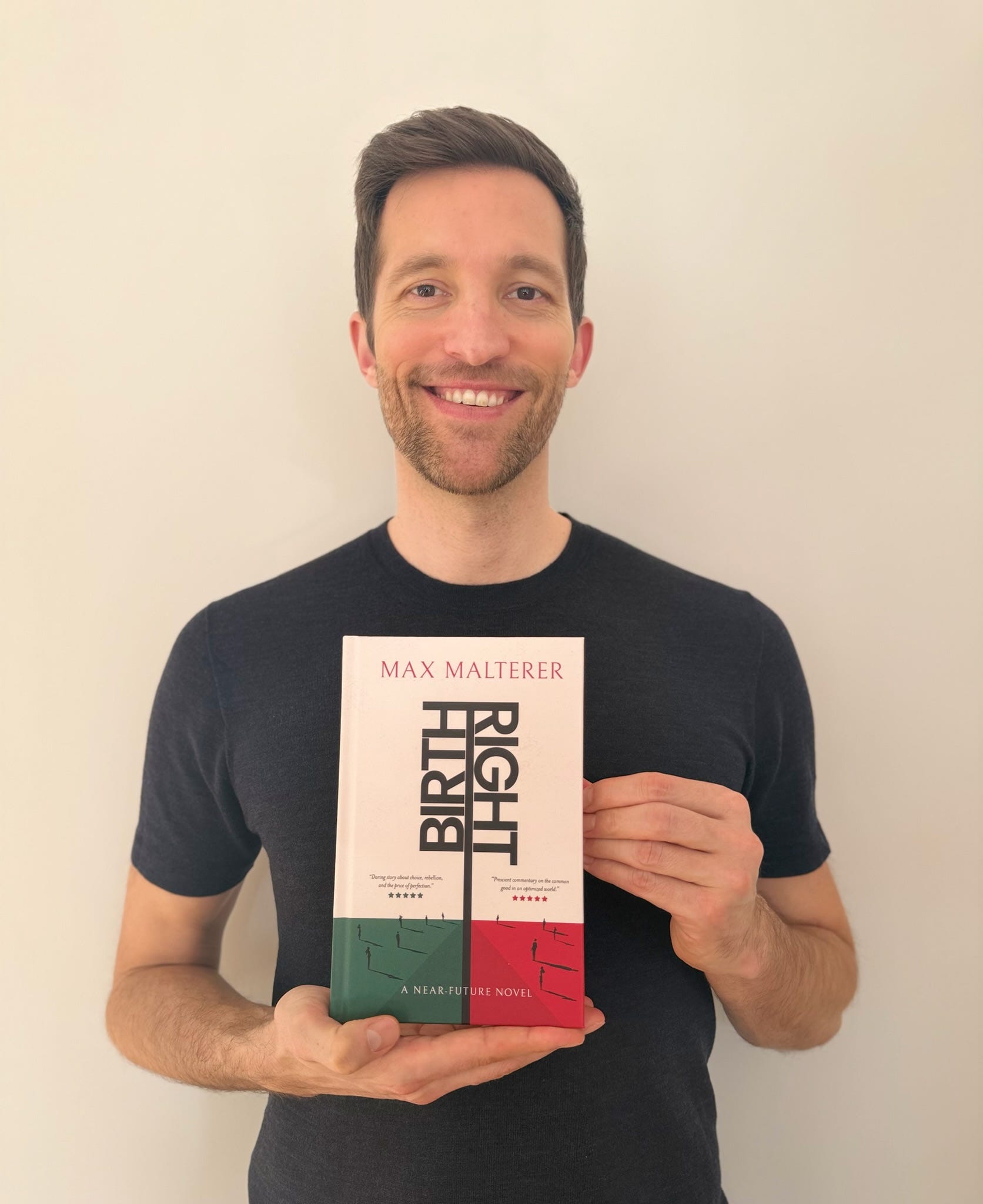 The launch Insta post picture
The book went live, and I thought I was perfectly prepared. Second book, after all. I’d learned every lesson The Human Relief Project had to teach me. Or so I believed.
Then, around ten or eleven in the morning, the first messages from friends and family started rolling in. “Hey, I can’t find the book on Amazon.”
I felt my stress levels rising, but told myself to stay calm. It was nothing. Search hadn’t indexed the book yet. Different Amazon marketplaces take longer. The usual.
But the messages kept coming, more forceful and alarming, and my nervousness kept rising until I knew something was really off. So I started searching myself. On different Amazon marketplaces. In different categories. And indeed: Birthright would not appear in the main Amazon search. You could only find it if you went specifically into Books. Otherwise, invisible.
I reached out to Amazon, explained my situation, and couldn’t believe the response I saw on my screen: because of a setting I’d chosen, a single, innocent checkbox, the book had been categorised as adult material—too sexual to appear in general search results. It didn’t make any sense. This is a mainstream novel. But the system didn’t know that.
I adjusted the settings, republished the book, and waited in front of my screen for it to go live again. Amazon said it could take up to 72 hours, but I had to believe that this wouldn’t be my case.
I kept desperately refreshing every few minutes. After half an hour the paperback went live. Another fifteen minutes later, the hardcover followed. And when an hour had passed, the ebook was finally live as well. I relaxed into my chair, relief rushing through my body. Birthright was searchable again, and people could find and order it. Crisis averted.
I’d been up for twelve hours at that time. Did a quick workout, showered, and walked into my launch party.
Which was incredible. Close friends, early readers, book lovers. We had an amazing evening. Drinks. A reading from Chapter 3, the scene where Grace first arrives at NBD1 and meets Tom. Then a really lovely Q&A, facilitated by my good friend Rosie, where we dove into everything behind the scenes. And all that surrounded by an intimate setting that my wife had prepared with her usual eye for details: thought-provoking questions on the walls; Birthright copies and bookmarks carefully positioned throughout the flat; even the napkins at the fingerfood buffet were in the colors of the book.
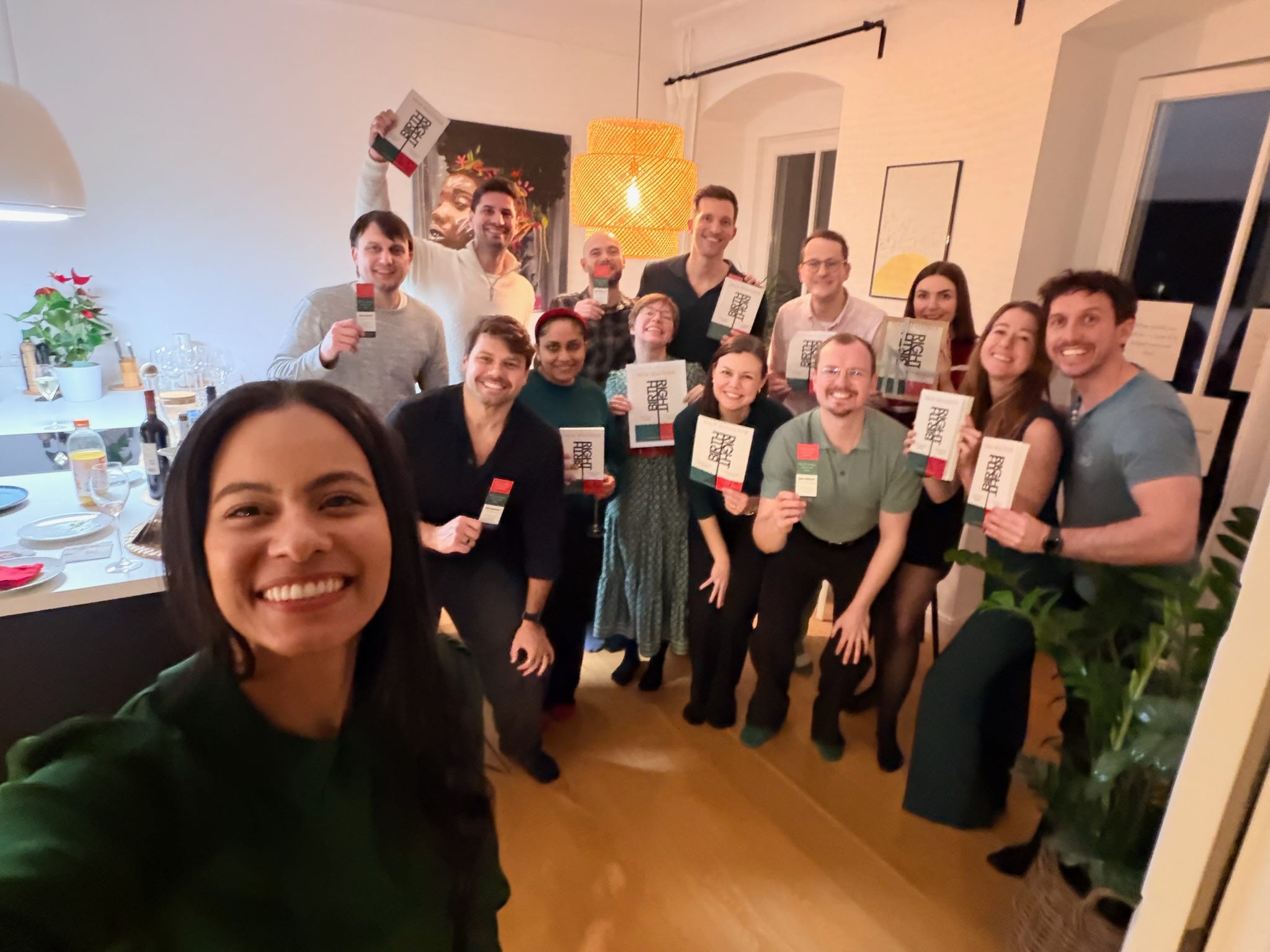 The launch party crew
So in the end, launch day ended up being wonderful. But the four weeks since have continued testing me.
There’s been disappointment. Fewer sales than with The Human Relief Project, which I’d expected on some level. With your second book, all those people who buy a copy just to support you the first time around—they’re not there anymore. Now it’s really about people who want to read the book. But knowing that in theory and facing it in your sales numbers are two very different things.
Similar with Instagram. On launch day, everyone’s cheering you on. But as time moves on, it’s really the people who are into the book, or into reading, who keep showing up. And I’m deeply grateful for both—the people who made a lot of noise on launch day, and the people who are quietly following my writing journey week after week.
But it’s still hard. Two years of work go into writing and launching a book. And the feedback, the reviews coming in, people reaching out about how they enjoyed the story, what they loved, the questions they have—someone telling me, “You have to write a sequel, I need to know how things continue”—those moments are incredible. But then, right next to those moments, there are things that feel devastating even though they’re actually quite small. A post that doesn’t perform. A number that doesn’t move. The gap between what the book means to you and what the world reflects back.
There’s plenty of good news, too. Audiobook fans loved the availability of the audio version from day one. Birthright is now in three Berlin bookstores (links below), which is amazing. I’ve launched my first Amazon Ads campaigns to reach readers beyond my own circle, to help Birthright travel further. And, what’s most important to me, the readers who do pick it up are more engaged than they ever were with The Human Relief Project. And that means something.
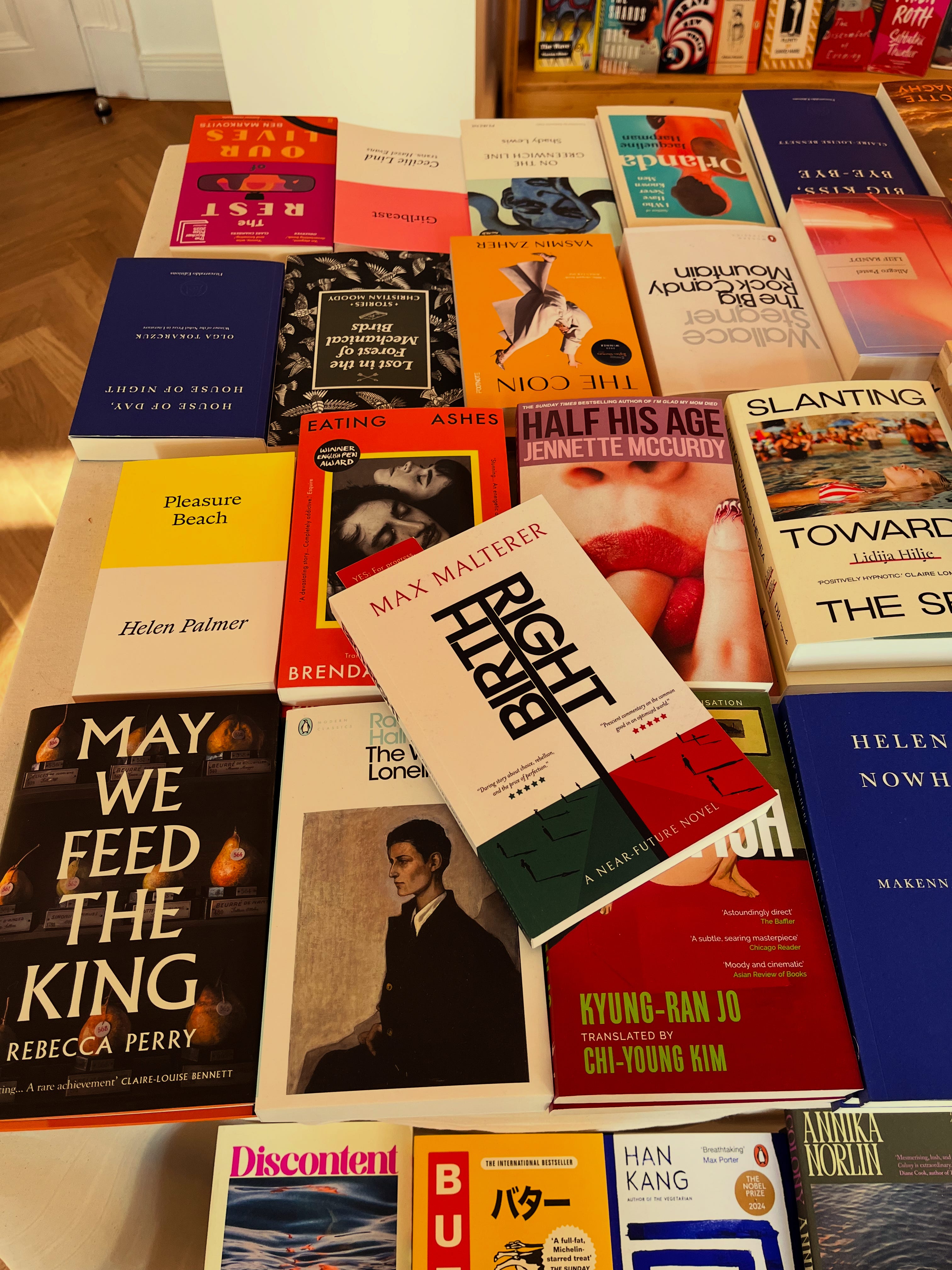 Desirelines
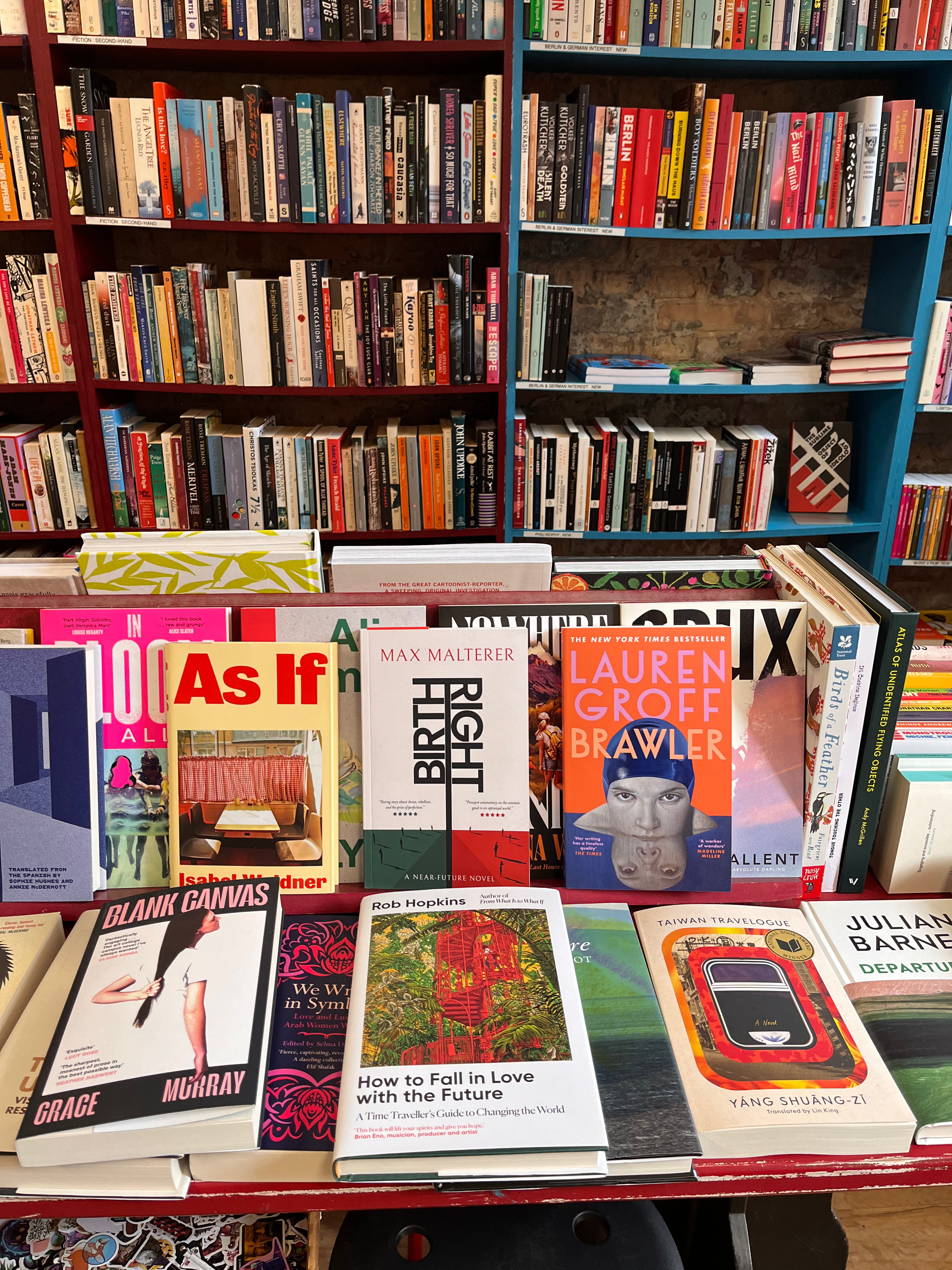 Curious Fox
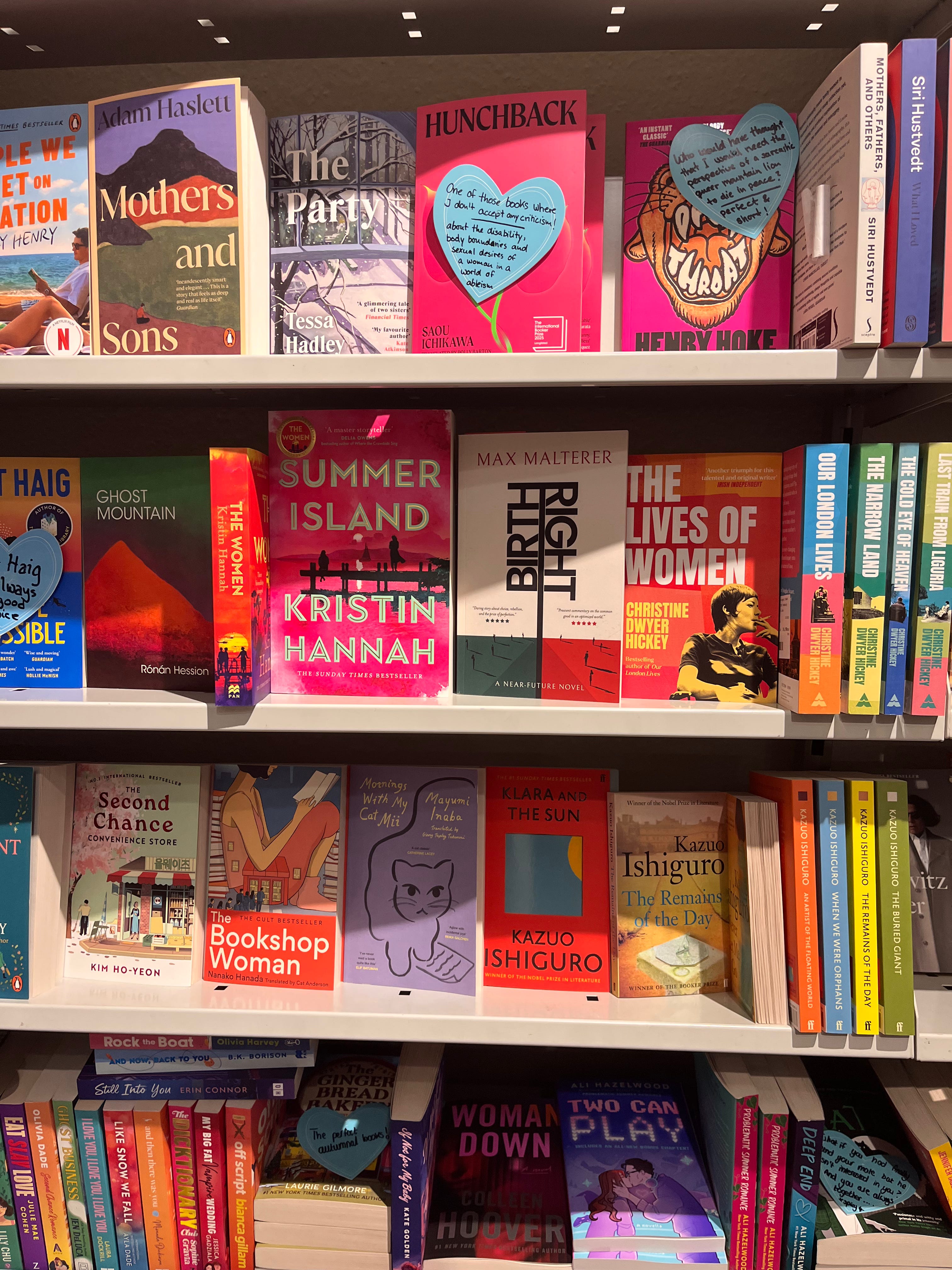 Love Story Of Berlin
So, I’m leaving my second book launch with some lows, many highs, and lots of lessons learned. Including one I did not expect: it hasn’t been easier than the first time. It’s actually been harder. Because the expectations I place on myself for a second book are so much higher.
When I look back at the past months, everything—from the book itself, to the layout and cover, and the launch motions—is at higher level than with The Human Relief Project. But when I zoom out, I’m still very early in my author journey. I’m not just learning to write engaging novels that the right readers enjoy. I’m learning how to publish, how to market, how to sell books, how the entire industry works. And somewhere inside all of that, I’m figuring out my own path—one that accepts how the industry works but still feels like mine.
I know many of you have played a real part in this launch journey. The posts you’ve shared, the reviews you’ve written, the feedback you’ve sent, the effort you’ve put into helping the book travel and find new readers. I don’t want to end this on just a note of gratitude, but: really, thank you. All this matters more than you know.
Now that the initial launch period is over, I’m shifting into a slower, more intentional mode. Fewer social media posts. More depth. The next Substack will go much deeper into the science behind Birthright—a lot of you have been asking about it. I’m putting down some first ideas for a sequel, and I can’t put into words that rush of endorphins one feels at the very inception of a new book. I also want to start creating artefacts from the world of Birthright—things I can share over the next one to three years, until the second book is actually ready. And most importantly, I’m heading back now into editing mode and already began revising the manuscript on Book #3. More on that later in the year.
Until then, keep reading. Always keep reading.
Max
If you haven’t subscribed yet, you’re very welcome to — it helps this newsletter find the readers it’s meant for.
And if you are already subscribed, feel free to share this with just one person who you think might genuinely enjoy it.
February 21, 2026
Birthright is here!
Hi everyone!
The big day has arrived: Birthright is officially out 🎉
After more than two years of writing, rewriting, doubting, refining, and letting it go — it’s finally in the world.
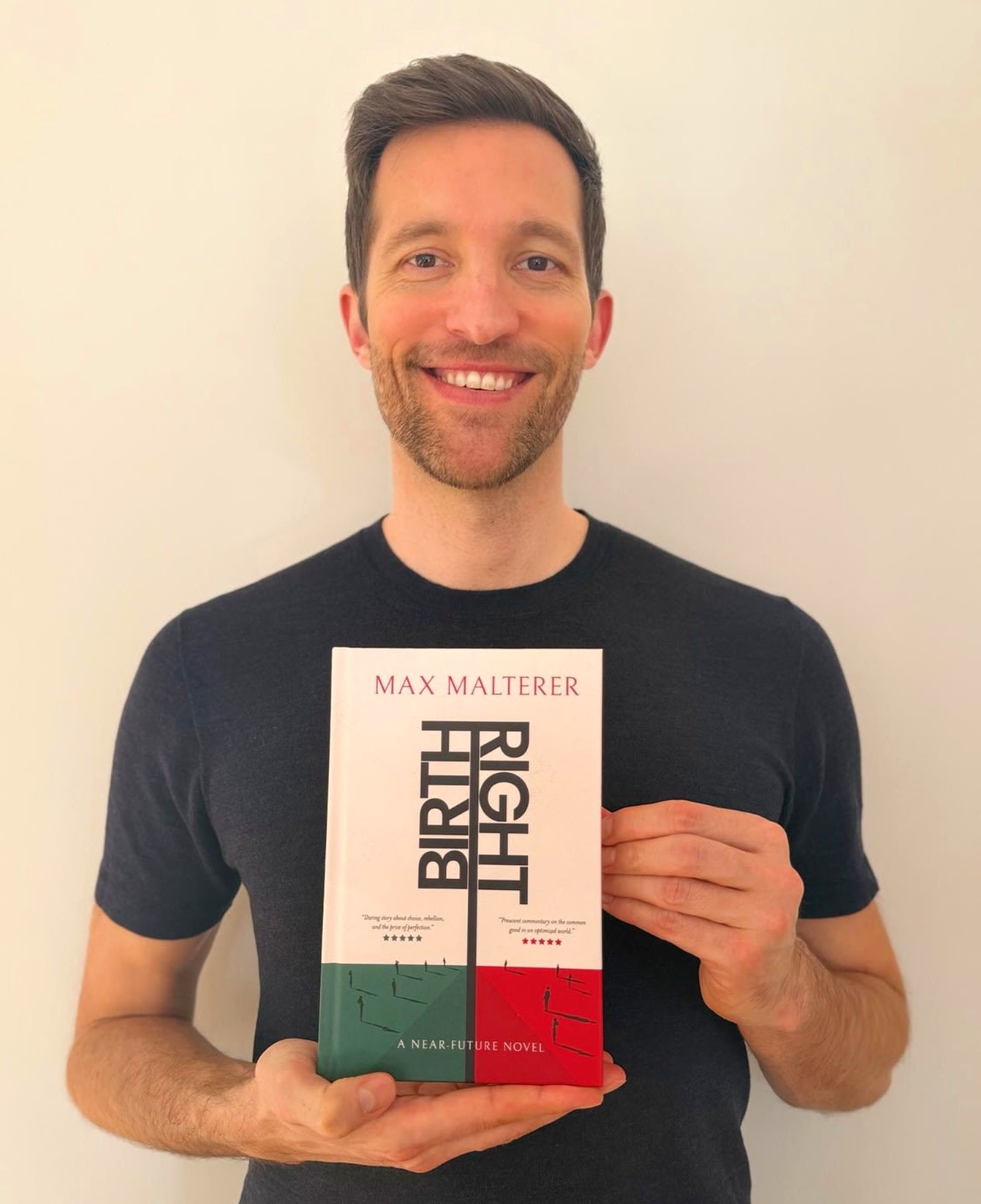
You can now read or listen to Birthright as an ebook, paperback, hardcover on Amazon, and as an audiobook on Spotify and other platforms.
As mentioned in my last newsletter, if you’d like to support the launch, here are three simple ways:
If the book speaks to you (or someone you know), grabbing a copy in the first days makes a real difference for how widely it gets surfaced.
Like and reshare my Instagram and LinkedIn posts with a short personal thought — that ripple effect matters more than you’d think.
If you read it, leaving an honest review on Amazon or Goodreads helps future readers decide whether it’s for them.
Thanks for helping the book travel!
I hope you’ll enjoy Birthright and I can’t wait to hear what you think.
Keep reading. Always keep reading.
Max
If you haven’t subscribed yet, you’re very welcome to — it helps this newsletter find the readers it’s meant for.
And if you are already subscribed, feel free to share this with just one person who you think might genuinely enjoy it.
February 11, 2026
Letting a Book Travel
Hey everyone,
With only ten days to go until the launch of Birthright, this feels like the right moment for a third — and maybe slightly more vulnerable — deep dive into the whole launch journey.
Over the past months, I’ve taken you along for most of the ride already: the writing itself, the structural edits, choosing the indie path, feedback from alpha readers, bringing in my line editor Rebecca for proofreading and those final, sometimes maddeningly small tweaks (despite it all, some of you still spotted little opportunities for polishing here and there in the ARC 🫣). I’ve gone deep on writing the blurb, the cover design process, and in the last piece, I shared how I approached research and worldbuilding.
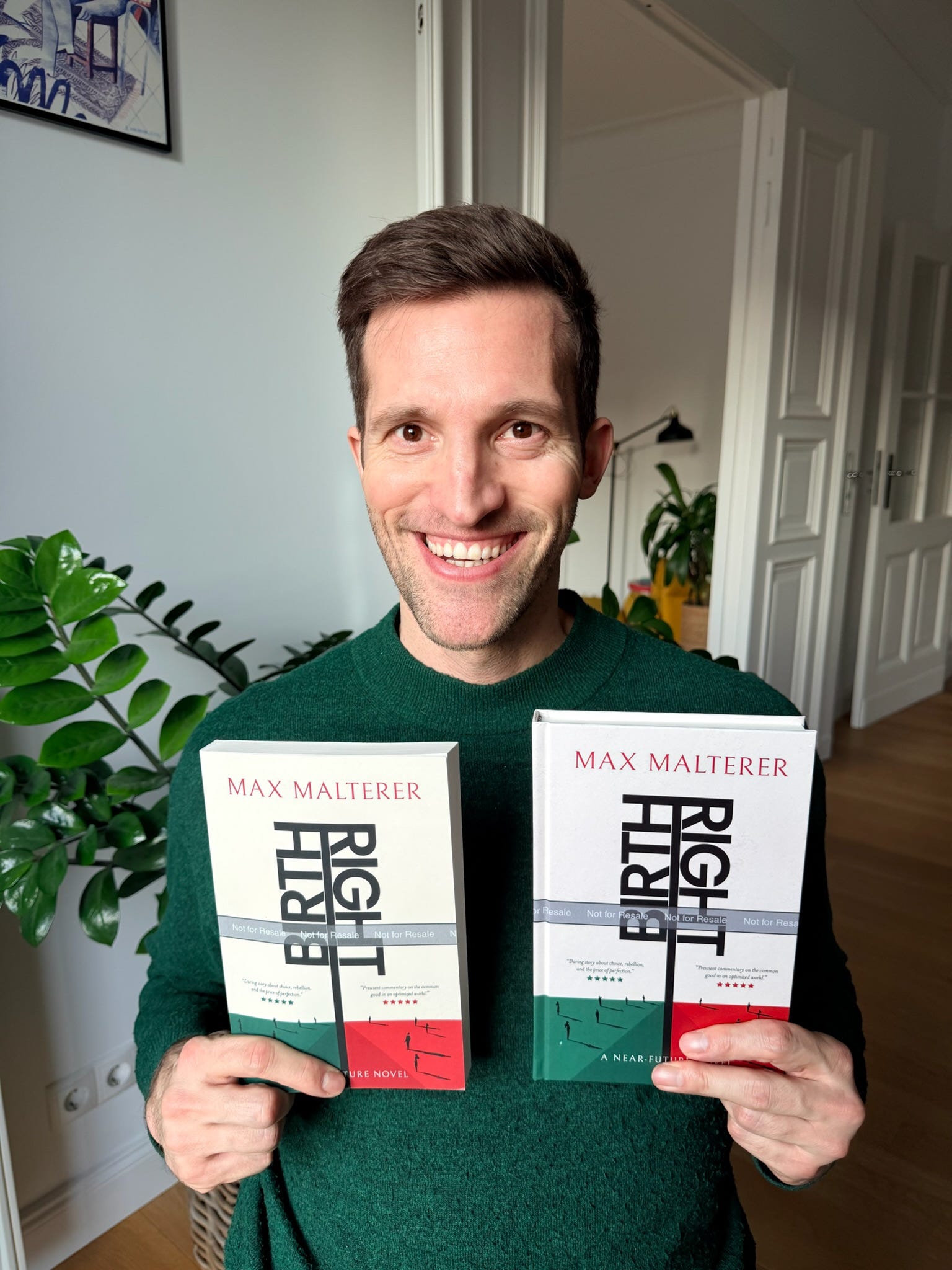 Paperback and hardcover proof copies
So today, with the finish line in sight, I want to talk about the part that’s been the most uncomfortable for me: putting a book into the world and helping it find its readers.
Before we get there, though, I want to rewind a bit.
Where the tension started
When I wrote the first draft of The Human Relief Project, I was just writing it for myself. I didn’t intend to publish it. I didn’t think about audiences, markets, or promotion. It was simply something I needed to write.
I remember staring at the finished manuscript and realizing that, now that it was there, I actually wanted to publish it. I could already see it lining the bookstores, topping bestseller lists, and euphoria grabbed hold of me.
But it didn’t last long and quickly gave space to something harder: admitting that to put the book into the world didn’t mean anything if nobody would find it. If it didn’t have a fair chance to be discovered.
That was the first time I really ran into the tension that’s been following me ever since: the pull between wanting to be an artist who releases a piece of work and lets go, and the part of me that knows that, without intention and effort, the book will simply disappear into the void.
I’ve written about that tension before in the context of HRP. But with Birthright, I had the chance to do things more deliberately — and also to get lost all over again, just at a slightly higher level and in spreadsheets with even more tabs.
This is where the struggle really started. There is so much advice out there on how to be successful as a self-published author: a never ending stream of books, courses, newsletters, YouTube channels, and Instagram influencers — all with strong opinions. And most of that advice converges on a very specific model: pick a high-performing genre (ideally romance or thrillers), write a series with three or five or ten books, publish multiple times a year, discount the first book aggressively, optimize ads relentlessly, and feed the machine.
Reading all of this didn’t make me feel motivated. It made me feel small. Like the books I wanted to write didn’t quite belong.
Don’t get me wrong, that model works for many authors and readers alike. And there is much I can learn from it. But the exact blueprint wasn’t going to work for me.
So, for Birthright, I tried to strip things back and start from first principles instead.
Starting from first principles
Starting from first principles wasn’t about being clever. It was about staying sane.
What kind of books do I actually want to write, and keep writing for years?
Who are the readers I genuinely want to reach? And how do I reach them in a way that feels respectful towards them, and honest to myself, while still being ambitious about the scale of my writing?
For me, the answer was pretty clear: I want the creation of the book itself to be uncompromised. I don’t want to reverse-engineer stories from market demand. I want to follow my curiosity, gut instinct, and that slightly uncomfortable writing flow where I don’t yet know where things will land.
But after the book exists — once it’s done — I do care deeply about it traveling. About it moving from reader to reader. About it finding people who are drawn to thoughtful, immersive, and quietly gripping near-future stories that sit somewhere between literary fiction and speculative realism.
So the question became: how do I promote a book without turning the whole thing into something artificial or performative?
Some of that now happens quietly in the background. The back matter of Birthright, for example — making it easy for someone who’s just finished reading the book to leave a review, tell a friend, read another book of mine, or subscribe here so I can reach them directly, without Amazon or Meta or Instagram in between.
Getting that right took me — as usual — a dozen iterations even though it’s just a few pages. But, I wanted them to speak to a reader who just finished Birthright in the right way, honoring their reading experiences and inviting them in rather than being salesy.
Then there were the public channels. Which brings me to…
Instagram. My frenemy.
I’m not a natural poster. As a writer, my raw material is… text. And my day-to-day reality too often looks like a laptop, a document, and a lot of staring into our backyard (where the neighbourhood fox regularly manages to distract me). Turning that into compelling posts and stories — aesthetic, but also honest and authentic — has been one of the hardest parts of my book promotion journey.
I don’t want to optimize for the algorithm. I don’t want to become a content mill. And, I definitely don’t want to chase likes for the sake of likes.
What I do want is to speak to readers who are looking for fiction that is slower, deeper, more thoughtful, but still engaging, immersive, and alive.
Instagram can help me reach those readers. But it requires intention, restraint, and a lot of iteration to do it my way, not the Instagram way. Some days it still feels deeply unnatural. And yet, I keep coming back.
With LinkedIn, interestingly, I feel much more comfortable. The medium itself suits longer thoughts, context, reflection. And there are a surprising number of people there who are genuinely curious about the kinds of questions my books explore.
Both platforms, for me, are less about “selling” and more about awareness so potential readers know about the book. And also, so that when someone does pick up the book and resonates with it, they can help it travel further on their preferred platform.
Besides the back matter and social media, there’s also paid promotion, something that I’ve just recently tried to understand better and find the right way for me.
A very common self-publishing strategy is heavy discounting on major reader mailing lists: 99-cent deals or free downloads of a book to lower the barrier to try out a new author. Many combine that with writing series where only the first book gets promoted, and then naturally readers want to move on to the rest of the series. That’s where the money is made, which in the end enables writers to live from their craft.
While I haven’t written a series (at least for now — never say never), I still see the value in those mailing list promotions: they lower friction, get more eyes on the book, and can be a powerful discovery tool. I’m experimenting here, slowly, trying to understand what fits my goals and my principles.
Longer-term, once the book is properly launched and there are enough early reviews, I’ll also start testing Amazon Ads, not as a growth hack, but as a way to meet readers who are already actively searching for their next great read.
Since it’s very hard to get my book into stores as an indie author — even into indie bookstores — digital channels are my best bet to reach new readers beyond word-of-mouth.
Launch day, and letting go
All of these promotion activities, from back matter and social media to paid promotion, converge on launch day itself.
That moment when the book goes live, and I ask — slightly uncomfortably, but sincerely — my Instagram community, my LinkedIn network, and you here on Substack to help give it a first push. To buy it if it speaks to you. To share it. To leave a review.
Those actions in the first days matter more than I wish they did. Not just emotionally, when full of hope I keep refreshing the dashboard every few minutes, but mechanically. They influence how much the book is surfaced to new readers who’ve never heard of me or Birthright before.
So yes. This whole journey remains a bit of a tug-of-war.
Between leaning fully into what feels true to me and working with how the book promotion world actually works. Between craft and reach. Art and infrastructure.
I’m still figuring out where that balance sits. But starting from first principles, encapsulated in my personal little manifesto, has helped me to stay oriented and to trust that slow, intentional traction is still traction.
Birthright’s launch
The book goes live in ten days.
If you want to support the launch — and only if it genuinely resonates — here are a few simple ways:
If the book is interesting to you, or someone you know, buy it within the first days.
Like my posts and stories on Instagram and Linkedin, and reshare them with a personal thought on Birthright
If you buy the book, leave an honest review on Amazon and Goodreads sooner rather than later
Thank you, genuinely, for being part of this — for reading, supporting, and thinking alongside me. I’ll send a short update next Saturday once Birthright is officially out in the world.
Until then: keep reading. Always keep reading.
Max
If you haven’t subscribed yet, you’re very welcome to — it helps this newsletter find the readers it’s meant for.
And if you are already subscribed, feel free to share this with just one person who you think might genuinely enjoy it.
January 19, 2026
Building a Plausible Future
Hey everyone — hope you’re doing well!
I’m deep into all things Birthright launch prep and promotion currently — more on that in my next newsletter — so no major updates on book #3.
In this newsletter, I want to talk a bit about the research and worldbuilding process — because a few of you have asked how I actually do that as an author. And you’ll find a small Birthright Launch Drinks RSVP for newsletter readers at the end of this post, if you’re in town.
So. Worldbuilding and research.
Whenever people ask “How does an author do worldbuilding?” my honest answer is: there are many different approaches — and it also changes from book to book.
For me, Birthright was very different from The Human Relief Project.
When I wrote The HRP, most of the technological and societal background was stuff I’d already been living with for years. Questions around purpose and meaning at work, how AI evolves, the different paths it could take — those were topics I’d read about obsessively. I didn’t need to do much upfront research. It was more about zooming in on very specific questions at very specific moments when writing the book.
Birthright was the opposite.
I went into it knowing very little about reproductive technology. I’d read a few articles here and there, since I’m generally interested in science and progress — but no real depth. Same with population decline. I knew we were heading into a century of drastically declining birth rates globally with massive negative impact on societies, and that fact was one of the key triggers for the book. But beyond that, my understanding was pretty superficial.
Where I did feel more grounded was education, developmental psychology, and — at least theoretically — parenting. I’m not a parent, but I’ve read a lot on these topics over the past ten or fifteen years. I’d even call education reform my first great passion in university. That part of the world felt familiar. Reproductive tech didn’t.
So before I really started writing, I read widely in places like Nature, MIT Technology Review, The Economist, or Works in Progress. I didn’t read a single full book on reproductive tech or the drop in birth rates (which I did for my next book). Both topics are so forward-leaning, that I couldn’t find the right book on them yet. Rather, I followed article to article, question to question — the kind of things I knew would matter inside the story, such as the current state of artificial wombs and how they might evolve; how longevity trends might or might not counter the decline in births; or what the economic impact of smaller societies might be.
When I felt I had stuffed my brain with more than enough information, I started writing.
The first manuscript is always intuitive for me. Not rational. Not planned in a neat way. I follow the plot, follow the characters, and write in one long flow. Only after that do I go back and ask: Where does this story need more grounding? Where would a scene benefit from a bit more technological, societal, or economic context? Where does something currently not quite make sense unless it’s anchored in real-world logic?
Plausibility really matters to me. I don’t want to write futures that feel smart but hollow. Even if they have low probability, I want them to feel like futures we could actually stumble into.
But there’s a real challenge here — and this was the hardest part for me with Birthright: Once you’ve done all that research, and you get very excited about it, it’s very tempting to put it everywhere.
In the second manuscript, I definitely overdid it. I smuggled in ideas just because I found them interesting — not because the story needed them. They slowed the story down, and dialogue stopped sounding like how people actually talk.
So a lot of the later work was about cutting again.
Homo Naturalis became a very natural place to carry background information and weave in parts of the research. That worked. It felt organic.
But there were other moments where I could have gone much deeper — a museum scene with lengthy descriptions of the technological details of artificial wombs, Mr. Pearl talking in detail about how the birth rate collapse hit the economy, or a class with Mrs. Watts on why genetics worked the way I envisioned them. All of that was possible. And all of that would have been too much.
Genetics is a good example here. I put a lot of thought into how gene editing in embryos might evolve over the next decades. But very little of that made it into the book. I didn’t want Birthright to become a genetic engineering novel, and it wasn’t critical for the core story — even though it’s something I couldn’t realistically leave out in a book set in the 2090s. So the science is there, quietly, in the background — present in Grace’s world, but rarely explained.
That balance between knowing a lot and showing very little is one of the hardest things about writing near-future fiction. Luckily, Grace as a character helped and kept me in check. As a 17-year-old about to leave her secure childhood home for the first time, much of the world is new to her, which made me build the world through her lived experience, rather than lengthy explanations.
The other challenge with near-future fiction is that reality keeps evolving as you write your book. And so, no matter how much you research, you never know everything.
Even now, with the book about to come out, and conversations about it on the horizon, the questions never fully go away. Did I do enough research? Am I versed well enough in the topics I’m writing about? Is everything accurate and plausible enough?
I’m not an expert on everything in Birthright. I never wanted to be. And I’m sure I’ll learn a lot from readers and from talking to people who know these fields far better than I do.
But I do feel I built a solid foundation — solid enough to tell this story honestly and allow my readers to feel what this future could be like.
Soon, you’ll be able to judge for yourself. When you have Birthright in your hands — or in your ears — you’ll see how all of this turned out.
I’ll also send a longer Substack post launch that goes deeper into the actual research behind the book, with links to some truly great articles that shaped it.
Oh — before I forget — I’ve reserved five slots at my launch drinks on Feb 21st for readers of this newsletter. You can RSVP here — first come, first served 🙂
Until then, whatever you’re reading: keep reading.
Always keep reading,
Max
If you haven’t subscribed yet, you’re very welcome to — it helps this newsletter find the readers it’s meant for.
And if you are already subscribed, feel free to share this with just one person who you think might genuinely enjoy it.
January 4, 2026
On Choosing Birthright's Cover
Hey everyone,
I hope you had a wonderful festive season — if you celebrated Christmas — and if not, that you still enjoyed a few calmer days around the turn of the year.
I took an entire week off myself. No hard author deliverables, no deadlines. Just quietly reading the first manuscript of book #3 and leaving far too many remarks for the writer ;-)
But now that the new year is here, it’s time to shift the focus to Birthright—and I’ve got some proper news for you.
The launch date
First things first: we have a launch date 🥳
February 21st.
That’s the day Birthright goes live, and you can finally join Grace and see for yourself how you would handle the looming referendum of 2096.
The cover reveal
With a launch comes a cover reveal — and as promised in November, you get to see it before I’ll share it broadly 😎
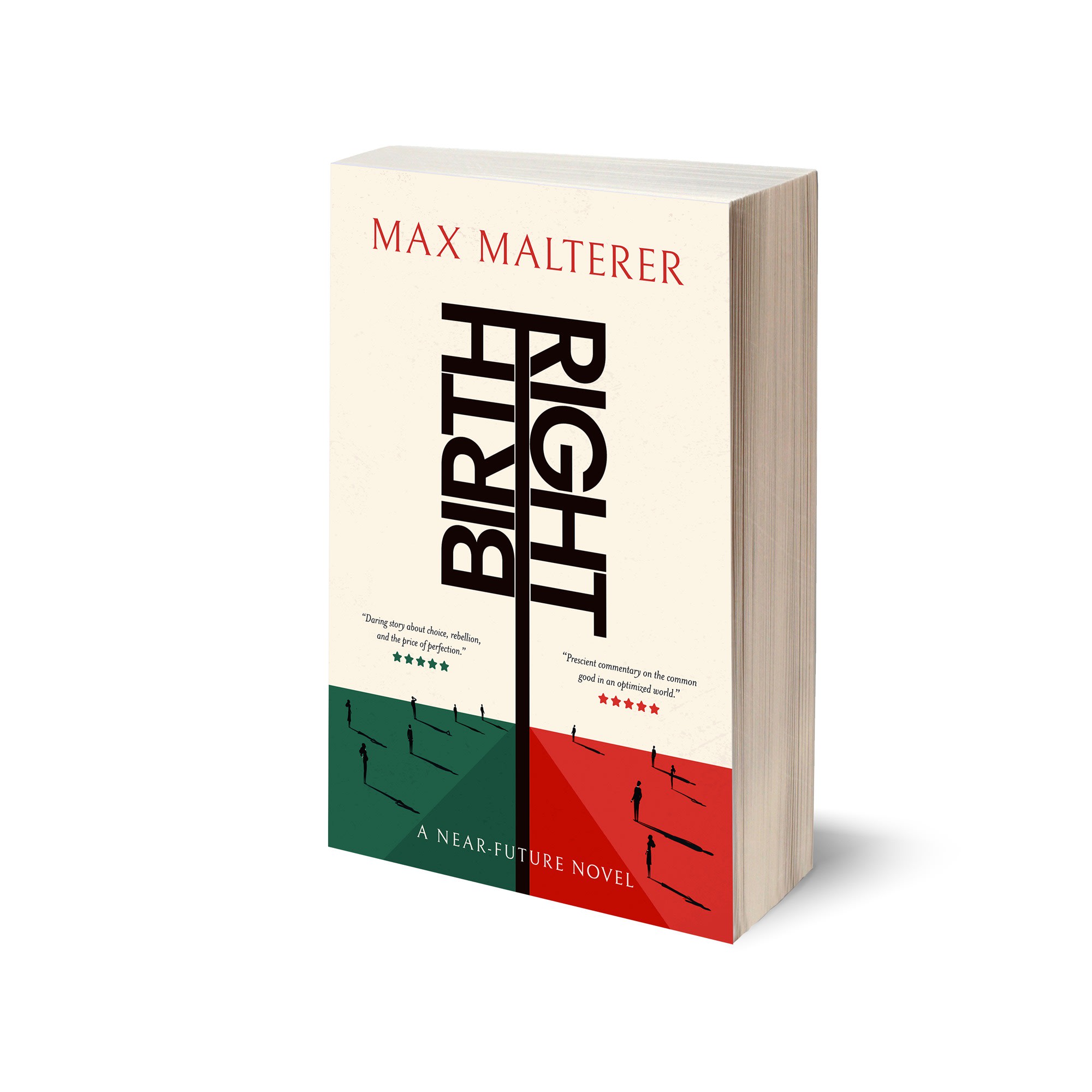 Birthright paperback rendering by Author Elevator
I’m so stoked to finally put this cover out there! So stoked indeed, that it’s hard to put into words … I wished you could just see my massive smile running ear to ear as I’m writing this, and then you’d understand the feeling I’m experiencing instantly.
After countless iterations — more on that below — I’m just genuinely happy with this cover. I love how the title stands out, and how the divide asks quiet questions about the book without giving too much away. An invitation to explore more.
Even better, the cover looks great across all four formats:
the ebook
the print for paperback & hardcover
and the audiobook
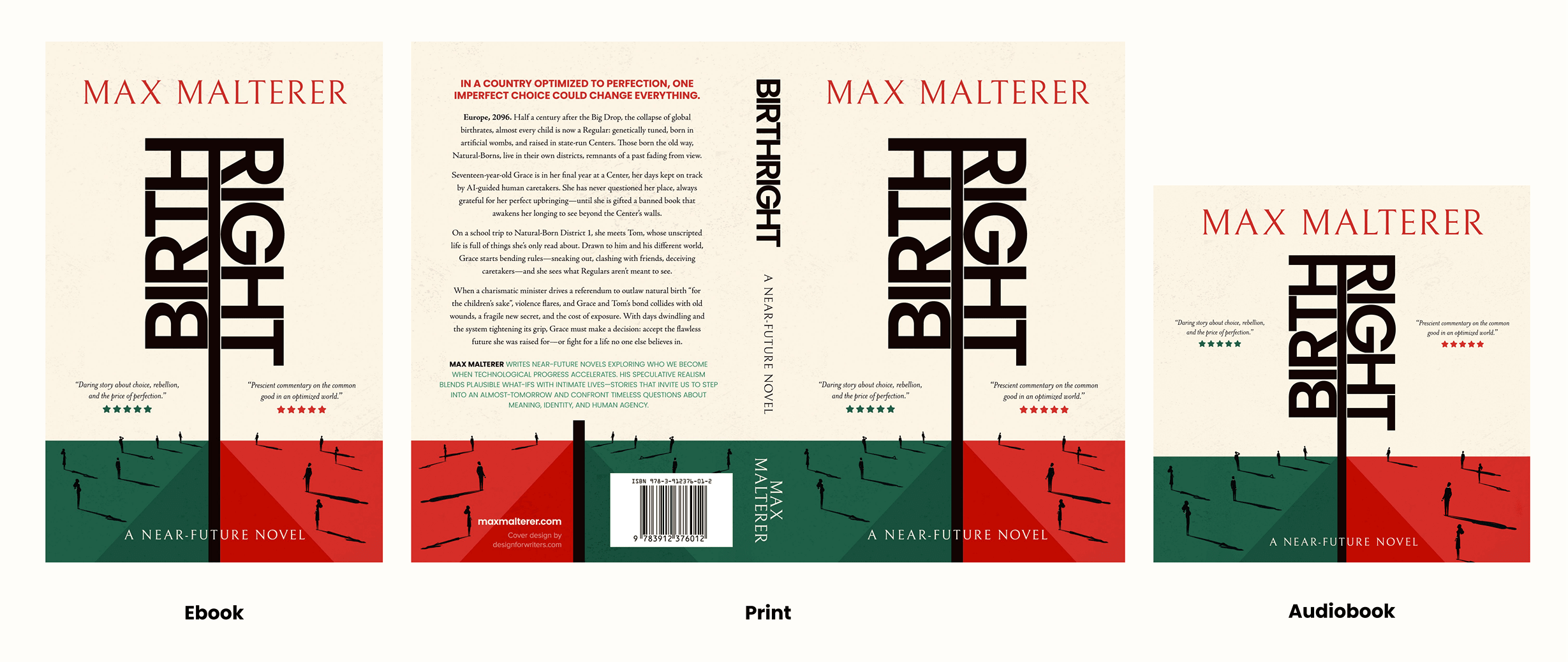
Yes, four. This time, I’m launching Birthright in all formats from day one — not staggered like with The Human Relief Project — so you can jump in however you like to read or listen.
The long road to the final cover
Designing this cover was a much longer journey than I expected. Even longer than with the HRP.
And oddly enough, it started there.
When I created the new cover of the HRP released in November, I really liked the black-and-white photo, the bold yellow font, the clarity. I remember thinking: This could be the design direction for all my books.
So when I began working on Birthright, I combined that visual language with an image I’d had in my head for a long time — empty, futuristic cradles in a sterile room. Bright typography. Very striking.

I shared that first concept with a few people, got great reactions, and thought: Okay. This is it. I’m on the right path.
Then I teamed up with Andrew, my cover designer, who has worked on thousands of covers and understands the book market far better than me. I wrote an extensive design brief, provided audience and cover examples, and asked Andrew to take everything I’d done and turn it into a proper cover. Which he did.
But he also did something else.
He came back with a completely different concept — the kind of cover he’d design if a traditional publisher had commissioned him.
His reasoning was simple and, honestly, very good: once he looked at the kind of book Birthright is, and the kind of readers I want to reach, he felt that this quieter, more restrained approach might actually fit better. And it would work as a reproducible system for future books, too.
Suddenly, I had two strong options.
And I was … torn.
There were aspects I really liked about Andrew’s version. The title really stood out, and one could tell immediately that there were two factions in the book — and a conflict already discernible.
But part of me still wanted continuity with the HRP. A consistent, bold system I could repeat across all my novels, Instagram, and Substack.
So, after days of turning over the options in my head, I decided to do something slightly unusual.
I told Andrew to keep developing his cover, while I continued developing mine.
He fine-tuned his version. We iterated, adjusted, and eventually locked it in.
At the same time, I went through dozens of iterations on my own cover — playing with fonts, colors, imagery, reacting to feedback.
At first, people found my cover powerful, but also very dark. Almost like a crime thriller. Too dystopian. So I lightened it. Made it calmer. More open. More hopeful.
Eventually, I reached a point where I felt confident with my version. Andrew’s version was also finished.
Again, days of running in circles followed — reviewing my original design brief, feedback notes, and all my design iterations.
In the end, I decided to go with my design, mostly because it fit better into the system I had in mind.
But something about it still felt … off. Something I couldn’t quite name. Then, over a nice dinner, I showed both covers to a friend I trust. And her comments about each of them made me question my own design.
At first, I brushed it off. I had made my decision. I wouldn’t waive now. Yet, the thought kept nagging at me, and within twenty-four hours I found myself back in my design tool.
This time, I was tweaking Andrew’s version. As I made subtle changes to Andrew’s design, I developed a new bond with it.
And that’s when it clicked: I had never given his design a real chance. Subconsciously, I’d thought of it just as a backup, as a version to A/B-test maybe, but not one I’d commit myself to.
I realized that I might have been a bit in love with my first idea, even though Andrew’s cover felt much closer to the readers I wanted to attract.
Readers of Klara and the Sun, Never Let Me Go, Station Eleven. People who want serious, near-future speculative fiction that’s both entertaining and thoughtful.
I decided to change course and go with Andrew’s cover. The only problem: I had already signed it off and I still wanted to change a few things.
More cost. More back and forth.
I briefly thought I’d just do it myself, and asked Andrew for the raw files… which turned into a week-long email ping-pong. It was stressful … I didn’t want to be a bad client, but I also didn’t want to settle for a cover that didn’t feel perfect yet.
I could smell the tension between us in every email, but I keep leaning into the creative conflict with Andrew, and in the end, it was productive.
To be fair, he taught me a lot in that process — about when to trust a designer, and when not to turn him into a pixel-pusher.
We adjusted colors. Tweaked typography. Played with a few subtle elements.
Andrew — very British, very polite — gave careful, understated feedback. And in the end, we went with a mix of his and my suggestions.
And now, on the other side of all that, we have a cover I’m genuinely proud of. A cover, that speaks for Birthright, harmonizes with the HRP’s one, and defines a design system I hope to carry into future books as well.
In a strange way, the lengthy, winding cover process almost mirrored the book itself — how much do you optimize, and when do you trust something human and imperfect?
Now I’m turning it over to you: what do you read into the cover?
What comes next
You’ll be seeing this cover — and visuals inspired by it — a lot over the next weeks as we move toward launch.
And there’s more coming here on my newsletter too:
a deep dive into the world of Birthright and the research behind it
some thoughts on the ethical and technical questions the book raises
and a behind-the-scenes look at editing and the launch process itself
And of course, when February 21st comes around, I hope I can count on your support in helping Birthright find its first readers.
That’s it from me for now.
I wish you a wonderful start to the new year, exciting projects and ideas for 2026 — and as always:
Keep reading.
Always keep reading.
Max
PS: Bonus screenshot of my main design canvas in Kittl. A peek into my journey.
If you haven’t subscribed yet, please do. You will get every update from me straight to your inbox, including early drafts, short pieces of fiction, and reflections on the long journey of putting novels into the world.
If you are already subscribed, share this mail with just one person who you think would genuinely enjoy it. Who would be better than you, who knows me and my writing so well, to judge who might be interested in it 🙂