
Scott Morgan's Blog
December 3, 2014
Indie Author Bingo
Do you make a bingo?
[image error]


September 1, 2014
I Love Adam West (Now Go Watch Lookwell)
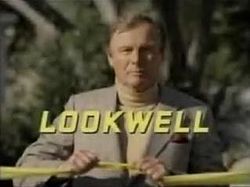 I love Adam West. I can't think of any entertainer who's brought me more pure joy, from Batman to Family Guy and all things in between.
One of those things in-between was a 1991 TV show pilot called Lookwell, which I never heard of until I saw it on Cracked.com. In a nutshell, West plays a delusional former cop show star who thinks he can still solve crimes. Only a pilot episode was shot and for some incredibly stupid reason, the show was not picked up. How it wasn't, I can understand, because the creators (Robert Smigel and Conan O'Brien) wrote the best episode of comic TV outside of Police Squad. The one and only episode is on YouTube, click to watch it.
As a writer guy I can offer this show as an example of pitch-perfect writing. It's silly and sharp and stunning. The only comparison is a recurring skit that Mitchell and Webb created for their sketch comedy show, and which was entitled The Adventures of Sir Digby Chicken Caesar, about two homeless men who believe they're part of a vast Sherlockian adventure. It's also insanely brilliant, you just have to watch the whole series for the skits to come up.
Anyway, my point is, Adam West is The Man and nothing but The Man. Maybe I'm just in a mood to thank those who bring me happiness, which he has done. No one plays 'WTF???' anywhere near as well, and I doubt anyone ever will. And it's wonderful to sometimes just be entertained. So thank you, Mr. West.
(PS, yes, I'm aware that Conan O'Brien and Robert Smigel had a big hand in Lookwell, but face it -- brilliant writing aside, it wouldn't work with anyone else in the role. Such a shame it was never a show.)
August 21, 2014
Respect Fallen Journalists (RIP, James Wright Foley)
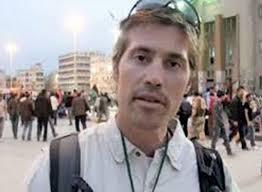 FBI file photoOne of the hallmarks of my journalism career has been the utter safety from which I've done my job. I'm a good writer, but as journalists go, I'm a joke, really. About as much of a real journalist as a tee-ball coach is a major leaguer.
When I hear about journalists who die in the line of duty, something in me always dies with them a little too. In America, we pay a lot of respect to civil servants and military personnel who sacrifice their lives for a cause they believe in, and rightly so. But we so often overlook the journalists who inform us. The ones who are right beside the civil servants and military personnel when the shit storm swirls.
In America, we have come to vilify journalists. They're seen as a nuisance, as invaders of privacy, as pushy, rabid dogs. We don't see them as defenders of the very first amendment to the Bill of Rights. We don't see them as heroes who risk and sacrifice their lives for something they believe makes the world a better place.
The news of the beheading of James Wright Foley is troubling for a lot of reasons, a main one being that Foley was someone who got caught up in someone else's cause and killed because he represented something sinister to that cause. If a group of radicals believes this man, because of his profession, is dangerous enough to kill, what does that say about how powerful and precious the ideals he is laying on the line really are?
Roughly 70 journalists are killed in the line of duty annually over the past few years. Roughly the same as the number of American military combatants who've died in Iraq since 2009. So please -- a little respect all around for those who serve their country, no matter how they serve it, in the most dangerous parts of the world.
Condolences to Foley's family and those of other fallen journalists. And safe passage to the real journalists out there in the world. Get home safe.
-scott
August 19, 2014
Talkin' the Talk
 I recently gave a talk on dialogue for the Writer's Guild of Texas (which meets just north of Dallas, in Richardson), and it was a most delightful evening. Good group of people, very engaged, very sincere, very professional, and very eager to learn. If you're a writer in the area, check them out.
As for the talk, I won't rehash, but I will offer a couple points that I made in my presentation. First, dialogue is functional. In any format, TV script, novel, stage play, whatever, if the dialogue does not inform us about the story, plot, or character in some way, it has no point being in the story. Generally speaking, if you can say it without dialogue, say it without dialogue.
Generally speaking, of course. That's not an absolute. This is creative writing, remember? There are no absolutes (except this one).
Second, dialogue is all about who's listening to it. Writers get so concentrated on the speaker of dialogue, they sometimes forget who the person listening is. Someone who says something in a story is saying it to someone else. Who's the speaker's audience? What's the purpose of the talking? and does the person listening already know the info the speaker is giving? Because if the listener already knows, there's no point in the speaker saying anything.
If the listener (also known as the person receiving information, or "the learner") is the reader, then it's not a place for dialogue and quotation marks. that's a job for storytelling.
The rest of the talk? Well, you kinda had to be there. If you were, awesome. If not, too bad, you missed a good night.
Write for the jusgular, folks.
July 22, 2014
Tell Me What You Think
 Come on in and tell me what's on your mind.What to you is the most imprtant single piece of a piece of writing?
is character development more important than all things?
Or dialogue?
Or theme?
I want to know what you think. Leave your comments here by July 30 and I'll make sure I tell the world what you think. because everyone should know what you think.
July 17, 2014
Blog Hop: Watcha Think About Dat?
It’s been a while since I’ve blog hopped, but thanks to my good friend Kelly Belmonte, who once graciously allowed me space on her very excellent writing blog, All Nine Muses, to talk about my favorite poem (it’s ‘If’ by Rudyard Kipling), and she, in turn, graced my site with her thoughts on The Muse.
 Kelly has asked me to answer these questions four and pass them around to a few other writing friends. In the coming days/weeks, my other good friends, Julie Frayn and Ben Ditmars, will answer these questions as well.
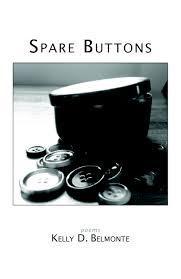 If you don’t know Kelly, get to. A stellar poet with a gentle humor and a genuine honesty, she is one of the handful of online colleagues I have yet to meet, but very much hope to. Read her take on these questions here.
Likewise, if you don’t know Julie or Ben, you’re missing out.
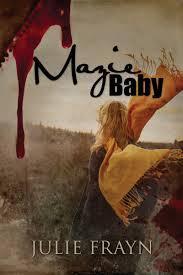 Julie is one of the best pure writers I’ve read in a long time. A master of characterization and storytelling that will not keep her in the indie arena long, once the right person gets his lucky eyes on her novels. She’s the coolest Canadian export since hockey. Visit her here.
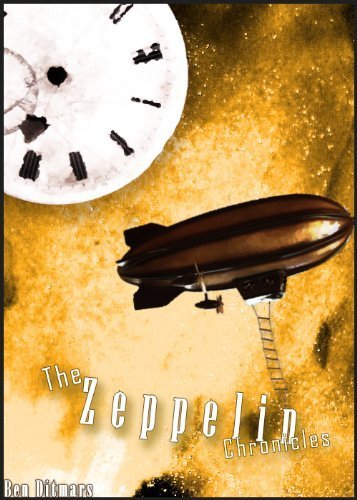 Ben, though still in his twenties, has the soul of a wise old poet and sage. I’m not typically a poetry fan, but Ben’s work routinely gets me to say “Damn, that kid can write!” Exclamation points and all. Visit him here.
In any event, get to know these people, and take a gander at my thoughts on the writing process. Thanks for asking, Kelly. Happy writing to all, and to all, Write for the Jugular.
1. What am I working on?
I’m working on a new short works collection. Takes time to build up a set of short pieces to make a book (I don’t end up liking everything I write and sometimes I get into a story and realize it’s either a stupid idea or a great idea I have no idea how to really accomplish). The centerpiece so far is an 8,500-word short with no title (yet) that I can’t describe without tainting you toward what it’s really about. It’s not an easy read in spots, but it tells what I think is an important story overall.
2. How does my work differ from others in its genre?
Hard to say. I never identified myself as having a genre, per se. Maybe what used to (and still may) be termed “little/literary?” That’s the closest thing to a genre I could get, I suppose. The kind of writing you’d find in old-school lit mags. I don’t write for plot so much as concept, which I hope isn’t as pretentious as it sounds. Rather than build a plot in the story, I tend to tell vignettes that paint an overall picture of a theme or idea. What separates my work from other works in the genre? Well, to be honest with you, the fact that I’m the one doing it is its major standout feature. It’s my perspective I’m telling, not anyone else’s, but then, that’s what separates everyone’s work from everyone else’s.
3. Why do I write what I do?
Sick compulsion. Urge to convince the world I’m right. Masochistic impulse to make myself uncomfortable and espouse points of view I don’t always agree with. To say things that have never been said before. To know I connected with people. To know that I don’t have to say something directly for people to understand what I’m driving at. To remind people they’re not alone.
4. How does my writing process work?
Long periods of wondering what to talk about, followed by medium bursts of intense work, followed by the glee that I could keep writing this piece forever, followed by the sudden realization that I’ve said everything I need to say in a few thousand words and don’t have a novel. In between projects, there’s a lot of start/stop. I come up with ideas that I discard all the time. I start working and think, “I don’t want to tell this to the world.” I only put something out when I feel it has something to actually say. Often, I look back over something I’ve written and find I either hate something I originally thought was good or like what I originally thought was mediocre. Whatever I write, I try to write Gestalt ‒‒ tell as little as possible and let the reader complete the picture. I chop out a lot of what I write because I want the readers to be part of the storytelling. They own the story when they take part in it.
July 6, 2014
Vlog: Be You as a Writer
There's a whole industry out there built to make you dependent on advice. I know, irony, given what I do for a living. But you know me better than that, I hope ...
June 25, 2014
4(th) Things the Declaration of Independence Can Teach Writers
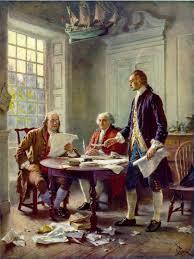 A couple years ago, I gave a surprisingly well-received webinar (that has since disappeared in the ether) on what the Declaration of Independence can teach us about the craft of writing. With the Fourth of July rolling around soon, it seemed a good reason to bring this baby back, because the lessons of the Declaration still work:
1. Mince no words. The very title, 'Declaration of Independence,' hits you right in the throat. This is no 'Suggestion for Independence,' no 'Let's Work Something Out.' The very title of the document leaps out and says 'We're doing this, and we're not asking.' No ambiguity, no minced words. Absolutely no one who reads the words 'Declaration of Independence' will misconstrue its intent. It is a clear lesson is starting strong, because if you start this strong, there's no way you're going to wuss out on the rest of your message.
2. Use fitting language. The lofty language of the Declaration of Independence is pivotal to its success because within this document are revolutionary (indeed, treasonous) political and humanistic ideals that had never been tried prior. The country these men were plotting out would not be based on power and privilege and geography, it would be based on ideology. It takes the pen of a Thomas Jefferson to convey that emotion (and the Declaration is an intensely emotional piece of writing) through sound, reasoned thought. All the words in the Declaration fit the mood and the subject matter perfectly.
3. Know your audience. That same language was perfect for the intended audience. Remember, the Declaration was not something passed around in tavern or on the streets. Its intended readership was the King of England and the British Parliament. This was a letter from statesmen to statesmen, and it was written with the dignity and respect that such an audience deserved. Whatever you write, know the appropriate language. And also remember, trying to sound too lofty is just as bad as sounding too lowbrow.
4. Try new things. I mentioned above that the Declaration of Independence contained revolutionary ideas. Well, you might have noticed that the whole thing worked out fairly well. Maybe a better way to say this is, have the courage of your vision. If you've never seen your ideas before, maybe you've invented a new way of thinking. Have the courage to see your message through, because the world, your life, your business, your industry, can only grow when people follow their inspirations.
Write thee for ye jugular
April 19, 2014
Follow Through with Your Action
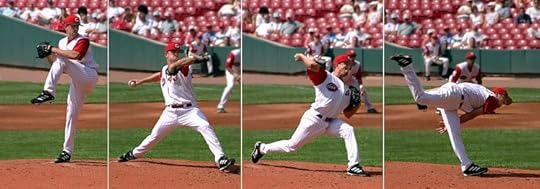
The above image-string is a perfect visual representation of what you need to do when you write.
The Trouble
A lot of writers tell very good moments in their stories. They build tension, make the reader wait, breath held, and then ... stop.
The problem with this is that though the writer is great at telling an action (or inaction, as the case may be), she does not let the action run out. Think of it in terms of breathing. When you write a moment of suspense, for example, you're writing the drawing of a breath (the inhale is the buildup). Then you're writing the holding of that breath (the suspense, the tension). What makes the held breath so powerful is that we know it has to come out -- as a scream, as a relieved exhale, as a slow, controlled breath, whatever. Let us see the exhale.
If you build suspense, it has to pay off with equal weight. Remember what I said in Character Development? action equals reaction. If you build a lot of tension and something happens, it needs to warrant the tension built. If you build a lot of tension and nothing happens, we need to feel as much relief as we felt tension.
Can you dig it?
The Solution
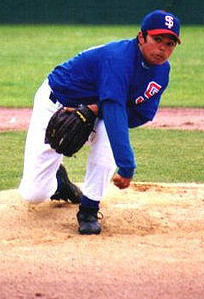 This is pretty freakin' textbook, actually.As with everything awesome, the answer is in baseball. When a pitcher throws, he doesn't stop his arm after he releases. His arm continues to swing all the way down, past his waist. That's follow-through. When you write, don't just release a fastball and then cut to the dugout. Let your arm fully swing. Let us see what happens with the pitch. If the batter hits it, show the action of the catch, the out, the sprint to third as the throw comes in from left. If the pitcher strikes the batter out? Don't just end the scene there. Let us see the catcher spike the ball at home. The pitcher pump his fist in a "Yesss!"
Cutting your action short is a common flaw, even in seasoned writers. Keep the resolution of your action in mind when you write, Even if nothing happens.
Write for the Jugular, always.
March 23, 2014
3 Myths About Hiring an Editor
I know. Hiring an editor is scary and expensive. But you might be reacting based on misinformation. Allow me to dispel some of your woes.

Myth 1: Hiring an editor is expensive.
Reality: Yes, it can be, but it's not a bad as you think.
 The problem isn't really the money, it's the perceived value of the service bought. If you want to just write and release, go ahead. But, if you want to
write like a pro
write the best story you can
build your career as a professional writer
then the money you spend on an editor is an actual investment in your career. The same as the money you spend on writing classes. The same as the money you spend on better shoes -- because you get what you pay for.
And for the record... No one has ever accused me of overcharging, given what I give them for their money. If you want references on that, ask me for them.
Myth 2 : Editors are scary and insulting.
Reality: Don't be an idiot.
 Editors are not your mom, who's going to tell you everything's great. Good editors will call it like we see it. But A, that's what you need, and B, we're not going to tear you any new ones. At least I'm not. We're going to give you honest, constructive feedback and help you make your story the best it can be.
We want you to succeed because ‒ and pay attention to this ‒ our reputations are tied up in your work. So we want you to write the very best you can. It makes you look good, it makes us look good.
So maybe editors come off a little serious sometimes, but the truth is, we're on your side.
And for the record… The top comment I hear about my style is "I love your honesty. You tell it like it is, but you're not an ass about it."
So there you go. My advertisement. I'm Scott Morgan and I'm not an ass about it.
Myth 3: Editors just rewrite it to how they want it.
Reality: Not unless you're a staff writer at a publication.
 I don't rewrite for people. I never will. And I don't know any reputable editors who will rework your words, unless you're a reporter at a newspaper or magazine.
For book and story writers, this fear isn't typically based in any fact, though I have heard one or two horror stories. And they all seemed as credible as any other friend-of-a-friend story that ends with a man dressed as a woman hiding an axe under his dress bullshit. If an editor does start reworking your writing to sound like his voice instead of yours? Fire his ass.
Tip: Vet your editor before you hire one. Ask for some references and talk to people he's edited. Ask these writers about the editor's style, how the editor handles things, how he frames criticism, and if he's pleasant to work with. And ask the writer how much she learned or how much the story has improved because of the editor's input.
And for the record… Don't let an editor change your voice. A good editor will suggest ways to improve your work and offer examples, but never let one actually reword significant amounts of text.
Write for the Jugular, folks
Scott Morgan's Blog

- Scott Morgan's profile
- 22 followers

