
Discover new books on Goodreads
See if your friends have read any of Timothy C. Winegard's books
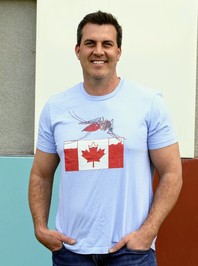


Timothy C. Winegard
Goodreads Author
Born
in Hamilton/Sarnia, Canada
July 27, 1977
Genre
Member Since
February 2012
To ask
Timothy C. Winegard
questions,
please sign up.
More books by Timothy C. Winegard…


Timothy’s Recent Updates
|
Timothy Winegard
rated a book did not like it

|
|
|
Timothy Winegard
is now following Brendan (History Nerds United)'s reviews

|
|
“Blood type O seems to be the vintage of choice over types A and B or their blend. People with blood type O get bitten twice as often as those with type A, with type B falling somewhere in between.”
― The Mosquito: A Human History of Our Deadliest Predator
― The Mosquito: A Human History of Our Deadliest Predator
“By and large, until the eventual painstaking mass export production of Indonesian-grown cinchona quinine by the Dutch, beginning in the 1850s, the mosquito kept Europeans out of Africa. The cinchona tree is persnickety about altitude, temperature, and soil type. It will grow only in very strict and specific environments. This limited, expensive supply opened the door for numerous quinine shams and impostors to flood the market, feigning to meet the massive demand. William H. McNeill reiterates that “the penetration of the interior of Africa that became a prominent feature of Europe’s expansion in the second half of the nineteenth century would have been impossible without quinine from the Dutch plantations.” Armed with this transplanted quinine, the imperial European scramble for Africa began in 1880 and straddled the decades of the First World War. Quinine was not a panacea, however, as yellow fever continued to stalk Europeans who dared enter the wilds of Africa.”
― The Mosquito: A Human History of Our Deadliest Predator
― The Mosquito: A Human History of Our Deadliest Predator
“common cold virus; from chickens came “bird flu,” chickenpox, and shingles; pigs and ducks donated influenza; and from cattle arose measles, tuberculosis, and smallpox.”
― The Mosquito: A Human History of Our Deadliest Predator
― The Mosquito: A Human History of Our Deadliest Predator
Topics Mentioning This Author
| topics | posts | views | last activity | |
|---|---|---|---|---|
| Goodreads Choice ...: Theresa's 2021 Yearly Challenges | 4 | 194 | Dec 31, 2020 10:20PM | |
| The History Book ...: COMMODITIES | 28 | 46 | Jan 03, 2021 09:02PM | |
| The Reading For P...: Ann's 2020 Readathon Thread | 18 | 46 | Oct 03, 2021 05:49PM | |
| Aussie Readers: A - Z Authors 2022 | 404 | 302 | Jan 04, 2023 03:54PM | |
| Aussie Readers: Annual Challenge 2022 - Calendar of Books | 513 | 379 | Feb 23, 2023 11:46PM |