I.S. Anderson's Blog
April 7, 2015
Volume 4 is here!
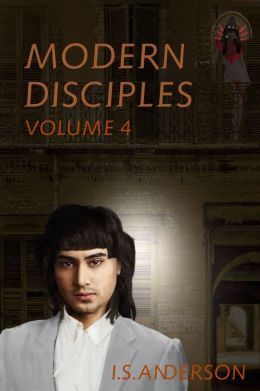 I am pleased to announce that Modern Disciples Volume 4 is finally published! Currently it is only available on Kindle and Nook. There may be print versions available in the near future, but I have no solid plans yet.
Volume 4 is seen through the eyes of Armand. It also takes place in the city of New Orleans. Anyone who has been there can tell you it is a very fascinating city with a rich culture and deep history. There are many ghost stories, vampire legends and supernatural influences throughout the city, and that's just the stuff I didn't make up.
Another aspect that makes this story unique is the approach I took with Diana. In the previous three installments, the disciples were tasked with a mission with the constant threat of Diana making an appearance at the worst possible time. This time, the disciples are tasked with stopping her plan.
What is her plan? Let's just say it involves local legends and vampire lore.
I hope you all enjoy this latest installment in the Modern Disciples series. I am sorry that it took so long to come out.


Volume 4 is here!
I am pleased to announce that Modern Disciples Volume 4 is finally published! Currently it is only available on Kindle and Nook. There may be print versions available in the near future, but I have no solid plans yet.Volume 4 is seen through the eyes of Armand. It also takes place in the city of New Orleans. Anyone who has been there can tell you it is a very fascinating city with a rich culture and deep history. There are many ghost stories, vampire legends and supernatural influences throughout the city, and that's just the stuff I didn't make up.
Another aspect that makes this story unique is the approach I took with Diana. In the previous three installments, the disciples were tasked with a mission with the constant threat of Diana making an appearance at the worst possible time. This time, the disciples are tasked with stopping her plan.
What is her plan? Let's just say it involves local legends and vampire lore.
I hope you all enjoy this latest installment in the Modern Disciples series. I am sorry that it took so long to come out.
Volume 4 is here!
I am pleased to announce that Modern Disciples Volume 4 is finally published! Currently it is only available on Kindle and Nook. There may be print versions available in the near future, but I have no solid plans yet.Volume 4 is seen through the eyes of Armand. It also takes place in the city of New Orleans. Anyone who has been there can tell you it is a very fascinating city with a rich culture and deep history. There are many ghost stories, vampire legends and supernatural influences throughout the city, and that's just the stuff I didn't make up.
Another aspect that makes this story unique is the approach I took with Diana. In the previous three installments, the disciples were tasked with a mission with the constant threat of Diana making an appearance at the worst possible time. This time, the disciples are tasked with stopping her plan.
What is her plan? Let's just say it involves local legends and vampire lore.
I hope you all enjoy this latest installment in the Modern Disciples series. I am sorry that it took so long to come out.
March 3, 2014
Free Book Promotion!
 This Friday through next Monday, I will be giving away free copies of my short story for the Modern Disciples Lost Volumes series. "Deidre" is a story that takes place long before the events of Volume 1. A strange woman is institutionalized by her father. When she becomes pregnant, and investigation leads to only more questions and things about Deidre's psychosis that cannot be explained. I hope you all take advantage of this great opportunity!
January 27, 2014
Book Sacrifice tag on youtube
I actually did a Youtube video. The production values is not great but I think I did a good job for my first video.
You can watch it by clicking here
I hope you enjoy!
You can watch it by clicking here
I hope you enjoy!
November 21, 2013
Likeable Characters
A while back, I did a blog post on showing and not padding. I received a request to do a post on creating likeable characters. I guess it had slipped my mind for a while. Let us go ahead and discuss this now.
Before you can make a character most people will like, you have to ask yourself what do characters I like in other books and people I like in the real world all have in common. Are they more physically attractive? Do they have a good sense of humor? Are they honest people? Do they stand up for themselves? Everybody has different aspects he or she finds appealing in other people. What you need to do is find two or three aspects that you think make a person likeable. I say two or three, because more than that you risk being “too good to be true,” If you only have one likeable aspect, then it becomes a redeeming quality rather than a likeable trait.
Once you have those particular traits chosen, you need to show how they personify these aspects. Are they honest, yet tactful? Show the character talking to a friend about a problem in an honest yet tactful way. Is the person brave? Show then standing up to somebody, or make him or her speak their mind when it would be easier for them to just stay quiet.
I want to bring up one thing about physical beauty. It is fine to give your characters this trait to make them likeable, but you need to take particular care when showing their beauty. One mistake I find many authors making is that they just say, “he was hot,” "he was like a Greek god,” “she looked good in a short skirt,” you get the ideal. Show me why they are good looking through description. Does the guy have muscles? Does he have a strong jawline? Do her eyes sparkle when she smiles?
A couple words of warning before I leave you. First, a character does not have to be likeable to be a strong or memorable character. Two examples of this are Severus Snape, from Harry Potter, and King Joffery from Game of Thrones. Not all characters need to be likeable, although I do recommend having a few. You could make a good story with no likeable characters, but that would be very difficult to execute.
The other point I need to bring up, no matter how likeable a character is, not everyone will like him or her. I have created characters that, everyone I spoke to fell in love with, and then one person had to dislike them.
The key is to remain true to yourself and your characters, and people will warm up to your way of writing, and them.
Before you can make a character most people will like, you have to ask yourself what do characters I like in other books and people I like in the real world all have in common. Are they more physically attractive? Do they have a good sense of humor? Are they honest people? Do they stand up for themselves? Everybody has different aspects he or she finds appealing in other people. What you need to do is find two or three aspects that you think make a person likeable. I say two or three, because more than that you risk being “too good to be true,” If you only have one likeable aspect, then it becomes a redeeming quality rather than a likeable trait.
Once you have those particular traits chosen, you need to show how they personify these aspects. Are they honest, yet tactful? Show the character talking to a friend about a problem in an honest yet tactful way. Is the person brave? Show then standing up to somebody, or make him or her speak their mind when it would be easier for them to just stay quiet.
I want to bring up one thing about physical beauty. It is fine to give your characters this trait to make them likeable, but you need to take particular care when showing their beauty. One mistake I find many authors making is that they just say, “he was hot,” "he was like a Greek god,” “she looked good in a short skirt,” you get the ideal. Show me why they are good looking through description. Does the guy have muscles? Does he have a strong jawline? Do her eyes sparkle when she smiles?
A couple words of warning before I leave you. First, a character does not have to be likeable to be a strong or memorable character. Two examples of this are Severus Snape, from Harry Potter, and King Joffery from Game of Thrones. Not all characters need to be likeable, although I do recommend having a few. You could make a good story with no likeable characters, but that would be very difficult to execute.
The other point I need to bring up, no matter how likeable a character is, not everyone will like him or her. I have created characters that, everyone I spoke to fell in love with, and then one person had to dislike them.
The key is to remain true to yourself and your characters, and people will warm up to your way of writing, and them.
November 10, 2013
Modern Disciples Short stories announcement
 I am pleased to announce that I have added an addition to my Modern Disciples series. The Lost Volumes will be a series of short stories that will give insight to things that happen in the world of Modern Disciples, but do not follow the same story line as the novels.
The first story entitled Deidre is about a woman who is placed in an asylum by her father. Later, when she is discovered to be pregnant, her doctor investigates to try to discover not only who the father is, but the secrete to the hallucinations Deidre has been having.
When I first started the series, I only intended doing the novels. As I write them, I find it difficult to put everything I want into them. There are parts of the characters backgrounds I cannot go into for the sake of time and book size. With these extra volumes, I can give my current readers a more extensive background on the characters they know and introduce some new ones.
These stories will only be available as 99 cent downloads for Kindle. If you need the Kindle app to read them click here.
If you already have the app, you can click here to go straight to the story on amazon.com.
October 29, 2013
Gods vs. Titans
Recently I did a blog interview with Summer Lane of Writing Belle. One of the questions asked was “What is the difference between gods and Titans?” I answered her question as thoroughly as I could, however to really do the question justice, I would need to write an entire term paper. Today I will meet the question half way and explain what I can in a blog post.
When we speak about gods in mythology, we tend to think of Zeus and his band of gods atop Mt. Olympus, or we think of Thor and the people of Asgard. Essentially, the gods are shown as the beings overseeing our world. In most cases, they are benevolent until somebody violates a rule or shuns a value they hold dear like courage or kinship. In Greek mythology, the gods punished people who defiled their laws. Mortals had to live by the gods’ standards or they would be forced to push a boulder up hill, have their food stolen by monsters every night, or be cursed with some kind of deformity.
The Titans came before the gods. We essentially see them as forces of nature like a hurricane, typhoon, or a volcano. They are the basic aspects of the universe and our world in particular. Titans and mortals have very few interactions with mortals. If they do, it is for a specific purpose and the mortal will usually have to use his wits or the Titan will take advantage of the mortal. A good example of this would be Heracles and the Titan Atlas, cursed with the burden of holding up the world.
Some people might wonder why authors always seem to depict the gods and Titans as enemies. As an author who writes a series based on mythology, I can tell you that it is the easiest way to introduce conflict. Titans, or enemies similar to them, find their way into all mythologies. If someone wanted to introduce a new enemy, he or she would not only have to introduce somebody not only a legitimate threat to the gods, but accepted by the audience. Most people who know anything about mythology expect the Titans to rear their ugly heads. Some people read mythology to learn about it. They want as accurate telling of the old stories as possible.
Why is their struggle so enticing though? Family drama is one factor. As stated before, the Titans did come first and the gods are often their offspring, or at least their descendants. Children’s breaking away from their parents is a theme used in many stories including mythology and fairy tales.
What the gods and Titans conflict comes down to is a struggle for power. What will they do with their power? To answer that question we have to know what each fundamentally represents. The gods set rules for the mortals, they have a hierarchy, and they often punish mortals for not upholding the correct beliefs. The gods are essentially the embodiment of order. Order is usually associated with harmony and everything having it set place. However, order can be taken to a malevolent extreme. When this happens, order becomes tyranny. This is why authors seldom portray gods in a bad context. Some stories about gods, particularly Zeus, have centered on power being used for selfish reasons or giving the possessor of the power a false sense of entitlement.
Titans are forces of nature. As nature is unpredictable and often unforgiving, the Titans represent chaos. They go by no rules other than every man for himself. When the gods imprisoned them, it was essentially controlling nature, and therefore controlling chaos. When one thinks of chaos, they think of riots in the streets, the strong victimizing the weak and everything in flames, or worse. Just as there was a malignant side of order, there is also a beneficial side of chaos. In order to be able to live a life by one’s own wishes, that person needs freedom. The more tyranny grips us, the less power we have to make our own decisions. With the power to make our own decisions though comes the responsibility to allow freedom for others. When everyone is only concerned for his or her own freedom and not others, we see the destructive power of chaos.
When we see a symbolic conflict between order and chaos, represented by the gods and Titans, we can see how their struggles relate to our own lives. Every day we ask ourselves a question that can be traced back to this conflict. Should we allow people to carry guns? What should we expose our children to? How much should the government regulate healthcare? The conflict is nowhere near as bloody as the gods war against the Titans, but we struggle just as well.
No matter what stories are told through mythology, today or in the future, there will always be an underlying theme of order vs. chaos. Neither force can really win in the end. The struggle to maintain the balance between the two shall rage on as long as mortal man draws breath.
When we speak about gods in mythology, we tend to think of Zeus and his band of gods atop Mt. Olympus, or we think of Thor and the people of Asgard. Essentially, the gods are shown as the beings overseeing our world. In most cases, they are benevolent until somebody violates a rule or shuns a value they hold dear like courage or kinship. In Greek mythology, the gods punished people who defiled their laws. Mortals had to live by the gods’ standards or they would be forced to push a boulder up hill, have their food stolen by monsters every night, or be cursed with some kind of deformity.
The Titans came before the gods. We essentially see them as forces of nature like a hurricane, typhoon, or a volcano. They are the basic aspects of the universe and our world in particular. Titans and mortals have very few interactions with mortals. If they do, it is for a specific purpose and the mortal will usually have to use his wits or the Titan will take advantage of the mortal. A good example of this would be Heracles and the Titan Atlas, cursed with the burden of holding up the world.
Some people might wonder why authors always seem to depict the gods and Titans as enemies. As an author who writes a series based on mythology, I can tell you that it is the easiest way to introduce conflict. Titans, or enemies similar to them, find their way into all mythologies. If someone wanted to introduce a new enemy, he or she would not only have to introduce somebody not only a legitimate threat to the gods, but accepted by the audience. Most people who know anything about mythology expect the Titans to rear their ugly heads. Some people read mythology to learn about it. They want as accurate telling of the old stories as possible.
Why is their struggle so enticing though? Family drama is one factor. As stated before, the Titans did come first and the gods are often their offspring, or at least their descendants. Children’s breaking away from their parents is a theme used in many stories including mythology and fairy tales.
What the gods and Titans conflict comes down to is a struggle for power. What will they do with their power? To answer that question we have to know what each fundamentally represents. The gods set rules for the mortals, they have a hierarchy, and they often punish mortals for not upholding the correct beliefs. The gods are essentially the embodiment of order. Order is usually associated with harmony and everything having it set place. However, order can be taken to a malevolent extreme. When this happens, order becomes tyranny. This is why authors seldom portray gods in a bad context. Some stories about gods, particularly Zeus, have centered on power being used for selfish reasons or giving the possessor of the power a false sense of entitlement.
Titans are forces of nature. As nature is unpredictable and often unforgiving, the Titans represent chaos. They go by no rules other than every man for himself. When the gods imprisoned them, it was essentially controlling nature, and therefore controlling chaos. When one thinks of chaos, they think of riots in the streets, the strong victimizing the weak and everything in flames, or worse. Just as there was a malignant side of order, there is also a beneficial side of chaos. In order to be able to live a life by one’s own wishes, that person needs freedom. The more tyranny grips us, the less power we have to make our own decisions. With the power to make our own decisions though comes the responsibility to allow freedom for others. When everyone is only concerned for his or her own freedom and not others, we see the destructive power of chaos.
When we see a symbolic conflict between order and chaos, represented by the gods and Titans, we can see how their struggles relate to our own lives. Every day we ask ourselves a question that can be traced back to this conflict. Should we allow people to carry guns? What should we expose our children to? How much should the government regulate healthcare? The conflict is nowhere near as bloody as the gods war against the Titans, but we struggle just as well.
No matter what stories are told through mythology, today or in the future, there will always be an underlying theme of order vs. chaos. Neither force can really win in the end. The struggle to maintain the balance between the two shall rage on as long as mortal man draws breath.
October 1, 2013
My advice to new writers
Every time I see interviews with writers or read about them on blogs or any other type of printed media, they always have to address the same question: What advise do you have for young writers? They always answer with a mixture of the “try harder” pep talk and some tips on how to improve writing. Having published three novels and going through the trials and tribulations that come with that, I can tell you that they are selling the young writers short with that answer.
I am not saying that improving your writing and perseverance are not necessary. Those are two very solid principles that need to be adopted. My main concern is some key points neglected by authors in these interviews. To be fair, most interviews you read are from the big name authors that have little to worry about at this point in their careers. The publishing world is a lot different from when Stephen King or Richard Patterson started. When they first got started, they wrote their manuscripts, sent them out to publishers, kept doing this until a publisher decided to buy their manuscript and publish. The process is a lot more complicated these days.
Today, new authors need a skill they did not in the days before the internet. They must have a working knowledge of marketing. Even if you go the traditional route of sending off manuscripts until one publisher understands what you are doing or can find a way to turn the story into something they consider marketable. Authors today are expected to set up their own blogs, have websites for their books, and have a presence in the social networking scene. The Stephen Kings, and J.K. Rowlings of the world can hire other people to do these things, but they still have to be done.
Knowing all this, I decided to do this entry to give new writers advice that you will not hear in normal circles. Please remember that I am basing this list on my own personal experiences so other people may have different opinions. I think a wise thing to do is get different perspectives on everything you do.
1. Learn how the language works.
This may seem obvious, but you would be amazed at how many people start writing without a solid foundation of how to. If you are serious about being a writer and want to make your living that way, you have to know sentence structure, punctuation, know how much dialogue is appropriate, and for God’s sake, do not use texting language. Also, learn the difference between passive and active language, and use active as much as possible.
2. Become a master of editing, and then find someone to help you.
Spell check is a great tool. Do not rely on it. One problem I have is that I keep interchanging the words they and the. Spell check will not find things like this. Editing is a skill you must learn, practice, and hone to perfection. No matter how good you get though, it is still imperative that you get a second pair of eyes to keep you honest. It is always hardest to critique your own work. Find somebody you trust to read your manuscript and find things that you could not. One thing I do is print out the whole manuscript on paper so that I can read the hard copy and write out corrections. Do not, I repeat, DO NOT send your manuscript out to a professional script editor and pay for them to do it. If you want a solid example of what happens when you do this, buy my first two books Modern Disciples Volumes 1 and 2. This may sound like a cheap plug, but when you read them, you will see what I mean. I sent Volume 1 to a professional editor. Volume 2 I edited myself, then my father edited it, and I edited it again. Take it from a guy who had to pay over $1000 to learn the hard way. Do the editing yourself.
3. Know the difference between traditional publishing and self-publishing.
Let me give you a brief summary of the two. Traditional publishing is finishing your manuscript, sending it off to a publisher, getting many rejections until one finally takes it. These days you have to send it to agents until one is willing to take you on, and then they send it to publishers until one takes it. Self-publishing is you send your manuscript to a company that does this, and you pay them to publish it for you. You can also just upload it to amazon.com and just sell it in E-book for if you want to do it that way. There are advantages and disadvantages to both. I will include a link to a video that explains them both very well. When you do learn the differences between them, you will have to make a decision as to which one is better for you.
4. Learn about marketing, learn about marketing, and then learn about marketing.
As authors, we do not want to worry about setting up websites, author profiles, and several different social networks. The cyber age no longer allows us to rest on our morals. We have to be good writers, and good marketers, or know people who are good marketers willing to help for a reasonable fee. If you are planning to go to college, choose marketing as one of your courses of study. You do not have to make it your major, but do not take just one class. At the very least, make marketing your minor. If you are not planning on college, there are plenty of resources on marketing books. You can start on Youtube. There are also plenty of books on how to do market your book. Get an account on Goodreads and make as many friends as possible.
5. And yes, read.
Even if you are lucky enough to take some formal classes on the art of creative writing, there is no substitute for experiencing the real thing yourself. For writers, this entails reading books yourself. When you do read them though, seriously think about what you find good and bad about the book. This will help you develop your own style. Another important aspect is to move out of your comfort zone now and again. Read something other than what you usually read. Read some independently published books also.
I hope I have given you all something to think about for your future endeavors. If you find this discouraging, that shows wisdom on your part. If you really do want to be a writer, take what I have said to heart, but do not let it weigh on you. Please leave a comment if you have one.
Here is the link: http://www.youtube.com/watch?v=zkYFjT...
I am not saying that improving your writing and perseverance are not necessary. Those are two very solid principles that need to be adopted. My main concern is some key points neglected by authors in these interviews. To be fair, most interviews you read are from the big name authors that have little to worry about at this point in their careers. The publishing world is a lot different from when Stephen King or Richard Patterson started. When they first got started, they wrote their manuscripts, sent them out to publishers, kept doing this until a publisher decided to buy their manuscript and publish. The process is a lot more complicated these days.
Today, new authors need a skill they did not in the days before the internet. They must have a working knowledge of marketing. Even if you go the traditional route of sending off manuscripts until one publisher understands what you are doing or can find a way to turn the story into something they consider marketable. Authors today are expected to set up their own blogs, have websites for their books, and have a presence in the social networking scene. The Stephen Kings, and J.K. Rowlings of the world can hire other people to do these things, but they still have to be done.
Knowing all this, I decided to do this entry to give new writers advice that you will not hear in normal circles. Please remember that I am basing this list on my own personal experiences so other people may have different opinions. I think a wise thing to do is get different perspectives on everything you do.
1. Learn how the language works.
This may seem obvious, but you would be amazed at how many people start writing without a solid foundation of how to. If you are serious about being a writer and want to make your living that way, you have to know sentence structure, punctuation, know how much dialogue is appropriate, and for God’s sake, do not use texting language. Also, learn the difference between passive and active language, and use active as much as possible.
2. Become a master of editing, and then find someone to help you.
Spell check is a great tool. Do not rely on it. One problem I have is that I keep interchanging the words they and the. Spell check will not find things like this. Editing is a skill you must learn, practice, and hone to perfection. No matter how good you get though, it is still imperative that you get a second pair of eyes to keep you honest. It is always hardest to critique your own work. Find somebody you trust to read your manuscript and find things that you could not. One thing I do is print out the whole manuscript on paper so that I can read the hard copy and write out corrections. Do not, I repeat, DO NOT send your manuscript out to a professional script editor and pay for them to do it. If you want a solid example of what happens when you do this, buy my first two books Modern Disciples Volumes 1 and 2. This may sound like a cheap plug, but when you read them, you will see what I mean. I sent Volume 1 to a professional editor. Volume 2 I edited myself, then my father edited it, and I edited it again. Take it from a guy who had to pay over $1000 to learn the hard way. Do the editing yourself.
3. Know the difference between traditional publishing and self-publishing.
Let me give you a brief summary of the two. Traditional publishing is finishing your manuscript, sending it off to a publisher, getting many rejections until one finally takes it. These days you have to send it to agents until one is willing to take you on, and then they send it to publishers until one takes it. Self-publishing is you send your manuscript to a company that does this, and you pay them to publish it for you. You can also just upload it to amazon.com and just sell it in E-book for if you want to do it that way. There are advantages and disadvantages to both. I will include a link to a video that explains them both very well. When you do learn the differences between them, you will have to make a decision as to which one is better for you.
4. Learn about marketing, learn about marketing, and then learn about marketing.
As authors, we do not want to worry about setting up websites, author profiles, and several different social networks. The cyber age no longer allows us to rest on our morals. We have to be good writers, and good marketers, or know people who are good marketers willing to help for a reasonable fee. If you are planning to go to college, choose marketing as one of your courses of study. You do not have to make it your major, but do not take just one class. At the very least, make marketing your minor. If you are not planning on college, there are plenty of resources on marketing books. You can start on Youtube. There are also plenty of books on how to do market your book. Get an account on Goodreads and make as many friends as possible.
5. And yes, read.
Even if you are lucky enough to take some formal classes on the art of creative writing, there is no substitute for experiencing the real thing yourself. For writers, this entails reading books yourself. When you do read them though, seriously think about what you find good and bad about the book. This will help you develop your own style. Another important aspect is to move out of your comfort zone now and again. Read something other than what you usually read. Read some independently published books also.
I hope I have given you all something to think about for your future endeavors. If you find this discouraging, that shows wisdom on your part. If you really do want to be a writer, take what I have said to heart, but do not let it weigh on you. Please leave a comment if you have one.
Here is the link: http://www.youtube.com/watch?v=zkYFjT...
September 9, 2013
Christian Grey vs. Jessica Rabbit
First, this is not going to be a story of these two fictional characters in a smack down, although that would be funny. What I want to do here is compare the ideal female fantasy, according to fiction, and the ideal male fantasy. I do realize that these are generalizations and people have different tastes and priorities, but both of these characters are placed on pillars as the epitome of what women and men want. Both of their names are synonymous with sexuality.
50 shades of Grey is one of the bestselling stories of our time. The sales have exceeded Harry Potter at times. When women talk about why they like this book, what is the main reason? They touch on the love story briefly, some do get into the sexual parts, but for the most part their highest praise is Christian, aka 50 shades of fucked up. We have all seen the memes, “60% of wives wish their husbands would go Christian Grey on them,” gifs with women in bathtubs. Yes, there are plenty of women who say that he is abusive. His popularity among women overshadows his criticisms.
When you Google for lists of top “Hot animated women,” the same character keeps topping those lists. Jessica Rabbit has not only become a staple of what men find attractive, but her name has become a literal term for female beauty. We have all met these women who have been referred to by their peers as a “Jessica Rabbit.”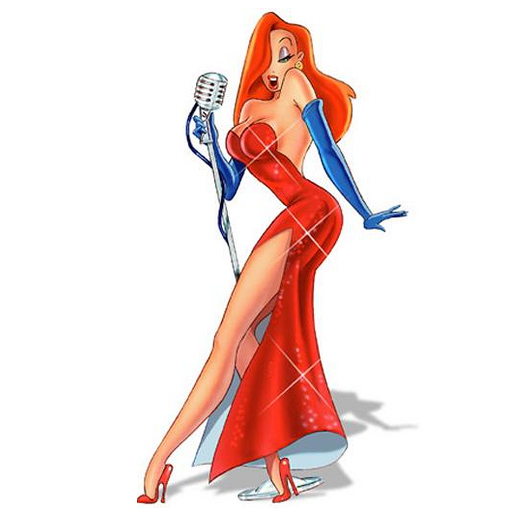
So what is the appeal of Christian Grey? He is a twenty-seven year old multi-billionaire with his own company to start with. He exudes power and control in every aspect of his life. His love interest is constantly calling him “a Greek god.” In addition to his overwhelming physical appearance, he wears cologne she likes and launders his clothes with the correct detergent. Despite all of his traits that make him the ideal alpha male, he still has a flaw that his woman gets to fix. A “crack whore” mother that left him with a pension to hurt women that look like her raised Christian.
Jessica is an over exaggeration of the ideal female body type. Huge hair, legs long enough to make up 60% of her body, massive lips, a waist thin enough to turn any corset into a swimming pool, and yes, breasts that looked like they will not just burst out of her dress but throw the whole thing off of her. Her dress exposes different parts of her body depending on how she stands and how she moves. She is also a singer, and when she sings she has no shame in letting her sex appeal fill the room. Her one balancing factor is that despite her strength and resolve, she still needs protection from the bad guys.
From these two characters, we can come to the standard conclusion that women seem to care primarily about the cerebral while considering the physical. Men primarily focus on physical while considering the cerebral. Is there anything though that connects these two characters? Is there any common ground women and men can meet on?
Both of these characters have one thing in common: they both seem to be in a relationship with somebody who is beneath their station. Christian is in love with a middle class girl fresh out of collage with self-esteem issues and apparently eyes that are too big for her head. Jessica is married to an annoying, high-pitched, cartoon rabbit. Anybody on the outside of these relationships would look on them with confusion. Does this detract or enhance their appeal?
We all fantasize about being with the ideal person. We all have celebrity crushes. We all have characters from books, television, or movies that we favor purely because of their sex appeal. When we see ideal forms though settling for people that we can relate to, or at least do not seem capable of getting the ideal forms, it gives us a sense of hope. “If Ana can get Christian, maybe I can get my own Christian.” “If Jessica Rabbit will marry Roger, maybe the prom queen will go out with me.” One could argue that this is a false sense of hope, and usually it is. The fact remains that in order to be in a relationship with somebody, that person has to agree to it. Maybe despite physical appearance, ability to provide, and potential for empathy, the most appealing quality a person can have is acceptance of our own imperfect selves.
50 shades of Grey is one of the bestselling stories of our time. The sales have exceeded Harry Potter at times. When women talk about why they like this book, what is the main reason? They touch on the love story briefly, some do get into the sexual parts, but for the most part their highest praise is Christian, aka 50 shades of fucked up. We have all seen the memes, “60% of wives wish their husbands would go Christian Grey on them,” gifs with women in bathtubs. Yes, there are plenty of women who say that he is abusive. His popularity among women overshadows his criticisms.
When you Google for lists of top “Hot animated women,” the same character keeps topping those lists. Jessica Rabbit has not only become a staple of what men find attractive, but her name has become a literal term for female beauty. We have all met these women who have been referred to by their peers as a “Jessica Rabbit.”
So what is the appeal of Christian Grey? He is a twenty-seven year old multi-billionaire with his own company to start with. He exudes power and control in every aspect of his life. His love interest is constantly calling him “a Greek god.” In addition to his overwhelming physical appearance, he wears cologne she likes and launders his clothes with the correct detergent. Despite all of his traits that make him the ideal alpha male, he still has a flaw that his woman gets to fix. A “crack whore” mother that left him with a pension to hurt women that look like her raised Christian.
Jessica is an over exaggeration of the ideal female body type. Huge hair, legs long enough to make up 60% of her body, massive lips, a waist thin enough to turn any corset into a swimming pool, and yes, breasts that looked like they will not just burst out of her dress but throw the whole thing off of her. Her dress exposes different parts of her body depending on how she stands and how she moves. She is also a singer, and when she sings she has no shame in letting her sex appeal fill the room. Her one balancing factor is that despite her strength and resolve, she still needs protection from the bad guys.
From these two characters, we can come to the standard conclusion that women seem to care primarily about the cerebral while considering the physical. Men primarily focus on physical while considering the cerebral. Is there anything though that connects these two characters? Is there any common ground women and men can meet on?
Both of these characters have one thing in common: they both seem to be in a relationship with somebody who is beneath their station. Christian is in love with a middle class girl fresh out of collage with self-esteem issues and apparently eyes that are too big for her head. Jessica is married to an annoying, high-pitched, cartoon rabbit. Anybody on the outside of these relationships would look on them with confusion. Does this detract or enhance their appeal?
We all fantasize about being with the ideal person. We all have celebrity crushes. We all have characters from books, television, or movies that we favor purely because of their sex appeal. When we see ideal forms though settling for people that we can relate to, or at least do not seem capable of getting the ideal forms, it gives us a sense of hope. “If Ana can get Christian, maybe I can get my own Christian.” “If Jessica Rabbit will marry Roger, maybe the prom queen will go out with me.” One could argue that this is a false sense of hope, and usually it is. The fact remains that in order to be in a relationship with somebody, that person has to agree to it. Maybe despite physical appearance, ability to provide, and potential for empathy, the most appealing quality a person can have is acceptance of our own imperfect selves.