
Sharlyn J. Lauby's Blog
November 23, 2025
Leadership and Tacit Approval in Today’s Workplace
Estimated reading time: 3 minutes
Years ago, I worked for a manager who had me distribute the same memo every year about tacit approval. The memo was designed to remind everyone of their responsibilities as a manager and leader as well as the basic principles of business.
Tacit is defined as “understood without being openly expressed.” Not only does it apply to our work roles, but in other places like our volunteer and civic roles. It represents silent consent and acceptance. In our workplaces, tacit approval happens whenever a manager fails to speak out about existing conditions. Tacit approval leads everyone to assume that existing conditions are acceptable, will be tolerated, and allowed to continue.
Not only does tacit approval work against improving performance, it makes it unlikely that standards will be met. Here’s an example. A supervisor doesn’t say anything to an employee who’s not wearing their nametag. If nothing is mentioned, what’s going to motivate the employee to wear their nametag in the future? The supervisor’s silence implies that it’s okay. Other employees will see this and, before long, no one is wearing their nametag.
At the point that someone realizes no one is wearing a nametag, trying to re-institute the policy at this point requires a major retraining effort not to mention an internal public relations campaign. To avoid this situation, the supervisor should be vocal, but not in an overbearing, sarcastic, or caustic way. A timely comment can bring general awareness and serves to remind everyone of the policy.
Okay, I get it. It’s just a nametag. Well, here are a couple other examples of tacit approval in the workplace:
Shifting the blame. An employee in another department has an inappropriate screen saver on their computer. Because this employee is in another department, the manager figures it’s not their responsibility and doesn’t address the issue. Even though they realize the screen saver could offend a co-worker or customer. The assumption that someone else will handle it is misconceived. Meanwhile, the employee has the silent approval from a member of the leadership team.
Setting a double standard. An employee doesn’t arrive at work on time. The employee should be coached on the need to be punctual. Failure to say something would be silent approval of tardiness. But this also means that the manager needs to be punctual as well. The hypocrisy of enforcing one standard while demonstrating another will cause resentment and more problems.
These are just a couple of very simple examples, but tacit approval takes many forms and arises for a variety of reasons. It can often result from fear of conflict or rejection, lethargy, or misguided intentions. The way to eliminate tacit approval is to recognize the reasons that tempt us to overlook a situation that we know needs attention.
Leaders must become comfortable speaking up in every case that warrants it, despite apprehensions. As I mentioned earlier, speaking up doesn’t have to be loud, mean, or uncivil. Before long, the reasons for remaining silent will cease to exist. Our feelings about speaking up to correct something that’s wrong becomes less important to us. It becomes about something being wrong that shouldn’t be.
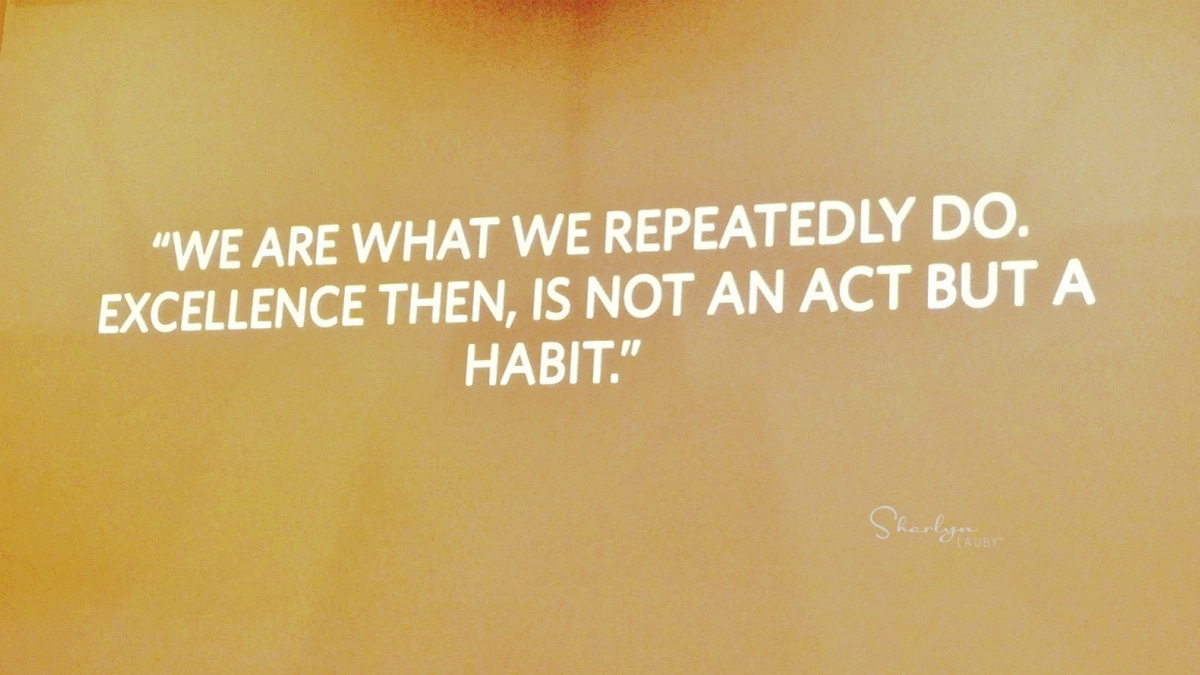
Image captured by Sharlyn Lauby while exploring the streets of Miami, FL
The post Leadership and Tacit Approval in Today’s Workplace appeared first on hr bartender.


November 20, 2025
Leaders: Learn How to Conduct Good Meetings

Estimated reading time: 4 minutes
One thing that’s not going to change in the upcoming year is meetings. And by that, I mean they’re not going away. I don’t know the exact number of hours. I’ve seen statistics ranging from 3 hours a week all the way up to 23 hours a week. Regardless, it’s a lot. So, the best thing to do is learn how to conduct a good one.
It starts with scheduling a meeting for the right reasons. I’ve mentioned before that there are only three reasons to conduct a meeting: 1) to convey information, 2) to solve problems, and 3) to make decisions. After that, the key to a good meeting shifts to the conversation and engagement during the meeting itself.
Here are a few articles about meetings that can serve as a reminder on how to lead a productive and effective session.
Meeting Leaders Don’t Have to Do It All
Meeting leaders need to remember that there is no rule that says they need to do everything. Ask others to get involved. Before the next meeting, go to a couple of participants and ask, “Would you mind keeping our parking lot at the next meeting?” Participants come to the meeting prepared – for the agenda and their role.
During a conference on artificial intelligence, I met someone who saw me the next day and said my name. It was nice. And that’s the point. It’s nice when people remember you and your name. It’s nice when they say your name correctly.
Think about how this applies to the workplace. Do managers take the time to learn how to properly pronounce employee’s names? Or do they come up with some sort of nickname to make their life easier? You might think this doesn’t happen but trust me, it does. Granted, if an employee offers up a nickname, then great. But giving a person a nickname because someone doesn’t want to take the time to learn how to properly pronounce their name is disrespectful and does nothing to encourage a positive working relationship.
6 Keys for Effective Communication
Working in teams is a necessary part of work life. If you work in an organization, you probably work with an onsite team or maybe even a remote team. If you’re a consultant, you might be part of a project team. It’s possible in your personal life you’re part of a volunteer team. Working in teams happens all the time. And an essential activity with teams is communication.
Teams that learn how to consistently communicate well can perform at a high level.
And teams that don’t … well, they will struggle. I believe the keyword here is consistently. Even high performing teams can have communication misunderstandings. When that happens, team leaders will need to help the group. Even if the team leader doesn’t get directly involved, they might coach and support the team as they work through the disagreement.
Use Listening Styles to Become a Better Listener
In the business world, we spend a lot of time trying to sell our ideas to other people. The best way to do that is by communicating with them in a way that they prefer. They’ll be more receptive to what we’re proposing. Granted, it doesn’t always mean we’ll get what we’re asking for … but the conversation will be better and that can help.
Listening is an important communication skill. Not only do we need to be good listeners, but we need to understand how others like to listen. It will help shape communications and yield better conversations.
When someone leads a meeting well, it helps with the conversation. Which is the whole purpose of a meeting. Otherwise, you’re just talking at people. It’s important for participants to remember that they have a role in the meeting. Which is why it could be beneficial to think about how to be a good meeting participant.
Even the best meeting leaders can benefit from a refresher on meetings, which is what I hope is the takeaway from today’s article. Organizations should put an emphasis on providing training to people who will be asked to lead a meeting. One of the nicest compliments you can get is “That was an excellent meeting!”.
The post Leaders: Learn How to Conduct Good Meetings appeared first on hr bartender.
November 18, 2025
7 Things New Supervisors Should Do In their First 6 Months On the Job

Estimated reading time: 4 minutes
We recently published an article with tips for first time supervisors. If you didn’t see it, I hope you’ll check it out. It occurred to me afterward, that the tips were very focused on being a supervisor and interacting with employees. Don’t get me wrong, that’s important. But there are also some things that new supervisors should do that aren’t necessarily focused on employees, like interacting with your boss and peers.
When you’re a new supervisor, it can be difficult to maneuver office politics and manage relationships. You want to make a good impression and you have things that must get done. There are times when it can be incredibly overwhelming and, at the same time, a fantastic learning opportunity. Here are a few things new supervisors should consider during their first 6 months:
Get to know your boss. THIS is the number one thing on your list. Yes, this person hired you and they want you to be successful. But do not blindside them. You want to understand 1) what you can do and not tell your boss, 2) what you can do and tell your boss later and 3) what you need to tell your boss immediately.Learn your company and industry. Even if you were promoted from within, it’s possible there are things you need to learn. Company financials, budgets, market share, customer satisfaction, etc. As a supervisor, you are expected to have knowledge of the operation – regardless of your department.Find out what your peers expect. You have a great sense of the competencies for your job. Now, it’s time to confirm those with the individuals that you have to work with every day. Trust me, they will very much appreciate being asked the question, “What do you expect from me and the team?”Build a relationship with your team. Find out the background and experience of your team members. What are their goals? Let them find out the same about you. Also make sure they know what other departments expect of them. Maybe get their feedback on the responses. Do they agree or disagree? Resist the temptation to immediately create change. It’s very easy to say, “This is what we did at ABC company.” Or “I prefer to do XX over YY.” Always ask yourself if something really needs to be changed – at least initially. You’re building credibility and a reputation. Employees want to know that you’re taking the time to evaluate all options before creating change.Touch everything in your office. What I mean here is open the drawers, look at the files, etc. Understand how the office works. Think of this as a knowledge management activity. What you discover might shed some light on the changes you would like to implement. You need to understand office logistics to make good decisions.Make a list, then prioritize. You’re going to see a lot of things that you want to change or that don’t make sense. Unless they are things that are hazardous, unethical, or illegal, it might make sense just to take note of them. Then do your homework – ask employees why they exist. Find out the history. Then figure out what to tackle first.Even when you’ve been hired to make change happen in the organization, you have to take time to build relationships with the team and understand the organization. Every company’s interpretation of “change agent” is different.
It can be very tempting to want to move fast and make an impact. New supervisors should take the time to get to know the team and understand where to start. It’s important to get the priorities right.
Image captured by Sharlyn Lauby while exploring the streets of Salt Lake City, UT
The post 7 Things New Supervisors Should Do In their First 6 Months On the Job appeared first on hr bartender.
November 16, 2025
JOB SEEKERS: Quitting Is Not a Sign of Failure

Estimated reading time: 3 minutes
Between return to the office mandates and 996 work schedules, employees might be trying to decide if it’s time to look for a new opportunity. It reminds me of a reader note I answered years ago titled “3 Reasons You Might Want to Consider Leaving Your Current Job”.
I’d like to believe that we all realize there are parts of our work that we love and other parts that …well, we tolerate. That’s totally fine. I must admit that sometimes I’ve learned just as much if not more from some of the more frustrating tasks I’ve had to do in my career.
Being able to balance the good parts of our work with the frustration is the reason I wanted to talk about quitting today. One of the things that’s important to remember is quitting should not be viewed as failure. Whether you quit a job, give up on a hobby, etc., quitting is okay if it’s done for the right reasons and at the right time. For example, we really should quit doing things that are unsafe. When you’re thinking about quitting something, here are three questions to consider:
Am I quitting too soon? Sometimes we might be tempted to walk away at the first sign of difficulty. If we quit too soon, it is possible that we might miss out on a tough, frustrating, challenging but incredibly valuable learning experience that we wouldn’t have learned any other way.
Is it too late? Yes, there is such a thing as quitting too late. Maybe we keep hoping a change will occur, so we stick around. Meanwhile, our colleagues have seen the warning signs and made other plans.
Are we concerned what others will think and we don’t quit at all? Unfortunately, there are times when we might feel some pressure to stay in bad situations because we don’t want to be considered “disloyal” and don’t want to be labeled a “quitter”. Sometimes this works and sometimes we get hurt in the process.
I wish I could say these are easy questions to answer. You’ve probably figured out that they’re not. They involve a tremendous amount of self-awareness and honesty. And let me add that coming to the answer of “yes, I need to quit” and being able to do it are sometimes two different things. There could be internal or external factors that impact our ability to act right away.
If someone decides to begin a job search, it’s possible they would benefit from taking a class (or two!) to make themselves more marketable as a candidate. Or maybe they need to save some money so they can comfortably take some time off between jobs. Hopefully, once someone recognizes that they need to quit something they can start putting plans in place to make it happen.
There are lots of inspirational quotes and sayings that want us to believe that quitting is bad or wrong or a sign of failure. It’s not. Sometimes quitting is the absolutely right thing to do. Ideally, it’s good to quit with a plan, so we can learn from the experience. That’s why quitting isn’t a sign of failure. Because we learned something along the way.
Image captured by Sharlyn Lauby while exploring the streets of Lake Buena Vista, FL
The post JOB SEEKERS: Quitting Is Not a Sign of Failure appeared first on hr bartender.
November 13, 2025
How to Share Your Reason for Resigning your Job

Estimated reading time: 4 minutes
I recently published an article on how to resign from your job. If you haven’t checked it out, I hope you will – even if you’re not thinking about resigning right now. One of the things I didn’t talk about in the article is what to say when it comes to the reason for leaving. So, let’s talk about that today.
I can think of many reasons that an employee would resign and not want to get into a lot of detail regarding the reason (i.e., an upsetting health diagnosis, a change in family status, being victim to a crime, feeling unsure/unsafe about their living situation, etc.). There’s no rule that says an employee has to tell the organization why they’re resigning. An employee can simply say “it’s personal” or “it’s private” and stop there. I want to believe that an organization would be respectful of an employee’s comments and not push the matter further.
Obviously though, organizations ask for a reason so if they spot a trend, they can address it. For example, let’s say an organization doesn’t allow for part-time work. What if all of a sudden, several employees were resigning for part-time work opportunities, then the organization might reconsider their policy. Organizations aren’t asking to be nosy. They’re asking so they can potentially address problems and keep good employees.
Expanding on the part-time work example, I know I said that the organization doesn’t allow it, but could this be one of those situations where an employee might want to confirm the policy – before they start looking for a new job? Recruitment and retention are tough. Good employees who like both their job and the organization they work for are hard to find. Employees might want to consider if it makes sense to ask if the organization would consider part-time work – or whatever is prompting an employee to look for a new job. Maybe the employee could offer to be the ‘test case’ for changing the policy. Ultimately, the employee knows their organization and can decide if it is worth asking just to be sure.
Back to reason for resigning. If an employee wants to offer a reason for resigning, but is unsure about what to say, here’s another option. Some employees when they are resigning give a reason but not the *real* reason. You know what I mean. I’m not saying that employees lie. What I mean is that an employee might say, “I found a job closer to home that pays more.” And that’s true. But the *real* reason – the reason the employee started looking in the first place – is because their boss is a bully. If an employee has a reason for leaving that they would rather not share BUT they also have one that they’re fine with sharing…focus on the latter. Maybe an employee could say, “I have some personal issues that I need to focus on right now, so I’m going to find something part-time or on-call.”
One last thing. There is something that the employee should definitely say to the organization. If an employee loves their job – say it. If they enjoy working for the company – say it. If they’d like to be considered for rehire at a future date – tell them. I’m sure the organization would appreciate hearing that your employment experience was a good one.
No one knows for sure what the future brings. We will all have challenges that we have to deal with, including how we will handle our jobs. That doesn’t mean we have to share all the details. Employees should think about what they’re comfortable sharing including how they believe it would be received. Oh, and don’t forget to share the good things too.
Image captured by Sharlyn Lauby while exploring the streets of Gainesville, FL
The post How to Share Your Reason for Resigning your Job appeared first on hr bartender.
November 11, 2025
How to Calculate and Evaluate Return on Investment (ROI)

Estimated reading time: 5 minutes
When you’re trying to propose a new idea or project, one of the questions that regularly comes up is “What’s the ROI?” Return on investment (ROI) is a calculation that reflects the benefit of an investment versus its cost. The basic calculation is:
ROI = Program Benefit – Cost / Program Cost
Once you calculate ROI, you can also multiply the result by 100 and turn it into a percentage. An example would be if a program cost $1000 to implement and would result in $10,000 of profit, then the ROI is 0.9 or 90%. While it’s important to understand the formula for calculating ROI, there are ROI calculators available, just do a search in your favorite internet browser.
Sometimes instead of calculating ROI, organizations will simply look at the relationship between the benefits and cost of a program.
Benefit-Cost Ratio (BCR) = Program Benefit / Program Cost
When using this calculation, if the BCR is more than one, then the benefits exceed the cost. And if the BCR is less than one, then the costs exceed the benefits. If we use the same example above, $10,000 profit / $1000 cost = BCR is 10.
Regardless of whether you use ROI or BCR, the value doesn’t necessarily come in simply calculating the number. It comes in evaluating the result. Here are three questions that need to be answered before calculating ROI.
How will a benefit be defined and calculated?Let’s say you’re proposing a new step in the recruiting process that will result in a better quality of hire. How will the benefit be calculated (i.e., quality of hire)? Do all the key stakeholders agree with this calculation?
Side note: I don’t want to get off track here but, one of the great things about HR metrics is that we can be flexible with our formulas. This can also be a downside. For example, when I worked at the theme park, we calculated turnover for our regular full-time employees separate from our seasonal employees. Because, if we calculated them together, the numbers would be skewed. This was great because we had better data and insights. But it could be challenging if managers didn’t remember that we had two separate turnover calculations. So having stakeholders reach consensus on the calculation could be necessary.
Back to our quality of hire example. Once everyone agrees on the benefit calculation, now we must figure out how to turn it into a dollar amount. And everyone needs to agree on that too. I know this might sound very obvious, but there are lots of organizations that don’t take the time to do this. And if the organization doesn’t know the answer, then how will they know the true benefit of the proposal they’re considering?
What is the program cost and how will it be calculated?The same principles we used for determining benefits also apply to costs. What are the costs that will be included? It may or may not be simply the program being proposed. For instance, let’s say that we’re proposing a new software program for our reskilling program and the cost is $1,000. We know that the cost of the software will be a part of the calculation.
But what about implementation costs? Should we include recruiter pay and benefits since they will be overseeing the implementation? And will there be an expense for training on the new software program? Some organizations might want all those additional expenses included. Other organizations might think of them as a regular operating expense that they would need to incur anyway and not include them.
Like the program benefits, if organizations don’t define what costs will be included, then they run the risk of not calculating ROI completely. Which brings us to the third question.
What’s an acceptable ROI?At the beginning of this article, we talked about the relationship between benefits and cost. It’s important to realize that a project might have an ROI of 90% and the organization might say, “That’s not enough. We need a ROI of 110% to proceed.” OR the organization might say the BCR on a project is 0.75 and give the project the green light because the cost isn’t as large as expected.
Companies need to define what acceptable ROI looks like. And realize it could vary based on the project. It becomes difficult to proceed with a proposal or measure the impact of a project if an acceptable ROI isn’t defined.
Return on investment is an important business calculation. It can help organizations make good decisions and it can help organizations measure the results of decisions they’ve made. But the value in ROI isn’t in just calculating the number. It’s in making sure you calculate the number completely. Using the right information. Because that allows the organization to gain the proper insights.
Regardless of what’s happening with the economy, organizations want need to make fiscally responsible decisions. Knowing how to calculate ROI helps them do that.
Image captured by Sharlyn Lauby while exploring the streets of Washington, DC
The post How to Calculate and Evaluate Return on Investment (ROI) appeared first on hr bartender.
November 9, 2025
Celebrate Your Successes – Big and Small

Estimated reading time: 3 minutes
It’s very tempting to only focus on BIG things – big thinking, big ideas, big wins, etc.. You get the point. I have nothing against big thinking and big goals. But today I want to focus on the small stuff. Because small activities can lead to big change.
When it comes to the small stuff, one thing we need to remember is to congratulate ourselves for accomplishing those small steps. Confession: I know that I’m guilty of this. I take on a big project and break it down into small steps to make it much more manageable. Or a set a big goal for myself and establish milestones for accomplishing the goal. Then I don’t celebrate my success until the big thing is done. Why not give ourselves a little pat on the back or some form of reward as we’re accomplishing those smaller milestones?
Recognizing and celebrating small wins can be great for our confidence. It can give us the momentum we need to continue moving forward with a big goal. Celebrating small successes doesn’t have to be elaborate or costly. It’s about taking a moment to acknowledge the hard work it took to achieve that milestone. And it can be helpful for individuals, teams, as well as the organization.
On an individual level: When we set goals for ourselves, we should also think about celebrating our success. Sometimes the goals we set for ourselves are private and we don’t really make a public statement about them until they’ve been accomplished. Getting a professional certification is an example. I know many individuals who keep their studying quiet because they don’t want the added pressure of having to tell people the outcome of the exam. So, they wait until they pass and say, “I did it! Yea me!” Which is fine but be sure to quietly celebrate some successes along the way, like passing a sample quiz or completing a certification prep course.
On a team level: Many times, when we work on a team or a project, we have smaller milestones that must be accomplished along the way. For example, during a software implementation, there are many steps that must happen before the project is considered completed. The team should celebrate achieving those milestones. The project team leader or department manager should encourage employees to celebrate those moments. Not only does it provide a level of recognition for the team’s hard work to date, but it encourages the team to stay focused and motivated on the big, hairy, audacious goal (BHAG).
On an organizational level: Speaking of BHAGs, organizations create big goals for themselves all the time. Those big goals are made up of several small ones. Organizations should provide regular status reports to employees where goals are concerned and use those updates as a way to celebrate what’s been accomplished so far. Especially when the big goal is something that might take years. Equally important is the need to celebrate successes when there could be a small shift or adjustment in the big plan. The last thing organizations want is employees to perceive that shift as a sign of failure (when it’s not) and potentially demotivate the team.
Small celebrations are a great way for individuals, teams, and organizations to recognize their successes, stay focused on the big picture, and keep motivation at a high level. Because all of those little steps will be what creates the “next BIG thing” in the organization.
Image captured by Sharlyn Lauby while exploring the streets of Fort Lauderdale, FL
The post Celebrate Your Successes – Big and Small appeared first on hr bartender.
November 6, 2025
How to Use Force Field Analysis for Better Decision Making

Estimated reading time: 4 minutes
When we have to make a decision, one of the methods we sometimes use is a T-chart, which is basically making a large T on a piece of paper and listing the pros on one side and the cons on another. The idea being if the pros / benefits / advantages outweigh the cons / downsides / disadvantages then we should do it. Otherwise, we shouldn’t.
Today, I want to share an alternative to the T-chart. One that might offer a better assessment of the situation and lead to better decision making. It’s called a force field analysis. And no, that’s not a Star Wars reference. The force field analysis was developed by social psychologist Kurt Lewin back in the 1950s. Lewin is also the author of the 3-step change model (Unfreeze-Change-Refreeze) which we’ve discussed before.
Back to the force field analysis. When we’re trying to make a decision or set a goal, there are “forces” that drive us toward it and “forces” that restrain us. Hence, when we create the T-chart of pros and cons, that’s what we’re doing. We’re listing the driving forces (pros) and restraining forces (cons).
But here’s where the force field and T-chart differ. In a T-chart, we might be tempted to view all pros and cons as equal. So, if we have 10 pros and 1 con, we might say “let’s do it” because there are more benefits than downsides. The reality could be that the sum total of the 10 benefits is less than the 1 negative. In a force field analysis, we acknowledge that the driving forces and restraining forces are not equal. So, in addition to listing the advantages and disadvantages, we assign them a strength (aka “force”). Then, we can evaluate the results.
If the driving forces outweigh the restraining forces, then it makes sense to proceed with the decision or goal. If the restraining forces outweigh the driving forces, then we could decide not to proceed. But there’s also another option. Is it possible that we can reduce the “force” of the restraining forces? Meaning, can we minimize the negative and change the situation, so the driving forces are back on top?We also should consider that It’s possible the forces could be relatively equal. If they are, is there a way to improve or maximize the impact of the driving forces so they outweigh the restraining ones?The advantage of a force field analysis is in evaluating the “force” of the items. There might be decisions that have lots of little disadvantages – but that’s the point – they’re small. If you only look at the number of them, it could keep the organization from pursuing a great opportunity. Granted, sometimes a lot of little disadvantages are a red flag. That’s why the force field analysis is such a great tool. Because we can not only evaluate the quantity of forces, but the strength of them.
One of the other things a force field analysis can do, is help us with planning. Let’s say the organization does a force field analysis to decide if they want to merge with another company. In looking at the benefits and negatives, now we can prioritize those forces that we need to address. We might want to address large forces early in the transition and smaller ones later. Or we want to address large forces in person and smaller ones can be done via a video call or via email. Establishing the strength of the force allows us to focus on the right things.
While so far, I’ve talked about a force field analysis in the context of organizational decision making, a force field analysis also works for individual decisions. For example, an employee is considering a job change – maybe they’ve been offered both an internal promotion and an external opportunity. A force field analysis might help evaluate the advantages and disadvantages of each opportunity.
Decision making is an important skill. When we make bad decisions, they could weigh on us for a long time. Having good decision-making tools can help us ask the right questions so we make the best decisions possible.
Image captured by Sharlyn Lauby while exploring the streets of Las Vegas, NV
The post How to Use Force Field Analysis for Better Decision Making appeared first on hr bartender.
November 4, 2025
In-Person Training Programs: 7 Items to Consider

Estimated reading time: 5 minutes
One of the great things about employee learning is that there are so many different options. We can conduct short sessions like microlearning or longer ones like a blended leadership development program. In-person (aka classroom training) still remains a viable learning opportunity.
However, in-person programs have been criticized for ‘wasting time’. You’ve probably seen the statistics stating that participants like in-person learning for the interaction but favor online learning for the flexibility. It does make me wonder if part of the reason that in-person training programs are criticized is because the program logistics are poor. I can’t begin to tell you how many times I’ve been scheduled to deliver training, and the room isn’t set right, the equipment doesn’t work, etc. These things have an impact on the training session. So, here’s a reminder of the items to consider when scheduling an in-person training session.
Invitation: I know this sounds very basic, and it is. Tell participants in advance about training. Let them know the location. Tell them if there are special parking instructions. Inform them of the start and end times. Share details about participant materials, breaks, meals, etc. As a trainer, I am surprised at the number of employees who don’t know when training starts or ends. Or that they believe meals are being provided. Location: For many organizations, the session is going to be at their facility. Or maybe if you’re conducting the training session during a conference, it will be at the event venue. However, there could be times when having a training program offsite is the right thing to do. It might help participants relax and focus – and keep outsiders from interrupting the session. It could also be a nice reward to have a change in scenery. Materials: A lot of companies are moving toward online participant materials. That’s fine. If that’s the plan, then participants need to know that in advance, so they bring the materials with them. This includes letting participants know if they will have access to WiFi so they are able to access their online materials. Also, think about whether participants will need paper, pens/pencils, etc. for note taking. Equipment, including WiFi: Almost all training programs include some sort of audiovisual. The room should be set to meet those needs. If the instructor is required to bring their equipment, they should know in advance. There should be a discussion about equipment compatibility. For example, I use a Mac and sometimes need special adapters. Also, if WiFi isn’t going to be available, the instructor should know in advance – just in case they need to make alternate arrangements to view materials or show a video. Room Set-up: When instructional designers create training programs, they do it with a certain number of participants in mind. And that the participants will be able to interact with each other. I’ve seen times when the room is set classroom style and the activities force participants to literally rearrange the room to do an activity. Or the room is set in rounds and participants have to sit with their back to the front because no one thought about being able to interact with the instructor. Breaks and Meals: When employees go to training, this is a change in their normal routine. For example, when they’re in their typical work location, they know where the water fountain is located. They know when they can take lunch – and they might bring their lunch. They take their breaks at the same time. Letting participants know how the day will be structured helps it feel a little bit more like a normal day. It also goes without saying … but let me say it anyway, that if the organization is providing meals and snacks, they should check with participants about any dietary restrictions. Instructor Prep: Please note that the person who is responsible for scheduling the training session and notifying participants might not be the person delivering the session. Instructors should be prepared to deliver their session. If they have any special needs like audiovisual, it should be communicated in advance. Training program organizers should remember the instructor in their room set-up and meals. Yes, I’ve been invited to conduct all day training programs where there was no place for me to sit and the expectation that I would not eat or drink anything all day.Many of the things we’ve talked about are also applicable for online training programs. Tell people what to expect. Make sure they can access materials. Double check the equipment. Give participants breaks. Instructors need to properly prepare. And for whatever the reason, if something goes wrong, have a contact that can help fix it. It’s possible that certain glitches can be dealt with and resolved quickly – like adding chairs, granting WiFi access, asking the caterer for a special meal.
In-person training programs still bring value. But they need to be logistically organized so the instructor and participants can effectively focus on the training.
The post In-Person Training Programs: 7 Items to Consider appeared first on hr bartender.
November 2, 2025
Planning Your Exit: 10 Steps for Properly Resigning from Your Job

Estimated reading time: 4 minutes
The last couple months of the year, people often start thinking about their goals. One of the goals might be to find a new job. Even if someone is currently following the trend of “job hugging” where they’re staying in their current job for security and stability, the rule has always been the best time to look for a job is when you have one. So, planning a move when you’re still employed makes sense. Because the last thing someone wants is to be so fed up with their current work situation that they just start applying everywhere in the hopes that they’ll find something – anything – better than what they have.
That can create job seeker regret. Especially if someone handles their resignation poorly. Even if the organization is toxic and your manager is terrible, it’s important to resign the right way. You can still be honest and authentic. Remember – you’re initiating the resignation. So, think through how you want it to happen. Here are ten things to consider:
Give proper notice. Whatever your company says is proper notice (i.e., two weeks, three weeks, a month), give it. Your new employer should not ask you not to give proper notice. They would expect you to give them proper notice if you left them, so provide the same courtesy to your current employer. Think about the reason you’re going to share. There are lots of reasons a person resigns. It could be pay, benefits, the organization, your manager, the commute, etc. The organization is going to ask you for a reason, so be strategic and think about the top 1-2 points you are comfortable communicating.Write a resignation letter. At some point, the organization will expect formal documentation that you’re resigning. It’s possible to give verbal notice then follow-up with a letter. Resignation letters do not have to be long, and they do not have to contain specific details. Be prepared to leave. Some organizations will ask people in highly competitive roles to leave the day they give notice (common example: sales representatives). It’s not personal, they ask it of everyone. Chances are you have already witnessed this around the workplace. If you’re in one of those roles, be prepared.Don’t expect a counter-offer. It’s possible (but highly unlikely) that your organization will beg you to stay and give you a counteroffer. There is a plethora of reasons why organizations shouldn’t give counteroffers and why you shouldn’t accept one. The best strategy is not to expect one. Find out about benefits and final paychecks. While you’re working out your notice, find out about final pay checks and expenses, 401(k) plans, and health insurance (COBRA). Many HR departments have some sort of FAQ that they provide exiting employees with this information.Participate in an exit interview. If the organization asks you to do an exit interview, do it. But this is where #2 is important. Know what you’re going to say about your work experience, your manager, and the organization. There’s a way to be truthful without creating animosity.Help your replacement. If the organization hires your replacement (or designates a couple of co-workers to handle your work), be helpful and show them what needs to be done. They will not be like you and do things like you. But remember, you’re leaving. You’ve done a good job, and you should want them to be successful.Return all company property. I know this seems obvious, but I’ve seen exiting employees use this to retaliate at the organization or their manager. If you have computer or phone equipment, return it in good condition. Make sure that the organization gets any keys or badges. If you have concerns about the organization claiming you didn’t return something, ask for a receipt.Keep the door open to return. Even if you’re angry with your employer, there could be a great opportunity that you’d be perfect for that doesn’t involve your current manager or co-workers.Resigning can be an exciting and stressful time. You’re trying to wrap up things at one job and start another. Resigning the right way allows you to focus on your new opportunity. It also sends the message to your co-workers and the rest of the organization that you wish them well. That’s the message you want to send when you’re planning your exit.
Image captured by Sharlyn Lauby while exploring the streets of Chicago, IL
The post Planning Your Exit: 10 Steps for Properly Resigning from Your Job appeared first on hr bartender.
Sharlyn J. Lauby's Blog

- Sharlyn J. Lauby's profile
- 10 followers

