
 Sign in with Facebook
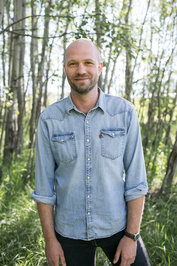
Jonathan Fetter-Vorm’s Followers (82)


625 books
|
57 friends

290 books
|
23 friends

123 books
|
24 friends

41 books
|
3 friends

694 books
|
30 friends

34 books
|
2 friends

1,610 books
|
790 friends

582 books
|
184 friends
More friends…
Jonathan Fetter-Vorm
Goodreads Author
Born
The United States
Website
Twitter
Genre
Member Since
August 2010
To ask
Jonathan Fetter-Vorm
questions,
please sign up.


|
Trinity: A Graphic History of the First Atomic Bomb
—
published
2012
—
16 editions
|
|

|
Kanon graficzny. Tom 1. Od Gilgamesza do Tybetańskiej księgi umarłych
by
—
published
2012
—
9 editions
|
|

|
Moonbound: Apollo 11 and the Dream of Spaceflight
by
—
published
2019
—
4 editions
|
|

|
Battle Lines: A Graphic History of the Civil War
by
—
published
2014
—
3 editions
|
|

|
Trinity. Historia bomby, która zmieniła losy świata
|
|

|
Histoire d'Apollo XI: Comment on a marché sur la lune
|
|

|
Droga na Księżyc
|
|
And we have liftoff...
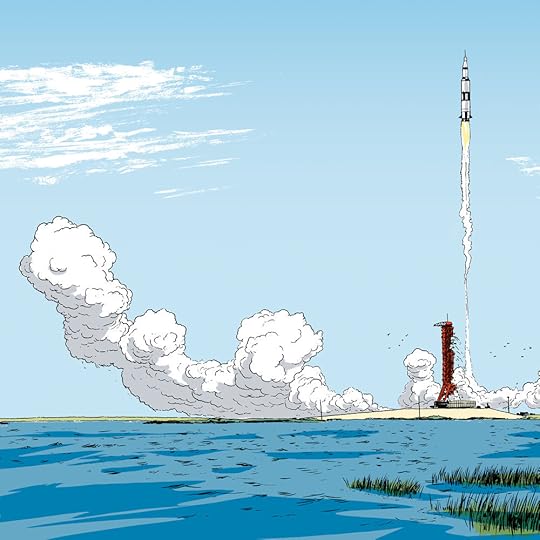
As of today, Moonbound is out in the world! You can find it wherever (maybe) books are sold. It’s a huge relief to have it all wrapped up, though now a new kind of anxiety creeps in, one that I have to train myself to ignore: that little voice in my head needling me about whether anyone is going to care. I’ve found that the only practical thing to do at this point is get back to drawing an
Read more of this blog post »


“Only one facet of the atomic bomb was still missing: Criticality. “Criticality” is a term used to describe the ideal conditions for a chain reaction. A row of dominoes is “critical: if each domino that falls knocks over one other. Fermi assembled a “critical mass” of uranium in his reactor, and he achieved a linear chain reaction. Each atom that fissioned caused one other atom to fission. Theoretically, that sort of reaction can go on forever (given infinite atoms), but it’s not getting any bigger. A bomb, however, requires something more explosive: a chain reaction that grows exponentially. A bomb requires a super critical mass.
Imagine an area the size of an empty basketball court and a pile of dominoes. To make a super critical mass, line up the dominoes so that each one that falls will knock over two more dominoes. And each one of those knocks two more over, and so on… This is essentially what happens inside the core of an atomic bomb. The reactive material — uranium or plutonium — is packed together so tightly that when one atom fissions the released neutrons can’t help but hit two more atoms, causing them to fission as well. In other words, once a super-critical mass is assembled, an exponential chain reaction is practically inevitable.
Variations on this kind of super-critical mass happen often in nature. Avalanches. Epidemics. But it’s a lot harder for humans to re-create these sorts of complex systems. A super-critical reaction requires an astounding amount of work and organization just to get all the necessary pieces arranged in the right order. All this work, whether it’s lining up dominoes or enriching uranium, builds toward one single moment: the moment when what was once impossible becomes unavoidable. In that moment the logic of the chain reaction takes over. The fire will only stop when there is nothing left to burn.
The Trinity test was that moment. Once construction had finished on the factories, the laboratories, and the test sites… once the nation’s brightest minds had demonstrated the potential power of nuclear fission… and, finally, once the military had organized these many parts into a coherent plan to test a bomb… a chain reaction was about to be set in motion, making certain outcomes inevitable.
With all that momentum, if a bomb could indeed be built, was there any justification to not build it? And once a workable bomb was built, was there really any chance that it wouldn’t be used?”
― Trinity: A Graphic History of the First Atomic Bomb
Imagine an area the size of an empty basketball court and a pile of dominoes. To make a super critical mass, line up the dominoes so that each one that falls will knock over two more dominoes. And each one of those knocks two more over, and so on… This is essentially what happens inside the core of an atomic bomb. The reactive material — uranium or plutonium — is packed together so tightly that when one atom fissions the released neutrons can’t help but hit two more atoms, causing them to fission as well. In other words, once a super-critical mass is assembled, an exponential chain reaction is practically inevitable.
Variations on this kind of super-critical mass happen often in nature. Avalanches. Epidemics. But it’s a lot harder for humans to re-create these sorts of complex systems. A super-critical reaction requires an astounding amount of work and organization just to get all the necessary pieces arranged in the right order. All this work, whether it’s lining up dominoes or enriching uranium, builds toward one single moment: the moment when what was once impossible becomes unavoidable. In that moment the logic of the chain reaction takes over. The fire will only stop when there is nothing left to burn.
The Trinity test was that moment. Once construction had finished on the factories, the laboratories, and the test sites… once the nation’s brightest minds had demonstrated the potential power of nuclear fission… and, finally, once the military had organized these many parts into a coherent plan to test a bomb… a chain reaction was about to be set in motion, making certain outcomes inevitable.
With all that momentum, if a bomb could indeed be built, was there any justification to not build it? And once a workable bomb was built, was there really any chance that it wouldn’t be used?”
― Trinity: A Graphic History of the First Atomic Bomb
“The fire will only stop when there is nothing left to burn.”
― Trinity: A Graphic History of the First Atomic Bomb
― Trinity: A Graphic History of the First Atomic Bomb
“When Hahn and Strassman conducted their experiment, they launched a neutron into an atom of uranium, a metal that was made up of the largest and heaviest atoms known at the time. Because a neutron has no electrical charge, it can slip through the powerful wall of electrons that surrounds every atom. This extra neutron is absorbed into the already bloated uranium nucleus, upsetting the careful balance of forces that holds the atom together. And in a flash the whole atom fractures. Its protons and electrons and neutrons rearrange themselves into different elements. The reaction also releases stray neutrons, which fly off on their own. But the most significant by-product of this collision is energy. Lots of it…
Just how much energy comes from a nuclear reaction? About seventy million times more energy than from a chemical reaction. So if, for example, you fissioned one kilogram of uranium, it would make the same size explosion as 20,000 tons of TNT. One little chunk of uranium has more potential explosive energy than a pile of TNT stacked ten stories high. If fission could work on a large enough scale (instead of just one atom at a time), mankind stood to gain more than merely the ability to make explosions. In fact, fission promised to reveal some of the deepest mysteries of the universe.
The secret behind fission’s awesome power lies in the type of reaction that is taking place. For practically all of human history, the most energetic reactions that humans were aware of were chemical reactions. Fire is a good example. If you ignite a lump of coal and make sure there is enough oxygen around, the result is fire (energy) and smoke. On a molecular level, the heat from the flame disrupts the electrons in the coal, causing each carbon atom to bond with two atoms of oxygen. The result is a new molecule made from the old atoms: CO2. We put in carbon and oxygen, and we get out carbon and oxygen, though in slightly different arrangements. But in a nuclear reaction, such as fission, the original atom of uranium disappears. It actually becomes two new atoms. Instead of changing merely the arrangement of the atoms, fission changes their very identity. In fission, scientists had finally discovered the philosopher’s stone that had captivated the minds of medieval alchemists. With fission, we could finally turn lead into gold.”
― Trinity: A Graphic History of the First Atomic Bomb
Just how much energy comes from a nuclear reaction? About seventy million times more energy than from a chemical reaction. So if, for example, you fissioned one kilogram of uranium, it would make the same size explosion as 20,000 tons of TNT. One little chunk of uranium has more potential explosive energy than a pile of TNT stacked ten stories high. If fission could work on a large enough scale (instead of just one atom at a time), mankind stood to gain more than merely the ability to make explosions. In fact, fission promised to reveal some of the deepest mysteries of the universe.
The secret behind fission’s awesome power lies in the type of reaction that is taking place. For practically all of human history, the most energetic reactions that humans were aware of were chemical reactions. Fire is a good example. If you ignite a lump of coal and make sure there is enough oxygen around, the result is fire (energy) and smoke. On a molecular level, the heat from the flame disrupts the electrons in the coal, causing each carbon atom to bond with two atoms of oxygen. The result is a new molecule made from the old atoms: CO2. We put in carbon and oxygen, and we get out carbon and oxygen, though in slightly different arrangements. But in a nuclear reaction, such as fission, the original atom of uranium disappears. It actually becomes two new atoms. Instead of changing merely the arrangement of the atoms, fission changes their very identity. In fission, scientists had finally discovered the philosopher’s stone that had captivated the minds of medieval alchemists. With fission, we could finally turn lead into gold.”
― Trinity: A Graphic History of the First Atomic Bomb
Topics Mentioning This Author
| topics | posts | views | last activity | |
|---|---|---|---|---|
The Seasonal Read...:
 Spring Challenge 2013 Completed Tasks - DO NOT DELETE ANY POSTS IN THIS TOPIC!
|
2808 | 780 | May 31, 2013 09:02PM | |
| 2013 Books!: 2013 Book List | 1167 | 422 | Jan 01, 2014 09:34AM | |
|
Reading with Style:
Su 2015 RwS Completed Tasks - Summer 2015
|
1153 | 115 | Aug 31, 2015 09:01PM | |
|
The Seasonal Read...:
Summer Challenge 2015: Completed Tasks (DO NOT DELETE POSTS)
|
3424 | 692 | Sep 01, 2015 07:40PM | |
|
A Million More Pages:
A Picture is Worth a 1,000 Words - Slytherin June Prefect Challenge
|
87 | 148 | Sep 09, 2015 01:18PM | |
| 2025 & 2026 Readi...: I Spy Challenge - 2015 | 1564 | 1192 | Jan 05, 2016 06:41PM | |
| Around the Year i...: Liz's 2020 un-plans (because who does a reading challenge while 7 months pregnant/Now with a newborn & a 3 year old. God help us!) | 6 | 78 | Jan 26, 2020 09:59PM | |
|
Science and Inquiry:
July 2020 Nominations
|
27 | 156 | May 19, 2020 10:06PM | |
| Crazy Challenge C...: Authors with hyphenated names | 5 | 21 | Oct 09, 2022 10:11AM |
