Michael Leon's Blog
May 3, 2024
The Prodigy Series
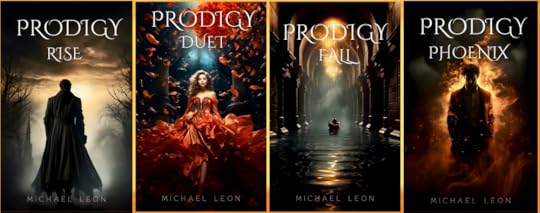
Discover the mesmerising world of Prodigy, a series spanning seven fantasy novellas that weave together gothic fantasy, time travel, and alternative history.
Set against the backdrop of the Palais Garnier opera house, the series unfolds the epic saga of Erik Destler, a tormented prodigy haunted by phantoms and driven by a thirst for vengeance. From his deadly alliance with diva Carlotta Caccini in Prodigy Rise to their turbulent conquest of the opera world, the narrative delves deep into the shadows of the opera house. The series progresses, in Prodigy Duet, where the disappearance of Christine, a talented understudy, draws her friend Raoul into a desperate search, unveiling a web of secrets that ties back to the fabled Opera Ghost. The suspense intensifies in Prodigy Fall, leading to a dramatic crescendo where music and mystery collide on the grand stage, the infamous opening night at Garnier.
Prodigy Phoenix catapults the story into a future where the boundaries between humans and AI blur, unraveling a legacy of secrets through the eyes of Benny, a performer linked across centuries to the original Phantom. This epic journey through time explores themes of legacy, identity, and the eternal allure of the operatic world, inviting readers into a narrative as haunting as it is timeless.


December 11, 2023
The Gothic Story
Dive into the shadowy realm of The Gothic Story, a twelve-minute journey through the evolution of Gothic literature and film. From the brooding castles of Horace Walpole’s The Castle of Otranto to the chilling corridors of the Overlook Hotel in Stanley Kubrick’s The Shining, this video explores the dark tapestry of human fears woven into the Gothic genre. Discover how Gothic writers like Mary Shelley and filmmakers such as Guillermo del Toro masterfully express society’s collective shadows, giving form to the Jungian concept of the dark, repressed corners of our psyche. As we traverse the centuries, witness the transformation of Gothic storytelling, reflecting the changing terrors and anxieties of each era. The video culminates in a thought-provoking contemplation of Gothic fiction’s future in our technologically advanced society. Could the blend of past, present, and future in Gothic narratives become the new lens through which we perceive our increasingly digital reality? The Gothic Story invites you to consider how this enduring genre continues to captivate, terrify, and reveal the deepest aspects of the human condition, even as we stand on the brink of a new, uncertain future. Join us in unraveling the eternal allure of the Gothic imagination.
October 17, 2023
HG Wells & The Time Machines
H.G. Wells' "The Time Machine" is a riveting journey through the corridors of time that blends science fiction with profound social commentary. The narrative follows the adventures of the Time Traveler, an inquisitive inventor who constructs a machine that propels him to the distant future. Arriving in 802,701 AD, he encounters two distinct races: the Eloi, a gentle yet feeble species, and the sinister Morlocks, who dwell underground.
Wells' prose paints a vivid picture of a world transformed by millennia, where evolution and societal structures have taken divergent paths. Amidst the awe-inspiring landscapes and eerie encounters, the novel raises questions about the consequences of unchecked progress and the potential pitfalls of social hierarchy. The Time Traveler's exploration is not just of time but also of humanity's possible fates.
As a pioneering work of science fiction, "The Time Machine" transports readers across epochs, igniting contemplation about the course of human civilisation. Wells' narrative skill and his knack for weaving speculative fiction with philosophical ponderings, cement this tale as a timeless classic that continues to enthral and provoke thought. Whether you're a seasoned science fiction enthusiast or a curious literary explorer, this book invites you to journey through time's boundless corridors and contemplate the intricate tapestry of human destiny.
Film Adaptations H.G. Wells' timeless classic: The Time Machine has inspired many film adaptations. Two notable additions include George Pal's 1960 movie and Simon Wells' 2002 take.
With its stunning time travel sequences and imaginative portrayal of the distant future, Pal's version remains a standout. The film adeptly captures the Time Traveler's journey through the ages and his encounter with the Eloi and Morlocks, blending adventure with social commentary.
Simon Wells, H.G. Wells' great-grandson, directed a modern take on the story. This version added a romantic subplot while retaining the core elements of the novel. Its visual effects showcased a futuristic world in remarkable detail, reimagining the Eloi and Morlocks in a new light.
These adaptations and the many varied TV and cinematic versions incorporating time travel elements have demonstrated the enduring appeal of The Time Machine, reflecting the era written, offering a glimpse into society's evolving concerns and technological advancements, and their impact on an evolving society, and the consequences of humanity's choices and actions.
Book Adaptations: Numerous written adaptations have sprung from Wells' groundbreaking work, each adding its creative twist to the time-travelling narrative. One notable adaptation is Time and Again by Jack Finney, published in 1970.
Finney's novel combines elements of science fiction and historical fiction, following the adventures of protagonist Simon Morley. Employed by a secret government project, Morley uses hypnosis to transport himself back to New York City in the 1880s. The meticulous attention to historical detail immerses readers in the past, capturing the era's essence.
While Time and Again is not a direct retelling of Wells' story, it draws inspiration from The Time Machine by exploring time travel differently. Finney's narrative focuses on the wonders and challenges of experiencing a bygone era, intertwining a sense of nostalgia with scientific curiosity. The adaptation offers a fresh perspective on time travel, delving into the romance of time's fluidity and its impact on personal experiences.
Time travel has become a significant sub-category of the science-fiction/fantasy genre, with many award-winning novels incorporating these elements. A more recent example is Connie Willis' two-volume time travel sequence, Blackout and All Clear, a gripping portrait of London during the Blitz, which won science fiction's Hugo Awards in 2011.
The future of time travel: Contemporary science fiction writers are increasingly exploring the future impact of new technologies such as VR, AR and AI Singularity. In a time where society is digitally interconnected, where real and virtual worlds are seamlessly connected, the concept of time travel moves from pure fantasy to becoming a potential future.
Young brilliant programmers are becoming the new groundbreakers where the power of the human mind could be surpassed by technology, creating strange new worlds where users can download their memories and relive moments from their past in virtual realities.
Novels such as William Gibson’s The Peripheral (2014) have considered the impact of powerful technologies, where humanity gains the ability to explore the past on a grand scale, opening the possibility of catastrophic outcomes. Experimental glitches could confuse a traveller's real memories with memories from other eras they never lived in, inadvertently creating change across parallel universes, splintering into different timelines, creating bridges between
timelines. Alternate histories could develop, subtly altering the course of future events, creating impactful change to the present.
In a world where the lines between past, present, and future are far more malleable, new challenges could emerge, leaving future generations to grapple with the unexpected and potentially dire ramifications.
See the YouTube video
September 30, 2023
Act Two: Prodigy Duet
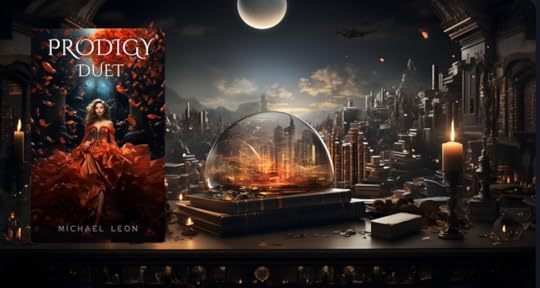
Prodigy is an enthralling series of seven Acts, a re-imagination of the Phantom of the Opera, fusing gothic fantasy, time travel, and alternate history elements. In Act Two: Prodigy Duet, Erik and Carlotta's bond forged, they set out to take control of Garnier opera, beginning with the removal of Christine, Carlotta's overly talented understudy. Christine's disappearance further draws her friend, Raoul, into Erik's deadly web. Already haunted by the disappearance of his brother, Philippe, Raoul risks all to find Christine. Struggling to find any leads, he enlists the support of the enigmatic Madame Giraud, a long-serving employee of the Garnier, rumoured to have a psychic connection with the fabled Opera Ghost. Can theyn save Christine from the danger she faces? Find out in this epic series, spanning centuries, from the past to the distant future. See YouTube video
August 8, 2023
The Many Faces of Jeckyll and Hyde
1886: Stevenson’s gothic novella "Dr. Jekyll and Mr. Hyde", a bewitching exploration into the dual nature of humanity: Robert Louis Stevenson's timeless classic, "Dr. Jekyll and Mr. Hyde," explores the blurred boundaries between good and evil, laying the depths of human nature bare. Set against the atmospheric backdrop of Victorian London, this classic tale explores the profound duality of humanity.
Dr. Henry Jekyll, a respected and esteemed figure in society, embarks on a perilous experiment in search of unlocking the hidden facets of the human psyche. In doing so, he inadvertently unleashes his alter ego, the malevolent Mr. Hyde, a creature driven by base desires and unbridled impulses.
Stevenson's evocative prose transports readers to the gaslit streets and fog-filled alleys of London, where a sense of foreboding permeates every page. The characters that inhabit this tale, such as the righteous lawyer Gabriel Utterson and the enigmatic Mr. Poole, bear witness to the unraveling of Jekyll's sanity and the terrifying presence of Hyde.
"Dr. Jekyll and Mr. Hyde" delves into themes of identity, morality, and the consequences of unchecked desires. Stevenson poses profound questions about the nature of humanity and the shadows that lurk within each of us. Is there truly a battle between good and evil within our souls? Can we ever fully suppress our darker impulses, or are they destined to consume us?
Throughout the years, this timeless tale has inspired numerous adaptations and interpretations across various art forms, from stage plays to film adaptations, and the written form.
2014: Book Adaptation: Daniel Levine's "Hyde". A good example is Daniel Levine's reimagining of Stevenson's classic. Set in contemporary London, Levine’s "Hyde" delves into the fractured mind of Dr. Jekyll, exploring the psychological complexities of identity and the consequences of unchecked desires. Levine's atmospheric prose and thought-provoking narrative challenge readers to confront their own inner demons. With fresh perspectives and surprising twists, "Hyde" pays homage to Stevenson's original while offering a contemporary take on the timeless themes of good and evil. A compelling addition to the legacy of "Dr. Jekyll and Mr. Hyde."
Film Adaptations. One notable film adaptation is the 1931 version directed by Rouben Mamoulian, which brings Stevenson's chilling tale to life with a mesmerizing performance by Fredric March. The visual transformation from Jekyll to Hyde remains a haunting representation of the internal battle between the two personas.
Jeckyll and Hyde, a timeless Tale?
Is "Dr. Jekyll and Mr. Hyde" still relevant in todays complex world? It would seem so, given science is yet to fully unlock the mysteries of the human psyche.
Imagine a Dr. Jeckyll in the future, who would have access to seemingly magical technologies, capable of linking human consciousness to advanced virtual realities.
Perhaps in a future London, neural interfaces and augmented reality (AR) have evolved to astonishing heights. Driven by his insatiable curiosity, a future Jekyll would delve into the depths of the human psyche using a revolutionary technology known as MindScape. Within this immersive digital realm, Jekyll creates his alter ego, Mr. Hyde, as a fully interactive and dynamic avatar, a digital doppelgänger driven by base desires and untamed impulses.
As Jekyll's experiment progresses, the boundaries between Hyde’s physical and virtual worlds begin to blur. Hyde's presence becomes increasingly pervasive, yearning to transcend the confines of the MindScape and infiltrate the real world. Jekyll's struggle intensifies as he grapples with the consequences of playing god with his own consciousness, giving rise to a battle between the shadows within his own mind and the terrifying Hyde.
The implications of future technologies, such as advanced neural interfaces, artificial intelligence, and immersive virtual realities will be profound. The ethical dilemmas posed by the emergence of digital avatars and the fusion of human nature with the digital realm will create many challenges. As the line between humanity and technology becomes increasingly blurred, Jekyll's inner conflict serves as a cautionary tale, inviting audiences to question the potential consequences of our ever-expanding technological capabilities.
Through Modern adaptations of R.L. Stephenson’s timeless tale, a vision of a not-so-distant future, where the battle between good and evil plays out in the vast landscapes of the human mind and the boundless frontiers of digital realms, challenging the very essence of what it means to be human in an era of limitless technological possibilities.
July 4, 2023
The Many Pictures of Dorian Gray
1890: Wilde’s Bewitching Dance Between Beauty and Corruption. In Oscar Wilde's timeless masterpiece, "The Picture of Dorian Gray," he weaves a gothic tale that explores the intricate relationship between beauty, morality, and the depths of human nature. Set against the backdrop of the vibrant and decadent society of late 19th-century London, this haunting novel immerses readers in a world where art, desire, and the pursuit of eternal youth converge.
At the heart of the story is the enigmatic Dorian Gray, a young man whose striking beauty captures the attention of artist Basil Hallward. When Basil paints a portrait that seems to encapsulate Dorian's youthful allure and inner essence, an uncanny twist of fate unfolds. As Dorian embarks on a hedonistic journey, indulging in every pleasure and vice without consequence, the portrait ages and reveals the true nature of his soul.
Wilde's prose is filled with wit and intellect, coloured with descriptions that transport readers to the opulent salons and shadowy corners of Victorian society. Through his masterful storytelling, he delves into themes of aestheticism, moral decay, and the pursuit of an idealized version of oneself. The characters that orbit Dorian—Basil, the earnest artist, and Lord Henry Wotton, the captivating embodiment of decadence—add depth and complexity to the narrative, contrasting the forces that shape Dorian's transformation.
"The Picture of Dorian Gray" challenges societal norms and raises profound questions about the nature of art, beauty, and the consequences of unchecked desire. It is a cautionary tale that holds a mirror to our own obsessions and invites us to contemplate the dualities that reside within us all.
2002: Self’s Bold and Provocative Reworking of Wilde's Classic. Will Self's daring and controversial novel, "Dorian," presents a mesmerizing and thought-provoking reimagining of Oscar Wilde's timeless tale, "The Picture of Dorian Gray." In this modern adaptation, Self skillfully captures the essence of Wilde's original while infusing it with his distinctive style and social commentary.
Set in the vibrant and frenetic world of 1980s London, "Dorian" transports readers into a world of excess, narcissism, and self-destruction. Self's prose is sharp and unapologetic, reflecting the hedonistic atmosphere of the era. He delves deep into the psyche of his characters, particularly Dorian, who becomes an emblematic figure of the AIDS epidemic and its impact on society.
Self's exploration of the theme of vanity and the destructive pursuit of youth and beauty resonates powerfully in this adaptation. Through vivid descriptions and introspective narrative, he navigates the dark corners of Dorian's mind, exposing the consequences of his indulgences.
While Self's "Dorian" is a captivating and audacious retelling, it may not appeal to purists of Wilde's original work. It takes risks, challenging traditional interpretations and offering a modern lens through which to view the story. Readers familiar with Wilde's novel will find intriguing parallels and departures, prompting them to question societal values and the notion of eternal youth in contemporary culture.
Film Adaptations. Oscar Wilde's "The Picture of Dorian Gray" has captivated filmmakers for decades. The most notable adaptation is the 1945 film directed by Albert Lewin, starring Hurd Hatfield as Dorian Gray. This classic interpretation preserves the essence of Wilde's novel, capturing the decadence and moral dilemmas at its core. The haunting portrait of Dorian Gray, aging while he remains eternally youthful, serves as a striking visual metaphor throughout the film.
Other adaptations, such as the 2009 film directed by Oliver Parker and the 2019 film "Dorian Gray" directed by Michael Matteo Rossi, offer their own unique interpretations of the story. Each adaptation brings its own visual flair and narrative choices, exploring different facets of Dorian's descent into corruption.
A Timeless Tales' Adaptation: Gray’s Realm. Book and film adaptations serve as compelling additions to the legacy of Wilde's masterpiece, offering fresh perspectives and inviting audiences to engage with the timeless themes that continue to resonate in our contemporary world.
We’re considering making Oscar Wilde's timeless masterpiece our next adaptation. In our adaptation, “Gray’s Realm”, the metaphor of a painting could be updated, transcending the limitations of a mere canvas. As Dorian navigates the tumultuous waters of vanity, temptation, and self-obsession, he becomes entangled in a web of groundbreaking technologies that redefine his perception of self.
Rather than a physical portrait, Dorian's identity is intricately linked to neural implant technology.
The combination of immersive virtual reality, augmented reality and neuro-technological advancements, turns Dorian's world into a playground of hyper-realistic experiences and mind-altering simulations. Could a rogue neural implant provide an illusory window into his soul, projecting vivid representations of his moral choices, desires, and hidden secrets?
Technological visual representation brings a fresh dimension to the story, illuminating the destructive impact of vanity and moral corruption in an era defined by technological advancements.
Ethical implications of merging humanity with technology would be addressed. What are the consequences of embracing artificial intelligence and implants as extensions of our identity? Can we have boundaries in an era of limitless possibilities? This groundbreaking interpretation would breathe new life into Wilde's timeless tale, paving the way for an immersive experience that examines the intricate relationship between humanity, technology, and the eternal pursuit of perfection.
June 24, 2023
Act One: Prodigy Rise
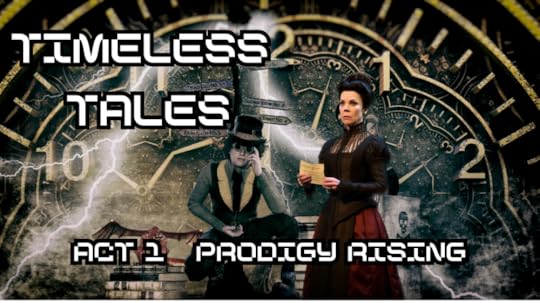
Unmasking the Heroes: The Courageous Insurgents of the Garnier Opera House Tunnels.
Delve into the hidden chronicles of the secret tunnels beneath the magnificent Garnier Opera House and embark on a journey to meet the indomitable members of the "Commune Révolutionnaire." These ordinary individuals, driven by extraordinary determination, formed a clandestine group during the 1871 Bloody Week, bravely standing up against oppression and advocating for a fairer society. Prodigy, the immersive series by Timeless Tales, unveils their gripping stories of bravery, as they sought solace and strategic advantage in the shadowy depths of the opera house.
As we explore the untold history of the Garnier Opera House, we encounter the remarkable legacy of the Resolute Shadows who dared to challenge the status quo. At the heart of their tale lies the captivating link between Louise Michel, a teacher turned revolutionary, and the enigmatic figure of Madame Giraud. Louise Michel's unwavering commitment to social justice and women's rights inspired many and left an indelible mark on history. Her spirit lives on, inspiring Gaston Leroux to pen the Phantom of the Opera, a mesmerizing fantasy tale that exposes the deadly masks worn by Parisians and the profound impact it had on citizens from all walks of life.
In Prodigy, we follow the mysterious character of Madame Giraud, the long-serving concierge of the Garnier Opera House. Rumoured to possess a psychic connection to the past, Madame Giraud becomes the vessel through which the echoes of history are channeled. As she navigates the intricate web of secrets and pursuit of justice, her journey intertwines with the spirit of Louise Michel, forging an unbreakable bond that spans generations. Through Madame Giraud's pursuit of a more just world, we witness the enduring legacy of these remarkable heroes who defied societal norms and fought for a brighter future.
Unmask the hidden truths and embark on an enthralling adventure with Timeless Tales' Prodigy series. Discover the captivating stories of Louise Michel and Madame Giraud, as their intertwined paths illuminate the power of resilience, the echoes of history, and the indomitable spirit of those who dare to challenge the shadows. Join us as we delve into the secrets of the Garnier Opera House and pay tribute to the unsung heroes of the Commune Révolutionnaire.
See more on " target="_blank" >YouTube
Act One: Prodigy Rising
Unmasking the Heroes: The Courageous Insurgents of the Garnier Opera House Tunnels.
Delve into the hidden chronicles of the secret tunnels beneath the magnificent Garnier Opera House and embark on a journey to meet the indomitable members of the "Commune Révolutionnaire." These ordinary individuals, driven by extraordinary determination, formed a clandestine group during the 1871 Bloody Week, bravely standing up against oppression and advocating for a fairer society. Prodigy, the immersive series by Timeless Tales, unveils their gripping stories of bravery, as they sought solace and strategic advantage in the shadowy depths of the opera house.
As we explore the untold history of the Garnier Opera House, we encounter the remarkable legacy of the Resolute Shadows who dared to challenge the status quo. At the heart of their tale lies the captivating link between Louise Michel, a teacher turned revolutionary, and the enigmatic figure of Madame Giraud. Louise Michel's unwavering commitment to social justice and women's rights inspired many and left an indelible mark on history. Her spirit lives on, inspiring Gaston Leroux to pen the Phantom of the Opera, a mesmerizing fantasy tale that exposes the deadly masks worn by Parisians and the profound impact it had on citizens from all walks of life.
In Prodigy, we follow the mysterious character of Madame Giraud, the long-serving concierge of the Garnier Opera House. Rumoured to possess a psychic connection to the past, Madame Giraud becomes the vessel through which the echoes of history are channeled. As she navigates the intricate web of secrets and pursuit of justice, her journey intertwines with the spirit of Louise Michel, forging an unbreakable bond that spans generations. Through Madame Giraud's pursuit of a more just world, we witness the enduring legacy of these remarkable heroes who defied societal norms and fought for a brighter future.
Unmask the hidden truths and embark on an enthralling adventure with Timeless Tales' Prodigy series. Discover the captivating stories of Louise Michel and Madame Giraud, as their intertwined paths illuminate the power of resilience, the echoes of history, and the indomitable spirit of those who dare to challenge the shadows. Join us as we delve into the secrets of the Garnier Opera House and pay tribute to the unsung heroes of the Commune Révolutionnaire.
Introducing the Prodigy Series
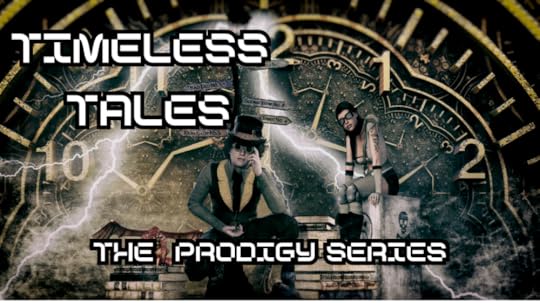
Enter a realm where time bends, and legends are reborn. Prodigy, a mesmerising series of seven Acts, weaves a spellbinding tapestry of gothic fantasy, time travel, and alternative history. In Act One: Prodigy Rising, the Palais Garnier opera house becomes a stage for Erik Destler, a prodigy haunted by phantoms and driven by vengeance. Amidst the echoes of Macbeth, a deadly alliance with diva Carlotta Caccini unfolds, entangling them in a web of power and dark forces. Spanning three centuries, this epic journey uncovers the truth behind the Opera Ghost, unraveling secrets amidst the allure of the opera world's grandest theatre. See more on " target="_blank" >YouTube
October 11, 2022
Foundation

Isaac Asimov's Foundation trilogy, a Hugo Award winner for Best of All Time Series 1966, was inspired by an earlier work, The Decline of the Roman Empire by Edward Gibbin. Asimov speculated that, as in the past, future human civilisations again powered a mighty empire of Galactic proportions and, like the Romans, experienced their kingdom's inevitable decline and fall.
But unlike the Romans, the Galactic Empire had access to the scientific power of ''psychohistory'', complex mathematics with vast predictive capabilities that could forwarn the empire of their decline with unerring accuracy. The inventor, Harry Sheldon, foresaw the signs of decay and predicted the empire's fall, which would result in dark ages many thousands of years in duration.
Seldon believed he and his ten thousand followers could significantly reduce the time before civilisation recovered from the inevitable decline if the empire allowed his team to finish their work. Instead, the realm took Sheldon and his followers to trial but, despite their suspicions, allowed them to continue their work, but at the far edges of the Milky Way galaxy.
Asimov's work is poignant to the twenty-first century, where modern civilisation faces a similar crisis, including the decline of the nation-state, the rise of China, and the global climate crisis. Will Western civilisation as we know it lose influence, giving way to a new world order?
This book's ''tell not show'' style is dated, given today's preferences for solid characterisation and action learning. The characters feel one-dimensional, given the many different protagonists spread over centuries, and seem similar, almost as if it were Asimov's voice applying the same logic to his characters and their challenges, from the Encyclopedists to the Mercantilists.
However, what's lacking in character development is compensated with intellectual power and creativity. Asimov wrote with freedom, using his gifted genius to express fundamental truths and big ideas rather than only entertain. Like all the great speculative fiction novelists, Asimov observes civilisations profoundly, making him arguably one of the greatest SFF writers. His work should continue to grow in stature as writers apply his ideas to modern storytelling. 5 STARS