Andrea Dunlop's Blog
December 14, 2020
How to Write Your Novel Part 4: Meeting Goals
In my last video in this series, I’m talking about writing goals: how to make them and how to meet them. Setting goals is especially important in the period of your career where you’re not working with an agent or publisher and need to give yourself structure. Even after you are working with professionals—unless you are on a very tight book-a-year schedule—there will be long stretches where you need to hold yourself accountable and keep yourself motivated when no one else is around.
Now, a word about writing goals in 2020. Somewhere around April or May when it became clear that this disruption was with us for the long haul, my therapist told me to just double the time it was going to take to doing anything this year. I’ve spent many months internally rebelling against this idea, and it has nonetheless turned out to be completely true! So, I’m giving you that same advice now. Seriously, this year has been a garbage fire, take it easy on yourself.
On that note, whatever your life circumstances, I think it’s always good advice to make your writing goals as practical and concrete as possible. Nebulous goals aren’t motivating and don’t create any built-in accountability. For an ambitious goal like writing a book, you need a workable and efficient road map.
As much as I think we should all temper expectations this year, I want to also acknowledge how inspiring it can be to chase the big dream. Writing may be one of the few things you have a modicum of control over in your life right now, and if leaning into it feels good, by all means, go for it.
I originally did this particular video series for NaNoWriMo and though I’m aware it is no longer November: I think there are some great takeaways from NaNoWriMo about goal setting:
1. Sometimes a lofty goal can be motivating in itself. 50,000 words in a month is a lot for most of us, and I think what makes NaNoWriMo fun is the audacity of it. Even if you get halfway there, you have 25,000 words! That’s a third of a novel!
2. Momentum matters. Having a big, concrete goal encourages forward-momentum which is everything when you’re writing a first draft. The big word count of NaNoWriMo forces you to keep moving and getting those words on the page with no space to second guess every paragraph.
3. Create accountability, even if you don’t have a ‘deadline’. Members of the NaNoWriMo community are constantly posting their word counts and talking about their progress, breaking big writing goals into smaller ones and reporting your progress (even if it’s just to yourself in a notebook) will help make it manageable.
4. Cultivate community. Whether it’s by connecting online or in-person (sometime in the future obviously when in-person is a thing we can do again!) finding fellow writers to form a support system is essential. I advocate for finding people who are in roughly the same stage career-wise to keep these relationships feeling even-keel. (For more on that, see this video I did with MY writer-friend Courtney Maum).
The biggest piece of advice I have about goals right now is to not beat yourself if you don’t meet them. If you’re constantly finding that you’re unable to meet your targets, take a step back and reevaluate, but the most important thing is to bounce back and keep going. Writing is a career of ups and downs: beyond talent and work ethic, resilience is the single most important quality for success, however it is that you measure it.
This week’s exercise: Reflect on your month of writing. What went well? What didn’t? Figure out your goals for next month and those to come.


December 7, 2020
How to Write Your Novel Part 3: Getting Stuck
This third installment of my series is focused on an inevitable part of writing: getting stuck. Some days, we feel like the muses are with us and we’re channeling from the beyond and some days we show up at the keyboard cross-eyed and confused. This rollercoaster is a lifelong part of writing, the only thing that makes it better is knowing that each of these states is temporary as long as you push on.
Now, a word about the term “writer’s block”. I don’t believe in it. Rather, I don’t believe there is a specific kind of stuck-ness that only magically plagues writers. I think mythologizing that feeling I described above can make it scarier and more permanent; much better in my opinion to just recognize that you’re having an off day.
So what to do when you’re experiencing a slump? First, check your vitals. Are you sleep-deprived? Overwhelmed? Sick? Experiencing family/friend/work trouble? Are you drained? Is the pressure of homeschooling your three children whilst also working a full-time job and trying to figure how to explain Zoom to your grandmother leaving you feeling a bit spent?
Oftentimes, I think what we’re prone to calling ‘Writer’s Block’ is just plain-old Burnout. Writing can be your oasis from the chaos or it can be that ‘extra thing’ that makes everything else feel like too much. Which one it is for you also may change by the day.
2020 is a year of unprecedented burnout so if you’re feeling it with your writing, ask yourself if there is some way you can scale back your goals to meet you where you are. Or maybe writing your novel is an ambition that needs to be delayed a bit. That’s truly okay.
I am here to remind you that while writing is important, it’s never the most important thing in life– people, including yourself— are! Those who put writing on a pedestal above everything, even human beings, are assholes. It is so important to maintain a balance between all your obligations and your self-care. Writing can be self-care of course, it definitely has been for me this year, but if it’s not feeling that way? Time to reevaluate.
As I said earlier, you’re not going to feel pumped and motivated every day of your writing life, however, it is important that throughout the process you feel an underlying current of excitement about your project. It’s an act of endurance to write a novel and if you’re not excited about it, there is no book. If you’re just feeling dread about a project, it may be time to put it aside for something that does give you that feeling of escape.
But beyond burnout, there’s another kind of stuck that happens to most of us in the process of writing a novel. Say a plot point or a character arc is tripping you up. How can you get past it?
First, consider what type of writer you are.
Generally, there are two approaches to writing. You’re either a plotter or a pantser. Plotters do a great deal of work before they put the novel’s first words to paper. They structure their book with outlines and character sketches before they start their first draft. On the other side of the spectrum, there are the pantsers (that’s me baby!). Pantsers have a general idea of where we’re going when we start writing, but we only truly find out what our books are about by writing a first draft. Then another. And another.
No matter which camp you’re in, it’s important to stay flexible and go with the flow of your words. If your character is developing differently on page than you had imagined in your head or in an outline, keep writing. Don’t get stuck on trying to stick with the original plan.
The most important thing while writing a first draft is to maintain momentum. Let your first draft be a glorious mess! Kick all the problems you come across down the road– you can resolve them in the revision process.
And when you do hit a speedbump, don’t be afraid to take a break. Make it a structured one: take a day or a week off and do something stimulating: go outside, to the gym, out to lunch with a friend.
Elizabeth Gilbert gives great advice on structured breaks in her book Big Magic. She advises writers to find another creative activity to engage in when they are stuck or in need of a break. I discovered my alternative creative outlet in gardening; it’s my antidote to spending too much time in my head. Like everyone else, sometimes I need a vacation from there!
This week’s exercise: If you find yourself stuck in your writing process, find another creative activity– it can be anything– to do instead of writing until you feel refreshed and ready to go it again.
November 30, 2020
How to Write Your Novel Part 2: Habits
For the second installment in my series on How to Write Your Novel I’m focusing on what is probably the most important part of being a writer: good habits. This is something I get asked about all the time—and that I’m equally fascinated in hearing from other writers about—when do I write? For how long each day? What do I drink? What are my snacks?
Last week, I addressed the importance of motivation, which is a key factor in getting you through those first few weeks while you’re making the time to write. But as you go, habits become more important because they will save you from needing to be motivated every single day which is unrealistic. The repetitiveness of habits takes the thinking out of the act of writing; it makes writing an automatic part of your day. In the beginning, writing in the morning felt like a practically heroic act of discipline; now my day just feels wonky if I don’t do it.
Writing is more grind than glory and motivation is a limited resource, especially right now in the midst of a pandemic when most of us are so drained. The first day you sit down to write your novel will be an exceptional day and you’ll hopefully be feeling really excited. However, as the process continues, what follows are a whole bunch of regular days where writing just feels like work, not magic.
The most important thing about your writing habits is that they’re sustainable for you personally. Absolutely feel free to disregard dogmatic advice such as “You must write every single day!”; “You must write 1000 words a day, no exception!” I’ve heard a lot of writers give this flavor of advice and they’ve almost always been older male authors who I suspect are lucky enough to have a wife managing the kids, dog, and the electric bill without ever disturbing the art monster in his office to ask him about any of it. (The dream!)
But most of us do have life obligations that more of less constantly intrude on whatever time we have to write, especially this year with homeschooling children and working-from-home spouses and all manner of chaos going on around us.
Now, again, I’m never here for one-size-fits-all writing advice, but I do want to make the case for writing in the mornings.
Last week I talked about how I became a Morning Person™ when, motivated by deep existential fear, I started getting up early to write before heading into my day job at Random House. I have such happy memories of that summer; I would walk around the block to get my Dunkin’ Donuts and sit at my desk for an hour by myself before going off to work. I quickly came to love my morning writing sessions. I felt clear-headed and productive as I got my day’s writing out of the way. I was writing before I got distracted by, well, being a twenty-five-year-old in New York City.
I know many writers who are into mornings, but also some who somehow are able to do it at night after their kids are asleep. I can barely read a book at that time of day but god speed.
While it’s great to develop a writing regimen, it also pays off to be flexible. Just as life demands we balance our days between work, family, friends and writing, it also demands we deal with sudden changes of plans. (Hello all of 2020!) So, don’t be discouraged every time life gets in the way of writing and for 2020 specifically, just expect everything to take twice as long. Seriously.
Think about your schedule and figure out where you could carve out just a little time for writing. Could you get up earlier in the morning? Stay up later at night? Could you write during your lunch break or over the weekend? Even if it is just for half an hour, you can get a lot done if you take yourself and your time seriously.
So many first and second and third novels have been written by people who have capitalized on life’s in-between moments. One of my favorite stories is that Claire Cook, author of Must Love Dogs, famously wrote her best-selling novel while waiting for her kids to finish up their sports. In fact, if you want good advice about adding writing to a busy life just ask literally any author who is also a mom.
This week’s exercise: Pull up your calendar for the next week and schedule four or five thirty-minute blocks for your writing. And then… write!
November 23, 2020
How to Write Your Novel Part 1: Getting Motivated
It’s been a long year guys, so I’m going to throw it into reruns and share some of the first videos I made for Instagram. Even though these videos were filmed over a year ago—before my more recent fetching highlights and before I got myself a decent ring light—the topics I covered in these two series are some of my most perennial: how to write your novel and to find an agent. One thing I hope for all of is during this interminable year is that we are finding at least some time to move our own beloved projects forward, even if it’s not as quickly as we’d like.
I’m not sure who’s bonkers enough to be doing NaNoWriMo during this November—owner of the longest election cycle in human history—but if you are cheers! I filmed this series with this in mind, but it is equally valuable if you’re just needing something to kickstart yourself back into the game. What I like about NaNoWriMo is that it gives writers a structure to get going.
For the unfamiliar, NaNoWriMo—or National Novel Writing Month—is a month-long challenge to write an entire novel during the month of November (the goal is 50,000 words which is more of a novella, but still). Writing 50,000 words in a month is a lofty goal under any circumstances, but thousands of people sign up every year, including this one. The challenge can be a great short-term, extrinsic source of motivation.
I’m a firm believer that writing is more about habits than anything, but I think it’s valuable to consider what’s bringing you to the desk in the first place. Not your inspiration, but what’s motivating you to squeeze writing in between your obligations to work, family, school, etc. Writing for most of us is an ‘extra’ thing we’re doing, so it needs to feel worth it if you are going to stick with it.
So, how do you get motivated to do something as huge as writing a novel?
There’s a story I always tell when people ask me about how I got started as a writer. I was a few years out of college, living in New York City and working full-time at Random House as a publicist. While there, I connected with Polly Devlin—a phenomenal writer and singular personality—who was then a Professor at Barnard College. We were out for coffee one afternoon when I felt the need to confess to her that I wanted to be a writer myself. (A young publishing assistant with writing aspirations: the shock!) I went on to explain the difficulty I was having getting through the novel I was working on at the time.
Devlin asked me two questions: What time do you wake up in the morning? and Could you wake up an hour earlier to write before you leave for the office?
Never much of morning person, I balked a bit. Devlin went on to tell me, quite bluntly, that in the morning before work was the only time I was going to be able to work and if I didn’t carve it out, I would be sitting in the exact same spot ten years from now, wondering why I never finished my novel.
That conversation put the fear of God in me in the best possible way. The next morning, I was up and ready to write at 7am (LOL. That felt early when I was twenty-five). Within months, I had finished my novel. Devlin’s blunt premonition gave me a sense of urgency. The specter of being a ‘never was’ was more terrifying than the early alarm clock.
NaNoWriMo is fun, but motivation has to come from within to be useful. The unvarnished truth of it that no one—including the fine folks at NaNoWriMo—truly cares whether or not you write your novel. NaNoWriMo, writing classes ,and literary workshops are great support systems that can energize you and hold you accountable. But they are by definition extrinsic motivators and as such, they are not enough to carry you to the finish line. Motivation that comes from within is the only thing that can get you out of bed in the morning.
Most novelists have innumerable failed attempts behind them before their work amounts to something, so ask yourself, why will this time be different?
For me, it was the fear of letting a life-long dream pass me by. For others, it can be grief or anger, revenge or regret. These big and uncomfortable emotions can be the forces that make us sit down and write.
This week’s exercise: Ask yourself, what will happen if I don’t write my novel?
November 16, 2020
Practical Advice for Writing Outside of Your Culture
I wanted to wrap up my series on sensitivity readers—which admittedly went down quite a few hopefully helpful rabbit holes—by offering some practical advice besides hiring a sensitivity reader if you’re venturing into writing about a marginalized community you don’t belong to yourself.
In everything I read on this issue, I could find nary a voice that said writers should only ever write about people just like themselves. That would be extremely limiting! Obviously. However, it’s a bigger challenge inherently to write something outside our personal experience.
So how can we, as writers, best go about this work?
What I’ve compiled here is some of the best advice I came across while researching this topic. I’m not positioning myself as an authority but more as your helpful guide. I encourage you to read the things I’ve linked to here if you’re going about this. I also suggest getting a copy of Writing the Other by Nisi Shawl and Cynthia Ward: a short, funny, extremely helpful book with fun exercises and excellent advice. And if you have additional advice to share (or if you think I’m just ass-backwards about something, I am humbly yours for the feedback, my friends.
SO, how does an author who wants to do it right go about this?
Interrogate Your Motives
I laughed aloud when I read this interview with Dhonielle Clayton in which she said that whenever she asked an author why they were writing a character of a certain identity, the person always responded by saying they just walked into their head that way. I laughed not at this hapless author in question but at my own damn self because I probably would have answered that question the same way. Oh no!
The truth is that the alchemy of writing fiction is mysterious and we can all get cute about how real and whole our characters are. I feel that way! I feel like they live in my head in a way that is beyond my control. But, of course, we’re all pulling from something in the world that’s inspired us and I think in the case of writing about a marginalized community, it’s important to know what that is for you so that you approach this with integrity. For example, if the answer is something like “well I think racial equity/ LGBTQ rights/ immigration is a hot topic right now and it will help me sell my novel”? Walk away slowly. Have a talk with yourself and then, you know, please don’t.
If you don’t ask yourself why you’re doing something, the likelihood of you having blind spots is so much worse. And hey, if you don’t want to mess with first draft mojo, you can ask yourself this question a draft or two in. That’s what the revision process is for and why that whole argument about this inhibiting creativity rings so false to me.
Read All the Books
If you’re writing about a community that is not your own, or writing a central character from a community you’re not a part of, you should be reading dozens of books from authors in that community: novels, memoirs, nonfiction, all of it.
Not only is this great for research, it’s just great overall! It’s a massive failing of our industry that books from marginalized communities take more work to seek out; but the Bookstagram community is on it. People such as The Stacks, Lupita Reads, Spines and Vines, and so many others feature great #ownvoices content regularly.
You should do lots of other research including watching movies and shows and reading blogs, but books are especially important because they’re so effective at building empathy. And…
Empathy is Everything
Let your heart and your imagination guide you through this process. I can’t possibly say it better than Brandon Taylor does in his excellent essay on LitHub:
“There can be no story without empathy. Our stories begin because we are able to enter the lives of other people. We are able to imagine how a person might move through the world, how their family might operate, what their favorite foods might be, how their nation works, how their town works, and the smallest, most inconsequential aspects of their lives rise up to meet us at our desks. You can’t write if you can’t empathize. Solipsism is anathema to good writing.”-Brandon Taylor in LitHUb
I think this gets an essential truth that getting characters with different identities right is just about good writing, which is always about empathy and detail.
Understand Stereotypes and Tropes
There are so many stereotypes that are so baked into our culture that we as writers may reproduce them without even meaning to. Even positive-sounding stereotypes like the “overachieving Asian person” or the “strong black woman” have ugly roots. This isn’t to say that characters from marginalized backgrounds should be sanitized to perfection and sainthood, no! All of your characters should have the messy humanity of real people, that’s what makes fiction compelling. But tropes are not just offensive, they’re tired, so know which ones you’re dealing with and avoid them like landmines.
Get Feedback
Whether you go the route of a sensitivity reader or a trusted writer friend or colleague who shares the identity of the character you’re writing about, don’t let your book wend its way through publishing without this step. As we’ve discussed, publishing has a bad track record in this arena and it’s your name that’s going to be on the book
You’ll never write a book to everyone’s liking and no one says that you must take every single piece of feedback but be open to it. And check your fragility at the door, please and thank you!
It’s just writing
At the end of the day, writing outside your own life experience is a bigger challenge than writing from within it. But it’s still just writing. There’s no special trick or technique here other than the diligence you would put towards anything else.
Books full of tropes and stereotypes have always been gross, and have always done harm, long before Twitter existed to form hashtags about it
It can be amazing and enriching to write outside the boundaries of our own life experiences, so go forth and be brave. Just be compassionate too!
Read More:
Fundamentals of Writing the Other / Buzzfeed
How to Unlearn Everything/ Vulture
There is No Secret to Writing People Who Do Not Look Like You / LitHub
October 26, 2020
Latinx in publishing (And ten books to order right now!)
Last week, I dug up the American Dirt scandal, reanimated it and danced it around the room long enough to give it some feedback that it certainly didn’t ask for (sorry that metaphor went off the rails). So, what’s next?
So much of the conversation around the book scandals I’ve been covering the last few weeks is a very necessary corrective to publishing’s continued marginalization of BOPIC voices. I’m endlessly admiring of folks like Justina Ireland and Myriam Gurba who are willing to put themselves in the fray with their on-point critiques; often taking on very real risks to their careers and even safety (both have reported numerous death threats) in the process.
At the same time, online discussion can turn into a snake eating its own tail so I didn’t want to leave off without some concrete takeaways and calls to action.
Latinx Folks in Publishing
One of the big issues highlighted in the American Dirt scandal is just how dismal the treatment of Latinx authors is in book publishing. They make up only 3% of the industry overall and suffer from the same pernicious comp title issue that all BIPOC authors do (more about that here). Many Latinx authors came forward during the American Dirt dust-up with their stories of being rejected or pushed to small publishing houses because of the perception that their work couldn’t speak to a wide-enough audience.
#PublishingPaidJeanine
Given the evidence both data-driven and anecdotal of the barriers Latinx writers face in publishing, one can understand the rancor at seeing a white writer (yes, I know she also identifies as Latinx) get paid a massive advance and heralded as the voice of the voiceless. But this wasn’t a story that hadn’t been told, critics argue, it was one that had been ignored until a white writer decided to take it on.
Many wonderful bloggers and Bookstgrammers, including Lupita Reads—whose post started a a movement on Bookstagram—rounded up excellent books by Latinx authors that tackle life on the border around the time of the scandal. (Side note: I’m making my way through Lupita’s list and can so far highly recommend Black Dove and I’m Not Your Perfect Mexican Daughter).
I love using these moments to uplift #ownvoices books because it while it’s not readers’ job to fix the systemic issues in publishing, voting with your dollars always makes sense and is immediately actionable.
Readers are the end consumers that publishers care about it, so while it’s not enough on its own, making sure to read and share books by Latinx authors is a great place to start if what I’ve been outlining here on the blog makes you mad.
If you’re so inclined, making donations to places such as Latinx in Publishing, People of Color in Publishing, and We Need Diverse Books—established organizations all working toward equity in publishing—is also great!
My TBR of Latinx Authors (plus three I just read)
I’m not going to leave you hanging without a list! As always with my lists, these picks reflect my taste—family dramas, psychological thrillers, a little speculative, a little YA—and are all books you may be into if you happen to like my books.
On we go!
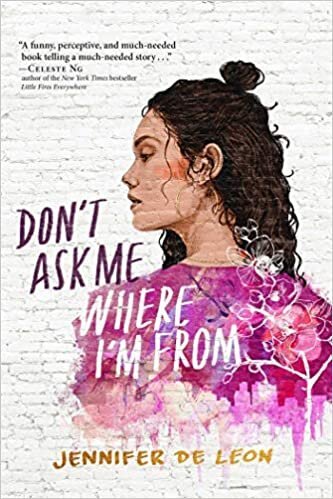
Don’t Ask Me Where I’m From by Jennifer De Leon
I read this one after seeing it on Latinx in Publishing’s website (one of the great things they do is keep a running list of new releases). This is the story of a Mexican-American high school student who gets moved across town to a “nicer” school in Boston, all while there is major drama unfolding in her own family about her parents’ immigrations status and the whereabout of her father. This one was smart, funny, and full of heart. If you have teenage kids, it would make a great buddy read with them as a gateway to talk about some of bigger issues of immigration, class inequities, and bias that the book tackles.
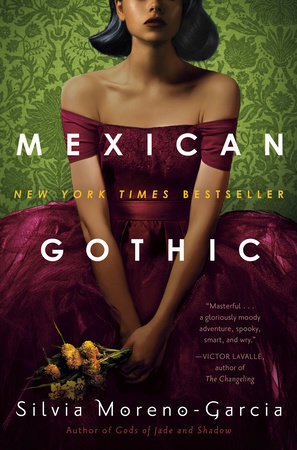
Mexican Gothic by Silvia Moreno-Garcia You’ve surely seen this atmospheric literary horror story set in 19050s Mexico all over Instagram; and it did NOT disappoint. Glamorous debutante Noemi Taboada is sent to the countryside to investigate the goings-on of an extremely creepy British family who live next to an abandoned mine after she receives an alarming letter from her cousin (who’s married to the dashing heir). Noemi arrives at the crumbling Victorian mansion and things get very scary very quickly. This one was twisty, turning, and just brilliant. It gave me nightmares but was absolutely worth it!
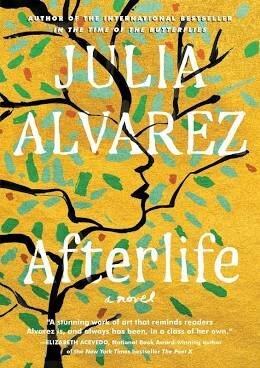
Afterlife by Julia Alvarez This is the first novel I’ve read by Alvarez and it has me diving for her backlist. In her first adult novel in over a decade, Alvarez tells the story of an immigrant writer and professor whose life is upended when her beloved husband dies suddenly and her luminous but unstable sister goes missing. Things get even harrier when she arrives home from a trip to find an undocumented Pregnant teenager on her doorstep. Alvarez has such a stunning voice, and this novel was so poignant, heartbreaking, and surprisingly funny.

Hurricane Season by Fernanda Melchor This novel in translation is about the death of the local witch in a damned Mexican village, as told by an unreliable narrator (one of my favorite devices when pulled off well). This seems like another good atmospheric, scary one for Fall and has been shortlisted for the Booker Prize.
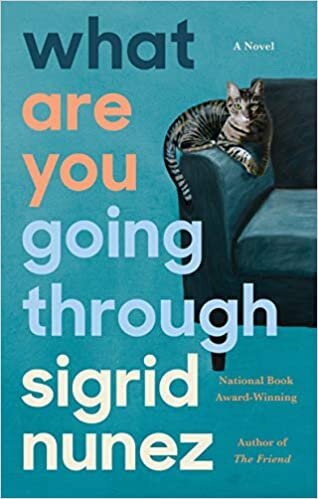
What Are You Going Through by Sigrid Nunez This is the new one from the bestselling and National Book Award-winning author whose last book The Friend I also have a copy of on my TBR shelf. This is a series of interconnected stories about human connections that the narrator listens to passively until she gets drawn in by an extraordinary request.
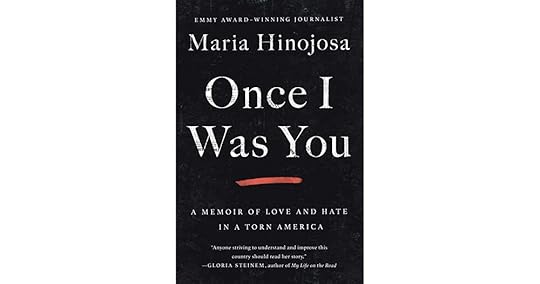
Once I was You by Maria Hinojosa This is the new buzzworthy memoir from the host of NPR’s Latino USA, an award-winning journalist who’s reported on marginalized communities for over thirty years. And once again, if your interest was piqued by the American Dirt controversy, I cannot recommend enough listening to Hinojosa’s interview with the key players.
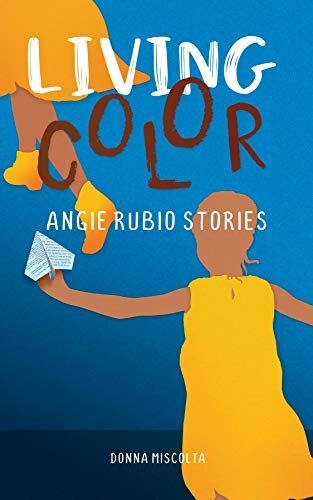
Living Color: Angie Rubio Stories by Donna Miscolta. This is a coming-of-age novel of about a young Mexica-American girl in the 1960’s and 70’s. I love Miscolta’s writing (she’s a fellow Seattle author!) and can highly recommend her last book Hola and Goodbye as well.
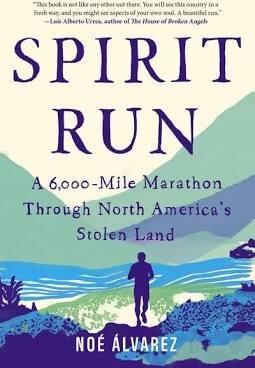
Spirit Run by Noe Alvarez. In this running memoir, the author undertakes a Peace and Dignity Journey, which is an epic marathon that Indigenous runners take to reconnect with the land. Alvarez is the son of fruit pickers from Yakima, WA where my husband grew up and in-laws still live, so I’m really looking forward to see this perspective on the place.
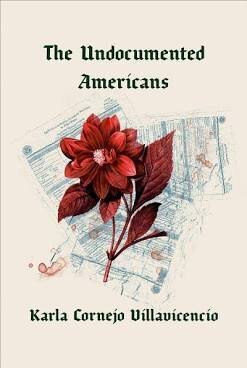
The Undocumented Americans Karla Cornejo Villavicencio Another one that’s gotten a lot of buzz is this memoir by one of the first undocumented students to graduate Harvard, a Dream Act-recipient who set out to record the stories of her fellow undocumented Americans after the 2016 election. When I’m finished, I’m going to check out The Stacks episode about this one!
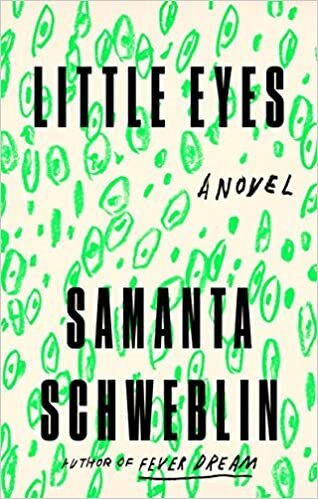
Little Eyes by Samanta Schweblin. This one is another horror story (‘tis the season! The election! Halloween!) about the interconnectedness of our current lives. Sounds very creepy!
If those sound good to you, please go order them! If you can’t afford to buy them, getting them from the library also helps because the more holds, the more copies the library orders. So, do what you can! And when you’ve read them. rate and review on Goodreads and Amazon, post about them wherever you social, and tell your friends however you tell your friends things. It makes a HUGE difference, I promise you. Publishing has a lot of work to do, but readers can help move the needle by voting with our wallets. Word-of-mouth is still the most powerful force in this industry.
Also, don’t forget, when possible, get books from your indie bookstore OR shop Bookshop.org which supports indies. If you’re an audiobook lover, use Libro.fm, so you can buy your audiobooks from your favorite indie bookstore. Now more than ever, these places need your support!
Read More:
https://bookshop.org/lists/latinx-adult-fiction-2020-books
https://www.thebookslut.com/post/our-most-anticipated-latinx-reads-of-2020
https://parade.com/1085033/lolamendez/latinx-hispanic-heritage-month-books/
https://www.buzzfeed.com/zoraidacordova/ya-books-by-latinx-authors-2020
https://www.marieclaire.com/culture/g33336785/latinx-books/
October 19, 2020
Monday Morning Publicist: American Dirt
For the last few years, the majority of the conversation around diversity and inclusion in book publishing has happened in the Children’s Lit and YA world, where the debate over hiring sensitivity readers has grown especially heated. Obviously, authors of books meant from a young, impressionable audience should be especially mindful about both inclusion and harmful tropes and characterizations. But I was beginning to wonder why we weren’t talking about that more in the adult-sphere.
Then American Dirt happened.
Unlike the other book scandals that I’ve recapped thus far where I was looking at them in the rearview, this one I followed in real time, rather breathlessly I have to admit. I remember meeting with a good author friend around this time for lunch (in a café! With no masks on! We hugged hello! Remember those times?) and parsing the whole thing. I just kept thinking: what would I tell Jeanine Cummins if I was her publicist? And what would I do if I were this author?
Those are the questions I’m going to attempt to answer today in a new feature I’m calling Monday Morning Publicist.
I want to be clear that I’m not writing this to pile on Cummins or to somehow claim I’m the authority on Latinx representation in books. If you’ve been following this scandal, you’ve read plenty of critiques of how she and the publisher handled it. Today, I’m attempting to think through what a more helpful response might have looked like.
Let’s Dig In
You’re forgiven for forgetting the details of this since it happened way back in January of this year, approximately a century ago. So, I’ll start with a quick recap of what happened.
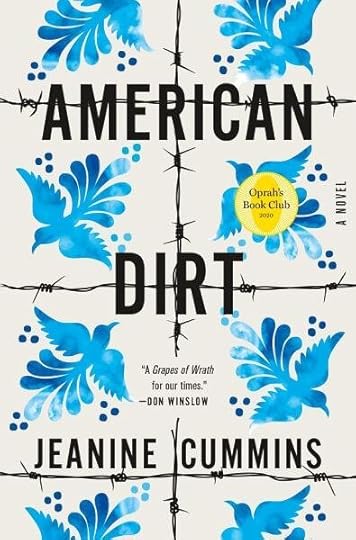
American Dirt came out January 21st from Flatiron Books. This novel by Jeanine Cummins follows a Mexican bookseller who is forced to flee her home in Acapulco and try to cross into the US with her young son after her journalist husband is murdered by a drug cartel whose activities he’s been reporting on.
The hype around this book was deafening – with blurbs from Stephen King, Anne Patchett, and Sandra Cisneros who called it “the great novel of las Americas”. Don Winslow called it “a grapes of wrath for our times”. It received support from prominent Latinx writers such as Julia Alvarez, who predicted the book would “change hearts and transform policies.”
The book was originally sold at auction where it received a seven-figure advance and it was basically given every bit of marketing push a book could possibly get. It was an early favorite of booksellers and a star at BEA where that infamous flower arrangement happened. Things truly hit a fever pitch when it was named as an Oprah Book Club pick.
The Backlash
The backlash to the book kicked off with a scathing review from Mexican-American writer Myriam Gurba about a month before publication. Gurba’s review didn’t pick up much steam at first but went viral after Oprah made her pick and several Latinx celebrities promoted the book. This was followed by a charged New York Times opinion piece from author David Bowles.
Now, I truly could go on and on recapping each piece of this scandal. I read everything I could and even signed up for Apple+ so I could watch the Oprah roundtable discussion (pretty meh IMO). I’ve included a round-up below, but if you listen to ONE thing about this book, I recommend Maria Hinajosa’s interview with the key players—including Cummins—it’s truly one of the more compelling pieces of radio I’ve ever heard.
What’s the Beef?
There’s nuance here but there were really four big sticking points as far as I could tell:
· The Author’s identity. Critics claimed that though Cummins had previously identified herself as white—notably in a 2015 op-ed in the NYT— she began saying she was ‘white and Latinx’ in the prepublication lead-up. She also mentions in her author’s note that she wishes someone ‘slightly browner’ than her had written the book (which leads me to believe she anticipated some of this criticism). The publisher was also accused of playing up the fact that Jeanine’s husband is formerly “undocumented” which critics felt was misleading given that he’s from Ireland. Jeanine also mentions this in her author’s note.
· The positioning of the book. This book was not labeled as a book about the border but the book about the border—as told to us by a white writer who has no personal connection to Mexico. In a note that went out with the galleys, the publisher introduced the book as ‘giving a face to faceless’ and Jeannine herself used the term ‘faceless brown mass’ to describe the way that Americans see people at the border. Many critics felt that this was a book written for white people—or as Gurba called ‘trauma porn wearing a fig leaf of social justice’—and that that’s why it sold for so much money. To see it positioned as a definitive account felt like a slap in the face to many Latinx writers.
· The book itself: Many readers felt the book trafficked in stereotypes, and that the author didn’t do enough research, leading to some jarring inaccuracies and Spanish malapropisms. The most damning accusations suggested that Cummins actually cribbed parts of the book from Luis Alberto Urrea and Sonia Nazario, two authors she cites as inspiration.
· Publishing’s Overall Treatment of Latinx Writers: The huge advance and the massive marketing push around the book emphasized the ways in which Latinx writers are pushed to the margins of the publishing industry. According to the Lee & Lowe 2019 survey: Latinx folks comprise only 3% of the publishing industry. Many Latinx writers reported being routinely told that their stories don’t have wide enough appeal to be published in a big way, or published at all. Luis Alberto Urrea’s book—which Cummins said inspired her—was rejected for ten straight years and given feedback such as: ‘nobody cares about starving Mexicans’ and ‘no American reader is going to read a book with a name as strange as yours’. This was back in the 90’s but sadly, it’s unclear that things have changed much.
I want to emphasize here that NO ONE said that Cummins shouldn’t have tried to write about Mexico or the boarder, just that she missed the mark. David Bowles, one of her most prominent critics, said this.
“There is nothing wrong with a non-Mexican writing about the plight of Mexicans. What’s wrong is erasing authentic voices to sell an inaccurate cultural appropriation for millions.”-
So, What Happened?
The publisher ended up cancelling Cummins’ 40-city book tour citing ‘safety concerns’ and apologized for ‘serious mistakes’ in the positioning of the book. The publisher didn’t specify what threats were made, and this further enraged some critics who saw an implication that the Latinx literary community critical of this book was somehow inherently dangerous. It’s worth nothing that Myriam Gurba received numerous death threats after her review and subsequent commentary.
The folks from Flatiron met with Dignidad Literaria—a group formed to address some of the concerns brought up about the industry by this publication and which included both Gurba and Bowles. Obviously, the pandemic broke out right after this and now publishers across the board are facing a reckoning over their issue with race and representation, so we shall see what comes of that.
Monday Morning Publicist
I should start by saying that I have not actually read this book. Given everything I read about this book before it came out, I just thought there was no way I could digest it with an open mind. The point here is not for me to say if and by how much Jeanine Cummins got it wrong with American Dirt—that’s been covered by the far more qualified people I’ve namechecked here, among others. Nor am I intending to pile on Cummins just for the sake of it; I have empathy for her even as I thought some of her responses were misguided. What I want to do here is play out the thought exercise of what I might have done—or advised her to do as her publicist—if I happened to find myself in this particular hot seat.
Prepare
I began this series by talking about sensitivity readers—one of many tools a writer might rely upon when writing about a culture that they’re not a part of. Such tools, in addition to lots of research, may help you prepare your actual work so it doesn’t feature some of the jarring inconsistencies critics picked up with American Dirt.
In addition to preparing the book itself, however, if you’re writing about a hot-button topic, you need to prepare for possible controversy, to think of the possible criticisms and how you’ll respond far in advance of the publication date.
I went through this with my last novel We Came Here to Forget because I was dealing with a sensitive issue—Munchausen by Proxy— that is widely misunderstood and mischaracterized. I thought about all the ways I might get questioned about this and what I wanted to say, which let me keep my cool and take the most advantage of the platform I was given to discuss it.
If there’s an issue you’re hoping to raise awareness about in addition to telling a good story with your novel, think about what you hope to get across and write some talking points for yourself that you can keep coming back to.
Note that this strategy isn’t a question of turning the conversation back to your intentions or deflecting but of making sure that you’re using whatever platform in the best possible way.
For example, Cummins could have pointed to the stats around migration each time she talked about this controversy as well as pointing to those statistics I’ve mentioned here about publishing’s inequity itself. She was assuredly aware of the latter as she alludes to it in her author’s note and because she worked for Penguin Publishing for ten years, so she was not naïve about the industry going in.
Give a Good Apology
If you think you have something to apologize for, of course. If you don’t, then stand by what you’ve put out there. The world doesn’t need more bullshit apologies, that’s for sure. I’d much prefer people say what they mean in the public sphere.
At any rate, assuming Cummins found some validity to her critics’ arguments, she could have referred to the apology section of White Fragility which gives an extremely helpful framework for apologizing for missteps, and which I’m cribbing from here.
· First: Vent to a friend who will listen and give you honest feedback. Get all of your feelings out of the way and figure out what you may need to answer for.
· Second: Apologize for the impact of your actions and show understanding for the actual problem at hand. Resist the urge to deflect by saying things like “that wasn’t my intent” or “I’m sorry people were offended”.
· Thank your critics: I love this step because it’s really this last part that creates an opportunity to move forward. It takes courage to call someone to account, especially when you’re an author (as most of these critics are) and on the other side of the debate is a major publisher and Oprah-freaking-Winfrey. Also, most of us want to know if we’ve done harm, difficult as that is to hear, so gratitude is actually an appropriate response.
In the interviews with Jeanine throughout the controversy, she sounded defensive and shell-shocked, as though she were working through step one on mic. These are completely understandable reactions, but things she’d have benefitted from tackling privately. She talked about how upset she was, what she’d meant to do, and even tried to redirect at one point to say that she was broke when she was working in publishing and had to bartend, which felt to me as though she was leaning on the well-worn trope of “class is the real issue here”. (I’m not saying that was her intention mind you, just how it read to me).
She also invoked the idea that people were trying to “silence” her and that writers should be allowed to write about whatever interests them, which—say it with me—not one single person was saying she shouldn’t have.
Again, my intention here isn’t to demonize Jeanine Cummins or pick on her. I just kept wanting her to take this opportunity by the reins and move the issue of how marginalized Latinx authors are to the forefront, rather than continuing to point out that this fact was not her fault.
Make it Right
In general, I’m all for making donations and doing good deeds privately rather than feeling the need to immediately announce your good works all over social media. But this is an exception. I would have advised Cummins to make a big donation, do it publicly, and do it quickly. Perhaps even calling on Oprah and Flatiron to match her in it.
Cummins has claimed to financially support some of the organizations she worked with during the course of writing the book (listed here on her website) and I believe her, but I can’t understand why she demurred to say where and how much she’d donated when initially asked. In this case, it’s less a question of bragging than a show of good faith to the communities who’ve been hurt.
I also would have suggested making donations to places that serve migrants and places like We Need Diverse Books, Latinx in Publishing, and People of Color in Publishing. Doing so publicly in the midst of such a high-profile scandal could have helped raise the profile of those organizations, hopefully encouraging others to donate as well. It’s also just a public show of good faith.
Again, I’m not saying that Cummins hasn’t donated money, and indeed I saw on Twitter (in one of her only tweets since the scandal took hold) that she was offering matching donations for up to 100k to the International Rescue Committee. Which is awesome! My argument here is that there is a time and place for a swift and public move to put your money where your mouth is and I wish she’d taken it.
In the End
While this seemed like HUGE controversy in the publishing world, it’s worth nothing that American Dirt has spent many weeks at number one on the New York Times bestseller list and remains there today. It appears the overall impact of the book is what one would expect from any Oprah pick, scandal or no. The book has racked up almost 14k reviews on Amazon, averaging 4.5 stars, and a whopping 158k reviews on Goodreads with a 4.3-star average.
This tells us that many, many people bought this book and loved it. I’m sure it felt awful to be in Jeanine’s shoes last January, but whether it actually impacted her career negatively in a lasting way I’m not so sure.
Conclusion
So. The book was hyped, there was a considerable skirmish, it still sold like hotcakes. What’s the takeaway?
I can’t speak for Cummins or speculate on how she might be feeling about all of this at this point, but it’s generally true that most authors aren’t cold-blooded capitalists. Most of us care about the impact of our words quite a lot. We care about telling our stories in a way that will resonate and hopefully not in a way that will harm.
My advice to authors who find themselves a bit anxious about all of this is to be brave and write what compels you and to understand if you have a mega-hyped book about a hot button issue, you should be prepared for possible blowback.
And should you find yourself on the defense, realize that being called out is an opportunity, even if it’s a hard one. I believe that it’s possible to engage in these conversations in a meaningful way, especially with people who are offering thoughtful critique, and not just trolling.
I wanted to write about this because I don’t think the system sets authors up for success on this front. There are so many wonderful, smart people in publishing, but because of systemic issues in the industry, many are ill-equipped to see these things coming. It’s always going to be the book and the author that people associate with the scandal, rather than the publisher. Proceed accordingly.
Read More:
Myriam Gurba’s original review / Tropics of Meta
Publishing’s American Dirt Problem/ Publisher’s Weekly
Flatiron Cancels American Dirt Tour / Publisher’s Weekly
Latino Response to American Dirt / LA Times
American Dirt: Dignity & Equity / David Bowles, Medium
How Not to Write a Book About a Minority Experience / The Walrus
October 12, 2020
Case Studies Part Two: American Heart & The Continent
You truly cannot read a thing about sensitivity readers without the word censorship coming up, and in all of the op-eds I read there were four case studies that got name-checked over and over as evidence of this ‘slippery slope’ argument.
Last week, I talked about two of the books—A Birthday Cake for George Washington and When We Was Fierce—that were actually pulled from publication for being offensive: the first by the publisher, the latter by the author.
But two of the other most commonly cited books made their way to bookshelves and can be purchased today if anyone so chooses.
So why do those two books—American Heart and The Continent—keep coming up as examples of censorship?
Because people were mad about them.
Philosophically, it seems to me one has to tie themselves in a real pretzel to argue censorship while simultaneously wanting to silence the discussion around the thing in question.
One could make a separate case about the degradation of online discourse around books and everything else in the world, but that’s not the argument being made. Ryan Holiday accused sensitivity readers and authors who employ them of burning books. Burning books!
So, while I truly cannot see how these books represent a case for a slide toward censorship, I do think they make instructive cases and shine a light on some of the issues in publishing that I’ve been attempting to unpack these past few months.
Let’s take a look!
American Heart
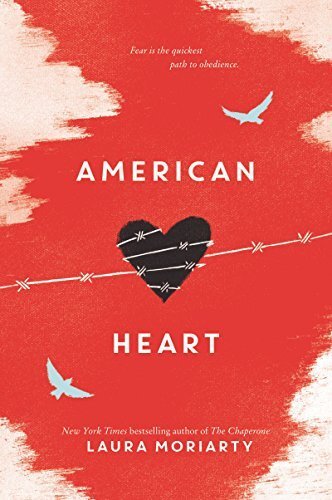
First up is American Heart, which came out in January of 2018 from HarperTeen by bestselling author Laura Moriarty.
This YA novel is about a fifteen-year-old white girl from Missouri called Sarah-Mary who lives in a future America where Muslim-Americans are being held in detainment camps. Sarah-Mary supports the camps until she meets a Muslim woman named Sadaf who is a fugitive from one of the camps. Sarah-Mary helps Sadaf escape to Canada and the experience causes her to question her prejudices.
This is the first case I’ve discussed here in which the author actually did reportedly use two sensitivity readers pre-publication. What their feedback was and whether the author incorporated it, we’ll never know, but the book did receive some early hype including a starred review from Kirkus which was penned by a Muslim-American reviewer. (For the unfamiliar, Kirkus is a trade publication which uses a mostly freelance reviewing staff whose bylines do not appear with reviews. The publication reviews the majority of books published by large houses and many from small presses as well).
There was an immediate backlash to American Heart from readers, citing the ‘white savior” trope that the book relied on.
Here’s what author Celeste Pewter had to say about the book:
“ it’s impossible to the escape the conclusion that Sarah-Mary’s journey is anything but a bildungsroman that uses the genuine fears of the Muslim-American community as a mechanism for Sarah-Mary to grow. It’s Sarah-Mary’s journey first and foremost, with Sadaf and the actual Muslim-American community’s challenges and concerns, coming in a firm second.”
“Bottom line: this is an example of an author telling a story that they were ill-equipped to tell, both intellectually and narratively.”
If you can take your mind back to 2018—many, many Trumpian scandals ago—you’ll remember that our president was talking about creating a Muslim registry in this country, not to mention that we already have a very ugly history of detaining our own citizens in America. Needless to say, it isn’t as though the scenario that Moriarty uses is terribly far-fetched.
“During a time where Muslim-Americans (and Muslims worldwide) are suffering due to intense discrimination and Islamophobia, this book is not only completely insensitive but seems to be exploiting a “timely” topic while simultaneously silencing Muslim voices.” --Adiba Jaigirdar (Buzzfeed)
In response to the criticism, Kirkus pulled the star and amended the review with a statement from the Editor-in-Chief about the decision (which you can read in full here).
That action brought the conversation around the book to a fever pitch with people weighing in on both sides. Though the criticism of this book was fierce, the author had many defenders who compared Kirkus’ actions to—you guessed it—censorship. The author made things infinitely worse by publicly cheering these commenters on. As far as I can tell, Moriarty made no attempt to meaningfully address the concerns of her critics.
There’s a lot to be said about when and how an author should address blowback to a book but in my view, it’s never a good look to get defensive and jump into the fracas without a clear message.
So, what can we learn from this?
I think this exemplifies two of the solid arguments around the practice of sensitivity readers: that using them is in no way a free pass and the practice may be used to enable writers to tell a story they’re not equipped to tell because it feels ‘timely’.
Though the Kirkus response feels a bit muddled, they obviously were doing what they felt was in the best interest of their reputation and authority as a reviewing body. Again, not censorship.
The Continent
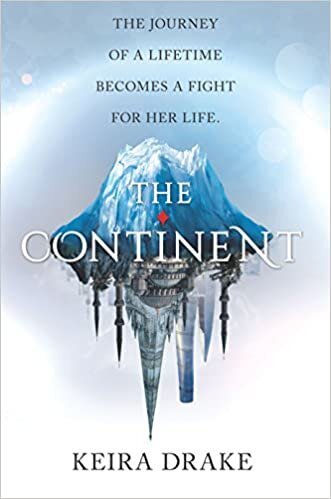
This debit novel from author Kiera Drake was originally scheduled for a 2017 release from Harlequin. The hype started early with this one, with Publisher’s Weekly reporting a ‘significant’ (which is code for between $250-500k) three-book deal for Drake.
The Continent is a sci-fi YA novel about a sixteen-year-old who goes on a helicopter tour of a place called The Continent where two “uncivilized” tribes are locked in perpetual war. Her helicopter crashes and she’s rescued by one of the inhabitants. She goes on to save his people from ruin.
Early readers were horrified by the depictions of the two “uncivilized” tribes which were coded as Native American and Asian respectively. The tribe called the “Topi” (one troubling letter off from Hopi) was described as having reddish-brown skin, smearing their faces with war paint, and savagely attacking people with arrows. The other tribe was described as having ninja-like skills and—god help us—almond-shaped eyes.
Kiera Drake—a mid-forties woman living in Salt Lake City— was reportedly unaware of the conversation around diversity and publishing and thus was completely caught off guard by the criticism. When she saw the early reviews, she was dismayed and asked her editor to delay publication while she rewrote the book.
In the meantime, the online debate continued apace with Drake’s husband jumping in for a Twitter rant in which he called YA author Justina Ireland—who’d written a Twitter blow-by-blow about the book—a “bigoted troll” (he and Drake are now separated, so make of that what you will.) It’s worth noting that while many people have called Ireland’s criticism “bullying”, she received rape threats, death threats, a flood of one-star reviews for her own books and even someone emailing her editor to urge him to drop her. All for writing tweets about a book she (and many others) felt relied on racist tropes and stereotypes.
Drake eventually revised the book and moved forward with its release. This version appears to have addressed minor issues such as calling the “savage” tribe the Xoe instead of Topi, removing their war paint, removing descriptions of “almond shaped eyes” and the like and making her protagonist slightly more ethnically ambiguous
Here’s what Laila Shapiro—who interviewed the major players in this drama for an excellent piece in Vulture—had to say about the effectiveness of those efforts:
Drake told me that she took heart from the fact that her sensitivity readers “loved” the revision and just suggested a few minor “tweaks.” But when I spoke to one of the two sensitivity readers Harlequin had hired, she recalled sending suggestions for an extensive rewrite to Wilson, who was reluctant to pass them along to Drake. According to the reader, Wilson said she felt that they’d already put Drake through the wringer, and that another page-one revision would be too onerous. Publishers often cite their hiring of sensitivity readers as proof that they’ve done due diligence, but they pay as little as $250 per read, and they’re always free to ignore the sensitivity reader’s suggestions. Once the reader sends in their notes, they have no control over whether or how that advice is put to use.
I wanted to give this author credit for trying to do the right thing, but it appears she threw in the towel halfway through.
My biggest conclusion here is that sensitivity readers only work if you listen to them, and an author who starts out being completely unaware of this conversation probably just doesn’t have the range for a story like this. If anyone could have salvaged this book’s storyline, it likely wouldn’t have been Drake, at least without a lot more work.
Taproot of Frustration
What’s more important to grasp than the details of any individual scandal here is that this outrage isn’t just about these books. Rather, it’s about an industry that continues to value white authors and racist books over own voices.
“YA Twitter Drama articles hinge on two foundational ideas: one, that the criticism isn’t valid, and two, that the criticism comes from Mean Girl-style antics instead of actual literary analysis.” – Justina Ireland (Medium)
These conversations can get heated, so I think it’s crucial to keep turning back to the data, which tells a consistent story of underrepresentation and marginalization for BIPOC authors and publishing professionals. The problem is real. The frustration is real. The specter of censorship? Not so much.
As I’ve noted, most of the scandals have taken place within the somewhat insular world of YA and Children’s Lit.
And thennnnn, American Dirt happened.
That’s coming up next week!
Read More:
American Heart, Huck Finn, and the Trap of White Supremacy / Medium
Books by Muslim Authors to Read Instead of American Heart / Buzzfeed
Can You Revise a Book to Make it More Woke / Vulture
Meet Justina Ireland / Vulture
October 5, 2020
Case Studies Part One: A Birthday Cake for George Washington and When We Was Fierce
As I was reading up on sensitivity readers, there were four books that came up again and again. So today I’m getting busy serving up some extremely cold several-years-old scandal. The fact that these books were still being name-checked in op-eds from this year should tell you something about the frequency of the “censorship” that’s been wrought by the “tyranny” of sensitivity reading, but I digress.
These books were held up by the group of detractors making the “censorship” case as examples of wokeness run amok. Because most of this conversation happened in the YA blogosphere and Twitterverse where I don’t spend much time, they mostly escaped my notice when they happened. So, when these same four titles kept coming up, I wanted to dig them up for a little post-mortem to see if there were any useful takeaways.
For most authors (other than Lionel Shriver, who seems to live for it) getting called out for being unintentionally racist, homophobic, etc. is a nightmare scenario, so, though the schadenfreude around these cases can get intense, I think it can also help us illuminate our own blind-spots and also teach us something about where publishing is falling short when it comes to race and representation. Which it is. By a lot.
As with everything on this topic, the more I dug into these four cases studies, the more there was to unpack, so I’m splitting this into two posts. First, I’m going to cover the only two books used as examples that I could find that were actually pulled or cancelled (literally cancelled, not ‘cancelled’, a term I recently learned originated from this hilarious Joanne the Scammer skit—don’t you think it would delight her to know how much sleep Tucker Carlson has lost over it? I do.)
I’m summarizing the controversies here, but have included links below which I highly recommend.
Okay, in we go!
A Birthday Cake for George Washington
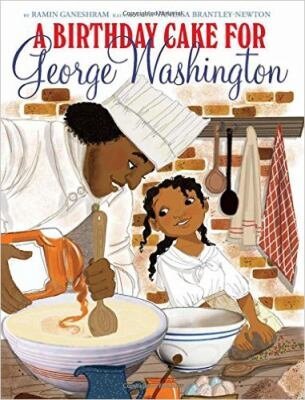
The first title that came up consistently was A Birthday Cake for George Washington, released by Scholastic Press on January 1, 2016. This children’s picture book depicts George Washington’s chef Hercules and his daughter—both slaves owned by Washington—baking a cake for their master. The book is cheerful and depicts them as happy and taking a lot of pride in their work.
This book came out hot on the heels of A Fine Dessert a children’s book with similar themes that was produced by an all-white team. Interestingly, the author of A Birthday Cake for George Washington, Ramin Ganeshram, as well as the illustrator and editor on this book were all women of color.
The negative reaction to the book was swift, with readers concerned that depicting images of happy, contented slaves could mislead children about the horrors of slavery
Both the author and editor wrote impassioned defenses of the book (which have been since deleted by I found quoted here) saying that their intention had been to uplift the work of a man who was considered the first celebrity chef in America and that, essentially, there was nuance to the status that some slaves held in relation to others. However, even in the author’s note, Ganeshram mentions that Hercules eventually escaped and left his daughter behind, which belies the idea that he was happy there.
Scholastic ended up pulling the book and, in a statement, said that they respected "integrity and scholarship of the author, illustrator, and editor" but without more context on the "evils of slavery," the book may leave kids with "a false impression of the reality of the lives of slaves."
Given the stellar reputations of those involved with this book (the editor x won a Coretta Scott King Award), it’s hard to doubt the sincerity of the creators’ intentions here. But intention never counts for as much as impact. As authors, we all have to live with the fact that we don’t get to accompany our books into the world to explain what we meant. So, while I can sympathize with the creators, the criticism seems well-founded, and I certainly can’t imagine buying a book featuring happy slaves for my daughter.
When We Was Fierce
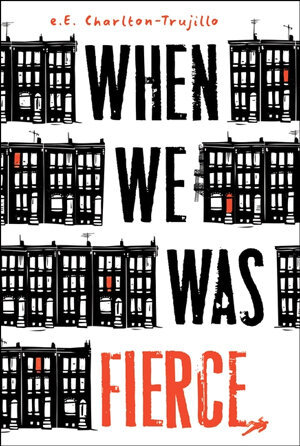
Next up, we’ve When We Was Fierce was slated to come out in fall of 2016 from Candlewick Press. This YA novel from bestselling Mexican-American author e. E. Charlton-Trujillo chronicled the struggles of a group of young black men in was she described as a “hyper realist” America. The novel was written in verse in a made-up dialect that resembles African American Vernacular English (or Ebonics). The author had this to say about the prose:
“Right from the jump, I could hear the music of T’s world that hadn’t existed in YA before. Slang can become dated quick, so I had a unique opportunity to incorporate some slang along with a new vernacular.””
Hype always leads to increased scrutiny and this book got loads of it, including raves from Teenreads, Kirkus, Booklist, Publishers Weekly, and Library Journal—which are pretty much all the trade reviews you can get advance reviews from. Publishers Weekly called the book a “heartbreaking and powerful modern American story,” and Kirkus said it was “...a compassionate, forceful look at the heartbreak and choices these black boys and men face.”
(It will not shock you to know that book review departments have their own issues with race, but that’s a topic for another day. )
Anyhow, the trouble started when early readers and bloggers got ahold of the book and began summarily ripping it to shreds.
Unsurprisingly, the imagined AAVE was a major sticking point and while much of the book has been scrubbed, reviews of the book remain including this one from Jennifer Baker (author, activist, and creator and host of the excellent Minorities in Publishing podcast). Here are a few of the examples she includes of what this prose actually sounded like:
o I was midspeak when I got an interrupt.
o My think go to racing
o So, you aren’t worried about Catch in speak with Nacho?
If you can make heads or tails of what Charlton-Trujillo was trying to do here, God speed.
As many reviewers pointed out, AAVE is very much a real linguistic form with a rich history and rules like any other language (if you’re interested in a great deep dive on AAVE and the Ebonics controversy, I highly recommend listening to You’re Wrong About’s episode on it).
Edi Campbell, a reference librarian, literacy activist and blogger, had this to say about the imagined AAVE:
“Typically, when I read black vernacular, I can hear it in my head as spoken by someone in my life and it resonates as a home to me. It is a language with a pattern in how nouns and verbs relate, tense is express and how verbs are conjugated.”
Readers’ issues didn’t end with the prose however, as they felt the book was also full of harmful stereotypes: a pregnant teen, a fragile hard-working single mom, an abusive dad, etc. Again Campbell:
“What adds to the perception of the characters in this story being marionettes is the quick and not at all insightful references to Black Lives Matter and those lost. Trayvon Martin, Eric Garner, and Freddie Gray”
Ultimately, Candlewick announced that the author had pulled the book ‘to work on it further’ but since the book has not materialized in the four years since, I think we can presume it DOA.
This Coffee is Cancelled
So, these books were ultimately pulled but were they censored?
Nope.
The publishers could have made the decision to stand by the books (as publishers do all the time with offensive or controversial books) but likely decided the damage control wasn’t worthwhile. Or perhaps, in the case of Candlewick, they wanted to proceed by the author decided it wasn’t worth the hit to her reputation and/ or had genuine regrets. It’s hard to speculate, but ultimately, book publishing is a business and readers are the consumers, and everyone here acted accordingly.
Read More:
Publishers Pulling Offensive Books is Just Good Business – Book Riot
Confessions of a Sensitivity Reader – Tablet Mag
Publisher delays YA novel amid row over invented black 'street dialect' – The Guardian
Review: When We Was Fierce - Edi Campbell
September 28, 2020
Controversy Around Sensitivity Readers Part Two: Solid Arguments
Last week, I went through what I see to be some of the specious arguments against the practice of using sensitivity reader (these arguments tended to also rope in the general pushback on books for being racist or otherwise culturally insensitive). The handwriting over any of this being a slippery slope to censorship is deliberately obtuse, in my opinion, but there are some arguments that sensitivity readers could be making things worse on the representation front, rather than better. And that’s what I want to explore today.
I’m going to be quoting a couple of very smart people who are far more immersed in the business of sensitivity reading than I am. I highly recommend reading the full articles, which I’ve included below.
Deprioritizing Own Voices
“When our various manuscripts enter the publishing gauntlet, the system, that’s when we see institutional racism, bigotry, homophobia and ableism at work.” – Dhonielle Clayton told The Guardian.
Nowhere did I find anyone arguing that writers never write across cultures, but when books by white writers about the experiences of marginalized groups are being chosen instead of books by writers who belong to those groups, that’s a problem.
This circles back to that thorny mechanism of comp titles, and the fact that publishers often perceive white authors as having a broader audience regardless of the topic. And with racial tension being perceived a “hot” topic at the moment, you can see where these forces would collide in a bad way. Indeed, we saw a very high-profile of this with this year’s American Dirt: a book by a white, American author that was touted as not a story about migrants on the Southern border but the story about migrants on the Southern border. Yikes.
People Use Sensitivity Readers as a Free Pass
“They are using them as shields,” says Debbie Reese “The writers are doing it and so are their publishers and editors. What they are not saying is that a sensitivity reader might have said ‘do not do this’. Instead, they can say, honestly, that a sensitivity reader worked with them. They don’t have to mention that the sensitivity reader said ‘stop’.”
As I’ve mentioned before, sensitivity readers are consultants and do not serve as gatekeepers of any kind. Publishers and authors don’t have to take any of the feedback they offer. Hiring a reader and ignoring their feedback is like throwing a lifejacket in the back of the boat and assuming it will save you from drowning regardless of whether you ever put it on.
And, of course, even if a sensitivity reader’s feedback is incorporated, no reader is monolith. What offends one woman or black person or disabled person might not offend someone else from that group. Some readers are easily offended, some are not.
Writing always comes with a risk, and the certainly writing cross-culturally is a steeper challenge than writing within the confines of your own identity. That’s not to say you shouldn’t do it. I’ll keep saying it: no one is telling you not to! But you don’t get to throw your sensitivity reader under the bus if something offends someone. The buck stops with you.
It Won’t Fix Publishing’s Race Issues
“sensitivity reading is a band-aid over a hemorrhaging problem in our industry. That’s what we should really be talking about — that’s what real censorship looks like. The systematic erasure and blockage of people of color from the publishing industry.”—Dhonielle Clayton
Perhaps the biggest criticism of the sensitivity reader is the idea that anyone could think this would fix what’s broken about publishing. Hiring consultants to make sure that (mostly) white authors get the details of marginalized communities right is not going to make a difference to the paucity of books from those communities in the first place; the punting of those writers to smaller presses; or the lack of BIPOC behind the scenes. These are systemic issues in book publishing and the conversation around them isn’t new. We should all be supporting organizations such as We Need Diverse Books, POC in Publishing, and Latinx in Publishing, who are pushing for real change in addition to making sure our own books don’t cause damage.
So, should we NOT hire sensitivity readers?
As I said in my first post, if you are writing about a marginalized group that you’re not a member of, hiring a sensitivity reader is probably a good idea even though all of the above criticisms are valid. Hiring a reader can still help you not put harmful content into the world.
There are good questions to ask yourself about your intentions in telling a certain story or writing a certain character (and I will get to them!) and a sensitivity reader doesn’t take the place of good research, but as with any situation where you’re writing about something you don’t know intimately—be it a foreign language, a subculture, or another race or sexuality—talking to an actual human with knowledge of it is just good practice.
A word to the wise here, even if you are working with a major publisher do not expect them to save you from yourself. Your name is on the book, you need to do your best to make sure it’s hitting the mark. Publishers are often not equipped to catch these issues, as we will see next week when I start digging into case studies!
Additional Reading:
Meet Publishing’s Sensitivity Readers - The Guardian
Sensitivity Readers – What the Job is Really Like - Vulture
BIPOC to Publishing: We’re Not Okay - Publisher’s Weekly
How 10 Women of Color Actually Feel About Working in Book Publishing - Bustle