
Rick Lenz's Blog
October 24, 2021
What I learned from Bret Easton Ellis

At the age of fifty-three, I began spending most of my days writing. I had written about a dozen plays and three novels. A couple of the plays were okay, but the novels, were bad (“bad” is too kind).
But I kept at it. My acting career, which had come so easily for about thirty years, was not easy anymore.
My wife, Linda, ran into an old friend, Dale Ellis. She told Dale what I was doing, slogging away at my latest attempt at a novel.
Dale said, “I could show it to my son. He’s a novelist.”
When Linda told me this, I said, “Yes!” I’d read at least three novels by Dale’s son. It seemed lunatic to me, the notion that Bret Easton Ellis would take a look at a 300-page stack of my ramblings, but it turned out that he was willing to do that and he did.
By now, Bret and I have had a sporadic correspondence for close to thirty years. He is a dark literary figure in the minds of many because of what he writes. In one of his first letters to me, he said, “Not a lot of people would take my advice, considering how I write and what I write, so you should get other opinions.”
I have done that and more than ever I value Bret’s assessments, especially in regard to the craft of understandable writing—saying no less and no more than you mean to say. (unspoken in all of his advice was something close to what Marlon Brando said about acting: “The only thing an actor owes his public is not to bore them.”) I should add that Bret’s critiques have always been meticulous and blunt. There is no time [cliché coming:] to beat around the bush when you’re trying to help another writer clean up bad habits or the tendency of a lot of beginners to try to sponge up a lifetime of neurosis between the covers of their first novel.
Bret told me he had thrown away his first three attempts. In fact, that may be about the magic number. Richard Russo (“Empire Falls”) says “you need to write a thousand shitty pages before you can hope to get good.” Stephen King has said words pretty close to that.
Before I decided to write this piece, I came across an interview with Bret about writing. This is probably close to being his credo, if he has one, or at least it was on the day he gave this interview to the Los Angeles Times.
“Do it because you love it. Don’t do it because you think you’re going to get published or you’re gonna sell the movie rights or you’re gonna get some money for it. Do it because it gives you intense pleasure, and do it because it relieves yourself of pain. And do it because it’s super personal. Don’t just try to write like a murder mystery that you think you can get published because it’s a murder mystery like “Gone Girl” or whatever. Write something that really means a lot to you. That is the process that has always meant the most to me. The rest of it — the publication, the editing, the promoting of it or whatever — is a completely separate thing from the actual writing [of] the book, which is always done for very personal reasons, at least it has been for me.”
I don’t write anything close to the kind of thing Bret does. I couldn’t if I wanted to. He has never tried to influence what I write. His concern as my mentor—which he didn’t set out to be, but for me that’s the way it worked out—is that I write as well as I can. He has never gone out of his way to be kind, but he’s been kind. If you’re trying to be a better writer, the best sort of kindness you can hope for from someone qualified to give you advice is a combination of honesty and clarity and a total lack of bullshit.
PS: Most of my writing has the entertainment business and the profession of acting as a backdrop. Once, early in the editing of one of my novels, Bret scribbled a note in the margin: “Actors—Eeeew!”


August 13, 2021
Hello, Rest of My Life Book Announcement
“The Midnight Library” meets “You Again” in timeless tale of romance, regret, and the choices we make–and would make again, given the chance
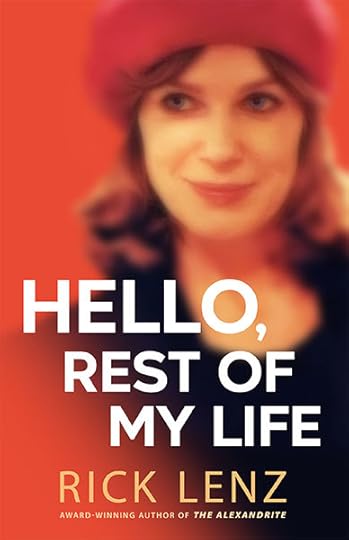
If you could go back in time and pursue a successful career or a flourishing relationship, which would you choose? Award-winning author Rick Lenz has penned a dazzling novel about second chances and the choices that create a meaningful life, “Hello, Rest of My Life,” (Sept. 21, 2021, Chromodroid Press). This romantic journey through time is loosely based on the author’s real-life Hollywood career and love story with his wife and 40-year sweetheart, who changed his life with each encounter through the decades.
The novel follows Danny Maytree, an ambitious film actor who abandons his dreams of Tinseltown stardom after meeting Samantha on a blind date and falling in love. Fast-forward decades later to 2021: the couple are married and in their seventies, and Danny is spending his time reminiscing and writing a novel about time travel–when he receives a call from a mysterious, velvet-voice acting agent. Suddenly, he is literally transported back to 1974: Danny is twenty-seven again, bewildered, but with a second chance at his Hollywood dream. A sharkish agent helps him navigate Hollywood’s rocky shoals, a worldly-wise teen and a New Age fortuneteller offer spiritual advice, and a sexy wicked witch throws a monkey wrench in his path. Will he fight his way back to the love of his life, or stay in a new reality where his career can flourish?
Heartfelt and magical, here is an enchanting exploration of choosing between living the life you’ve always imagined, and the life you didn’t know you couldn’t live without.
In an interview, Rick Lenz can discuss:What it takes to build a meaningful life, and whether“ do overs” existHow love, regret, and second chances influence our choicesHow his relationship with his wife Linda, his acting career, and his writing life all influenced the novelWriting authentically to the different time periods found in the bookAn Interview with Rick Lenz1. You had an excellent career as an actor. What made you want to make the shift to focus on writing?
When my highschool football career ended due to a more than averagely breakable body, the only other way I could see to draw girls’ attention was acting in school plays, which led to summer stock, which led to a theatre major at University of Michigan. However I’d always loved writing too. When acting roles became less rewarding (I was no longer trying to please anyone but Linda and myself), it was a natural transition to move to writing. I’d written plays all my life. But what I read was mostly novels. So, I wrote a memoir of my acting career and my life to that point and then moved on to writing novels. When you’re writing, no one ever says, “faster, louder,” etc. I’d shifted from one creative passion to another.
2. This book is based on your relationship with your wife, Linda. How has your relationship shaped you and this book?
There is not a day of my life that I don’t find my mind coming to rest on the subject of my incredible good fortune in having found and spending the last half of my life with Linda. A line from the book (Danny about Samantha): “A smart friend of mine said, ‘Why don’t you join a church group or something, meet a girl that way?’ I thought he was crazy and tossed that idea out, but the drift of his advice floated around in my mind and I understood what he meant. He thought as I looked for someone to be with … for life that I should do it not only on the basis of physical attraction, but also that it might be a good idea if she was–what a concept–a nice person.”
3. Was there any particular moment in the book that you pulled directly from your own life?
Many moments are similar to moments in my life. Some parts of Danny’s and Samantha’s conversations were lifted from my real life with Linda. Many aspects of Danny’s acting career in the early seventies coincide with my own history.
4. The book takes place in two different time periods. Did you do any research to make sure you were portraying things authentically?
I can answer this briefly. My research of the periods in the story consists of having a pretty good memory and living through both “eras”. Yow.
5. If you could travel back in time and have a do over on one aspect of your life, would you do it and what would it be?
From where I am now, I probably wouldn’t change a thing. But if I could travel back in time, unaware of a future with Linda, I would do my best to practice love and kindness, much sooner. I would try to do all those things and behave in the ways that coincide with “As you sow, so shall you reap.”
.kt-btns_47da18-9f .kt-btn-wrap-0{margin-right:5px;}rtl .kt-btns_47da18-9f .kt-btn-wrap-0{margin-left:5px;margin-right:0px;}.wp-block-kadence-advancedbtn.kt-btns_47da18-9f .kt-btn-wrap-0 .kt-button{color:var(--global-palette9, #ffffff);background:var(--global-palette7, #EDF2F7);border-color:var(--global-palette7, #EDF2F7);}.wp-block-kadence-advancedbtn.kt-btns_47da18-9f .kt-btn-wrap-0 .kt-button:hover, .wp-block-kadence-advancedbtn.kt-btns_47da18-9f .kt-btn-wrap-0 .kt-button:focus{color:var(--global-palette4, #2D3748);border-color:var(--global-palette4, #2D3748);}.wp-block-kadence-advancedbtn.kt-btns_47da18-9f .kt-btn-wrap-0 .kt-button::before{display:none;}.wp-block-kadence-advancedbtn.kt-btns_47da18-9f .kt-btn-wrap-0 .kt-button:hover, .wp-block-kadence-advancedbtn.kt-btns_47da18-9f .kt-btn-wrap-0 .kt-button:focus{background:var(--global-palette9, #ffffff);}Download Press Release PDFJuly 26, 2021
A Raindrop in the Storm
A RAINDROP IN THE STORM (Linda’s Talk with God)
Linda usually wakes up before I do. The first thing she does is have a little quiet time with God. After she did that this morning, she made coffee. There was a cup on my bedside table when I woke up. She was propped up on pillows on her side, sipping her coffee and reading.
As my fuzziness started to lift, I asked her what she’d talked about with God this morning. I know that’s a personal question, but we allow each other a few of those.
She thought about it for a while and said, “I usually pray for Him to watch over you and our family and our loved ones…”
“… Do you… like… picture him?”
She didn’t have to think about it. “No, but when I talk to Him, I think of Him first as a personal friend … Well…” She corrects herself. “…more like a father who is a good…”
“Why a father instead of —?”
“— Instead of a mother? I don’t know … my old Catholic training. So anyway … He’s a really good father who loves you and listens to you, and anything you want Him to do, He’ll do. I start off by thanking Him. I say, ‘Thank You for all the blessings You’ve given me.’ I thank Him for you and our beautiful home and our friends and our health and all that. Or sometimes I’ll just say a general thank you for everything. And then I usually follow with, ‘Help me be a good person today, to do the right things; help me know what’s the right thing to do and give me guidance.’ And then … like today, this morning, I said, ‘Bless Rick and me, and keep us safe and healthy and strong because we have a lot of good work to do. And also keep our family, our loved ones, safe and healthy—our immediate family, our distant family, and all of our friends … and everybody we know, and the people we don’t know, and every living thing … on the earth.” She smiled, aware she was asking a lot.
Most of the spiritual writers we read say, in effect, that making a request of God is like taking a container to the ocean and dipping up as much water as you want. You can take a teacup or you can take a bucket. Linda and I are convinced we are robbing no one of any good thing by asking for a bucketful instead of holding out a teacup. Or a teaspoon.
She went on with her prayer, “Uh… I know that’s a big job and You probably can’t make every living thing on earth perfectly happy and safe and healthy and strong because that would be too weird; people would freak out probably. So just … do what You can.’”
“If He does what He can,” I said, a little smart-alecky, “we wouldn’t have any more problems, would we?”
She answered me in the same spirit I asked the question: “Yes, but that’s not the way it works.” She explained to me like she might to a child: “And it’s got to be according to the law. You can’t just magically wish for something and have it appear. It has to follow some kind of law.”
“How does that work?”
She sighed and went on, partly humoring me, but also saying it out loud for her own clarity of mind. “It works by cause and effect. Some people call it karma but it’s basically cause-and-effect. Something causes something to happen and then something happens. And what causes things to happen is the mind.” She said again, slowly: “The … Mind. And everybody has use of the Mastermind—if you’d like to call it that. There’s one big mind that everybody dips into and draws from. So whatever you think eventually finds its way out there…” With one finger she indicated what could be a far-off distance. “… then comes back to you. If you think negatively, negative things come back to you. If you think positive things, positive things come back to you … But everything has to follow the law… I don’t mean the law like police law. I mean like the laws of nature … the law of electricity, the law of gravity, those kinds of natural laws. And the Law of Mind is a natural law too—but most people don’t seem to realize it.” She frowns … “Anyway, whatever you think, whether you put it into words, and say it out loud verbally, or just … you know, feel it in your mind, it goes out there and it starts to … FORM. And then it works its way back to you. So … that was my prayer this morning—that everyone should be safe and happy and healthy. And strong. And have water to drink and a sheltered place to live in, work to do … A happy life. And everyone getting along and helping each other. I know it’s utopian. But eventually maybe something like that will happen.”
She sighed again. “Of course you have to factor in that even though we were made by God and are a part of Him, we’d have to be insane to think we can understand why He does things the way He does them. It would be like a raindrop in a storm trying to figure out why there’s a storm.”
At that moment I knew she’d given me enough of the answer to get me through the day:
I am a raindrop in a storm trying to figure out why it’s raining. What I should probably do, is make sure I’ve got my bucket handy, do my best, and wait for the storm to pass.
*****
I used to have a temper—not often—but once in a while. I don’t have that problem anymore … okay, a touch. Mostly, I date the change for the better to meeting Linda. I’ve been with her for over forty years now. The protagonist in my new novel used to have a hot temper too, until he met Samantha. In the story of Hello, Rest of My Life, he loses her.
From that point on, all he wants is to get her back.
I’ve never based a character so much on Linda before. Samantha is based on Linda. She even says a couple of things Linda has said. I wonder if Linda will want anything for that. I’ll probably have to give her some of the royalties. Women, huh?
A Raindrop in the Storm
A RAINDROP IN THE STORM (Linda’s Talk with God)
Linda usually wakes up before I do. The first thing she does is have a little quiet time with God. After she did that this morning, she made coffee. There was a cup on my bedside table when I woke up. She was propped up on pillows on her side, sipping her coffee and reading.
As my fuzziness started to lift, I asked her what she’d talked about with God this morning. I know that’s a personal question, but we allow each other a few of those.
She thought about it for a while and said, “I usually pray for Him to watch over you and our family and our loved ones…”
“… Do you… like… picture him?”
She didn’t have to think about it. “No, but when I talk to Him, I think of Him first as a personal friend … Well…” She corrects herself. “…more like a father who is a good…”
“Why a father instead of —?”
“— Instead of a mother? I don’t know … my old Catholic training. So anyway … He’s a really good father who loves you and listens to you, and anything you want Him to do, He’ll do. I start off by thanking Him. I say, ‘Thank You for all the blessings You’ve given me.’ I thank Him for you and our beautiful home and our friends and our health and all that. Or sometimes I’ll just say a general thank you for everything. And then I usually follow with, ‘Help me be a good person today, to do the right things; help me know what’s the right thing to do and give me guidance.’ And then … like today, this morning, I said, ‘Bless Rick and me, and keep us safe and healthy and strong because we have a lot of good work to do. And also keep our family, our loved ones, safe and healthy—our immediate family, our distant family, and all of our friends … and everybody we know, and the people we don’t know, and every living thing … on the earth.” She smiled, aware she was asking a lot.
Most of the spiritual writers we read say, in effect, that making a request of God is like taking a container to the ocean and dipping up as much water as you want. You can take a teacup or you can take a bucket. Linda and I are convinced we are robbing no one of any good thing by asking for a bucketful instead of holding out a teacup. Or a teaspoon.
She went on with her prayer, “Uh… I know that’s a big job and You probably can’t make every living thing on earth perfectly happy and safe and healthy and strong because that would be too weird; people would freak out probably. So just … do what You can.’”
“If He does what He can,” I said, a little smart-alecky, “we wouldn’t have any more problems, would we?”
She answered me in the same spirit I asked the question: “Yes, but that’s not the way it works.” She explained to me like she might to a child: “And it’s got to be according to the law. You can’t just magically wish for something and have it appear. It has to follow some kind of law.”
“How does that work?”
She sighed and went on, partly humoring me, but also saying it out loud for her own clarity of mind. “It works by cause and effect. Some people call it karma but it’s basically cause-and-effect. Something causes something to happen and then something happens. And what causes things to happen is the mind.” She said again, slowly: “The … Mind. And everybody has use of the Mastermind—if you’d like to call it that. There’s one big mind that everybody dips into and draws from. So whatever you think eventually finds its way out there…” With one finger she indicated what could be a far-off distance. “… then comes back to you. If you think negatively, negative things come back to you. If you think positive things, positive things come back to you … But everything has to follow the law… I don’t mean the law like police law. I mean like the laws of nature … the law of electricity, the law of gravity, those kinds of natural laws. And the Law of Mind is a natural law too—but most people don’t seem to realize it.” She frowns … “Anyway, whatever you think, whether you put it into words, and say it out loud verbally, or just … you know, feel it in your mind, it goes out there and it starts to … FORM. And then it works its way back to you. So … that was my prayer this morning—that everyone should be safe and happy and healthy. And strong. And have water to drink and a sheltered place to live in, work to do … A happy life. And everyone getting along and helping each other. I know it’s utopian. But eventually maybe something like that will happen.”
She sighed again. “Of course you have to factor in that even though we were made by God and are a part of Him, we’d have to be insane to think we can understand why He does things the way He does them. It would be like a raindrop in a storm trying to figure out why there’s a storm.”
At that moment I knew she’d given me enough of the answer to get me through the day:
I am a raindrop in a storm trying to figure out why it’s raining. What I should probably do, is make sure I’ve got my bucket handy, do my best, and wait for the storm to pass.
*****
I used to have a temper—not often—but once in a while. I don’t have that problem anymore … okay, a touch. Mostly, I date the change for the better to meeting Linda. I’ve been with her for over forty years now. The protagonist in my new novel used to have a hot temper too, until he met Samantha. In the story of Hello, Rest of My Life, he loses her.” From that point on, all he wants is to get her back.
I’ve never based a character so much on Linda before. Samantha is based on Linda. She even says a couple of things Linda has said. I wonder if Linda will want anything for that. I’ll probably have to give her some of the royalties. Women, huh?
The post A Raindrop in the Storm appeared first on .
June 22, 2021
What I’ve Learned from Anne Lamott
WHAT I’VE LEARNED FROM ANNE LAMOTT
I started reading Anne Lamott in the late nineties. I wanted to move from playwriting, which I’d done for decades, to novels and had been told by a handful of smart people that Ms. Lamott’s Bird by Bird was as valuable a guide to writing good prose as I could find.
I loved her voice, her life force. Since Bird by Bird I’ve read everything she’s published as well as most of her blogs. Next to my wife, daughter, sister, granddaughter, nieces, and a small handful of very close friends, Anne Lamott is my favorite woman in the world. She is my model for honesty about oneself and the willingness to see the dark side of life while continually moving toward the light.
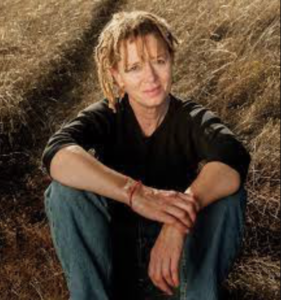 In preparation for the publication of my new novel, Hello, Rest of My Life, I sent a copy of it to Ms. Lamott, hoping she’d read it and give me a “blurb.” This is something an author is not supposed to do. It’s okay to ask to send a copy of your book, then hope for a response. But sending the book without an invitation to do so is a no-no.
Unfortunately I don’t have time to observe all the protocols. I think as an author I have something to say, but regrettably not forever and a day to say it. So I broke the rule and skipped the “Would you let me send you my book?” part. I was pretty sure nothing I sent would find its way to her anyway. If you’ve read or seen a little about her, you know she’s one of the busiest, not to mention enlightened and accomplished creative artists around. She has over 600,000 Facebook followers and draws crowds wherever she speaks.
Three days ago, I got an email from her. She apologized to me for taking so long to get back. She said she liked my title and the description of Hello, Rest of My Life, but she was up to her eyeballs and couldn’t promise to read it any time soon.” “But,” she added, “I am so pleased that you sent it to me, and I send you congratulations on this and all your work.”
And then she signed it, “Anne Lamott.”
Well, really! What more do I need? It’s far more than reasonable that she says she doesn’t have time to read it “any time soon.”
So, I’ve learned from Anne Lamott how to be a better writer than I used to be, plus I’ve had reinforced in the tiny clear-sightedness subdivision of my mind that it’s possible to be a successful, inspired, creative artist and a first-rate human being all at the same time. I’ve been given yet another model—and we never stop needing those—as I tread my path, of the way I’d like to be in this world.
The post What I’ve Learned from Anne Lamott appeared first on .
What I’ve Learned From Anne Lamott
I started reading Anne Lamott in the late nineties. I wanted to move from playwriting, which I’d done for decades, to novels and had been told by a handful of smart people that Ms. Lamott’s Bird by Bird was as valuable a guide to writing good prose as I could find.
I loved her voice, her life force. Since Bird by Bird I’ve read everything she’s published as well as most of her blogs. Next to my wife, daughter, sister, granddaughter, nieces, and a small handful of very close friends, Anne Lamott is my favorite woman in the world. She is my model for honesty about oneself and the willingness to see the dark side of life while continually moving toward the light.
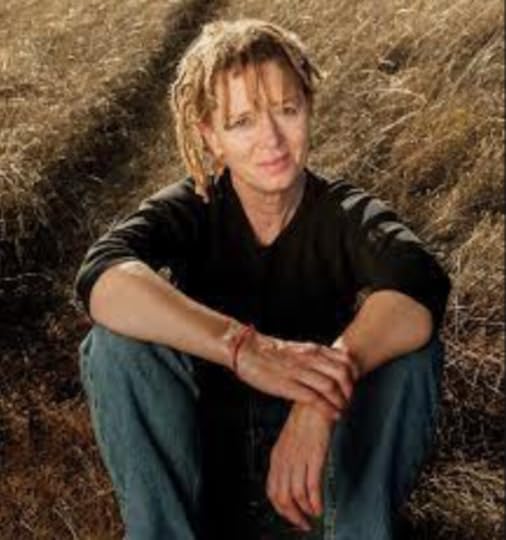
In preparation for the publication of my new novel, Hello, Rest of My Life, I sent a copy of it to Ms. Lamott, hoping she’d read it and give me a “blurb.” This is something an author is not supposed to do. It’s okay to ask to send a copy of your book, then hope for a response. But sending the book without an invitation to do so is a no-no.
Unfortunately I don’t have time to observe all the protocols. I think as an author I have something to say, but regrettably not forever and a day to say it. So I broke the rule and skipped the “Would you let me send you my book?” part. I was pretty sure nothing I sent would find its way to her anyway. If you’ve read or seen a little about her, you know she’s one of the busiest, not to mention enlightened and accomplished creative artists around. She has over 600,000 Facebook followers and draws crowds wherever she speaks.
Three days ago, I got an email from her. She apologized to me for taking so long to get back. She said she liked my title and the description of Hello, Rest of My Life, but she was up to her eyeballs and couldn’t promise to read it any time soon.” “But,” she added, “I am so pleased that you sent it to me, and I send you congratulations on this and all your work.”
And then she signed it, “Anne Lamott.”
Well, really! What more do I need? It’s far more than reasonable that she says she doesn’t have time to read it “any time soon.”
So, I’ve learned from Anne Lamott how to be a better writer than I used to be, plus I’ve had reinforced in the tiny clear-sightedness subdivision of my mind that it’s possible to be a successful, inspired, creative artist and a first-rate human being all at the same time. I’ve been given yet another model—and we never stop needing those—as I tread my path, of the way I’d like to be in this world.
May 25, 2020
Even This Can Be A “Most Amazing Day”
I have a child’s memory of World War II. My father was in the Army Air Force. He was a doctor stationed at various induction centers around the West and the Midwest: St. Louis, Lincoln Nebraska, Salt Lake City, and Colorado Springs. As a little boy, I remember a surge of emotion listening to the Star Spangled Banner.
Several older boys, who lived close by, went away to serve overseas. I remember being told that at least two of them would never come home.
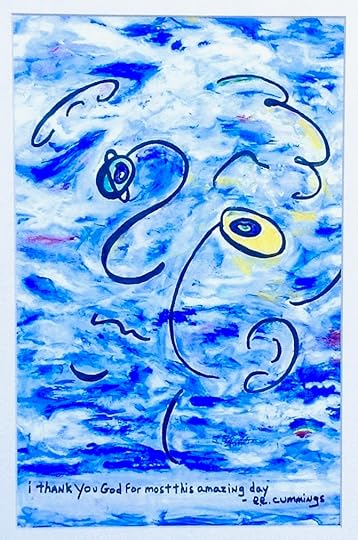
In the time of Hitler and Tojo, there was a horrible paradox: there is no such a thing as a righteous war. But there is a time to say “No.”
I don’t believe this is a time of paradox. I think we should now say no to inflexible political opinions. We can say no to hatred. Just about every religion on earth has instructed us that as we sew, so shall we reap. Let’s stop reaping hatred.
I don’t know that we’ve brought this thing (Covid-19) on ourselves, but I also don’t know that we haven’t.
I moved to New York when I was a young man. It was fashionable, especially among “artists,” and would-be artists, to be wised-up atheists, or at least very skeptical agnostics. I wrote plays about how silly, even bigoted, some churches and religious factions are.
I still think that’s true. The difference now is that I realize I didn’t recognize that the wellsprings of sanity beneath most religions are profound and based on deep spiritual understanding. Our smartest scientists can’t understand the depths of quantum physics. Which of our philosophers understands, in a comprehensive way, the underpinnings of metaphysics? Jesus said, “In my Father’s house are many mansions.” Shakespeare: “There are more things in heaven and earth than are dreamt of in your philosophy, Horatio.” At the end of Darwin’s life, he was unable to claim any understanding of what the world, for lack of a more all-inclusive word, calls God.
We can no longer pretend we know there is no such thing as karma. All those who say we do not reap what we sew are very likely wrong. What an excellent time to take seriously the words of American philosopher, William James: “Despairing doubt accomplishes nothing.”
We were made to accomplish. When we try, we invariably do. It’s time to suspend animosity. It’s time to really love our brother and sister–every single one. At the very least, it’s time to work hard at learning how.
Our hatreds, jealousies, and petty responses to people who are not exactly like the people in “our” little village have been at least part of bringing down on ourselves all kinds of evil.
We are not by nature hateful. If God made us in His image, then we have it in us to be loving to each other.
It’s time.
March 25, 2020
Even This Can Be A “Most Amazing Day”
I have a child’s memory of World War II. My father was in the Army Air Force. He was a doctor stationed at various induction centers around the West and the Midwest: St. Louis, Lincoln Nebraska, Salt Lake City, and Colorado Springs. As a little boy, I remember a surge of emotion listening to the Star Spangled Banner.
Several older boys, who lived close by, went away to serve overseas. I remember being told that at least two of them would never come home.
In the time of Hitler and Tojo, there was a horrible paradox: there is no such a thing as a righteous war. But there is a time to say “No.”
I don’t believe this is a time of paradox. I think we should now say no to inflexible political opinions. We can say no to hatred. Just about every religion on earth has instructed us that as we sew, so shall we reap. Let’s stop reaping hatred.
I don’t know that we’ve brought this thing (Covid-19) on ourselves, but I also don’t know that we haven’t.
I moved to New York when I was a young man. It was fashionable, especially among “artists,” and would-be artists, to be wised-up atheists, or at least very skeptical agnostics. I wrote plays about how silly, even bigoted, some churches and religious factions are.
 I still think that’s true. The difference now is that I realize I didn’t recognize that the wellsprings of sanity beneath most religions are profound and based on deep spiritual understanding. Our smartest scientists can’t understand the depths of quantum physics. Which of our philosophers understands, in a comprehensive way, the underpinnings of metaphysics? Jesus said, “In my Father’s house are many mansions.” Shakespeare: “There are more things in heaven and earth than are dreamt of in your philosophy, Horatio.” At the end of Darwin’s life, he was unable to claim any understanding of what the world, for lack of a more all-inclusive word, calls God.
We can no longer pretend we know there is no such thing as karma. All those who say we do not reap what we sew are very likely wrong. What an excellent time to take seriously the words of American philosopher, William James: “Despairing doubt accomplishes nothing.”
We were made to accomplish. When we try, we invariably do. It’s time to suspend animosity. It’s time to really love our brother and sister–every single one. At the very least, it’s time to work hard at learning how.
Our hatreds, jealousies, and petty responses to people who are not exactly like the people in “our” little village have been at least part of bringing down on ourselves all kinds of evil.
We are not by nature hateful. If God made us in His image, then we have it in us to be loving to each other.
It’s time.
The post Even This Can Be A “Most Amazing Day” appeared first on .
November 1, 2018
Theatre Love
I earned my keep as an actor for most of my life. I love the theatre. I also love reading and books and there came a time in my 60s when it seemed like a good idea to give writing a full time go.
The more I write, the more I love doing that too. But starting next year, God willing, I’m going to take a break for a while.
“What are you going to do with yourself?” asks the little voice inside me that I keep handy to ask questions when I need questions asked.
“Funny you should ask,” I say. “But since you do, here’s what I have in mind:”
I’m going to go to the theater. I’m going to go to the theater every night for weeks, maybe months on end.
******
If you catch the theater bug and end up seeing lots of plays of every variety, it can easily become a serious addiction.
I haven’t acted on stage in years. Recently, I realized I’ve barely attended the theater in years.
I miss it. I think it is the most exciting, vibrant art available to the lucky ones of us who have the opportunity to see living theatre in action. No other art form is as electric. When you go to a play, you are a part of that art form.
Ask any actor. Ask any theatre professional. When you attend a play, you are every bit as important as anyone who had any role in making that production happen—including the writer, director, and producer. And, amazingly, you, sitting comfortably in your theater seat, are alive in that story, as much a part of it as any of the actors on stage.
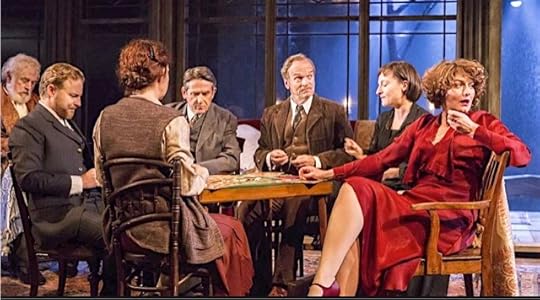
When it’s a good production of a good play, there is an electric current that you in the audience are an organic part of. You are palpably connected to, and one with, the actors on stage. They are no longer actors, they are the characters they are playing, and you are a vital part of what makes them live. When it works—and people have given a good piece of their lives to make it work—you are watching, hearing, sensing, and taking part with your entire being in the life-and-death drama, the comedy, the tragedy, and the gamut of human experience that’s playing out in front of you.
Go take in a good play one of these days. You’ll be reminded of how exciting it can be. P.S. Someone may have noticed I spelled theatre (theater) both acceptable ways. I just never could make up my mind.
The post Theatre Love appeared first on .
Theatre Love
I earned my keep as an actor for most of my life. I love the theatre. I also love reading and books and there came a time in my 60s when it seemed like a good idea to give writing a full time go.
The more I write, the more I love doing that too. But starting next year, God willing, I’m going to take a break for a while.
“What are you going to do with yourself?” asks the little voice inside me that I keep handy to ask questions when I need questions asked.
“Funny you should ask,” I say. “But since you do, here’s what I have in mind:”
I’m going to go to the theater. I’m going to go to the theater every night for weeks, maybe months on end.
If you catch the theater bug and end up seeing lots of plays of every variety, it can easily become a serious addiction.
I haven’t acted on stage in years. Recently, I realized I’ve barely attended the theater in years.
I miss it. I think it is the most exciting, vibrant art available to the lucky ones of us who have the opportunity to see living theatre in action. No other art form is as electric. When you go to a play, you are a part of that art form.
Ask any actor. Ask any theatre professional. When you attend a play, you are every bit as important as anyone who had any role in making that production happen—including the writer, director, and producer. And, amazingly, you, sitting comfortably in your theater seat, are alive in that story, as much a part of it as any of the actors on stage.
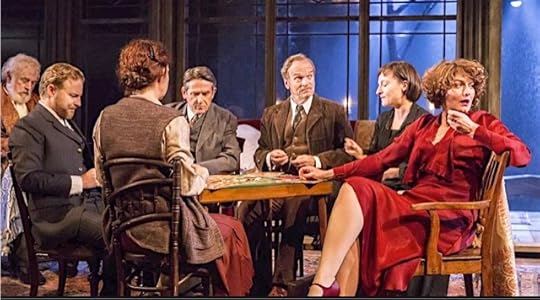
When it’s a good production of a good play, there is an electric current that you in the audience are an organic part of. You are palpably connected to, and one with, the actors on stage. They are no longer actors, they are the characters they are playing, and you are a vital part of what makes them live. When it works—and people have given a good piece of their lives to make it work—you are watching, hearing, sensing, and taking part with your entire being in the life-and-death drama, the comedy, the tragedy, and the gamut of human experience that’s playing out in front of you.
Go take in a good play one of these days. You’ll be reminded of how exciting it can be. P.S. Someone may have noticed I spelled theatre (theater) both acceptable ways. I just never could make up my mind.


