
Sasha Harding's Blog: Blonde Barrage
May 11, 2025
The Bare Truth: A Journey Through the Early History of Nudity
Let’s be honest: humans have a complicated relationship with nudity. At some point in history, we went from strutting around in our birthday suits to panicking if someone forgets to pack a swimsuit. But our ancestors weren’t quite as prudish. In fact, much of early art, myth, and daily life celebrated the human body in all its unclothed glory. This isn’t just a cheeky look at nudity — though there’ll be plenty of butts and boldness along the way — it’s an exploration of how being naked shaped humanity’s early self-image, spirituality, and society. Let’s peel back the layers (pun absolutely intended).
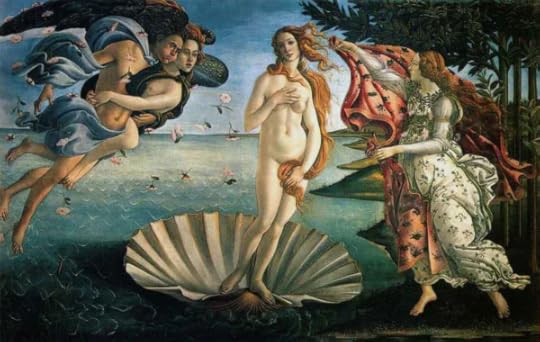 Venus, Fertility, and Stone-Age Selfies
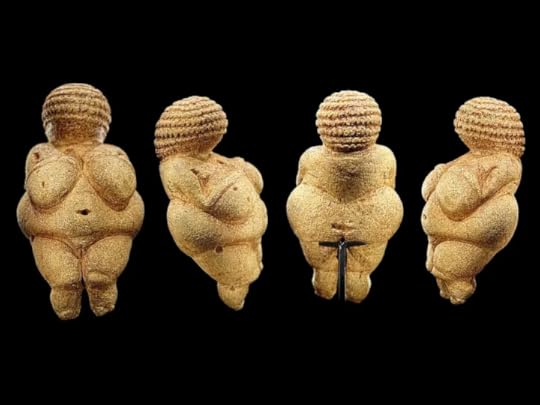
Take a look at the Venus of Willendorf, a 30,000-year-old figurine carved from oolitic limestone. She’s naked — very naked — and she’s not alone. Similar “Venus figurines” pop up all across prehistoric Europe, most with exaggerated features like wide hips and ample breasts. Archaeologists believe these features symbolized fertility, abundance, and perhaps the ideal prehistoric body positivity.
The face? Non-existent. Instead, she wears what could be tightly braided hair or a headdress. Why no facial detail? Anthropologists Catherine McCoid and LeRoy McDermott suggested a clever theory: these figures might be self-portraits made by women. Think ancient body positivity mirror selfies — only with no mirrors and lots of guesswork. Looking down at themselves, prehistoric women might have captured how their bodies actually appeared from their own perspective. It’s oddly empowering — and makes you wonder if we’ve really changed all that much.
 The Naked Divide: From Sacred to Status
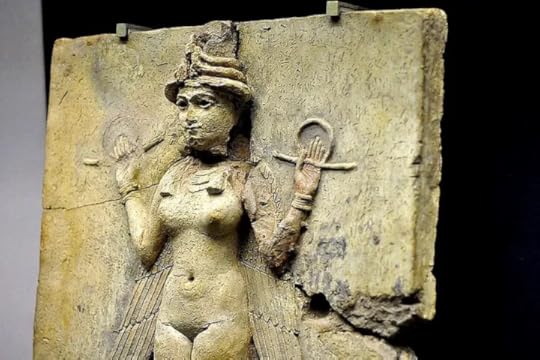
Fast forward to the Neolithic era, and clothing begins to mean more than just protection from the elements. It becomes a symbol of status and identity. Being fully clothed? That meant dignity and class. Being naked? That could mark you as poor, enslaved, or dishonoured. But nudity wasn’t always taboo — people still stripped for work, bathing, and ritual. And in art, gods, heroes, and mythical beings often appeared in the nude, embodying purity, power, or temptation.
Some ancient art even dips into the erotic — yes, our ancestors had a libido and weren’t afraid to carve it into stone.
 Greece: Where Nudity Was a Lifestyle Choice
Nowhere was nudity more glorified than in ancient Greece. Greek men trained, competed, and sometimes even farmed in the nude. Hesiod, a respected poet, advised farmers to “plough naked” to please the gods and boost their harvest. Who needs overalls when divine agriculture is on the line?
Nakedness in Greece wasn’t about shock value — it was a statement. A sculpted, bare male body represented freedom, masculinity, and the divine. Gods, athletes, and heroes were all carved in marble, au naturel. The Greeks saw beauty and power in the unclothed form, and they weren’t shy about showing it.
 Rome: Nudity with a Twist (and Some Shame)
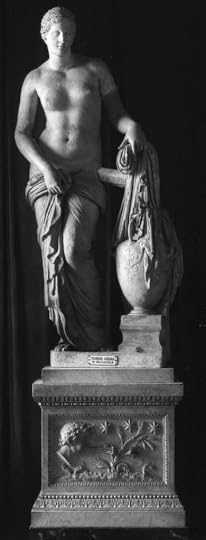
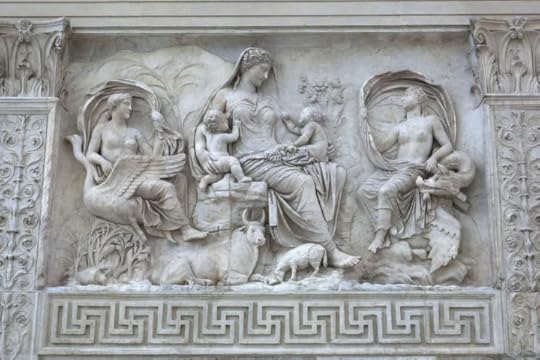
The Romans borrowed Greek aesthetics but brought their own baggage. Male nudity in Rome wasn’t celebrated with the same enthusiasm. A naked body often meant humiliation — think prisoners, slaves, or defeated soldiers. Slave markets displayed people naked not out of admiration, but domination.
Yet, Roman art was still full of nudes — especially gods and goddesses. Respectable women stayed clothed in public imagery, but goddesses got a pass. The goddess Venus (Greek Aphrodite) was a favourite nude subject, symbolizing beauty, fertility, and divine femininity. By the 1st century AD, Roman art began showcasing female nudes in more diverse, sometimes erotic roles. Art collectors even kept racy pieces at home — ancient Romans had their own form of “tasteful” boudoir décor.
 The Middle Ages: Layers and Loathing
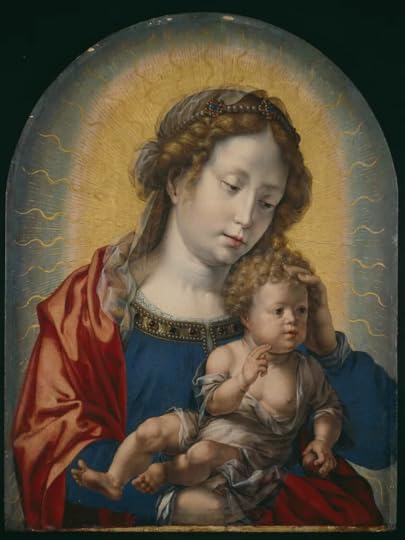
Between 500 and 1450 CE, Europe got a bit more buttoned-up. Society became more rigid, and the naked body was increasingly viewed as something to cover, unless you were poor — and even then, modesty crept in.
In the early medieval period, communal bathing and sleeping without clothes were common, especially for the lower classes. But as the middle class emerged, so did fashion — and shame. Nudity slowly became something to avoid unless absolutely necessary.
Meanwhile, the Middle East retained body-covering traditions that suited both cultural values and practical needs. Long, loose garments protected people from heat and sand. Veiling women in public predated Islam and became more codified through religious texts. The idea of modesty wasn’t universal, though — 14th-century Mali saw royal daughters and female slaves going topless or nude in public, as noted by traveller Ibn Battuta.
 Indigenous Cultures: Comfort and Climate over Cover-Up
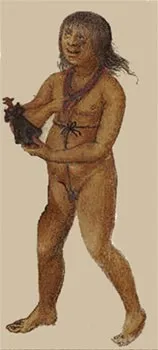
Not all pre-modern societies feared the naked form. Among the Chumash people of Southern California, nudity was normalized — men were generally nude, women often topless. In the Amazon, many tribes wore little to nothing, dressing based on climate and practicality.
But it wasn’t a free-for-all. Some North American and South American Indigenous groups did prefer modesty, especially adults. Children? They usually ran around naked until puberty — as Pocahontas famously did, cartwheeling in front of the shocked Jamestown settlers.
 Renaissance Europe: Naked but Make It Artsy
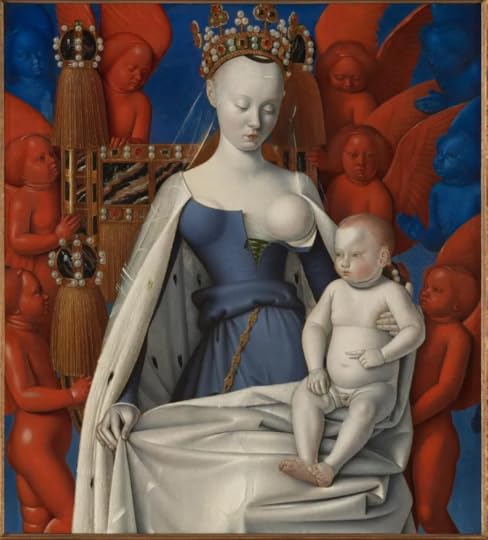
The Renaissance complicated things. Suddenly, nudity was classy again — so long as it was on canvas or carved in marble. Inspired by the Greeks, European artists embraced the naked human form as a symbol of purity, beauty, and man before sin.
But this was strictly artistic nudity. Real-life nakedness? Still scandalous. Society had split: nude in art was fine; nude in person was pushing it.
 Modern Times: Nudity Goes Mainstream (Kind Of)
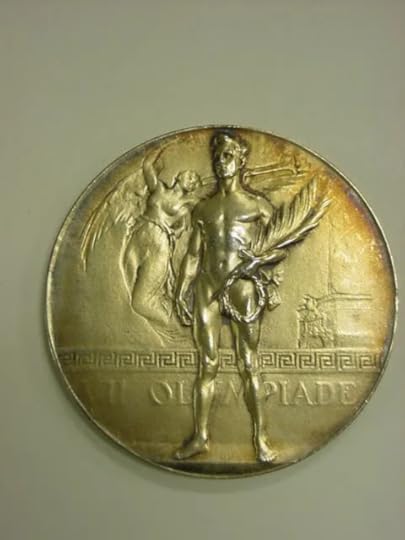
By the 20th century, the body was back in style — sort of. The 1912 Stockholm Olympics poster featured nude male athletes, genitals carefully hidden. Still, some countries found it too daring. Later Olympic posters continued the trend, evoking classical aesthetics with discreetly posed nudes.
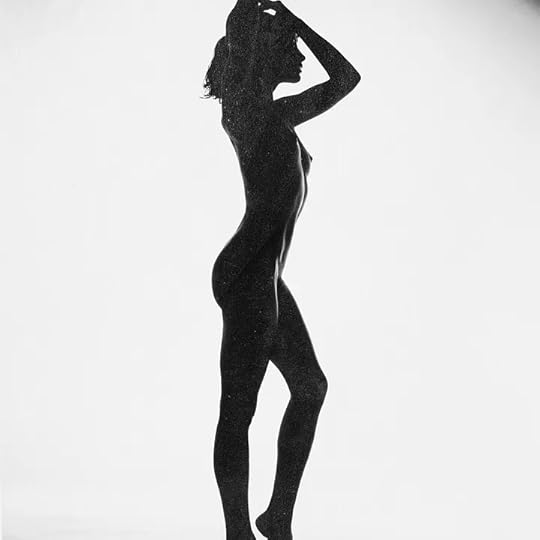
Then came naturism — nudity for health, nature, and freedom, not for sex. Across Europe, naturism grew with different cultural flavours. In Germany, it was linked to physical health and natural living. In France and Britain, it had a more philosophical, even spiritual angle. Nudity wasn’t about titillation — it was about reconnecting with humanity and rejecting industrialized alienation.
 The 60s and Beyond: Naked and Unapologetic
The hippie movement took this one step further. Nudity became rebellion. It was about rejecting consumerism, embracing authenticity, and frankly, just feeling the sun on your skin. Communes adopted naturist lifestyles — though not without controversy. Neighbours weren’t always thrilled, and even nudist veterans worried that the movement was getting too, well, exhibitionist.
By the late ’90s, American views had softened — somewhat. People were more accepting of nudity at home or on screen, but public nudity? Still frowned upon. Events like Burning Man carried the torch for body freedom, mixing nudity with art, expression, and sometimes chaos.


May 1, 2025
Why Women Understand Fight Club but Men Don’t Understand Little Women
Women will always understand Fight Club and American Psycho. But why will men never understand Little Women or Pride and Prejudice?
I suppose the idea that women can understand men’s issues or ideologies has always existed. Women have been the more nurturing, caring gender, the ones who have gone through their own moments of identity crisis and, therefore, can easily understand others when they eventually go through the same phases. However, as a writer and an avid reader, I’ve come to notice that men, in general, seem to lack this depth of empathy when it comes to understanding women’s perspectives through literature.
The majority of current bestsellers in fiction are dominated by female authors, whereas male authors are increasingly confined to non-fiction or self-help genres. This is a stark contrast to the past century when only 12% of the world could read and write, and men dominated the literary world. Most women were not only denied the right to write books but had to publish under male pseudonyms—names like the Brontë sisters, Elizabeth Gaskell, and Louisa May Alcott. Even then, any profits went to their husbands.
Though women can now openly publish under their birth-given names, some still choose to adopt male or unisex pen names. J.K. Rowling, whose real name is Joanne Rowling, chose initials to appeal to a wider readership, particularly young male readers. And when men do engage with books, it often feels like a performance—reading for status among peers or to gain attention from women.
I came across several TikToks where women made statements along the lines of, “Women will always understand [insert book from a male point of view], but men will never be able to understand [insert book from a female point of view].” As I watched these videos and saw the comments, likes, and shares, I couldn’t help but agree. It’s an interesting point—why do men struggle to understand books with a female point of view?
Why Don’t Men Even Try to Understand?
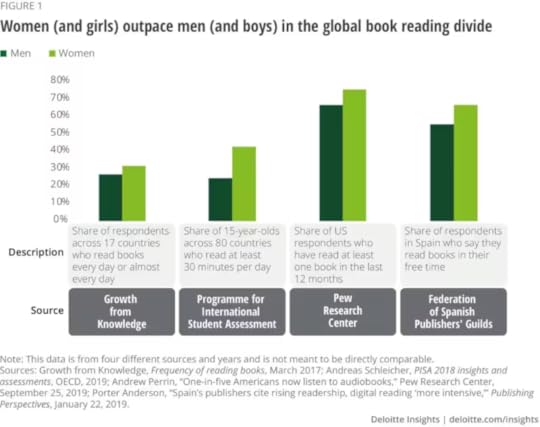
The first question to ask isn’t why men don’t understand women’s books—it’s why they don’t even try to. Women are generally more avid readers than men. According to a 2024 report by the Pew Research Center, 32% of American men reported not having read a book in the past year, compared to only 22% of American women. This trend is consistent worldwide, despite the fact that women globally are more likely to be illiterate than men.
In the UK, US, and Canada, women account for 80% of the book-buying market and 65% of all fiction purchases in the UK (according to Nielsen BookData). A Nielsen Book Research study found that the readership of the ten bestselling male authors was roughly evenly divided between genders (55% male readers, 45% female readers). In stark contrast, only 19% of readers of the ten bestselling female authors were male, compared to 81% female.
This points to a troubling trend: men aren’t just reading less, they are reading fewer books written by or about women. I don’t need to explain to anyone why reading is valuable, but it’s essential to understand how the lack of engagement with women’s voices contributes to the gender divide.
Why Don’t They Read—And Why Don’t They Read Fiction?
The question now is: why don’t men read, especially fiction? There are several reasons for this. Reading habits are formed early in life, and studies show that fathers are less likely to read themselves, meaning children are less exposed to male reading role models. Fathers are also less likely to read to their sons compared to daughters. This lack of male reading role models in childhood has lasting effects, as men and teenage boys are more likely to choose other forms of entertainment, like gaming, over reading.
There is also an underlying cultural belief that reading is a “female hobby,” especially since most bestsellers among female readers are in the romance genre. Studies indicate that around 82% of romance readers are women. Men between the ages of 18 and 34 feel the most pressure to conform to stereotypically masculine behaviours, and so, reading is often associated with femininity. When men do pick up books, it’s often those written by other men—self-help books on how to get rich, manipulate women, or “improve” themselves, often authored by individuals whose wealth and success are questionable.
Realistically, if a man wants to understand women or attract them, he would probably benefit from reading books written by women rather than relying on these “self-improvement” books. But why do so many men avoid books with female protagonists or written by women in general?
The “Romance” Problem
One argument that’s often made is that male readers avoid books by women because they assume female authors only write romance. While it’s difficult to pinpoint an exact percentage, the Romance Writers of America estimate that fewer than 20% of romance novels are written by men. The romance genre has traditionally been targeted towards women, and it represents what’s known as “the female gaze”—a perspective that appeals to a woman’s idea of romance.
Over the past decade, however, the genre has grown exponentially. Books like Fifty Shades of Grey (which portrays a naïve virgin college girl meeting a billionaire who practices BDSM) have introduced mainstream audiences to themes of romance, power dynamics, and sexuality. Unfortunately, the portrayal of BDSM in Fifty Shades is often considered a misinformed and problematic depiction.
What’s more interesting is the shift in how romance is now portrayed in fiction. The female protagonist is no longer depicted as weak or passive. She’s loud, powerful, and complex. Smutty romance is being replaced by more nuanced, “behind closed doors” themes, and younger readers, especially Gen Z, are gravitating toward these more sophisticated representations of romance.
Young women are also looking for more diversity and inclusivity in their reading. A Booktok favourite like Normal People by Sally Rooney—which touches on men’s mental health, self-identity, social status, and young love—have become incredibly popular, especially among young women. These books offer a window into their own lives, providing them with guidance, solidarity, and a sense of connection.
Do Men Simply Not Want to Understand Women?
So why is it that men avoid literature written by women? Do they simply not want to understand the female point of view? Or is there something about the female perspective that they feel disconnected from?
According to Washington Post columnist Monica Hesse, many men actively avoid watching the 2019 film adaptation of Little Women because they fear being the only man in the cinema. She shares that numerous men have sent her emails expressing nervousness about attending the film without a female chaperone. It seems there’s a sense that a man’s presence in a predominantly female space is somehow strange, even though the themes of the story—sisterhood, personal growth, family—are universally human.
New York Times critic Janet Maslin commented “the Little Women problem with men is very real.” Maslin tweeted: “I don’t say that lightly and am very alarmed. In the past day have been told by 3 male friends who usually trust me that they either refuse to see it or probably won’t have time.”
But this issue isn’t confined to Little Women or Pride and Prejudice. It’s part of a larger cultural pattern where men avoid works by women, even when these books explore universal themes. Works like Frankenstein by Mary Shelley, The Bell Jar by Sylvia Plath, or The Handmaid’s Tale by Margaret Atwood all tackle important societal issues, yet they’re often disregarded by male readers, simply because they’re written by women.
Final Thoughts: It’s Time to Break the Stereotypes
What’s my point here? Men need to push themselves outside of outdated stereotypes and expand their understanding by engaging with books written by women—or, at the very least, books about women. This is not just a recommendation; it’s a challenge to broaden perspectives both as readers and as individuals.
And, here’s the thing—women love it when men read. A perfect example of this is the Instagram account @hotdudesreading, which has garnered over 1.1 million followers. It’s clear that there’s something appealing about a man who engages with literature, especially when that includes books written by women.
So, yes—men should be reading books by women. Not just for appearances, but for personal growth, understanding, and to break free from outdated gender norms. If you really want to understand women—or just become a more well-rounded human—reading books by female authors is a great place to start.
Links to evidence and further info: https://geediting.com/world-reading-habits-2020/ https://www2.deloitte.com/us/en/insights/industry/technology/technology-media-and-telecom-predictions/2022/gender-gap-in-reading.html https://www.dazeddigital.com/life-culture/article/63149/1/why-dont-straight-men-read-novels-fiction-masculinity-influencers-sigma https://thred.com/newsletters/gen-zers-are-causing-a-boom-in-romance/ https://www.theguardian.com/commentisfree/2020/jan/04/little-women-man-problem-overblown-anecdata
February 16, 2025
The Housemaid
Time I F*ed My Employer’s Husband: Because She Deserved It**
Millie is hands down the craziest character in this book, and I’m shocked by how little of the discussion around this story focuses on what a bad person she kind of is. That said, I’m curious to see how the actors will interpret these characters when the book is adapted into a film.
I got through this book pretty quickly—it’s fast-paced and easy to read. The plot was straightforward, kept me guessing, and overall, I enjoyed it. However, for all the hype, I didn’t find it mind-blowingly shocking. That said, it was still entertaining enough to hold my attention.
I plan to get around to reading the second book soon—hopefully! 3.5/5 stars.
White Night by Fyodor Dostoevsky
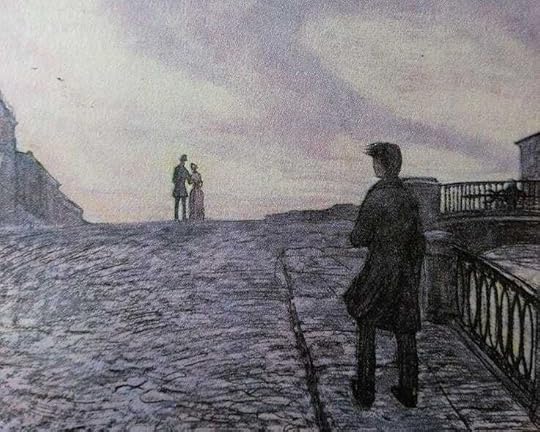
I don’t think I have—or ever will—see Dostoevsky miss. He hits the mark every time. I’ve been craving a short classic I could devour, and this delivered in every way. To have so many memorable quotes packed into a mere 100 pages is a testament to Dostoevsky’s masterful writing. His prose is hauntingly beautiful and thought-provoking.
I only wish I could read Russian fluently to experience his genius in his own words.
————————-
“It was a wonderful night, the kind of night, dear reader, which is only possible when we are young. The sky was so starry, it was such a bright sky that looking at it you could not help but ask yourself: is it really possible for bad-tempered and capricious people to live under such a sky?”
“I’m a dreamer; I have so little real life that I regard such moments as this one, now, to be so rare that I can’t help repeating these moments in my dreams. I will dream of you all night, for an entire week, all year long. I will come here tomorrow without fail, exactly here, to this very spot, exactly at this time, and I’ll be happy as I recall what happened yesterday. This place is already dear to me. I already have two or three such places in Petersburg. Once I even shed tears, because of a memory, like you…”
“Oh, bless you, dear girl, for not turning me away from the very first, for making it possible that I can now say that I have lived at least to evening in my life!”
“How much you’ve said with that one word. Such a love, Nastenka, at certain moments can make the heart grow cold and make one miserable. Your hand is cold, mine is as hot as fire. How blind you are, Nastenka!…Oh, how unbearable is the happy person at certain moments! But I couldn’t be angry with you!…”
“I woke up an hour before our meeting, but it was as if I hadn’t slept. I don’t know what was wrong with me. I was coming, so that I could tell you all this, as if time had stopped for me, as if a certain sensation, a certain feeling were going to remain with me forever from this time forward, as if a single minute would continue for a whole eternity and all life would could to a halt for me… When I woke up, it seemed to me that some sort of musical melody, long familiar, heard somewhere before, forgotten and sweet, was coming back to me. It seemed to me that all my life it had been begging to be released from my soul, and only now…”
“What’s to be done, Nastenka, what am I to do? I am to blame, I abused your… But no no, I’m not to blame, Nastenka; I know it, I feel it, because my heart tells me that I’m right, because I cannot hurt you, I cannot offend you! I was your friend; well, and that is what I am now; I have betrayed nothing. You see, now it’s me whose tears are streaming down, Nastenka. Let them stream, let them stream – they won’t bother anybody. They will dry, Nastenka.”
“No, Nastenka, I won’t sit down; I can’t stay here any longer, you won’t see me any more; I’ll say everything and leave. I only want to say that you would never have learned that I love you. I would have buried my secret. I would not have tormented you, at this moment, with my egoism. No! But I couldn’t bear it any longer now; you spoke of it yourself, you are to blame, you are blame for all this, not me. You can’t drive me away from you…”
“…but only I would love you so, I would love you so, that even if you still loved him and continued to love this person whom I don’t know, you still would not find my love to be a burden to you in any way. You would only feel, you would only sense at every moment that next to you beats a grateful, grateful heart, an ardent heart, which for your sake… Oh, Nastenka, Nastenka! What have you done to me!”
“I only wanted to say to you… I wanted to say that if, despite the fact that I love him (loved him), if, despite that, you will still say… if you feel that your love is so great that it may in the end drive out from my heart the former… if you wish to take pity on me, if you don’t wish to leave me alone to my fate, without consolation, without hope, if you wish to love me always as you now love me, then I swear that gratitude…that my love will in the end be worthy of your love… Will you take my hand now?”
“Either a ray of sunshine, after suddenly peeping out from behind a cloud, had again hidden behind a rain cloud, and everything had darkened again before my eyes; or perhaps that whole vista of my future had flashed before me so bleakly and so sadly, and I saw myself just as I am now exactly fifteen years later, only older, in the same room, just as lonely, with the same Matryona, who hasn’t grown any wiser in all those years. But that I should nurse a grudge, Nastenka! That I should cast a dark cloud over your bright, serene happiness; that I, with bitter reproaches, should cast pangs of anguish on your heart, wound it with secret remorse and force it to beat with anguish at the moment of bliss; that I would crush even one of those delicate flowers that you plaited into your black curls when you walked together with him at the altar…Oh, never, never! May your sky be clear, may your sweet smile be bright and serene, may your blessed for that moment of bliss and happiness that you gave another lonely, grateful heart! My god! A whole minute of bliss! Is that really so little for the whole of a man’s life?”
January 5, 2025
Beauty and Brains: A Rare Ideal or a Misunderstood Reality?
Can you truly possess both beauty and brains? This ideal, as elusive as a four-leaf clover, has fascinated and divided society for decades. It is often said you’ve “won the genetic lottery” if you have both, a concept rooted in a casual remark that society seems to have embraced: conventionally beautiful people are presumed less intelligent, while those with high IQs are not typically deemed attractive. For those who embody both traits, this stereotype can feel deeply offensive. Imagine being told, “You’re so beautiful—I didn’t expect you to be intelligent.” A backhanded compliment, if ever there was one.
The very idea implies an inherent rarity, a near-impossibility of coexisting attributes. This begs the question: is it truly impressive to possess both qualities, or is it only remarkable because society makes it seem so unattainable?
The Science of Stereotypes
Stereotypes often claim some basis in statistical or observational truth. They shape perceptions of careers too—models, athletes, and social media influencers are often deemed less intelligent, while academics and scientists may not be considered physically appealing. But what is it about the combination of beauty and brains that sparks such fascination and scepticism?
The “Dumb Blonde” Stereotype
The term “dumb blonde” has been part of the cultural lexicon for decades, cemented by Marilyn Monroe in Gentlemen Prefer Blondes. Monroe, a 1950s icon, epitomised the stereotype. The phrase “Is it true blondes have more fun?” sparked discussions about whether lighter hair colour attracted more male attention. Blonde women were cast as fun, carefree, and frivolous, while brunettes were seen as dependable, serious, and marriage material. The media perpetuated this dichotomy, portraying blonde women as popular, mean girls or ditzy, and brunettes as innocent ‘virgins’.
Alfred Hitchcock famously preferred casting blonde women in his films, believing they appeared less suspicious—coining the term “Hitchcock blonde”. This stereotype became so ingrained that counter-narratives emerged, such as in Legally Blonde. Reese Witherspoon’s character defied expectations, succeeding at Harvard Law while embracing her beauty and blonde hair. However, research has since debunked the “dumb blonde” myth. A study of 10,878 Americans found that white women with natural blonde hair had average IQ scores within three points of brunettes and those with red or black hair.
The Subjectivity of Beauty and Brains
Both beauty and brains are subjective concepts. Beauty standards vary across cultures, and intelligence manifests in many forms. Yet, the combination still feels rare. Is it truly remarkable to have both qualities, or is it just society’s disbelief that makes it seem so?
Those who possess both traits often face unique challenges. Could someone lose a job because they’re deemed “too beautiful”, even if they’re highly qualified? Will a model miss out on opportunities for speaking her mind instead of playing the role of a silent mannequin? Beauty can overshadow intellect, or vice versa. Can someone be taken seriously in academia if they’re seen as “too attractive”? Will people accuse them of wasting their intellect if they choose a career in modelling?
Case Studies: Beauty and Brains in Action
Natalie Portman exemplifies the balance of beauty and intellect. Recognised as an accomplished actress in Star Wars, Léon: The Professional, and Black Swan, she is also a Harvard graduate with a degree in psychology. As an activist, she has worked in developing countries, promoting micro-lending to empower women, and has been an ambassador for girls’ education. Despite her achievements, Portman faced early sexualisation in her career, a reality she has spoken out against. Her first fan letter was a rape fantasy, and a radio station once counted down to her 18th birthday (the legal age it would be to sleep with her). These experiences shaped her decisions, making her cautious about accepting roles that overly sexualised her.
Similarly, Megan Fox, often regarded as one of the world’s most beautiful women, has a reported IQ of 149, a talent for writing poetry, and a commitment to philanthropy. She has raised funds for women’s shelters and donated millions in products to support military veterans. Yet much of her public narrative remains centred on her looks. The marketing of Jennifer’s Body leaned heavily into her sex appeal, overshadowing the film’s feminist undertones. Fox has also faced scrutiny for early roles, such as a controversial scene in Bad Boys II, filmed when she was just 16.
Can Beauty and Brains Coexist?
So, can the two truly coexist in harmony? Or does society force individuals to prioritise one over the other?
The problem lies not in the coexistence of beauty and brains but in how we perceive and value them. As a society, we seem more comfortable assigning people to neat categories rather than embracing their multifaceted nature. It is not the rarity of these traits combined but our inability to recognise and celebrate them without prejudice.
The issue isn’t whether beauty and brains can coexist—it is why we still struggle to accept that they already do.
By Sasha Harding
───────── ౨ৎ ─────────
October 18, 2024
Shatter Me Series Review
After finishing the entire Shatter Me series, I feel like I finally have a comprehensive opinion on it. Looking back, I waited intentionally to see if my perspective would change, and while the first book is somewhat of a blur to me, I can now reflect on the series as a whole.
Shatter Me (Book One)
Now that I’ve read the rest of the series, I understand what the first book was trying to do. I just wish the author had leaned more into Juliette being an unreliable narrator. The concept had potential, but it felt underdeveloped.
The plot of this book could have been condensed into about 100 pages, given how little actually happens. The pacing was slow, and I found myself confused by Warner’s obsession with Juliette. Even after finishing the series, I still don’t fully understand why he’s so fixated on her. Since the original plan was for Shatter Me to be a trilogy, none of the first three books offer a solid explanation for his behavior. It feels like the later books were written to cover up gaps in the original storyline rather than provide satisfying resolutions.
As for the love triangle, Adam was easily the best love interest in the first book. It’s frustrating how the author built up their relationship only to ruin it later on to make space for Warner. Why bother creating a compelling romance with Adam if it’s going to be discarded?
Unravel Me (Book Two)
This is easily the best book in the series, and it really surprised me. So much more happens compared to the first book, and many of the questions I had from Shatter Me were finally addressed.
The introduction of new characters and the increase in drama kept me engaged throughout. I really enjoyed the build-up to Warner’s reappearance, and I thought it was handled well. However, much like the first book, the focus remained more on character development than plot or world-building. Not much happens regarding the war or larger dystopian conflict, but the personal stakes made up for it in this case.
Ignite Me (Book Three)
While the characters are developed further in this book, it also feels like some of them were destroyed in the process. Adam’s sudden shift in personality was jarring. It felt completely out of character for him to say some of the things he did to Juliette, even considering how upset he was. The way he was written seemed like a way to force Juliette away from him and toward Warner.
Juliette spends much of the book realizing that Warner isn’t as terrible as she thought. But this doesn’t excuse his past actions or the experiences of other characters who suffered under his command. Warner openly admits that he only cares about Juliette and doesn’t care if others die or suffer. Just because he’s kind to her doesn’t make him a good person.
And then there’s the war. After all the build-up, it lasts about three pages before Juliette kills Anderson and suddenly becomes the “super commander.” It was a dreadful ending. For a series marketed as dystopian, the world-building falls apart under its own inconsistencies, especially the physics and logic of Juliette’s abilities. She’s 17, and yet the idea that she’d immediately take over an entire regime is absurd.
Restore Me (Book Four)
This book picks up 16 days after the events of Ignite Me, but it was written after a four-year hiatus from the author. I was hoping that during that time, she would have figured out a way to address the growing plot holes. Instead, they just get bigger.
Juliette and Warner’s relationship is full of forced conflict, and they’re much more interesting when they’re apart. When they are together, their scenes are dull, and Warner’s character seems to have lost all complexity. All he talked about in the earlier books was how amazing they’d be together, but now that they are, it’s boring. He’s never around, and he lies to her constantly, withholding crucial information about the world, despite the fact that just months ago, she was locked up in an asylum.
Juliette, meanwhile, becomes frustrating to listen to, and the only enjoyable parts of the book are her interactions with Kenji. Sadly, she often treats him poorly as well. The secrets everyone keeps from her, and the increasingly bizarre revelations, are hard to believe. It feels like the author is pulling random plot points out of nowhere to generate more tension, but it only results in more confusion.
And why does every female character in dystopian fiction have to shave their head or cut their hair to show “character development”? It’s the most overused and lazy trope. You don’t need to strip a woman of her femininity to demonstrate her growth.
The lore in this book becomes incomprehensible. It went from complicated to outright ridiculous, and at this point, the series should have been left in the 2010s.
Defy Me (Book Five)
My initial review of this book was: “I wish Anderson could have wiped my memory of it.” And now, I think my wish came true because I genuinely don’t remember anything about this book.
Anderson is alive—what a lazy, predictable twist. This isn’t a surprise, just a way to extend the series and make more money. No one ever dies in this world, and there are no real stakes because everything just gets undone, thanks to the healing twins. It feels like the author uses them as a catch-all solution, similar to how magic is used in The Vampire Diaries to fix every problem without consequences.
It takes about 150 pages for Juliette and Warner to show up in real-time. Their chapters are mostly spent rehashing old memories that Anderson wiped from their minds. This plot device is tiresome, and it doesn’t work in this context. Most of the book is from Kenji’s point of view, and while I enjoy his character, the majority of his chapters consist of side characters gossiping and explaining plot points that should have been shown, not told.
One of the most ridiculous revelations is that Warner apparently fell in love with Juliette every time they met as kids. But they were children—he had a crush on her, not some deep, eternal love. Why would Anderson even allow them to meet repeatedly if he was trying to keep them apart?
The memory-wiping plot feels like a cop-out, and Juliette’s imprisonment with her parents could have been an interesting subplot, but it ends up being dull and pointless. It’s all a way for the author to cover her tracks and trick readers into thinking it’s a clever twist when, in reality, it’s not.
Emmaline, Juliette’s sister, feels like a plot device rather than a fully realized character. She exists to help Juliette escape, but beyond that, her role is unclear and underdeveloped.
In the end, Warner proposes to Juliette, even though she’s not even 18 yet, which feels rushed and out of place. The book wraps up with Anderson kidnapping Adam and James, which is supposed to set up the next conflict. But at this point, why should readers care about Adam or James when they haven’t been relevant since Book 3?
I’m so done with this series. I doubt I’ll be reading the rest because it has already been a struggle to get this far.
By Sasha Harding
April 4, 2024
YOU
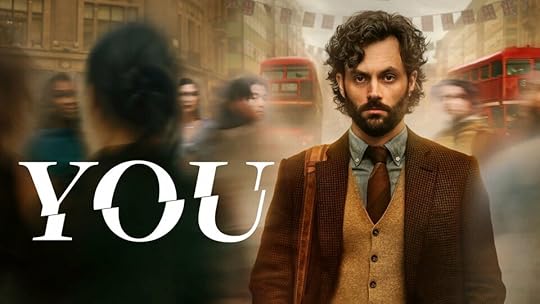
Having initially picked up this book during the debut of the first season of “You” on Netflix, I decided to embark on reading the entire series with the recent release of the fourth book and fourth season.
In comparison to the show, I found Joe in the book to be even more unsettling. The absence of other narrations, exclusive to Joe’s perspective, amplifies the creepiness. Despite the discomfort stemming from his extreme actions and obsessions, many readers resonate with Joe’s inner narration on society.
The book offers a humorous yet scathing commentary on the unlikeable side characters, shedding light on their lack of self-awareness regarding the struggles of the underprivileged.
The book skillfully explores how the audience can be influenced by Joe’s distorted views on love. Beck, as a love interest, is portrayed as deeply flawed, with Joe staunchly defending her despite her evident shortcomings. Throughout the story, Beck consistently lies to Joe, pretending to be sick or busy studying when, in reality, she is betraying him with her therapist. Joe labels her as an “attention loving whore,” a description echoed by Beck herself.
Adding to the complexity, Beck fabricates details about her life, falsely claiming her father is dead when he is infact alive.
These revelations make it difficult for readers to sympathize with Beck, as well as other characters like Peach and Benji, when they meet their unfortunate fate at Joe’s hands.
I’m about to start the second book, excited to meet Love as Joe’s new love interest. She’s portrayed as superior to Joe in various ways and adds a relatable element for women. Looking forward to it!
Quotes
“You sneeze, loudly, and I imagine how loud you are when you climax.” (page 2)
“…thank god that when I pull a phone out of my pocket it’s mine and not yours.” (page 44)
“If she were a dog, shooting her would be the humane thing to do.” (page 116)
By Sasha Harding
March 5, 2024
The Great Gatsby Book & Film
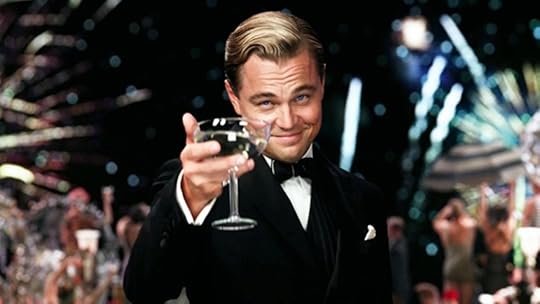
I recently picked up “The Great Gatsby” with little prior knowledge of the story, and despite its classic status, I found myself underwhelmed. The characters failed to capture my interest, and the supposed reflection of 1920s America didn’t resonate with me. Unlike other classics I might not personally enjoy, I usually understand their appeal. However, with “The Great Gatsby,” I’m struggling to grasp why it’s considered a classic.
Film Review
I think the story is decent and a good director could have elevated it. For a classic to be defined as a classic it has to remain timeless. The movie is just a bland product of the 2010s. A chance to share the best music of the 1920s; jazz, blues & swing. As well as the strong influence of black female singers.
We all enjoy some Kanye, Beyoncé & maybe some people will.i.am but the music is not meant for a movie adaptation of one of the most famous classic books ever created.
It seems most of the budget went on these songs as the CGI of the film is pretty crap. The distant view of the mansions were so unrealistic. The scenes of Myrtle getting ran over & Gatsby getting shot were lacklustre, when they could of been more impact-fully executed. Typewriter text on the screen, trying to be artsy but it was just tacky. I can’t work out the directors style and don’t think he can either.
Though it seems I hate everything. I did enjoy the performances by several actors and it made the film decently likeable.
By Sasha Harding
March 1, 2024
Gone Girl
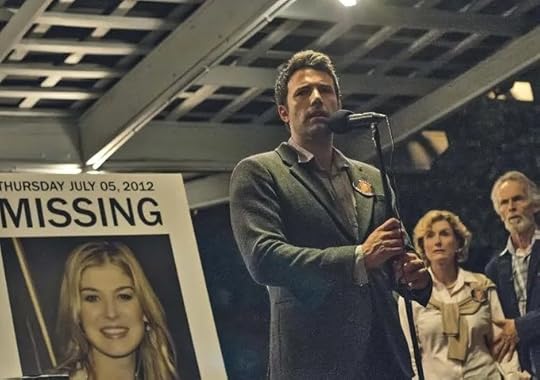
SPOILERS
𝘗𝘈𝘙𝘛 𝘖𝘕𝘌
𝘉𝘖𝘠 𝘓𝘖𝘚𝘌𝘚 𝘎𝘐𝘙𝘓
“When I think of my wife, I always think of her head. The shape of it, to begin with. The very first time I saw her, it was the back of her head I saw, and there was something lovely about it, the angles of it. Like a shiny, hard corn kernel or a riverbed fossil. She had what the Victorians would call a finely shaped head. You could imagine the skull quite easily. I’d know her head anywhere. And what’s inside it. I think of that, too; her mind. Her brain, all those coils, and her thoughts shuttling through those coils like fast, frantic centipedes. Like a child, I picture opening her skull, unspooling her brain and sifting though it, trying to catch and pin down her thoughts. What are you thinking, Amy? The question I’ve asked most often during our marriage, if not out loud, if not to the person who could answer. I suppose these questions stormcloud over every marriage: What are you thinking? How are you feeling? Who are you? What have we done to each other?
What will we do?” (page 3)
“I don’t feel like Nick’s wife. I don’t feel like a person at all: I am something to be loaded and unloaded, like a sofa or a cuckoo clock. I am something to be tossed into a junkyard, thrown into the river, if necessary. I don’t feel real anymore. I feel like I could disappear.” (page 115)
“It was Valentine’s Day and I was going to buy a gun and then cook my husband dinner.” (page 222)
“This man might kill me. So if you find this and I’m dead, well…
Sorry, that’s not funny.” (page 231)
𝘗𝘈𝘙𝘛 𝘛𝘞𝘖
𝘉𝘖𝘠 𝘔𝘌𝘌𝘛𝘚 𝘎𝘐𝘙𝘓
“I’m so such happier now that I’m dead. Technically, missing.
Soon to be presumed dead.” (page 247)
“But he didn’t love me, me. Nick loved a girl who doesn’t exist. I was pretending, the way I often did, pretending to have a personality. I can’t help it, it’s what I’ve always done; The way some women change fashion regularly, I change personalities.” (page 250)
“Men always say that as the defining compliment, don’t they? She’s a cool girl.”
“Men actually think this girl exists. Maybe they’re fooled because so many women are willing to pretend to be this girl.” (page 250-251)
“There are variations of the window dressing, but believe me, he wants Cool Girl, who is basically the girl who likes fucking everything he likes and doesn’t ever complain. (How do you know you’re not Cool Girl? Because he says things like: ‘I like strong women.’ If he says that to you, he will at some point fuck someone else. Because ‘I like strong women.’ is code for ‘I hate strong women’) I waited patiently – years – for the pendulum to swing the other way, for men to start reading Jane Austen, learn how to knit, pretend to love cosmos, organize scrapbook parties, and make out with each other while we leer. And the we’d say, Yeah he’s a Cool Guy.” (page 251)
“He couldn’t believe I didn’t love wax-stripping my pussy raw and blowing him on request. That I did mind when he didn’t show up for drinks with my friends.” (page 253)
“I could hear the tale, how everyone would love telling it: how Amazing Amy, the girl who never did wrong, let herself be dragged, penniless, to the middle of the country, where her husband threw her over for a younger woman. How predictable, how perfectly average, how amusing. And her husband? He ended up happier than ever. No. I couldn’t allow that. No. Never. Never. He doesn’t get to do this to me and still fucking win. No.”
“So I began to think of a different story, a better story, that would destroy Nick for doing this to me. A story that would restore my perfections. It would make me thew hero, flawless and adored. Because everyone loves the Dead Girl.” (page 263)
“Have the police found my diary yet? Do they know about Andie? Have they discovered the bumped-up life insurance?
This is the hardest part: waiting for stupid people to figure things out.” (page 275)
“Tampon commercial, detergent commercial, maxipad commercial, Windex commercial. You’d think all women do is clean and bleed.” (page 275)
“In real life, if Nick had killed me, I think he would have just rolled my body into a trash bag and driven me to one of the landfills in the sixty-mile radius. Just dispose of me. He’d had even taken a few items with him – the broken toaster that’s not worth fixing, a pile of old VHS tapes he’s been meaning to toss – to make the trip efficient.” (page 276)
“God, the girl knows me cold. She knows exactly what I want to hear. You are brilliant. You are witty. And how fun for her to know that she could fuck with head like that still. Long-distance, even, I mean, I was… Christ, I was practically falling in love with her again.” (page 288)
𝘗𝘈𝘙𝘛 𝘛𝘏𝘙𝘌𝘌
𝘉𝘖𝘠 𝘎𝘌𝘛𝘚 𝘎𝘐𝘙𝘓 𝘉𝘈𝘊𝘒 (𝘖𝘙 𝘝𝘐𝘊𝘌 𝘝𝘌𝘙𝘚𝘈)
“I wanted to kill her. Had we been alone, my hands might have found their place around her neck, my fingers locating perfect grooves in her flesh.
To feel that strong pulse under my fingers…” (page 413)
“It would come to me at strange moments – in the middles of the night, up to take a piss, or in the moring pouring cereal – I’d detect a nib of admiration, and more than that, fondess for my wife, right in the middle of me, right in the gut. To know exactly what I wanted to hear in those notes, to woo me back to her, even predict all my wrong moves… the woman knew me cold. Better than anyone in the world, she knew me. All this time I’d thought we were strangers, and it turned out we knew each other intuitively, in our bones, in our blood. It was kind of romantic. Catastrophically romantic.” (page 432)
“I don’t have anything else to add. I just wanted to make sure I had the last word. I think I’ve earned that.” (page 463)
——————————————————————————
Nick and Amy Dunne’s fifth wedding anniversary is greeted with tragedy when Amy disappears. With a gripping theme of humanity’s darker aspects, the novel raises important questions about love, marriage, and the lengths to which people will go for what they want.
In reading the novel, I gained my own perspective about how damaging and false sterotypes can be.
A large number of men being the main suspects in the disappearances of their wives prompts the general public to assume Nick is responsible for killing his wife. When news is made public of Nick’s affair with his younger student, this opinion is then reinforced.
Nick and the American public are manipulated by Amy by general stereotyping. By capitalizing on Nick’s affair with his student, Amy becomes the ‘other woman’, a title many women who are watching the news story can relate to. Amy fakes a pregnancy so that people will truly ‘mourn her loss’. The tragic narrative, impervious to the efforts of any single movement, centers on humanity’s ongoing struggles with male violence and sexual aggression.
By Sasha Harding
February 28, 2024
The Silent Patient
Exploring “The Silent Patient” by Alex Michaelides
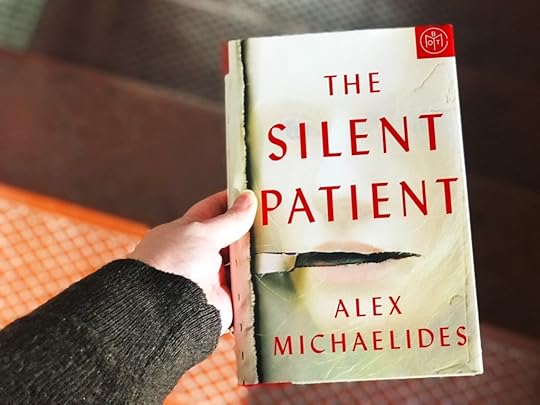
Read Nov 11- Nov 23
“Theo”
Theo is established as an unreliable narrator early on in the novel, sharing qualities typical of a villain’s perspective.
In Chapter 3, he introduces himself, stating, “I became a ‘psycho’therapist because I was messed up.” He compares therapists and criminals with mental issues, highlighting their shared childhoods and violent tendencies.
Theo himself has undergone therapy from a young age, presenting him as a patient akin to Alicia’s current situation.
He exhibits an inquisitive and sometimes intrusive nature regarding Alicia’s predicament, probing her family and friends like a detective. His relentless dedication to making Alicia speak to him often leads to scrutiny from staff and other patients, questioning the appropriateness of their relationship.
“Gabriel”
There’s little insight into Gabriel’s personality or the reasons for his and Alicia’s initial attraction. The book inadequately explores his affair or the motives behind his betrayal.
“Alicia”
Alicia’s narration begins in the first chapter through a diary. I found this narration style off-putting. Her diary entries, employing quotes and detailed event descriptions, serve as a plot device to spark intrigue and define her character. Unfortunately, Alicia comes across as a rather dull main character, with her entries lacking personal depth. Throughout the novel, I struggled to care about whether she did or didn’t kill her husband.
The decision to introduce Alicia’s diary from the very first chapter seemed puzzling, as it destroys the intrigue initially created by her silence. In the final quarter of the book, when Alicia hands her diary to Theo, it fails to evoke excitement or anticipation because readers have already gained insight into her personality right from the beginning of the book.
“Side Characters”
The side characters felt underdeveloped, serving primarily as tools to create suspicion and lacking significance in the final plot twist. Theo’s interviews with Alicia’s family and friends were tedious. The repetitive theme of everyone either loving or hating Alicia and Theo lacked explanation.
The EndingThe conclusion lacked believability or thrill. I couldn’t comprehend Theo’s motives for seeing Alicia, making her relive known truths, and ultimately inducing her into a coma, silencing her once more. Theo’s characterization as evil seems unfounded since he didn’t killed Gabriel. Theo’s actions, threatening the man involved with his wife and informing the man’s spouse about the affair, straddle a blurred line between a psychopathic tendency and possessive behavior. The final revelation in Alicia’s diary detailing Theo’s drugging creates a cliffhanger, suggesting Theo’s implication in attempted murder. The book’s portrayal of animosity feels lackluster, lacking in intrigue and depth due to its failure to provoke any compelling questions.
By Sasha Harding
Blonde Barrage

- Sasha Harding's profile
- 13 followers
