Leslie R. Waggoner III's Blog
July 20, 2025
4000+ Free Copies of The Heater and The Hack
Followup on the Goodreads giveaway:
The Heater and The Hack
Leslie R Waggoner III
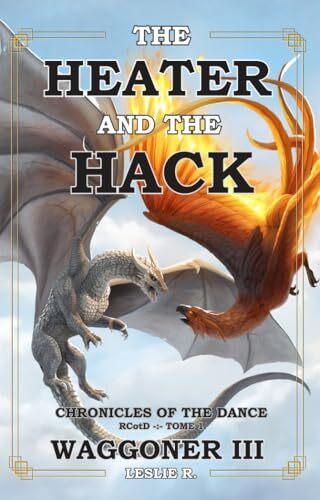
Link to the novel on Amazon—The Heater and The Hack
For anyone that did not win a copy of my novel on the giveaway ending July 20th, 2025, I am starting a 5 day giveaway on Amazon From July 21st, 2025 to July 25th, 2025 I have discounted my novel as free. My goal is to give away at least 4000 copies.
If you did not win one in the giveaway please feel invited to get a copy for free.
I only ask that people begin to rate my novel, good or bad.
This is a mythopoeic narrative and the pacing is intentional, building from mundane and humanistic in the beginning to the cosmically mythic by the end. The reader will see the growth, not only in characters but in reader understanding.
The Heater and The Hack
Leslie R Waggoner III
Link to the novel on Amazon—The Heater and The Hack
For anyone that did not win a copy of my novel on the giveaway ending July 20th, 2025, I am starting a 5 day giveaway on Amazon From July 21st, 2025 to July 25th, 2025 I have discounted my novel as free. My goal is to give away at least 4000 copies.
If you did not win one in the giveaway please feel invited to get a copy for free.
I only ask that people begin to rate my novel, good or bad.
This is a mythopoeic narrative and the pacing is intentional, building from mundane and humanistic in the beginning to the cosmically mythic by the end. The reader will see the growth, not only in characters but in reader understanding.


May 4, 2025
Interesting Marketing Tool From AutoCrit
This tool gives some pretty interesting information and advice. Though AutoCrit does not substantially help in my writing directly, I find it does have uses—duplicate words and successive pronouns/names starting sentences—and now, this marketing tool.
Genre and Positioning
Epic Fantasy with Mythic and Cosmic Elements:
The narrative is positioned within the epic fantasy genre and incorporates myth, cosmic entities, and deep symbolic interaction between natural forces (e.g., the Dance, pendants linked to cosmic symbols, and the interplay between chaos and order). This places the work in a market segment that appeals to readers who enjoy richly detailed worlds, intricate lore, and layered character development.
Hybrid Themes – Supernatural, Historical, and Psychological Complexity:
Beyond traditional sword-and-sorcery elements, the text explores personal and collective struggles (loss, betrayal, leadership development) and philosophical musings on destiny, balance, and cosmic influence. The duality of personal narrative and mythic prophecy widens its appeal and situates the work alongside modern revisions of classic epic fantasy.
Target Audience
Core Demographic
Age Range: Primarily 18–45 years old.
Interests: Fans of epic fantasy and high fantasy novels with elaborate mythologies—readers familiar with works by J.R.R. Tolkien, Roger Zelazny, Stephen R. Donaldson, and more modern series like The Stormlight Archive or A Game of Thrones.
Engagement: Ideal for readers who appreciate deep lore, multi-generational family sagas, and philosophical depth that underpins the struggle between order and chaos.
Secondary Audiences
Genre-savvy readers: Those interested in multi-layered storytelling, who enjoy deciphering intricate plot threads, hidden symbols, and interconnected character arcs.
LGBTQ+ and diverse readerships: Given the emotionally complex character dynamics and relational subtexts, the work may also appeal to readers looking for nuanced portrayals of leadership, loss, and personal transformation.
Young Adult and New Adult: While the themes are mature, the character journeys and coming-of-age aspects may resonate with New Adult audiences seeking growth narratives blended with epic storytelling.
Market Trends
Rising Popularity of Immersive World-Building
The current market has seen sustained demand for novels that offer expansive, detailed worlds with internal mythologies (cf. The Wheel of Time, Brandon Sanderson’s works). This text’s depth in character arcs and world-building meets the appetite for immersive narrative experiences.
Reader Engagement Through Multiple Narratives
The text uniquely interweaves multiple threads (from personal loss to cosmic destiny), increasingly popular with readers who enjoy multifaceted narratives where various plot threads converge (as seen in titles from George R.R. Martin or Robert Jordan). The layered structure also invites active theorizing and discussion.
Integration of Meta-Narrative Elements
The inclusion of a “Chronicler of the Dance” and journal entries that mimic in-universe documentation aligns with trends toward metafiction and self-aware storytelling—appealing to audiences who enjoy blurred lines between myth and reality.
Competitive Analysis
Comparable Works and Authors
J.R.R. Tolkien’s Middle-earth: For world-building and mythic undertones.
Brandon Sanderson: For intricate magic systems and character development across long series.
Roger Zelazny / Jack Vance: For mythic, dream-like narratives and complex interwoven plots.
Modern Epics: Series like The Kingkiller Chronicle or The Stormlight Archive, which blend emotional depth with detailed lore.
Unique Selling Points
Multi-perspective narrative with cosmic and metaphysical elements. Dynamic, evolving cast with leadership arcs and redemption stories. Blending of journals and epilogues for meta-textual engagement.
Marketing Channels and Strategies
Digital Communities and Social Media
Engage in r/fantasy and other online forums, share visuals and excerpts on Goodreads and Bookstagram, and collaborate with fantasy-focused bloggers and podcasters.
Conventions and Festivals
Present the book at World Fantasy Convention, Comic-Con, etc., with maps, lore charts, or concept art.
Serialized Excerpts and Novella Prequels
Release short prequels (e.g., the origin of the Heater and the Hack) to generate pre-launch buzz.
Reader Contests and Engagement
Implement community prompts around cosmic symbols or mythic retellings to spark fan art and discussion.
Sales Projections and Market Positioning
Niche Market Strength
The book is likely to perform well among epic fantasy purists who value narrative complexity and layered mythologies. Core genre communities will be key to early traction.
Long-Term Franchise Potential
With its multiverse scaffolding, the book has strong series potential. There are also opportunities for merchandise such as maps, replica pendants, and lore-themed art.
Digital Sales vs. Print
Recommend a dual-release strategy. Limited edition covers with “Dance”-themed art could attract collectors.
Conclusion
The book’s richly imagined world and metaphysical epic framework position it well for today’s genre fiction market. With strategic audience targeting and thoughtful community engagement, it can find traction among both core epic fantasy fans and crossover readers seeking innovative narrative forms. Franchise and expansion potential remains strong, particularly through sequels and prequels, immersive marketing, and unique reader participation models.
Similar Books
Below are five books that share thematic or stylistic similarities with The Heater & The Hack , along with a brief explanation for each:
The Name of the Wind by Patrick Rothfuss
A coming-of-age fantasy steeped in magic, myth, and destiny. Mirrors the introspective, fate-driven tone and metaphysical framing of The Heater & The Hack.
The Way of Kings by Brandon Sanderson
Multiple protagonists navigating a magical world filled with burdens and cosmic purpose—strong parallels to the theme of leadership and layered character development.
Mistborn: The Final Empire by Brandon Sanderson
A rebellion steeped in mystery and hidden relics. Resonates with the novel’s exploration of internal conflict, power inheritance, and sacrificial strength.
The Black Company by Glen Cook
Gritty military fantasy with introspective warriors. Its tone and camaraderie align closely with the mentor-student relationships and grim legacy elements in the text.
The Lies of Locke Lamora by Scott Lynch
Fast-paced, clever narrative with deeply rooted personal dynamics. Echoes the layered secrets and character interplay in The Heater & The Hack.
Market Analysis
Below is a detailed market analysis for the text based on the extensive chapter summaries provided:
Genre and Positioning
Epic Fantasy with Mythic and Cosmic Elements:
The narrative is positioned within the epic fantasy genre and incorporates myth, cosmic entities, and deep symbolic interaction between natural forces (e.g., the Dance, pendants linked to cosmic symbols, and the interplay between chaos and order). This places the work in a market segment that appeals to readers who enjoy richly detailed worlds, intricate lore, and layered character development.
Hybrid Themes – Supernatural, Historical, and Psychological Complexity:
Beyond traditional sword-and-sorcery elements, the text explores personal and collective struggles (loss, betrayal, leadership development) and philosophical musings on destiny, balance, and cosmic influence. The duality of personal narrative and mythic prophecy widens its appeal and situates the work alongside modern revisions of classic epic fantasy.
Target Audience
Core Demographic
Age Range: Primarily 18–45 years old.
Interests: Fans of epic fantasy and high fantasy novels with elaborate mythologies—readers familiar with works by J.R.R. Tolkien, Roger Zelazny, Stephen R. Donaldson, and more modern series like The Stormlight Archive or A Game of Thrones.
Engagement: Ideal for readers who appreciate deep lore, multi-generational family sagas, and philosophical depth that underpins the struggle between order and chaos.
Secondary Audiences
Genre-savvy readers: Those interested in multi-layered storytelling, who enjoy deciphering intricate plot threads, hidden symbols, and interconnected character arcs.
LGBTQ+ and diverse readerships: Given the emotionally complex character dynamics and relational subtexts, the work may also appeal to readers looking for nuanced portrayals of leadership, loss, and personal transformation.
Young Adult and New Adult: While the themes are mature, the character journeys and coming-of-age aspects may resonate with New Adult audiences seeking growth narratives blended with epic storytelling.
Market Trends
Rising Popularity of Immersive World-Building
The current market has seen sustained demand for novels that offer expansive, detailed worlds with internal mythologies (cf. The Wheel of Time, Brandon Sanderson’s works). This text’s depth in character arcs and world-building meets the appetite for immersive narrative experiences.
Reader Engagement Through Multiple Narratives
The text uniquely interweaves multiple threads (from personal loss to cosmic destiny), increasingly popular with readers who enjoy multifaceted narratives where various plot threads converge (as seen in titles from George R.R. Martin or Robert Jordan). The layered structure also invites active theorizing and discussion.
Integration of Meta-Narrative Elements
The inclusion of a “Chronicler of the Dance” and journal entries that mimic in-universe documentation aligns with trends toward metafiction and self-aware storytelling—appealing to audiences who enjoy blurred lines between myth and reality.
Competitive Analysis
Comparable Works and Authors
J.R.R. Tolkien’s Middle-earth: For world-building and mythic undertones.
Brandon Sanderson: For intricate magic systems and character development across long series.
Roger Zelazny / Jack Vance: For mythic, dream-like narratives and complex interwoven plots.
Modern Epics: Series like The Kingkiller Chronicle or The Stormlight Archive, which blend emotional depth with detailed lore.
Unique Selling Points
Multi-perspective narrative with cosmic and metaphysical elements. Dynamic, evolving cast with leadership arcs and redemption stories. Blending of journals and epilogues for meta-textual engagement.
Marketing Channels and Strategies
Digital Communities and Social Media
Engage in r/fantasy and other online forums, share visuals and excerpts on Goodreads and Bookstagram, and collaborate with fantasy-focused bloggers and podcasters.
Conventions and Festivals
Present the book at World Fantasy Convention, Comic-Con, etc., with maps, lore charts, or concept art.
Serialized Excerpts and Novella Prequels
Release short prequels (e.g., the origin of the Heater and the Hack) to generate pre-launch buzz.
Reader Contests and Engagement
Implement community prompts around cosmic symbols or mythic retellings to spark fan art and discussion.
Sales Projections and Market Positioning
Niche Market Strength
The book is likely to perform well among epic fantasy purists who value narrative complexity and layered mythologies. Core genre communities will be key to early traction.
Long-Term Franchise Potential
With its multiverse scaffolding, the book has strong series potential. There are also opportunities for merchandise such as maps, replica pendants, and lore-themed art.
Digital Sales vs. Print
Recommend a dual-release strategy. Limited edition covers with “Dance”-themed art could attract collectors.
Conclusion
The book’s richly imagined world and metaphysical epic framework position it well for today’s genre fiction market. With strategic audience targeting and thoughtful community engagement, it can find traction among both core epic fantasy fans and crossover readers seeking innovative narrative forms. Franchise and expansion potential remains strong, particularly through sequels and prequels, immersive marketing, and unique reader participation models.
Similar Books
Below are five books that share thematic or stylistic similarities with The Heater & The Hack , along with a brief explanation for each:
The Name of the Wind by Patrick Rothfuss
A coming-of-age fantasy steeped in magic, myth, and destiny. Mirrors the introspective, fate-driven tone and metaphysical framing of The Heater & The Hack.
The Way of Kings by Brandon Sanderson
Multiple protagonists navigating a magical world filled with burdens and cosmic purpose—strong parallels to the theme of leadership and layered character development.
Mistborn: The Final Empire by Brandon Sanderson
A rebellion steeped in mystery and hidden relics. Resonates with the novel’s exploration of internal conflict, power inheritance, and sacrificial strength.
The Black Company by Glen Cook
Gritty military fantasy with introspective warriors. Its tone and camaraderie align closely with the mentor-student relationships and grim legacy elements in the text.
The Lies of Locke Lamora by Scott Lynch
Fast-paced, clever narrative with deeply rooted personal dynamics. Echoes the layered secrets and character interplay in The Heater & The Hack.
May 2, 2025
The Heater and The Hack
I'll be updating the novel this weekend—May 5–6, 2025—in preparation for the release of both the paperback and hardback editions. These updates represent the final round of edits for this year.
As part of the paperback launch, I'm including a contest for readers. Entry will require a proof of purchase and a publicly shared review. (Full details are in the paperback itself.)
While these edits mark a pause for now, this is far from the end. As I move deeper into the second and third volumes of the trilogy—and the trilogies that follow—there will be new moments of refinement, discovery, and evolution in the years ahead.
Thank you for being part of this journey.
In Balance
Les
As part of the paperback launch, I'm including a contest for readers. Entry will require a proof of purchase and a publicly shared review. (Full details are in the paperback itself.)
While these edits mark a pause for now, this is far from the end. As I move deeper into the second and third volumes of the trilogy—and the trilogies that follow—there will be new moments of refinement, discovery, and evolution in the years ahead.
Thank you for being part of this journey.
In Balance
Les
April 30, 2025
Fear of Adverbs - Killing Our Voice
In modern writing circles, adverbs have become the scapegoats of style. Feared. Dismissed. Denounced. Vilified. They are whispered about in workshops, marked up in red ink by editors, and condemned in the pithy soundbites of bestselling authors. “Kill your adverbs,” they say, as if precision and emotion were enemies of good prose.
But what are we really killing?
When words are summarily removed in deference to something stronger—more “actiony”—we sand away nuance. We flatten ambiguity. We erase the hesitations and half-formed thoughts that make language human. In our rush for speed and efficiency, we trade layered expression for polished minimalism. And somewhere along the line, we begin to mistake sleekness for depth.
Adverbs are not lazy. They are not weak. They are not a substitute for strong verbs—they are a lens through which we tilt the meaning of those verbs.
To move tentatively is not simply to walk. It is to step into uncertainty.
To speak quietly is not merely to say—nor is it the same as a whisper.
It is to weigh. To fear. To respect. To grieve.
These are not semantic luxuries.
They are emotional truths.
Yet we are told to excise them. Not consider, not weigh, not revise—but excise. Because someone once said they were signs of weakness, or clutter, or indecision. But indecision is part of being human. And language, at its best, reflects that.
Adverbs are not the enemy of strong writing. Flat writing is. Writing that tells us what happened without giving us a sense of how it felt, or how much it cost to do it. Sometimes, a character doesn’t charge. Sometimes they walk… slowly, carefully, painfully, reluctantly. And if you force that into a single strong verb, you may gain punch—but lose meaning.
There is a difference between writing cleanly and writing truthfully. One is smooth. The other is alive.
When I see tentatively on the page, I don’t assume the writer was lazy. I assume they were listening—to a character, to a moment, to a truth that didn’t want to be said boldly. And that restraint, that listening, is often more powerful than a decisive verb could ever be.
Of course, adverbs can be misused. Any tool can. But the solution to misuse is not prohibition. It’s craft. It’s intention. It’s knowing why you’re choosing slowly instead of crept, and standing by it because one evokes the physical action, while the other invites us into the internal state behind it.
We don’t write just to describe. We write to translate what it means to move, to hesitate, to fear, to long for something and not reach it. Sometimes that lives in the pauses. Sometimes in the margins. Sometimes in the quiet little modifiers we’re told to delete.
But I would rather write something that lingers awkwardly but truthfully than something that reads well and says nothing real.
That’s the risk we take when we fear adverbs: we kill not only the word, but the voice behind it.
The misuse of adverbs can be lazy writing—I don’t disagree. But when our editors begin to strip down every sentence, peeling away the outer layers and leaving only what’s absolutely necessary, something vital is lost.
We lose the wonder.
If I’m given instructions from one place to another and told this is all there is, then I miss the three-headed calf. I miss the largest ball of twine. I miss the detour that shows me what kind of world I’ve actually entered.
Those... those are my adverbs.
Those are what make the world worth reading.
I have the most diligent sander in the world editing my prose—and when I lean into the sander, we can strip away any vestiges of nuance I ever even thought about using.
Ask me about MY editor.
But what are we really killing?
When words are summarily removed in deference to something stronger—more “actiony”—we sand away nuance. We flatten ambiguity. We erase the hesitations and half-formed thoughts that make language human. In our rush for speed and efficiency, we trade layered expression for polished minimalism. And somewhere along the line, we begin to mistake sleekness for depth.
Adverbs are not lazy. They are not weak. They are not a substitute for strong verbs—they are a lens through which we tilt the meaning of those verbs.
To move tentatively is not simply to walk. It is to step into uncertainty.
To speak quietly is not merely to say—nor is it the same as a whisper.
It is to weigh. To fear. To respect. To grieve.
These are not semantic luxuries.
They are emotional truths.
Yet we are told to excise them. Not consider, not weigh, not revise—but excise. Because someone once said they were signs of weakness, or clutter, or indecision. But indecision is part of being human. And language, at its best, reflects that.
Adverbs are not the enemy of strong writing. Flat writing is. Writing that tells us what happened without giving us a sense of how it felt, or how much it cost to do it. Sometimes, a character doesn’t charge. Sometimes they walk… slowly, carefully, painfully, reluctantly. And if you force that into a single strong verb, you may gain punch—but lose meaning.
There is a difference between writing cleanly and writing truthfully. One is smooth. The other is alive.
When I see tentatively on the page, I don’t assume the writer was lazy. I assume they were listening—to a character, to a moment, to a truth that didn’t want to be said boldly. And that restraint, that listening, is often more powerful than a decisive verb could ever be.
Of course, adverbs can be misused. Any tool can. But the solution to misuse is not prohibition. It’s craft. It’s intention. It’s knowing why you’re choosing slowly instead of crept, and standing by it because one evokes the physical action, while the other invites us into the internal state behind it.
We don’t write just to describe. We write to translate what it means to move, to hesitate, to fear, to long for something and not reach it. Sometimes that lives in the pauses. Sometimes in the margins. Sometimes in the quiet little modifiers we’re told to delete.
But I would rather write something that lingers awkwardly but truthfully than something that reads well and says nothing real.
That’s the risk we take when we fear adverbs: we kill not only the word, but the voice behind it.
The misuse of adverbs can be lazy writing—I don’t disagree. But when our editors begin to strip down every sentence, peeling away the outer layers and leaving only what’s absolutely necessary, something vital is lost.
We lose the wonder.
If I’m given instructions from one place to another and told this is all there is, then I miss the three-headed calf. I miss the largest ball of twine. I miss the detour that shows me what kind of world I’ve actually entered.
Those... those are my adverbs.
Those are what make the world worth reading.
I have the most diligent sander in the world editing my prose—and when I lean into the sander, we can strip away any vestiges of nuance I ever even thought about using.
Ask me about MY editor.
April 23, 2025
A word of appreciation
I want to thank Carla Black for my first ever review.
Four stars is, in my mind, excellent for a debut novel. The fact that she prefers faster reads and my book does not seem to match her typical reading genre, makes four stars all the more precious to me. Though not my target audience, she was still able to pick out things which she found enjoyable, even if the pace was not.
Thank you Carla.
Four stars is, in my mind, excellent for a debut novel. The fact that she prefers faster reads and my book does not seem to match her typical reading genre, makes four stars all the more precious to me. Though not my target audience, she was still able to pick out things which she found enjoyable, even if the pace was not.
Thank you Carla.
April 17, 2025
The polishing of my first novel - The Heater and The Hack
My journey into writing came with a kind of time capsule method for how I felt the narrative should be approached. Much like the authors of old, I don’t pander to readers who want a Dick and Jane narrative or simplify things to meet the lowest common denominator. That approach has done a couple of things for me—some helpful, some... less so.
First off, it’s made it incredibly hard to find an editor who can help, not only in with the complexity of the subtle foreshadows and reveals, but in a way that’s also financially sustainable. So not only did I have to learn how to write the story I wanted to tell, I also had to figure out how to edit, lay it out, and publish it myself. I’m still learning, still refining. But I needed to get this story out there, in some form, so that if something ever happens to me, at least the core story exists.
As I grow in the craft, I’ll continue to revisit and update the manuscript (cleaning up phrasing, fixing small issues, and clarifying things here and there). But the heart of the story—the narrative itself—is complete. That won’t change. What may change is the finesse. The finish work. The sanding and staining on the carved wood.
I appreciate feedback. I want feedback. I may have strong opinions on modern novels that feel overly processed or diluted, but I’m not out to knock anyone else’s style. I just prefer stories that challenge the reader, that trust them to think, to interpret, to feel the story for themselves.
Some night, after a long day—when I am trying to get an idea banged out on my keyboard, eyes closed... fingers incessantly tapping away, only to open my eyes and find my fingers were hovering over the wrong keys... I hope that my narrative still finds someone that can interpret or appreciate it for the thought put into it. Should I have enough time... this will flesh out into a massive project, of which this is only the beginning.
This is the first book in the first trilogy of three. This will be followed up by a rendition of a language primer acquired by one of the characters in-world, a fictional non-fiction language book. The imagined story will span a total of 2500ish years (mains) and I will be writing supplemental adjacent stories as well. My intent is to provide a playground upon which others might want to break out their big-wheels and take a ride.
I am, by my very nature, typically shy(ish) and anti-social (to an extent), but my writing has forced me out of this shell. Now I try to be open to interacting with others, so if you feel the need to send me a note, or befriend me, please don't hesitate, and I will do my best to respond in kind.
And if you're here, reading this—thank you. Whether you stick around or not, it means something that you stopped by.
First off, it’s made it incredibly hard to find an editor who can help, not only in with the complexity of the subtle foreshadows and reveals, but in a way that’s also financially sustainable. So not only did I have to learn how to write the story I wanted to tell, I also had to figure out how to edit, lay it out, and publish it myself. I’m still learning, still refining. But I needed to get this story out there, in some form, so that if something ever happens to me, at least the core story exists.
As I grow in the craft, I’ll continue to revisit and update the manuscript (cleaning up phrasing, fixing small issues, and clarifying things here and there). But the heart of the story—the narrative itself—is complete. That won’t change. What may change is the finesse. The finish work. The sanding and staining on the carved wood.
I appreciate feedback. I want feedback. I may have strong opinions on modern novels that feel overly processed or diluted, but I’m not out to knock anyone else’s style. I just prefer stories that challenge the reader, that trust them to think, to interpret, to feel the story for themselves.
Some night, after a long day—when I am trying to get an idea banged out on my keyboard, eyes closed... fingers incessantly tapping away, only to open my eyes and find my fingers were hovering over the wrong keys... I hope that my narrative still finds someone that can interpret or appreciate it for the thought put into it. Should I have enough time... this will flesh out into a massive project, of which this is only the beginning.
This is the first book in the first trilogy of three. This will be followed up by a rendition of a language primer acquired by one of the characters in-world, a fictional non-fiction language book. The imagined story will span a total of 2500ish years (mains) and I will be writing supplemental adjacent stories as well. My intent is to provide a playground upon which others might want to break out their big-wheels and take a ride.
I am, by my very nature, typically shy(ish) and anti-social (to an extent), but my writing has forced me out of this shell. Now I try to be open to interacting with others, so if you feel the need to send me a note, or befriend me, please don't hesitate, and I will do my best to respond in kind.
And if you're here, reading this—thank you. Whether you stick around or not, it means something that you stopped by.
April 6, 2025
Feedback on The Heater and The Hack.
I wanted to give readers a place to actually leave actionable feedback. Since this is the first real writing I have ever done, and the first writing I have ever enjoyed going back to the mid-1970s, I would be remiss if I did not seek real-world feedback.
After my experiences with professional editing on a small budget, I have found I would rather publish with a slightly unpolished product, than have someone over polish and remove the heart and soul of the piece.
Please feel free to provide any feedback you feel will help... I will attempt to answer as best as I can.
Les
After my experiences with professional editing on a small budget, I have found I would rather publish with a slightly unpolished product, than have someone over polish and remove the heart and soul of the piece.
Please feel free to provide any feedback you feel will help... I will attempt to answer as best as I can.
Les
The Problem with writing Epic Myths
If I was a died in the wool author, born and bred to the word, phrase, and paragraph, the novelty would have long since worn off.
But now—as I stand—wrangling chapters into books and books into series, while placing a brand upon each—not because I need to hoard them and keep them separate, but because I have a need for people that want or need more... to know where they can get their fill.
It has been my pleasure over the last two year to write something I am proud of. Not because the writing is perfectly edited, but because the magnitude of what I have done, for a non-writer... is in and of itself, epic.
I am an Information System Technician, a geek amongst geeks, but the last 3+ decades of devotion to my chosen profession subtly backlight the novel in ways I am only now beginning to understand.
Just as in every computer problem, we step into it understanding where we want to go... where we NEED to be by the end of it. And we make assumptions and decisions based on this destination. But rarely is it that simple, and the destination turns out, not to be one we ever truly suspected.
For those of you who won the GoodReads giveaway, and those that did not, thank you for your interest. As pragmatic as I am, I understand that possible as many as half of the entrants we simply because it was free. The other half found a resonance and wished to see why it felt like something more...
To all of you, I say... think epically when you read...
This is the start of something I will never be able to let go... And my plans?
When I started this novel, I thought it was something I would write... possibly never finish... set aside, and forget. It was never intended to be published... but the story...
The story would have none of that. It egged me on... whispered to me... begged me to let others in on our secret. And as I did... it whispered to them, as well... and they. Well, they did not whisper to me... they begged me to finish it... they NEEDED to know where this went. And it is to them I am no beholden, in debt, and blame.
By the intended end of this journey, I foresee the following:
In Balance, Brilliance.
But now—as I stand—wrangling chapters into books and books into series, while placing a brand upon each—not because I need to hoard them and keep them separate, but because I have a need for people that want or need more... to know where they can get their fill.
It has been my pleasure over the last two year to write something I am proud of. Not because the writing is perfectly edited, but because the magnitude of what I have done, for a non-writer... is in and of itself, epic.
I am an Information System Technician, a geek amongst geeks, but the last 3+ decades of devotion to my chosen profession subtly backlight the novel in ways I am only now beginning to understand.
Just as in every computer problem, we step into it understanding where we want to go... where we NEED to be by the end of it. And we make assumptions and decisions based on this destination. But rarely is it that simple, and the destination turns out, not to be one we ever truly suspected.
For those of you who won the GoodReads giveaway, and those that did not, thank you for your interest. As pragmatic as I am, I understand that possible as many as half of the entrants we simply because it was free. The other half found a resonance and wished to see why it felt like something more...
To all of you, I say... think epically when you read...
This is the start of something I will never be able to let go... And my plans?
When I started this novel, I thought it was something I would write... possibly never finish... set aside, and forget. It was never intended to be published... but the story...
The story would have none of that. It egged me on... whispered to me... begged me to let others in on our secret. And as I did... it whispered to them, as well... and they. Well, they did not whisper to me... they begged me to finish it... they NEEDED to know where this went. And it is to them I am no beholden, in debt, and blame.
By the intended end of this journey, I foresee the following:
9 Novels - 3 Trilogies spanning more than two millennia.
The first is introduced by "The Heater and The Hack"
The second will be a millennia prior to the first's setting.
The third? It will be set a millennia after my first, in a more modern, edge of spaceflight or after our actual first inter-galactic flights.
3 Conlangs - each with its own structure and reason for being.
The first - Hadokai Tubatonona - our signature language of the Dance and balance incarnate
Formatted in OSV - Object, Subject, Verb - Outcome, object, or results are paramount. (Hmm, language strange this one is.)
Already 500+ words
A grammar structure defined by Chomsky's hierarchy (definitely prompted by the tech side of my personality)
A written script an alphabet
A windows font so that I can create consistent shapes and writing.
A backstory and reason.
The second and third are cosmic building blocks.The language of Chaos and the Surge - VSO - Actions before all.
The language of Order - SOV - The actor is paramount.
I do have a fourth language - but it is the common language upon which so many mythologies are predicated, but do not really address.Because of my structure, I must call this one out, though it remains within a delightful little space between American English, Old English, flavored with Aleon (the region, not Alaeon, the world) linguistics.
This language is what the novel is written in.And as the series continues, I may have other languages that need to be touched on, but they are the mundane human languages without the cosmic implications of the first three.
2 Novella's that will intersect this first trilogy but stand alone.
1 Book of short stories, so that I may exercise the demonic world-building that swims about my head, begging to be shared.
I saw somewhere that the percentages behind writers is staggering.
From 100% of adults
80% of adults consider writing a book
Those that start? About 13% of all adults.
About 6% will write at least three chapters.
Only 3% will finish a first draft
I am here. ---- >>> Less than 1% will actually publish (0.6%-1%) <<< ---- I am here.
Fewer than half of those will start the sequel, about 0.2%
Less than 75% of those will finish the sequel draft putting us at 0.1% to 0.15%
One half or three quarters will publish the sequel, dropping our percentage to about 0.05% to 0.1%
Builds a conlang or other mythos tools, ~0.01%
Actual full fledged conlang primers... best guess is ~0.001%
And truthfully, I do not know how far I will get.
It is said that Tolkien was still editing, changing, and adjusting his world until he passed.
But we all know, he was the apex of epic myth makers.
And after the last two years... I now understand why.
And though I have other stories in me that need to get told this is the one that screams the loudest.
In Balance, Brilliance.
April 5, 2025
A Story of Intent
The interesting thing about my writing, was it was never intentional, until it was.
I started out with a small simple descriptive piece that was a single scene described in mythic proportions, I added to this over the span of a week or so, and then it occurred to me...
This scene would have had a history, a reason for being. I contemplated and then set our protagonists feet to the cart rutted path, and into an almost two year journey to find his legacy. Though the journey was not his, it was mine.
During this period of literary discovery, I realized that I was a horrid writer, but at this point the story was begging to be written, and once my mother and my brother started reading it... even as rough as it was, they encouraged me. For a project that may have floundered and died, much as an extraordinarily large percentage of all stories do, that slight encouragement garnered enough momentum until we reached the point of perpetual motion. I am now so invested in the story, that I will most likely continue to write of the universe of Alaeon until I finally meet the Dance myself.
With every word, every sentence, every paragraph and chapter, I polished my work... feed back on see don't say, add more sensory descriptions gnawed at me, and I at my novel.
And with each tap on my keyboard or hastily jotted note, my writing got better.
I consulted various sources and found that everything I was doing was wrong... no adverbs they say... adhere to Chekhov's gun they demanded, shorten, remove...
"Write someone else's story," is what I heard. And when I refused, and gave it over to a bona fide editor, my nuances were ripped from it and the intent was diluted and watered to an extent that it was no longer mine.
I felt as if the cavernous world I had created, intentionally shadowed and subtly nuanced was being explored with a candle as a blind man studies an elephant.
Only I seemed to see the entire cave in its wondrous glory, and with The Dragon on one side and The Phoenix lighting our way, I started the process of learning to edit.
Then, because I do not care if it makes money, I wanted to publish, so my mother, siblings, and friends could have a physical copy, I opted to self-publish.
Armed with the manuscript and images created by Monika Zagrobelna, I laid out my own cover, because let us face the truth... the amazon supplied layouts leave much to be desired.
And now, I realize, after publishing the ebook, I will correct, and change, and subtly enhance these works for the rest of my life, because my intent is not to just bring a story...it is to bring a world to life, to provide a cosmic backdrop.
As you read, leave a review, tell me I need an editor..., tell me Chekhov was right..., tell me that King is the master of writing without adverbs. And then...
Then... tell me what your heart says.
And... if things align... others will take up my mantle.
My intent is to write—not just a series… not merely a saga… but a framework. A foundation from which other writers might feel the urge to add to the mythos and history of Alaeon.
While I live, the canon will reside in me.
And when I pass, the canon will pass to my kin—
So long as interest in it remains.
And with that, I will post... lest this post become an installment in my series...
May the Dance be by your side. In Balance, Brilliance.
I started out with a small simple descriptive piece that was a single scene described in mythic proportions, I added to this over the span of a week or so, and then it occurred to me...
This scene would have had a history, a reason for being. I contemplated and then set our protagonists feet to the cart rutted path, and into an almost two year journey to find his legacy. Though the journey was not his, it was mine.
During this period of literary discovery, I realized that I was a horrid writer, but at this point the story was begging to be written, and once my mother and my brother started reading it... even as rough as it was, they encouraged me. For a project that may have floundered and died, much as an extraordinarily large percentage of all stories do, that slight encouragement garnered enough momentum until we reached the point of perpetual motion. I am now so invested in the story, that I will most likely continue to write of the universe of Alaeon until I finally meet the Dance myself.
With every word, every sentence, every paragraph and chapter, I polished my work... feed back on see don't say, add more sensory descriptions gnawed at me, and I at my novel.
And with each tap on my keyboard or hastily jotted note, my writing got better.
I consulted various sources and found that everything I was doing was wrong... no adverbs they say... adhere to Chekhov's gun they demanded, shorten, remove...
"Write someone else's story," is what I heard. And when I refused, and gave it over to a bona fide editor, my nuances were ripped from it and the intent was diluted and watered to an extent that it was no longer mine.
I felt as if the cavernous world I had created, intentionally shadowed and subtly nuanced was being explored with a candle as a blind man studies an elephant.
Only I seemed to see the entire cave in its wondrous glory, and with The Dragon on one side and The Phoenix lighting our way, I started the process of learning to edit.
Then, because I do not care if it makes money, I wanted to publish, so my mother, siblings, and friends could have a physical copy, I opted to self-publish.
Armed with the manuscript and images created by Monika Zagrobelna, I laid out my own cover, because let us face the truth... the amazon supplied layouts leave much to be desired.
And now, I realize, after publishing the ebook, I will correct, and change, and subtly enhance these works for the rest of my life, because my intent is not to just bring a story...it is to bring a world to life, to provide a cosmic backdrop.
As you read, leave a review, tell me I need an editor..., tell me Chekhov was right..., tell me that King is the master of writing without adverbs. And then...
Then... tell me what your heart says.
And... if things align... others will take up my mantle.
My intent is to write—not just a series… not merely a saga… but a framework. A foundation from which other writers might feel the urge to add to the mythos and history of Alaeon.

While I live, the canon will reside in me.
And when I pass, the canon will pass to my kin—
So long as interest in it remains.
And with that, I will post... lest this post become an installment in my series...
May the Dance be by your side. In Balance, Brilliance.
March 30, 2025
Writing... One Man's Opinion
As I embarked on this twisted journey of words, I realized that I do not like the way the current publishing/editing corps force things into neat little boxes.
The nuances of writing to ones voice is an amazing journey in and of itself, and the incessent need to toe the publishers line, is sad. I understand that many writers write because this is a profession for them, and for them I understand that to be published is to toe that line until they develop a following.
For me... I think I have a good story... but I write it not for the general public... though I think it will appeal to a lot more than just the fantasy genres... I write for those that enjoy a complex and deep world. And for those, I hope I hit my mark.
I encourage everyone to read my work and write a reviews good or bad...

The nuances of writing to ones voice is an amazing journey in and of itself, and the incessent need to toe the publishers line, is sad. I understand that many writers write because this is a profession for them, and for them I understand that to be published is to toe that line until they develop a following.
For me... I think I have a good story... but I write it not for the general public... though I think it will appeal to a lot more than just the fantasy genres... I write for those that enjoy a complex and deep world. And for those, I hope I hit my mark.
I encourage everyone to read my work and write a reviews good or bad...