David Sunde's Blog
August 31, 2026
"I want them to see, not just know more."
I met her over a lunch table with a mutual friend.
She was a “spiritual free agent” — newish to town, responsibilities to bear, without a church home, and gifts that had been understandably shelved. We’d met a couple times. I invited her to fill in leading worship at our scrappy missional start-up. Within three weeks I made my intentions clear for something more permanent, which is when she offered the painful particulars about her story. Grief had rewritten her calling twice — the kind that leaves you competent at daily life while unsure whether you still have anything to offer anyone. She had a young son — widowed — and no reserves. She was willing to help but leery to lead. She wasn’t sure she had the courage to say yes to that calling again.
I said something at the time about vulnerability and intimacy — I don’t remember exactly what. What I remember is her eyes. She had known more about both than I had. I just didn’t know that yet.
She was more gifted than she believed. It wasn’t close. There was a texture to her voice that people would follow into rooms they weren’t sure they wanted to enter — the kind of authority that only lives in people who’ve been through something they don’t advertise. She heard something else when she sang; you could tell. There was a different kind of knowing from which she led.
But she couldn’t see it. Not yet. Her mirror was cracked at exactly the point where her gift lived, and the crack was making her stare at the wrong thing.
I leaned across the coffee table. I locked eyes with her.
“Listen — just use my voice till you find yours.”
 Most of what the elder actually does is hand you something and sit down beside you.
She said yes. Not because she believed she could do it. Because for one season, she didn’t have to believe it. Someone else could carry that belief for her until it grew back.
I’ve been thinking about that sentence for years now, because I don’t think I understood what I was offering when I said it.
I wasn’t handing her a technique. I wasn’t giving her advice. I certainly wasn’t teaching her anything about worship — she knew more than I did. What I was doing, without a word for it at the time, was lending her the shape of a naming until she could name herself.
If you’re fortunate, you’ve encountered this elder move at some point. I’ve observed it has nothing to do with authority, credentials, or expertise. It’s the practice of holding someone’s belief in themselves temporarily, when their own hand is too weak to hold it, and giving it back the moment they can grip it again.
Because you can’t give away sight you haven’t received. But once you’ve received it, you can loan it out.
Years earlier, another couple sat across from me. I’ll call them Jon and Rene.
They’d had a hard season — a difficult birth, health issues, a job loss, a house sold, a marriage strained by carrying all of it at once. And now they’d been surprised by something they weren’t sure they had the reserves to receive. They were overwhelmed. They came to me undone.
I didn’t argue with them. I didn’t tell them what to do. I didn’t reach for a Scripture that would tell them what they should feel.
I just started reminding them of God’s names.
The real-estate friend who had walked them back from foreclosure — hadn’t God been Deliverer? The medical needs that had been provided for through those hard years — hadn’t God been Healer? The couples group that had held them when they had nothing left — hadn’t God been Comforter? The daily bread that had shown up every day for years, when they couldn’t see how it would — hadn’t God been Provider?
They didn’t disagree with any of it. They’d lived it. They just hadn’t been able to hold it in that moment. The names had gone quiet under the weight of what they were carrying.
“If you agree God has been faithful in each of those seasons,” I asked, “why would He stop being any of those things now?”
We prayed. We hugged. I didn’t tell them what to decide.
Nine months later, life continued.
I’ve come to think this is most of what the elder actually does. Not teaching. Not correcting. Not certifying.
Just naming God-already-met — and lending your voice until the person can speak the names for themselves.
The people you lead have already met the God they’re afraid they haven’t. They’ve already lived through the deliverance, the healing, the provision, the mercy. They just can’t hold the names in the middle of the storm.
The tiredness, the invisible orders, the ordinary Tuesday, the identity floor — all of it comes to this. You can hold the names for a season. You can loan them your voice.
And then, quietly, they’ll find their own.
For now, just this:
Where has God met you under names you haven’t yet spoken?
And whose voice have you been carrying — for now — until they find their own?
“What You Can’t Name (Yet) is a 6-part conversation series for ministry practitioners. Subscribe for free. Share. Comment.


August 24, 2026
"How do I still matter once I don't have the title?"
I’ve noticed the way I respond without eyes on me is different from the way I respond when I know they are.
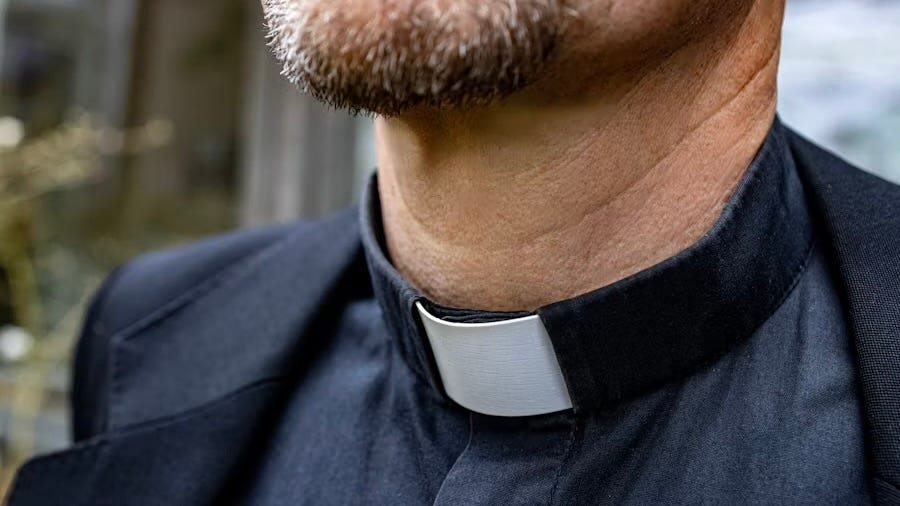 What’s left when the collar comes off is who you were the whole time?
The more ministry leaders carry a title, the more eyes follow. And with that comes an expectation of who you’re supposed to be in the room. But like everyone, we’re pressed for time, late for a meeting, hangry, and just want to be home. Every now and then, though — usually when no one is looking — we get it right.
Three of us were loading my truck from a storage closet on a Friday afternoon. Our scrappy community met in a rec center most weeks, but it was Christmas weekend and we were setting up in a scuffed-up old Lutheran church for the occasion. I walked past a woman just outside the main entrance who couldn’t find the help she was looking for. Other people were around. She’d apparently already asked. At her wit’s end, she cried out to anyone who might be listening: “Would someone just please help me?”
I was carrying half my weight in a box. I set it down.
“I’m sorry — is there something I can help you with?”
The story unfolded the way these stories do — tragic, desperate, out of resources. Directions given, then followed. Help offered, then not delivered. No ride to get back to the shop before it closed to pick up her car. Her granddaughter waiting, whose mother wasn’t able to be her guardian. And she hadn’t eaten today.
These moments are never convenient. They ask you to problem-solve with emotional reserves already at their limit.
“I’m sorry to hear this. We’ve got you.”
I reached into the truck. There were leftovers from a nice lunch earlier — I apologetically offered what she took as a treat. I looked at a friend, gestured to a Visa card at a nearby store: “Expense it to the Good Neighbor Fund.” Then to her: “Ma’am, public transit won’t get you there in time. We’re going to get you an Uber for the thirty miles to your car. And here’s some money for dinner for you and your granddaughter.”
For all she knew, we were city employees working at the rec center.
She never knew I was a pastor.
Here’s what I’ve been chewing on: there’s something about being a minister without a title that, once you get past the interruption, is actually life-giving.
When pastors learn to play chess without their queen — that is, without their title or position — it’s like returning to a first love. The thing that made us say I do in the first place.
Because underneath the title, the ache we’ve been carrying isn’t really about status. It’s about integrity. Whether we’re the same person when the eyes aren’t on us as we are when they are. Whether ministry is a role we perform or a way we’ve been formed. And most days, if we’re honest, we can’t quite tell.
I’m doing all the things and I can’t tell who I am underneath it.
That’s the sentence the year-three or year-four pastor keeps saying. Not because ministry has broken them, but because they’ve quietly started to suspect the title has been holding them together in ways it wasn’t designed to.
Identity is a strange thing. We treat it like a fixed object — something we are, once and for all. But identity isn’t static. It unfolds like a narrative the more we encounter a living, relational God.
Israel’s story is instructive here. God didn’t define them by their slavery in Egypt or even by their forty years of wilderness wandering. He narrated their identity through deliverance, provision, and promise. The scenic route shaped them — but it didn’t disqualify them. Their identity was rooted in whose they were, not where they’d been.
Jesus knew how easily we forget this. So he illustrated our belonging with a meal — something we’re unlikely to skip. “Do this in remembrance of me,” he said, using the word anamnesis. Not a mental exercise in recalling our unworthiness. The opposite of amnesia. Don’t forget who you are, in light of who I am, in whose likeness you bear.
The world offers a wrestling mat where belonging depends on performance. But God narrates something quieter, and older, underneath: You are mine. You belong. You are beloved.
We’re not finished products. We’re works in perpetual motion, with eternity seeded in us.
Years ago, I sat in Harv’s office. He might’ve forgotten more theology than I’ve learned with a PhD in psychology. We were talking ministry, expectation, and the cumulative disappointment — with people, sometimes with God — that catches up with anyone who does this work long enough. It was supposed to be a renewing conversation. Somewhere in the middle it got surgical.
“What you learn to name, you learn to own.
And what you learn to own, you learn to steward.”
Like a mic drop, only we were still hitting our stride. I heard the leather chair rub as I shifted, trying to get my head around what he’d said.
“And the reverse is also true…
What you never name, you never own.
And what you never own, you never learn to steward.”
He was giving me permission to name my unmet expectation — the one under the role, the one the title had been dressing up. Because the problem with the future is that you’re still going to be there too. You can find a new ministry, a new community, a new staff, a new title — but you’re still going to contend with your own dis-ease.
The person underneath the title is the one who has to be named, owned, and stewarded. Not the role. Not the ministry. You.
That’s the person who steps out of the truck when someone cries out at a city-owned loading zone on Christmas weekend. That’s the person Jesus knew about all along — the one behind the anamnesis, the one He’s been narrating a story around since before there was a title to remove.
For now, just this:
Who would you still be — and to whom — with the title removed?
And what have you been unable to name that has been quietly running your life?
“What You Can’t Name (Yet) is a 6-part conversation series for ministry practitioners. Subscribe for free. Share. Comment.
August 17, 2026
"I'm good at my job. I'm not sure my job is the point."
My office had fluorescent lights I refused to use. An oak desk with file drawers I avoided. Bookshelves lined with reference tools I didn’t have time to reference. And two sitting chairs - the kind you find in a waiting room - which turned out to be the most useful thing in the room.
I was the family pastor — children’s, middle school, high school, college. Nine leaders under me. Five budgets. A whole lot of pop-ins. You get quick-questioned on the hour. Ministry as putting out fires while endlessly coaching my leaders to keep up with shepherding three congregations at once — kids, parents, and volunteers.
Every quarter we hired someone new. Every month we sat around a table and talked calendar, communications, and budgets. And every year, at the appointed time, I sat across from each person on my team in those two chairs and did their performance review.
The twenty-something leaders coming in for those reviews often mistook it for being sent to the principal’s office without having done anything wrong. I could do the administration well enough. I wanted the relationships to be developmental. Sometimes they were.
I remember one review specifically. A young leader — competent, sincere. I had the form on my lap between us. Growth areas, performance ratings, goals for the year. And I said something I said in every one of those meetings:
“I want you to remember that you’re more valuable to God than what you can do for this church.”
She nodded. Wrote it down. I meant it.
And I drove home that night knowing I had said the truest thing in the room — and that the room had been designed to prevent it from mattering.
If vocational ministry has taught me anything, it’s that just because I can do something doesn’t mean I should. I’m not talking about crafting a job description around only the things you enjoy — every real job includes tiresome work, and that’s actually a good thing. I’m talking about the harder question: what happens when you’re competent at something that isn’t quite what you were called to?
I was in ministry, but I had lost my ministry.
That’s the sentence I couldn’t say out loud for years. On paper I was doing everything right. Leading leaders. Managing budgets. Hiring decently. Coaching my team about their identity in God. But every one of those meetings was one degree further from the relational frontline that made me want to do this in the first place.
The particular ache isn’t burnout. It isn’t laziness. It’s the ache of doing the work well and quietly suspecting the work isn’t what God asked for.
It’s saying the truest thing in the room and then filing it away because the form on the desk doesn’t have a column for it.
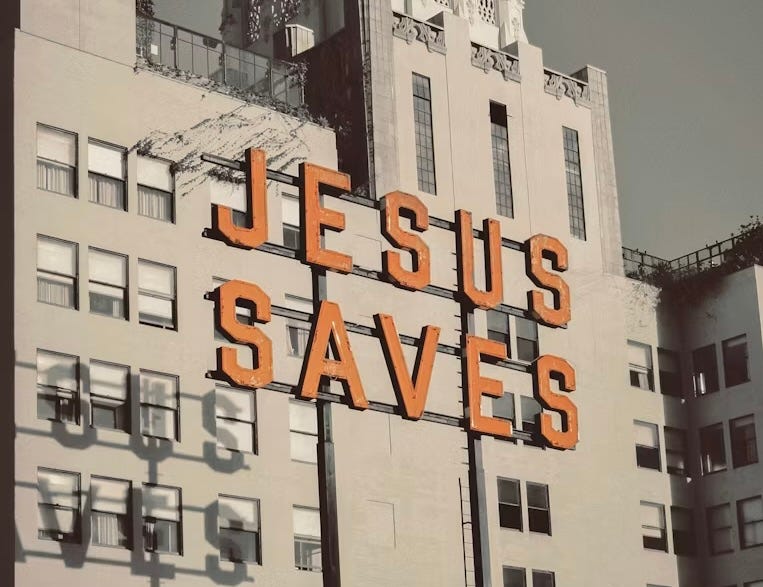 The inheritance still stands. The legacy is what walked through it.
Here’s what I’ve come to think over time.
Most of what pastors spend their time on is program work. Building the onramps. Managing the systems. Recruiting to fill them. And programs aren’t wrong — they get people up to speed, they help folks find a lane, they meet people where they are.
But programs don’t reproduce. They grow, or decline, or end.
And programs don’t disciple people. People disciple people.
I wonder if this unnamed gap is the difference between an inheritance and a legacy. Both are of value. Both are left behind.
But an inheritance is something we leave FOR a person. A legacy is what we leave IN them.
Programs are inheritance work. Roads, buildings, systems, budgets. Legacy is what’s formed in the person walking those roads — and the person can only be formed by another person. That’s what the review meeting was reaching for and the form couldn’t hold.
Here’s what I’m learning: you don’t have to quit to change what you’re aiming at.
The job can stay the same. Nine leaders, five budgets, quarterly reviews. What changes is what you’re actually attending to in those rooms.
Delegation is overrated when it fails to be developmental. Recruitment is overrated when it fails to be formational. And competence is overrated when it becomes the point instead of the vehicle.
For now, just this:
What would change tomorrow if the job stayed the same but stopped being the point?
Who are you leaving something IN — not just FOR?
“What You Can’t Name (Yet) is a 6-part conversation series for ministry practitioners. Subscribe for free. Share. Comment.
August 10, 2026
"I don't want to run another program — but the only alternative I can see is quitting."
There’s no shortage of hole-in-the-wall clubs lining 6th Street in downtown Austin. Few cities can rival the concentration of live music venues there. On this night, it was South by Southwest, so all kinds of people — locals and tourists, troubadours and amateurs — were on hand. A stage is a stage, and at SXSW an audience swells quickly at a showcase like this. Standing in the back of a tiny club meant you were only fifty feet from the stage. A-listers shoulder to shoulder with commoners under the vibey banner of music appreciation.
 The kind of room where a lyric can cut through the chatter. [Photo: Knoxy · knoxphotographics.com @knoxy_knox]
One after another, emerging talents stepped up in a musical carousel. The music felt as accessible as the artists themselves. During a transition, my attention drifted into a sidebar conversation. Then a lyric rang out over the bar chatter and stopped me mid-sentence.
“The miracle is not walking on the water...”
A soulful Black man was playing acoustic guitar and belting it out like stadium anthem.
Again: “The miracle is not walking on the water...”
By this point, the singer had my undivided attention. I audibly asked, as if it were a Q&A: “What is it?!?” Right on cue, he answered:
“The miracle is walking on the earth... day by day... step by step.”
I found out later his name was Chris Pierce.
A family dinner, a Sunday program, a small group, a service ministry — none of them feel much like a live show at midnight. But we’re all searching for the same thing in them: the presence of God in the hard and the good, in the awe-inspiring and the ordinary, in our daily responsibilities and our spiritual deserts.
Every now and then, the veil lifts. We catch a glimpse of something transcendent — a blurring of the line between the sacred and the ordinary. And we notice, quietly, that we don’t have to go anywhere else to find what we’ve been looking for.
But when the role of a pastor gets reduced to a programmatic builder-recruiter-organizer, we lose the eyes for that. The pastor-as-travel-agent works from an office and hands out compiled experiences — schedule these events, attend these gatherings, avoid these pitfalls. The pastor-as-tour-guide does something different. A tour guide narrates in real time, with proximity. A tour guide sees the ordinary bush aflame and stops the group so everyone else can see it too.
That’s a different job. It’s the job I remember signing up for.
I’ve come to believe that most of us who lead in ministry are stuck in a false binary. On one side is the program — the machine we built, the volunteer recruitment cycle, the events calendar, the metrics that measure whether the machine is still running. On the other side is the exit — the quiet fantasy of walking away, of doing something else, of being done.
Program or quit. Machine or nothing.
We don’t have a working image of the third thing.
The singer named it from a stage on East 6th at midnight. The third thing isn’t spectacular. It doesn’t scale. It doesn’t fit on a report to the elders. The third thing is walking on the earth, day by day, step by step, paying a different quality of attention to the ordinary Tuesday. It’s the pastor who slows down long enough to notice one bush aflame. It’s the conversation after the meeting, not the meeting itself. It’s the person who becomes different over years, not the program that grew by twelve percent.
Most of us haven’t been calling that ministry. We’ve been calling that interruption to the ministry. Which is a strange inversion — because it’s actually the thing we were called to.
The volunteer recruitment machine isn’t wrong, exactly.
It’s just scaffolding we mistook for structure.
Here’s what I’m starting to see: the alternative to running the machine isn’t shutting it down. The alternative is remembering what the machine was always supposed to serve.
You don’t have to burn anything down. You just have to notice what you’ve been walking past.
For now, just this:
What if the thing you’ve been calling “recruiting volunteers” was never the ministry — just the scaffolding you built to make ministry legible?
And what would you notice tomorrow if you spent one hour paying attention the way Chris Pierce paid attention to Tuesday?
What You Can’t Name (Yet) is a 6-part conversation series for ministry practitioners. Subscribe for free. Share. Comment.
August 3, 2026
"I can see something's off with how we're doing this. I just can't name it."
The house sat at the entrance of the neighborhood. Meticulously maintained. Original from the late 70s. Hilton, unofficially, was the neighborhood “mayor” — not because we have an HOA, but because he’d been there long enough to be the one who watched everyone else come and go.
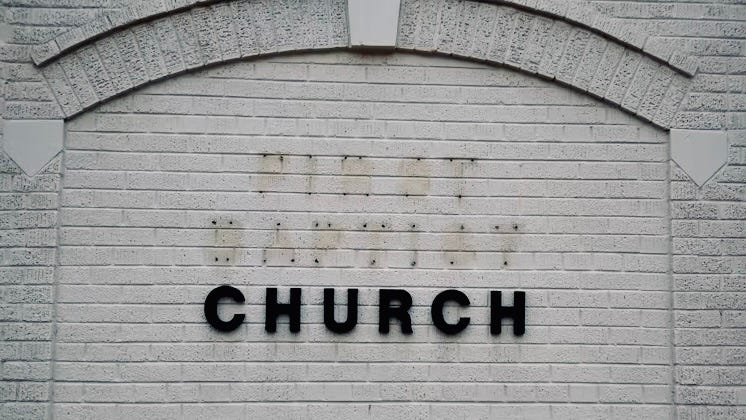 Sometimes what remains is exactly what no one's supposed to talk about anymore.
He’d putter in the yard. Puttered in the garage. Ran the NextDoor app with something like a public trust. For fifteen years we lived a block apart. In the early years I’d drive past with a wave — that Texas half-lift of the fingers off the wheel — and get the look-away. Every time.
Did he not see me? Did I do something wrong? Am I driving too fast? Am I not Texas enough? Is the pastor thing a deal-breaker for him being neighborly?
The chest would tighten just a little on that stretch of road. Then I’d drive on. And by the time I got home, I’d forgotten why I was bothered — but the tightness would come back, without warning, the next time I passed the house.
I learned later that Hilton had had a problem with a pastor at my church — one who came before me, over something that had nothing to do with the church itself. I’d inherited a grievance I couldn’t answer to and didn’t know I’d received. My waves weren’t going to change it.
Every ministry leader knows this weather.
The judgment you inherited from someone else’s story. The tension in the room that no one is naming. The odd deference to a person or a system that no one ever explains to you — but that everyone seems to be running on.
The people who won’t return your emails, and you can’t tell why. The volunteer who cools slowly, over months, for a reason you’ll never learn. The board member who never quite commits, and never quite doesn’t. The elder who keeps saying “we’ve tried that before” without ever explaining what happened when they did.
You feel it. You just can’t say what it is.
For a long time, mine had a name I hadn’t given him yet.
I was building a small tool shed alongside our house — an 8x12 thing, nothing structural, one weekend’s worth of framing. My next-door neighbor asked me over the fence, in the casual way you’d ask if I needed a hand: “Did you get approval from the HOA?”
Wait — what? We don’t have an HOA.
I thought she was joking. She wasn’t.
Real or perceived, the mayor carried weight. He had influence. Change was more acquaintance than friend. And in a single half-second on a Saturday morning, I realized an entire invisible order had been running around me the whole time. Nobody had told me. Because to the people already inside it, there was nothing to tell.
There’s a line from Stephen King’s Dark Tower series I keep coming back to. He’s writing about a gunslinger from another world, a man trained in an old and very specific tradition, who runs into a group of modern police officers — pudgy, always polishing their weapons.
The gunslinger observes: “They pay more attention to the weapons they wear than the weapons they are.”
That was the sentence I finally had for what I’d been sensing.
I don’t offer it as a critique of one man. I don’t think he’d have understood it, and I don’t think that’s what it’s for. It’s the phrase that arrived too late to change my situation, but not too late to help me see other rooms I’d been standing in without knowing it.
Every congregation has an unofficial gatekeeper of change. Every staff. Every board. Every network. The person who’s carried the clout, the tenure, sometimes the purse strings — and often, quietly, the veto. Not by vote. Not by role. Just by weight. A whole gravity forms around them without anyone ever agreeing to it.
You feel what they’re carrying before you can name it. And the strange part isn’t that they hold the influence. The strange part is how much of it they hold without ever having asked for it — and how much of it you’ve been granting without knowing.
The relief, when the naming finally comes, isn’t that anything changes. My neighbor kept waving-not-waving until the day he died. The relief is that you can finally tell yourself the truth: it isn’t me. I’m not misreading the room. There’s actually a room I couldn’t see.
My neighbor passed away a couple of years ago. I was sadder than I expected. He hadn’t struck me as especially happy, or especially loved. And I realized I’d missed out on hearing whatever it was he valued most.
His adult children — I never met them — sold the house within a few weeks. Not to a family. To a builder. Within a month, the house was scrapped.
His pride and perch that stood watch at the entrance of the neighborhood, flattened. The dirt more valuable than the structure he’d built.
Here’s what I’m starting to see: the tiredness we were talking about last time — the one rest can’t touch — often isn’t only inside us. Some of it is the weight of unnamed weather. The judgments we inherited. The unspoken authority someone else was granted. The invisible orders we’ve been running on all along.
You don’t have to fix it tonight. You just have to notice it’s there. For now, just this:
What have you been sensing all along that you haven’t given yourself permission to name?
And whose rules have you been playing by that no one ever wrote down?
“What You Can’t Name (Yet) is a 6-part conversation series for ministry practitioners. Subscribe for free. Share. Comment.
July 28, 2026
There Are No Bad Parts of the Bible
The pastor was gifted. Contending for his family as much as for his faith. The Bible was central, held as authoritative and inspired. But the messages felt instructional more than inspiring, and on the days the Spirit wasn’t given room to move, other accelerants filled the space.
“God is not satisfied with you!”
He said it once. Then repeated it for emphasis — certainly not for lack of hearing.
I imagine he kept talking for another fifteen minutes. I hadn’t moved on. There are things our memory refuses to release — things you cannot un-hear, un-see, un-smell. With the children’s voices still drifting in from the hallway, I began playing out a confrontation, but only in my mind.
“What if I volunteered with your children’s ministry — specifically with your children — and taught them that exact sentence about their father? What if I told your three kids: your dad loves you, he sacrifices for you, he will always be there for you — but he is decidedly not satisfied with you.”
Now imagine how our heavenly Father feels when we use His words to communicate a message He never intended.
The Most Dangerous Reader.
There are no bad parts of the Bible. But there are bad parts of me — and without even knowing it, I have used them against you.
This is the harder confession. Not malice. Not cynicism. Sincerity, fully devoted, and still wrong. Everyone knows in theory that they are sometimes mistaken. Nobody admits it about “this” — right here, right now, the thing currently under discussion. Which means the most dangerous reader isn’t the skeptic. It’s the one who’s certain.
Jesus said it plainly in the Sermon on the Mount: unless your righteousness surpasses that of the Pharisees and the teachers of the law, you will certainly not enter the kingdom of heaven. He wasn’t dismissing them. He was holding them up as the standard — the most serious, most devoted readers in the room — and saying the bar wasn’t high enough. The Pharisees and Sadducees reached opposite conclusions from the same text. Both were committed to their interpretation down to the letter. Both missed the Word standing in front of them.
And at the outer edge of this warning, almost too quiet to hear: in the wilderness, the adversary quotes Scripture to the Son of God.
The text is not the problem. We are.
What If the Bible Isn’t Primarily an Instruction Manual?
We’ve inherited a way of reading Scripture that treats it as information to be mastered — doctrine to get right, commands to follow, verses to deploy in an argument. And all of that has its place. But what if the Bible is less interested in making us correct and more interested in making us *present*?
The Psalms don’t explain suffering. They sit in it. Job doesn’t resolve his questions. He encounters a God who is larger than his answers. Jesus doesn’t hand the disciples a systematic theology. He says “follow me” — and teaches them with His feet, His hands, His attention to the person standing in front of Him.
Scripture isn’t a textbook. It’s a story we’re invited to live inside of. And the difference between reading it for information and reading it for formation is the difference between studying a map and walking the road.
Thanks for reading! Subscribe for free to receive new posts.
What If Certainty Is the Thing We Need to Lay Down?
The pastor wasn’t wrong to take the Bible seriously. He was wrong to use it as a weapon of dissatisfaction aimed at people who were already limping. There’s a difference between a text that convicts and a text that crushes — and the difference usually isn’t the verse. It’s the reader.
I’ve done this too. Used a verse to win an argument. Deployed Scripture to prove a point rather than to reveal a person. Reached for chapter and verse when what someone needed was a hand and a presence.
The Bible reveals what is true about God. It tells the story of Him remaking the world as He intended. It’s an inexhaustible wellspring of wisdom. But wisdom isn’t the same as certainty. And the moment we confuse the two, we become the very thing Jesus warned about — readers so devoted to the letter that we miss the Living Word standing right in front of us.
Your kids will encounter people who weaponize Scripture. They might encounter a pastor like the one I described. The best inoculation you can offer isn’t better theology. It’s a home where the Bible is read with humility, held with reverence, and embodied with tenderness — where your kids learn that the text is alive, not because it has the right answers, but because it keeps drawing us into the presence of the One who does.
---
These reflections are drawn from David’s forthcoming book, Where You Find Yourself.
Thanks for reading! This post is public, so feel free to share it.
July 27, 2026
"I've done everything right and I don't know why it feels empty."
It was the last ministry conference I attended, and it was over twenty years ago.
Standard fare — ministry trends, cultural shifts — but this one held more of an edge. It skewed hard toward the new, at the expense of anything that came before. A lot of energy for what needed to be torn down. Less for what came after.
That’s when I heard a wise old sage name the thing I couldn’t:
“Deconstruction is a good place to begin. It’s a tragic place to remain.”
It was like a referee blowing a prophetic whistle. Foul, called from somewhere I didn’t know the game was still being played.
I’ve thought about that line for two decades. Because I hear its echo, quietly, in nearly every ministry leader’s struggle between culture and kingdom, new wine and old wineskin, sacred tradition and renewal.
It doesn’t sound like deconstruction, exactly. It sounds like something else. It sounds like:
“I’m just trying to be faithful and grow where I’m planted.”
Or: “I don’t have the answers, but I know the One who does.”
Or, a quieter dissatisfaction — like another sunset that came sooner than expected — “I thought it would be brighter.”
You know the feeling. Not burnout, exactly. Burnout has a shape you can name; you can point at it and say I’ve been working too hard. This is different. This is the feeling of doing the right things for the right reasons and still coming home spiritually and emotionally overdrawn. The original call, the prayers, the vision, the open doors — all of it starts to feel more naive than nourishing.
It isn’t a rest problem. Rest doesn’t touch it.
It’s the ache of a mid-marathon runner who can’t quit, and can’t remember why she started. Ministry experience has a way of moving the goalposts. Meaning gives purpose traction, and without it, faithfulness feels less like a career path and more like a vocation pivot with no real destination.
We’re quick to translate this feeling as something wrong. Something broken. Something to be fixed with a sabbatical, a book, a reclaimed spiritual practice.
But I’m suspicious of that reflex. And I’m starting to wonder if what we’re calling stuck is actually something growing.
If every organism grows, and if what feels like stuckness is really the pressure of expansion against an old shape — that sacred participation with the Spirit that can feel more scratchy than warm fuzzy — then the restlessness isn’t the problem.
The restlessness is the honest thing.
What if restlessness is part of God’s grace?
Here’s the part I want to leave you with. It isn’t a fix. It’s just a reframing, and you can sit with it or argue with it.
The restlessness you might be feeling — the one you’ve been managing, the one you don’t bring up in meetings — I don’t think it’s the problem. I think it might be the most honest thing in you right now.
It isn’t failure. It’s information. It’s pointing at something worth seeing and trying to name.
We just don’t have the words for it yet. That’s what the next few of these are for — finding them. But not tonight.
For now, just this:
And the thing you’ve been calling tiredness — what if it’s actually a growing pain?
“What You Can’t Name (Yet) is a 6-part conversation series for ministry practitioners. Subscribe for free. Share. Comment.
July 21, 2026
Life Is Learning to Love What You Know You'll Lose.
After moving Bjørn into his college dorm, we drove the two hours back to Austin so he could grab a few last things, say goodbye to friends, and have one final night at home. In the morning, I climbed into bed with him.
He was excited and nervous. I was too, but letting go felt like slipping on an undersized turtleneck — threads of loss and sadness woven tight around my neck. My joy was choked, but not my confidence in my son or my faith in the Father.
What happened next was unplanned. A spontaneous stream of consciousness, like a dream you don’t want to wake from. We lay there staring at the ceiling, and Bjørn said something every parent longs to hear:
“Dad, so many kids keep saying how excited they are to get away from their parents. But that’s the last thing I feel.”
I let his words hang in the air. Sacred. With tears and a cracking voice, I thanked him for being my son and for making his mother and me look like way better parents than we really are. I still have the Post-it notes he wrote at nine years old taped to my closet mirror: “Don’t stop teaching people about God” and “You’re a great writer.”
Then God gave me an image. I tried to describe to my son how, up until now, I’d been able to participate in his spiritual, academic, athletic, and relational life. But this next season would be transformational — and we could only watch from a distance. He’d have to decide who he wanted to be, how he wanted to live, and whom he’d surround himself with.
I knew this season would feel dark, uncertain, lonely, and unfamiliar at times. And I wanted him to know: God can meet us when we’re most vulnerable and alone, and bring new life. Things can be both hard and good at the same time.
The Pull-Back.
Every parent knows the pull-back. It’s the moment your child’s hand slips out of yours — sometimes literally.
I remember walking Bjørn toward first grade. Suddenly, he did it. Pulled his hand away. It wasn’t rejection. It was a transition unfolding. He was growing more aware of his peers, growing up, becoming more independent.
When Mary found the risen Jesus at the tomb and reached for Him, He said something strange: “Do not hold on to me” (John 20:17). In this new season, it can’t be like it was. That’s what every developmental transition feels like. The driver’s license that means some dinners are missed. The college dorm that means the front door gets locked without them inside. Each one is good. Each one is grief. Each one is the Resurrection doing what the Resurrection does — making something new out of what feels like loss.
Thanks for reading! Subscribe for free to receive new posts.
Sending Agents.
Christian parenting, in the end, is about seeing ourselves as sending agents. God sent His Son into the world. His Son sends us. And we send our children.
We train them to be independent, and then they emerge as capable and confident, holding convictions that are no longer borrowed from us but their own. Their independence means less dependence on us. That’s the goal. It’s also the ache.
Some things should not be experienced in a hurry. Sipping wine. Sunrises. The last season of a show you love. And most certainly, childhood. It should be savored, not rushed.
But here’s what I’ve come to believe, lying on that bed staring at the ceiling with my son: every season of parenting is worth celebrating *and* grieving. The tension between the two isn’t a problem to solve. It’s an act of faith. In cherishing what we’re losing, we remember that the Resurrection promises God can bring new life in every season.
Jesus invested every bit of Himself in His disciples, knowing He’d have to let them go. This is what makes disciple-making so real for parents.
Life is learning to love what you know you’ll lose.
And in the losing, finding that God was never closer.
---
*These reflections are drawn from Homegrown Disciples: Parenting Rhythms for Drawing Your Kids into Life with God, available wherever books are sold.
Thanks for reading! This post is public, so feel free to share it.
July 14, 2026
The God Who Sees You in the Rosebushes
Maria called me out of the blue. We’d been introduced two years earlier by mutual friends who knew that my wife, Laurel, and I had experienced four miscarriages. Maria had immigrated with her husband and young son to grow their family in the States. A miscarriage led to a separation, which led to him starting another family. Her pain ran as deep as her contempt for God.
So when she called, I wasn’t expecting what she had to say.
“I was trimming my rosebushes in the backyard. My neighbors were working in their yard too, and they had a radio on. They went inside but left it playing. I sat there with my knees in the dirt, hearing someone speak about God... and I couldn’t stop listening.”
She paused.
“David, it felt like someone was trying to give me a hug — but I couldn’t receive it. I don’t want to be hurt anymore. I don’t want to be mad anymore. But I don’t know what to do.”
El-Roi.
There’s a woman in Genesis named Hagar — a runaway teenage servant girl, alone in the desert, fleeing an abusive situation. In a society where servants and women occupied the lowest rung, Hagar had likely never been truly *seen* — acknowledged as a human being made in God’s image.
Then God meets her. And after their conversation, Hagar names Him something no one had called Him before: El-Roi — “the God who sees me” (Genesis 16:13).
It’s the first time this name appears in Scripture. And it comes not from a priest or a prophet or a king, but from a woman the world had overlooked. God asked Hagar two questions: “Where have you come from, and where are you going?” Those questions can frame every act of hospitality we’ll ever practice. Everyone we meet has a past that informs their present. And by making room for them, we might just influence where they’re headed.
Maria, kneeling in her garden with dirt on her hands and anger in her chest, was being seen. By a God who doesn’t wait for us to get ourselves together before He shows up.
What If Hospitality Starts with Being Found?
We tend to think of hospitality as something we ‘do’ — hosting a dinner, welcoming a newcomer, opening our home. And it is those things. But the deeper pattern in Scripture is that hospitality starts with God hosting ‘us.’ We receive before we give. We are found before we go finding.
Jesus at the well with the Samaritan woman didn’t open with doctrine or correction. He opened with a request: “Give me a drink.” He made Himself the guest. He let a woman with a reputation serve Him — and in doing so, He restored her dignity before He revealed her story.
When we let someone serve us — a child who wants to spend their birthday money buying us coffee, a neighbor who brings over food we didn’t ask for, a stranger whose kindness catches us off guard — we make room for God to move. Refusing help can feel humble. But it can also rob someone of the chance to draw near.
Gossiping the Gospel.
In the early church, Christians didn’t grow their movement through marketing campaigns or stadium events. Worship was invite-only, closed to the public. And yet the church exploded — from roughly twenty-five thousand to twenty million in two hundred years. How?
They gossiped the gospel. They talked about what they’d seen: the sick being cared for, the poor being fed, abandoned children being adopted. Their lifestyle was so peculiar, so countercultural, that people whispered about it. And whispers traveled.
As parents, the most powerful thing we can offer isn’t a convincing argument for God. It’s a life that makes people curious. Our kids don’t need to become evangelists. They need to watch us make room for people — in our home, at our table, in our schedule — and see what God does in that space.
The challenge isn’t finding the words for your faith. It’s living in a way that makes someone ask you for them.
Maria eventually found a community of faith. She’s healing. It started with a radio left on by accident, a woman on her knees in the dirt, and a God who doesn’t need an invitation to show up.
He just needs us to stop long enough to notice He’s already there.
---
*These reflections are drawn from* Homegrown Disciples: Parenting Rhythms for Drawing Your Kids into Life with God, *available wherever books are sold. You can also watch a short companion video for this rhythm on YouTube.
Thanks for reading! Subscribe for free to receive new posts and support my work.
July 7, 2026
I Keep Waiting to Feel Like a Grown-Up
Here’s the most important thing Scripture doesn’t include: the concept of arrival.
You can get saved. But that’s the beginning, not the summit. You can grow. Mature. Bear fruit. But there’s no finish line where God hands you a diploma and says, “Well done, you’ve completed the course.” There’s no spiritual retirement in the Kingdom.
And yet most Christians, if they’re honest, carry a quiet sense that they should be further along by now. They’ve attended faithfully. Served generously. Led small groups. Gone on mission trips. Sat on committees. And still — a gnawing feeling of being spiritually underwhelmed. Not by God, exactly, but by their own progress.
Rather than letting this dissatisfaction create a hunger for more of God, many of us let it harden into a verdict: I’m not enough. I don’t know enough. I’m not qualified to lead anyone spiritually — least of all my kids.
That narrative is a cancer. And it’s keeping parents on the sidelines of the most important work they’ll ever do.
What If Non-arrival Is the Point?
Jesus said, “Unless you change and become like little children, you will never enter the kingdom of heaven” (Matthew 18:3). I used to read that as a call to innocence or trust. I still think it is. But I’ve started to wonder if it’s also a statement about posture: Stop trying to arrive. Stay in the becoming.
Children don’t arrive at anything. They’re always mid-sentence, mid-discovery, mid-growth spurt. They don’t perform expertise — they inhabit curiosity. They don’t manage their reputation — they risk embarrassment without a second thought. There’s a reason Jesus didn’t say “become like scholars” or “become leaders.”
Maybe there are no grown-ups in heaven. Maybe the whole Kingdom runs on the energy of people who never stopped beginning.
The Genius of Step Twelve
The best analogy I’ve found for how spiritual growth actually works is twelve-step recovery. Step one: Admit you have a problem and can’t overcome it alone. Steps two through eleven: make amends for the damage done. Sobriety doesn’t happen in isolation — it happens in community, in confession, in the daily decision to stay honest.
But the genius is step twelve: sponsorship. Even though you have further to go, more to learn, and still battle temptation daily — the way to work out your sobriety is to find someone at step one and walk with them.
If the church could work out our salvation the way an addict works out their sobriety, it would transform lives from the inside out. Recovery isn’t about buildings or budgets any more than the church is about platforms and programs. It’s a relational movement. And parents are already in it — walking with the youngest believers they’ll ever know, working out their own faith in the process.
You don’t have to be further along to lead your kids spiritually. You just have to be honest about where you are and willing to walk.
Thanks for reading! Subscribe for free to receive new posts.
Crowned and Still Becoming.
Paul wrote to Timothy: “The student is not above the teacher, but everyone who is fully trained will be like their teacher” (Luke 6:40). Read that again. We don’t have to make our kids *better* than us. We don’t have to outperform our own spiritual batting average. We simply mirror the life of Christ, who is already active and at work in us — imperfect, mid-journey, still becoming.
God is not waiting for you to arrive before He uses you. He’s using the road itself. Every stumble, every recovery, every Tuesday night when you choose presence over perfection — that’s the curriculum.
My prayer for every parent reading this: trust what heaven has revealed about who God is, not what hell has whispered about who you are not.
You are crowned. And you are still becoming. Both are true at the same time.
---
*These reflections are drawn from* Homegrown Disciples: Parenting Rhythms for Drawing Your Kids into Life with God, *available wherever books are sold.
Thanks for reading! This post is public, so feel free to share it.