Jen Lynn Anderson's Blog
November 27, 2024
Part One: A Love Letter to Edinburgh
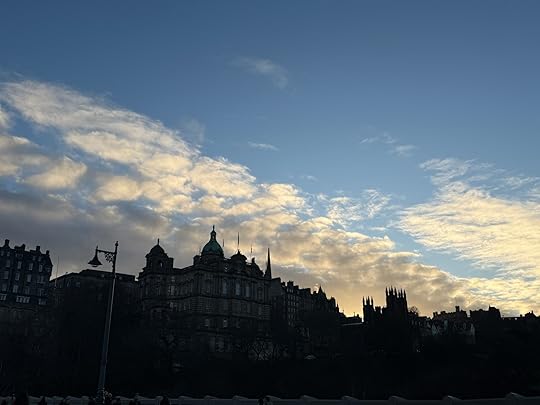
Edinburgh is a city of easy first impressions.
My first impression of Edinburgh was of darkness. The sun sets early in November in Scotland. My second impression of Edinburgh was one of welcome, and even on some level a strange familiarity with my surroundings. We arrived at our hotel, Ceilidh-Donia, folded cozily into a Midlothian neighborhood of buildings similar in appearance, with their peaked roofs and worn stone facades. Of course, none of this we saw upon our arrival. My cousin Emily and I were exhausted, having spent much of the last 18 hours either in the air or between planes. We united in Dublin for the last leg of our journey, and by the time we landed on Scottish soil I had lost any concept of time, having leapfrogged over several hours into the following day from my departure. By the time we landed at the doorstep of our hotel, I simply knew that it was approaching evening, and we had arrived.
Half-asleep, and as the handsome soft-spoken ginger-haired desk clerk checked us in, I noticed an adorable dog – mostly white with mottled patches of black and brown, and wearing a harness that read “I’m deaf” – seemingly frozen at my feet, her gaze fixed intently on something just beyond my peripheral vision. I followed her line of sight and, to my absolute delight, saw a yellow ball perched between my foot and the counter. The universal dog language: “Please play with me.” I felt a momentary pang of homesickness for my dog Layla, but with one tap of the toe of my boot, we were in the middle of a game that my new friend was determined to continue for as long as possible. Which apparently, was not long enough, as she stubbornly decided to plant herself in the doorway to the stairwell leading up to our room when we received our key.
Hauling our suitcases up two floors via an extraordinarily steep spiral staircase, we reached our room tucked under the eaves and with a view of the back garden (although we did not yet know this). First instinct was to bury ourselves into the soft beds for a nap, but we obstinately avoided this temptation, worried about the creeping effects of our long journey. Instead Em and I stepped out the door into the early evening, searching for something to eat. Down Dalkeith Road a short way, we found the glittering threshold of Salisbury Arms decked with winter greenery and white lights, and inside we found a comfortable restaurant with exactly what we needed in that moment. Good food (steak and ale pie for Em, baked cod and curried risotto for me), and a bottle of Pinot noir.
The next day we emerged from slumber around 11:30am, after a much needed rest that had stolen our morning. Even with our shortened day, I can best recall it as a series of vignettes, because the afternoon was so full.
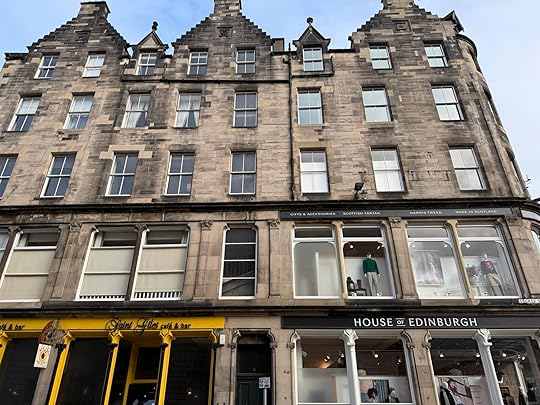
Edinburgh is an ancient city, and it is brimming with stories. There are stories etched deep into its stones. Stories in the air, mingling with the drift of rain clouds and the cries of gulls overhead. Fortunately it seems to be a city willing to share.
Brunch at Saint Giles Cafe and Bar, a tucked away but bright and sunny little cafe with sunflowers in the windows, rough stone interior walls, high ceilings, and a delicious menu of cafe food and a good selection of teas and coffees. We had a meal there, enjoying the atmosphere, and I would only learn later that the cafe is permanently closing on November 30th of this year (mere days away), after being in operation under the same ownership since 1991. We were a part of the final days of this lovely cafe’s story.
Advocate’s Close, a narrow medieval-aged alley staircase leading you from High Street up on the hill, down through and around high walled equally old buildings, and down a winding path to another section of Old Town. Edinburgh is full of these passages, called closes. How many people before me had taken these centuries-old shortcuts, walked these same stairs worn smooth by thousands upon thousands of shoes, and what were their stories?
 Just a few paces away from Saint Giles, we found the News Steps, another avenue through Old Town, with thousands of padlocks lining the fence all the way down. I learned they are love locks, attached to the fence by couples seeking good luck for happy lives together. How many found their happiness? I wonder.
 Everything about the Christmas Market, Edinburgh’s famous holiday conglomeration of food vendors, craftsmen-and-women, and Christmas-themed activities. The attractive and slightly nervous vendor who reeled us in to try spirits and provided us with mulled punch with elderberry liqueur, setting the joyful tone of our explorations. The lights creating a gentle and whimsical sparkle as the sun set over the park bridging Old Town and New Town. The view of Edinburgh Castle from the top of the Ferris wheel. But a truly magical part of the market, for me, was crossing paths with a fellow Minnesotan operating one of the artisan stalls. She was an expat, from Eden Prairie of all places, had studied at the University of Edinburgh, met her husband here, and had stayed for the twenty years since. I regret that I did not catch her name, but feel fortunate that I heard her story and the world feels a little bit smaller even though both of us are across an ocean from where we began.
As we climbed back up the hill to the Royal Mile from the Christmas Market, we suddenly heard the first notes of “Scotland the Brave” being played confidently on the bagpipes from High Street. The song echoed through the wynds and side streets as we searched for its source. I wonder if the piper in full regalia we’d passed earlier that afternoon had been the source of the spontaneous song.
We landed in Captain’s Bar, a half block off the main strip, taking a break from our walk back to the hotel for some liquid rejuvenation. Vaguely buccaneer themed, with a bright red facade, subtle nautical interior decor and a prominently featured selection of Captain Morgan bottles, we drank our pints of Guinness while listening to a small collective of folk musicians play live, taking turns on guitar and thumb piano, singing traditional Scottish folk songs with some Bob Dylan thrown in for good measure.
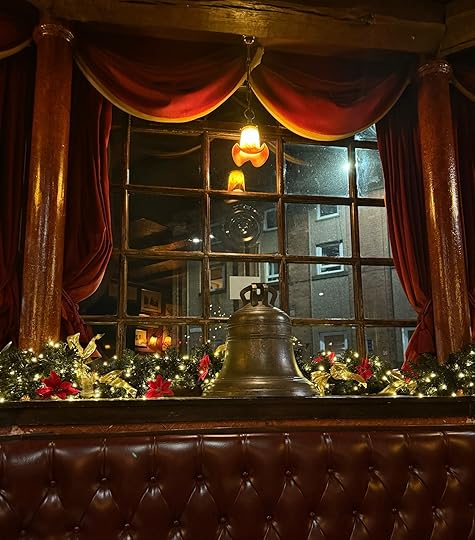
Everywhere in Edinburgh feels like it is embracing you. Keeping you warm and safe and content; this is a comfortable city.
Even the walk back to the hotel was comfortable; a gentle rain landing on my wool sweater-clad shoulders as we wandered back up the avenue toward Midlothian. On the way, we detoured to the Old Bell Inn, a cozy pub decked out in holiday festivity, where we enjoyed a late supper and more beer. As notorious as the food in the UK is rumored to be, so far it has been food that has warmed my soul, and the (vegetarian) haggis, neeps and tatties I devoured was no exception. Em and I enjoyed the quiet but jovial reunion of three older gentlemen seated next to us, old friends catching up with a couple of pints. This city feels like it is made up of old friends perpetually getting together to catch up over a pint.
There are some places where you feel immediately at ease, where you can walk the streets and feel as though some part of you either was there before, or knew you would be.
After one day, I sense that Edinburgh is such a place for me. It grounds you, anchors you to its history and willingly gives up its secrets – one by one – to keep you searching, learning, exploring. It feels like you could live a thousand lives here, but always find what you need no matter which direction you take.
We have another full day in this city; as I write this, I am sipping coffee in the breakfast room of Ceilidh-Donia, feeling the day brighten over my shoulder and marveling at the fact that the words are finally coming easily again. We have plans to climb the hill up to Edinburgh Castle today. Tomorrow, Em and I take the train up the northeast coast to Aberdeen, the rumored clan lands of our ancestors. But I do know that Edinburgh has embedded itself into my soul. It has given me a new story to tell, and remember, and love. I will forever be grateful.


January 15, 2023
Our Journey Begins Now, But How? (or: To Plot or Not to Plot)
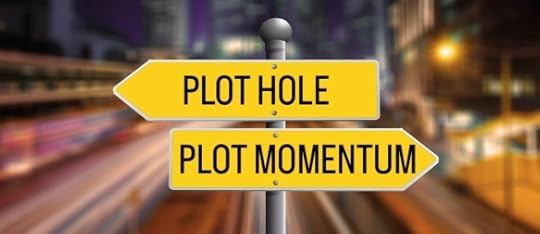
“A story tells us what happened, but a plot tells us why.” – E.M. Forster
“But, how do you know if an ending is truly good for the characters unless you’ve traveled with them through every page?” – Shannon Hale
“Plot as such is not a major ingredient in my novels… it’s often better to sail on the unconscious sea.” – Richard Adams
It has taken me years to write this blog post. YEARS. Actually almost halfway through a decade, since I began to write this series on the Big Three (Setting, Character and Plot), and the Spark that connects them in a haphazard and somewhat painful but always invigorating process we call Writing A Novel.
I did not follow this timeline for the first three installments (which emerged from the depths and into the blogosphere at a tidy pace, between January 2018 and January 2019). I knew Plot was going to take some time, ultimately because – and I will gladly die on this hill – there really is no single correct way to plot a story.
You heard me.
Okay, let me specify what I mean. The “what” of plot is easy to research: we’ve all learned the narrative structures in high school English classes. MasterClass has a pretty comprehensive article to that effect.
What I’m talking about is the “how.”
First, I should acknowledge the intrepid writers who throw caution to the wind and venture into the wilderness that is their novel-in-progress without a second glance at that damn Fichtean Curve. They are on the same journey their characters are. They don’t know what’s coming. They don’t know where they’ll end up. They just know the adventure is worth the end result, whatever that ends up looking like. And that’s… certainly one way to go about it. I envy those writers, to be honest. The National Novel Writing Month community (who affectionately refer to ourselves as NaNoers), have a term for those folks: “Pantsers.” Apt description, to be sure.
The opposite end of the NaNoWriMo plotting spectrum houses the Planners, a distinctively meticulous and cautious bunch, who live by the outline. Org charts and narrative structure drafts are their bread and butter. Planners have a sub-spectrum, of course (why wouldn’t they, these slightly-fastidious lovers of order, who live to categorize and subcategorize)… within this group you have those who need to have each step of the journey measured out ahead of writing a word, down to the smallest detail. Others within the Planner cohort are a bit more flexible, preferring a solid outline but understanding that, even though they created the universe the story resides within, they might not have all the answers at the outset.
I tend to fall into this latter subgroup of Planners. My ideas become tangible through outlining. My characters come alive faster when I have some degree of direction for them in the beginning. Outlining is freeing to me, because it allows me to dream big. I can support those dreams by identifying and filling any plot holes ahead of writing. I don’t accidentally end up in a dead end corner of the story. Several of my failed projects, earlier in my writing career, were lacking an outline. Some of them were complete stories (beginning, middle, and end) but still failures. They did not succeed, in my mind, because I hadn’t devoted enough time to building a foundation that would support the story and my characters’ journey through it.
The outline grounds me in the story, and can even help me see arcs down the road that may result in sequels, or series. My novel-in-progress, Stormriders, began as an outline, after the idea phase and world-building. I flushed out my characters in tandem with construction of the main story arc; well into the plot development, I realized I had enough story – and my world was rich enough – to create arcs for a sequel, and then a trilogy. And a spinoff novella. There is a lot more to explore within the world of Stormriders now, because I connected the plot threads ahead of weaving the tapestry.
So how do I plot?
I start by writing a chapter-by-chapter summary. I tend to see plot steps/chapters almost as scenes in a movie. I write a paragraph per scene. I insert additional character notes with each scene. Who is there? Who isn’t? Where are they? What is happening in that moment? How does everyone interact? What happens to get them to the next scene? And so on, and so forth.
My chapter-by-chapter summary for Stormriders is 21 pages long.
Even though my outlining process tends to be fairly linear, my writing process is not. I jump around to different scenes, flushing them out. A bit of striking description or witty dialogue may pop into my head unannounced and unplanned, and I jot it down knowing there may be a place for it later. Once I have the summary, I can assign those random pieces of writing to a chapter, or scene. I can add and remove scenes, or rearrange them, at will. I can attach my author notes to the outline: thoughts on what’s working, and what isn’t. The summary is the plot foundation. I can double-check to make sure I have the narrative structure needed to be a successful and satisfying end product (eventually).
Another critical reason why I outline is the inevitability (and sometimes obstacle) called life. Even if I have to step away from a project for a while, I can return confident in the knowledge that the dream isn’t gone. The ideas are there, bookmarked for me in summary form.
Plot development, no matter how you experience it, is a journey. And there is no ultimately perfect way to embark on this journey, but knowing your own tendencies and style, coupled with the literary basics of plot structure, will help any writer tell the story they need to tell.
This is the final (hooray!) post in a 4-part series about The Big Magical Process of Making Words Happen (According to This Author).Part 2: A Universe in My Head (or: The Intricacies of World-Building)
Part 3: Writing Them to Life (or: The Complexity of Character)
December 5, 2020
I’m Still Here.
How’s your 2020 going? I’ve picked up some new hobbies.
I cannot believe it has been so long.
It is less than ideal starting a blog post by having to reassure you, wonderful readers, that I – Owner of Said Blog – did not, in fact, hop a ship and sail off into the sunset, fleeing from the burden of expectations and broken dreams.
That was melodramatic, I know. (And full of commas.)
But it’s gotten to the point where I feel viscerally anxious when too much time passes between blog posts. When much of my life – my non-writing life – is broken down into obligations that squeeze every spare second out of my day, every day. This time it has been nearly twenty-four full months between posts. This blog has been collecting dust and cobwebs while the outside world has kept me distracted at best, and had me almost drowning at worst. (Sorry about all the nautical metaphors, but that’s nothing if not apropos.)
And then… THIS YEAR. This year to end all years.
You’d think with a raging global pandemic going on, we’d all have a lot more time to write our novels and update our blogs and such. I can absolutely assure you the opposite is true. It takes every ounce of courage and fortitude to sit down and find the words, when your mind is wracked with worry about your family members and friends with pre-existing health conditions, when your eyes and ears are constantly bombarded by grim statistics on the news. It becomes almost an obsession, seeking out and finding fleeting glimpses of the Life Before COVID-19, in virtual family dinners and picking up take-out from your favorite restaurant, in setting up a home office for the indefinite future. In Wine and Skype Nights with your best friends.
This year has been a lot to take in, to fully process. And I don’t think I ever will fully process just how much we lost. People lost their people this year. I’m fortunate in that I have not experienced that permanent of a loss, but all the same I’m grieving the loss of a year’s worth of time I could have spent with my aging grandparents, a sentiment many hundreds of thousands of people share… it’s a year we all can never get back.
But…. we’re here. I’m here. And I’m trying desperately to find the courage to seek out the words again. While I collect my creative fortitude and get my act together, I did want to share a rundown of some recent notable developments:
[image error]
Geeking out over the proof in my hands
The first exciting bit of news isn’t just mine to share, but I want to speak on behalf of – and in praise of – my local writers group, who collectively have finally published our first anthology! It’s called View from the Shore: Selected Works of Waconia Writers – and it is the culmination of two years of hard work.
This book became a possibility in 2018, and has occupied much of my time since. But while I volunteered to spearhead the formatting and the work of getting the book print-ready and onto our publishing platform, the countless hours [image error]undertaken by fellow group members is astounding and incredibly admirable – so I want to mention them here. Barb, Mary, and Claire (the editing Dream Team); Brenda and Laurel (the creative art duo); contributing authors Beth, Dorothy, Mona, Carol, Jillian, Gudrun and Lollie (without you, we had no book!) – truly a team effort, yielding a beautiful product that we’ll get to enjoy forever. If you want to check out more about the Waconia Writers Group and what we do, visit our website or by clicking the logo. View from the Shore is available for purchase here.
[image error]
Building the book from printed hard copies and dreams, circa 2019.
[image error]Stormriders is in publishing limbo at the moment. I’m revising my publishing plan as I write this, but for now we’ll just call its status “in a state of perpetual edits.” That’s to be expected. I want this book to be good. Like, readers-can’t-put-it-down good. I’m devoted to that mission. I’ve been shopping for editing services, but the pandemic definitely put some of that on hiatus, as I’m a gregarious in-person networker but not as adept over email. I’m also not super keen about sending my work digitally to a stranger I’ve never even said hello to in person. But I’m working diligently to get the book into a place where I’m proud of it and am ready to discuss its merits with someone in the industry. In the meantime, I’m developing some Stormriders-themed merch for my Patreon members; more to come on that!
[image error]I’ve also been collecting, curating and editing a selection of my more recent poetry, essays and short fiction pieces. I’m hoping to release this collection, “Wordsparks,” in the next few months or so. My work on the WWG Anthology has inspired me to get more books out into the world, now that I’ve been through the self-publishing process firsthand and know how it works. A lot of these pieces came out of writing prompts, an optional tool we used as a group every time we met, to motivate us and provide a direction for our writing during the weeks between meetings. I’m dedicating this one to the WWG, as that group of writers inspires me every time I read their pieces or meet up on Zoom for coffee and a check-in. I’ll let you know as soon as Wordsparks drops.
[image error]I was similarly inspired by my work on the WWG anthology to re-release my own poetry chapbook “off the page (a story in poems)“! This is in the proofing process, and the second printing should be up on my Amazon author page in paperback form in a week or two. It currently exists as a Kindle e-book.
The rest of my writing life is fluid, almost casual. Ideas for novels and other projects come and go. I’ll write pages at a time some nights, and others only a few sentences escape onto the page. But it is a marked improvement from earlier this year, where my motivation gasped and stuttered like a flame in a rising north wind. I mainly just wanted you all to know that I’m here, and grateful to be. I wish all of you the best of health and hope your families are doing well. I wish for you the means to cope and write and be inspired. Here’s to a brighter and more promising 2021.
Thinking of you,
Jen
January 19, 2019
Antagonists Need Love, Too
“You don’t really understand an antagonist until you understand why he’s a protagonist in his own version of the world.”~John Rogers
Why a Weak Antagonist Can Ruin Your Story
[image error]
Artist: isabellaquintana (Pixabay)
I’ve always loved a good bad guy.
I mean, a goooooood bad guy (or gal). The characters in your favorite books (or movies) who were so insidiously, deliciously villainous that you loved to hate them. Who had you shouting at your book in disgust and anger, but secretly a tiny part of you empathized with a tiny part of them, and that made you hate them even more.
But for every Annie Wilkes (Misery), Kurtz (Heart of Darkness), Hannibal Lecter (the eponymous series by Thomas Harris), Heath Ledger’s Joker (cemented forever into the Halls of Depraved Genius), Killmonger (Black Panther, arguably one of the most sympathetic movie villains of recent memory), or Sherlock Holmes’ nemesis Moriarty (my favorite manifestation is by far Andrew Scott’s portrayal in the BBC’s Sherlock series)… for every strong and complex antagonist in classic or contemporary literature and film, there is also at least one flat antagonist automaton whose only motivation is that he must drive the plot forward somehow. While it is every writer’s tendency to want to focus on developing the protagonist – and I am guilty of this, too, time and time again! – a well-rounded antagonist with a relatable backstory can only strengthen your narrative. An antagonist with a driving purpose for his/her actions is far more interesting.
[image error]
Artist: linolombardi (Pixabay)
“I am evil because the story dictates I need to be evil!” or “I am doing this or that to your beloved MC because I love power for power’s sake!” are certainly character motivations that lean toward the one-dimensional. On the page, a one-dimensional bad guy is one character whose flawed (and not in a good way) nature readers will certainly notice, and can really make or break your story. I tend to treat my antagonists as top priority characters, sometimes giving as much if not more attention to their development than the protagonist.
That’s NOT to say your protagonist should be relegated to the Mary Sue/Marty Stu archetype, who simply reacts to everything the antagonist throws in their faces, to whom everything happens yet overcomes adversity with flying colors… although there are times where that model works (but that’s a blog post for another day!). I try equally as much to write flawed MCs as I do to write complicated and interesting villains.*
*NOTE: To avoid confusion, since we’re talking about both in this article… antagonists and villains are not necessarily synonymous. While a villain will almost always fall under the “antagonist” category, an antagonist can be a villain, but does not have to be.
By giving your antagonists your due diligence – creating backstory, figuring out what motivates them, identifying sources of their internal conflict as well as possible sources of redemption, injecting humor (even dark humor works!) or quirks into their personalities – you end up with a person, instead of just Evil Personified For No Reason. I recommend using the same Character Development tools you used to get to know your protagonist on your antagonist. As mentioned in my previous post on Character Development, my favorite is the NaNoWriMo Character Questionnaire.
[image error]
Artist: sik-life (Pixabay)
Bad guys are quite adaptable, and even the same antagonist can change exponentially between the covers of a single book, let alone in the cataclysmic transition between a book and its film adaptation. Ever get angry about the portrayal of your favorite book characters when they appear on the silver screen?
The list of my favorite literary antagonists of all time includes:
Long John Silver, Stevenson’s Treasure Island.
Elphaba, the Wicked Witch of the West, Maguire’s Wicked (this one is controversial, because she is the villain in Baum’s Wizard of Oz, but in his prequel-of-sorts, Maguire gives us a fully-realized complicated person whose choices and motivations set her on a course we are all familiar with).
Moriarty (again! forever!), Doyle’s Sherlock Holmes.
Hot take: Mr. Rochester, Bronte’s Jane Eyre. (Yes he is a villian. Fight me!)
The Goblin King, Jae-Jones’ Wintersong / Shadowsong duology (please read these! Pleeeeease!).
Any villains or antagonists I missed who deserve to get their due? Let me know in the comments!
A few final notes:
Antagonists don’t necessarily have to be single characters. Here’s an article that outlines four types of antagonists.
Looking for more sage writing advice regarding antagonists, villainy and evil? Chuck Wendig wrote an article about how to do it. Trust me, this guy knows what he’s talking about, and articulates the many facets of writing antagonists far better than I ever could.
January 18, 2019
Writing Them to Life (or: The Complexity of Character)
You take people, you put them on a journey, you give them peril, you find out who they really are.
~Joss Whedon
[image error]
Artist: johnhain (Pixabay)
It all begins with the faint early tingles of a story idea creeping through my brain.
When that “spark” turns out to be a fantasy/speculative fiction idea that requires extensive world-building, the work begins. Through that planning and building process, as mentioned in my previous post, I learn the context for how my characters are going to live, interact with each other, and move their way through the world.
But without the characters, you have an empty landscape.
It’s as if they are reading over my shoulder, as I plan through geography and culture and systems of government. They frown and shake their heads when I sketch outfits that are impractical for their trade. And suddenly, here we all are. Me, and the fictional people in my head.
I’m sure other writers relate to this, to some extent, although I can’t be sure to what extremes they take it. On the surface, at best it seems a little eccentric. Prior to writing the fundamental bones of the story, I spend quite a bit of time thinking about the people in it, as if they are living, breathing people who live actual lives when I’m not writing about them.
There are many different schools of thought, regarding Character Development; the art of creating characters people empathize with and whose journeys they want to follow. I, for one, start with one general rule, once I have the idea for the story roughly sketched out in the world I’ve painted. I get to know my protagonist first. There are many tools one can use to accomplish this; my favorite is the official National Novel Writing Month Character Questionnaire. Completing this exercise gets you thinking about how your protagonist grew up within the world you’ve created, prior to the events of the story you’re writing. It gets you thinking about what formative events shaped the personality traits you envision for them, and clues you in on what they might say or do in future situations (i.e. plot twists and obstacles). It helps you understand what they want, what their future aspirations are, which also shape their behavior.
My next step is to get to know my primary antagonist. The villain. The bad guy. The person (if it is a person) that adversely and actively acts as a foil to your protagonist, yet needs to be a fully realized and complex person/nonperson in his/her/its own right (this last point is extreeeemely important. Important enough to warrant a separate blog post). If there is no conflict in the story, it is difficult for that story to go anywhere or for your protagonist to experience personal growth, and for me it is more interesting to have that conflict stem from another vibrantly real and complex individual (although it is possible to create conflict without a villain… yet another blog topic for another day).
Next, I think about secondary characters. These are the supportive characters who know, are related to, are subservient to, have power over, are in love with, and/or despise the protagonist and/or the antagonist. They, too, need to have well-rounded backstories and motivations, even if not everything is alluded to in detail as the story is being written. Using character development tools for even minor characters will prevent them from reading one-dimensional on the page. Readers can absolutely pick up on characters who are plot devices, who exist merely to propel the plot forward. They receive a couple of pages (or even paragraphs) of exposition or action, their literary “15 minutes in the spotlight” and then they disappear into the depths of the plot and are not heard from again. Give these folks more credit, if you can. Especially if they create what I call “relevant complexity” within the narrative by bringing their own influence, advice, experience, hubris, perspectives, prejudices, and motives to light.
As with world-building, your readers might never see the full Character Development profiles you’ve so painstakingly crafted for your characters. They might never know the full background and exploits of Character A’s history as a notorious pirate, but they will know enough to understand why Character A has acquired so much wealth, and why the authorities are after him, why he hates storms, and why he avoids a certain port on a certain island. The more time we spend with our characters, the more details we flesh out… and the more details we know, the more we treat them as real people. Real people, with real motivations, with whom readers can empathize. Real people to admire or detest, but always to learn from, and – on some level – understand.
And when I do reach the point of understanding them, the people in my story, they become anchors. If delving into their world is my entry-point into the story, the characters I meet along the way keep me grounded there.
And along the way, I start to understand that the story is no longer, and probably was never, mine.
It is theirs.
This is the third post in a 4-part series about The Big Magical Process of Making Words Happen (According to This Author).
Part 2: A Universe in My Head (or: The Intricacies of World-Building)
Coming Soon:
Part 4: Our Journey Begins Now, But How? (or: To Plot or Not to Plot)
January 12, 2019
Where the magic happens (with a fresh coat of zen)
This morning is the first morning I feel well enough to write, after a week of mornings where the fever caused my bones and muscles to crumble under flu aches, and I despaired wondering if I would ever be able to breathe through my nose again.
After a week of days where I was rendered barely able to move, let alone clean my house, I was well enough this morning to survey the damage, and realized how depressing the cycle of being sick actually is. When one feels lousy, the cleaning and dusting goes undone, the clutter piles up (somehow!) and everything is kissed by a not-so-thin layer of dust and dog hair. Which makes one feel even lousier. Thus, the vicious catch-22 of the flu.
This morning, with a renewed frenzied energy bordering on frantic, I tackled the cycle. Eradicating every last residual influenza germ being the ultimate goal, I scoured and dusted and vacuumed for awhile before taking stock of my writing desk. Covered in bric-a-brac, unopened mail from two weeks ago, and the shuffle of papers and notes from my various writing projects, it was overwhelming. There is little wonder I’d been avoiding it, even in the days prior to my bout with the flu.
But this desk was the center of my writing world: where every scene I dreamed up in the shower or plot knot I untangled in the car (hands-free dictation apps, look ’em up!) was documented, flushed out, put to (digital) paper.
[image error]
The lovely end result. No, there is no “before” picture (thank goodness).
It is a white workbench-style table, with a solid metal base and an expansive rectangular surface made from hefty particle board with a white laminate overlay. Basic, plain. Utilitarian. A fresh, clean palette. And so, of course, my first instinct was to cover it with decoration: hand-painted yarn bowls, framed pictures, glass mosaic-tiled vases. Decoration eventually gave way to things: folders, notebooks, pens, more notebooks, fresh stacks of unused post-it pads, post-it notes with various scribbles. Seashells. Business cards. Coffee mugs. And books… so many books. Stacks of books. Four-fifths of the desk surface was books.
Overwhelming.
Today I made a decision: over the past several weeks, and even months, I had been gradually avoiding my workstation because it no longer was conducive to its original purpose… writing. Every time I sat down, I was distracted by things. And the words would slow, and stop. And so I would gravitate to my couch, which of course offered its own set of distractions in the form of the TV remote. Or my bed… which I will posit is a terrible, terrible place to try to write a novel. Or outdoors… this option actually works brilliantly in warmer months, but not so much in January in Minnesota. This flu hiatus acted as a reset; I needed to clear the space, so that the words could come again.
Which is what I did. I scrubbed the surface free of dust, after removing each and every piece of distraction from it. I sat there awhile, letting myself feel the full effect. Slowly, I added a handful of items back, but only the items that contributed to a calm, clean, zen aesthetic:
Three live plants, one set in the midst of a mini rock garden to add some texture and sparkle.
An artsy poster of text, made by a friend of mine, with an inspirational quote in gold foil print.
Three candles: two battery-operated faux candles that give off a gentle warm light, one real scented candle designed to fill the space with the warm fragrance of Snicker-doodle cookies.
A hand-painted paperweight I picked up in Tanzania, a polished black stone covered in dainty goldfish.
An antique coaster, made from blue hand-blown glass.
A head massager (a must-have within arm’s reach, trust me).
A crackle-glass votive, full of dried French lavender from my garden.
Lastly, my laptop. And then, reader, the words did come back. Because now I’m sitting here, at my desk, telling you all about it.
Yes, you just read a blog post about how I cleaned my apartment (sorry). But it’s also about how we really should be intentional about honoring the importance of where we write. If we do not allow ourselves the adequate environment in which inspiration and ideas can flourish, we aren’t allowing ourselves the chance to achieve what we want through our writing. This applies equally to creators of art in other mediums, and it all goes back to self-care… as creators we can easily become caught up in the act of creating, and neglect other supportive aspects of sustaining our creative drive. Finding a space that nurtures your craft and sparks your creativity is step one; nurturing that space as well as your craft and creativity is the critical step two.
Take care of your space. Take care of you. And the words will come.
December 12, 2018
A brief update and miscellany
Hello, lovely people.
It has been a while, hasn’t it? I can tell you the last few months have been spectacularly busy at best, and tumultuous at… less than best. Between day job issues, exciting ongoing writing projects, personal health issues, and of course the juggernaut that is National Novel Writing Month, my blog has been (accidentally) abandoned to the dark corner of the internet where neglected blogs are tossed to collect dust.
Forgive me?
And because things show no signs of slowing down in the near future, I just wanted to reach out and answer a few questions.
1. Yes, I’m alive and relatively healthy, the people I love are healthy, and things are more or less okay.
B. My major book-publishing projects are moving forward, behind the scenes, even though they’ve been out of the limelight for a little while… both my travel memoir and my YA novel Stormriders are in their respective editing phases (to clarify, Stormriders is in the Gonna-Pull-My-Hair-Out-This-Is-Horrid part of the editing phase).
And thirdly, I have some exciting updates to share with you!
Updates:
I started a new project last month, for this year’s National Novel Writing Month, and on this side of November I have a 45,000-word draft for a story I’m sorta in love with. Think high fantasy meets stranger-in-a-strange-land, throwing in a few dragons and featuring a version of the feisty heroine who always finds her way into my stories somehow, and here we go again! Stay tuned.
The local writers group in Waconia is producing an anthology of our work, hopefully in early 2019! I’ve signed on as primary editor and formatting/layout designer, and the book will feature a wide range of beautiful work from our group members. More information can be found at waconiawriters.wordpress.com.
My 4-part blog series is still in progress! I began writing the third entry in The Big Magical Process of Making Words Happen series a few months ago, and hope to finish the darn thing and post it live within the next few days.
Anything else?
Yes.
A note on overcoming adversity, and finding success in your writing, even when you (temporarily) physically cannot write.
Over the past week, I’ve been sidelined from all of my writing projects, due to a pinched nerve in my neck. Sidelined, meaning I’ve been forced to intermittently lie flat on my back on the floor, with an electric heating pad between my shoulder blades. For awhile, merely sitting upright was painful. Working on my laptop was excruciating.
[image error]
This has been my primary view for the past seven days straight. (Yes, that is A Christmas Prince, the finest Netflix Xmas movie ever made. Fight me.)
But in spite of my inability to use my computer, I’ve still been writing. How, you might ask? I used the time staring at my ceiling. I used every single one of those horizontal minutes to brainstorm, to think through some plot problems, and I even solved some plot holes that were previously and up to that point driving me bonkers.
My injury forced me to stop, to avoid the tempting social media distractions that are present every time I open my Chromebook, and think. I spent the better part of the past two months constantly on the go. Not saying a nerve injury is a boon, but it did present an opportunity. I had to press pause on most of my hectic daily life. Alone with my thoughts and the strange patterns on my popcorn ceiling, I had nothing to do but untangle and sift through those thoughts, prioritize the ideas I wanted to, and focus.
After a few days, I was pretty good at think-writing. I could visualize pieces of my story that I struggled to see through the blue glow of the computer screen. Fleeting ideas and concepts became tangible plot points. Characters developed true human flaws and traits; I got to spend some time with them and get to know them better. Even though I didn’t physically hold a pen or crack open my laptop, I was writing. I was creating. And those exercises were really the only things keeping me from going out of my mind.
Moral of the story: you can create, you can make progress and move forward in unconventional ways, even when life (and nerve pain) tries to blow up your process.
Fin.
September 8, 2018
September 2, 2018
Harnessing Inspiration in the Digital Age
Hello, friends!
I wanted to let you know about a thing I made. The thing is the product of one of my favorite “non-writing” writing activities… a fun tool I used to help craft the world of Stormriders!
Inspiration boards have been used in the design and visual arts fields for ages. They are commonly used in those fields to shape the intended narrative and guide the project. In this increasingly digital world, it is becoming easier for other creators, including writers, to dabble in creating these bulletin boards of imagery that help share their vision and aesthetic for the worlds they build. Read more about creating your own writer inspiration board here.
I’ve created digital inspiration boards for nearly every story idea I’ve had; it is an important part of my world-building and outlining process, as I am the most visually-oriented person you will ever meet! So I’ve decided to share my Stormriders inspiration board on Patreon! A link to my Patreon page is here. If you join at the $1 level, you can unlock the full inspiration board (not to mention the added perk of getting full access to ALL of my Patron-exclusive content about all things Stormriders!).
DISCLAIMER: Inspiration boards are generally for a creator’s own personal use and are not widely disseminated for profit. That said, When utilizing images and artwork that aren’t my own and that will be used for Commercial use (i.e. book covers), Best practice is to either purchase rights to images (using for-purchase image databases like Shutterstock/Getty Images/etc., or use fair use/royalty-free photos via sites like Pixabay. Personally, I give credit for the fair use/royalty-free photos when using them commercially, but it is always best practice to read carefully about any restrictions for any images you opt to use for your creative endeavors, especially when used for projects or products that will be sold or disseminated to widespread audiences. Credit your fellow artists!
August 23, 2018
Welcome to the perfect morning.
[image error]
I decided to take some time off this week (gasp!) to treat myself with a long weekend of [refer to above photo].
As a writer with a full-time day job in a field that demands a significant amount of my energy and focus on any given day, one of my most daunting challenges is making the time and harnessing the motivation to write after a long and difficult day at work (or, on the weekend after a full week of long and difficult days). Fortunately, I have a day job that actively encourages best practices in work-life balance, a supportive team, and A LOT of PTO days accrued. Hence, Stormriders Staycation 2018.
I absolutely understand how fortunate I am, in these respects, and I admire my fellow writers who are making things happen with limited resources and support… a special shout out to my fellow indie writers.
Dear Indie Writer With A Day Job,
Your time is a treasure, and your process is valid, however that looks for you. I have every confidence in the story inside of you, the one you absolutely MUST tell, the one that makes your soul cry and sing and hope and despair at the same time. You WILL write it. And if it’s not done tomorrow, that’s okay. Maybe in a month, or a year, or a few years. All of those time frames are valid. Because your story WILL be told, and by you. There is no better person to tell it.
If you’re interested in supporting indie writers in their endeavors, I highly recommend exploring Patreon, a crowdfunding site for artists, authors, and other creators. You can visit my Patreon page here.