Troy Ford's Blog
November 24, 2025
A Podcast, a Prize, a Setback, a Review and a Pivot
Ford Knows Books will be taking Winter Hours for the month of December with just two posts: The Books We ❤️ Club on Dec 15th with a review of James Baldwin’s Giovanni’s Room by , and The Road to Published on Dec 29th*. Happy Holidays!
Correction: The Road to Published post will appear on 12/29, rather than 12/20 as originally stated.Talk Fiction PodcastIf you haven’t had a chance to listen to my podcast episode on Talk Fiction with of the Beautiful, Daring, Stupid newsletter, click the ▶ Listen now link below.
Meg’s as funny as she is fabulous, and knows how to put a guest at ease. We talked about author platforms, social media, authenticity, and navigating the exhausting publication journey from both directions—me as a self-published author, and Meg as the Watty Award-winning AND now small press-published author of See Dot Smile, coming in 2026 from ’ Empress Editions.
 Beautiful, Daring, Stupid 12 | The Cult of AuthenticityWelcome back to Talk Fiction, the podcast dedicated to entertainment media’s most overlooked underdogs: Fiction writers… Listen now4 days ago · 14 likes · 10 comments · Meg Oolders and Mr. Troy FordSamuel Richardson Prize
And if you are as excited as I am about ’s inaugural Samuel Richardson Prize, you will know that four of the finalists have so far been named:
Naomi’s pick - Drive A by Merritt Graves - REVIEW
’s pick - Cubafruit by - REVIEW
’s pick - Glitterballs by Michele Howarth - REVIEW
’s pick - Here, The Bees Sting by Will Caverly of - REVIEW
I’ve grabbed all four for reading over the holidays.
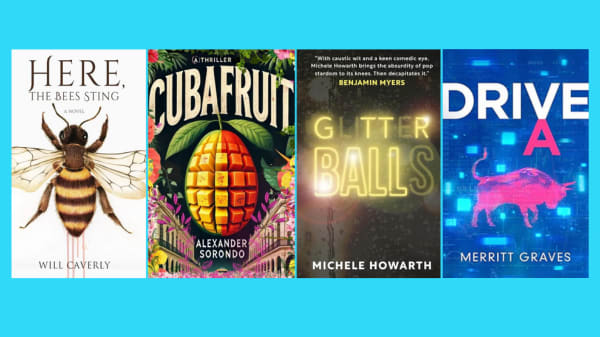
Six other judges have not yet announced their finalist pick, so there’s still hope for Lamb. Click to read more about the Samuel Richardson Prize.
The SetbackI’ve mentioned before that in early October I came down with shingles, that Easter egg of maturity your parents don’t mention when your sister comes down with the chickenpox and they suggest building a blanket fort complete with flash lights, ghost stories, and hot cocoa to speed contagion along.
Spain has a rather different approach to vaccinations than the U.S., though I wouldn’t trust American doctors to be especially more proactive about it. Here you have to beg a doctor for a prescription, get it filled at a farmacia, and then hand-carry it yourself to a clinic for the injection. 😑
Guidance suggests that anyone aged 50 or above get a shingles vaccine, though since my diagnosis I have heard of much younger people getting it, as well as some horror stories of shingles on the face and around eyes and ears that make the patch on my chest and side seem blessedly manageable.
Still, once the rash and flu-like symptoms abated, the lingering combination of numbness, itching, irritation, and outright stabbing pain from the nerve damage has been vexing enough that my original schedule for drafting the follow-up novel to Lamb has been seriously undermined.
I must now admit that perhaps putting “1000 WORDS” on my actual Google calendar as a daily Monday thru Friday task from the beginning of August to the middle of October (50 work days = 50,000 words, oy!) might have had something to do with my outbreak.
Things actually got off to a good start. I stuck to my schedule through mid-September and clocked 27K words before I hit that “muddy middle” and realized I needed to clarify some ideas before continuing—you can read more about that in the September edition.
I admit I lost some momentum. Both my previously completed novels were accomplished through “pantsing” (writing by the seat of your pants versus “plotting” with an outline and other guidelines set before drafting) and this new one was humming along similarly up to the halfway mark.
The Snowflake Method helped me get some things straight in my head, and I even reset the “1000 WORDS” counter to a new deadline 23 working days out (mid/end Novemberish) when Mr. Shingles swooped in and waylaid me.
In the last seven weeks, I’ve managed to get to 33K words, so I’ve got about 17K words to reach my target of 50K, the minimum word count to be considered a novel.
Of course, the story takes up however many words it needs; undoubtedly, this one will expand and contract through rewrites and editing. I will never be a 600-page novelist—I’m a chronic under-writer—and besides, I think many books are too long.
Short Review
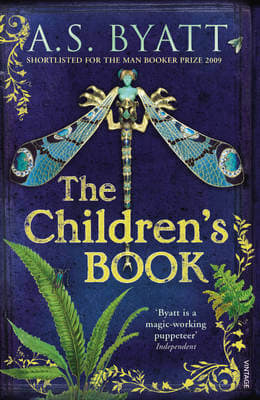
I just finished A. S. Byatt’s The Children’s Book, shortlisted for the 2009 Man Booker Prize and 615 pages. I found it on our building’s impromptu Little Free Book Library shelf, which is mostly Spanish books.
In blurb, it was right in my wheelhouse: squarely bookended at the end of the 19th century by the English Arts and Crafts movement, the pre-Raphaelite Brotherhood, and the later Bloomsberries, it tells the story of the extended Wellwood family and their group of friends with artistic, anarchist, and socialist leanings.
But its length was bloated at least 20% by extended summarizations of real historic movements and events which, though interesting, had little bearing on the meandering plot.
While I love a good family saga—and this one had some great characters and touching moments—it was far longer than it needed to be.
But that cover! 🤩
 A Pivot
In any event, I had a good long talk with my Imaginary Mentor last week, and we came to the conclusion that “1000 WORDS” as a daily task was probably the formula for stress-related illness, and I promptly deleted it from my calendar.
Instead, I’m returning to my 10 minutes a day goal, which I talked about more in one of my very earliest posts below, along with two other tried-and-true strategies for busting through writer’s block.
Just sitting down to write for 10 minutes—a conversation, a description, a rumination, some small snippet of the story—and I will almost always end up writing more. The very act of starting produces connections and what-nexts that carry you along, and before you know it, you’ve written 800 words without even thinking about it.
10 minutes is the deal, and that’s all you have to do—set a timer—you can hit the snooze button and write for another 10 minutes (and another and another) if you’re on a roll, or just get up and walk away.
If I keep this up, I hope to be 80-90% finished with the rough draft by the end of December, and that’s 100% fine by me.
In the interests of holiday travel and merry-making, I’ll leave it there.
I am excited to share more about this second and the planned third book in the Lamb universe, and I’ll be dedicating December’s issue of The Road to Published to a sneak peak of those forthcoming efforts.
In the meantime, I hope you all have a very Happy Thanksgiving. I know I am grateful for many things, including all of you. 💚💛🧡🤎 MTF
 Photo by GraceHues Photography on Unsplash

Ford Knows Books is a reader-supported publication. To receive new posts and support my work, consider becoming a free or paid subscriber.


November 21, 2025
Cheat Sheet to Free eBooks
I know how much we all hate Amazon, boo, boo, boo! King of Refuse, King of Slime—King of Filth, Putrescence, Rubbish, and Muck, boo, boo!
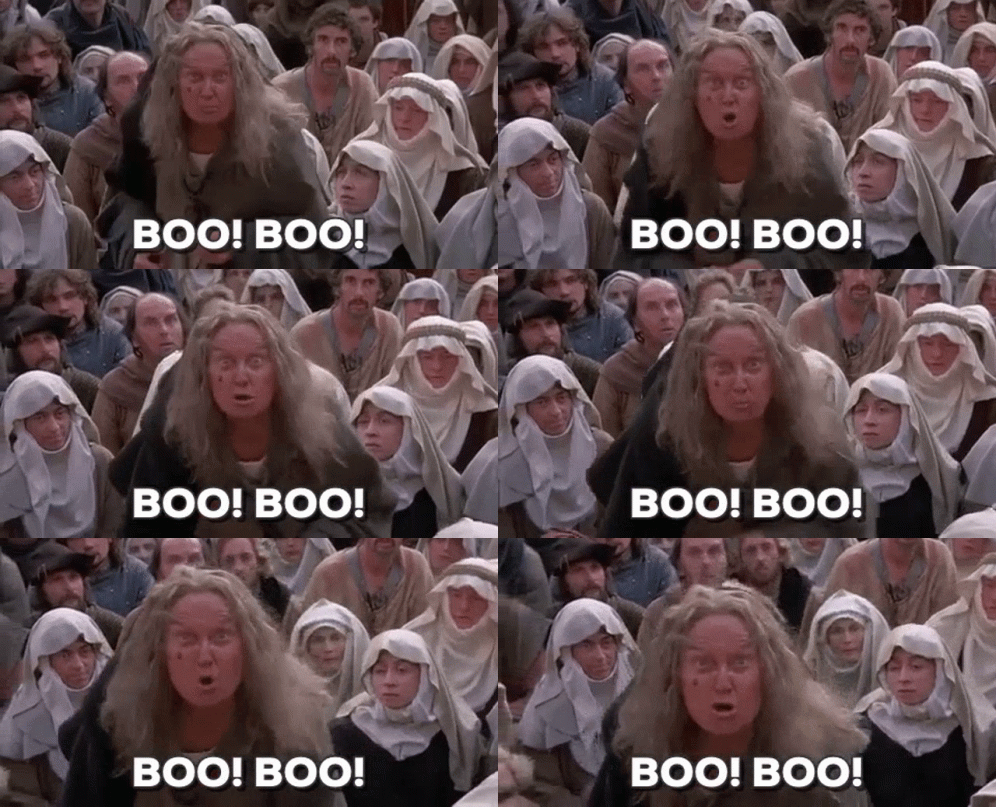
Yes, boo, boo, but…
When Lamb came out, my nephew very sweetly mentioned that he’d bought it through Barnes and Noble (haha) because he wanted me to make some money on it (haHAha).
The truth, dear child (I said), is that Amazon actually does pay writers very competitively for their sales. Although we all want to support indie bookstores (or anyone who isn’t Amazon), in many cases, no one can produce, distribute, and sell books cheaper than the evil king of online retailing. It’s a shame, but there it is.
I get paid real money for print book sales through Amazon—but for every copy of Lamb sold through an indie bookstore, I actually lose a couple pennies.
This is partly my fault: I wanted to price the print book competitively at under $10, not knowing that with the steep 60% discount that indie bookstores get from my distributor, I am technically losing money after printing costs.
Also, bookstores have the option of returning unsold copies—I have to pay the cost of printing every book returned out of my own pocket, even though those books are destroyed rather than resold. Thankfully there have been very few of these, mainly because very few retailers will countenance purchasing and selling self-published books. My non-Amazon sales have been a bare fraction of the total.
Nevertheless, I get it. Despite a dollar/cents advantage to selling through Amazon, the damage they do to brick-and-mortar lives is immeasurable, and I’m very much looking forward to putting together a direct sales operation in the coming year.
In the meantime, however, I’m stuck with the beast, which includes their own “little” system of Amazon Best Sellers, a far cry from the New York Times or USA Today, but still something to talk about over dinner.
Which leads us to…
Free Books Tip #1There’s a whole separate Best Seller list for free Amazon ebooks, and that’s where the secret to tons of great reads for ZERO $$ comes in.
Every Best Seller category has both the Top 100 Paid and the Top 100 Free, and you can download them all to your heart’s delight for absolutely nada, right here:
Amazon Top 100 Free Best SellersCheck out the 31 categories on the left sidebar—each of these breaks down into even more categories, all with 100 Top Free Best Sellers. This amounts to thousands of free books you can read without paying Amazon a cent.
And you don’t have to own a Kindle to read Kindle ebooks—Download the Kindle app to your Mac, PC, phone, or tablet HERE, also completely free!
Free Books Tip #2
The other source of free ebooks is the BookBub Daily Deals newsletter.
If you’re not familiar, BookBub is the leading free service that helps readers discover new books by sending personalized, daily email newsletters featuring deals on discounted or free ebooks. Sign up, choose your preferred genres, and receive a daily email with a curated list of discounted and free ebooks from both mainstream and independent authors.
Sign up for yours and Follow MeFree Books Tip #3
You can win a Kindle to download all those free books, with 15 books already loaded (including Lamb), with this free Bargain Booksy Giveaway! Click to enter.
(Why not? Did I mention it’s FREE?)
Bargain Booksy is another newsletter with great eBook Deals all at or below $5.
PINK FRIDAY SALEThe ebook of Lamb is available for free today!Now that Lamb can no longer be considered new, and sales have slowed, I’m taking advantage of Amazon’s Free Deals feature to refresh interest.
I would rather new people read it for free than not read it at all, especially since this is a long-game, and readers of future books will hopefully search my backlist and continue buying Lamb for years to come as my pipeline keeps pumping. It’s all about keeping momentum going, in all the ways we can.
And as of this morning, Lamb is the#1 Free LGBTQ+ Literary Best Seller!
And #1 in Free Contemporary Literary Fiction, too! (Beating out George Elliot’s Middlemarch, no less…)
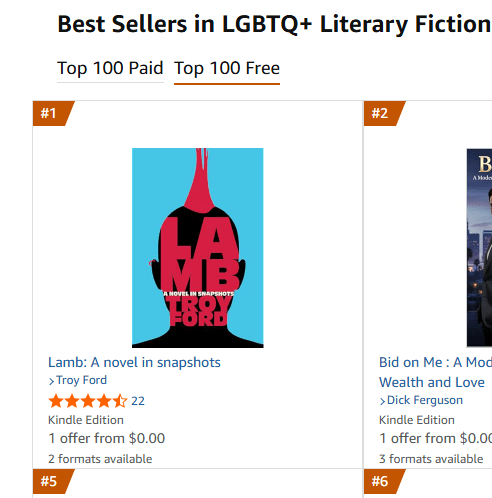
Yay! That’s hundreds of new readers for this bittersweet tale of gay boys trying to understand the world, themselves, and each other.
So if you haven’t already, now is a great time to grab it. Get it here:
And if you do pick it up to read *please* leave a review on Amazon or Goodreads.
It would also be super swell if you told a friend, and encouraged them to give it a try.
Thank you so much!

November 17, 2025
What Has It Got In Its Pocketses? B-B-B-Bye-Bye. Take Us to Your Sofa.
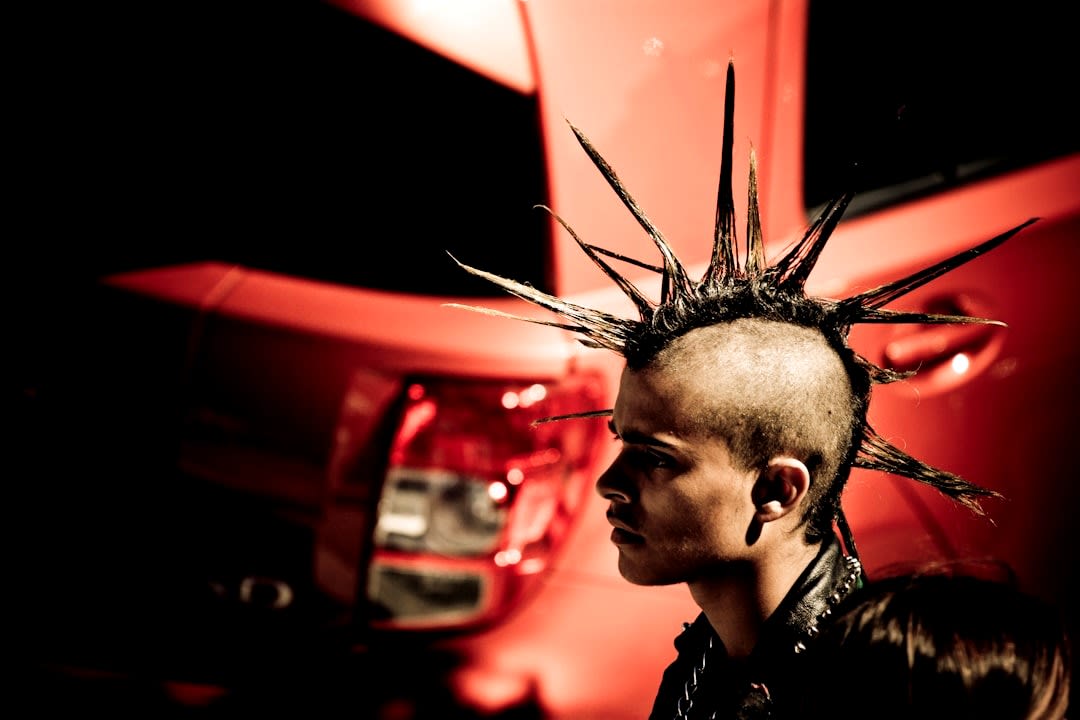 Photo by Mekuria Getinet on Unsplash
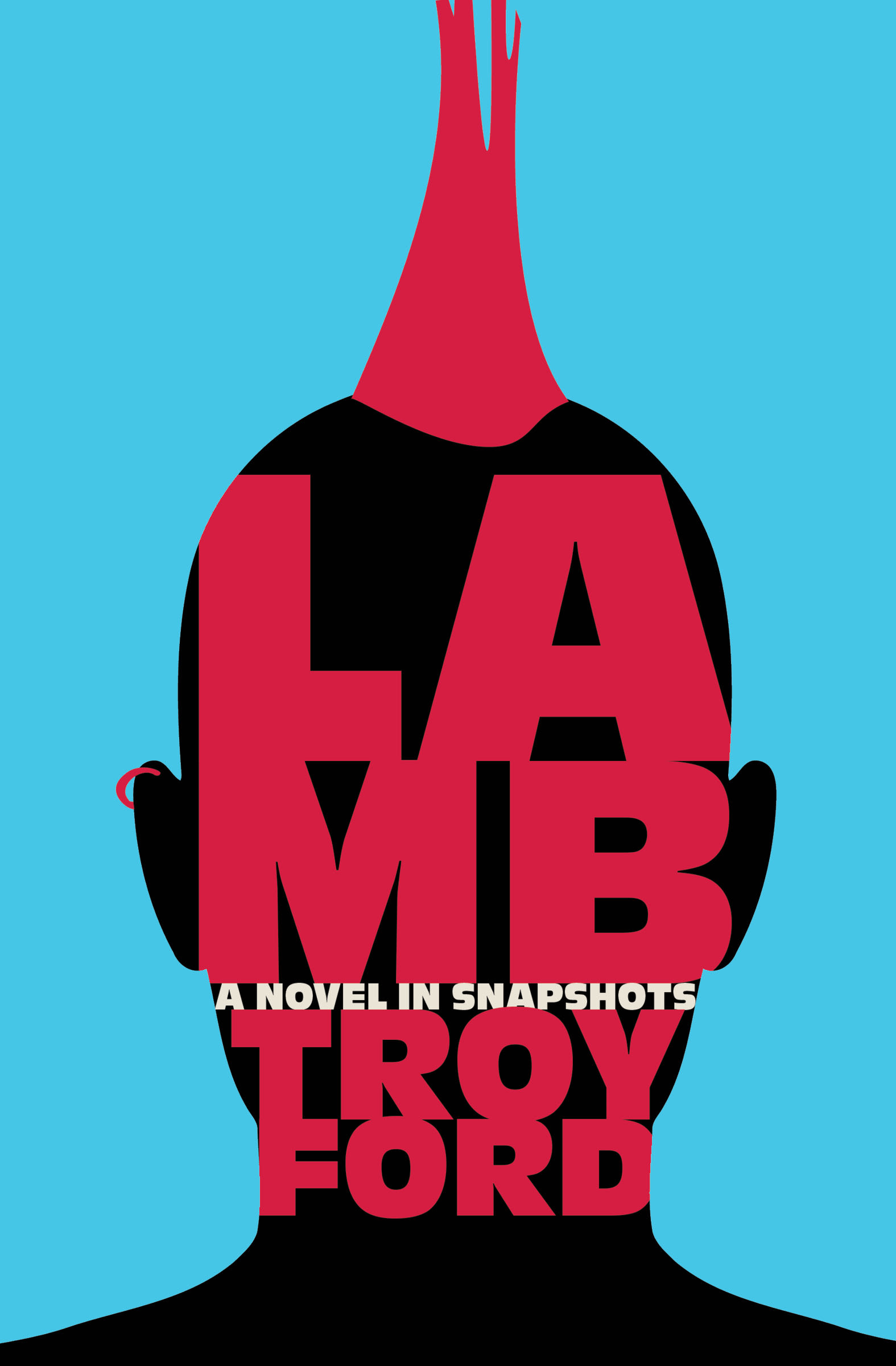
Lamb: A novel in snapshots is the heartbreaking coming-of-age tale of two queer boys in the aftermath of the AIDS epidemic.
Get the ebook free - today through Friday on AmazonI was reading this book during my lunch break at the office and ended up sobbing. That’s how good and heart-wrenching it is. - A.Y.
Lamb is a gut-punch of a novel—raw, lyrical, and devastating in all the ways that matter. Troy Ford writes with the kind of emotional precision that leaves you breathless, weaving a story that’s as much about silence and survival as it is about pain and identity. - M.F.
Ford’s prose is electric, and feels so timeless and yet so positioned in a moment and place in time. - S.A.
Messy, Silly, Sad, Joyful, Terrifying, Ridiculous Life!A series of reminiscences, reflections, notes, and ideas of a chronically anxious late-blooming author and expat living in Spain. What Has It Got In Its Pocketses?
Looking back it's clear I had a problem with jewels when I was just four or five and our little friend Kim down the street showed me the diamonds her mom had given her. They were sparkling and beautiful, not real and white but better, plastic, more like the gems the dwarves were mining in Snow White, heigh ho, and I wanted them so badly, enough to grab a few (she had so many, she should share, it was my birthday, precious, and they'd never be missed.) My mom discovered these and when asked I said they'd been given. She was obviously suspicious but didn’t inquire further, one of many big gaps in parenting that would bite me in the ass years later. Then there was the box of costume jewelry on a visit to our older friend Bridget's house. I returned to this treasure again and again in the loft of the garage to gaze, covet, and touch, until it was understood that little Troy had an unhealthy fixation on jewels and the box was hidden for the rest of our stay. Bridget died in a car accident when she was 18, missed a freeway exit, swerved and flipped her convertible. Her mother clung to me at the funeral for an uncomfortably long time, my covetousness forgiven, probably forgotten, but I couldn't help but think while ensconced in her awkward embrace, Where are those jewels now?
B-B-B-Bye-ByeOne of my fondest early memories is singing “Cecilia” in the car off the Simon & Garfunkel 8-track with our parents, not that we understood a word of Cecilia’s shenanigans, but they were such great harmonizers, weren’t they? We also had “The Graduate” soundtrack, and coo, coo, ca-choo, you did have such a lovely leg, Mrs. Robinson, perhaps a little too lovely for an impressionable young queer with access to his sister’s knee-high patent pleather red boots. Chunky little heel, not too high, could dance around with no wobbles and a towel draped over my head à la Cher hair to “S-A-T-U-R-D-A-Y Night” and “B-B-B-Benny & the Jets” (“…she’s got electric boobs, her mom has two”—I still have a bad ear for lyrics) and the Cruella DeVille song. The thrill of it all. My sister didn’t much like my incessant absconding with her boots, and neither did my parents the first time they caught me and realized they had capital-T-rouble on their hands. 1974. The day the music died, bye-bye Miss American Pie.
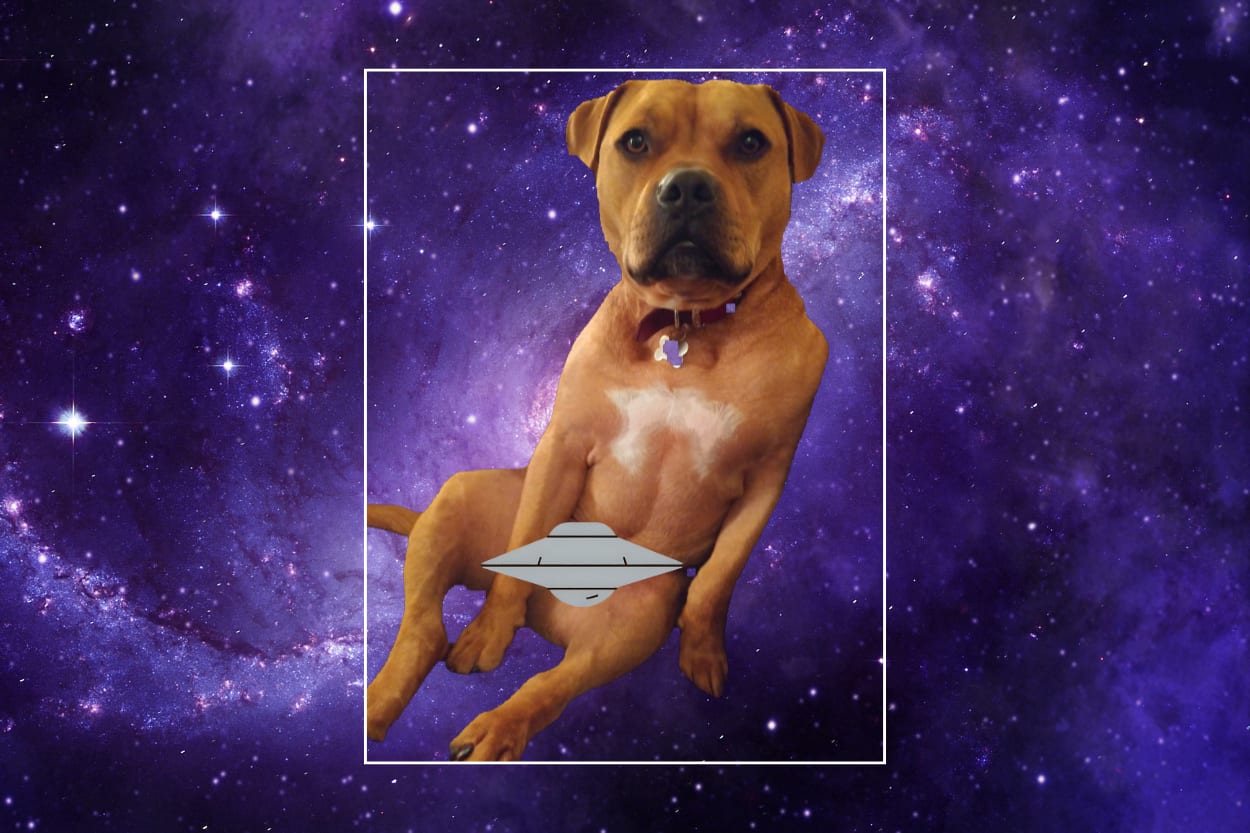
Take Us to Your SofaContact is made, the flying saucers have landed. World leaders array themselves in sashes and medals and half-circles round and about the gleaming silver salver-shaped crafts. Ramps extend, portals retract, and out from the depths of the interstellar transports the visitors spring and prance to greet us. The world over, we watch with our children and pets the televised broadcast of First Contact. “Welcome?” we cry out, astonished—for the aliens are pitbulls—we turn to our dogs, they raise their paws in unison and wink. They’ve been here all along, watching, adoring, sleeping in our beds, demanding belly rubs.

Ford Knows Books is a reader-supported publication. To receive new posts and support my work, consider becoming a free or paid subscriber.
November 10, 2025
Why I ❤️ "Cat's Cradle" by Kurt Vonnegut
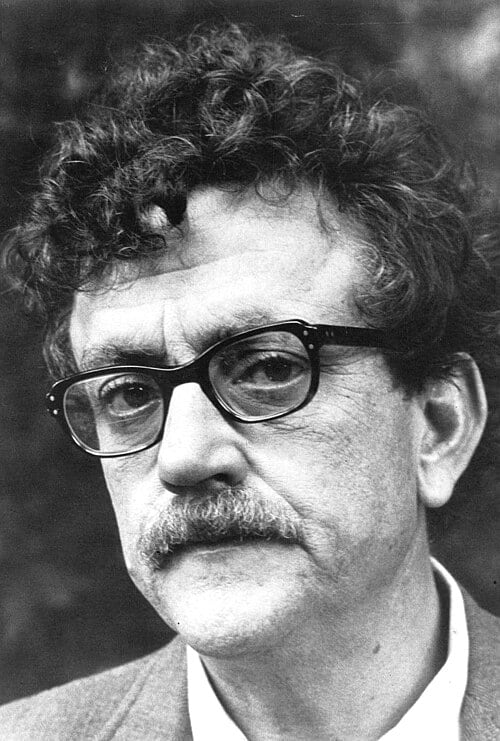
In this month’s edition of The Books We ❤️ Club, author brings a seasoned eye to Kurt Vonnegut’s apocalyptic satire Cat’s Cradle, digging into its blend of absurd humor, moral inquiry, and postwar paranoia. J.B. explores how Vonnegut distills the anxieties of his era—and now our own—with biting wisdom and black comedy. Whether you’re a Vonnegut veteran or new to his work, you’ll love this take on his lesser known classic.
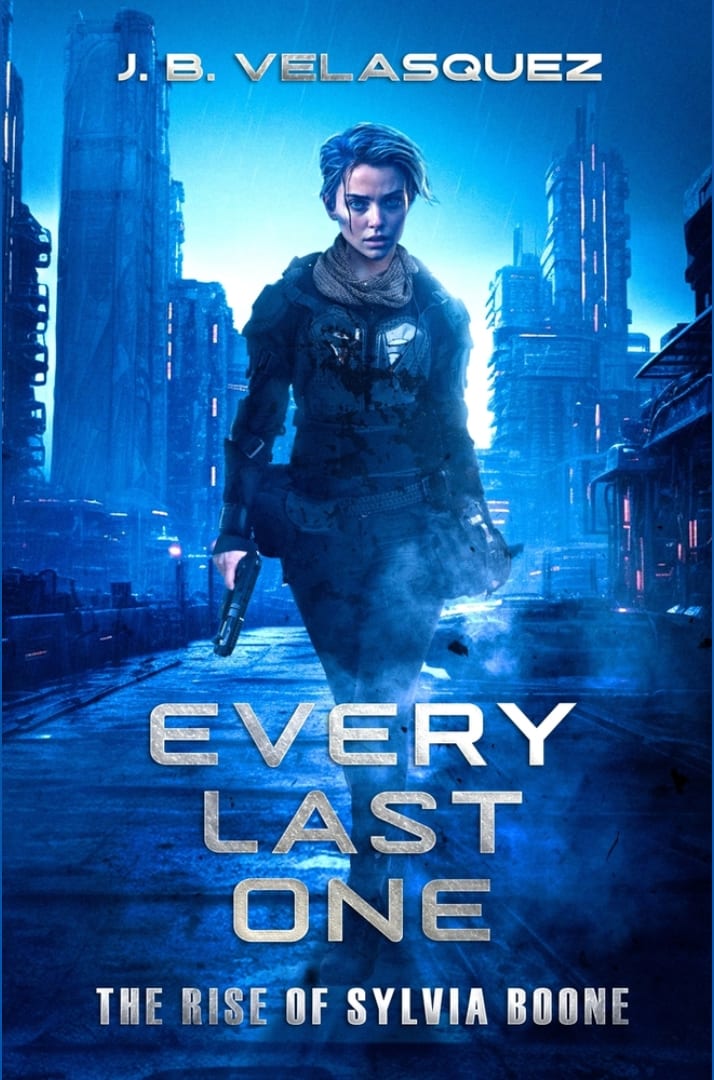
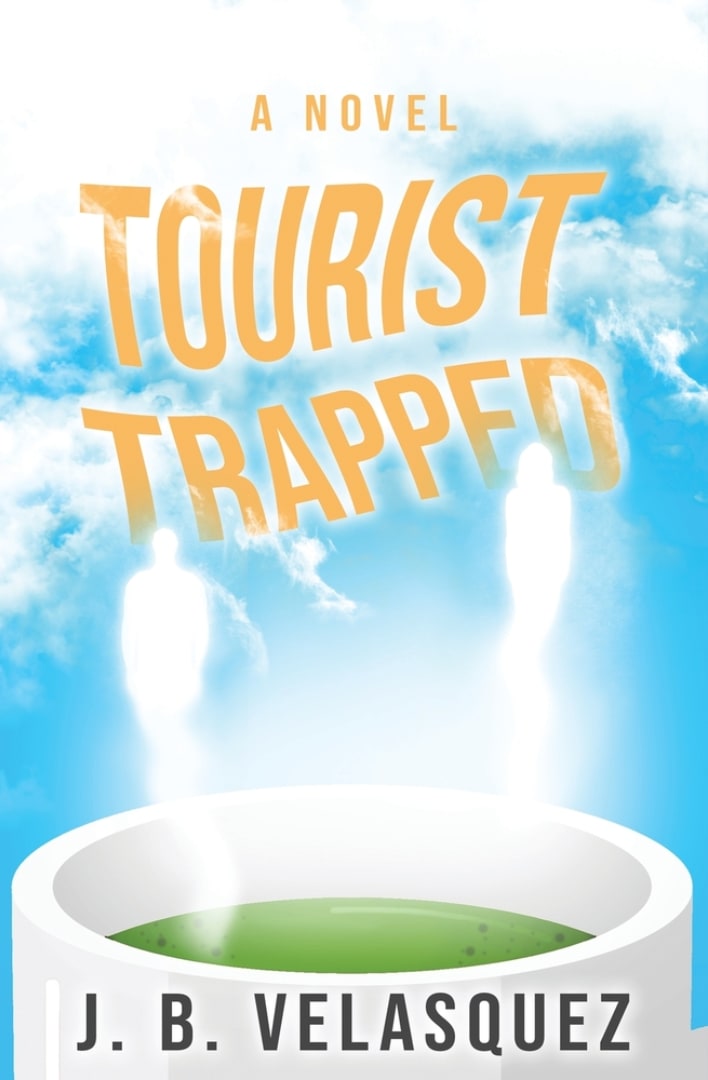
J.B.’s own fiction also has a decidedly subversive slant, from the psychedelic surrealism of Tourist Trapped, to dystopian thriller Every Last One: The Rise of Sylvia Boone. I loved woman warrior Sylvia Boone and the near-future take on ripped-from-the-headlines authoritarian themes—both books are available at major retailers in paperback or ebook.
Happy reading! ~ MTF
 Amazon - Bookshop
 Amazon - Bookshop
 The Books We ❤️ Club—the book club you don’t actually have to read the book, leave the house, or even change out of your jammies to enjoy—as writers sing the praises of books that reach into our hearts. We invite you to add your own reactions, insights, and ideas in the Comments for an impromptu book club session. Share your favorite quotes, characters, moments, and surprises in discussion with other passionate readers.(And if you’d like to feature your favorite book in a future edition, DM me.)NEXT TIME: “Why I ❤️
Giovanni's Room
by James Baldwin” with
Why I ❤️
Cat’s Cradle
by Kurt Vonnegut
The Books We ❤️ Club—the book club you don’t actually have to read the book, leave the house, or even change out of your jammies to enjoy—as writers sing the praises of books that reach into our hearts. We invite you to add your own reactions, insights, and ideas in the Comments for an impromptu book club session. Share your favorite quotes, characters, moments, and surprises in discussion with other passionate readers.(And if you’d like to feature your favorite book in a future edition, DM me.)NEXT TIME: “Why I ❤️
Giovanni's Room
by James Baldwin” with
Why I ❤️
Cat’s Cradle
by Kurt Vonnegutby of Indie Author Roadtrip
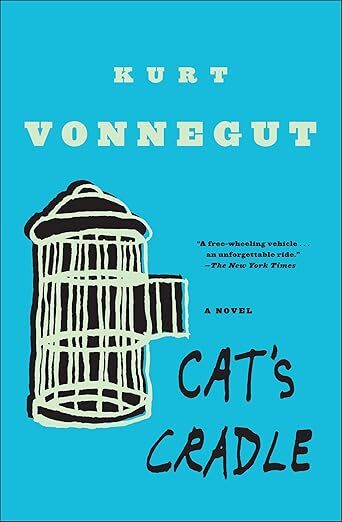 Most recent cover (birdcage)
This isn’t the cover I have at home. This is the one you’ll find at the bookstore if you buy it new. Knowing nothing of this book, one might assume the birdcage has something to do with the story. It does not. Just as there is no cat, nor cradle, in a cat’s cradle. I’ll get to that later.
This birdcage was an original Kurt Vonnegut drawing. He often includes his own illustrations, but this one doesn’t appear in any of his books, although it’s probably related most to his book Breakfast of Champions (1973).
You can get a silkscreen of this illustration signed by the late Vonnegut here for only $675. What a deal. Why is it on the cover of Cat’s Cradle (1963—ten years prior to Breakfast of Champions)? No idea.
Here’s my copy—the one I’ve read at least six times since the late nineties:
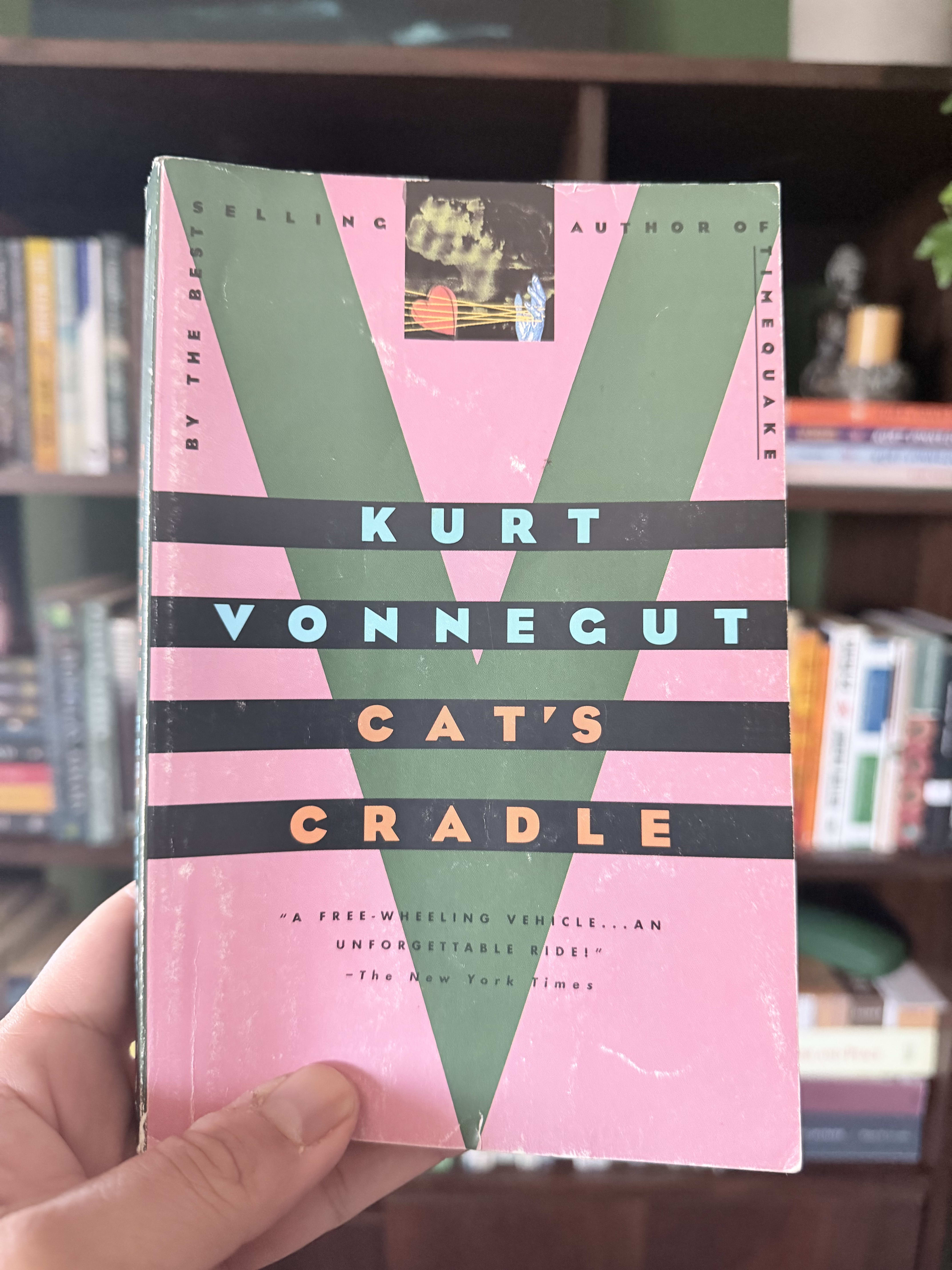 My copy of Cat’s Cradle
This was the second Vonnegut book I read after Slaughterhouse-Five (1969) and I can’t decide which one I love more. I love them both, but since you’ve probably already read or heard of the former, I’m going to shed light on this little gem and why it holds a special place in my black heart.
The PlotKurt Vonnegut’s Cat’s Cradle is a darkly hysterical and prophetic novel that explores the absurdity of human ambition and the dangers of blind faith. Through his signature wit and irony, Vonnegut crafts a postmodern fable about how easily humanity can destroy itself in pursuit of progress, often poking fun at science.
“He said science was going to discover the basic secret of life someday,” the bartender put in. He scratched his head and frowned. “Didn’t I read in the paper the other day where they finally found out what it was?”
“I missed that,” I murmured.
“I saw that,” said Sandra. “About two days ago.”
“That’s right,” said the bartender.
“What is the secret of life,” I asked.
“I forgot,” said Sandra.
“Protein,” the bartender declared. “They found out something about protein.”
“Yeah,” said Sandra. “That’s it.”
The story follows John (or Jonah), a writer researching what people were doing on the day the atomic bomb was dropped on Hiroshima. His investigation leads him to Dr. Felix Hoenikker, one of the fathers of the atomic bomb, who also invented ice-nine, a substance capable of freezing all water on Earth, thus destroying all life on the planet.
Jonah meets each of the late Hoenikker’s children: Franklin, Angela, and Newt. Each of the Hoenikker kids possessed a sliver of ice-nine (no spoilers—wink). They all travel to the fictional Caribbean island of San Lorenzo where Franklin, the eldest Hoenikker is to become the next president. Newt, an artist with dwarfism, describes a rare interaction with his scientist father who once showed him a cat’s cradle with string woven between his fingers.
“No wonder kids grow up crazy. A cat’s cradle is nothing but a bunch of X’s between somebody’s hands, and little kids look and look and look at all those X’s . . .
“And . . .”
“No damn cat, and no damn cradle.”
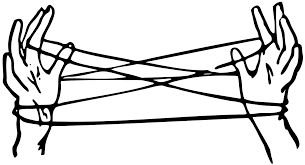 Cat’s cradle
The residents of San Lorenzo practice a strange religion called Bokononism, a belief system that openly admits it’s all lies, yet somehow provides comfort to its followers. Many of the teachings are written in the form of Calypso.
Tiger got to hunt, Bird got to fly;
Man got to sit and wonder, “Why, why, why?!”
Tiger got to sleep, Bird got to land;
Man got to tell himself he understand.
One of the strange practices in Bokononism is the act of boko-maru, where adherents sit facing each other and press the bottoms of their bare feet together to “mingle their awareness.” It looks like this:
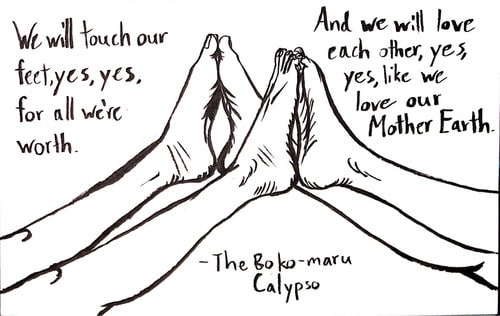
One day, when I start a band, I’m calling it Boku-maru (since Ice-Nine is already taken).
Enduring RelevanceWritten during the Cold War, Cat’s Cradle was a response to the existential dread that was pervasive at the time. But in the 21st century, ice-nine could just as easily symbolize climate change, AI, or genetic engineering—any innovation pursued without moral restraint. The novel’s warning about science divorced from ethics parallels modern debates about corporate greed, environmental collapse, and the militarization of technology.
Vonnegut also critiques the human tendency to seek solace in comforting falsehoods. Bokononism preaches:
“Live by the foma (harmless untruths) that make you brave and kind and healthy and happy.”
This reflects our own reliance on political spin, social media narratives, and capitalist consumer culture to provide meaning in an uncertain world. Just as San Lorenzo’s citizens accept contradictions to survive, we too often cling to illusions rather than face uncomfortable realities.
We turn a blind eye to foreign labor practices in order to feel content to carry iPhones and wear the latest fashions, mass produced in unthinkable working conditions around the globe. We vote for candidates who promise equality for all and then make deals that go against our best interests behind our backs every day—yes, even the “good guys.” We engage on social media platforms that promise human connection, but in reality fleece us of our privacy for the benefit of their advertisers and stockholders.
We know all this. But we keep playing our part in the game of capitalism.
Cat’s Cradle is not just satire but a moral examination of human responsibility. Vonnegut’s message is clear—knowledge without compassion, faith without skepticism, and progress without wisdom will lead to ruin. The novel’s final image remains a haunting reminder of how fragile our civilization is, and how easily it can end, not with full on malice, but with ignorance and wanton self-interest.
 Photo by Osman Rana on UnsplashCase in point
AI has already taken over our Google search results. Most people are fine with the results AI generates and don’t see a need to verify its sources. Software engineers are building AI models so that one day those AI’s can take over their jobs. New graduates in programming and finance can’t find entry level work anymore because companies are using AI to fulfill most of the tasks related to those kinds of jobs.
What happens once AI can excel at most human operations? What happens when it learns to program itself? Yes, this has been the topic of science fiction for a long time, but it’s not all that fictional anymore. I guess everyone’s okay with this?
When I first read Cat’s Cradle in the late 90’s, I had no clue what a smart phone was, and even when I did, I didn’t realize that what made it “smart” was it’s ability to collect my data. I didn’t know vacuum cleaners would not only run by themselves, but would make maps of my floor plan to sell to data brokers. Or that my television could do the same with my entertainment preferences and even listen to my conversations. By the way, you can’t buy a new TV that isn’t “smart” anymore—I checked.
In a world facing climate catastrophe, misinformation, and the unchecked juggernaut of AI technology, Vonnegut’s warning feels less like science fiction and more like prophecy. And here’s the thing about prophecy—you can’t do a damn thing to stop it.
 Indie Author RoadtripSlice of life observational humor, short stories, and reflections on the writer's life from indie author J. B. Velasquez. By J. B. Velasquez

FORD KNOWS is a reader-supported publication. To receive new posts and support my work, become a free or paid subscriber.
November 3, 2025
Goodbye I Love You.
Goodbye I Love YouThe other night I dreamt of arriving at a house. I didn’t recognize it from real life, but in the dream I knew who lived there. I was so alert to what was about to happen that I began lucid dreaming—that’s where you know you are dreaming, and it can be super vivid.
I walked in the door, and turned toward the living room. My mother stepped directly in front of me.
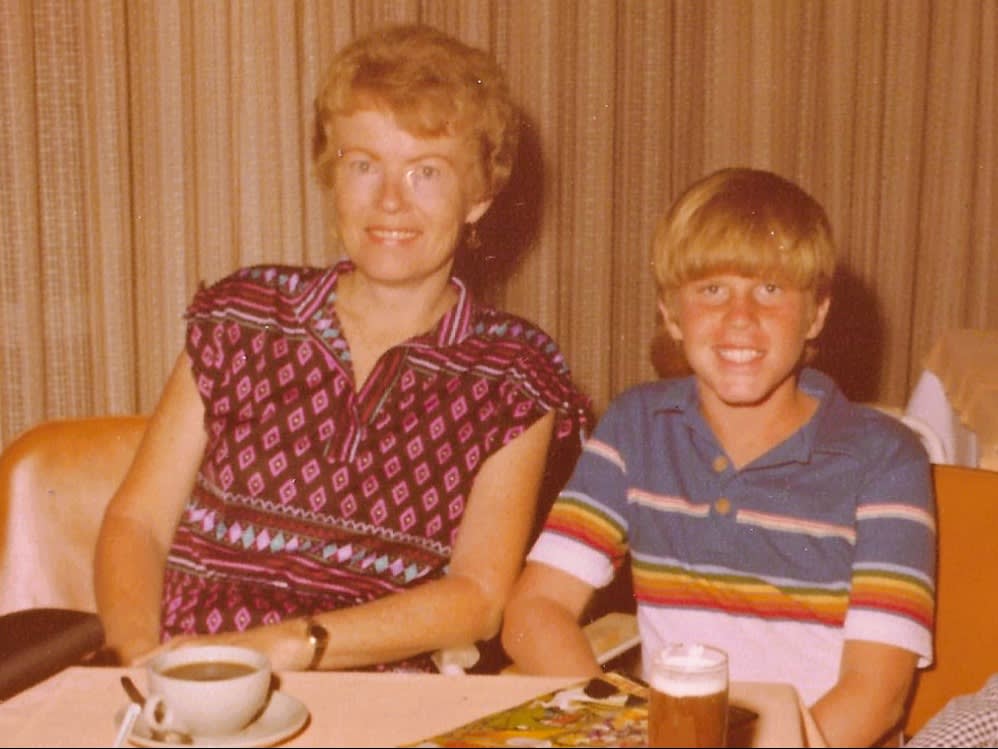
Mom died in 2014, but there she was, looking at me plain as day, as if I was wide awake. I’ve never had such a clear dream—it was her.
It shakes me even as I write this that I had a chance to look her in the face all these years later, after what happened near the end of her life. We weren’t exactly estranged, but she began to have dementia after my father died, and my niece who lived with her was screening my calls and messages so I don’t think they were getting through to her.
When my sister finally stepped in to report her own daughter for financial elder abuse (after years of using access to her children to coerce our parents into buying her cars and washing machines, what do they say about apples and trees?) she arranged a full-time state care facility for our mom but didn’t share the name or location of it with me.
I never saw or spoke to my mother for the last four years of her life; my sister told me she didn’t remember having a son by that time anyway. But that dream was my chance. If I was the kind of person who believed in an afterlife, I would think this was a visitation.
She was calm, as she stood there, no expression on her face. If she’d squealed and hugged me and all that, it wouldn’t have seemed so real. But no, it was me and her standing and facing each other, just looking, and the moment crystallized in stark detail.
I said “I love you”—that was it, there wasn’t anything else to say. She didn’t speak. Maybe if she had that would have felt more like just a dream too.
Ford Knows Books is a reader-supported publication. To receive new posts and support my work, consider becoming a free or paid subscriber.
October 31, 2025
Happy Halloween
Remember the time we watched “The Mummy’s Revenge” on TV late into the evening and when our parents told us to go upstairs and put on our pajamas we paused at the bottom and saw ACTUALLY SAW a mummy lurking in the dark up at the top waiting for us and we screamed and cried and refused to ascend without an escort?
Remember that Martian movie where, when they died, the Martians’ veins suddenly appeared as livid lines on their skin and then they dissolved into mush and that very night we woke up to peepee and while standing at the toilet noticed those same lines all over our arms not realizing they were just the pressure creases from our sheets and we ran out of the bathroom with our PJs around our ankles screaming and imagining we were about to dissolve into mush and scaring the living daylights out of our parents?
And remember that other time we were lying in bed and we tried to roll over but a skeleton was right behind us and shoved us back over quite forcefully and yet again we screamed and left our parents finally convinced they were making very bad choices about our young TV viewing activity?
Remember telling new second grade friends JJ and Mamoon all about Bloody Mary and how we trooped into the boy’s bathroom at school to test the legend and after saying her name seven times the bevel around the mirror caught the light just so and we thought it was opening and screamed real bloody murder and then they screamed and then we all ran screaming from the bathroom convinced she had arrived?
Good times.

October 27, 2025
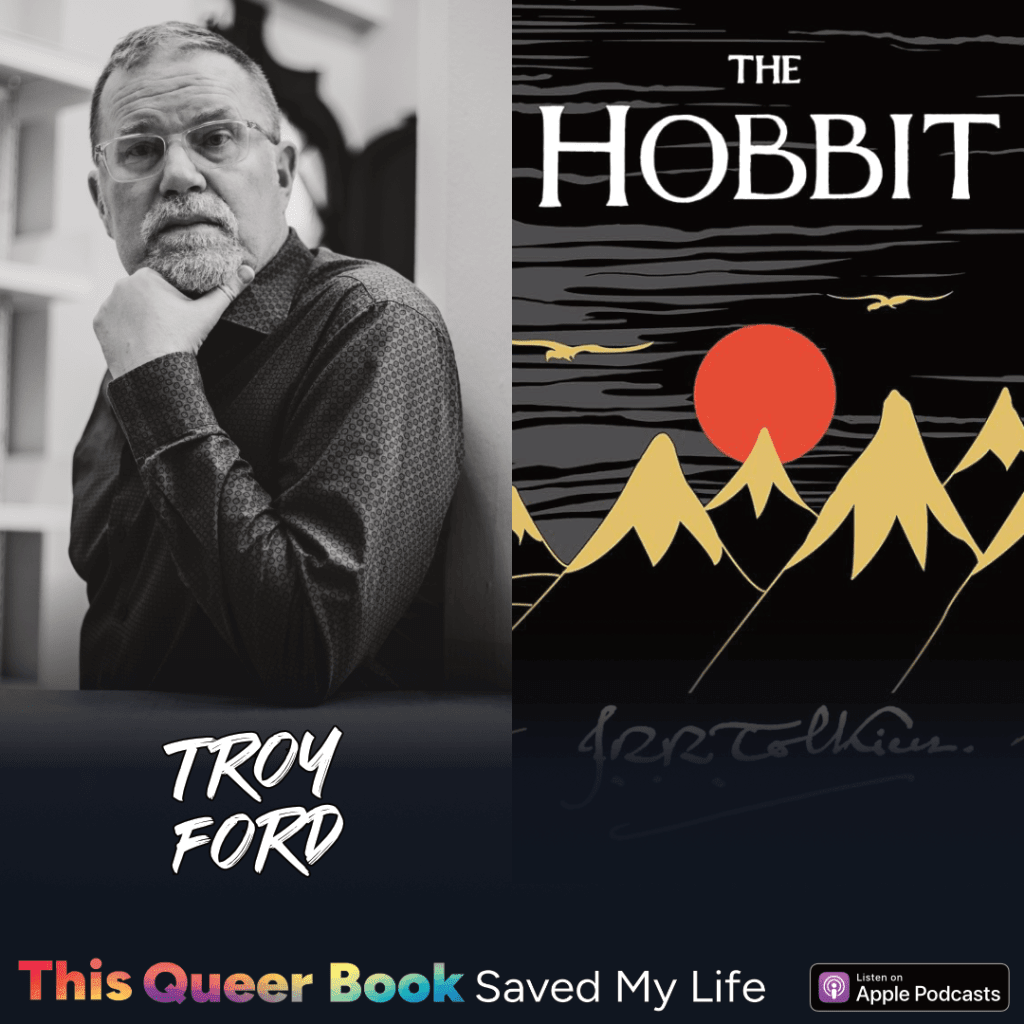
My "This Queer Book Saved My Life" podcast episode
Esteemed Readers & Friends,
I’m having a bit of a rough time—I was diagnosed with shingles three weeks ago, and I’m still struggling with pain, discomfort, and general exhaustion. I’m able to do all the basic stuff, but creative/critical thinking ain’t one of them. The brain fog is real! I’m behind on all my writing.
I just want to mention that I went to my first producers’ meeting for the This Queer Book Saved My Life podcast. I’m excited to have joined them as an associate producer even more now that I’ve had a chance to provide input and receive sneak peeks of future programming.
This week I’m rerunning my September episode with host John Parker in which we discuss my take on the queer subtext of The Hobbit. JP is also a huge Lord of the Rings fan, so it was a lot of fun. If you have a chance, please give a listen.
All my best,
Troy

Ford Knows Books is a reader-supported publication. To receive new posts and support my work, consider becoming a free or paid subscriber.
October 20, 2025
Impromptu Grief Counseling. Strange Fruit. For the Love of Mud. Beep Bop.
Impromptu Grief CounselingI'm remembering a party, thirty years ago now, and it was fraught for a number of reasons but the main thing was that I have always covered my social anxiety with laughter. This guy came in, a punk with a shaved head, wearing a black mini-dress and boots, stomping around, and when I saw him I laughed—it wasn't a mean laugh, it was a Wow, that's fantastic! laugh, I was genuinely delighted to see a guy say Fuck it! and try something different but of course I never would have had the courage to approach him and say Good for you, so laughter was the only option. But Yes, Queen! was not the way he took it, he got really angry, and immediately left the party, and by the time I realized he had misinterpreted my laughing, he was gone, and there were questions. Not the first or the last time people have asked Why are you laughing? when apparently I wasn't supposed to, or at least they didn't think I should. One time with a friend declaring at length how housework is the yoke of womankind who became incensed I was laughing my Right on! laugh; another with a fellow bookstore worker who was demonstrating how she consoled a customer who couldn't find a book they wanted, she was super serious but I couldn't help but laugh at her reenactment of impromptu grief counseling in the cookbook section.
Strange FruitI usually prefer red grapes, but these green grapes the other day tasted strongly like strawberries, how is that possible? Local restaurant El Pop (Catalan for octopus) serves olives which don’t taste like olives at all and I can actually eat them. Olives are the anchovies of the earth. Also I’m horrified by eating octopuses, they’re as smart as children, maybe smarter considering some kids I’ve known. The naranja cookie we asked for tasted wonderfully lemony instead. Naranja is Spanish for orange, which is surprisingly close to the Sanskrit source, nāraṅga. The fruit was named for the color—the more you know.
For the Love of MudI've been stung by a bee three times in my life. The first was when I was sitting on top of a swing set playing with the neighbor kids, and a fly landed on top of my head. I reached up to swat that fly, but it was a bee of course, and it stung me. I cried but didn't fall off the swing set. The next was when I ran over a bee on my tricycle, maybe on purpose, casual killing as kids do. I pulled over and dismounted to check on my work, poking the bee to see if the job was finished, and it stung my finger, maybe after death even, a real zombee. Instant karma. The last was in Palm Springs on a family vacation. My father was ferrying me around the pool, I must have been quite young, and as we were moving through the water I saw the bee out for a swim too and watched as we moved closer and closer until *sting* right on my chest. Tears and wailing. My father took me to this grotto-like planter contraption by the side of the pool where I had been playing earlier, there was a pocket of dirt flecked with mica, special dirt maybe? It was really sparkly, I'd fallen in love with the dirt. My dad grabbed a handful of it to press on my bee sting and then I was doubly distraught that he had disturbed my beloved mud.
Beep Bop
Every time, without fail, I can’t help it. Whenever someone sticks out their knuckles for a fist bump, I am compelled to say out loud the sound effect I hear in my head. “Boop.”
Ford Knows Books is a reader-supported publication. To receive new posts and support my work, consider becoming a free or paid subscriber.
October 13, 2025
Why I ❤️ "Their Eyes Were Watching God" by Zora Neale Hurston
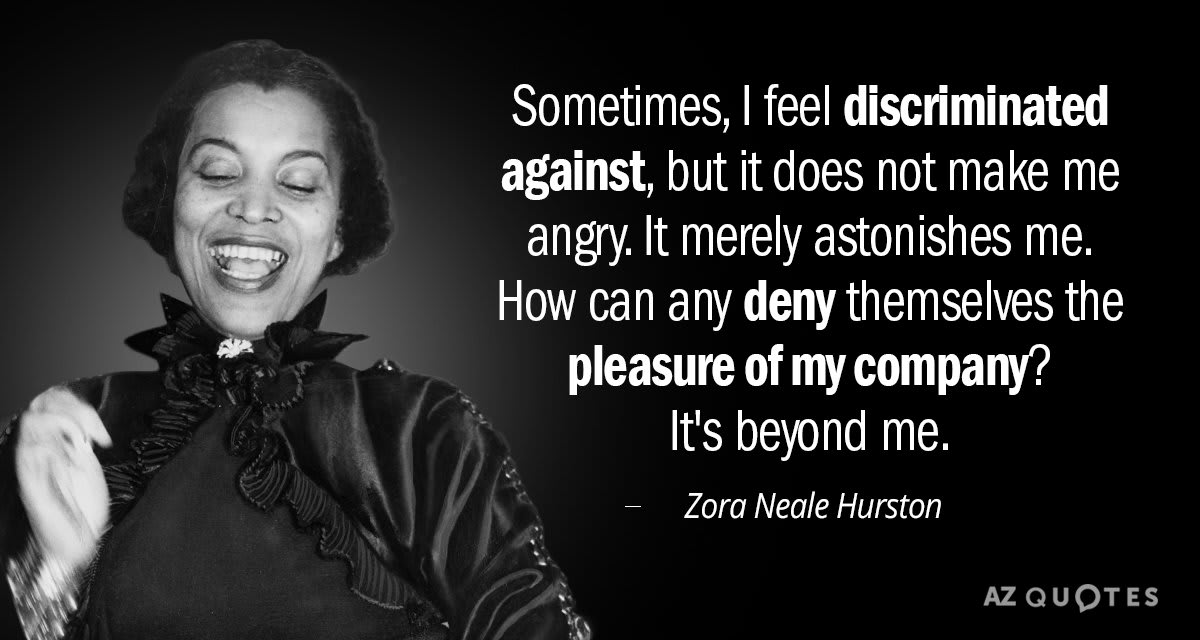
I read Zora Neale Hurston’s Their Eyes Were Watching God, oh, probably thirty years ago. I remember liking it, even though I can’t remember anything about it. Blame as many years of smoking weed and drinking rather than the author.
What did stick with me though was the above quote I read around the same time. The confidence of it, the singular sureness. Such is the power of clarity of vision: keeping an eye on the divine can reorient your apprehension of others, and of yourself.
In this month’s edition of The Books We ❤️ Club, I’m delighted to present ’s take on ZNH’s magnum opus with Nature as a force to be reckoned with. Julie’s newsletter, Homecoming, centers on climate change and eco-fiction, and her review gave me pause to think about how both our fiction and our lives must face the uncomfortable truth of our real place in the web of life.
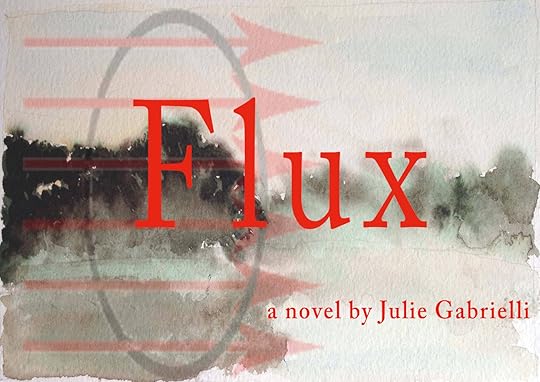
You can read Julie’s Substack serial novel, Flux , HERE.
The asthmatic climate scientist Grace Evans is a closet inventor who approaches her work (and her life) as puzzle to solve, a machine to repair. A rising academic star, she documents the harms caused by the fracking industry. She’s determined to expose the methane-leaking cracks in gas wells while hiding her own widening cracks—in her integrity, her relationships, her health, and her control over any of it.
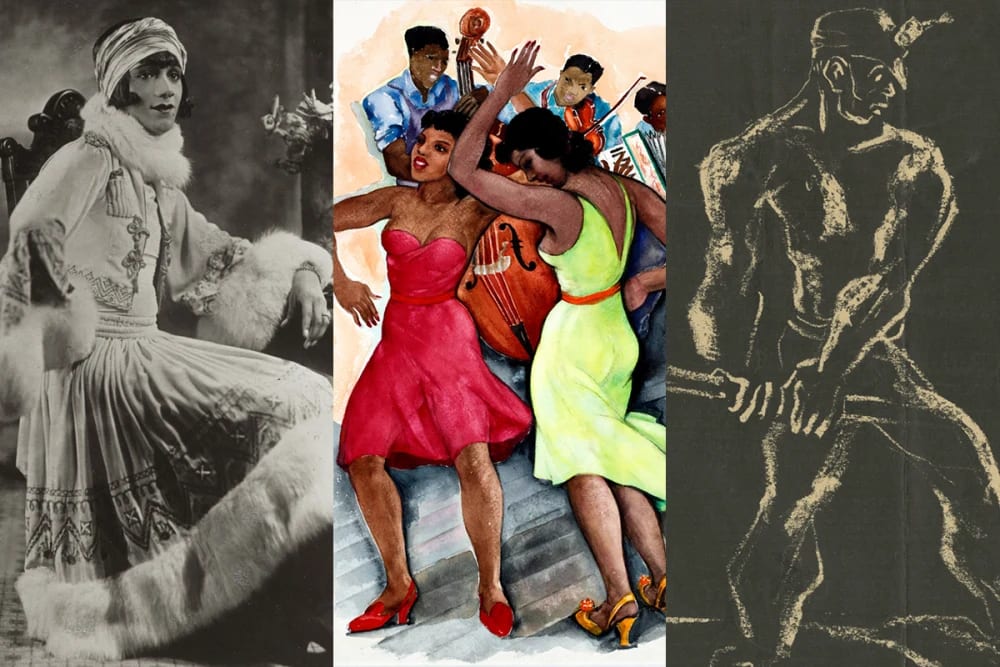
If you are visiting NYC between now and March, you might be interested in a new exhibit at The New York Historical about the Harlem Rennaisance, this one centered on a queer perspective—Read an article about it on NBC NEWS.
And you might be interested to read about the recent staging of Hurston’s lost play Spunk at Yale from The New York Times—thanks to Julie for sharing the free article.
Happy reading! ~ MTF 💜🎩🐈⬛
The Books We ❤️ Club—the book club you don’t actually have to read the book, leave the house, or even change out of your jammies to enjoy—as writers sing the praises of books that reach into our hearts. We invite you to add your own reactions, insights, and ideas in the Comments for an impromptu book club session. Share your favorite quotes, characters, moments, and surprises in discussion with other passionate readers.(And if you’d like to feature your favorite book in a future edition, DM me.)NEXT TIME: “Why I ❤️
Cat’s Cradle
by Kurt Vonnegut” with of Indie Author Roadtrip
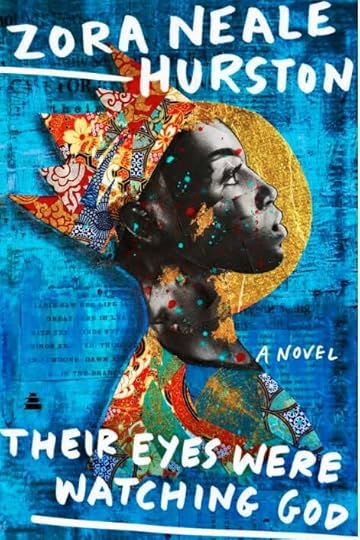 Buy on BookshopThis is not a metaphor: the embrace of animacy in Zora Neale Hurston’s
Their Eyes Were Watching God
Buy on BookshopThis is not a metaphor: the embrace of animacy in Zora Neale Hurston’s
Their Eyes Were Watching God
by of Homecoming
I’m always looking for fiction that decenters humans to explore other POVs. Why not extend our literary imagination to consider that the rest of the world is as alive and aware as we are? After all, that’s been the understanding for most of human history. In my own work, particularly the short stories, I explore setting aside the modern view of nature as object, a mistaken idea that reserves consciousness for humans alone. Fiction invites us to live in another’s skin, so why not other-than-human characters? To experience another’s world cultivates empathy.
There are many ways to read any great novel. That’s the joy of rereading a novel like Zora Neale Hurston’s 1937 masterpiece, Their Eyes Were Watching God. This time, I found that it can be read as an early foray into, call it eco-fiction or climate fiction. The novel is set within a deeply felt, ever-present connection to nature. Yes, it’s overshadowed by the hubristic work of town-building and swamp-draining, but ultimately reclaimed by calamity and community.
Let’s begin on page one:
“Ships at a distance have every man’s wish on board. For some they come in with the tide. For others they sail forever on the horizon, never out of sight, never landing until the Watcher turns his eyes away in resignation, his dreams mocked to death by Time. That is the life of men.
“Now, women forget all those things they don’t want to remember, and remember everything they don’t want to forget. The dream is the truth. Then they act and do things accordingly.
“So the beginning of this was a woman and she had come back from burying the dead. Not the dead of sick and ailing with friends at the pillow and the feet. She had come back from the sodden and the bloated; the sudden dead, their eyes flung wide open in judgment.” (p.1, ch.1)
This passage is my go-to nomination for “best novel opening.” I’m tempted to write this whole essay about Hurston’s oceanic, 137-word evocation of men and women, dreams and truth, death, judgment, and survival. I’m humbled by her artistry, her virtuosity to conjure tide, horizon, resignation, memory, sickness, the sodden and sudden.
But, okay. I’ll accept the challenge and share why I ❤️ this book so much. It’s a triumph of paradox—heady and grounded, defiant, bold, plotted like a potboiler, and full of salty, unique characters who pursue happiness on their own terms. Before the climatic hurricane unleashes Nature’s full fury, Hurston builds a world of alluring animacy. As a girl, Janie Crawford’s body broadcasts her belonging:
“She was stretched on her back beneath the pear tree soaking in the alto chant of the visiting bees, the gold of the sun and the panting breath of the breeze when the inaudible voice of it all came to her. She saw a dust-bearing bee sink into the sanctum of a bloom; the thousand sister-calyxes arch to meet the love embrace and the ecstatic shiver of the tree from root to tiniest branch creaming in every blossom and frothing with delight. So this was a marriage! She had been summoned to behold a revelation. Then Janie felt a pain remorseless sweet that left her limp and languid.” (p.11, ch.2)
Now that’s a sexy sex scene! Janie knows in her cells that such delight, passion, and love is both miraculous and commonplace in Nature, that it should be the measure of all human relationships. She resolves then and there that this will be her gauge for marriage. As her story unfolds, she’s twice disappointed. Then she meets Tea Cake, the love of her life.
Janie’s intimacy with animate Nature threads through the early chapters. Trapped in her first marriage to an older man, arranged by her well-meaning grandmother, she
“waited a bloom time, and a green time and an orange time. But when the pollen again gilded the sun and sifted down on the world she began to stand around the gate and expect things. . . She knew things that nobody had ever told her. For instance, the words of the trees and the wind. She often spoke to falling seeds and said, ‘Ah hope you fall on soft ground,’ because she had heard seeds saying that to each other as they passed.” (p.25, ch.3)
Hurston’s deftness with omniscient and close-third POV serves this project of literary animacy well. The novel unfolds as a story told in close third person by Janie to her friend Phoebe about what happened after she left town with Tea Cake and her freedom a mere nine months after her second husband died. Hurston takes calculated liberties to light briefly on another character’s consciousness like a pollinator. During a community ceremony for a dead mule, she even dares to infiltrate a flock of waiting buzzards.
“They were holding a great flying-meet way up over the heads of the mourners and some of the nearby trees were already peopled with the stoop-shouldered forms.” (p.61, ch.6)
Hurston imagines the birds as distinct characters, including a “white-headed leader” (whom she also calls “the Parson”) on whose presence the others are obligated to wait before digging into the feast.
“He had scented the matter as quickly as any of the rest, but decorum demanded that he sit oblivious until he was notified.” (p.61, ch.6)
When he arrives, he makes a ritual examination of the carcass and bows to the others, who dance a response. There ensues a wildly imaginative and wonderfully weird conversation between him and the flock, with the call and response, “What killed this man? Bare, bare fat.” (p.62, ch.6)
This theme of Nature’s ever-present power threads throughout the book. A colorful argument between porch-sitters at the general store pits nature against caution. Men argue about which is stronger. When one states that a baby doesn’t know not to touch a hot stove, so it must be caution, another responds, “Naw it ain’t, it’s nature, cause nature makes caution. It’s de strongest thing dat God ever made, now. Fact is, it’s de onliest thing God ever made. He made nature and nature made everything else.” (p.65, ch.6)
Another force of nature is, of course, death. When Janie’s second husband lies dying, she contemplates Death as a character, as a
“strange being with the huge square toes who lived way in the West. The great one who lived in the straight house like a platform without sides to it, and without a roof. What need has Death for a cover, and what winds can blow against him? He stands in his high house that overlooks the world. Stands watchful and motionless all day with his sword drawn back, waiting for the messenger to bid him come. Been standing there before there was a where or a when or a then. She was liable to find a feather from his wings lying in her yard any day now.” (p.84, ch.8)
Hurston deftly threads mythic and folk tales into her earthy dialect and swift-moving plot to weave culture and character with emotion. She studied at Howard University and later at Barnard with anthropologist Franz Boas. In addition to publishing award-winning short stories, novels, plays, and a memoir, she did field work to collect African American folklore in Florida and the Caribbean. She was a member of the Harlem Renaissance until breaking with Langston Hughes over authorship of the play they were collaborating on.
It’s not quite on-theme, but I’m compelled to share this example of Hurston’s virtuosity with character description. In chapter 16, Tea Cake meets the husband of the obnoxious busybody Mrs. Turner:
“He was a vanishing-looking kind of a man as if there used to be parts of him that stuck out individually but now he hadn’t a thing about him that wasn’t dwindled and blurred. Just like he had been sand-papered down to a long oval mass.” (p.143-144, ch.16)
Isn’t that marvelous?
In the climax, Hurston connects Nature—as the hurricane’s wind and as the overflowing Lake Okeechobee—with God. Not as a benign, fecund force, but as a “monster” mocking man’s puny hubris. God, in Hurston’s story, is the elements—uncontainable, untamed by men. Janie and her friends
“sat in company with the others in other shanties, their eyes straining against crude walls and their souls asking if He meant to measure their puny might against His. They seemed to be staring at the dark, but their eyes were watching God.” (p.180, ch.18)
All week, Janie and Tea Cake and their friends had watched the Seminoles walk by in twos and threes, and then in a large party. “Going to high ground. Saw-grass bloom. Hurricane coming.” That simple ability to read the land, to understand the signs, guided other creatures as well—rabbits, possums, rattlesnakes, deer, and panther, all going east. Even the buzzards and, reading these signs, the Bahamian men. But Janie and her company resist because the white bosses have stayed and everyone is making good money picking beans. One of Janie’s friends dismisses the Indians’ going east, reasoning that if they were so smart, the land would still be theirs.
When the storm closes in, Hurston freely and poetically personifies Nature: “It woke up old Okeechobee and the monster began to roll in his bed. Began to roll and complain like a peevish world on a grumble. . . Night was striding across nothingness with the whole round world in his hands.” (p.158, ch.18)
All the world comes alive in the storm’s menace. Lake and night and wind are all characters in a deadly dance with the stubborn people who must flee for their lives. Hurston’s roving POV serves well here, allowing a momentary visit to the consciousness of a cow that saves Janie’s life in the flood. When Janie grabs hold of her tail as she sweeps by, “The cow sunk a little with the added load and thrashed a moment in terror. Thought she was being pulled down by a gator. Then she continued on.” (p.166, ch.18)
Zora Neale Hurston seems to have known that every living being is awake, aware, and sensate. Similarly, when I’m in the forest and other wild places, I try to quiet my mind and open to the voices all around me. I feel into the place sensing me as I sense the wild riot of life all around. I always try not to mediate such experiences with metaphor, and so avoid the distancing commentary of left-brain intellect.
I’m fascinated by the example of Hurston’s paradoxical command of craft: of course she makes brilliant use of metaphor, yet it serves a story world that’s immediate and immersive, the opposite of distanced. I like to imagine that she understood what Anne Haven McDonnell knows:
“Today I learned that trees can’t sleep
with our lights on. That they knit
a forest in their language, their feelings.
This is not a metaphor.”
(from “She Told Me the Earth Loves Us”)
Metaphor, for all its literary power, can feed the modern habit of separation and short-circuit the somatic trust that we are in conversation with Nature all the time, whether conscious of it or not. Hurston’s opening passage conjures that exile under the masculine gaze as the horizon with its “ships at a distance,” whereas in her world, women know that “the dream is the truth.” That feminine, intuitive connection with the living world is available to all, men and women.
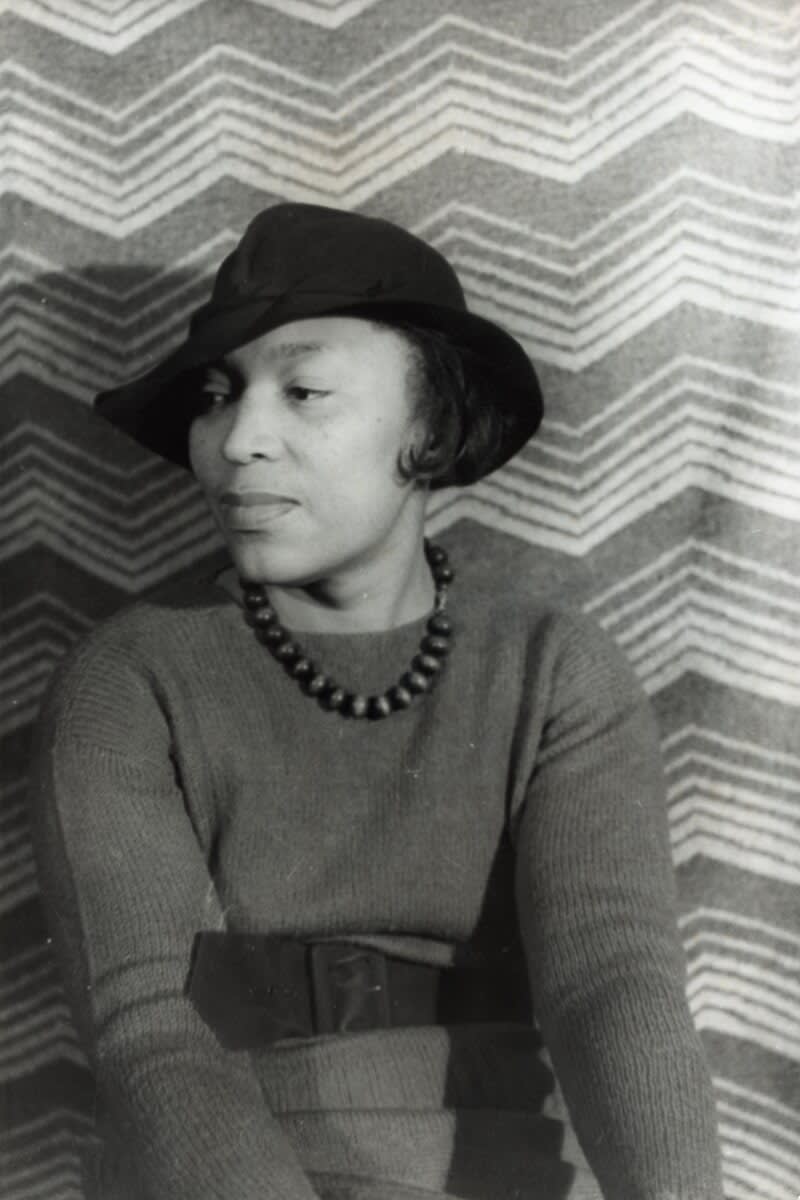 Zora Neale Hurston 1891-1960
 HomecomingNatureStack journal, Building Hope essays, climate fiction, and my singing dog.By Julie Gabrielli
FORD KNOWS is a reader-supported publication. To receive new posts and support my work, become a free or paid subscriber.
October 6, 2025
Catch up with The Road to Published
Instagram - Goodreads - Facebook - Bluesky - Threads - X - BookB
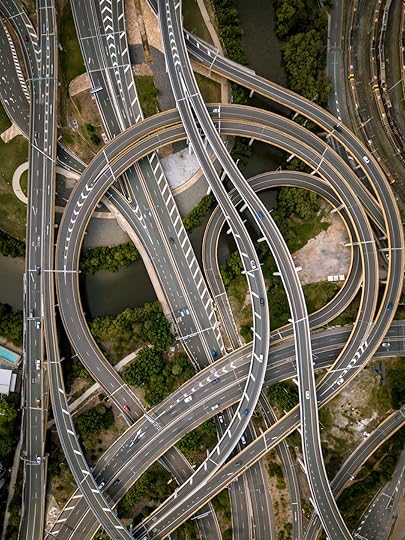 Photo by John Lockwood on Unsplash
You have about a 1 in 1,300 chance of being struck by lightning in any given year—surprisingly high, I thought, but with 6 million strikes, 240,000 injuries, and 24,000 deaths, not necessarily the kiss of death one would assume.
You have a 1 in 100,000ish chance of winning any lottery over a $1M if you play, though of course that chance is zero if you don’t.
That puts your chances of making it onto a New York Times’ Bestseller List—roughly 1 in 48,000—smack dab between winning a $1M and being struck by lightning. Not the best odds.
My point? You probably need to have some more realistic expectations—and more reasons to keep writing—than becoming a bestselling author. It is not impossible, but it is very hard.
This is my contribution to our cause; we are not alone in obscurity, we are walking together shoulder-to-shoulder toward happy destiny.
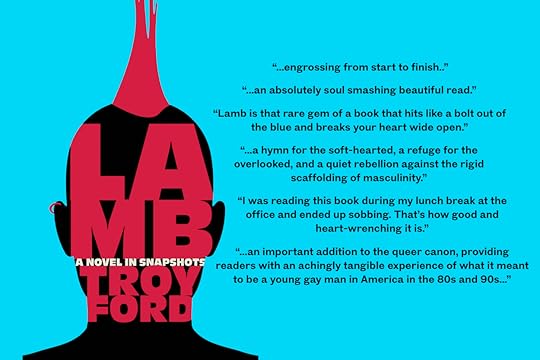
The Road to Published: Now FREE to all subscribersThe Road to Published series is not so much a how-to for aspiring authors as it is a travelog of my own experiences writing and publishing my first book, Lamb: A novel in snapshots. You’ve all read about it here ad nauseum, but here’s a link again just in case, along with a few snippets from reviews.
 Amazon - Bookshop - Barnes & Noble
/end commercial break
Originally, The Road to Published was supposed to be a little thank you to paid subscribers for their generosity and support, but recently I launched the new series It’s a Pretty OK! Life, and realized that with once or twice-a-month editions of that pay-walled series*, the only free content left would be The Books We ❤️ Club and occasional other posts. No bueno.
(*I mentioned before how some suspicious activity led me to believe my newsletter was scraped by LLM-bots. IPOKL is so personal to me, with memories and ideas from my own life I will probably someday turn into fiction, I just don’t feel comfortable giving AI free access so someone else can let ChatGPT vomit a novel for them, only to discover later that my life has been pre-empted by another “writer.”)
So. There is still some pay-walled content to thank paying subscribers, but going forward, The Road to Published will be free to all—starting with the original posts, links below.
Thank you so much for reading my stuff. I couldn’t have done any of this without all of you—reading is by far the most important way to support any writer.
Yours,
MTF 💜🎩🐈⬛
 Photo by Ali S on UnsplashThe Road to Published - the choose-your-own-adventure approach to writing and publishing books
→ The power and magic of Art, Stories, and Imagination
Like prayer, our making is not always successful. We may wish to express the idea we discover inside ourselves just as we wish for the return of a loved one. But it is only an act of faith that, though our prayers and dreams may go unfulfilled, we are better for the trying.
Forget about becoming a writer. It’s not your job to be a writer. It’s your job to write. Let’s get to it!
→ A practice to corral your thoughts
→ A practice to tap into deeper wisdom and calm the chaos
Yes, yes, yes. If I wasn’t saying Yes to myself, I wouldn’t have opened my eyes to the possibilities that exist all around us.

More and more, an author platform is becoming THE crucial factor by which readers, agents, and publishers assess whether they should take you and your work seriously.
Self-published—or independently published, as we are trying to rebrand it—has its own set of rules and strategies, a parallel universe in which publicity, appearances, book tours, and customer bases are definitely not Big 5 marketing teams, Today Shows, The New York Times, or Oprah-Reese-Jenna book club trifectas.
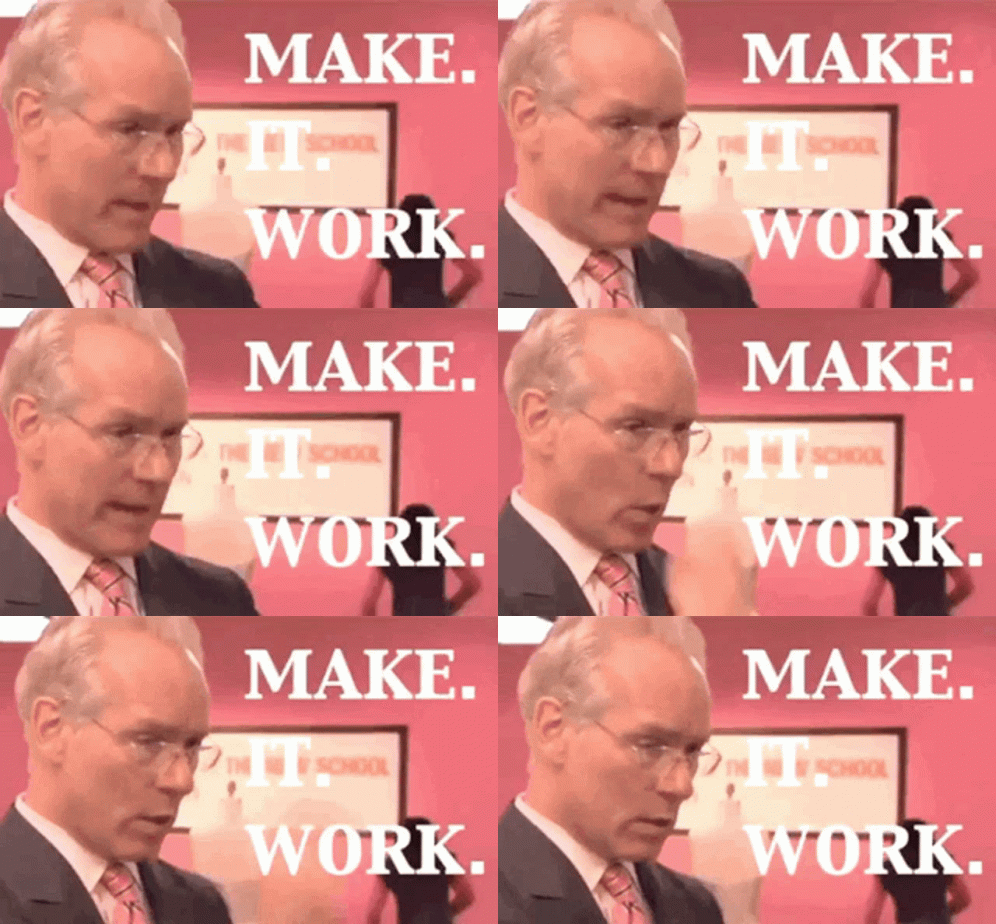
“Make it work”—the mantra that applies equally to writing.
Should you find anything of value in these newly free posts, a little Thank you in return would be most appreciated. Here’s a coupon.

Ford Knows Books is a reader-supported publication. To receive new posts and support my work, consider becoming a free or paid subscriber.