Fatou SAMB's Blog
January 16, 2026
Creating Muneeb: How Do You Make a Captor Sympathetic?
It's the question I wrestled with for a long time while writing Muneeb et Samiah.
Muneeb is one of the most powerful emperors of his era who imprisons young and vulnerable Samiah. He traps her in a basalt chamber in his palace and refuses to let her leave. Whatever his intentions, on paper, he's the villain.
But readers root for him anyway. Here's how I built that moral complexity.
------------------------------------------------
Start With an Impossible Choice
Muneeb has a harem of nearly 800 women and expanding. His ministers force an intervention: the empire is at war and the harem is bankrupting them. He can take ONE more concubine—his 800th—then he must stop.
Muneeb is furious but accepts. He starts a citywide search for that final woman. Someone truly unique. He can't find her. As he is about to give up and plunges into a deep depression, one early dawn, before the sun frees itself from its cradle, Samiah arrives.
She's half-spirit, cursed to live as a bird, only able to return to human form inside a remote cave made of dark basalt stone. There is only one way to break the curse: she must find a monarch willing to marry her. Muneeb moved by what she’s endured and struck by her beauty agrees… until she tells him the condition: "I must be the only woman in your heart. Repudiate all your concubines. Give up the harem."
But the harem isn't just his indulgence: it's 800 women. It powers his economy. Thousands of merchants travel there yearly. Kings signed treaties through these women's charm. Giving it up doesn't just mean losing his lifestyle. It means destabilizing his empire, breaking alliances, collapsing trade.
So he tells half a lie. He tells her, "I'll see what I can do."
This is where Muneeb stops being a hero. But it's also where he becomes human.
------------------------------------------------
The Captivity as Salvation (And Trap)
Muneeb realizes his dungeon—his jail cells—are made of basalt stone. He renovates one into a perfect, luxurious dark chamber for Samiah.
When she enters the unfamiliar chamber, she's surprised to see herself as human again, momentarily free of the bird form, like when she is back in the cave.
Except she realizes fast that she’s trapped. He won't let her leave. Not even to fly in the outside world as a bird again and see the world. And more importantly, He. Won't. Let. His. Harem. Go.
Muneeb doesn't capture her out of cruelty. He captures her to save her from the spirit of the cave. The way he justifies it to himself is: better to live in luxury in a safe palace made of basalt than in a wet cave made of those same basalt stones. But in doing so, he becomes her new captor.
------------------------------------------------
Love With Trust Issues
They fall in love anyway. Of course they do. She's the woman he’s searched for all his life. He's the man who saved her. Somewhat.
But Muneeb is plagued by the inability to truly trust her. Does she love him for him? Or is she only pretending to love him so he gives up the harem and frees her from the curse? Can you ever trust a woman who once deployed her charms only to break a curse?
------------------------------------------------
The Writer's Responsibility
Writing captor/captive romance is walking a tightrope. You can't romanticize abuse. You can't erase the harm and so I didn't. Samiah's pain is real. Her tears when he betrays her are real. A cage even when it's a palace is still a cage. Muneeb doesn't get a free pass just because he's sympathetic or handsome... The story doesn't pretend his love justifies his actions however it does ask: Can you love someone and still hurt them? Can you love powerfully and still deceive?
Dark fairy tales live in that discomfort.
------------------------------------------------
An Invitation
I don't want readers to excuse Muneeb. I want them to sit with him, to understand why he does what he does, and still wrestle with whether what he did in the end is ever forgivable.
That's the space where morally complex protagonists exist. Where Arab emperors are romantic leads. Where Black heroines don’t neatly fit into stereotypes: they're the ones breaking curses and hearts in equal measure.
If you're ready for that kind of story, Muneeb et Samiah is waiting.
Read the book: https://linktr.ee/MuneebetSamiah
Follow the visual journey on TikTok: @muneebetsamiah
🏹💙
Muneeb is one of the most powerful emperors of his era who imprisons young and vulnerable Samiah. He traps her in a basalt chamber in his palace and refuses to let her leave. Whatever his intentions, on paper, he's the villain.
But readers root for him anyway. Here's how I built that moral complexity.
------------------------------------------------
Start With an Impossible Choice
Muneeb has a harem of nearly 800 women and expanding. His ministers force an intervention: the empire is at war and the harem is bankrupting them. He can take ONE more concubine—his 800th—then he must stop.
Muneeb is furious but accepts. He starts a citywide search for that final woman. Someone truly unique. He can't find her. As he is about to give up and plunges into a deep depression, one early dawn, before the sun frees itself from its cradle, Samiah arrives.
She's half-spirit, cursed to live as a bird, only able to return to human form inside a remote cave made of dark basalt stone. There is only one way to break the curse: she must find a monarch willing to marry her. Muneeb moved by what she’s endured and struck by her beauty agrees… until she tells him the condition: "I must be the only woman in your heart. Repudiate all your concubines. Give up the harem."
But the harem isn't just his indulgence: it's 800 women. It powers his economy. Thousands of merchants travel there yearly. Kings signed treaties through these women's charm. Giving it up doesn't just mean losing his lifestyle. It means destabilizing his empire, breaking alliances, collapsing trade.
So he tells half a lie. He tells her, "I'll see what I can do."
This is where Muneeb stops being a hero. But it's also where he becomes human.
------------------------------------------------
The Captivity as Salvation (And Trap)
Muneeb realizes his dungeon—his jail cells—are made of basalt stone. He renovates one into a perfect, luxurious dark chamber for Samiah.
When she enters the unfamiliar chamber, she's surprised to see herself as human again, momentarily free of the bird form, like when she is back in the cave.
Except she realizes fast that she’s trapped. He won't let her leave. Not even to fly in the outside world as a bird again and see the world. And more importantly, He. Won't. Let. His. Harem. Go.
Muneeb doesn't capture her out of cruelty. He captures her to save her from the spirit of the cave. The way he justifies it to himself is: better to live in luxury in a safe palace made of basalt than in a wet cave made of those same basalt stones. But in doing so, he becomes her new captor.
------------------------------------------------
Love With Trust Issues
They fall in love anyway. Of course they do. She's the woman he’s searched for all his life. He's the man who saved her. Somewhat.
But Muneeb is plagued by the inability to truly trust her. Does she love him for him? Or is she only pretending to love him so he gives up the harem and frees her from the curse? Can you ever trust a woman who once deployed her charms only to break a curse?
------------------------------------------------
The Writer's Responsibility
Writing captor/captive romance is walking a tightrope. You can't romanticize abuse. You can't erase the harm and so I didn't. Samiah's pain is real. Her tears when he betrays her are real. A cage even when it's a palace is still a cage. Muneeb doesn't get a free pass just because he's sympathetic or handsome... The story doesn't pretend his love justifies his actions however it does ask: Can you love someone and still hurt them? Can you love powerfully and still deceive?
Dark fairy tales live in that discomfort.
------------------------------------------------
An Invitation
I don't want readers to excuse Muneeb. I want them to sit with him, to understand why he does what he does, and still wrestle with whether what he did in the end is ever forgivable.
That's the space where morally complex protagonists exist. Where Arab emperors are romantic leads. Where Black heroines don’t neatly fit into stereotypes: they're the ones breaking curses and hearts in equal measure.
If you're ready for that kind of story, Muneeb et Samiah is waiting.
Read the book: https://linktr.ee/MuneebetSamiah
Follow the visual journey on TikTok: @muneebetsamiah
🏹💙


December 10, 2025
Why I Chose Medieval Africa for Fairy Tales: Breaking Stereotypes
I've always loved fairy tales—the Brothers Grimm, One Thousand and One Nights, Antoine de Saint-Exupéry. But as someone who speaks many a language and moves between cultures, I kept noticing something missing.
Where were the African palaces in our fairy tales?
The gap I wanted to fill
Medieval Africa had emperors with hundreds of wives. Fortified cities with towering walls. Multi-story palaces with over 50 rooms. International trade routes. Interracial relationships. Court intrigue. Magic and mythology.
All the ingredients for incredible fairy tales.
But fantasy kept ignoring them.
So I wrote the fairy tales I'd been waiting to read.
What You'll Find in Muneeb et Samiah
Muneeb et Samiah: Fables et Contes de l'Afrique médiévale is a collection of 9 tales that bring medieval African settings to life through classical fairy tale storytelling.
You'll discover settings that have:
- Stone castles inspired by Gondar-like architecture in Ethiopia
- Fortified cities with towering walls (like those of the Songhai Empire)
- Emperors, warriors, and noblewomen navigating love, power, and impossible choices
- Mythical creatures from African folklore—djinns, spirits, magical beings
- Romance that doesn't always end happily—because not all love stories triumph
Why Medieval Africa?
Because it's historically accurate. Because it's breathtaking. Because it's an underused backdrop for enchantment, heartbreak, and wonder.
I researched extensively to ensure every setting, every architectural detail, every cultural element was rooted in real history. These aren't fantasy inventions. They're real places reimagined through the lens of fairy tales.
The Characters
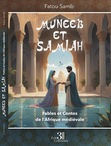
My characters are archetypal, like all classic fairy tale figures. The book's cover shows Muneeb (Arab/North African) and Samiah (Black, half-spirit)—an interracial couple whose love story is devastating.
In the stories, characters aren't defined by race because fairy tales exist in a timeless, mythical space. But visually? They're Black and Arab. They're us.
What Makes These Tales Different
They have classical fairy tale structure with tragic endings. Historical settings with moral complexity.
These aren't sanitized Disney stories. They're inspired by the darker traditions of the Brothers Grimm and One Thousand and One Nights, where love can be poison, beauty can be a trap, and not everyone gets saved.
In one tale: An emperor with a harem of beautiful women discovers love has become deadly.
In another: A warrior faces an impossible dare from the woman he's loved for years.
In the title story: A woman seeking help is captured by the man who promised to save her.
An Invitation
Muneeb et Samiah isn't about making a political statement or replacing the fairy tales you love. It's about adding new worlds to the ones you already cherish.
📖 Muneeb et Samiah: Fables et Contes de l'Afrique médiévale is available now in bookstores across France, Belgium, Switzerland, and Canada.
Get your copy here: https://linktr.ee/MuneebetSamiah
Have you ever read fantasy set in medieval Africa? Let me know in the comments!
Where were the African palaces in our fairy tales?
The gap I wanted to fill
Medieval Africa had emperors with hundreds of wives. Fortified cities with towering walls. Multi-story palaces with over 50 rooms. International trade routes. Interracial relationships. Court intrigue. Magic and mythology.
All the ingredients for incredible fairy tales.
But fantasy kept ignoring them.
So I wrote the fairy tales I'd been waiting to read.
What You'll Find in Muneeb et Samiah
Muneeb et Samiah: Fables et Contes de l'Afrique médiévale is a collection of 9 tales that bring medieval African settings to life through classical fairy tale storytelling.
You'll discover settings that have:
- Stone castles inspired by Gondar-like architecture in Ethiopia
- Fortified cities with towering walls (like those of the Songhai Empire)
- Emperors, warriors, and noblewomen navigating love, power, and impossible choices
- Mythical creatures from African folklore—djinns, spirits, magical beings
- Romance that doesn't always end happily—because not all love stories triumph
Why Medieval Africa?
Because it's historically accurate. Because it's breathtaking. Because it's an underused backdrop for enchantment, heartbreak, and wonder.
I researched extensively to ensure every setting, every architectural detail, every cultural element was rooted in real history. These aren't fantasy inventions. They're real places reimagined through the lens of fairy tales.
The Characters
My characters are archetypal, like all classic fairy tale figures. The book's cover shows Muneeb (Arab/North African) and Samiah (Black, half-spirit)—an interracial couple whose love story is devastating.
In the stories, characters aren't defined by race because fairy tales exist in a timeless, mythical space. But visually? They're Black and Arab. They're us.
What Makes These Tales Different
They have classical fairy tale structure with tragic endings. Historical settings with moral complexity.
These aren't sanitized Disney stories. They're inspired by the darker traditions of the Brothers Grimm and One Thousand and One Nights, where love can be poison, beauty can be a trap, and not everyone gets saved.
In one tale: An emperor with a harem of beautiful women discovers love has become deadly.
In another: A warrior faces an impossible dare from the woman he's loved for years.
In the title story: A woman seeking help is captured by the man who promised to save her.
An Invitation
Muneeb et Samiah isn't about making a political statement or replacing the fairy tales you love. It's about adding new worlds to the ones you already cherish.
📖 Muneeb et Samiah: Fables et Contes de l'Afrique médiévale is available now in bookstores across France, Belgium, Switzerland, and Canada.
Get your copy here: https://linktr.ee/MuneebetSamiah
Have you ever read fantasy set in medieval Africa? Let me know in the comments!
September 23, 2025
Stone Castles of Medieval Africa: The Dungur Palace and the Architecture That Inspires Fairy Tales
Dear friends,
When most people imagine medieval Africa, they rarely picture multi-story stone palaces with underground passages and towering walls. Yet in Aksum (modern-day Ethiopia), the ruins of Dungur Palace - popularly called the "Palace of the Queen of Sheba" - tell a different story. Built with precisely fitted stone blocks, featuring over 50 rooms across multiple levels, this 6th-century structure rivals any European castle of its era.
Dungur is just one example of Africa's rich architectural heritage in stone. From the high-walled cosmopolitan city of Gao in the Songhai Empire to the fortress-cities of Zimbabwe, medieval Africa possessed a diverse tradition of monumental stone architecture that has been largely overlooked in popular imagination.
Bringing This Heritage to Life in Stories
When I was researching for Muneeb et Samiah: Fables et Contes de l'Afrique médiévale, discovering these architectural treasures felt like finding hidden gems. Here was proof that medieval Africa had the same grand settings that enchant us in fairy tales - the stone fortresses, the palace chambers, the towering walls where anything might happen.
In fairy tales, a castle is never just a building - it's a stage for transformation, romance, and magic. When Cinderella arrives at the ball, we don't need to know which specific castle it is. The castle exists as an idea, a symbol of entering another world. This is how I approached the settings in my fairy tales set in medieval Africa - drawing on real architectural traditions to create those archetypal spaces where stories unfold.
The Reality of Dungur Palace
The Dungur Palace ruins reveal sophisticated architectural planning. Archaeological evidence shows:
• A central pavilion surrounded by courtyards
• An elaborate water system with private bathing areas
• Stone staircases indicating multiple stories
• Underground chambers and passages
• Precisely carved stone blocks fitted without mortar
This wasn't just a fortress - it was a palace designed for beauty, comfort, and the kind of grandeur that makes perfect fairy tale settings where romance unfolds.
From Historical Inspiration to Timeless Tales
When I write about a lovely little stone fortress where the king and his court lived or lovers wandering through stone corridors with underground passages, these settings draw their authenticity from real places like Dungur. Not as historical documentation with specific names, but as imaginative inspiration - the same way every fairy tale castle carries echoes of real medieval architecture without being a specific castle.
Medieval Africa offers future storytellers a rich palette: the stone churches of Lalibela carved directly from volcanic rock, Djenné's distinctive Sudano-Sahelian architecture - from its famous mosque to its multi-story palaces and merchant houses, the ancient city walls of Benin. These monuments remind us that Africa has always been a continent of diverse architectural traditions, each offering unique settings for stories of wonder.
A New Chapter for Ancient Stories
The stories in Muneeb et Samiah unfold in settings that could have existed anywhere across medieval Africa – from stone palaces to hut villages to mysterious forests. These are the universal backdrops of fairy tales, made authentic by the knowledge that such places truly existed across the continent.
By sharing the reality of structures like Dungur Palace, I hope to expand readers' imagination of what medieval Africa looked like.
When we know that stone castles rose from African soil, that underground passages wound beneath African palaces, that towers reached toward African skies, we can dream new dreams. We can tell stories where archetypal characters of African heritage inhabit the same archetypal grandeur that has always belonged to fairy tales – because it was always there, waiting to be remembered.
Have you ever been to a castle that enchanted you ? Let me know in the comments below.
New stories every week ! Follow me for more hidden wonders and fairy tales magic ! ✨
À très bientôt !
Fatou
When most people imagine medieval Africa, they rarely picture multi-story stone palaces with underground passages and towering walls. Yet in Aksum (modern-day Ethiopia), the ruins of Dungur Palace - popularly called the "Palace of the Queen of Sheba" - tell a different story. Built with precisely fitted stone blocks, featuring over 50 rooms across multiple levels, this 6th-century structure rivals any European castle of its era.
Dungur is just one example of Africa's rich architectural heritage in stone. From the high-walled cosmopolitan city of Gao in the Songhai Empire to the fortress-cities of Zimbabwe, medieval Africa possessed a diverse tradition of monumental stone architecture that has been largely overlooked in popular imagination.
Bringing This Heritage to Life in Stories
When I was researching for Muneeb et Samiah: Fables et Contes de l'Afrique médiévale, discovering these architectural treasures felt like finding hidden gems. Here was proof that medieval Africa had the same grand settings that enchant us in fairy tales - the stone fortresses, the palace chambers, the towering walls where anything might happen.
In fairy tales, a castle is never just a building - it's a stage for transformation, romance, and magic. When Cinderella arrives at the ball, we don't need to know which specific castle it is. The castle exists as an idea, a symbol of entering another world. This is how I approached the settings in my fairy tales set in medieval Africa - drawing on real architectural traditions to create those archetypal spaces where stories unfold.
The Reality of Dungur Palace
The Dungur Palace ruins reveal sophisticated architectural planning. Archaeological evidence shows:
• A central pavilion surrounded by courtyards
• An elaborate water system with private bathing areas
• Stone staircases indicating multiple stories
• Underground chambers and passages
• Precisely carved stone blocks fitted without mortar
This wasn't just a fortress - it was a palace designed for beauty, comfort, and the kind of grandeur that makes perfect fairy tale settings where romance unfolds.
From Historical Inspiration to Timeless Tales
When I write about a lovely little stone fortress where the king and his court lived or lovers wandering through stone corridors with underground passages, these settings draw their authenticity from real places like Dungur. Not as historical documentation with specific names, but as imaginative inspiration - the same way every fairy tale castle carries echoes of real medieval architecture without being a specific castle.
Medieval Africa offers future storytellers a rich palette: the stone churches of Lalibela carved directly from volcanic rock, Djenné's distinctive Sudano-Sahelian architecture - from its famous mosque to its multi-story palaces and merchant houses, the ancient city walls of Benin. These monuments remind us that Africa has always been a continent of diverse architectural traditions, each offering unique settings for stories of wonder.
A New Chapter for Ancient Stories
The stories in Muneeb et Samiah unfold in settings that could have existed anywhere across medieval Africa – from stone palaces to hut villages to mysterious forests. These are the universal backdrops of fairy tales, made authentic by the knowledge that such places truly existed across the continent.
By sharing the reality of structures like Dungur Palace, I hope to expand readers' imagination of what medieval Africa looked like.
When we know that stone castles rose from African soil, that underground passages wound beneath African palaces, that towers reached toward African skies, we can dream new dreams. We can tell stories where archetypal characters of African heritage inhabit the same archetypal grandeur that has always belonged to fairy tales – because it was always there, waiting to be remembered.
Have you ever been to a castle that enchanted you ? Let me know in the comments below.
New stories every week ! Follow me for more hidden wonders and fairy tales magic ! ✨
À très bientôt !
Fatou
September 16, 2025
Le voyage d'une conteuse entre plusieurs mondes
Chers amis,
Je souhaite partager avec vous aujourd'hui quelques réflexions sur mon parcours d'écrivaine entre plusieurs cultures.
L'art de conter des histoires est universel, mais chaque tradition apporte sa propre magie, son unique étincelle...
En grandissant avec différentes langues, j'ai découvert que chacune offre une façon unique de voir le monde et de tisser des récits.
La littérature médiévale africaine, comme toutes les cultures, recèle des trésors somptueux - des histoires d'amour, d’aventures, de magie qui nous font rêver, nous les âmes sensibles, et n'aspirent qu'à être partagées avec le monde entier. C'est ce désir de partage qui m'a inspirée à écrire.
Dans ce blog, je vous emmènerai dans les coulisses de mon processus créatif. Je partagerai :
• Les légendes qui m'ont inspirée
• Les découvertes fascinantes de mes recherches
• Des extraits de mes carnets d'écrivain
• Des réflexions sur l'art de conter
• Et plusieurs autres surprises à venir !
J'espère que vous me rejoindrez dans cette belle aventure.
À très bientôt pour la suite !
Fatou
Je souhaite partager avec vous aujourd'hui quelques réflexions sur mon parcours d'écrivaine entre plusieurs cultures.
L'art de conter des histoires est universel, mais chaque tradition apporte sa propre magie, son unique étincelle...
En grandissant avec différentes langues, j'ai découvert que chacune offre une façon unique de voir le monde et de tisser des récits.
La littérature médiévale africaine, comme toutes les cultures, recèle des trésors somptueux - des histoires d'amour, d’aventures, de magie qui nous font rêver, nous les âmes sensibles, et n'aspirent qu'à être partagées avec le monde entier. C'est ce désir de partage qui m'a inspirée à écrire.
Dans ce blog, je vous emmènerai dans les coulisses de mon processus créatif. Je partagerai :
• Les légendes qui m'ont inspirée
• Les découvertes fascinantes de mes recherches
• Des extraits de mes carnets d'écrivain
• Des réflexions sur l'art de conter
• Et plusieurs autres surprises à venir !
J'espère que vous me rejoindrez dans cette belle aventure.
À très bientôt pour la suite !
Fatou