Yurii Ivchenko's Blog
August 2, 2026
Places Become Characters Too
Places shape people. Streets, houses and stations become silent witnesses to change. I choose locations that influence characters emotionally, not just visually. Which fictional place do you still remember?
Share your thoughts in the comments.
When the sky forgot my name: A Literary Novel of Survival, Identity, and Finding Home After War
Share your thoughts in the comments.
When the sky forgot my name: A Literary Novel of Survival, Identity, and Finding Home After War


July 28, 2026
The Stories We Never Tell
Some stories remain unspoken for years—not because they are forgotten, but because they need the right words. Fiction gives quiet experiences a voice. Every novel I write begins with an emotion that refuses to disappear. Which untold story deserves to be written?
Share your thoughts in the comments.

When the sky forgot my name: A Literary Novel of Survival, Identity, and Finding Home After War
Share your thoughts in the comments.
When the sky forgot my name: A Literary Novel of Survival, Identity, and Finding Home After War
July 26, 2026
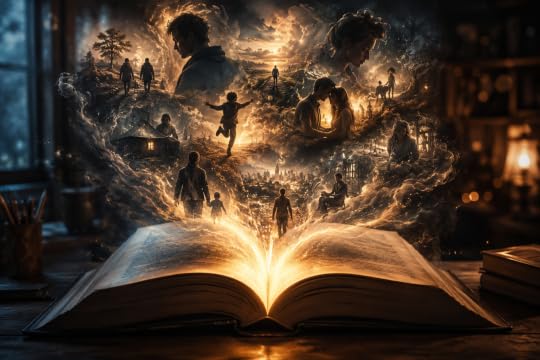
Why We Read Stories About Human Struggle
Readers are drawn to stories that feel true.
Not because life is easy.
But because struggle creates meaning.
Literature helps us recognize ourselves in unfamiliar lives.
This has always been my central focus as a writer:
Exploring what it means to remain human under emotional pressure.
Books connect strangers through shared experience.
And sometimes that connection changes us.
Why do certain stories stay with us forever?
Not because life is easy.
But because struggle creates meaning.
Literature helps us recognize ourselves in unfamiliar lives.
This has always been my central focus as a writer:
Exploring what it means to remain human under emotional pressure.
Books connect strangers through shared experience.
And sometimes that connection changes us.
Why do certain stories stay with us forever?
July 20, 2026
Why Silence Speaks Loudest In Fiction
Some of the strongest moments in literature happen when nothing is said.
Silence often reveals more than dialogue.
In storytelling, absence creates tension.
Distance creates meaning.
What characters refuse to say often defines them more than words ever could.
This idea shaped many scenes in When the sky forgot my name .
Have you ever read a scene where silence felt stronger than action?
Silence often reveals more than dialogue.
In storytelling, absence creates tension.
Distance creates meaning.
What characters refuse to say often defines them more than words ever could.
This idea shaped many scenes in When the sky forgot my name .
Have you ever read a scene where silence felt stronger than action?
July 18, 2026
Books Are Emotional Architecture
A powerful novel is not built with plot alone.
It is built with emotion.
Tension.
Silence.
Memory.
Conflict.
Writers construct invisible architecture inside the reader.
Words become emotional spaces people temporarily live in.
This is what fascinates me most about storytelling.
What emotion do you search for most when reading fiction?
It is built with emotion.
Tension.
Silence.
Memory.
Conflict.
Writers construct invisible architecture inside the reader.
Words become emotional spaces people temporarily live in.
This is what fascinates me most about storytelling.
What emotion do you search for most when reading fiction?
July 12, 2026
The Most Honest Characters Are Never Perfect
Perfect characters rarely feel real.
The most memorable people in literature carry contradictions.
They fail.
They hesitate.
They make difficult choices.
Imperfection creates emotional truth.
When writing fiction, I am always more interested in vulnerability than heroism.
Because readers connect with honesty.
Not perfection.
Do you prefer flawed protagonists or traditional heroes?
---------------------------------------------------
The Art of Being Real: A Journey to Honest Living
The most memorable people in literature carry contradictions.
They fail.
They hesitate.
They make difficult choices.
Imperfection creates emotional truth.
When writing fiction, I am always more interested in vulnerability than heroism.
Because readers connect with honesty.
Not perfection.
Do you prefer flawed protagonists or traditional heroes?
---------------------------------------------------
The Art of Being Real: A Journey to Honest Living
July 7, 2026
Meet Oksana
Characters become unforgettable when they feel painfully human.
Oksana was never designed as a perfect heroine.
She carries fear.
She carries memory.
She carries the weight of choices that slowly reshape identity.
In When The Sky Forgot My Name , I wanted to explore how fragile identity can become when life begins taking away everything familiar.
Sometimes survival changes who we are.
Which fictional character stayed with you long after finishing a book?
Oksana was never designed as a perfect heroine.
She carries fear.
She carries memory.
She carries the weight of choices that slowly reshape identity.
In When The Sky Forgot My Name , I wanted to explore how fragile identity can become when life begins taking away everything familiar.
Sometimes survival changes who we are.
Which fictional character stayed with you long after finishing a book?
July 1, 2026
Where Stories Begin
Every novel starts somewhere unexpected.
Sometimes with a memory.
Sometimes with pain.
Sometimes with a single question that refuses to disappear.
For me, writing is less about inventing stories and more about understanding human experience.
Every character becomes a conversation about life.
Readers often see the final pages.
Writers live through every hidden step before them.
What usually attracts you first in a novel: characters, atmosphere, or emotion?
Sometimes with a memory.
Sometimes with pain.
Sometimes with a single question that refuses to disappear.
For me, writing is less about inventing stories and more about understanding human experience.
Every character becomes a conversation about life.
Readers often see the final pages.
Writers live through every hidden step before them.
What usually attracts you first in a novel: characters, atmosphere, or emotion?
June 28, 2026
Why Fiction Helps Us Understand Ourselves
Stories do more than entertain.
Sometimes fiction becomes a mirror.
The characters we follow often carry the same fears, contradictions, and quiet battles we hide from the world.
The Art of Being Real was written around one central question:
What happens when a person stops performing for others and finally faces who they really are?
Books can reveal truths that everyday life keeps hidden.
What book changed the way you understand yourself?
The Art of Being Real: A Journey to Honest Living
Sometimes fiction becomes a mirror.
The characters we follow often carry the same fears, contradictions, and quiet battles we hide from the world.
The Art of Being Real was written around one central question:
What happens when a person stops performing for others and finally faces who they really are?
Books can reveal truths that everyday life keeps hidden.
What book changed the way you understand yourself?
The Art of Being Real: A Journey to Honest Living
June 23, 2026
How Language Breaks Under Pressure
She spoke four languages.
And could not say the word for milk.
Language is not just grammar and vocabulary. It is a system that depends on safety. On calm. On the body not being under threat.
When the nervous system is overloaded, language is not the priority. Survival is. And survival doesn't need words.
This is why people go silent in moments of extreme stress. Why the words they know completely disappear. Why asking someone in crisis to "just explain" often fails.
In When the sky forgot my name, this is not metaphor. It is Oksana's daily experience — a translator who sometimes cannot translate her own life.
Have you ever lost access to words at exactly the moment you needed them most?
And could not say the word for milk.
Language is not just grammar and vocabulary. It is a system that depends on safety. On calm. On the body not being under threat.
When the nervous system is overloaded, language is not the priority. Survival is. And survival doesn't need words.
This is why people go silent in moments of extreme stress. Why the words they know completely disappear. Why asking someone in crisis to "just explain" often fails.
In When the sky forgot my name, this is not metaphor. It is Oksana's daily experience — a translator who sometimes cannot translate her own life.
Have you ever lost access to words at exactly the moment you needed them most?