Alex Lukeman's Blog
January 26, 2019
MotorcyclesUnless you ride you might find it hard to unde...
Motorcycles
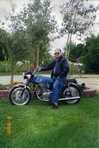
Unless you ride you might find it hard to understand why motorcyclists are so keen to hop on their bikes. I've been riding motorcycles since 1957. There were a few years when I didn't have a bike, but for most of those years I've had something with two wheels and an engine. I even had a bike when I lived in Spain, a 250 Ducati. I consider that a small motorcycle but it was large for Spain. It was also a hell of a lot of fun.
Ask a motorcyclist why he loves to ride and he'll tell you it's because it's fun. He (or she, as the case might be) may also tell you it's about freedom. When you're on a bike you are on your own with a wonderful sense of being in control. Maybe that's just an illusion, but motorcycles are better than psychotherapy for most people who ride. There is something about being out on the highway with a motorcycle and a beautiful day that clears all the BS life throws at us right out of our minds.
My first bike was a 1941 Indian Chief. I was sixteen years old and weighed about 160 pounds. The chief weighed closer to 750. It was a beast and I didn't like it much when it fell over, which it did once or twice. Those old bikes are nothing like the machines produced today. For example, there was no such thing as an auto advance. You controlled advance and retard with a twist grip on the handlebar. The brakes were 7 inch drums and exciting to use for such a big machine, meaning that it took a really long time to stop. The engine was an 80 cubic inch flathead that could kick back and damn near break your leg if you weren't careful. But once it was up and running it was smooth and powerful and could take that big bike up to about 110 miles an hour.
The suspension was completely inadequate by today's standards. It consisted of a leaf spring girder fork in front and a pair of laughable devices called plunger shocks in the rear. The throttle stayed exactly where you put it, open, closed or anywhere in between, which meant you had better pay attention when it was time to stop. The clutch was called a suicide clutch, for good reason. It was a big, flat plate operated by your foot that stayed where you put it and wasn't the easiest thing in the world to move. To stop the bike, you had to disengage the clutch by moving that plate, gear down with a long lever on the side of the tank, roll off the throttle, reengage, and repeat while you applied brakes. Harleys of the period were similar to Indians, with everything generally reversed from the Indians. Of course you had to learn all that. When I first got on that bike I knew nothing. I'd never ridden a motorcycle.
I bought the bike for seventy dollars. Today that same bike in exactly the same condition would bring closer to thirty thousand.
The guy I bought it from said, "Here's where you turn it on. Here's how you turn on the gas. This is the spark advance and retard and this is the throttle. That's the clutch. You shift using that lever there. You kick it over here. See you later."
I didn't even know what the spark advance and retard was or how to use it. Anyway, being young, stupid, and immortal I got on the bike, managed to get it started and rode it home, in traffic. The battery fell out on the way.
Cool. I had a motorcycle, a great black monster that bellowed with a throaty roar through a home made megaphone. I thought it would be easy to master but I had a lot to learn and no one to show me. There were no programs for training people in motorcycle safety, no licensing requirements beyond a driver's license, no helmet laws, no convenient shops in every town where you could buy everything from a spark plug to a new bike. If you had a bike, you were on your own.
That suited me just fine. Bikes have always been about freedom and independence for me. They still are. As long as I can ride I know I'm not ready for the old folks' home.
It takes a while to make someone a competent rider. It takes years to make a good one, and until you become competent you are at risk of serious injury. The only way to learn is through experience. That hasn't changed, even with all the courses of instruction and modern safety features. It scares me to see middle aged men having a mid-life crisis on their big Hondas and Harleys, with the wife on back and a few months of riding under their belts. I stay well away from them on the road. You can tell when someone is inexperienced.
I got my first serious lesson in competence about a week after I got the bike. I was still somewhat tentative with all that power and potential speed. But I was gaining confidence. The old adage about a little confidence being a dangerous thing is never more true than when you begin to ride motorcycles.
I was riding home in traffic going about 50 miles an hour, following a car ahead of me. I didn't realize that I was too close for the braking power of the machine. Suddenly the car stopped without warning in the middle of the road to make a left-hand turn across traffic. Okay, I hit the brakes. Not much happened. I was still going 50 miles an hour and I was rapidly closing on his back bumper. I was going to hit him if I couldn't get around him. To the left was oncoming traffic on the narrow highway. I couldn't go around that way without being splattered across someone's big chrome grill. Remember, it's 1957. Lots of chrome, back then.
I had to go right. To the right was a deep ditch with water in it, faced with a narrow stone wall that came just to the level of the roadway. Between the car and the drop into the ditch there was very little room, perhaps a couple of feet. The adrenaline surge that hit me when I realized that just about lifted me off that big, sprung seat.
I had no choice. I veered right and onto the top of the stone wall of the ditch. If I went in I wasn't coming out except in an ambulance. I looked down and saw that the front wheel was half on the wall and half over the ditch. I was still going almost 50. My arms were locked on the handlebars. They clipped the passenger side mirror on the car as I went by. I made it past, pulled back on the highway and accelerated away. About a mile down the road I began shaking and pulled over.
Lesson number one: always allow more than enough braking distance between you and things that might hurt you. This is fundamental.
A month later I was taking turns at eighty and throwing sparks off the muffler. I had learned how to handle the bike and had a good idea of what it could do. That began a lifelong addiction to speed on two wheels. I'm a street rider. Others prefer the dirt. Not me. Give me horsepower and pavement.
The Chief was a great bike, classic American iron. I still have one of the tank emblems.I rode it across country, all the way from Philadelphia to California. That was the America of the old Route 40 and Route 66, legendary highways that deserve their reputation. I'll never forget coming over a rise in eastern Colorado and seeing the Rocky Mountains for the first time, marching across the horizon. The sun was setting behind them, sending rays of light from the snowcapped peaks. I remember starting down a long, twisting highway toward Salt Lake City, spread out below in the evening twilight like diamonds on the desert. I remember being in the middle of Kansas on a sunny day and watching a curtain of black advance toward me on the highway, a summer storm. When I hit it, it was like hitting a liquid wall. I was drenched in an instant. I slept that night in a soggy field. When I woke, it was sunny. I looked around me. I was lying in a field of marijuana.
That world is gone now and it will never return. I count myself blessed to have taken that ride. There's nothing like a motorcycle if you want to really feel and experience the beauty and variety of this place we call America. That is still true. There are still places where the unspoiled beauty exists but you have to find them. A motorcycle is one of the best ways to do that.
I started riding British motorcycles in 1969. My first Brit bike was a '66 Norton Atlas, a 750 cc vertical twin that vibrated like mad and handled like a dream. Modern bikes are mostly vibration free, but the old bikes were a different story. British bikes don't weigh as much as American bikes and you can find ways to make them even lighter. Set up correctly, they are very fast and agile and will run rings around their contemporaries. I'm not talking about modern bikes but motorcycles manufactured up to 1970. For me that's the cutoff point for classic British bikes. Today I have a 1966 Triumph Bonneville, a Harley, and a 56 BSA A7.
I've had plenty of non.British bikes. Hondas, Suzuki's, a BMW,a Ducati, a Laverda and a couple of Harleys. But my real love is the British machines. There's something about the way they sound, the way they feel, the way you sit on them. I love the designs, the complexity of British engineering, often a head scratcher from an American point of view. Take a look at a Vincent Black Shadow or an Aerial Square Four and you'll see what I mean. British motorcycles have soul. I never got that feeling from a Japanese bike, as reliable and trouble-free as they can be. It has nothing to do with the quality of engineering or performance. It's a feeling. Harley riders feel the same way. Harleys have soul. It's that indefinable something I call soul that keeps me engaged with bikes, along with the feeling of aliveness that comes when you are tooling down the highway at 70 miles an hour.
If you ride long enough you develop an intuitive sense of hazards and potential danger, what people in the military call situational awareness. It doesn't require a lot of thought, it just pops into your awareness. Is there someone in that parked car ready to open a door in front of you? Is that vehicle going to stop for that yellow light? Is that person going to turn left in front of you without warning? All of these are real hazards that can kill you or put you in a hospital. What about those wet leaves or pine needles on the road? Is that gravel? Sand? Oil? Debris? How deep is that puddle? That pothole? Are there deer in the woods? You can assume nothing. Riding a motorcycle develops keen situational awareness that carries over into driving a car and every other activity in your life. Bikes teach you to observe.
I've known a lot of bikers over the years, good and bad. It's too bad that the outlaw biker is the one many people still think of when they think about motorcycles. It's the Wild One, Sons of Anarchy image. The 1% is exactly that, a fraction of the motorcycle riding community. Every community has a piece of it that is not what you would call socially constructive. Motorcyclists run charity drives for any cause you can think of, contribute all sorts of services and in general are good people. If you ride a bike, you will meet people from every walk of life with whom you can connect through your mutual love of motorcycling. If you go abroad you will find people riding motorcycles who will be happy to welcome you. Bikers have a common language that goes beyond nationalities.
If you don't already have one, get a bike and learn how to ride it. You are in for a great time. The only limits are those you set for yourself.
Copyright 2019 by Alex Lukeman


September 29, 2015
Thrillers and SuperheroesIt's been a while since I posted...
Thrillers and Superheroes
It's been a while since I posted last. I've been working on the newest book in the PROJECT series, The Russian Deception... and now it's done. Well, the hardest part is done, i.e. writing it. Now comes the next hardest part, getting the word out there that the book is available.
Right now it's on preorder, here:
http://www.amazon.com/dp/B015KYAQP4
The release date is October 10 but it can be ordered now by going to the link on Amazon. It's also available on all other platforms. I gave up on exclusivity with Amazon some time ago and it was the right move for me.
The Russian Deception continues the saga of the Project team, a covert group of men and women who work under the radar to keep America safe. They always get in a lot of trouble and somehow, one way or another, most of them come out alive. Sometimes people tell me that the characters are superheroes. They're not. The kinds of things Nick and Selena and the others do aren't easy but they are not impossible. Just take a look at modern special forces and the things real heroes are asked to do. For most of us mortals it's true that they're not possible because we don't have the discipline and training necessary to take on the challenges faced by these men every day. I never ask my characters to do something that is impossible. I do ask them to never give up. I think that's not a bad philosophy.
For example, in White Jade the team is climbing in the Himalayas at 17,000 feet with about a 35 pound pack and another 15 pounds or so of weapons and ammo. I can tell you from personal experience that this is possible. I've done it (without the weapons) and I wasn't as young or in the kind of shape my characters are. I got dinged for that by a couple of readers who didn't think it could be done.
You want a superhero, go to the movies. You won't find them in my books.
Another criticism I sometimes hear is that the secret weapons described in my books couldn't possibly exist or are something from the realm of science fiction. The problem is that they do exist or are in development, things like powerful laser cannons or satellites in space capable of doing serious damage on earth. I research everything extensively when it comes to weapons and technology. If I'm not familiar with it or I can't find something to back up the concept it doesn't go in the book.
Sometimes my characters get wounded, sometimes seriously. Getting shot doesn't mean you have to die. Wounds leave scars, physical and mental and my characters have plenty of them.
The plots are based on real-world possibilities and/or events. For example, part of the plot in The Russian Deception involves the current problems in the Ukraine. It's not hard to create a storyline when the world provides plenty of free material to work with. The trick is to make it entertaining. Nobody needs another news brief.
Here's a picture of the cover for The Russian Deception.
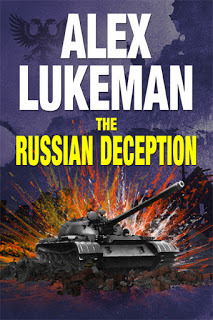
This is Book 11 in the series. I'm not sure how many more there will be but it's not done yet. I may start a new series with different characters and put off Book 12 for a bit. I'm not sure about that yet, but it might be the next creative step.
What do you think?
It's been a while since I posted last. I've been working on the newest book in the PROJECT series, The Russian Deception... and now it's done. Well, the hardest part is done, i.e. writing it. Now comes the next hardest part, getting the word out there that the book is available.
Right now it's on preorder, here:
http://www.amazon.com/dp/B015KYAQP4
The release date is October 10 but it can be ordered now by going to the link on Amazon. It's also available on all other platforms. I gave up on exclusivity with Amazon some time ago and it was the right move for me.
The Russian Deception continues the saga of the Project team, a covert group of men and women who work under the radar to keep America safe. They always get in a lot of trouble and somehow, one way or another, most of them come out alive. Sometimes people tell me that the characters are superheroes. They're not. The kinds of things Nick and Selena and the others do aren't easy but they are not impossible. Just take a look at modern special forces and the things real heroes are asked to do. For most of us mortals it's true that they're not possible because we don't have the discipline and training necessary to take on the challenges faced by these men every day. I never ask my characters to do something that is impossible. I do ask them to never give up. I think that's not a bad philosophy.
For example, in White Jade the team is climbing in the Himalayas at 17,000 feet with about a 35 pound pack and another 15 pounds or so of weapons and ammo. I can tell you from personal experience that this is possible. I've done it (without the weapons) and I wasn't as young or in the kind of shape my characters are. I got dinged for that by a couple of readers who didn't think it could be done.
You want a superhero, go to the movies. You won't find them in my books.
Another criticism I sometimes hear is that the secret weapons described in my books couldn't possibly exist or are something from the realm of science fiction. The problem is that they do exist or are in development, things like powerful laser cannons or satellites in space capable of doing serious damage on earth. I research everything extensively when it comes to weapons and technology. If I'm not familiar with it or I can't find something to back up the concept it doesn't go in the book.
Sometimes my characters get wounded, sometimes seriously. Getting shot doesn't mean you have to die. Wounds leave scars, physical and mental and my characters have plenty of them.
The plots are based on real-world possibilities and/or events. For example, part of the plot in The Russian Deception involves the current problems in the Ukraine. It's not hard to create a storyline when the world provides plenty of free material to work with. The trick is to make it entertaining. Nobody needs another news brief.
Here's a picture of the cover for The Russian Deception.
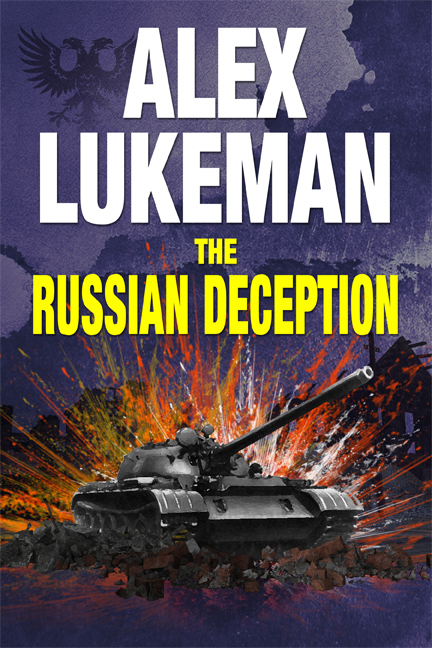
This is Book 11 in the series. I'm not sure how many more there will be but it's not done yet. I may start a new series with different characters and put off Book 12 for a bit. I'm not sure about that yet, but it might be the next creative step.
What do you think?
March 7, 2015
Marketing MusingsI'd like to share a few random thoughts ...
Marketing Musings
I'd like to share a few random thoughts about marketing. Making a living as a writer is a goal most authors never realize. Unfortunately for those of us who write, it requires marketing. Most writers resent marketing because it distracts them from writing. When I decided to get serious about writing and turn it into a full-time occupation, I knew nothing at all about marketing. Once the first book (White Jade) was up on Amazon I faced the reality that my book was one choice for readers among what amounted to an infinite number of choices. How was I going to get people to notice it?
The world is awash with books in any given genre. No one could possibly read them all. I write thrillers, which means that at first glance it looked as though I was competing against blockbuster stars like Steve Berry, Clive Cussler, James Rollins and Tom Clancy. Not to mention Vince Flynn and Brad Thor. A little intimidating, no? You get the idea.
Therein lies marketing truth #1 as an independent writer. Competition is an illusion. It's a mistake of perception.
Your Perception is EverythingChange Your Perception and Change Your Reality
There are millions and millions and millions of readers, more than enough for everyone. More than enough to find and enjoy your work. It's not about competition, it's about discovery. Change your perception about competition. Give up the idea that you are competing for market share. That's a waste of time which will drain your energy.
Okay, you say, I'm not competing. So how do I get noticed?
I'm not going to give you advice about social media, book signings, podcasts, etc. There's plenty of that available and you don't need to hear it from me. If those things work for you, that's fine. One of the truths about marketing is that nobody's quite sure what really works. I do know one thing that works. Before you can succeed at marketing, you have to have a product people want. That means you must learn your craft and write a good story people want to read. You need to have a professional presentation. A good cover, clean copy, an edited manuscript and so on. If you don't have those things you're wasting your time trying to sell your book. Marketing truth #2 is:
You Have to Write Something People Want To Read
Let's assume you've done that and have a decent product. Good. Write another book. Write another book. Write another book. Am I getting through? Selling one book is difficult unless you are very lucky. Writing is a business you make out of something that you love to do. At least I hope you love to do it, because otherwise you will not be able to sustain the output required to succeed. Lee Child said that he became an overnight success after he'd written ten books. Think about that.
If I had to pick one single tool that has helped me sell books, it would be free promotion. I've lost count but I know I've given away more than three hundred thousand books in the past few years. I've seen articles and posts from people who hate the whole idea of letting books go for free. They think it cheapens the price for everyone and devalues the quality of the book. They think their work is too precious to give away and that they should always be paid something for it. They get very annoyed at the idea that someone's free book might be chosen over their not-so-free offering.
Most of the people I see complaining aren't selling very many books.
Readers who discovered my work through a freebie and liked it will buy another book in the series or even all of them. I get emails all the time from people who picked up one of the Project books in a free promotion and discovered the rest of the series. They're happy to find a new author they enjoy. They're grateful that I made the book available to them for nothing. Some wouldn't be able to afford the book if it weren't free. So here is marketing truth #3 of Indie marketing as I see it:
Free Works
The marketplace for books is in constant flux and change is a given. Just the same, I find it hard to think that a good product offered for free will not be picked up by someone who knows a deal when they see it. In turn that will stimulate sales.
Remember what I said earlier about perception? If you want to succeed as a writer, you must see yourself as a writer who is successful, a writer who sells books. Picture yourself successful, whatever that means to you. It doesn't necessarily mean you have the number one bestseller in the New York Times. Maybe it means that you make enough money to pay for the groceries. Maybe it means you make enough to quit your day job and write full time. Maybe it means you make so much that you can take that European vacation you've always wanted. It doesn't matter. What matters is your perception.
Perceiving/Feeling yourself as successful is the most powerful marketing tool you can apply.
You still have to chop wood and carry water. You still have to get your book listed wherever you think it needs to be. You still have to pay for ads to get the word out. But the key lies in perception and feeling, seeing yourself as a writer who succeeds.
Reality Follows Perception
The last thing I want to mention in this post is branding. Branding is one of those words straight out of Madison Avenue. See Mad Men, if you don't know about Madison Avenue and how it has shaped our world. It seems to me that the primary place to establish brand is on the cover of your book. There are lots of opinions about covers, about how they should look. About what goes on top, for example. Should it be the title or the author's name? I've been told many times that the title should be the primary information on the cover, with the author's name in smaller type and of less importance than the title.
I disagree with this. What are you branding here? Is it the book? The book is ephemeral. It will be read and then the reader will move on. The author is the brand, not the book. I want people to remember my name as a writer they enjoy. It's not important to me that they remember which book in the series they read.
When I want to buy a book I rarely look for a title. I look for a favorite author. Robert Crais, Alex Berenson, James Lee Burke, Craig Johnson, Daniel Silva, James Rollins, Michael Connelly, to mention a few. These authors are branded. I remember them. I don't know how many books they've written and I don't really care. I just know that I like what they write and when I want to purchase a book for entertainment I automatically think of them.
That's branding. How can you get your brand across? I'll leave you with that question.
I'd like to share a few random thoughts about marketing. Making a living as a writer is a goal most authors never realize. Unfortunately for those of us who write, it requires marketing. Most writers resent marketing because it distracts them from writing. When I decided to get serious about writing and turn it into a full-time occupation, I knew nothing at all about marketing. Once the first book (White Jade) was up on Amazon I faced the reality that my book was one choice for readers among what amounted to an infinite number of choices. How was I going to get people to notice it?
The world is awash with books in any given genre. No one could possibly read them all. I write thrillers, which means that at first glance it looked as though I was competing against blockbuster stars like Steve Berry, Clive Cussler, James Rollins and Tom Clancy. Not to mention Vince Flynn and Brad Thor. A little intimidating, no? You get the idea.
Therein lies marketing truth #1 as an independent writer. Competition is an illusion. It's a mistake of perception.
Your Perception is EverythingChange Your Perception and Change Your Reality
There are millions and millions and millions of readers, more than enough for everyone. More than enough to find and enjoy your work. It's not about competition, it's about discovery. Change your perception about competition. Give up the idea that you are competing for market share. That's a waste of time which will drain your energy.
Okay, you say, I'm not competing. So how do I get noticed?
I'm not going to give you advice about social media, book signings, podcasts, etc. There's plenty of that available and you don't need to hear it from me. If those things work for you, that's fine. One of the truths about marketing is that nobody's quite sure what really works. I do know one thing that works. Before you can succeed at marketing, you have to have a product people want. That means you must learn your craft and write a good story people want to read. You need to have a professional presentation. A good cover, clean copy, an edited manuscript and so on. If you don't have those things you're wasting your time trying to sell your book. Marketing truth #2 is:
You Have to Write Something People Want To Read
Let's assume you've done that and have a decent product. Good. Write another book. Write another book. Write another book. Am I getting through? Selling one book is difficult unless you are very lucky. Writing is a business you make out of something that you love to do. At least I hope you love to do it, because otherwise you will not be able to sustain the output required to succeed. Lee Child said that he became an overnight success after he'd written ten books. Think about that.
If I had to pick one single tool that has helped me sell books, it would be free promotion. I've lost count but I know I've given away more than three hundred thousand books in the past few years. I've seen articles and posts from people who hate the whole idea of letting books go for free. They think it cheapens the price for everyone and devalues the quality of the book. They think their work is too precious to give away and that they should always be paid something for it. They get very annoyed at the idea that someone's free book might be chosen over their not-so-free offering.
Most of the people I see complaining aren't selling very many books.
Readers who discovered my work through a freebie and liked it will buy another book in the series or even all of them. I get emails all the time from people who picked up one of the Project books in a free promotion and discovered the rest of the series. They're happy to find a new author they enjoy. They're grateful that I made the book available to them for nothing. Some wouldn't be able to afford the book if it weren't free. So here is marketing truth #3 of Indie marketing as I see it:
Free Works
The marketplace for books is in constant flux and change is a given. Just the same, I find it hard to think that a good product offered for free will not be picked up by someone who knows a deal when they see it. In turn that will stimulate sales.
Remember what I said earlier about perception? If you want to succeed as a writer, you must see yourself as a writer who is successful, a writer who sells books. Picture yourself successful, whatever that means to you. It doesn't necessarily mean you have the number one bestseller in the New York Times. Maybe it means that you make enough money to pay for the groceries. Maybe it means you make enough to quit your day job and write full time. Maybe it means you make so much that you can take that European vacation you've always wanted. It doesn't matter. What matters is your perception.
Perceiving/Feeling yourself as successful is the most powerful marketing tool you can apply.
You still have to chop wood and carry water. You still have to get your book listed wherever you think it needs to be. You still have to pay for ads to get the word out. But the key lies in perception and feeling, seeing yourself as a writer who succeeds.
Reality Follows Perception
The last thing I want to mention in this post is branding. Branding is one of those words straight out of Madison Avenue. See Mad Men, if you don't know about Madison Avenue and how it has shaped our world. It seems to me that the primary place to establish brand is on the cover of your book. There are lots of opinions about covers, about how they should look. About what goes on top, for example. Should it be the title or the author's name? I've been told many times that the title should be the primary information on the cover, with the author's name in smaller type and of less importance than the title.
I disagree with this. What are you branding here? Is it the book? The book is ephemeral. It will be read and then the reader will move on. The author is the brand, not the book. I want people to remember my name as a writer they enjoy. It's not important to me that they remember which book in the series they read.
When I want to buy a book I rarely look for a title. I look for a favorite author. Robert Crais, Alex Berenson, James Lee Burke, Craig Johnson, Daniel Silva, James Rollins, Michael Connelly, to mention a few. These authors are branded. I remember them. I don't know how many books they've written and I don't really care. I just know that I like what they write and when I want to purchase a book for entertainment I automatically think of them.
That's branding. How can you get your brand across? I'll leave you with that question.
February 7, 2015
Kindle Unlimited
Kindle Unlimited
If you are enrolled in Amazon's KDP Select program and have concerns about Kindle Unlimited, I have a few thoughts I'd like to share with you. I now have nine books in the Project series and am working on number ten. Until very recently, all my books were in the KDPS program. Then along came Kindle Unlimited.
KU cut the income from my books by half, almost overnight. Half is a pretty big hit, which meant I needed to make a few business decisions. Remember:
Writing is a Business
How was I going to regain income lost with the introduction of KU?
· I could pull all the books out of KDP Select as the contracts expired and begin posting on other platforms. · I could raise the price.· I could do both.· I could do nothing and hope for the best. (not a good option!)
KDP Select has enabled me to earn a living writing. The promotional advantages are the strongest feature and I didn't want to lose those. Placing books on other platforms meant a long delay for results. It would eventually produce income but take time for readers to discover my work. I decided to try a hybrid approach, while still keeping everything on Amazon for the time being.
I raised the price of all the books except White Jade by a dollar, making them $4.99. White Jade is the first in the series and will remain at $0.99. I didn't really want to raise prices because I want the books to be accessible to as many people as possible and a buck is a buck. I figured a dollar less made it easier for people to purchase and gave readers a break. To my surprise, sales actually increased after the change. The price increase has had no negative effect. Of course, I don't know why sales increased or if the price had anything to do with that, but it's an odd coincidence.
Second, the latest books in the series, Eye of Shiva and Black Rose are not enrolled and not available for free to KU subscribers.
Third, all except the first three books will go out of Select as the dates for renewal pass.
My thinking is that KU subscribers will discover the first three, like the series enough to continue and buy the rest. In that way all of the first three books serve as loss leaders, although they still provide some income. I encourage new readers and I protect the full royalty payments for the later books.
I'm hedging on placing the books on other platforms, because once I do, it becomes a real hassle to clear the decks for putting them back into KDP Select. I'm taking a wait and see attitude. I want to see what happens over the next couple of months to the royalty payments.
This strategy can only work because I have more than one or two books out there. If I had only one or two, I'm not sure what I would do. KU may be a very good thing for some, because the author gets paid and people can discover the books. Discovery is everything, and Amazon has around 60-70% of the market. Whatever best supports discovery is worth doing. On the other hand, KU makes the book(s) look cheap. The price shows up as FREE and free books aren't always good books.
What's your stratgey?
If you are enrolled in Amazon's KDP Select program and have concerns about Kindle Unlimited, I have a few thoughts I'd like to share with you. I now have nine books in the Project series and am working on number ten. Until very recently, all my books were in the KDPS program. Then along came Kindle Unlimited.
KU cut the income from my books by half, almost overnight. Half is a pretty big hit, which meant I needed to make a few business decisions. Remember:
Writing is a Business
How was I going to regain income lost with the introduction of KU?
· I could pull all the books out of KDP Select as the contracts expired and begin posting on other platforms. · I could raise the price.· I could do both.· I could do nothing and hope for the best. (not a good option!)
KDP Select has enabled me to earn a living writing. The promotional advantages are the strongest feature and I didn't want to lose those. Placing books on other platforms meant a long delay for results. It would eventually produce income but take time for readers to discover my work. I decided to try a hybrid approach, while still keeping everything on Amazon for the time being.
I raised the price of all the books except White Jade by a dollar, making them $4.99. White Jade is the first in the series and will remain at $0.99. I didn't really want to raise prices because I want the books to be accessible to as many people as possible and a buck is a buck. I figured a dollar less made it easier for people to purchase and gave readers a break. To my surprise, sales actually increased after the change. The price increase has had no negative effect. Of course, I don't know why sales increased or if the price had anything to do with that, but it's an odd coincidence.
Second, the latest books in the series, Eye of Shiva and Black Rose are not enrolled and not available for free to KU subscribers.
Third, all except the first three books will go out of Select as the dates for renewal pass.
My thinking is that KU subscribers will discover the first three, like the series enough to continue and buy the rest. In that way all of the first three books serve as loss leaders, although they still provide some income. I encourage new readers and I protect the full royalty payments for the later books.
I'm hedging on placing the books on other platforms, because once I do, it becomes a real hassle to clear the decks for putting them back into KDP Select. I'm taking a wait and see attitude. I want to see what happens over the next couple of months to the royalty payments.
This strategy can only work because I have more than one or two books out there. If I had only one or two, I'm not sure what I would do. KU may be a very good thing for some, because the author gets paid and people can discover the books. Discovery is everything, and Amazon has around 60-70% of the market. Whatever best supports discovery is worth doing. On the other hand, KU makes the book(s) look cheap. The price shows up as FREE and free books aren't always good books.
What's your stratgey?
December 27, 2014
The Next Move
The Next Move
I've been thinking about Amazon's Kindle Unlimited program and the effect it's had on sales for writers like myself. Big names in self-publishing (read: Indie) are bailing on the KDP Select program because of Kindle Unlimited (KU). Joe Konrath and Russell Blake are two that I've heard of. Both of these writers are millionaire Indie success stories, partly because they're prolific, partly because they write entertaining books people want to read and mostly because of hard work and clear focus. And oh, yeah, they treat writing as a business.
Dropping out of KDP Select is a business decision these writers and others have made or are considering. It's not an easy decision to make.
Amazon's KDPS program has been very successful for me. I'm not a super star like Blake or Konrath but I'm a successful mid-list writer. I make a living at it, which puts me on a fairly short list. Over the past couple of years I've sold somewhere around a hundred thousand books, counting in the loaners and KU grabs. It helps that I have 8 books out there in my Project thriller series, with #9 in the tube for publication next month. One book, and I wouldn't be doing so well.
I have resisted putting my books on Kobo, Apple and Nook for a lot of reasons. Visibility is difficult to achieve, just like it still is on Amazon. I don't have the time or desire to program for those platforms, which means giving the books to someone else (like Smashwords) to convert and distribute. But if I do that, I lose the promotion options KDPS provides as well as whatever income comes from KU and the KOLL loaners.
For me, that is a significant portion. It's about 1/4 of the monthly royalties I receive from Amazon. That's a lot to give up for the possibility of increased sales and exposure elsewhere. Did Kindle Unlimited cut into my royalties? Yes, because I now receive about 1/2 or less than what I would have gotten for books picked up by folks using the service. No, because these are readers who might not have taken a shot at books priced at $3.99 or $4.99 by an unknown author. It's not a number I can accurately quantify, because I don't know if those KU readers would have bothered to pick up one of my books otherwise.
Royalties and sales are definitely down compared to 6 months ago, but it's clear to me that KU is not the only reason. For one thing, the traditional publishers are now competing with Indies in the one area where we held an advantage: price. Michael Connelly's latest is $3.99. That's called pricing strategy. The old line publishers have discovered that eBooks make money. Another market factor is saturation. There are millions of cheap books competing for reader attention. Millions. More than any of us can read in a lifetime, regardless of what genre we prefer.
Welcome to the real world of writing for a living.
If you are an Indie writer relying on KDPS, it may be time to rethink your business plan. You have one, right? At least a good idea of what you're trying to do and how you are going to do it over the next year or two. Something more than "I want to sell a lot of books."
Remember:IT'S A BUSINESS
The bottom line has always been about gaining exposure. I've decided to try a hybrid approach. I believe in my books. I am confident that if someone buys and enjoys any of the books they will want to read another and eventually, the entire series. Book 1 in the series is White Jade, the "loss leader" at $0.99. I don't make any significant income from the book. It's purpose is to tell a good story and introduce the series and the characters. KU and loaner royalties are small. I'm going to pull White Jade from KDPS and place it on the other platforms. I'm going to see if that encourages new readers. I may pull a second book as well. In six months or so I might have an answer. It takes time to build readership on any platform. That's the hardest part, aside from the writing itself. I've learned to be patient.
If you are having second thoughts about KDP Select and KU, I'd love to hear what they are.
More about KDPS in the next blog.
I've been thinking about Amazon's Kindle Unlimited program and the effect it's had on sales for writers like myself. Big names in self-publishing (read: Indie) are bailing on the KDP Select program because of Kindle Unlimited (KU). Joe Konrath and Russell Blake are two that I've heard of. Both of these writers are millionaire Indie success stories, partly because they're prolific, partly because they write entertaining books people want to read and mostly because of hard work and clear focus. And oh, yeah, they treat writing as a business.
Dropping out of KDP Select is a business decision these writers and others have made or are considering. It's not an easy decision to make.
Amazon's KDPS program has been very successful for me. I'm not a super star like Blake or Konrath but I'm a successful mid-list writer. I make a living at it, which puts me on a fairly short list. Over the past couple of years I've sold somewhere around a hundred thousand books, counting in the loaners and KU grabs. It helps that I have 8 books out there in my Project thriller series, with #9 in the tube for publication next month. One book, and I wouldn't be doing so well.
I have resisted putting my books on Kobo, Apple and Nook for a lot of reasons. Visibility is difficult to achieve, just like it still is on Amazon. I don't have the time or desire to program for those platforms, which means giving the books to someone else (like Smashwords) to convert and distribute. But if I do that, I lose the promotion options KDPS provides as well as whatever income comes from KU and the KOLL loaners.
For me, that is a significant portion. It's about 1/4 of the monthly royalties I receive from Amazon. That's a lot to give up for the possibility of increased sales and exposure elsewhere. Did Kindle Unlimited cut into my royalties? Yes, because I now receive about 1/2 or less than what I would have gotten for books picked up by folks using the service. No, because these are readers who might not have taken a shot at books priced at $3.99 or $4.99 by an unknown author. It's not a number I can accurately quantify, because I don't know if those KU readers would have bothered to pick up one of my books otherwise.
Royalties and sales are definitely down compared to 6 months ago, but it's clear to me that KU is not the only reason. For one thing, the traditional publishers are now competing with Indies in the one area where we held an advantage: price. Michael Connelly's latest is $3.99. That's called pricing strategy. The old line publishers have discovered that eBooks make money. Another market factor is saturation. There are millions of cheap books competing for reader attention. Millions. More than any of us can read in a lifetime, regardless of what genre we prefer.
Welcome to the real world of writing for a living.
If you are an Indie writer relying on KDPS, it may be time to rethink your business plan. You have one, right? At least a good idea of what you're trying to do and how you are going to do it over the next year or two. Something more than "I want to sell a lot of books."
Remember:IT'S A BUSINESS
The bottom line has always been about gaining exposure. I've decided to try a hybrid approach. I believe in my books. I am confident that if someone buys and enjoys any of the books they will want to read another and eventually, the entire series. Book 1 in the series is White Jade, the "loss leader" at $0.99. I don't make any significant income from the book. It's purpose is to tell a good story and introduce the series and the characters. KU and loaner royalties are small. I'm going to pull White Jade from KDPS and place it on the other platforms. I'm going to see if that encourages new readers. I may pull a second book as well. In six months or so I might have an answer. It takes time to build readership on any platform. That's the hardest part, aside from the writing itself. I've learned to be patient.
If you are having second thoughts about KDP Select and KU, I'd love to hear what they are.
More about KDPS in the next blog.
December 7, 2014
If You Build it... Remember the movie with Kevin Costner ...
If You Build it...
Remember the movie with Kevin Costner and the "field of dreams" he built in the middle of a corn field?
"If you build it, they will come."
The phrase "they will come" has become American shorthand for entrepreneurial spirit and hope, the fulfillment of one's deepest desire. It's a brilliant conception of words, the core concept of the movie. The words resonate in us, activating the inner hope we all possess that applying ourselves to what we love will bring success.
The key word here is love. No one would write unless some part of them loved it. No one would labor over building a novel or a story if they didn't love the magic that happens when words appear out of nothing, bits and pieces of a story that didn't exist. Characters that do surprising things. Reflections of ourselves we can identify with. All of the separate threads of a narrative that lead the reader into the story.
There are endless articles and books instructing writers in how to write a good story, filled with so many dos and don'ts that it is impossible to remember all of those good ideas. That part of writing is the craft part, the part of learning how to use the tools of language and narrative to construct something someone might want to read. There's only one problem:
You can build it and no one will come, if you can't tell a good story.
Writers are story tellers. Fiction or non-fiction, it doesn't matter. If you don't tell a good story, the reader will go away and never come back. All successful books have one thing in common, no matter how well or badly built: they tell an engaging story.
Do you want to tell a good story? If you do, you have to put passion into your work and believe in your words. You have to forget about all those dos and don'ts and let the characters tell you what the story is really about. You have to listen to them. If you can't hear them, why should anyone else care what they say or do?
Everyone develops their own way of doing it, over time. Build your work with persistence and a belief in your ability. Clear the field in the middle of the corn jungle. Do your research, learn how to use the tools. If you tell a good story, sooner or later they will come.
Remember the movie with Kevin Costner and the "field of dreams" he built in the middle of a corn field?
"If you build it, they will come."
The phrase "they will come" has become American shorthand for entrepreneurial spirit and hope, the fulfillment of one's deepest desire. It's a brilliant conception of words, the core concept of the movie. The words resonate in us, activating the inner hope we all possess that applying ourselves to what we love will bring success.
The key word here is love. No one would write unless some part of them loved it. No one would labor over building a novel or a story if they didn't love the magic that happens when words appear out of nothing, bits and pieces of a story that didn't exist. Characters that do surprising things. Reflections of ourselves we can identify with. All of the separate threads of a narrative that lead the reader into the story.
There are endless articles and books instructing writers in how to write a good story, filled with so many dos and don'ts that it is impossible to remember all of those good ideas. That part of writing is the craft part, the part of learning how to use the tools of language and narrative to construct something someone might want to read. There's only one problem:
You can build it and no one will come, if you can't tell a good story.
Writers are story tellers. Fiction or non-fiction, it doesn't matter. If you don't tell a good story, the reader will go away and never come back. All successful books have one thing in common, no matter how well or badly built: they tell an engaging story.
Do you want to tell a good story? If you do, you have to put passion into your work and believe in your words. You have to forget about all those dos and don'ts and let the characters tell you what the story is really about. You have to listen to them. If you can't hear them, why should anyone else care what they say or do?
Everyone develops their own way of doing it, over time. Build your work with persistence and a belief in your ability. Clear the field in the middle of the corn jungle. Do your research, learn how to use the tools. If you tell a good story, sooner or later they will come.
If You Build it... Remember the movie with Kevin Cos...
If You Build it...
Remember the movie with Kevin Costner and the "field of dreams" he built in the middle of a corn field?
"If you build it, they will come."
The phrase "they will come" has become American shorthand for entrepreneurial spirit and hope, the fulfillment of one's deepest desire. It's a brilliant conception of words, the core concept of the movie. The words resonate in us, activating the inner hope we all possess that applying ourselves to what we love will bring success.
The key word here is love. No one would write unless some part of them loved it. No one would labor over building a novel or a story if they didn't love the magic that happens when words appear out of nothing, bits and pieces of a story that didn't exist. Characters that do surprising things. Reflections of ourselves we can identify with. All of the separate threads of a narrative that lead the reader into the story.
There are endless articles and books instructing writers in how to write a good story, filled with so many dos and don'ts that it is impossible to remember all of those good ideas. That part of writing is the craft part, the part of learning how to use the tools of language and narrative to construct something someone might want to read. There's only one problem:
You can build it and no one will come, if you can't tell a good story.
Writers are story tellers. Fiction or non-fiction, it doesn't matter. If you don't tell a good story, the reader will go away and never come back. All successful books have one thing in common, no matter how well or badly built: they tell an engaging story.
Do you want to tell a good story? If you do, you have to put passion into your work and believe in your words. You have to forget about all those dos and don'ts and let the characters tell you what the story is really about. You have to listen to them. If you can't hear them, why should anyone else care what they say or do?
Everyone develops their own way of doing it, over time. Build your work with persistence and a belief in your ability. Clear the field in the middle of the corn jungle. Do your research, learn how to use the tools. If you tell a good story, sooner or later they will come.
Remember the movie with Kevin Costner and the "field of dreams" he built in the middle of a corn field?
"If you build it, they will come."
The phrase "they will come" has become American shorthand for entrepreneurial spirit and hope, the fulfillment of one's deepest desire. It's a brilliant conception of words, the core concept of the movie. The words resonate in us, activating the inner hope we all possess that applying ourselves to what we love will bring success.
The key word here is love. No one would write unless some part of them loved it. No one would labor over building a novel or a story if they didn't love the magic that happens when words appear out of nothing, bits and pieces of a story that didn't exist. Characters that do surprising things. Reflections of ourselves we can identify with. All of the separate threads of a narrative that lead the reader into the story.
There are endless articles and books instructing writers in how to write a good story, filled with so many dos and don'ts that it is impossible to remember all of those good ideas. That part of writing is the craft part, the part of learning how to use the tools of language and narrative to construct something someone might want to read. There's only one problem:
You can build it and no one will come, if you can't tell a good story.
Writers are story tellers. Fiction or non-fiction, it doesn't matter. If you don't tell a good story, the reader will go away and never come back. All successful books have one thing in common, no matter how well or badly built: they tell an engaging story.
Do you want to tell a good story? If you do, you have to put passion into your work and believe in your words. You have to forget about all those dos and don'ts and let the characters tell you what the story is really about. You have to listen to them. If you can't hear them, why should anyone else care what they say or do?
Everyone develops their own way of doing it, over time. Build your work with persistence and a belief in your ability. Clear the field in the middle of the corn jungle. Do your research, learn how to use the tools. If you tell a good story, sooner or later they will come.
August 3, 2013
Blog Gremlins
For some reason my blog posted one of the very first posts offering a giveaway of White Jade.
GREMLIN ALERT!
That book has not been on Smashwords for almost three years, so, sorry, no giveaway. I don't know why it did that...
GREMLIN ALERT!
That book has not been on Smashwords for almost three years, so, sorry, no giveaway. I don't know why it did that...
June 23, 2013
When is it Done? Some Random Thoughts for the Self-Published..
I'm about to release Book Six in the PROJECT series, The Nostradamus File. There is a predictable process for understanding when a book is ready for publication.
How do you know when your epic is done? You've been through it a dozen times or more, editing, revising things, moving things around, tweaking descriptions, etc. etc. You have corrected spelling errors, and not just with spell check. You have eliminated unnecessary spaces, at least the ones you can find. You've eliminated typos, the ones you can find. You have made sure the formatting is consistent.
You HAVE been through it a dozen times or more, haven't you? Because if not, you are definitely NOT done. Revision is the key to any decent read, much less a good one. You must revise until you would cheerfully throw your monitor, your computer and possibly your mother into the ocean, or if you don't live near an ocean, off the nearest cliff. If you don't live near a cliff, I pity you because you probably don't have enough visual stimulation around you to make your scenic descriptions interesting.
But I digress.
Okay, you have done your dozen or more revisions. You have added in a few things to round out the story for your readers. You have considered how your market readers think, what they want from you and your book. You have incorporated any appropriate feedback from your Beta readers (you have Beta readers, right?). You have reached the point of changing a phrase here, a word there. Not often. The changes you make aren't doing much for you, in your story-teller's mind. They leave you with a ho-hum feeling. In fact, you find yourself changing something and then you change it back.
Are you done? Yes, you say. Then something in your mind says "NO YOU'RE NOT!"
That part of your mind will never, ever, believe you are done.
You have to do two things: quell the urge to get the book out there as fast as possible so you don't have to think about it anymoretrust yourself to know when the time has come to quit messing with it.
Doing the first thing leads to the second. Simple.
June 5, 2013
Go Forth and Prosper
Today's post is geared toward writers who want to earn a living by writing. If you are a writer who writes only for the love of it, a writer for whom financial return is unimportant, a writer who writes with no thought of recognition or reward, God bless you. This might not interest you.
I'm not like that.
I write because I really enjoy writing but I also write because it's the only plan I have after a life spent ignoring things like "wise retirement planning" and "a well-balanced portfolio". I never bought into the standard options. I frequently burned the candle at both ends (yes, a cliché!), which was almost always interesting, created an eclectic and varied life experience and took me all over the world. It provided me with material for my writing, since I've been in a lot of situations most people wouldn't experience. It also left me without any late life backup except Social Security, and not a lot of that. Writing is my retirement plan, my 401K, my Golden Parachute, my "portfolio".
What does it take to make a living as a writer? If you are an independent writer, you have to shoulder the entire process yourself. You don't have to DO it all. In fact, it's a better idea if you don't "do it all". But you do have to oversee the process, from the creation of the manuscript all the way to the marketplace and beyond.
Five years ago, I began White Jade, the first book in the Project series. Prior to writing fiction I'd had modest success with non-fiction in the traditional publishing world. Nothing earth shaking, just some money up front, some hard-bound editions and satisfaction. But it wasn't a living, not by a long shot.
With the Project series I have reached a point where I can honestly say I'm "making a living". Not a Stephen King/NFL kind of living (think of King as the Peyton Manning of popular literature), but enough to start paying bills. What does it take to do that? I've put together a list of things that worked for me and could work for you as well. For what it's worth, here it is:
Write a minimum of five days a week. Write at least 1000 words a day.Believe in yourself.Either hire a good editor or REALLY learn how to edit: this is critical.Revise until you want to throw things at the computer. Go away for awhile. Revise some more. I usually go through 8 or 10 revisions or more. Plus I revise as I write the draft.Believe in yourself.Get a professional cover. Yeah, it costs a few hundred bucks. It's worth it. See Joel Friedman's excellent blog, The Book Designer (www.thebookdesigner.com)Use Amazon's KDP Select. I won't go into all the arguments about this program. It works for me. In my opinion, putting your unknown book on all those other platforms is a waste of time and energy and is counter-productive. I tried it; it didn't work. KDP Select gives you the benefit of Amazon's expertise and it gives you powerful promotional opportunities. It gives you real time figures. It pays royalties with consistency and provides statements that are accurate and timely. If you want the best shot at exposure, KDP Select is the only way to go. Without exposure, your book will die. Later, if you do well, you can move books off the program and onto other platforms, if you think it is worth the effort.ADVERTISEDon't let critics, writing group members, others, tell you your stuff is no good. Assume it always needs work. Find someone who can give you honest feedback. There's room for improvement, but: Believe in yourself.Develop the virtue of PATIENCE. There is no overnight success. I'm fond of Lee Childs' comment about becoming an "overnight success" after ten years.Writing is a business. It is essential to understand this, if you want to make money at it. I admit, it took me a while to get past my resistance to the reality. Believe in yourself.
Advertising is a big stumbling block for a lot of people, because ads cost money. The big sites can get very expensive. Which site, which ad option, that is something each of us has to determine for him/herself. There are too many variables for a simple answer, except the basic one: you MUST advertise. You can start with simple $5.00 fees on sites that list freebies or discounted books. Take a look at www.authormarketingclub.com, which is free and features a convenient page that lets you submit your book to a number of sites when it's time to run a promotion. As sales improve, dedicate a significant part of the revenue to better ad venues. Let the book(s) pay for themselves.
I could put more info in here, more advice, but it's all out there if you look for it. For example, understand who your market is and write for them. Understand what keywords are. Don't try to be all things to all people. Study Amazon's category system. I highly recommend a book by David Gaugrahn called Let's Get Visible. Every self-published author should have this book, along with Stephen King's memoir On Writing.
You can do it. Go forth and prosper!