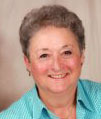
Elayne Clift's Blog
March 6, 2019
My New Book is out!
Around the World in 50 Years: Travel Tales from a Not So Innocent Abroad (Braughler Books, March 2019)
(Soon to be available on Amazon)
“All my life I have disagreed with David Henry Thoreau: Unlike him, I definitely think it is “worthwhile to go around the world to count the cats in Zanzibar.”
Thus begins writer Elayne Clift’s 13th book, Around the World in Fifty Years: Travel Tales of a Not So Innocent Abroad, a collection of selected stories about her global travels, told in prose and poetry.
Clift, an intrepid traveler who has visited almost 100 countries on every continent except Antarctica for both work and pleasure, says she caught the travel bug as a youngster when her family took annual summer trips to Canada to visit relatives.
“That was in the days before interstate highways and Holiday Inns,” she recalls. “We traveled scenic roads in New York, New Hampshire, and Vermont, staying in AAA-approved motels and eating breakfast in Howard Johnson’s. There was always a stop in Niagara Falls for a ride on the Maid of the Mist, and a room at the Royal York Hotel in Toronto. It was pure heaven.”
Clift’s travel memoir is not a Fodor’s Guide. It shares personal stories, vignettes, photographs, and postscripts that range from poignant to hilarious. There are scenes from Indian railway stations to rural Romanian villages. Along the way readers meet the people who made her travel special, ranging from a professor in Jordan to a desert driver in Dubai to an elderly artist in France.
One reviewer has called the book “a treasure of armchair travel.”
A popular writing workshop leader and lecturer, Clift is widely published internationally. Her columns appear regularly in two New England newspapers and on various blogs, and her stories, poetry, travel writing, and essays have frequently been anthologized. Her novel, Hester’s Daughters, based on The Scarlet Letter, appeared in 2012 and her third short story collection, Children of the Chalet, received the Award for Excellence in Fiction from Greyden Press in 2014.
Clift continues to agree with Mark Twain: Travel is still enticing, not least because it is “fatal to prejudice, bigotry and narrow-mindedness.” Like Mr. Twain, whose account of one trip gave us Innocents Abroad, she thinks “it would be well if such an excursion could be got up every year and the system regularly inaugurated.”
(Soon to be available on Amazon)
“All my life I have disagreed with David Henry Thoreau: Unlike him, I definitely think it is “worthwhile to go around the world to count the cats in Zanzibar.”
Thus begins writer Elayne Clift’s 13th book, Around the World in Fifty Years: Travel Tales of a Not So Innocent Abroad, a collection of selected stories about her global travels, told in prose and poetry.
Clift, an intrepid traveler who has visited almost 100 countries on every continent except Antarctica for both work and pleasure, says she caught the travel bug as a youngster when her family took annual summer trips to Canada to visit relatives.
“That was in the days before interstate highways and Holiday Inns,” she recalls. “We traveled scenic roads in New York, New Hampshire, and Vermont, staying in AAA-approved motels and eating breakfast in Howard Johnson’s. There was always a stop in Niagara Falls for a ride on the Maid of the Mist, and a room at the Royal York Hotel in Toronto. It was pure heaven.”
Clift’s travel memoir is not a Fodor’s Guide. It shares personal stories, vignettes, photographs, and postscripts that range from poignant to hilarious. There are scenes from Indian railway stations to rural Romanian villages. Along the way readers meet the people who made her travel special, ranging from a professor in Jordan to a desert driver in Dubai to an elderly artist in France.
One reviewer has called the book “a treasure of armchair travel.”
A popular writing workshop leader and lecturer, Clift is widely published internationally. Her columns appear regularly in two New England newspapers and on various blogs, and her stories, poetry, travel writing, and essays have frequently been anthologized. Her novel, Hester’s Daughters, based on The Scarlet Letter, appeared in 2012 and her third short story collection, Children of the Chalet, received the Award for Excellence in Fiction from Greyden Press in 2014.
Clift continues to agree with Mark Twain: Travel is still enticing, not least because it is “fatal to prejudice, bigotry and narrow-mindedness.” Like Mr. Twain, whose account of one trip gave us Innocents Abroad, she thinks “it would be well if such an excursion could be got up every year and the system regularly inaugurated.”


April 21, 2017
Tales, Tips and Love from Women Caregivers
Women have always been caregivers. Whether looking after small children, elders, other family members or friends in small communities, tending to others in urban settings with limited support systems, or acting as professional caregivers in institutional settings, we have been the primary providers of physical care and emotional support in a variety of settings and circumstances throughout the ages.
Today that remains true, and being the main caregiver may be more vital than ever. As women have children later and elders live longer, we are challenged by competing demands and shrinking resources. Many of us have elderly parents living in a time of growing dementia or increasing frailty; others have parents who need supervision in nursing homes. At the same time, we are parenting children who often have their own physical or emotional challenges. We may also have spouses in failing health who need our attention. And who among us would not be there for an ill friend or family member?
Whether we are younger women focused on child care, older women charged with being there for a sick spouse or parent, or women in the Sandwich Generation who are called upon to take care of children and parents simultaneously, many of us find ourselves in the caregiver role well before we expected to be there and often feeling less prepared than we wish. We are all caregivers at some stage of our lives, and we all have stories to tell about what that has meant for us.
It’s important to emphasize women as caregivers because while men and women are both likely to fulfill caregiving roles, female caregivers spend many more hours providing care. They spend an average of 680 hours per year providing care, 160 more hours on average than male caregivers. Female caregivers may spend as much as 50% more time providing care than male caregivers.
That’s partly because men tend to manage care rather than administer it. A man is more likely to hire someone to help with tasks such as bathing or dressing or other daily activities because they are not as comfortable as women providing personal care.
According to the Family Care Giving Alliance, 80% of long-term care in the US is provided by unpaid or informal caregivers. Of these, 61% are women, most have reached middle age, and 59% have jobs. The average caregiver is a 49-year old woman, caring for a mother who doesn’t live with her. She is married and employed.
An estimated 15.5 million caregivers provided 17.7 billion hours of unpaid care for an aging family member with dementia alone in 2013. Most of these caregivers for aging loved ones were daughters and daughters-in-law. The value of all the informal care that women provide ranges from $148 billion to $188 billion annually. Women, who provide the majority of informal care, play many roles while caregiving, from hands-on health provider & care manager to surrogate decision-maker and advocate.
Caregivers who leave the workforce to care for a family member lose on average over $304,000 in wages and benefits over their lifetime. Women caregivers are less likely than others to attend to their own health and self-care needs. They often suffer from stress, isolation, fatigue, and depression. Thirty-five percent of them report finding it difficult to make time for themselves, and 29% report difficulty balancing work and family issues.
Because of these issues, I compiled a collection of prose and poetry by women caregivers that give testimony to what caretaking has meant for contemporary women, whose lives are complex enough to begin with. The anthology is called TAKE CARE: Tales, Tips and Love from Women Caregivers and it will be published this spring. Here is an excerpt by Kate Gray called “All the Longing Left in the Body.”
“It could be you stopping me. It could be you quite a few years from now, half of your face a little lower than the other, your hair turned gray and your clothes neatly tucked. You would probably do the same thing she did in the women’s restroom, if you were in her shoes.
“It could be any of us, waiting outside a bathroom stall, overcoming the body’s instinct to grimace at the acrid smells, taking a diaper much bigger than the one used for an infant, carrying it carefully, disposing of it. It could be any of us, bending down to hug our spouse or partner, wrap our arms under their arms, straighten our legs to lift the two of us to standing. It could be you loving someone so much that you take him into the women’s room with you, that you find a way to make a dance out of changing a diaper, that you don’t mind doing what you have to do, as long as you are two together.”
# # #
Elayne Clift is a writer in Saxtons River, Vt.
Today that remains true, and being the main caregiver may be more vital than ever. As women have children later and elders live longer, we are challenged by competing demands and shrinking resources. Many of us have elderly parents living in a time of growing dementia or increasing frailty; others have parents who need supervision in nursing homes. At the same time, we are parenting children who often have their own physical or emotional challenges. We may also have spouses in failing health who need our attention. And who among us would not be there for an ill friend or family member?
Whether we are younger women focused on child care, older women charged with being there for a sick spouse or parent, or women in the Sandwich Generation who are called upon to take care of children and parents simultaneously, many of us find ourselves in the caregiver role well before we expected to be there and often feeling less prepared than we wish. We are all caregivers at some stage of our lives, and we all have stories to tell about what that has meant for us.
It’s important to emphasize women as caregivers because while men and women are both likely to fulfill caregiving roles, female caregivers spend many more hours providing care. They spend an average of 680 hours per year providing care, 160 more hours on average than male caregivers. Female caregivers may spend as much as 50% more time providing care than male caregivers.
That’s partly because men tend to manage care rather than administer it. A man is more likely to hire someone to help with tasks such as bathing or dressing or other daily activities because they are not as comfortable as women providing personal care.
According to the Family Care Giving Alliance, 80% of long-term care in the US is provided by unpaid or informal caregivers. Of these, 61% are women, most have reached middle age, and 59% have jobs. The average caregiver is a 49-year old woman, caring for a mother who doesn’t live with her. She is married and employed.
An estimated 15.5 million caregivers provided 17.7 billion hours of unpaid care for an aging family member with dementia alone in 2013. Most of these caregivers for aging loved ones were daughters and daughters-in-law. The value of all the informal care that women provide ranges from $148 billion to $188 billion annually. Women, who provide the majority of informal care, play many roles while caregiving, from hands-on health provider & care manager to surrogate decision-maker and advocate.
Caregivers who leave the workforce to care for a family member lose on average over $304,000 in wages and benefits over their lifetime. Women caregivers are less likely than others to attend to their own health and self-care needs. They often suffer from stress, isolation, fatigue, and depression. Thirty-five percent of them report finding it difficult to make time for themselves, and 29% report difficulty balancing work and family issues.
Because of these issues, I compiled a collection of prose and poetry by women caregivers that give testimony to what caretaking has meant for contemporary women, whose lives are complex enough to begin with. The anthology is called TAKE CARE: Tales, Tips and Love from Women Caregivers and it will be published this spring. Here is an excerpt by Kate Gray called “All the Longing Left in the Body.”
“It could be you stopping me. It could be you quite a few years from now, half of your face a little lower than the other, your hair turned gray and your clothes neatly tucked. You would probably do the same thing she did in the women’s restroom, if you were in her shoes.
“It could be any of us, waiting outside a bathroom stall, overcoming the body’s instinct to grimace at the acrid smells, taking a diaper much bigger than the one used for an infant, carrying it carefully, disposing of it. It could be any of us, bending down to hug our spouse or partner, wrap our arms under their arms, straighten our legs to lift the two of us to standing. It could be you loving someone so much that you take him into the women’s room with you, that you find a way to make a dance out of changing a diaper, that you don’t mind doing what you have to do, as long as you are two together.”
# # #
Elayne Clift is a writer in Saxtons River, Vt.
July 3, 2015
Call for Contributions
TAKE CARE:TALES, TIPS & TOUGH LOVE FROM WOMEN CAREGIVERS
Call for Contributions
For anthology on women as caregivers seek submissions from women all ages caring for kids, parents, friends, family. Must be true 1st P. tales, tips, encouragement, lessons (serious or humorous). 3000 w. max. Double-spaced, 12 Pt. Times New Roman, MSWord only. Include word count, all contact info and brief bio (50 w. max). Reprints acceptable with attribution if author owns rights or secures publisher permission. Deadline: October 30, 2015. Submissions/inquiries/more background: eclift@vermontel.net.
Call for Contributions
For anthology on women as caregivers seek submissions from women all ages caring for kids, parents, friends, family. Must be true 1st P. tales, tips, encouragement, lessons (serious or humorous). 3000 w. max. Double-spaced, 12 Pt. Times New Roman, MSWord only. Include word count, all contact info and brief bio (50 w. max). Reprints acceptable with attribution if author owns rights or secures publisher permission. Deadline: October 30, 2015. Submissions/inquiries/more background: eclift@vermontel.net.
October 8, 2014
Children of the Chalet
That's the title of my novella in short stories that just won the 2014 Greyden Press First Prize for Fiction! Watch for publication!
March 23, 2014
Five Considerations for Happy Collaborative Writing
Writing can be a lonely experience. For most of us who choose to hole up, with or without our muse, in a “room of our own”, solitude is a prerequisite for getting our creative juices, and our words, flowing. It’s a choice we make, but don’t always enjoy. It is simply in the nature of the beast we call our profession.
There are several ways to alleviate the loneliness of writing. One way to escape the solitude comes with the tasks associated with selling and promoting one’s work. This is particularly challenging for those of us who work without an agent or publicist or who self-publish; we must hawk our masterpieces ourselves. Journalists have the opportunity to interact with others in the course of researching articles. And those of us who have conceived and edited anthologies can talk to our contributors in the course of editing and other necessities.
But the best way to find respite from the isolation of writing, I’ve discovered, is through collaborating with another writer. I discovered the pleasure of collaboration in producing the book Birth Ambassadors: Doulas and the Re-emergence of Woman-supported Childbirth in America, with lead author Christine Morton (Praeclarus Press, 2014).
Christine lives in California and I live in Vermont. We’ve only met face-to-face once in the nearly two years we’ve worked together to produce our book, but our friendship will continue long after our book appears on bookshelves and Amazon.com, and our joint promotional activities simmer down. It’s been a happy collaboration.
Christine and I are both doulas whose professional lives have revolved around women’s health, with birth as a focal point. She is a medical sociologist; I am a health communications and gender specialist. We found each other when I was collecting stories for a possible anthology about doula-supported birth. When Christine contacted me to ask if a chapter from her thesis might work for the book, I told her I didn’t think the book was going to happen because I hadn’t received enough first-person stories from doulas, docs and dads; only moms had sent me the stories of their doula supported births. It was then that we got the idea to collaborate: We would work together to edit and refine her budding book, adding in the stories I selected and edited from my potential anthology contributors. It turned out to be an ideal partnership, as I think our book proves.
So, what made our collaboration successful and special? Here are five tips:
1. A Common Goal. First, from the get-go, we had the same goal; i.e., to publish an inviting, intelligent, comprehensive book about doula supported birth in the United States that would be informative, accessible, and user-friendly in its approach. We were philosophically and practically on the same page. For example, as doulas we both embraced the midwifery model of childbirth and we had a shared knowledge of birthing issues. Also, we agreed on the purpose and parameters of the book. And while we liked the idea of being accepted by an academic publisher, we were both comfortable with having a respected lay press bring out our book. The important thing to both of us was to birth our collaborative baby in a classy, credible and enticing way.
2. A Commitment to Good Communication. Second, we communicated well together. We spoke honestly, easily and regularly, either by email or phone. When we didn’t agree on something, we listened actively to each other and then reached a mutual decision about how to proceed. We had some good laughs and when spirits flagged or individual tasks seemed overwhelming in the face of other personal or professional demands in our lives, we supported each other with good cheer and practical help. We remained flexible regarding tasks and timelines and we focused on the important issues at hand. We remained committed to the project, and to each others role in it.
3. Complementary Skills. Each of us had specific skills, experience and knowledge to bring to the collaborative effort. Christine’s awesome research and writing skills, along with her deep experience in maternal health and birthing issues, provided the meat of the work. Elayne’s long years as a women’s health educator and advocate, along with her track record as a writer, journalist and author experienced in book production and promotion added another necessary dimension to the project. And we were both experienced doulas!
4. Camaraderie. From the start, we liked each other. Neither of us was ego-driven and it was clear at the outset that decisions would be made mutually. In addition, we shared a deep respect for each others work and our individual commitment to this project and its purpose. We knew we could work well together.
5. A Contract. Even then – warm fuzzies notwithstanding - we negotiated a contract that formally laid out our agreement in all its dimensions, from respective responsibilities to royalties. We have never had to revisit it but it is good to have it.
Sometimes what I call “the solitude of the studio” is necessary to produce great works, the next War and Peace, for example. There’s no getting around it. But when it comes to writing non-fiction, often two heads really are better than one. At the very least, you won’t find yourself talking to the face in the mirror at the end of a day’s work. You might even realize that your best efforts are even better when they are the product of a happy collaboration.
# # #
Elayne Clift is an award-winning writer, adjunct professor, and writing workshop leader. Her most recent edited collection is Women, Philanthropy and Social Change (UPNE/Tufts U. Press, 2004). Hester’s Daughters, a novel, appeared in 2012.
There are several ways to alleviate the loneliness of writing. One way to escape the solitude comes with the tasks associated with selling and promoting one’s work. This is particularly challenging for those of us who work without an agent or publicist or who self-publish; we must hawk our masterpieces ourselves. Journalists have the opportunity to interact with others in the course of researching articles. And those of us who have conceived and edited anthologies can talk to our contributors in the course of editing and other necessities.
But the best way to find respite from the isolation of writing, I’ve discovered, is through collaborating with another writer. I discovered the pleasure of collaboration in producing the book Birth Ambassadors: Doulas and the Re-emergence of Woman-supported Childbirth in America, with lead author Christine Morton (Praeclarus Press, 2014).
Christine lives in California and I live in Vermont. We’ve only met face-to-face once in the nearly two years we’ve worked together to produce our book, but our friendship will continue long after our book appears on bookshelves and Amazon.com, and our joint promotional activities simmer down. It’s been a happy collaboration.
Christine and I are both doulas whose professional lives have revolved around women’s health, with birth as a focal point. She is a medical sociologist; I am a health communications and gender specialist. We found each other when I was collecting stories for a possible anthology about doula-supported birth. When Christine contacted me to ask if a chapter from her thesis might work for the book, I told her I didn’t think the book was going to happen because I hadn’t received enough first-person stories from doulas, docs and dads; only moms had sent me the stories of their doula supported births. It was then that we got the idea to collaborate: We would work together to edit and refine her budding book, adding in the stories I selected and edited from my potential anthology contributors. It turned out to be an ideal partnership, as I think our book proves.
So, what made our collaboration successful and special? Here are five tips:
1. A Common Goal. First, from the get-go, we had the same goal; i.e., to publish an inviting, intelligent, comprehensive book about doula supported birth in the United States that would be informative, accessible, and user-friendly in its approach. We were philosophically and practically on the same page. For example, as doulas we both embraced the midwifery model of childbirth and we had a shared knowledge of birthing issues. Also, we agreed on the purpose and parameters of the book. And while we liked the idea of being accepted by an academic publisher, we were both comfortable with having a respected lay press bring out our book. The important thing to both of us was to birth our collaborative baby in a classy, credible and enticing way.
2. A Commitment to Good Communication. Second, we communicated well together. We spoke honestly, easily and regularly, either by email or phone. When we didn’t agree on something, we listened actively to each other and then reached a mutual decision about how to proceed. We had some good laughs and when spirits flagged or individual tasks seemed overwhelming in the face of other personal or professional demands in our lives, we supported each other with good cheer and practical help. We remained flexible regarding tasks and timelines and we focused on the important issues at hand. We remained committed to the project, and to each others role in it.
3. Complementary Skills. Each of us had specific skills, experience and knowledge to bring to the collaborative effort. Christine’s awesome research and writing skills, along with her deep experience in maternal health and birthing issues, provided the meat of the work. Elayne’s long years as a women’s health educator and advocate, along with her track record as a writer, journalist and author experienced in book production and promotion added another necessary dimension to the project. And we were both experienced doulas!
4. Camaraderie. From the start, we liked each other. Neither of us was ego-driven and it was clear at the outset that decisions would be made mutually. In addition, we shared a deep respect for each others work and our individual commitment to this project and its purpose. We knew we could work well together.
5. A Contract. Even then – warm fuzzies notwithstanding - we negotiated a contract that formally laid out our agreement in all its dimensions, from respective responsibilities to royalties. We have never had to revisit it but it is good to have it.
Sometimes what I call “the solitude of the studio” is necessary to produce great works, the next War and Peace, for example. There’s no getting around it. But when it comes to writing non-fiction, often two heads really are better than one. At the very least, you won’t find yourself talking to the face in the mirror at the end of a day’s work. You might even realize that your best efforts are even better when they are the product of a happy collaboration.
# # #
Elayne Clift is an award-winning writer, adjunct professor, and writing workshop leader. Her most recent edited collection is Women, Philanthropy and Social Change (UPNE/Tufts U. Press, 2004). Hester’s Daughters, a novel, appeared in 2012.
April 3, 2013
The Hard Work of Birthing a Novel
About fifteen years ago, I was sitting with a group of women writers in the house we’d rented on Martha’s Vineyard for a weeklong writing retreat when the topic of favorite books came up. “The Scarlet Letter,” I offered vigorously. “Hester Prynne is my all-time favorite heroine!” (Pause). “But I always wondered whatever happened to Pearl.”
My immediate reaction to that self-imposed query was “Damn!” I remembered Anne Tyler’s line to the effect that if she could only stop getting ideas, she wouldn’t have to be a writer. But the dye was cast. Or to put it another way, the seed had been sown and was implanted into my psyche just as firmly as a well-rooted embryo embeds itself in the uterus.
I moped around out of sorts for days, fully aware that I could never write a historical novel about a 17th century woman. Conquering that kind of Herculean task just wasn’t in me. But I was also fully aware that there is no such thing as being a little bit pregnant. So I began to think of Hester and Pearl in a new way. What if they weren’t 17th century Puritans, but 20th century feminists? That was something I knew a lot about. I’d lived it up close and personal. I could write the story against a backdrop of Second Wave feminism.
And so I began. I re-read Nathaniel Hawthorne’s classic, marveling at his extraordinary insight into women, human emotion, psychology and behavior as well as the myriad themes he had tackled, ranging from love and lust to guilt and betrayal. I read literary criticism about the book that had started a genre (psychological romance). I played with the iconic scenes in the original work, my mind obsessed for weeks and months. I contemplated the huge task of crafting a novel, something I had never attempted before.
Then I began to write. My first vignettes focused on the major scenes and characters in The Scarlet Letter. Arthur Dimmesdale became Jesuit priest Arthur Dale. Roger Chillingworth morphed into Roger Worth. Governor Bellingham grew into Judge Hamilton Belling. I wrote a “scaffold” scene in which Arthur reveals to Pearl that he is her father. That was followed by an episode in Judge Belling’s chambers in which Hester is threatened with the loss of Pearl. Then I tackled the moment when Hester and Roger must come to a point of reconciliation in order for Hester to continue her personal (archetypal) journey.
My Hester, being born in 1929 into a “puritan” community of conservative Jews in Boston ((I am Jewish so capturing that milieu came easily), has advantages that Hester Prynne did not. She is able to educate herself, to be economically self-sufficient, and most importantly, to find support among other women waking up to the promise of autonomy and shared visions for a self-determined future. She has a feisty best friend and a lot of women, real and imagined, to help her as she matures. Still, the writing did not come easy and there were, to continue the birthing metaphor, many months of labor in which things got stuck and I suffered the dreaded “failure to progress.”
I struggled with structure, dialogue, and verisimilitude, panting and sweating all the while. I needed rest periods and lots of deep breathing. Readers were supportive and loving but ultimately unable to guide me through the taxing process of birthing a novel. So I called in a midwife. His name is Stuart Land and he is one great editor. With his help, I was able to relax and reconcile the difficulties I was encountering. I continued to push, and then push some more.
Fifteen years after it was conceived my novel Hester’s Daughters came into the world in January 2012. Like my Hester when Pearl was born, and like Pearl when her own daughter Aviva arrived, I marveled at this glistening new thing I had produced. I held my literary offspring in my hands and caressed it. When people told me how beautiful it was, I cried. I even experienced post-partum depression and it was a long time before I could write creatively again.
But I had done it. I had gone through the hard labor of writing a substantial work, I had continued when it seemed just too much effort to do that, I had doubted myself as a writer and written anyway. Because that is what we writers do. Even when we “fail to progress” we push on. Impregnated with ideas and imbued with compulsions toward plot, and in love with the characters we wish to create, we write. We do it despite doubts and frustration, despite the internal and external editors that so easily destroy our confidence and craft, despite the horrors of the publishing scene today. We do it because we must. There is simply no denying the muse or the moment. Our voices matter, even if only to us.
It is unlikely I will attempt another novel; I prefer writing in shorter forms. But I did it and I’m proud of what I achieved. My Hester, Pearl and the other characters I created are with me forever now. I’ve recorded a piece of women’s history that will remain embedded in my creative work. I’ve winked at Nathaniel Hawthorne, and joined a sisterhood of writers who actually have a published novel.
As so many people in Hester Prynne’s life would say, “A is for Able.” It’s a Scarlet Letter I, like my literary heroine, would be proud to wear. What writer cannot relate to that, no matter how difficult a birth they experience?
(First published in The Writer, March 2013
My immediate reaction to that self-imposed query was “Damn!” I remembered Anne Tyler’s line to the effect that if she could only stop getting ideas, she wouldn’t have to be a writer. But the dye was cast. Or to put it another way, the seed had been sown and was implanted into my psyche just as firmly as a well-rooted embryo embeds itself in the uterus.
I moped around out of sorts for days, fully aware that I could never write a historical novel about a 17th century woman. Conquering that kind of Herculean task just wasn’t in me. But I was also fully aware that there is no such thing as being a little bit pregnant. So I began to think of Hester and Pearl in a new way. What if they weren’t 17th century Puritans, but 20th century feminists? That was something I knew a lot about. I’d lived it up close and personal. I could write the story against a backdrop of Second Wave feminism.
And so I began. I re-read Nathaniel Hawthorne’s classic, marveling at his extraordinary insight into women, human emotion, psychology and behavior as well as the myriad themes he had tackled, ranging from love and lust to guilt and betrayal. I read literary criticism about the book that had started a genre (psychological romance). I played with the iconic scenes in the original work, my mind obsessed for weeks and months. I contemplated the huge task of crafting a novel, something I had never attempted before.
Then I began to write. My first vignettes focused on the major scenes and characters in The Scarlet Letter. Arthur Dimmesdale became Jesuit priest Arthur Dale. Roger Chillingworth morphed into Roger Worth. Governor Bellingham grew into Judge Hamilton Belling. I wrote a “scaffold” scene in which Arthur reveals to Pearl that he is her father. That was followed by an episode in Judge Belling’s chambers in which Hester is threatened with the loss of Pearl. Then I tackled the moment when Hester and Roger must come to a point of reconciliation in order for Hester to continue her personal (archetypal) journey.
My Hester, being born in 1929 into a “puritan” community of conservative Jews in Boston ((I am Jewish so capturing that milieu came easily), has advantages that Hester Prynne did not. She is able to educate herself, to be economically self-sufficient, and most importantly, to find support among other women waking up to the promise of autonomy and shared visions for a self-determined future. She has a feisty best friend and a lot of women, real and imagined, to help her as she matures. Still, the writing did not come easy and there were, to continue the birthing metaphor, many months of labor in which things got stuck and I suffered the dreaded “failure to progress.”
I struggled with structure, dialogue, and verisimilitude, panting and sweating all the while. I needed rest periods and lots of deep breathing. Readers were supportive and loving but ultimately unable to guide me through the taxing process of birthing a novel. So I called in a midwife. His name is Stuart Land and he is one great editor. With his help, I was able to relax and reconcile the difficulties I was encountering. I continued to push, and then push some more.
Fifteen years after it was conceived my novel Hester’s Daughters came into the world in January 2012. Like my Hester when Pearl was born, and like Pearl when her own daughter Aviva arrived, I marveled at this glistening new thing I had produced. I held my literary offspring in my hands and caressed it. When people told me how beautiful it was, I cried. I even experienced post-partum depression and it was a long time before I could write creatively again.
But I had done it. I had gone through the hard labor of writing a substantial work, I had continued when it seemed just too much effort to do that, I had doubted myself as a writer and written anyway. Because that is what we writers do. Even when we “fail to progress” we push on. Impregnated with ideas and imbued with compulsions toward plot, and in love with the characters we wish to create, we write. We do it despite doubts and frustration, despite the internal and external editors that so easily destroy our confidence and craft, despite the horrors of the publishing scene today. We do it because we must. There is simply no denying the muse or the moment. Our voices matter, even if only to us.
It is unlikely I will attempt another novel; I prefer writing in shorter forms. But I did it and I’m proud of what I achieved. My Hester, Pearl and the other characters I created are with me forever now. I’ve recorded a piece of women’s history that will remain embedded in my creative work. I’ve winked at Nathaniel Hawthorne, and joined a sisterhood of writers who actually have a published novel.
As so many people in Hester Prynne’s life would say, “A is for Able.” It’s a Scarlet Letter I, like my literary heroine, would be proud to wear. What writer cannot relate to that, no matter how difficult a birth they experience?
(First published in The Writer, March 2013