
Larry Benjamin's Blog: Larry Benjamin's blog - This Writer's Life - Posts Tagged "racism"
Weighing In On…Rachel Dolezal—Why Does Race Remain Locked, Unchangeable?
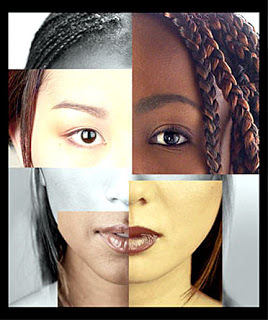
I must admit that when I first read about Rachel Dolezal―who leads the Spokane chapter of the NAACP, teaches African studies to college students and sits on a police oversight commission, and who claims to be black when she may not be by birth―I was surprised and amused. You see, my short story, “Howdy Billy, Cabbage Ma’am,” from Damaged Angels deals with the same issue—a privileged white woman masquerades as black for decades and is eventually found out. But the more I read, the madder I got. It seems the entire controversy surrounds how Rachel Dolezal identifies racially. Say what?
Why are we so outraged by Rachel Dolezal’s racial identification in an age when we are told gender exists on a spectrum and can be “fluid,” in an age when it is argued that marriage is the right of any two people in love? Why are we outraged by this when we accept the fluidity of gender roles and embrace the reality of stay-at-home dads, and women on the battlefield? Just the other day I saw a trash collector who was not only female but Muslim.
Why is it, that race alone remains locked, solid, unchangeable?
Keep reading.


Racism Wearing a New Hat Rears Its Ugly Head
We had just gotten home on Saturday, when two black women walked up to the kitchen door. Attractive, smiling, there was an openness about them that made me rethink my original dismissive appraisal: Jehovah’s Witnesses.
As I corralled the dogs, the older of the two said to Stanley, “Hi. We used to live here. We were hoping we could come in and see the house—”
“Oh,” Stanley cried, “You’re Moodys!”
They seemed surprised we knew who they were. I guess they don’t know they are practically legendary. In fact, nine years after we bought it, our house is still referred to as “The Moody House.” We’d, of course, heard about the Moodys before. A local realtor, who spoke highly of the family, once told us that when her own daughters had held a party which her mother chaperoned, her mother had called her in a panic and whispered there’s a black kid dancing in the garage with the girls!” Her response? “That’s not a black kid, that’s Moody!”
We took them—they turned out to be Mr. Moody’s daughter and grand-daughter—through the house and they shared memories and answered our questions. Towards the end of the visit, after they’d cried, and thanked us for taking care of the house, Kim who had lived here for thirty-some-odd years, asked us, “What’s the neighborhood like?”
I forget my answer but it wasn’t until after they’d left that I realized there was more to her question. The Moodys had bought our house in the 70s. They had been the first black family to buy a house in East Falls. A title search had revealed that the couple who’d sold the Moodys the house had held the mortgage. Most likely because, as a black buyer in what was then an all-white neighborhood, Mr. Moody had been unable to secure a mortgage through a commercial bank. That this occurred in the 70s, dismays me.
Remembering that, I wondered how I should have answered Kim’s question.
On our block, I’m one of three black people. There are more gay couples than black people. With the exception of a couple of “A-list queens,” who don’t speak to anybody, everyone has been welcoming and inclusive. But racism does raise its head from time to time.
There is a woman in the neighborhood—I’ll call her Lily. Reasonably intelligent and seemingly liberal and without prejudice, she remarked the first time she heard me speak publically, “You are so articulate.” The second time she heard me speak she came up to me afterwards and said, “You express yourself so well.” The first time she walking out of our house she stopped in her tracks, looked at the house and exclaimed “You live there?!”
Once, as I was raking leaves to the curb, a city worker who was picking up the leaves asked how I’d gotten the job raking leaves at this house. “It’s my house,” I explained. “I live here.” He glanced up at the house again, then at me. “You live here?” I could forgive his surprise. He was after all black and ours is still perceived as a white neighborhood. I could forgive his surprise in a way I could not forgive Lily’s.
When we first moved to East Falls, we got a flyer under our door telling us Halloween was being celebrated a week earlier than the calendar date. We thought this odd but went along with it. And in truth Stanley had a blast giving out candy to the children in costume.
This went on for several years until younger people started moving into the neighborhood and questioned the practice. It then came out that neighbors had started the practice of the early Halloween in large part to avoid having to open their doors to the black children from the projects in the neighborhood. So, neighbors would discreetly pass around the date of the “East Falls Halloween” then on actual Halloween everyone would turn out their porch lights and not answer their doors.
It’s been my experience that racism is subtle and often catches one off guard. In my interracial romance, What Binds Us, this happens twice to main character Thomas Edward.
The following scene occurs when Matthew and Dondi, both of whom are white, take Thomas, who is black, to a black tie ball at a country club on Long Island.
Matthew snorted and walked off in the direction of the bar. I was standing alone, waiting for him to return with our drinks, trying unsuccessfully not to feel out-of place when a dowager thrust her empty glass at me. “A refill, please,” she said.
Matthew took my arm, handing me a gin and tonic. “He’s a guest,” he told her. As we walked away, I turned. “We’re not all waiters anymore, you know,” I told her. She at least had the good grace to be embarrassed; her white arrogance changed to scarlet shame.
Matthew led me outside. “I’m so sorry that happened,” he said, blushing.
The second incident occurs at a hospital where Dondi is an inpatient. Thomas, as Dondi’s best friend and primary caretaker, tells the doctor they will be stopping treatment.
We were utterly silent as first one doctor then another droned on about grotesque invasive procedures, experimental and useless.
“No,” I said, interrupting one monologue.
“Excuse me? What did you say?” the interrupted monologist, a kindly and bespectacled senior physician with brilliantine hair, asked.
“No,” I repeated. “I said ‘no.’”
“No, what?” he asked wearily, removing his glasses and polishing them to further brilliance in that white light.
“No more pills. No more impossible treatments. We’re taking him home.”
The doctor glanced at Matthew and Colin. I intercepted the look. I stood and leaned toward him, my palms splayed on the table. “Do not think,” I said through gritted teeth, “that because I am black I am not a part of this family.”
Recently during an astonishingly vitriolic debate about a proposed new playground in McMichael Park, it was suggested that instead of the park a playground should be added to the Mifflin school—a long time neighborhood school, currently at about 50% capacity and whose students are mostly black. Odd in a-neighborhood that is overwhelmingly white.
One person, calling it a “heretical thought” posted the following on the community bulletin board, Next Door East Falls:
“…there is an 800-pound gorilla in the room that everyone pretends not to see, and will go to great lengths to avoid confronting the truth about their choices. I wouldn't send my own kids to Mifflin unless a critical mass of other middle class (and mostly white, to be perfectly honest) parents choose to do the same. …I choose to be honest. Most people feel the same way but refuse to admit to themselves certain uncomfortable truths…”
I found his post disturbing but ultimately not surprising. What I found more disturbing was not so much that no one challenged him on this but that a few people actually “thanked” him for posting.
The sad truth is eight years into the country’s first black presidency, we are still not a nation that is “post-race”— arguably we should be, but we are not. Racism simply put on a new hat and stepped into the shadows.
As I corralled the dogs, the older of the two said to Stanley, “Hi. We used to live here. We were hoping we could come in and see the house—”
“Oh,” Stanley cried, “You’re Moodys!”
They seemed surprised we knew who they were. I guess they don’t know they are practically legendary. In fact, nine years after we bought it, our house is still referred to as “The Moody House.” We’d, of course, heard about the Moodys before. A local realtor, who spoke highly of the family, once told us that when her own daughters had held a party which her mother chaperoned, her mother had called her in a panic and whispered there’s a black kid dancing in the garage with the girls!” Her response? “That’s not a black kid, that’s Moody!”
We took them—they turned out to be Mr. Moody’s daughter and grand-daughter—through the house and they shared memories and answered our questions. Towards the end of the visit, after they’d cried, and thanked us for taking care of the house, Kim who had lived here for thirty-some-odd years, asked us, “What’s the neighborhood like?”
I forget my answer but it wasn’t until after they’d left that I realized there was more to her question. The Moodys had bought our house in the 70s. They had been the first black family to buy a house in East Falls. A title search had revealed that the couple who’d sold the Moodys the house had held the mortgage. Most likely because, as a black buyer in what was then an all-white neighborhood, Mr. Moody had been unable to secure a mortgage through a commercial bank. That this occurred in the 70s, dismays me.
Remembering that, I wondered how I should have answered Kim’s question.
On our block, I’m one of three black people. There are more gay couples than black people. With the exception of a couple of “A-list queens,” who don’t speak to anybody, everyone has been welcoming and inclusive. But racism does raise its head from time to time.
There is a woman in the neighborhood—I’ll call her Lily. Reasonably intelligent and seemingly liberal and without prejudice, she remarked the first time she heard me speak publically, “You are so articulate.” The second time she heard me speak she came up to me afterwards and said, “You express yourself so well.” The first time she walking out of our house she stopped in her tracks, looked at the house and exclaimed “You live there?!”
Once, as I was raking leaves to the curb, a city worker who was picking up the leaves asked how I’d gotten the job raking leaves at this house. “It’s my house,” I explained. “I live here.” He glanced up at the house again, then at me. “You live here?” I could forgive his surprise. He was after all black and ours is still perceived as a white neighborhood. I could forgive his surprise in a way I could not forgive Lily’s.
When we first moved to East Falls, we got a flyer under our door telling us Halloween was being celebrated a week earlier than the calendar date. We thought this odd but went along with it. And in truth Stanley had a blast giving out candy to the children in costume.
This went on for several years until younger people started moving into the neighborhood and questioned the practice. It then came out that neighbors had started the practice of the early Halloween in large part to avoid having to open their doors to the black children from the projects in the neighborhood. So, neighbors would discreetly pass around the date of the “East Falls Halloween” then on actual Halloween everyone would turn out their porch lights and not answer their doors.
It’s been my experience that racism is subtle and often catches one off guard. In my interracial romance, What Binds Us, this happens twice to main character Thomas Edward.
The following scene occurs when Matthew and Dondi, both of whom are white, take Thomas, who is black, to a black tie ball at a country club on Long Island.
Matthew snorted and walked off in the direction of the bar. I was standing alone, waiting for him to return with our drinks, trying unsuccessfully not to feel out-of place when a dowager thrust her empty glass at me. “A refill, please,” she said.
Matthew took my arm, handing me a gin and tonic. “He’s a guest,” he told her. As we walked away, I turned. “We’re not all waiters anymore, you know,” I told her. She at least had the good grace to be embarrassed; her white arrogance changed to scarlet shame.
Matthew led me outside. “I’m so sorry that happened,” he said, blushing.
The second incident occurs at a hospital where Dondi is an inpatient. Thomas, as Dondi’s best friend and primary caretaker, tells the doctor they will be stopping treatment.
We were utterly silent as first one doctor then another droned on about grotesque invasive procedures, experimental and useless.
“No,” I said, interrupting one monologue.
“Excuse me? What did you say?” the interrupted monologist, a kindly and bespectacled senior physician with brilliantine hair, asked.
“No,” I repeated. “I said ‘no.’”
“No, what?” he asked wearily, removing his glasses and polishing them to further brilliance in that white light.
“No more pills. No more impossible treatments. We’re taking him home.”
The doctor glanced at Matthew and Colin. I intercepted the look. I stood and leaned toward him, my palms splayed on the table. “Do not think,” I said through gritted teeth, “that because I am black I am not a part of this family.”
Recently during an astonishingly vitriolic debate about a proposed new playground in McMichael Park, it was suggested that instead of the park a playground should be added to the Mifflin school—a long time neighborhood school, currently at about 50% capacity and whose students are mostly black. Odd in a-neighborhood that is overwhelmingly white.
One person, calling it a “heretical thought” posted the following on the community bulletin board, Next Door East Falls:
“…there is an 800-pound gorilla in the room that everyone pretends not to see, and will go to great lengths to avoid confronting the truth about their choices. I wouldn't send my own kids to Mifflin unless a critical mass of other middle class (and mostly white, to be perfectly honest) parents choose to do the same. …I choose to be honest. Most people feel the same way but refuse to admit to themselves certain uncomfortable truths…”
I found his post disturbing but ultimately not surprising. What I found more disturbing was not so much that no one challenged him on this but that a few people actually “thanked” him for posting.
The sad truth is eight years into the country’s first black presidency, we are still not a nation that is “post-race”— arguably we should be, but we are not. Racism simply put on a new hat and stepped into the shadows.
Larry Benjamin's blog - This Writer's Life
The writer's life is as individual and strange as each writer. I'll document my journey as a writer here.
...more
- Larry Benjamin's profile
- 127 followers

