John A. Heldt's Blog
November 9, 2025
A trip to American Bandstand
For decades,
American Bandstand
showcased and even defined popular music in the United States. Long before MTV put its stamp on the culture in 1981, the television program, a Saturday afternoon staple on ABC, introduced music and dance to millions of viewers.
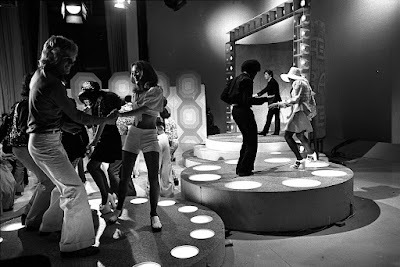 The show, which ran from 1952 to 1989, promoted artists ranging from Chuck Berry, the Beach Boys, and the Supremes to the Jackson 5, Madonna, and Prince. It also inspired countless talent shows in later decades, served as fodder for drama series like
American Dreams
, and introduced a seemingly ageless host named Dick Clark to television audiences. More than three thousand episodes aired after the program debuted at WFIL-TV in Philadelphia on October 7, 1952.
The show, which ran from 1952 to 1989, promoted artists ranging from Chuck Berry, the Beach Boys, and the Supremes to the Jackson 5, Madonna, and Prince. It also inspired countless talent shows in later decades, served as fodder for drama series like
American Dreams
, and introduced a seemingly ageless host named Dick Clark to television audiences. More than three thousand episodes aired after the program debuted at WFIL-TV in Philadelphia on October 7, 1952.
Though I tuned into American Bandstand many times as a teenager in the 1970s, I did not know much about the show's history until I read American Bandstand by John A. Jackson and Bandstandland by Larry Lehmer. The books, the definitive works on the program, served as background reading for several chapters in my latest novel.
In Let Time Fly, Jake Maclean and Rachel Ward, a teenage couple with access to an ancient time portal, travel from the Philadelphia of 1780 to the one of 1958. They take a break from the American Revolution by making an appearance on American Bandstand in its storied prime.
Even as an author of time-travel stories, I never tire of taking characters from one era and placing them in another. Readers familiar with the Stone Shed series know that Jake is a boy from 2024, who, like his older brother, Noah, decides to live out his life in the distant past. Rachel is a girl from the 1700s who travels on occasion to the 1900s and 2000s. In Let Time Fly, both experience a day trip for the ages before returning to realities of life in the eighteenth century.
Choosing American Bandstand in 1958 as an escape for Jake and Rachel was an easy call. The show, which Jake's grandmother attended frequently as a girl in Philadelphia, seemed like a no-brainer for two amorous teenagers who like music, dancing, and adventure.
Though fictional, the Bandstand chapters are based on actual episodes of the show before it moved to Los Angeles in 1964. Even Dick Clark will get some play. The host, perhaps best known for his New Year's Eve countdowns in Times Square, will interview Jake, Rachel, and other dancers, much as he did on Bandstand on a regular basis.
As mentioned earlier, Let Time Fly is now in the editing stages. I plan to publish both the Kindle and print editions of the novel next month.
Photo credit: The 1973 photograph above is courtesy of Mary Frampton, Los Angeles Times, CC BY 4.0, via Wikimedia Commons.
 The show, which ran from 1952 to 1989, promoted artists ranging from Chuck Berry, the Beach Boys, and the Supremes to the Jackson 5, Madonna, and Prince. It also inspired countless talent shows in later decades, served as fodder for drama series like
American Dreams
, and introduced a seemingly ageless host named Dick Clark to television audiences. More than three thousand episodes aired after the program debuted at WFIL-TV in Philadelphia on October 7, 1952.
The show, which ran from 1952 to 1989, promoted artists ranging from Chuck Berry, the Beach Boys, and the Supremes to the Jackson 5, Madonna, and Prince. It also inspired countless talent shows in later decades, served as fodder for drama series like
American Dreams
, and introduced a seemingly ageless host named Dick Clark to television audiences. More than three thousand episodes aired after the program debuted at WFIL-TV in Philadelphia on October 7, 1952.Though I tuned into American Bandstand many times as a teenager in the 1970s, I did not know much about the show's history until I read American Bandstand by John A. Jackson and Bandstandland by Larry Lehmer. The books, the definitive works on the program, served as background reading for several chapters in my latest novel.
In Let Time Fly, Jake Maclean and Rachel Ward, a teenage couple with access to an ancient time portal, travel from the Philadelphia of 1780 to the one of 1958. They take a break from the American Revolution by making an appearance on American Bandstand in its storied prime.
Even as an author of time-travel stories, I never tire of taking characters from one era and placing them in another. Readers familiar with the Stone Shed series know that Jake is a boy from 2024, who, like his older brother, Noah, decides to live out his life in the distant past. Rachel is a girl from the 1700s who travels on occasion to the 1900s and 2000s. In Let Time Fly, both experience a day trip for the ages before returning to realities of life in the eighteenth century.
Choosing American Bandstand in 1958 as an escape for Jake and Rachel was an easy call. The show, which Jake's grandmother attended frequently as a girl in Philadelphia, seemed like a no-brainer for two amorous teenagers who like music, dancing, and adventure.
Though fictional, the Bandstand chapters are based on actual episodes of the show before it moved to Los Angeles in 1964. Even Dick Clark will get some play. The host, perhaps best known for his New Year's Eve countdowns in Times Square, will interview Jake, Rachel, and other dancers, much as he did on Bandstand on a regular basis.
As mentioned earlier, Let Time Fly is now in the editing stages. I plan to publish both the Kindle and print editions of the novel next month.
Photo credit: The 1973 photograph above is courtesy of Mary Frampton, Los Angeles Times, CC BY 4.0, via Wikimedia Commons.


October 7, 2025
Another day, another draft
I admit this one was a chore. I needed one month to outline it, two to research it, and another three to put it to paper — or what amounts to paper in the digital age. But it is done. Let Time Fly, the third and final novel in the Stone Shed trilogy, is now in the editing phase.
The book, which begins in November 1779, brings to an end the saga of Noah and Jake Maclean, young brothers who use an ancient family time portal to find love and adventure during the American Revolution.
Though the story starts with Noah and closely follows his journey as General George Washington's aide-de-camp, it focuses much more on his conflicted younger sibling. Now an 18-year-old apprentice in Philadelphia, Jake struggles with guilt and regret as younger, less capable boys march off to war. Like his soldier brother, he tries to find his place in a crude, violent world that still seems surreal.
As in The Patriots and The Winding Road , the first two novels in the series, Noah and Jake nurture their relationships with Abigail Ward Maclean and Rachel Ward, the lovely, spirited daughters of furniture maker Samuel Ward. They balance competing interests.
They also confront a growing threat from Malachi Maine, a sadistic British intelligence officer who is hell-bent on finding the brothers' secrets — secrets that could alter the outcome of the war.
At 116 chapters and 136,000 words, Let Time Fly is the fifth-longest of my twenty-six novels and the longest series finale. I hope to publish the finished work between Christmas and New Year's Day.
The book, which begins in November 1779, brings to an end the saga of Noah and Jake Maclean, young brothers who use an ancient family time portal to find love and adventure during the American Revolution.
Though the story starts with Noah and closely follows his journey as General George Washington's aide-de-camp, it focuses much more on his conflicted younger sibling. Now an 18-year-old apprentice in Philadelphia, Jake struggles with guilt and regret as younger, less capable boys march off to war. Like his soldier brother, he tries to find his place in a crude, violent world that still seems surreal.
As in The Patriots and The Winding Road , the first two novels in the series, Noah and Jake nurture their relationships with Abigail Ward Maclean and Rachel Ward, the lovely, spirited daughters of furniture maker Samuel Ward. They balance competing interests.
They also confront a growing threat from Malachi Maine, a sadistic British intelligence officer who is hell-bent on finding the brothers' secrets — secrets that could alter the outcome of the war.
At 116 chapters and 136,000 words, Let Time Fly is the fifth-longest of my twenty-six novels and the longest series finale. I hope to publish the finished work between Christmas and New Year's Day.
September 7, 2025
The lure of social media
As an author, I have an uneasy relationship with social media. I use some sites, ignore others, and view still others like I might view an exotic snake. I am still making my peace with platforms that many writers use — and use frequently — to promote their works.
I like Facebook. Like fellow Boomers, Gen X-ers, and others who remember rotary phones, I like the platform's ease-of-use, versatility, and reach. More than 550 people follow my Facebook author page, which I use to announce book releases; post reviews on books, movies, and television series; and offer my thoughts on literature and life.
I link or copy most of my Facebook content to my blog, Tumblr, and Goodreads, where 229 people, including authors, bloggers, and reviewers, keep up with my activities. Many have been with me since I published The Mine , my first novel, in 2012. For that reason alone, I do my best to engage those with comments and questions.
I have done less with BookBub, where I have 2723 followers, and Linked-In, where I have 1094. This is because of the one-way format of the former and business-oriented nature of the latter.
Despite the possibilities, I have done even less with X (formerly Twitter), Pinterest, and particularly Instagram, the gold standard for social interaction. I use all three to announce new books, but little else.
As for TikTok, it is mostly a mystery. I don't have an account and don't have immediate plans to create one, though I am intrigued by BookTok. BookTok, a book-related space on TikTok, features reviews, recommendations, and discussions on fiction and literature.
I continue to work with bloggers and greatly admire the few who have maintained their websites over the years. I can think of much better jobs than sorting through hundreds of book review requests.
I don't know how often I will use any of these platforms for the coming year, but I do know one thing. I will continue to engage those who love books and my books, in particular. I will keep on keeping on.
I like Facebook. Like fellow Boomers, Gen X-ers, and others who remember rotary phones, I like the platform's ease-of-use, versatility, and reach. More than 550 people follow my Facebook author page, which I use to announce book releases; post reviews on books, movies, and television series; and offer my thoughts on literature and life.
I link or copy most of my Facebook content to my blog, Tumblr, and Goodreads, where 229 people, including authors, bloggers, and reviewers, keep up with my activities. Many have been with me since I published The Mine , my first novel, in 2012. For that reason alone, I do my best to engage those with comments and questions.
I have done less with BookBub, where I have 2723 followers, and Linked-In, where I have 1094. This is because of the one-way format of the former and business-oriented nature of the latter.
Despite the possibilities, I have done even less with X (formerly Twitter), Pinterest, and particularly Instagram, the gold standard for social interaction. I use all three to announce new books, but little else.
As for TikTok, it is mostly a mystery. I don't have an account and don't have immediate plans to create one, though I am intrigued by BookTok. BookTok, a book-related space on TikTok, features reviews, recommendations, and discussions on fiction and literature.
I continue to work with bloggers and greatly admire the few who have maintained their websites over the years. I can think of much better jobs than sorting through hundreds of book review requests.
I don't know how often I will use any of these platforms for the coming year, but I do know one thing. I will continue to engage those who love books and my books, in particular. I will keep on keeping on.
August 19, 2025
Audiobook: The Fountain
 The Fountain
audiobook is now live on Amazon, Audible, and Apple Books! It joins every book in the Northwest Passage, American Journey, Carson Chronicles, and Time Box series as a title that has migrated from print to audio. Many thanks to voice artist Roberto Scarlato, who has narrated my last six productions. He has graciously offered to continue the Second Chance series with
Annie's Apple
. That offering should be out by February. As with most of my previous works, I would be happy to distribute free promo codes to listeners in the U.S. and U.K. willing to review the books. If interested, contact me through Facebook or this blog.
The Fountain
audiobook is now live on Amazon, Audible, and Apple Books! It joins every book in the Northwest Passage, American Journey, Carson Chronicles, and Time Box series as a title that has migrated from print to audio. Many thanks to voice artist Roberto Scarlato, who has narrated my last six productions. He has graciously offered to continue the Second Chance series with
Annie's Apple
. That offering should be out by February. As with most of my previous works, I would be happy to distribute free promo codes to listeners in the U.S. and U.K. willing to review the books. If interested, contact me through Facebook or this blog.
August 3, 2025
Seeing the states in summer
 I am not a world traveler. I have traveled to Canada six times and Mexico three. In most cases, I sampled Victoria or Los Algodones for a few hours. I didn't see a place at length until I visited Cabo San Lucas for a week in 2021. That said, I am a traveler. I have visited 47 U.S. states. When it comes to seeing America up close, I am usually the first to go and the last to leave.
This summer, I did it again. Along with Cheryl, my wife of 39 years, I traveled to each coast and a lot of points in between. I saw fourteen states by car, plane, sailboat, and even gondola. I reminded myself that the best way to see the United States, or any country, is to experience it.
 In June, we went to New England, a region filled with history, lighthouses, and fresh seafood. Though we saw Salem, Lexington, Newport, and other major tourist attractions, we spent most of our time in Ogunquit, an artsy town with splendid beaches, quaint shops, and the best cliff walk in America. If you find yourself in the need of a stroll along Maine's rocky coast, Ogunquit's Marginal Way is your answer.
Later, in June and July, we turned west. We explored nine of the ten states west of the Rocky Mountains, including a few we had not seen in years. As we did, I rediscovered old gems and found new ones. I came away with a better understanding and appreciation of America's most scenic region.
A few things to share. First, national parks, even the crowded ones, are still worth the time and effort. Though Cheryl and I entered only two on our eighteen-day car trip last month, we found them highly satisfying.
 Yellowstone was magnificent. With green trees and green mountains, it was far from the burnt shell of a place that emerged from the horrific fires of 1988. It looked much like the destination that has drawn millions of tourists for more than a century. So did Crater Lake. The nation's deepest lake appeared resplendent on the eve of a three-year renovation project that will improve trails, facilities, and water access.
 Second, mining towns are treasures, literally. On our three-thousand-mile journey in July, we saw Wallace, Idaho; Jacksonville, Oregon; and Virginia City, Nevada, up close and personal.
Even with 2025 trappings, like cars and modern infrastructure, each of the boomtowns gave visitors a glimpse of their heydays in the nineteenth century.
Wallace and Virginia City, of course, were major settings in The Fire and The Fair , my fourth and seventeenth novels. We also spent three days in Helena, Montana, another storied mining community and, more important, our home for fourteen years.
As we traveled, we also discovered the benefits of straying off the beaten path. In Kellogg, Idaho, at our son Matthew's insistence, we rode the Silver Mountain gondola, a three-mile, thousand-meter climb to the high point of a noted ski resort. In Central Oregon, at our friends' suggestion, we hiked around part of Paulina Lake, an alpine escape surrounded by natural hot springs, lush forests, and volcanic cliffs.
 We have more travels planned for the coming months, including family visits to New Mexico and Alabama and a return trip to Chico Hot Springs, Montana, one of my favorite places on the planet. A first trip to Hawaii looms in 2026. In the meantime, we will savor the memories of our most recent journey, one that reminded us of the beauty of travel.
Photos (top to bottom): With Cheryl at Crater Lake National Park in Oregon. Portland Head Light in Cape Elizabeth, Maine. Enjoying a soak with friends at Paulina Lake, Oregon. With granddaughter Sarah in Wallace, Idaho. Chico Hot Springs resort in Pray, Montana.
July 1, 2025
Good intentions gone astray
I broke my writing vows. Like I have so often in the past fourteen years, I started producing a new novel long before I said I would.
Last week, while resting between vacations, I decided to gather my notes, outline a story, and put my figurative pen to paper. I typed the first chapter of Let Time Fly, the final book in the Stone Shed trilogy.
I am now five chapters in. If I have learned one thing in publishing 25 novels, it is that stories, even in the middle of a season devoted to leisure, can't wait. Like grapes on a vine, they need attention.
This book, like the last, will continue the tale of Noah and Jake Maclean, two time-traveling brothers from 2024 who find love, purpose, and happiness in Philadelphia during the American Revolution. It will put a cap on a family saga that spans decades and even centuries.
In the novel, set in the war's final years, Noah and Jake will shine. Like Abigail and Rachel Ward, their love interests and the spirited daughters of a furniture maker, they will dive headlong into America's fight for independence. They will lay the foundation for a future in the past.
Because of my early start, I hope to finish the first draft by December. I expect to publish a final version of the book itself in February.
Last week, while resting between vacations, I decided to gather my notes, outline a story, and put my figurative pen to paper. I typed the first chapter of Let Time Fly, the final book in the Stone Shed trilogy.
I am now five chapters in. If I have learned one thing in publishing 25 novels, it is that stories, even in the middle of a season devoted to leisure, can't wait. Like grapes on a vine, they need attention.
This book, like the last, will continue the tale of Noah and Jake Maclean, two time-traveling brothers from 2024 who find love, purpose, and happiness in Philadelphia during the American Revolution. It will put a cap on a family saga that spans decades and even centuries.
In the novel, set in the war's final years, Noah and Jake will shine. Like Abigail and Rachel Ward, their love interests and the spirited daughters of a furniture maker, they will dive headlong into America's fight for independence. They will lay the foundation for a future in the past.
Because of my early start, I hope to finish the first draft by December. I expect to publish a final version of the book itself in February.
June 9, 2025
The 'shot heard round the world'
To this day, no one knows who fired first or even where. All that is certain is that someone shot a musket ball in the lush Massachusetts countryside on April 19, 1775, setting off the American Revolution.
Last week, near the end of my 12-day vacation in New England, I visited a site that is in many ways as sacred as Fort McHenry, Gettysburg, and even Pearl Harbor. While doing so, I acquainted myself with Lexington, Concord, and the "shot heard round the world," a bit of lore immortalized in a poem by Ralph Waldo Emerson. I jumped into American history.
 For those who don't know or remember, America began here. It began when untrained colonial militia and skilled British soldiers confronted each other on Lexington's green and turned what had been a mostly peaceful political dispute into a lengthy and violent war.
I found many sources of inspiration in Minute Man National Historical Park, a 967-acre treasure trove of bridges, buildings, and roads that tells the tale of a pivotal moment in time. Located 22 miles northwest of Boston, the park is must-see-stop in a region steeped in history.
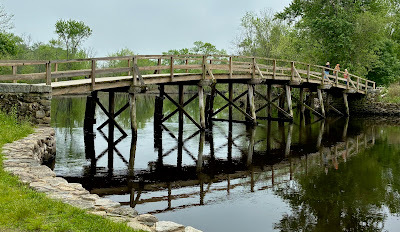 The focal point is North Bridge, a short, modest structure that spans the Concord River. It was here that American militia first answered the slaughter at Lexington and turned what had been a setback into a rout.
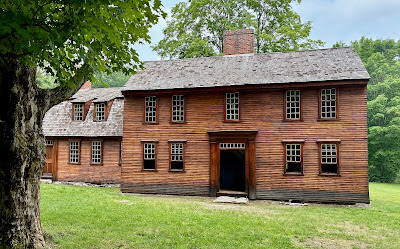
Another important site is the Hartwell Tavern, where colonial militia gathered and received warnings about the advancing British troops. Today, park rangers, wearing period attire, use the site to present informative programs and demonstrate weapons of the time.
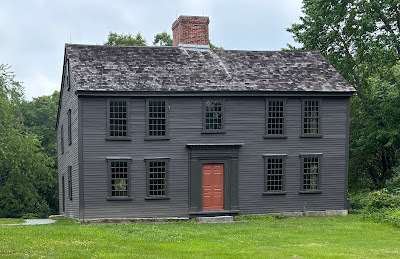 Not all residents along Battle Road, a five-mile stretch between Lexington and Concord, participated in the conflict. Some watched it from their properties. Jacob Whittemore and his family witnessed everything from Paul Revere's midnight ride to the British advance to its hasty retreat back to Boston. They had a front-row seat to history.
I would recommend the park to any lover of history and enthusiast of the late 1700s. As one currently writing about the American Revolution, I found visiting the small but vital site an enlightening experience.
Photos: Hartwell Tavern, North Bridge, and Whittemore House.
Last week, near the end of my 12-day vacation in New England, I visited a site that is in many ways as sacred as Fort McHenry, Gettysburg, and even Pearl Harbor. While doing so, I acquainted myself with Lexington, Concord, and the "shot heard round the world," a bit of lore immortalized in a poem by Ralph Waldo Emerson. I jumped into American history.
 For those who don't know or remember, America began here. It began when untrained colonial militia and skilled British soldiers confronted each other on Lexington's green and turned what had been a mostly peaceful political dispute into a lengthy and violent war.
I found many sources of inspiration in Minute Man National Historical Park, a 967-acre treasure trove of bridges, buildings, and roads that tells the tale of a pivotal moment in time. Located 22 miles northwest of Boston, the park is must-see-stop in a region steeped in history.
 The focal point is North Bridge, a short, modest structure that spans the Concord River. It was here that American militia first answered the slaughter at Lexington and turned what had been a setback into a rout.
Another important site is the Hartwell Tavern, where colonial militia gathered and received warnings about the advancing British troops. Today, park rangers, wearing period attire, use the site to present informative programs and demonstrate weapons of the time.
 Not all residents along Battle Road, a five-mile stretch between Lexington and Concord, participated in the conflict. Some watched it from their properties. Jacob Whittemore and his family witnessed everything from Paul Revere's midnight ride to the British advance to its hasty retreat back to Boston. They had a front-row seat to history.
I would recommend the park to any lover of history and enthusiast of the late 1700s. As one currently writing about the American Revolution, I found visiting the small but vital site an enlightening experience.
Photos: Hartwell Tavern, North Bridge, and Whittemore House.
May 17, 2025
Getting out and about
 I don't do many public book events, but I did one today. Along with several other authors, I participated in the Henderson (Nevada) Libraries Local Author Showcase, which resumed for the first time in six years. It is one of two such annual events in the Las Vegas area.
Seated to my left in the photograph above is Richard Lapidus, author of "The Legend of Russian Bill" and other works.
May 8, 2025
Review: The Gilded Age
I should have known the programs were joined at the hip. When I began watching
The Gilded Age
last month, I noticed that the television series, airing on (HBO) Max, looked and felt like
Downton Abbey
.
It had strikingly similar trappings, themes, and characters, the kind that make many historical series so enjoyable. The reason soon became obvious. The two productions evolved from the same source. Julian Fellowes, the man who gave us Downton Abbey , also created and wrote The Gilded Age , a period drama set in 1880s New York City.
Like Downton Abbey , set in Britain from 1912 to 1925, The Gilded Age revolves around aristocratic families, their servants, and the poor souls who cross their paths. It gives us a glorious glimpse at excess.
Like its predecessor, The Gilded Age features witty widows. Viewers who liked Maggie Smith's Violet Crawley will love Christine Baranski's Agnes van Rhijn. Agnes, like Violet, clings to the old order like some might cling to the side of a sinking ship. She deplores change and often expresses her dismay to younger sister Ada (Cynthia Nixon), who, like Isobel Crawley in Downton , serves as a nicer, more grounded foil.
Then there are the neighbors. If Agnes and Ada represent Old New York, George and Bertha Russell represent the new. The robber baron and his wife, played by Morgan Spector and Carrie Coon, disrupt Manhattan like bulls in a china shop. Ruthless, ambitious, and occasionally charming, both muscle their way into polite society.
Several secondary characters add spice to the mix. They include Marian Brook, Agnes and Ada's lovely niece; Oscar van Rhijn, Agnes' irresponsible son; Peggy Scott, an African American writer who befriends the family; and Larry and Gladys Russell — pleasant, restless siblings who strive to break free of their domineering parents.
As in Downton Abbey , the servants offer their own compelling stories. Led by Mr. Bannister and Mr. Church, the butlers of the rival Van Rhijn and Russell households, they remind us that the Gilded Age was not so gilded for those who served the ultra rich. Individually and collectively, they make up a diverse social underclass that literally lives, eats, and breathes in the basements of their respective mansions.
As I binged the first seventeen episodes of The Gilded Age , I was reminded of how much wealth, social rank, and even luck determined one's prospects in the 1800s. Marian, Larry, Gladys, and especially Peggy run into one obstacle after another as their try to find their places beside Caroline Astor, Thomas Edison, Booker T. Washington, and Oscar Wilde, a few of the many notables portrayed in the series.
Like Jack Trotter, the Van Rhijn footman who invents (and patents) a reliable alarm clock in his free time, the young people in The Gilded Age continually search for ways to better their lives in a difficult era.
I would recommend The Gilded Age not only to fans of Downton Abbey but also to viewers who like this fascinating period of American history. Season 3 begins on HBO and Max on June 22. Rating: 5/5.
It had strikingly similar trappings, themes, and characters, the kind that make many historical series so enjoyable. The reason soon became obvious. The two productions evolved from the same source. Julian Fellowes, the man who gave us Downton Abbey , also created and wrote The Gilded Age , a period drama set in 1880s New York City.
Like Downton Abbey , set in Britain from 1912 to 1925, The Gilded Age revolves around aristocratic families, their servants, and the poor souls who cross their paths. It gives us a glorious glimpse at excess.
Like its predecessor, The Gilded Age features witty widows. Viewers who liked Maggie Smith's Violet Crawley will love Christine Baranski's Agnes van Rhijn. Agnes, like Violet, clings to the old order like some might cling to the side of a sinking ship. She deplores change and often expresses her dismay to younger sister Ada (Cynthia Nixon), who, like Isobel Crawley in Downton , serves as a nicer, more grounded foil.
Then there are the neighbors. If Agnes and Ada represent Old New York, George and Bertha Russell represent the new. The robber baron and his wife, played by Morgan Spector and Carrie Coon, disrupt Manhattan like bulls in a china shop. Ruthless, ambitious, and occasionally charming, both muscle their way into polite society.
Several secondary characters add spice to the mix. They include Marian Brook, Agnes and Ada's lovely niece; Oscar van Rhijn, Agnes' irresponsible son; Peggy Scott, an African American writer who befriends the family; and Larry and Gladys Russell — pleasant, restless siblings who strive to break free of their domineering parents.
As in Downton Abbey , the servants offer their own compelling stories. Led by Mr. Bannister and Mr. Church, the butlers of the rival Van Rhijn and Russell households, they remind us that the Gilded Age was not so gilded for those who served the ultra rich. Individually and collectively, they make up a diverse social underclass that literally lives, eats, and breathes in the basements of their respective mansions.
As I binged the first seventeen episodes of The Gilded Age , I was reminded of how much wealth, social rank, and even luck determined one's prospects in the 1800s. Marian, Larry, Gladys, and especially Peggy run into one obstacle after another as their try to find their places beside Caroline Astor, Thomas Edison, Booker T. Washington, and Oscar Wilde, a few of the many notables portrayed in the series.
Like Jack Trotter, the Van Rhijn footman who invents (and patents) a reliable alarm clock in his free time, the young people in The Gilded Age continually search for ways to better their lives in a difficult era.
I would recommend The Gilded Age not only to fans of Downton Abbey but also to viewers who like this fascinating period of American history. Season 3 begins on HBO and Max on June 22. Rating: 5/5.
May 1, 2025
Putting a name on a novel
When producing a new book, I usually pick a title early in the process. I knew what I was going to call The Mine, The Journey, The Fountain, The Patriots, and other novels long before I started writing.
With other books, such as Indiana Belle and Sea Spray, I did not settle on a title until I finished the second draft. In every instance, I picked a two- or three-word term that best captured the spirit of the work.
Most of the titles tend to fall into familiar categories.
In The Mine, The Mirror, and The Fountain, I revealed the nature of the time portals. In The Show, The Memory Tree, Indian Paintbrush, and Sea Spray, I embraced important symbols. I hinted at natural disasters to come in The Fire, September Sky, and River Rising.
In Hannah's Moon, Caitlin's Song, and Annie's Apple, I highlighted the names of key female characters. In Indiana Belle and The Patriots, I told readers something about the protagonists. In The Journey and The Winding Road, I announced the stories' uncertain paths.
In Mercer Street, Camp Lake, The Fair, The Refuge, Crown City, and Annie's Apple, I touted the novels' primary settings with virtues and nicknames. The titles refer to Princeton (New Jersey), Maine, Chicago, Hawaii, Coronado (California), and New York City, respectively.
Though I strive to be as original as possible, I do not consider other authors' works when deciding on a title. I go with my best judgment, often with the input of others. I view book titles like many parents view baby names. Even if someone else has an Ethan or an Emma, they do not have my Ethan or Emma. Each work is something unique.
I do consider cover images when considering titles, because I know the two go hand-in-hand. Some titles lend themselves to straightforward covers. The Mirror, The Memory Tree, Indian Paintbrush, and The Fountain have a mirror, a tree, a flower, and a fountain on their fronts. Other works, like The Journey, River Rising, The Lane Betrayal, and Duties and Dreams, required more abstract presentations.
The title words can always be found in text of my books — in some cases many times. In The Fountain, The Fire, and The Mirror, the title is referenced more than forty times. In Caitlin's Song, The Lane Betrayal, and Duties and Dreams, it is mentioned only once.
Though I have not picked a title for my next book, I have one in mind. If I go with the idea, it will be because it nicely brings a family saga to an end. I hope to start the book, the third in the Stone Shed series, in August, after a long break and some traveling around the country.
With other books, such as Indiana Belle and Sea Spray, I did not settle on a title until I finished the second draft. In every instance, I picked a two- or three-word term that best captured the spirit of the work.
Most of the titles tend to fall into familiar categories.
In The Mine, The Mirror, and The Fountain, I revealed the nature of the time portals. In The Show, The Memory Tree, Indian Paintbrush, and Sea Spray, I embraced important symbols. I hinted at natural disasters to come in The Fire, September Sky, and River Rising.
In Hannah's Moon, Caitlin's Song, and Annie's Apple, I highlighted the names of key female characters. In Indiana Belle and The Patriots, I told readers something about the protagonists. In The Journey and The Winding Road, I announced the stories' uncertain paths.
In Mercer Street, Camp Lake, The Fair, The Refuge, Crown City, and Annie's Apple, I touted the novels' primary settings with virtues and nicknames. The titles refer to Princeton (New Jersey), Maine, Chicago, Hawaii, Coronado (California), and New York City, respectively.
Though I strive to be as original as possible, I do not consider other authors' works when deciding on a title. I go with my best judgment, often with the input of others. I view book titles like many parents view baby names. Even if someone else has an Ethan or an Emma, they do not have my Ethan or Emma. Each work is something unique.
I do consider cover images when considering titles, because I know the two go hand-in-hand. Some titles lend themselves to straightforward covers. The Mirror, The Memory Tree, Indian Paintbrush, and The Fountain have a mirror, a tree, a flower, and a fountain on their fronts. Other works, like The Journey, River Rising, The Lane Betrayal, and Duties and Dreams, required more abstract presentations.
The title words can always be found in text of my books — in some cases many times. In The Fountain, The Fire, and The Mirror, the title is referenced more than forty times. In Caitlin's Song, The Lane Betrayal, and Duties and Dreams, it is mentioned only once.
Though I have not picked a title for my next book, I have one in mind. If I go with the idea, it will be because it nicely brings a family saga to an end. I hope to start the book, the third in the Stone Shed series, in August, after a long break and some traveling around the country.