Michael Loynd's Blog
October 28, 2012
Pat-O-Lanterns: How The Irish Invented Halloween
Before candy, costumes, pumpkins, and haunted houses, don’t forget the most essential of all Halloween decorations—carved out turnips. Yes, that’s right, turnips. Those purple, hollowless vegetables that were the original jack-o-lanterns. It’s an old Irish tradition in our family, stemming back to the ancient Celts who created this most festive of holidays. It arose from the Celtic fire festival called “Samhain” (pronounced sow-en), which always took place on October 31st to mark the end of harvest and the beginning of winter. On that single night of the year, when the worlds of life and death intermingled, superstitious Irish folk believed recently disembodied spirits were allotted one last chance to remain on earth if they located a favorable body and possessed it. So villagers dressed in ghoulish costumes to make themselves so hideously unappealing that no spirit in its right mind would want them. They even paraded around the village making all kinds of ghastly noise to further dissuade any would-be possessors.
But of all the spooks who roamed that night, the most notorious was Stingy Jack. In his mortal life, Stingy Jack was a wicked turnip farmer whose unrepentant life of debauchery was further enabled when he tricked the Devil into promising he’d never take his soul. When Jack died and God wanted no part of his wickedness, he humbly appeared at Hell’s Gates only to have the Devil remind him of his coerced promise.
“But I have no place else to go,” Jack groveled.
Then with a supercilious grin, the Devil told Jack that his spirit was cursed to roam the earth forever until he found an unsuspecting soul to possess and mend his ways. As the Devil threw Jack from Hell, he tossed Jack a single glowing ember from the eternal flames to help light his way through the cold darkness. Too hot to touch, Jack placed the ember in one of his hollowed-out turnips. Then cut holes to make a lantern and set his spirit wandering about the earth at night to find an unsuspecting soul. Folks who knew about Jack carved out turnips and placed candles inside to show, on the one night of the year he could possess someone, he’d find no unsuspecting soul in their house. People called them jack-o-lanterns. And when the Irish brought the tradition to America in the 1840’s, they replaced carving the hard, hollowless vegetables (which smelled something awful when left indoors with a lit candle) with the more abundant and easier-to-carve American vegetable: pumpkins.
So whether you’re Irish, or want to pay homage to those wonderful founding fathers of Halloween, try your luck at hollowing out a turnip (or what we affectionately call in our house “Pat-o-lanterns”); less Stingy Jack steal your soul.
Happy O’Halloween!
Michael Loynd is the author of ALL THINGS IRISH: A NOVEL.
But of all the spooks who roamed that night, the most notorious was Stingy Jack. In his mortal life, Stingy Jack was a wicked turnip farmer whose unrepentant life of debauchery was further enabled when he tricked the Devil into promising he’d never take his soul. When Jack died and God wanted no part of his wickedness, he humbly appeared at Hell’s Gates only to have the Devil remind him of his coerced promise.
“But I have no place else to go,” Jack groveled.
Then with a supercilious grin, the Devil told Jack that his spirit was cursed to roam the earth forever until he found an unsuspecting soul to possess and mend his ways. As the Devil threw Jack from Hell, he tossed Jack a single glowing ember from the eternal flames to help light his way through the cold darkness. Too hot to touch, Jack placed the ember in one of his hollowed-out turnips. Then cut holes to make a lantern and set his spirit wandering about the earth at night to find an unsuspecting soul. Folks who knew about Jack carved out turnips and placed candles inside to show, on the one night of the year he could possess someone, he’d find no unsuspecting soul in their house. People called them jack-o-lanterns. And when the Irish brought the tradition to America in the 1840’s, they replaced carving the hard, hollowless vegetables (which smelled something awful when left indoors with a lit candle) with the more abundant and easier-to-carve American vegetable: pumpkins.
So whether you’re Irish, or want to pay homage to those wonderful founding fathers of Halloween, try your luck at hollowing out a turnip (or what we affectionately call in our house “Pat-o-lanterns”); less Stingy Jack steal your soul.
Happy O’Halloween!
Michael Loynd is the author of ALL THINGS IRISH: A NOVEL.


February 23, 2012
The Funny Truth About St. Patrick's Day
THE FUNNY TRUTH ABOUT ST. PATRICK'S DAY
Every March 17th, I, like millions across the globe, love to gettheir Irish on by downing green beer, eating corned beef and cabbage, anddressing like oversized green leprechauns all in the name of St. Patrick. But the funny truth is that not one ofthese things is really Irish. Even St.Patrick was neither Irish, nor named Patrick, nor an officially canonizedsaint. He was a Brit named Maewyn Succat,whose color of choice was blue. So howdid the anniversary of his death turn into a sea of green and the wickedly fun celebration ofall things (sort of) Irish?
Parade
For almost fifteen centuries in Ireland, the missionary whotook the name Patrick was annually honored with a day of pub closings and amass. But across the pond, as early as1737, Irish immigrants were marching through Boston to celebrate theirroots. When Ireland's great potato famineforced a quarter of its population to immigrate to America in the 1800's, NewYork's booming Irish communities combined their neighborhood St. Patrick's festivalsinto what would become the world's oldest civilian parade (attended today by threemillion people).
Wearin' o' the Green
At the time of Patrick's death in 461 A.D., wearing greenwas bad luck. Green was believed thefavorite color of the fairies. And any superstitiousIrishman who dared wear it risked a fairy curse put on them. Patrick wore blue (Ireland's national colorat the time). But his proclivity to use shamrocksto explain the Holy Trinity prompted admirers to tuck a sprig of shamrock intheir hair or lapel to mark the anniversary of his death, deeming this holysymbol the only safe "wearin' o' the green." Leave it to O'mericans to supersize this homage by pinning shamrocks allover their clothes to loudly proclaim their Irishness, which over the years evolvedinto wearing green ribbons, green scarves, green clothes, etc. (the fear ofIreland's fairies no match for O'mericans).
Leprechauns
Now as for traditional leprechauns, they wore red (redboots, jacket, and shoes) and were cobblers with sour dispositions. The image as green affable little men sittingon pots of gold appeared in 1903 in the popular stories of Darby O'Gill, written by a Chicagoauthor who took artistic license to re-envision the grouchy red fairies. And since St. Patrick's parades were very O'merican, so too became the modern day leprechaun.
Corned Beef andCabbage
Then there is the tradition of eating corned beef andcabbage—which is about as authentic an Irish dish as Spaghetti-o's isItalian. The commoner in Ireland couldnot afford beef. They ate pork andcabbage. Not until they immigrated toAmerica and found U.S. beef more affordable did they change diets.
Green Beer
As for green beer, no true Irishman would desecrate their sacred pint with dye. Not for St. Patrick, Jaysus, nor even GodHimself. This was pure O'merican, startedin 1914 by a social club in New York after a member discovered that a drop of "washblue" dye turned beer green. Thirty-eight years later it achieved pop status when Miami University in Oxford, Ohio, celebrated Green Beer Day.
And as for the Emerald Isle…
St. Patrick's Day parades spread their merriment from Copenhagen, to Canada, to Australia, to Japan, to Dubai, to Moscow, to the Americas. And Ireland wasn't about to be left out of the fun celebrating their own heritage (authentic or not). So they imported the sea o' green, corned beef, green leprechauns, and green beer in the last few decades, determined to show the rest of the world how to get their Irish on (even if it wasn't all that Irish). But then again, what's more Irish than having a few pints with a million of your closest friends? Have a wonderfully green St. Paddy's Day!
Michael Loynd is the author of the Amazon Kindle Humor Best Seller All Things Irish: A Novel, touted by reviewers as Fried Green Tomatoes in an Irish shop.http://www.amazon.com/All-Things-Irish-Novel-ebook/dp/B0073MXZNW/ref=sr_1_1?s=digital-text&ie=UTF8&qid=1329346150&sr=1-1

February 13, 2012
All Things Irish
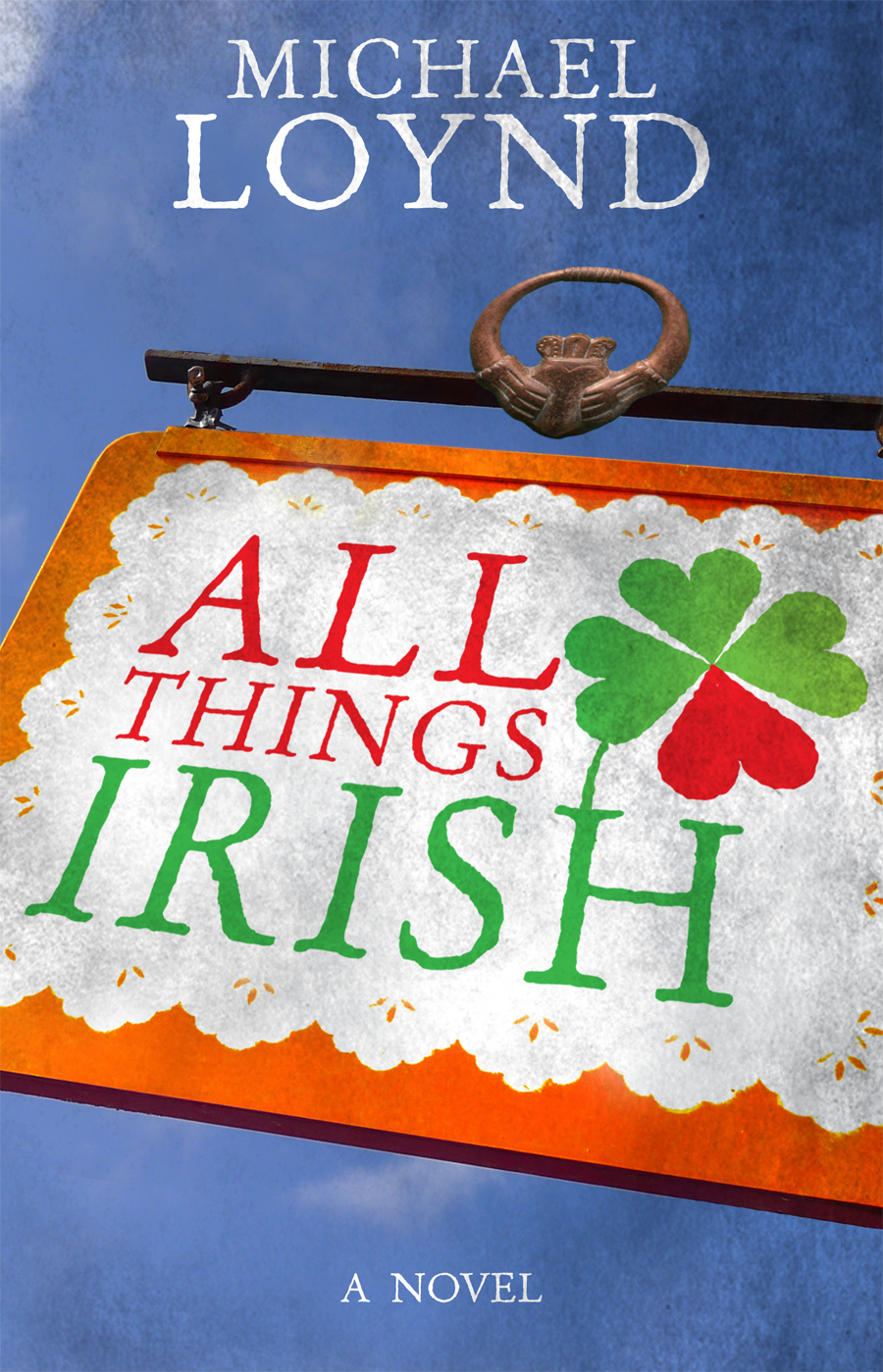
Do bad things really happen for a reason? Escape into the ALL THINGS IRISH shop in Door County, Wisconsin and enjoy exploring why--as you indulge in outrageous Irishness, friendships as thick as Aran sweaters, and a quirky Wisconsin fishing village of diehard Scandinavians that wants to run the shop out of town.
Meg McKenna spent the last decade avoiding her crazy mother's shamrock-shaped world of Celtic witchery and bad Irish luck that brought nothing but heartbreak. But when locals threaten to put her mother's newly opened Irish shop out of business, the prodigal daughter returns, attracting unexpected surprises, laughter, friendship, romance, and more bad Irish luck—which her mother swears is a good thing.
Read more on Amazon

Welcome
Thank you for visiting my site! Here I will post fun blogs about All Things Irish and All Things Door County.