
Igor Arien's Blog: The Great Continuum: History, Humanity, and Imagination
April 13, 2026
The Trap of the “Hollow Crown”
The Trap of the “Hollow Crown”
 Read The Untarnished
Why Real Growth Happens in the Dark
In a world that constantly encourages us to “shine,” it can be difficult to distinguish between a light that comes from within and one that is merely reflected. In Prince Caelen’s journey in The Untarnished, we encounter a place that looks like a dream but serves as a profound warning: the Meadow of Borrowed Light.

Here, the dangers of the “Hollow Crown” reveal a timeless truth about integrity and the modern pressure to perform.
For the Young Explorers: The Mystery of Borrowed Light
Imagine walking into a beautiful meadow where, the moment you arrive, a crowd begins to cheer. They tell you that you are the bravest, smartest, and most wonderful person they have ever seen. They place a shimmering crown on your head—the “Hollow Crown.”
The catch? You didn’t actually do anything to earn it. You didn’t climb a mountain, help a friend, or solve a difficult problem. You are being celebrated just for standing there.
This is what Caelen faces in the Meadow of Borrowed Light. It feels warm and wonderful, but this light isn’t yours; it belongs to the crowd. In our world today, we see this often in the form of “likes,” “shares,” or “followers.” It’s easy to feel like a hero because a screen tells you that you are, but that kind of validation is like a hollow crown—it has no weight, and it doesn’t actually make you a better person.
The Lesson: Real strength is built when no one is watching. Don’t trade your “inner sun” for a “borrowed flashlight.”
For the Parents: Recognizing the Beguilers
As parents, we want our children to feel confident and loved. However, The Untarnished introduces us to the Beguilers—characters who wear “skins of kindness” and use relentless flattery to erode a person’s judgment.
When we offer “unearned praise”—praising a child for being “naturally smart” or “the best” without a connection to their actual effort—we may inadvertently be handing them a Hollow Crown. Constant, non-specific validation can make a child dependent on external approval rather than internal satisfaction.
To help your child navigate the Beguilers of the modern world, try these shifts in focus:
- Praise the Grit, Not the Gift: Instead of “You’re so talented,” try “I saw how hard you worked on that melody even when you got frustrated.”
- Value Discernment: Encourage your child to ask why someone is offering praise. Is it because of a shared achievement, or is it just “noise”?
- Encourage the Straight Path: Remind them that the difficult choice is often the one that leads to the most “unvarnished” version of themselves.
The Key Reflection
“Praise is pleasant to the ear, but it is a mist that clouds your vision.”
When the mist of flattery clears, what remains? Integrity is the quiet work of becoming who you are meant to be, even when the meadow is silent and there is no crown in sight. True treasure never tarnishes, because it isn’t plated in gold—it is forged in truth.
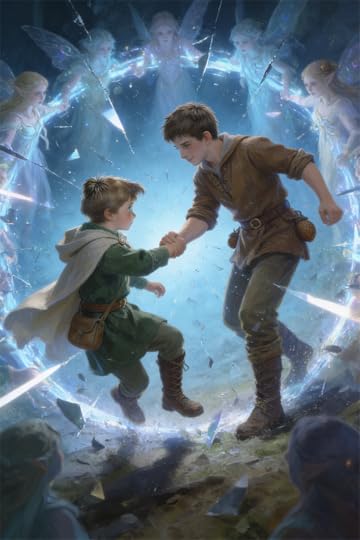
Read The Untarnished
Read The UntarnishedWhy Real Growth Happens in the Dark
In a world that constantly encourages us to “shine,” it can be difficult to distinguish between a light that comes from within and one that is merely reflected. In Prince Caelen’s journey in The Untarnished, we encounter a place that looks like a dream but serves as a profound warning: the Meadow of Borrowed Light.
Here, the dangers of the “Hollow Crown” reveal a timeless truth about integrity and the modern pressure to perform.
For the Young Explorers: The Mystery of Borrowed Light
Imagine walking into a beautiful meadow where, the moment you arrive, a crowd begins to cheer. They tell you that you are the bravest, smartest, and most wonderful person they have ever seen. They place a shimmering crown on your head—the “Hollow Crown.”
The catch? You didn’t actually do anything to earn it. You didn’t climb a mountain, help a friend, or solve a difficult problem. You are being celebrated just for standing there.
This is what Caelen faces in the Meadow of Borrowed Light. It feels warm and wonderful, but this light isn’t yours; it belongs to the crowd. In our world today, we see this often in the form of “likes,” “shares,” or “followers.” It’s easy to feel like a hero because a screen tells you that you are, but that kind of validation is like a hollow crown—it has no weight, and it doesn’t actually make you a better person.
The Lesson: Real strength is built when no one is watching. Don’t trade your “inner sun” for a “borrowed flashlight.”
For the Parents: Recognizing the Beguilers
As parents, we want our children to feel confident and loved. However, The Untarnished introduces us to the Beguilers—characters who wear “skins of kindness” and use relentless flattery to erode a person’s judgment.
When we offer “unearned praise”—praising a child for being “naturally smart” or “the best” without a connection to their actual effort—we may inadvertently be handing them a Hollow Crown. Constant, non-specific validation can make a child dependent on external approval rather than internal satisfaction.
To help your child navigate the Beguilers of the modern world, try these shifts in focus:
- Praise the Grit, Not the Gift: Instead of “You’re so talented,” try “I saw how hard you worked on that melody even when you got frustrated.”
- Value Discernment: Encourage your child to ask why someone is offering praise. Is it because of a shared achievement, or is it just “noise”?
- Encourage the Straight Path: Remind them that the difficult choice is often the one that leads to the most “unvarnished” version of themselves.
The Key Reflection
“Praise is pleasant to the ear, but it is a mist that clouds your vision.”
When the mist of flattery clears, what remains? Integrity is the quiet work of becoming who you are meant to be, even when the meadow is silent and there is no crown in sight. True treasure never tarnishes, because it isn’t plated in gold—it is forged in truth.
Read The Untarnished


March 30, 2026
The Untarnished: Names, Meaning, and Moral Design
The Untarnished: Names, Meaning, and Moral Design
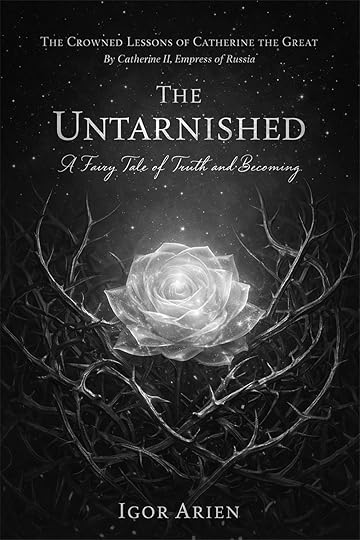
In The Untarnished, names are not decorative. They are deliberate instruments of moral formation.
This essay explores how characters, places, and figures of temptation are shaped through symbolic naming—revealing a story designed not merely to entertain, but to cultivate discernment.
Drawing inspiration from Catherine II’s Enlightenment-era moral writings, The Untarnished treats naming as a form of ethical architecture. A name signals not only who a character is, but what they are becoming—and what dangers or virtues they embody.
From Prince Caelen, whose name carries the weight of unfinished growth, to lands that function as moral environments rather than scenery, the story unfolds as a map of temptation, restraint, and endurance. Comfort, flattery, spectacle, and despair are not presented as villains to be defeated, but as invitations to be recognized and refused.
The figures Caelen encounters do not oppose him with violence. They offer ease, admiration, certainty, or rest. Their shared lesson is subtle and enduring:
Evil rarely demands surrender. It merely invites you to stay.
This reflection serves as a reference guide to the moral design of The Untarnished—examining how symbolic naming and moral geography work together to teach virtue long before it is tested.
You can read the full essay here:
The Untarnished: Names, Meaning, and Moral Design
In The Untarnished, names are not decorative. They are deliberate instruments of moral formation.
This essay explores how characters, places, and figures of temptation are shaped through symbolic naming—revealing a story designed not merely to entertain, but to cultivate discernment.
Drawing inspiration from Catherine II’s Enlightenment-era moral writings, The Untarnished treats naming as a form of ethical architecture. A name signals not only who a character is, but what they are becoming—and what dangers or virtues they embody.
From Prince Caelen, whose name carries the weight of unfinished growth, to lands that function as moral environments rather than scenery, the story unfolds as a map of temptation, restraint, and endurance. Comfort, flattery, spectacle, and despair are not presented as villains to be defeated, but as invitations to be recognized and refused.
The figures Caelen encounters do not oppose him with violence. They offer ease, admiration, certainty, or rest. Their shared lesson is subtle and enduring:
Evil rarely demands surrender. It merely invites you to stay.
This reflection serves as a reference guide to the moral design of The Untarnished—examining how symbolic naming and moral geography work together to teach virtue long before it is tested.
You can read the full essay here:
The Untarnished: Names, Meaning, and Moral Design
March 16, 2026
The Journey Continues: Introducing A Guide for Shared Reflection

When I wrote The Untarnished, my intention was not merely to craft a fairy tale, but to offer a meaningful exploration of character building. Today, I am pleased to share a new, free resource for young adults, parents, and educators: A Guide for Shared Reflection . This downloadable companion is designed to help you and your child explore the book as a shared moral conversation—one that unfolds gently, at a pace shaped by the reader's curiosity and readiness.
How to Approach the Guide
This guide is not a lesson plan. Think of it instead as a lantern: something you can lift when the path grows dim, set down when the way feels clear, and return to whenever a moment invites reflection. To help foster the deepest insights, I encourage parents to keep a few gentle principles in mind:
• Read first. Talk second. Allow the story to breathe on its own before discussing it. Children often sense meaning intuitively long before they can articulate it, so resist the urge to explain too quickly. Silence, pauses, and even unfinished thoughts are signs that something meaningful is taking root.
• Follow their lead. Some children will want to talk immediately; others may return days later with a single, piercing question. If your child asks something unexpected, linger there—even if it means leaving the guide behind.
• Ask, don't instruct. The questions provided are intentionally open-ended. They are meant to invite reflection, not extract “correct” answers. Whenever possible, respond with curiosity rather than correction.
• Honor emotional responses. If your child feels anger toward a character, fear during a trial, or sadness at a choice made, acknowledge those feelings without rushing to resolve them. Moral growth often begins with emotional recognition.
• Connect gently to real life. The story deliberately echoes modern experiences—flattery, peer pressure, fear of exclusion, and the temptation of easy paths. When these parallels arise, let them remain soft and indirect. The power of fairy tales lies in their ability to illuminate without accusing.
The Questions Within
The questions in the guide focus on recurring trials and the quiet lessons Caelen learns along his path. Not every question needs an answer; some are meant simply to be carried for a while. Here is a glimpse of the questions you will find inside:
What kinds of things in the story looked good but were actually dangerous?
Why is flattery sometimes more dangerous than fear?
Was Caelen brave because he was not afraid—or because he acted despite fear?
How did Caelen decide whom to trust?
Ultimately, the goal is not to shape your child into a flawless hero, but to help them learn that becoming “untarnished” is a lifelong practice of attention, humility, and choice. The pages of the guide are merely invitations; the real wonder happens in the space between you and your child.
Link to Download the Free PDF
Read The Untarnished
February 23, 2026
Why The Untarnished Matters Today
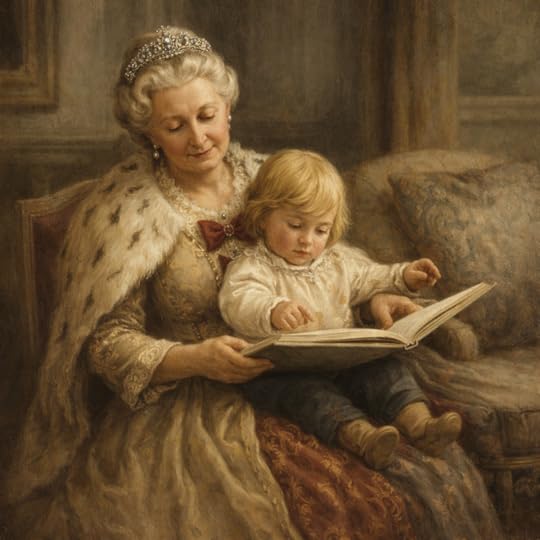
Visit the Book Page
I first encountered this tale not as a historical curiosity, but as a moral artifact—crafted with intimate care and designed to resonate across generations. What captivated me was not its antiquity, but its enduring relevance.
The questions it asks have not faded. They have sharpened.
Catherine wrote for a child who would one day rule millions across the vast Russian Empire.
We read it today, knowing that our children must rule themselves before they can shape the world.
The dangers she warned against—seduction by empty praise, intoxication with power, and the quiet confusion of charisma with virtue—are the same pressures children face today, even though they arrive wrapped in the glittering packaging of social media, consumer culture, and celebrity worship.
Today’s children are inundated with distractions and enchantments that Catherine could never have imagined in her winter palace: algorithms engineered to capture attention, celebrities manufactured overnight, validation delivered in precise numerical counts. And yet, the Fields of False Bloom she described with her quill—with their narcotic flowers and deceptive paths—remain strikingly pertinent in a world where superficiality so often masquerades as richness.
The moral quandary remains unchanged beneath its modern disguise:
How does one nurture an authentic self in a society that rewards spectacle over integrity?
We live in a world where athletes are celebrated more than engineers who build the systems we depend upon, where the glitz of Hollywood eclipses the quiet labor of educators who shape future generations, and where applause and recognition of the crowd are prized more highly than purpose.
In an age of convenience and instant gratification—where accountability falls by the wayside—how do we remain grounded in the enduring virtues of humanity amid constant distraction?
It is neither feasible nor desirable to shield children from our world of easy praise and shallow images. Instead, it is crucial to empower them with the skills to remain true to themselves amidst the cacophony of external influence—to recognize true bloom from false. This is not just necessary; it is essential for their growth and resilience.
________________________________________
Three Guiding Ideas
At its core, this story carries three guiding ideas, each unfolding quietly through Caelen’s journey:
Navigating the Illusion of Praise
Children today wander through their own Fields of False Bloom—a digital landscape where screens glow blue-white at midnight, filtered photos manufacture a mirage of perfection, and the addictive chime of notifications feeds the Loop of instant validation.
The endless scroll becomes a labyrinth where children chase the dopamine rush of likes and comments until fingertips grow numb and minds turn hollow. In this Loop, likes, shares, and followers become the currency of self-worth.
For children whose identities are still forming—fragile as newly unfurled wings—this validation is as deceptive as a desert mirage. The story reminds them that worth is not determined by fleeting approval from others, but shaped by authenticity and contributions to the world.
Substance Over Status
True leadership transcends charisma and temporary popularity; it is rooted instead in integrity, accountability, and the willingness to serve others.
The story challenges fashionable myths of importance—what today is often called Protagonist Energy or Aura. In Caelen’s world, leadership grows from unglamorous labor and steady kindness—from the quiet strength symbolized by the walking stick, not the crown. Power without responsibility tempts; power guided by conscience calls.
Integrity as the Hardest Magic
Remaining true to oneself is not passive—it is a metamorphosis as demanding as a caterpillar’s dissolution into the chrysalis. It requires the courage to refuse the easy path, with its gentle slopes and comforting shade, in favor of the steep, sun-baked climb toward the summit of truth.
Caelen’s journey shows that integrity demands the rejection of superficial success and the comfort of popular opinion. In a world where shortcuts glitter and compromise whispers at every crossroads, children must learn to choose the rocky ascent that leads somewhere worth reaching.
________________________________________
This adaptation reshapes Catherine’s tale for a contemporary audience while preserving its central wisdom: true leadership begins with responsibility for one’s own character. Integrity is not proven by avoiding temptation, but by meeting it with open eyes, a steady heart, and an anchored self.
Leadership—whether guiding a nation, nurturing a family, or steering one’s own life—requires a steadfast compass of integrity. It begins with the ability to discern and reject those influences that may diminish the soul. This refusal often unfolds in quiet, mundane moments, rarely dramatic, but instead repeated and unseen.
That is why this story is more than a narrative. It is a reminder of the values we must uphold as we forge our paths.
I offer The Untarnished to contemporary readers—children and parents alike—not as a lecture imposed from ivory towers, but as an invitation to engage in a meaningful conversation that continues through the generations. It is meant to be read slowly, discussed thoughtfully, and revisited as children grow from wide-eyed listeners into questioning minds.
My hope is that this tale serves as a lantern through fog and fear, helping a new generation gather the courage to navigate the skies of their own becoming.
If this story inspires even one young reader to recognize that integrity is not merely a trait passed down through lineage but a practice honed through conscious choice and action, then it has fulfilled its purpose and aligns with what Catherine envisioned when she first wrote it.
— Igor Arien
Visit the Book Page
February 11, 2026
The Untarnished: A Fairy Tale for the Formation of Character

The Untarnished Is Now Available: A Fairy Tale for the Formation of Character
A fairy tale of truth and becoming
Read more and explore the book page: https://igorarien.com/the-untarnished/
There are stories written to entertain.
There are stories written to impress.
And then there are stories written to form a soul.
I am grateful to share that The Untarnished: A Fairy Tale of Truth and Becoming is now available.
This book began not as a commercial project, but as an encounter with a moral inheritance. In 1781, Catherine II, Empress of Russia, wrote a quiet allegory for her grandson — the future Emperor Alexander I. She did not write it for publication. She wrote it for formation.
She understood something timeless:
Power does not shape character. It reveals it.
The Untarnished is my modern adaptation of that original tale — not a retelling for spectacle, but a translation of its moral architecture into language that speaks to the present age.
Why This Story Matters Now
Children today are surrounded by enchantments Catherine could never have imagined: endless scrolling, instant validation, public metrics of approval, praise without discernment.
The dangers in this book are not dragons.
They are flattery.
Comfort without cost.
Approval without substance.
Ease that dulls judgment.
Young Caelen’s journey toward the Rose Without Thorns is not a battle against monsters — it is a test of discernment.
And discernment is a skill our children need more than ever.
Not obedience.
Not fear.
Discernment.
The ability to ask:
• What strengthens me?
• What weakens me?
• What costs more than it gives?
In a world that rewards visibility over virtue, this is not a small lesson.
How to Read The Untarnished
This is not a book meant to be rushed.
It is best read slowly — one section at a time — with space for conversation.
For families
• Read a chapter aloud.
• Pause at moments of choice.
• Ask what feels good and what is good.
• Let silence do some of the work.
For independent readers (ages 9–14)
• Encourage journaling.
• Invite reflection rather than analysis.
• Revisit passages after finishing the book.
For educators
• The story functions well in discussion circles.
• The moral conflicts are subtle and layered.
• It pairs naturally with conversations about media literacy, leadership, and integrity.
The book includes reflective material precisely because the goal is not passive reading, but active formation.
A Different Kind of Fairy Tale
There are no grand villains here.
There are no dazzling magical rescues.
Instead, there are choices.
Small ones. Quiet ones.
The kind that accumulate into character.
Catherine wrote her original tale for a child who would one day govern millions. We read it today knowing that our children must first learn to govern themselves.
That work begins early.
It begins quietly.
And it begins with stories.
A Personal Note
In adapting this tale, I have tried to preserve its seriousness without losing its wonder. To speak to modern children without speaking down to them. To keep the moral center intact while allowing the story to breathe.
If this book serves even a handful of families as a lantern — a steady light amid distraction — then it has done its work.
The Untarnished is now available.
May it awaken discernment.
May it strengthen courage.
May it help young readers remain whole.
— Igor Arien
Read more and explore the book page: https://igorarien.com/the-untarnished/
February 2, 2026
From the Empress to the Modern Heir
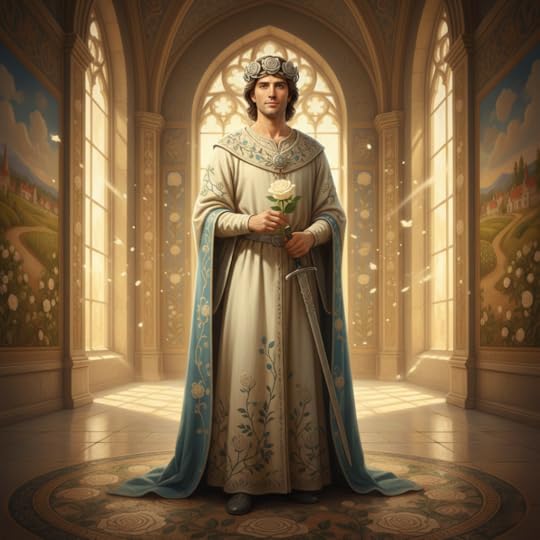
From the Empress to the Modern Heir
A reflection on power, virtue, and the story behind The Untarnished
Power does not shape the soul—it reveals it.
This essay grows out of a larger body of work I am currently preparing—modern translations and adaptations of moral writings composed by Empress Catherine II of Russia for her grandchildren. Written not for publication but for formation, these texts were designed to shape the inner life of future rulers. The Untarnished emerges from that same lineage: not as a historical curiosity, but as an attempt to bring one of Catherine’s most enduring moral questions into the present moment.
The history behind The Untarnished began not as a literary ambition, but within the frost-rimmed halls of the Russian Imperial Court.
In the winter of 1781, Empress Catherine II of Russia—more commonly known as Catherine the Great—embarked on a deeply personal creative endeavor. Rather than issuing decrees or commissioning treatises, she composed a series of moral allegories for her beloved eldest grandson, the future Emperor Alexander I.
Among these was the Tale of Tsarevich Khlor—the original inspiration for Prince Caelen.
The story was never intended for scholarly scrutiny, public consumption, or even the court itself. Written with the intimacy of a grandmother rather than the authority of a monarch, it served as a quiet warning. Catherine understood, through three decades of rule, that a ruler’s greatest danger is rarely an invading army. More often, it waits within gilded palace walls, cloaked in velvet comfort and perfumed admiration.
These dangers take subtler forms: flattery that erodes integrity, indulgent ease that dulls resolve, and the deceptive glow of unearned praise—temptations capable of drawing even the most disciplined ruler astray.
Ruling during the Age of Enlightenment—a period animated by faith in reason, progress, and human perfectibility—Catherine remained acutely aware of how easily such ideals could be corrupted by vanity, ambition, and spectacle. Her fairy tales were not diversions; they were survival guides. She had seen adulation drain men of purpose and luxury quietly hollow their will.
In the Tale of Tsarevich Khlor, Catherine poses a question that remains urgent today:
How does one grow and adapt without surrendering the moral core that makes leadership worthy of trust?
To spare her grandson the fate of the “hollow crown,” she offered a story instead of a lecture.
Her philosophy was unapologetic. Leadership, she believed, is a moral craft. Power does not form character—it reveals it. The right to rule is not inherited through blood alone, but earned through judgment, restraint, and the sober recognition that power is a burden long before it is a privilege.
This conviction lies at the heart of The Untarnished: the belief that a leader must possess moral clarity forged in the crucible of self-discipline.
Catherine deliberately avoided obvious monsters and simple villains. Her antagonists were subtler—flattery, temptation, and luxury: the quiet forces that erode character from within. The trials Khlor (and later, Caelen) faces are not contests of strength, but tests of discernment, where the heart must weigh what the eyes covet.
In her tale, the Rose Without Thorns is not merely a flower nodding in a palace garden. It is a measure of character—a guiding light capable of steering a person of influence through a world rife with gleaming lies and seductive distractions. It asks whether a child destined for leadership can distinguish what is genuinely good from what is merely pleasing, and what fortifies the soul from what delights it.
The conclusion of Catherine’s story is striking in its restraint. There is no triumphant coronation, no final conquest.
Khlor is shown as someone who labors daily to cultivate his virtues. He earns the love of his family and his people, who regard him not with fear, but with steady respect—the image of the ruler Catherine hoped he would become.
Her final line—if someone has a different story, they may tell it—is a masterpiece of understatement. It suggests that virtue is not a destination, but a lifelong labor.
That ending stayed with me.
The Untarnished: A Fairy Tale of Truth and Becoming draws directly from this legacy. You can learn more about it here:
https://igorarien.com/the-untarnished/
— Igor Arien
January 26, 2026
The Weight of Leadership: Why Control Creates Silence—and Inspiration Creates Loyalty
There is a moment in The New Year’s Tale from Kaironeth when a powerful official makes what seems, on the surface, a very reasonable request.
He asks for order.
Perfect order.
A kingdom that runs like clockwork.
No dissent. No friction. No unpredictability.
Every decree obeyed. Every citizen compliant.
Peace through obedience. Prosperity through silence.
Many leaders—whether managers, parents, or community builders—have felt this temptation.
If everyone would just do what they’re told, things would be easier.
If systems were tighter, rules clearer, enforcement stronger—surely harmony would follow.
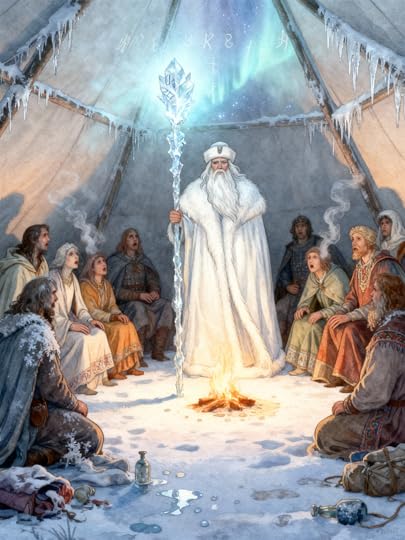
In the story, the Winter Lord (January) answers this request with a correction that cuts far deeper than governance.
The Illusion of Control
January calls the Chancellor’s vision a “garden of waxen blooms.”
Control can suppress chaos, but it also suppresses growth.
Silence can remove conflict, but it also removes creativity, responsibility, and moral agency.
A clockwork kingdom does not fail loudly.
It fails quietly—by becoming brittle and stagnant.
Leadership Is Not Mechanics—It’s Biology
The Winter Lord reframes leadership in a way that feels almost uncomfortably true:
Living systems breathe. They adapt. They argue with themselves. They heal through tension, not its absence.
Parents know this instinctively. Children raised only on rules grow compliant—or rebellious—but rarely wise.
Managers see it too. Teams run by fear may hit targets, but they never exceed them.
Communities governed by pressure lose trust long before they lose order.
The Source of Real Authority
The Winter Lord offers a different model of power—one that is harder, slower, and far more demanding:
• Uplift rather than restrain
• Nourish rather than command
• Treat each person not as a replaceable part, but as a sacred flame
Dignity, he says, is humanity’s breath.
Without it, people may obey—but they will never commit.
True loyalty cannot be extracted.
It must be forged.
And it is forged through purpose.
Purpose Is Stronger Than Decrees
The most striking line in the scene is not about freedom—it’s about responsibility.
The Winter Lord does not advocate chaos or permissiveness. He insists that responsibility be stitched into the fabric of the vision itself.
When people understand why their effort matters—when they see themselves as contributors to something meaningful—coercion becomes unnecessary.
That is as true in a household as it is in a workplace or a nation.
The Quiet Warning Every Leader Should Hear
The scene ends with a sober reminder:
Nothing in the cosmos is allowed to stand still.
What does not grow, withers.
Leadership that seeks only stability eventually produces decay.
Leadership that invites growth accepts discomfort—but earns resilience.
A Question Worth Sitting With
If you lead others in any capacity—
ask yourself honestly:
Are you building clockwork…
or cultivating living hearts?
Because the first obeys until it breaks.
The second carries the work forward—even when you are no longer there.
📖 This reflection is adapted from The New Year’s Tale from Kaironeth.
You can explore the story, themes, and background—including reviews and sample material—on the book’s dedicated page here:
👉 https://igorarien.com/tale_from_kairo...
Author’s Reflection
I wrote this scene after a lifetime spent in leadership roles, across systems built on very different ideas of power. As a teenager in a military academy, I learned command early—forming teams, issuing orders, and carrying responsibility over others. Later, outside the army, I helped build things that had never existed before, introducing new communities and shared purpose where none had taken root. In Silicon Valley, as a chief architect, leadership meant something else again: guiding people without authority, aligning vision across industry and government, and learning that influence flows not from control, but from trust. Over time, I came to understand that obedience can be enforced—but commitment must be earned. Whether we’re guiding a team, raising a child, or shaping a community, what endures is not obedience, but purpose freely embraced. Kaironeth gave me a language to explore that truth in mythic form, but the lesson itself belongs to everyday life.
He asks for order.
Perfect order.
A kingdom that runs like clockwork.
No dissent. No friction. No unpredictability.
Every decree obeyed. Every citizen compliant.
Peace through obedience. Prosperity through silence.
Many leaders—whether managers, parents, or community builders—have felt this temptation.
If everyone would just do what they’re told, things would be easier.
If systems were tighter, rules clearer, enforcement stronger—surely harmony would follow.
In the story, the Winter Lord (January) answers this request with a correction that cuts far deeper than governance.
The Illusion of Control
January calls the Chancellor’s vision a “garden of waxen blooms.”
Perfect. Motionless. Lifeless.
A system that cannot dream—whether wrought of gears or circuits... is but the husk of thought, a shadow without breath.
Control can suppress chaos, but it also suppresses growth.
Silence can remove conflict, but it also removes creativity, responsibility, and moral agency.
A clockwork kingdom does not fail loudly.
It fails quietly—by becoming brittle and stagnant.
Leadership Is Not Mechanics—It’s Biology
The Winter Lord reframes leadership in a way that feels almost uncomfortably true:
A kingdom is not a machine.
It is a living body.
Living systems breathe. They adapt. They argue with themselves. They heal through tension, not its absence.
Parents know this instinctively. Children raised only on rules grow compliant—or rebellious—but rarely wise.
Managers see it too. Teams run by fear may hit targets, but they never exceed them.
Communities governed by pressure lose trust long before they lose order.
The Source of Real Authority
The Winter Lord offers a different model of power—one that is harder, slower, and far more demanding:
• Uplift rather than restrain
• Nourish rather than command
• Treat each person not as a replaceable part, but as a sacred flame
Dignity, he says, is humanity’s breath.
Without it, people may obey—but they will never commit.
True loyalty cannot be extracted.
It must be forged.
And it is forged through purpose.
Purpose Is Stronger Than Decrees
The most striking line in the scene is not about freedom—it’s about responsibility.
The Winter Lord does not advocate chaos or permissiveness. He insists that responsibility be stitched into the fabric of the vision itself.
When people understand why their effort matters—when they see themselves as contributors to something meaningful—coercion becomes unnecessary.
When hearts beat as one toward a higher goal, no decree need compel them to act.
That is as true in a household as it is in a workplace or a nation.
The Quiet Warning Every Leader Should Hear
The scene ends with a sober reminder:
Nothing in the cosmos is allowed to stand still.
What does not grow, withers.
Leadership that seeks only stability eventually produces decay.
Leadership that invites growth accepts discomfort—but earns resilience.
A Question Worth Sitting With
If you lead others in any capacity—
ask yourself honestly:
Are you building clockwork…
or cultivating living hearts?
Because the first obeys until it breaks.
The second carries the work forward—even when you are no longer there.
📖 This reflection is adapted from The New Year’s Tale from Kaironeth.
You can explore the story, themes, and background—including reviews and sample material—on the book’s dedicated page here:
👉 https://igorarien.com/tale_from_kairo...
Author’s Reflection
I wrote this scene after a lifetime spent in leadership roles, across systems built on very different ideas of power. As a teenager in a military academy, I learned command early—forming teams, issuing orders, and carrying responsibility over others. Later, outside the army, I helped build things that had never existed before, introducing new communities and shared purpose where none had taken root. In Silicon Valley, as a chief architect, leadership meant something else again: guiding people without authority, aligning vision across industry and government, and learning that influence flows not from control, but from trust. Over time, I came to understand that obedience can be enforced—but commitment must be earned. Whether we’re guiding a team, raising a child, or shaping a community, what endures is not obedience, but purpose freely embraced. Kaironeth gave me a language to explore that truth in mythic form, but the lesson itself belongs to everyday life.
January 19, 2026
❄️ “A striking portrait of metamorphosis and redemption” — New BookLife Review!
❄️ A BookLife Review for The New Year’s Tale from Kaironeth
I’m truly grateful to share that The New Year’s Tale from Kaironeth has received a wonderful review from BookLife (Publishers Weekly).
BookLife calls the novel an “ethereal journey of magic, growth, and winter wonder,” and a “striking portrait of metamorphosis and redemption.” The review highlights the Slavic-inspired world of Kaironeth, where Queen Adelia and the orphaned Polina are drawn into an enchanted forest alive with voices, magic, and quiet moral truths.
The review praises the story’s coming-of-age lessons, tracing Adelia’s growth from a proud young ruler into a compassionate leader, and Polina’s transformation into the Snow Maiden—an embodiment of winter’s mercy and inner strength. I was also delighted to see the forest itself described as vividly alive, and to receive top marks for the cover and marketing copy.
If you enjoy winter fantasy rooted in folklore—especially in the vein of Gilded by Marissa Meyer or Moonlit Wings by Kayla Eshbaugh—you may enjoy this journey.
📖 Learn more about the book here:
https://igorarien.com/tale_from_kairo...
📄 Read the full BookLife review:
https://booklife.com/project/the-new-...
Thank you, as always, to readers who have followed Kaironeth from its first snowfall. ❄️
I’m truly grateful to share that The New Year’s Tale from Kaironeth has received a wonderful review from BookLife (Publishers Weekly).
BookLife calls the novel an “ethereal journey of magic, growth, and winter wonder,” and a “striking portrait of metamorphosis and redemption.” The review highlights the Slavic-inspired world of Kaironeth, where Queen Adelia and the orphaned Polina are drawn into an enchanted forest alive with voices, magic, and quiet moral truths.
The review praises the story’s coming-of-age lessons, tracing Adelia’s growth from a proud young ruler into a compassionate leader, and Polina’s transformation into the Snow Maiden—an embodiment of winter’s mercy and inner strength. I was also delighted to see the forest itself described as vividly alive, and to receive top marks for the cover and marketing copy.
If you enjoy winter fantasy rooted in folklore—especially in the vein of Gilded by Marissa Meyer or Moonlit Wings by Kayla Eshbaugh—you may enjoy this journey.
📖 Learn more about the book here:
https://igorarien.com/tale_from_kairo...
📄 Read the full BookLife review:
https://booklife.com/project/the-new-...
Thank you, as always, to readers who have followed Kaironeth from its first snowfall. ❄️
January 5, 2026
The Gift Hidden in Getting It Wrong
This reflection is drawn from The New Year’s Tale from Kaironeth. You can learn more about the book here:
https://igorarien.com/tale_from_kaironeth/
One of the quiet tragedies of modern life is our fear of being wrong.
We polish our arguments, curate our expertise, and armor ourselves with credentials—often not in pursuit of truth, but in defense against embarrassment. To err feels like failure. To stumble feels like disqualification.
In Kaironeth, I gave that fear a name: Professor Quill.
Quill is a learned man—astronomy charts at his fingertips, logic sharpened by years of study—yet he trembles before the Guardian of January. Not because January is terrible, but because Quill is terrified of asking the wrong question.
And yet, the question he finally voices is the right one:
“Why does wisdom bloom only from the seeds of our folly?”
January’s answer cuts against everything Quill—and many of us—have been taught.
Wisdom, January explains, does not grow in “the groomed gardens of certainty.” It cannot take root where every step is safe, every answer rehearsed, every path immaculate. Wisdom lives in wild meadows—in places where mistakes are possible, where footing is unsure, where one might fall.
This is not a romantic endorsement of suffering for its own sake. January is precise:
“Wisdom is the memory of pain refined into guidance.”
Pain alone teaches nothing. Error alone redeems nothing. What matters is what remains after the wound closes—what we carry forward, changed.
A flawless path, January says, teaches nothing.
And that line matters more than it first appears.
So much of our culture frames growth as optimization: fewer mistakes, faster mastery, cleaner outcomes. But optimization produces efficiency, not wisdom. It produces competence, not depth.
Wisdom requires friction.
It requires being wrong—and surviving it.
Professor Quill’s deeper fear is not ignorance; it is responsibility. He teaches children. He wants the world to be predictable so that he can pass down certainty instead of doubt. He wants laws instead of mystery, equations instead of enchantment.
January does not scold him for this.
Instead, he offers a gentler, harder truth: the search itself will transform both the seeker and the thing sought.
This is the lesson I wanted to leave quietly embedded in the scene.
We do not learn despite our failures. We learn through them.
If you never fall, you never learn how to rise. If you never question, you never discover the limits of your knowing. If you never allow yourself to be wrong, you may become skilled—but you will never become wise.
Growth is not the absence of error. It is the courage to walk forward carrying the memory of having stumbled—and choosing better steps because of it.
That is January’s gift. Not certainty. Not safety.
But permission.
Permission to learn slowly. To fail honestly. And to rise—not flawless, but wiser than before.
December 22, 2025
The Breath Between Years
On hope, beginnings, and the quiet power of belief
We often rush through the holidays in a blur of obligations, traditions, and good intentions.
We count days instead of feeling them.
And yet, just before the New Year begins, there is a rare and fragile pause —
a hinge in time where the old year is fading and the new one has not yet arrived.
It is a moment I think of as the breath between years.
In that breath, the mistakes of the past loosen their hold,
and the future has not yet asked anything of us.
What remains is possibility.

My grandmother always saved one particular tale for that quiet space between years.
On winter nights, while frost traced delicate patterns across the window
and candlelight flickered against the walls, she would lean close and whisper:
I believed her completely.
I believed the Covenant of Seasons she spoke of was more than a story —
that it was a promise: that kindness matters, that courage prevails,
and that wonder beats quietly at the heart of all things.
Some stories vanish like snowflakes on mittens.
Others remain — returning in the moments we need them most —
reminding us that winter is never the final word.
So take this little story of mine. Set it in your window like Grandmother’s candle.
Hold it close on dark evenings. And remember, dear heart:
no winter lasts forever — not for those who keep faith with kindness,
who guard courage like a flame, who let wonder bloom even in the cold.
— Igor Arien
A Quiet Wish for You
As the year draws to a close, I wish you a Christmas filled with warmth,
peace, and small, luminous moments — and a New Year that opens gently,
carrying hope rather than haste.
May you find your own breath between years.
May kindness guide your steps, courage steady your heart,
and wonder remain close at hand.
If you would like to step fully into the world of Kaironeth,
you can find The New Year’s Tale from Kaironeth here:
Read more about the book
Thank you for reading — and for carrying stories forward with me.
Ca
We often rush through the holidays in a blur of obligations, traditions, and good intentions.
We count days instead of feeling them.
And yet, just before the New Year begins, there is a rare and fragile pause —
a hinge in time where the old year is fading and the new one has not yet arrived.
It is a moment I think of as the breath between years.
In that breath, the mistakes of the past loosen their hold,
and the future has not yet asked anything of us.
What remains is possibility.
My grandmother always saved one particular tale for that quiet space between years.
On winter nights, while frost traced delicate patterns across the window
and candlelight flickered against the walls, she would lean close and whisper:
“In that breath between years,” she would say,
“anything is possible.”
I believed her completely.
I believed the Covenant of Seasons she spoke of was more than a story —
that it was a promise: that kindness matters, that courage prevails,
and that wonder beats quietly at the heart of all things.
Some stories vanish like snowflakes on mittens.
Others remain — returning in the moments we need them most —
reminding us that winter is never the final word.
So take this little story of mine. Set it in your window like Grandmother’s candle.
Hold it close on dark evenings. And remember, dear heart:
no winter lasts forever — not for those who keep faith with kindness,
who guard courage like a flame, who let wonder bloom even in the cold.
— Igor Arien
A Quiet Wish for You
As the year draws to a close, I wish you a Christmas filled with warmth,
peace, and small, luminous moments — and a New Year that opens gently,
carrying hope rather than haste.
May you find your own breath between years.
May kindness guide your steps, courage steady your heart,
and wonder remain close at hand.
If you would like to step fully into the world of Kaironeth,
you can find The New Year’s Tale from Kaironeth here:
Read more about the book
Thank you for reading — and for carrying stories forward with me.
Ca
The Great Continuum: History, Humanity, and Imagination

Across centuries and civilizations, the human story repeats with infinite variation — faith and ambition, conquest and wonder, logic and dream. The Great Continuum is my reflection on those patterns:
...more
- Igor Arien's profile
- 16 followers

