Timothy Jay Smith's Blog
July 2, 2020
On Writing a Gay Political Thriller
As the old adage goes, you get what you pay for, and when I decided to quit a good career to become a full-time writer, I got a lot of free advice. Don’t use the word fuck or at least not too often. Don’t have too many sex scenes and definitely don’t make them salacious. God forbid you should use the passive voice or start a sentence with a gerund!
Then there was the warning: Don’t become known as a gay writer. If that happened, I would never be taken seriously by the “mainstream.” I’d be genrefied, and in most people’s minds, the gay genre was only about sex loosely disguised by some modicum of a story with the plot points all pointing to bed.
That was 1997 and I was forty-six years old. It wasn’t that I expected to break new ground if I had gay characters. Far from it. The first American mass-market gay novel, by a gay man, is commonly accredited to Gore Vidal’s The City and the Pillar (1948). It should be noted, many other early gay novels like E.M. Forster’s Maurice, penned around 1914 but not released until 1971, were often published after the authors’ death or under pseudonyms.
Forster was too ashamed of his homosexuality to allow Maurice to be published while still alive. It was that same shame that lurked behind the advice not to become known as a gay writer. We hadn’t become mainstreamed yet. We hadn’t appeared in enough sitcoms not to be regarded with judgment. It’s hard to overestimate the power of that shame. Men, dying of AIDS, hid their disease because it was a confession of their sexuality. Even their pending deaths couldn’t free them of their shame. They slept with it on their deathbeds.
Some people have been around the block a few times. When I turned to full-time writing, I’d been around the world a few times and seen it through a gay man’s eyes. That’s how I wanted to tell my stories. I can’t imagine any writer not agreeing that we constantly plumb ourselves, not always consciously, in every story and character we create. We rely on external experiences—a setting, an encounter, a conversation—to give us content for our stories, but it’s ultimately how we emotionally connect with those external events that gives us the emotional grist we need to bring power to our words on paper. Usually my writer’s Ah ha! moments are when I realize I’ve connected with something deep inside me that might have been self-evident to others, but hadn’t been to me.
It was hard for me to imagine creating a fictional world without gay people. That would be too close to science fiction, which is definitely not my genre. I want my made-up stories to portray the real world inasmuch as I hope my writing might make it a better place by illuminating issues or conditions or trends that concern me. Through fictional stories, my novels have grappled with human trafficking, the Israeli/Palestinian conflict, the refugee crisis—and in my latest novel, The Fourth Courier, the fallout for ordinary people after the collapse of communism in Eastern Europe. My approach is to take an event or threat—a thriller plot—and tell it in a way that lets the reader see it through a human perspective, not just action. Some fifteen years ago, I founded the Smith Prize for Political Theater to encourage playwrights to do the same thing: take a critical issue of our times, and tell it—show it—through an intimate story. Personalize it so people will emotionally get it.
On my part, having gay characters and writing freely about relationships didn’t require a huge sacrifice. For Gore Vidal, it did. He sacrificed any possibility of continuing his family’s political dynasty (his father was a U.S. Senator from Oklahoma) when he published his novel. I had lived in some places where I knew the openness in my writing would likely disconnect me from friends and colleagues, and it has. Pete Buttigieg’s run for U.S. President underscores how much times have changed—for some people. Brunei’s decision to stone gays to death is the flip side of the same world, and it always has been.
I said that I didn’t start out expecting to break new ground by having gay characters in my books, but I’ve come to realize, in a couple of modest ways, that I have. I’ve put them squarely in that world as FBI and CIA agents (The Fourth Courier), army sharpshooters (Cooper’s Promise), and war journalists (A Vision of Angels). Likewise, I portray for the reader how homosexuality is regarded and treated in the foreign places where I’ve lived. In each of my novels, the plot’s most significant turning point always hinges on a character being gay.
And it doesn’t always point to the bed.
Originally published by Lambda Literary on August 8, 2019


April 8, 2019
The Fourth Courier: An Interview with Timothy Jay Smith
THE FOURTH COURIER: AN INTERVIEW WITH TIMOTHY JAY SMITH
You have a new novel coming out, The Fourth Courier, set in Poland. What’s it about?
The Fourth Courier opens in the spring of 1992, only four months after the collapse of the Soviet Union. A series of grisly murders in Warsaw suddenly becomes an international concern when radiation is detected on the third victim’s hands, raising fears that all the victims might have smuggled nuclear material out of Russia.
Poland’s new Solidarity government asks for help and the FBI sends Special Agent Jay Porter to assist in the investigation. He teams up with a gay CIA agent. When they learn that a Russian physicist who designed a portable atomic bomb is missing, the race is on to find him and the bomb before it ends up in the wrong hands.
My novels have been called literary thrillers because I use an event or threat—a thriller plot—to examine what the situation means to ordinary people. In The Fourth Courier, Jay becomes intimately involved with a Polish family, giving the reader a chance to see how the Poles coped with their collective hangover from the communist era.
How did you come up with the story for The Fourth Courier?
The Fourth Courier book goes back a long way for me. In 1989, the Berlin Wall fell and Solidarity won the first free election in Poland in over sixty years. In the same year, Mikhail Gorbachev introduced new cooperative laws in the Soviet Union, which was an area of my expertise. I was invited to the Soviet Union as a consultant, which led to my consulting throughout the former Soviet bloc, eventually living for over two years in Poland.
At the time, there was a lot of smuggling across the border between Russia and Poland, giving rise to fears that nuclear material, too, might be slipping across. While on assignment in Latvia, I met with a very unhappy decommissioned Soviet general, who completely misunderstood my purpose for being there. When an official meeting concluded, he suggested we go for a walk where we could talk without being overheard.
I followed him deep into a forest. I couldn’t imagine what he wanted. Finally we stopped, and he said, “I can get you anything you want.” I must have looked puzzled because he added, “Atomic.”
Then I understood. In an earlier conversation, there had been some passing remarks about the Soviets’ nuclear arsenal in Latvia, for which he had had some responsibility, and apparently still some access. While my real purpose for being there was to design a volunteer program for business specialists, he assumed that was a front and I was really a spy. Or perhaps he thought, I really did want to buy an atomic bomb!
Have you always been a writer?
In the sense of enjoying to write, yes. I actually wrote my first stage play in fourth grade and started a novel in sixth grade, but I didn’t become a full-time fiction writer until twenty years ago. The first half of my adult life I spent working on projects to help low income people all over the world. I always enjoyed the writing aspects of my work—reports, proposals, even two credit manuals—but I reached a point where I’d accomplished my career goals, I was only forty-six years old, and I had a story I wanted to tell.
What was the story?
For over two years, I managed the U.S. Government’s first significant project to assist Palestinians following the 1993 Oslo Accords. One thing I learned was that everyone needed to be at the negotiating table to achieve an enduring peace. So I wrote a story of reconciliation—A Vision of Angels—that weaves together the lives of four characters and their families.
If anybody had ever hoped that a book might change the world, I did. Unfortunately I didn’t manage to bring about peace in the Middle East, but I’ve continued writing nevertheless.
The Fourth Courier has a strong sense of place. It’s obvious that you know Warsaw well. Other than living there, what special research did you do?
Warsaw is a city with a very distinctive character. It’s always atmospheric, verging on gloomy in winter, and the perfect location for a noir-ish thriller.
I had left Warsaw several years before I decided to write a novel set there, so I went back to refresh my memory. I looked at it entirely differently. What worked dramatically? Where would I set scenes in my story?
It was on that research trip when all the events along the Vistula River came together for me. There was a houseboat. There was Billy’s shack, and Billy himself whose “jaundiced features appeared pinched from a rotting apple.” There were sandbars reached by narrow concrete jetties and a derelict white building with a sign simply saying Nightclub. Fortunately, Billy’s dogs were tethered or I wouldn’t be here to answer your questions.
My main character is an FBI agent, and I didn’t know much about it. A friend, who was an assistant to Attorney General Janet Reno, arranged a private tour of the FBI’s training facility in Quantico. That was before 9/11. I don’t think that could be done now. Maybe for James Bond himself but not for a wannabe writer.
If I was going to write a novel about smuggling a portable atomic bomb, I needed to know what a bomb entailed. Weight, seize, basic design, fuel? How would a miniature bomb be detonated? So I blindly contacted the Department of Energy. I explained what I wanted and was soon connected to an atomic expert who agreed to meet with me.
We met on the weekend at a Starbucks-like coffee shop in Rockville, MD. We met in line and were already talking about atomic bombs before we ordered our coffees. He had brought basic drawings of them. He was an expert and eager to share his knowledge.
Can you imagine having that conversation in a café today, openly looking at how-to schematics for building an atomic bomb while sipping skinny lattés?
You’ve mentioned ‘scenes’ a couple of times. I know you also write screenplays. Do you find it difficult to go between the different formats or styles?
The sense of scene is crucial to my writing. It’s how I think about a story. Before I start new work, I always have the opening and closing scenes in my head, and then I ask myself what scenes do I need to get from start to finish.
I think it comes from growing up in a house where the television was never turned off. My sisters and I were even allowed to watch TV while doing homework if we kept our grades up. Sometimes I joke that canned laughter was the soundtrack of my childhood. I haven’t owned a television for many years, but growing up with it exposed me to telling stories in scenes, and it’s why my readers often say they can see my stories as they read them.
For me, it’s not difficult to go between prose and screenplays. In fact, I use the process of adapting a novel to a screenplay as an editing tool for the novel. It helps me sharpen the dialogue and tighten the story.
In your bio, you mention traveling the world to find your characters and stories, and doing things like smuggling out plays from behind the Iron Curtain. Was it all as exciting as it sounds?
It was only one play, and yes, I confess to having an exciting life. I’ve done some crazy things, too, and occasionally managed to put myself in dangerous situations. Frankly, when I recall some of the things I’ve done, I scare myself! By comparison, smuggling a play out of Czechoslovakia in 1974 seems tame. But I’ve always had a travel bug and wanted to go almost everywhere, so I took some chances, often traveled alone, and went to places where I could have been made to disappear without a trace.
It sounds like you have a whole library full of books you could write. How do you decide what story to tell and who will be your characters?
I came of age in the 1960s during the Civil Rights Movement and the anti-Vietnam War demonstrations, so I developed a strong sense of social justice. That guided my career choice more than anything, and when I quit working to write full-time, it was natural that I wanted my books to reflect my concerns. Not in a “big message” way, but more in terms of raising awareness about things that concern me.
For example, take Cooper’s Promise, my novel about a gay deserter from the war in Iraq who ends up adrift in a fictional African country. It was 2003, and in a few days, I was headed to Antwerp to research blood diamonds for a new novel. I was running errands when NPR’s Neal Conan (Talk of the Nation) came on the radio with an interview of National Geographic photographer Jodi Cobb about a project on modern-day slavery. It was the first time I heard details about human trafficking, and was so shocked by its enormity that I pulled my car off the road to listen.
I decided on the spot that I needed to find a story that touched on both blood diamonds and trafficking. When I went to Antwerp a few days later, I visited the Diamond District as planned, but also visited a safe house for women who had been rescued from traffickers.
In The Fourth Courier, you team up a white straight FBI agent with a black gay CIA agent. Even Publishers Weeklycommented that it seemed like an ideal set-up for a sequel. Do you plan to write one?
Probably not. My to-be-written list is already too long.
I’m close to finishing the final edits on a book set in Greek island village, which is more of a mystery about an arsonist than a thriller. I’ve already started a new novel set in Istanbul about a young refugee who’s recruited by the CIA to go deep undercover with ISIS. I’ve never written a novel set in the States but I have the idea for one.
To date, my books have been stand-alones with totally different settings, characters, and plots. I try to write what I like to read: smart mysteries/thrillers with strong plots and colorful characters set in interesting places. I suppose like me, I want my stories to travel around and meet new people.
You’ve had gay protagonists or important characters since your first novel over twenty years ago when gay literature had not yet become mainstream. How would you say that affected your choices as a writer, or did it?
Friends warned me that I shouldn’t become known as a gay writer because it would pigeonhole me and sideline me from consideration as a serious writer. At the time, I think the general public thought gay books were all about sex and more sex. Of course, already there were many emerging gay literary writers; it was more stigma than reality.
The world of thrillers and mysteries is still largely uninhabited by gays. Hopefully I am helping to change that. I also hope that my novels expand my readers’ understanding of homosexuality in the places where I set them. In The Fourth Courier, the gay angle is key to solving the case. In my other novels, too, the plot turns on something gay, and the way it does is always something that couldn’t have happened in the same way anywhere else because of the cultural context.
What do you want your readers to take away from The Fourth Courier?
What motivated me to write The Fourth Courier was a desire to portray what happened to ordinary Polish people at an exciting albeit unsettling moment in their country’s history. I hope my readers like my characters as much as I do—at least the good guys. The people are what made Poland such a great experience.
The Fourth Courier is my thank-you note to them.
October 31, 2016
A Tale of Two Toilets
A year ago, my partner and I began hearing about refugees arriving on the Greek island of Lesvos, especially along the north coast closest to Molyvos, the village we have visited twice a year for many years. We know the local volunteers who organized the first relief effort, and ourselves were willing draftees into the cause once we arrived in May: making sandwiches, passing out food, handing out hats—and shedding tears. Because it is impossible not to shed tears for the refugees.
What started as a trickle of two or three rafts a week soon became double that a day, then double again and again. By the end of the summer, routinely over 3,000 refugees landed daily. Most of them never really came through the village but skirted it. Still, a predictable schism developed between the villagers who wanted to help them and those who feared that any help at all would encourage more refugees to come.
Toilets became emblematic of this great divide.
The debate over how to help the refugees distilled itself into whether or not to create a proper transit spot where they could find some shade, toilets and showers; and have a place to rest—perhaps as long as overnight—before starting their forced 70-kilometer march to the island’s capital. The naysayers wanted nothing that smacked of a camp, and a transit spot did. As it turned out, even a portable john was too much of a Pandora’s box.
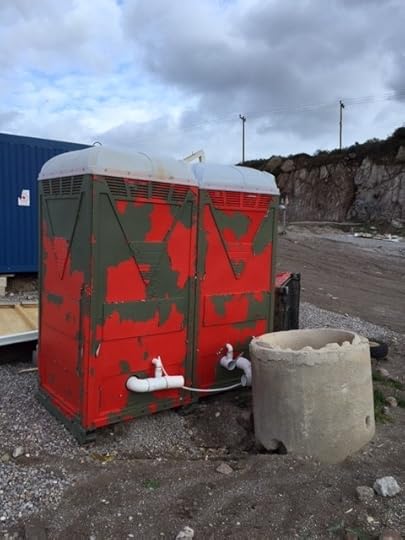
I had started collected donations to help the refugees, initially for food. In June, after local volunteers received approval to install toilets, I paid for two portable johns. They were only available in bright red, and we painted them green, thinking it might mollify some of the naysayers. It was a waste of paint. Three different spots were picked for the toilets to be hooked up, and every time the local Tourist Board managed stop it.
Of course, two toilets would hardly suffice for the many tens of thousands of refugees who would eventually pass Molyvos, but they would have been two more than the zero toilets provided through the long, hot and chaotic summer. (Tourists, fortunately, weren’t bothered—a note on that below). While the number of refugees soared, the Greek authorities were hopelessly overwhelmed, the international NGOs excruciatingly slow in responding, and the European Union more interested in blaming yet another problem on Greece rather than aiding her.
Early in the year, when the (heroic) Greek Coast Guard’s rescues of refugees at sea became regular occurrences, volunteers in Molyvos organized themselves to provide emergency relief—food, water, dry clothes. Over the months, those nascent efforts expanded and coalesced into the Starfish Foundation. By September, the foundation had a team of long-term foreign volunteers working with it.
When Starfish received a quiet nod from a private landowner, it solved a lot of problems in one fell swoop by creating a transit spot—Oxy Camp—before anyone had the wherewithal to stop it. Like an old-fashioned barn raiser, in one day tarps were strung up, the two toilets installed, and hundreds of refugees stranded on the road relocated to it.
Creating the transit camp solved some immediate problems, and it created an opportunity for local volunteers and international NGOs to find ways to work together. At Oxy Camp, which operated through the end of the year, UNHCR eventually donated tents that provided real shelter, and the International Rescue Committee (IRC) assisted in transporting refugees to the island’s capital.
Throughout the fall, the plan was for the IRC to establish a transit spot on the north coast, which it finished a couple of months ago. So now, Oxy Camp has closed and the Starfish Foundation is assisting at the new camp. (It is responsible for clothes distribution.) It also continues to help all the refugees brought into Molyvos harbor, which are increasing in number as the Coast Guard and other services try to collect people off the overcrowded rafts rather than risk their capsizing.
Winter isn’t over, and the number of refugees is already several times what it was at this time last year. Also, as countries north of Greece close their borders, they are getting trapped all the way back up the line, meaning more refugees will stay longer on the island. In every respect, the needs continue to be staggering. Fortunately, there are more organizations trying to help now, and other worthwhile private efforts in addition to Starfish Foundation. Even so, the resources they have pale compared to the plight of so many people.
The refugees, of course, are the real losers in the situation. The devastation and risks they have fled are so staggering that, were it not for videos, it would be impossible to believe their descriptions. But the Greeks are losers, too. On Lesvos at least, their worst fear is coming true: because of the refugee crisis, tourism to the island will crash and burn. In Molyvos, hotel bookings for the summer are down about 70 percent, and the majority of the weekly charter flights to the island have cancelled.
It’s a shame for many reasons. The refugees aren’t loitering in the village, pulling guilt trips on wealthy tourists. You can still drink your ouzo and dance your syrtaki and ‘be Zorba’ without their interference. They are picked up, taken to the IRC transit camp, and whisked away—out of sight, and as out of mind as you want. Or if you want, you can glimpse an historical event in the unfolding, if only with a drive-by of one of the camps. The facts are: ferry boat operators say that stealing aboard their boats is way down when it comes to refugees versus usual passengers; and, to my knowledge, on the island there has not been a single incident of assault, rape or robbery connected to them.
So support the refugees by giving yourself a Greek holiday! (I have lodging and restaurant recommendations for anyone who asks.) On the heels of a national economic meltdown, poor Lesvos did not need to feel the brunt of a modern-day Exodus. It’s such a great country, island, and village. Go visit!
I want to thank everyone who donated money through me to aid the refugees. Together, we made a small difference in thousands of peoples lives, brought smiles to a lot of their beleaguered faces, and helped build local organizational capacity as well. We bought a lot of food and water, and some medicines and nursing services. We fireproofed the kitchen at PIKPA, the camp for the most vulnerable refugees. We contributed small food stipends for long-term volunteers. We paid for a few dozen buses to transport families to the island’s capital. We also bought 135 pairs of shoes, 1,550 insulated beanies for children, 1,380 sweatpants, 8,000 rain ponchos, 13,000 caps—and of course, two toilets.
If you want to donate to assist the refugees, here is a link to the Starfish Foundation.
If you want to see good photographs documenting the refugee situation, please visit Michael Honegger’s portfolio ‘Human Tide’ at: www.michaelhoneggerphotos.com.
Swimming Against Fear
When I was 18 months old, I caught polio. I wasn’t alone. It was the worst outbreak ever experienced in the United States, with some 60,000 victims, coincidentally in the same year that Jonas Salk first tested his vaccine against the disease. It was always assumed that I caught it at a public swimming pool, but that’s not why I developed a lifelong fear of water; or, to be more precise, moving water.
Before I went into the hospital, apparently I loved my baths; and when I came out, I hated them. I had been put into whirlpools, which was the treatment at the time, believing the water jets would stimulate my muscles and nerves. The jets may have done that, but I was an infant, in a scary strange place, with two paralyzed legs (from which I thankfully fully recovered). Obviously I was terrified, and in some primal place in my brain, that terror became linked to whirling water. Or at least, that was my mother’s best pop psychology for explaining the source of my outsized fear, and it seems logical to me.
I stress ‘moving’ water because I have never been afraid of swimming pools, though my first swimming lesson certainly had the potential to ruin them for me as well. When I was five years old, my family moved to the desert, and my parents heeded the advice of friends that we kids needed to learn how to swim, in case we fell into a pool. Off our mother took us to the Racquet Club, where the swimming instructor said something like, “I can get him swimming fast”—and marched me to the end of the diving board, picked me up by my arms, and dropped me into the water.
To this day, I remember the bubbles that surrounded me as I sank to the bottom.
Needless to say, I never had another lesson at the Racquet Club. Fortunately, the incident didn’t put me off swimming altogether. In fact, it ultimately became my preferred exercise, but always in a pool, never the open sea.
I am not an envious man, but thousands of times I have envied people swimming in the turquoise waters of the Caribbean and the azure blue Mediterranean. Two years ago, I decided to take one more shot at making that happen for me.
It’s not that I hadn’t tried before, but my efforts were always doomed. A scuba diving class. Snorkeling. Riding tame ocean waves. Whitewater rafting. I made myself do these things, but whenever the slightest thing went wrong, I panicked. It’s like a black curtain gets drawn across my brain because I can no longer think. I am simply gripped with fear: flailing, gasping, heart pounding fear.
I forced myself into the water. I poked along wearing a mask, not yet swimming but only pulling myself from pebble to pebble. I graduated to swimming in the same shallow water, learning that if I swam breathing in the direction of the shore, I could avoid looking into deep water. Then I swam in both directions. Then in water I could barely stand in. Then deeper.
So far, no black curtains, and I am in way over my head.
I swam a mile today.
Photograph by Michael Honegger @ www.michaelhoneggerphotos.com
#timothyjaysmith
Mister, they’re coming anyway…
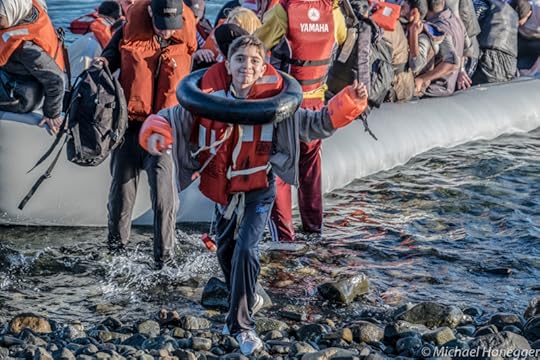
Sunrise over the Mediterranean. The island’s hills brighten as the chug of boat engines can be heard over the lapping waves. These aren’t your typical Greek fishing boats returning from a night at sea, but a flotilla of black rafts, nine total carrying some 400 refugees to land on the north coast of Lesbos island. Under five miles off the Turkish coast, Lesbos has become a beachhead for a flood of refugees that has come as unannounced as a tsunami, and for which local communities are even less prepared.
There has always been a trickle of refugees across the narrow channel. In the ten years that I have been coming here, every week I would find one or two rafts abandoned on the beach with ten or so life jackets or paddles. Until recently, most had been young men from Afghanistan and Iraq, escaping wars they didn’t want to fight, who would later be spotted on a road walking the forty miles or so to the island’s capital, Mytilini, to be processed and transferred to a camp in Athens. In the whole country, the number of such migrants has increased five-fold over the same period last year; but for the islands offshore Turkey, the numbers have risen far more dramatically. On Lesbos, the count has gone from a few dozen a month to over two thousand in one three-day period alone.
A surge in Taliban-led violence in Afghanistan, the rapid spread of the barbaric Islamic State in Iraq, and Syria’s devastating civil war have sent millions fleeing for their lives. Over half of the Syrian population has been displaced, and now accounts for half or more of the new arrivals. Often members of the middle class—teachers, IT specialists and engineers—more often Syrians come as families, forced to leave when their children’s school was bombed; or if from Aleppo, when their neighborhood was razed. On the whole, Syrians have more money than others, but that doesn’t mean much when they have nothing else but the clothes they are wearing.
Some Afghani refugees have walked from as far as Kabul, taking weeks to hike over Iran’s mountains and cross the length of Turkey to its west coast. The odd Syrian has flown to Istanbul, and taken buses to where, even if he or she has money, still has to hide in forests, waiting for days until his turn for the ‘trafficker’ to bundle him aboard a rubber raft. With the craft’s captain (usually one of the refugees) given an hour of training, they are launched for Greece with nothing more precise nautically than a pointed finger.
It’s a harrowing journey for everyone, not the least because of the real risk of capsizing their overloaded rafts even in light seas—sometimes purposefully. The traffickers instruct them to slash their pontoons if the Greek Coast Guard approaches to keep from being turned back to Turkey, which inevitably tosses forty-some non-swimmers into the sea with a crew of only four frantically trying to save them. Ironically, the Coast Guard’s mission is not to turn them back, but to ensure their safe arrival.
Ahead of them, the journey will still be hard. They don’t know it yet. Their dream—their safety—is their first footstep in Europe. It’s only one step in a perilous journey that will take them to processing centers, overcrowded camps, and force them into the hands of other traffickers, more malevolent than anyone else they have met on their way, who, for extortionist prices, promise to get them to Germany or Austria—the current popular destinations.
That emotional first step on European soil can not be overestimated. As their rafts slide ashore, it’s a celebration. The journey has ended and they have arrived safely. Regardless of their wariness of what’s next, they scramble ashore, some feeling the need to run a short distance from the water; but others, overcome with their first sense of security in years, weep, embrace each other, believing—rightfully—that they have made it to a better place. Certainly a safer one.
It’s different, too, from what they imagined. There is little officialdom at this northern point of the island. No police to register them, no information other than the latest rumors that their rescuers—sometimes the Coast Guard, sometimes local volunteers—can pass on. Frequently they don’t know where they landed, only that they need to register with the police to get in the long line to be processed.
Where are the police?
Seventy kilometers away.
Will there be a bus?
Maybe.
Maybe?
Probably not. But maybe. It changes daily.
What do we do?
Walk.
Walk? My wife is pregnant. My boy is three years old.
I’m sorry. Walk.
The rules, and the probability of a bus, change daily. It’s not because of some great inefficiency by Lesbos’ government, though the elimination a few years ago of village mayors to create a central authority in Mytilini has complicated providing services as essential as portable johns at the bus park where people are often stranded for several days. Earlier this week, that meant thirty persons crowded into a bus shelter on a chilly and rainy night; among them, eight children and five women—two of them pregnant.
While it was foreseeable that the Syrians would mass in camps just over the border in Turkey, it was far less predictable that they would become such a massive wave of refugees headed for the West. If someone saw it coming, that message never got to frontline Lesbos. It might not have mattered if it did. The country is bankrupt. Local officials can hardly provide basic services, let alone cope with an explosion of refugees. International NGOs haven’t caught up with the crisis either.
Local volunteers are making extraordinary efforts to meet the rafts on arrival, and ensure that they have food, water, clothing, shoes, and even Pampers because there are so many infants. Of course, not everyone agrees on what assistance, if any, should be provided.
Most refugees don’t plan to stay in Greece. Some will, of course, but the locals, seeing first-hand the dimension of what is happening, are starting to ask the bigger picture questions: What does it mean for Europe? Who are these people, coming from war-torn countries, possibly armed because in war zones people have weapons? How many refugees can be absorbed before fundamentally changing the culture of Europe itself?
Closer to home, the concerns take on an economic aspect. What if tourists stop coming because they don’t want to be confronted with the plight of refugees, as some reports suggest has started to happen on other islands? No one denies they need water and food, but what beyond that might actually encourage the next groups to make Molyvos their destination? Tents? Toilets? The worry is that if the refugees, using their cell phones, report back to those following in their footsteps that they are being helped, even more people will come here.
The refugees expect to be met and confronted in some way. The lack of even one policeman in my village, or the absence of a bus to take them to Mytilini, puzzles them. A couple of days ago, a few staged a sit-in, blocking traffic on the road in the village, demanding to be arrested and taken to Mytilini. It lasted only as long as it took to convince them that there really was no one in authority who could arrest them.
One of the young men asked me why not a policeman? Why not a bus? I told him that Greece was a poor country, but he didn’t buy it. His was poorer.
I tried the argument: There are too many of you. The village can’t cope. You are sending messages back that here you get water, food, and until a few days ago, we had a small camp where you could sleep. Now too many people are coming.
He shook his head sadly at my obtuseness.
Mister, they’re coming anyway.
###
Timothy Jay Smith is a frequent visitor to Lesbos. Using private donations, he has been working closely with volunteers in Molyvos and Mytilini to provide food and water to refugees, as well as try to improve conditions at the largest refugee camp (Kara Tepe) by installing toilets and showers. He is also working towards establishing a primary care medical unit at the largest camp in Mytilini. If you wish to contribute to these efforts, you can donate through his PayPal account – kosmosfilms@gmail.com — or with a personal check in U.S. dollars or Euros (French banks only). For details, please contact him through his web page.
Photo by Michael Honegger at www.michaelhoneggerphotos.com.
October 30, 2016
Real Heroes, and Selfies
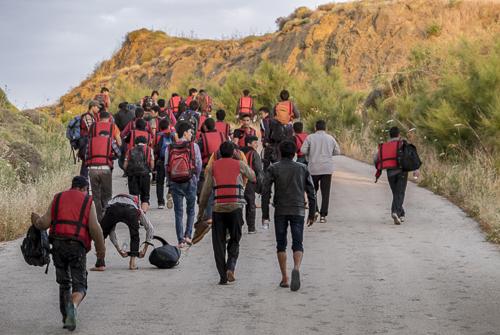
Since the spring, my partner, Michael Honegger, and I have helped to provide immediate and direct relief to the refugees arriving by the tens of thousands on the Greek island of Lesbos. By coincidence, Lesbos is the island we have visited twice annually for the last dozen years, and ‘our’ village – Molyvos – on the island’s north coast, has been ‘ground zero’ for the majority of arrivals. Since the first of the year, an estimated 170,000 refugees have passed through the village; and by another count, some 40 percent of them are children.
We never expected our efforts to last as long as they have. Well before now, we assumed the Greek government, foreign governments, UN agencies and/or international NGOs would step in, organize and fund at an appropriate level, the assistance and services demanded by this unprecedented humanitarian crisis. That has not happened, as soberly explained in a Reuters article: Who’s in charge of the migrants arriving in Greece?
Instead of a concerted and organized effort, the international response has been pathetically insufficient, characterized more by self-serving selfies, self-promotional videos and handwringing than actual accomplishments. Granted, the IRC has organized buses, the UNHCR added a few tents, and Medicins Sans Frontiers eventually built toilets, but almost the entire relief effort has been shouldered by a heroic team of local volunteers aided by a host of foreigners who selflessly devote themselves to the effort for a few days to several months. The NGOs that have shown up—and doing the most—are not in the big leagues of relief agencies, but groups as small as A Drop in the Ocean.
It is unexpected and wonderful what people have been willing to do and contribute. Most of the summer, the mounting food bill was footed largely by tourist donations. Providing the simplest sandwich, banana and bottle of water even at wholesale prices adds up to real money for a village, especially in the midsts of a Depression-era crisis.
The money we have raised has gone for a wide variety of uses; such as, on a modest scale, medicines, fixing some plumbing problems, and transport for refugees from the north coast to the island’s capital. We have also supported the long-term volunteers with food stipends.
Most important, though, are the items we have provided directly to the refugees: over 13,000 hats to protect them from the brutal sun, 8000 reusable rain ponchos, and most recently, 1550 thermal (thinsulated-lined) caps for children. With those items alone, we have helped close to 14% of the estimated total refugees coming through the village. In addition, we have provided thousands of people with water and food. Currently, we have been asked for fleece sweatpants for children, and I am looking for a good source and will buy as many pairs as I can.
All of this, of course, has only been possible because people have donated money. As long as we have funds, we will keep doing the same.
It was thought that the number of refugees would decrease in bad winter weather, but not so far. Turkish traffickers have launched overloaded rubber rafts in winds strong enough that regular ferry traffic is stopped; and they have started using larger, wooden boats unseaworthy in their own ways. Children are suffering the worst, of course, so buying insulated caps and sweatpants is now our priority.
In these times, when each day’s bad news seems to best anything from the day before, it is heartwarming and reassuring how many people have wanted to help refugees fleeing their own bad news. Crowdfunders, churches, fundraising parties, individuals—an early Thanksgiving thanks to everyone who has and will help.
If you want to donate, please follow the link to www.timothyjaysmith.com.
Photo by Michael Honegger @ www.michaelhoneggerphotos.com.
October 29, 2016
Reckoning… helping refugees in Greece
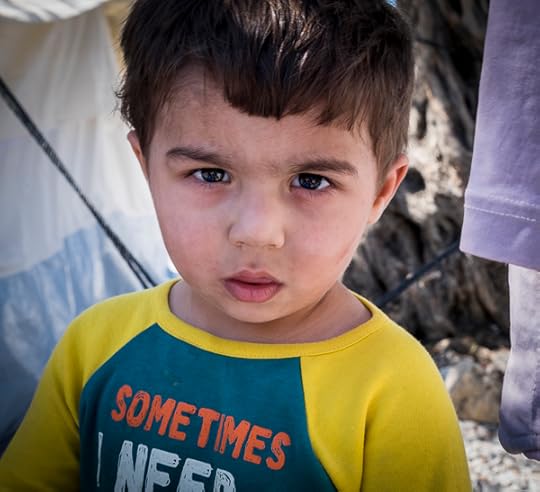
Six months ago, when my partner and I were planning our annual trip to the Greek island of Lesbos, we already knew about the mounting refugee crisis—though it hadn’t become a crisis yet. It was still a manageable situation.
In fact, for the twelve years we have been going to Lesbos, refugees have regularly crossed the narrow and treacherous channel from Turkey. In the summers, a walk along the north coast would always turn up an abandoned raft or two, a few discarded life preservers, sometimes a half dozen paddles neatly leaning against the rocky cliffs. In small groups, they arrived a couple of times a week, almost always young Afghan or Iraqi men fleeing wars started by the West in their countries.
By this spring, the numbers and methods started to change. Instead of a couple of rafts a week, one or two started to land every day, then three or four. Traffickers on the Turkish side crowded sixty people onto rubber dinghies built for twelve and launched them at night so they could cross the 10-kilometer-wide channel unseen, landing on Lesbos’ shores at sunrise. No longer only young men, the refugees included families, with infants and pregnant women, the majority escaping the civil war in Syria—and all with stories of family members killed, neighborhoods destroyed, and lives shattered.
Initially, the media paid little attention to the unfolding crisis in Greece, preferring instead to cover the migrants landing in Italy, coming from Libya in bigger boats and numbers, with attention-grabbing headlines if they capsized and hundreds drowned. That has changed, with the numbers and photographs now coming out of Greece with a numbing regularity. And the numbers are dramatic. At one time, 150 refugees arriving in our village of Molyvos seemed like a big day. Now, at least 2,000 arrive daily with spikes up to 4,000.
In another era or another country, this type of humanitarian crisis would be tackled with a massive international relief effort. That simply has not happened. In Molyvos, the United Nation’s premier refugee agency – UNHCR – has provided buses to help transport refugees from the north coast to the island’s capital (Mytilini, some 70 kilometers away), put up a couple of tents at an ad hoc transit spot managed by local volunteers, and picked up a few incidental expenses. The International Rescue Committee has similarly provided buses and a small emergency team ready to help. Both groups have been more active in Mytilini where the official refugee camps are located; but no organization has brought in the administrative know-how or level of resources needed to cope with a crisis increasingly referred to as Biblical, historic and unprecedented.
The Greek government is equally at fault. Unfortunately, as the refugee crisis unfolded over the summer, the national government was distracted by protracted negotiations for an international financial bailout. Equally unfortunately, it has used the economic crisis as an excuse for not deploying resources to assist the refugees, when it has a huge but not utilized resource at its disposal: the military. Just off the coast of Turkey, Lesbos is dotted with army camps, some even abandoned; and army trucks drive around every day with one soldier in the back. The camps, trucks and soldiers could all be utilized to transport, shelter, feed and legally process the refugees.
For a sociologist, Molyvos is a fascinating case study of how a community responds to a humanitarian crisis. From the beginning, local volunteers have organized food, dry clothes, and what shelter they could for some 90,000 refugees to date. Increasingly they have been helped by foreign volunteers who pitch in for a week or two; or in about a dozen cases, stay long-term, meaning two or three months.
It has not been easy. The island’s authorities have repeatedly capitulated to a loud and angry clique of anti-refugee activists who prevented even a single toilet for the refugees from being installed in Molyvos, fenced off a parking lot where at least they could sleep at night, and stopped the establishment of a proper transit spot approved by the island’s mayor. For a while, youths on motorbikes harassed them, forcing the refugees out of the village in the middle of the night. The lowest point may have been in a public hearing when a woman screamed that the refugees should be shot before reaching the beaches; and equally grim was the moment a local travel agent turned his hoses on the refugees to keep them from resting on the sidewalk outside his office.
Those ugly moments have been, fortunately, few. Aside from the organized volunteer efforts, many villagers have handed out food and water, invited refugees into their homes to shower, bought them meals, and driven them to Mytilini instead of letting them walk the long distance. One local hotel owner has a team ready any time of the day or night to meet the rafts as they come ashore on his private beach.
Since the spring, I have headed up a private fundraising effort to support the volunteers in both Molyvos and the island’s capital, and the generosity of donors has been astonishing. I have raised many more Euros than I ever imagined, and as a result, I’ve been able to buy lots of food, thousands of hats for protection against the brutal sun, and thousands of rain ponchos for the winter. I have paid for medications, transport services, plumbing repairs, and supplies for a mobile kitchen; and, I provide small food stipends for the long-term foreign volunteers assisting in Molyvos. I am often asked to fill small gaps where other funding isn’t available.
It has been deeply satisfying to help where I can. As long as I still have donations coming in, I will keep doing it. If you wish to make a donation, the instructions are on my web page: www.timothyjaysmith.com . Many thanks to everyone who has or will contribute.
Photo by Michael Honegger @ www.michaelhoneggerphotos.com
October 28, 2016
BANK CLOSURES, REFUGEES AND SHOWERS… an update
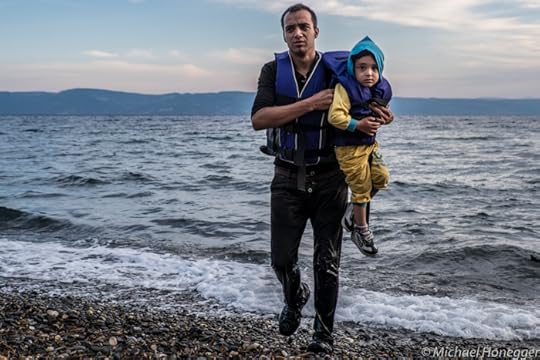
The banks in Greece may be closed, but that hasn’t stopped the steady flow of refugees arriving on Lesbos. Today eight boats landed on the north coast, and seven yesterday. That could easily be 750 people, and that is only the north coast. Last Friday, along the airport road in Mytilini, dozens of refugees were streaming into town from where they had landed in the south.
Closed banks, limited ATM withdrawals, and a local government preoccupied with the upcoming national referendum, have hampered some initiatives, but not stopped everything entirely. Of course, the food program in Molyvos continues, which is entirely managed by volunteers and funded by donations. More than that, the volunteers provide dry clothes, shoes, diapers, and other essentials. Lots of tourists have been generous and put money on account at local grocery stores for the volunteers to spend down as needed. (I opened four credit lines using some of the donations I received.)
In Mytilini, the island’s capital where all the refugees end up spending several days, the conditions are grim and overwhelming. The largest camp, Kara Tepe, opened about a month ago for 600 refugees, now has closer to 2,000. Of the six original toilets, only one was functional last week; and there is not one shower.
I returned home last week, but on my way to the airport, I met with a couple of representatives of Village All Together, an ad hoc association of NGOs across the island working on refugee issues. We had met a couple of times previously to discuss how I might help. They finally got permission from the mayor for showers at Kara Tepe (he even offered municipal plumbers to install them for free), and I have agreed to pay for twenty showers. I want to buy an equal number of toilets, but the question is how—or even if—to hook them up to the city’s sewage system. (Ironically, Kara Tepe is located next to the town’s treatment plant.)
We had met at PIKPA, a small camp now used for the most vulnerable refugees (families with infants, disabled, women accidentally separated from their families, etc.). Compared to other camps, it is a shady paradise, but not without its problems. The holding tank had filled and backed up, knocking out the plumbing system, so with donated funds I sorted out all of those problems.
A week earlier, I had discussed with Village All Together the idea of a mobile medical unit at Kara Tepe. Apparently a couple of international NGOs have promised some support for this idea—including the well-known Medecins San Frontieres—so on that topic, they are sorting out what’s been offered, what they lack, and how I might use donations to fill in some gaps. I have offered to try to get money from foundations, if needed, and an experienced proposal writer in Molyvos has offered her help.
Village All Together has also come up with a list of twenty-five items that they need, from baby bottles to sunblock to an assortment of over-the-counter medicines. I have asked them to put together an emergency list—what they need right now—so I can provide them.
One of the big problems faced by refugees is the lack of information on the ‘process’ ahead of them once they land on the island. Very few speak even rudimentary English, and almost none Greek. Village All Together has identified two interpreters (Arabic and Farsi) to work with refugees in Mytilini, Kalloni and Molyvos. I have agreed to pay them a small stipend which will be matched by an NGO in Kalloni.
As long as I still have donated funds to spend, I will keep responding to needs as they come up. I have had enough overseas development experience to know how useful it is to have a small source of quick-response money that doesn’t have to be approved through bureaucratic wrangling. I also know it is important to be accountable to donors, so everything I spend must be backed up by receipts or purchase orders. One hundred percent of the money I receive is used to help the refugees.
Finally, in Molyvos, where I spent most of the last five weeks, the local volunteers need a Volunteer—seriously. They are looking for someone who can come for two or three months, coordinate their efforts, and pitch in. Common sense and a willingness to work are the main qualifications. Some past refugee or international experience wouldn’t hurt. You need to get yourself to the island (airport code: MJT). You will be provided with a modest room and food allowance. It’s a great opportunity for someone wanting to do something very satisfying with their life: helping people who really need it.
Thanks to everyone who has donated to help the refugees arriving on Lesbos. The response has been heartwarming. I am home in France now, but in regular contact with the volunteers on the island. I return to Lesbos at the end of August for another month.
Photo by Michael Honegger at www.michaelhoneggerphotos.com .
IF YOU WANT TO MAKE A DONATION >>>
Thank you for wanting to make a donation to provide emergency relief to the refugees arriving on Lesbos. There are two ways to do it.
1 – Make a deposit directly into one of my PayPal accounts. My US Dollar PayPal account is: kosmosfilms@gmail.com . My €uro Paypal account is: smithtimothyjay@gmail.com , or
2 – Send a check in US dollars from any US bank or Euros from a French bank only, payable to Timothy Smith, and mail it to Timothy Smith, 38 rue Catherine Segurane, 06300 Nice, France.
I cannot accept international transfers because of the bank fees.
Thank you!
October 26, 2016
ETHIOPIA’S NEW NATIONAL MOTTO
“Island! Island!” I thought the kids were shouting, running after our car, hands outstretched in the endless clouds of dust we kicked up—paved road or not. If countries selected a defining air quality, like they do birds and national anthems, in drought-prone Ethiopia, it would be declared ‘dusty’.
And it’s going to get dustier.
The country has always had a long dry season, usually nine months. In the other three, enough rain fell to fill Ethiopia’s many rivers, replenish wells, and raise water tables high enough to keep the plants green that nourish—and quench the thirst of—the scrawny herds of cattle and goats on which the indigenous tribes survive. With global warming, that brief rainy season has already become noticeably shorter. Unhappily, an even more insidious, though less acknowledged, global development threatens traditional livelihoods, and promises to exacerbate a host of other problems.
The threat: corporate-led recolonization of vast tracts of the developing world.
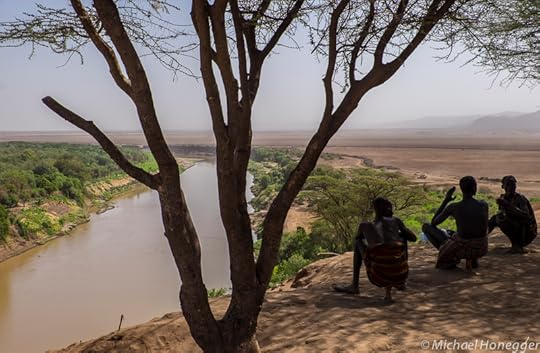
As we traveled to the remote and arid southern Omo Valley, we passed hundreds of rows of huge greenhouses covering thousands of hectares all planted with roses intended for export. Further along, tens of thousands of hectares had been cleared of its natural vegetation and replanted with cotton plantations. On the rough roads, we repeatedly passed trucks carrying enormous pieces of equipment destined for a sugar cane factory, part of a plan for ten new plantations, six of which will require damming rivers for irrigation that provide essential water to the tribal south.
All these crops are water-guzzlers, and even before all the dams have been built and hectares planted, the effects of less water are already evident. Rivers that used to provide at least some water all year round are now stone dry; underground water tables have fallen; and the Rift Valley lakes, being tapped for growing roses, are receding. The implications for local populations are devastating, but what is happening has implications for the world as a whole. Clearing native vegetation on such an expansive scale contributes to global warming; the toxic runoff from the plantation farms pollutes what water remains; and as people find it impossible to survive, they migrate to cities, creating new demands for services that poor countries simply cannot provide.
Water is now rationed in Ethiopia’s capital, Addis Ababa, estimated by locals at over six million people today compared to 3.4 million in the official 2007 census. In some neighborhoods, piped-in water runs only once or twice a month. In much of the town, service is limited to two days a week. While that may sound desperate, in the countryside, every family spends hours each day, often traveling many miles and waiting in long lines, to fetch their daily water ration, which is sometimes no more than one full jerrycan holding just over five gallons.
The culprits in this unfolding disaster, in Ethiopia as well as much of the developing world, are international corporations facilitated by abetting governments. In Ethiopia, leading the pack are investors from India, Saudi Arabia, China, Turkey, and the European Union, but it is a worldwide phenomenon that has escaped widespread scrutiny because it is led by companies, not foreign governments, which are promising jobs and prosperity without the messy business of occupation and colonization—though it largely amounts to the same thing. In the last fifteen years, some 37 million hectares in the poorest countries (twice the size of Germany) have been leased to corporations for up to one hundred years at the expense of the most vulnerable people in the world.
Unfortunately, the international agencies that might have slowed or stopped some of these ill-conceived projects have instead largely condoned them, ballyhooing the benefits of new jobs, and writing sham reports assuring that tribal leaders (at least in Ethiopia) will be included in the development process. It begs the question of how illiterate nomads clueless about the modern world can engage in a meaningful dialogue to protect their heritage and members. Promises to swap land-for-land are equally empty, basically nothing more than code for pushing tribes into even drier and more unsustainable hinterlands.
Ethiopia only had to look next door to Kenya for an example of what will happen. One of Africa’s original roses-for-export industries, centered around Lake Naivasha, transformed the local culture into a menial workforce; polluted one of the country’s only significant freshwater lakes; and so degraded the environment that wildlife populations are tumbling, and with them, activities in other economic sectors, notably tourism.
Perhaps the saddest thing about the Ethiopian case is that its Omo Valley is home to some of the last truly indigenous tribal people in the world. Twenty-some tribes are at risk. A handful of larger ones will endure in some form, but potentially, in a single generation, many smaller tribes representing a viable part of ancient human heritage will be irrevocably corrupted or lost entirely.
About that “Island! Island!” the children begged for in our retreating clouds of dust? They were crying “Highland! Highland!”—a holdover from Highland Springs, the first water bottling plant in Ethiopia. It has since closed, but the need for water, especially fresh water, is greater than ever.
“Highland! Highland!”
It could be Ethiopia’s new national motto.
Photograph by Michael Honegger @ www.michaelhoneggerphotos.com. Karo men overlooking the dwindling Omo River and the vast cotton fields stretching to the horizon.
#Ethiopia #omovalley #timothyjaysmith
October 24, 2016
STOLEN MEMORIES
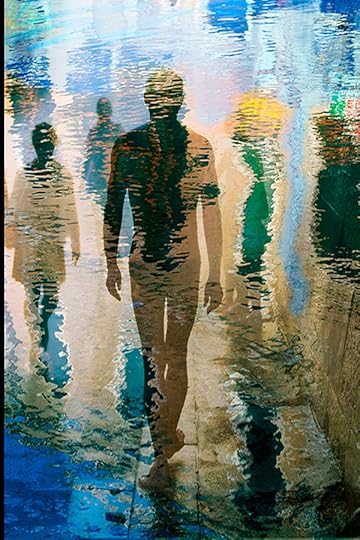
In this time of terrible strife and conflict, I am posting a story of reconciliation. Excerpted from my novel, A Vision of Angels , it is one man’s story of coming to terms with some terrible wrongs that had befallen him in the past.
I think everyone wants to revisit their childhood, where they spent their early years, and where so much took place that they will always carry with them. For me that was Algiers. I had memories of it that would flash like the sun on the whitewashed walls of their origin. I yearned to see the home where I had grown up, and I wanted to confront someone, anyone, whomever I could blame for taking away so much from my parents. Because as much as I grew in Paris, they shrank, and my withered legs had to carry the weight for all of us. Of course I never expected compensation. What compensation can there be for lives not lived? For stolen memories? But I wanted to know if it had been worth it. Had someone gained so much that the expense to my family was warranted?
Our house was in the old souk, its entrance only a simple door in the market’s passage. You would never suspect that it was the entrance to a house, nor how much was hidden behind it. I hesitated to knock. It was chilly in the shadow of the wall and I was shivering when I finally did. A moment later a man answered. He wore a simple cotton robe, frayed and patched but clean. He looked at me strangely, and I suppose I did look strange to him, a crippled, shivering European standing in his doorway.
When I explained that I had grown up in the house, the man opened the door wide and invited me into the small courtyard. The floor was covered with blue tiles—the same blue tiles from when I was a boy. I had played games there, solitary games because I couldn’t play with the other children, not with my feet. My mother had hung birdcages in the courtyard—white cages filled with finches and canaries—and all day I would listen to their songs, or when I grew tired of my games I would open the door to the souk and watch the people go by. The birdcages, of course, were gone, and the courtyard was filled with laundry hanging in the sun.
The man shouted an order for coffee into an open door before we sat at a small table. He told me that his father had been a leader in Algeria’s independence movement. He had been captured and tortured by the French, until he escaped, only to be injured later in a battle. His reward had been our house. That’s what the man called it, a reward. His father had died many years earlier from complications caused by his injuries but the sons still lived in the house. Three sons, each married, and each with four or five children. My family had been prosperous but our house had not been especially large, and certainly not big enough for three families. I looked around for the signs of so many people, and then I saw them everywhere: in the variety of clothes hanging on the lines, the shoes in a row at every door, the movements of curtains as the women—or I guessed them to be the women—stole glances at us.
A boy whom the man introduced as his youngest son brought us coffee. His father scolded him for taking so long, but it was clear that the boy had taken time to wash quickly. His hair was wet and slicked down and his face looked freshly scrubbed. His robe was also patched but clean, smelling like soap and sun, and he carried our coffees on a brass tray. The cups were delicate, not the usual thick ceramic cups, and on each saucer he had placed sweets. The family was poor, and they probably had few visitors—certainly few European visitors—and I was being treated with great respect.
Who did I expect to find in my family’s home? What had I planned to say to them? I had gone there filled with my parents’ bitterness ready to insult them because that was easy enough. At the right moment I’d have the choice phrase that forever would haunt them, nag them when they wondered if their lives had meant anything, let them know that whatever they had gained they had stolen from someone else. I wanted to take away from the sum of their lives what they had subtracted from my parents.
I was totally unprepared for the man’s response. He expressed sorrow at the loss that my family had suffered. He took my hands in his and kissed them, and begged me to be his guest as the only meager recompense he could offer.
Of course I did not, it was an impossible proposal. I felt awkward, and could not imagine the great clumsiness of my crippled body in that crowded household. Suddenly I felt suffocated in the courtyard with its lines of laundry and the furtive eyes at the windows. The blue tiles of my childhood lapped at my feet like water, and I thought I might slip on them and fall, or drown. A great sadness came over me, and oddly, a great relief as well. It had been many years since I had cried, but I did cry, and the man looked confused. By coming home I had crossed another threshold, though I could not articulate it, not then, and not to a stranger. I wanted to run away, but at that moment, with the tears in my eyes, it was difficult enough for me to stand. When I did, the man held out a restraining hand and said, ‘Un moment.’
He returned in a minute holding a birdcage, one of my mother’s white birdcages. ‘Nothing else was left,’ he said, ‘only this. It was hanging there.’ He pointed to a corner. ‘I always knew someone would return. I know it is a small memory, but it’s all that I have to give.’ ‘Une petite souvenir,’ he had called it. I left the man’s house holding my mother’s birdcage. I had come to think of it as that, as the man’s house, no longer my family’s.
Photo by Michael Honegger @ www.michaelhoneggerphotos.com
#avisionofangels #timothyjaysmith