Rae Richen's Blog
October 2, 2023
Coming out of the Woods

Friends, Imagine going from the playpen to first grade without preschool and kindergarten. That is what happened to our children during 2020-2022. What did this child have to learn quickly? What is she or he still missing? How did the world change for him or her?
Many of us changed focus during the years 2020 to 2023. You, my friends, have probably noticed your own changes. New necessities and habits have entered your lives. Have they continued to be true and useful as we ease back into ‘normal’?
And how about your children? What happened for them? Did you or they enjoy isolation? Rebel at it? Did you have to find new ways to earn money because you could not, for months and months, operate in the places that had given you sustenance? Did you have to adjust how your children spent their days? Was it possible to adjust? Did your world change? How did that time and its difficulties and its solutions come with you into the new now? As an example, see what happened in our household because of the isolation. Share with me its effects on your life. It’s not like nothing happened and now we can be ourselves again. What happened to you? What is your new normal?
In our family, a lot changed. We were retired from some of our previous work situations. So,very luckily, we were not forced to find new jobs or change how we did our previous jobs (I had been teaching music, my husband was an actuary in his previous job.) However, we had to make certain that members of our family with fragile health were taken care of and protected.
As you did, we formed a family pod that made protection easier.
And as in most retired homes, we had kept busy before 2020 by volunteering for organizations that we had known about and wanted to help when we had paying jobs.
During the necessary lock-down time, we had three offices in our home. Our daughter, whose family lives nearby, had two music makers in her home. Oboes give off wonderful and piercing sounds. Pianos are percussive. She needed a quiet place to teach her second graders as they all navigated Zoom learning together.
She turned our basement into her classroom during the year 2020 to about halfway through 2021-22 school year when her school building opened again for in-person learning.
We luckily have a finished basement. So, in March of 2020, she set up a folding table in front of our 'mysteries' bookcase, hung white paper over that bookcases, put on it the kinds of welcoming messages and encouragement messages that she normally would have used in the classroom. That was her Zoom background. She changed it frequently, depending on what her second grade students needed to work on.
With her students, she began to explore the usefulness of Zoom and then of Google classroom. During that time, many of her students got their first computer, thanks to the generosity of companies and fund raisers and school districts. Some children had a very steep learning curve and so did their parents.
Our daughter and her team of teachers shared ideas for better ways to keep students engaged as they worked from their kitchen tables, their dining rooms or from their bedrooms.
I frequently heard her say things like: “Joey, please turn on your camera. Your friends are missing you.”
Or I heard “Judy, look at the chart on the white board. Can you see a pattern that helps you figure out what should be in the last square?”
She got very clever with ways to make sure the students were not just listening and snoozing. They were invited into games and into interactions with each other.
In a completely different mode, my husband’s office was on the second floor. He had been working with Cash Oregon to help volunteers learn how to work with low-income clients to get their taxes done properly. In 2020, he learned how to do this on Zoom, and began working with other trainers to make Zoom work better for their volunteers. That kind of retraining occurred very quickly because they were still doing taxes in March 2020 when all heck came down on us.
Many of their clients did not own computers. The Cash Oregon staff had to figure out how to make tax reporting possible for those clients. They had to help the clients trust that if they brought papers to an office those papers would be treated with great care.
And from January to April each year, volunteers like my husband also did the tax reporting for low-income clients, spending time on the phone explaining the next steps, the next piece of needed information and how to make it all work while those clients continued trying to feed their families.
After working to do the tax reporting, my husband spent time checking the accuracy of the work of other people who were doing the same work. Their effort was to help clients not leave money on the table that rightfully belonged to them. They worked hard to do honest tax reporting and give supportive advice about keeping track of income and expenses and benefits.
While the basement and the second floor were hard at work, my office became the dining table on the main floor. Some of each day, I wrote my own works – short stories mostly, but I also finished one novel during that time.
Some of each day, I copy-edited the written productions of the Interfaith Alliance on Poverty, or fixed the Interfaith Alliance website, or I reached out to other volunteers to help them with their work for the Alliance (advocacy for policy changes, collaboration with other partner organizations who were trying to solve the homeless situation, and volunteers who worked with families and children who sought stability).
And with the organization called SAGE , I began working on Zoom with middle school students who needed encouragement to improve their reading. I had students new to this country and students who had been here for some time but just needed someone to help them realize they could read more easily and read for fun.
During the first year of isolation, I had students who had a hard time finding a place to study when so many in their house were also studying or just talking, or playing games in another room – distractions were plenty in each home, even though their parents tried very hard to keep the distractions down. For these students, life was happening all day every day on the other side of the wall, or even, in some cases, on the other side of the same room.
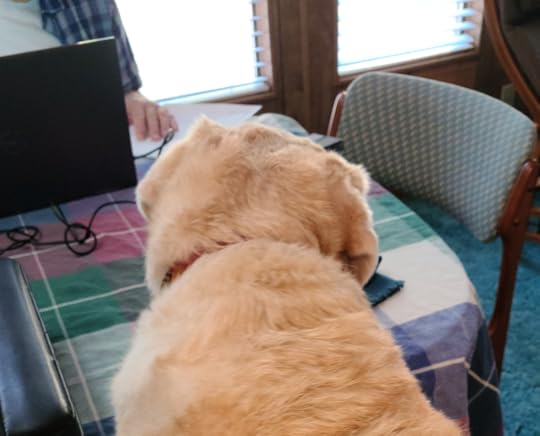
And of course, there were the pets who wanted attention. Pets don’t get it that their people have to stop petting to read or do math or attend school on the computer. To the dog or cat or lizard, their people are just on their computer, so they should be able to pet the pet. Isn’t that what pets are for?
Some of my early Zoom students are now in high school and I think they are working hard there, but for them and for all their friends, the first year back was a doozy.
They had to relearn how to pay attention for six hours, how to navigate social situations that had not been present for a year and a half. They had to realize they had missed a huge two-year chunk of their growing up that should have been happening on the playground or in the school halls.
When you are twelve in sixth grade, and then come to high school at fourteen you have changed. Your friends have changed, and you didn’t get to change together. For our daughter’s second graders, they had been seven years old and now they were nine. Remember how much changed from your second grade to fourth grade? It is an enormous, missed opportunity.
And then, these worn out students needed to come home and not flop in front of the television because mom and dad, who, at last, were able to go back to work, needed them to help get dinner and feed the pets.
So after all that isolation, all of us were forced to relearn living, and we often had to adjust our way of living.
Life has changed enormously for us, and I bet it also has for you.
What is better? What do you miss? What are you still testing?


January 26, 2023
Everyday the Preschool Goes By
From my office window, two stories above my garden, I hear the teachers first, an alert that my favorite site is occurring yet again. “Come on, Billy,” they call. "We have to meet the others at the corner.” Or “Susan, push your feet forward. Come this way.”
All bundled up
The two and three year olds are out for a walk on a warm day. Some of the children walk purposefully. Some still finish snack time while on the move. A few arrive at the corner north of my house and impatiently wait for their buddies.
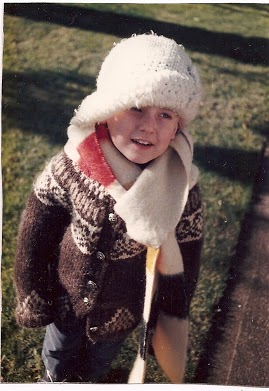
One little guy is bundled up as if winter were about to make a quick return. Or is the truth that he loves that hat and scarf?
A couple of children ride bikes without pedals, bikes short enough that they can propel them with a foot on either side.
Susan has not yet gotten the idea of pushing off with her toes. She pushes with her heels and thus goes reversing down the sidewalk. She dismounts, pushes the bike forward for a few steps, then gets back on only to lose half her forward motion. Susan will get it. I expect any day to look out and see her traveling at the speed of the rest. I love her persistence.
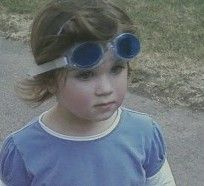
Looking for a pool
One of the girls strides by, sporting swim goggles. I wonder if she woke this morning hoping for a different type of excursion. I expect her folks will soon sign her up for summer swimming classes.
But Billy is the child I wait for. Billy will not be hurried. Each day, he studies what others have passed by. He collects the winged seeds of my neighbor’s maple and the spikey nuts of my Sweet Gums. He kicks the piles of leaves from the Kwanza Cherries north of my yard. He watches lost worms creep their tentative way across the sidewalk in search of home.
When the sun comes out, and Billy discovers a companion he didn’t know he had.
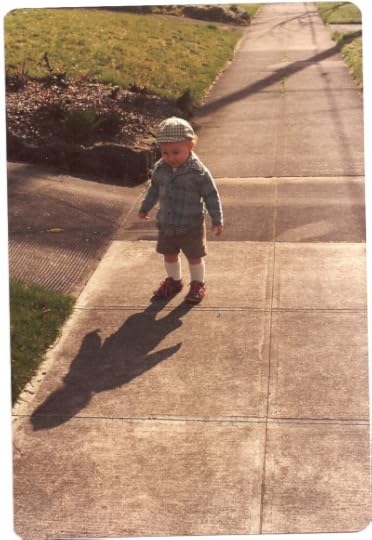
Walking with a new friend
By the time Billy arrives at the corner, he has been on an expedition. From my window, I think, “Come on, Billy. Keep looking. Keep seeing what the rest of us have forgotten to enjoy.”
I know that someday, Billy will go by with the speed of others. He will have learned that friends become impatient. He will have unlearned the freedom of his curiosity. When he is grown, I hope he recalls, in the back alleys of memory, his joy in exploration.
(In case you are worried, yes, I have permission to photograph the children in these pictures.)
June 6, 2022
Hatchet, Gary Paulsen's Award Winning Novel
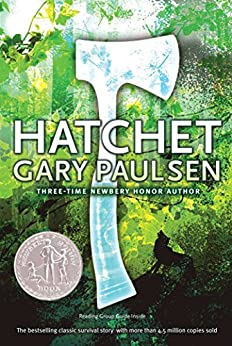
Hatchet by Gary Paulsen
Review by Rae Richen
I have a young friend who used to have trouble reading. We meet twice a week and he works on his skills in reading. He is now in the eighth grade.
When we first met, he had the habit of skipping lines, not thinking about the meaning of the words, phrases and sentences he read. When confronted with long words, he would pick a word out of the air that might make sense.
That was some time ago.
By this year, he has leaned to use his plastic ruler to stay on the same line. We frequently have stopped reading to discuss the ideas he just read about. And he contributes greatly to that discussion, guessing what might happen next and talking about what just happened with insight.
I read every other page to him, so he sees me following along with my finger, in order to keep track of where I am. He also has seen me stop, go back and say, “Oh, I read the wrong word there. Let me read that sentence again.”
He now does those things and pays a lot more attention to meaning.
So, this year, I asked his teacher to get him a copy of Hatchet, by Gary Paulsen.
And Wow! He is anxious to read because between our meetings, he has been worried about Brian. Our thirteen-year-old character had set out with a private pilot who would have taken him to visit his father in Alaska. When things go very wrong, Brian has to land the plane in a long lake deep in Canada’s north woods.
Brian is there, alone, away from all humans and has to find a way to stay alive when there is very little hope of anyone ever knowing where he is.
My young friend cared about Brian. He wanted to read. He learned a whole lifetime’s worth of skills from Gary Paulsen’s deep story of survival and perseverance.
Read this book with your family. Read this book with your reluctant reader. Read it with friends. Read this book. And when you have finished, you will want to read Paulsen’s other Brian stories, Brian’s Winter, Brian’s Hunt, The River, and Brian’s Return. Those other Paulsen novels are among my gifts to my young friend for his summer reading.
Note: Gary Paulsen died in October of 2021. His novels will inspire young readers for many generations to come. A very good interview with Paulsen can be found at
A New Le Carre Novel
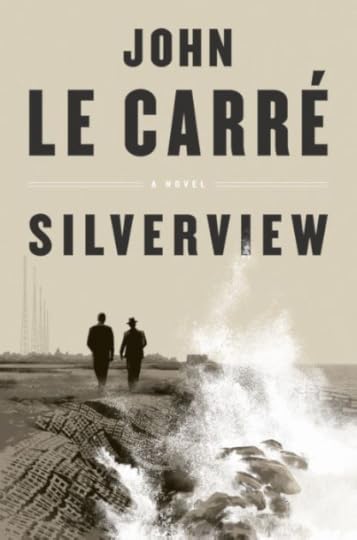
Silverview
by John Le Carré
Review by Rae Richen
John Le Carré’s last novel, edited by his son Nick Cornwell, is a delightful exhibition of characters and insights. Julian Lawndsley, a relative naïve in the political and spy world, narrates his encounters with a con artist, Edward and his mysterious family.
When Lawndsley leaves his city job and opens a bookstore in the beach town in East Anglia, he becomes enamored of the obvious people user and irrepressible liar, Edward Avon.
Edward, his wife, his daughter, and his hidden love in London become an adventure for Lawndsley and for us.
In alternate chapters, Le Carré introduces us to spy chief, Stewart Proctor, ostensibly of MI5, or is it MI6? or is the British spy business now dying or defunct? Is Proctor overseeing its burial?
Proctor, well-aware of the bumbling in the upper reaches of British Intelligence, sets out to discover the truth behind Edward Avon.
In one amazing chapter, Le Carré’s Proctor descends into the bowels of what once were command shelters during the Cold War and there, he carries on a conversation with his tour guide about how things work, used to work, maybe still work and why they might not work – a very revealing conversation.
Does British intelligence have a problem? A financing problem? A trust problem? A moral problem?
Every conversation in the story is replete with Le Carré double meaning, or empty spaces that can be filled with guesses as to meaning, and off-hand comments by Proctor or Edward or Julian that makes you laugh out loud.
Aside from revealing maybe more than Le Carré wanted to reveal about the state of British Intelligence (he seemed to his son to have been reluctant to publish this finished novel), this story captures the reader, hoping Julian and others really are as naïve and as innocent as they seemed. Or were they, in truth, part of the web of distrust?
Or was the author's reluctance to publish related to the character of Edward Avon and his resemblance to people that the author knew?
Well worth adding to your collection of Le Carré novels. Buy a new bookcase, if you have to.
November 16, 2021
The Vocabulary to Understand Your Work
How to Write A Damn Good Novel
Introducing James N. Frey – a Guide to Dramatic Storytelling
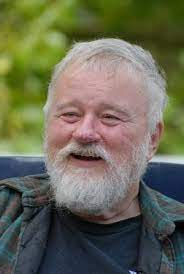
I first met James N. Frey in a workshop he taught at the coast in Oregon. It was early in my writing career, and he was the first in-person teacher I had the privilege of working with. I had a feel, by that time, for the shambles of the publishing industry – companies buying other companies, agents acquiring clients and then unable to make use of their usual connections to get book deals for those clients.
I was wary of the industry but dedicated to the idea that writing could bring important ideas to life and be a catalyst for change on behalf of the people I knew and loved.
I had a feel for the rhythms of storytelling but couldn’t have explained them to anyone else. I had practiced the rhythms of the pithy joke, the rhythms of an essay, and the rhythms of myth. I knew that the beat of a piece led the reader from page to page.
I had started to use this knowledge to write a novel.
And then, I met James N. Frey. He had the vocabulary I needed to understand the beats of a longer story. He had the knowledge of mythic heroines and the movement of their story from call to action through conflict, the inexorable rise to the climax and the satisfying resolution.

And James N. Frey knew how all of this had to be tied to the through-line of my premise – the core that held my story together.
When I got home from that workshop, I also had James N. Frey’s book – How to Write a Damn Good Novel, to help me recall all I had learned from him. We had discussed every aspect of being a writer, from the design and development of character to the hard and satisfying fun of the rewrite and the search for action and emotion in prose.
James N. Frey cared about each person in that workshop. He helped each one move toward success. The book I started in his workshop was A Fool’s Gold. When I had finished a sixth or seventh draft, he read and critiqued it and made it better. And I know that I am not the only student he treated with such thoughtful care.
Since that workshop, I have taken other workshops with very thoughtful and clear teachers. I learned a great deal from each one of them.
The building blocks of storytelling success came from that first encounter with James N. Frey, from the writers’ vocabulary and the storytelling knowledge he gave all of us during that week in Rockaway Beach, Oregon.
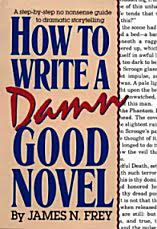
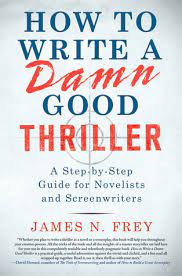
Since that year, James N. Frey has had many successful students. He has written How to Write a Damn Good Novel II, The Key: How to Write a Damn Good Novel Using the Power of Myth, How to Write a Damn Good Mystery, and How to Write a Damn Good Thriller.
He is the author of nine novels, including the Edgar Award Nominee A Long Way to Die.
Learn more about him at his website: www.Jamesnfrey.com
September 25, 2021
A Generous, Clear-thinking Teacher of Writing

Larry Brooks and the Structure of Story
I have gone to Larry Brooks again to remind myself of the most efficient and creative way to get into story. This time, I re-read Larry’s book, Great Stories Don’t Write Themselves. Larry is one of the generous teachers who, in a classroom setting, is patient and kind, but clear about what does and doesn’t work.
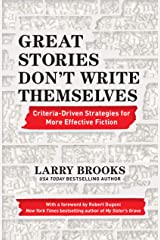
In his writing, Larry has patiently and clearly elucidated the process of thoughtful deepening of your initial really cool story idea. He helps you create a lightning concept and a hot story.
Persevere. Larry’s Great Stories Don’t Write Themselves employs sentences with important parenthetic asides, but pay attention. The heart of Larry’s teaching is in there.
Get these ideas in your head and your gut. You will be a better storyteller. You will find a way to write exactly what the reader needs. Readers will turn your pages into the night, hoping your heroine learns what she has to learn in order to come out whole and strong.
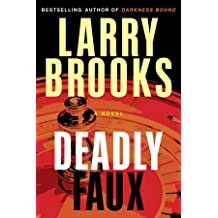
Look also for Larry's suspense novels. Fun reads and fine examples of what he teaches us all.
P.s. You are not looking for Larry M or Larry W, though they may be great fellows. You want the real Larry Brooks.
August 27, 2021
Fine Mysteries, Great Friend
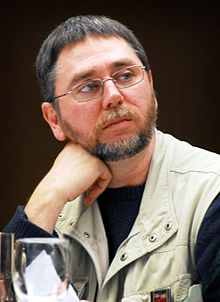
Bill Cameron, mystery writer
Bill Cameron will be a presenter at Southwest Washington Writers Conference at the Walton Science Center in Centralia, Washington on September 10 and 11 of 2021.
https://southwestwashingtonwriters.com/2021-conference-2/
If you get a chance, you should hike up there and meet him. He thinks deeply about what he’s doing, and then he writes a mystery that keeps you reading. Bill Cameron has won many well-deserved awards for his writing.
Woody and I met Bill Cameron while I was hosting a writers’ salon at the Heathman Hotel. He had just written Lost Dog, his first mystery novel. I had just read it and was delighted to find that my local park’s playground (his setting for a body-find) was a lot scarier than I ever imagined. Woody read Lost Dog, too, and has read every mystery of Bill’s since.
Not too many years later, Bill came to the rescue of a writers’ conference by filling in for the guest speaker who had become ill. Bill’s talk about character creation was a home run, which is why he since has been a speaker at many writing conferences.

Down a couple of years and Bill and I began meeting to share stories, then worked together for several years, teaching an after-school writing club at a local middle school.
We both like middle school students for many reasons. They push your buttons to see what you might do, they still want the world to be just, they want to understand villains and good guys, and they have fresh ideas about what makes a good story.
And the students loved it when we put out an anthology of their stories, and helped them learn to read aloud more dramatically, present their stories to others, and enjoy the accolades of their fellow writers and their families.
Each year, we had these events at 60th and Division, the Rain or Shine Coffee House, the same coffee shop where Bill and I met to critique each other. We all had a great time.
Thank you staff at Rain or Shine, and to Theresa Snyder at the print shop at Mount Hood Community College. You both were patient and fun. And thank you to our students. We really enjoyed our time with you.
Meanwhile, both of us were working on the next novel, and the next mystery. Bill came out with more stories featuring Detective Skin Kadish. His novel, Chasing Smoke became a huge hit.
And then, he wrote another winner. One afternoon at the coffee shop, Bill’s phone kept chiming. Each chime was a report to him of another sale of his hot novel, Day One.
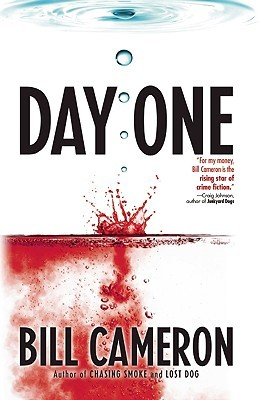
And then came the torrent of emails. “Why did you kill him?” A beloved character had died and all of Bill’s fans were ticked off.
Does that tell you how well he writes?
And among his presentations at the Southwest Washington Writer’s Conference will be a talk on creating characters.
Another presentation covers what you hope to learn about world creation, which, as Bill says, is for all fiction, not just science fiction and fantasy.
So, I urge you, get your thumb out and hitch-hike to this very affordable event.
And go look for Chasing Smoke, County Line, Day One, Property of the State. His newest novel, Crossroad, gives us a new detective.
When Bill and his wife, Jill, moved to the Eugene area, Woody and I were saddened, but we keep track of his work, and we read his online tales of The Adventures of Bill as the Cat Valet. We look for his stories, and hope that cat allows him time to work.
Go to https://www.bcmystery.net to see all of his works, including short stories that are also stunning
There’s a new novel coming out soon. We can all look forward to that.
May 2, 2021
What I Learned from the Great
When asked to find musicians for the intermission of a writers salon at Portland's Heathman Hotel, I said, "Yes." And the next thing I knew, I also became the host of the monthly event. During the next five years, I met some very wonderful writers as well as musicians. In my blog, I share what I learned about writing, music and the art of helping folks enjoy each others' gifts.
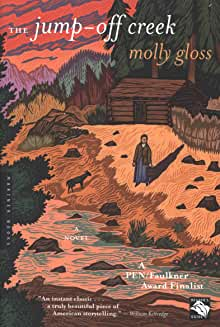
One of the first writers I had the fun of introducing at the Second Sunday Salon was Molly Gloss, author of Jump Off Creek and more recently of Unforeseen, a delightful short story collection.
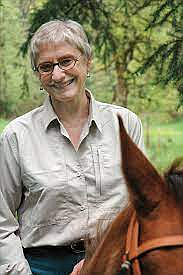
I invited Molly to be our guest speaker soon after the publication of Jump Off Creek, which was selling fast and garnering acclaim.
A few years after this Salon event, I became a program planner for a writer’s organization and invited Molly Gloss to give a weekend workshop. She talked then about planning a novel, and how important it becomes to know the space in which your novel takes place.
During the weekend, we learned that Molly was planning what became the beautiful generational space odyssey, The Dazzle of Day. Her planning of the spaceship revealed a matter of life and death for her characters, and her description of that space is one I still remember many years after reading the resulting novel.
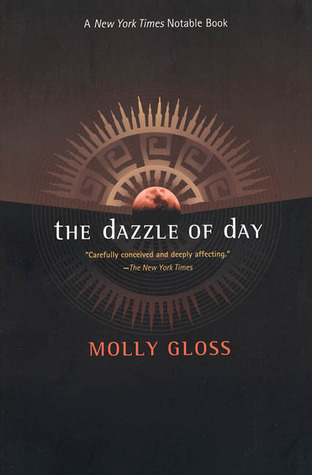
I recently bought a copy of The Dazzle of Day to send to a botanist I have met, because I was certain he would love the extraordinary care that plants inside the spaceship received, even as the people became stir crazy.
When I could do so, I signed up for a class with Molly Gloss at Portland State University, and found great inspiration from her insights into language, the process of research, and the workings of the self-protective human heart.
At the time of her class, Molly Gloss researched her book Wild Life, about a mother of five boys who joins a search party for a lost child and is herself rescued by semi-humans in the northwest woods. The next spring or summer after the class, Molly planned to live in a cabin under the flight pattern for migrating birds – a bit of research for Wild Life.
Since Jump Off Creek, The Dazzle of Day, and Wild Life, Molly has written Outside the Gates, introducing us to Vren, a boy put out of a city controlled by committee. He is shunned to the monsters outside the gate because he asks questions. Outside, Vren discovers another society, a community completely unlike the one that cast him to the ‘monsters’.
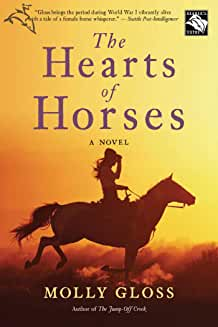
There followed The Hearts of Horses, a novel exploring the western life of a woman who trains ranching horses, and Falling From Horses, delving into the imaginary depictions of western-life, and the hard scrabble life of early Hollywood writers and stunt riders.
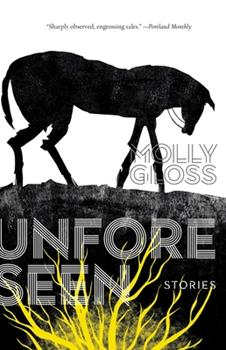
And now, Unforeseen has finally arrived. Unforeseen celebrates fourteen of Molly's imaginative tales including her best-known story, “Lambing Season”.
I learned from Molly that it is the human interactions that create the story within any place the humans find themselves. We can be in a spaceship or on a Hollywood set, yet the questions the readers want answered are still "What unspoken fears and hopes do our characters have that prevent them from realizing their goals? What personalities and physical obstacles create opportunity or destruction?"
For each character, Molly Gloss made the answer to these questions clear in the accumulation of events in her stories and novels. The Grizzly Bear in Jump off Creek is a benign but very dangerous obstacle. However, the fears and angers of the Osgood kid are malevolent and therefore, even more dangerous.
Thanks to Molly's writing we can be assured that women do not need to be beautiful for us to care about their struggles. Men do not need to be hunks. All need to have fears and weaknesses we recognize in ourselves. When their life goals are human their struggle seems to be our struggle. Our opportunity to read their story gives us perspective on our own character.
Molly taught that the Author needs to raise questions to which Reader wants answers. An author needs to take the time to show the purpose of the character so that the reader cares.
And, as we follow Molly's career, we can see that the author doesn’t have to stick with one genre. Life may be easier if you are always doing the expected, but how boring to always do the expected.
Instead, figure out what your goals are as an author. Will you want to open a mystery store that your readers can always find, and sell lots of mysteries? Or will you want to open a mystery store on one corner and a science fiction store on the block down the road and a suspense store in the next town? How do you want to spend your writing life and how do you want to measure success for you?
Post Script: When you look for Molly Gloss's books, understand that they come with different covers. For example, the cover I have copied here for The Dazzle of Day is for the Hardback version. The ebook/paperback has a completely different design in green and white that also is also indicative of the beauty of the tale.
February 12, 2021
Huggy and Friends
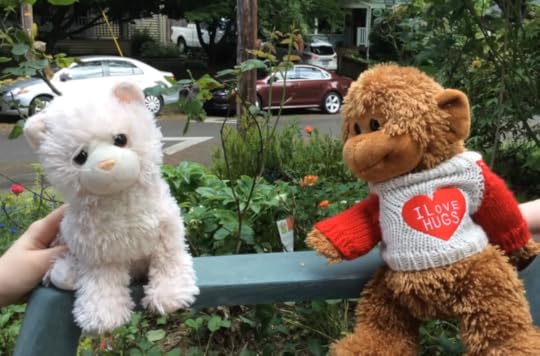
"I'm Really Tired of Isolation"
See how Huggy and Heather the Cat find some fun in Covid times. Watch https://vimeo.com/469084107
Huggy and Friends' Adventures
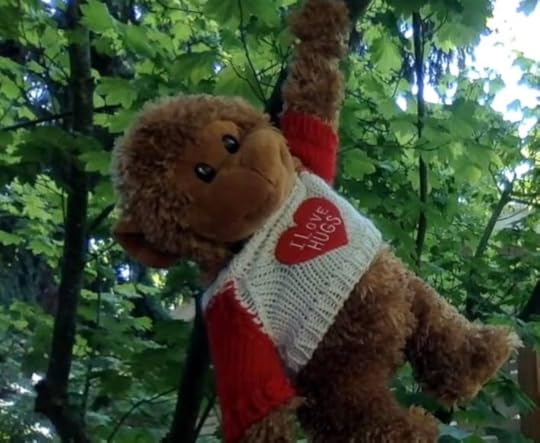
"My spllng test faled"
Have fun with Huggy Monkey and his friends as they figure out how to help each other work through life's difficulties.