,
Discover new books on Goodreads
See if your friends have read any of Jan Dragotta's books
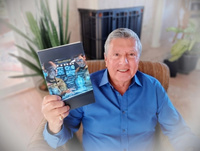
Jan Dragotta

Goodreads Author


Member Since
November 2025

URL


To ask Jan Dragotta questions, please sign up.

Popular Answered Questions

Jan Dragotta Thanks, Ruth, for such a great and thought-provoking question.

I decided to write the Neuroniac Trilogy precisely because I don't believe humanity full…more
Thanks, Ruth, for such a great and thought-provoking question.

I decided to write the Neuroniac Trilogy precisely because I don't believe humanity fully understands that it cannot indefinitely survive the direction our world is heading. Political power, personal interests, and competing versions of truth have become obstacles to solving problems that technology could already help us overcome.

I am a technologist, and before retiring, I developed a cloud-based compliance management system designed to help protect our food supply, from farm to fork. It monitored FDA and USDA food recalls and used early AI-assisted technology to manage changes in federal regulations under the Food Safety Modernization Act (FSMA).

That was more than 14 years ago.

FSMA was intended to transform food safety from reacting to contamination into preventing it. Yet, well over a decade later, important parts of its implementation have continued to encounter delays.

My system demonstrated something remarkable. It could compare successive versions of federal regulations, identify deleted language in red and new requirements in green, and help businesses understand precisely what had changed.

Imagine the implications. Farmers, processors, transportation companies, warehouses, distributors, and retailers all face complex regulatory obligations. Instead of requiring lawyers and compliance specialists to painstakingly compare thousands of pages of changing regulations, technology could identify the changes almost immediately, helping organizations update their Standard Operating Procedures.

The technology was feasible. The problem was that much of the food supply chain wasn't ready to embrace cloud computing. Today, that same technology is commonplace.

I eventually retired, but I couldn't forget what that experience taught me: Humanity's greatest obstacle isn't necessarily the technology required to solve its problems. It is our willingness to accept and implement solutions that challenge established interests and familiar ways of doing things.

That realization inspired Neuroniac.

I invented Organic Infrastructure Artificial Intelligence (OIAI), a fictional technological infrastructure designed to establish verifiable truth before allowing increasingly powerful AI systems to act upon it.

And that is what makes Neuroniac hard science fiction. Its foundations are rooted in real technologies: artificial intelligence, cloud computing, data integration, predictive analysis, and the mathematical evaluation of evidence. The novels extrapolate what these technologies might accomplish if they were integrated into a trustworthy global infrastructure.

Of course, some elements remain futuristic, particularly the holographic interfaces that eliminate conventional computers and screens. But the underlying premise isn't magic. It is an extrapolation of technologies humanity has already begun developing.

Consider food safety. If we can create systems that continuously monitor regulations, identify risks, trace contamination, and coordinate corrective actions across enormous supply chains, why couldn't similar infrastructure eventually help humanity address energy, water scarcity, pandemics, environmental disasters, and even the causes of war?

The central premise of my trilogy is that AI must first help establish a trustworthy foundation of evidence before it can safely become an instrument of extraordinary human progress.

So, to answer your question directly, Ruth: No, I don't believe humanity is fully ready today. But I absolutely believe humanity can become ready. And do we really have a choice with the current state of the world?

Political ambition and personal interests will never disappear. Human nature doesn't change that easily. But systems can change. We can design institutions in which evidence is transparent, claims are independently tested, decisions can be challenged, and those who abuse power find it increasingly difficult to hide behind misinformation.

Lasting peace doesn't require humanity to become perfect. It requires us to develop systems in which cooperation becomes more rewarding than conflict, and truth becomes more powerful than deception.

That is the possibility I explore throughout the Neuroniac Trilogy.

AI is not inherently humanity's destroyer or its savior. What matters is the infrastructure of truth, accountability, and human values that governs its use.

I wrote Neuroniac because I believe we still have the intelligence, the technology, and the opportunity to choose a better future. The question is whether we will find the collective will to do so before the consequences of our failures make that choice for us.(less)
Average rating: 4.99 · 192 ratings · 202 reviews · 2 distinct works • Similar authors
Neuroniac (1)

it was amazing 5.00 avg rating — 123 ratings
Rate this book
Clear rating
Neuroniac II The United Sta...

4.97 avg rating — 69 ratings — 2 editions
Rate this book
Clear rating

* Note: these are all the books on Goodreads for this author. To add more, click here.

What If AI's Greatest Purpose Isn't Winning Wars—but Preventing Them?

Admiral James Stavridis and Elliott Ackerman's remarkable trilogy—2034, 2054, and 2084—asks one of the most important questions of our time.

What happens if humanity never escapes the cycle of distrust, geopolitical rivalry, and increasingly destructive wars?

Coming from one of the world's most respected military leaders, the trilogy carries unusual weight. Admiral Stavridis has spent a lifetime stu Read more of this blog post »
2 likes ·   •  0 comments  •  flag
Share on Twitter
Published on June 26, 2026 10:20
How to Test Negat...
Rate this book
Clear rating

 
Colony One Mars
Rate this book
Clear rating


Jan’s Recent Updates

Jan Dragotta answered Ruth Adam's question: Jan Dragotta
Thanks, Ruth, for such a great and thought-provoking question.

I decided to write the Neuroniac Trilogy precisely because I don't believe humanity fully understands that it cannot indefinitely survive the direction our world is heading. Political powe See Full Answer
Jan Dragotta is now following Rebecca and Ruth Adam
199602525 205980074
"Admiral James Stavridis and Elliott Ackerman's remarkable trilogy—2034, 2054, and 2084—asks one of the most important questions of our time. What happens if humanity never escapes the cycle of distrust, geopolitical rivalry, and increasingly dest..." Read more of this blog post »
Neuroniac II The United States of Europe by Jan Dragotta
"One of the strongest aspects of this premise is its focus on cooperation between people and nations with different priorities. Scott and Mel have already seen what OIAI might accomplish when it helps prevent a devastating conflict. Bringing that appr" Read more of this review »
Jan Dragotta rated a book it was amazing
Neuroniac by Jan Dragotta
Neuroniac (1)
by Jan Dragotta (Goodreads Author)
Rate this book
Clear rating
Neuroniac by Jan Dragotta
" Thank you so much for such a thoughtful review. Your words on character development mean so much to an author publishing his first debut novel.

If you
...more "
Neuroniac by Jan Dragotta
" Thank you so much for sharing your experience in such a thoughtful review. Your words mean a lot. If you are comfortable, would you please consider po ...more "
Neuroniac by Jan Dragotta
" Thank you so much for reading Neuroniac and for sharing the story. As a debut novel by an Indie author, I wondered if the book would resonate with rea ...more "
Neuroniac by Jan Dragotta
" Wow! As an author with a debut novel, I appreciate receiving feedback. Thank you so much for reading Neuroniac and for sharing such a thoughtful revie ...more "
More of Jan's books…
No comments have been added yet.