Mollie Player's Blog
August 4, 2025
Things Don’t Cost What They Cost
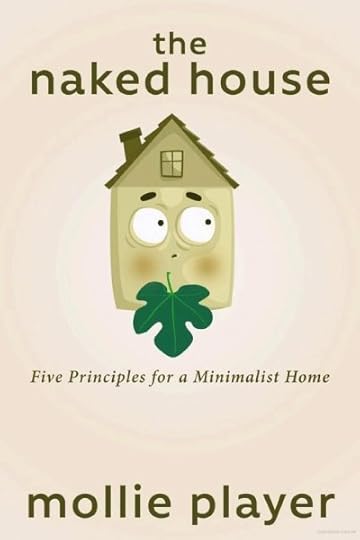
It’s as true of a blender as it is of a dog: things don’t cost what they cost. They cost what they cost to buy, maintain, move around and store. All these factors cost money (yes, space alone costs money: square footage is the number one factor in home price, and have you seen your heating bill lately?), but there are several other costs to consider, and both are more valuable than cash. The first is the cost of your time: the sheer number of minutes that add up to hours that add up to days that you spend rearranging, cleaning, protecting, and working around your stuff. And the second is the cost of your emotion . . .
For the purposes of this book, the terms “bare” and “naked” aren’t so much about wearing no clothes as they are about wearing nothing that distracts from your beauty.
It is the total and complete absence of clutter.
***
This is an excerpt from my most popular book to date, The Naked House: Five Principles for a More Peaceful Home. Get it today on Amazon, Walmart.com or your book retailer of choice.


July 7, 2025
Everyone Told Me It Was Normal to Be Nervous

This is chapter one of my book, Fights You’ll Have After Having a Baby: A Self-help Story. Previously available at Amazon, Barnes and Noble and other online retailers, it is now available at Walmart as well. Get your copy today and don’t forget to leave a review.
*
Everyone told me it was normal to be nervous. More than nervous—freaked out. Insecure. You’re going to let us take her home now? By ourselves? they remembered thinking before leaving the hospital. Are you sure that’s such a good idea?
And actually, it was pretty weird. The nurses taught me how to latch the baby, how to change a diaper, how to adjust the straps on the car seat. They helped Matt and I get the swaddle neat and tight. But they didn’t say a word about, well, parenting. Crib or bed? Feeding schedule or no? Go back to work or stay at home? All of the hard decisions were saved for another day, not this day, the day Poppy was born.
I labored at the hospital, Matthew there and gone again, making trips between the delivery room, various eating establishments and home. While he distracted himself with errands, I distracted myself with an audio book, trying not to wish he was nearby. Thing was, I didn’t want him there. I really didn’t. I didn’t want to have to have a conversation. But if he would have held me–just that, and nothing more–that might have been all right.
It took two hours for the pitocin to kick in, and in late afternoon the real labor came. For this, Matthew did hold me, both my head and my hand, offering his body as leverage. When the midwife told me to curl, Matthew pushed my legs to my head, and laughed at how hard I pushed back. Lots of pushes. Lots. So many. So many. Then the head was visible, and the midwife asked if I wanted a mirror.
“Yes!” I said.
“No,” said Matt at the same time. Then: “You do, Hon? Are you sure?”
“Yes,” I said. “Of course I do. Don’t you?”
The midwife positioned it for me, and I saw my baby for the first time.
It didn’t look like a baby.
Three more pushes. Hard pushes. Long ones. Then: relief. The head was out, and with a last push for the body, Matthew and I became parents.
Matthew looked at the baby, then at me. “It’s a girl,” he announced.
“We know that already,” I said, laughing.
“She’s beautiful,” he said.
“But we knew that, too.”
“Of course we did. She is perfect.”
The midwife put Poppy, now crying heavily, on my chest. As I smooshed my breast against her mouth, Matthew put his hand on her soft hair.
“There she is.”
“There she is. She is ours.”
* * *
Late that night. Matthew gone again. He didn’t want to sleep on the pull-out. And as I soon learned, it was just as well. No, not just as well; it was better.
I got to spend the whole night with just her.
No sharing. No small talk. No deciding. No details. No normal life stuff. Just life. Just the room, the dark, except the street lamps below the half-drawn blinds, and a simple light behind the bed dimmed to almost nothing.
So this is motherhood, I thought as I stared at Poppy’s face. This is who I am now. Strange that I’m not scared. Everyone says you’ll be scared. But I feel good. I feel confident. It feels simple.
Here’s this little alive thing, sort of like a plant, except that I am her air and sunlight, her photosynthesis. She needs me completely, and I accept the challenge. That is the way this thing works.
It’s the most straightforward relationship I’ve ever had.
Honestly, that was it. That was my conclusion. I would be the giver, she’d be the taker—and I was fine with that. It was when I expected something, when I needed someone to behave a certain way—that was the situation I worried about.
Which is why lying in bed that night, there was only one thing I was worried about, and it had nothing to do with the baby.
It was Matthew.
What’s he going to be like, now that we have a kid? I wondered. Will he be the same person? For that matter, will I? Will being parents affect the way we treat each other? How we are together?
How will our relationship change?
And as it turned out, I was right to be nervous. Because while that first year with Poppy was one of the best of my life, it was the worst for me and Matt.
* * *
The following day, the hospital. Only that room in the hospital, and the bathroom adjoining it. Nothing more. Matthew came and went, bringing meals, bringing news. We opened a few presents, saw doctors, did paperwork. I slept a bit, too, Poppy next to me on the bed, though the nurse had advised against it. When I had to change my pad, the nurses helped me to the bathroom. They changed all of Poppy’s diapers and held her when she cried. It was the first time in my life I’d been waited on so thoroughly, and I relished it. I didn’t want to leave.
The following morning, Matthew arrived at 9 a.m. to take me home, and I delayed the departure as long as possible. When the time finally came—it was close to noon—I took a long last look at the room.
Maybe it was nostalgia. Sentimentality. Hormones. Or maybe—just maybe—it was more than that. Maybe it was the inkling I’d had the night before about Matthew.
Maybe I was sensing the learning curve ahead.
Yes, that was it. Just hours after giving birth, I had the mom thing figured out. I didn’t know how to do anything—not even change a diaper—but I knew how to be alone with my child. But four years into my marriage, I still didn’t know what Matthew expected of me, what he didn’t expect of me, and, most important, what to expect of myself. When it was just Matthew and I, this oversight didn’t matter. I compensated for not understanding what he really needed by giving him more of what he wanted, which worked fine. But now—now I had a second relationship to consider. My usual coping strategies wouldn’t work.
Even before Matthew and I arrived home the tension between us had begun. Matthew wasn’t himself. He was irritable. Hurried. Though whether due to jealousy, neglect or just impatience, I’ll never know.
He tried to hide his annoyance with humor. “Should’ve had a home birth.”
I responded with a tight smile and forced laugh. “I liked it there,” I said.
“Yeah, I noticed. Thought you were going to sprain an ankle so you could stay.”
“Don’t begrudge me my reward,” I told him, smiling again. “Besides, I thought about it. Wouldn’t’ve worked.”
The things I didn’t say: “Why do I have to bring up the pain of childbirth this soon?” “Why aren’t you happier?” “Why aren’t we celebrating?” I wanted the day we left the hospital to be special, an occasion. Instead, I just felt sad to go home.
Maybe it was too much to expect him to know how I felt, how I wanted him to support me on that day. But a small gesture made in that tender time would’ve gone a long way towards lessening my fears. He could’ve held my hand. He could’ve told me how proud he was of me. He could’ve just asked me what I needed. It would’ve taken so little, almost nothing—but instead, he chose jokes and I chose smiles.
The first two weeks after the baby was born, I cried nearly every night before sleep. A few times, Matthew heard me; he came to the bedroom and asked what was wrong. Each time I told him the same thing.
“It’s just hormones, Hon. I’ll be okay.”
I was working too hard. That was part of the problem. I always had and didn’t want to stop. Baby in the chest carrier, I cooked, cleaned and, my favorite, organized. There’s never an end of things to organize.
Part of me realized the emotions were normal, and that I wasn’t taking good enough care of myself. Another part of me, though, blamed Matthew.
He wasn’t helping enough. That’s the truth, unvarnished. He didn’t seem to know how to, really. While my life had changed completely—no more day job, constant sleep interruptions—he was quickly back to his usual routine. Work. Eat. Play. Sleep. Weekends: basketball, projects. Which is why, during those first few weeks with Poppy, I felt all the good stuff you’re supposed to feel— gratitude and love—I felt a lot of bad stuff, too. I was scared. I was angry. But mostly, I was sad. Sad that things weren’t right with me and Matt.
*
Fights You’ll Have After Having a Baby is my favorite thing I’ve ever written. Previously available at Amazon, Barnes and Noble and other online retailers, it is now available at Walmart as well. Get your copy today and don’t forget to leave a review.
June 26, 2025
Depression Treatment Options Roundup: Option Forty-eight
 Photo by Noelle Otto on Pexels.com
This is an excerpt from my upcoming book, We Get Better: 48 Treatment Options for Chronic Depression.
***
Treatment option 48: Just letting it beMany problems are fixable. Habits can change. Thoughts and perspectives can be shifted over time. But feelings are sense experiences that last as long as they last, and don’t need to be tampered with directly.
Good feelings come … and good feelings go. Uncomfortable feelings do the same. When in doubt, and when nothing else brings relief, just let your difficult feelings be. Notice them and remind yourself that they, too, shall pass, and that in the meantime, you are strong enough to handle them. It might be easier than you expect.
Get comfortable with being uncomfortable, I tell my clients. Most problematic behaviors are unhelpful and unmanageable solutions for temporary and manageable emotions. Learning how to feel your feelings will help you begin to self-identify as a strong person. It might also keep you out of trouble.
Someone gossiped about you at work yesterday? You’re not sure what your partner meant by that weird comment? Your kid is acting up … again? In these cases and countless more, the best strategy is often to say and do nothing. Defensiveness, hostile questioning and over-lecturing can make the situation worse.
Feel the feeling fully, then let it pass. Later, if there’s anything that needs to be said or done, the right course of action will become clear. This wait-and-see strategy is even more important when you feel frustration or anger with someone in your life. Practice feeling the desire to react harshly or fix the person in some way, without acting on it. You can have a needed conversation later. Your loved ones should feel safe to make mistakes or make choices you don’t agree with.
I’ve mentioned Tara Brach’s book, Radical Acceptance, already. But that’s appropriate, since I recommend reading it twice. In this part-memoir, part-self-help offering, Brach makes a compelling argument for allowing feelings to pass through you in a natural, non-judgmental way. She also does a pretty good job convincing the reader that doing so actually decreases the length and frequency of difficult emotions over time.
An important caveat: Don’t prolong a difficult feeling unnecessarily through rumination, self-recrimination and longer-than-necessary conversations with friends on the topic. These reactions can be tempting, but they don’t honor your emotional experience as it is; instead, they distract from the original source and its inherent meaning, and make it about something else.
If desired, add “just letting it be” or “feeling your feelings” to your list of emotional coping skills.
June 19, 2025
Depression Treatment Options Roundup: Option Forty-seven
 Photo by Irina Anastasiu on Pexels.com
This is an excerpt from my upcoming book, We Get Better: 48 Treatment Options for Chronic Depression.
***
Treatment option 47: Doing a grieving ritualAllowing our emotions to move through us is an important life skill, and it’s even more important during times of grief. When we avoid the grief process, our natural need to express our feelings is submerged and depression can result.
A therapist I once knew liked to say that grief is like a pitcher full to the brim with water. Every time you allow the feelings to come, honoring them, you pour some of the water out. Though the pitcher might never empty completely, in time, it lowers to a manageable level. It’s lighter.
At times, your grief might surprise you. The subconscious has different needs and responses than the logical mind does. During times of mourning, honor your intuitive needs, even if others prefer a different way of expressing their sadness.
Grieving rituals can significantly aid the healing process. There are many of these, including (but not limited to) the following: holding memorial services, reminiscing with others, creating photo albums, hanging pictures, creating works of art, writing poems and more. A ritual I especially like is writing a letter to your loved one, telling them everything you feel the need to say, to help you gain a sense of closure. Another idea is making a list of significant memories of your loved one. This can help calm your subconscious need to continually recall the details you fear forgetting. Many grief rituals help you relax in the knowledge that you can always revisit the memories–that there is a place for them somewhere in your home.
Grief is a beautiful thing. It deepens us. It makes us more empathetic. It teaches us about ourselves and makes us emotionally stronger. It also honors the one we lost. In The Odds: A Love Story, Stewart O’Nan writes, “You couldn’t relive your life, skipping the awful parts, without losing what made it worthwhile. You had to accept it as a whole–like the world, or the person you loved.”
If desired, add “doing a grieving ritual” to your list of emotional coping skills. You might also want to list specific rituals that feel helpful to you.
June 12, 2025
Depression Treatment Options Roundup: Option Forty
 Photo by Nathan Cowley on Pexels.com
This is an excerpt from my upcoming book, We Get Better: 48 Treatment Options for Chronic Depression.
***
Treatment option 40: Using a safe topicThat stream of worrisome, yet seemingly uncontrollable, thoughts? That’s called rumination, and it can significantly contribute to depression. When you catch yourself tuning into the worry channel in your mind, make the choice to gently change it to a different program. One way to do this is by deciding on a safe topic–a subject you can focus on anytime–beforehand.
Safe topics can be almost anything, but in general, stick with something familiar and enjoyable to think about–cooking, crafting, sports and the like. Creative pursuits are good choices because they often involve problem-solving, an activity that engages the thinker and promotes logic-focused, rather than feelings-focused, thinking. Writers might try to plan out their next plot, and gamers might mentally explore a world. Travelers can plan their next trip and anyone can imagine a restful, peaceful place they’d like to be. If more complex topics like these don’t work for you, though–maybe stress is causing you to lose focus–try something simpler, like a repeating mantra or doing a body scan meditation. You can also list the things you’re grateful for, which builds healthy neural pathways at the same time.
Using a safe topic can be helpful anytime anxiety hits, but it’s particularly useful while laying in bed at night. It allows us to move our minds away from financial, work and family concerns at a time when we are most susceptible to irrational fear. If your mind often kicks into overdrive at exactly the wrong time–a time meant for relaxation–try a few different safe topics and see which works best for you. People who experience sleep anxiety might be especially helped.
If desired, add “using a safe topic” to your depression treatment plan. You might also want to write down more specific ideas to try.
Depression Treatment Options Roundup: Option Forty-two
 Photo by John-Mark Smith on Pexels.com
This is an excerpt from my upcoming book, We Get Better: 48 Treatment Options for Chronic Depression.
***
Treatment option 42: Using constructive distractionYes, you’re allowed to watch that movie, play that game or otherwise zone out for a time. Life is hard. Go easy on yourself when doing so seems like the most healthy choice. A big part of emotional regulation is mastering the art of moving in and out of feelings-focused and thoughts-focused moments. In fact, this might be one of the hallmarks of emotional strength and good mental health.
When you’re able to acknowledge and experience a difficult feeling, then after a moment move away from it and back again as needed, you reinforce to your brain that emotions are manageable. You learn how to avoid overwhelm by giving yourself time to regroup and regulate. The key is to pay attention to your intuitive wisdom.
Do you need to spend some time journaling or talking through your feelings? Or would it be best to simply place your mind elsewhere for a time? With some reflection, you might be able to determine if it would be best to take a breather and focus on something outside yourself, or if you’ve been overusing this strategy lately in order to avoid your feelings.
If desired, add “use constructive distraction” to your list of emotional coping skills. You might also want to write down more specific ideas to try.
June 5, 2025
Depression Treatment Options Roundup: Option Forty-six
 Photo by Tyler Lastovich on Pexels.com
This is an excerpt from my upcoming book, We Get Better: 48 Treatment Options for Chronic Depression.
***
Treatment option 46: Reaching out to a friendThe drive to talk is a healthy, reasonable one. Verbal communication, whether through talking or writing, is one of the ways the feelings parts of the brain make connections with the logical, rational parts of the brain.
When you talk through a difficult situation or emotion, you come to understand it better, especially if your listener allows you to fumble through a few false guesses as to what is bothering you without changing the subject, providing pat answers or interrupting. When emotions are high, your first blurted-out pronouncements might not be rooted in fact. The longer you are heard by a non-judgmental, deeply listening ear, the more self-corrections you are able to make and the greater the likelihood arriving at true understanding becomes.
If you’re not sure the person you want to lean on has fully developed their listening skills yet, cue attentiveness by starting with something like, “Hey, do you have time to listen? I have something going on.” You might also want to let them know that you’re looking for validation, not solutions or arguments. If they slip into fix-it mode, gently bring them back by reminding them you just want to talk about your feelings right now.
If desired, add “reaching out to a friend” to your list of emotional coping skills. You might also want to list the names of several people that you feel comfortable talking to in times of distress.
May 29, 2025
Depression Treatment Options Roundup: Option Forty-one
 Photo by nicollazzi xiong on Pexels.com
This is an excerpt from my upcoming book, We Get Better: 48 Treatment Options for Chronic Depression.
***
Treatment option 41: Doing a visualization exerciseClosely related to meditation and mindfulness is the practice of purposeful visualization. Though in recent years the technique has often been used for goal achievement and performance enhancement, it is also helpful for emotional regulation.
Choosing a calming mental image and focusing on it in a quiet environment for a time can relax the body and calm the mind. It can also reduce physical pain. The imagery you choose should feel natural and healing, such as an ocean, a sunset, a candle, a forest or a starry night sky. Abstract images are also popular, especially when accompanied by a helpful narrative. Some people enjoy imagining healing waters or energies flowing through their body or a loving source enveloping them.
If desired, add “using visualization” to your list of emotional coping skills. You might also want to write down specific ideas to try.
May 22, 2025
Depression Treatment Options Roundup: Option Forty-five
This is an excerpt from my upcoming book, We Get Better: 48 Treatment Options for Chronic Depression.
***
Treatment option 45: Using sensory stimulationSensory stimulation takes many forms. Any pleasant exercise that engages your sight, hearing, touch, taste and smell can move you out of a mental rut, bring you back to the present moment, and help calm your nervous system. The best part: you can do them almost anywhere.
One widely used technique is tapping, which involves tapping specific points on your body, such as your forehead, temples, and fingers, to release built-up tension. Emotional freedom technique (EFT) is a popular form of this technique. Another option is skin rubbing: briskly rubbing the palms of your hands together or stroking your arms, legs, or face to bring awareness back to your body.
It’s okay to get creative with this. Some people like holding ice cubes, using aromatherapy oils or playing with a sensory toy. My favorite sensory exercises, though, are the ones I enjoy doing anyway. Taking a hot bath, taking a cold shower, listening to music, getting fresh air, lighting scented candles and enjoying a cup of coffee next to a window with a view of nature all help me come back to myself and reset.
If desired, add “using sensory stimulation” to your list of emotional coping skills. List specific sensory activities as well.
May 15, 2025
Depression Treatment Options Roundup: Option Forty-four
This is an excerpt from my upcoming book, We Get Better: 48 Treatment Options for Chronic Depression.
***
Treatment option 44: Using a physical releaseMany people report that their depression has an inner voice, and that voice gives reliably bad advice. It encourages them to ruminate, to avoid friends and family, to eat too much or not at all, and, of course, to stay in bed. All day.
The good news: depression’s recommendations are so reliably unreliable that taking the opposite action almost always helps. Get out of bed. Stretch. Do yoga. Vacuum. Physical activity of almost any kind can reduce depression in the short-term.
As discussed earlier, this might be in part due to the limbic system of the brain, which is responsible for emotion, memory and more. When the physical body is at rest, this system becomes more active. By moving your body, you shift your energy to the parts of the brain responsible for movement, reducing the amount of energy the limbic system receives.
Taking a walk, going for a swim, or even just cleaning the house are some examples of activities that can shift you away from mind-mode and into body-mode. For acute anxiety or panic, some experts recommend jogging around the block, doing twenty jumping jacks or using other vigorous movement to refocus the body’s energy. See When Panic Attacks by David Burns for more on how this works.
If desired, add “using a physical release” to your list of emotional coping skills. List specific activities as well.