P.D. Smith's Blog
May 11, 2025
The City and the World, by Gregor Hens
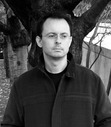
I’ve very much enjoyed reading The City and the World by Gregor Hens, beautifully translated from German by Jen Calleja.
In this book, Hens is fascinated by “the human being in their urban context, the human among humans, one among many in the environment he has created for himself”. Blending reportage with memoir, dreams and theoretical writings on cities, he takes the reader on a memorable journey through the life-world of Homo urbanus.
From the “gigantic miniature park” in Shenzhen, China, 48 hectares of scale models of the urban wonders of the world (“there’s nowhere better to daydream being Icarus than in a miniature wonderland”), to Los Angeles, which he first visited at the age of 16, before Google Maps existed (“I had no other choice but to open myself up to the city with all my senses, my nose, eyes and ears”), this is a wonderfully evocative account of the urban experience in the 21st century.
An author and translator who now teaches urban studies and creative writing in “the winter-grey city of Berlin”, Hens grew up on the outskirts of Cologne. He recalls often climbing an old oak (“the Cologne Tree”) from which he could see the iconic twin towers of the city’s cathedral soaring above the city’s skyline. He points out that the grid of a Roman military camp still defines the structure of inner-city Cologne. The other city in which he lived for many years, LA, was also based on a grid. In a book about experiences, such parallels are key to shaping how we see a city.
In Berlin, he tasks his international students with going to an “underground stop that is phonetically closest to your name or your hometown”, and walking south-southwest to the next station: “Don’t use your mobile phone. Be sure to ask for directions. Describe what you see and experience.” He notes that they end up wandering around the city “lacking any and all orientation”. Nevertheless, he speculates about how the experiment may have changed their view of the city, “because the person walking carries what resonated within them into urban spaces…we can still feel the vibrations in the matrix of the city long after we no longer hear them”.
Infused with the spirit of psychogeography, Hens’s impressionistic book reveals how the city opens itself up to walkers: “the city is moving; there are places where people move in streams. The psychogeographer stands still; their activity is to watch.” Though he acknowledges that the vastness and internal speed of the modern metropolis is no longer conducive to this: it’s a maelstrom that prevents one from seeing anything other than what is immediately in front of you. Shanghai has become the ultimate symbol of such urban modernity, the result of a “ruthless and destructive” futurism. It is a dystopian city, but “Shanghai is the future”, he says bleakly.
Filled with allusions to the literature and art of the city, this is a delightfully original and creative celebration of how we experience modern urban spaces through our senses, memory, ideas and images. It’s published this month by Fitzcarraldo Editions and is well worth reading!


August 30, 2023
To tweet or not to tweet, revisited
I’m now also on Bluesky — @pdsmith.bsky.social. I haven’t posted much yet (who has the time?!) but it’s quite fun over there, and feels a bit like early Twitter.
Threads still hasn’t got the momentum or functionality it needs to compete with the site formerly known as Twitter. Bluesky definitely feels more lively. But I’m also enjoying the image-rich feeds of Instagram.
In fact I’m beginning to think no single site will replace Twitter. You just have to find different voices on different platforms. A Twitter multiverse, perhaps…
July 24, 2023
To tweet or not to tweet
If you want to connect other than via Twitter, I’m now @p.d.smith_ on Instagram and Threads — and I don’t mean the 1984 nuclear war drama.
I’ve been on Twitter since 2008 when I jumped ship from MySpace (remember that?!) and although it can be a massive distraction, I’ve met some great people through it and I still find my lists useful to find out what’s going on.
For these reasons I’m not giving up on Twitter quite yet, but my timeline is becoming increasingly noisy and the signal is growing ever more faint.
I’m also annoyed by the plan to put Tweetdeck behind a paywall in August. It seems to me that Musk’s Twitter is on a road to nowhere. Indeed, soon it won’t even be called Twitter! Crazy.
So although I’m still on Twitter, I’m also trying out Instagram and Threads. It’s clearly not perfect and up till now I’ve tried to avoid the Zuckerberg empire. To be honest there doesn’t seem to be much happening on Threads, for now at least, but here goes! You’re welcome to join me…
July 4, 2023
Recent writing
As well as my monthly paperback reviews for Guardian Books, I’ve written a review for the TLS of Daniela Krien’s new novel, about a couple rediscovering their love for each other, and a brief piece about the wonderful Martin Beck series of detective novels for the Guardian.
Enjoy!
May 26, 2022
What I’m Reading
The Guardian asked me to contribute to a monthly piece on what books writers and readers have read recently. Unsurprisingly, it reflects my favourite subject of the last few years — crime and detective fiction.
By the way, the book I’ve been writing on this subject has been much delayed by, well, life. But the investigations are continuing and I’m working on the final chapter!
This is the link to the Guardian column — What We’re Reading.
April 2, 2020
Relative values
I've reviewed five recent books on Albert Einstein for the Times Literary Supplement this week.
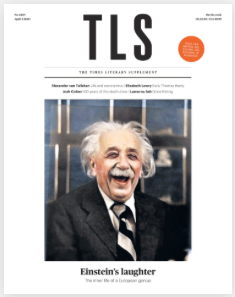
These are the books: Michael D. Gordin, Einstein in Bohemia; Andrew Robinson, Einstein on the Run: How Britain saved the world’s greatest scientist; Allen Esterson, David C. Cassidy and Ruth Lewin Sime, Einstein’s Wife: The real story of Mileva Einstein-Marić; Matthew Stanley, Einstein’s War: How relativity conquered nationalism and shook the world; Daniel Kennefick, No Shadow of a Doubt: The 1919 eclipse that confirmed Einstein’s theory of relativity.
I've written about Einstein's life myself, albeit briefly, but it's fascinating seeing how much interest there still is in Einstein - the man and the science - after so many years.
You can read the review on the TLS site. But here's a paragraph from my piece as a taster:
Before Einstein departed for America on October 7, he said “no matter how long I live I shall never forget the kindness which I have received from the people of England”. Once ensconced in the Institute of Advanced Study at Princeton, Einstein never returned to Britain. Most of his closest friends in America remained Europeans though. V. S. Pritchett visited him there: “The atmosphere of Princeton is exemplary and decorous: Einstein’s laughter blew all that away”. It was, he said “a laugh that had two thousand years of Europe in it”.
Relative values
I've reviewed five recent books on Albert Einstein for the Times Literary Supplement this week.
These are the books: Michael D. Gordin, Einstein in Bohemia; Andrew Robinson, Einstein on the Run: How Britain saved the world’s greatest scientist; Allen Esterson, David C. Cassidy and Ruth Lewin Sime, Einstein’s Wife: The real story of Mileva Einstein-Marić; Matthew Stanley, Einstein’s War: How relativity conquered nationalism and shook the world; Daniel Kennefick, No Shadow of a Doubt: The 1919 eclipse that confirmed Einstein’s theory of relativity.
I've written about Einstein's life myself, albeit briefly, but it's fascinating seeing how much interest there still is in Einstein - the man and the science - after so many years.
You can read the review on the TLS site. But here's a paragraph from my piece as a taster:
Before Einstein departed for America on October 7, he said “no matter how long I live I shall never forget the kindness which I have received from the people of England”. Once ensconced in the Institute of Advanced Study at Princeton, Einstein never returned to Britain. Most of his closest friends in America remained Europeans though. V. S. Pritchett visited him there: “The atmosphere of Princeton is exemplary and decorous: Einstein’s laughter blew all that away”. It was, he said “a laugh that had two thousand years of Europe in it”.

March 28, 2020
Lives of Houses
I've written a piece for today's Guardian Review on our enduring fascination with the homes and haunts of our creative heroes. It's partly a review of Lives of Houses, a wonderful collection of essays edited by Kate Kennedy and Hermione Lee. But it also draws on my experience of working with my father in the 1980s on our book Writers in Sussex.
Christopher Fry, who lived at East Dean in the Sussex Downs, was kind enough to write a personal and evocative foreword to our book (which you can read here). It was clear from talking to Christopher Fry that he was delighted to discover a literary dimension to some of his favourite landscapes. In 1936 he and his wife had lived in an old mill-house at Coleman's Hatch: “We knew that not far away were the AA Milnes at Cotchford Farm. What we didn’t know was that twenty-three years earlier W. B. Yeats and Ezra Pound had rented a cottage even nearer to where we were living. Every time we had driven to Forest Row we had passed the end of the lane which would have led us to Stone Cottage.”
You can see some of my photos for the book on Flickr. There's also a piece I wrote about Writers in Sussex here.
 Asheham House
Lives of Houses
I've written a piece for today's Guardian Review on our enduring fascination with the homes and haunts of our creative heroes. It's partly a review of Lives of Houses, a wonderful collection of essays edited by Kate Kennedy and Hermione Lee. But it also draws on my experience of working with my father in the 1980s on our book Writers in Sussex.
Christopher Fry, who lived at East Dean in the Sussex Downs, was kind enough to write a personal and evocative foreword to our book (which you can read here). It was clear from talking to Christopher Fry that he was delighted to discover a literary dimension to some of his favourite landscapes. In 1936 he and his wife had lived in an old mill-house at Coleman's Hatch: “We knew that not far away were the AA Milnes at Cotchford Farm. What we didn’t know was that twenty-three years earlier W. B. Yeats and Ezra Pound had rented a cottage even nearer to where we were living. Every time we had driven to Forest Row we had passed the end of the lane which would have led us to Stone Cottage.”
You can see some of my photos for the book on Flickr. There's also a piece I wrote about Writers in Sussex here.
Asheham House
January 1, 2020
Happy New Year!
It's 2020 already and I realise I haven't posted here for ages. I blame Twitter. And the number of reviews I'm writing now (thanks Guardian!)...
But 2019 was certainly a great year for books - or rather, for other people's books, as the amount of reviewing I'm doing has rather delayed my own book on detectives, which I am still writing, thanks to the patience of my editor...
Anyway, just in case you missed any of my reviews, here are some of the best ones from 2019:
A Month in Siena by Hisham Matar
Where Shall We Run to? by Alan Garner
Outpost by Dan Richards
Excellent Essex by Gillian Darley
The Garden Jungle by Dave Goulson
An Economic History of the English Garden by Roderick Floud
And here are some of my favourite detective reads this year:
Black Money by Ross MacDonald (1965)
Total Chaos by Jean-Claude Izzo (1995)
Gnomon by Nick Harkaway (2017)
1974 by David Peace (1999)
Bluebird, Bluebird by Attica Locke (2017)
Hawksmoor by Peter Ackroyd (1985)
And, to finish, some great lines from those books:
“Just a banal gangster story. One more story and surely not the last. Money and power. The story of mankind. With hatred of the world as the only scenario.” (Total Chaos)
“The human condition is most accurately chronicled in pulp, I think." (Gnomon)
“He had forgotten that the most elemental instinct in human nature is not hate but love, the former inextricably linked to the latter.” (Bluebird, Bluebird)