Colette L. Saucier's Blog
August 11, 2016
Book II: The Confession of Mr. Darcy, Vampire is Now Available
Links to all formats can be found on my Website:
http://www.colettesaucier.com/dearest...
Yes, you DO need to read Book I first if you want to read Book II.
No, it is nothing that Jane Austen would write (although it is written in Austenian language).
Warning: Contains violence and intense sexual situations.


July 3, 2015
Krewe de Colette!
I’m inviting you all to be members of the Krewe de Colette to spread the word about my books. You can do as little or as much as you like. Anything is appreciated!
The best sell is always your personal recommendation. If that’s all you do - tell or email friends about my books - that would be fabulous! And the more people you tell the better. You never know who goes home at night and curls up with a good book that was recommended by YOU!
You can join here to be the first to get news, previews, special offers, gifts and exclusive giveaways! Plus you can tell me your opinions on marketing strategies and content or ask me any questions. www.facebook.com/groups/ColetteStreetTeam
WHAT IS A STREET TEAM?
The "street team" term came from fans of rock groups who spread the word about their favorite bands, helping them become major names. I’d love you spread the word about my books!
If you're on Facebook, join the "official" street team by clicking the link above. (If you know anyone else who would like to join us, please feel free to invite them!)
As a member of the team you’ll earn my gratitude and maybe a few other prizes, including gift cards! If you're willing to help, here are a few things you could consider doing:
* Talk my books up and share promo materials with friends & family to spread the word.
*The Cover Reveal for THE WIDOW is July 10th. If you have a blog and would like to be part of the cover reveal, let me know and I'll send you the media kit. Otherwise, maybe you could share the cover on Facebook. It will be available for pre-sale 2 weeks before its release
* Buy THE WIDOW the first week of its release August 5th), which helps it get on the bestseller lists.
* Share your (honest) reviews of any of my books on Amazon and Goodreads.
* Ask your local library to order my books. Give the librarians the title, name and publisher.
* If my books aren’t on the shelves at a bookstore, ask the bookseller to order them.
* Take promo materials (bookmarks, postcards, etc) to your local stores, place them with the booksellers. You can leave them with libraries and even at coffee shops.
* Take promo materials (bookmarks, postcards, excerpts, etc) to your local reader group to share with other members.
If you want to pass out promotional materials, let me know, as I am about to place orders.
Thank you for your support! Anything you are willing & able to do to support your indie authors is always greatly appreciated.
Love,
Colette
February 15, 2015
Is Mr. Darcy the Ultimate Book Boyfriend?
Is it the Cinderella-like idea of a (relatively) impoverished girl being rescued by a wealthy and handsome suitor?
Is it because its plot became the boilerplate for almost every romance novel or film that followed? (Boy meets girl. Boy and girl dislike each other. Boy likes girl. Girl likes boy back. Conflict separates them. Boy and girl are reunited. Happily ever after.)

Or is it the endearing and unforgettable performance by Colin Firth in the 1995 BBC miniseries?
So tell me: Do you think Mr. Darcy is the ultimate book boyfriend?
My answer? An unequivocal NO. (Now despise me if you dare.) Not a popular answer, I know; but that's just me!
For one thing, he is barely even in the novel; and when he is, he has little to recommend him. Would you want a boyfriend that looks on you "only to criticize"? From their first meeting, Darcy insults Elizabeth by calling her merely "tolerable" and "scarcely allowed her to be pretty." He even gossips with "his friends that she hardly had a good feature in her face." Who can forget his words, which that shrew Miss Bingley threw back in his face: "She a beauty! --I should as soon call her mother a wit." (I'm surprised Caroline didn't wait until Elizabeth was within hearing range before repeating that vicious insult.)
I know I would not want a boyfriend who found me so unattractive when we first met. Sure, eventually she improves in his eyes, which he finds "mortifying"!
Though he had detected with a critical eye more than one failure of perfect symmetry in her form (How could he tell in those Regency dresses with the Empire waist line? Or did he think one boob was bigger than the other?), he was forced to acknowledge her figure to be light and pleasing; and in spite of his asserting that her manners were not those of the fashionable world (arrogant ass), he was caught by their easy playfulness.
Of course, even when he admits Elizabeth "attracted him more than he liked," with his vanity, he assumes she must want him, too, and worries that his behavior "could elevate her with the hope of influencing his felicity."
Steady to his purpose, he scarcely spoke ten words to her through the whole of Saturday, and though they were at one time left by themselves for half-an-hour, he adhered most conscientiously to his book, and would not even look at her.
Rude, much? When Elizabeth rightly refuses his proposal even though his wealth could save her entire family from poverty (there goes the Cinderella theory), she accurately cites his arrogance, conceit, and his selfish disdain of the feelings of others. I found him to be so cold that I thought he made the perfect vampire ( and here are 13 reasons why) and wrote Pulse and Prejudice as Darcy's story but as if Jane Austen herself had always conceived his character as a vampire and just failed to mention it.
I am sure you are all familiar with the infamous parsonage proposal, when Mr. Darcy declares, "In vain I have struggled" to repress his feelings for her - feelings of degradation and of her inferiority. And he is vain! He once again assumes she is expecting his addresses and is quite certain that she will accept.
Personally, I never understood why Elizabeth's opinion of him changes so easily. She jokes to Jane that it happened after seeing Pemberley, but I think there's more truth there than readers are willing to allow. The first time they meet after she refuses him, they go for one awkward walk, and then he brings his sister to meet her, but Elizabeth and Darcy scarcely speak to one another. Yet that's enough for her to form a new impression. She hasn't been struck by cupid's arrow. She feels "gratitude; gratitude, not merely for having once loved her, but for loving her still." She's thinking she could put up with a lot of pomposity and superciliousness to have that kind of wealth and status. When visiting Pemberley, Elizabeth thinks not once but twice of how it would have been to be mistress there.
I have read a few sequels to Pride and Prejudice, and they always portray this "happily ever after" couple. She's 20 or 21. Do you really think she will remember the past only as it gives her pleasure? If this were real life, every time they had an argument, Elizabeth would bring up how he thinks she is inferior and that he thinks it is a degradation to be with her. That he loved her against his will, against his reason, and against his character will fuel insecurities in this tender girl. We even see that in the end of the novel, after she has accepted his hand and he could not cry off without a scandal; but she still tries to shield him from the vulgarities of her relations, which cause her "mortification": "the uncomfortable feelings arising from all this took from the season of courtship much of its pleasure." (Ah, but here is the return of the Cinderella theory: "she looked forward with delight to the time when they should be removed from society so little pleasing to either, to all the comfort and elegance of their family party at Pemberley.")
Yeah - she's never going to feel confident in his opinion since he married her against his will, which will also be brought up every time they have a spat. I'm telling you, whenever they go to a ball and he dances with some other chick, Elizabeth is going to say, "So, I guess you find her more than tolerable!" or "I see you find her handsome enough to tempt you..."
I guess that's why I gave my Mr. Darcy an excuse to be so cold and disdainful - he's a vampire - and allowed his own flaw to be his primary reason for not giving in to his attraction. That's also why for The Proud and the Prejudiced, my modern adaptation of Miss Austen's story, the description specifically states that the hero and heroine are no Darcy and Elizabeth. Although in my novel the hero still has to break through some of his pride and prejudices, he is attracted to her from the moment he sees her. That's the kind of boyfriend I would want - someone who always thought I was the most beautiful creature he had ever known.
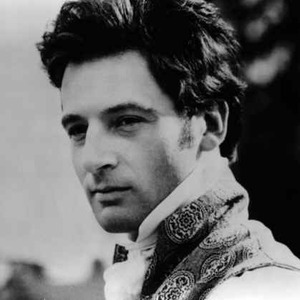 So who is my pick for a Jane Austen book boyfriend? Emma's Mr. Knightley. And I don't think it was because I "met" him long before I knew of Mr. Darcy (more on that here). Everyone else sees Emma as she sees herself: practically perfect in every way: "Emma Woodhouse, handsome, clever, and rich, with a comfortable home and happy disposition, seemed to unite some of the best blessings of existence." But not Mr. Knightley. He sees all of her flaws - but these are not superficial deficiencies of rank or relation. No, he sees her as an imperfect human being who makes mistakes, and he loves her in spite of them. Sure, he calls her out on some of her more egregious errors but only because he knows that she wants to be the person worthy of the praise she receives but has not earned.
Not only that. Mr. Knightley is not pompous when he proposes. Even though he has borne witness to her foibles, he is insecure in his affection and truly fears she will reject him.
So who is my pick for a Jane Austen book boyfriend? Emma's Mr. Knightley. And I don't think it was because I "met" him long before I knew of Mr. Darcy (more on that here). Everyone else sees Emma as she sees herself: practically perfect in every way: "Emma Woodhouse, handsome, clever, and rich, with a comfortable home and happy disposition, seemed to unite some of the best blessings of existence." But not Mr. Knightley. He sees all of her flaws - but these are not superficial deficiencies of rank or relation. No, he sees her as an imperfect human being who makes mistakes, and he loves her in spite of them. Sure, he calls her out on some of her more egregious errors but only because he knows that she wants to be the person worthy of the praise she receives but has not earned.
Not only that. Mr. Knightley is not pompous when he proposes. Even though he has borne witness to her foibles, he is insecure in his affection and truly fears she will reject him.
Miss Austen once described Emma as her most unlikeable character, and yet Mr. Knightley loves her. Now that's a good book boyfriend.
January 26, 2015
The Proud & the Prejudiced Release/Pride & Prejudice 202nd Birthday Party!
When: Wednesday, January 28th, at 7:30 Eastern/6:30 Central
Where: Facebook Event Page
https://www.facebook.com/events/15316...
The Proud and the Prejudiced Official Print Release Party on the 202nd anniversary of the publication of Pride & Prejudice!
We will be giving out party favors, such as eBooks from some of your favorite authors, MP3 songs, gift cards, and - of course - the new print edition of The Proud and the Prejudiced!
Be sure to bring your questions and comments about Miss Austen, writing, books, or anything for a lively discussion! Party gifts will be given out every 20 minutes, so "See" you then!
The Proud and the Prejudiced: A Modern Twist on Pride and Prejudice
November 1, 2013
Halloween Treat with a Vampire Bite (Austen Authors)
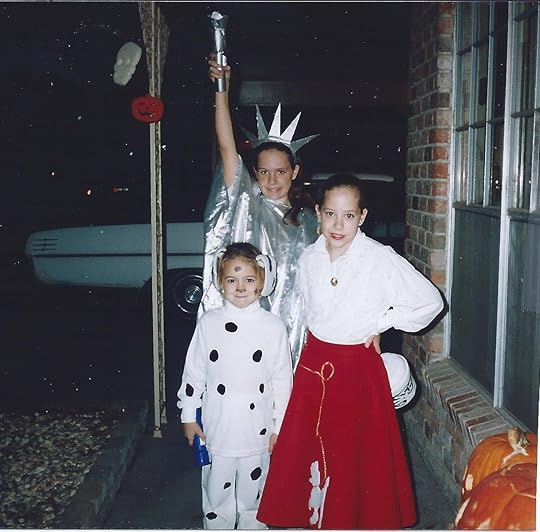 Halloween has always been my favourite holiday. As a child, I always loved deciding who I wanted to "be" (although I did have to try to explain who I was the year I dressed up as Mary Hartman - I was a strange kid). In college, the night to celebrate was always the Saturday before Halloween because, up until a few years ago, that night the clocks changed back and the bars all stayed open an hour longer, so everyone would dress up that night, and you would find me at a dance club as Madonna. Then we LSU students got to celebrate again on Halloween at the famous Carlotta Street Block Party, where you would find me dressed as Madonna.
My own children could come up with some rather creative costumes for me to sew for them, most of which - like the Statue of Liberty or the year my youngest wanted to be a turtle - I did without a pattern. Now on Halloween, my husband and I turn off the front porch light and hope that no one rings the bell and sends our dog into fits of barking. (If you read Pulse and Prejudice, I based the dog Amadeus on him, and his ear-splitting bark was no exaggeration.)
Having written a vampire adaptation of Pride and Prejudice, I thought I should offer a scary excerpt for my Halloween post, but I hate spoiling scenes for my readers - especially any intended to make you get goosebumps. So instead, I am sharing an excerpt from the sequel to Pulse and Prejudice, my current work in progress Dearest Bloodiest Elizabeth.
Halloween is also the last day to submit your entry for the Pulse and Prejudice Pop Culture Challenge; hence, I am offering a final clue here on Austen Authors: The scene in the gaming hell when Darcy meets the dwarf is my tribute to TWO of David Lynch's creations. If you can figure them and the other pop culture references out, you have until midnight to submit your entry; but even if you're not playing, you can still enjoy the literary scavenger hunt!
Now the dwarf plays a significant but small (no pun intended) role in Pulse and Prejudice, but you will see a lot more of him in the sequel.Oh, and I also decided to make him Lutheran. In this scene from Dearest Bloodiest Elizabeth, after a day of shopping, the newlywed Mrs. Darcy returns home to find herself confronted by this strange man who knows far too much about Darcy's dark secret. Fortunately, our erudite Elizabeth can hold her own in a battle of words - and wills - when it comes to defending her vampire husband. Although perhaps not frightful, here is a little bite to give you a taste of what is to come...
A scene from Chapter XIV of Dearest Bloodiest Elizabeth
Once they were alone, the dwarf nodded towards the settee, inviting her to sit as if he were the host.
She took her seat and smoothed her skirts and steadied herself sufficiently until she could speak with ease. “Would you like some coffee?” Her voice rang of the absurdity of such folderol in these circumstances. “Tea?” He waved off her suggestion. “You say you knew Wickham. Then you know he was killed in battle.”
The dwarf kept his hands tight on the arms of the chair, and his feet just touched the floor. He gave her a sidelong glance as if assessing her credulity. “Weekhaum…died years ago, but he walks with the leeving in New Orleenz.”
Her chest rose and held onto a sharp intake of air. “How would you know such a thing?”
“Aye…am…dhampir. Do you know what this is, dhampir?”
She tried to swallow but found her mouth too parched. She should have rung for tea. “Yes. Your father is…”
“Vampire, yes.”
For a moment, her mind fixated on which, if either, of his parents had been a dwarf; and she almost laughed aloud at the irony of his parentage. He lacked only a fairy godmother and a leprechaun uncle to complete his Grimm tale.
He continued. “Dhampir have…special gifts for hunting vampire.”
“And you are hunting Wickham?”
He scrunched his face and shook his head. “Aye tell the man you call husband it is his duty to find Weekham. He must go.”
“To New Orleans?”
With a nod, he said, “He says he weel not go. He says he weel not leave you. That is why I come to you.”
“I do not wish my husband to leave. Neither do I desire Wickham’s return. He mistreated my sister. What am I to do on the occasion? It seems a hopeless business.”
“You know…you must leave heem. Go home, Miss Bennet. Go to your father.”
“You mean Mrs. Darcy.” Her temper pricked, her words came out in clipped syllables. “Pray, why would I leave my husband?”
“This man you call husband…is damned. He is the white devil…a glittering Satan.”
“I think you received these ideas in your pipe dreams. My husband does not glitter!”
“Vampire is against the weel of God. To live without life, to crave blood…this is eevel. Perverted tastes. This is from Satan.”
Cold fingers of truth gripped her heart and squeezed, pulling the blood from her face. The dwarf had confirmed her fear. I am wicked.
“In all he does, he is the very opposite of Christ… as befits a true Antichrist. Hees soul weel burn een hell for eternity.”
She ground her teeth and clenched her fists, disturbed by how much this strange man knew of her husband and what he purported to know. She refused to be intimidated, and her stubborn courage rose.
“Pray, how could an immortal burn in hell?”
“Even…the living dead can be destroyed. Come Judgment Day, hees soul weel be resurrected…returned to hees body in shame and everlasting torment. The day to judge the living and the dead, but they are not alive nor dead. Judgment has been passed on their souls.”
“Did Colonel Fitzwilliam send you? Do you mean to frighten me?”
He studied her with his squinty eyes, his lips receding into a firm frown. “No. In lying fashion, you ignore…what even children know. Aye see your life is too brief to have worth. Aye come to save the innocent – Weeckhaum’s prey.”
She released a humourless laugh. “You are one of those deceitful people who affect modesty but who meanwhile breathe out threats and blood. My life has no worth?”
“So long as you….remain weeth heem, you walk a razor’s edge with death; but I seee you are under his power.”
“As is any woman under the power and control of her husband. If you suppose anything more, you quite mistake the matter.”
“The vampire…he has powers of attraction.”
“Oh, indeed! For what else would a rich, intelligent, handsome man have to recommend him?” She stood and strode towards the door. “Say what you must and go, though you do nothing with all your profusion of words but fight a fire with dry straw. I will not leave my husband.”
He jumped down from the chair and followed her. “He is not your husband. Think! Think of your vows. Death do you part. So long as you both shall live. He does not live! He made a hollow vow.”
Near the door, she swerved around and stared down at the man and spoke with venom. “Now see here, you vicious little gnome!”
“Aye am…not a gnome; I am a dwarf.”
“But of course! You haven’t a hat! And I believe there are some height restrictions as well! You do nothing but shout, ‘Anathema, anathema, anathema!’ so that by your own voice you are judged mad.” She shook her head and coughed out a laugh. “You are not a gnome; he is not a husband; I am not his wife. Then pray, what am I?”
“You are the prostitute of heretics! Lucifer’s leman!” He fixed his eyes upon her with derision. “You are the devil’s concubine.”
At his confident pronouncement, her blood turned to ice then began to boil. “You, sir, have insulted me in every way imaginable – and unimaginable!” She jerked the door open and stormed out of the room. “Consider this your congé. Seward! Call for Rivens.”
“There is no need, madam. Aye bid you farewell.”
Again he offered her a deep bow and, upon straightening, said, “You may tell Darcee…you are not with child.” He held her with his stare. “May the Lord protect me and all devout souls from your contagion and your company.”
Then he turned and hobbled through the front door and disappeared into the night.

October 25, 2013
Why You Can't AFFORD to Ignore Depression
For most people who have never had personal exposure to mental illness, they may think, "What does this have to do with me?"
I think it is fitting that when we have an economic downturn, they call it a "Depression" because depression has an enormous impact on our economy.
Depression Costs US Workplaces $23 Billion in Absenteeism.
Depression is the most prevalent mental illness, affecting nearly 19 million Americans between the ages of 25 and 44 - essentially, the most productive years in the workforce. 12% of workers in the United States have been diagnosed with depression at some point in their lives. In the workplace, they miss an estimated 68 million additional days, more than ulcers, diabetes, high blood pressure, and arthritis.
The total economic burden of depression is $83 billion a year.
That exceeds the costs of the war in Afghanistan! Of this total, $26.1 billion (31%) were direct treatment costs, $5.4 billion (7%) were suicide-related costs, and $51.5 billion (62%) were workplace costs.
Depression is the leading cause of medical disability for people aged 14 to 44. Depressed people lose 5.6 hours of productive work every week when they are depressed. 80% of depressed people are impaired in their daily functioning. 50% of the loss of work productivity is due to absenteeism and short-term disability. In any 30 day period, depressed workers have 1.5 to 3.2 more short-term disability days.
People with symptoms of depression are 2.17 times more likely to take sick days. And when they are at work their productivity is impaired--less ability to concentrate, lower efficiency, and less ability to organize work. In fact, absenteeism and work performance are directly related to how severe the depression is--the more severe the depression, the worse the outcome.
BUT THERE IS AN ANSWER! More than 80 percent of people with clinical depression can be successfully treated with early recognition, intervention, and support.
Would you recognize the symptoms of depression? If you think you or someone you know may have depression, use this link to find a place in your community, or Click Here to take an Anonymous Online Screening.
Please: Tweet and post these links or this blog so that as many people as possible will be made aware of the resources available to them.
Throughout October, I have devoted much of my blog to Depression Awareness Month. I have discussed my personal struggle as well as recognizing the symptoms of depression and the warning signs of suicide, but I have also hoped to convey a sense of how Major Depressive Disorder feels to those of us who struggle with it every day.
 Southern Girl Press and To Write Love on Her Arms have collaborated on a book sale benefit in an effort to help those who have never had to deal with depression understand.
Throughout the month of October, all profits from a trio of vignettes entitled Alicia Embracing the Dark will be donated to TWLOHA, a non-profit organization that focuses on hope and relationships, in order to raise awareness, benefit the organization, and highlight National Depression Screening Day.
A Special Edition of this short collection is now available only from Amazon for 99¢ for Kindle or Kindle apps for any device.
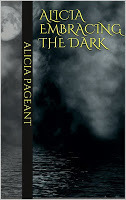 Alicia Embracing the Dark
expresses some aspect of depression as experienced by each author at some point in her life. It is published collectively under the name of a fictional character suffering from major depressive disorder and suicidal thoughts in the wake of her collapsing marriage in her own story, in which depression is a primary motif.
Alicia Embracing the Dark
expresses some aspect of depression as experienced by each author at some point in her life. It is published collectively under the name of a fictional character suffering from major depressive disorder and suicidal thoughts in the wake of her collapsing marriage in her own story, in which depression is a primary motif.Please repost and retweet, get the word out, help others learn about mental illness, bipolar, and major depressive disorder. Encourage others to make the 99¢ contribution in support of TWLOHA. Let everyone know that there is help and there is hope.
September 27, 2013
Almost Impossible To Appear Tolerably Cheerful
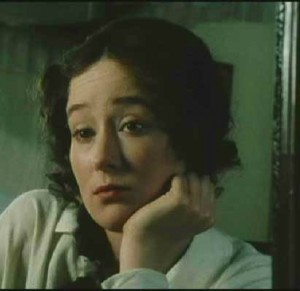
When one thinks of Elizabeth Bennet, the beloved heroine of Pride and Prejudice, words such as witty, curious, and adventurous come to mind. She is independent, frank to the point of being impertinent. Her mother describes her as “headstrong” but “good-natured.”
With her vivacity, Darcy found himself caught by her “easy playfulness,” and she describes herself as someone who “dearly love(s) a laugh.” Indeed, practically from the first moment we meet her, when Darcy snubs her at the Meryton Assembly, “She (tells) the story...with great spirit among her friends; for she had a lively, playful disposition, which delighted in anything ridiculous.”
No one would ever describe Elizabeth as being depressed—except Jane Austen herself.
A universal quality of twenty-year-olds, which still holds true two hundred years later, is their belief that they know best; and Elizabeth relies on her own intuition and first impressions to formulate misguided judgments. After reading Darcy’s letter, she must accept her folly, vanity, and pride and finds the self-discovery humiliating. Then Miss Austen writes that “as she considered that Jane’s disappointment had in fact been the work of her nearest relations, and reflected how materially the credit of both must be hurt by such impropriety of conduct, she felt depressed beyond anything she had ever known before.”
In other situations, however, Miss Austen emphasizes that “it was her business to be satisfied—and certainly her temper to be happy” and “(i)t was not in her nature...to increase her vexations by dwelling on them….and to fret over unavoidable evils, or augment them by anxiety, was no part of her disposition.” Yet she obsesses over Darcy’s letter, “wandering along the lane for two hours, giving way to every variety of thought—re-considering events, determining probabilities,” until “she was in a fair way of soon knowing (it) by heart;” and “with a mind so occupied, she might have forgotten where she was.”
Miss Austen tells us, “(I)t may be easily believed that the happy spirits which had seldom been depressed before, were now so much affected as to make it almost impossible for her to appear tolerably cheerful.” Following Lydia’s disappearance with Wickham, that event “rendered any other excuse for the lowness of her spirits unnecessary… had she known nothing of Darcy, she could have borne the dread of Lydia's infamy somewhat better. It would have spared her, she thought, one sleepless night out of two.”
So where am I going with this? Jane Austen recognized the symptoms of depression: Difficulty concentrating, feelings of guilt and hopelessness, insomnia, loss of interest in pleasurable activities, persistent sad, anxious, or “empty” feelings. Whereas she used to share everything with her sister Jane, she now withdraws, becoming secretive, and tells her nothing of her regard for Mr. Darcy to the point that Jane thinks she must be joking when Elizabeth tells her they are engaged. Abigail Reynolds highlighted this darker aspect of Elizabeth’s nature in her variation Mr. Fitzwilliam Darcy: The Last Man in the World . Did Miss Austen know someone who dealt with depression? Or could she herself have had personal experience?
Nevertheless, Elizabeth's depression would be considered “situational,” as her spirits were “soon rising to playfulness again” (although her anxiety in trying to keep Darcy away from some members of her family “took from the season of courtship much of its pleasure”). Many others live everyday with clinical depression or major depressive disorder, and try as they might, their spirits cannot rise.
Although certainly not as stigmatized as in the past, even today, with 350 million people worldwide and as the leading cause of disability, depression remains a silent, shameful secret to most who have it. It even has to share a ribbon color with pedestrian safety!
The list of prominent people with major depressive disorder would shock most. (Additional famous people who had/have depression.) Winston Churchill referred to it as his “Black Dog.” J.K. Rowling conveyed her experience with depression in the form of the Dementors in the Harry Potter novels, “literally” sucking out her soul. For me, it is a heavy, black wool sack that engulfs me; and I can’t get out of it.
Yes, I am “confessing” here for the first time publicly that I have struggled with clinical depression for at least fifteen years. I have witnessed members of my family, in obvious need of help, self-medicate with drugs and alcohol. I had an uncle who drank himself into oblivion until ultimately he brought an end to his suffering with a shotgun. Someone else dear to me has bipolar disorder but cannot bear the side effects of the drugs.
They say to write what you know. Perhaps this did contribute to the dark dissonance within my vampire Darcy in Pulse and Prejudice; and just as Miss Austen tells us of Elizabeth’s depression after receiving his letter, I write of Darcy’s depressive breakdown following her rejection of his proposal. Depression is a primary motif in my last novel as well as in my current work in progress, The Widow; and I allude back to Miss Austen's references to Elizabeth’s depression in my other work in progress, Dearest Bloodiest Elizabeth, the sequel to Pulse and Prejudice.
Those who have never experienced depression find it difficult—if not impossible—to understand. When it overcomes us, why can’t we just snap out of it? Someone who I know loves me once said, “I just want you to be happy.” Well, yeah, so do I! In Stranger on the Earth: A Psychological Biography of Vincent Van Gogh, Albert Lubin writes: “The desire to rid himself of depression—and the loneliness, the despair, and the fears that were part of it—was the most powerful force that motivated Vincent to become an artist….” Others just can't understand, we all want to be free of the Black Dog.
Which is why, in conjunction with Southern Girl Press and To Write Love on Her Arms, I am participating in Depression Awareness Month in October: To try to help those who have never had to deal with depression understand. Beginning this Tuesday, October 1st, and throughout the month of October, all royalties from a trio of vignettes entitled “Alicia Embracing the Dark” will be donated to TWLOHA, a non-profit organization that focuses on hope and relationships, in order to raise awareness, benefit the organization, and highlight National Depression Screening Day on October 10th. A special edition of this short collection will be available only from Amazon for 99¢ for Kindle or Kindle apps for any device.
Please understand that “Alicia Embraces the Dark” is not in any way related to Jane Austen or her works. Instead, it is three shorts intended to express some aspect of depression as experienced by the authors; and it is published collectively under the name of a fictional character suffering from major depressive disorder and suicidal thoughts in the wake of her collapsing marriage.
And for anyone reading this for whom this might hit close to home, I will share a part of the Vision of TWLOHA:
You were created to love and be loved.
You were meant to live life in relationship with other people, to know and be known.
You need to know your story is important, and you're part of a bigger story.
You need to know your life matters.
Alicia Embracing the Dark
August 6, 2013
How Did a Nice Girl Like You Write a Book Like This?
I had been going along quite swimmingly writing the sequel to Pulse and Prejudice, the paranormal adaptation of the Jane Austen's classic which re-tells the story from Mr. Darcy's point of view as a vampire. The problem with any Regency-era novel, though, is the amount of research involved. I spent fifteen months ensuring the historical accuracy of Pulse and Prejudice and maintaining nineteenth century literary conventions. About a third of the way into the sequel –Dearest Bloodiest Elizabeth—I had to go on disability, and I had neither the energy nor the initiative to continue with the research.
Once ready to jump back into writing, I needed something not quite so labor-intensive to tackle, so I checked the “special calls” for my publisher. Most of the options held no appeal for me: special love, holidays, western. Then I saw the request for submissions for shorts—15-20,000 word novellas—for a BDSM anthology. I started to dismiss it out of hand—I mean, I have trouble even typing the word nipple! In my love scenes, I generally write that “he put himself in her” and assume the reader knows he didn't stick his finger in her eye! The description of the special call intrigued me, though, because it said it could be any level of BDSM—and of any genre, from RomCom to Romantic Suspense.
Romantic Suspense and I go way back. My first romantic novellas, which I wrote in junior high, were all high intrigue and thrillers. One involved a government conspiracy to fake travel into the future. In another the heroine was murdered, and yet another the protagonist stood trial for killing her lover. (“Happily ever after” was not a requirement in my middle school romance writing!) I love Hitchcock above all other directors and suspense films more than any others, and police procedurals are my favorite television shows. Although I had a growing list of ideas for novels to follow Dearest Bloodiest Elizabeth, I knew at some point I wanted to move into the Romantic Suspense genre.
Of course, then I had the issue of having to include BDSM. I won't lie: I enjoy reading BDSM romance novels. I just can't ever finish them. I suppose I must be the biggest prude ever to enjoy reading about bondage and Dominance! I just always find that they get to a certain …point at which I begin to feel uncomfortable, and I just have to stop reading. (And they lived happily ever after. Yada yada yada.) To be honest, I don't even like all the coarse metaphors used for "lady parts." How on Earth could I write a BDSM novella? Then I figured, if I felt this way, I couldn't be the only one. Right? I must represent some demographic! After all, I’ve been chosen to do the Nielsen ratings twice!
About the same time, my daughter bought this house, which I absolutely love, on a lake; and her neighbor on the other side of the lake is a former sharpshooter for the Marines. He will come out on occasion and shoot any snakes that are bothering the neighbors. I thought about how hearing a gunshot in the middle of the night would certainly freak me out!
For some authors, inspiration might strike like lightening, but for me, it's more like cracker crumbs in the bed, creeping into my skin until I'm itching to get it out. Between my daughter's house on the lake with her snake-shooting neighbor and an old story I recalled about a woman who had an accident, which caused her to forget her husband's infidelity (only for him to cheat on her again), my mind started working on the mystery.
For the Dominance and submission, I needed a strong hero who could sense the vulnerability in Alicia and understand her needs. He had to be a loving Dominant, truly devoted to caring for her well-being. Next I had to create a heroine with a history that had caused her not to be able to trust anyone and then place her in a situation so desperate she would be willing to surrender control completely. In Alicia's case, she suffers from deep depression and feels her life is already spinning out of control. Now she has to choose if she wants to give control over to Mason or give up completely.
Once I got to writing, though, this little exercise to help me get my groove back took on a life of its own! I even managed to kink up the sex scenes, at least by my standards, and even included a rather funny felatio scene. I poked fun at my own prudishness a bit as well. Eventually, I passed both the deadline for the anthology and over 35,500 words—far over the limit. Fortunately, the publisher loved it and was willing to release Alicia’s Possession on its own.
As my first foray into both Romantic Suspense, as well as BDSM, I had no idea how Alicia's Possession might be received. I couldn't have been more stunned a week after its launch when it was the publishers #1 Bestselling Romantic Suspense and (don't tell my mother-in-law) #2 Bestselling BDSM novel! (The next week it was #1.)
So have I gone back to Dearest Bloodiest Elizabeth? Sorry, Vampire Darcy fans. You'll have to wait a little while longer. Those cracker crumbs in the bed started getting to me again, and now I am 40,000 words into another Romantic Suspense called The Widow (or Viuda) - and I'm not even quite halfway done! I don't think you will find any BDSM in this one though. I have to have some books for my mother-in-law to read!
(Originally posted Tuesday, July 2, 2013, Destiny Blaine Blogspot: http://destinyblaine.blogspot.com/201...)
Alicia's Possession
April 29, 2013
Speaking of Which
This month, two lucky visitors to Austen Authors will each win a copy of Pulse and Prejudice; and although these prizes do not have much monetary value, a price cannot be placed on the heartfelt devotion expended on this project of some twenty-four months. Not that I would ever refuse an excuse to go to Britain! Indeed, I even elected to travel to The Netherlands and Belgium to write the second draft with the idea that I would incorporate the Battle of Waterloo and the Treaty of Ghent in the sequel. (Alas, the site of Waterloo is a nondescript field – reminiscent of my visit to Valley Forge, which resulted in dozens of photographs of grass with the occasional cannon thrown in for good measure.)
I could expend an entire blogpost on the research I undertook on the Regency era, using primary sources – from periodicals to weather reports – and secondary sources, as well as vampire lore and literature, to ensure historical accuracy (I discuss much of this in a recent Authors After Dark Spotlight Interview), and how I came to possess a 200 year-old edition of Southey's The Life of Nelson just because I thought it might be a book Mr. Darcy would read (OK, yes, I can be a bit obsessive). Today, however, I address the changes in literary conventions since the publication of Pride and Prejudice.
In approaching Pulse and Prejudice as an authentic (albeit paranormal) adaptation of Jane Austen’s classic rather than a variation or modernization, I committed myself to remaining true to her language and writing style. Cognizant of the changes in language and literary conventions over the last two centuries, and diligent in my efforts to avoid any historical or linguistic anachronisms, I did not use a single word in Pulse and Prejudice that was not in use in 1813, which meant the loss of many good words! I had used the word “befuddled” Pulse and Prejudice until I found out it wasn’t in use until the 1830s. (I suppose no one was confused before then.) And don’t get me started on “credenza”! Fortunately, one of the editors assigned to the project, Julie Reilly, is not only a fellow Austenite but also British. She understood my commitment to Regency language and double-checked not only for anachronisms but also Americanisms. For example, what we call “French doors” are called “French windows” in England even today; and across the pond, they use “draught” for “draft,” and not just at the pub.
Unlike today’s authors, Miss Austen did not have Strunk and White or The Chicago Manual of Style on hand and instead maintained the punctuation usage of the 18th and early 19th centuries. This would account for the 1500+ semicolons found in Pride and Prejudice, most typically in lieu of periods, as well as her liberal use of commas. Even that famous first line – It is a truth universally acknowledged, that a single man in possession of a good fortune, must be in want of a wife. – would not have any commas if written today. When first submitting my own manuscript to the publisher, I had to present my argument for keeping as many semicolons as possible (a misunderstood and under-used punctuation mark, in my opinion).
Modified rules of punctuation only scratch the surface of changes in writing standards in the last two hundred years. As any aspiring author knows, today a writer must “show” rather than “tell,” meaning that full descriptions must be used in place of adverbs and adjectives. Stephen King sums up the current attitude: “The road to hell is paved with adverbs.” Yet Miss Austen utilizes adverbs “liberally.” In his book On Writing, King modifies his position somewhat:
I can be a good sport about adverbs, though. Yes I can. With one exception: dialogue attribution. I insist that you use the adverb in dialogue attribution only in the rarest and most special of occasions . . . and not even then, if you can avoid it. Just to make sure we all know what we’re talking about, examine these three sentences:
“Put it down!” she shouted.
“Give it back,” he pleaded, “it’s mine.”
“Don’t be such a fool, Jekyll,” Utterson said.
In these sentences, shouted, pleaded, and said are verbs of dialogue attribution. Now look at these dubious revisions:
“Put it down!” she shouted menacingly.
“Give it back,” he pleaded abjectly, “it’s mine.”
“Don’t be such a fool, Jekyll,” Utterson said contemptuously.
The three latter sentences are all weaker than the three former ones, and most readers will see why immediately.
This is in direct opposition to Miss Austen’s dialogue attributions: “cried his wife impatiently,” “replied Kitty fretfully,” “said Lydia stoutly.” I have studied Pride and Prejudice for over twenty years, and I still have no idea how one would speak “stoutly.”
Neither did Miss Austen “show” her readers a detailed picture of the settings or characters, as would be expected in contemporary literature. When she writes of the detail with which Mr. Collins describes the beauty of Rosings Park, she means to make him ridiculous. As stated in my post "Devil in the Details," in which I describe the ease with which I adhered to her restrictions in this area, she used terms such as beautiful, good-looking, tall and handsome, plain, stout, elegant, heavy-looking, pale and sickly. (Mark Twain said, “When you catch an adjective, kill it.” Of course, never a fan of Miss Austen, he also wrote, “Every time I read Pride and Prejudice, I want to dig her up and beat her over the skull with her own shin-bone.”)
Another narrative technique found in Pride and Prejudice, although infrequently, which would have an editor’s red pen out today is “head-hopping,” jumping from one character’s point of view to another without a scene break. Although primarily told from Elizabeth Bennet’s often unreliable point of view, Miss Austen will on occasion provide the reader a glimpse into the thoughts of the other characters, including Mr. Darcy, Caroline Bingley, Charlotte, and Mr. and Mrs. Gardiner. This “rule” has only been in vogue a relatively short time, as omniscient narrators hopped from head to head in the works of literary greats such as Hemingway and Faulkner.
I must admit, though, that as much as I loved reading Gone with the Wind in my youth, today I find it intolerable – not just because of the constant head-hopping but also because of the detailed descriptions. I have been spoiled by Miss Austen’s clean narrative, which relies on dialog and free indirect speech (a form of deep point of view just shy of being first person). The reader will find this form of writing emulated throughout Pulse and Prejudice, and, as in the original, I do allow a few minor breaks in point of view in deference to Miss Austen. Primarily, though, the first half of my adaptation tells the story through the perspective of the vampire Darcy, seeing the events in Hertfordshire through his eyes and following his parallel plot-line in London; but the second half of the novel alternates between his point of view and that of Elizabeth Bennet in original scenes once she is confronted with the truth of his dark nature.
Finally, age has modified the meaning of words themselves. Each time Miss Austen speaks of someone having “intelligence,” she means they have some new information – not that they are smart or clever. On the other hand, when Mr. Bingley says Mr. Darcy’s manner is “stupid,” he means tiresome. And when they refer to someone’s “accent,” they do not refer to my Southern drawl but instead to the tone of voice. In fact, the meanings and nuances of so many words found in Pride and Prejudice have changed so much over the last two hundred years, whenever asked I always recommend reading an annotated edition in order to have accurate definitions on hand. Even “morning” is not the same now as it was then, when it lasted until late afternoon or when they would excuse themselves to dress for dinner.
I did have some fun with the slang in use during the Regency. Colonel Fitzwilliam has a much larger role in Pulse and Prejudice than in Miss Austen’s classic, and acts as Darcy’s confidant whilst in London. Although the second son of an Earl, Fitzwilliam has been off fighting Napoleon; so when he is first introduced, he uses a lot of slang (in use in 1813) that he picked up from the troops; but the longer he is with his aristocratic friends and family, the more refined his speech becomes.
Then there’s the matter of the dwarf in Pulse and Prejudice…but I have more fun with his language in the sequel…
If you want to hear how authentically Austenesque Pulse and Prejudice actually sounds, I have good news for you: The audiobook is currently in production and will be released in just a few weeks – complete, unabridged, and thoroughly British!
Pulse and Prejudice
Pride and Prejudice
April 12, 2013
Would I Be as Sweet?
 "What's in a name? That which we call a rose by any other name would smell as sweet." - Romeo and Juliet (II, ii, 1-2)
 In the grand tradition of Mark Twain, George Eliot, and Dr. Seuss, I have chosen to use a nom de plume. I did so not only to preserve some modicum of privacy in our Instagram world but also so as not to embarrass my grown daughters, who might not want their friends to know their mother could write a love scene. (By their estimation, I have had sex exactly twice since two of them are a set of twins.) Often I am asked how I chose the name "Colette," so today I will tell you how the name was bestowed upon me. These events occurred over twenty years ago, and I promise, they are all true.
As with most stories, mine began when my ex-husband went to a party. He called me early the next day in a highly excitable state, which in and of itself is not so unusual except in this case he wanted to tell me about the psychic he had met the night before. By this point, I had known the man for several years, and although at times he could slide into mild paranoia – and I never have been able to convince him that Oswald acted alone – he had never struck me as someone to give credence to fortune tellers, horoscopes, or the like. In this case, however, he insisted that the woman had been spot on with everything she had said about him and me and our girls, although he refused to elaborate. Instead, he said I would have to go talk to her myself. I took her information more to get him off the phone than for any interest on my part of actually seeing her.
A day or two later, I mentioned this in passing to the guy I was seeing – No, he was not my “boyfriend” because, for one thing, he was a DKE, and for the purposes of this story, I shall refer to him as "Leo Bolt." Well, Leo listened in rapt fascination and was quite keen to meet the psychic; so the next thing I know, I’m calling and making an appointment for a “reading.”
The next day we drove for two hours to an old, broken down mobile home in rural East Feliciana, which only served to validate my low expectations. Why would a truly gifted psychic not get the winning lottery numbers – or at least the trifecta at Evangeline Downs? The septuagenarian who opened the door looked more like my grandmother than Marie Laveau. After offering us coffee, she had us sit down at her vinyl-topped kitchen table and took our money. (I believe it was $40 each, which I am embarrassed to this day to admit I paid.) Then she pulled a well-worn deck of playing cards wrapped in a rubber band from the pocket of her duster. (For $40, I would have at least expected Tarot cards!)
Now to say “I am a skeptic is an understatement” would be an understatement. I was the first from a long lineage of Missourians not born in that state, but I still have that “show me” DNA. When I called her and even when we arrived, I would not give her my name. I told her nothing about me or how I had heard of her or anything about my relationship with Leo. For all she knew, he could have been my brother. And so, with no prior history or information, she began my reading by turning the cards over face up on the table with precision and staring at each one for several moments. And it was completely underwhelming.
She said I had children (she could easily have seen the child seat in my car) but couldn’t say how many. She said I was divorced (having children but no wedding ring – not a bad guess) but I would remarry (I was still in my twenties - no stretch there). Then she said in such a derisive tone that I almost burst out laughing, “But not to him!” pointing at Leo. Well, I certainly knew that; and perhaps my body language indicated to her that he was, uh, not my type. She said I would marry a man with dark curly hair and that he was someone I already knew. I wracked my brain but could think of no one fitting that description, and I told her so – and she argued with me! “Yes, you do!” “No, I don’t.” “Yes, you do!” “OK, moving on…”
I think even a non-psychic could have sensed my impatience at this point, and she sighed and turned over one final card and made this pronouncement: “You were a writer in your last life. You were the writer Colette.” That broke the bounds of all plausibility. Why is it only famous people are reincarnated? You never hear of someone going to a psychic and being told, “You were one of the thousands of serfs who died in the plague,” or even, “You were my granddad’s dentist.” I wanted to walk out right then, but Leo still had to have his turn. Fortunately, and not surprisingly, it didn’t take him long.
I must confess, at that time I knew virtually nothing about the author Colette except that a writer by that name did at one time exist, and I thought she might have written Gigi – my least favourite movie musical. I had never read anything she’d written (and –eek!– I still haven’t!). With my limited knowledge, I was frankly surprised that an old woman in a decrepit trailer in the boondocks knew enough to drag that name from the recesses of her brain to throw out at me like that, but maybe she was a huge fan of Maurice Chevalier.
A few weeks after my “reading,” whilst wandering around the library in this pre-Google era, I decided, just for fun, to find a biography of Colette. Standing there among the shelves, I flipped it open and read something on the first page that caused the blood to drain from my face and the hair on my arms to stand on end. “Colette” was not her first name, as I had always assumed. Her first name was actually Sidonie-Gabrielle.
Six years before, I had given birth to twins. I had named them Sydney and Gabrielle.
When my daughters were born, I had never heard of the writer Colette; and even if I had, I certainly would not have named my children after her! I closed the book, returned it to the shelf, and slowly backed away. Coincidence? Did the old woman somehow find out who I was, the names of my children, and a random famous person who shared those names? I have no explanation.
A few years ago, my daughter Gabrielle and I were in Paris visiting the Père Lachaise Cemetery, the final resting place of many famous people – Edith Piaf, Oscar Wilde, Chopin, Proust, just to name a few. We had been wandering around for some time with the worst excuse for a map I had ever seen (perhaps poor cartography accounts for the French ineptitude at wartime?) trying to find Jim Morrison. Finally, I came to a halt and said, “Stop, let me look at this thing and see where we are.”
My daughter gasped so loudly it was almost a scream. “Mom! You’re standing in front of your grave!” I glanced over and there it was, engraved in stone:
ICI REPOSE
COLETTE
1873 1954
I suppose if we had thought of it at all, we wouldn’t have been surprised that Colette is buried in that cemetery, but to stumble upon her tomb by chance aroused a sensation akin to nausea. My daughter wanted to take a picture of me with “my” grave, but I refused. That seemed too morbid. I am glad to know, however, that she is resting in peace in that beautiful cemetery, and that I had the opportunity to visit the grave of Sidonie-Gabrielle Colette, whether we have a connection or not.
I did ultimately buy a biography of Colette, written by her last husband, but I haven’t been able to bring myself to read it. How much do I really want to know? When I had to select a pen name, though, the choice couldn’t have been more obvious. The name had chosen me.
By the way, three years after meeting with the psychic, I did marry a man with dark curly hair. Turns out she was right – I already knew him. He just hadn’t come to mind because, at the time, we were barely acquaintances. He had been the teaching assistant in two history classes I had taken in college. We didn’t even have our first date until six years after we met, and this fall we will have been married for twenty years.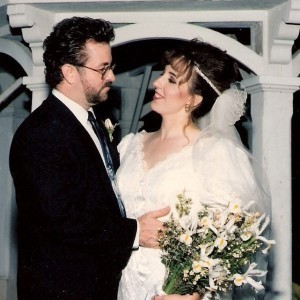
Here are two pictures of Sidonie-Gabrielle Colette. What do you think? Any resemblance?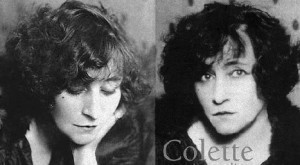
"Perhaps the only misplaced curiosity is that which persists in trying to find out here, on this side of death, what lies beyond the grave." - Colette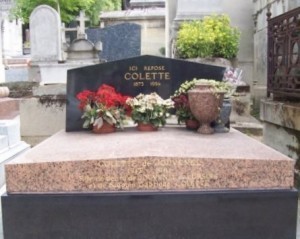
(originally published for Austen Authors, March 1, 2013)