Jay Sherer's Blog
August 17, 2022
2 Surprising Ways Audiences Relate to Indiana Jones
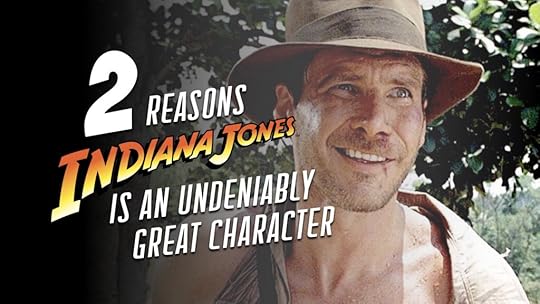
Indiana Jones possesses two key attributes that make him one of the most beloved characters of all time, and they both revolve around his character development:
Indiana Jones learns to value people over things.*Indy consistently starts out as a skeptic, but in the end comes face-to-face with the spiritual in a way that disproves his skepticism.Why do so many people (myself included) love Indiana Jones? Because he struggles with these two core issues that most human beings also struggle with. We see Indy in ourselves, and in doing so, we share a powerful human experience.
 Indiana Jones contemplates how to obtain the fertility idol.HOW (ALMOST) EVERY INDIANA JONES FILM STARTS
In every Indiana Jones film, Indy begins the film on an adventure that’s somewhat removed from the main storyline that follows:
In Raiders of the Lost Ark, Indy explores South America in the hunt for a fertility idol.In Temple of Doom, Indy battles Lao Che over a diamond.In The Last Crusade, a younger Indy steals the Cross of Coronado from a group of grave robbers.What’s true about Indiana Jones in each of these opening sequences (and actually isn’t true in Crystal Skull)? He’s a skeptic who focuses on obtaining a valuable item over and above protecting the people around him.
The Setup of Raiders of the Lost ArkIn Raiders of the Lost Ark, Indy doesn’t seem to care about his South American guides. In fact, they have an adversarial relationship throughout the opening sequence. As they either abandon him or die, he doesn’t experience much emotional discomfort. All of his emotion relative to their misfortune is related to his own mortality as opposed to any sense of empathy he has for them. Then, when Indy visits Marion–a former love interest of his–in Nepal, he wastes no time in explaining he’s only there for the headpiece to the Staff of Ra. He’s not interested at all in her.
At the same time, Raiders portrays Indy as a skeptic. As the South American guides find evidence of tribal spiritual warnings, Indiana Jones treats those spiritual practices as if they’re irrelevant and inconsequential to his objective. Nothing he encounters has spiritual significance to him. He pushes forward as if the spiritual entities serve as a ludicrous reminder of primitive tribal beliefs. And that’s critical to his actions later in the film.
 Indy talks to Marion in Nepal.The Setup of Temple of Doom
In the opening sequence of Temple of Doom, Indy meets with Lao Che to receive payment for collecting the remains of Nurhachi, the first emperor of the Manchu Dynasty. In exchange for finding those remains, Indy was supposed to receive a diamond called the Eye of the Peacock. But when the negotiations go sour, Indy does whatever he needs to do in order to get the diamond, putting dozens of people’s lives at risk. Short Round–a young kid Indy seems to have a deeper connection to–drives the car Indy escapes in, which puts Short Round in immediate and mortal danger. Even when Indy values another human being like Short Round, he still puts them in danger during his quest to obtain valuable items.
Later, when Indy, Willie, and Short Round find themselves in India, the local people tell them about the Thuggee Cult kidnapping the village children and stealing the Sankara stones. As Indy begins to investigate, he remains skeptical that the stones or the cult have any real spiritual influence over the physical world.
 Indy threatens Willie so Lao Che will give him the Eye of the Peacock diamond.The Setup of The Last Crusade
When Last Crusade opens, Indy abandons his boy scout troop to prevent a group of grave robbers from stealing the Cross of Coronado. His focus remains on the Cross of Coronado no matter what happens to those around him. And, when we first see Indy deal with his father, we start to get a feel for why Indy is so focused on things, because his own father seems to care more about his work than he does about his son.
Later, when Indy arrives in Venice, he sees Elsa as more of a thing to be conquered than a valued collaborator in the hunt for a precious artifact. And as Last Crusade plays out, it’s evident that Indy doesn’t see the Holy Grail as a spiritually-relevant item of power, but rather as an artifact of historical significance. Even when others try to convince him of the cup of Christ’s power, he remains skeptical.
 Young Indy doesn’t want to give up the Cross of Coronado.A Note on Kingdom of the Crystal Skull
Now, it should be noted that in Kingdom of the Crystal Skull, Indy feels… different. First, Indy attempts to prevent the Russians from getting access to the remains of an alien creature. That’s a reversal of what we see in the previous films. In Raiders and Last Crusade, Indy is trying to prevent Beloq and the grave robbers from getting the items of power, but note that he does so by seeking out the item for himself. In other words, he’s trying to get it so they don’t get it. But what’s interesting about the opening sequence of Crystal Skull is that it breaks from the traditional portrayal of Indiana Jones. Indy isn’t attempting to gain an item of power, he’s just attempting to prevent others from getting it. And two, he indicates to the government officials that he’s aware of the alien autopsy. In other words, he’s not much of a skeptic. He’s already seen the alien body…
 Indy leads the Russians to the alien body they seek.The Setup of Indiana Jones’ Character Development
In all the Indiana Jones films except Crystal Skull, the following two things are true about Indiana Jones at the beginning of the film:
He’s more focused on items and artifacts than he is on people.He’s a skeptic who doesn’t believe that any of these items have spiritual significance.At the start of the first three films, Indy wants to capture an important item that he doesn’t believe holds any spiritual power.
INDY’S CHARACTER ARC IN (ALMOST) EVERY INDIANA JONES FILMWhat happens to Indiana Jones throughout each of the first three films?
Indiana Jones realizes that people are more important to him than valuable items, and he has to acknowledge that there are spiritual powers he doesn’t understand.
Indiana Jones ends up putting people over conquest and is forced to become humbled as evidence of the spiritual forces he doubted become manifested before his very eyes. And both factors often come together to solidify Indy’s character arc and satisfy the needs of the plot.
Indy’s Transformation in Raiders of the Lost ArkIn Raiders, Indiana Jones surrenders to the Nazis rather than blowing up the Ark of the Covenant. Why? Two reasons: (1) By attempting to fight, he risks harming Marion, and (2) He has become curious about the power of the Ark. Notice how many people criticize Indiana Jones in Raiders by saying, “If you remove Indy, everything plays out in the same way!” And while that’s partially true, the fact that Indy learns to “let the Ark work” solidifies one of the core perspectives of the franchise: there are metaphysical forces at work that we don’t fully understand. At the end of the film, Indy acknowledges this change in his character when he turns to Marion and tells her not to look when the Ark is opened. He puts aside his desire to see the item of power, and simultaneously acknowledges that the Ark has a spiritual power he doesn’t understand. With that one line, we now know he values Marion over the Ark, and he realizes that he’s no longer a skeptic.
 Indy and Marion turn their eyes away from the Ark of the Covenant.Indy’s Transformation in Temple of Doom
In Temple of Doom, Indiana Jones rescues all the kidnapped children who have been enslaved by the Thuggee Cult. And he also comes to believe in the power of the Sankara stones, even telling Mola Ram that he betrayed Shiva. Indy’s newfound faith (albeit a shallow one) activates the Sankara stones in order to overcome Mola Ram and the Thuggees. He values the children and accepts that the stones have spiritual power.
 Indy climbs back up the bridge with the Sankara stones.Indy’s Transformation in The Last Crusade
And finally, in Last Crusade, Indy embraces the stories about Jesus Christ by choosing the cup of a carpenter and then uses that cup to heal his father, Henry Jones. And the storytellers double down on Indy’s character development by showing Indiana Jones choose to let go of the Holy Grail and choose his father as the entire building collapses down around him.
 Indy tries to reach for the Holy Grail while Henry tells him to let it go.WHY DO MANY CONSIDER INDIANA JONES TO BE ONE OF THE BEST CHARACTERS OF ALL TIME?
Many will come up with different answers as to why Indiana Jones is a great character. But, as a storyteller who believes that stories help us understand and interpret the world around us (shoutout to Lisa Cron and Wired for Story), I believe the reason so many audience members resonate with Indy is two-fold:
Many of us realize that people are far more valuable than things. Yet, all too many times, we behave as if the opposite is true. When we see Indy learn that people are more important than some of the most cherished items on the planet, we remember that the things we’re pursuing are not as valuable as those around us.Faith isn’t easy. For some reason, skepticism feels far easier to fall into than faith does. Doubt occasionally plagues even the most faithful people. And yet, the world around us remains complex and mysterious, and we don’t have answers for all the deeper questions we encounter. And, like Indy, many of us have experiences we simply can’t explain that force us to ponder the spiritual. Indy threatens to drop the Sankara stones into the river.
The premise guiding the character development of Indiana Jones resonates on a deeper level. Yes, Indy is cool. He has a fedora. He has a whip. He rejects the nonsense of regular society in order to go on extravagant adventures. But, he’s also like us. He’s a skeptic who realizes he doesn’t have all the answers, and he has to be reminded that people are more important than things.
If you enjoyed this article, please like it, share it with a friend, and subscribe to the channel! What do you think makes Indiana Jones a great character? If there’s another character you’d like me to explore, leave that suggestion in the comments down below.
ABOUT MEJay Sherer is the co-writer of the full cast audiobook and novel, Death of a Bounty Hunter, and the time travel serial story, Timeslingers. If you enjoyed this resource and would like others like it, please support Jay on Patreon.
*Screenwriters Craig Mazin and John August break this down related to Raiders of the Lost Ark on the Scriptnotes podcast.
[image error]

Why Indiana Jones is UNDENIABLY one of the BEST characters of all time
Indiana Jones possesses two key attributes that make him one of the best characters of all time, and they both revolve around his character development:
Indiana Jones learns to value people over things.*Indy consistently starts out as a skeptic, but in the end comes face-to-face with the spiritual in a way that disproves his skepticism.Why do so many people (myself included) love Indiana Jones? Because he struggles with these two core issues that most human beings also struggle with. We see Indy in ourselves, and in doing so, we share a powerful human experience.
Indiana Jones contemplates how to obtain the fertility idol.HOW (ALMOST) EVERY INDIANA JONES FILM STARTSIn every Indiana Jones film, Indy begins the film on an adventure that’s somewhat removed from the main storyline that follows:
In Raiders of the Lost Ark, Indy explores South America in the hunt for a fertility idol.In Temple of Doom, Indy battles Lao Che over a diamond.In The Last Crusade, a younger Indy steals the Cross of Coronado from a group of grave robbers.What’s true about Indiana Jones in each of these opening sequences (and actually isn’t true in Crystal Skull)? He’s a skeptic who focuses on obtaining a valuable item over and above protecting the people around him.
The Setup of Raiders of the Lost ArkIn Raiders of the Lost Ark, Indy doesn’t seem to care about his South American guides. In fact, they have an adversarial relationship throughout the opening sequence. As they either abandon him or die, he doesn’t experience much emotional discomfort. All of his emotion relative to their misfortune is related to his own mortality as opposed to any sense of empathy he has for them. Then, when Indy visits Marion–a former love interest of his–in Nepal, he wastes no time in explaining he’s only there for the headpiece to the Staff of Ra. He’s not interested at all in her.
At the same time, Raiders portrays Indy as a skeptic. As the South American guides find evidence of tribal spiritual warnings, Indiana Jones treats those spiritual practices as if they’re irrelevant and inconsequential to his objective. Nothing he encounters has spiritual significance to him. He pushes forward as if the spiritual entities serve as a ludicrous reminder of primitive tribal beliefs. And that’s critical to his actions later in the film.
Indy talks to Marion in Nepal.The Setup of Temple of DoomIn the opening sequence of Temple of Doom, Indy meets with Lao Che to receive payment for collecting the remains of Nurhachi, the first emperor of the Manchu Dynasty. In exchange for finding those remains, Indy was supposed to receive a diamond called the Eye of the Peacock. But when the negotiations go sour, Indy does whatever he needs to do in order to get the diamond, putting dozens of people’s lives at risk. Short Round–a young kid Indy seems to have a deeper connection to–drives the car Indy escapes in, which puts Short Round in immediate and mortal danger. Even when Indy values another human being like Short Round, he still puts them in danger during his quest to obtain valuable items.
Later, when Indy, Willie, and Short Round find themselves in India, the local people tell them about the Thuggee Cult kidnapping the village children and stealing the Sankara stones. As Indy begins to investigate, he remains skeptical that the stones or the cult have any real spiritual influence over the physical world.
Indy threatens Willie so Lao Che will give him the Eye of the Peacock diamond.The Setup of The Last CrusadeWhen Last Crusade opens, Indy abandons his boy scout troop to prevent a group of grave robbers from stealing the Cross of Coronado. His focus remains on the Cross of Coronado no matter what happens to those around him. And, when we first see Indy deal with his father, we start to get a feel for why Indy is so focused on things, because his own father seems to care more about his work than he does about his son.
Later, when Indy arrives in Venice, he sees Elsa as more of a thing to be conquered than a valued collaborator in the hunt for a precious artifact. And as Last Crusade plays out, it’s evident that Indy doesn’t see the Holy Grail as a spiritually-relevant item of power, but rather as an artifact of historical significance. Even when others try to convince him of the cup of Christ’s power, he remains skeptical.
Young Indy doesn’t want to give up the Cross of Coronado.A Note on Kingdom of the Crystal SkullNow, it should be noted that in Kingdom of the Crystal Skull, Indy feels… different. First, Indy attempts to prevent the Russians from getting access to the remains of an alien creature. That’s a reversal of what we see in the previous films. In Raiders and Last Crusade, Indy is trying to prevent Beloq and the grave robbers from getting the items of power, but note that he does so by seeking out the item for himself. In other words, he’s trying to get it so they don’t get it. But what’s interesting about the opening sequence of Crystal Skull is that it breaks from the traditional portrayal of Indiana Jones. Indy isn’t attempting to gain an item of power, he’s just attempting to prevent others from getting it. And two, he indicates to the government officials that he’s aware of the alien autopsy. In other words, he’s not much of a skeptic. He’s already seen the alien body…
Indy leads the Russians to the alien body they seek.The Setup of Indiana Jones’ Character DevelopmentIn all the Indiana Jones films except Crystal Skull, the following two things are true about Indiana Jones at the beginning of the film:
He’s more focused on items and artifacts than he is on people.He’s a skeptic who doesn’t believe that any of these items have spiritual significance.At the start of the first three films, Indy wants to capture an important item that he doesn’t believe holds any spiritual power.
INDY’S CHARACTER ARC IN (ALMOST) EVERY INDIANA JONES FILMWhat happens to Indiana Jones throughout each of the first three films?
Indiana Jones realizes that people are more important to him than valuable items, and he has to acknowledge that there are spiritual powers he doesn’t understand.
Indiana Jones ends up putting people over conquest and is forced to become humbled as evidence of the spiritual forces he doubted become manifested before his very eyes. And both factors often come together to solidify Indy’s character arc and satisfy the needs of the plot.
Indy’s Transformation in Raiders of the Lost ArkIn Raiders, Indiana Jones surrenders to the Nazis rather than blowing up the Ark of the Covenant. Why? Two reasons: (1) By attempting to fight, he risks harming Marion, and (2) He has become curious about the power of the Ark. Notice how many people criticize Indiana Jones in Raiders by saying, “If you remove Indy, everything plays out in the same way!” And while that’s partially true, the fact that Indy learns to “let the Ark work” solidifies one of the core perspectives of the franchise: there are metaphysical forces at work that we don’t fully understand. At the end of the film, Indy acknowledges this change in his character when he turns to Marion and tells her not to look when the Ark is opened. He puts aside his desire to see the item of power, and simultaneously acknowledges that the Ark has a spiritual power he doesn’t understand. With that one line, we now know he values Marion over the Ark, and he realizes that he’s no longer a skeptic.
Indy and Marion turn their eyes away from the Ark of the Covenant.Indy’s Transformation in Temple of DoomIn Temple of Doom, Indiana Jones rescues all the kidnapped children who have been enslaved by the Thuggee Cult. And he also comes to believe in the power of the Sankara stones, even telling Mola Ram that he betrayed Shiva. Indy’s newfound faith (albeit a shallow one) activates the Sankara stones in order to overcome Mola Ram and the Thuggees. He values the children and accepts that the stones have spiritual power.
Indy climbs back up the bridge with the Sankara stones.Indy’s Transformation in The Last CrusadeAnd finally, in Last Crusade, Indy embraces the stories about Jesus Christ by choosing the cup of a carpenter and then uses that cup to heal his father, Henry Jones. And the storytellers double down on Indy’s character development by showing Indiana Jones choose to let go of the Holy Grail and choose his father as the entire building collapses down around him.
Indy tries to reach for the Holy Grail while Henry tells him to let it go.WHY DO MANY CONSIDER INDIANA JONES TO BE ONE OF THE BEST CHARACTERS OF ALL TIME?Many will come up with different answers as to why Indiana Jones is a great character. But, as a storyteller who believes that stories help us understand and interpret the world around us (shoutout to Lisa Cron and Wired for Story), I believe the reason so many audience members resonate with Indy is two-fold:
Many of us realize that people are far more valuable than things. Yet, all too many times, we behave as if the opposite is true. When we see Indy learn that people are more important than some of the most cherished items on the planet, we remember that the things we’re pursuing are not as valuable as those around us.Faith isn’t easy. For some reason, skepticism feels far easier to fall into than faith does. Doubt occasionally plagues even the most faithful people. And yet, the world around us remains complex and mysterious, and we don’t have answers for all the deeper questions we encounter. And, like Indy, many of us have experiences we simply can’t explain that force us to ponder the spiritual.Indy threatens to drop the Sankara stones into the river.The premise guiding the character development of Indiana Jones resonates on a deeper level. Yes, Indy is cool. He has a fedora. He has a whip. He rejects the nonsense of regular society in order to go on extravagant adventures. But, he’s also like us. He’s a skeptic who realizes he doesn’t have all the answers, and he has to be reminded that people are more important than things.
If you enjoyed this article, please like it, share it with a friend, and subscribe to the channel! What do you think makes Indiana Jones a great character? If there’s another character you’d like me to explore, leave that suggestion in the comments down below.
ABOUT MEJay Sherer is the co-writer of the full cast audiobook and novel, Death of a Bounty Hunter, and the time travel serial story, Timeslingers. If you enjoyed this resource and would like others like it, please support Jay on Patreon.
*Screenwriters Craig Mazin and John August break this down related to Raiders of the Lost Ark on the Scriptnotes podcast.
[image error]April 1, 2022
Did the Oscars award the best story? And… Moon Knight, Ep. 1!
 The Story Geeks Show: The Oscars + Moon Knight, Ep. 1
The Story Geeks Show is BACK! On Tuesday, April 5th’s show: Did the Academy get it right? Did the best stories of 2021 win Oscars? We’ll also be reacting and digging deeper into Episode 1 of the latest Marvel Cinematic Universe property to hit Disney+: Moon Knight, which stars Oscar Isaac.
Watch here:
https://medium.com/media/babf0b83f8bdcae1decb1f667c2d64ec/hrefToday’s show is essentially sponsored by the name Oscar. And remember, everything we talk about on today’s show will contain spoilers.
Hosts: Jay Sherer, co-writer of Death of a Bounty Hunter and Timeslingers, and joining Jay: Josh Taylor. You can currently find Josh on the Modern Mouse YouTube channel and podcast feed… and he’s also a regular contributor on the Theme Park Pulse channel.
SEGMENT #1: THE OSCARS
Josh and I promise not to slap each other while talking about the Oscars. Besides, we’re hear to ask a much deeper question…
QUESTION #1: Josh, did your favorite movie of 2021 win an Oscar?QUESTION #2: Every year there’s tension between the Academy and the general audience about what should be in consideration. Why is that? Why doesn’t the Academy resonate with stories that general audiences resonate with?QUESTION #3: Should we care?SEGMENT #2: MOON KNIGHT, EPISODE 1
We got a brand new Marvel Cinematic Universe show last week: Moon Knight!
QUESTION #4: What’d you think of Moon Knight?QUESTION #5: The MCU is following the comics in terms of introducing metaphysical elements. Moon Knight brings Egyptian gods to life (which we also had a minor glimpse of in Black Panther). What do you think about that approach? Should religious characters be utilized in Marvel stories?QUESTION #6: We don’t know what Khonsu’s goal is, but we also know that Khonsu doesn’t respect Steven. He doesn’t even respect Steven’s life. He would be fine if that personality died. At the same time, Arthur Harrow–played by Ethan Hawke–has a belief that Ammit, the Egyptian god he serves, wants to bring about heaven on earth by eliminating evil people. And he tests to see if people are evil with his scales of justice tattoo. Here’s my question: In this series, who is good and what makes those characters good?SEGMENT #3: CHAPTER 1 OF A STORY…
This coming Thursday, April 7th, Daryl Smith–original co-host of The Story Geeks podcast–will join Jay to talk about Episode 2 of Moon Knight and we’ll also take a look at the MCU power rankings to try and figure out who the most powerful beings in the MCU are these days.
https://medium.com/media/f78a76d7b6d05e353ec7a36e6712c78f/hrefSubscribe to The Story Geeks show on YouTube or your preferred podcast provider. Episodes are published to the podcast feed right after we finish recording them on YouTube.
Leave us a comment to let us know what YOU thought about Moon Knight, and I’ll try to read it on the next show!
[image error]January 27, 2022
The Book of Boba Fett Sucks? I know why you don’t like it.
There are two Boba Fetts. Chances are, you like one of them better than the other. What do I mean? I’ll explain…
And to be clear, I don’t think The Book of Boba Fett sucks, but I do prefer The Mandalorian — by a good margin. So why do some people think The Book of Boba Fett sucks? And why do people (like me) prefer The Mandalorian?
It all revolves around the fact that George Lucas created two Boba Fetts.
As The Book of Boba Fett nears its season finale, Star Wars fans continue to wonder whether or not it’s a good addition to the Star Wars franchise. While The Mandalorian brought a divided fanbase together (very few people speak negatively about Din Djarin’s show), The Book of Boba Fett has brought up some of the old divisions. But why?

Why were fans unified about The Mandalorian, but divided when it comes to The Book of Boba Fett?
The FIRST Boba Fett.Let’s travel back to the 1980s. The Original Trilogy Era. Boba Fett first appeared in the infamous Star Wars Holiday Special in 1978. If we take the Boba Fett from that show, and also the Boba Fett we see in the Original Trilogy… what do we learn about Boba Fett as a character?
1. Boba Fett is a Loner.A core component of Boba Fett’s character is that he’s a loner. In the Star Wars Holiday Special cartoon, he blatantly despises the creature he’s riding. He doesn’t have a droid. And while he works for people, we don’t see him engaging with other people. Multiple sources have discussed the influence of Spaghetti westerns on Fett’s character, comparing the bounty huner to Sergio Leon’s “Man with No Name.”
2. Boba Fett is a Badass.Vader called Boba Fett “the best bounty hunter in the galaxy,” and Vader is not easily impressed (just think of how many officers he choked for failing him). And Vader admires Fett despite the fact that Fett talks back to Vader! On Cloud City, Lando Calrissian seems deathly afraid of Vader, but Boba Fett doesn’t show any hint of intimidation. And then, in Return of the Jedi, Fett doesn’t hesitate in taking on Luke Skywalker, a Jedi Knight.
Couple that with Boba Fett’s armor, his jet pack, his ship, and the plethora of weapons he carries, we can easily say… Boba Fett is a badass. And while he works with both the Empire and Jabba the Hutt, he’s clearly not under their control. He does what he wants.
 3. Boba Fett is Mysterious.
In the Original Trilogy, Boba Fett doesn’t have a backstory. He shows up, he captures one of our favorite characters — Han Solo — and then takes Han to Jabba the Hutt. All we know about Boba Fett is that he’s a loner, he works for some of the scariest people in the galaxy, and he’s not beholden to anyone.
He rarely even speaks. He’s mysterious in a way that’s compelling. Who the hell is this guy?
Boba Fett’s Demise… Almost…Those who don’t like Boba Fett usually dislike the fact that he’s a secondary or even tertiary character in the Original Trilogy who doesn’t do a whole lot. In fact, the way he “dies” is fairly uneventful and sort of played as a joke. A blind Han Solo mistakingly engages the bounty hunter’s jet pack and he stupidly crashes into the side of Jabba’s pleasure barge, falls to the sand, and then rolls into the sarlacc pit.
For people who grew up with the Original Trilogy as their main source of Boba Fett content, everything about him was dope except for his death.
But then… George Lucas brought him back. (Sort of.)
The SECOND Boba Fett.Fast forward (or… rewind?) to the Prequel Trilogy. Fans are often divided on the Prequel Trilogy, in part because it took unknown parts of Star Wars and revealed far more information about them. Backstory is a double-edged sword in storytelling. Without a backstory, audiences fill in the blanks themselves. But when a storyteller divulges backstory, the audience is forced to determine whether or not their own assumptions were superior to the storyteller’s.

The human brain is wired to fill in backstory in an attempt to relate to stories. It turns out that our brains want to understand and interpret stories in order to better deal with the real world (for more, read Lisa Cron’s excellent work, Wired for Story). Which means that our brains consistently seek answers to “why” things happen. When those “whys” are not answered in a story, our brains naturally attempt to fill the gaps.
George Lucas’ brain then filled those gaps for us. And as the brain behind the story of Star Wars, his “whys” supersede ours.
So, when Boba Fett showed up in Attack of the Clones, we were forced to accept the backstory George Lucas gave us…
How the Prequel Trilogy Changes Boba FettBefore I dive into how that backstory changes the nature of the character of Boba Fett, let’s first acknowledge something else. As someone who had already watched the Original Trilogy (dozens of times), the Prequel Trilogy was backstory. But guess what… for younger audiences, the Prequel Trilogy isn’t always backstory. While many watched the Original Trilogy first, newer Star Wars fans didn’t always follow that same order. Many watched the Prequel Trilogy first. Which means… the Prequel Trilogy, for some younger viewers, wasn’t backstory. Their first exposure to Boba Fett was Boba Fett from Attack of the Clones.
The implication here is simple: if you saw Kid Boba first, you likely had a different perception of Boba Fett’s appearance in the Original Trilogy. And even if you watched the Original Trilogy before watching the Prequel Trilogy, if you watched them without decades of time passing in between, you likely accepted Boba Fett’s history without a second thought. In other words, your brain didn’t have decades to fill in Fett’s backstory, so Lucas’ version ended up feeling natural.
Now, before you protest those assumptions, I realize that’s not true for everyone. I’m speaking in broad terms here. But I still think those things are true for many Star Wars fans.
Regardless, let’s look at how the Prequel Trilogy changes Boba Fett.
Boba Fett is NOT Unique.While Boba Fett felt like a standout character in the Original Trilogy films (for all the reasons I listed above), the Prequel Trilogy revealed that he wasn’t unique, not really. And he’s not unique for two reasons:
He’s one of many clones of Jengo Fett (yes, he is an unaltered clone, but a clone nonetheless).He is a derivative (and sort of a son) of Jango Fett.And, yes, those are two different things. Here’s why:
Boba Fett is One of Many.Is it possible for a clone to be a loner? Probably. In fact, one could make an argument that unlike all the other clones, he’s not automatically part of the clone “tribe,” which makes him a natural outsider.
However, cognitively, we now know that the guy underneath the helmet (whose face was never revealed until we saw him as a kid) has the same face as millions of other clones. Not only that, but based on how cool most of the clones are, it feels like they would be more likely to accept Boba as one of their own as opposed to rejecting him.
Now, the character many of us saw as a loner suddenly has millions of “brothers.”
Boba Fett is NOT OriginalBoba Fett literally becomes a version of his father, Jango Fett. Many of us had seen Boba Fett as being an original, interesting, badass character. But by giving us Jango Fett, George Lucas took that away.

Boba is no longer the only badass non-Force user to take on a Jedi. In fact, Jango Fett took on a far better trained opponent in Obi-Wan Kenobi. And that armor that Boba wears? Well, Jango had it first.
Boba Fett is no longer an original character who feels like a loner. And he’s no longer unique. The mystique of Boba Fett breaks down in the backstory.
George Lucas Created Two Boba Fetts… and John Favreau (with Dave Filoni) Gave Us Two Boba Fett ShowsFast forward to today. John Favreau and Dave Filoni bridge the gap. (Which, by the way, is a genius move…)
Din Djarin Enters the Star Wars UniverseDid you prefer the Original Trilogy Boba Fett (like me)? John Favreau has some good news: you get Din Djarin, literally the character we thought Boba Fett in the Original Trilogy was.
Loner? Check. (He’s not even a Mandalorian! He’s an orphan foundling!)Badass? Check.Mysterious? Check.John Favreau and Dave Filoni thought, “You know, George really changed who we thought Boba Fett in the Original Trilogy was… but people loved that guy. We should make a series about him.” Pure genius.
And guess what, people do love that guy! The Mandalorian was (for the most part) universally liked!
But John and Dave didn’t stop there. Because, of course, Boba Fett still exists, right? He sure does.
Boba Fett Lives Into His Prequel Trilogy PersonaDoes Boba Fett from the Book of Boba Fett feel at all like the Original Trilogy Boba Fett? Not at all. First, he’s not a loner. In fact, he makes a concerted effort to join the ranks of Sand People. Then, he attempts to set up shop as a leader. Original Trilogy Boba Fett would never do that!
But guess who would… Prequel Trilogy Boba Fett.
There’s a Boba Fett for Everyone… AlmostWhat’s my point? Thanks to John Favreau and Dave Filoni, just about everyone gets their verrsion of Boba Fett.
If you enjoy the Book of Boba Fett, good for you, because that Boba Fett is the natural product of the backstory George gave us in the Prequel Trilogy.
Prefer The Mandalorian? Good for you, because Din Djarin is the living embodiment of the Original Trilogy Boba Fett.
But before I close out this article, there is one missing Boba Fett (although maybe I’m missing a character here), because Din Djarin, while he is a loner, a badass, and mysterious, isn’t an uncaring outlaw of a bounty hunter. He does have a heart thanks to Grogu.
If you really wanted to see a foil for Han Solo, Din Djarin is not that, and the Original Trilogy Boba Fett most definitely was that. He was sort of like evil Han Solo, really. But, hey, John Favreau and Dave Filoni are giving the people what they want, so if you’re still missing your version of Boba Fett, just wait… maybe he’ll show up in the Kenobi series!
In the meantime, I’m super grateful to have The Mandalorian, my favorite Star Wars character of all time, because Boba Fett used to fill those shoes, but he transformed into something entirely different.
About How Stories Work with Jay ShererJay Sherer is the co-writer of the full cast audiobook and novel, Death of a Bounty Hunter, and the time travel serial story, Timeslingers. He also runs the How Stories Work with Jay Sherer YouTube channel, podcast, and blogwhere his goal is to tell better stories, help audiences understand popular stories, and help other storytellers improve their craft. If you enjoyed this article and would like others like them, please support Jay on Patreon.
All of Jay’s channels are produced by the Reclamation Society, a 501(c)(3) nonprofit organization.
[image error]A Tale of Two Boba Fetts…
George Lucas created two Boba Fetts. Jon Favreau and Dave Filoni then created a show about both of them on Disney+.
As the Book of Boba Fett nears its season finale, people continue to debate whether or not it’s a good addition to the Star Wars franchise. While The Mandalorian brought a divided fanbase together (I don’t think I’ve ever heard anyone speak negatively about Din Djarin’s show), The Book of Boba Fett seems to bring up some of the old divisions. Fortunately, those differing opinions have, thus far, been less toxic (at least from what I’ve seen).
But why? Why were fans unified about The Mandalorian, but divided when it comes to The Book of Boba Fett?
I think I might have an answer, and I think it’s mostly George Lucas’ fault.
The FIRST Boba Fett.But first, let’s travel back to the 1980s. The first appearance of Boba Fett was not The Empire Strikes Back. He first appeared in the infamous Star Wars Holiday Special in 1978. In that story, Boba Fett saves Luke Skywalker from being eaten, and then proceeds to beat the dinosaur-like creature he’s riding. And while he pretends not to like the Empire, he’s secretly working for Darth Vader, who calls him “the best bounty hunter in the galaxy.” Essentially, Boba Fett is only helping Luke to get to Han and capture the entire group at once. Basically, he’s an asshole. Despite that, he’s still one of the coolest looking characters in that cartoon and has some great weapons.
And then we get his two appearances in The Empire Strikes Back and The Return of the Jedi. What can we derive from Boba Fett’s early appearances (i.e., everything that came before the Prequel Trilogy)?
Boba Fett is a Loner.There’s one core attribute that defines Boba Fett: he’s a loner. He doesn’t have a droid companion. In the cartoon he rides on top of a creature, but he blatantly despises that creature. Multiple sources have also discussed the influence of Spaghetti westerns on Fett’s character. Some compare Fett to Sergio Leon’s “Man with No Name.” A character who is also a loner.
Fett is rarely shown interacting with other characters. He hangs in the background, watching rather than making himself the center of attention.
Boba Fett is Badass.As I mentioned, Vader called him “the best bounty hunter in the galaxy.” And we all know Vader is not easily impressed. Not only that, Fett talks back to Vader (one of the most feared villains in the galaxy). While Lando Calrissian in The Empire Strikes Back seems deathly afraid of Vader, Boba Fett doesn’t seem concerned with Vader at all. And then, in Return of the Jedi, Fett shows no fear when it comes to fighting Luke Skywalker, who has become a Jedi Knight.
Couple that with Boba Fett’s armor, his jet pack, his ship, and the plethora of weapons he carries… Boba Fett is a badass. And while he works with both the Empire and Jabba the Hutt, he’s clearly not under their control. He’s free.
Boba Fett is Mysterious.We don’t get much of a backstory with Boba Fett (i.e., not in the Original Trilogy). He shows up, he captures one of our favorite characters, Han Solo, and takes him to Jabba the Hutt. All we know is that he’s a loner, he works for some of the scariest people in the galaxy, and he doesn’t have a boss.
He rarely even speaks.
Boba Fett’s Demise… Almost…Those who don’t like Boba Fett (and those people tend to be rare and younger, but correct me if I’m wrong) usually dislike the fact that nothing comes of him in the Original Trilogy. In fact, the way he “dies” is fairly uneventful and sort of played as a joke. A blind Han Solo mistakingly engages the bounty hunter’s jet pack and he stupidly crashes into the side of Jabba’s pleasure barge, falls to the sand, and then rolls into the sarlacc pit.
For people who grew up with the Original Trilogy as their main source of Boba Fett content, everything about him was dope except for his death.
But then… George Lucas brought him back. Sort of.
The SECOND Boba Fett.Fast forward (or… rewind?) to the Prequel Trilogy. Fans are often divided on the Prequel Trilogy, in part because it took unknown parts of Star Wars and revealed far more information about them. Backstory is a double-edged sword in storytelling. Without a backstory, audiences fill in the blanks themselves. But when a storyteller divulges backstory, the audience is forced to determine whether or not their own assumptions were superior to the storyteller’s.
The human brain is wired to fill in backstory in an attempt to relate to stories. It turns out that our brains want to understand and interpret stories in order to better deal with the real world (for more, read Lisa Cron’s excellent work, Wired for Story). Which means that our brains consistently seek answers to “why” things happen. When those “whys” are not answered in a story, our brains naturally attempt to fill the gaps.
George Lucas’ brain then filled those gaps for us. And as the brain behind the story of Star Wars, his “whys” supersede ours.
So, when Boba Fett showed up in Attack of the Clones, we were forced to accept the backstory George Lucas gave us…
How the Prequel Trilogy Changes Boba FettBefore I dive into how that backstory changes the nature of the character of Boba Fett, let’s first acknowledge something else. As someone who had already watched the Original Trilogy (dozens of times), the Prequel Trilogy was backstory. But guess what… for younger audiences, the Prequel Trilogy wasn’t always backstory. While many watched the Original Trilogy first, newer Star Wars fans didn’t always follow that same order. They could watch the Prequel Trilogy first. Which means… the Prequel Trilogy, for some younger viewers, wasn’t backstory. Their first exposure to Boba Fett was Boba Fett from Attack of the Clones.
The implication here is simple: if you saw kid Boba first, you likely had a different perception of Boba Fett’s appearance in the Original Trilogy. And even if you watched the Original Trilogy first before watching the Prequel Trilogy, if you watched them without decades of time passing in between, you likely accepted Boba Fett’s history without a second thought. In other words, your brain didn’t have decades to fill in Fett’s backstory, so Lucas’ version ended up feeling natural.
Now, before you protest those assumptions, I realize that’s not true for everyone. I’m speaking in broad terms here. But I still think those things are true for many Star Wars fans.
Regardless, let’s look at how the Prequel Trilogy changes Boba Fett.
Boba Fett is NOT Unique.While Boba Fett felt like a standout character in the Original Trilogy films (for all the reasons I listed above), the Prequel Trilogy revealed that he wasn’t unique, not really. And he’s not unique for two reasons:
He’s one of many clones of Jengo Fett (yes, he is an unaltered clone, but a clone nonetheless).He is a derivative (and sort of a son) of Jango Fett.And, yes, those are two different things. Here’s why:
Boba Fett is One of Many.Is it possible for a clone to be a loner? Probably. In fact, one could make an argument that unlike all the other clones, he’s not automatically part of the clone “tribe,” which makes him a natural outsider.
However, cognitively, we now know that the guy underneath the helmet (whose face was never revealed until we saw him as a kid) has the same face as millions of other clones. Not only that, but based on how cool most of the clones are, it feels like they would be more likely to accept Boba as one of their own as opposed to rejecting him.
Now, the character many of us saw as a loner suddenly has millions of “brothers.”
Boba Fett is NOT OriginalBoba Fett literally becomes a version of his father, Jango Fett. Many of us had seen Boba Fett as being an original, interesting, badass character. But by giving us Jango Fett, George Lucas took that away.
Boba is no longer the only badass non-Force user to take on a Jedi. In fact, Jango Fett took on a far better trained opponent in Obi-Wan Kenobi. And that armor that Boba wears? Well, Jango had it first.
Boba Fett is no longer an original character who feels like a loner. And he’s no longer unique. The mystique of Boba Fett breaks down in the backstory.
George Lucas Created Two Boba Fetts… and John Favreau (with Dave Filoni) Gave Us Two Boba Fett ShowsFast forward to today. John Favreau and Dave Filoni bridge the gap. (Which, by the way, is a genius move…)
Din Djarin Enters the Star Wars UniverseDid you prefer the Original Trilogy Boba Fett (like me)? John Favreau has some good news: you get Din Djarin, literally the character we thought Boba Fett in the Original Trilogy was.
Loner? Check. (He’s not even a Mandalorian! He’s an orphan foundling!)Badass? Check.Mysterious? Check.John Favreau and Dave Filoni thought, “You know, George really changed who we thought Boba Fett in the Original Trilogy was… but people loved that guy. We should make a series about him.” Pure genius.
And guess what, people do love that guy! The Mandalorian was (for the most part) universally liked!
But John and Dave didn’t stop there. Because, of course, Boba Fett still exists, right? He sure does.
Boba Fett Lives Into His Prequel Trilogy PersonaDoes Boba Fett from the Book of Boba Fett feel at all like the Original Trilogy Boba Fett? Not at all. First, he’s not a loner. In fact, he makes a concerted effort to join the ranks of Sand People. Then, he attempts to set up shop as a leader. Original Trilogy Boba Fett would never do that!
But guess who would… Prequel Trilogy Boba Fett.
There’s a Boba Fett for Everyone… AlmostWhat’s my point? Thanks to John Favreau and Dave Filoni, just about everyone gets their verrsion of Boba Fett.
If you enjoy the Book of Boba Fett, good for you, because that Boba Fett is the natural product of the backstory George gave us in the Prequel Trilogy.
Prefer The Mandalorian? Good for you, because Din Djarin is the living embodiment of the Original Trilogy Boba Fett.
But before I close out this article, there is one missing Boba Fett (although maybe I’m missing a character here), because Din Djarin, while he is a loner, a badass, and mysterious, isn’t an uncaring outlaw of a bounty hunter. He does have a heart thanks to Grogu.
If you really wanted to see a foil for Han Solo, Din Djarin is not that, and the Original Trilogy Boba Fett most definitely was that. He was sort of like evil Han Solo, really. But, hey, John Favreau and Dave Filoni are giving the people what they want, so if you’re still missing your version of Boba Fett, just wait… maybe he’ll show up in the Kenobi series!
In the meantime, I’m super grateful to have The Mandalorian, my favorite Star Wars character of all time, because Boba Fett used to fill those shoes, but he transformed into something entirely different.
About How Stories Work with Jay ShererJay Sherer is the co-writer of the full cast audiobook and novel, Death of a Bounty Hunter, and the time travel serial story, Timeslingers. He also runs the How Stories Work with Jay Sherer YouTube channel, podcast, and blogwhere his goal is to tell better stories, help audiences understand popular stories, and help other storytellers improve their craft. If you enjoyed this article and would like others like them, please support Jay on Patreon.
All of Jay’s channels are produced by the Reclamation Society, a 501(c)(3) nonprofit organization.
[image error]January 26, 2022
How the Story of Jonah Works — A Writer Explains Jonah

(Watch the video version below or keep reading for the full article!)
https://medium.com/media/9aaadb7bd363821a7b9d831406d74a28/hrefThe story of Jonah — from the Bible — is not about a man who gets swallowed by a “whale.” Some of us learned that in Sunday school while others got the bizarro version of Jonah on the Joe Rogan Experience.
But the story of Jonah has a deeper and far more important message that resonates with many of us in the modern day. And that message is delivered through an engaging narrative that feels like an episode of Game of Thrones.
A fugitive prophet. An evil city. A sea monster sent by God. And an ending that forces the audience to ask themselves a deep, introspective question.
How does the story of Jonah work? Let’s break it down.
The meaning of the story of Jonah revolves around God’s simple but powerful question, “Is it right for you to be angry?”
(If you enjoy this article and want to dig even deeper into the story of Jonah, I created a study guide to go along with this show. It’s easy to use for self study or in a writing group or a small group.)
Let’s start with a question that most people ask about the story of Jonah: Did it really happen?
DID THE STORY OF JONAH REALLY HAPPEN? HISTORICAL ACCOUNT VS. PARABLEBefore we get into the actual story, we have to address the sea monster in the room (*groan*), the one critical question that often comes up every time someone references the story of Jonah: Did it actually happen? Is this an historical account or is it a parable?
My definitive answer: It doesn’t matter.
Whether or not the story of Jonah is an historical account or a parable has no impact on the Truth we can extract from the story.
If it actually happened — if this is real-life history — then the story of Jonah is an important story with an important message. But, if it’s a parable… it’s an important story with an important message.
Many Evangelical and Catholic churches teach the story of Jonah as if it actually happened. But others — including many Jewish scholars — contend that the story of Jonah is just a parable.
Here’s the thing, though, it doesn’t matter. The important part of the story of Jonah is not about him surviving for three days inside a “whale” (which, by the way, might be better translated as “large sea creature,” or my personal favorite, “sea monster”). Fixating on whether or not the story of Jonah really happened means sacrificing a far more important conversation about the nature of God, how humans should interact with one another, and also our own view of morality.
Whether or not the story of Jonah is an historical account or a parable has no impact on the Truth we can extract from the story. Jesus himself told parables that contain Truth, and many spiritual books from all kinds of faiths use parables to illustrate Truth about our shared human experience and our relationship with the Divine.
So, let’s put aside the argument about whether or not the story of Jonah is historically accurate and dive into the more important aspects of what the storyteller is attempting to convey.
SETUP: ACT I — JONAH’S QUESTAct I — the setup — is short and sweet. It’s just three verses. That’s likely because the story is a small piece of a more expansive narrative. In other words, the Book of Jonah can stand alone, but it’s intended to be understood as part of a larger narrative universe — in this case, the Old Testament/Tanakh [just like Captain America: Winter Soldier can stand alone, but it helps to have the greater context of all the other Marvel Cinematic Universe (MCU) films]. Part of the reason people tend to miss some of the deeper messages in Jonah is because they aren’t familiar with the wider biblical context, or they don’t factor it into the equation.
I’ll touch on this bigger picture as we go, but I encourage anyone and everyone to read the entire Old Testament. After all, the Bible is perhaps the most significant book in human history; it’s at least the most-read book in the world. For now, let’s explore Jonah’s brief introductory section.
The story begins with God giving Jonah a directive — basically a quest. He instructs Jonah to go to Nineveh. God refers to Nineveh as a “great city,” probably because it’s both large and influential. God wants Jonah to “cry out against Nineveh” because “…their wickedness has come up before me.”
In other words, Nineveh has become so evil that God feels the need to intervene. Jonah will serve as God’s messenger, and his objective will be to let the people of Nineveh know that God has seen their wickedness.
Based on this simple setup, we now know:
Jonah has received a directive (I like calling it a “quest”) from God.The people of Nineveh — a large and influential city — are participating in behaviors that God considers evil or wicked.God has asked Jonah to “cry out” against them.Then, in verse three, we hit Plot Point I (i.e., an inflection point that takes the story in a new direction): Instead of embarking on his quest, Jonah attempts to flee from the presence of the Lord. He boards a ship for Tarshish rather than heading for Nineveh.
God gives Jonah a directive and Jonah immediately bails. That’s Act I, a brief setup for the story of Jonah.
CONFLICT: ACT II, PART 1 — JONAH THE FUGITIVEAct II starts with Jonah fleeing the presence of God, but as an audience, we don’t know why… yet. That’s still coming, but in the meantime this first half of Act II ramps up the conflict right away.
Jonah’s headed to Tarshish, fleeing the presence of God, when God sends a violent storm that threatens to sink the ship he’s on. This storm is so severe that the sailors are afraid for their lives. Meanwhile, Jonah is fast asleep belowdecks, a detail I find fascinating because it’s a subtle clue (i.e., amazing foreshadowing) about Jonah’s mindset.
In most stories, fugitives don’t sleep well, but here Jonah is “fast asleep” in the middle of a raging storm. The sailors — who are terrified the ship will sink — have to wake Jonah up. In other words, Jonah doesn’t seem to have a guilty conscience at all. Despite fleeing from the presence of God and being beset by a violent storm, he’s sleeping like a baby.
When the sailors wake Jonah up, the captain tells him to pray to his God. They’re all praying to their own gods, and they might as well have Jonah pray, too. Maybe one of the gods will choose to save them. If not, given the severity of this storm, they’re all going to die.
The sailors have an interesting theory — one we still encounter in modern times: They blame their misfortune on someone’s behavior. Somebody must have done something to make the gods angry, and in turn, the gods sent the storm to punish that person.
To figure out who the gods are angry at, they “cast lots” — which is essentially like drawing straws or rolling dice — to see who on the boat has caused the storm, the assumption being that the gods will reveal who the problematic person is… and it works! The casting of lots identifies Jonah as the source of the problem, which of course we already know to be true. God sent the storm because Jonah fled.
The sailors begin to pepper Jonah with questions about where he’s from, who his God is, and what he did to upset his God. Jonah tells them who he is, and then says:
“…I fear the Lord, the God of heaven…”
Doesn’t that seem like an odd thing for Jonah to say? Everyone around Jonah is terrified, but he just woke up from an unperturbed, deep sleep. And yet, he claims that he fears God. Keep in mind, at this point we still don’t know why Jonah is fleeing from the presence of God, but does it make sense to disobey a deity that you fear? Someone who truly feared God above all else would do what God wanted them to do, right?
The story will circle back to this later, but I bring it up because it’s another example of subtle foreshadowing that works phenomenally well in giving us some insight into Jonah’s character and his motivation.
As the storm continues to get worse, the sailors ask Jonah what they should do to appease God. Jonah tells them to throw him overboard. At first, they don’t want to. They try to head for the shore instead, but they can’t make it. The storm is too intense for them to fight it, and before long, their ship will sink. So, the sailors finally cry out to God for mercy and then proceed to throw Jonah into the sea as he suggested.
Right after Jonah gets tossed in, the storm stops. The storyteller notes here that the sailors feared the Lord exceedingly, offered sacrifices to Him, and took vows — I would assume vows to make Jonah’s God their own God.
This set of scenes showcases compelling conflict. A prophet of God flees from His presence. A storm arises that terrifies a group of seasoned sailors and threatens to sink their ship and take their lives. They nervously cast lots to see who’s behavior has caused the storm, and then when they find out that it’s Jonah, they reluctantly throw him overboard.
It’s a fantastic start to the story of Jonah, and the conflict in the first half of Act II really sucks the audience in and makes us want to see what happens next. Plus, the storyteller has already hinted at more conflict to come. At this midpoint of the story of Jonah, we’ve learned a little bit more about what’s happening:
Jonah claims to fear God, but is openly disobedient to Him.Jonah also seems to have a pretty clear conscience. In other words, it seems like he feels justified in fleeing from God.The storyteller has also — utilizing the conflict — contrasted Jonah’s attitude with that of the sailors who demonstrate a more acute fear of God. And while they initially attempt to row to shore, they quickly come around to throwing Jonah overboard in obedience to God.Now here comes the sea monster.
CONFLICT: ACT II, PART 2 — JONAH THE CAPTIVEChapter 1, Verse 17 — Chapter 2, Verse 10
The first half of Act II ends in verse 16, and the second half of Act II begins when the sailors throw Jonah overboard. That’s where we hit the classic scene everybody knows…
A giant sea monster swallows Jonah whole.
Note that it doesn’t say “whale,” and when Jesus refers to Jonah in the Gospel of Matthew (like the TV show Hawkeye referencing the events of Avengers: Endgame), that word, which is translated from Greek rather than Hebrew, doesn’t necessarily mean “whale,” either. The actual words referenced in both stories could be translated to “great sea creature” or even “sea monster.”
The reason I bring this up is that suggesting that the “fish” or the “sea monster” is a whale seems to be an attempt to make this element of the story more believable. It’s almost as if someone has already determined that the story must be historically accurate in order for it to be meaningful, and since calling it a “sea monster” or even “great sea creature” might make it seem less realistic, some interpreters replace that descriptor with one that seems more realistic to them.
…sanitizing the content here doesn’t help.
Since we’re breaking Jonah down as a story without attempting to determine whether it actually happened, I have to come to two conclusions about altering the narrative:
Changing the term from “sea monster” to “whale” doesn’t improve the story. In fact, I’m willing to bet many modern day readers would be far more interested in a story that had a “sea monster” rather than a “whale.”The story of Jonah isn’t even about the sea monster, which means attempting to alter the storyteller’s original description might detract from the narrative arc, and therefore the entire meaning of the story.In other words, sanitizing the content here doesn’t help.
I do understand why so many people focus on this aspect of the story. It’s definitely a strong marketing tool. There’s not another story in the Bible about a sea monster, which makes it instantly memorable. In fact, if Hollywood made a film about the story of Jonah, this scene would be on the poster: a giant sea monster swallowing Jonah whole. It’d be a pretty rad poster, honestly.
*Movie Trailer Voice* “A massive creature from the depths of the ocean swallows a fugitive prophet of God… Jonah, starring Leonardo DiCaprio. This summer, stay out of the water.”
As a fan of fantasy, I find the addition of the sea monster compelling, but the story of Jonah isn’t about the sea monster. In fact, there are only three verses that mention the creature. Here’s everything that’s said about the sea monster:
It swallows Jonah.Jonah is in its belly for three days and three nights.Jonah prays to the Lord from the sea monster’s belly, and then it vomits him up onto the shore.The only description of the sea monster is that it’s “great,” which likely means large (just like with the city of Nineveh). That’s it. We don’t get any other details. Why? Because that’s not where we’re supposed to spend our time and attention.
So, while Jonah is inside the sea monster, he prays to God, which is where the conflict of Act II really shines. Act II is more about Jonah’s internal conflict than anything else. You can read the entire prayer, but here are some things I think we can ascertain from it:
Jonah seems to be confident that God will hear and answer his prayer because he starts the prayer by praising God for hearing and answering his prayer.Jonah is miserable inside the sea monster. It’s not a penthouse suite. It’s bad. He uses intense metaphors to describe his discomfort and even references Sheol to suggest that being inside the sea monster is like being in hell.Jonah says something very interesting at the tail end of his prayer. He prays, “Those who regard worthless idols forsake their own mercy.” Doesn’t that seem like a strange thing to say for a guy stuck in the belly of a sea monster? Remember that because it tells us something very important about Jonah in this moment. It’s another bit of subtle foreshadowing that’s easy to miss.This prayer reveals a lot about Jonah’s character. He seems to understand how God works, and he loves the Lord and wants to follow Him. But he’s still holding onto some baggage that will be revealed in Act III, including why he fled from God in the first place.
Act II ends with the sea monster vomiting Jonah onto dry ground. And then — some unspecified time later — God tells Jonah to go back to Nineveh to deliver a message to the Ninevite people. Jonah gets a second chance to complete his quest.
By the way, if you think about the story of Jonah as one story within a much larger “narrative universe,” there are parallels and references to later installments. My favorite follows the similarities and critically important differences between the story of Jonah and the accounts of the Gospels that cover the life, death, and resurrection of Jesus Christ. Check out my Aftershow on my Patreon account (for free!) to learn more about how Jonah and Jesus are connected (it’s mind-blowing, at least to me).
For now, let’s get into Act III where we finally begin to understand why Jonah fled from God.
THE RESOLUTION: ACT III: JONAH GOES TO NINEVEHChapter 3, Verse 1 — Chapter 4, Verse 11
Act III takes the story straight to Nineveh. God calls Jonah to Nineveh again, and this time, Jonah actually goes. It notes here that it takes three days to traverse throughout Nineveh — so Nineveh is huge. And this time around, Jonah completes his quest by walking through the city of Nineveh crying out, “In forty days, Nineveh will be overthrown!”
In a Hollywood blockbuster, this story would be about Jonah’s fear. He would need to overcome his fear in order to do the right thing.
And the people listen. They believe Jonah. When word reaches the king, he tells the entire city that everyone in Nineveh needs to repent. And they do — collectively as a city, they all acknowledge and turn away from their wickedness. Some audience members might balk at such a rapid turn in the hearts of the Ninevite people. But, I recently watched several episodes of the Vice series BLACK MARKET, which showcases illegal activities in major cities in today’s world. And part of the philosophy of that show — which it documents extraordinarily well — is that most of the people involved in the illegal activity know it’s wrong and don’t want to be part of it, but they’re desperate. I imagine that the people of Nineveh felt the same way. They knew their city was evil — and that they’re partially at fault — which is likely why repentance comes so easily for them.
To give us an idea of how bad Nineveh had become, the storyteller documents that the king says, “Let every one turn from his evil way and from the violence that is in his hands.” There are a couple of implications here:
Everyone in Nineveh was truly evil — meaning that they were actually harming one another. And I note that because, based on other biblical narratives, a city has to get pretty bad before God issues a warning of this nature. The story of Jonah doesn’t provide us with any details, but we can assume that given Nineveh’s repentance, the king’s own words, Jonah’s reaction — which we’ll see in a minute — and additional context from other stories that fall within the “narrative universe” of the Bible, the people of Nineveh are committing some serious crimes against one another.According to the story, everyone in the city knew their city was evil, and knew it was wrong. Their collective response was to turn away from their violent, wicked ways.The people of Nineveh repent and God upholds His promise. He does not overthrow the city.
In most modern movies, that would be the resolution. In a Hollywood blockbuster, this story would be about Jonah’s fear. He would need to overcome his fear in order to do the right thing. But in the end, he would pursue the quest God gave him and head to the corrupt city of Nineveh. There, he would find the courage to tell them to repent, and then — after a few chase scenes — he would face off against the evil king, overcome the king, and the story would end with everyone repenting and living happily ever after.
And if the actual story of Jonah — the one we find in the Bible — ended here, it could be about Jonah overcoming his fear and choosing to be selfless. Maybe Jonah didn’t want to go to Nineveh because he was scared. But God proved to Jonah through the encounter with the sea monster that He would protect him.
If the story ended here, then the popular narrative about God sustaining Jonah while he was in the “whale” might be justified. We’d have to assume some things we’re not told, but we could get there.
But here’s the thing: The story of Jonah is not over. And Jonah’s problem is not that he is afraid. The story of Jonah is about to go to a far darker place. This resembles an independent film way more than it does a summer blockbuster.
Let’s recap:
God has a quest for Jonah.Jonah doesn’t want to complete it. He flees from God, but we don’t know why.After God redirects Jonah by sending a storm and sea monster to teach him a lesson, Jonah changes his mind and obeys God.Jonah goes to Nineveh, declares they need to repent from their evil ways, and then everyone is happy!Well, wait… That’s not quite right. Not everyone is happy. Because after the people of Nineveh repent and declare they’re going to change, Jonah… is enraged! Didn’t expect that, did you? What’s going on here?
This story isn’t a Hollywood blockbuster. Jonah didn’t overcome his own fear. He wasn’t afraid to preach to Nineveh. He just didn’t want Nineveh to receive mercy.
Let’s look at Jonah’s final prayer to God to examine some key details we need to fully understand this story:
In his prayer, Jonah says that he told God why he didn’t want to go to Nineveh, a detail the storyteller chose not to reveal until now. This means God has always known why Jonah didn’t want to go to Nineveh.Jonah predicted the outcome of completing the quest before he ever embarked on it. He says, “…I know you are a gracious and merciful God, slow to anger and abundant in lovingkindness, One who relents from doing harm…” In other words, Jonah suspected God would show mercy to the people of Nineveh, which means he also likely knew Nineveh would repent.Jonah is so pissed off about the people of Nineveh receiving mercy that he prays, “…Please take my life from me, for it is better for me to die than to live.”Why didn’t Jonah go to Nineveh the first time? Why did he flee? Because he wanted God to overthrow Nineveh! He wanted Nineveh to be punished for their evil! He saw how disobedient the Ninevites were, how evil and violent they were, and he wanted them to pay for it — most likely with their lives, though I’m somewhat inferring that.
This story isn’t a Hollywood blockbuster. Jonah didn’t overcome his own fear. He wasn’t afraid to preach to Nineveh. He just didn’t want Nineveh to receive mercy. He wanted to see them punished.
Here it’s important to note that Jonah isn’t wrong in wanting to see Nineveh’s evil dealt with. Nineveh was evil. God agreed. God was going to have Nineveh overthrown for how evil they were. Even the Ninevites themselves thought their own behaviors were evil. But what happens next showcases why the story of Jonah is so important — something probably all of us can recognize as a shared human experience.
Jonah is outraged that God has shown Nineveh mercy. He’s so outraged that he doesn’t want to live to see these people get off scot free, so to speak. Overreaction? Maybe. But have you ever been so angry about an unresolved injustice in your family or community that you could barely stand it? If not, perhaps you can at least imagine the feeling. It’s certainly not a healthy place to be.
But thankfully, God doesn’t leave Jonah in that state (although He’s not going to be easy on him). He asks Jonah a simple question:
“Is it right for you to be angry?”
This question should cut us all to the core. I’ll explain why in a minute, but first God (and therefore the storyteller) is going to illustrate His point one more time in the story through another metaphor.
Jonah leaves Nineveh and goes to a place where he can still see the city. Why would he do that? Personally, I think Jonah wants to see if his outrage might persuade God to change His mind, and if so, he can gleefully watch the city burn. It feels like Jonah still believes his way of thinking is superior to God’s, and he’s trying to convince God to change His mind.
God prepares a plant to grow up — obviously very quickly — to provide some shade for Jonah because he is completely miserable in the heat. And Jonah is grateful for the shade. He goes to sleep, and then as the morning dawns, God sends a worm to eat the plant, leaving Jonah totally exposed to the sun again. The heat beats down on Jonah, a strong wind comes up alongside the heat, and pretty soon Jonah’s miserable yet again, and says to God, “It is better for me to die than to live.”
God responds, “Is it right for you to be angry about the plant?”
And Jonah retorts, “It is right for me to be angry, even to death!”
“You have had pity on the plant,” God says, “for which you have not labored, nor made grow, which came up in a night and perished in a night. And should I not pity Nineveh, that great city, in which are more than one hundred and twenty thousand people who cannot discern their right hand from their left?”
Roll credits. The end. That’s how the story of Jonah ends. Nineveh is saved while Jonah is still outraged at God and at the Ninevite people. Not some pithy happy ending, but rather God questioning Jonah’s heart. Feeling a bit puzzled? Understandable.
Let’s break it all down to showcase how this ending is actually quite complete and how powerful the story of Jonah truly is in explaining the human condition.
JONAH EXPLAINED — THE MEANING AND PURPOSE OF THE STORY OF JONAHSo what is the story of Jonah all about? It’s definitely not about him getting swallowed by a “whale,” right? The meaning of the story of Jonah revolves around God’s simple but powerful question, “Is it right for you to be angry?”
Jonah wanted violence. Jonah wanted to withhold mercy. What did God want? Restored relationship.
The story of Jonah is a character study. It delivers a gut punch that’s meant to force us to pause and reflect on what just unfolded. We didn’t get clear heroes and villains. We got nuance. But what does it all mean? What’s the meaning of the story of Jonah?
Using Lagos Egri’s thoughts on premise from his book, The Art of Dramatic Writing, I would suggest that the story of Jonah showcases that:
Self-righteous indignation ignores its own hypocrisy to produce bitterness and outrage.
In Act I, Jonah flees from God so as to avoid God’s directive. By the end of the story we know why: Jonah doesn’t want God to have mercy on Nineveh. He wants Nineveh to experience pain and suffering because of their evil deeds. Jonah actively disobeys God’s command and wishes for death and destruction on a group of fellow humans.
In Act II, Jonah changes his behavior, but not his heart. Let’s revisit that one telling line in his prayer again. In the belly of the sea monster, he prayed, “Those who regard worthless idols forsake their own mercy.” Who was he talking about?
My suspicion is that he’s talking about the Ninevites! Jonah acknowledges that he disobeyed God by fleeing God’s presence, but he still doesn’t want God to forgive the people of Nineveh. In Jonah’s mind, the people of Nineveh have “forsaken their own mercy.” According to him, they don’t deserve God’s mercy.
In Act III, Jonah obeys God, but he remains convinced Nineveh should be overthrown. So, when Nineveh repents and God spares them, Jonah becomes outraged. And God, seeing Jonah’s outrage, asks him that simple question:
“Is it right for you to be angry?”
Does Jonah have a right to be outraged about Nineveh’s evil behavior? Yes. Even God was outraged by that. But Jonah isn’t just outraged by Nineveh’s evil. He’s outraged at God for showing them mercy after they have acknowledged their own evil and chosen to turn away from it.
Jonah wanted violence. Jonah wanted to withhold mercy. What did God want? Restored relationship.
And here’s the really important aspect of why Jonah is wrong and why God is right: Jonah isn’t worthy of God’s mercy either. Jonah disobeyed God. He never changed his heart. He wanted violence against Nineveh, even after they repented.
The problem isn’t that we desire justice, it’s that we are quick to appoint ourselves judge over who should or shouldn’t be brought to justice.
God’s question is essentially Him pointing out that Jonah’s heart was as problematic as the behavior of the Ninevites. Jonah wanted God to obliterate them, and fled from God in order that they wouldn’t have a chance to repent. By abandoning his quest, Jonah sentenced the unrepentant Ninevites to God’s Wrath.
Nineveh wasn’t worthy of God’s mercy, but Jonah isn’t worthy of God’s mercy, either. If we demand that God punishes evil, justice requires that He punish us, too. Fortunately, as the story of Jonah showcases, God wants a relationship with his creation and He wants us to refrain from evil.
The story of Jonah demonstrates that while we desire justice and mercy, when we seek true justice, we often condemn ourselves. Jonah’s outrage when God shows the people of Nineveh mercy makes him a hypocrite. And his desire for violence and lack of compassion make him bitter and angry.
The problem isn’t that we desire justice, it’s that we are quick to appoint ourselves judge over who should or shouldn’t be brought to justice. Later in the Bible, in the book of Matthew, Jesus Christ says, “Judge not, that you be not judged…And why do you look at the speck in your brother’s eye, but do not consider the plank in your own eye?”
Thus, the premise of the story of Jonah rings true centuries later: Self-righteous indignation ignores its own hypocrisy to produce bitterness and outrage.
In the ’80s and ’90s, the Moral Majority sought justice by demanding “clean” content and condemning controversial content all while hating homosexuals. More recently, we’ve seen Cancel Culture movements that sought justice by demanding that humans “do better,” and all the while, those deeply involved in those movements were committing terrible acts of their own.
That, unfortunately, is often our own shared human experience. Whether we resemble the people Nineveh or Jonah, we’re not worthy of mercy. But, according to the story of Jonah, God allows for repentance and grants mercy, even when we don’t deserve it.
The story of Jonah is not mainly about a prophet who’s protected by God after being swallowed by a “whale.” Instead, it’s a deeply personal exploration of justice, mercy, and our own deep-seeded issues with hypocrisy, bitterness, and outrage. And for those reasons, I love the story of Jonah and consider it a masterpiece of storytelling.
But, according to the story of Jonah, God allows for repentance and grants mercy, even when we don’t deserve it.
Two final things… If you want to dig even deeper into the story of Jonah — either for self study or to study it with a writers’ group or a small group — check out my study guide!
And, don’t forget to check out my Aftershow content where I break down the similarities and differences between the story of Jonah and the story of Jesus Christ as it’s laid out in the Gospels. It’s a little bit mind-blowing, and it’s available on Patreon.com/HowStoriesWork.
Let me know your thoughts on the story of Jonah in the comments! Did I miss anything?
Thanks for reading!
JAY SHERER’S BIO:Jay Sherer is the co-writer of the full cast audiobook and novel, Death of a Bounty Hunter, and the time travel serial story, Timeslingers. He also runs the How Stories Work with Jay Sherer YouTube channel, podcast, and blog where his goal is to learn to tell better stories, help audiences understand popular stories, and help other storytellers improve their own storytelling.
If you enjoyed this resource and would like others like them, please support Jay on Patreon.
[image error]January 8, 2022
Best Books for New Authors
The following books are the options I’ve found to be the most helpful…
https://medium.com/media/1c1009c0c5f87d57a3bab7525148db28/hrefIn an attempt to be as helpful as possible, I’ve defined the order in which I think new authors should purchase/read these books. That way, if you haven’t purchased a single book yet, you can get started on the right track.
#1 — The FIRST Book I Would Buy:Syd Field’s book, The Screenwriter’s Workbook.
Now, I know what you’re thinking… “I want to write novels, not screenplays!”
 Syd Field’s “The Screenwriter’s Workbook”
Absolutely. But, stories have structure — a beginning, a middle, and an end. And if you’re a new author, understanding how to structure your book can be challenging. Yes, Syd Field is writing predominantly for screenwriters, and yes, his advice might be too constraining for some authors…
But here’s what new authors get: A guide for determining a basic outline, explanations for the essential story beats many stories have and how to incorporate them into your novel, and helpful structure templates.
Once you understand the basics, you can break all Syd Field’s rules, but for new writers, constraints can be very helpful.
Buy The Screenwriter’s Workbook on Amazon…
#2— The SECOND Book I Would Buy:As a follow-up to Syd Field’s book, the very next book I would recommend new authors buy would be Lagos Egri’s book, The Art of Dramatic Writing.
Hang on! The Art of Dramatic Writing is about stage plays, isn’t it? It is. And the writing is a little old school. But I have yet to encounter a book that gives a better description of how to write a solid premise — the reason your story matters — or a book that explains character development better than Egri’s.
 Lajos Egri’s “The Art of Dramatic Writing”
This is a perfect complement to Syd Field’s book on structure. If you purchase both books, you’ll have a workbook on how to structure your story and additional info on how to develop a great premise and compelling character arcs for your characters.
(Special shout-out to Dr. David Esselstrom, who first referred me to those two books when I was a new author.)
Buy Lajos Egri’s The Art of Dramatic Writing (my favorite book on this list) on Amazon…
Now you’ve got one of the best books on structure, one of the best books on premise and developing character arcs. So where should new authors go next?
#3 & #4 — You Choose:Here, you have a choice…
Do you need help adding emotion to your story and understanding what elicits emotion from your audience?
…OR…
Do you need to better understand how to craft a story that makes readers want more?
 Karl Iglesias’ “Writing for Emotional Impact”
If you’re a new author struggling to get readers to connect emotionally, I recommend picking up a copy of Karl Iglesias’ book, Writing for Emotional Impact. He examines how to produce an emotional response in your readers. And yes, it’s another screenwriting book, but who cares, it’s great!
Buy Karl Iglesias’ book, Writing for Emotional Impact on Amazon…
On the other hand, if you’ve nailed the emotional impact aspect of your writing, but you’re struggling with putting everything together and keeping audiences engaged…
I recommend Lisa Cron’s book, Wired for Story. In it, she explains how the human brain engages with stories, and how writers can use techniques to draw readers in and keep them glued to your book.

Buy Lisa Cron’s book, Wired for Story on Amazon…
#1: Tackle story structure with Syd Field’s book, The Screenwriter’s Workbook…
#2: Learn premise and character development with Lajos Egri’s masterpiece, The Art of Dramatic Writing…
#3 & #4: Understand how to elicit emotion with Karl Iglesias’ book, Writing for Emotional Impact and/or understand how the brain craves stories with Lisa Cron’s book, Wired for Story.
Well, I’ve got two more books for new authors, and these two books are finally intended for novel writers specifically.
#5 — The FIFTH Book I Would Buy:In order to write fiction that engages readers, you need to be a skilled writer. And writing can take time to learn. But by now you should be writing, so let’s improve that writing a bit, shall we? The next book in any new author’s arsenal should be: The Elements of Style by Struck and White. Part grammar workbook, part style guide, Elements of Style will help new authors understand the rules of writing. It’s not an exciting book, but it’s a good one to have on your desk.

Buy Struck and White’s book, The Elements of Style on Amazon…
#6— The SIXTH Book I Would Buy:And finally, the book many people would list first (but not me, I think you should write for a while before reading this book), Stephen King’s simply titled memoir, On Writing.

The reason I suggest adding this book to your quiver after you’ve been writing material for a few years is that King’s book has a lot of things seasoned writers will empathize with, and reading it as a new author will spoil those aspects of the book. Or, new authors will just ignore those sections altogether and miss some of the wisdom.
But it is a book worth reading, so pick up a copy after you’ve read all the rest!
Buy Stephen King’s book, On Writing on Amazon…
About How Stories Work with Jay ShererJay Sherer is the co-writer of the full cast audiobook and novel, Death of a Bounty Hunter, and the time travel serial story, Timeslingers. He also runs the How Stories Work with Jay Sherer YouTube channel, podcast, and blog where his goal is to tell better stories, help audiences understand popular stories, and help other storytellers improve their craft. If you enjoyed this article and would like others like them, please support Jay on Patreon.
All of Jay’s channels are produced by the Reclamation Society, a 501(c)(3) nonprofit organization.
[image error]November 3, 2021
Goodreads Book Giveaways — My Experience & Some Ideas for You
I recently did a Goodreads Book Giveaway. After that experience, I thought, “You know, we could have done that better.”
Which is why I’ve create 3 different resources specifically targeted toward self-published authors or writers in their growth phase [i.e., writers who have a database (or social network) with less than 5K contacts or followers].
RESOURCE #1 — Video: How Goodreads Book Giveaways Work:WATCH HERE: https://youtu.be/x4KK8IIxuJM RESOURCE #2 — VIDEO: Should YOU Do a Goodreads Book Giveaway? My Answer:WATCH HERE:
https://youtu.be/OJcdXYRJyNc
RESOURCE #2 — VIDEO: Should YOU Do a Goodreads Book Giveaway? My Answer:WATCH HERE:
https://youtu.be/OJcdXYRJyNc
 RESOURCE #3 — MARKETING PLAN: My Thoughts on the Ideal Goodreads Book Marketing Plan
I took the time to write up a 23-page marketing plan. I haven’t tested this plan yet, but this is the plan I’ll be using the next time I do a Goodreads Book Giveaway (likely in 2022). You can get that plan for FREE just by subscribing to my email list on my website.
GET THE MARKETING PLAN: https://howstorieswork.org/If you have any specific questions about any of these resources, please let me know (just comment on this post with your question)!
JAY’S BIO:Jay Sherer is the co-writer of the full cast audiobook and novel, Death of a Bounty Hunter, and the time travel serial story, Timeslingers. He also runs the How Stories Work with Jay Sherer YouTube channel, podcast, and blog where his goal is to learn to tell better stories, help audiences understand popular stories, and help other storytellers improve their own storytelling.
If you enjoyed this resource and would like others like them, please support Jay on Patreon.
All of Jay’s channels are produced by the Reclamation Society, a 501(c)(3) nonprofit organization.
[image error]October 18, 2021
Goodreads Book Giveaways — Should Authors Do a Goodreads Giveaway?

Let’s face reality: book marketing is difficult.
I’ve spent over 20 years in marketing, and fiction book marketing is one of the most difficult things I’ve ever done. Especially if you’re a self-published author or publishing through an indy publisher.
What makes it hard?
Competition for attention is fierce.Dozens (if not hundreds) of options exist.Fictional book profit margins are very low.Costs can soar before you see a return.I’m trying new fiction book marketing options all the time. And when I try them, my goal is to report back what I learned. I recently tried a new tactic in my self-published book marketing journey, the Goodreads Book Giveaway.
In this article, I’ll share the details associated with our campaign and what the results were. I’ll also share the variables that must be considered for your campaign. Before we get there, let me share the set up for our test with this giveaway campaign.
“…you would hope that a Goodreads Book Giveaway would increase sales or even get you more book reviews… but that’s a downstream goal that could require some extra work.”
Here are some things you should know:
Our (Small) Team: We use a book marketing freelancer to help us out with our marketing campaigns. I have a day job and I need help when it comes to marketing my books (most of which are co-written with my co-writer Nathan Scheck). Our freelancer is a friend of mine and great at what she does, but isn’t necessarily a fiction book marketing expert. But, if you’re feeling overwhelmed, just know that you’re not alone. She and I feel overwhelmed at times, and we have over 40 years of marketing experience. But, that’s why I’m writing this article. To help you! She did help us with this Goodreads Book Giveaway.Our Self-published Book. The book we tested the giveaway with, Death of a Bounty Hunter , was essentially self-published. It was published by the Reclamation Society, which is a nonprofit independent production company that I started with Nathan. Nathan, our freelancer, and I do 100% of the publishing and marketing, so we’re essentially self-publishing.Our Timing. We ran our test during Goodreads’ Book Giveaway Month (i.e., August 2021). This is an important variable, and I’ll get to why later.The Type of Book Giveaway. With any Goodreads Book Giveaway, you have two options: (1) give away Kindle copies (up to 100), or (2) offer printed books (as many as you want to fulfill). Because Goodreads is owned by Amazon, they handle the Kindle distribution of copies to giveaway winners. But if you choose to offer printed books, you’ll have to fulfill those yourself.The Type of Giveaway Package. You also have to choose the Goodreads Book Giveaway “package” you want to purchase. Both the Kindle version and the printed book version have two options: (1) the Standard option for $119, and (2) a Premium option for $599. (I’ll explain the differences below.) In August, because it was Goodreads’ Book Giveaway Month, we did receive a discount (all publishers and authors did).Our Promotional Plan. We promoted the giveaway through social media and email, but didn’t purchase any advertising or use any other marketing channels to promote the giveaway. Everything we did was free (besides the giveaway itself).Fiction vs. Nonfiction. Our book, Death of a Bounty Hunter , is fiction. Non-fiction books are a completely different animal for many reasons. (I might need to write an entire article about it.)Definition of SuccessLet’s start by defining what “success” looks like for a Goodreads Book Giveaway. In my mind, the reasons doing a book giveaway could be:
Increase awareness of your book. Make more of the Goodreads users aware your book exists.Increase awareness of your author profile. Introducing yourself to more Goodreads users by promoting your work.Now, you would hope that a Goodreads Book Giveaway would increase sales or even get you more book reviews… but that’s a downstream goal that could require some extra work.
The reason I mention this is that I believe a Goodreads Book Giveaway requires additional effort in order to sell more books and get better reviews. (I’ll explain why at the end of this article.)
Cost BreakdownThe first question to ask yourself is:
How much am I willing to pay?
If you’re not guaranteed to get any book sales, does that make the Goodreads Book Giveaway untenable? It’s an important question because in my experience, it might cost you more to get better results. Let’s explore this some more so that you can see how the return on your investment needs to work.
Maybe all you’re looking to do is break even—meaning you want to get your money back, but you’re okay with not making a profit. Is that an option?
SCENARIO #1:
A fiction book (novel) using the Kindle copies option for the giveaway…
Let’s assume your book is priced at $10 and that every Kindle copy you sell gets you around $5.00. Depending on the publishing service you’re using, these numbers can vary, but let’s assume it’s somewhere close. Our book’s numbers are pretty similar for the Kindle version.
If you purchase the Standard Goodreads Book Giveaway at $119, and you want to recoup that cost, you need to sell 24 books ($119 divided by $5). If you purchase the Premium Goodreads Book Giveaway at $599, then you’ll need to sell 120 ($600 divided by $5) books to break even.
If you know your exact numbers, here’s the Kindle giveaway formula (it’s super simple even if you hate math):
[Goodreads Book Giveaway Option Price] / [Profit Per Book Sold]
*NOTE: This assumes that when people purchase, they’ll buy your Kindle version, but we had about an equal number of Kindle copies and paperback copies purchased. Our Kindle version is priced at $9.99 and our paperback version is priced at $14.99. The profit margin on both is about the same.
SCENARIO #2:
A non-fiction book using printed copies for the giveaway…
For this example, we’ll assume your book is priced at $24, and that you earn $12 for every printed book sold. And, because you’re the one that needs to do the fulfillment of the printed book, let’s pretend that each printed book costs you $7.00 to print, and that mailing each book costs $3.00 (that’s low for shipping and handling, but you can adjust as needed). We’ll also assume that you’ve chosen to give away 10 books.
If you purchase the Standard Goodreads Book Giveaway at $119, and you want to recoup that cost, you need to sell 19 books [$119 + $100 in fulfillment costs = $219. Then divide that by $12 in revenue per book sold]. If you purchase the Premium Goodreads Book Giveaway at $599, then you’ll need to sell 59 books to break even.
Here’s the slightly more complicated formula if you want to plug your own numbers in:
[Goodreads Book Giveaway Option Price] + [# of Printed Books Given Away] X ([Cost Per Printed Book] + [Fulfillment Cost]) / [Profit Per Book Sold]
Obviously, each author will have drastically different numbers based on their marketplace, topic, earnings, etc.
Standard vs. Premium OptionsNow that we’ve taken a look at costs, ask yourself this:
Should I choose the Standard giveaway option ($119) or the Premium option ($599)?
Here’s my thinking…
First off, the only difference between the two options is that when you choose the Premium package, your book will be “featured” (i.e., listed at the top of and highlighted) in the giveaways section and you get to send an email (through Goodreads) to people who entered the giveaway but didn’t win.
Second, it depends on (1) how strong your presence on Goodreads is and (2) how well you can reach people outside of Goodreads. If you have a strong social presence, if you’ve built a strong blog or email list, or if you have another way to get the word out, the Standard package might be worth while. But, the Standard package means that Goodreads isn’t going to do any promotion for you. Could readers stumble across your book? Yes. But, they’ll see the featured books first. And then, when they don’t win, they won’t get a personalized email encouraging them to purchase. If you’re well known and have an audience, you can buy the Standard package and drive people to it outside of Goodreads. If you’re not well known and don’t have a large reach, then you might want to choose the Premium package. We chose the Premium package.
Third, it also depends on how many other authors/publishers are promoting their giveaways at the same time you choose to. We set up our book giveaway during Goodreads’ Book Giveaway month. That meant we had a lot of competition. Competition makes getting “featured” a whole lot more valuable for exposure because the number of options for Goodreads users is much higher.
If you’re not as well known and will be listing your giveaway in a competitive category, consider the Premium package. But if people know you and you don’t have much competition in your category, the Standard package might be sufficient.
Our NumbersNow, we’ll take a closer look at our numbers:
Death of a Bounty Hunter retails for $9.99 on Kindle. It’s a genre-bending weird western (i.e., supernatural, steampunk, western, and dark fantasy), so it’s not a wildly popular genre like romance, mystery, or even science fiction.We chose the Kindle Goodreads Book Giveaway option (we didn’t want to have to deal with fulfillment) and chose to give away 100 copies.We also chose the Premium Goodreads Book Giveaway package (I believe it was on sale for $499 instead of $599 during the month of August).We promoted the giveaway in Facebook Groups (5–6 of them), on our personal social media profiles (none of us are celebrities, so we don’t have thousands of followers), and via our email list (which was around 460 subscribers at the time).We ran the giveaway from August 3 through August 31 of 2021. I’m guessing it was a popular month for Goodreads authors to host a giveaway, so we likely had a lot more competition than someone might in other months.We ended the giveaway with 1,453 Goodreads users entered to win the giveaway.Since August 31, 2021, we’ve had 6 total sales and we’ve received 10 ratings and reviews on Goodreads.My Assessment: Should You Offer a Goodreads Book Giveaway?I want to help authors (especially self-published or independent writers) be as successful as possible. Now, the question you should ask yourself is…
Should I pull the trigger and offer a Goodreads Book Giveaway?
Obviously, our results (6 sales and 10 ratings/reviews) aren’t fantastic. Especially when we spent $499. But, we’re only about a month-and-a-half past the end of the Goodreads Book Giveaway deadline (August 31). And, it’s still on the “to read” shelf of close to 1,500 Goodreads users. In retrospect, I think our strategy could have been better, but it also would have cost us a lot more.
Here’s my Goodreads Book Giveaways strategy for the future:
A Bigger Plan. I would likely make the Goodreads Book Giveaway part of a larger marketing plan (which would cost a lot more money, but also be more likely to get better returns). In fact, I might run (simultaneously) my own print book giveaway to collect email addresses, then email new subscribers promoting the Goodreads giveaway as well. The Standard plan doesn’t give you the option to email Goodreads users. The Premium plan only gives you one shot to tell entrants they didn’t win. But a complex, strategic marketing plan would require way more touch points than that. Plus, if you buy the Premium plan, you can reference the print giveaway in that email… that would be fantastic.Advertising and Email. I would probably use paid advertising (Facebook) to promote the book giveaway. Imagine this: deliver an ad to a targeted audience highlighting your print book giveaway. To enter that giveaway, they need subscribe to your email. When they subscribe, you also refer them to the Goodreads Book Giveaway. Then, in your email to Goodreads users who didn’t win, you offer them a chance to win the print version (which would require making sure they’d let you in that email — they have specific rules for what you can and can’t do). After the giveaway, the hope would be that you would have a big email list to target to purchase the book. You could also run remarketing ads on Facebook to those who clicked through to your landing page. That would likely give you a significant boost in post-giveaway sales.Now, what I just described probably increases the cost of the advertising campaign exponentially, but it’s the best possible marketing plan I can think of given all the other constraints. Granted, I have no idea if it would work, but it feels like a much stronger plan.
Re-think Offering a Goodreads Book Giveaway If:I don’t think Goodreads Book Giveaways are for everyone (especially not every self-published author). I wouldn’t recommend a Goodreads Book Giveaway strategy if:
You’re not going to promote it. You’ve got to do your best to get the giveaway in front of people, even if you pay for the Premium package.You need to make all the money back. If you need to make all your money back, especially if you need it back quickly, then it may be too risky for you to invest in a Goodreads Book Giveaway.You don’t have a longer-term strategy. Ultimately, just running a Goodreads Book Giveaway likely isn’t enough. In order to convert more people into readers, you’ll have to invest in more tactics and different strategies over a long period of time.You haven’t tested your book with an audience. The last think you want is to pay to promote a book that people hate. Not everyone will like your book, and that’s totally fine. Very few books are for the general marketplace anyway. Before you pay for a Goodreads Book Giveaway, make sure you understand your target market. A worst-case scenario would be that the people who win the giveaway, read your book, hate it, and then review it say it’s terrible. Some people will likely do that regardless, but make sure your book has a solid target market (that’s on Goodreads) before doing a Goodreads Book Giveaway.There are likely more reasons not to do a giveaway through Goodreads, but these are some of the bigger ones.
ConclusionThere you go! That was our experience with Goodreads and our book giveaway. I’m still processing it and still wondering how to really get more out of the service in the future. We definitely spent more than we got back. But, we are also getting more ratings and reviews, which are essential to long-term success.
Have you run a Goodreads Book Giveaway in the past? What has your experience like? Let me know in the comments!
[Jay’s Bio]Jay Sherer co-wrote the full cast audiobook and novel, Death of a Bounty Hunter, and the time travel adventure serial story, Timeslingers.
Support Jay on Patreon and get access to more resources for writers and storytellers! And make sure you subscribe to his YouTube channel and podcast (both titled How Stories Work with Jay Sherer) where he breaks down popular stories and highlights the work of great storytellers. And don’t forget to follow him on here on Medium and on Goodreads.
Jay’s channels and works are produced by the Reclamation Society (a nonprofit production companies he currently operates).

July 7, 2021
STORYTELLING, TRUTH, AND “THE GOD PROBLEM” — IS BRET WEINSTEIN WRONG?
Part 3 in a continuing conversation about storytellers and storytelling started (unwittingly) by Bret Weinstein and Jordan Peterson. Want to catch up? Read Part 1 and Part 2 .

We have reached a place in this conversation about storytelling where our behavior comes face-to-face with our beliefs. And I’ll be honest, this article focuses far more on questioning reality and truth than it does on storytelling. But the storytelling ramifications are real, and worth considering.
The path we’ve traveled thus far has revealed:
Metaphorical truth may be more important than literal truth. [Read more in Part 1, but the short version is that belief in an afterlife may have propelled humanity forward evolutionarily. Bret Weinstein called belief in an afterlife “metaphorically true, but literally false.” Ergo (Note: always use “ergo” when the opportunity presents itself), Jordan Peterson wondered if metaphorical truth could be superior to literal truth, and then questioned whether the highest form of truth could be considered Divine.]Fiction writers and storytellers, as purveyors of “metaphorical truth,” have a responsibility to behave like scientists and theologians. [Read more in Part 2. Basically: scientists observe, hypothesize, and then test those hypotheses, just like writers should. And theologians study the Divine. Storytellers should combine those two mindsets when telling a story that intends to reveal the truth.]Some storytellers or fans of storytelling reading this series will reject both of these premises outright. But, before anyone does that, consider this: If Jordan Peterson and Bret Weistien are onto something (and again, they may not be), then the implications must be wrestled with. If metaphorical truth is more important than literal truth, and if — evolutionarily speaking — stories propelled the ability for humans to survive and thrive to new heights, then we might also assume that:
The stories we tell today will either help us become better as a species or ultimately bring about our demise.
Hence, me suggesting that storytellers have an obligation to behave as both scientists and theologians in the second article.
But, since I already built arguments for that approach in Part 1 and Part 2. Before we pick up that discussion further, I think we have to do something else first. We must put on our scientist and theologian caps, at least momentarily, before we continue.
Because Bret Weinsteim and Jordan Peterson may be completely and utterly wrong. But not in the way you might think….
The stories we tell today will either help us become better as a species or ultimately bring about our demise.The God Problem
What if the conclusions that Bret Weinstein and Jordan Peterson have hinted at are correct, but what if the building blocks of their arguments are completely wrong? What if the highest form of truth isn’t “metaphorically true, but literally false”?
Let’s go back one step. Why are Bret Weinstein and Jordan Peterson posing these questions in the first place? Neither of them claim to be storytellers. Bret Weinstein refers to himself as an evolutionary biologist and Jordan Peterson refers to himself as a psychologist. Both could be considered modern day philosophers. Some people consider them both abhorrent. But wherever one lands on who they are or what they’re all about, we do need to consider the origins of the discussion.
In other words, why should we care?
Simply put, Weinstein and Peterson are posing the same questions that philosophers have posed for millennia. And, in their own way, they are behaving like both scientists and theologians (as I have suggested storytellers should behave).
They have observed their environment and landed on a question: What makes human beings different from animals?They have formed a hypothesis: Delayed gratification separates human beings from the rest of the animal kingdom.Their discussion begins to test this hypothesis. Notably, Bret has already considered this. And he has a suggestion: The ultimate form of delayed gratification, a belief in the afterlife, seems to have separated human beings from animals. We construct stories in order to avoid “sinning,” and by doing so we delay gratification and help our species thrive. Except Bret Weinstein says that belief in an afterlife, while extremely beneficial to the species, is: “metaphorically true, but literally false.”That prompts Jordan Peterson to present another question: Can metaphorical truth, if it’s the highest possible form of truth (i.e., abiding by said truth produces the best possible outcome for humanity), be considered Divine?I’ve already written about each of these points. Why repeat them? Because three possibilities exist, and we should probably address them (they’re likely to show up in our stories):
These hypotheses and theories are bullshit (i.e., unproven and unsound). Completely flawed.These hypotheses and theories are onto something, but they’re not complete. Partially flawed.These hypotheses and theories are Divine truth. Flawless.Why must we address them? Because they impact our very lives, which means they impact our stories.
It’s highly unlikely that their theories are flawless. Their theories are probably not complete bullshit, either. Which means they may be onto something, but gray areas exist. I’m sure readers will already have thought of ways to poke holes in their conversation and their hypotheses. I’ll present one that I care about: the God problem.
But let’s address each possible outcome before we get into “the God problem” in more depth.
If These Hypotheses Are Bullshit… (Completely Flawed)Before we continue, I’ll address the first bullet point: that their theories are completely flawed. This is fairly simple. Maybe everything Weinstien and Peterson have suggested is utter nonsense. Human beings may not be as different from other animals as they suggest. Maybe. Or maybe we are different, but it has nothing to do with delayed gratification. Maybe. Or maybe delayed gratification is only one variable in a far more complex equation. Maybe (probably).
In order to avoid “the God problem,” we would need to be able to toss out their arguments, but still find reasons human beings evolved in the manner that we did (something other than delayed gratification). If readers have ideas, I’d love to hear them in the comments section. (One of my readers, the brilliant comic book writer and artist Malachi Ward, mentioned that Weinstein and Peterson’s perspectives seem to follow a Judeo-Christian understanding of “the afterlife,” and there are many different perspectives on the afterlife that they didn’t address and far more variables than they’re addressing. Great points.) In the meantime, here’s my take:
My Take: Bret Weinstein and Jordan Peterson’s questions, hypotheses, and suggestions are worth considering (otherwise I’d be writing a series of articles in rebuttal to their core questions and hypotheses). We know that our species has worshipped gods for millennia. We know that the human brain is wired for storytelling (e.g., read Lisa Cron’s Wired for Story). We don’t know how that occurred. Weinstein and Peterson are exploring the topic, and the topic is worthy of consideration. Though, as Malachi pointed out… maybe they need to consider more variables.
If These Hypotheses are at Least Partially True (or Partially Flawed)Now, let’s assume that Weistein and Peterson are onto something, even if only partially. I’m only going to focus on one way their argument could be flawed, but the reality is that there could be thousands of ways. My focus: “the God problem.” How we get there:
Let’s say that the initial hypothesis is accurate: Humans are different from animals in meaningful ways.Then, let’s assume the second hypothesis is also accurate: The ability to delay gratification is one of the more significant ways humans are different from animals.And finally, let’s say the third hypothesis is also accurate: Delayed gratification has led to the formulation of belief systems that include rewards in the form of an afterlife.Note that any of those could be partially or completely flawed. Human beings may not be very different from animals. Humans may be very different from animals, but delayed gratification is either not one of the reasons or there are other, more significant differences that should also be considered. And even then, maybe delayed gratification didn’t result in beliefs about the afterlife. Or maybe there were other variables that encouraged a belief in an afterlife. But, for the sake of my next argument, we’ll assume these hypotheses are at least partially accurate. Because the fourth hypothesis feels more like a conclusion than a hypothesis, and it deserves a conversation.
Which brings me to Bret Weinstein’s fourth hypothesis (or his conclusion or suggestion depending on how we take it):
Belief in an afterlife is metaphorically true, but literally false.
This suggests that a belief in an afterlife benefits humanity, but there’s actually no such thing as an afterlife. Belief in an afterlife is helpful, but it’s not true. It’s almost like me choosing to believe that broccoli tastes like ice cream. It doesn’t, but it’s highly beneficial for me to eat broccoli, and I get to reap the longer term health benefits of broccoli and enjoy eating it. Except, it definitely does not taste like ice cream. There are ways to measure that broccoli does not taste like ice cream. Meaning that if I say, “I love having broccoli for dessert because it tastes like ice cream,” that would trigger a listener to say that I’m either crazy, or something is far different about my brain than the average human. An analysis of the chemical composition of broccoli and ice cream would show notable differences between the two foods. So, if broccoli did taste like ice cream to me, it wouldn’t be objective truth, but rather subjective truth.
But can we actually measure Bret Weinstein’s bold statement about the afterlife? Can we say, with 100% certainty, that an afterlife does not exist? That an afterlife is literally false? I don’t think so. To Malachi’s point, there are probably hundreds if not thousands of perspectives on what the afterlife even is. Can we disprove each and every one?
It’s highly unlikely. Bret isn’t saying here that God (or a pantheon of gods) doesn’t exist, but he is suggesting that religious belief in an afterlife is not true. One could extrapolate that any religion where a God or gods declare that an afterlife does exist would be literally false as well. Either that or those gods or that God is lying (more on this later).
Which is how we reach “the God problem.”
Bret has declared that belief in an afterlife is literally false. But what if he’s wrong? The reason I call it “the God problem” is that many religions suggest that there is a God (or gods) and that an afterlife actually exists. Who’s correct?
What if a deity actually exists? This question challenges Bret’s quote head-on (which, to be fair, he doesn’t present an argument for or against, so there’s no way to break down any specific evidence).
Rather than try to build a counterargument to Brett’s conclusion (because he didn’t present an initial argument to test), what if we simply asked: Could Bret Weinstein be wrong?
In other words, Brett has stated, from an evolutionary biologist’s perspective, that belief in an afterlife has helped our species survive and even thrive (my words, not his, but I believe that captures his intent). He’s even willing to call belief in an afterlife “metaphorically true.” Is it possible that belief in an afterlife is literally true? In other words, human beings recognized the importance of a belief in the afterlife because an afterlife actually exists.
The reason this matters is that we need to understand whether or not Jordan Peterson’s suggestion — that supreme truth may be Divine — holds any weight. If it does, if supreme truth is Divine, then what if there’s a deity associated with that truth? Wouldn’t we want to know? Wouldn’t storytellers be interested in not only knowing and tapping into supreme truth, but also knowing where that truth originated from?
If Jordan Peterson’s question regarding metaphorical truth being Divine is answered with, “Yes, metaphorical truth is Divine,” then Brett’s conclusion about an afterlife being “literally false” becomes extremely suspect. Because if metaphorical truth turns out to be the highest form of truth, and if that means that metaphorical truth is Divine, then the next question becomes: “Is Brett Weinsten’s conclusion simply bullshit?” (Which is just more fun than saying “unsound.”)
Now, we have uncovered “the God problem.” That is, what if there actually is a deity (or a set of deities)? What if metaphorical truth is literal truth and literal truth exists because of a deity? Meaning, human beings didn’t invent the concept of a deity or set of deities, but rather a deity created human beings and we discovered the existence of said deity? Those questions alone contain so many variables that trillions of pages have been written on them over the course of human history.
If we conclude that metaphorical truth is Divine (which, to be fair, neither Weinstein nor Peterson concluded, it was only raised as a question), then it would seem foolish not to attempt to find the deity to whom that truth belongs. We might fail, and discover that no such deity exists (or maybe a deity did exist, but has ceased to exist), but to not try seems… unscientific.
My Take: Storytellers should at least consider the possibility that a deity exists, because that question is core to the human experience and weighs on real human beings. Characters in stories care about this question. How they answer it will shape them. As storytellers seeking truth, it feels necessary to at least ponder the concept of a deity in some way in our stories, even if that means asking, “How would the world be different if nobody believed in a deity or if one literally does not exist?”
The issue with “the God problem” is that we don’t have a definitive answer. People have definitive beliefs. Bret Weinstein sounds pretty definitive in his belief that an afterlife is literally false. But I don’t think there’s enough evidence to suggest that he’s correct. And the same thing is true of Jordan Peterson’s suggestion that supreme truth might be Divine. There’s not enough definitive evidence to prove or disprove that hypothesis, which means…
…we’re back to acting like scientists and theologians as we seek truth in our storytelling.
More Thoughts to ComeAs writers, I think we should test these hypotheses in our stories. We should explore characters who gain faith in something bigger or who lose their faith in something beyond themselves. But I would caution against Bret’s conclusion. He could be right, but what if he’s wrong? How would a story test those belief systems?
I do have more thoughts on this topic as it pertains to storytelling! But let’s stop here. I’d like for readers to weigh in. What do you think about “the God problem” as it pertains to storytelling? Is this a hypothesis you’ve tested in your own storytelling? Let me know in the comments down below!