
Erik Kwakkel's Blog
September 22, 2018
Medieval selfies and the earliest selfie-stickSelfies are by no...


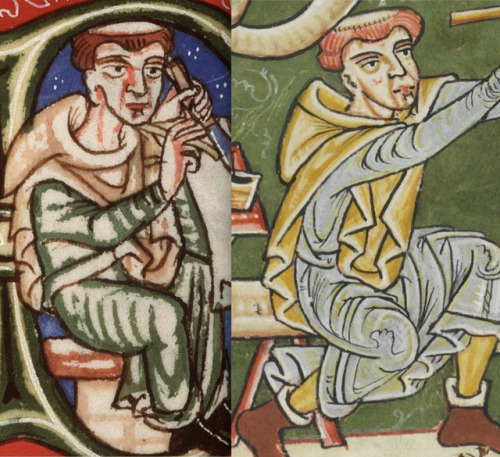
Medieval selfies and the earliest selfie-stick
Selfies are by no means an exclusively modern phenomenon. During the Middle Ages artists would portray themselves, even realistically. The person seen here made two selfies of himself and even tells us his name: “Rufillus”, Latin for The Redheaded. In the top image he is using a stick to support his arm so as to make a better picture. I like to think it is the earliest example of a selfie-stick!
Read more about these images in this blog post: https://medievalbooks.nl/2018/09/20/me-myself-and-i/
Sources: Cologny, Martin Bodmer, 127; Amiens, Bibliothèque municipale, Lescalopier 30.


June 15, 2015
Eating a bookThese three objects can hardly be called books. Yet...
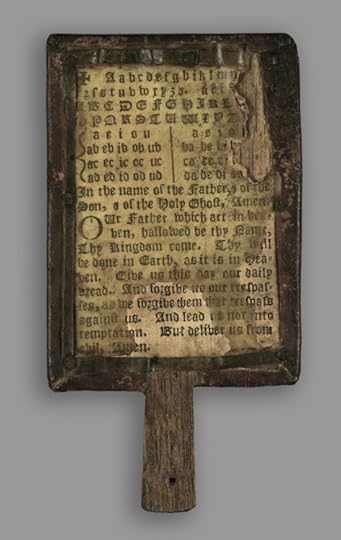
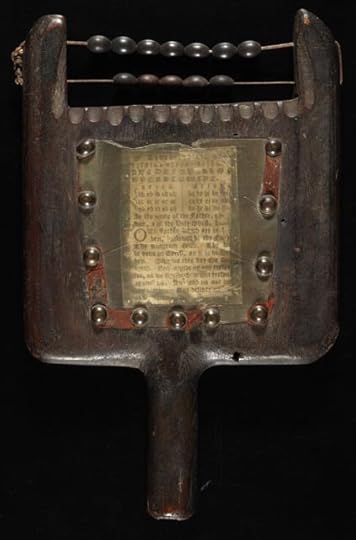
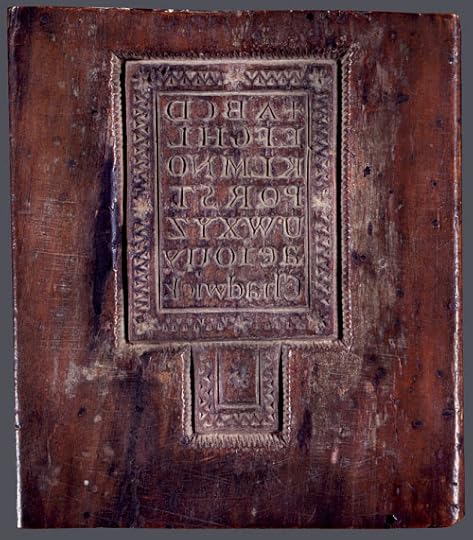
Eating a book
These three objects can hardly be called books. Yet they are, although they are not what you’d expect from such objects. These so-called “hornbooks” were used to teach children to read, roughly from the fourteenth to the eighteenth centuries. To this end they presented some “light” reading, such as the alphabet, the Lord’s Prayer and other short texts. Some of these hornbooks were particularly clever. The one in the middle, dating from the eighteenth century, features an abacus and supports simple calculations. The one at the bottom, also the eighteenth century, is a particularly delicious specimen: the wooden slab could be used to bake a gingerbread. It is the ultimate “book” to get children to do their schoolwork: when you’ve shown to be able to read a word, you can bite it off and eat it.
Pics: Washington, Folger Library, Stc 138136 (top, 17th century); Washington, Library of Congress, 102.3 (middle, 18th century); New York, Columbia University, Plimpton Hornbook 6 (bottom, 18th century). More on hornbooks in this longer blog post I wrote a while back.
March 2, 2015
Snippets in StoneHere are two unusual stone fragments. The...
Snippets in Stone
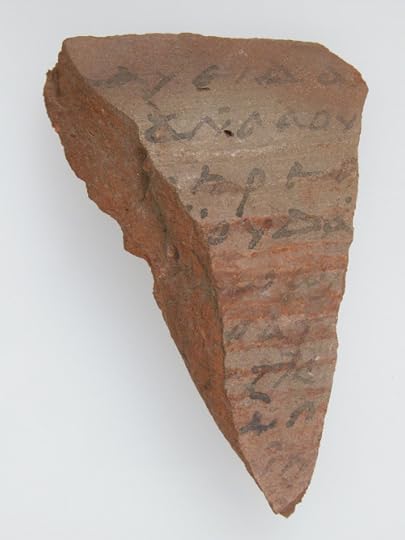
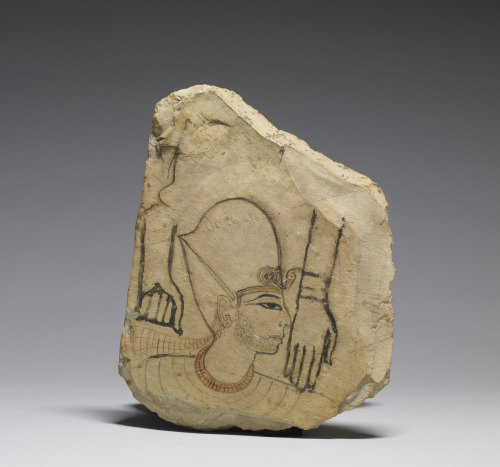
Here are two unusual stone fragments. The object at the top is an “ostrakon”, a piece of stone or pottery filled with text, in this case from Byzantine Egypt, dating from c. 600. While the fragment seems to be part of something that was initially much bigger (a sizable pot filled with a long biblical text, perhaps), it was actually always meant to be like this: a snippet with only a few words. The object was filled with text after it had become a fragment, as can be seen from the words written on its side. It is the equivalent of a page from a notebook. The second image, from 1280 BCE, has an even stronger draft connotation. This piece of stone was likely a teaching tool used by a master who showed his apprentice how to draw a face. The pupil subsequently tried out a pair of arms, which look clumsy - lots to learn here. Both items deceive us: they seem broken and insignificant, yet are complete and full of history.
Pic: (top) Metropolian Museum of Art, Accession nr. 14.1.103, dated c. 600 (more here); (bottom) Baltimore, Walters Art Museum, Accession nr. 32.1 (more here).
February 16, 2015
Old sandToday I looked at a handwritten account book from 1717....
Old sand
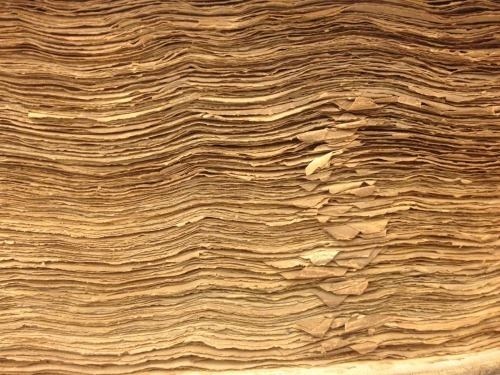
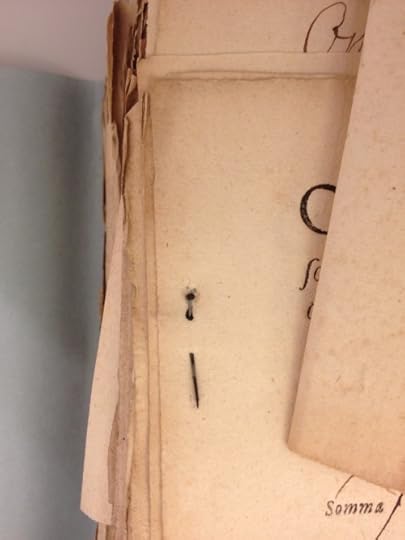
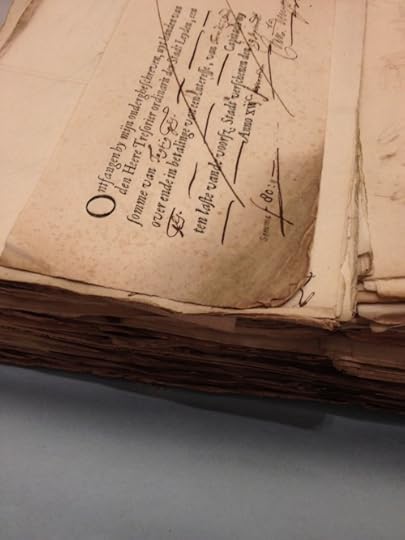
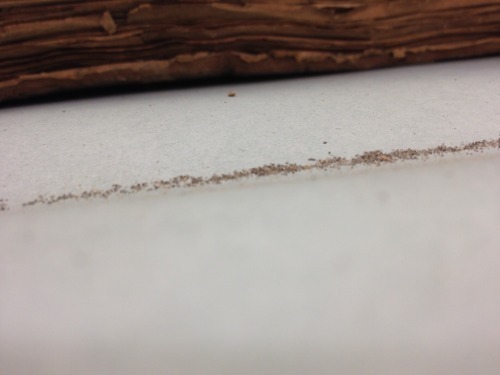
Today I looked at a handwritten account book from 1717. It listed a series of expenses paid by the city of Leiden (the Dutch city where I live) to various suppliers - of books, papers, pens. Being a medieval book historian, any source made after 1500 is alien. Because I am used to handling parchment books, it was odd to handle a book that was made out of paper - and a lot of it, for that matter (Pic 1). Also new to me was the fact that related materials were held together by needles (Pic 2) and to see dozens of rare actual receipts, small slips that were crossed out when paid (Pic 3). The biggest surprise, however, was the material that came falling out of the account book: sand (Pic 4). It turns out that this sand was used to dry the wet ink at the time. It was sensational to see a modest mountain of sand, put on the sheets by individuals long gone, appear from the pages as I flipped through them.
Pics (my own): Leiden, City Archives, SA 8207, dated 1717.
February 9, 2015
Medieval book transportYou are looking at two ‘wraps’...
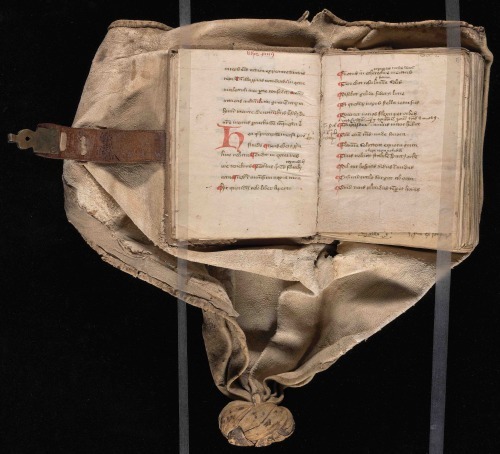
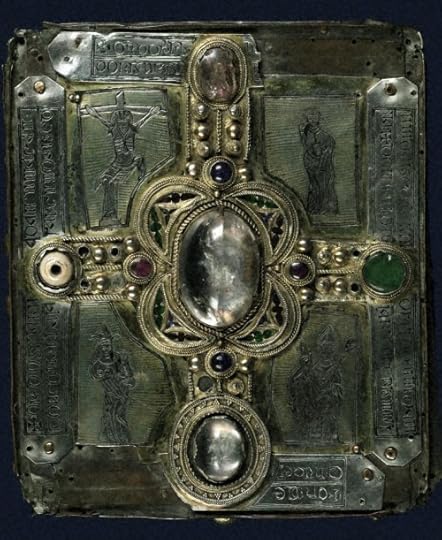
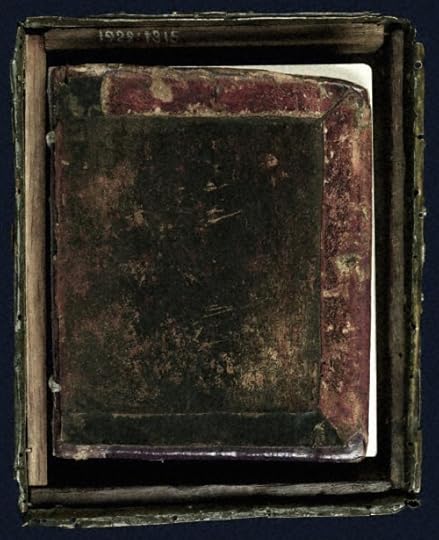
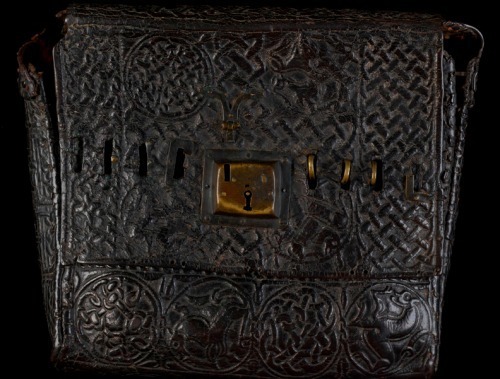
Medieval book transport
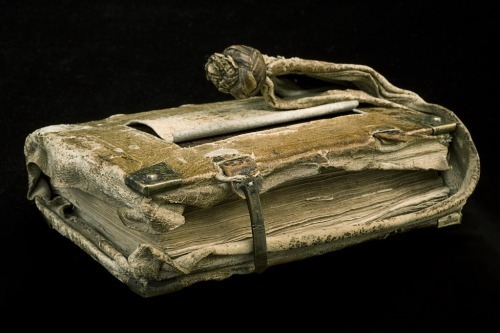
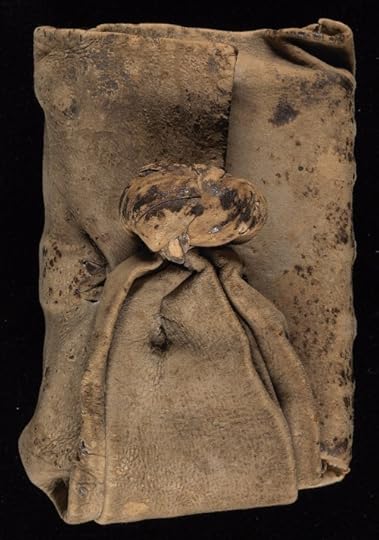
You are looking at two ‘wraps’ (top), the outside and inside of a box (middle), and a leather satchel (bottom). What they share is not just their old age (they are all medieval), but also the purpose for which they were made: to transport a book from A to B. The actual reason for transporting books in these objects varied considerably. The wraps are late-medieval girdle books, which were hanged from the owner’s belt by the knot. The text inside - which was often of legal or religious nature - could be consulted quickly and easily: just unwrap it and read. The box (and the ninth-century book inside) had a more exotic use: the package functioned as a charm for good luck on the battlefield, where it was carried in front of the troops by a monk. The satchel, which also dates from the ninth century, was just a bag to transport a book while on the go - it was popular among monks. Read more about these fascinating devices in my blog post “Medieval Books on the Go” (here).
Pics - Wrap at top: Stockholm, Royal Library (16th century, source); Wrap below it: Yale, Beinecke Library, MS 84 (15th century, source); Box: Dublin, Royal, Irish Academy, D ii 3 (8th/9th century, source); Satchel: Dublin, Trinity, College, MS 52 (Book of Armagh, 9th century, source).
February 3, 2015
manuscriptbook:The Elegant Simplicity of the St Cuthbert...
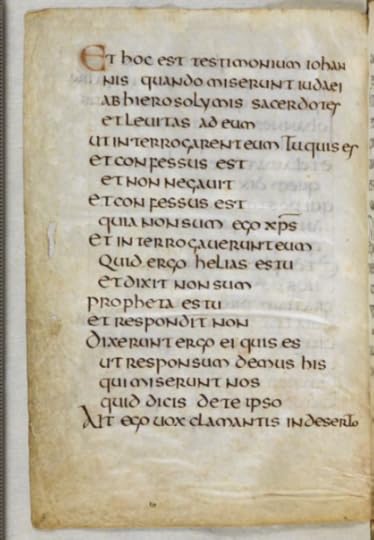
The Elegant Simplicity of the St Cuthbert Gospel
This simple page, bare of decoration, is actually one of the most remarkable pages in Western manuscript history. It is in fact a folio (2v) from the St Cuthbert Gospel, also known as the Stonyhurst Gospel (British Library, Add MS 89000), which is the oldest intact European book. The book was apparently tucked away in the coffin of St Cuthbert – a prominent English saint – from 698 to 1104, after which it was discovered in near perfect condition when St Cuthbert’s remains were moved from his coffin to a new location. The book is currently in the collection of the British Library, who bought it in 2012 for the considerable sum of £9 million.
The book consists of the Gospel of St John, in remarkably clear handwritten script. The script is elegant and simple, with only a few initials and rubrications – only one red initial seen on this page – and has been hailed for its “simple design and perfect execution” (Brown, The Stonyhurst Gospel of Saint John, 1969). The subtle decorative elements of the text never muddle the form of the letters, further attributing to its clarity. Almost all letters are in fact very clear even to a modern reader, and show, overall, how closely tied our basic letter forms can be to those of even the oldest books. All elements of the Cuthbert Gospel – ink, page and binding – are a testament to how expertly it was made, and how it has survived to this day as a uniquely well-preserved part of European book history.
- Anna Käyhkö
February 2, 2015
Pretty degreeYou would think this pretty document, dating from...
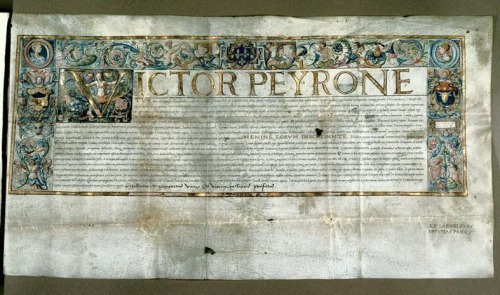
Pretty degree
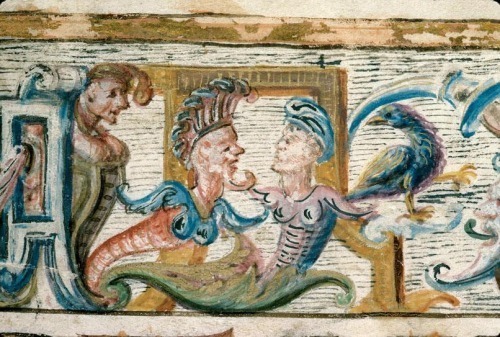
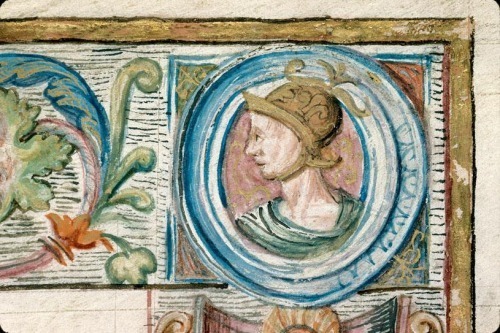
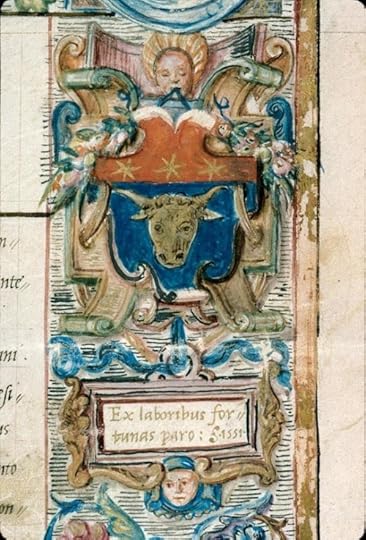
You would think this pretty document, dating from 1551, is a charter issued by a duke or a royal court. However, it is a university diploma from the University of Aix. It was handed out by the chancellor to a student (a monk). How times have changed: it is a giant leap from this colourful piece of parchment to the printed piece of paper handed out by universities today.
Pics: Aix en Provence, Bibliothèque municipale, MS 752 (dated 1551).
January 27, 2015
A horse on wheels, what’s not to love? Great...
A horse on wheels, what’s not to love? Great post.
Medieval Connections to ‘Classical Roots’
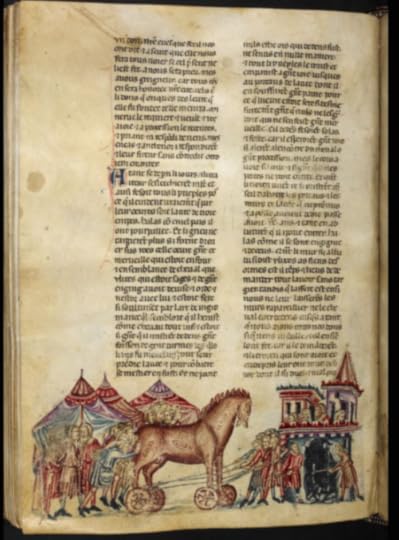
This manuscript (British Library, Royal MS 20 D I) of the Histoire ancienne jusqu’à César (‘Ancient history up to Caesar’) is the earliest surviving manuscript of the second redaction of this work. This redaction, like this manuscript, was produced in Naples around 1330-1340. It focuses on the story of Troy, which is no longer taken from Dares, a supposed eyewitness of the fall of Troy, but from the prose version of Benoît de Sainte-Maure’s Roman de Troie. As a result, it is much more extensive.
The goal of these types of histories was to join the classical past and the medieval present. The author, therefore, did not always keep historical accuracy in mind if it did not fit his purpose. This allowed nobles to bind themselves and their families to classical founders.
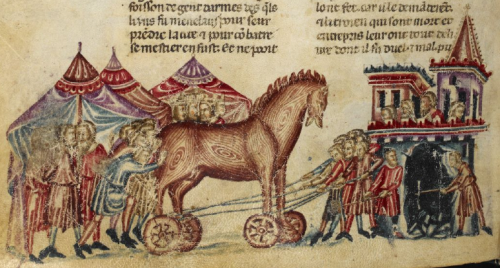
The illuminations in this manuscript are mostly bas-de-page (‘bottom of the page’) scenes, a style of illumination that had its heyday in the fourteenth century. In keeping with the increased importance of the story of Troy, over 120 miniatures have Trojan subjects. This particular folio (167v) contains one such miniature, specifically the famous scene of the Trojan Horse being brought into the city of Troy.
- Sanne Boomsma
January 26, 2015
700-year-old English speech bubbles
If you thought comics were a...
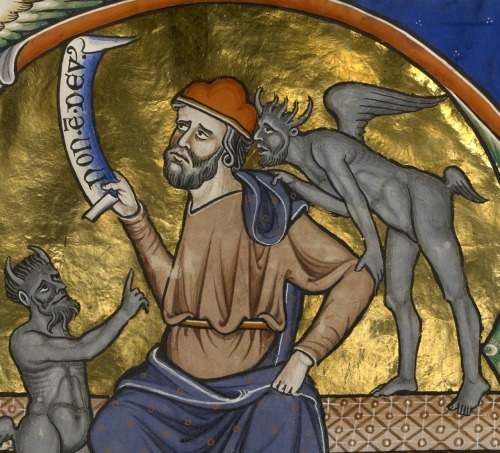
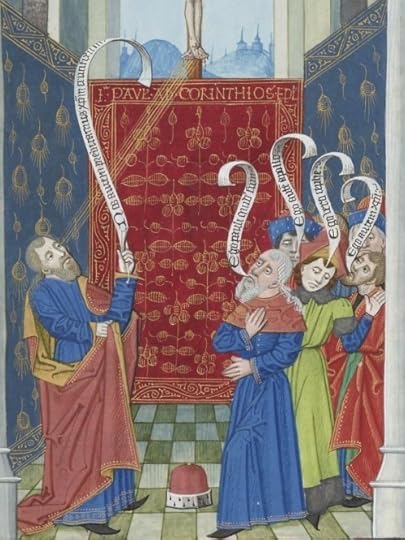
700-year-old English speech bubbles
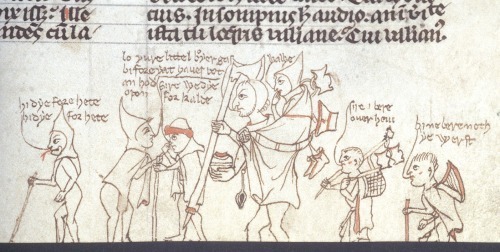
If you thought comics were a modern invention, think again! The top image of c. 1300 shows a drawing that has the ingredients of a modern comic book drawing, including the fact that the text is placed in real speech bubbles: the words (which are in English!) are connected to the speaker’s mouth by means of a tiny line. It turns out this tradition was alive and kicking in medieval times. Read more about these 700-year-old speech bubbles - including what the funny English text says - in this longer blog I posted.
Pics: London, British Library, Stowe MS 49 (c. 1300); Los Angeles, Getty Museum, MS 66 (13th century); Paris, Bibliothèque nationale de France, lat. 11978 (15th century).
January 22, 2015
I love how a complex layout produces such a pretty...
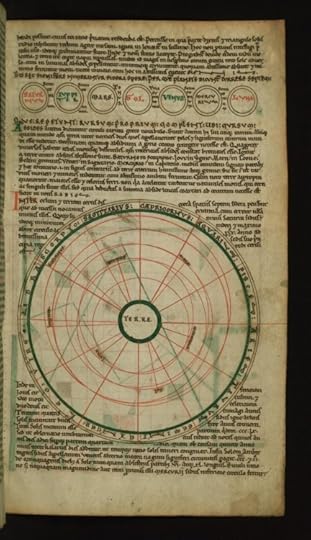
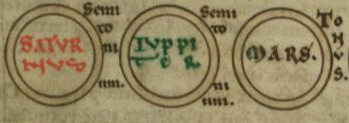
I love how a complex layout produces such a pretty page.
Can You Hear The Harmony of the Spheres?
The cliché that the medieval Church ruthlessly repressed all science can be quickly argued against with a look at this manuscript, a scientific text book for monks written in late twelfth-century England (Baltimore, Walters Art Museum, W. 73). It is a compendium of knowledge from early medieval Christian writers including Isidore of Seville, Venerable Bede and Abbo of Fleury. They adapted classical astronomy and astrology to accord with Christian beliefs.
Most of the diagrams in this manuscript are so-called rotae: wheel-shaped schemata. The circle was considered the perfect shape, symbolic of God. The folio above (5r) is about the so-called ‘Harmony of the Spheres’. This is the idea that the seven heavenly bodies (the then-known planets, plus the sun and moon) moved through space according to a musical harmony: the song of our solar system with God as its composer. Between the circles representing the heavenly bodies at the top of the page you can read the words ‘tonus’ and ‘semitiomium’, which are musical intervals known to us as tone and semitone!
Today we know our solar system does not quite operate like this, but the way this manuscript brings harmony to the universe not only through God but also through science is truly moving.
- Koen Huigen
Erik Kwakkel's Blog

- Erik Kwakkel's profile
- 7 followers

