Jon Clinch's Blog
May 13, 2013
On Novels and Miracles.

Russell Hoban’s Riddley Walker came at me from out of the blue. I’d read a review somewhere—this was thirty years ago, when book journalism was still going strong—and I thought I knew what I was in for: a post-apocalyptic adventure in a ruined landscape, narrated by a young boy. I got a whole lot more.
Here’s the opening (ellipses mine):
On my naming day when I come 12 I gone front spear and kilt a wyld boar he parbly been the last wyld pig on the Bundel Downs any how there hadnt been none for a long time before him nor I aint looking to see none agen. . . . He done the reqwyrt he ternt and stood and clattert his teef and made his rush and there we wer then. Him on 1 end of the spear kicking his life out and me on the other end watching him dy. I said, ‘Your tern now my tern later.’ The other spears gone in then and he wer dead and the steam coming up off him in the rain and we all yelt, ‘Offert!’
Offered, indeed. Hoban offers up the boy and his universe just the way Riddley offers up the wild boar: raw, magical, and utterly complete. He gives us not just one world but a pair of them—the world where Riddley lives, and the world that collapsed before it. He gives us not just a novel but an entire language, and by immersing us in it he teaches us how language not only embodies understanding but shapes and enables it. We have to work if we want to understand the things that Riddley has to say, but before long the oddities of his speech begin to fade. Ultimately, in the way of all magic tricks, they disappear completely.
The less I describe the book, the better, so let’s leave it at this: Its mysteries are many. Its characters breathe. Its sights are indelible and its sounds will never entirely stop echoing in your ears. All of that would have been enough, of course, to leave a lasting impression. But the thing about Riddley Walker that changed my life was the completeness and the complexity of it. The integrity. It was, in John Gardner’s words, a “vivid and continuous dream”—and Hoban had made it all up out of whole cloth. Right down to the words themselves.
It was a miracle. Coming as it did from the author of a well-known series of children’s books (Eloise the Hedgehog), it was even more than a miracle. It was evidence that a dedicated craftsman, armed with imagination and commitment, could reinvent himself while inventing a world. I didn’t know it yet, but that’s what good novelists do.
———
You can read all the details of my journey from Random House to my own imprint in Unmediated Ink: Notes from the Self-Publishing Revolution.


May 6, 2013
For One Week, Thief Goes On Sale.
I’ve written before about ebook pricing, mainly in a post called “On Pricing, Giveaways, and Literature as Lunchmeat.”
(I also cover it in Unmediated Ink: Notes from the Self-Publishing Revolution.)
To make a long story short, I’ve priced both Kings of the Earth and The Thief of Auschwitz at 9.99, because I think that’s what a good book is worth in an electronic format. Ten bucks is what I’m happy paying, and it’s what I’m happy asking.
Right now, though—and for one week only—I’m putting Thief on sale for half of its cover price.
How come? For the same reason anybody does: to get more copies out there in the world, increasing word of mouth and building momentum.
Also because the more people read it, the happier I’ll be.
So, for the next seven days, The Thief of Auschwitz—called by Howard Frank Mosher “the best and most powerful work of fiction ever written about the Holocaust”—is on sale everywhere ebooks are sold for just $4.99.
Tell your friends.

Links: Amazon • Barnes & Noble • Kobo • iBooks
———
You can read all the details of my journey from Random House to my own imprint in Unmediated Ink: Notes from the Self-Publishing Revolution.


April 30, 2013
My Publisher’s Weekly Column.

Publisher’s Weekly recently ran this excerpt from my new book. It’s locked up behind a subscription-only paywall, though, where most folks—including me—can’t see it. So here goes…
Stress-Testing A Hybrid Publishing Model
A few months ago, I set out to use the tools of self-publishing to release my new novel, The Thief of Auschwitz, as fully as possible in the manner of traditional publishing. I’d been down the traditional path twice, and although critical reception to my books had been gratifying—both were starred in Publisher’s Weekly, Finn was an ALA Notable Book, and so on—I hadn’t seen a bestseller yet. Kings of the Earth, thanks to timing and availability, fell off a cliff in spite of topping the Summer Reading List at The Oprah Magazine. So as I drew near to offering my third novel to editors, I grew afraid of seeing it tossed into that same neglectful abyss.
I decided that if there were a tipping point between traditional publishing and self-publishing, I was standing on it. On one hand, I had literary credibility. On the other, my audience was loyal but not enormous. I wasn’t making such a fortune for big publishing that anybody would miss me.
I’d miss things about them, though. Distribution, for one. Self-publishers usually go straight to the Kindle, and often stop there. Not me. I didn’t want to limit the book to Amazon or even to an ebook format. That meant releasing it through multiple sites, and creating a print-on-demand paperback that could sell online and in stores. (I love independent bookstores. They’ve been kind to me, and I would never cut them out.)
I’d also miss reviews. Many papers and magazines that loved Finn and Kings—even those that named them to their year-end best-of lists—shun self-published books. Nonetheless I printed ARCs, hired a publicist, and set a release date four months out, giving time to any editors who might decide to read anyhow. (Several did, including the Wall Street Journal and the Jewish Daily Forward. For this I am grateful.)
Along the way, I definitely ran into unexpected roadblocks and bottlenecks—things that divide the mechanisms of self-publishing from the mechanisms of big publishing, things that can stand in the way of a little guy who tries to behave like a big guy.
Without pre-sales, you’re losing out. Alone among the online sellers, only Apple lets independents set a future publication date and ring up pre-sales. To keep my pub-date promise to the press, then, I couldn’t make the ebook visible on the very sites where it would no doubt have pre-sold the best, including Amazon.
Indie booksellers hate print-on-demand. They hate the low margins and the lack of a return policy. They also hate CreateSpace, the Amazon division I’m using to print books. I reached out to hundreds of indies, and these were recurring themes. A couple wrote me to say that no book touched by CreateSpace would ever darken their shelves, and a few assumed incorrectly that I’m being published by Amazon. I wrote back each time, explaining my limitations as a small businessman with no corporate backing. (I should add that most indies who wrote said they would eagerly stock the book. I’ve linked to them on my web site.)
ISBNs are forever. I made the mistake of attaching to the paperback the ISBN that CreateSpace provides, not realizing that every reference to Thief in every catalog in the world would thenceforth show “CreateSpace Independent Publishing Platform” as publisher, not my own “unmediated ink.”
Time is not on your side. CreateSpace spits out November 1, 2011 as the publication date for Thief. I hadn’t even begun writing the book then. Nonetheless, some editors who expressed an interest in covering it were put off by that dating error. It looked as if my publicist were pushing an old book.
Leaks happen. To make Thief available to booksellers for the launch, I opened CreateSpace’s bookstore sales channel 30 days ahead. Instantly, listings for the paperback began showing up on Amazon and B&N. It was frustrating, in light of my pub-date promise to the media. All I could do was hope nobody would notice.
Enough. The book has launched, it’s selling, and that’s that. This list of issues is far from complete, and they add up to little when compared against the independence I’ve gained by doing all of this myself. (In some measure I brought them down on my own head by insisting on doing everything the hard way.) I’ve made some mistakes as well, and if I choose to go this way again I’ll do better next time. Perhaps by then the systems will have improved a little. I can always hope. I always do.
———
You can read all the details of my journey from Random House to my own imprint in Unmediated Ink: Notes from the Self-Publishing Revolution.


April 26, 2013
Everything You Always Wanted to Know About Publishing.

Here’s the beginning of my new book, Unmediated Ink: Notes from the Self-Publishing Revolution:
———
I’m one of the last people you would have expected to self-publish.
I’m old-fashioned, for one thing. I don’t like change. I care about physical books. I believe in literature and in the role it plays in shaping culture.
More than that, though, I’ve had a pair of novels nicely published by one of the world’s biggest publishing houses. The first, Finn, was named an American Library Association Notable Book and was chosen as one of the year’s best books by the Washington Post, the Chicago Tribune, and the Christian Science Monitor. It won the Philadelphia Athenaeum Literary Award and was shortlisted for the Sargent First Novel Prize. The second, Kings of the Earth, was named a best book of the year by the Washington Post and led the 2010 Summer Reading List at O, The Oprah Magazine.
So what happened? Read on.
———
Rather than leave you hanging, here’s the full Table of Contents. From The Writer’s World to Publishing Particulars, Unmediated Ink is full of insight into how books really find their way into the marketplace today (and how they sometimes don’t.)
Background: The Music Business
Bruce Springsteen
John Hartford
OK Go
Publishing Realities
Doc
Kings Of The Earth
The Writer’s World
Advances
Royalties
How I Got It Wrong
Finn — What Happened
Kings of The Earth — What Happened
Publishing Particulars
The Venture Capital Model
Returns
Shelf Space
Criticism
Independents and Amazon
The Experiment: What Came After
Getting To The Truth
Production
Pricing
Results
Moving On: The Thief of Auschwitz
What I Might Give Up
What Other People Said
What Book People Said
Step by Step
Editing
Unmediated Ink
Cover Design
Ebook Production
Paperback production
Publicity
Advertising & Promotion
Bookstore Outreach
On The Web
Pricing
Outcomes
The Upsides
The Downsides
My Hybrid Publishing Model
Lessons For The Future
Reversion of Rights
Literary Fiction vs. The Genres
Serialization
The Best Writer In The World
You probably ought to read it, don’t you think? It’s available here for download.


April 24, 2013
You Don’t Need A Kindle.
Folks have surely noticed by now that my latest book—Unmediated Ink: Notes From the Self-Publishing Revolution—is available only for Amazon’s Kindle platform.
That doesn’t mean I want you to buy a Kindle. Not when you can turn almost any computer, tablet, or smart phone you might own into a Kindle reader for free. Just go here and download the application you need.

I’m not a Kindle guy. I do, however, have the Kindle app loaded onto my iPad, my iPod Touch, and my Macbook Air. I’m not as fond of it as I am of the iBooks reader, but it works just fine and it accurately syncs my reading among all three devices. Which is kind of magical, when you think about it.
So if I’m not interested in your buying a Kindle, why did have I published Unmediated Ink only at Amazon? (So far, at least.)
Good question.
It’s an experiment, like everything else I’ve done in the way of self-publishing. By going exclusively with Amazon for now, I’ve placed Unmediated Ink into the Kindle Direct Publishing Selects program. That means that readers with an Amazon Prime account (free two-day shipping and so forth) can borrow it for nothing.
“But how do writers get paid for that?” you ask.
Another good question. The calculations, to tell the truth, are a little cloudy, and the math is all based on how deeply Amazon sees fit to fund the program in any given period—but I understand that in the past it’s generally worked out to about two bucks per loan. Which is pretty much what I’m making on a sale, so that’s all fine with me.
Unmediated Ink is loaded with this kind of stuff and more, including info on advances and royalties and what’s really going on in the publishing business right now.
Go check it out, whether you have a Kindle or not.


April 17, 2013
Another Literary Voice Goes Solo.
I was happy to read in today’s New York Times that David Mamet is bringing his next book into the world without benefit of a big publisher. It’s an example of the kind of increasing momentum that will help self-publishers of serious literary books find a voice in the marketplace.
Rather than going it alone as I did, Mamet is working through his agency, ICM Partners. (ICM handled Kings of the Earth, my most recent novel with Random House.) As to Mamet’s reason for going solo, Sloan Harris, co-director of ICM’s literary department, told the Times that “big publishers focused mostly on blockbuster books and fell short on other titles — by publishing too few copies, for instance, or limiting advertising to only a short period after a book was released.”
Or, as Mamet himself said, “publishing is like Hollywood — nobody ever does the marketing they promise.”
Amen, amen, amen.
My own sense is that self-publishers don’t need the layers of management and complexity and cost that come with publishing through their agencies. We’ll see how all of that shakes out in the months and years ahead.
In the meantime, I’m looking forward to Mamet’s new book. How about you?
———
The details of my journey from Random House to my own imprint are now available in Unmediated Ink: Notes from the Self-Publishing Revolution.


April 16, 2013
In Which I Tell You Everything I’ve Learned.
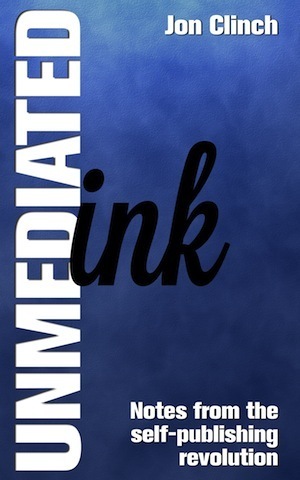
Just out in the world this morning is my brand-new ebook, Unmediated Ink: Notes From The Self-Publishing Revolution.
Here’s the description from Amazon:
In January of 2013, Jon Clinch—author of the widely acclaimed Finn and Kings of the Earth—stepped away from Big Publishing and released his latest novel, The Thief of Auschwitz, independently. As a veteran of traditional publishing and an experienced advertising creative, he tackled the entire project—from editing to design, from web development to marketing—with nothing but his own two hands.
Unmediated Ink is his story—an honest and revealing and deeply heartfelt exploration of both sides of the self-publishing gulf, written by someone who’s actually been there. Whether you’re a curious reader, an industry follower, a multi-published author, or a potential self-publisher, it’s the insight you need right now.


March 6, 2013
Speaking From The Heart.
Short post today—just linkage to a guest entry over at Beyond The Margins about a subject extremely dear to my heart: Voice.
If I’ve set down anything lately that seems to me important when it comes to writing, this is it.
HEARING VOICES, at Beyond The Margins.


February 26, 2013
Looking for the Next Big Thing.
Just so you know, the story that follows is not by any means new. The names are different this time, that’s all. The essential narrative happens again and again, and these days it’s happening with greater and greater frequency. But most folks involved don’t like to talk about it.
This time around, though, the gifted and much-praised Mary Doria Russell has made an exception. She tells her story to Ron Charles of the Washington Post here, but all of the essentials are in the the second paragraph:
“Just as her new novel, Doc, was being released in 2011, she got word that her publisher was not interested in any more books from her. She had been with Random House since 1996 and published five novels with the New York house. During that time, she had won an Arthur C. Clarke Award and an American Library Association Readers Choice Award. Entertainment Weekly had chosen The Sparrow as one of the 10 best books of year.”

In his Facebook link to the story, Charles summed it up this way: “Write blockbusters, or git along little doggie.”
That’s true, but it’s only true as far as it goes. And it doesn’t go all the way.
Thanks to globalization, bottom-line pressures, and short attention spans, the publishing business (like the movie business and the music business) is forever on a desperate hunt for the Next Big Thing. The Next Big Thing, their mantra goes, will keep the coffers filled and satisfy the stockholders and make sure that everybody stays employed for at least the next quarter.
At Random House, the most recent Next Big Thing was Fifty Shades of Grey—the anti-feminist trilogy of smutty fan-fiction that accounted for one in five physical books sold in 2012. One in five, folks. P.T. Barnum was right.
There was a time when big books like Fifty Shades supported smaller books like Russell’s Doc (or my own Finn and Kings of the Earth.) There was a time when publishers devoted years to the development of modestly-selling novelists whose work mattered and whose audiences built slowly. But those times are gone. They’ve been replaced by a feverish need to best last month’s sales numbers, and by an upside-down belief that two birds in the bush are superior to one in the hand.
So instead of spending a few bucks promoting fine books like Doc, building loyal audiences for fine writers like Russell, the big houses prefer to throw advance money at unknowns and hope for the best.
And where the money goes, there goes the business. Blockbusters don’t become blockbusters in a vacuum. To judge by the review coverage, Doc was poised for enormous success. (As was Kings of the Earth, which Oprah’s magazine ironically named to the top of their Summer Reading List two months before Random made it available in stores.) But we’ll never know, because the promotional dollars that could have gotten the word out were never invested.
(Instead, in the case of Fifty Shades, every single employee at Random House got a $5,000 bonus at year end. I know writers who’d ransom their own mothers for a $5,000 advance, never mind a $5,000 promotional budget.)
So what are authors and readers to do? Russell has pursued a contract with Ecco, and we can all hope that they serve her better. Me, I’ve stopped trusting anybody.


February 21, 2013
On Vermont Public Radio: “New Novel Explores Parental Love In Auschwitz.”

Up here in the North Country, we dearly love our National Public Radio.
In fact, it turns out that our own Vermont Public Radio has the greatest per-capita listenership of all NPR services in the country. (My wife tells me it’s because of the Eye On The Sky weather team, which without doubt provides the most detailed and extensive and credible forecasting anywhere. Then again, we have lots of weather to take into account up here.)
So you can understand my delight when VPR’s Peter Biello wanted to interview me for Morning Edition. Peter’s a great interviewer and a careful reader, and we’d spoken previously about Kings of the Earth. The interview aired this morning, and you can listen to it here.
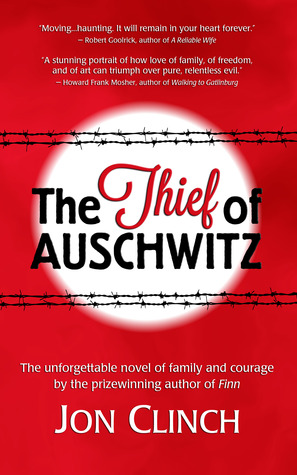
If that gives you the urge to read The Thief of Auschwitz, you might want to head over to Goodreads.com—where five signed copies are available right now. The offer expires on March 6, so there’s no time to waste.
Goodreads Book Giveaway
The Thief of Auschwitz
by Jon Clinch
Giveaway ends March 06, 2013.
See the giveaway details
at Goodreads.