Tyler Watson's Blog
September 23, 2025
Lament and Grievance Politics

Grievance politics has occupied a central role in American politics for over a decade, but it also festers within American churches. Practitioners of this political mode stoke negative emotions and use blame-based strategies against opponents. Grievance politics is less interested in finding democratic solutions than in seeking dominance over declared enemies.
We could take grievance politics’ presence in churches as merely another example of the dominant culture—including our media and social media—shaping us more than Christian theology does, but something else is also at play. Grievance fills the vacuum in American Christianity we created when churches abandoned the ancient practice of lament. Thankfully, a renewal of this form of prayer will help us reject grievance as our dominant mode of social interaction.
The VacuumIn his 1986 article, “The Costly Loss of Lament,” the late Old Testament scholar Walter Brueggemann illustrates the deleterious effects of excising lament from our liturgical practices. Faith without lament stunts our development as covenant partners with God and limits our ability to stand against injustice. Without lament, we have no way of bringing to God matters of personal suffering or systemic oppression. Our worship thins out to a celebration that is, “a practice of denial, cover-up, and pretense, which sanctions social control.” (102)
Losing lament reduces God to a coping mechanism for life’s challenges. Worse, a faith without lament makes the God of Israel who hears the Hebrews’ cries—i.e., their laments—and delivers them from slavery across the Red Sea not only unintelligible, but a metaphysical impossibility.
I want to look at another cost of losing lament. The trust and neighborly concern needed for a healthy body politic dissipates without this form of prayer. When we cannot bring our complaints to God, we turn on our neighbors.
A foundational myth of America tells us we have a birthright to success and endless progress. This myth takes on a religious dimension in the American Church as we believe God ordains our constant growth and ever-increasing profits. Soong-Chan Rah shows the danger of this myth in our lives in his book, Prophetic Lament. Americans, and especially American Christians, are not supposed to lose or suffer setbacks. But loss will come, and if we can only offer praise to God, we will have no spiritual resources when we face layoffs, terminal illnesses, crime in our communities, disparate health care outcomes, infertility, or the death of loved ones.
Who then will bear the weight of our natural anger and disillusionment? Before answering that question, let’s compare and contrast lament with grievance politics.
LamentLament and grievance politics share similar features. Both acknowledge life is not going well. Injustice and chaos seem to reign. The righteous experience defeat while the unjust gain victory. Lamentation and grievance give voice to the anger, shame, and pain people feel. They diverge, however, both in their assessment of who is truly responsible for the loss of well-being, and their believed solution to these troubles.
The Book of Psalms contain laments in which the writers cry out to God as they suffer injustice or calamity. Some laments take the shape of indictments against God (Ps 13) and others are prayers against one’s enemies (Ps 109). By laying accusations against God, the psalmists proclaim God is, or should be, in control. In asking God, “How long?” before God acts, the psalmists affirm God is the sole source of their salvation. The psalmists say shockingly angry, even violent things against their neighbors and enemies (Ps 137). However, they leave that rage before God—they do not take it upon themselves to avenge their losses.
Lament is not a destination in biblical prayer—it is part of a cycle that moves from praise when life is secure, to lament when calamity hits, and to thanksgiving when God brings deliverance. This cycle dispels the falsehood of constant success, while acknowledging painful and disorienting loss is a feature of life. Lament prayers have movements of their own. The psalmists cry out to God, describe their pain, petition God to fix the problem, and usually end with a statement of trust and a commitment to worship God again.
Being honest in our laments allows us to mourn the loss of our former stability and eventually embrace the new realities God creates. Lament draws us nearer to God. It makes forgiveness of our enemies possible by placing our anger before the one who can hold and transform our rage.
Grievance PoliticsGrievance politics also names frustration and suffering, but with the larger goal of fomenting distrust between neighbors. Differences of viewpoint become threats to one’s way of life. Those who disagree, or come from different backgrounds, are idiotic or evil. The democratic work of seeking solutions to problems through debate and compromise gives way to blame, anger, and victimization. Grievance politics tells us we were right to believe we should never lose or suffer. We don’t have to change. We deserve to return to the secure, happy past. But, in this political vision, we close ourselves to new possibilities of God’s work.
Grievance politics supplies the answer of who bears responsibility for our suffering and lost sense of well-being—namely, our neighbors. Those people. Had they not done that awful thing, had they not lived among us, we would still be secure and happy. Grievance does not foster forgiveness or grace, but demands we take retribution on those who infuriate us. We are seeing the the dangerous and fatal fruit of grievance’s seeds with the resurgence of political violence—assassinations of and assassination attempts on elected officials and political activists, kidnapping plots, pipe bombs, the attack on the US Capitol on January 6, 2021.
The Right ShouldersSo, who will bear the weight of our grief, particularly if in our hollowed-out worship, God is only to be praised and bears no responsibility for our disappointment? We cannot hold that pain, so grievance politics steps in to tell us to put the blame on our neighbors.
The fact is, our enemies and neighbors cannot bear our grief either. The Christian practice of lament reminds us God alone has shoulders strong enough to take our disappointments. Even more, Jesus alone can deliver us and redeem our loss. New possibilities arise when we say to God, “This is wrong—what are you going to do about it?” The Hebrews did not return to the former time in Egypt when an earlier Pharaoh treated them with respect. They lamented to God and received a new reality free from an oppressive regime and with a home of their own.
A Church that regularly practiced lament would not be so susceptible to the dangerous lure of grievance politics because we would bring our confusion and pain to the God who can deliver us. The Holy Spirit can then transform our suffering so that we seek our enemy’s salvation and well-being, not their defeat.
Our congregations need a renewal of lament. It will take time, but we have powerful resources to teach us to give our rage to God. By gathering to pray those discomforting psalms with their raw language we will experience what Brueggemann calls, “God’s dangerous availability.” (108) No skipping psalms or amputating unseemly verses just because they disturb us. Let their shocking words lead us to lay all our inner anger, no matter how ugly, before God.
People will think and do things that frustrate us. If we approach them with the tools of grievance politics, we will have no means to work through our differences. We are seeing the awful effects of that polarization and lack of reconciliation in our churches and nation now. If we bring our frustrations to God through lament, however, we can fully deal with our disappointment so we may together build healthier communities.
Tyler Watson writes fiction and theology. He has served as a pastor in the Evangelical Covenant Church and earned his MDiv from Fuller Theological Seminary. He has written one novel, The Gospel According to Doubters and Traitors, and several devotionals. You can find more about those works on this site.


September 12, 2025
In Defense of Making It Up

In the Gospels, when Jesus wants to describe what God is like, he often tells short, multi-layered stories, which we call parables. He does not deliver a thesis he supports with argument and data, nor a traditional treatise on God’s nature as we might expect given centuries’ worth of Christian theologizing. To explain God and what God is up to in the world, Jesus creates fictional tales.
The settings, plots, and characters of Jesus’s stories are familiar to his audience—fishermen inspecting and culling their catch, a woman baking a loaf of bread, people praying in the Temple—but they are still creations of his imagination. Jesus doesn’t relay history, saying, “When I was growing up in Nazareth, there was a shepherd tending a flock of a hundred sheep and one wandered off, so he left the ninety-nine to find the lost sheep,” or, “I knew a guy who, on his way traveling from Jerusalem to Jericho, got mugged and only a Samaritan helped him.” No, these specific scenarios and characters did not exist until he made them up.
Jesus’s use of imaginative fiction to bring about new understandings of God is not unique in the biblical accounts. Many of the prophets tell parables they made up. The psalmists use similes and metaphors and imagery in their evocative prayers. Even in the Garden of Eden, we see Adam using his imagination to name the animals. Our understanding of God would be deficient without these acts. It is a testament to a wildly creative God to make creatures who can also imagine stories that reveal something of the real world we could not otherwise see.
We find ourselves in stories, particularly in fictional accounts. Others have explored how stories, more than declarative propositions, cultivate empathy or engage our senses. I wish to emphasize the imagination’s ability to envision, however incompletely, a world of mercy and justice. When we sense things are not the way they should be, we imagine God’s redemptive purposes by first telling stories of a good order where grace and forgiveness replace grudges and grievance. We imagine with Jesus and the prophets the poor, orphan, widow, and stranger at the center of God’s kingdom, no longer shunted to the margins of our societies.
Fiction’s power to shape us is not always beneficial. We can tell fictional histories that whitewash atrocities, erase our culpability so we are pristine victims in a conflict, or ignore the contributions of people we usually deem incapable of doing good. History is paved with harmful lies about others to justify hating them. A story is a tool, one that can reflect truth and help us imagine goodness, or one that can propagate lies and lead us to bitter ends. Imagination, like all of God’s creations, can be warped and demands we handle it with care.
Despite fiction’s possibly destructive power, we are to use our imaginations and tell fresh stories all the same. Creating fiction is a generative act, helping us first see God’s kingdom of beauty and healing when our eyes may only see broken chaos. How could such a thing happen? As Jesus says in a fictional story, it happens like a man scattering seed on the ground, and though he does not know how, the seed sprouts, grows, and becomes an abundant crop of grain. (Mk 4.26-29)
Tyler Watson writes fiction and theology. He has served as a pastor in the Evangelical Covenant Church and earned his MDiv from Fuller Theological Seminary. He has written one novel, The Gospel According to Doubters and Traitors, and several devotionals. You can find more about those works on this site.
April 27, 2025
The Gift of Low Sunday
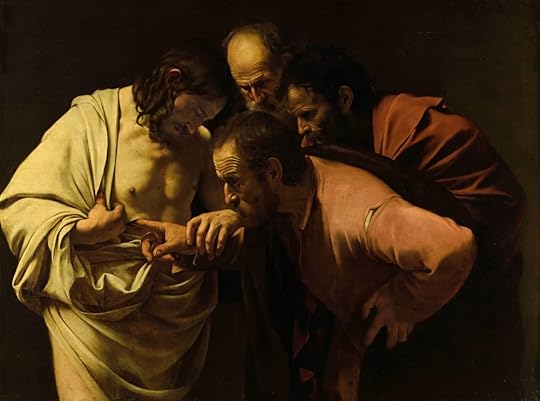
The Incredulity of Saint Thomas, Caravaggio, 1602
In the Church calendar, the Sunday following Easter Day is commonly known as “Low Sunday.” The origins of the name might come from the more low-key celebration after churches pull all the stops for Easter, or the drop in attendance. I like to think there is a more theological reason, found in the lectionary readings for the day.
Every year on the second Sunday of Easter, for its Gospel reading, the Church reads John 20.19-31. In these stories, the risen Jesus appears to the disciples hiding in a locked room. First, he appears on the evening of his Resurrection to the majority of the disciples, except for Thomas. Thomas hears from his companions that Jesus has appeared to them, but he doubts their stories, and declares unless he touches Jesus’s wounds, he will not believe. The next week, Thomas is with the disciples hiding in the locked room when Jesus appears again and invites Thomas to, “Put your finger here and see my hands. Reach out your hand and put it in my side. Do not doubt but believe.” (v. 27) Thomas exclaims, “My Lord, and my God!” (v. 28) Jesus promises to bless those who were not in the room with Thomas and the disciples, who believe without seeing him.
It’s now a week later for us, too. The kids found all the Easter eggs and ate all their chocolates, the leftovers from the feast sit in the refrigerator, we washed our nice outfits and they hang in the closet. After the glories of Easter Day, when the Church gathers to sing hallelujahs and retell the stories of angels sitting on stones and declaring in the early morning to the women first the good news that Jesus is risen and Apostles running to the empty tomb to see if it’s true, we might wonder, “Did all that really happen?” We have passed through the exuberant celebrations and are left low only with fading memories.
One would expect the Church to tell Gospel stories basking in the certainty of Jesus’s Resurrection for a bit longer, but instead the calendar embraces doubt on Low Sunday. Thomas, in the early part of the reading, is all of us who have not seen the risen Jesus with our own eyes. The reading tells us it is natural to be skeptical. This is part of our faith journey. How could it not be? Christians confess the God who made the universe became a human being, lived among us, and performed miracles. We believe humans killed God and God rose from the grave. These are unbelievable claims.
Low Sunday tells us we do not have to fake belief to appease an easily-offended God. We don’t hide our questions and skepticism, but bring them to God. The readings for Easter and Low Sunday reveal Jesus loves us so much he was willing to go to the grave, and he is willing to meet us in our doubt. He wants to meet us in our confusion and questions. He turns the cross and tomb into the means of new life. The encounter with Thomas shows Jesus now turns doubt into the seedbed of faith.
Tyler Watson writes fiction and theology. He has served as a pastor in the Evangelical Covenant Church and earned his MDiv from Fuller Theological Seminary. He has written one novel, The Gospel According to Doubters and Traitors, and several devotionals. You can find more about those works on this site.
February 20, 2025
A Blessing for Traitors

Once you were committed.
You believed, sold-out, devoted.
Then you tasted, and your eyes opened,
And what you thought was real felt brittle, thin.
So you walked away, heading for a faint dawn on the horizon.
The sun never rose.
Still, you said this was more light than you had ever seen.
But after ravines and cliffs, you lost the trail in the dark,
And all you want is a home.
May you find footing in calling things their actual names—
Your beliefs, your actions.
You rejected the false, but also the true, and now
May you hold both to the light,
Feel the weight and substance.
May you come to your senses.
Do not mourn if you have fallen again and again,
“For forgiveness has risen from the grave.”
May the road home make itself known as you walk.
May you see the truth that is the truth that is the truth.
May you know the limitless grace available from
The father who watches the road for your return.
He waits, standing in light that does not condemn,
But reveals all rot so that it might heal.
He takes all treachery upon himself,
And destroys it.
Know you will not be destroyed, but welcomed.
Tyler Watson writes fiction and theology. He has served as a pastor in the Evangelical Covenant Church and earned his MDiv from Fuller Theological Seminary. He has written one novel, The Gospel According to Doubters and Traitors, and several devotionals. You can find more about those works on this site.
February 4, 2025
Launch Day
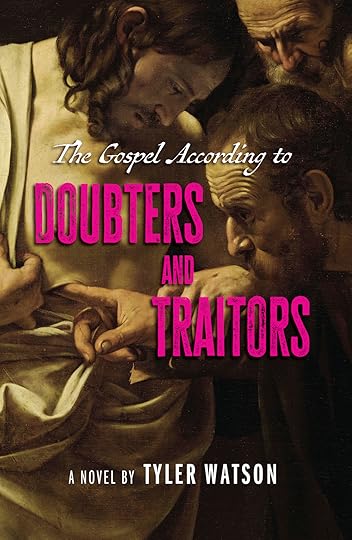
Launch Day is here for my debut novel, The Gospel According to Doubters and Traitors. This is a work several years in the making (more on that at a later time). I’m very excited to share it with people.
In this spiritual and psychological novel set in First Century India, Tyler Watson tells the story of an apostle of Jesus Christ arriving in Muziris, a bustling port of the spice trade.
The Apostle and his fellow missionaries must quickly learn the language and customs of their new home, as well as navigate thorny religious and political landscapes. They find early success among the poorest citizens of the city, but a vicious brothel keeper, working with a paranoid government, threatens to destroy the young church.
The Apostle is thrown into chaotic uncertainty when he encounters a figure from his past—a fellow follower of Jesus, who years earlier, abandoned the faith and fled to India. For this onetime disciple, the Apostle is a disturbing reminder of that life he longs to forget.
These former companions struggle through suffering, persecution, and the unrelenting past, to discover belief and doubt and new visions of God.
Tyler Watson writes fiction and theology. He has served as a pastor in the Evangelical Covenant Church and earned his MDiv from Fuller Theological Seminary. He has written one novel, The Gospel According to Doubters and Traitors, and several devotionals. You can find more about those works on this site.
January 31, 2025
A Traitor’s Prayer
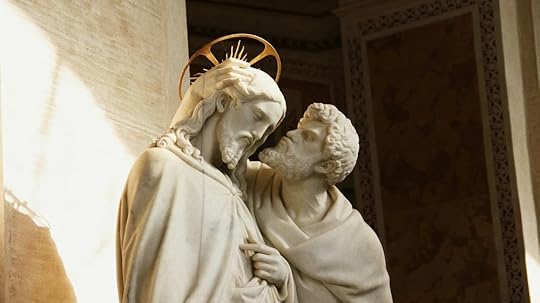
Betrayal is such a bitter word.
I prefer, perspicacity,
For scales have fallen from my eyes
And I see the truth.
You kept the world so small,
Restrained my sight.
Demanding my fealty,
Unwavering and certain.
Give me these acrid names—
Apostate. Infidel. Traitor.
Rage and flail at me
The air is freer here, anyway.
Here in the harsh light of truth,
And freezing winds of honesty,
The paradise never was here
Yet another truth you kept from me.
We know what I did
In leaving you.
Does the past need to be named
When it fills every cup from which I drink?
Is there return from this wasteland?
My actions offer no shelter.
Will you welcome an old friend?
If not a friend, then a beggar?
What penance will you demand—
Knees bleeding, rocks cutting to the bone?
Self-flagellation? A thumb?
Sacrifice of the firstborn?
We can call it what it was,
Betrayal.
I will do whatever you wish,
I just want to come home.
Tyler Watson writes fiction and theology. He has served as a pastor in the Evangelical Covenant Church and earned his MDiv from Fuller Theological Seminary. He has written one novel, The Gospel According to Doubters and Traitors, and several devotionals. You can find more about those works on this site.
January 30, 2025
A Blessing for Doubters

May your questions drive you away from the false and shallow
And toward the mysterious truth.
May you reject vapid answers from those who call you to thin belief or brittle skepticism.
May you remember God is bigger than your beliefs and doubts.
May Jesus kill your constructs and resurrect your faith,
A new thing, surprising and wild.
In seasons of doubt, you walk in the dark—
May you not look for light where there is no light,
May you not convince yourself you can see more than you truly can.
Remember, Moses drew near to the thick darkness where God was.
May you befriend the darkness.
You walk in the wilderness, and you will shed old beliefs that no longer give life.
You will also encounter mirages and temptations, like Jesus.
Do not seek their false comfort.
Know that disillusionment can be a gift.
You will think you are all alone, but you are in a liminal space explored by many.
Take comfort that you have companions throughout time.
May you listen to them, receive from them what you can,
But remember, no one can traverse the dark wilderness for you—this is your task.
Some beliefs that comforted you will not in the wilderness.
They may never comfort you again, you may never believe them again.
There will be no going back.
May you grieve their passing and move on.
You will learn things about yourself and about the Holy Spirit—
Things that will disturb you,
Things you may wish you did not know,
Things that will delight you beyond imagination.
You will encounter new thoughts and concepts.
Hold them loosely.
Some will have the ring of truth, but be hollow.
Some will first appear false, but be stout and durable.
Test, question, and test again.
Let love be your guide.
Pursue what draws you into deeper love for God and neighbor.
Leave behind what hinders love.
May you treat yourself gently.
Not all you believed was wrong.
It will be tempting to discard everything you once believed.
Wait. See what settles. Watch for what remains.
May you be like Hagar,
Who fled to the wilderness, in fear for her life.
God met her in a new way,
And she created a new name for God, El Roi, “The God Who Sees.”
May you be still. Remember to find fellow travelers.
Know they have their own journey, but they can walk with you for a time.
Just because you cannot know everything about God doesn’t mean you cannot know anything.
When you feel certain again, wait.
Hold that loosely, because one day, you may doubt that, too.
Tyler Watson writes fiction and theology. He has served as a pastor in the Evangelical Covenant Church and earned his MDiv from Fuller Theological Seminary. He has written one novel, The Gospel According to Doubters and Traitors, and several devotionals. You can find more about those works on this site.
January 29, 2025
A Doubter’s Prayer

O God,
Who I hope is there,
Who I hope is listening,
Who I hope is able,
Who I hope cares,
But I am not sure—
Here I am.
The food of my youth has lost its taste,
Like chewing vapor.
I hear notes and words, but no melody forms.
The songs that lifted me have dissipated.
I cry to you until my voice grows hoarse,
Or, I sit resigned to your silence.
I pray I am not speaking to the empty air,
And listening to hollow winds.
The certainties I knew fall through my fingers like dust,
Unable to withstand reasonable questions and new knowledge.
Are the ancient sacred texts the product of archaic human thinking—
The best guesses of those who thought the sky was a canopy of water?
We, the last surviving species of genus Homo—
Are we the image of the living God, or merely the fittest foragers and fighters?
Are all our dreams and hopes and loves
Random atoms vibrating randomly in our brains?
This is the world you made and declared good?
Chaos monsters wreaking havoc.
Earthquakes and hurricanes and wildfires
And cancers and pandemics and congenital heart failure.
Are you blind to oppression and deceit?
The homes of the poor razed to make way for monuments to greed.
Children’s bodies washed upon the shore, their blood crying from the ground,
And their murderers feast in grand halls of government.
Do you really condemn those who call on other gods—
Your children whom you love and who love in return?
While your earthly representatives keep the doors locked tight
So they can grift and abuse your followers.
Those who taught me to do justice, love mercy, and walk humbly with you
Pursue power and call it your will.
They told me to love my neighbor
And despise me when I do.
You promised you would return. What are you waiting for?
Has there not been tragedy enough?
Did you see our wickedness was so great that
You abandoned your plan?
Are you big enough for my questions?
Will you condemn me for doubting?
Or will you cock your head, unsure if you heard something,
Then shrug and return to doing whatever it is you do?
O, disenchanted world, the only world I now see,
Is there any wonder left?
Take these, my feeble croaks in the dark—
Father, let me taste and see again.
Holy Spirit, may I find you in my breath.
Jesus, I believe, help my unbelief.
No, I don’t know if I believe anymore.
Maybe the best I can offer is I want to believe.
May that be enough for us, for now.
Amen.
Tyler Watson writes fiction and theology. He has served as a pastor in the Evangelical Covenant Church and earned his MDiv from Fuller Theological Seminary. He has written one novel, The Gospel According to Doubters and Traitors, and several devotionals. You can find more about those works on this site.
December 18, 2024
Books from Books

In the process of writing The Gospel According to Doubters and Traitors, I took inspiration from other writers whose novels deal with big questions about God and humanity. I’d like to share those I returned to as I wrote my book.
The Chosen by Chaim Potok. Upon finishing this novel when I was eighteen, I handed it to my father. We both read it in less than a week. Like me, he loved the story about devout Jewish fathers and sons in Brooklyn. It made sense my father and I would resonate with the story—primary themes include what does it mean to become a man, and how does a father raise a son into a deep soul? It was surprising, however, that my father and I connected so easily with the book. We were Gentile Christians living in a small farming town in Central California at the end of the 20th century, far from the debates between Orthodox and Hasidic Jewish groups in New York in the 1940s as they wrestle with World War II, the Holocaust, Talmudic interpretation, and Zionsim. In The Chosen, the more specific Potok’s details, the more universal his book becomes.
Gilead, Home, Lila, and Jack by Marilynne Robinson. In Gilead, the first novel of the series, an aging minister writes long letters to his young son, to help him understand his family and the father who will not be there for most of his life. I read Gilead just after finishing seminary and Robinson’s handling of Christian theology surprised me. Her ability to weave together deep conversations about Karl Barth and John Calvin with a compelling family narrative is astounding. Like Potok, the more specific her character’s views, the more universal the story. John Ames’s theological explorations never remain in his head, but shape how he interacts with his family and congregation. Put another way, his theology has legs. The other three novels in the series follow people in Ames’s life, and while none of the characters may quote Barth, their questions about Christ and grace are every bit as rich.
Silence by Shusako Endo. Two Portuguese Jesuit priests arrive in 17th century Japan in search of their mentor who has gone missing and who is rumored to have apostatized. In this harrowing novel, Endo unflinchingly describes the persecution of “Hidden Christians” at the hands of the Japanese government. Is suffering mandatory for Christian faith and how does Christ meet one in the midst of it? How does one watch maintain their commitment to Christ while people they love suffer? How many times can one abandon Christ and return? Endo’s characters do not have time to sit with Bibles open on their laps and debate passages. They pray, serve, and probe the bounds of God’s mercy as they hide from oppression. One has the sense that Endo, a Japanese Catholic, wonders, how did my people—the Japanese—persecute my people—the Catholics?
The Power and the Glory by Graham Greene. Like Silence, Greene’s novel tells the story of a Catholic priest on the lam, except the authorities in question are the Radical Socialists running the state of Tabasco in 1930s Mexico. The priest has severe moral failings, carries doubts wherever he goes, but remains committed to minister to the people, at significant risk to himself and others. Greene shows the call of God fundamentally changes a person. The Spirit moves in mysterious ways, often through weak, flawed, sinful people.
The Brothers Karamazov by Fyodor Dostoevsky. Perhaps the greatest novel about faith and doubt and family and, well, just about everything else it seems. Sprawling, long, with many characters and storylines—a complete murder mystery occupies a section of the book. Two characters sitting down and having a long conversation about evil and God can hold the reader’s attention as well as any battle in another book. Doestoevsky’s characters present some of the best arguments against God’s existence in literature, arguments that one cannot refute with words. Instead, slow, quiet, attentive ministry of presence offers the counterpoint against God’s nonexistence. The characters express their emotions in an over-the-top manner, but the larger case for active love is subtle. “One cannot prove anything here, but it is possible to be convinced.”
Tyler Watson writes fiction and theology. He has served as a pastor in the Evangelical Covenant Church and earned his MDiv from Fuller Theological Seminary. He has written one novel, The Gospel According to Doubters and Traitors, and several devotionals. You can find more about those works on this site.