Matthew Burden's Blog
January 20, 2026
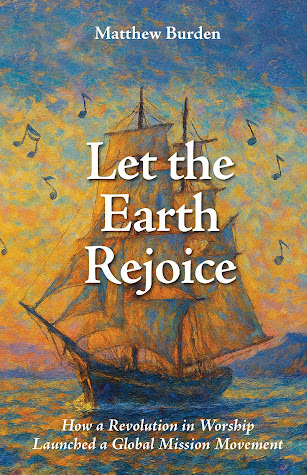
New Book Release!

Book page on the publisher's website (click here)
Amazon.com book page (click here)


January 14, 2026
What's the Deal with Angels? (Part 2): Fallen Angels
Fallen Angels: Outline
In thefollowing handout, I provide one possible way of thinking about the history andstatus of Satan and demons in the Bible, based on early Christianinterpretations. This is not the only possible interpretation, but it has theadvantage of being one that harmonizes the unexpected elements of the OldTestament’s portrayal of fallen angelic powers, and which also allows us tounderstand some of the thoughts and motivations that led to their fall, whichwould otherwise appear almost inexplicable.
The basicideas are as follows:
1.) Satan and other fallen angelic powerswere created by God to inhabit positions of authority within his administrationof physical creation, including toward humans.
2.) Even after Satan and the othersturned their hearts away from God, they still remained in their originaloffices (in the same way that God does not automatically remove us from ourroles when we sin; or—to give another example—how Judas remained one of thedisciples even when his plot to betray Jesus was already in motion).
3.) Blinded by their own pride, theirtreason against God developed throughout history, without God’s overt judgmentagainst them (except, possibly, in one infamous incident—see the extra handouton Genesis 6). God allowed them to remain active in their former roles.
4.) As such, these fallen angelic powerslikely thought that their areas of dominion would remain in their hands untilthe Day of Judgment, and even then they may have thought that they would retaindominion over the human souls that were in their charge.
5.) Against such erroneous expectations,they were shocked and surprised when God’s own Son, the Second Person of theTrinity, entered the world as a man and targeted their areas of dominion, evenbefore the Day of Judgment.
6.) The angelic fall thus can beunderstood in two movements: first, a moral fall into sin when they turned awayfrom God and pursued their own ends (perhaps it was less of a consciouslyblatant revolt than is sometimes portrayed, and more of a slow-moving treasonwhich was suddenly uncovered and judged by Christ); and second, when the fallenangelic powers were stripped of their dominion and authority by Christ’svictory over sin and death.
7.) Now the church continues claimingChrist’s victory over the fallen powers, extending the Lord’s dominion whereformerly the demons held sway.
What’s the Dealwith Angels? (Part 2)
The Fallen Angels
The Bible tells us that some angelic beings rebelled againstGod and fell, becoming corrupt. The leader of these fallen angels is calledSatan (“the adversary”) or the devil (from the Greek word diabolos =“accuser”). The angels that fell with Satan may account for a third of theangelic host God had created (see Rev. 12:14). Many interpreters have seen Satan’sfall depicted in passages such as Isaiah 14:12-15 and Ezekiel 28:12-19 (thoughthese passages are primarily descriptions of God’s judgment against the kingsof Babylon and Tyre). The name “Lucifer” is sometimes thought to be Satan’soriginal angelic name (see Is. 14:12). The fallen angels that followed Satan(at least some of them) are referred to as demons.
Why Did They Fall?
Christian tradition holds that Lucifer’s original sin wasone of pride, as portrayed in the Isaiah and Ezekiel passages. Lucifer desiredto ascend to the same status as God, a sinful self-orientation, rather thanremaining oriented toward God in worship and obedience. Some early traditions believethat Satan’s pride led to envy: when these fallen angels saw God’s plan forhumanity take shape at the creation of the world, they resented that God’sfavor was being lavished on human beings, and so they decided to take out theiranger on us.
A further important question arises: How is it possible thatangelic beings, created to be gloriously good and to behold the presence ofGod, could ever think that they could rise up against him? If God truly isomnipotent, why would angelic beings, who knew all about God’s power, thinkthey could actually succeed in rebelling? The answer is the same for angels asit is for us: God gave us the power of free will to choose him or to choosesin, and the choice for sin is never a rational one—i.e., when we sin, we don’tusually stop to consider whether it’s a stupid idea or not, and the same isprobably true of the fallen angels. Further, the blindness of their pride mayhave led them to imagine that they would still remain in positions of powereven after God’s judgment—perhaps holding dominion over all the human soulsthey had dragged down with them. Like Satan’s famous line in Milton’s ParadiseLost, they may have thought it preferable to rule in hell than to serve inheaven. In this, though, they would be deluded: Scripture shows that theythemselves will be punished in the end; they will not reign over the punishmentof others—see Matt. 25:41; Rev. 20:10.
When Did They Fall?
The standard Christian answer is that the story of angeliccreation and fall takes place before the creation of the physical universe.Essentially, the first phrase of the Bible—“In the beginning, God created theheavens…”—includes the creation of angels, as well as their fall into pride—that’swhy Satan, already morally fallen at that early point in history, shows up inthe Garden of Eden as the tempting serpent. This was their first “fall”—thefall into sin, in which they became corrupt, but not necessarily a fall whichhad yet stripped them of their power or their roles.
Despite the fact that the angelic rebellion was already inmotion in Genesis 1:1, certain aspects of their original authority were stillin play. For example, Satan still seems to be serving a function that gives himaccess to the heavenly courts in Job 1-2 (as do other “evil” spirits—see Judges9:23; 1 Sam. 16:14; 1 Kings 22:21-22). Fallen angels still appear to exercisethe positions of dominion which they were allowed to administer (see Dan. 10).Based on these passages, some early Christian traditions believed that thefallen angels continued to hold many of their original roles as overseers ofhuman societies and testers of human faith. Further, passages from both theGospels and Revelation might imply that the full “fall” of Satan and his angelsdid not occur until the incarnation and ministry of Christ (Luke 10:18; Rev.12:1-5). Note, then: while their fall into sin came in Genesis 1, theirdisempowerment under God’s judgment did not come until much later.
Why Does God Allow Them to Influence Humans?
Although they were in rebellion against God, God had notcompletely removed them from their roles. Why would this be? The answer seemsto be that God is dealing with them as he also does with us: not immediatelygiving us the full and final judgment of our sins, but permitting us thecontinued exercise of our independent wills until the time when his appointedjudgment comes. Therefore, although they were fallen from God and in rebellionagainst him, these angelic beings may have believed that the authority theywielded would be theirs at least until the final Day of Judgment (see Matt.8:29; 1 Cor. 2:7-8). But there was a surprise for them, something they did notsee coming. They did not expect God’s own Son to enter history, break theirpower, and begin dispossessing them of their dominions, all well before the Dayof Judgment dawned.
You can understand aspects of the angelic fall by looking atthree major categories of fallen spirits, all of which are later addressed inthe life and ministry of Christ.
1.) Satan– Lucifer is cast down from his high angelic authority but appears to beallowed an ongoing role (within God’s permissive will) as a tempter (Job 1-2).By successfully tempting Adam and Eve into rejecting God’s way, death isintroduced into human experience, and thus Satan holds humanity in bondage todeath (Heb. 2:14-15). While other angelic powers only exercise authority overportions of humanity, Satan exercises dominion over all humanity through thepowers of sin and death, because by following Satan’s temptation, we putourselves under his power (Eph. 2:1-2; 1 John 3:8). The Bible calls Satan “theprince of this world” and “the god of this age” (John 12:31; 14:30; 2 Cor.4:4).
2.) Demons:Other lower evil spirits, or demons, attack humans directly, on an individuallevel. They may have been originally designed as messenger-angels sent to influencehuman affairs and test people’s faith (see Judges 9:23; 1 Sam. 16:14; 1 Kings22:21-22), but the fallen ones end up abusing that role by tempting people intosin and even tormenting people for their own evil gratification.
3.) AngelicPowers over the Nations – Some angelic authorities exercise dominion over humannations (see the Greek version of Deut. 32:8, as translated in the ESV). Accordingto early Jewish traditions, some of these angelic powers followed Satan, fellinto sin, and exercised corrupt dominion over humanity instead of benevolentoversight. The idea of angelic authorities exercising dominion over the nationsalso fits with Daniel 10, Psalm 82, and the New Testament’s frequent referencesto spiritual powers, principalities, rulers, authorities, etc. Thesedominion-bearing angels start to accept worship from the human nations undertheir authority, thus turning their back on God and seeking to become “gods”themselves. Even after this moral fall into sin, however, the Bible hints thatGod still may have “held court” with some of these angelic powers in theheavenlies (see Job 1:6; 2:1; Psalm 82; 1 Kings 22:19-23)—a situation thatappears to have changed dramatically with the revelation of God’s judgmentagainst these fallen angelic powers during the ministry of Christ.
Jesus’s ministry directly attacks all of thesevarious forms of demonic dominion:
1.) Bydying and rising again, he breaks Satan’s dominion, which was exercised overall human beings through the power of death (Heb. 2:14-15).
2.) Heshows his authority over the lower-level demons by casting them out and healingpeople. Jesus himself describes his ministry as one of binding the strongmanand then plundering his house (Matt. 12:28-29)—i.e., disarming Satan’s demonsand rescuing the people who were trapped under their influence.
3.) Hebegins dispossessing the dominion-wielding angels by sending out his disciplesto preach his gospel to the nations, thus threatening their hold on thosenations (note that it was in the context of the disciples’ missionary tour thatJesus pronounced that he had seen Satan cast down—Luke 10:18). Paul says thaton the cross, Jesus disarmed the powers and authorities and made a spectacle ofthem (Col. 2:15).
In this view, Jesus’s life, death, and resurrection formed acomplete assault on all the ways that fallen angels had tried to wield corrupt authorityover human beings. This is not the whole gospel—there are other aspects, too,which are even more central for us, like Jesus’s substitutionary atonement forour sins—but Jesus’ triumph over the demonic powers (called the “ChristusVictor” model of the atonement) is at least part of the picture of oursalvation. As 1 John 3:8 says, “The reason the Son of God appeared was todestroy the works of the devil.”
In the coming of Jesus Christ, the fallen angels sawclearly, perhaps for the first time, the shattering of their power and theinevitability of their doom. As already mentioned, they seemed to be surprisedby this turn of events (see 1 Cor. 2:7-8). Now all that remains is their hatredfor the things of God and their desperate attempts to cling to whatever powerremains in their hands.
The church continues Jesus’s work of dispossessing anddisempowering the fallen angelic powers, their dominion now shattered by Christand the power of his gospel (Luke 10:19; Rom. 16:20; Eph. 3:10). The church’sglobal mission is thus one of both evangelization and spiritual warfare. Theauthority of Christians extends even to the age to come, in which it is notangelic powers who will be granted the right to reign with Christ, but redeemedhuman beings (Heb. 2:5-8; see also Rev. 5:10; 20:4-6; 22:5). Paul writes thatwe will judge the whole world, including angels (1 Cor. 6:2-3). Christ willhave full dominion, and we will reign with him.
January 9, 2026
What's the Deal with Angels? (Part 1)
What’s the Deal with Angels? (Part 1)
Angels are spiritual beings created by God. They appearthroughout the Bible, from Genesis to Revelation. As spiritual beings, they donot have physical bodies, although they can appear as physical when they wish. Theyhave several specific functions for which they are designed: worship, bearingmessages, ministering to God’s people, fighting and defending, etc. Angels areinterested in humanity and in God’s plan of salvation (1 Pet. 1:12), and they mighteven have some kind of oversight over certain areas of the world and humansociety (Deut. 32:8 LXX; Dan. 10:12-21; Psalm 82). While modern Christians havetended to think of God’s sovereign rule as being directly exercised by thedivine will alone, the Bible occasionally paints a picture of God administeringhis sovereignty through an unseen world of spiritual powers, created tointeract with him and perform his will (Job 1:6-12; 1 Kings 22:19-23; Gal.3:19). These beings are “higher” than us in one sense; but in another, moreimportant sense, we hold a higher place in God’s favor (Ps. 8:5): humanity, notangels (as far as we know), are made “in the image of God,” and it is fallen humanswho are ultimately saved, not fallen angels.
Attributes of Angels: In the Bible, they are depictedas powerful, glorious (sometimes terrifyingly so), intelligent, able to feelemotions (such as joy), having the power of free will, spiritual(non-corporeal), and immortal.
Names: There are only two named angels in the Bible:Gabriel and Michael (a third, Lucifer, is possible, but this is debatable—seeIsaiah 14:12). There may be some further references to fallen angels, likeBeelzebub or Abaddon, but it is unclear if these are titles or names. Expandingto the biblical apocrypha, we see some other personal angelic names from theHebrew tradition, like Raphael and Uriel.
Terms for Angels’ Ranks, Types, or Powers – In theBible, angels go by several different terms:
- The general term is Angel (which simplymeans “Messenger”) – in Greek, angelos; in Hebrew, malach. Thisis usually just a generalized term; however, there is an important exception:one character in the early Old Testament consistently appears by the name of“The Angel (Messenger) of the Lord.” This character is often shown to bedivine, unlike ordinary angels—he accepts worship and bears God’s own name, sothis “Angel” is taken to be a pre-Incarnation appearance of the Lord Jesus, whois the true Messenger of God.
- Seraphim - A seraph is an angelassociated with the eternal worship around the throne of God – Isaiah 6describes them as having six wings (see also Rev. 4:8).
- Cherubim – A cherub is an angelassociated with the presence of God. God is often depicted as being enthronedbetween the cherubim, and sometimes they are described as flyingthrone-bearers. They are almost always depicted with wings. In one of Ezekiel’svisions, they are said to have four faces, corresponding to angelic, human, andanimal creation (Ezek. 10:14-15)—such cherubim are called “living creatures,” aterm that gets picked up in the visions of Revelation. These “living creatures”are said to have eyes all over their bodies. The angels who guard the Garden ofEden are cherubim (Gen. 3:24), as are the angels depicted over the Ark of theCovenant in the Temple (Ex. 25:20).
- Archangels – This is a term that simplymeans “chief angel” or “leader of angels.” It is used twice in the Bible: whenPaul references “the voice of the archangel” as accompanying the final trumpetat Christ’s return (1 Thess. 4:16); and in reference to Michael (Jude 9).
- Princes – Daniel uses this term forangels that appear to exercise some kind of authority over (or in behalf of)human kingdoms; it is implied that some are good (like Michael, Israel’s“prince”) and that at least some, if not most, are evil (see Dan. 10).
- Hosts of heaven – this latter name can beused in either a good sense—as the angelic armies of God (one of God’s titlesin the Old Testament is YHWH Sabaoth, “Lord of hosts”)—or in a bad sense, asangelic powers who are being worshiped as false gods (for example, see 2 Kings21:3-5). Sometimes when this phrase is used, it implies that angelic beings areassigned to (or are represented by) the stars of the sky.
- Possible further words for angelic ranks ortypes: Rulers, Dominions, Powers, Thrones, Authorities, Principalities – Thesenames appear in the New Testament, usually used together in list form toindicate spiritual powers which have set themselves up against God (see Eph.3:10; 6:12; Col. 1:16; 2:15; 1 Pet. 3:22).
- Other descriptive or poetic names for angels:sons of God (Job 1:6; 38:7), watchers (Dan. 4:13, 17), holy ones,and mighty ones.
With so many clues strung out here and there throughoutScripture, both Jews and Christians throughout the ages have wanted to knowmore, and some have devised complex hierarchies and taxonomies of various kindsof angels. It’s important to note, however, that such systems are mostly sheerspeculation. All we really know from Scripture is that there are many kinds andfunctions of angels, and despite all their power and beauty, they are only servantsof God like us.
How should Christians relate to angels?
1.) ThankGod for them – They are our fellow servants, and we are grateful for the manyways they serve the Lord.
2.) Don’tworship them – This is clear in Scripture; only God may be worshiped. Althoughangels’ glory and power might evoke awe and wonder, they themselves warn usthat they are not to be worshiped (Rev. 19:10; 22:8-9).
3.) Praisethe Lord! – In the Bible, angels are depicted as responding to Christians’worship of God, and joining in alongside them (Rev. 5:8-12; 7:9-12; Heb.12:22-23).
4.) Don’tget too caught up in speculating about them (Col. 2:18; 1 Tim. 4:1, 4:7) – TheBible doesn’t tell us everything we might want to know about them, but it tellsus everything we need to know, and in this case it may not be helpful to pressfurther than that (see 2 Pet. 2:10-11; Jude 8-10).
December 19, 2025
New Book Is Already in Presale!
Friends, my newest book is coming out soon, scheduled to be released on January 20! You can click the picture below to be taken to the book's webpage. Or, if you're someone who's personally connected to me, you're also welcome to touch base directly, as I'll have some copies on hand and ready to sell once it comes out.
December 17, 2025
Holidays and Pagan Roots - Should We Celebrate Christmas?
Holidays and Pagan Roots (Full Handout)
Here's the video and a link to the handout for this week's Q & A study at my church. Unlike other weeks, where I've provided the handout text in the blog post itself, this time I'm just posting a link to the entire thing. The reason is that I went a little overboard, and the thing is 14 pages long. It not only breaks down the arguments around Christmas traditions, but it goes into Easter and Halloween too for good measure. A good resource, hopefully, but a little long for a blog post. Clicking the link should bring you to the document, where you can save a copy for yourself if you like.
December 4, 2025
Parting the Waters: The Meaning of a Miracle
Parting the Waters: The Meaning of aMiracle
What is the meaning behind the repeated biblical miraclesof “parting the waters”? Are these understood literally as actual events, asallegories of a spiritual truth, or both?
To answer this question, first let’s review where thismiracle pops up in Scripture. It is connected to three major episodes: Theflight of Israel through the sea when escaping from Pharaoh’s armies (Exodus14:15-22); the entrance of Joshua and the Israelites into the Promised Land(Joshua 3:7-17); and the river-crossings of Elijah and Elisha on the occasionof Elijah’s assumption into heaven (2 Kings 2:6-15).
In each of these accounts, they are presented as real,historical events. Modern skeptics have questioned them, since none of them areeasily explicable by natural means, but that misses the entire point of what amiracle is. The Bible is uniform in presenting God as intervening at variouspoints in the history of our world to work supernatural wonders, and there isnothing irrational in believing this to be the case. If God exists, then Godcan work miracles. Further, it is entirely reasonable to suppose that such aGod would work miracles at particular points of great importance, to getpeople’s attention and direct them to important truths.
What purpose, then, do these miracles of parting the watersserve?
1.) God’sServant: They demonstrate, in the sight of witnesses, God’s authoritativecalling of a particular individual. This is implicit in the exodus story (Godhas Moses perform the miracle, though God could easily do it himself), andexplicit in the Joshua and Elisha stories (see Josh. 3:7; 2 Kings 2:15).
2.) TheInheritance of a Promise: They signify a way being made to inherit thepromise of God. In the exodus, this was the promise of deliverance fromslavery; in Joshua’s case, the promise was the inheritance of the land ofCanaan; and in Elisha’s case, the promise was the continued presence of God’smiracle-working prophetic power in Israel even after Elijah is taken away.
3.) God’sTriumph in Salvation: They show God’s power over the obstacles set againsthis plan— they demonstrate his sovereignty to bring about his work ofsalvation, even in the face of the broken chaos and disorder of this fallenworld.
a. Thisis implicit in the symbolism of the waters themselves. In the Israelite mind,as shown in Scripture, waters symbolized disordered chaos that could only bebrought into order by God. This is why the inchoate world on the first day ofcreation is described as waters, a great deep, formless and empty (Gen. 1:2);and also why Revelation portrays the New Heavens and the New Earth as no longerhaving any sea (Rev. 21:1)—a consistent symbolic image, from the beginning ofthe Bible to the end. (See also Psalm 65:7; 89:9; Mark 4:35-41)
b. Watersalso carry a note of judgment in the Bible. It is by water that God judges theworld in the days of Noah, cleansing it from the sinful works of early humansocieties. Jonah being thrown into the sea also signifies God’s judgment on himfor his disobedience.
c. Topart the waters then, at these dramatic moments in Israel’s history,illustrates God’s plan of salvation, his triumph over darkness and chaos, andhis mighty act of making a way for us to pass through judgment to mercy. Eachtime, it happened at a critical juncture: the deliverance from slavery inEgypt, the entry to the promised land, and the persistence of God’s workamongst his people even at the height of their rebellion.
What do the miracles show, then? You can sum it up simply bysaying they are there to reveal God’s appointed servant, and to signify thepromise of salvation. When we look at it this way, we are compelled torecognize that these miracles are pointing to Jesus Christ. Jesus is God’sappointed Servant, and he is the one through whom the promise of salvation ismade manifest.
All of the incidents come as part of the main Old Testamentsequences which are richest in prophetic foreshadowings of Christ:
- The exodus from Egypt, which prefigures Jesusdelivering us from the slavery of sin—the exodus’s stories are full ofChristological significance, from the sacrifice of the Passover lamb to theserpent that Moses raised up on a cross in the desert.
- The entrance into the Promised Land, whichprefigures Jesus bringing us into the inheritance of God’s promises, and whichis led by a man who actually shares the same name as Jesus (Joshua = Yehoshua(Hebrew) = Yeshua (Aramaic) = Jesus).
- The stories of Elijah and Elisha, whichprefigure Jesus as the one who will baptize with the fire of God’s Spirit, andwho works many miracles of healing and mercy.
Further, each of the men involved in these miraclesprefigure the offices of Christ:
- Moses, from the priestly tribe of Levi,is the one who gives the Law to Israel, and it is that Law which establishesthe priestly ministry of the Temple.
- Joshua, the military leader who directsall of Israel’s affairs during the period of the conquest of Canaan.
- Elijah and Elisha, the climax of theentire role of prophet as it is revealed in the Old Testament, both in terms ofits proclamation of truth and its miracle-working power.
- Essentially then, we have here a priestlyfigure, a kingly figure, and a prophetic figure, as the only ones through whomthis specific miracle is enacted: Prophet, Priest, and King.
The miracles of parting the waters, then, point us toJesus and to the promise of salvation.
In Christian practice, this significance is retained in therite of baptism. By “passing through the waters,” each one of usundergoes the symbolic movement through the waters of judgment, to thesalvation provided by coming out on the other side, as we rise to new life inChrist. Baptism symbolically fulfills the significance of these ancientmiracles, and it applies to our own lives the truths to which they pointed.
December 2, 2025
On Understanding the Heart of God - Is the Classical View of Divine Impassibility True?
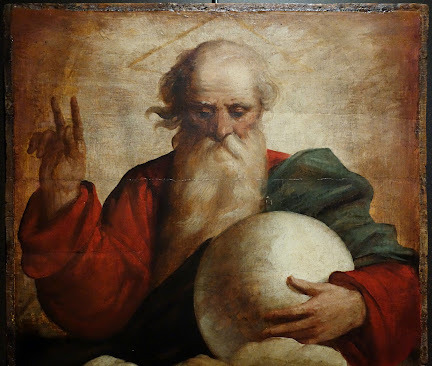
I had a recent series of discussions with my brother, also a pastor-theologian, and it prompted a long reflection on questions that most of us probably don't think about often, but which have loomed large in the traditions of Christian theology. It started with a discourse on the nature of time and eternity after Thanksgiving dinner (as is customary, I'm sure you'll agree), but it soon migrated into a reflection on the impassibility of God--the idea that God does not suffer change, including the changeability of emotions. If you're wondering how those two abstruse topics are connected, well, it turns out that if you're defending a position like mine, which prefers both to think of God as truly possessing emotion in the fullest sense, and also to think of God as eternal (that is, being completely beyond time), then that seems to imply that grief will be a part of God's experience forever--and this my dear brother (together with most of the greatest theologians of church history) found difficult to swallow.
It's only with fear and trembling that I dissent from a near-unanimous opinion of the early church fathers (and my brother), but on the impassibility of God, something in their position doesn't seem quite right. And I'm not alone in this--a significant swath of modern theologians, even in theologically conservative traditions, have dissented from the classical idea of the impassibility of God, or at least sought to seriously modify the way it's emphasized. Joining me on this side of the field, for instance, are modern theological heavyweights like Paul Fiddes (a Baptist theologian who taught at Oxford) and Pope Benedict XVI.
Divine Impassibility
So let's back up a step. What's the classical view? Well, the early church fathers taught that God's ontological nature is absolutely unchangeable. It is undivided, which means that all his virtues and attributes are fundamentally united, never changing in their balance or consistency. That seems to follow from both Scripture and good sense, and this sensibility offers several important reassurances to the believer. If God is unchangeable, then he is indeed a rock-solid foundation for our trust. He is the same God he always was and always will be, forever faithful. But the early church fathers thought this unchangeability necessarily included another aspect: that God is completely above the changeability of emotions. He is not subject to passing moods, capricious whims, storms of wrath, or fickle loves. He does not suffer or experience grief. All of these things, they thought, would imply that God's nature can be influenced, acted upon, and pushed around by circumstances external to himself, which would impinge on his sovereign freedom and absolute self-sufficiency. If God can be influenced by his creatures in a way that moves him from what he was to some new state, then he is no longer the eternally reliable foundation of our hope--he is changeable. Or at least, that's what they thought.
Now, there's some nuance here. The fathers would be quick to point out that what we think of as emotion is a lesser reality, and the corollary features of God's character--those which parallel our emotions--are higher and fuller and richer than we can conceive. Therefore it is proper to speak of God's love, for instance, and even, as Scripture does, of his wrath, his grief, and so on. But in doing so, the fathers would say that we must not imagine any of these things as we typically do. God's love is not a yearning, pining, desiring love, as if God was somehow made vulnerable, able to be hurt or diminished by another's choice. Rather, God's love is not emotionally vulnerable at all, but is supremely self-sufficient and infinitely giving, always willing the good of the other. God is a fountainhead of love in this sense--always secure in his own beatitude, and always pouring forth his unchanging intent to save and to bless. Even God's wrath is really just a manifestation of his love (i.e., his intent to do good), refusing to allow sin and evil to hold sway and to further corrupt his creation. Further, impassibilists will emphasize that God's love was made manifest in a special way in the Incarnation, in which he united himself, in the person of Jesus Christ, the Son of God, to a passible human nature. In that human nature, the Son of God truly suffered, experienced grief, sorrow, and all the sweep of our emotions. But--and here's the crucial point--the Son of God did not experience any of that in his divine nature, which remained entirely serene, blissful, and unperturbed (because, remember--God can't be changed, even by the passion of emotions).
Okay, so that's the picture that the early church fathers, and all of classical theism, would give. And there's a lot to admire here. But if it feels somehow sneakily unsatisfying as an answer, there's good reason for that.
Critique of the Impassibilist View
Think about the picture of God's love outlined above. It sounds really nice to describe it as always giving, characterized by the intent to do good, and so on. But if you think about it, that's not actually what we mean by love. We recognize all of those descriptions as characteristic of other virtues, like kindness, which are not generally thought of as higher, but as lower than genuine love. My love for my dog is characterized by the unchanging intent to do her good, but I don't love her as I love my children, for whom I make myself vulnerable at the deepest heart of who I am. Vulnerability is part of what we mean by love, and we intuitively recognize that as a higher form of love. A father who does not make himself vulnerable in love toward his children--who feels no pain at their rebellion, for instance--is not a particularly good father.
And if a classical theist would object here, "But that's exactly what God did do in the Incarnation--make himself vulnerable in the most unbelievable way possible!"--I would say, yes, absolutely! But when we look at the Passion of Jesus through an impassibilist lens, there are some quirks of the narrative that many Christians will find surprising. So much so, in fact, that an impassibilist appeal to the Passion can sometimes almost feel like sleight-of-hand. That's not to say that impassibilist scholars are trying to trick us, far from it--many admirably try to make the Incarnation the center of God's self-revelation of love (and properly so!), but the result often seems to come up with the same picture in the end: the Incarnation as a curious exception rather than the defining paradigm of a self-giving love that can, in fact, truly suffer for the sake of its love for humanity. In impassibilists' eyes, the divine nature does not change, and they read this to mean that it does not "feel" anything as we do--not even in the Passion of the Lord. God showed us his love in Jesus, yes--but the impassibilists end up having to portray that love as being bounded in this one limited historical episode, carefully boxed up inside Jesus's human nature but not touching his divine nature, or else God's unchanging nature could not be described as perpetually serene and unruffled. God's unchanging nature, you see, is still entirely invulnerable, even in the Passion. The Father feels no sorrow at the death of the Son, because the Father cannot feel sorrow--that would (it is thought) diminish him. To put it pointedly regarding your own condition before God: the impassibilist position is forced to insist that the Father feels no loss if you are lost, because the Father cannot feel loss. Sure, one might be able to say that God embraces our suffering in the crucifixion of Jesus, but even this appears to lose something of its meaning once we realize that the Father feels nothing of that suffering. In our relations with the Father, we do not experience the running embrace of the one who receives the prodigal home, but an infinitely unflappable Buddha in the heavens. In Jurgen Moltmann's incisive critique, he describes classical impassibility as showing God reigning serenely over Auschwitz. Is such a view really a higher view of God, or a lower one that rightly makes us shudder? One could easily imagine a great celestial machine that felt nothing and always sought the good of others--but would that be God? I think not.
So I'm not convinced by the classical argument for divine impassibility, and for three main reasons:
First, I think there's a logical weak link in here, when we assume that the apparent changeability of emotions is somehow a threat to God's ontological impassibility. It's absolutely true that his nature and character do not change. But are the states we refer to as emotions really an element of ontological nature, or something else? I think what we refer to as "emotions" are actually images of his unchanging nature, which we see refracted in different aspects because in its relationality, it looks different when in contact with different aspects of our reality. If that sounds like another way of saying impassibility, it's really more like saying that emotion is a reflection of the fullness of God's character, not (as classic impassibility would have it) a mirage meant to point to something rather different than what we even mean by emotion.
Second, and more importantly, I'm also unconvinced because the view above, for all its philosophical appeal, seems to stand in direct contradiction to God's self-revelation in Scripture. God portrays himself as passionately emotional--so much so, at times, that it's a little over the top (just read Ezekiel and the minor prophets). One gets the sense that there is vibrancy in the emotional life of the Godhead that is well beyond what we experience. Nonetheless, classical impassibility reads these instances in Scripture as anthropomorphisms meant to aid our understanding--we are meant to learn something about God from these texts, but apparently not that he experiences emotion. I alluded to the parable of the Prodigal Son above. Doesn't it seem to be a very strange story for Jesus to tell, if he does not mean for us to understand from it (among other things) that the heart of God toward us is a yearning, desiring, even a grieving one? It is of course possible to reconcile the impassibilist position to Scripture by arguing that any "emotions of God" text must be interpreted as anthropomorphic analogies (and indeed, that's a very faithful, and sometimes necessary, way of reading those texts)--but the ubiquity of the emotional language ascribed to God, even in the teaching of Jesus, seems to leave one in a difficult spot. If I can put it crudely, one almost has to accept that God is a rather poor communicator in the way he has inspired his Scriptures, if he intended us to discern that he is beyond all emotion.
Third, I'm unconvinced because impassibility seems to me to be a relic of the Platonism that reigned in the philosophical circles in which the early church fathers lived and worked. It's an idea that predates Christianity, and it's also an idea that is calibrated to respond to a particular context: the capriciously whimsical, over-emotional gods of the pagan pantheon. One might expect such influences to push the classical view of God in a wide pendulum-swing in the opposite direction, which is what I think has largely happened here. Now, to be clear, that's not a full argument in itself. There are many parts of pre-Christian Greek philosophy which I embrace wholeheartedly and which, I think, are a good match for Scripture--the eternality of God being one. But the context in which ideas grow is important, and knowing this context should give us at least some pause. (And to the contrary objection, that my perspective arises from the post-Romantic context of modern Western sentimentality, well, let's just say I have some good books from the medieval mystics I can lend you which will disabuse you of that notion fairly quickly.)
My Position
So I don't buy classic impassibility. But neither does my position swing all the way to the other end, in which God is characterized by wild swings of passion and emotion. There are some middle grounds here, but they're tough to wrap our minds around. I'm actually arguing for one of the middle grounds--the ontological impassibility of God's nature, but with the sovereignly volitional vulnerability that the fullness of his love necessarily includes.
Let me go back to the nature of emotion as a refracted reflection of God's own nature, as it relates to our changing experiences. We have names for a wide variety of emotional states, some of which, according to Scripture, apply to God (love, anger, grief, etc.) and some of which don't (embarrassment, shame, despair and so on)--the latter naturally do not directly relate to God because they are, in fact, a manifestation of our imperfection and sin. Even those latter emotions, though, are pointers to the nature of God in their own way. Such emotions betray a recognition that we are not who we ought to be. We have a deep-seated desire to be holy and perfect--and so, in a roundabout way, even those emotions are refracted reflections of God's own nature, since he is holy and perfect and calls us to be so as well. But what about the ones that do directly apply to God? I would argue that they are all part of the fundamental unity of God's character, best understood as love--real, authentic, self-giving, and, yes, vulnerable love. Such love does manifest as wrath when the good of its beloved is threatened (as by sin). Such love does manifest as grief when its beloved is lost. But this doesn't make wrath or grief or sorrow or any of those things definitive of the character of God in a total sense--they are manifestations of his fundamental, unchanging love as it interacts with our changing circumstances, and it is love that defines God's character.
Does this entail, then, that God can feel loss (in an emotional sense, or at least something meaningfully analogous to our emotions)? Yes. But that does not mean that God is ontologically diminished in any way, merely that in his sovereign volition, he has made his heart vulnerable to us in love. The loss inherent in that love is not a sign of diminishment, but rather a sign of the fullness of his love. If it were not capable of loss, it would be a lesser form of love--and that would be an ontological diminishment, which is the very thing the impassibilists are trying to avoid. As argued above, a love that includes no possibility of grief or loss is easily recognized in our experience as a substandard sort of love--one that is unwilling to extend itself meaningfully to the other.
So does this mean that grief and sorrow are forever part of the heart of God (if we can even express it like that)? I think we have to say yes. The cross is the central movement in history, the one great visible sign of God's love, and if it means what it appears to mean, then it means that God's love is so vast that he has accepted sorrow and grief and loss into his very heart, all out of the vastness of his love for us. And again, I think it's a mistake to believe that ascribing a sense of emotional loss to God is a diminishment of God. To me, the opposite view would be the diminishment--a God whose love can only run in one direction, a love which does not really care for the other to the degree that it can be affected by the other.
Responding to Objections
Now, one cannot build one's argument only on intuitions about what love ought to be like--nevertheless, it may be instructive to note once again that these intuitions, over against the impassibility perspective, seem to match the way Jesus depicts the Father's heart, as in the Prodigal Son parable mentioned above. If our intuitions match the tone and tenor of Scripture, then it should take more than mere philosophical plausibility to overturn them. So let's examine a little more closely the impassibilists' causes for concern at my argument, to see if there are perhaps further considerations to which we should give due attention. Many impassibilists would think that my argument--in which sorrow and grief in some sense become an eternal part of the experience of God--is problematic, not least because it seems to suggest that God's beatitude can be diminished, making his "fullness of joy" dependent on creatures rather than on his own self-sufficient infinity.
But I'm not sure this is a cogent response, for three reasons. First, it tends to use terms most closely tied to emotional states--beatitude, bliss, joy, happiness--as something proper to God, when the whole argument has been about denying the coherence of applying such states to God. How can one speak of God's joy or happiness at all, if God does not experience emotion in any form approaching what we understand emotion to be? Aren't those also anthropomorphisms according to the impassibilist line? I think the best we could do is to define impassible beatitude as "self-sufficient serenity." Maybe to some that's a greater good than genuine love, but to my ears that idea strikes more of a Buddhist chord than a Christian one.
Second, I believe the response above also mischaracterizes my argument, by amplifying such things as grief and sorrow to an overriding and independent identity of their own, when my case posits that they are, in fact, merely sub-aspects of God's love. It is God's love that is forever full, and since the fullest form of love includes the possibilities of grief and sorrow, then yes, they are included here too--but that simply means that God's love is the richest it can possibly be. They are a part of his love, not something to be considered separately. Ask any parent who has loved a child and lost them whether it would have been better never to have loved that child, and, aside from perhaps the most extreme exceptions, you will get a unanimous response back: as Tennyson noted, it is better to have loved and lost than never to have loved at all. That's the question about God's love--does he love in that way--a love vast enough to embrace perpetual loss, counting the beloved worthy even of that--or is it something a little more limited, like perpetual kindness?
Third, let's tackle the question of joy, even if it is an emotional term (it just happens to be one of the emotional terms impassibilists like to use, so it's fair game). Does the God's love-grief necessarily diminish the fullness of God's joy? I don't think so. While it's admittedly hard for us to simultaneously hold together the emotional states of joy and grief (and thus hard to imagine what that would be like for God in the eternal state), experience teaches us that grief is very often the place from which the richest joy of all can bloom, either by a contrast which has deepened its meaningfulness (like the joy at the end of The Lord of the Rings) or by direct result (like the joy made possible by the grief of the cross). One could argue, in fact, that in our experience, grief and sorrow act as amplifiers of joy rather than diminishers of it, particularly if--in the words of Chesterton--grief is something "special and small" in comparison to the joy that results from the fullness of God's love. To use an everyday example, you could put it this way: like the sharpness of cheese beside a slice of apple pie, grief can accompany joy in a way that magnifies the whole. Further, we have to be careful not to instrumentalize the idea of grief as something that can act upon God apart from his will, as if it were stronger than him. The grief we're talking about is simply part of the unfathomably great love that God has chosen to express, so it is he, in his sovereign volition--not the grief--that has the mastery here. Grief does not act upon God as an external influence; God embraces this love-grief of his own accord. Now, this is probably all just an intuitional response, but we'll leave it at that--I simply don't see that God choosing to sing a melody of vaster love, one which entails a counterpoint of grief, is a necessary diminishment of his beatitude or joy. Rather, it just makes for a better symphony in the end.
But we still need to wrestle with the concomitant objection, that this all somehow makes God dependent on his creatures. If his emotional state, like joy or grief, is contingent upon external forces, a response to our actions--put another way, if it is something about himself that is shaped by others rather than himself--doesn't that shake the doctrine of his self-sufficiency, his supreme independence? Here the insights of Fiddes and others serve us well: this apparent vulnerability in God comes down to his own sovereign choice. It is his eternal, volitional act to become passible to us, to allow his heart to be moved by our choices. Nothing is taken from him; he lays it down of himself--and again, all of this redounds to the fullness of God's love. This is an expansive vision of the divine economy, and one that entails no ontological diminishment within the nature of God.
God's Love as Maximal Perfection and Sovereign Volition
As I turn these things over in my mind, I keep coming back to the idea of God as the maximally perfect Being--the one whom, in Anselm's words, "nothing greater can be conceived." When we think of God's virtues as perfections, we usually imagine them by way of analogy, thinking of human virtues exalted and purified to their highest possible forms. To be maximally merciful is to exhibit mercy (which we know by its imperfect human expressions) in every applicable circumstance and in the fullest possible way. To be maximally just is to exhibit justice (which we also know by its imperfect human expressions) in every applicable circumstance and in the fullest possible way. In the same way, to be maximally loving is to exhibit love in a way that exceeds the highest forms of human love, not in a way that flips the human scale upside down. But love in the mode of classic impassibility appears to be the sort of love one might feel for a farm animal--always willing the other's good, but not the sort of vulnerable, passionate love one feels for a child. If we are to imagine God as the perfection of love, we must imagine this is as the perfection of what we mean by love--an even higher amplification, reaching perfection, of the highest forms of love we know, not a weird transmutation of something we would recognize as a lesser form of love, or mere kindness. Otherwise, we don't really mean that God is love; we mean something else, and we should choose a different word. The impassibilist view is a near enough fit for the God of Islam (in which, notably, God is not typically depicted as loving), but I'm just not convinced that it's a good fit for the God of the Christian gospel.
To go back to the early church fathers--there were a few, if only a few, that verged slightly toward the case I'm presenting here (even if the vast majority went the other way). Origen--from whom Benedict XVI borrows for some of his view on the matter--was more willing to speak of God's emotions than were other patristic writers. And Maximus the Confessor--whose argument matches some of Fiddes's modern position--argues that the divine nature did actually, in a very real way, join itself eternally to the suffering and grief of the human nature of Christ, by a volitional choice. For Maximus, God's grief that I may be lost is an aspect of his love for me, eternally chosen out of his sovereign freedom in his act of creating me. So while Maximus might not portray God as always "feeling" that loss in the way we humans do, he would say that the grief of my loss is an eternal part of his love for me, freely and sovereignly chosen from before the world began. In this sense, then, any such grief is not enacted upon God by an external force; it is actively chosen by his own sovereign will.
Conclusion
Now, to be clear: in all humility, I'm really not sure I'm right on this. I'm just trying to give voice to my intuitions on the subject, as shaped by Scripture and instructed by the best logic my mind can follow. But we're talking about things that are far beyond our understanding, and it might very well be the case that the old classical view is a little more accurate than my way of putting it, and that I'm just misunderstanding the incomprehensible grandeur of the nature of God. Totally possible. But I think that's okay. I'm pretty sure I'm not giving in to mere modern mushiness or sentimentality, as impassibilists will sometimes impugn those who dare to disagree. My view hews close to Scripture and it shows up throughout church history far before "modern sentimentality" arises--just read Julian of Norwich for a clear view of a God characterized by a love so immense that it can only be understood in divine yearning and self-chosen suffering.
For me, it comes down to a question of who I am going to worship. Either of the views above is permissible in Christian orthodoxy, but I must worship God according to the highest possible conception I can hold of him. And for me, that's a God of genuine love--the Father of the prodigal son. Until my conceptions and intuitions change, I must worship that God, because to my eyes, he is higher in love than the God of the impassibilists. He is more maximally perfect, and so he alone deserves my praise. (This is, incidentally, one of the reasons why I also prefer the classic view of the eternality of God--I feel like I can conceive of a greater Being than one which is limited to temporal sequence, and so to be maximally perfect God would have to transcend the limitations of time.) I'm not going to give my worship to something that seems to me to be inferior to another, greater Being. I hope and expect that God, in his mercy, accepts the highest worship I can possibly give, even if I (as is certainly the case) do not fully understand the scope of his nature.
November 29, 2025
Could Jesus Have Sinned?
Could Jesus Have Sinned?
The Two Natures ofChrist and the Doctrine of Original Sin
Could Jesus have sinned? – The instinctive Christiananswer is “No,” but this raises a secondary question: In what sense, then,could Jesus be said to have struggled and been tempted like us?
Hebrews 2:17-18: “For this reason he had to be madelike them, fully human in every way, in order that he might become amerciful and faithful high priest in service to God, and that hemight make atonement for the sins of the people. Because he himselfsuffered when he was tempted, he is able to help those who are being tempted.”
Hebrews 4:15: “For we do not have a highpriest who is unable to empathize with our weaknesses, but we have one whohas been tempted in every way, just as we are—yet he did not sin.” (Seealso Matt. 4:1-11)
The answer to the title question hinges on understanding thetwo natures of Christ: fully divine, and fully human. Based on that fact, thecorrect answer would seem to be: Yes, in theory, the human nature ofJesus Christ could have sinned; but also No, in practice, Jesus wouldnever have sinned because of the union of his human nature with his divinenature. So while his human nature could, in theory, have sinned, in actualityit was a practical impossibility. Let’s back up a little and examine whatthis answer is getting at:
The Two Natures of Christ:
The Bible testifies that Jesus is fully man and fully God.On the one hand, he is a human being with a real human body and a rationalhuman soul, sharing the same human nature that you and I do (Heb. 2:17; Rom.5:12-17). On the other hand, Jesus is clearly shown in Scripture as being fullyGod, sharing the same divine nature as God the Father (John 1:1; Col. 2:9; Heb.1:3; John 10:30). In the words of the Chalcedonian definition (an earlyChristian summary of traditional doctrine), Jesus was “perfect in Godhead,perfect in Manhood, truly God and truly Man, the self-same of a rational souland body; co-essential with the Father according to the Godhead; co-essentialwith us according to the Manhood; like us in all things, except for sin.”
[It is important to note that this does not mean that Jesushad two “persons” inside of him, a human Jesus and a divine Christ, or anythinglike that. Rather, Jesus is one person, who shares fully, at the same time, inboth the divine and human natures. These two natures are distinct from oneanother by essence (one is uncreated and eternal; the other is created andcontingent), but they are perfectly united in Christ, so that he cannot be seenas internally divided (like a split personality), nor as having the two naturesblended together into something new. He has both natures, fully distinct butinseparable, existing in perfect union together in his one person.]
So Jesus had a full, authentic human nature. This humannature was naturally inherited, in the miracle of his incarnation and birth,from his mother Mary. But that leads to another question:
Since human nature is fallen, wouldn’t Jesus haveinherited a corrupt, fallen human nature? The answer to this is No, and toexplain why, we must look at the doctrine of original sin, and what we meanwhen we say that human nature is fallen (or corrupted by sin).
Original sin is the term we use to refer to the clearbiblical teaching that in Adam and Eve’s act of disobedience against God, sinaffected human nature in such a way that every subsequent human being isautomatically and inextricably trapped in sin’s power (Romans 5:12-19).
- How does original sin get passed on? Eventhough the Bible is clear about the reality of original sin, it does notprovide a clear picture for the mechanism by which original sin works(that is, how it is transmitted from person to person).
- Is it biologically inherited? Throughoutchurch history, various answers have been given. Augustine thought thatoriginal sin was a genetically-inherited corruption, passed on biologically fromparents to children. (Incidentally, this view is partly why the Roman CatholicChurch holds to the immaculate conception of Mary, believing that it would havebeen necessary for Mary to be purified from all sin before she becamethe mother of Christ, otherwise a “sin nature” would have been passed to him.)
- Is it legally imputed upon us? TheProtestant Reformers thought that original sin was both a matter of aninherited corruption which inclines us toward sin, and also the imputation ofthe guilt of Adam’s sin upon us, since Adam is the “federal head” of allhumanity, representing us before God.
- Sin = Falling out of Communion with God: Theclassical view of the eastern church fathers, however, had a view which was rootedboth in the philosophical nature of sin and the idea of salvation as a matterof union with God. This view holds that sin is not a “substance” that can taintour nature or produce a direct effect on human biological inheritance, butthat, as disobedience to God, it simply signifies the breaking of communionbetween God and humanity. When Adam and Eve sinned, their communion withGod—the spiritual closeness that connected them to God’s grace—was ruptured.All human beings inherit a fallen human nature in that sense—not as thoughsomething has gone genetically awry with human nature that changes us in ouressence, but rather that human nature as a whole is no longer in communion withGod and thus no longer in direct contact with his sanctifying grace. We fellaway from God together, as a race, in Adam and Eve, and are now born disconnectedfrom his grace. So, what we inherit didn’t change in the Fall—humannature is still “in the image of God”—but the intended conditions in which ournature was meant to operate have changed. To use an analogy from electronics,our natures were meant to be “plugged in” to God, but all humans now are bornin an unplugged state. In the absence of communion with God, who is the sourceof all spiritual life, we inherit the consequence of death, and we are leftwith the survival-oriented selfishness of humanity’s biological nature. Thisself-oriented bent, which conforms to the established patterns of ancestral sinin the world around us, makes it an absolute certainty that every single one ofus will sin. Thus, because of the Fall, we have two effects: (1) we inherit theconsequences of original sin because our human nature is not in communion withGod (as it was originally intended to be, before Adam and Eve’s sin), and (2)we all ultimately ratify this condition with our own sins.
- Why Was Jesus’s Human Nature Not Fallen? Underthis conception, Mary was a recipient of humanity’s sinful inheritance justlike us (as both the Bible and the earliest Christian witness appear toassume). How, then, did the nature she passed on to Jesus not suffer from theproblem of sin? Because the problem of sin was fundamentally a problem of beingout of communion with God. But the incarnation was a miracle of the unionof God’s nature with the human nature Jesus inherited from Mary, so his humannature automatically existed in full communion from the very beginning. It cameinto being in a “plugged in” state because of the union of Christ’s twonatures. Therefore, Jesus’s human nature did not bear the fallen effects of sinthat ours do, because his human nature was in union with the divine nature.
- Jesus’s nature and pre-Fall Adam’s nature: Assuch, the closest parallel we have to Jesus’s human nature is that of Adambefore the Fall: a nature in communion with God. (Technically, Adam’s communionwith God may not have been fully developed. Many church fathers thought he wascreated on the beginning of “growth trajectory” into greater union with God, whichsin interrupted. Further, Adam did not have the divine nature existing in hisperson, as Jesus did, so the analogy is imperfect—but it still remains theclosest one we have.)
- Then could Jesus have sinned? In theory,yes—Jesus’s human nature, possessing authentic free will, could have sinned,just as Adam’s human nature, in communion with God, did sin. However, becauseJesus’s human nature was fully united to the divine nature, in practicethis flips the answer to No—sin is a practical impossibility when one is infull union with God. To put it another way: Jesus’s human nature was fullycapable of sinning, but because of its union with the divine nature, it neverwould. (And this also explains why we won’t have to worry about sin inheaven—as heirs of full communion with God, even richer than Adam experienced,sin will become a practical impossibility, even though we retain free will.)
- What was Jesus’s temptation like? So didJesus really experience the struggle of temptation? Yes, in his human nature hereally did. There was never any possibility that he would give into it, but thestruggle was real in a couple key ways: both in terms of facing the pain of ourbroken, fallen world, and of having the discipline to choose God’s way insteadof the easy path of self-satisfaction. Jesus’s human will had authentic powerof choice, and every time a temptation came his way, it had to choose to alignitself to God’s will.
- What This Means for Us: When we come infaith to Christ, we are transferred over from the old humanity under Adam tothe new humanity in Christ (Rom. 5:12-21). This new humanity has a restoredcommunion with God, made permanent in the everlasting union of Christ’s twonatures. In other words (to return to our electronics analogy), we get pluggedback in. So as we stay connected to Christ, like branches to the vine, weremain connected to God’s sanctifying grace. Our individual sins still occur,but they no longer break our communion with God because those sins have beenatoned for by Jesus’s death, and we are covered by his righteousness, whichjustifies us and restores us to right relationship with God. Now, by his grace,we can learn the same discipline against temptation which Christ practiced, andin our ever-deepening communion with God we can experience ever greaterdeliverance and purification from our sins.
October 31, 2025
Should Christians Keep the Sabbath?
What is the Sabbath? Traditionally,it is the practice of dedicating a day of rest devoted to God on the seventhday of the week (Sabbath literally means “seventh”), as modeled in God’s workof creation and commanded under the Law of Moses (Ex. 20; Deut. 5). Throughoutchurch history, there have been various ways how Christians have regarded theSabbath, with most emphasizing that the legal requirements of the Law of Mosesare no longer binding, but that if one so chooses, the Sabbath may be continuedas an act of love and devotion rather than of legal observance.
Evidence from the Gospels:The Gospels show the Sabbath as being re-oriented in its meaning toward theperson of Christ, to be fulfilled in him:
- Jesus in the Gospels – Jesus and hisdisciples observe the Sabbath-laws just like any godly Jews, since the NewCovenant has not yet been established by Jesus’s death. On the other hand,Jesus is regularly presented as pushing the boundaries of normal practice inhis Sabbath-keeping, re-orienting its meaning around his own identity (e.g.,calling himself “Lord of the Sabbath”). Jesus reinterprets Sabbath practicesfrom an emphasis on simply keeping the Law to an emphasis on pursuing God’screated intent for humanity—“The Sabbath was made for man, not man for theSabbath” (Mark 2:27). Ultimately, Jesus’s “rest” on the seventh day of hispassion-week—when he was lying in the grave—sums up the Christologicalsignificance of the Sabbath, as the event to which the Old Testament pointed.
- Jesus’s Fulfillment of the Law – Thecommand to observe the Sabbath is foundational to the Old Testament covenantwith Israel, given to Moses in the Ten Commandments. In the Gospels, Jesus issaid to fulfill the Law, not abolish it (Matt. 5:17). In practice, this meansthat the commands of the Law of Moses are considered binding on Christianswhere they reflect the character of God (since Jesus is himself the Son ofGod), but the practical laws intended to regulate Israelite culture are only bindinginsofar as they convey unchanging moral principles. For example, the lawsrelating to Temple sacrifices are fulfilled by Christ and are no longer bindingon Christians, but they do continue to inform us about foundational moralprinciples regarding sin and atonement. In Christian tradition, the Sabbath isusually thought to be one of these practical laws. It tells us valuable thingsabout who God is and who we are, but its letter-of-the-law practice is nolonger binding on Christians.
o Butwhat about the Ten Commandments? The position outlined above surprisessome people, as it appears to negate one of the Ten Commandments, but rememberthat the Ten Commandments were given as part of the Mosaic covenant, which weare no longer directly under. This does not mean, however, that the other rulesin the Ten Commandments are somehow optional, because most of them are morallaws which reflect the character of God, and so they represent a standard ofunchanging reality. Because God is still God and sin is still sin, murder andadultery and so on continue to be prohibited in Christian practice, but theSabbath was a command specifically oriented toward the religious practices ofancient Israel, and was not required of God’s followers who were not under theLaw of Moses (like all of the great men and women of faith in Genesis). In thesame way that Abraham, Isaac, and Jacob were never asked to keep the Sabbath,neither are we who are under the New Covenant. Nevertheless, we must rememberthat while Christ fulfills the Law, he does not abolish it, so while we’re notobligated to a letter-of-the-law observance of the Sabbath, we should stillseek out and apply the principles behind it.
Other New TestamentEvidence: The New Testament shows that the idea of Sabbath now appliesto the Christian’s whole life in Christ (see Heb. 4), and that Christians werenot expected to keep the Sabbath laws of the Old Covenant (see Acts 15, 21;Col. 2).
- In Acts 15:19-21, there are only threeLaw-oriented rules which the apostles require of Gentile converts: to abstainfrom food sacrificed to idols, from the meat of strangled animals or blood, andfrom sexual immorality. These combine practical laws about food with morallaws, with the idea being that breaking these laws would make GentileChristians offensive to the Jewish believers in whose company they now live(see v.21). Gentile Christians are not asked to keep the Sabbath; it is not oneof the three requirements (see also Acts 21:25).
- Colossians 2:16-17: “Do not let anyonejudge you by what you eat or drink, or with regard to a religious festival, aNew Moon celebration or a Sabbath day. These are a shadow of the things thatwere to come; the reality, however, is found in Christ.”
- Hebrews 4:9-10 [using the Sabbathallegorically to speak of salvation in Christ]: “There remains, then, aSabbath-rest for the people of God; for anyone who enters God’s rest also restsfrom their works, just as God did from his.”
Evidence from the EarlyChurch: It appears that early Christians considered the Sabbath to havebeen fulfilled in Jesus, and they no longer practiced the Sabbath laws of theOld Testament. Instead, they saw life in Christ as an obligation to a“perpetual Sabbath,” ordered around refraining from sin and resting in God’ssalvific work on their behalf. They did not see this as a relaxation of theSabbath ordinance, but, if anything, an expansion of it.
- Ignatius of Antioch (late 1st,early 2nd century, a student of the apostles): “If, then, thosewho had lived according to ancient practices came to the newness of hope, nolonger keeping the Sabbath but living in accordance with the Lord’s day, onwhich our life also arose […] how can we possibly [do less]?”
- Justin Martyr (mid-2nd century):“The new law requires you to keep a perpetual Sabbath. However, you [a Jew] areidle for one day, and suppose you are godly. […] If there is a thief among you,let him cease to be so […]. Then he has kept the true Sabbath of God.”
- Irenaeus (mid-late 2nd century):“The Sabbaths taught that we should continue day by day in God’s service […],abstaining from all avarice. […] However, man was not justified by these things.This fact is evident, for Abraham himself—without the observance ofSabbaths—‘believed God, and it was credited to him as righteousness.’”
- Tertullian (late 2nd, early 3rdcentury): “Let the one who contends that the Sabbath is still to beobserved as a balm of salvation prove to us that in times past righteous men(like Enoch, Noah, or Melchizedek) kept the Sabbath and were thereby madefriends of God. […] Just as the abolition of fleshly circumcision and of theold Law is demonstrated as having been consummated at its specific times, soalso the observance of the Sabbath is demonstrated to have been temporary. […]We Christians understand that we still more should observe a Sabbath from all[unbefitting works]. This is not only every seventh day, but at all times.”
- Apostolic Constitutions (3rdcentury): “God had given the commandment to keep the Sabbath [to Moses], byresting on it for the sake of meditating on the laws. However, he has nowcommanded us to meditate on the law of creation and of providence every day.[…] There is only one Sabbath to be observed by you during the whole year—thatof our Lord’s burial. On that day, men should keep a fast, but not a festival.”
How Should Christians Keepthe Sabbath?
1.) First,recognize that in Christ, we have been given rest from the works of the Law, andare no longer tasked with earning our favor with God by means of following achecklist of rules. Rather, we are saved by grace, and we rest in Christ’s workon our behalf.
2.) Second,seek to keep a “perpetual Sabbath”—leaving the works of the world behind anddevoting yourself to God every day of the week.
3.) Third,while not required of Christians, it is helpful to recognize that Sabbath wasgiven to God’s people as a blessing, and that we can grow in a healthy andwell-ordered devotional life by choosing to practice it—not because we have to,but because it is the gift of a good and loving God. As such, Christians havedeveloped a variety of Sabbath practices, from devoting a “Sabbath hour” ineach day to choosing a particular day, like Saturday or Sunday.
a. For most, the best practice is to set aside oneday per week if you are able—and preferably the seventh day—to put aside work,distractions, and other obligations, and carve out intentional time to spend inthe presence of the Lord. While Christians are not required to do this, doing iton the actual Sabbath helps us order our lives according to the biblical cyclesof both God’s creation and Jesus’s passion. For Christians, a continuingpractice of honoring the Sabbath on the seventh day also helps prepare ourhearts and minds for worship on the next day, Sunday.
b. Just remember that if you choose to keep Sabbaththis way, it is a gift of God and not a law that earns you favor or merit.There is a danger of sliding into a “works-righteousness” faith, and we need tobe vigilant about that. Do not fall into the trap of judging others for notkeeping the same kind of Sabbath you do, and also don’t judge yourself tooharshly if your own practice of Sabbath fails to live up to your hopes andexpectations for yourself.
October 9, 2025
Is the Story of the Virgin Birth a Historical Fraud?
_(cropped).jpg)
Of all the traditional doctrines of Christianity, none elicits quite as much eye-rolling scorn from "the cultured despisers of religion" (as Schleiermacher put it) as the story of the virgin birth of Jesus Christ. This is not surprising; to the crude and disenchanted minds of modern skeptics, anything that calls upon the supernatural is a target for derision--and even more so a supernatural act that turns the messiest, most carnal of human experiences (conception and birth) into something unutterably holy. A Christian can easily (and rightly) reply that with God, all things are possible. But to many doubters, the virgin birth smacks too much of the kind of religious fabulism that was common all across the ancient Mediterranean world. Why, then, should Christians believe the Gospels' story of the virgin birth?
I recently preached on the prophecy of the virgin birth found in Isaiah 7:14. There I noted that the Hebrew word used, 'almah, was not a word that specifically meant "virgin" in the same way that our word does. Rather, it means "young woman," used of a woman of marriageable age until the birth of her first child. There is another word for an unbetrothed young woman, still in her father's care, which one might more readily go for if "virgin" is specifically what was meant. For this reason, some skeptics suggest that the Isaiah 7 passage was simply meant to refer to a contemporaneous event--the birth of a baby into either Isaiah's family or the royal household in Isaiah's time--but that it held no import for a future messianic figure. The problem with that, however, is that the text clearly implies something stunning is about to happen--indeed, something miraculous, which the birth of an ordinary baby would not fulfill. Further, the candidates often proposed (Maher-Shalal-Hash-Baz? Hezekiah?) simply do not match all of the data in the text (the former does not appear to be the first child of its mother, and according to biblical chronologies, the latter would have already been born). Even more, the overriding context of the prophecy, as the prophetic hinge on which the whole section of Isaiah 7-12 turns, suggests a future Messianic connection--Isaiah 9 and 11 especially so.
So why did Isaiah use this particular Hebrew word, if a virgin birth was in view? Importantly, there is no single specific word for "virgin" in ancient Hebrew to call upon, merely the two terms applied to young women of marriageable age--and when one considers this, and Mary as a possible referent, then it immediately becomes clear that 'almah was the correct choice: Mary was betrothed and no longer under her father's care, so she could not have fallen under the semantic range of the other word; and further, in a case like hers, virginity would absolutely have been assumed. The word 'almah itself might lean ever so slightly in this direction, etymologically appearing to refer to a marriageable woman who is somehow "hidden" or "enclosed." All of this is worth knowing, but it still doesn't make for an open-and-shut case that Isaiah 7 makes reference to Jesus and Mary. The Christian argument is bolstered, however, by the fact that the ancient Greek translation of the Hebrew scriptures, the Septuagint (LXX), translates 'almah as parthenos--that is, virgin (at the very least, it leans much more heavily toward that part of the semantic range). This means that two centuries before Christ, the best Jewish textual scholars were interpreting Isaiah 7 as indicating a miraculous, virgin birth. (There's even a charming apocryphal story from later tradition--likely untrue, to be sure--which says that Simeon, of Luke 2 fame, was one of the LXX translators, who was told by an angel that he would remain alive until he saw Isaiah 7 come to pass--which would make him something like a quarter of a millennium old in the Gospel, and which gives some added poignancy, and even a little humor, to his great "Nunc Dimittis" canticle.)
Anyway, after my sermon, I encountered a question relayed from a skeptical family member of one of my parishioners. They enumerated several reasons why a skeptic might legitimately think that the virgin birth story in the Gospels was an early Christian fraud, dreamed up because the Gospel-writers thought (maybe erroneously, thanks to the LXX translation) that the Messiah had to be born of a virgin. Why doesn't Paul mention it? Why isn't it prophesied in other places in the OT? Why do only two of the four Gospels mention it? This got me thinking about the solid textual and historical reasons that Christians have for believing this wild and beautiful story, so I wrote out a few notes in response, which might prove helpful to others, too.
While in strict historical terms, one cannot definitivelyrule out a possible interpretation of the virgin birth tradition as being aninvention of early Christians in response to a misunderstanding of Isaiah 7:14,there are several quite good reasons for thinking otherwise:
Old Testament foreshadowings: Whileonly explicitly prophesied in Isaiah 7, there are several other possibleallusions to the virgin birth throughout the Old Testament.
- These begin as early as Genesis 3, in the“curse” narrative, where the prophesied “seed” who will crush the serpent’shead is said to be the seed of the woman. This is extremely unusual language;in almost every parallel construction referring to biological descent,reference is made to the seed of the man, not the woman (for cultural and,frankly, biological reasons—women didn’t have “seed”). To have the Messianicfigure identified as the seed of the woman implies that the identity of hismother and the nature of his birth—presumably lacking a biologically male father-figure—willbe exceptional.
- In Jer. 31:22, as part of a longer section whichrefers to the coming of the new covenant, there is this intriguing line: “Forthe Lord has created something new on earth: a woman shall encompass a man.” [Thisis sometimes translated differently in modern versions, because the literalmeaning of the Hebrew words makes almost no sense given the surrounding context(unless, that is, it’s a reference to the virgin birth), so some versionsstretch the translation to try to make it fit other themes in Jeremiah.]The word for woman here is the term for the specificallybiological/gynecological aspect of female identity, while the word for man isthe word for a hero, a strong one, a mighty man. This appears to indicate,then, that in bringing forth his new covenant, God will do something new,something never before seen on earth, and that the miracle will center on awoman’s physical body encompassing (as in pregnancy) a mighty hero. If thevirgin birth story is not true, then this is an exceptionally weird verse thatmakes little sense in its broader context; but if the virgin birth story istrue, then it makes perfect sense and would seem to be a reference to that veryevent. Since this verse’s Messianic meaning is most clearly seen in the Hebrew,not in Greek translations like the Septuagint, the earliest Christians did notseize on this as a proof-text for the virgin birth; it went pretty muchunnoticed until Jerome’s time in the early fifth century. This is important,because it means that here we have a plausible prophecy of the virgin birththat cannot be accused as having been a misunderstood passage that motivatedearly Christians to invent a virgin birth story for Jesus; rather, it stands asan independent witness to the plausibility of the traditional reading of Isaiah7.
- Other possible allusions to the virgin birthalso exist: for example, the fact that Jesus’s progenitor David regularly usesreferences to his mother’s womb in his psalmic prophecies (rather than, aswould be more culturally normal, references to his father’s house); and the Messianic“Servant” character in Isaiah 49 giving emphasis to divine action in fashioninghim in the womb. None of these are definitive, of course, nor as clear asIsaiah 7, but there enough hints strung out throughout the OT canon that theygive some support to the plausible reading of Isaiah 7 as pointing toward thevirgin birth of Christ.
Paul: While it’s true that Paul makes no directreference to the virgin birth, to take this as evidence against the virginbirth is an argument from silence, so not particularly strong. An argument fromsilence is only compelling if there is silence where one would reasonably haveexpected something else. In Paul’s case, this is not so—Paul’s writings are notinterested in providing a narrative of Jesus’s life—where they mention it, theyfocus only on the Lord’s Supper, the cross, and the resurrection (Paul also mention’sJesus’s ancestral pedigree at least once, but there his main concern is aboutJesus’s connection to the Davidic line). Paul’s silence would only beinstructive if it came as part of a passage in which Paul was mentioningJesus’s birth or his early life.
- Many scholars think that Paul does makereference to it obliquely, even if not directly. In Gal. 4:4 he writes thatJesus was “born of a woman,” which would be a strange way of putting it in thatculture unless he believed there was something exceptional with regard toJesus’s parentage and birth.
- Acts shows that Paul is also intimatelyacquainted with the evangelist Luke (and in a couple places he even quoteslines that match exactly with Luke’s Gospel), so given the prominence of Maryand the virgin birth in Luke’s writings it’s hard to imagine that Paul wouldsomehow be unaware of that tradition.
- Furthermore, the doctrine of the virgin birth isusually tied to a high Christology—i.e., seeing Jesus as divine. Some of Paul’sletters are usually counted as the earliest NT writings we have, and yet Paul’sChristology is remarkably high, which suggests that a high Christology was partof the early Christian movement from the beginning. The argument that Paul’sfailure to mention the virgin birth says anything that would cast doubt on thetraditional Christian view of Jesus is therefore highly questionable.
Gospels: Some skeptics will point outthat the earliest Gospel, Mark, also has no narrative about the virgin birth(nor does John, which, although probably later, is the only “independent”Gospel account in the canon, while the other three lean on each other invarious ways). Nevertheless, Mark seems to assume that knowledge on the part ofthe audience—in Mark 6:3, Jesus is called “the son of Mary,” which is a veryunusual way of speaking of someone in that culture; reference would usually bemade to the father. It’s also the only reference to Mary in Mark’s Gospel,which probably means that her place was so well-known in the early Christiancommunity that no further comment was needed. And, like Paul, Mark seems toportray a higher Christology than one would expect if Jesus’s origin was merelyhuman. John, for its part, has a wildly high Christology, and while it doesn’treference the virgin birth directly, some take the verbal escalation in theconversation in John 8:41 as implying that the crowds had some questions aboutthe legitimacy of Jesus’s parentage from Joseph (as one would expect if thevirgin birth story were true), to say nothing of Jesus’s repeated insistencethroughout the Gospel of John that he has come down from heaven and that Godalone is his Father. Matthew and Luke, of course, form the main source materialfor the virgin birth narrative, and it’s worth pointing out that Luke tells us thatsome significant research went into the Gospel, and the content of chapters 1-2suggests that one of Luke’s sources might very well have been Mary herself. Allthat to say, while the Gospels may not be as early as Paul’s earliestdocuments, they are still the earliest narratives of Christ’s life available,and all appear to testify to a unanimous conception in early Christianity thatJesus’s birth was miraculous and that he himself was divine.
Early Christian Unanimity: The otherearly Christian documents also appear to be unanimous in holding to the virginbirth narrative, which is not necessarily what one would expect if it were aninvented story. If it had been invented, one would expect pushback fromalternative traditions in the earliest sources, such as by James or Jude, whocertainly would have been in a position to speak on the matter if an erroneousversion of their own family’s history was being circulated. Yet James and Judemake no attempt to rebut the virgin birth narrative, nor even to cast doubt onJesus’s identity in any way (an argument from silence, to be sure, but onewhere the silence may be telling). The immediate post-NT documents attest tothis unanimity and deepen it, with specific references to Mary and the virginbirth in ways that affirm and expand upon the traditions in Matthew and Luke. Thiscan be seen in the letters of Ignatius, the Ascension of Isaiah, the Odes ofSolomon, the Protoevangelium of James, and the writings of Aristides, Melito,Justin Martyr, and Irenaeus (all first- or second-century sources). To myknowledge, the earliest alternative narrative does not show up until the late secondcentury, some hundred and fifty years after Christ, when the critic Celsus bringsup a rumor that Jesus was fathered by a Roman soldier, Pantera. The lateness ofthat alternative theory, compared to the unanimity of the earlier Christiantradition, does not give it much of an air of credence. Further, the very factthat the alternative theory was a theory of illegitimacy, suggests that eventhe early skeptics accepted as common knowledge that there was somethingunusual about Jesus’s parentage. The first appearance of the more obviousalternative theory—that Jesus could have been Joseph’s biological son—comesinto view just a few years later, when Irenaeus castigates the hereticalEbionites for holding that theory. (The Ebionites were a schismatic sect thatappears to have broken away from the orthodox Jewish-Christian group known asNazarenes; for their part, the Nazarenes are believed to have descended incontinuity from the original Jerusalem church, and patristic writings show thatthey held a high Christology, including the virgin birth). All told, then, theevidence for compelling alternative theories of Jesus’s parentage in theearliest sources is severely lacking, and the unanimity of the traditionalChristian reading is significant.