Kay Sexton's Blog
February 1, 2015
#11 The Lacuna by Barbara Kingsolver
 A reader recently compared my writing in Gatekeeper to Kingsolver’s. My agent was thrilled (what agent wouldn’t be?) while I am less convinced. I think it’s subject matter (Prodigal Summer) that prompted that linkage, rather than anything else. What strikes me most about Kingsolver’s work is the warmth - many characters start out less than appealing and win us over through their humanity; foibles and frailties becoming intrinsically attractive as we invest in them through the hints and glimpses she gives, that add up to rounded individuals with multi-faceted lives.
 So what she attempts in The Lacuna is almost a reversal of her highly successful and acclaimed writing style. She shows us Harrison Shepherd much more though the lacunae - the gaps - than in his own words and his own facets. In fact one of those is honoured only in the breach; whilst Shepherd is homosexual, we see nothing of his sex life and only a little of his (largely disappointed) romantic impulses.
Instead the novel casts light by its shadows - as one of Diego Rivera’s crew he watches the muralist create, as Frida Kahlo’s cook he watches her machinate, as Trotsky’s secretary he watches him die, as America’s interpreter of Mexico he watches McCarthyism destroy the international nation in favour of an Anti-Red witch-hunt.
What makes this book special? There’s a meta-level that is profoundly relevant. Whilst Shepherd is largely absent from the pages (the Mexican section is narrated by him, much else is reported by others) it’s very clear that this young man who is curious but non-judgemental, ill-educated but well informed, largely invisible but indispensable, represents not only himself but the choices we all get to make. He is one version of America’s history - the version that did not implode on the fear of Communism. For each of us, now, similar choices are possible - the threat of terrorism can send us scurrying or we can face the reality of a globalised world without demonising the parts we find frightening. Kingsolver is prescient about the role of press and propaganda - published in 2009, the rumour and misreporting, scares and terror tactics of so-called Islamic State look very much like some of the claims and counter-claims made for, by and about Communism from the 1920s to the 1950s.
Below the meta-level Shepherd is a charming, shy and self-effacing character, but not a weak one. He is reserved rather than cowardly, he thinks for himself and learns from others, his loyalties are earned, his requirements few, his sufferings many. Through him we see much of history differently - Frido Kahlo, in particular is a masterpiece in miniature (pun intended), springing alive from the page in a manner as vivid as any of her paintings and as fully rounded as a bowling ball spinning along a dining table, sending the place settings and wine glasses flying. A devastating, unpredictable and somewhat ferocious human (and artist), she’s rendered so brilliantly by Kingsolver that I doubt a single reader won’t go to investigate her work again. I certainly did.
It’s a big book, treating of big themes. Having taken my (paperback) copy away with me, I can report it’s .48 of a kilo in weight and a three day read for somebody who’s usually a book-a-day reader (and one of my three days was a flight day with three hours of check-in and three flight hours!) and I’m happy with the investment I made; it’s a book, like all of Kingsolver’s, that will resonate for long after the reading. Highly recommended for those who are currently enjoying historical fiction, similar in scope and complexity to Mantel’s Wolf Hall, and vividly creating a landscape of a period that is almost contemporary but looks oddly distant.
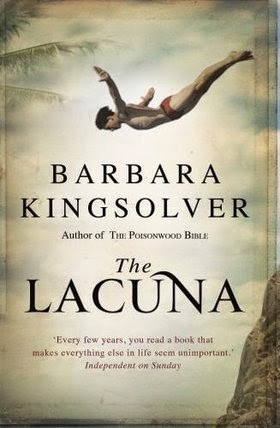
A final note; my copy has the cover shown - it's as profoundly factless as many of the news reports (some of them genuine artefacts) that are contained in the book. I'm not sure if this is deliberately provocative marketing or the all too common failure of a marketing department to engage with a book's contents but there is no cliff diving in this novel that I can recall ...


January 24, 2015
#10 Life In, Life Out by Avital Gad-Cykman
 As I was working on this review, I took a break to share a YouTube video of Lars Andersen demolishing Hollywood archery myths. I love that kind of thing - the nerd in me is enchanted by primary research, by monastic dedication to debunking falsehood and destroying comfort zones. I love ‘guy' things like pull ups and archery and killing, cleaning and cooking prey (although I can only do one of those things (I’ll let you guess which). And I also love ballet and embroidery and extreme hairstyling (although only one of those things is possible for me too).
Literature contains those same extremes. I know I’m not the only person who felt sad to reach the last page of Hilary Mantel’s A Place of Great Safety - but I might be the only one who thought the book could have been longer! By contradiction, I also love extraordinary brevity and ellipticism, which is why, when I learned that Zoetrope contemporary and fellow writer Avital Gad Cykman had a flash fiction collection out, I ordered a copy.
Life In, Life Out is a brief and punchy collection, described as ‘spirited’ on the cover. I’d say that understates the case, ‘possessed’ could be as accurate. Gad-Cykman’s protagonists mutate, escape, destroy and undermine. Her settings dissolve, collapse, burn and transmute. Emotions tumble, implode and shape-shift like desert mirages. Nothing can be trusted. Events make demands, but once those demands are met their nature changes. One of my favourite sentences from the collection involves the behaviour of some kind of weevil (or maybe demon) horde that infests the foodstuffs in a larder. “They appeared here and there, as if calling for our fists to come down on them, which we did with the righteousness of a stoned surfer catching his nightmare policeman smoking dope.”
Tricked, inveigled or exasperated into reaction, Gad-Cykman’s characters then discover that the scenery blurs, the dialogue changes and some kind of abandonment results. The recurring theme, for me, is the inevitable aloneness of those who try to make things happen, which is balanced by the chosen isolation of those who chose not to. It doesn’t seem to matter which course is taken, in this world of tightly-compressed stories, everybody loses something.
It’s not depressing though - the small, condensed worlds that are left barren by events still throb with colour and incident. Stark weather illuminates their emptied stages and remaining observers are struck by the rich mystery of what remains.
Whilst flash fiction of this nature eludes me as a writer, I adore it as a reader. Tiny mosaic words, punched together in bright, pitiless narratives, pile up in this book like a collection of beaded amulets that serve to protect from nothing because in the very act of reading a sense of hopeless resignation to a harsh world infiltrates the reader, flash by flash. Gad-Cykman celebrates the power of betrayal - by others, of dreams, by and of life itself and lays out the brilliance of what is gained - the clarity of seeing what is left when illusions are gone.
December 30, 2014
Book Review #9 The Dark Valley by Valerio Varesi
 I’m somewhat a fan of literature set in Italy (as opposed to Italian writers writing about their own country) as in, for example Michael Dibden and Charles Lambert. In fact, my own newly released novel, Gatekeeper, is set partly in Rome, so any book set in the country is likely to interest me.
I’m also a fan of Italian writing, Italo Calvino in particular. So finding a copy of Varesi’s The Dark Valley in my recent haul of books, I set to. My reading was much enhanced by a box of hand-made chocolates - between Christmas and New Year, indulgences are in order!
The first thing to say is that while this is a police procedural, the protagonist Commissario Soneri is on holiday and determined to remain out of the fray of the missing person case that is in full swing when he arrives in Montelupo - the hilly Northern region in which he was born. He just wants to relax, hunt for mushrooms and nostalge, to coin a verb. His girlfriend has been smart enough to opt out of this particular break so, isolated, melancholy and pragmatic, he walks the wooded hills, seeking mushrooms and finding instead an intense focus on the missing man Paride Rodolfi, citified son of the local magnate. In short order the local magnate, Palmiro Rodolfi, is found hanged, and the family business goes belly up. Still Soneri observes rather than engaging and this is his route throughout the novel … distant, discerning and somewhat saddened by everything he discovers. Those discoveries will include, of course, a death. In fact deaths begin to happen quite rapidly and a full scale and literal man-hunt is the high point of the narrative.
Of course Varesi has to keep his protagonist in the thick of things, so a series of incidents occurs, based around a dog that has adopted him rather than remaining with its titular owners, the Rodolfis, one of whom is missing, one dead. Ownership, loyalty and possession are key to this claustrophobic story which reaches back into the fascist era and reveals that heroes have unheroic pasts, whilst most of the villagers seem to have had unrealistic expectations of the Rudolfis and their money making skills.
It’s brooding rather than pacy and deep rather than wide; the stage is all verticals from tall walls to challenging slopes and most of the action takes place whilst Soneri is tramping up or down through dank woodlands and icy ravines. For those who like the melancholic, it’s an interesting read, but fans of light detective fiction will not find the repartee or cosy backstories that characterise Reginald Hill or the gritty speed that is a hallmark of Ian Rankin’s Rebus novels. It’s an acquired taste, rather like the ‘death trumpets’ that Soneri finds on one of his walks, which are rejected by all the villagers as not being worth eating. While I enjoyed this novel, I would probably have benefited from reading the first book in the series, but as a stand-alone it works well enough and for those who like their detective fiction deep and somewhat morose, it’s quietly satisfying.
December 27, 2014
#8 As You Wish by Cary ElwesWhen I was a child I would wa...
 #8 As You Wish by Cary Elwes
When I was a child I would wake up on Christmas morning, unwrap my Christmas stocking like an anteater attacking an anthill and when that was done, locate the Toblerone bar (just one, and not a family size one either) and whichever Biggles book had been delivered that year. It was an indulgence that shaped my life. Thank God for parents who didn’t buy books based on gender - I got my first Sci-Fi age seven or eight too, and between war aces and robots I had absolutely no idea I wasn’t supposed to read, and write, whatever the f*** I wanted.
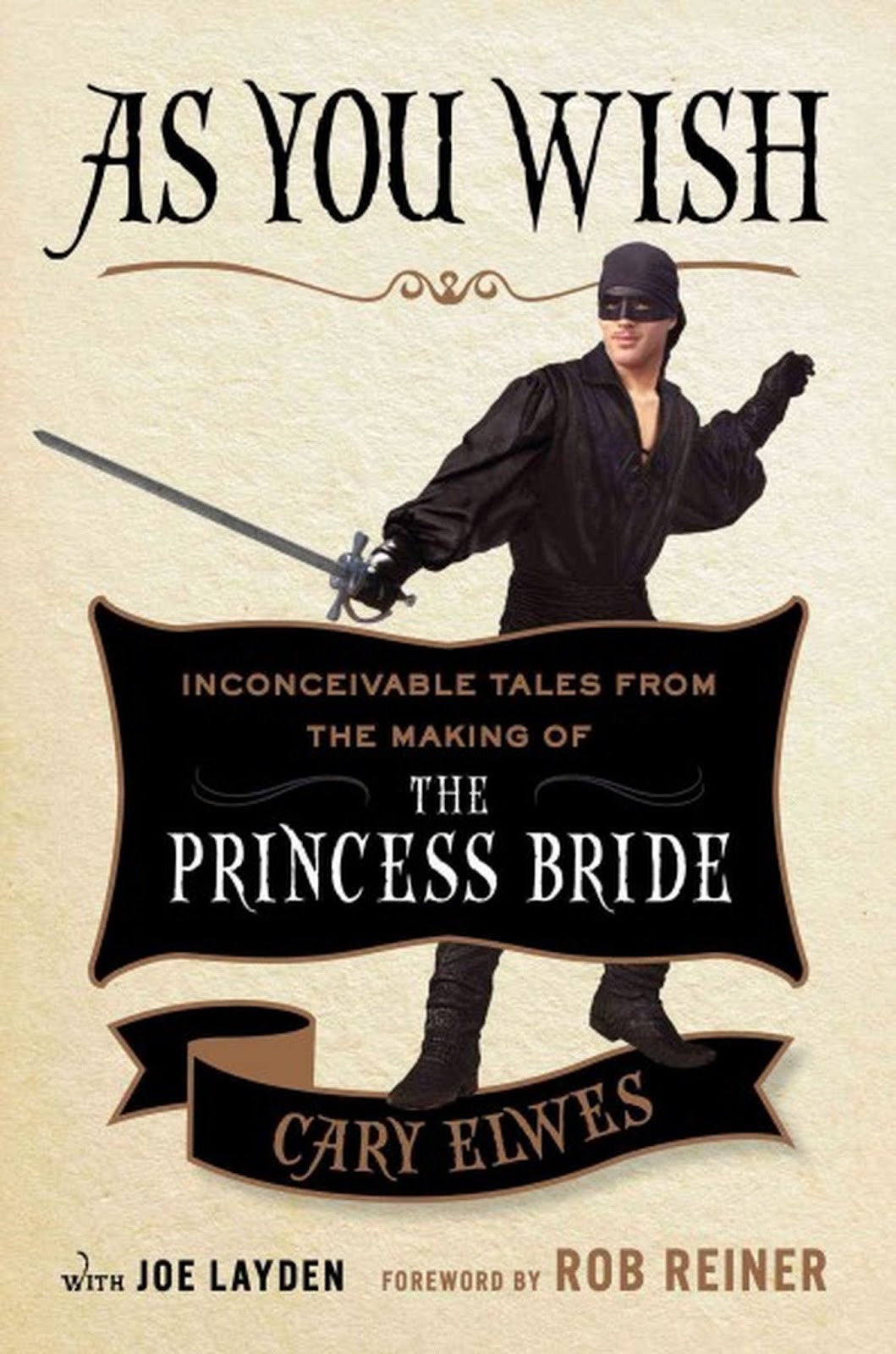
This year it was a box of hand-made chocolates and As You Wish by Cary Elwes and I waited until Christmas night to indulge in both - my tastes have definitely refined, although I can’t say they’ve elevated, because I see nothing wrong with Biggles (the racism and sexism are simply reflections of the period and didn’t influence me) or Toblerone for breakfast once a year.
Like just about everybody I’ve ever spoken to, I first saw The Princess Bride on video. It’s an odd story - we lived near another yuppie couple; she ran a branch of MacDonald’s, he ran a branch of Blockbuster, I was running a small charity, Tony was managing a team of mystery shoppers… Looking back we were probably all quite vile. We had a small child, they had a tiny baby. We all worked ridiculous hours to pay for minuscule houses in South London. He introduced us to The Princess Bride. Nothing odd about that, you may say. He though, turned out to be a fabulist. He ended up robbing the charity shop he was running (a long story) and skipping out on wife and child (a longer story) and ending up in prison (a story I don’t fully know). Still, he introduced us to The Princess Bride.
It became one of those films we watched when one of us was ill, when none of us could agree on what to watch and on those days when it was necessary NOT to watch The Wizard of Oz or the Only Fools And Horses Christmas Special ever again. Yes, we can do all the dialogue.
Cary Elwes' book can be read at a single sitting. I did it, even with constant digressions to the Internet to fact-check (Samuel Beckett, Christopher Guest and Norman Lear just three investigations I had to conduct). It is reminiscent of David Niven’s charming books The Moon’s A Ballon and Bring On The Empty Horses. Elwes makes no secret of having a collaborator (which pleases me, as most celebrities won’t share the credit for their best sellers) and as a result the book is an honest and well-crafted account of the filming of a cult classic. Elwes himself comes across as charming, gifted and wholly in love with his industry; he’s a typical film nerd, but in this case a film nerd who actually starred in the film.
Call-out boxes with side views on the history of the film from others involved make this a rounded account of film production (for a polemic on film production, read William Goldman’s own work - it’s scathing) and for those who adore Westley, Inigo, Fezzik and the cast of villains there will be some nugget that delights.
There is no reason to 'get used to disappointment' - as a Christmas indulgence it's wonderful, as a loving homage to a much loved film, it's perfectly judged and for those who love The Princess Bride it's a must have.
November 25, 2014
Review #7 The Daylight Gate by Jeannette Winterson
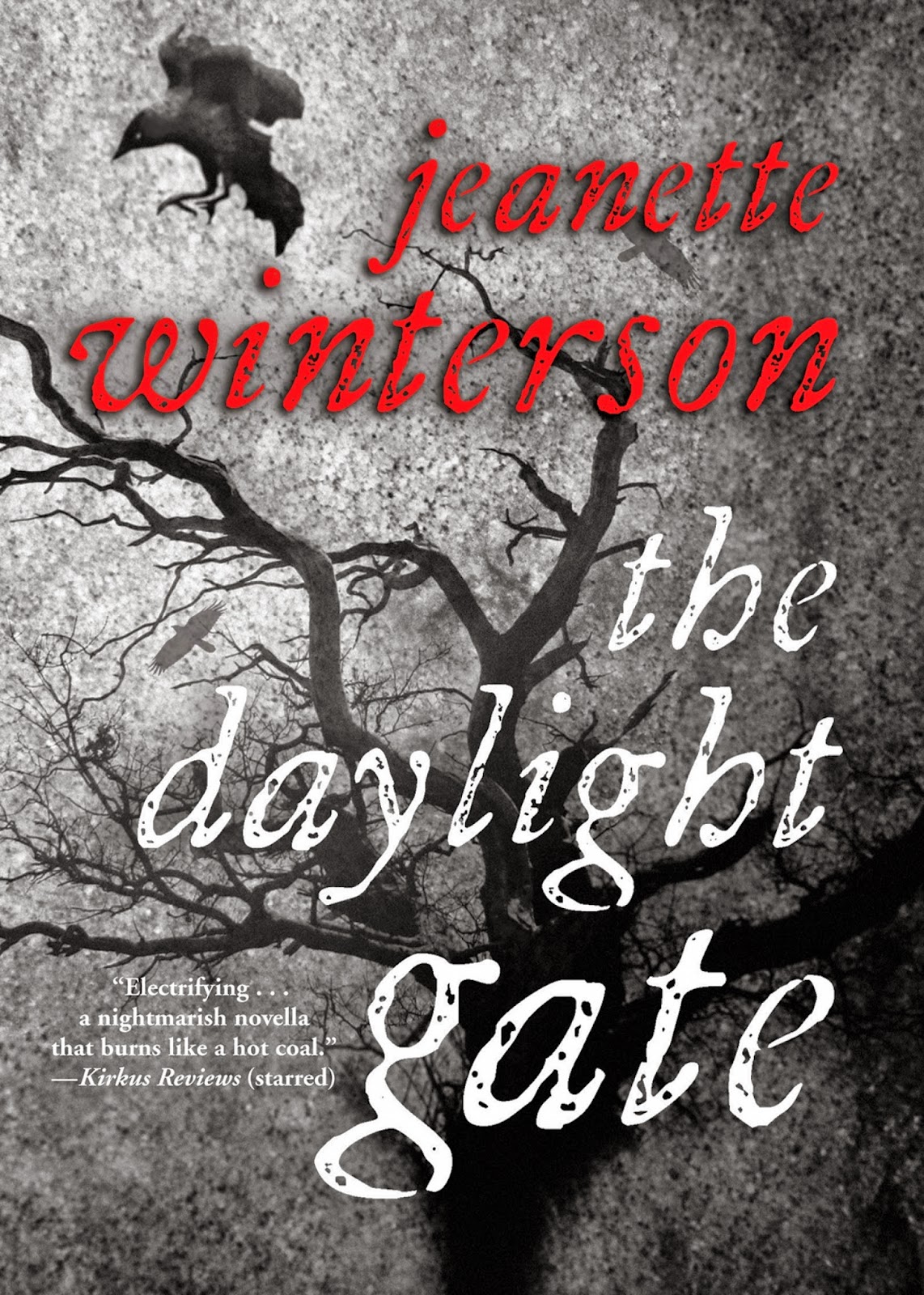 This is a brief book, slender even, and much the better for it. Winterson excels in revealing tiny detail and huge panorama in similarly incisive prose and in this novel, almost a novella, she manages to delineate the horrors of a country in the grip of a despot with an obsession as clearly and sparingly as she controls tight revelations of what child abuse looked like in Shakespeare’s poverty-stricken England.
The Daylight Gate of the title could be many things: the period between dusk and night, the moment of decision between right and wrong, the glance into an ‘alchemical mirror’ (a mercury glass, the result of experimentation rather than Satanism) or even the choice of rationality over superstition. In this witch-fearing, Catholic-hating land, rich women, old crones and grouchy neighbours are all equally likely to be charged with witchery and once the net is thrown, it catches many who simply don’t look or sound like everybody else: the unfortunate, the unlikely and those too slow to save themselves.
Alice Nutter is rich, powerful and idiosyncratic. An older woman who looks young, acts masculine and thinks for herself, the question isn’t so much why she is arrested but how she managed to escape scrutiny for so long. As a historical personage Nutter is interesting, as a character, Winterson makes her demanding on many levels. She is as mercurial as her mirror, bisexual, decidedly forthright and yet given to impulsive behaviour based on loyalty. Her love affairs are believable and unequal - there is nothing balanced about her passions, one for a woman who dominates and betrays her, the other for a man who adores her, is crippled by torture and returns to her, only to escape, and then return again when she is convicted of Devil worship. Nutter existed, and Winterson’s imaginative excursion into what might have driven such a woman, in such a period, is both convincing and compelling.
The novel itself is taut with sexual tension - jealousy, rape, mutual passion, seduction and fear of sex all wind through the novel like serpents, coiling around the characters and strangling their freedom of action so they are driven by their lusts, their fears and their desire to live up to their personal ideals of love. Like the alchemy that makes Alice Nutter’s mirror and the dye that earned her a fortune, the aspects of sex can be twisted to look like what they are not. In a place and time where nobody is safe from whispers of Catholicism, which was but a single step from Satanism, any strong passion could lead to inquisition, condemnation and death.
Much of the language is emblematic rather than realistic, as is often the case with Winterson’s work, and in this tight narrative her prose works well to pinpoint and highlight the madness of the age. Like Holbein miniatures, the detail makes the whole, and the detail, whether of flying a falcon, a child’s rape, or a Black Mass is very finely drawn indeed.
November 7, 2014
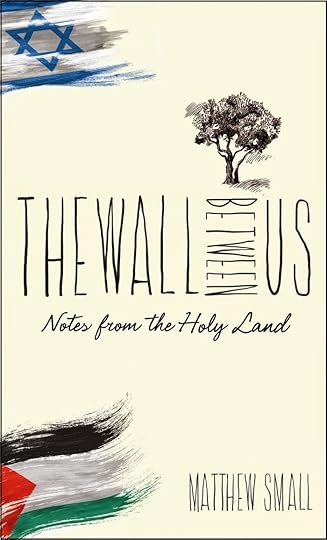
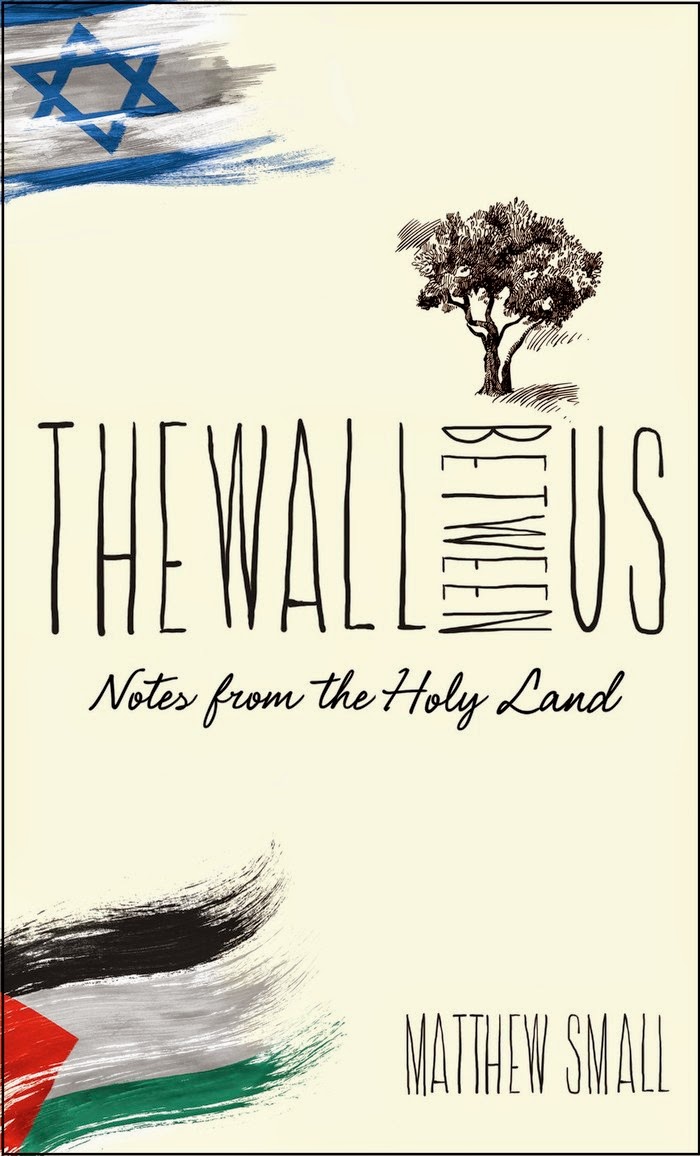
#6 The Wall Between Us: Notes from the Holy Land by Matthew Small
My soon-to-be-husband had been working in South Africa before I met him in 1982. The apartheid laws were in full swing and he recounted how a black man had stepped off the pavement into the road to let him pass.
I had no conception of this and then … ‘The only time I’d do that,’ I said, ‘was if Millwall were playing Portsmouth and I’d gone to watch the match.'
It was a ‘aha’ moment for us. Apartheid for black people was like rampaging Millwall fans to a couple of Isle of Wighters on the mainland for a football match. That fear, that requirement to do anything for self preservation, that sinking awful feeling that you’re in the wrong place at the wrong time - apartheid.
 We got it. We got the whole thing - why apartheid was bad, why we needed to do something about it and exactly what it was like to experience that kind of treatment. And we got one other thing: that we had only experienced intermittent discrimination and fear in circumstances over which we had full control and complete choice. We understood our privilege and the requirement that we do something about the lack of privilege elsewhere.
And the point of this story? While Matthew Small’s book is slight, it contains several of those moment where he is able to reveal the nature of Occupation to us. Over and again he shows the practical results of Occupation - the loss of income and dignity for Palestinians, the fear and ignorance of the Israeli settlers in the Occupied zone, many of whom are themselves resettling from other parts of the world and who require the benefits and ‘bonuses’ on offer as a result of agreeing to live in the ‘danger zone’. Pioneer mentality is dangerous for both sides.
As part of his journey through the territory, both physical and mental, of the Wall, Small recounts the comments of a young Israeli woman who is travelling with a group to help Palestinians harvest their olives. Of her experience working with Palestinian farmers she says, ‘I was standing there, in the middle of the olive grove and myself who am I supposed to be afraid of? Is it the Palestinians or the settlers? I know I’m meant to be afraid, but don’t know of whom.’ This installing of fear as part of the process of making people ‘other’ is a crucial step in institutionalising violence and deprivation, on both sides.
I can’t exactly describe this as an enjoyable book, but it’s definitely worth reading …
I had no conception of this and then … ‘The only time I’d do that,’ I said, ‘was if Millwall were playing Portsmouth and I’d gone to watch the match.'
It was a ‘aha’ moment for us. Apartheid for black people was like rampaging Millwall fans to a couple of Isle of Wighters on the mainland for a football match. That fear, that requirement to do anything for self preservation, that sinking awful feeling that you’re in the wrong place at the wrong time - apartheid.
 We got it. We got the whole thing - why apartheid was bad, why we needed to do something about it and exactly what it was like to experience that kind of treatment. And we got one other thing: that we had only experienced intermittent discrimination and fear in circumstances over which we had full control and complete choice. We understood our privilege and the requirement that we do something about the lack of privilege elsewhere.
And the point of this story? While Matthew Small’s book is slight, it contains several of those moment where he is able to reveal the nature of Occupation to us. Over and again he shows the practical results of Occupation - the loss of income and dignity for Palestinians, the fear and ignorance of the Israeli settlers in the Occupied zone, many of whom are themselves resettling from other parts of the world and who require the benefits and ‘bonuses’ on offer as a result of agreeing to live in the ‘danger zone’. Pioneer mentality is dangerous for both sides.
As part of his journey through the territory, both physical and mental, of the Wall, Small recounts the comments of a young Israeli woman who is travelling with a group to help Palestinians harvest their olives. Of her experience working with Palestinian farmers she says, ‘I was standing there, in the middle of the olive grove and myself who am I supposed to be afraid of? Is it the Palestinians or the settlers? I know I’m meant to be afraid, but don’t know of whom.’ This installing of fear as part of the process of making people ‘other’ is a crucial step in institutionalising violence and deprivation, on both sides.
I can’t exactly describe this as an enjoyable book, but it’s definitely worth reading …
October 14, 2014
Book Review #5 - Titus Groan, Mervyn Peake
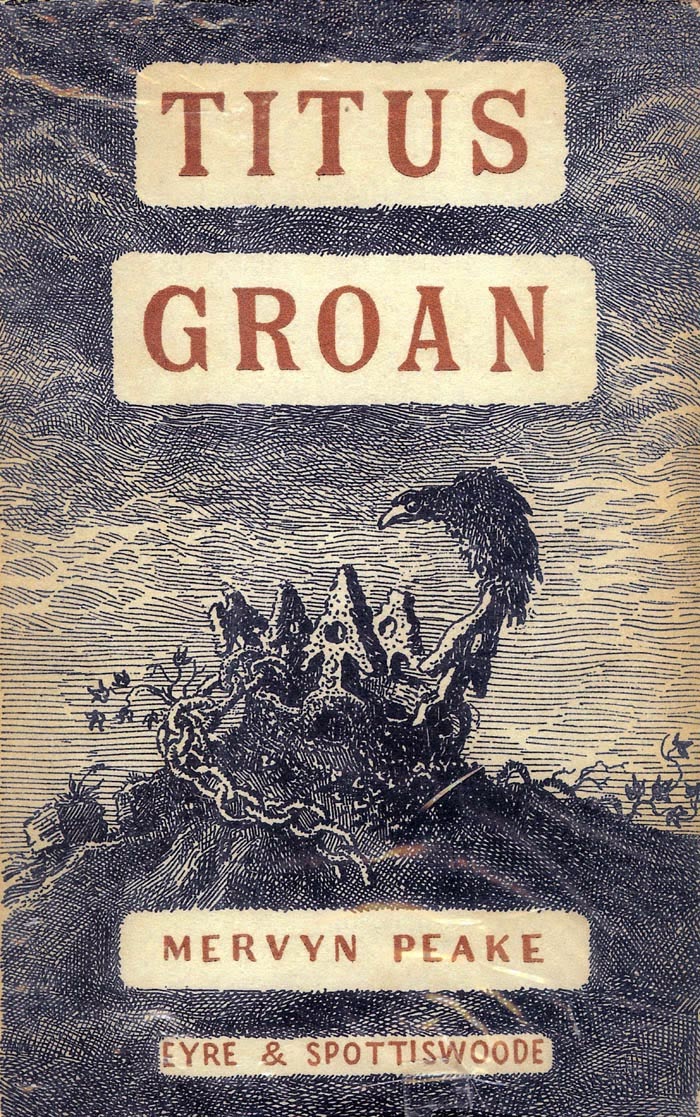 There are few trilogies more uneven, more challenging and frustrating than the Gormenghast series by Mervyn Peake. Three books, clearly linked by a single character, but as different in nature and tone as chalk from cheese from Chablis, this massive master-work has suffered, in part, from the demands it makes on its readers, and that may be why the third book in particular, Titus Alone, has become a neglected final (but not ultimate) part of the three. Oh, and in my view the three are: Titus Groan, Gormenghast and Titus Alone. Boy In Darkness and Titus Awakes are ‘flyers’, attempts to explore and extend the narrative line in a variety of directions, the chosen one of which led Peake to Titus Alone. This is a contested view, with several people considering that there are four books in the series, not three, but my version makes sense to me so I shall stick with it.
In a very classic and much pastiched fashion, the book opens with the birth of its hero, Titus Groan, 77th Earl of Gormenghast. From that point the reader is taken on a bewildering and very non-classic journey through the habits and mental confusion of many of the castle’s inhabitants, from the misanthropic and solitary Lord Sepulchrave, to Titus’s sister Fuchsia; borderline autistic (as we would now say) sensitive, brave and yet terrified of life, clinging to childhood and seeking the love of an absent father, on to hideous and yet utterly believable kitchen denizens - domestics with limited power that they wield with absolute ferocity and total brutality.
This is by no means Gothic writing, although it has its Gothic elements, partly because Peake chooses to descend, at times, to the hilariously bathetic and at others becomes rhapsodic, but not about the classic themes of nature and love, rather about the interiosities of some of Peake’s characters, the obsessive Rottcodd who dusts statues, Countess Gertrude, Titus’s mother and her somewhat absent-minded love of cats and birds, and Keda, whose desires for a ‘normal’ life lead her to, and from the Castle where she serves as Titus’s wet nurse and in the end, lead her to despair.
Peake is a profoundly powerful writer - he refuses to offer any simplicity in the narrative line and changes points of view and even moral standpoints whenever he chooses; sometimes his antihero Steerpike is manipulative and cruel, at others noble and heroic. He was also a talented artist and some of the strongest parts of his work are the intense portraits of his characters that accompany many editions.
One of the great strengths of Titus Groan is this refusal to do more than delineate - Peake offers pictures of his characters that are clear, complex and coherent but not likeable or predictable. The reader is required to form an opinion on each person introduced, and then to change that opinion in light of later events - not so much unreliable narrator as unreliable narration! Above all, this sweeping, grotesque and monumental story amplifies normal characteristics so that we recognise the cooing kitchen bully, the emotionally absent father, the sulky teenage girl but see them emblematically large, like the castle itself. Our very familiarity with the details of these personalities makes what they do, and what happens to them, increasingly uncomfortable for the reader.
Darkness seeps into every part of Titus Groan, and by the end of this book were are pretty well in darkness - but it’s been an exciting journey and the reader feels they’ve experienced something completely new. Even today, this novel, originally published in 1946, has an astonishing scope.
August 22, 2014
Book review #4 Millennium by John Varley, multiple editions
 Multiple spoiler alert - just don't read on if you plan to read this book yourself. And I would recommend that you do - it's a good read.
Some science fiction stands the test of time. Some doesn’t. I remember reading Millennium in 1985, two years after it was published, and being blown away by some of the concepts. To whit: the multiple nuclear wars that left Earth devastated and humanity nothing more than a collection of genetically mutilated and environmentally compromised wrecks. The fact that those wrecks largely chose to fill their short lives with unstinting and pointless pleasure before their early deaths as a result of their many physiological defects. The dazzling concept of using time travel to ‘rescue’ people who are about to die in train crashes, shipwrecks or - significantly in this novel - plane crashes. They are pretty well shrink wrapped and fast frozen against a plan to rebuild the human race elsewhere in space and time. For forensic integrity their physical beings are replaced by ‘living dead’ - humans from the 50th century whose birth defects led to them being in a persistent vegetative state and who are then engineered to resemble the ‘dead’ person they will replace.
All this requires split second timing, of course. Not just on the part of the tiny minority of humans who take part in the snatches that bring healthy humans to the far future, but on the part of the novelist, who holds every paradox and timeline in (in this case) his hands. Multi-voice narrative helps maintain the omniscient viewpoint of this concept, whilst setting part of the novel in 1955 gives it a powerful multi-time frame.
Sadly, the narrative hasn’t stood the test in one way - it’s hard for a modern reader not to see terrorism as the major threat to air travel. The reactions of the passengers on doomed aircraft just don’t ring true to us, because the future that Varley couldn’t imagine in 1983 is our present day - and it includes the fear that any aircraft may be hijacked or shot down in one of the world’s very many conflicts. Of course, that fear does make the 'many multiple nuclear wars' perspective more believable …
Apparently this was made into a film. The reason I mention this - as I never see films made from books I like - is that my copy is the Sphere Books edition with a silver cover that is utterly unphotographable. Really it is. I assume metallic covers must have been the dog's bollocks back in the day. So I have found a creative commons photo of the DVD cover instead. Nice tagline. Cheryl Ladd and Kris Kristofferson starred. I wonder what happened to Cheryl Ladd?
Perhaps this is one of those books you can’t read very often. Varley is fond of the ‘big reveal’ but I’d say it doesn’t work quite as well in this novel as in some of his others. The reveal is big, none bigger in fact, and that may be what flattens the novel on subsequent readings - you just can’t not know what’s coming.
It is a brilliant sf concept though, and deftly handled too. I’m a fan of Varley’s female characters - many people find them difficult, and I’m all for that - they are often complex, demanding, frequently aggressive in pursuit of their beliefs, and sometimes outright violent. They also tend to have a lot of sex. For all those reasons I like Louise Baltimore, one of his protagonists, very much indeed.
For that reason it made the cut when my 6,000 books got reduce to 600. For that reason it still gets re-read every couple of years but … truth to tell, I don’t always read the ending these days!
August 14, 2014
Book Review #3: High and Inside by Russell Rowland published by Bangtail Press
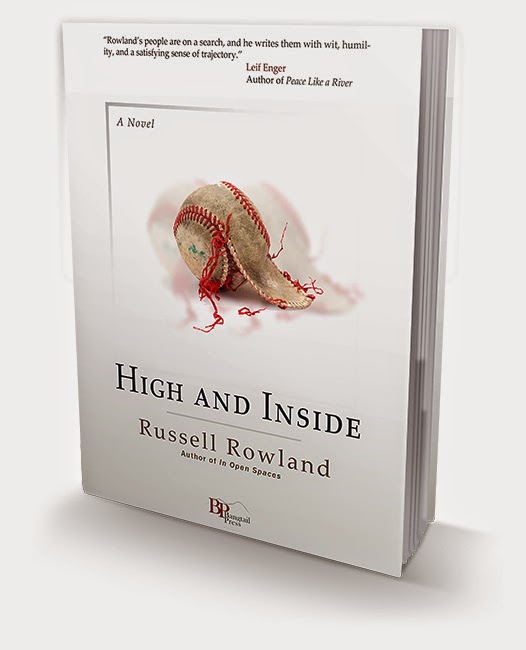 This is an interesting week to be reviewing a book about alcoholism. The death of Robin Williams is in the news, but even more, in the world I move in, the idea that this happens to people is a present, maybe even an omnipresent, obsession. Creative people know that they have chosen a community on the edge, and that they may never know how close they’ve got to the edge until they fall off it, or find themselves clinging by their fingertips to whatever they’ve got left of their sanity - or their reason to live.
Robin Williams lost something: his reason, his need, his ability to fill the void for which there is never enough of anything - never enough fame, money, sex, love, drugs, booze, acclaim, awards, work, challenges …. never enough for the moment you find yourself standing, looking in the mirror, and wondering, is this all there is?
So, re-reading Russell Rowland’s High and Inside has been a timely examination of what it takes to answer that question. While his protagonist, Pete Hurley, is not a creative but an athlete, he is gifted, and his gift brings him fame, success (winning the World Series) and adulation - and one extraordinary pitch that ends his career. His name, rather than being associated with the success of the Red Sox, becomes synonymous with a punitive ruling leading to game bans for foul pitches that injure batters. Also interesting, because at least here in the UK, a Suarez is now any kind of a bite … perhaps not the fame that Luis Suarez was seeking!
This real life parallel is not the only glimpse that Rowland offers us of the way that individuals become consumed by their need to win. As Hurley spirals down into an ever smaller life, in which he injures everybody and everything around him, both deliberately and inadvertently, he has an ever greater need to deny that the problem is his. Finally, unwilling to face his own behaviour and unable to avoid the evidence of his appalling actions, he heads for Montana where his sister and her family live, his three-legged dog (her disfigurement is just one consequence of his drinking) in tow and his life in fragments.
What follows, without including spoilers, is less a story of redemption than it is a perspective of what it takes for an alcoholic to find a rock bottom that can lead to recovery. It’s an account of the intensity with which alcohol can distort reality and the ways in which an alcoholic can invest in their drinking, regardless of the effect on those around them and eventually, on their ability to retain any control of their lives.
Hurley, believing he’s starting a new life, finds his old one waiting for him in the prejudices he experiences, the uses he makes of people and the disdain with which treats anybody who tries to show him the mistakes he is repeatedly making. He plans to build a house, although he has no training, no skills and - it turns out - an ability to infuriate and alienate the very people he needs to help him.
By the end of the book Hurley has accepted sobriety and discovered that most of what he’s believed about life is questionable. It seems he may not have had the childhood he remembers, nor ever understood the motivations of those around him. His use of alcohol has blinded him, not just to his own faults, but to the actions and reactions of everybody he's been close to. He’s been obtuse, arrogant and self-involved as well as talented and driven. It’s only a beginning, like the foundations of his house, but his potential, once based on a natural talent, is now grounded in commitment to self-understanding and the acceptance that he will never be able to drink again.
For those contemplating what could cause a man like Robin Williams to take his life, Rowland’s novel is a valuable exploration of the role of sobriety - not a goal to be achieved but a skill that must be maintained daily, even on days when maintenance doesn’t seem necessary or even desirable - it’s a relentless exercise that is most required when the individual feels least like undertaking it and it’s exhausting even to the strong-willed and well-placed. For those who strive to understand alcoholism in someone they know, this novel offers something else, a clue as to why talent, looks, success, love … are not enough for the alcoholic. It brings some insight into why these attributes can actually fuel, rather than dampen, the desire to drink and it explains why a crisis is usually necessary for an alcoholic to get sober. Finally, it highlights the sombre truth that those who get sober don’t always stay there, and while it ends with Pete Hurly launched into sobriety with high hopes of his future, it counterpoints that ending with a reminder that most of the work is still ahead of him, and that work is arduous and never-ending.
Montana is almost as much a character in this novel as Hurley - and like the journey he makes, it’s a hard but worthwhile territory to explore. In both its scenery and its people it has by turns a bruising and healing effect on Hurley, leaving him alternately battered and elated by his experiences of land and locals.
I know nothing about baseball, and whatever knowledge I have of alcoholics is second hand. Talent I do know about, and the use and misuse of talent is something no creative person can fail to understand, both as part of themselves and as a component of their chose vocation. This novel is about what happens when talent is not enough, and in this case, talent is allied to alcoholism, as is so often the case.
It’s a finely written testament to the nature of recovery and what precedes it, and its characters: Dave the dog, Hurley himself, his conflicted sister and the woman with whom he develops a relationship are real, rounded and worthy of compassion and understanding.
August 4, 2014
Book Review #2 - A Fine Balance by Rohinton Mistry
 Something of this novel reminded me of the work of Primo Levi - not the scope, which is definitely as Dickensian as many reviewers suggest - nor the subject matter, which is relatively remote from Levi’s preoccupations. I struggle to articulate the exact parallel, but perhaps its the unremitting sense of certain failure which dominates both bodies of work.
And yet Mistry has a fine sense of humour, perhaps part of the balance that the title refers to is the way that he manages to place joyous comedic scenes in the body of a profoundly dismal narrative.
The characters move in and out of likeability as the novel moves in and out of humour and grim disaster. Dina is both an appealing young wife and a shrewish employer. Ishvar and Omprakash are both full-blooded comedy figures and skivers who rip off their employer (Dina) and Maneck is both an idealistic young man and an awful prig. What they all are, is stuck. By caste, poverty or cowardice (on Maneck’s part at least) they are locked into a descending spiral of circumstances that drags them to homelessness, loss of liberty and even of limbs and life, even as the results of the ‘Emergency’ drive India further into polarised communities and violent retaliations for real and imagined slights, insults and incursions.
Viewing each character through the eyes of the others gives a rounded picture of the situation as a whole, although Maneck, about whom we really discover least, is more central to the story than the others, and as a result, when he disappears for eight years to work in Dubai, we, the readers, are left with no clear understanding of his development, this is perhaps the weakest part of the book, and somewhat undermines the previous complex narrative.
On his return, Maneck’s responses to the circumstances of his former companions are as inadequate as his response to the murder of a fellow student which occurs in the opening scenes of the book. He is polite but dishonest with Dina and pretends not to recognise Ishvar and Omprakash when he sees them begging on the street. No spoilers here, but by the time the three discuss his coldness towards them, he has carried out an irreversible and shocking act as his expression of loathing for what his country has become.
It is a substantial book, requiring quite a commitment from a reader, but in my view it does reward the work required. India is a vast and complex country, a divided and incoherent set of religious, cultural and caste structures and a bewildering political space. Few novels explore the entirety of India, geography and culture, politics and religion, history and gender relations, poverty and power - but Mistry makes a solid attempt at bringing this huge subject to life for readers, and creates some fine characters in the process. Ishvar and Om, for example are more Shakespearian than Dickensian in their robust humour but I found my sympathies entirely engaged by their desperate situation and their hopeful dreams of finding security and maybe even happiness. What happens to them is profoundly disturbing and as a single example of the effect of sweeping political decision making on the people at the bottom of society is as powerful a tale as any by Victor Hugo, with whom I think Mistry also bears reasonable comparison.