Sid Gustafson's Blog
June 14, 2025
Swift Dam novel review by Mary Scriver
[image error]
1. Rain: The set-up begins, the “Water Dream.”
2. Water: How Swift Dam was built in Blackfeet vision dream country.
3. The Black Bag: Moon drivers and car sleepers, a demanding son.
4. Spirit: The story of Spokane, a famous race horse.
5. Pavlov: Relationship between Bird Oberly, sheriff, and “Fingers” DVM.
6. Luck: “Mardo” brings in the quilled dog of “Riel Du Pré.” Some will guess who these people really are. How a vet became a writer.
7. Medicine: About Pondera County livestock practices.
8. The Storyteller: Mardo comes through as an agent.
9. Recapitulation: Surgery under the moon.
10. Sun: Sleeping in the street, in broad daylight. Doctor Sally Jo’s intervention is nearly a seduction.
11. Shine: Interviewing the vet’s wife, Maple, leads into an early rescue story from above Swift Dam.
12. What Horses Know: How “Fingers” tried to save his friend Ivan and at least brought back his body.
13. The Living: Bird Oberly makes a double discovery.
When it comes to books, one of the more stupid on-going literary wrangles is about what is true and what is “fiction”. Stupid, because stories are always mixtures of the writer’s experience and the underlying structure of the world. Neither one is known or knowable, however entwined they are. But is it convincing? Does it move us with passion and regret? Does it recommend strategies for survival? This one does.
Especially in a place which might be called the East Slope of the Rockies, the Blackfeet Reservation, Pondera County, the Crown of the Continent, and so on, the fancy names hide the fact that around here success is really more of a narrow escape. But it sure does encourage the circulation of blood. It’s healthy if you can keep moving, which is also the secret of horse health. That and a bonded buddy.
The best novels, however one defines them and judges them, include the knowledge of something we’ve known little about on the level of expertise that the practitioners have. Consider “Moby Dick.” In this novel Moby Dick is a monumental rebuilt dam and the special knowledge is about horses and veterinary meds and instruments. Flesh of several kinds. The Gustafson family is full of veterinarians and in fact Rib was our veterinarian in the Sixties, when we presented him with the challenge of bobcat kittens and pet badgers as well as horses and occasional rodeo stock used as models.
Sid’s father Rib was colorful. (Sid is, too, but in a different way.) Imagine Max van Sydow. He was very much a family man and when he and his wife had aged, his children — Sid, Kris, Erik, Barr and Wylie — put their careers on hold and returned to the area to care for them. A few years ago, when Rib realized that I was friends with Sid, he took me to lunch to see what I was about. Of course, he was also curious about my marriage to Bob Scriver. We had a good time, telling stories.
This book makes it clear, as though it weren’t before, that Sid’s “life-problem” has been dealing with his father, wanting to be allied without being crushed. For reasons of his own, Rib sent teenaged Sid out to be a range rider/cowboy with Billy Big Springs, a massive Blackfeet Indian whose allotment turned out to have an oil well. Billy was a second father and took that seriously. The effect was much like Bob Scriver being sent out as a teenager to the Jim Stone ranch where Mrs. Stone, Blackfeet, took him in hand. The result in both young men was a yearning affinity to Blackfeet life that cannot be challenged or thinned. But they were somehow unsettled for life. Neither found a partnership with a woman that lasted.
So this novel has in its guts something about marriage. There are two married men, a veterinarian and a cop. The cop is young enough to have been the veterinarian’s son. (The vet’s son is named Ricky.) Both have faithful, fulfilling lives in spite of the often interrupted time of such jobs when emergencies come often, at night, without warning. I love the description of the veterinarian (called “Fingers” which is the nickname of Sid’s musical brother who did NOT become a vet) returning home chilled and aroused from doing surgery under the moon that has resulted in a new creature being given life. He comes into the marital bed where his wife is just surfacing from the warm pool of her dreams, her flesh slightly swollen, and embraces her with shared love.
Some of these vignettes have been published as short stories, one of them being about Fingers’ habit of sleeping in the shadow of Swift Dam, which stands like some monument to hubris and human industrialism, ignoring the life-ways ended, the suffering, the little rule-bendings. This leads to the narcolepsy of aging, sitting behind the wheel of his big old-fashioned car at the only stoplight in Conrad. The book is dedicated to Rib and is clearly in part a reconciliation with his death.
The Macguffin of the plot, to use Alfred Hitchcock’s term, is the medical black bag with contents so secret but potent that locals imagine all sort of contents, esp since they seem to be kept in the bank safety deposit at least part of the time. They think drugs. Some speculate money. None quite understand Fingers’ fascination with Swift Dam, even knowing that his best friend, Ivan Buffalo Heart was killed in the flood. Fingers took pack horses and rode along Birch Creek’s flood plane until he found him, tangled in debris in a tree, and took him tenderly home to his wife, Tess. There’s more to it than that, but you need to read the book to find out.
Since modern books constrained by time and money have stopped including a Table of Contents, I supplied my own at the top, sans page numbers. It’s a small paperback, 150 pages, but complete and coherent in spite of its many layers. It is packed with poetry, lyric images.
A short story in which "Stuf" is based on Bob Scriver.
Sid’s stories are sometimes printed in small magazines composed in back bedrooms where they suffer from bad proofing. This book has half-a-dozen malapropisms, the sort of thing that escapes spell-check and perhaps many readers. None of the misfired words are among the Latinate medical terms or the cleverly trademarked drug names, or maybe I just couldn’t tell.
I had not heard before the term “orographic lift” which is the term for the contraction of water-laden air struggling up over the mountains, off-loading rain or snow, to become a catabatic warm wind on the other side where it can expand again, creating a rain shadow. The country of the “Chinook Arch” is one of the most apt and evocative names, a kind of empty blue rainbow that is full of sky.
Alongside the hydraulics of the land, “Swift Dam” is driven by psychological dynamics older than Freud or even the Greeks. Father and the oldest son of five share a vocation except that Sid expanded his to include thoroughbred racing horses, which brought him into a strong moral culture advocating against treating animals like machines, injecting and confining them out of greedy convenience. He has a gut-level affinity for the old ways of buffalo hunters. Rib also wrote, but only small local books illustrated by his wife. This novel begs for a screenplay.
Dr Gustafson graduated from Washington State University as a Doctor of Veterinary Medicine in 1979. He is a practicing telemedicine veterinarian, animal welfare journalist, equine behavior educator, and novelist. The application of behavioral science to the husbandry of horses enhances optimal health, performance, soundness, contentment, and longevity. Behavioral, social, locomotory, and nutritional strategies enhance the prosperity, vigor, and health of stabled horses. Sid offers veterinary care, training, husbandry, and conditioning from the horse's perspective to achieve willing and winning equine partnerships with humans.


May 5, 2025
Equine Veterinary Telemedicine Consults
https://vetster.com/en-us/p/sid-gustafson-bozeman-mt-45gg96a
Dr Gustafson graduated from Washington State University as a Doctor of Veterinary Medicine in 1979. He is a practicing telemedicine veterinarian, animal welfare journalist, equine behavior educator, and novelist. The application of behavioral science to the husbandry of horses enhances optimal health, performance, soundness, contentment, and longevity. Behavioral, social, locomotory, and nutritional strategies enhance the prosperity, vigor, and health of stabled horses. Sid offers veterinary care, training, husbandry, and conditioning from the horse's perspective to achieve willing and winning equine partnerships with humans.
November 8, 2022
Breeders' Cup Keeneland 2022 Failing the Horse
Breeders’ Cup Keeneland 2022, coda
Failing the Horse--Breakdowns continue
Sid Gustafson
I attended this year’s Breeders’ Cup to celebrate the revival of the American game, to finally—after half a century of advocacy—enjoy racing where horses were not intravenously injected with furosemide prior to going to the saddling paddock. When I arrived Sunday and read the permissive medication rules still in place in the Breeders’ Cup Horsemen’s Guidebook, I could feel the trouble coming. We were all hoping for an injury free event. The Europeans came through, but the Americans did not. Two of their horses did not make it across the finish line.
Monday morning, seeking more information, hoping to ally my fears, I accompanied a prominent Kentucky attending veterinarian as he made his rounds through the Breeders’ Cup barns. He picked me up as I was making the daybreak walk from the frontside where the media shuttle dropped us off each morning, to the stable area, a good mile hike. The Kentucky gentleman noticed my gimp, stopped his car, and took me in as he passed by on his way to work. It was Monday, so time was soft. We visited about trainers and racehorses, Europeans and Americans, the differences therein. We visited openly and extensively. Call it professional courtesy, call it ‘birds of a feather,’ we talked vet talk. We listened to each other. He, having read all of my New York Times racehorse advocacy articles, and I, knowing his honorable reputation, got on fine. We had met briefly at the Run Happy Breeders’ Cup at Keeneland in 2015. As our conversation narrowed to the horses at hand, he explicated all of the impending American medication scenarios, hiding nothing from me, knowing nothing could be hidden from my seasoned eyes:
The majority of American Breeders’ Cup runners would be injected with Lasix 24 hours before loading into the gate. This potent diuretic alters the metabolism and pharmacodynamics of previously injected medications (masking). This is one reason the permitted 24-hour drug is given, as its ability to manage pulmonary fragility and prevent EIPH is by and large absent by race time. Lasix to flush. The good doctor noted that Mr Baffert’s recent problematic post-race positives in Kentucky from horses medicated in California took place in stakes races where raceday furosemide was not allowed. Sophisticated doping strategies falter when Lasix is no longer part of the formula.
Most of the treated American Cup horses received 10cc IV, the maximum allowable. Furosemide is showing up in the post-race blood and urine samples as you read this. Thresholds have been set somewhere, although they were notably absent from the Breeders’ Cup Horseman Guide that stated that 24-hour Lasix was permitted, while the thresholds for all the other drugs were published, an interesting omission, I thought, one still missing, I might add. If the Breeders’ Cup post-race Lasix positives are below established furosemide thresholds, nothing will be said. I personally received this information from the Breeders’ Cup and Kentucky regulatory veterinarians. After we finished our ride around the Smith barns, my attending veterinary friend introduced me to the examining veterinarians who were hard at work. In all, I visited with 11 regulatory veterinarians and 2 attending veterinarians during the week preceding Domestic Spending and Epicenter’s feature race fractures. Drugs and regulators were plentiful.

Ultimately, regulation failed as regulation does in permitted pre-race drug jurisdications. In the Classic, the all-time leading American trainer’s horse suffered a fetlock fracture. Out went the ambulance in the most anticipated race of the century. I watched with glasses four floors up. Epicenter faltered badly when asked to move through horses on the backstretch, nearly going down. Joel Rosario, no stranger to leg-fracture spills, kept him afoot, and pulled him up deftly and professionally, saving two lives.
The outriders and ambulance crew restrained and manhandled Epicenter to keep him upright and off the fractured canon bone. Veterinarians alongside, the uncentered horse hopped three-legged into the ambulance. He rhythmically threw his head as he moved toward the ambulance to lessen the weight bearing of his right front, that catastrophic gait that still makes me shudder.
Meanwhile, unbeknownst to me, Flightline galloped.
The ambulance sat stopped for a few minutes after Asmussen’s horse was loaded, a worrisome sign to me. I am an extensively-experienced track veterinarian who has been in ambulances with three-legged horses more than once. The impact of those experiences runs deep, especially when a jockey is being loaded into the other ambulance. The stopped ambulance likely allowed the outriders and veterinarians to suspend Epicenter in a hydraulic squeeze device—taking weight off the broken leg—where it was safe for them to draw blood, medicate pain, soothe excitement, and secure the splint. Pain managed, stability provided, the ambulance departed. Epicenter was transported to Rood and Riddle, a primary sponsor of the Breeders’ Cup, to undergo orthopedic surgery.
Epicenter’s fracture has been screwed back in place and it is said he is being syndicated to stud to perpetuate the cycle of brreding horses whose legs do not hold up to racing. Neither laws of the state nor laws of genetics nor morals nor equine welfare concerns impede American owners, breeders, and trainers. Drug free solutions as to how to prevent these tragedies were put on full display by the foreigners at this year’s Cup. Despite readily available training strategies that enhance soundness of wind and limb, Americans continue to rely on drugs to train horses.
The results of the American trainer affair with drugs are tragically apparent. Americans cannot get away from unnecessarily locking their horses down requiring a heavy dependence on medication. Overly-confined horses become fragile of limb and wind, and a perceived need for medication follows. This medication cycle exacerbates racehorse vulnerability to injury and subsequently imperils jockey safety.
Confinement and medication are the downfall of American racing. Rather than a drug-free Flightline celebration, this year’s Breeders’ Cup became a tragedy rivalling Eight Belles bilateral breakdown in the Kentucky Derby. This year’s breakdowns were made all the more tragic for me considering all the time that has passed since that first Saturday in May. Why can lessons in animal welfare not be learned by Americans? Unlike the Eight Belles breakdown—and to their credit—the Kentucky regulatory veterinarians kept all of the horses on their feet despite the fractures, thus sparing the jockeys’ injury.
The Euros and Asians demonstrated how to race safely.
Knowing better but refusing to adapt, drug-dependent US trainers continue to break down horses and unnecessarily endanger the lives of jockeys. Mr Brown’s Domestic Spending fractured his pelvis, racing from gate 14 in the BC Mile after a 440 day layoff from an injury. Chad medicated the horse and raced, two weeks earlier claiming to be omniscient regarding all of his horses’ soundness’. Domestic Spending fractures his under-conditioned pelvis, and the horse is vanned off with a major injury. At the starting gate, the horse made it clear he was not ready to race, yet they made him run.
American trainers continue on with their medication charades that make horses vulnerable to injury, despite simple labor-intensive, medication-free solutions that fulfill and favor the racehorse. Easily-employed enrichment strategies sustain and enhance soundness of wind and limb. Medication does not. Breakdowns and bleeding are largely preventable with appropriate breeding, development, sensitivity to behavioral need, and conditioning that fulfills and enhances the horses’ long-evolved speed and strength.
The American confinement and training methods remain horse-insensitive, unprofitable, unethical, and ineffectual. The trainer is responsible for the condition of his horse. Not the attending vet, owner, or regulatory vet—the trainer. American trainers continue to send their horses to races medicated and in a condition unfit to race as Brown and Asmussen demonstrated in the Breeders’ Cup. Their horses were not ready, and as a result they were seriously injured in the running and vanned off. The Euro and Japanese horses were ready, drug-free and ready, sound of wind and limb. All of them returned sound and safe, many of them won easy.
Horses in America continue to break down at an unacceptable rate. Any break down in the Breeders’ Cup is disturbing, and here we had two, further reflection the American horseracing culture continues at its worst—humans failing the horse. Drugs continue to flow into inadequately stabled horses, and injuries and fatalities unnecessarily continue. When the drugs stop, the injuries will dissipate, as has been demonstrated time and again everywhere other than America.
The solution for safe flat racing has been effectively employed across continents and throughout the world by restricting drugs. The foreign horsemanship specialists not only brought their charm and beauty, they displayed sophisticated training strategies that favor the horse’s health and well-being. Holistic therapies, and keen attention to the horse’s long-evolved behavioral needs resulted in winners, winners all around wherever they finished. All made it home sounder of wind and limb than when they arrived to showcase their talent. Their trainers make stabling, training, and racing a good deal for their horses. In return, their horses make racing a good deal for them. If only Americans would embrace these winning strategies that make racing safer and horses and owners happier. All of the Euro and Asian horses returned safely. In fact, their horses returned sounder of wind and limb, a sophisticated display of preparation that Americans must soon emulate if they expect the sport to survive here, much less thrive.
Two American-trained horses sustained racing-fractures on the biggest day of racing. As well, some of the American horses bled, while the Europeans and Japanese remained sound of both wind and limb. No bleeding, no fractured bones in those horses trained and conditioned with the horses’ best interests in mind. And winners, yes, win after win.
Permitted medication perpetuates substandard horsemanship. Drug-free racing favors the horse. America has a choice. Drug-free runners win and come home sound as demonstrated by the Europeans. Look, see: Drugged racehorses are more apt to break their legs. Permitted pre-race drugs do not favor the horse. Too many medicated horses do not finish, exemplified by the American breakdown endemic still in play at the Breeders’ Cup.
As it turns out, horses do not need drugs to race. NSAIDs and cortisone joint injections potentiate breakdowns by masking inflammation, allowing horses to race and train with pathology present. At times, trainers have had their veterinarians add local anesthetics to the cortisone injections to facilitate a good hard preparatory work. Many of these blocking agents do not test, but both Baffert and Asmussen have had local anesthetic positives in the not-so-distant past. Hall of Fame trainers. Baffert’s horse Messier bled, and Asmussen’s classic runner broke down.
All drugs and any drug deteriorate safety when utilized to mask pain and inflammation to facilitate training when pathology is present, especially local anesthetics such as lidocaine or mepivacaine. Rest and rehab are indicated when pathology is present, rather than drugs to ease the pain so as to train. Furthermore, drugs and failure to properly develop and condition their horses likely incited the pathology that had them call for more drugs to get their horse to the next race. Claiming trainer tactics taken to the top of the game, to the Breeders’ Cup.
The American permitted pre-race drug experiment has failed. Permitted drug use led to unpermitted drug use, doping a billion dollar industry, horses the victims. Americans continue to fail their horses on the biggest stage of all. America’s horrid breakdown endemic will not stop until the drugging stops. In Europe and China, drugs are forbidden two to four weeks before horses race. Breakdowns and epistaxis are rare. Their horses fly over here and win easy, and safely.
At Keeneland, where local horses continue to breakdown and bleed, BC runners can receive IV phenylbutazone 48 hours before loading into the gate, and, unfortunately, they can be doped with Lasix 24 hours before they race. None of the Europeans I interviewed planned to partake in the Lasix, considering it more likely to stiff the horse than help. But according to the Kentucky attending veterinarians I rode and visited with, many, if not most, of the Americans are fulfilling their racing drug addiction at the Breeders’ Cup, and having their horses injected with Lasix the day before, and IV Bute two days before. Disgraceful. Unethical. Ineffective. Heartbreaking. Leg-breaking.
I observed nearly all of the Breeders’ Cup horses in the barn area and on the training and main tracks. The differences in stabling, training, and care are significant and remarkable. The foreign horses walked, jogged, and conditioned together in herds. Miles and miles of locomotion to enhance the soundness of wind, limb, and mind. Hour upon hours of socialization. If not with other horses, with hands on grooming and grazing care. I estimate Chain of Love spent 10 hours out of her stall day in and day out, accompanied by her pony horse. I visited her most every day. Her pre and post exercise routines were well over an hour long. Rubbing and brushing before, bathing, massaging, and walking after. More massages, more walks, physical connection horses need. A typical conditioning day included two to three trips around the smaller training track with her pony horse, followed by one or two trips around the main. This was in addition to abundant walking to and from the stable, and within the isolation compound.
Likewise, the Euros provided their horses with abundant daily locomotion and socialization. They successfully re-created natural for their horses, rewarded by how safely and successfully they raced, and how happily they returned. Limb health, lung health, metabolic health, hoof health, digestive health, and mental health are all dependent on miles and miles of daily walking. It was a joy to see trainers putting the horse first, a joy to witness the happy horses loving their track lives. If only the Americans could learn to appreciate the happiness and soundness appropriate husbandry brings. If they do not learn, and learn soon, the American game will continue its decline.
As the Euro horses walked, jogged, galloped through the morning, the American horses were back in their stalls by 9am. Many remained there the rest of the day, Tyler’s Tribe among them as far as I could tell, their lungs withering, legs weakening, veterinary drugs flowing into them, and Lasix flowing them out. Meanwhile, Chain of Love walks clean. Mishriff jogs clean. The Appleby herd whinny together as one.
Beyond the USDA quarantine, I observe the covey of attending veterinarians go from American barn to American barn medicating horses all afternoon, every afternoon during the days preceding the Breeders’ Cup. As counterbalance, the examining veterinarians examine. I witness all of this. I have an eye for medicating-veterinarians and medicated horses. I, too, was once an attending veterinarian. I know their game. From a distance, I watch the horsedoctors carefully select and load the medications, syringe after syringe. They color the fluids with vitamins and whatever else they can sneak in that will slip by the testing lab. Off they march with their tray of medications into the shuttered stalls. Two days before, the day before.
As the Friday races went off, the veterinarians with horses in Saturday went to work. The Saturday runners received their intravenous Lasix, urinating the weight away, flushing other drugs along. Lasix imbalances equid electrolytes, drawing the horse up, pulling calcium out of bone. At one stable, I observed the water buckets set out Friday evening, seemingly withholding water, I am not sure. In the quarantine barn, the lads were changing water, cleaning pails, rubbing their horses, walking in communal circles, providing abundant locomotion in the most restricted spaces.
The untoward injuries on Saturday were reflective of the inappropriate American veterinary approach of medicating horses to race rather than walking them. Meanwhile, the drug-free hydrated, enriched and fulfilled Euros ran to win. You’d think winning would be enough incentive for Americans to do right by the horse, but our culture has not yet embraced the welfare of the horse like it needs to. I am sorry to report that as long as the drugs are permitted, American racehorse drugging will continue along with the substandard horsemanship the drugs facilitate. Bleeding and breakdowns will follow at unacceptable rates, and the game will fade away, or be forced to stop.
If and when all of the medications to race are restricted as they are in Europe and Asia where happy racehorses graze, walk, socialize, and race together, Horseracing in America will have a chance, a last chance to help the horses prevail in fashions that favor the horse, rather than fail her.
Dr Gustafson graduated from Washington State University as a Doctor of Veterinary Medicine in 1979. He is a practicing veterinarian, animal welfare journalist, equine behavior educator, and novelist. The application of behavioral science to the husbandry of horses enhances optimal health, performance, soundness, contentment, and longevity. Behavioral, social, locomotory, and nutritional strategies enhance the prosperity, vigor, and health of stabled horses. Sid offers veterinary care, training, husbandry, and conditioning from the horse's perspective to achieve willing and winning equine partnerships with humans.
November 4, 2022
Breeders' Cup: Racehorses prosper without racing drugs.
Breeders’ Cup: Racehorses and Drugs
It took a small but determined group of people gravely concerned about the health and welfare of the horse to finally get Lasix banned on raceday. No longer are itinerant veterinarians running around 4 hours before the race injecting horses most of them have never seen, and certainly have not auscultated or examined. The blanket drugging of racehorses with an intravenous performance enhancing drug, an unethical practice, has finally been banned at the Breeders’ Cup. Consequently, racing is safer and truer.

Drug free racing favors the horse. Drugged racing does not, as exemplified by all the American breakdowns in horses filled to the gills with medication of all sorts, much of it permitted.
As it turns out as demonstrated worldwide, horses do not need drugs to race. Drugs cause breakdowns, all drugs and any drug, Lasix in particular, as demonstrated by America’s horrid breakdown endemic. Fewer horses flailing three-legged, fewer jockeys injured, maimed, and killed. The failed doping experiment is over at the Breeders’ Cup and in stakes races across the country. The less accomplished horses will still suffer from humans abusing them with raceday drugs. The breakdown rates in Lasix jurisdictions will continue, but they will become rare where Lasix is not allowed.
The Keeneland BC runners can receive IV phenylbutazone 48 hours before loading into the gate, and, unfortunately, they can be doped with Lasix 24 hours before they race. None of the Europeans I interviewed planned to partake in the Lasix stiffing, but according to the Kentucky attending veterinarians I rode and visited with, many, if not most, of the Americans are going to fulfill their racing drug addiction, and have their horses injected the day before.
Horses evolved as social grazers of the plains, group survivalists moving and grazing together most all of the time. During their 60-million-year evolution, horses came to require near-constant forage, friends and locomotion to maintain health and vigor of wind and limb.

Despite domestication and selective breeding, today’s racehorses are no exception. Although horses are extremely adaptable, the last place a horse evolved to live is in a stall, alone, with limited space to move and forage about with others. The solution to manage bleeding in racehorses is to breed, develop, teach, train and care for horses in a horse-sensitive fashion that provides abundant lifetime locomotion and socialization. Pulmonary health is reflective of overall health and soundness in horses.
In order to maintain pulmonary health, natural conditions need to be re-created in the stable. Horses prefer to graze together and move nearly constantly. Constant foraging, grazing, socializing and moving are essential for joint and bone health, hoof health, metabolic health and pulmonary health, and, of course, mental health. In order for lungs to stay healthy, horses need movement, more movement than American trainers currently provide the population of stabled. Horses communicate with movement and sustain physiologic and metabolic health via near-constant locomotion. Movement is what is most often missing in a racehorse’s stabled life.

Walking throughout the day enhances and maintains lung health. Stabled horses need hours of walking each day, more walking than most are currently afforded. Veterinarians who manage racehorse health need to ensure that their patients are provided with adequate daily locomotion. The movement of training and track conditioning are not adequate to condition healthy lungs throughout the rest of the day, as lung health requires 24/7 movement. For a horse, moving is breathing. Abundant on-track and off-track locomotion is necessary to condition a horse’s lungs and to provide the necessary resilience to withstand the rigors of racing.
Lungs deteriorate when movement is restricted. Horses breath all day long, and near-constant movement is required much of the day to assist their breathing to maintain pulmonary flexibility and vigor. Plentiful walking enhances breathing and lung health. Swimming and doing lunges are also appropriate lung-conditioning activities. Grazing while casually walking clears the airways. Hand grazing may be the best lung-healthy activity of all. Racetracks need to provide abundant hand-grazing opportunities for all of the stabled horses, and the green grass needs to be appropriate grazing grass. Kentucky limestone grass is always best, it seems.
Training over hills and dales, as well as walking up and down inclines helps develop and sustain pulmonary vigor. When horses are locked in a stall a large percentage of the time, their lungs deteriorate. Stabling that does not afford abundant movement and head-down grazing and foraging impairs lung health, making horses vulnerable to bleed when exerted in a race. The cause of exercise-induced pulmonary hemorrhage is insensitive and deficient stabling and husbandry practices and includes diagnostic failures to detect bleeding during training.

The care that establishes and enhances pulmonary health and endurance in horses is the same care that enriches stabled horses’ lives. Pulmonary care is providing the same near-constant movement that keeps racehorses’ musculoskeletal systems sound. It is the care that keeps horses on their feet during races. Horses must remain sound of limb to ensure lung soundness, and they must remain sound of lung to achieve and maintain limb soundness. Afternoon and evening hand walking and hand grazing are essential to develop and sustain lungs and limbs fit to race.
Horses with healthy lungs are content and fulfilled horses whose lives their caretakers adequately, if not extensively, enrich. Lung health is supported by limb health. Breathing and running are biologically intertwined on the track, a breath per stride. To stride correctly is to breathe correctly. To breathe correctly is to breathe soundly, and race sound.
Horses who are bred, socialized, and developed properly from birth, and who train while living enriched stable lives are seldom likely to experience performance-impairing E.I.P.H. while racing. They are more apt to stay sound. Humane care of the horse prevents bleeding. Pulmonary health is reflective of appropriate husbandry, breeding, training, nutrition, and the abundant provisions of forage, friends, and perhaps most importantly, locomotion. Bleeding in a race is reflective of inadequate care and preparation, of miscalculations and untoward medication practices. Lasix perpetuates substandard horsemanship, artificially suppressing the untoward result (bleeding) of inadequate preparation of the thoroughbred.

Genetics play a role in pulmonary health and physical durability. Lasix perpetuates genetic weakness by allowing ailing horses to prevail and sow their seeds of pharmaceutical dependence. Running sore causes lungs to bleed. Lasix manages a wide variety of unsoundness, as do the cortisones and NSAIDs (bute and similar drugs). These anti-inflammatory drugs aggravate coagulation processes. Rather than drugs, pulmonary health is dependent on appropriate breeding and proper development for the vigor, durability and endurance thoroughbred racing demands. Drugs are not the solution. Competent horsemanship is the solution. Genetic dosage, behavioral and physical development, socialization, training, and locomotion husbandry are the keys to racehorse soundness, lung health, stamina, and durability. The causes of E.I.P.H. are no mystery to seasoned race folk. Horses prone to bleed are those horses that are mistakenly bred, inadequately developed and inappropriately stabled and trained.
Horses evolved in the open spaces of the northern hemisphere and require the cleanest, purest air to thrive and develop healthy lungs and hearts. Stable air needs to be constantly refreshed to maintain pulmonary health. Ventilation is essential, and enclosed structures are often inappropriate. Barn design needs to provide both clean air and abundant locomotion. Bedding is critical. Clean straw provides the most movement by simulating grazing. Horses stalled on straw are noted to move about with their heads down nibbling and exploring for hours, recreating nature to some degree, keeping their lungs healthy with movement, their respiratory tracts drained by all the head-down nibbling and grazing. Horses need near-constant head-down movement to maintain optimum lung health. Long-standing horses’ lungs deteriorate quickly. Not only does near-constant movement maintain and enhance pulmonary health, abundant locomotion maintains metabolic health, joint and bone health, hoof health and digestive health.
To enhance lung health is to enhance the overall health and soundness of the racehorse. Racing appears much safer in Lasix-free jurisdictions, where the drug crutch is not allowed, because the drug crutch allows horses to be cared for in a substandard fashion. (A link to the transcript from the Kentucky Raceday Medication Committee hearing is here.) Drugs are not allowed to replace appropriate care and training in Asia and Europe, and raceday drugs should be barred in America as they are in the rest of the civilized world. The stabled racehorse has to be carefully and humanely cared for and nourished in a holistic fashion, both physically and behaviorally, to win and stay healthy to win again.


Science link. Exercise Induced Pulmonary Hemorrhage in Horses: American College of Veterinary Internal Medicine Consensus Statement
Supporting Science link, ACVIM EIPH
Dr Gustafson graduated from Washington State University as a Doctor of Veterinary Medicine in 1979. He is a practicing veterinarian, animal welfare journalist, equine behavior educator, and novelist. The application of behavioral science to the husbandry of horses enhances optimal health, performance, soundness, contentment, and longevity. Behavioral, social, locomotory, and nutritional strategies enhance the prosperity, vigor, and health of stabled horses. Sid offers veterinary care, training, husbandry, and conditioning from the horse's perspective to achieve willing and winning equine partnerships with humans.
Breeders Cup Veterinary, sound of limb.
Breeders Cup Veterinary Regulation
Sound of Limb, while sound of mind, heart, and wind remain unexamined realms.

I, the most skeptical of veterinarians, am here to attest that the Breeders Cup runners who will make it to the races are sound of limb. No Mongolian Groomers will be allowed to run. Being sound of wind, heart, and mind are different matters. These horses were vetted by the best vetters in the business. Limb doctors, locomotion analysts all. All of the runners were vetted, and re-vetted. The word vet is derived from the word veterinarian, which represents thoroughness. And thorough these doctors are. The musculoskeletal examinations have not ended. The examinations were limited to the musculoskeletal system

I observed several examinations at the barns and on the track. A team of two or three doctors of veterinary medicine eyed and physically examined every horse at their barns. The only ones the doctors missed exercising were the horses that trained on the poly training track, mostly Euros and Chain of Love (JPN). On the main track, both licensed and unlicensed doctors greeted, identified, and examined every horse on their way to train, and on their way back. Some of the doctors are from elsewhere, and do not have a Kentucky license, so they are serving as consulting eyes. Each and every horse has been observed, scrutinized, examined, palpated, trotted, walked, and galloped before dozens of veterinarians a dozen times. The only miss was heart auscultation. I did not see any of the examining veterinarians listen to their patients’ hearts, which could have been easily accomplished.
Sound of wind, mind, and heart are matters that have not been scrutinized, save gate approvals, which all horses came with. The Euros will be allowed to decline to have an assistant starter in the gate with their horse and rider, and that will be the case for many. Cave Rock had a bit of gate trouble, almost too big to fit, especially with a husky starter.

The Euros and Japanese attend to their horses’ state of mind in a near continuous fashion. Chain of Love has her own security barn along with her pony horse. Most days she walked, jogged and galloped twice or thrice around the smaller poly track only to rise up to the main track for a couple more laps. Chain of Love is full of wind and sound of mind. By my estimate she spends 10 hours each day out of the stall being walked, grazed, massaged, washed, and loved. She looks as sound of mind during stabling and conditioning as any horse in the championship. Content, a near perfect world for a stabled horse. The Japanese know to keep their horses happy. The Euros, likewise have their horses full of wind, strong of heart, and sound of mind.

Hollie Doyle and Nashwa bonding agin
Gosden arrived with his riders to finalize the pair bonds between horse and rider. Hollie and Nashwa trained like a match made on the steppes. Mishriff and Lanfranco likewise appeared paired up in fine fashion. The team travelled well, according to sir John.
The Appleby and O’Brien horses came out in their respective groups, fulfilling their social need to run and move together. These horses will by and large present at the starting gate sound of wind and mind, and full of turn of hoof. You will not see harsh restrained devices like the chained lip shanks and nerve lines the Americans have come to the paddock with, devices that do not favor the horse. These abusive crutches are being utilized overutilized to replace competent horsemanship. Hopefully, Americans can someday learn to favor the horse.

Dr Gustafson graduated from Washington State University as a Doctor of Veterinary Medicine in 1979. He is a practicing veterinarian, animal welfare journalist, equine behavior educator, and novelist. The application of behavioral science to the husbandry of horses enhances optimal health, performance, soundness, contentment, and longevity. Behavioral, social, locomotory, and nutritional strategies enhance the prosperity, vigor, and health of stabled horses. Sid offers veterinary care, training, husbandry, and conditioning from the horse's perspective to achieve willing and winning equine partnerships with humans.
November 3, 2022
Keeneland Equine Welfare Concerns
Keeneland Yearling Sale: equine welfare concerns
Keeneland in September is the home of horses and money, where yearling thoroughbreds preside: Bidabidabidabidabidamoneymoneymoneymoneymoney, 950, now 1 million it is, do I hear 1 million fifty, bida bida bida bida bida, now one million one hundred thousand, bidabidabidamoneymoneymoneymoneymoney, 1.1, now 2, one hundred more, 1.2 now 3, here we go, moneymoneymoneymoneymoney, 4 bidabida now 5, …and thus goes the auctioneer selling each horse swiftly. Going once, twice, thrice, gone… sold $1.6 million. Men in green, Keeneland green. The blood; blue, the money; green. Out steps 1.6, handed to his groom in waiting at the exit to a strange new world and on the other side of the ring, in steps the next blueblood, this prize, a filly led in by her groom, handed to the ringmaster with shiny black shoes. A brief intro, sire, mare, family money-winning accomplishments, bold-type ancestors noted, half-sibling accomplishments, a smooth-talking personality presenting brief avails, and again, here we go, people sifting about in the hallway the encircles the seats; bidabidabidabidayomoneymoneymoney 10, now 20, 50 now 75, 100,000 dollars, now 125 bidabidabidabidabidupsomemoremoneynowifyouwantthis runner…

A man’s world, a money game painted green, a dozen or so yearlings going for over a million in session one, more million-dollar babies to follow. Historically, a quarter of them will never make it to the track, nearly a third will never win a race. Keeneland green. Beyond pedigree, anatomy is important, maintenance of soundness, bloodstock agents appreciating conformation inducive to durability, trainers looking for bone, or more often, overlooking bone for faddish blood. Here I stand looking at bone and throat, short canons, balance, hock, mind, always looking for a horse with a well-developed mind, a mind of flight along with a tendency to willingly join the herd of man, behaviorist me. Watch that yearling walk, watch her perceptions. After money talks, will she be willing to listen, to prevail, to stay sound and healthy under duress, to run by and through horses at speed with confidence and finesse.
Nearly all of the yearlings’ faces have been clipped clean, much like many the American Breeders’ Cup runners faces who are clipped clean. The Jockey Club breeders remain a bastion of amateur horsemanship, some of the sorriest on the planet, I am sorry to report.
Clipping vibrissae is abusive, inhumane, unnecessary, and counterproductive to the development of a willing partnership. The Keeneland sale was a display of horsefolk diminishing the dignity of the horse.
Pharmaceutical sedation of the yearlings remains prevalent, drugs continuing to replace horsemanship in the racing industry. Most disappointingly, the drugging begins at the yearling sales, prevalent and tolerated, obvious but unnecessary had proper preparation been in place. A third, or so, of the yearlings express postures and behaviors suggestive of tranquilization, droopy glazed eyes, sagging lower lip, dropped penises. When questioned, some of the breeders admitted to tranquilization use, ‘a little ace in the oats this morning." Injections, 'yeah, doc stopped by early.’ Others were in denial. Most didn’t have much to say when confronted about the abusive practice of clipping vibrissae. 9 of 10 facial lacerations I have sewn up through time were on horses with clipped vibrissae. The percentage of yearlings at Keeneland with facial trauma approached 15-20%, one after the other with beat up heads because the vibrissae are clipped. Vibrissae are utilized for spatial safety. A horse uses her wiskers to protect her eyes, face, and nostrils, and with these sensory structures removed, the yearlings are bashing their heads about in the stalls because they have been abusively deprived of them by Jockey Club Breeders.
After having their vibrissae clipped, many stalled horses stop drinking, sometimes for days, and this leads to colic and sometimes death due to deprivation of the most important horse nutrient, water. Clipping vibrissae is the primary cause of facial trauma in Keeneland yearlings. You should have seen all the banged-up heads.
By my estimate, 98% of the vibrissae are clipped, with men doing 98% of the bidding on naked-faced babies. A covey of male auctioneers sell the horses, prompted by green-suited bid spotters, all men. Men, men, men in green, money money money, green money, old money, plenty of money, SOLD. Whiskerless thoroughbreds, confused and dismayed at being whiskerless, abusively chain-shanked and drugged. “A number of international equestrian organisations have banned the trimming of a horse's whiskers. Since 1st July 2021, horses are prohibited from competing in any FEI competitions internationally if their “sensory hairs have been clipped and/or shaven or in any other way removed”. Keeneland needs to follow suit, and now. The United States Equestrian Foundation has banned the disrespectful practice. Kentucky horsemen appear to be the most horse-disrespectful horsemen around.
Through the ring the yearlings go, chained and shanked, whiskerless, a sorry affair altogether when viewed from the horse’s perspective, and mine, but few others. In addition to inadequate preparation, much of the unwelcome behaviors when being handled are due to the sensory deprivation. Horses with clipped whiskers become confused and frustrated, they bash their heads into the stall walls as evidenced by all the apparent head trauma on many of them, all unnecessary, all due to the deplorable amateur Kentucky brand of forceful horsemanship.
Vibrissae are essential sensory structures that allow horses to race safely at speed in close company, spatial locators of not only their position, but other horses’ shifting spatial positions surroudning them. Their whiskers can feel the rail, sense the going, know the acceleration of others approaching or departing, and so much more that we do not know. The amount of brain tissue to which vibrissae deliver information is considerable, informing neurologists of the critical survival and protection functions of horses’ treasured facial hairs.Banning the vibrissae-clipping practice would save the sale breeders millions of dollars and alleviate some the public concern with horse abuse in the racing industry, yet the incompetent breeders continue abusing the horses so they look clean. The horses may look clean, but they are confused without the full array of sensory organs. And if I am not able to put a stop to the yearling-abusive practice, you know who will be swooping in next, and that will be another black eye for the industry and game, more lost millions if not billions because of a lack of integrity of the breeders. The Keeneland breeders are doping with sedatives, clipping vibrissae to serious detrimental psychological and physical affect, and then lead their horses to the ring with their horses abusive chain shanked.
https://www.animallaw.info/statute/germany-cruelty-german-animal-welfare-act
To be fair, a few of the yearlings had vibrissae intact, and notably, they had no obvious head injuries like too many of the whiskerless. As well, at least one of the ring handlers is female, beautiful hair flowing down her back, pinned down so as not be grabbed a hold of easily by a frustrated sales candidate. Perhaps ~20% of the incoming grooms with the horse’s last day with them at hand, are women with hair tied up.
The auctioneer drone is incessant, sales wear on, thousands of horses, thousands of chain shanks, bidda, biddahererightnow, bidda here, two now 3, three or more yearlings in all, lots of withdrawals due to injury and infirmity. Relatives win big races, and value skyrockets. The full sibling to Authentic sells, or was it to Audible? Blue blood, and thick. Money, money, the tempo unfading, stock moving through, live stock, an introduction for each yearling, most unnamed, known by their sire, and dam’s sire, pedigreed bloodstock, bluebloods going for green, flesh disguised as money. Walking money, walk that talk, Mr Auctioneer, Yes, sir. What’ll you give for this fine filly, sir, 50,000? 50,000 is it, now 100, one now two, 300,000, now 350, forty, and a bidabidabidabidabidabida … money flying off chins, fingers, ear taps, computer clicks, cap tips, eyeglass cues, and nods… sweeps of paper, high-handed salutes bidabida, half the action online, it seems.
Chains, the yearlings are mostly brought in seized with lip chains and nose chains, shanks and rubbers, war bridles of all sorts. A few arrive with the kinder European style bitted halters, which appear preferable, effective, and less harsh. Let me make it clear it should not be about effective restraint, but effective preparation, the horses should all be vetted for behavior. Where sedation is prevalent, amateur horsemanship follows, a direct correlation. The shaved whiskers, the chains, the drugs—a poor reflection on the human/animal bond in Kentucky.
Amateur horsemanship remains perseverant at Keeneland, tolerated and accepted, bidabidamoneymoneynow 50, 100, 150-2, now 250—3. Bida bidabidabidaabidaba 4 resonates, ringing loud as I arrive to restructure the thoroughbred culture conscience, to menace their abuse. Here we go, yet again, first racing drugs, now horsemanship drugs, a lot of pharmaceutically-sedated yearlings. Keeneland sale drug-use of behavior modification drugs without apparent restriction.
I have a veterinary eye for veterinary-induced behaviors. It is disappointing to see that a significant percentage of the Keeneland yearlings are doped, sedated to manage their lack of appropriate preparation. Of course, as my readers and students and teachers know, my horse-care criticisms are unbounded. The most significant issue this time is the shaving and clipping of vibrissae, removing the facial whiskers with malice aforethought, amputation of essential sensory organs, which elicits much of the perceived need to sedate the yearlings.
This must stop, such an egregious outright abuse of yearling thoroughbreds by Kentuckians who should know better. I aim to make the world a better place for horses, the racehorse world in particular, and the vibrissae clipping, drugging, and chaining of the Keeneland yearlings must be regulated for their sake.
Sid Gustafson DVM
Reference links and suggested readi
https://horsesport.com/magazine/behaviour/ethics-legalities-trimming-horses-whiskers/
https://www.animallaw.info/statute/germany-cruelty-german-animal-welfare-act
https://www.animallaw.info/sites/default/files/lralvol9_p159.pdf
“ https://www.sciencedirect.com/science/article/pii/S1751731107000420
“Dignity is each animal’s inherent worth that humans must uphold in their relationships with that animal. This means that we must respect each animal for himself or herself (including individual particularities, behaviours, and prefer- ences). We must therefore take that unique worth into account and hold each animal in high moral regard, independent of our own impressions, opinions, and experiences. As such, animals’ inherent worth should not be tied to their instrumental usefulness, nor to their sentimental, heritage, or market value.
Strain is a physical or psychological action by a human being to impose a benefit. In extreme cases, the term also includes any violence applied to animals to force them to do something against their will or to prevent them from doing what they want. The definition also covers the negative consequences of such actions. Strain always affects dignity. Dignity is only comprised, however, if overriding interests cannot justify it. This is the case, for example, when animals are subjected to pain, suffering, or harm, or exposed to anxiety or humiliation, or undergo interventions that profoundly alter their appearance or abilities, or are excessively objectified as instruments, also known as instrumentalization (Art. 3 AniWA).
The AniWA (art. 4) prohibits the unjustified 1and unnecessary imposition of strains on animals (injury, pain, stress, restriction of freedom, violation of dignity, overwork, etc.). Implicit in this standard is the need to weigh the different interests of the parties involved (humans, animals, and the environment) to determine whether the strain is justified. If its impact on the horse outweighs the interests of the other parties, the strain in question is abusive and amounts to a contempt of dignity.
The concepts of pain, suffering, and harm are not easy to distinguish, but understanding them helps to clarify any impairments to welfare. Pain is characterised by an unpleasant sensory and emotional experience associated with real or suspected tissue damage (lameness, colic). It is noted that donkeys do not show pain as blatantly as horses do; they remain more stoic. Animals experience suffering as negative emotions that affect their quality of life and impair their welfare. Suffering is expressed through abnormal behaviour and body language (facial expressions, ear position, postures, etc.). Harm is manifested by loss of functionality or behavioural disorders, such as limited responsiveness to stimuli. It appears when animals are pushed to extreme levels of adaptation."
British law forbidding tail docking from 1949:
https://www.legislation.gov.uk/ukpga/Geo6/12-13-14/70
Dr Gustafson graduated from Washington State University as a Doctor of Veterinary Medicine in 1979. He is a practicing veterinarian, animal welfare journalist, equine behavior educator, and novelist. The application of behavioral science to the husbandry of horses enhances optimal health, performance, soundness, contentment, and longevity. Behavioral, social, locomotory, and nutritional strategies enhance the prosperity, vigor, and health of stabled horses. Sid offers veterinary care, training, husbandry, and conditioning from the horse's perspective to achieve willing and winning equine partnerships with humans.
October 31, 2022
Breeders' Cup Kinetic Empathy
Horses form strong pair bonds with other horses. In most herds that numbers allow (even, odd) you will find the horses living in pairs within the herd, sometimes trios or quads, or interchangeable pairs. Sometimes this will leave one horse solo, and it is best to find the solo a mate for behavioral health, to avoid exclusion or forage deprivation.
Pairing up with another being is a major focus of horses.

Lucky for riders, our equid domesticates will trade out their bond with another horse to pair with a human. And if the human proceeds with a knowledge of equine behavior and is able to see the world from the neophobic horse’s evolutionary and sensory perspective, a willing partnership of mutual beneficence can develop. The human must learn to move in a nonthreatening fashion, something not easily taught except by horses, a non-predatory casual motion. Man was both a predator and prey species, and can play the prey part as well as any horse. Once preyed upon by the same predators that preyed upon horses, humans possess inherent abilities to walk in a fashion that is acceptable to horses as demonstrated by horsemen through time. Horse-friendly movement is one that appreciates the horse’s sensory abilities. Horses are a silent species, so as to detect the predator before the predator gets too close. Noise and yelling are always to be discouraged. If horses are expected to endure noise, they must be habituated to noise, and all other new things and experiences. Training always has to be a good deal for the horse. If brought along properly, and the horse training favors the horse, a willing partnership develops. Indentured servants, horses are not, and they can always have the last word when they please. Horses are born to participate with grace and dignity.


Kinetic empathy is the scientific term to describe communication via movement, the utilization of gesture language. In addition to kinetic empathy, there is also haptic empathy, a language of touch, a haptic language, haptic like your vibrating phone, but in the case of the horse and human; finger to rein to bit to tongue to cheek to mind to a bodily response, a change of leads or directions. The more subtle the cue the better. That said, the cue must be unambiguous to the horse. Operant conditioning: pressure is applied, and then released as the request is answered. Cues are the pressure eliciting a conditioned or taught response. The primary reward is the release of pressure (negative reinforcement), along with a reward (positive reinforcement) such as verbal approval or stroking the withers or neck. It is said stroking or rubbing is better than patting, as horses seldom pat one another but are often observed rubbing and stroking the other, which should be imitated.
The less punishment there is the more reliable the horse becomes, as there is less fear in the relationship. The more the horse’s needs to socialize, forage, and move about, the more dependable the horse is. Horses are neophobic, suspicious of all new places, motions, things, creatures, and persons. That flight trait kicks in each and every time they see something new. Until a new object, sound, human, place, or environment is deemed safe, the horse will usually attempt to avoid or flee it. Neophobia. If a horse is expected to perform in a certain environment in front of an audience of people, the horse must be habituated to that environment.
During training, stabling must fulfill the horse’s behavioral need of movement, which means miles and miles of daily walking, lungeing, and hand grazing or turnout, in addition to any training or conditioning schedules. The conditioning gallops and works in themselves are not enough.
The conditioning and training alone seldom provides adequate daily locomotion, which horses prefer to be near-constant. While rest periods and days off are indicated, considerable walking is required day in and day out to maintain pulmonary, musculoskeletal, joint, metabolic, and hoof health. Turn out in carefully orchestrated fashion is a most fulfilling strategy to enhance and maintain physical, pulmonary, and mental health. Unrestricted, un-cued movements are necessary to fulfill behavioral need, each horse needs to reassure herself that she can flee if necessary, after providing so much in-hand appeasement.
Socialization with other horses is critically important for the behavioral health of horses. Alone in a stall is the last place any horse evolved to be content. No friends, often restricted forage, and worst of all, restricted movement, and only one gait. If the horse is concerned about eating, moving, and socialization, he is in no space to learn. Humans must fulfill the need to graze and socialize to an acceptable degree when horses are stalled. Deprivations of locomotion, forage, and socialization are to be avoided.
Domestication has tamed flight in horses in large part. But in the case of racehorses; flight continues to be encouraged and nurtured. A more sensitive degree of horsemanship is required to train thoroughbreds to win, rather than a lower degree as is the case at Keeneland where, rather than horsemanship, sedation and chains are utilized to subdue pedigreed flight, an understandable but disappointing Keeneland reality. These punishing practices do not favor equine welfare.
Unfortunately, inappropriate stabling and training practices continue to plague the Keeneland thoroughbred, and therefore the sport. Practices such as vibrissae clipping—a form of sensory deprivation of the most deplorable sort—must stop. The abusive chain shanks and widespread sedative use must be replaced by appropriate preparation and horsemanship. Furthermore, public perception of an industry that inappropriately utilizes animals, horses in particular, will continue to deteriorate in part to the industry’s failure to educate horseman in appropriate horsemanship practices. Horsemanship is the preferred method of yearling preparation, training that encourages the horse to become a trusting, appeasing willing and winning partner. In order for a yearling to develop into a winner, flight behavior must be subdued with finesse and care rather than force. Habituation to expected situations cannot be replaced with fear and force and drugs and vibrissae clipping, as is the current case.
Fortunately, the horse is adaptable, and can be trained to accept most any situation. It is critical that natural conditions be re-created in the stable to maintain health and soundness. The horse is adaptable, provided miles and miles of daily locomotion and abundant appropriate foraging and socialization are provided. The social grazer of the plains can be stalled, but not without risk of system failure. The gut can fail, as abundant daily locomotion is necessary for digestion and motility, especially important in a caudal ruminator with a cecum and large intestine of grandiose proportions. To harvest forage into energy and protein requires volume. A horse should never be without a bite of appropriate forage and never be without the miles and miles of walking that require digestion of that forage. Too many Kentuckians just don’t get the picture.
The horse is a born follower and appeaser, to trust the human at the other end of the shank requires that the human know the horse and fulfill the horses’ behavioural need. Already, more than a few Keeneland yearlings for sale were exhibited stereotypic behavior. Some revealed the onset of cribbing while in their stalls, already grabbing wood and metal and sucking, incurable once begun, began by amateur Kentucky horsemen inciting social and forage deprivation of the yearlings. Stereotypic behaviours are consistently incited by forage and social deprivation. Cribbing is the fault of the humans managing weanling and yearling development, by the same folks who clip vibrissae. In fact, clipping of vibrissae incites cribbing and tongue lolling too often seen in horses a year and a half of age
In addition to equine flight, horses evolved a social fabric to facilitate group flight, a cooperative mentality, one of participation, learning, deference to leadership, teaching, a constant communicative state to facilitate flight as an efficient method of survival. Humans witness this every horse race. Similar survival constructs are utilized by humans. Rather than opposites, horses and humans have a sociality that is conducive to pairing with each other. Perceive, plan, communicate, and flee, all in a split second, the entire herd moving away from danger in unison. Vibrissae facilitate moving together in close company at high speeds. The whiskers can sense physical movement and vibrations and locate the source and location of those vibrations. Those flight and perception genes linger, and in the case of thoroughbreds, continue to be selected for, rather than against.
Dr Gustafson graduated from Washington State University as a Doctor of Veterinary Medicine in 1979. He is a practicing veterinarian, animal welfare journalist, equine behavior educator, and novelist. The application of behavioral science to the husbandry of horses enhances optimal health, performance, soundness, contentment, and longevity. Behavioral, social, locomotory, and nutritional strategies enhance the prosperity, vigor, and health of stabled horses. Sid offers veterinary care, training, husbandry, and conditioning from the horse's perspective to achieve willing and winning equine partnerships with humans.
Keeneland Breeders' Cup: A Game of Flight
Keeneland Breeders’ Cup
A Game of Flight
Flightline is some name, some horse. El Invicto is what the caballerangos have nicked him (speaking of nicks, he has them inside and out). El Baron, some say. So far, all true. Scars, vitiligo, run, this horse has it all.
Keeneland is some venue, set amongst bluegrass farms sporting fields upon fields of horses, yearlings with cohorts racing around together at speed building their confidence and awareness to run by and through horses. Watch the horses run, watch them race in circles in tight company as they evolved to do, a sight to behold. Horseracing matches the horse’s evolved survival mechanisms as close as any horse sport out there. Horses evolved to run in tight company at speed. Their facial whiskers, vibrissae, help them judge nearby horses’ speed, acceleration, gait, and proximity.

Outriders riding home for the day, vibrissae intact.
Vibrissae are essential sensory structures that allow horses to race safely at speed in close company, spatial locators of not only their position, but other horses’ shifting spatial positions surroudning them. Their whiskers can feel the rail, sense the going, know the acceleration of others approaching or departing, and so much more that we do not know. The amount of brain tissue to which vibrissae deliver information is considerable, informing neurologists of the critical survival and protection functions of horses’ treasured facial hairs.
Flight is the long-evolved survival mechanism of the horse, a foremost survival line. Flightline is a fine and right name for a winner. Sometimes to survive, a horse just has to run faster than all the others, such as we have here. But as it goes in the survival game, if Flightline flies too fast too early, Rich Strike and Life is Good are apt to run him down deep stretch. Those two are full of wind, while Flightline races full of speed. The rail is firm today. You can see footsteps sinking deeper the further they walk from the rail.

Sensation keeps running horses on their feet. Horses survive by feeling, sighting, hearing, and smelling with an ancillary smelling apparatus known as the vomeronasal gland. With this information, they flee their predators, and how, their vibrissae keeping them upright. Coastal horses’ vibrissae tell them to seek high ground well before the Tsunami arrives. Vibrissae are a weather station of sorts, sensing atmospheric conditions and responding in kind.
Equine locomotion is complex, as fascinating as any of their predators’, whom they have managed to stay one stride ahead of as a species. That quick start can cover ground, as we see out of the starting gate, an act horses evolved to excel.
Quick starts can save lives or win races, or lose them. Horses are born to quickness. They bolt, as they say, and they bolt in unison. Safety in numbers utilizes teamwork, which is communication, silent communication in the case of the horse, a beautifully silent species in natural settings. Can you hear the horses grazing the open high country? No. Kinetic empathy is their talk, a scientific term I adopted to describe their gesture language. Awareness of each other’s ear flicks and tail moves, and by that, I mean every flick and snap. This constant contact with others is coupled with a keen awareness of their surroundings, dozens of eyes watching for anything different, all eyes connected by tails, by ears, and by vibrissae. In order to outrun big cats, one must get the jump, and that requires perception. The keenest perceptionists survive.
After the merging of horses and humans, flight was selectively bred out of many horses, save the military and racehorses. In the world of bloodhorses, the flightiest horse wins to this day. Take flight away from a thoroughbred at any stage along the line, especially fillies, and you will fail to develop a winner. Treat them inappropriately, fail to fulfill their social, sensory, and movement needs, and they will refuse to run to win. Nurture willing partnerships, and you’ll have your winners. Nurture that flight, subdue it carefully, if at all. Re-create a natural existence for your race horse, and cash those lucrative gambles in.
Draft horses are bred for docility, not so the blooded thoroughblood. Flight passes on flight for generations onward, flight and sight, into the yearling sale they go. 40 million years of flight naturally bred into the horse since she left the forest for the plains, and five thousand years of selective breeding to suppress the flight gene to assist in training and drayage, to facilitate the horse as a beast of burden, rather than a beast of speed. Until racing captured the fascination of man, which must have been early. Once willing partnerships became established, mankind could get away with selecting for or against flight. Two divergent paths emerged, breeding for flight or speed, or breeding for docility and trainability. Thoroughbreds and mules require the most sophisticated teachers. These creatures must be taught as horses teach other horses, which is softly, and clearly. Unambiguous, sensitive, patient, and knowing.
Kinetic empathy is the scientific term to describe communication via movement, the utilization of gesture language. In addition to kinetic empathy, there is also haptic empathy, a language of touch, a haptic language, haptic like your vibrating phone, but in the case of the horse and human; finger to rein to bit to tongue to cheek to mind to a bodily response, a change of leads or directions. The more subtle the cue the better. That said, the cue must be unambiguous to the horse. Operant conditioning: pressure is applied, and then released as the request is answered. Cues are the pressure eliciting a conditioned or taught response. The primary reward is the release of pressure (negative reinforcement), along with a reward (positive reinforcement) such as verbal approval or stroking the withers or neck. It is said stroking or rubbing is better than patting, as horses seldom pat one another but are often observed rubbing and stroking the other, which should be imitated.
The Keeneland turf firms up 10 feet or so away from the rail. No training allowed today. Rail lanes will be different.

The less punishment there is the more reliable the horse becomes, as there is less fear in the relationship. The more the horse’s needs to socialize, forage, and move about, the more dependable the horse is. Horses are neophobic, suspicious of all new places, motions, things, creatures, and persons. That flight trait kicks in each and every time they see something new. Until a new object, sound, human, place, or environment is deemed safe, the horse will usually attempt to avoid or flee it. Neophobia. If a horse is expected to perform in a certain environment in front of an audience of people, the horse must be habituated to that environment.
 Chain of Love in isolation, gallops daily, lavished with morning attention and afternoon walking. Fit and calm. Post 6
Dr Gustafson graduated from Washington State University as a Doctor of Veterinary Medicine in 1979. He is a practicing veterinarian, animal welfare journalist, equine behavior educator, and novelist. The application of behavioral science to the husbandry of horses enhances optimal health, performance, soundness, contentment, and longevity. Behavioral, social, locomotory, and nutritional strategies enhance the prosperity, vigor, and health of stabled horses. Sid offers veterinary care, training, husbandry, and conditioning from the horse's perspective to achieve willing and winning equine partnerships with humans.
October 28, 2022
Breeders Cup Bound, Know the Sport by Knowing the Horse
Know your sport by knowing the horse.
Conditioning and Winning without Raceday Medication
By SID GUSTAFSON
Horses evolved as social grazers of the plains, group survivalists moving and grazing together most all of the time. During their 60-million-year evolution, horses came to require near-constant forage, friends and locomotion to maintain health and vigor of wind and limb.
Despite domestication and selective breeding, today’s racehorses are no exception. Although horses are extremely adaptable, the last place a horse evolved to live is in a stall, alone, with limited space to move and forage about with others. The solution to manage bleeding in racehorses is to breed, develop, teach, train and care for horses in a horse-sensitive fashion that provides abundant lifetime locomotion and socialization. Pulmonary health is reflective of overall health and soundness in horses.
In order to maintain pulmonary health, natural conditions need to be re-created in the stable. Horses prefer to graze together and move nearly constantly. Constant foraging, grazing, socializing and moving are essential for joint and bone health, hoof health, metabolic health and pulmonary health, and, of course, mental health. In order for lungs to stay healthy, horses need movement, more movement than American trainers currently provide the population of stabled. Horses communicate with movement and sustain physiologic and metabolic health via near-constant locomotion. Movement is what is most often missing in a racehorse’s stabled life.
Walking throughout the day enhances and maintains lung health. Stabled horses need hours of walking each day, more walking than most are currently afforded. Veterinarians who manage racehorse health need to ensure that their patients are provided with adequate daily locomotion. The movement of training and track conditioning are not adequate to condition healthy lungs throughout the rest of the day, as lung health requires 24/7 movement. For a horse, moving is breathing. Abundant on-track and off-track locomotion is necessary to condition a horse’s lungs and to provide the necessary resilience to withstand the rigors of racing.
Lungs deteriorate when movement is restricted. Horses breath all day long, and near-constant movement is required much of the day to assist their breathing to maintain pulmonary flexibility and vigor. Plentiful walking enhances breathing and lung health. Swimming and doing lunges are also appropriate lung-conditioning activities. Grazing while casually walking clears the airways. Hand grazing may be the best lung-healthy activity of all. Racetracks need to provide abundant hand-grazing opportunities for all of the stabled horses, and the green grass needs to be appropriate grazing grass. Kentucky limestone grass is always best, it seems.
Training over hills and dales, as well as walking up and down inclines helps develop and sustain pulmonary vigor. When horses are locked in a stall a large percentage of the time, their lungs deteriorate. Stabling that does not afford abundant movement and head-down grazing and foraging impairs lung health, making horses vulnerable to bleed when exerted in a race. The cause of exercise-induced pulmonary hemorrhage is insensitive and deficient stabling and husbandry practices and includes diagnostic failures to detect bleeding during training.
The care that establishes and enhances pulmonary health and endurance in horses is the same care that enriches stabled horses’ lives. Pulmonary care is providing the same near-constant movement that keeps racehorses’ musculoskeletal systems sound. It is the care that keeps horses on their feet during races. Horses must remain sound of limb to ensure lung soundness, and they must remain sound of lung to achieve and maintain limb soundness. Afternoon and evening hand walking and hand grazing are essential to develop and sustain lungs and limbs fit to race.
Horses with healthy lungs are content and fulfilled horses whose lives their caretakers adequately, if not extensively, enrich. Lung health is supported by limb health. Breathing and running are biologically intertwined on the track, a breath per stride. To stride correctly is to breathe correctly. To breathe correctly is to breathe soundly, and race sound.
Horses who are bred, socialized, and developed properly from birth, and who train while living enriched stable lives are seldom likely to experience performance-impairing E.I.P.H. while racing. They are more apt to stay sound. Humane care of the horse prevents bleeding. Pulmonary health is reflective of appropriate husbandry, breeding, training, nutrition, and the abundant provisions of forage, friends, and perhaps most importantly, locomotion. Bleeding in a race is reflective of inadequate care and preparation, of miscalculations and untoward medication practices. Lasix perpetuates substandard horsemanship, artificially suppressing the untoward result (bleeding) of inadequate preparation of the thoroughbred.
Genetics play a role in pulmonary health and physical durability. Lasix perpetuates genetic weakness by allowing ailing horses to prevail and sow their seeds of pharmaceutical dependence. Running sore causes lungs to bleed. Lasix manages a wide variety of unsoundness, as do the cortisones and NSAIDs (bute and similar drugs). These anti-inflammatory drugs aggravate coagulation processes. Rather than drugs, pulmonary health is dependent on appropriate breeding and proper development for the vigor, durability and endurance thoroughbred racing demands. Drugs are not the solution. Competent horsemanship is the solution. Genetic dosage, behavioral and physical development, socialization, training, and locomotion husbandry are the keys to racehorse soundness, lung health, stamina, and durability. The causes of E.I.P.H. are no mystery to seasoned race folk. Horses prone to bleed are those horses that are mistakenly bred, inadequately developed and inappropriately stabled and trained.
Horses evolved in the open spaces of the northern hemisphere and require the cleanest, purest air to thrive and develop healthy lungs and hearts. Stable air needs to be constantly refreshed to maintain pulmonary health. Ventilation is essential, and enclosed structures are often inappropriate. Barn design needs to provide both clean air and abundant locomotion. Bedding is critical. Clean straw provides the most movement by simulating grazing. Horses stalled on straw are noted to move about with their heads down nibbling and exploring for hours, recreating nature to some degree, keeping their lungs healthy with movement, their respiratory tracts drained by all the head-down nibbling and grazing. Horses need near-constant head-down movement to maintain optimum lung health. Long-standing horses’ lungs deteriorate quickly. Not only does near-constant movement maintain and enhance pulmonary health, abundant locomotion maintains metabolic health, joint and bone health, hoof health and digestive health.
To enhance lung health is to enhance the overall health and soundness of the racehorse. Racing appears much safer in Lasix-free jurisdictions, where the drug crutch is not allowed, because the drug crutch allows horses to be cared for in a substandard fashion. (A link to the transcript from the Kentucky Raceday Medication Committee hearing is here.) Drugs are not allowed to replace appropriate care and training in Asia and Europe, and raceday drugs should be barred in America as they are in the rest of the civilized world. The stabled racehorse has to be carefully and humanely cared for and nourished in a holistic fashion, both physically and behaviorally, to win and stay healthy to win again.
Science link. Exercise Induced Pulmonary Hemorrhage in Horses: American College of Veterinary Internal Medicine Consensus Statement
Supporting Science link, ACVIM EIPH
http://onlinelibrary.wiley.com/doi/10...
Racehorse Medication Ethics
https://actascientific.com/ASVS/pdf/ASVS-02-0049.pdf
How Horses Learn to be Winners
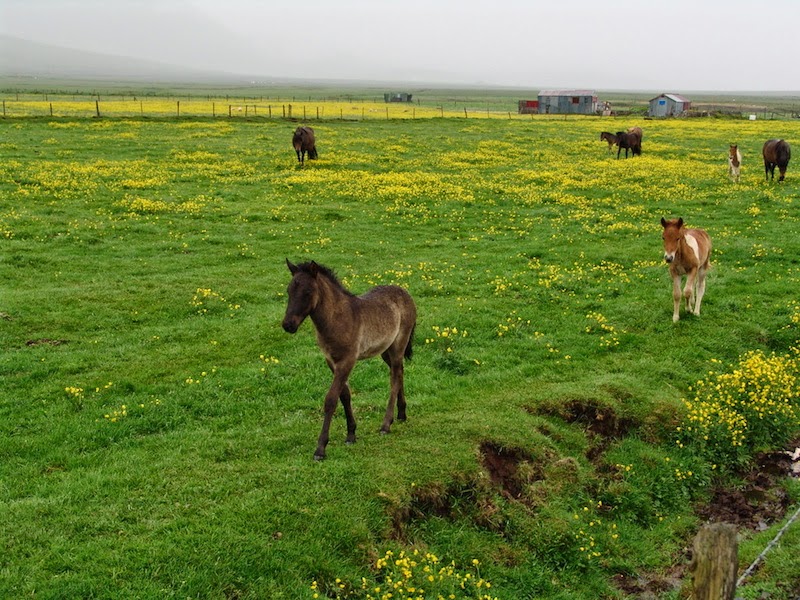
Foals raised by the mare and herd in a natural grazing setting develop into easily trainable animals, as it is the mare and herd that teach growing horses how to learn. It is the in-depth socialization and interaction with the herd of mares and foals that nurtures and develops athletic ability and prowess the growing horse. In the case of thoroughbreds, it is the mares and cohorts that instill growing horses with the confidence to run by and through other horses at speed. The herd teaches the horse how to prevail. Horses learn how to cooperate from other horses. They learn how to see and graze and move, and perhaps most importantly, how to communicate with others as taught by other horses. This is socialization. Abundant daily socialization for the normal development of growing horses. It is the herd that provides the foundation for the horse to learn, endure, and prevail in training and athletic competitions.
The horse's genetic potential is usually well-documented and identified. It is appropriate socialization that develops the equine athlete. Foals raised in stalls and stables seldom develop the wherewithal to become consistent reliable winners, as it is the herd that develops the foal's inherited abilities to perform. Much of this development occurs during the first hours and days of life. This development and bonding phase with the mare should be nurtured. The mare and herd are the most qualified individuals to teach the newborn foal to become a developmentally healthy horse. Interference by humans is inappropriate during this critical imprint phase wherein the precocious foal learns to be a horse in short order, so as to be able to run and flee within hours of birth.
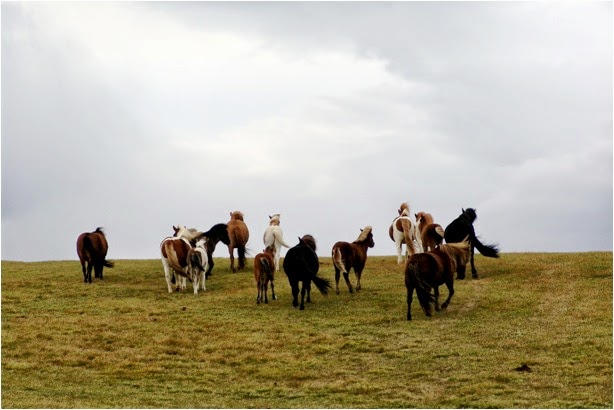
Horses require abundant friends, forage, and locomotion to maintain behavioural and physical health. Horse health is dependent on body and jaw movement. Digestion, respiration, metabolism, and musculoskeletal and hoof health are all dependent on abundant daily exercise, walking, foraging, and socializing.
The causes of cribbing, weaving, and other stereotypies are clear. They are not learned behaviors but survival anomalies allowing the horse to continue functioning when resources are deprived. Deprivations of friends, forage, and locomotion are the causes of stereotypies. An abundance of daily friends, forage, and locomotion is the prevention and treatment of stereotypies. Horses are born to socialize, communicate, move, and chew on a near constant basis. The nature of the horse is to move and graze with others day and night. For behavioural health, these preferences need to be re-created in the stable.
Stabled horses require 24/7 forage, and miles and miles of daily walking, as well as abundant socialization to re-create a natural existence. When these needs are not provided in adequate measure unwelcome behaviors develop.
In the training or operant conditioning of domestic animals, horses and dogs, reinforcement is the primary method of successful training, be it positive or negative. While often utilized, punishment is seldom necessary and is often counterproductive in the long term, as it devalues the relationship between man and animal form the animal's perspective. As the class continues, we will see that group survival trumps individual survival in many social species. It is survival of the fittest group rather than the fittest individual that often drives natural selection in social species.
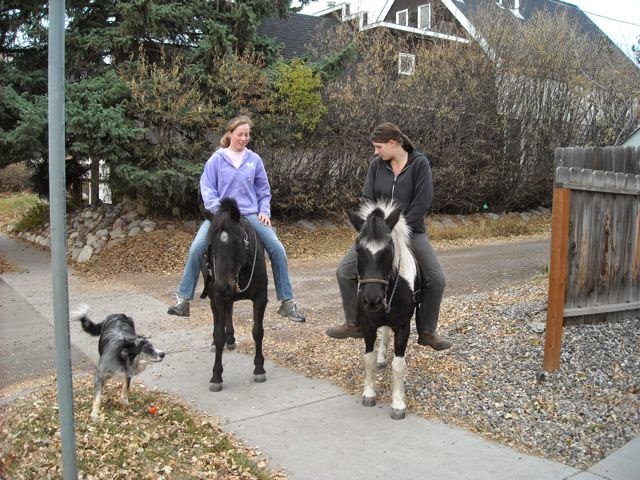
Most domestic species are social species, sharing a variety of social survival constructs with humans, group survival foremost among those shared characteristics. Group survival entails communication and cooperation. It is not the toughest, meanest individual that survives in a group, but the most effectively communicative, cooperative, and appeasing individual, it seems. This concept has diminished the 'dominance theory' of training which often uses punishment. With dogs and horses, more and more people these days seek willing partnerships rather than indentured servitude of their dog and horse, and indeed, it is the willing partnerships with animals that create the most desirable relationships between man and dog, and man and horse. For training of dogs and horses to be most effective, the training has to be a pleasurable situation for the horse and dog, and the science of learning and animal behaviour has helped humans make great positive strides in the development of mutually beneficial relationships with these domestic species.
There were 300-400 potential domesticates, but only a dozen or so animals shared enough learning, group survival, communication, and social constructs with humans to actually become successful domesticates that allowed a successful merger with humans. In a sense, domestic species have merged with humans to accomplish a shared group survival construct. In the teaching of domestication science, I use the metaphor 'sugars' to describe these shared characteristics. Some of the domestication sugars include shared methods of learning, shared communication modalities, shared group survival constructs, shared appeasement of others. Dominance has little to do with any of these domestication sugars. Humans and domestic animals best respond to reinforcement in the development of mutual relationships. Reinforcement, be it positive or negative, increases or strengthens natural behavior. While the punishment often associated with dominance decreases or weakens the natural tendencies or behaviors of the animal. Allowance and encouragement of natural behaviors creates the strongest bonds between humans and domestic animals, you know.
All physiologic, behavioural, and metabolic functions of the horse are dependent on abundant daily walking. In natural settings, ingestion is paired with walking, and takes place 70% of the time. Horses requires miles of daily walking to maintain homeostasis. Digestion, respiration, metabolism, musculoskeletal function, and behaviour are all dependent upon abundant daily locomotion. Locomotion is the most overlooked and deprived maintenance behaviour of stabled horses.
Horse Behaviour, the Nature of Horseshttp://www.amazon.com/Horse-Behaviour...
The teachings in this course have changed the way I will think, feel and react to horses. Thank you for your knowledge and effective teachings . . . I shall pass it on.All the best Dr. Sid!Jen

Dr Gustafson is an equine veterinarian, veterinary behaviorist, and novelist.
Locomotion: Essential Horse HealthHorses in natural settings forage two thirds of the time, walking and grazing together. in constant communication and group-survivalist harmony. The key to keeping confined horses healthy is to re-create this scenario in the stable as best one can manage. All systems of the horse are dependent on miles of daily locomotion for proper function. Digestion, respiration, metabolism, behaviour, learning, training, and hoof health are all dependent on abundant daily locomotion. Horses are born to move, and move they must to maintain health and prosperity. The last place a horse evolved to live is in a stall. When horses are stalled, natural must be re-created for them.

Movement is necessary for normal, optimal digestion. Roughage is the diet of preference, and horses in natural settings arrange their lives to generally always have grass roughage in their stomach and grass roughage before them. Horses at pasture move most all the time. In caudal cecal grazers such as horses, digestion is linked to locomotion. Digestion is dependent on locomotion accompanied by near-constant grazing.
Colic is often initiated by deprivations of locomotion. Digestion is locomotion dependent. For the horse's gut to move, the horse must move, abundantly. Stalled horses require miles of daily walking to maintain digestive health. When stalled they should have constant access to appropriate forage. Bedding stalled on horses on clean straw helps re-create the constant moving and grazing horses are won't to do. Horses bedded on straw (with 24/7 access to hay), spend hours moving about, head down, lipping, and tonguing through the straw. Straw encourages the constant movement that aids digestion in a big way. It is relatively easy to keep stabled horses' stomachs full with roughage. Appropriate hay should always be present, in addition to the straw bedding. The straw bedding needs cleaned of manure and fluffed several times a day.Behaviourists know stomach volume, and so now do all of you, 1-4 gallons. How easy is it to keep a horse's stomach full of a gallon or two of hay? Quite easyListen to McGreevy: Lack of forage is the most important management factor causing the development of stereotypic behaviours. Please understand horse's dependence on roughage, and please come to fully appreciate that the horse did not evolve to assimilate grains or concentrated protein, please. And for goodness sake, do not feed locomotion deprived horses grain, as the practice is detrimental. Only moving horses can handle grain. Long-standing horses fed grain develop obesity, and metabolic syndrome, laminitis follows, keeping the veterinarians busy, and the horse owner bank accounts depleted.Tell me the ways that horsefolk in-the-know provide stabled horses roughage to graze two thirds of the time, and the necessary movement and locomotion to digest and assimilate the roughage.Of course, by now we all know what failing to provide these simple roughage and stomach-content requirements causes in horses (poor learning ability, stereotypies, lack of motivation to perform, lameness, tying -up, ulcers, more veterinary bills...)
Oh, and do not forget water. And where the water is placed.Tell me the reasons why when you lead a horse to water she will not drink the water, please, and remember horses will seldom eat when they start to become dehydrated (when they are thirsty), or after you clip their vibrissae.Remember horses' good and essential friend, salt. Lead a horse to salt and she will lick and later drink. Make sure salt always travels with your horse. It seems lack of salt while traveling causes a lack of hydration, which leads to colic. Horses require salt and water 24/7 as they do forage and locomotion.Minerals may also be required to be supplemented, and of course the most important minerals after salt are calcium and phosphorus, balanced please. Calcium and phosphorus make up bone, and bone makes a horse durable and sound. Do not forget the bone minerals, please.
Healthy horses make happy and willing partners.When we have problems with a horse in this class, we all know to first make sure that the forage, friends, and locomotion are adequate, plentiful, and appropriate before devising some heavy handed training strategy. Unhappy horses are hard to train, yes, as are horses who are not pairbonded to their trainer.When confronted with a horse with behaviour or training issues, we have all learned to first consider stabling as a primary factor in teaching, learning, and training. The proper method to address training issues is to first address stabling and socialization issues. Locomotion is also essential for pulmonary health. Horses locked down all day bleed into their lungs when exercised strenuously, as in a race. The leading cause of bleeding in racehorses is a lack of abundant daily locomotion. Metabolic disease and laminitis are caused by a lack of adequate locomotion. Colic is caused by a lack of locomotion. Obesity is caused by a lack of locomotion. Tying up is caused by a lack of locomotion. Bucking is caused by a lack of locomotion. Cribbing is caused by a lack of locomotion and constant chewing and grazing. Take locomotion away from a horse and she will give movement back to you in the arena in ways you do not prefer.Happy horses train up happily. Set yourself and your horses up to succeed, please. Keep your horses happy with friends, forage, and locomotion, and grooming. Stalled horses require movement. For horses unable to move because of injury, we must re-create movement with massage and passive flexion of all the limbs. Remember to keep all things natural as possible. Clipping vibrissae is a crime against nature. Facial and eye vibrissae are critical to everything for a horse, spatial awareness, responsiveness to training, haltering, and bitting, drinking, eating, sensing the movement of nearby horses, the list is endless. It is inhumane and abusive to clip vibrissae, and to do so would reflect one's inability to be appreciate the ethology of the horse. Clipping vibrissae is considered abusive. The practice does not favor the horse. Professional horsewomen know to allow the horse to grow, develop, train, and race with their full complement of essential facial whiskers.
Vibrissae are critical to a horse's spatial awareness and sense of security. Chin and muzzle whiskers guide the horse's nostrils and lips away from harmful objects. The whiskers near their eyes keep them from lacerating their eyes and bumping their head.
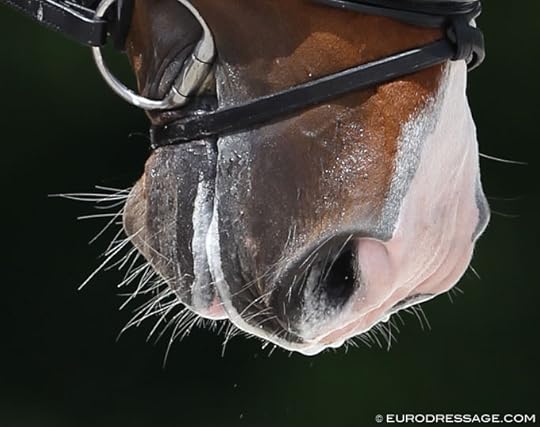 France Bans the Trimming of Whiskerseurodressage.com
Essential Vibrissae! Clipping whiskers deprives the horse of a critical supply of sensory information causing: Confusion, anxiety, facial lacerations, and colic. Many horses refuse to drink for days after their vibrissae are abusively clipped.
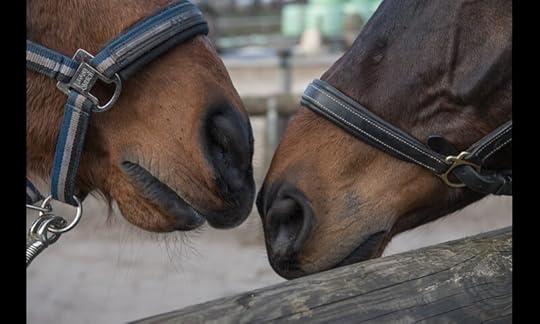 Sensory hairs | The British Horse Societybhs.org.uk
Applied veterinary behavior enhances optimum health, performance, soundness, contentment, and longevity in animal athletes. Natural approaches to development, training, nutrition, and conditioning sustain equine health and enhance performance.
Behavioral and nutritional enrichment strategies enhance the lives of stabled horses. Training and husbandry from the horse's perspective result in content, cooperative horses.
Dr Gustafson graduated from Washington State University as a Doctor of Veterinary Medicine in 1979. He is a bloodstock agent, practicing veterinarian, animal welfare journalist, equine behavior educator, and novelist. The application of behavioral science to the husbandry of horses enhances optimal health, performance, soundness, contentment, and longevity. Behavioral, social, locomotory, and nutritional strategies enhance the prosperity, vigor, and health of stabled horses. Sid offers veterinary care, training, husbandry, and conditioning from the horse's perspective to achieve willing and winning equine partnerships with humans.
August 9, 2022
Horsemanship Bloodstock, Sid Gustafson DVM
Horsemanship Bloodstock
Dr Gustafson is a thoroughbred bloodstock agent and a Doctor of Veterinary Medicine. The application of behavioral science to the stabling and training of racehorses enhances optimal health, performance, and success.

Developing willing partnerships between horses and humans is the key to winning.

I select yearlings sound of wind and limb, captivated with the behavioral stability to prevail.

Natural herd activities can be re-created in the training and stable setting. Stabling strategies that ensure abundant daily movement, socialization, and foraging produce consistent winners. A naturally fulfilled and behaviorally enriched racehorse becomes a willing partner, eager to train and win.

Sophisticated monitoring technologies enhance safety and prevent injuries.
Heart rate, speed and stride length are assessed during each training session. Conditioning and distance preferences can be determined for each horse. Breakdowns are prevented by detecting issues well before they become problematic. Soundness is maintained without medication. Physical therapy, body work, swimming, walking, lungeing, grazing, and socialization assure endurance and longevity.

My experience as an attending veterinarian, regulatory veterinarian, and equine behaviorist supports my seasoned ability as a bloodstock agent and racehorse manager.
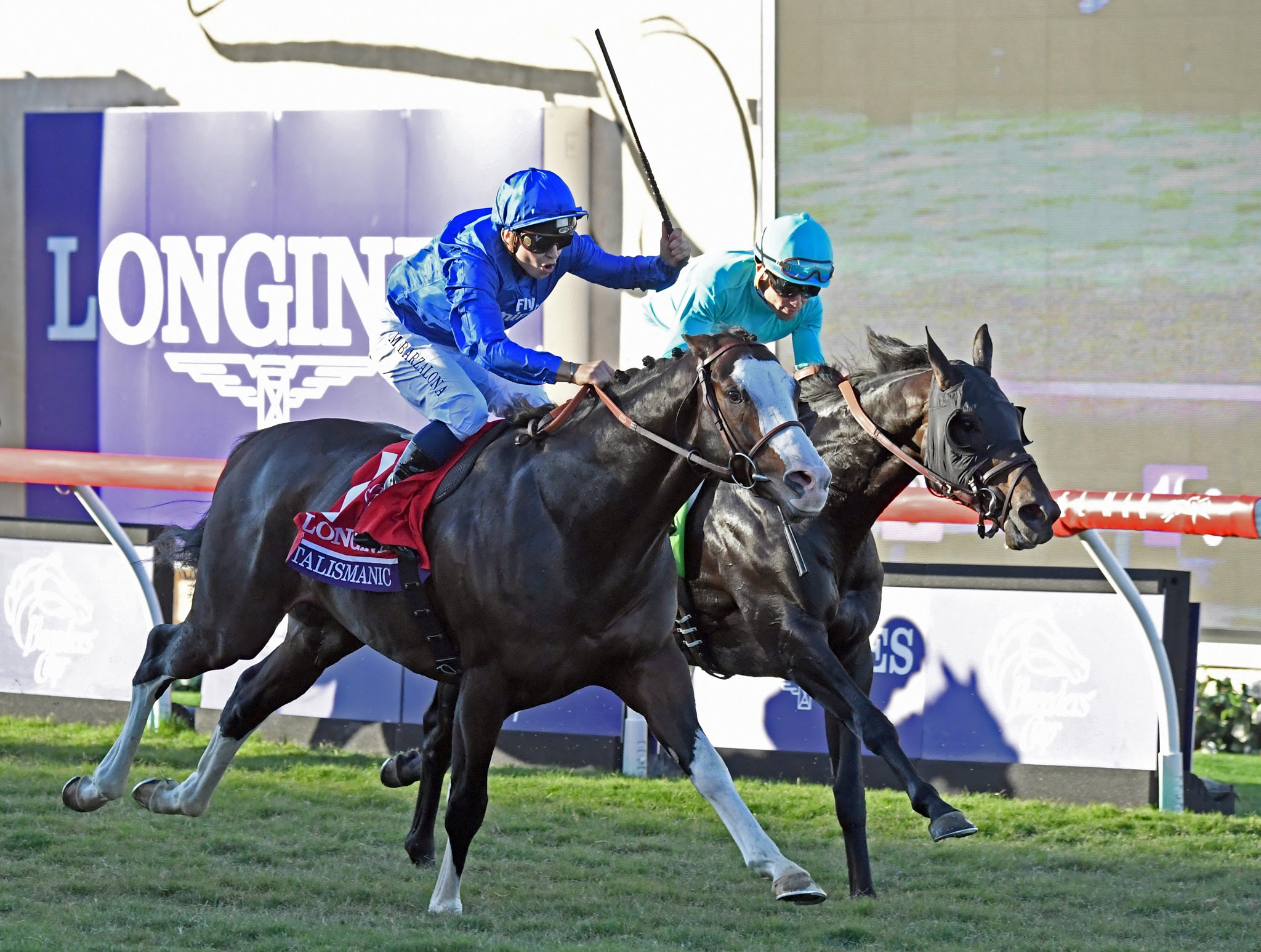
The Language of Horsemanship.Racehorse Advocacy. Native Bloodstock. Prospect selection, acquisition, and management.Securing yearlings sound of wind and limb and developing the behavioral essence to train up and prevail is Dr Gustafson's forté. Progressive racehorse monitoring utilizing sophisticated EKG and GPS technology helps trainers prevail.
Dr Gustafson is a thoroughbred bloodstock agent and a Doctor of Veterinary Medicine. The application of behavioral science to the development of racehorses enhances optimal health, performance, soundness, contentment, and longevity. Behavioral, social, locomotory, training, and natural nutritional strategies ensure the prosperity, vigor, and health of competition horses. Sid develops racehorses from the horse's behavioral perspective, achieving willing partnerships with humans.