Mark Duffett's Blog
April 26, 2020
Elvis: Roots, Image, Comeback, Phenomenon
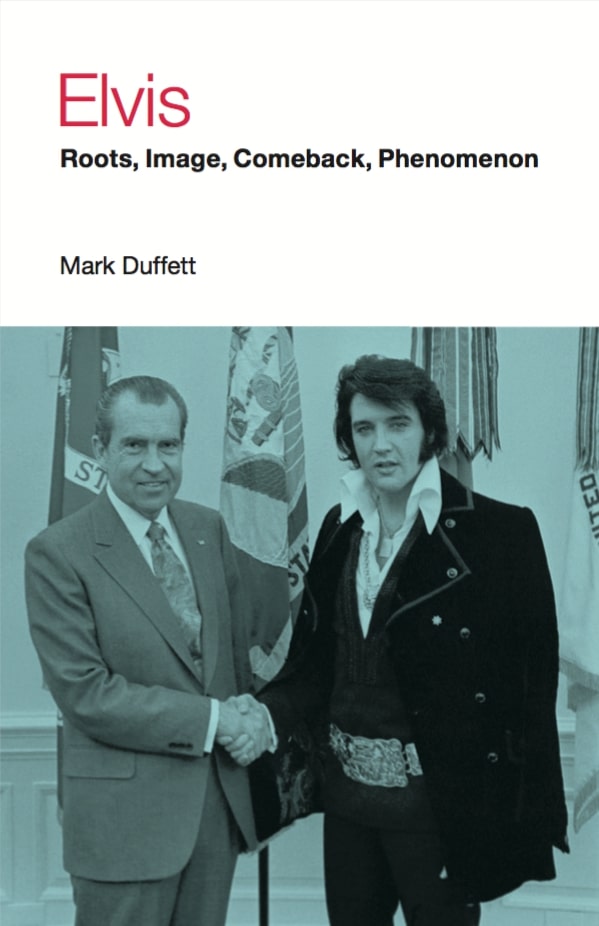
I am pleased to announce my new book on a unique music icon for Equinox Press, Elvis: Roots, Image, Comeback, Phenomenon (2020)...
Elvis Presley remains the single most important figure in twentieth century popular music. To many commentators, however, he has simply embodied the benefits and problems of uncritically embracing capitalism. By 2005 the ‘Memphis Flash’ sold over a billion records worldwide, yet his cultural significance cannot be measured by these extraordinary sales figures alone. He cannot quite be reduced to a placeholder for the contradictions of commerce. As the most prominent performer of the rock’n’roll era, then as a charismatic global superstar, Elvis fundamentally challenged the established relationship between White and Black culture, drew attention to the social needs of women and young people, and promoted the value of Southern creativity. He functioned as a bridge figure between folk roots and high modernity, and in the process became a controversial symbol of American unity.
Here is what the book's reviewers are saying...
Do we need another book on Elvis? Yes, we do, if the book is by so sophisticated and well-read a scholar as Mark Duffett. Intersecting and interrogating existing interpretations within a larger musical and cultural context, Duffett sheds new light on a universally-recognized subject.This book is enlightening.
Michael T. Bertrand, Professor of History,Tennessee State University
The book provides a succinct discussion of some of the key facets of Presley's career. Mindful of the need to approach history as more than a mere compilation of dates and places, Duffett seeks to contextualise and understand the singer, his music, and the responses they provoked. He succeeds admirably, and offers a dynamic analysis in which Presley is recognised not just as a revolutionary performer, but as a historical and sociological event.
Ian Inglis, author of The Beatles and formerlyVisiting Fellow at Northumbria University
Some of you may be interested in joining me on Microsoft Teamsfor the book launch this Wednesday.


September 27, 2019
Popular Music and Automobiles
I am pleased to announce a ground-breaking edited volumefrom Bloomsbury, co-edited with Dr Beate Peter...
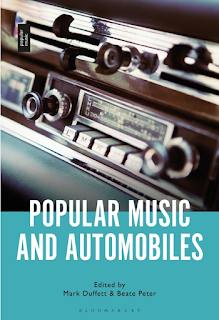
Particularly since the 1950s, cars and popular music have been constantly associated. As complementary goods and intertwined technologies, their relationship has become part of a widely shared experience-one that connects individuals and society, private worlds and public spheres. Popular Music and Automobiles aims to unpack that relationship in more detail. It explores the ways in which cars and car journeys have shaped society, as well as how we have shaped them. Including both broad synergies and specific case studies, Popular Music and Automobiles explores how attention to an ongoing relationship can reveal insights about the assertion and negotiation of identity. Using methods of enquiry that are as diverse as the topics they tackle, its contributors closely consider specific genders, genres, places and texts.
Here is what the book's reviewers are saying...
Mark Duffett and Beate Peter's Popular Music and Automobiles not only helps remedy the paucity of writings on this subject, but does so in an entertaining and informative fashion. This book sheds new light on two postwar pop culture passions and their relationship to each other.
– Timothy D. Taylor, Professor of Ethnomusicology, University of California, Los Angeles, USA.
Literally and figuratively, cars and music move us; they transport us physically and emotionally. The connection between the two, now more than a century old, is the subject of this fascinating, provocative collection. Ranging across decades, genres, and continents, Popular Music and Automobiles is a powerful vehicle for exploring the complexities of culture and identity.
– Mark Katz, Professor of Music, University of North Carolina at Chapel Hill, USA.
Popular Music and Automobiles is a fresh take on a profoundly powerful socio-musicological combination. Not only do chapters cover canonical US examples (e.g. The Beach Boys) from new perspectives, but there are case studies from Wales, England, Germany, and Colombia. Authors cover both the more celebratory aspects of pop and cars as well as more difficult topics such as press coverage of popular musicians in car crashes and the role of music in White supremacist violence against those who are so-called 'driving while black.'
– Justin A. Williams, Senior Lecturer in Music, University of Bristol, UK.
Buy it from Amazon or find out more.
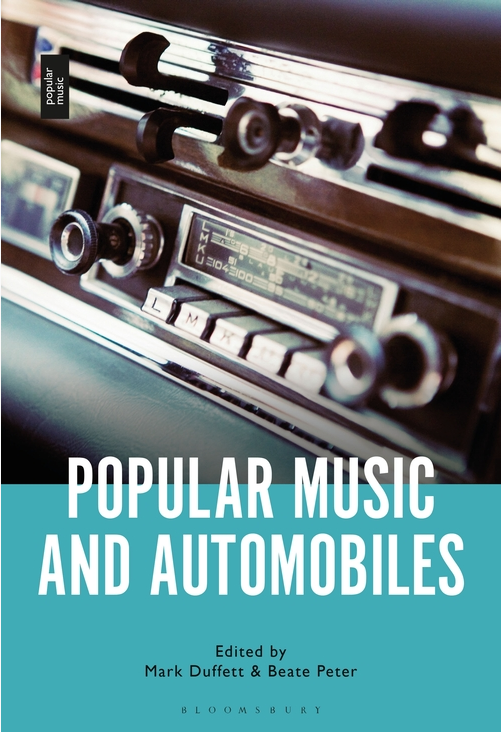
Particularly since the 1950s, cars and popular music have been constantly associated. As complementary goods and intertwined technologies, their relationship has become part of a widely shared experience-one that connects individuals and society, private worlds and public spheres. Popular Music and Automobiles aims to unpack that relationship in more detail. It explores the ways in which cars and car journeys have shaped society, as well as how we have shaped them. Including both broad synergies and specific case studies, Popular Music and Automobiles explores how attention to an ongoing relationship can reveal insights about the assertion and negotiation of identity. Using methods of enquiry that are as diverse as the topics they tackle, its contributors closely consider specific genders, genres, places and texts.
Here is what the book's reviewers are saying...
Mark Duffett and Beate Peter's Popular Music and Automobiles not only helps remedy the paucity of writings on this subject, but does so in an entertaining and informative fashion. This book sheds new light on two postwar pop culture passions and their relationship to each other.
– Timothy D. Taylor, Professor of Ethnomusicology, University of California, Los Angeles, USA.
Literally and figuratively, cars and music move us; they transport us physically and emotionally. The connection between the two, now more than a century old, is the subject of this fascinating, provocative collection. Ranging across decades, genres, and continents, Popular Music and Automobiles is a powerful vehicle for exploring the complexities of culture and identity.
– Mark Katz, Professor of Music, University of North Carolina at Chapel Hill, USA.
Popular Music and Automobiles is a fresh take on a profoundly powerful socio-musicological combination. Not only do chapters cover canonical US examples (e.g. The Beach Boys) from new perspectives, but there are case studies from Wales, England, Germany, and Colombia. Authors cover both the more celebratory aspects of pop and cars as well as more difficult topics such as press coverage of popular musicians in car crashes and the role of music in White supremacist violence against those who are so-called 'driving while black.'
– Justin A. Williams, Senior Lecturer in Music, University of Bristol, UK.
Buy it from Amazon or find out more.
January 13, 2019
Fandom, Gender and Heavy Metal: An Interview with Rosemary Lucy Hill
· Pursuing laddish banter in magazines (and thus maintaining heteronormativity and white masculinity as the assumed norm); · Visually objectifying female musicians and fans (and judging them accordingly); · Accepting or endorsing gendered, sexually harassing behavior (eg. baring breasts at live gigs); · Assuming metal does not involve issues of gender because men are primarily interested in the music;· Ignoring women as fans and musicians;· Encouraging exscription (the idea that male scene participants absorb gender difference and thus have no need for women); · Questioning the credibility of women as musicians and music experts; · Assuming women have chosen to not become musicians (rather than seeking barriers); · Requiring female musicians to be especially good players before being accepted; · Assuming that womens’ listening pleasure cannot be both musical and sensual or erotic at the same time;· Assuming women are sexually attracted to stars rather than interested in music (and, equally, denying the worth of female lust as a legitimate fannish pleasure); · Trivializing any subjects or objects coded feminine (pop music, romance, women’s clothing); · Tacitly encouraging women to downplay their femininity; · Creating a space where women can escape pressures of femininity (thus demonstrating that wider sexism is burden for women); · Allowing women to sidestep gender only if they accede to male norms;· Locating gender difference and femininity as a kind of intrusion;· Defining away sexism; · Using a defense of the genre to deflect questions of sexism; · Using comparisons with the mainstream culture to suggest non-sexism; · Assuming gender equality as a way to silence criticism;· Personalizing issues effecting women and deflecting them into individual victimhood;
Dr Hill kindly agreed to an interview…
* * *
You spoke to almost twenty white women across a range of age groups who lived in British cities between 2008 and 2011, recruiting them through snowball sampling and conducting in-depth interviews to discuss their experience of metal culture. Can you pass on any advice about fieldwork and methodology that you picked up from that experience, particularly in the context of working on fandom and gender?
That’s a good starter question. I actually found the interviews the most satisfying part of the research. However, this was the first time I’d done interviews and I was very shy about approaching people. I know now (several research projects later) that there is no easy way to find people and to get them to answer your emails or turn up when they say they will! The key is being polite, persistent and accommodating. Keep following up on emails and messages (well, after the third without a reply you should probably leave it). And not to take things personally – people have all sorts of other things going on in their lives and probably think you’ve got tonnes of other people to speak to. I hope that’s helpful advice for novice interviewers.
When it comes to specifically interviewing about things people are really invested in, things they are fans of, you can generally expect people to be really easy to talk to. People love talking about what they love! But if they are part of what I call in the book an ‘imaginary community’ or what some people might call a subculture, then participants might be a bit defensive. Metal is still seen as an inferior form of culture and metal fans do somewhat delight in our outsider status. This is something to be aware of. I made sure my participants knew that I loved metal too, because it is easier to speak more freely with someone who shares the same reference points. But even then, metal is such a vast genre that we weren’t always aware of the same things. The defensiveness thing … that’s not to say that people are lying about their experiences, but that they might use particular discursive techniques to construct their image of the community or the bands they love.
The definition of metal fan also played a part when I was trying to recruit participants. Metal is male dominated and as you’ve outlined there are numerous actions and ideas at play that work to keep it that way. This means that asking to speak to ‘metal fans’ might well have put some women off speaking to me – because they didn’t see themselves as fitting into the definition of a fan. That definition within metal is riven through with a need for a large quantity of subcultural capital (to quote Thornton). So when women are constantly being challenged about their musical knowledge this is to assess whether they are ‘real fans’. To get to speak to more women, I also called for women who loved bands mentioned in Kerrang! magazine (which was my shortcut definition of metal – and not one without questions to be asked of it!). If one therefore sets out to speak to ‘fans’ of band, sports team, film genre or whatever, then, it really pays off to pay attention to the gendered definitions of ‘fan’ that are at play locally within that fannish community.
Your book questions the assumption that “rock is bad for women” (p.120) by suggesting that the genre is more than “an arena for hypermasculine posturing” (p.121). Let’s start with an over-simplification: if heavy metal is often perceived as a repository of sexist attitudes and behaviours, why do so many women enjoy participating in metal culture? Are they trading off their own empowerment, and in effect disempowering themselves?
Let’s start by thinking about the heterogeneity of metal – there are a bazillion subgenres and there are myriad ideas about what metal should be like. This means that there is plenty of room for women to listen to music that does not obviously use misogyny in its aesthetic. I spoke to women who sought out this kind of metal. I also spoke to women who sought out metal that actively resisted sexism, for instance that which was made by feminists and our allies, like My Chemical Romance.
We also need to remember that sexism is the water in which we swim. Misogyny is so prevalent and normalised that we don’t notice it all the time (and believe me it is exhausting when we are paying attention to it). Therefore some women I spoke to just didn’t see it or misrecognised it as something else (like chivalry or natural differences) and were not aware of how it shaped the culture. And then there were others who didn’t listen to lyrics, didn’t go to many gigs and didn’t therefore come face to face with sexism.
But also, when we are surrounded by sexist attitudes and cultural representations, how do we cope with them when we love the cultural artefact? If you love the riffs but hate the lyrics what do you do? Women are expected to take a stand against this - you suggest women are complicit in our own oppression, but are not men who listen to this music also complicit? Should they not also be asking questions of themselves about being complicit in sexist music even if they think of themselves as feminist allies? I would argue that we should all, regardless of gender identity, be asking these questions of ourselves. But then, not all women are feminists so to ask them to engage in feminist thinking around their musical tastes may be going too far.
There are, after all, other things that metal offers women that are nothing to do with sexism: the heavy music, the anger and hatred, the horror imagery, the difference of metal femininity from mainstream femininity etc. If we live in a sexist world then making one choice which has some sexism with it as opposed to another choice which has some sexism with it perhaps shows that sexism is something we live with, rather than being empowered in one sphere and disempowered in another.
After the 1950s, anxiety around female music fans suggested they were breaking a taboo by sexually desiring male music makers and – more importantly – publically expressing that desire. (A reason, in part, I think, for anxieties about fandom itself.) In metal, there is a second breaking of taboo, because one of the emotions expressed by music in the genre is, arguably, anger… Is there a role for politicalization of anger in relation to the concerns you discuss in the book?
Absolutely.
In the book you cite examples of people who believe metal and feminism were antithetical, yet you identify as a metal fan and a feminist, citing, for example, when you went across Europe to see The Darkness. Can you say a bit more about whether those two things really are so separate and how they come together for you as a fan?
Ellen Willis writes of how timid music made her feel timid, whilst punk felt to her like a challenge to confront her own oppression as a woman and provided her with tools to express her anger.
One thing I struggled a bit with as I read the book was the question of performance. I agreed with you that metal has frequently been a place where sexism – often the sort that permeates the wider culture – has shaped experience. What I was struggling with was that rather than simply being a place where “the rules are written by straight, white men,” to me, metal culture in the last few decades – vast and varied as it is – actually seems to allow white males to pantomime and parody a very traditional, macho form of masculinity: to take it to absurd lengths. In that sense, I think that metal might mark a certain kind of nostalgia for the end of traditional masculinity: theatrical warriors wielding axes in a context of the decline of secondary industry, the rise of the tertiary economy, the ‘feminization’ of male work roles, and the rise of female liberation, feminism and post-feminism. Through its “perceived hypermasculinity” (118) the genre might then be seen as asserting a kind of rebelliousness, indirectly reflecting anxiety about masculinity, encapsulating both residual and progressive elements.
Evidently, as your book demonstrates, there is still plenty of obvious and less obvious sexism in there, but doesn’t the gendered performativity of metal also open spaces where gender can be expressed and negotiated in less sexist ways?
There is a lot of playing with gender going on in metal – it’s one of the reasons that makes it so much fun. Rammstein spraying an audience with white foam from a massive fake penis is hilarious and certainly says something satirical about the hypermasculinised performance of masculinity. We can definitely think about the performative masculinity of metal – and Amber Clifford-Napoleone does a really excellent job of this. However, to see metal as a nostalgia for a pre-feminist time I don’t find particularly convincing. Walser talks about metal as seeking fantasy worlds without women and I think there is a lot to be said for that argument (although it’s a big genre so, you wouldn’t want to make it universally). I think it’s more useful to think about how gender and age work together. Metal can be read for young male fans as a youthful rebellion about parental authority and a playing at being a man, drawing on particular conceptions of what masculinity is (and those traits will be the most salient in the particular genre that the young male metal fan loves). What is also happening (and this is an area desperately in need of more research, but see Paula Rowe’s most excellent book on growing up metal in Australia ‘Heavy Metal Youth Identities’) is that these boys who fall in love with metal are often those who feel themselves marginalised at school or in the family. Their own masculinity may be challenged by other boys around them: thus metal presents a new version of masculinity alongside collective identity. Metal can be an ‘armour’ in the face of marginalisation.
In the permissive society era, rock developed a mythology that celebrated the sexual encounters between male musicians and their young female fans, in part as a reflection of the seductive aura of the music, and in part as an expression counter-cultural ideal of personal liberation through drugs and sexual excess. Tales of Led Zeppelin’s famous “red snapper” evening offer an archetypal example where the line between coercion and consent was rather ambiguous. To many, the decadent behavior of rock stars appeared seedy at the time, and it was parodied in movies like Performance(Roeg, 1970) and Groupie Girl (Ford, 1970). Looking back, the aura of macho bravura associated with these incidents has given way to an understanding that some of this culture was about sexual predators taking advantage of vulnerable fans. Since you wrote the book, there has been a wave of scandals about the sexual behavior of celebrities, particularly in the 1970s, but very few of those celebrities have come directly from the rock world. In light of the Harvey Weinstein scandal and #MeToo movement, is it time to reconsider those earlier years, or would it be a mistake to read contemporary morality into such historic incidents?
In my view we should be lending a critical eye to such incidents, yes. Not that this would be anything new: feminists have been making this criticism since the 1960s, as you suggest (although maybe you are making reference to more moral critiques of the counterculture?). I’m not sure ‘contemporary morality’ is really the point here. Rather it is about listening to survivors of sexual violence and taking those claims seriously. That is not a moral position, but a political position that is prepared to ask hard questions about masculinity and sexuality.
You spend quite a lot of the book discussing “the myth that all women fans are groupies” (p. 134), the way it effects fans’ lives, and the way they negotiate it. In some ways, it is both sad and surprising that the term still lingers roughly half a century since it became prominent. It is also striking that the nuances and ironies that characterized the ‘groupie’ question in the 1970s seem to have disappeared, in part because society and sexual politics have changed so much. Germain Greer deliberately described herself as ‘a groupie’ precisely because men used the term in a derogatory way. Do you think it can ever be reworked or rescued in ways that might counter assumptions of sexism?
I’m very sympathetic to the attempts at claiming ‘groupie’ as a positive. And yet reclamation does nothing to counter the gender inequality which is prevalent throughout the music industry. In rock and metal this means we hear men’s stories and men’s accounts of love, sex and relationships with women – but only rarely women’s. I’m deeply bothered by this disparity in who gets to tell their own story, who gets to make music, who has access to creative expression.
Reworking ‘groupie’ is only going to be successful, I think, in a culture in which those women also get to be on the stage rocking out. There are broader societal changes that would need to happen as well, of course, around the persistent double standard of women’s self-defining their sexuality.
Dr Hill, thanks for a fascinating interview.
Dr Hill kindly agreed to an interview…
* * *
You spoke to almost twenty white women across a range of age groups who lived in British cities between 2008 and 2011, recruiting them through snowball sampling and conducting in-depth interviews to discuss their experience of metal culture. Can you pass on any advice about fieldwork and methodology that you picked up from that experience, particularly in the context of working on fandom and gender?
That’s a good starter question. I actually found the interviews the most satisfying part of the research. However, this was the first time I’d done interviews and I was very shy about approaching people. I know now (several research projects later) that there is no easy way to find people and to get them to answer your emails or turn up when they say they will! The key is being polite, persistent and accommodating. Keep following up on emails and messages (well, after the third without a reply you should probably leave it). And not to take things personally – people have all sorts of other things going on in their lives and probably think you’ve got tonnes of other people to speak to. I hope that’s helpful advice for novice interviewers.
When it comes to specifically interviewing about things people are really invested in, things they are fans of, you can generally expect people to be really easy to talk to. People love talking about what they love! But if they are part of what I call in the book an ‘imaginary community’ or what some people might call a subculture, then participants might be a bit defensive. Metal is still seen as an inferior form of culture and metal fans do somewhat delight in our outsider status. This is something to be aware of. I made sure my participants knew that I loved metal too, because it is easier to speak more freely with someone who shares the same reference points. But even then, metal is such a vast genre that we weren’t always aware of the same things. The defensiveness thing … that’s not to say that people are lying about their experiences, but that they might use particular discursive techniques to construct their image of the community or the bands they love.
The definition of metal fan also played a part when I was trying to recruit participants. Metal is male dominated and as you’ve outlined there are numerous actions and ideas at play that work to keep it that way. This means that asking to speak to ‘metal fans’ might well have put some women off speaking to me – because they didn’t see themselves as fitting into the definition of a fan. That definition within metal is riven through with a need for a large quantity of subcultural capital (to quote Thornton). So when women are constantly being challenged about their musical knowledge this is to assess whether they are ‘real fans’. To get to speak to more women, I also called for women who loved bands mentioned in Kerrang! magazine (which was my shortcut definition of metal – and not one without questions to be asked of it!). If one therefore sets out to speak to ‘fans’ of band, sports team, film genre or whatever, then, it really pays off to pay attention to the gendered definitions of ‘fan’ that are at play locally within that fannish community.
Your book questions the assumption that “rock is bad for women” (p.120) by suggesting that the genre is more than “an arena for hypermasculine posturing” (p.121). Let’s start with an over-simplification: if heavy metal is often perceived as a repository of sexist attitudes and behaviours, why do so many women enjoy participating in metal culture? Are they trading off their own empowerment, and in effect disempowering themselves?
Let’s start by thinking about the heterogeneity of metal – there are a bazillion subgenres and there are myriad ideas about what metal should be like. This means that there is plenty of room for women to listen to music that does not obviously use misogyny in its aesthetic. I spoke to women who sought out this kind of metal. I also spoke to women who sought out metal that actively resisted sexism, for instance that which was made by feminists and our allies, like My Chemical Romance.
We also need to remember that sexism is the water in which we swim. Misogyny is so prevalent and normalised that we don’t notice it all the time (and believe me it is exhausting when we are paying attention to it). Therefore some women I spoke to just didn’t see it or misrecognised it as something else (like chivalry or natural differences) and were not aware of how it shaped the culture. And then there were others who didn’t listen to lyrics, didn’t go to many gigs and didn’t therefore come face to face with sexism.
But also, when we are surrounded by sexist attitudes and cultural representations, how do we cope with them when we love the cultural artefact? If you love the riffs but hate the lyrics what do you do? Women are expected to take a stand against this - you suggest women are complicit in our own oppression, but are not men who listen to this music also complicit? Should they not also be asking questions of themselves about being complicit in sexist music even if they think of themselves as feminist allies? I would argue that we should all, regardless of gender identity, be asking these questions of ourselves. But then, not all women are feminists so to ask them to engage in feminist thinking around their musical tastes may be going too far.
There are, after all, other things that metal offers women that are nothing to do with sexism: the heavy music, the anger and hatred, the horror imagery, the difference of metal femininity from mainstream femininity etc. If we live in a sexist world then making one choice which has some sexism with it as opposed to another choice which has some sexism with it perhaps shows that sexism is something we live with, rather than being empowered in one sphere and disempowered in another.
After the 1950s, anxiety around female music fans suggested they were breaking a taboo by sexually desiring male music makers and – more importantly – publically expressing that desire. (A reason, in part, I think, for anxieties about fandom itself.) In metal, there is a second breaking of taboo, because one of the emotions expressed by music in the genre is, arguably, anger… Is there a role for politicalization of anger in relation to the concerns you discuss in the book?
Absolutely.
In the book you cite examples of people who believe metal and feminism were antithetical, yet you identify as a metal fan and a feminist, citing, for example, when you went across Europe to see The Darkness. Can you say a bit more about whether those two things really are so separate and how they come together for you as a fan?
Ellen Willis writes of how timid music made her feel timid, whilst punk felt to her like a challenge to confront her own oppression as a woman and provided her with tools to express her anger.
One thing I struggled a bit with as I read the book was the question of performance. I agreed with you that metal has frequently been a place where sexism – often the sort that permeates the wider culture – has shaped experience. What I was struggling with was that rather than simply being a place where “the rules are written by straight, white men,” to me, metal culture in the last few decades – vast and varied as it is – actually seems to allow white males to pantomime and parody a very traditional, macho form of masculinity: to take it to absurd lengths. In that sense, I think that metal might mark a certain kind of nostalgia for the end of traditional masculinity: theatrical warriors wielding axes in a context of the decline of secondary industry, the rise of the tertiary economy, the ‘feminization’ of male work roles, and the rise of female liberation, feminism and post-feminism. Through its “perceived hypermasculinity” (118) the genre might then be seen as asserting a kind of rebelliousness, indirectly reflecting anxiety about masculinity, encapsulating both residual and progressive elements.
Evidently, as your book demonstrates, there is still plenty of obvious and less obvious sexism in there, but doesn’t the gendered performativity of metal also open spaces where gender can be expressed and negotiated in less sexist ways?
There is a lot of playing with gender going on in metal – it’s one of the reasons that makes it so much fun. Rammstein spraying an audience with white foam from a massive fake penis is hilarious and certainly says something satirical about the hypermasculinised performance of masculinity. We can definitely think about the performative masculinity of metal – and Amber Clifford-Napoleone does a really excellent job of this. However, to see metal as a nostalgia for a pre-feminist time I don’t find particularly convincing. Walser talks about metal as seeking fantasy worlds without women and I think there is a lot to be said for that argument (although it’s a big genre so, you wouldn’t want to make it universally). I think it’s more useful to think about how gender and age work together. Metal can be read for young male fans as a youthful rebellion about parental authority and a playing at being a man, drawing on particular conceptions of what masculinity is (and those traits will be the most salient in the particular genre that the young male metal fan loves). What is also happening (and this is an area desperately in need of more research, but see Paula Rowe’s most excellent book on growing up metal in Australia ‘Heavy Metal Youth Identities’) is that these boys who fall in love with metal are often those who feel themselves marginalised at school or in the family. Their own masculinity may be challenged by other boys around them: thus metal presents a new version of masculinity alongside collective identity. Metal can be an ‘armour’ in the face of marginalisation.
In the permissive society era, rock developed a mythology that celebrated the sexual encounters between male musicians and their young female fans, in part as a reflection of the seductive aura of the music, and in part as an expression counter-cultural ideal of personal liberation through drugs and sexual excess. Tales of Led Zeppelin’s famous “red snapper” evening offer an archetypal example where the line between coercion and consent was rather ambiguous. To many, the decadent behavior of rock stars appeared seedy at the time, and it was parodied in movies like Performance(Roeg, 1970) and Groupie Girl (Ford, 1970). Looking back, the aura of macho bravura associated with these incidents has given way to an understanding that some of this culture was about sexual predators taking advantage of vulnerable fans. Since you wrote the book, there has been a wave of scandals about the sexual behavior of celebrities, particularly in the 1970s, but very few of those celebrities have come directly from the rock world. In light of the Harvey Weinstein scandal and #MeToo movement, is it time to reconsider those earlier years, or would it be a mistake to read contemporary morality into such historic incidents?
In my view we should be lending a critical eye to such incidents, yes. Not that this would be anything new: feminists have been making this criticism since the 1960s, as you suggest (although maybe you are making reference to more moral critiques of the counterculture?). I’m not sure ‘contemporary morality’ is really the point here. Rather it is about listening to survivors of sexual violence and taking those claims seriously. That is not a moral position, but a political position that is prepared to ask hard questions about masculinity and sexuality.
You spend quite a lot of the book discussing “the myth that all women fans are groupies” (p. 134), the way it effects fans’ lives, and the way they negotiate it. In some ways, it is both sad and surprising that the term still lingers roughly half a century since it became prominent. It is also striking that the nuances and ironies that characterized the ‘groupie’ question in the 1970s seem to have disappeared, in part because society and sexual politics have changed so much. Germain Greer deliberately described herself as ‘a groupie’ precisely because men used the term in a derogatory way. Do you think it can ever be reworked or rescued in ways that might counter assumptions of sexism?
I’m very sympathetic to the attempts at claiming ‘groupie’ as a positive. And yet reclamation does nothing to counter the gender inequality which is prevalent throughout the music industry. In rock and metal this means we hear men’s stories and men’s accounts of love, sex and relationships with women – but only rarely women’s. I’m deeply bothered by this disparity in who gets to tell their own story, who gets to make music, who has access to creative expression.
Reworking ‘groupie’ is only going to be successful, I think, in a culture in which those women also get to be on the stage rocking out. There are broader societal changes that would need to happen as well, of course, around the persistent double standard of women’s self-defining their sexuality.
Dr Hill, thanks for a fascinating interview.
September 23, 2018
Moral Bankruptcy and Fast Footwork: Gaspar Noe's Climax (2018)
On Friday, along with a handful of other people, I piled into my local art cinema to watch Gaspar Noé’s new, darkly absorbing club-related movie, Climax. The plot revolves around a talented, multi-cultural group of dancers who rehearse in an abandoned French school, only to find their after-party turning sour because someone has put LSD in their punch bowl.
What follows is an impressionistic descent into human misery, marginally less jarring than Darren Aronofsky’s Mother! (2017), and less venally depraved than Darko Simić’s notorious A Serbian Film (2010). The grim and grubby panorama that Noe paints, however, has moments which are, at times, equally as shocking and cruel.
To understand such recent descent films, I think we have to look not to cinema, but to society in an era of neoliberal capitalism: a time where the rise and rise of ubiquitous internet, reality television, vacuous talent shows, and always-on entertainment is counterbalanced by an accelerating free fall - one reflected in a crisis economy, disenfranchised citizenry, desperate daily life, failed democracy, managerial politics, dismal predictions of collective suicide, and glimpses of emerging nightmare fascism.
After some last ditch, closing credits, Noé’s film starts (!) with interview footage from the dancer’s auditions, shown on a normal TV set, surrounded by prescient books and video cassettes.
Evoking a strange kind of nostalgia, the interview footage cues us to the present absence of the internet. It is a lovely touch, and reminded me of directors like Michael Haneke. Soon we are led into sexy and spectacular dance scenes, sequences worthy of judgement by Simon Cowell. Everybody, however – the director, cast, and us spectators - goes careering off once the after-party DJ cranks up the music and the group slowly descends into selfishness, cruelty, and various grim subspecies of animosity. As part of this, we also wander off-stage (ob-scene) into a seedy underworld of dim-lit corridors, dilapidated toilets, neglected cupboards, and grubby dorms - places where it seems more natural to unleash the human monstrosity on display.
The controversial director’s work makes few concessions to the mainstream. Part of me was surprized; I was – in the horror fan tradition - expecting people to die in ironic and creative ways. Noé offers that in the plot, but gives little genre-based spectatorial pleasure. Instead, he delivers lingering, absorbing, sensory cinema that slips into an increasingly horrifying whirl of affective moments. Climax touches on many genres – the whodunit, teen film, dance musical, horror flick – yet it answers to none. (I was reminded of the increasing number of academic papers I’ve seen, at all levels, which flatly eschew any critical engagement in favour of pursuing their own elaborate vision. What results is arrogant, audacious, and so much the poorer for it.)
The thing that I found interesting about Climax, however, was how clearly it held me in my seat and tested the sensory boundaries of cinema.
In an age where digital technologies are increasingly attempting to pull us into a fluid, sensory, embodied experience, it seems that cinema can now be understood as a pioneering medium. Students still gravitate towards it perhaps for that reason, as if they know that writing is old hat, an idiom not equipped for the instant immersion of the posthuman era. Yet cinema, even more than TV, remains guardian of the transition.
What Noé deliberately demonstrates is that the cinematic project can only go so far.
The Argentine director regularly chooses immediacy over naturalism. Rather than shot-reverse-shot, for instance, there is a lot of handheld footage. Deprived of cinema’s standard pleasures, I felt I was being overcompensated by deep hues and subtle sound design. The result was engaging: to some extent, I was enveloped into Noe’s nightmare world, and couldn’t escape. Deliberately, though, he refrains from showing inside character’s heads, or if he does, he refuses to announce it by departing from a kind of other focused, dark club realism. As I followed characters into the outer-recesses of the school, I witnessed their suffering, both internally (as the drugs intoxicate them) and externally (as shared madness possesses each)…
I couldn’t help feeling, though, that Noé’s Sartre-eque message (this is a contemporary ‘No Exit,’ after all) starts wearing thin underneath some of his more artful gimmicks.
Gaspar Noé’s club kids are drifters, postcolonial hipsters who have realized that they can achieve something through all the tools offered to them by contemporary youth culture. They’ve got attitude, they’ve got style. They act cool, they dress cool, they dance amazingly well, and they embrace sexual freedom and hedonism with a kind of weary duty. In other words, they both do all that is required, and have an attitude that is also required: a slacker’s distance from it.
From their starting point of being socially marginalized (by youth, by class, by racism, by nationalism, by sexism, by heteronormativity) they have deployed youth culture, and used their illusion to “buy in.” Yet the bargain has failed. The other side has betrayed them. Since their worlds have already been so diminished, Noé implies, their vengeance comes more easily. The LSD in the sangria bowl, in that sense, is a mere nudge rather than a full-on onslaught: beneath the veneer, these are people already simmering with hatred and fear. It is already expressed in the nihilism of their dissociated, party-hard attitude.
In a postcolonial, online era, dancing is “what they’ve got,” but it is also a way to conform to the faux individualism of the X Factor / YouTube world, a place where making a spectacle of oneself is entrepreneurial work for thousands of youngsters: techno-colonized subjects who soon become burned out by high competition, diminishing returns, and the urgent necessity to perform their funky individualism.
Behind the beat-up sofas, the peeling wall paper, and the tressle tables of party treats, lie strewn the nubile, tattooed crumpled, bodies of vloggers, sound cloud rappers, street kids, and ghosts.
“Hey guys, what’s up?... Make sure to leave a comment below this video, and follow us on social media.”
When the line breaks down between work and entertainment, what else can you do except dance the night away?
As the sangria starts to kick in, and you begin to realize the extent of your style drudge work, all your free labour… the conformity and exploitation beneath that mirror ball of flashy, hip, guerilla consumerism…
Is it too late? Is there any possible escape from hedonistic diversion, from infantile thinking, sexual selfishness, mental cruelty, and unjustified violence?
From the enveloping, social media echo chamber?
From hell?
What follows is an impressionistic descent into human misery, marginally less jarring than Darren Aronofsky’s Mother! (2017), and less venally depraved than Darko Simić’s notorious A Serbian Film (2010). The grim and grubby panorama that Noe paints, however, has moments which are, at times, equally as shocking and cruel.
To understand such recent descent films, I think we have to look not to cinema, but to society in an era of neoliberal capitalism: a time where the rise and rise of ubiquitous internet, reality television, vacuous talent shows, and always-on entertainment is counterbalanced by an accelerating free fall - one reflected in a crisis economy, disenfranchised citizenry, desperate daily life, failed democracy, managerial politics, dismal predictions of collective suicide, and glimpses of emerging nightmare fascism.
After some last ditch, closing credits, Noé’s film starts (!) with interview footage from the dancer’s auditions, shown on a normal TV set, surrounded by prescient books and video cassettes.
Evoking a strange kind of nostalgia, the interview footage cues us to the present absence of the internet. It is a lovely touch, and reminded me of directors like Michael Haneke. Soon we are led into sexy and spectacular dance scenes, sequences worthy of judgement by Simon Cowell. Everybody, however – the director, cast, and us spectators - goes careering off once the after-party DJ cranks up the music and the group slowly descends into selfishness, cruelty, and various grim subspecies of animosity. As part of this, we also wander off-stage (ob-scene) into a seedy underworld of dim-lit corridors, dilapidated toilets, neglected cupboards, and grubby dorms - places where it seems more natural to unleash the human monstrosity on display.
The controversial director’s work makes few concessions to the mainstream. Part of me was surprized; I was – in the horror fan tradition - expecting people to die in ironic and creative ways. Noé offers that in the plot, but gives little genre-based spectatorial pleasure. Instead, he delivers lingering, absorbing, sensory cinema that slips into an increasingly horrifying whirl of affective moments. Climax touches on many genres – the whodunit, teen film, dance musical, horror flick – yet it answers to none. (I was reminded of the increasing number of academic papers I’ve seen, at all levels, which flatly eschew any critical engagement in favour of pursuing their own elaborate vision. What results is arrogant, audacious, and so much the poorer for it.)
The thing that I found interesting about Climax, however, was how clearly it held me in my seat and tested the sensory boundaries of cinema.
In an age where digital technologies are increasingly attempting to pull us into a fluid, sensory, embodied experience, it seems that cinema can now be understood as a pioneering medium. Students still gravitate towards it perhaps for that reason, as if they know that writing is old hat, an idiom not equipped for the instant immersion of the posthuman era. Yet cinema, even more than TV, remains guardian of the transition.
What Noé deliberately demonstrates is that the cinematic project can only go so far.
The Argentine director regularly chooses immediacy over naturalism. Rather than shot-reverse-shot, for instance, there is a lot of handheld footage. Deprived of cinema’s standard pleasures, I felt I was being overcompensated by deep hues and subtle sound design. The result was engaging: to some extent, I was enveloped into Noe’s nightmare world, and couldn’t escape. Deliberately, though, he refrains from showing inside character’s heads, or if he does, he refuses to announce it by departing from a kind of other focused, dark club realism. As I followed characters into the outer-recesses of the school, I witnessed their suffering, both internally (as the drugs intoxicate them) and externally (as shared madness possesses each)…
I couldn’t help feeling, though, that Noé’s Sartre-eque message (this is a contemporary ‘No Exit,’ after all) starts wearing thin underneath some of his more artful gimmicks.
Gaspar Noé’s club kids are drifters, postcolonial hipsters who have realized that they can achieve something through all the tools offered to them by contemporary youth culture. They’ve got attitude, they’ve got style. They act cool, they dress cool, they dance amazingly well, and they embrace sexual freedom and hedonism with a kind of weary duty. In other words, they both do all that is required, and have an attitude that is also required: a slacker’s distance from it.
From their starting point of being socially marginalized (by youth, by class, by racism, by nationalism, by sexism, by heteronormativity) they have deployed youth culture, and used their illusion to “buy in.” Yet the bargain has failed. The other side has betrayed them. Since their worlds have already been so diminished, Noé implies, their vengeance comes more easily. The LSD in the sangria bowl, in that sense, is a mere nudge rather than a full-on onslaught: beneath the veneer, these are people already simmering with hatred and fear. It is already expressed in the nihilism of their dissociated, party-hard attitude.
In a postcolonial, online era, dancing is “what they’ve got,” but it is also a way to conform to the faux individualism of the X Factor / YouTube world, a place where making a spectacle of oneself is entrepreneurial work for thousands of youngsters: techno-colonized subjects who soon become burned out by high competition, diminishing returns, and the urgent necessity to perform their funky individualism.
Behind the beat-up sofas, the peeling wall paper, and the tressle tables of party treats, lie strewn the nubile, tattooed crumpled, bodies of vloggers, sound cloud rappers, street kids, and ghosts.
“Hey guys, what’s up?... Make sure to leave a comment below this video, and follow us on social media.”
When the line breaks down between work and entertainment, what else can you do except dance the night away?
As the sangria starts to kick in, and you begin to realize the extent of your style drudge work, all your free labour… the conformity and exploitation beneath that mirror ball of flashy, hip, guerilla consumerism…
Is it too late? Is there any possible escape from hedonistic diversion, from infantile thinking, sexual selfishness, mental cruelty, and unjustified violence?
From the enveloping, social media echo chamber?
From hell?
September 18, 2018
Developments in Elvis Fan Culture: An Interview with Nigel Patterson (part 3)
Nigel Patterson works for the Australian government and has been a dedicated Elvis fan since 1969. His participation in organized fan club activity in the Australian Capital Territory from the mid-1980s onwards led him to start the Elvis Information Network in 1999. It rapidly became a prominent and respected Elvis site. EIN recently reviewed my book Counting Down Elvis, so I took the opportunity to interview Nigel, hoping he might provide a fully-fledged ‘insider’ account of Elvis fan culture. He is living proof, however, of the idea that academia and Elvis fandom are somehow fully separated is a myth: Nigel once ran an academic course called ‘New Perspectives on Elvis Cinema’ at Canberra College. He has also kept up with academic writing on the Presley phenomenon.
This is the third and final part of a three part interview. Click for part one and part two...
You may be unusual as a fan for taking an active interest in the few academic debates around Elvis. The government asks us to justify our research on the basis of behavioural change in the real world. Is there anything you have read in my work that has caused you to change what you do at EIN?
That is an interesting question and not one I’ve previously considered.
I think the value of academic commentary such as yours is that it provides us with a better understanding of the dynamics surrounding acceptance/non- acceptance of Elvis and how ‘connection to Elvis and other fans’ operates on a subliminal level. In this sense it necessarily informs at least some of our articles and commentary.
For example, in your book, Understanding Fandom , you address the issue of whether Elvis fandom was or is religious practice and enlighten the reader to the relevance of Emile Durkheim’s study of the social ecology of Australian clans engaged in totemic religion; the function of the division between the secular and the sacred in society; and as mentioned earlier Durkheim’s concept of ‘effervescence,’ where crowd members (read ‘Elvis fans at Graceland’) experience is so strong that they subconsciously recognise their shared connection.
Also, your work is appreciated by many people as it dispels the notion that ‘fans’ are an overly obsessed group when in fact there is only a small proportion of fans who are obsessive, and in the context of changes in media technology and production, fandom has become a central mode of consumption for people with a shared interest or passion.
In your view, what aspects of the Elvis phenomenon has existing scholarship underplayed or missed out on?
What an interesting question. The only issues that spring to mind are Elvis as an agent of social transformation and the power of Elvis fans to come together to aid those in need, are often not given adequate recognition.
In the case of Elvis’ socio-cultural impact, a number of academics have argued the case but generally it seems to be an understated and under-appreciated issue by many academics and music journalists, although this is slowly changing. In my opinion, it contrasts starkly with academic and music journalism discourse around the Beatles and the social change they ushered in.
Academia has published (and I suspect will continue to publish) many thought provoking volumes which educate, challenge and position the Elvis story in an objective, rather than subjective, framework involving rigorous and analytical consideration.
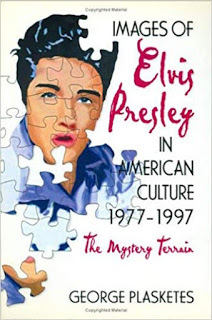
Your books on fandom - as well titles such as Elvis Culture (Doss); Images of Elvis Presley in American Culture (Plasketes); Elvis AfterElvis The Posthumous Career of A Living Legend (Rodman); G raceland: Going Home with Elvis (Marling); InSearch of Elvis (Chadwick); Dead Elvis (Marcus); and A Sociological Portrait (Leasman) - offer a broad variety of aspects to and perspectives on how Elvis is perceived and should be viewed in the context of academic analysis.
Regarding the second issue, Elvis fans (through fan clubs) have a rich history in raising money for charities and other worthwhile causes. It would be interesting to compare these efforts in relation to similar undertakings by fans of other celebrities. The findings also may be instructive in informing the issue of a shared morality or charter among Elvis fans.
You are a very avid Elvis reader. Can you tell me about that – do you see that as part of or a separate thing to your music fandom? How do they work together? By what criteria do you judge outstanding additions to the Elvis library?
I have always been a reader – in my youth I devoured adventure and science fiction novels such as Robinson Crusoe, Black Beauty, Tom Sawyer, and Journey to the Centre of the Earth. By my late primary school and early teen years, when I was expected to read often dense and slow moving books for high school – think Bleak House by Dickens, my tastes diversified and reading pulp fiction and film/television related books became a favourite pastime. I read all of Ian Fleming’s James Bond novels, found pleasure in many of Whitman Publishing’s television related releases such as The Man From U.N.C.L.E., Circus Boy, Lassie, Spin and Marty and even its series of books targeted at girls, particularly the Donna Parker and Annette series, the latter of Mickey Mouse Club fame and who I had a big crush on as an eight year old. The Whitman books had a generally formulaic but engaging narrative style that appealed to both sexes.
Those genres were a welcome relief from the more complex and less adventurous books dominating school curriculum. I was more interested in exciting adventures that took me away to exotic places far from the humdrum of school lessons.
In relation to my Elvis reading I have quite eclectic musical and literary tastes so I can often find pleasure or things of value in publications others may find not as interesting. I don’t get to read as often as I would like these days. Work is often busy, I am employed in a policy area with the Australian Government, and other interests have increasingly encroached on my time for ‘things Elvis.’ I have many Elvis books I’ve only skimmed though and I expect when I retire I will have time to properly explore them.
When I read an Elvis book I am usually interested in either refreshing my knowledge and understanding of the Elvis story or otherwise looking for something new or something that has historical significance.
I have been an advocate for books written by Darrin Lee Memmer. Some have taken exception to this claiming Memmer’s books are biased and challenged his often controversial conclusions. Personally, I find the books stimulating and a much needed counterpoint to the somewhat tiresome ‘generally accepted’ stories published in most new Elvis books.
I don’t agree with everything Memmer has written or concluded, but I do appreciate his research and often fresh perspective on his subject matter. In particular, some of his most recent books have added significant historical records of ‘things Elvis’ through word-for-word interview transcripts and in relation to the death of Elvis, the author accessed official documents archived in the University of Memphis. These records included fascinating material from the Jerry Hopkins archive and the actual police, medical examiner and hospital reports from August 1977 and transcripts of the official interviews with the paramedics and doctors.
But getting back to a core of your question, to me the intertwining of my appreciation of Elvis’ music and deep interest in books written about him is a complementary thing, although I have to admit I listen to much less Elvis music after nearly 50 years as a fan compared to the number of Elvis related books I regularly read.
What do you think Elvis’s interests in reading and/or film viewing said about him as a person?
By all accounts (and his personal library) Elvis had a voracious appetite for reading. While Elvis may not have been well educated in the formal sense, he was certainly well read and knowledgeable on many subjects. In a sense Elvis was, like many others, ‘self-educated,’ had an inquiring mind, and could converse on a wide range of subjects.
In his younger days he was an avid reader of comics, his favourite being Captain Marvel Jr (with his cape!) and western novels. In his adult years his personal library was an eclectic collection comprising books on American and British politics, history, war, guns, and a range of sports including martial arts. As most fans know, he also had a substantial collection of spiritual/religious and metaphysical books.

One of Elvis’ favourite books was The Impersonal Life - he was so taken with this book he bought bulk copies and gave them away to his family, friends and other people he met.
He certainly wasn’t “tsundoku” as the Japanese would say - acquiring reading materials, but letting them pile up without looking at them.
Given the breadth of Elvis’ interests and reading I think it is fair to say that he was a person interested in the world and interested in bettering himself as a human being.
What widely accepted stories about Elvis do you think are false?
The first story is the recurring theme that ‘Elvis was racist.’ The theme largely arises for two reasons: the view that Elvis ‘stole’ or ‘appropriated’ Black American (race) music without properly repaying his dues to that community. The second reason is the long discredited article in Sepia magazine that claimed Elvis said “the only thing Negroes can do for me is buy my records and shine my shoes.” The theme has recently resurfaced due to Eugene Jarecki’s documentary film, The King, which compares the current state of America to Elvis’ demise and is currently screening in American cinemas.
Two articles (here and here) provide a reasonable overview and debunking of the issue.
A second theme is that Elvis was not well educated. This issue regularly appears in online commentaries, on TV, and in scholarly articles. While the claim may be true in a formal academic sense, as discussed in my previous answer, when we consider how ‘well read’ Elvis was, and the breadth of knowledge he had on a wide variety of topics from politics to history and spirituality, it is untrue. Elvis became self-taught and could hold intelligent conversations on many different subjects. In any case, the theme is, by nature, value laden.
The third theme is that Elvis didn’t die on August 16, 1977 and faked his own death. I briefly touched on this in an earlier question. That a national survey in the US in the 1980s identified that more than half of the American population thought Elvis was still alive may surprise some people, but reflects the strength of the idea in its heyday. The theory once sold millions of books, generated more than a dozen different newsletters, many online discussion groups and countless mass media articles.
Today, there are only a handful of websites still promoting the theory and there is at least one Facebook page, but otherwise it seems most people have now accepted Elvis did die in 1977. For those who still believe Elvis didn’t die in 1977, I recommend they read True Disbelievers: The Elvis Contagion by Professors R. Serge Denisoff and George Plasketes.
Do you think the people closest to Elvis have been straight with fans about what he was like? To what extent do you think people like Joe Esposito have slanted or even made up stories? How can we discern what’s true out there?
First, let me say the Elvis world has always been full of fanciful stories.
I do understand the motivation for those who were close to Elvis to write books. There is a high level of demand for these releases, albeit on a lesser scale than around 1987, which seems to have been the peak for Elvis-related book sales. And people have to make a living. Several of Elvis’ Memphis Mafia only knew working for Elvis and found it very hard after he died. Only a few, for instance Joe Esposito and Jerry Schilling, had a career they could move to after Elvis’ death.
I have had the great pleasure of meeting and/or interviewing many of Elvis’ inner circle, including Vester Presley, David Stanley, Joe Esposito, Jerry Schilling, Charlie Hodge, Lamar Fike, Marty Lacker, George Klein and Dr Nick. They were all great people to talk to, and usually they presented a very positive view of Elvis. That is often quite a natural thing to do in relation to people we are, or have been particularly close to.
Undoubtedly, a few people were very adept at changing the subject if they were asked a difficult question. Others were/are very adept at repeating the corporate line strategically promoted by Elvis Presley Enterprises.
Have any of those close to Elvis made up stories? Pragmatically, one would expect some would have, as we all know people who do make up or embellish stories. In fact, surely we are all guilty of this at times.
In the case of Elvis the situation is muddied by the fact the media will pay for interviews that ‘sell,’ ie. they need a juicy piece of information to attract readers or viewers. This can be attractive to those who may be struggling financially.
Separating truth from embellishment can be difficult. Consider for example the different accounts of the same incident(s) in Elvis’ life, as recalled by Billy Smith, Marty Lacker and Lamar Fike in Alanna Nash’s great book, Elvis Aaron Presley: Revelations from the Memphis Mafia .
In a world that is ever increasing in complexity and shades of grey, it is wise to consider the possibility of falseness and critically assess claims by asking questions and reading/researching widely in order to improve one’s chance of finding the truth.
Priscilla Presley and Jerry Schilling now seem to be some of the chief curators of Elvis’s image. What did you think of their HBO documentary, Elvis Presley: The Searcher, in terms of the way it portrayed its subject?
Generally, Elvis Presley: The Searcher was an excellent two-part documentary which examined the Elvis Presley story with an emphasis on his musical influences and music.
It was somewhat let down by the involvement of Priscilla Presley and Jerry Schilling as Executive Producers as it meant the viewer received a sanitized version of Elvis’ life. For instance, his declining health and over-dependence on drugs in his final years was glossed over. I understand the motivation from a marketing perspective, but from a historical perspective it is disappointing that a full and proper account of the Elvis Presley story was not expressed. In my opinion the documentary was a rare opportunity sorely missed.
I have a few Elvis mysteries you might be able to help with… To your knowledge: Did Elvis play on Roy Orbison’s Odessa, Texas, TV show in the 1950s? Did William Faulkner really write to him?
That Elvis appeared on the Roy Orbison Television Show is one of those myths that periodically crop up in the Elvis world, in blogs and on fan forums. I am sorry to have to disappoint, but the story is just a myth. EIN published a detailed article on the issue by noted Elvis researcher, Shane Brown, which can be found here.
The William Faulkner issue is interesting, and one I can’t answer. That Faulkner came from a privileged, well-educated upper class background while Elvis came from one which was working class suggests there should have been a wide chasm between them in socially conservative 1950s’ America. However, when Elvis broke nationally in the US, Faulkner, nearing 60, may have observed a shared sense of rebelliousness with Elvis. While I personally don’t think Faulkner would have written to Elvis, it’s not beyond the realms of possibility, and like the claimed telephone conversations between Elvis and opera icon, Mario Lanza, it makes for a very good story which is yet to be substantiated by ‘hard evidence.’
On the subject of Elvis and Faulkner, Professor Joel Williamson in his excellent and controversial biographic study, Elvis Presley: A Southern Life (Oxford University Press, 2015) noted that Elvis and Faulkner were born within seventy-five miles of each other in north-eastern Mississippi. He posited that perhaps Sam Phillips and William Faulkner who both spent time in the Gartley-Ramsey Hospital and who both “struggled with racial and class orthodoxies in their native South, sat in rocking chairs on the broad front porch of the Gartley-Ramsey [Hospital], watching Elvis Presley, the shambling teenager, making his less-than-eager way down Jackson from his home in the courts to Humes High.”
I find Williamson’s thought to be an interesting one.
What Elvis mysteries do you think are left to solve?
One could proffer the view thatwhat mysteries about Elvis are left to be solved might better be left unsolved. Once the mystery is gone interest wanes.
Issues that spring to mind are Elvis as an agent of cultural change/social transformation and the power of Elvis fans to come together to aid those in need. These important issues are often not given adequate recognition. I discussed them earlier in our interview and it is interesting that was in the context of issues existing scholarship/academia has underplayed. One could posit that there is a correlation between them remaining unsolved and that academia has underplayed them.
Thanks, Nigel, for a fascinating interview.
This is the third and final part of a three part interview. Click for part one and part two...
You may be unusual as a fan for taking an active interest in the few academic debates around Elvis. The government asks us to justify our research on the basis of behavioural change in the real world. Is there anything you have read in my work that has caused you to change what you do at EIN?
That is an interesting question and not one I’ve previously considered.
I think the value of academic commentary such as yours is that it provides us with a better understanding of the dynamics surrounding acceptance/non- acceptance of Elvis and how ‘connection to Elvis and other fans’ operates on a subliminal level. In this sense it necessarily informs at least some of our articles and commentary.
For example, in your book, Understanding Fandom , you address the issue of whether Elvis fandom was or is religious practice and enlighten the reader to the relevance of Emile Durkheim’s study of the social ecology of Australian clans engaged in totemic religion; the function of the division between the secular and the sacred in society; and as mentioned earlier Durkheim’s concept of ‘effervescence,’ where crowd members (read ‘Elvis fans at Graceland’) experience is so strong that they subconsciously recognise their shared connection.
Also, your work is appreciated by many people as it dispels the notion that ‘fans’ are an overly obsessed group when in fact there is only a small proportion of fans who are obsessive, and in the context of changes in media technology and production, fandom has become a central mode of consumption for people with a shared interest or passion.
In your view, what aspects of the Elvis phenomenon has existing scholarship underplayed or missed out on?
What an interesting question. The only issues that spring to mind are Elvis as an agent of social transformation and the power of Elvis fans to come together to aid those in need, are often not given adequate recognition.
In the case of Elvis’ socio-cultural impact, a number of academics have argued the case but generally it seems to be an understated and under-appreciated issue by many academics and music journalists, although this is slowly changing. In my opinion, it contrasts starkly with academic and music journalism discourse around the Beatles and the social change they ushered in.
Academia has published (and I suspect will continue to publish) many thought provoking volumes which educate, challenge and position the Elvis story in an objective, rather than subjective, framework involving rigorous and analytical consideration.

Your books on fandom - as well titles such as Elvis Culture (Doss); Images of Elvis Presley in American Culture (Plasketes); Elvis AfterElvis The Posthumous Career of A Living Legend (Rodman); G raceland: Going Home with Elvis (Marling); InSearch of Elvis (Chadwick); Dead Elvis (Marcus); and A Sociological Portrait (Leasman) - offer a broad variety of aspects to and perspectives on how Elvis is perceived and should be viewed in the context of academic analysis.
Regarding the second issue, Elvis fans (through fan clubs) have a rich history in raising money for charities and other worthwhile causes. It would be interesting to compare these efforts in relation to similar undertakings by fans of other celebrities. The findings also may be instructive in informing the issue of a shared morality or charter among Elvis fans.
You are a very avid Elvis reader. Can you tell me about that – do you see that as part of or a separate thing to your music fandom? How do they work together? By what criteria do you judge outstanding additions to the Elvis library?
I have always been a reader – in my youth I devoured adventure and science fiction novels such as Robinson Crusoe, Black Beauty, Tom Sawyer, and Journey to the Centre of the Earth. By my late primary school and early teen years, when I was expected to read often dense and slow moving books for high school – think Bleak House by Dickens, my tastes diversified and reading pulp fiction and film/television related books became a favourite pastime. I read all of Ian Fleming’s James Bond novels, found pleasure in many of Whitman Publishing’s television related releases such as The Man From U.N.C.L.E., Circus Boy, Lassie, Spin and Marty and even its series of books targeted at girls, particularly the Donna Parker and Annette series, the latter of Mickey Mouse Club fame and who I had a big crush on as an eight year old. The Whitman books had a generally formulaic but engaging narrative style that appealed to both sexes.
Those genres were a welcome relief from the more complex and less adventurous books dominating school curriculum. I was more interested in exciting adventures that took me away to exotic places far from the humdrum of school lessons.
In relation to my Elvis reading I have quite eclectic musical and literary tastes so I can often find pleasure or things of value in publications others may find not as interesting. I don’t get to read as often as I would like these days. Work is often busy, I am employed in a policy area with the Australian Government, and other interests have increasingly encroached on my time for ‘things Elvis.’ I have many Elvis books I’ve only skimmed though and I expect when I retire I will have time to properly explore them.
When I read an Elvis book I am usually interested in either refreshing my knowledge and understanding of the Elvis story or otherwise looking for something new or something that has historical significance.
I have been an advocate for books written by Darrin Lee Memmer. Some have taken exception to this claiming Memmer’s books are biased and challenged his often controversial conclusions. Personally, I find the books stimulating and a much needed counterpoint to the somewhat tiresome ‘generally accepted’ stories published in most new Elvis books.
I don’t agree with everything Memmer has written or concluded, but I do appreciate his research and often fresh perspective on his subject matter. In particular, some of his most recent books have added significant historical records of ‘things Elvis’ through word-for-word interview transcripts and in relation to the death of Elvis, the author accessed official documents archived in the University of Memphis. These records included fascinating material from the Jerry Hopkins archive and the actual police, medical examiner and hospital reports from August 1977 and transcripts of the official interviews with the paramedics and doctors.
But getting back to a core of your question, to me the intertwining of my appreciation of Elvis’ music and deep interest in books written about him is a complementary thing, although I have to admit I listen to much less Elvis music after nearly 50 years as a fan compared to the number of Elvis related books I regularly read.
What do you think Elvis’s interests in reading and/or film viewing said about him as a person?
By all accounts (and his personal library) Elvis had a voracious appetite for reading. While Elvis may not have been well educated in the formal sense, he was certainly well read and knowledgeable on many subjects. In a sense Elvis was, like many others, ‘self-educated,’ had an inquiring mind, and could converse on a wide range of subjects.
In his younger days he was an avid reader of comics, his favourite being Captain Marvel Jr (with his cape!) and western novels. In his adult years his personal library was an eclectic collection comprising books on American and British politics, history, war, guns, and a range of sports including martial arts. As most fans know, he also had a substantial collection of spiritual/religious and metaphysical books.

One of Elvis’ favourite books was The Impersonal Life - he was so taken with this book he bought bulk copies and gave them away to his family, friends and other people he met.
He certainly wasn’t “tsundoku” as the Japanese would say - acquiring reading materials, but letting them pile up without looking at them.
Given the breadth of Elvis’ interests and reading I think it is fair to say that he was a person interested in the world and interested in bettering himself as a human being.
What widely accepted stories about Elvis do you think are false?
The first story is the recurring theme that ‘Elvis was racist.’ The theme largely arises for two reasons: the view that Elvis ‘stole’ or ‘appropriated’ Black American (race) music without properly repaying his dues to that community. The second reason is the long discredited article in Sepia magazine that claimed Elvis said “the only thing Negroes can do for me is buy my records and shine my shoes.” The theme has recently resurfaced due to Eugene Jarecki’s documentary film, The King, which compares the current state of America to Elvis’ demise and is currently screening in American cinemas.
Two articles (here and here) provide a reasonable overview and debunking of the issue.
A second theme is that Elvis was not well educated. This issue regularly appears in online commentaries, on TV, and in scholarly articles. While the claim may be true in a formal academic sense, as discussed in my previous answer, when we consider how ‘well read’ Elvis was, and the breadth of knowledge he had on a wide variety of topics from politics to history and spirituality, it is untrue. Elvis became self-taught and could hold intelligent conversations on many different subjects. In any case, the theme is, by nature, value laden.
The third theme is that Elvis didn’t die on August 16, 1977 and faked his own death. I briefly touched on this in an earlier question. That a national survey in the US in the 1980s identified that more than half of the American population thought Elvis was still alive may surprise some people, but reflects the strength of the idea in its heyday. The theory once sold millions of books, generated more than a dozen different newsletters, many online discussion groups and countless mass media articles.
Today, there are only a handful of websites still promoting the theory and there is at least one Facebook page, but otherwise it seems most people have now accepted Elvis did die in 1977. For those who still believe Elvis didn’t die in 1977, I recommend they read True Disbelievers: The Elvis Contagion by Professors R. Serge Denisoff and George Plasketes.
Do you think the people closest to Elvis have been straight with fans about what he was like? To what extent do you think people like Joe Esposito have slanted or even made up stories? How can we discern what’s true out there?
First, let me say the Elvis world has always been full of fanciful stories.
I do understand the motivation for those who were close to Elvis to write books. There is a high level of demand for these releases, albeit on a lesser scale than around 1987, which seems to have been the peak for Elvis-related book sales. And people have to make a living. Several of Elvis’ Memphis Mafia only knew working for Elvis and found it very hard after he died. Only a few, for instance Joe Esposito and Jerry Schilling, had a career they could move to after Elvis’ death.
I have had the great pleasure of meeting and/or interviewing many of Elvis’ inner circle, including Vester Presley, David Stanley, Joe Esposito, Jerry Schilling, Charlie Hodge, Lamar Fike, Marty Lacker, George Klein and Dr Nick. They were all great people to talk to, and usually they presented a very positive view of Elvis. That is often quite a natural thing to do in relation to people we are, or have been particularly close to.
Undoubtedly, a few people were very adept at changing the subject if they were asked a difficult question. Others were/are very adept at repeating the corporate line strategically promoted by Elvis Presley Enterprises.
Have any of those close to Elvis made up stories? Pragmatically, one would expect some would have, as we all know people who do make up or embellish stories. In fact, surely we are all guilty of this at times.
In the case of Elvis the situation is muddied by the fact the media will pay for interviews that ‘sell,’ ie. they need a juicy piece of information to attract readers or viewers. This can be attractive to those who may be struggling financially.
Separating truth from embellishment can be difficult. Consider for example the different accounts of the same incident(s) in Elvis’ life, as recalled by Billy Smith, Marty Lacker and Lamar Fike in Alanna Nash’s great book, Elvis Aaron Presley: Revelations from the Memphis Mafia .
In a world that is ever increasing in complexity and shades of grey, it is wise to consider the possibility of falseness and critically assess claims by asking questions and reading/researching widely in order to improve one’s chance of finding the truth.
Priscilla Presley and Jerry Schilling now seem to be some of the chief curators of Elvis’s image. What did you think of their HBO documentary, Elvis Presley: The Searcher, in terms of the way it portrayed its subject?
Generally, Elvis Presley: The Searcher was an excellent two-part documentary which examined the Elvis Presley story with an emphasis on his musical influences and music.
It was somewhat let down by the involvement of Priscilla Presley and Jerry Schilling as Executive Producers as it meant the viewer received a sanitized version of Elvis’ life. For instance, his declining health and over-dependence on drugs in his final years was glossed over. I understand the motivation from a marketing perspective, but from a historical perspective it is disappointing that a full and proper account of the Elvis Presley story was not expressed. In my opinion the documentary was a rare opportunity sorely missed.
I have a few Elvis mysteries you might be able to help with… To your knowledge: Did Elvis play on Roy Orbison’s Odessa, Texas, TV show in the 1950s? Did William Faulkner really write to him?
That Elvis appeared on the Roy Orbison Television Show is one of those myths that periodically crop up in the Elvis world, in blogs and on fan forums. I am sorry to have to disappoint, but the story is just a myth. EIN published a detailed article on the issue by noted Elvis researcher, Shane Brown, which can be found here.
The William Faulkner issue is interesting, and one I can’t answer. That Faulkner came from a privileged, well-educated upper class background while Elvis came from one which was working class suggests there should have been a wide chasm between them in socially conservative 1950s’ America. However, when Elvis broke nationally in the US, Faulkner, nearing 60, may have observed a shared sense of rebelliousness with Elvis. While I personally don’t think Faulkner would have written to Elvis, it’s not beyond the realms of possibility, and like the claimed telephone conversations between Elvis and opera icon, Mario Lanza, it makes for a very good story which is yet to be substantiated by ‘hard evidence.’
On the subject of Elvis and Faulkner, Professor Joel Williamson in his excellent and controversial biographic study, Elvis Presley: A Southern Life (Oxford University Press, 2015) noted that Elvis and Faulkner were born within seventy-five miles of each other in north-eastern Mississippi. He posited that perhaps Sam Phillips and William Faulkner who both spent time in the Gartley-Ramsey Hospital and who both “struggled with racial and class orthodoxies in their native South, sat in rocking chairs on the broad front porch of the Gartley-Ramsey [Hospital], watching Elvis Presley, the shambling teenager, making his less-than-eager way down Jackson from his home in the courts to Humes High.”
I find Williamson’s thought to be an interesting one.
What Elvis mysteries do you think are left to solve?
One could proffer the view thatwhat mysteries about Elvis are left to be solved might better be left unsolved. Once the mystery is gone interest wanes.
Issues that spring to mind are Elvis as an agent of cultural change/social transformation and the power of Elvis fans to come together to aid those in need. These important issues are often not given adequate recognition. I discussed them earlier in our interview and it is interesting that was in the context of issues existing scholarship/academia has underplayed. One could posit that there is a correlation between them remaining unsolved and that academia has underplayed them.
Thanks, Nigel, for a fascinating interview.
Developments in Elvis Fan Culture: An Interview with Nigel Patterson (part 2)
Nigel Patterson works for the Australian government and has been a dedicated Elvis fan since 1969. His participation in organized fan club activity in the Australian Capital Territory from the mid-1980s onwards led him to start the Elvis Information Network in 1999. It rapidly became a prominent and respected Elvis site. EIN recently reviewed my book Counting Down Elvis, so I took the opportunity to interview Nigel, hoping he might provide a fully-fledged ‘insider’ account of Elvis fan culture. He is living proof, however, of the idea that academia and Elvis fandom are somehow fully separated is a myth: Nigel once ran an academic course called ‘New Perspectives on Elvis Cinema’ at Canberra College. He has also kept up with academic writing on the Presley phenomenon.
This is the second part of a three part interview. Click for part one and part three...
Elvis fans form a living culture around a dead celebrity. Does that ever seem like a contradiction?
To some it will (laughs). However, throughout history people have worshipped their idols, both religious and profane. It appears to be a natural human reaction or need in at least some of us. It is interesting that in the expansive body of research and literature around Elvis as a religious symbol, consideration of the phenomenon as contradiction is largely, if not completely, missing.
An interesting aspect of the living culture around Elvis is its potency and longevity relative to interest in other dead celebrities. The Elvis experience resonates with greater power and at a higher frequency.
You have taken delight in describing Elvis not just as a person, but also as a social phenomenon. In your view, what does that phenomenon encompass? To put it otherwise, what are the boundaries around the phenomenon?
I am not sure if I’ve taken delight in recording Elvis’ ongoing impact in terms of it being a social and cultural phenomenon rather than a music phenomenon, but I agree I have strongly put this view on many occasions.
The concept of Elvis being essentially a ‘music’ phenomenon does not satisfy me. I have long thought he is clearly a socio-cultural phenomenon. Undoubtedly, his music is the core element which drives fandom around him but his impact goes way beyond his songs.
However, on any given day you will notice a direct or indirect reference to Elvis: from an ETA visiting your area, or the use of his catch-phrases like “Thank you, thank you very much” and “Elvis has left the building” (often amended to someone else, for example in the film Ant-Man, “Ant-Man has left the building”), to another star celebrating Elvis, for example teen idol Justin Bieber’s recent profile photo shoot, where his quiff and high collared shirt mirrored an early shot of Elvis. Another recent example is Miley Cyrus donning her white jumpsuit in a tribute to Elvis.
In the entertainment area, Elvis has been celebrated as the primary or important sub-theme in numerous films.
For example, Finding Graceland; 3000 Miles to Graceland; Elvis and the Colonel; Elvis and the Beauty Queen; Elvis and Me; Eddie Presley; Bye Bye Birdie; Sing Boy Sing; The Idolmaker; Elvis Meets Nixon; Bubba Ho Tep; Evil Elvis Christmas; Elvis’ Grave; Elvis Has Left the Building; Honeymoon In Vegas; Lilo & Stitch; It’s Only Make Believe; The Game Plan; The Woman Who Loved Elvis; Touched By Love; and Heartbreak Hotel.
There are also several Elvis-related projects, apparently either in or about to enter production - including films based on Peter Guralnick’s seminal two volume biography, Last Train to Memphis and Careless Love , and Alanna Nash’s fascinating book, Elvis and the Colonel .
In the television medium, a multitude of shows have been inspired which were heavily influenced by Elvis, or incorporated an Elvis-related episode. For example, Memphis Beat, Sun Records, Elvis, Miami Vice, Sliders, Alf, WKRP in Cincinnati, Designing Women, Quantum Leap, Johnny Bravo, Sledge Hammer, 7th Heaven, Las Vegas. The list is endless. In addition, variety programs will often feature performers dressed as Elvis (the white jumpsuit has particular resonance).
In the area of literature more books have been written about Elvis than any other 20th century celebrity, with those about his music a minority. Every aspect of Elvis’ life has been written about, from the expected to the unexpected - the latter including releases about Elvis and the John Deere tractor, Elvis as a spiritual guide, Elvis and UFOs, Elvis and the ‘John Crow’ sessions, and arguably the most unusual and intellectually challenging release, Christopher Byrnes Mathews’ three volume set, The Name Code: The God of Elvis . The Name Code, which comprises more than 1,600 pages, is the Elvis world’s Da Vinci Code, a meticulously researched and frustratingly confounding analysis of hidden messages not only Elvis’ full name but also those of American presidents, British prime ministers, names in the Bible, and more.
The ‘Elvis is alive’ conspiracy story occupies a library shelf in its own right, as do comic books, children’s books, art books and cookery books all based on Elvis. There are several hundred novels featuring the Elvis character (often portraying him as a private detective).
In the area of philosophy there are titles such as What Would Elvis Have Said? and What Would Elvis Do?
Pleasingly, the academic section in the Elvis library is also of formidable size, thanks to your work and that of professors Cantor, Doll, Doss, Denisoff, Plasketes, Chadwick, Rodman, and many others.
More than 30 books have been published about the Elvis tribute artist phenomenon, which itself is another symbol of how Elvis has transcended just the music. Certainly, when fans attend an Elvis tribute artist performance, they do so on one level to experience Elvis and his music, but the sheer number of ETAs in existence, which far outnumber the tribute artists for any other celebrity individual or group, suggests another dimension to their role. Consider the number who have their own fan clubs or who are invited to speak at civic functions.
On the subject of ETAs, I always find it interesting that in articles, fan club meetings, on Elvis forums, etc, many people are critical or dismissive. Such fans are singularly focused on what they see as the most important aspect of the Elvis Presley legacy, his music. They seem not to appreciate the ongoing cultural significance of others imitating him.
The widespread use of ‘Elvis’ in a book’s title, even when there is very minimal Elvis Presley content, is instructive of the power of his name in selling books.
Another example of the socio-cultural resonance of Elvis is the vast array of folk art. ‘Elvis on velvet’ is only a sub-genre of a much wider body of work. In Mexico, where they celebrate the Day of the Dead, there is a proliferation of Elvis-related full body skeletons, calaveras and the like. There is even a sixteenth century fresco in the Augustinian chapel at Malinalco, Mexico, which features the grim reaper standing beside a religious figure surprisingly resembling Elvis. Readers can make of this what they will.
The point is that Elvis fandom or worship, whatever people want to call it, has long shifted from being just about his music to a much broader and more complicated mosaic of what Elvis means within society and how that meaning is celebrated. Unlike the experience of fan worship for other celebrities, with one or two exceptions, there is a material case that the psychological and emotional forces at work in relation to many Elvis fans are much more dynamic and deep seated than exists in the case of most fans of other performers.
Do you think Elvis fans have an unwritten charter - a shared, collective ethics or morality – and if so what does it include, or is that an over simplification?
Mark, another excellent question. You are taking me back to my days studying psychology and philosophy at university. The terms ‘ethics’ and ‘morality’ have strong underlying assumptions and discourse around conduct. Your question concerns whether the latent or overt tension between the rules (‘ethics’) of society/group and what a person (individual) considers to be right or wrong (‘morals’) manifest itself positively or negatively in the Elvis context. I suspect opinions will be polarized.
From my perspective, I think you could easily argue there was generally a ‘collective understanding’ or ‘charter’ in the early days of Elvis’ popularity. At that ‘pre-Internet’ time Elvis was the new idol and fans were joined together by their shared reflective enjoyment of his music and career, and life was not as complicated as it is today. I need to qualify my comment about that shared enjoyment: the nature of Elvis fandom meant that it was shared in the context of ‘local’ gatherings of fans rather than in a broader sense, even though the emotional and psychological experience was similar.
Fast forwarding to today, there is another dimension, as fans can share their enjoyment as part of their ‘specific Elvis interest group’ either in person or over the Internet, and for some the experience is as part of the group of fans who make the annual pilgrimage to Graceland for Elvis Week.
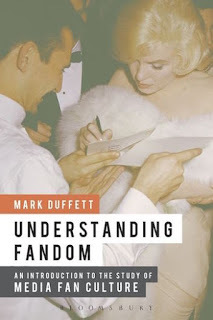
As you draw attention to in your fascinating book, Understanding Fandom , fans congregating together often experience a subconsciously recognized, shared connection, one that Émile Durkheim described as ‘effervescence’ (I hope I have described that correctly).
However, as happens with other things that are new or enjoyed by many, over time there is a maturing and changing of relationships – a function of the group life cycle. In many cases, the self-interest(s) of the individual start to percolate in competition with the group or collective interest(s). The ‘honeymoon period’ wears off and the powerful psychological drivers of ego and need for control surface causing tension between people.
The operation of locally based Elvis fan clubs well illustrates the issue. While people initially work together with a common aim, when the ‘honeymoon period’ ends, not unusually there will be different views on what direction the club should take, resulting in a splintering of interests and often the formation of a competing club in the same area. The “life cycle” is such that clubs can operate in competition with each other until membership numbers dwindle and/or the personalities driving the club retire or move on.
The experience since 1956 around the establishment of centrally run Elvis fan clubs reinforces an aspect of the issue from a different angle.
Attempts to establish a national fan club in America - there was an EPE (Colonel Parker) operated fan club in the mid-1950s – were unsuccessful as a long term proposition. Arguably, trying to get 50 plus State-based fan clubs to work together under one umbrella organization was ‘too big an ask.’
A centrally run (controlled) fan club worked in the UK because the tyranny of distance was not such a factor and Albert Hand had the foresight to establish and nurture fan interest from the beginning. The Hand organization was adept at satisfying fan needs for information, images and regular communion with other like-minded people.
Of course, in 2018 the UK has other very active Elvis fan clubs and organizations besides the Todd Slaughter run British Fan Club, the ‘competition’ largely a result of the ‘global connection’ offered by the Internet.
Timing is also an important consideration. In the late 1990s Sony Australia floated the idea with EIN of a national fan club in order to focus its marketing directly at fans, but it was agreed that the time was long gone for such an arrangement, with the major Aussie fan clubs well entrenched in their regions and fan interest not as potent as it once had been. Instead, a Coalition of Australian Elvis Fan Clubs was formed to provide regular ‘Elvis’ news from Sony to the major Australian fan clubs.
The difficulty in establishing and/or sustaining a centrally coordinated fan club network is hardly surprising. The experience reflects what happens across all areas of shared interest in all societies when ego and politics come to the fore, and fragmentation occurs with breakaway organizations, be they new political parties, sporting codes or competing Elvis related organizations.
While the Internet has allowed fans to ‘bond’ with fans in other countries it has also allowed them to gravitate to those fans with similar interests rather than to ‘generalist’ Elvis organizations, ie. the access to a worldwide community of Elvis fans has facilitated the growth of ‘splinter’ groups focused on a particular area of interest, as I touched on earlier - be it Elvis’ music, his films etc, and, dare I say it, even ETAs. This ‘splintering’ works against a cohesive shared purpose, although not against a commonly shared appreciation of the importance of Elvis.
What debates, in your view, divide Elvis fans the most?
An obvious issue is what is Elvis’ best musical and/or performing period.
Older fans, who grew up when Elvis broke nationally in the US and internationally tend to favour his Sun and early RCA recordings above his 1960s and 1970s output. Younger fans who discovered Elvis in the 1960s or 1970s tend to prefer recordings from those periods. Similarly, the young Elvis in his gold lame outfit, versus the more mature, white jump-suited Elvis period in the 1970s, both have their admirers.
Elvis’ films also elicit considerable debate among fans. Were they all inconsequential celluloid fluff or did some have merit?
Another issue was the ‘Elvis faked his death’ conspiracy theory which was especially prominent within fan circles and the mass media in the late 1980s to early 1990s. You were either a ‘believer’ or you thought it was all a load of nonsense. But, boy, did it sell books and records and generate vigorous debate among fans!
In years, now thankfully long past, academics aimed to preserve ‘objective’ critical distance from fans, while fans dismissed what they saw as an outside, over-intellectualization of ‘their’ subject and/or decried academic elitism. Academia, however, also formed a way to legitimate fan objects… Expanding your interests, you ran a module on Elvis’s feature films at Canberra College called New Perspectives on Elvis Cinema, which morphed into a distance learning course. Tell me about how that was received.
Mark, that was a fun time. The seed for the course was a weekend exploration of Flaming Star by the Australian National University (ANU) Film Group around 1980. Years later I read Professor Susan Doll’s ground breaking book, Understanding Elvis: Southern Roots vs Star Image, which analysed Elvis’ films in the framework of film theory, and it was this release that motivated me to consider Elvis’ much maligned films in a more even and analytical light.
The commonly expressed view that Elvis’ films were all the same, inconsequential and sub-standard, is far from the truth, with there being four distinct periods in his film canon, each with its own set of narrative structure, recurring themes, and political intonations. For instance, saying King Creole, Blue Hawaii and The Trouble with Girls are similar films is erroneous. They may have a few similarities - Elvis is in all of them and there are songs - but there are many important narrative and structural differences between them. Undoubtedly, various Elvis films from 1956 to 1969 have artistic and musical merit.
The course, which was completed over 8 or 12 weekly sessions, was run a number of times at the Canberra College during the 1990s and early noughties before being run solely online for a year or so. Most of the students were Elvis fans. I did have one or two who were students of film wanting to broaden their knowledge base. Sessions used basic film analysis concepts such as narrative structure, themes and texts, camera techniques, editing, and the role of incidental music to analyze how Elvis’ films were constructed, not only to present entertainment but also to influence the viewer. Of course the concepts were transferrable and participants could use them in deconstructing any film or television program.
New Perspectives on Elvis Cinema had the distinction of being the first subject offered by the Canberra College that was run both in class and online. I was asked to present the course again at the College but I felt that it was too narrow a subject to attract much more interest - at the time Canberra had a population of less than 300,000. In total, New Perspectives on Elvis Cinema was conducted six times and was well received. I still receive feedback about it and Elvis’ films today, and there are still calls for it to be offered again. Maybe… if I can find the time.
As far as my role was concerned I’d like to think I was perceived as an ‘aca-fan,’ but pragmatically I fit the ‘scholar-fan’ mould. As with any teacher, I had a knowledge and understanding beyond those who were participating in the course, and I think the students viewed me as such. Many of the concepts we discussed were quite ‘film technical’ and as such foreign to most students, and, in the case where students were familiar with a concept, it was often a ‘lay person’ understanding rather than a technical understanding. I never perceived that my role as an Elvis fan interfered with what I was teaching. I found that course participants were eager to learn and expand their appreciation of ‘Elvis film.’
Click for part three.
This is the second part of a three part interview. Click for part one and part three...
Elvis fans form a living culture around a dead celebrity. Does that ever seem like a contradiction?
To some it will (laughs). However, throughout history people have worshipped their idols, both religious and profane. It appears to be a natural human reaction or need in at least some of us. It is interesting that in the expansive body of research and literature around Elvis as a religious symbol, consideration of the phenomenon as contradiction is largely, if not completely, missing.
An interesting aspect of the living culture around Elvis is its potency and longevity relative to interest in other dead celebrities. The Elvis experience resonates with greater power and at a higher frequency.
You have taken delight in describing Elvis not just as a person, but also as a social phenomenon. In your view, what does that phenomenon encompass? To put it otherwise, what are the boundaries around the phenomenon?
I am not sure if I’ve taken delight in recording Elvis’ ongoing impact in terms of it being a social and cultural phenomenon rather than a music phenomenon, but I agree I have strongly put this view on many occasions.
The concept of Elvis being essentially a ‘music’ phenomenon does not satisfy me. I have long thought he is clearly a socio-cultural phenomenon. Undoubtedly, his music is the core element which drives fandom around him but his impact goes way beyond his songs.
However, on any given day you will notice a direct or indirect reference to Elvis: from an ETA visiting your area, or the use of his catch-phrases like “Thank you, thank you very much” and “Elvis has left the building” (often amended to someone else, for example in the film Ant-Man, “Ant-Man has left the building”), to another star celebrating Elvis, for example teen idol Justin Bieber’s recent profile photo shoot, where his quiff and high collared shirt mirrored an early shot of Elvis. Another recent example is Miley Cyrus donning her white jumpsuit in a tribute to Elvis.
In the entertainment area, Elvis has been celebrated as the primary or important sub-theme in numerous films.
For example, Finding Graceland; 3000 Miles to Graceland; Elvis and the Colonel; Elvis and the Beauty Queen; Elvis and Me; Eddie Presley; Bye Bye Birdie; Sing Boy Sing; The Idolmaker; Elvis Meets Nixon; Bubba Ho Tep; Evil Elvis Christmas; Elvis’ Grave; Elvis Has Left the Building; Honeymoon In Vegas; Lilo & Stitch; It’s Only Make Believe; The Game Plan; The Woman Who Loved Elvis; Touched By Love; and Heartbreak Hotel.
There are also several Elvis-related projects, apparently either in or about to enter production - including films based on Peter Guralnick’s seminal two volume biography, Last Train to Memphis and Careless Love , and Alanna Nash’s fascinating book, Elvis and the Colonel .
In the television medium, a multitude of shows have been inspired which were heavily influenced by Elvis, or incorporated an Elvis-related episode. For example, Memphis Beat, Sun Records, Elvis, Miami Vice, Sliders, Alf, WKRP in Cincinnati, Designing Women, Quantum Leap, Johnny Bravo, Sledge Hammer, 7th Heaven, Las Vegas. The list is endless. In addition, variety programs will often feature performers dressed as Elvis (the white jumpsuit has particular resonance).
In the area of literature more books have been written about Elvis than any other 20th century celebrity, with those about his music a minority. Every aspect of Elvis’ life has been written about, from the expected to the unexpected - the latter including releases about Elvis and the John Deere tractor, Elvis as a spiritual guide, Elvis and UFOs, Elvis and the ‘John Crow’ sessions, and arguably the most unusual and intellectually challenging release, Christopher Byrnes Mathews’ three volume set, The Name Code: The God of Elvis . The Name Code, which comprises more than 1,600 pages, is the Elvis world’s Da Vinci Code, a meticulously researched and frustratingly confounding analysis of hidden messages not only Elvis’ full name but also those of American presidents, British prime ministers, names in the Bible, and more.
The ‘Elvis is alive’ conspiracy story occupies a library shelf in its own right, as do comic books, children’s books, art books and cookery books all based on Elvis. There are several hundred novels featuring the Elvis character (often portraying him as a private detective).
In the area of philosophy there are titles such as What Would Elvis Have Said? and What Would Elvis Do?
Pleasingly, the academic section in the Elvis library is also of formidable size, thanks to your work and that of professors Cantor, Doll, Doss, Denisoff, Plasketes, Chadwick, Rodman, and many others.
More than 30 books have been published about the Elvis tribute artist phenomenon, which itself is another symbol of how Elvis has transcended just the music. Certainly, when fans attend an Elvis tribute artist performance, they do so on one level to experience Elvis and his music, but the sheer number of ETAs in existence, which far outnumber the tribute artists for any other celebrity individual or group, suggests another dimension to their role. Consider the number who have their own fan clubs or who are invited to speak at civic functions.
On the subject of ETAs, I always find it interesting that in articles, fan club meetings, on Elvis forums, etc, many people are critical or dismissive. Such fans are singularly focused on what they see as the most important aspect of the Elvis Presley legacy, his music. They seem not to appreciate the ongoing cultural significance of others imitating him.
The widespread use of ‘Elvis’ in a book’s title, even when there is very minimal Elvis Presley content, is instructive of the power of his name in selling books.
Another example of the socio-cultural resonance of Elvis is the vast array of folk art. ‘Elvis on velvet’ is only a sub-genre of a much wider body of work. In Mexico, where they celebrate the Day of the Dead, there is a proliferation of Elvis-related full body skeletons, calaveras and the like. There is even a sixteenth century fresco in the Augustinian chapel at Malinalco, Mexico, which features the grim reaper standing beside a religious figure surprisingly resembling Elvis. Readers can make of this what they will.
The point is that Elvis fandom or worship, whatever people want to call it, has long shifted from being just about his music to a much broader and more complicated mosaic of what Elvis means within society and how that meaning is celebrated. Unlike the experience of fan worship for other celebrities, with one or two exceptions, there is a material case that the psychological and emotional forces at work in relation to many Elvis fans are much more dynamic and deep seated than exists in the case of most fans of other performers.
Do you think Elvis fans have an unwritten charter - a shared, collective ethics or morality – and if so what does it include, or is that an over simplification?
Mark, another excellent question. You are taking me back to my days studying psychology and philosophy at university. The terms ‘ethics’ and ‘morality’ have strong underlying assumptions and discourse around conduct. Your question concerns whether the latent or overt tension between the rules (‘ethics’) of society/group and what a person (individual) considers to be right or wrong (‘morals’) manifest itself positively or negatively in the Elvis context. I suspect opinions will be polarized.
From my perspective, I think you could easily argue there was generally a ‘collective understanding’ or ‘charter’ in the early days of Elvis’ popularity. At that ‘pre-Internet’ time Elvis was the new idol and fans were joined together by their shared reflective enjoyment of his music and career, and life was not as complicated as it is today. I need to qualify my comment about that shared enjoyment: the nature of Elvis fandom meant that it was shared in the context of ‘local’ gatherings of fans rather than in a broader sense, even though the emotional and psychological experience was similar.
Fast forwarding to today, there is another dimension, as fans can share their enjoyment as part of their ‘specific Elvis interest group’ either in person or over the Internet, and for some the experience is as part of the group of fans who make the annual pilgrimage to Graceland for Elvis Week.
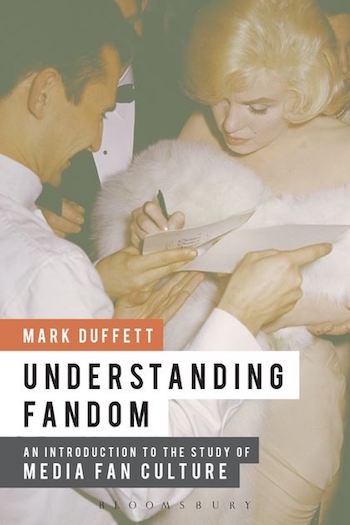
As you draw attention to in your fascinating book, Understanding Fandom , fans congregating together often experience a subconsciously recognized, shared connection, one that Émile Durkheim described as ‘effervescence’ (I hope I have described that correctly).
However, as happens with other things that are new or enjoyed by many, over time there is a maturing and changing of relationships – a function of the group life cycle. In many cases, the self-interest(s) of the individual start to percolate in competition with the group or collective interest(s). The ‘honeymoon period’ wears off and the powerful psychological drivers of ego and need for control surface causing tension between people.
The operation of locally based Elvis fan clubs well illustrates the issue. While people initially work together with a common aim, when the ‘honeymoon period’ ends, not unusually there will be different views on what direction the club should take, resulting in a splintering of interests and often the formation of a competing club in the same area. The “life cycle” is such that clubs can operate in competition with each other until membership numbers dwindle and/or the personalities driving the club retire or move on.
The experience since 1956 around the establishment of centrally run Elvis fan clubs reinforces an aspect of the issue from a different angle.
Attempts to establish a national fan club in America - there was an EPE (Colonel Parker) operated fan club in the mid-1950s – were unsuccessful as a long term proposition. Arguably, trying to get 50 plus State-based fan clubs to work together under one umbrella organization was ‘too big an ask.’
A centrally run (controlled) fan club worked in the UK because the tyranny of distance was not such a factor and Albert Hand had the foresight to establish and nurture fan interest from the beginning. The Hand organization was adept at satisfying fan needs for information, images and regular communion with other like-minded people.
Of course, in 2018 the UK has other very active Elvis fan clubs and organizations besides the Todd Slaughter run British Fan Club, the ‘competition’ largely a result of the ‘global connection’ offered by the Internet.
Timing is also an important consideration. In the late 1990s Sony Australia floated the idea with EIN of a national fan club in order to focus its marketing directly at fans, but it was agreed that the time was long gone for such an arrangement, with the major Aussie fan clubs well entrenched in their regions and fan interest not as potent as it once had been. Instead, a Coalition of Australian Elvis Fan Clubs was formed to provide regular ‘Elvis’ news from Sony to the major Australian fan clubs.
The difficulty in establishing and/or sustaining a centrally coordinated fan club network is hardly surprising. The experience reflects what happens across all areas of shared interest in all societies when ego and politics come to the fore, and fragmentation occurs with breakaway organizations, be they new political parties, sporting codes or competing Elvis related organizations.
While the Internet has allowed fans to ‘bond’ with fans in other countries it has also allowed them to gravitate to those fans with similar interests rather than to ‘generalist’ Elvis organizations, ie. the access to a worldwide community of Elvis fans has facilitated the growth of ‘splinter’ groups focused on a particular area of interest, as I touched on earlier - be it Elvis’ music, his films etc, and, dare I say it, even ETAs. This ‘splintering’ works against a cohesive shared purpose, although not against a commonly shared appreciation of the importance of Elvis.
What debates, in your view, divide Elvis fans the most?
An obvious issue is what is Elvis’ best musical and/or performing period.
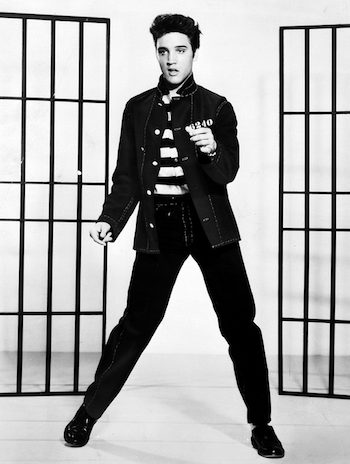
Older fans, who grew up when Elvis broke nationally in the US and internationally tend to favour his Sun and early RCA recordings above his 1960s and 1970s output. Younger fans who discovered Elvis in the 1960s or 1970s tend to prefer recordings from those periods. Similarly, the young Elvis in his gold lame outfit, versus the more mature, white jump-suited Elvis period in the 1970s, both have their admirers.
Elvis’ films also elicit considerable debate among fans. Were they all inconsequential celluloid fluff or did some have merit?
Another issue was the ‘Elvis faked his death’ conspiracy theory which was especially prominent within fan circles and the mass media in the late 1980s to early 1990s. You were either a ‘believer’ or you thought it was all a load of nonsense. But, boy, did it sell books and records and generate vigorous debate among fans!
In years, now thankfully long past, academics aimed to preserve ‘objective’ critical distance from fans, while fans dismissed what they saw as an outside, over-intellectualization of ‘their’ subject and/or decried academic elitism. Academia, however, also formed a way to legitimate fan objects… Expanding your interests, you ran a module on Elvis’s feature films at Canberra College called New Perspectives on Elvis Cinema, which morphed into a distance learning course. Tell me about how that was received.
Mark, that was a fun time. The seed for the course was a weekend exploration of Flaming Star by the Australian National University (ANU) Film Group around 1980. Years later I read Professor Susan Doll’s ground breaking book, Understanding Elvis: Southern Roots vs Star Image, which analysed Elvis’ films in the framework of film theory, and it was this release that motivated me to consider Elvis’ much maligned films in a more even and analytical light.
The commonly expressed view that Elvis’ films were all the same, inconsequential and sub-standard, is far from the truth, with there being four distinct periods in his film canon, each with its own set of narrative structure, recurring themes, and political intonations. For instance, saying King Creole, Blue Hawaii and The Trouble with Girls are similar films is erroneous. They may have a few similarities - Elvis is in all of them and there are songs - but there are many important narrative and structural differences between them. Undoubtedly, various Elvis films from 1956 to 1969 have artistic and musical merit.
The course, which was completed over 8 or 12 weekly sessions, was run a number of times at the Canberra College during the 1990s and early noughties before being run solely online for a year or so. Most of the students were Elvis fans. I did have one or two who were students of film wanting to broaden their knowledge base. Sessions used basic film analysis concepts such as narrative structure, themes and texts, camera techniques, editing, and the role of incidental music to analyze how Elvis’ films were constructed, not only to present entertainment but also to influence the viewer. Of course the concepts were transferrable and participants could use them in deconstructing any film or television program.
New Perspectives on Elvis Cinema had the distinction of being the first subject offered by the Canberra College that was run both in class and online. I was asked to present the course again at the College but I felt that it was too narrow a subject to attract much more interest - at the time Canberra had a population of less than 300,000. In total, New Perspectives on Elvis Cinema was conducted six times and was well received. I still receive feedback about it and Elvis’ films today, and there are still calls for it to be offered again. Maybe… if I can find the time.
As far as my role was concerned I’d like to think I was perceived as an ‘aca-fan,’ but pragmatically I fit the ‘scholar-fan’ mould. As with any teacher, I had a knowledge and understanding beyond those who were participating in the course, and I think the students viewed me as such. Many of the concepts we discussed were quite ‘film technical’ and as such foreign to most students, and, in the case where students were familiar with a concept, it was often a ‘lay person’ understanding rather than a technical understanding. I never perceived that my role as an Elvis fan interfered with what I was teaching. I found that course participants were eager to learn and expand their appreciation of ‘Elvis film.’
Click for part three.
Developments in Elvis Fan Culture: An Interview with Nigel Patterson (part 1)
Nigel Patterson works for the Australian government and has been a dedicated Elvis fan since 1969. His participation in organized fan club activity in the Australian Capital Territory from the mid-1980s onwards led him to start the Elvis Information Network in 1999. It rapidly became a prominent and respected Elvis site. EIN recently reviewed my book Counting Down Elvis, so I took the opportunity to interview Nigel, hoping he might provide a fully-fledged ‘insider’ account of Elvis fan culture. He is living proof, however, of the idea that academia and Elvis fandom are somehow fully separated is a myth: Nigel once ran an academic course called ‘New Perspectives on Elvis Cinema’ at Canberra College. He has also kept up with academic writing on the Presley phenomenon. You’ve been a fan since 1969.
This is the first part of a three part interview. Click for part two and part three...
Tell us more about Elvis fan culture in the 1970s. What was the fan world like back when Elvis was alive?
The Elvis world in the 1970s was very different to how it is today. With the easy communication and immediate availability of information offered by the Internet still decades away, fans had to wait weeks, if not months, for the latest Elvis news from overseas. Discussions around Elvis were generally localized within the myriad of Elvis fan clubs in each country. Clubs were active all around the world, in the US, UK, Australasia, Japan and South America. Many clubs had regular meetings and other activities and as is well known, Elvis fan clubs have always been at raising money for charities and other worthy causes. However, even within countries, the sharing of information between fan clubs was usually minimal and characterized by the odd phone call or ‘snail mail’ letter.
As far back as the mid-1950s the Colonel, quite astutely, had initiated contact with Elvis fan clubs in the US, and the large British fan club headed by Albert Hand (and following Albert’s death run by Todd Slaughter). Both Hand and Slaughter cultivated a strong and enduring relationship with the Colonel.
The British fan club model of a well administered central headquarters with branches (local clubs) scattered across the United Kingdom meant British fans were arguably the most informed of any fans in the world. Fans in other countries weren’t as fortunate: the Colonel’s office made contact with their fan clubs on an infrequent basis, and usually in response to an enquiry to Elvis and the Colonel.
The Colonel’s strategy regarding contact with fan clubs was generally the same throughout the 1960s and 1970s.
Strangely, England was the primary driver of fan club activities and distribution of Elvis related information in the 1960s and 1970s.
Apart from their strongly run UK wide fan club, British fans also benefited because Albert Hand operated the Heanor Record Centre which had lucrative publishing and merchandising divisions. Undoubtedly, the publishing arm allowed Hand to capitalize on the public’s interest in Elvis from the outset.
The publishing arm allowed Hand and then Slaughter to cost effectively release a series of different Elvis publications. The British fan club’s slick bi-monthly members magazine is now in its seventh decade of being published while Hand’s most famous publication, the pocket-sized Elvis Monthly (a veritable institution in the Elvis world), was available from local newsagents in the UK, Australia and several other countries for an impressive continuous 483 months (from 1960 to 2000).
By comparison, the Beatles Book (aka Beatles Monthly only managed 321 issues during its two stage run) while Elvis Monthly’s record was eventually broken a few years ago the by Doctor Who (magazine) which is now approaching its 530th issue.
Interestingly, when I spoke to Todd Slaughter about the demise of Elvis Monthly, he told me sales were still strong and it was the distributor’s desire for it to be in a larger format that sounded its death knell. Todd wanted to retain its pocket-size, while the distributor felt a larger size would work better on newsstands; I guess the thinking was it would be less likely to get hidden behind larger sized magazines.
Complementing Elvis Monthly was the British fan club’s popular Elvis Special , a hardcover book (except for its debut edition) that was published annually between 1960/61 and 1984/85. Hand and Slaughter also published a variety of one-off or semi-regular publications over the years including A Century of Elvis, The Elvis Presley Appreciation Society Handbook (several editions), Elvis The Man and His Music , Elvis A-Z and The Elvis They Dig.
The British Fan Club also published a glossy bi-monthly members magazine, occasional information bulletins and was instrumental in promoting Elvis throughout Great Britain and its colonies. It was also active in undertaking several campaigns attempting to bring Elvis to Britain.
Another very popular British based publication was the Worldwide Elvis News Service Weekly run by Rex Martin. Published in the 1970s Rex (who sadly passed away in February 2013) distributed his renowned newsletter to thousands of fans around the world. Its weekly publication (and sometimes semi-weekly when there was a surfeit of news, reviews, articles, etc, on offer) offered an immediacy that the monthly magazines lacked. The Worldwide Elvis News Service Weekly was the precursor to what fans now expect and enjoy thanks to the Internet. As many readers will know, Rex Martin was also a film buff and amassed an incredible collection of footage of Elvis ‘live’ on stage.
Elvis Monthly lacked widespread distribution in the US. Rocky Barra’s Strictly Elvis filled the void, albeit with a different tone and emphasis. First published in 1968, it was not associated with any fan club. Rocky and his network of contributors attended many of Elvis’ “live” performances in Las Vegas and on the road in the 1970s. Rocky himself saw Elvis in concert 68 times! He provided a well-produced magazine full of up-to-date news, reviews and topical articles.
Rocky informed me in one interview that the monthly distribution of Strictly Elvis was between 5,000 and 7,000 copies. He was approached at one point by a large American publisher which wanted to produce the magazine commercially and print 125,000 copies a month. Rocky decided to maintain editorial control of Strictly Elvis and keep it from being overrun by ads, but the offer signifies the high level of interest in Elvis at the time.
The triumvirate of Elvis Monthly, Worldwide Elvis News Service Weekly, and Strictly Elvis were the regular publications that fostered fan culture around Elvis, particularly in the first half of the decade. While fans were geographically separated and often deprived of news, these three major Elvis publications, together with the myriad of local fan club newsletters and activities, provided a sense of shared community. Strictly Elvis ceased publication in 1975, however, and the Elvis Worldwide News Service Weekly lasted only until late 1978.
Albert Hand, Todd Slaughter, Rex Martin and Rocky Barra are thus deservedly recognized as the key drivers of ‘things Elvis’ outside of Colonel Parker during the late 1960s and 1970s.
By the mid to late 1970s a number of organizations began operating in the US, distributing Elvis merchandise and unofficial material, such as bootleg albums. Paul Lichter’s Elvis Unique Record Club and Paul Dowling’s Worldwide Elvis became prominent players. Lichter also started publishing Elvis books with his 1970s releases Elvis: The Boy Who Dared To Rock and Elvis In Hollywood selling hundreds of thousands of copies.
In the 1970s we knew little about what was happening around Elvis in non-English speaking countries. South America was a virtual unknown and while we knew there were flourishing Elvis fan clubs and high quality record releases in Germany and Japan, the tyranny of distance, language and inefficient information channels limited what we knew.
What would you say have been the biggest landmarks in the culture of Elvis fandom over the years since 1977?
There are three events that stand out in my mind.
First, Priscilla Presley’s foresight to open Graceland to the public in 1982. This provided a focus and meeting place for fans to come together.

It facilitated an annual pilgrimage to Graceland, where for many, they could build and reaffirm friendships and share their memories and feelings about Elvis. In a sense this opened up fans to a broader experience as it was a shift from the more insular world of the local fan club and its particular culture of often ego and politics. Apart from safeguarding the costs of maintaining Graceland and its grounds, the opening of Graceland to the public also allowed Elvis Presley Enterprises to develop plans to build on Elvis’ legacy and enhance the experience for fans worldwide both through attractions at Graceland and an often mouth-watering (if occasionally tasteless) array of merchandise.
The second, and probably most important, event was the Internet. Its arrival ‘connected’ fans globally and provided timely and often more cost-effective access to friendship, news, information, foreign records, CDs, books, and so on. For the first time, fans could ‘share’ Elvis with others on a global stage ‘today rather than tomorrow or next month.’
The third event was Sony’s establishment of the Elvis collector’s label, Follow That Dream (FTD). For Sony it helped combat, but not eradicate, the ongoing release of Elvis bootleg material, not to mention a steady, virtually guaranteed, additional Elvis income stream, albeit on a smaller scale than the profits usually generated by global Elvis releases. For the fans, it offered access to a best quality alternate recording material, soundboard recordings of Elvis’ ‘live’ concerts and eventually high quality and well researched ‘coffee table’ book plus CD releases. All-in-all it helped increase interest in and discussion of Elvis’ music at a higher level than it would otherwise have been.
Was moving online a continuation or a watershed?
That is a very good question. My view is that moving online was a natural shift for Elvis fandom due to technological change. While a natural shift, it was also a watershed moment. As mentioned earlier, with one or two exceptions, historically, Elvis fandom was generally a geographically and communication restricted collection of local fan clubs. The advent of the Internet fundamentally changed this. Elvis fan clubs and Elvis fans now had access to the latest news and discussion without having to leave their homes or wait for the next fan club newsletter to arrive. This ‘new Elvis world order,’ with its introduction of Elvis discussion groups and forums, meant that more fans could become involved in issues, more fans could express themselves globally, and more fans could build friendships outside their local area. An outcome of the Internet was that fan clubs had to adapt to the ‘new Elvis world order’ or see their membership shrink.
Can you give us a brief overview of the scope, operation, history, and audience for the Elvis Information Network?
EIN had its genesis in a Canberra based fan club formed in 1986, the Elvis Presley Appreciation Society of the A.C.T. Before interest started to wane, the Society flourished for around five years as a ‘local’ fan club. In the mid-late 1990s, I renamed the club as the Elvis Information Network and prepared to take it online as the Internet started exploding.

In 1999, EIN was launched online and we quickly lived up to our middle name (“Information”) with authoritative and widely read news, articles, reviews and interviews on a broad range of ‘all things Elvis,’ including our surprisingly popular Conspiracy, Almost Elvis (ETA) and Odd Spot pages. EIN’s core continues to be first rate, balanced information and reviews on Elvis news, new releases and issues in the Elvis world.
Some of EIN’s highlights include the establishment with Sony Australia of the Coalition of Australian Elvis Fan Clubs in 1999, and coordinating the first Online Symposium of Elvis Aaron Presley, which published papers by academics, fan club officials and fans in 2003. The themes expressed in the symposium were diverse, eclectic and stimulating. Some were also provocative, dealing with issues from Elvis as racial and musical integrator, his role as a social transformer, and the worship of him as a religious figure.
Now in our 20th year online, EIN’s popularity continues to increase. Our ‘hits’ vary in number, between five and seven million each month, with major spikes in January (Elvis’ birthday celebration) and, especially, August (Elvis Week). We have readers in more than 20 countries and, based on the messages that we receive, they range from primary school age to over 90.
From almost two decades of the Network’s existence online, what have you discovered about Elvis’s fans that you didn’t already know?
That we’re all mad (only joking). I believe that thanks to the Internet the positive, collegiate and caring nature of most Elvis fans has been re-affirmed. Undoubtedly, contact with fans globally has also revealed a wide array of different, intriguing and sometimes baffling interests among Elvis fans – who would have thought (and I don’t mean this in a disparaging way) that there are some fans whose primary focus is on Elvis’ film co-stars, or in collecting Elvis buttons.
On the negative side, mirroring the experience in other of society and culture, the Internet has given rise, very unfortunately, to the baser/primeval inclinations of some fans who, usually under the cloak of anonymity provided by the Internet, engage in denigrating, bullying and trolling other fans they disagree with or, for some reason, dislike.
Of particular note here, is the infamous ‘Elvis underground’ which peaked in the early years of the Internet and was a place where death threats and the like were routinely expressed. It was incredible how posters could proclaim the virtues of the latest Elvis album release in one sentence and in the next spit forth nasty, vindictive vitriol. Thankfully, its once prolific message board network is now only a faint shadow of its former self.
Elsewhere you have made an articulate and critical case for taking Elvis’s feature films more seriously. Do you think that the movies were the best use of Elvis’s time in the 1960s?
I think this is a case of ‘with the benefit of hindsight.’ Arguably, the Colonel should not have tied Elvis to long term movie contracts. Had he not done this would have given Elvis greater flexibility in where his career went. There were a number of reasons for the long term contracts. We know the Colonel was an illegal immigrant to the US and was likely concerned that he may not be allowed to re-enter the country if Elvis toured overseas and the Colonel accompanied him.
My view is that given the Colonel’s contacts with influential people and his role in making Elvis one of America’s most profitable brands, he probably didn’t need to worry.
We also know that the Colonel realised the film medium allowed him to put Elvis in front of a worldwide audience in a timely and logistically effective way. Not surprisingly, Elvis’ ‘three pictures a year’ deal stifled him creatively and this was exacerbated by his inability to develop his acting in serious films.
In this respect, to a large extent Elvis was trapped by his ‘star image’ (aka typecasting) and a Hollywood marketing machine that had become increasingly sophisticated and profit driven. So, unlike Bing Crosby and Frank Sinatra before him - who proved that singers could be very good actors, with both winning an Academy Award for their acting - Elvis was generally constrained by an entertainment culture dominated by ‘star image’ (as were other stars, such as Rock Hudson and Dean Martin).
Crosby and Sinatra were able to move to serious acting roles in an era which had a different modus operandi, and in the case of Sinatra, also because his star was on the wane.
Undoubtedly, for Elvis touring outside the US would have been possible, but likely only sustainable for a number of years. If we are honest, in terms of his career, Elvis was a person who became bored with doing the same thing for any length of time. He needed fresh challenges. It is a great pity very lucrative offers to tour Britain, Australia and Japan were not taken up, not to mention what would have been a spectacular show: the $10 million offer by Saudi billionaires, Adnan and Essam Khashoggi, for Elvis to perform ‘live’ in front of the Giza Pyramid in Egypt. What a stunning backdrop that would have made!
Click here for part two.
This is the first part of a three part interview. Click for part two and part three...
Tell us more about Elvis fan culture in the 1970s. What was the fan world like back when Elvis was alive?
The Elvis world in the 1970s was very different to how it is today. With the easy communication and immediate availability of information offered by the Internet still decades away, fans had to wait weeks, if not months, for the latest Elvis news from overseas. Discussions around Elvis were generally localized within the myriad of Elvis fan clubs in each country. Clubs were active all around the world, in the US, UK, Australasia, Japan and South America. Many clubs had regular meetings and other activities and as is well known, Elvis fan clubs have always been at raising money for charities and other worthy causes. However, even within countries, the sharing of information between fan clubs was usually minimal and characterized by the odd phone call or ‘snail mail’ letter.
As far back as the mid-1950s the Colonel, quite astutely, had initiated contact with Elvis fan clubs in the US, and the large British fan club headed by Albert Hand (and following Albert’s death run by Todd Slaughter). Both Hand and Slaughter cultivated a strong and enduring relationship with the Colonel.
The British fan club model of a well administered central headquarters with branches (local clubs) scattered across the United Kingdom meant British fans were arguably the most informed of any fans in the world. Fans in other countries weren’t as fortunate: the Colonel’s office made contact with their fan clubs on an infrequent basis, and usually in response to an enquiry to Elvis and the Colonel.
The Colonel’s strategy regarding contact with fan clubs was generally the same throughout the 1960s and 1970s.
Strangely, England was the primary driver of fan club activities and distribution of Elvis related information in the 1960s and 1970s.
Apart from their strongly run UK wide fan club, British fans also benefited because Albert Hand operated the Heanor Record Centre which had lucrative publishing and merchandising divisions. Undoubtedly, the publishing arm allowed Hand to capitalize on the public’s interest in Elvis from the outset.
The publishing arm allowed Hand and then Slaughter to cost effectively release a series of different Elvis publications. The British fan club’s slick bi-monthly members magazine is now in its seventh decade of being published while Hand’s most famous publication, the pocket-sized Elvis Monthly (a veritable institution in the Elvis world), was available from local newsagents in the UK, Australia and several other countries for an impressive continuous 483 months (from 1960 to 2000).
By comparison, the Beatles Book (aka Beatles Monthly only managed 321 issues during its two stage run) while Elvis Monthly’s record was eventually broken a few years ago the by Doctor Who (magazine) which is now approaching its 530th issue.
Interestingly, when I spoke to Todd Slaughter about the demise of Elvis Monthly, he told me sales were still strong and it was the distributor’s desire for it to be in a larger format that sounded its death knell. Todd wanted to retain its pocket-size, while the distributor felt a larger size would work better on newsstands; I guess the thinking was it would be less likely to get hidden behind larger sized magazines.
Complementing Elvis Monthly was the British fan club’s popular Elvis Special , a hardcover book (except for its debut edition) that was published annually between 1960/61 and 1984/85. Hand and Slaughter also published a variety of one-off or semi-regular publications over the years including A Century of Elvis, The Elvis Presley Appreciation Society Handbook (several editions), Elvis The Man and His Music , Elvis A-Z and The Elvis They Dig.
The British Fan Club also published a glossy bi-monthly members magazine, occasional information bulletins and was instrumental in promoting Elvis throughout Great Britain and its colonies. It was also active in undertaking several campaigns attempting to bring Elvis to Britain.
Another very popular British based publication was the Worldwide Elvis News Service Weekly run by Rex Martin. Published in the 1970s Rex (who sadly passed away in February 2013) distributed his renowned newsletter to thousands of fans around the world. Its weekly publication (and sometimes semi-weekly when there was a surfeit of news, reviews, articles, etc, on offer) offered an immediacy that the monthly magazines lacked. The Worldwide Elvis News Service Weekly was the precursor to what fans now expect and enjoy thanks to the Internet. As many readers will know, Rex Martin was also a film buff and amassed an incredible collection of footage of Elvis ‘live’ on stage.
Elvis Monthly lacked widespread distribution in the US. Rocky Barra’s Strictly Elvis filled the void, albeit with a different tone and emphasis. First published in 1968, it was not associated with any fan club. Rocky and his network of contributors attended many of Elvis’ “live” performances in Las Vegas and on the road in the 1970s. Rocky himself saw Elvis in concert 68 times! He provided a well-produced magazine full of up-to-date news, reviews and topical articles.
Rocky informed me in one interview that the monthly distribution of Strictly Elvis was between 5,000 and 7,000 copies. He was approached at one point by a large American publisher which wanted to produce the magazine commercially and print 125,000 copies a month. Rocky decided to maintain editorial control of Strictly Elvis and keep it from being overrun by ads, but the offer signifies the high level of interest in Elvis at the time.
The triumvirate of Elvis Monthly, Worldwide Elvis News Service Weekly, and Strictly Elvis were the regular publications that fostered fan culture around Elvis, particularly in the first half of the decade. While fans were geographically separated and often deprived of news, these three major Elvis publications, together with the myriad of local fan club newsletters and activities, provided a sense of shared community. Strictly Elvis ceased publication in 1975, however, and the Elvis Worldwide News Service Weekly lasted only until late 1978.
Albert Hand, Todd Slaughter, Rex Martin and Rocky Barra are thus deservedly recognized as the key drivers of ‘things Elvis’ outside of Colonel Parker during the late 1960s and 1970s.
By the mid to late 1970s a number of organizations began operating in the US, distributing Elvis merchandise and unofficial material, such as bootleg albums. Paul Lichter’s Elvis Unique Record Club and Paul Dowling’s Worldwide Elvis became prominent players. Lichter also started publishing Elvis books with his 1970s releases Elvis: The Boy Who Dared To Rock and Elvis In Hollywood selling hundreds of thousands of copies.
In the 1970s we knew little about what was happening around Elvis in non-English speaking countries. South America was a virtual unknown and while we knew there were flourishing Elvis fan clubs and high quality record releases in Germany and Japan, the tyranny of distance, language and inefficient information channels limited what we knew.
What would you say have been the biggest landmarks in the culture of Elvis fandom over the years since 1977?
There are three events that stand out in my mind.
First, Priscilla Presley’s foresight to open Graceland to the public in 1982. This provided a focus and meeting place for fans to come together.

It facilitated an annual pilgrimage to Graceland, where for many, they could build and reaffirm friendships and share their memories and feelings about Elvis. In a sense this opened up fans to a broader experience as it was a shift from the more insular world of the local fan club and its particular culture of often ego and politics. Apart from safeguarding the costs of maintaining Graceland and its grounds, the opening of Graceland to the public also allowed Elvis Presley Enterprises to develop plans to build on Elvis’ legacy and enhance the experience for fans worldwide both through attractions at Graceland and an often mouth-watering (if occasionally tasteless) array of merchandise.
The second, and probably most important, event was the Internet. Its arrival ‘connected’ fans globally and provided timely and often more cost-effective access to friendship, news, information, foreign records, CDs, books, and so on. For the first time, fans could ‘share’ Elvis with others on a global stage ‘today rather than tomorrow or next month.’
The third event was Sony’s establishment of the Elvis collector’s label, Follow That Dream (FTD). For Sony it helped combat, but not eradicate, the ongoing release of Elvis bootleg material, not to mention a steady, virtually guaranteed, additional Elvis income stream, albeit on a smaller scale than the profits usually generated by global Elvis releases. For the fans, it offered access to a best quality alternate recording material, soundboard recordings of Elvis’ ‘live’ concerts and eventually high quality and well researched ‘coffee table’ book plus CD releases. All-in-all it helped increase interest in and discussion of Elvis’ music at a higher level than it would otherwise have been.
Was moving online a continuation or a watershed?
That is a very good question. My view is that moving online was a natural shift for Elvis fandom due to technological change. While a natural shift, it was also a watershed moment. As mentioned earlier, with one or two exceptions, historically, Elvis fandom was generally a geographically and communication restricted collection of local fan clubs. The advent of the Internet fundamentally changed this. Elvis fan clubs and Elvis fans now had access to the latest news and discussion without having to leave their homes or wait for the next fan club newsletter to arrive. This ‘new Elvis world order,’ with its introduction of Elvis discussion groups and forums, meant that more fans could become involved in issues, more fans could express themselves globally, and more fans could build friendships outside their local area. An outcome of the Internet was that fan clubs had to adapt to the ‘new Elvis world order’ or see their membership shrink.
Can you give us a brief overview of the scope, operation, history, and audience for the Elvis Information Network?
EIN had its genesis in a Canberra based fan club formed in 1986, the Elvis Presley Appreciation Society of the A.C.T. Before interest started to wane, the Society flourished for around five years as a ‘local’ fan club. In the mid-late 1990s, I renamed the club as the Elvis Information Network and prepared to take it online as the Internet started exploding.

In 1999, EIN was launched online and we quickly lived up to our middle name (“Information”) with authoritative and widely read news, articles, reviews and interviews on a broad range of ‘all things Elvis,’ including our surprisingly popular Conspiracy, Almost Elvis (ETA) and Odd Spot pages. EIN’s core continues to be first rate, balanced information and reviews on Elvis news, new releases and issues in the Elvis world.
Some of EIN’s highlights include the establishment with Sony Australia of the Coalition of Australian Elvis Fan Clubs in 1999, and coordinating the first Online Symposium of Elvis Aaron Presley, which published papers by academics, fan club officials and fans in 2003. The themes expressed in the symposium were diverse, eclectic and stimulating. Some were also provocative, dealing with issues from Elvis as racial and musical integrator, his role as a social transformer, and the worship of him as a religious figure.
Now in our 20th year online, EIN’s popularity continues to increase. Our ‘hits’ vary in number, between five and seven million each month, with major spikes in January (Elvis’ birthday celebration) and, especially, August (Elvis Week). We have readers in more than 20 countries and, based on the messages that we receive, they range from primary school age to over 90.
From almost two decades of the Network’s existence online, what have you discovered about Elvis’s fans that you didn’t already know?
That we’re all mad (only joking). I believe that thanks to the Internet the positive, collegiate and caring nature of most Elvis fans has been re-affirmed. Undoubtedly, contact with fans globally has also revealed a wide array of different, intriguing and sometimes baffling interests among Elvis fans – who would have thought (and I don’t mean this in a disparaging way) that there are some fans whose primary focus is on Elvis’ film co-stars, or in collecting Elvis buttons.
On the negative side, mirroring the experience in other of society and culture, the Internet has given rise, very unfortunately, to the baser/primeval inclinations of some fans who, usually under the cloak of anonymity provided by the Internet, engage in denigrating, bullying and trolling other fans they disagree with or, for some reason, dislike.
Of particular note here, is the infamous ‘Elvis underground’ which peaked in the early years of the Internet and was a place where death threats and the like were routinely expressed. It was incredible how posters could proclaim the virtues of the latest Elvis album release in one sentence and in the next spit forth nasty, vindictive vitriol. Thankfully, its once prolific message board network is now only a faint shadow of its former self.
Elsewhere you have made an articulate and critical case for taking Elvis’s feature films more seriously. Do you think that the movies were the best use of Elvis’s time in the 1960s?
I think this is a case of ‘with the benefit of hindsight.’ Arguably, the Colonel should not have tied Elvis to long term movie contracts. Had he not done this would have given Elvis greater flexibility in where his career went. There were a number of reasons for the long term contracts. We know the Colonel was an illegal immigrant to the US and was likely concerned that he may not be allowed to re-enter the country if Elvis toured overseas and the Colonel accompanied him.
My view is that given the Colonel’s contacts with influential people and his role in making Elvis one of America’s most profitable brands, he probably didn’t need to worry.
We also know that the Colonel realised the film medium allowed him to put Elvis in front of a worldwide audience in a timely and logistically effective way. Not surprisingly, Elvis’ ‘three pictures a year’ deal stifled him creatively and this was exacerbated by his inability to develop his acting in serious films.
In this respect, to a large extent Elvis was trapped by his ‘star image’ (aka typecasting) and a Hollywood marketing machine that had become increasingly sophisticated and profit driven. So, unlike Bing Crosby and Frank Sinatra before him - who proved that singers could be very good actors, with both winning an Academy Award for their acting - Elvis was generally constrained by an entertainment culture dominated by ‘star image’ (as were other stars, such as Rock Hudson and Dean Martin).
Crosby and Sinatra were able to move to serious acting roles in an era which had a different modus operandi, and in the case of Sinatra, also because his star was on the wane.
Undoubtedly, for Elvis touring outside the US would have been possible, but likely only sustainable for a number of years. If we are honest, in terms of his career, Elvis was a person who became bored with doing the same thing for any length of time. He needed fresh challenges. It is a great pity very lucrative offers to tour Britain, Australia and Japan were not taken up, not to mention what would have been a spectacular show: the $10 million offer by Saudi billionaires, Adnan and Essam Khashoggi, for Elvis to perform ‘live’ in front of the Giza Pyramid in Egypt. What a stunning backdrop that would have made!
Click here for part two.
October 3, 2017
“As Potentially Explosive as the Contents of My Head or My Underpants”: An interview with Fred Vermorel - Part 3
Fred Vermorel first met Malcolm McLaren in 1963 when they were students at Harrow Art School. The two shared an interest in chaos, scandal and, later, Situationism: ideas which steered the development of the Sex Pistols and punk.

This is part three of the interview.
Click here for parts one and two.
CHANGING TIMES
One less common way to see Malcolm is that, rather than leading a seductive insurrection he effectively gave capital what it needed at the time: a capacity to include other emotions within the palate of excitement that characterized the star-audience exchange in rock. In that sense, even if it didn’t at first feel like it, didn’t punk ultimately serve to emphasize the inescapability of commodity culture?
Yes, I definitely think so. You know that book, The Conquest of Cool (1998) by Thomas Frank? And there’s another very similar one: The Rebel Sell (2006) by Joseph Heath. They say it very elegantly, really, that the new phase of capitalism is to exploit emotional resources: enactments of fanhood or consumerism in itself; the Self configured as a market place. The counterculture has been rumbled as a promotional bandwagon, and radical subjectivity is the new gold mine.
It almost feels that because of ‘deep mediation’ or things like that we’re in an age of flattened affect, and therefore, seeing the Beatlemaniacs who whoever. I always think capitalism needs something outside of itself to authenticate itself.
Yeah.
But the trajectory, the wall moves. Now we’re in a place where that 1960s fandom has become commodified as, “Imagine yourself back here.”
A nostalgic set piece.
Yeah. I was taking to a guy who runs a museum in Denmark called Ragnarock. As part of their advertising it was, “Imagine yourself as a Beatles fan in the 1960s.” So those kinds of things are going on. The thing I struggle with is, we might see Malcolm as the manager of the Sex Pistols, but I think history might see him as the godfather of the marriage between commerce and rebellion, moving it into a closer place.
I think that’s very likely. I agree with that.
So if punk was a kind of ending – something that needed halting before expectations developed, clichés formed, yobs became rock stars, and participants aged – was its biggest problem that nobody considered what would come after?
I don’t think it was a problem. I think it was just the excitement of the moment. Nobody thought, or thought to think what would come next. Nobody cared, really, did they? It was just about seeing what could materialize. And again, it depends where you were on the spectrum, and what you were doing, because I’m sure there were plenty of punk fans out there who felt disillusioned – living in small towns or whatever – with no outlet, or nothing to come after all that promise.
So there was no afterwards for them anyway.
Exactly.
I’ve seen one or two interviews with people like that.
Yeah.
Jordan Mooney recently said, “I think that punk is an attitude and if punk teaches us anything, it’s not to point the finger at anybody, and it’s to include people, and it’s to include the sexes as equals, and it’s to make people feel that those who are feeling like they’re outsiders feel comfortable.” I’m quite surprised, and – ironically – feel a bit uncomfortable that she would frame an anti-humanist movement as a humanist one. Do you agree with her notion that punk was really about inclusivity? Was it basically an inclusivist movement?
Well, what struck me when you were talking was, “How PC is that?” It seems to me that she is reinventing the past to suit her own agenda now. In the same way that Jamie, I think, rather tragically, has become a kind of druid. Now everything is couched in this magical, mystical kind of stuff, and you think, “Oh come off it.”
That’s not very punk, becoming a druid!
Yeah – exactly.
The late 1980s saw you think up a number of ideas summarizing what you had seen, which included ‘consensus terrorism’ and ‘planet pop.’ To what extent would you say those ideas are still relevant?
That was Frank Owen, his idea. Do you know him? I met him at the Royal College of Art. He was doing his PhD and then went to America. He’s written some really interesting stuff about club culture in America, K culture, for example. It was his idea. He interviewed us, and he actually contributed to some of that stuff as well. So it was a joint thing.
‘Consensus terrorism,’ very much I think, is still viable, isn’t it? One thing we didn’t mention there was the way that the internet stalks us.
That’s interesting. Go on.
I’m partly saying it in that way because there’s an idea I’ve been developing, and I’ve just recently come across a book: Stalker, Hacker, Voyeur, Spy (2017) by Helen Gediman. I don’t think the book is without its problems, but the potential premise is really good. It looks at stalking and the development of erotomania, and its spread through culture, and the way that it’s been co-opted by engines of communication like the media. Every time you go on to Amazon, they’re anticipating and ambushing and pursuing you and telling you that they know what you’re thinking. They know where you’ve been before. I think that’s quite potent. Gediman is a psychoanalyst, and she’s is a little bit wooden in the way she writes. But the links she makes are really interesting. She talks about Edward Snowden, as well, as part of that. ‘Consensus terrorism’ does fit into that, I think, because that fits into a consensus: we’ve allowed that to happen.
The internet as big brother is spooky, it’s scary. I also think there’s a ‘politics of the partial picture,’ that pop is used in certain ways to give emotion to certain ideas or positions that are useful to the establishment. Yeah, wow: the internet stalks us! I’m intrigued by that.
It’s an intriguing idea.
I was reading quite a lot recently, thinking about my frustration with the idea of participatory culture, suggesting we’re all in a gleeful world, just sharing things. In a sense, Henry Jenkins has been a salesman in some of what he’s done.
Yes.
Thinking about it, for me, there are those bad sides to the internet, but at the same time the net is just a transparent format for American business. The big corporations are American and that’s the way they create a transparency of economic imperialism: “We own the theme park” – even if we’re all playing in it in different ways. Does it disappoint you that in the neoliberal era – a time when there seems no ‘outside’ from which to rebel – that McLaren’s ideas have been the foundation for art and culture that takes commerce as a given: a means, its ends, its focus? I’m thinking here, for instance, of Damien Hirst and his ilk.
Yeah, well, it’s not a problem. It’s personally disappointing to me. I take it as something that happened, but definitely, they did take his agenda on and use it as a marketing strategy, in a much more coherent way than he did. They became much richer and more famous than him. Also, there is a distinction to be made between punk, pre-punk and post-punk Malcolm. Post-punk he became a bit like a grandee, prone to being wheeled out to pronounce in a weirdly camp way about things that were retrospectively reconstructed, things that I didn’t recognize from the time. At the time I found it much more chaotic and exciting, what was going on, in comparison to his anodyne version of it, post-. I also thought his post-punk work was awful. The music was drab, and all that art. Who cares?
That’s worth talking about for a minute. I know that when he went to New York to ‘discover’ Afrika Bambaataa, he was wearing a pirate’s suit.
Was he?
I heard on another interview, he was comparing himself to Picasso, using African masks. I think there was something a little bit racially suspect about what Malcolm was doing in those times, perhaps.
Well, there was. He went to Soweto and hung out there.
He basically ripped off hip-hop, didn’t he? But he did in such a crass way.
In a weird way, what he was doing there was another kind of logical conclusion of music history: that Elvis borrows from black culture and there’s Malcolm, rolling it out so much further.
Yeah, but at least Elvis could sing, and was good looking as well. None of that applied to Malcolm.
And Elvis blended different influences. Do you know anything about Jenkins’ work on participatory culture?
I know a bit about it. I’ve obviously followed it and what he writes about the early fanzines and about fanfic.
Sometimes he uses punk fanzines as an example of pre-Internet participatory culture.
Well, fanzines go back to the 1930s.
Science fiction.
Exactly – science fiction fanzines.
Should remixing culture and sharing it on social media – if it is done in a sloganeering or ‘disrespectful’ way – be construed as a punk activity? I’m a little bit suspicious of some of the claims.
Yes, so am I. Jenkins is a bit “Californian,” isn’t he? The approach is a bit too optimistic. For me, it's too jolly and scout masterly. The culture around that kind of work reminds me of a poster Jamie Reid did just post-Pistols for The Dead Kennedys: a giant swastika made of cannabis leaves hovering over a picture of Woodstock with the legend, “California uber alles.” Though I respect what he’s doing. It has a very different emphasis to what I did… but it’s a little bit over-optimistic, perhaps, with a cautious eye to grant-funding protocol.
Sometimes I feel it’s like a kind of utopian way to sell the net.
Yeah.
I suppose what it does fetishizes the form or the process above the content: everything’s wonderful because –
Yes, it does, which brings us on to Harry Potter fans. One thing about the stuff in Starlust : to me, a lot of it was crass, but a lot of it was deeply interesting, I thought. Good literature, good writing. Whereas a lot of Harry Potter fan stuff is just not good writing. Like the actual books, which I think are rubbish. I just can’t follow that stuff. I can’t get excited by it, which is a problem because my students love it. But to me all that fantasy fiction genre or Game of Thronesor even Starwars is not just tedious, it’s also sinister, evoking what Umberto Eco called 'Ur-fascism.'
We’re of a different age and market place. Some of it seems to lack creativity, perhaps, but I don’t know: I’ve not paid enough attention. If I told my students I’d never seen a Harry Potter film, they’d probably lynch me.
I haven’t either.
You saw the industry as tempting fans to be creatively perverse, and yet simultaneously attempting to limit or rebuff what it prompted. Would I be right in thinking that is the main difference between your views and the fan studies vogue for ‘transformative works’ perspectives?
I wouldn’t put it quite as boldly as that, but to some extent, I think you’re probably right. There is a difference there, but it’s something I’d have to think about, and try and think of examples, rather than just giving you an answer.
That’s fine. In effect what the Pistols became was a struggle over creative labour, with Malcolm, Johnny Rotten, and perhaps Vivienne and even yourself claiming some credit for their legendary success – isn’t capitalist culture more a case of chaos from cash than cash from chaos?
Yeah, but it’s about the symbiosis, the way they both link. You get cash from chaos and chaos from cash. I see where you’re coming from: the chaos can be quite disturbing and disruptive, and anti-social. With punk there were victims. Sid was one of them.
Casualties.
People who were left by the wayside and just abandoned. I remember there was a girl working in SEX called Debbie who became a prostitute in Shepherd’s Market. The attitude was, “It’s her choice.” But it wasn’t. She wasn’t happy doing that. It wasn’t what she wanted. There were other people like that who did not prosper.
In a sense they were victims of the romance of the ideas?
Yeah – victims of the momentum that Vivienne and Malcolm were pushing, that process they were pushing forward.
Part of the problem is that creative destruction is now an aspect of capitalism. Isn’t neoliberalism basically nihilism in service of capital, with postmodernism its cultural wing? Isn’t it as if all the people Malcolm hated – not least Tony Blair – took things further than him, because the ideas allowed them to take cash from chaos to a greater extent than he did?
Yeah – but I was just thinking, you’d probably need a whole book to answer that question. It’s very complex. Even the idea of creative destruction – Malcolm used to proclaim, “you have to destroy in order to create,” is an idea which in its most interesting form comes from Schumpeter, who forecast that capitalism will destroy itself by being too successful, by over-performing, rather than through immiseration and economic failure. I touched on that in relation to punk in Fashion and Perversity .
The question I was getting at is: once that cat’s out of the bad, is it possible to tell good chaos from bad chaos?
As Trump shows you, no. Again: is Donald Trump a Sex Pistol?
Do you think that Trump is a Sex Pistol?
There are some elements, yeah. I think Malcolm would be amazed by Trump, but also deeply tickled. He’d probably be on his staff.
He’s probably be looking for a job as an advisor, wouldn’t he? Who, to you, today, lives up to the promise and possibilities of punk? Is it now an impossible ideal? That’s idealizing it, but are there any people you think, “Yeah – they’re in the punk mould”? We talked about Trump there, but anybody else?
I do think it does continue in terms of its resonance in popular culture, and film and music, but it’s kind of dispersed, isn’t it? The Spice Girls were punks, because they had a radical agenda and it was playground feminism. They were put together in a way that Malcolm would have just deeply loved: if he could have handled those boys the way Simon Fuller handled those girls, it would have been his dream come true. Then again, the template was set by the Pistols, and that was followed, by the Spice Girls, and to some extent Blair. You’re right, but I have no way of giving you a satisfactory answer on that. One thing I think now is that I almost can’t be bothered when I teach about punk, because I feel we live in a post-punk world. A lot of these kids – they’re mostly Americans that I teach. They grew up without any notion of these people, because they are so old now, so you need to reframe the discussion in ways that they do understand: in terms of Trump, in terms of –
What about somebody like Julian Assange?
Are you asking if he’s a punk?
I suppose the agenda is punk, isn’t it? The recklessness.
In some senses he’s creating a situation that is unprecedented.
Yeah, and also the irresponsibility of doing that – not that I think it’s a bad thing, but it’s definitely irresponsible in a normal sense – consciously so.
A sort of liberating irresponsibility?
Yeah.
What advice would you give to young scholars and thinkers who have grown up in an era, it feels, that does not admit the possibilities of artistic and political liberation that characterized the 1960s?
I don’t know how to answer that, because the 1960s have never gone away, have they? They just keep coming back. They keep being recycled: all those attitudes.
The hope of the sixties seems to have gone. Would that be fair?
I’m not so sure: hope? I’m just thinking of the students I teach now and how naïve they are, really. That’s about hope as well, isn’t it? They do believe in social media. They do believe in this stuff. They even don’t understand, until I tell them, that talent shows are fixed. When you tell them about audience warm-ups, and cue cards and rehearsals, etc, and ask them to think it through, then they understand. I sometimes think I am destroying their lives because I’m making them cynical.
You’re taking away their innocence?
Because in the sixties, we were quite cynical. We understood those things quite well. You teach students, too, so you must come across the same complexities and problems.
I guess one of the things they learn is that politics seems to be a screwed up place. There are received narratives. They can have a certain naïvety, but I think everybody at that age probably does.
Especially if they’re Americans; it’s a cliché, but as well as knowing little history, many are bereft of irony. Which is surprising, because if you compare British and American irony in general – for example, in fiction writing – Americans are way ahead, much richer and more daring. Britain is a backwater populated by the likes of Martin Amis and Will Self. Whereas the Americans have Norman Mailer, and Hunter S. Thompson, and the amazing William Gass, and so on. In a different league altogether. As is their TV satire.
I guess then it’s: what are they placing their hope in? I was at the ICA yesterday, looking at the book shelves, and there’s books on post-anarchism. A lot of the titles seem to be pessimistic. Perhaps we live in negative times. You have an interest in the creative sociological environment that gives rise to celebrities (Pistols, Westwood, Kate Moss). In popular music studies, that has been theorized – quite naïvely in some ways – under the idea of the ‘scene.’
The scene?
Yes. What have you found from studying the history of cultural intermediaries in situ, and how would you advise researchers to start analyzing such groupings?
I don’t know, really. One of the reasons I liked the Chicago School was that the guy who founded it decided that his students should tackle subjects that he decided to tell them to do. I think if I ran a department now, that’s what I would do. I wouldn’t just let them drift off and do something they thought they were interested in. I’d interrogate them, ask them where they’re coming from, see what their social and cultural background is, and insert them into that, to some extent. Or at least adapt and marry a project to their backgrounds and also their fantasies.
That’s how I guide students. Especially at masters’ level. When I was running my MA Media at Solent University, I would ask them what they wanted to study and then sometimes point them in a different direction. Research is a long and difficult process and it’s important to choose a topic you are really into – not something you think will please your tutor – or your mother; and I always emphasized the complexities of doing research – first hand research.
Encouraging them to develop a critical awareness as participants, perhaps?
Partly, as participants, but also the other thing I’d prioritize is to do what he said to do: go and get the seats of your pants dirty. Don’t do what he dismissed as “library research.” Go out and talk to people. Go out and find people in the streets and in their homes, and so forth.
I think a lot of people in fan studies only go as far as the internet.
Yes, exactly.
That’s the limit point.
You’ve got to further than that and find people in their habitats, and get messy. That can be dangerous, because you’re intervening in other people’s lives. Sometimes it’s difficult for you as well.
And it creates complex cross-currents of debt and ethical issues.
Exactly, and it makes it much more difficult to write up, as well, because you’ve involved in all the ambiguities and associations that are required, even to interview somebody. If they’re not used to being interviewed, it’s a challenge for them as well as you.
Sometimes when people are asked to speak about things that they do automatically it’s hard for them to articulate.
Exactly. The most difficult people to interview, I find, are the people who like to think of themselves as educated: middle class people, people with university degrees. Because they often think that they who know where you’re coming from, and they’re always one jump ahead. So if I ask them, “Well, where is your record collection?” They’ll think, “Why does he want to know that? I know why. It’s because of this or that....” And then they censor or massage or rationalize or justify the response. But I just want to know whether you keep it under your bed, or in your cupboard, or what’s the size of it, how is it organized, do you spread it out to savour it, do you daydream as you are arranging it, if so, what are the daydreams... ?
That makes a lot of sense. Entering into that complexity is where the interesting things lie. From my own experience, I’ve also found that sometimes an interview can be a bit of a trade-off, insofar that often an interviewee has an agenda before you get there.
That’s exactly what I mean. In fact, another problem is the “script” that interviewees will often have prepared for you, anticipating what you want to discover. It’s useless trying to bypass that script, or to interrupt it. You need to let an interviewee unburden themselves of the script – which usually runs 10-20 minutes. When it’s over, that’s when you start the interview. So a Manilow fan say, wanting to make sense of the encounter, will have a script about how fantastic an artist Barry is and how sexy, etc. When all that has been said you start to ask your questions.
It’s a case of accepting that and embracing it, and also using that to find out what you want.
Because when you talk to people who are ‘naïve’ about that, they have sometimes never put into words what they’re about to tell you. That’s something Parker told us: just be aware of that, and just let them speak, but understand that it can be very difficult for them. And just little things like: don’t jump in when there’s a silence, because it doesn’t mean they’ve got nothing to say. They might be thinking, “Do I want to tell this strange looking guy this stuff.”
I can see that Dead Fashion Girl might be a different canvas for you to explore some of the issues we’ve been discussing here. Can you say any more about its genesis, themes and concerns?
Well, the story is about Jean Townsend who, in 1954, was murdered. She was a young fashion designer who worked for Berman’s theatrical costumier near Leicester Square. It’s never been solved. She was strangled and stripped of her underclothing, but not sexually molested. That happened on wasteland in South Ruislip. I was brought up in that area. I was eight when it happened. I remember being told in the playground that this girl had been murdered and I was always curious about it. Then, as an adult, I used some money that I’d got when I was at Southampton for research to try and look into it, but didn’t get anywhere. That was just before the Internet happened. After the Internet I was able to locate witnesses and records that gave me a lot more insight and leads. I just wondered whether I could use my research prowess to outwit Scotland Yard and find out who’d done it. I was helped by ex-coppers I interviewed and one conclusion is that the likely culprit was killed in custody and it was all hushed up.
During the process of researching this, I tried to make a reflexive process of it, and get immersed in Jean Townsend’s cultural milieu and map that against what I could remember as a child. So I tried to build up a picture of Jean Townsend’s Soho lifestyle, the way she was embedded in gay culture in London. That was quite interesting as well, because I didn’t know anything about that. I also used this investigation as a thread to reassess the 1950s through the eyes of the people I was talking to – a way to avoid the usual clichés and anecdotes about the ’50s – the Colony Club, immigration, the Coronation, Suez, blah blah. I discovered some fascinating and “unknown” people and biographies. It was a weird thing to do because it was almost like ambulance chasing. They were very old, those people, when I interviewed them. A lot of them have died since.
There’s something slightly ghostly about it all.
There’s something macabre about it, yeah.
An absence in the middle of it –
Her.
Which kind of connects with your concerns in celebrity biography.
Yeah, I suppose so. It’s a different kind of project because it’s trying to solve a crime, but the methodology is similar, I guess. I thought it would be a good idea to be, not self-indulgent, but self-reflexive in a sense, because I was candid about the problems and uncertainties that arose. So I put in the book the different theories about what happened and the various blind alleys that I went up.
Was the case notorious in public before you investigated?
Yeah, you can still find accounts of it on the internet as an unsolved murder.
It reminds me of the Jack The Ripper story, insofar that the Jack The Ripper story is an alibi for a lot of commodities: a continuous place of commodification. Once they found the DNA that supposedly proved who it was, I was thinking, “That’s not going to end the story. It’s going to be the starting point to a new story.” People will find, that was only the accomplice, or whatever.
Yeah, I don’t know what the outcome to this will be, because I’ve never done anything like this before. So we’ll have to wait and see what the response is.
That’s it – thanks very much for the interview.
This is part three of the interview.
Click here for parts one and two.
CHANGING TIMES
One less common way to see Malcolm is that, rather than leading a seductive insurrection he effectively gave capital what it needed at the time: a capacity to include other emotions within the palate of excitement that characterized the star-audience exchange in rock. In that sense, even if it didn’t at first feel like it, didn’t punk ultimately serve to emphasize the inescapability of commodity culture?
Yes, I definitely think so. You know that book, The Conquest of Cool (1998) by Thomas Frank? And there’s another very similar one: The Rebel Sell (2006) by Joseph Heath. They say it very elegantly, really, that the new phase of capitalism is to exploit emotional resources: enactments of fanhood or consumerism in itself; the Self configured as a market place. The counterculture has been rumbled as a promotional bandwagon, and radical subjectivity is the new gold mine.
It almost feels that because of ‘deep mediation’ or things like that we’re in an age of flattened affect, and therefore, seeing the Beatlemaniacs who whoever. I always think capitalism needs something outside of itself to authenticate itself.
Yeah.
But the trajectory, the wall moves. Now we’re in a place where that 1960s fandom has become commodified as, “Imagine yourself back here.”
A nostalgic set piece.
Yeah. I was taking to a guy who runs a museum in Denmark called Ragnarock. As part of their advertising it was, “Imagine yourself as a Beatles fan in the 1960s.” So those kinds of things are going on. The thing I struggle with is, we might see Malcolm as the manager of the Sex Pistols, but I think history might see him as the godfather of the marriage between commerce and rebellion, moving it into a closer place.
I think that’s very likely. I agree with that.
So if punk was a kind of ending – something that needed halting before expectations developed, clichés formed, yobs became rock stars, and participants aged – was its biggest problem that nobody considered what would come after?
I don’t think it was a problem. I think it was just the excitement of the moment. Nobody thought, or thought to think what would come next. Nobody cared, really, did they? It was just about seeing what could materialize. And again, it depends where you were on the spectrum, and what you were doing, because I’m sure there were plenty of punk fans out there who felt disillusioned – living in small towns or whatever – with no outlet, or nothing to come after all that promise.
So there was no afterwards for them anyway.
Exactly.
I’ve seen one or two interviews with people like that.
Yeah.
Jordan Mooney recently said, “I think that punk is an attitude and if punk teaches us anything, it’s not to point the finger at anybody, and it’s to include people, and it’s to include the sexes as equals, and it’s to make people feel that those who are feeling like they’re outsiders feel comfortable.” I’m quite surprised, and – ironically – feel a bit uncomfortable that she would frame an anti-humanist movement as a humanist one. Do you agree with her notion that punk was really about inclusivity? Was it basically an inclusivist movement?
Well, what struck me when you were talking was, “How PC is that?” It seems to me that she is reinventing the past to suit her own agenda now. In the same way that Jamie, I think, rather tragically, has become a kind of druid. Now everything is couched in this magical, mystical kind of stuff, and you think, “Oh come off it.”
That’s not very punk, becoming a druid!
Yeah – exactly.
The late 1980s saw you think up a number of ideas summarizing what you had seen, which included ‘consensus terrorism’ and ‘planet pop.’ To what extent would you say those ideas are still relevant?
That was Frank Owen, his idea. Do you know him? I met him at the Royal College of Art. He was doing his PhD and then went to America. He’s written some really interesting stuff about club culture in America, K culture, for example. It was his idea. He interviewed us, and he actually contributed to some of that stuff as well. So it was a joint thing.
‘Consensus terrorism,’ very much I think, is still viable, isn’t it? One thing we didn’t mention there was the way that the internet stalks us.
That’s interesting. Go on.
I’m partly saying it in that way because there’s an idea I’ve been developing, and I’ve just recently come across a book: Stalker, Hacker, Voyeur, Spy (2017) by Helen Gediman. I don’t think the book is without its problems, but the potential premise is really good. It looks at stalking and the development of erotomania, and its spread through culture, and the way that it’s been co-opted by engines of communication like the media. Every time you go on to Amazon, they’re anticipating and ambushing and pursuing you and telling you that they know what you’re thinking. They know where you’ve been before. I think that’s quite potent. Gediman is a psychoanalyst, and she’s is a little bit wooden in the way she writes. But the links she makes are really interesting. She talks about Edward Snowden, as well, as part of that. ‘Consensus terrorism’ does fit into that, I think, because that fits into a consensus: we’ve allowed that to happen.
The internet as big brother is spooky, it’s scary. I also think there’s a ‘politics of the partial picture,’ that pop is used in certain ways to give emotion to certain ideas or positions that are useful to the establishment. Yeah, wow: the internet stalks us! I’m intrigued by that.
It’s an intriguing idea.
I was reading quite a lot recently, thinking about my frustration with the idea of participatory culture, suggesting we’re all in a gleeful world, just sharing things. In a sense, Henry Jenkins has been a salesman in some of what he’s done.
Yes.
Thinking about it, for me, there are those bad sides to the internet, but at the same time the net is just a transparent format for American business. The big corporations are American and that’s the way they create a transparency of economic imperialism: “We own the theme park” – even if we’re all playing in it in different ways. Does it disappoint you that in the neoliberal era – a time when there seems no ‘outside’ from which to rebel – that McLaren’s ideas have been the foundation for art and culture that takes commerce as a given: a means, its ends, its focus? I’m thinking here, for instance, of Damien Hirst and his ilk.
Yeah, well, it’s not a problem. It’s personally disappointing to me. I take it as something that happened, but definitely, they did take his agenda on and use it as a marketing strategy, in a much more coherent way than he did. They became much richer and more famous than him. Also, there is a distinction to be made between punk, pre-punk and post-punk Malcolm. Post-punk he became a bit like a grandee, prone to being wheeled out to pronounce in a weirdly camp way about things that were retrospectively reconstructed, things that I didn’t recognize from the time. At the time I found it much more chaotic and exciting, what was going on, in comparison to his anodyne version of it, post-. I also thought his post-punk work was awful. The music was drab, and all that art. Who cares?
That’s worth talking about for a minute. I know that when he went to New York to ‘discover’ Afrika Bambaataa, he was wearing a pirate’s suit.
Was he?
I heard on another interview, he was comparing himself to Picasso, using African masks. I think there was something a little bit racially suspect about what Malcolm was doing in those times, perhaps.
Well, there was. He went to Soweto and hung out there.
He basically ripped off hip-hop, didn’t he? But he did in such a crass way.
In a weird way, what he was doing there was another kind of logical conclusion of music history: that Elvis borrows from black culture and there’s Malcolm, rolling it out so much further.
Yeah, but at least Elvis could sing, and was good looking as well. None of that applied to Malcolm.
And Elvis blended different influences. Do you know anything about Jenkins’ work on participatory culture?
I know a bit about it. I’ve obviously followed it and what he writes about the early fanzines and about fanfic.
Sometimes he uses punk fanzines as an example of pre-Internet participatory culture.
Well, fanzines go back to the 1930s.
Science fiction.
Exactly – science fiction fanzines.
Should remixing culture and sharing it on social media – if it is done in a sloganeering or ‘disrespectful’ way – be construed as a punk activity? I’m a little bit suspicious of some of the claims.
Yes, so am I. Jenkins is a bit “Californian,” isn’t he? The approach is a bit too optimistic. For me, it's too jolly and scout masterly. The culture around that kind of work reminds me of a poster Jamie Reid did just post-Pistols for The Dead Kennedys: a giant swastika made of cannabis leaves hovering over a picture of Woodstock with the legend, “California uber alles.” Though I respect what he’s doing. It has a very different emphasis to what I did… but it’s a little bit over-optimistic, perhaps, with a cautious eye to grant-funding protocol.
Sometimes I feel it’s like a kind of utopian way to sell the net.
Yeah.
I suppose what it does fetishizes the form or the process above the content: everything’s wonderful because –
Yes, it does, which brings us on to Harry Potter fans. One thing about the stuff in Starlust : to me, a lot of it was crass, but a lot of it was deeply interesting, I thought. Good literature, good writing. Whereas a lot of Harry Potter fan stuff is just not good writing. Like the actual books, which I think are rubbish. I just can’t follow that stuff. I can’t get excited by it, which is a problem because my students love it. But to me all that fantasy fiction genre or Game of Thronesor even Starwars is not just tedious, it’s also sinister, evoking what Umberto Eco called 'Ur-fascism.'
We’re of a different age and market place. Some of it seems to lack creativity, perhaps, but I don’t know: I’ve not paid enough attention. If I told my students I’d never seen a Harry Potter film, they’d probably lynch me.
I haven’t either.
You saw the industry as tempting fans to be creatively perverse, and yet simultaneously attempting to limit or rebuff what it prompted. Would I be right in thinking that is the main difference between your views and the fan studies vogue for ‘transformative works’ perspectives?
I wouldn’t put it quite as boldly as that, but to some extent, I think you’re probably right. There is a difference there, but it’s something I’d have to think about, and try and think of examples, rather than just giving you an answer.
That’s fine. In effect what the Pistols became was a struggle over creative labour, with Malcolm, Johnny Rotten, and perhaps Vivienne and even yourself claiming some credit for their legendary success – isn’t capitalist culture more a case of chaos from cash than cash from chaos?
Yeah, but it’s about the symbiosis, the way they both link. You get cash from chaos and chaos from cash. I see where you’re coming from: the chaos can be quite disturbing and disruptive, and anti-social. With punk there were victims. Sid was one of them.
Casualties.
People who were left by the wayside and just abandoned. I remember there was a girl working in SEX called Debbie who became a prostitute in Shepherd’s Market. The attitude was, “It’s her choice.” But it wasn’t. She wasn’t happy doing that. It wasn’t what she wanted. There were other people like that who did not prosper.
In a sense they were victims of the romance of the ideas?
Yeah – victims of the momentum that Vivienne and Malcolm were pushing, that process they were pushing forward.
Part of the problem is that creative destruction is now an aspect of capitalism. Isn’t neoliberalism basically nihilism in service of capital, with postmodernism its cultural wing? Isn’t it as if all the people Malcolm hated – not least Tony Blair – took things further than him, because the ideas allowed them to take cash from chaos to a greater extent than he did?
Yeah – but I was just thinking, you’d probably need a whole book to answer that question. It’s very complex. Even the idea of creative destruction – Malcolm used to proclaim, “you have to destroy in order to create,” is an idea which in its most interesting form comes from Schumpeter, who forecast that capitalism will destroy itself by being too successful, by over-performing, rather than through immiseration and economic failure. I touched on that in relation to punk in Fashion and Perversity .
The question I was getting at is: once that cat’s out of the bad, is it possible to tell good chaos from bad chaos?
As Trump shows you, no. Again: is Donald Trump a Sex Pistol?
Do you think that Trump is a Sex Pistol?
There are some elements, yeah. I think Malcolm would be amazed by Trump, but also deeply tickled. He’d probably be on his staff.
He’s probably be looking for a job as an advisor, wouldn’t he? Who, to you, today, lives up to the promise and possibilities of punk? Is it now an impossible ideal? That’s idealizing it, but are there any people you think, “Yeah – they’re in the punk mould”? We talked about Trump there, but anybody else?
I do think it does continue in terms of its resonance in popular culture, and film and music, but it’s kind of dispersed, isn’t it? The Spice Girls were punks, because they had a radical agenda and it was playground feminism. They were put together in a way that Malcolm would have just deeply loved: if he could have handled those boys the way Simon Fuller handled those girls, it would have been his dream come true. Then again, the template was set by the Pistols, and that was followed, by the Spice Girls, and to some extent Blair. You’re right, but I have no way of giving you a satisfactory answer on that. One thing I think now is that I almost can’t be bothered when I teach about punk, because I feel we live in a post-punk world. A lot of these kids – they’re mostly Americans that I teach. They grew up without any notion of these people, because they are so old now, so you need to reframe the discussion in ways that they do understand: in terms of Trump, in terms of –
What about somebody like Julian Assange?
Are you asking if he’s a punk?
I suppose the agenda is punk, isn’t it? The recklessness.
In some senses he’s creating a situation that is unprecedented.
Yeah, and also the irresponsibility of doing that – not that I think it’s a bad thing, but it’s definitely irresponsible in a normal sense – consciously so.
A sort of liberating irresponsibility?
Yeah.
What advice would you give to young scholars and thinkers who have grown up in an era, it feels, that does not admit the possibilities of artistic and political liberation that characterized the 1960s?
I don’t know how to answer that, because the 1960s have never gone away, have they? They just keep coming back. They keep being recycled: all those attitudes.
The hope of the sixties seems to have gone. Would that be fair?
I’m not so sure: hope? I’m just thinking of the students I teach now and how naïve they are, really. That’s about hope as well, isn’t it? They do believe in social media. They do believe in this stuff. They even don’t understand, until I tell them, that talent shows are fixed. When you tell them about audience warm-ups, and cue cards and rehearsals, etc, and ask them to think it through, then they understand. I sometimes think I am destroying their lives because I’m making them cynical.
You’re taking away their innocence?
Because in the sixties, we were quite cynical. We understood those things quite well. You teach students, too, so you must come across the same complexities and problems.
I guess one of the things they learn is that politics seems to be a screwed up place. There are received narratives. They can have a certain naïvety, but I think everybody at that age probably does.
Especially if they’re Americans; it’s a cliché, but as well as knowing little history, many are bereft of irony. Which is surprising, because if you compare British and American irony in general – for example, in fiction writing – Americans are way ahead, much richer and more daring. Britain is a backwater populated by the likes of Martin Amis and Will Self. Whereas the Americans have Norman Mailer, and Hunter S. Thompson, and the amazing William Gass, and so on. In a different league altogether. As is their TV satire.
I guess then it’s: what are they placing their hope in? I was at the ICA yesterday, looking at the book shelves, and there’s books on post-anarchism. A lot of the titles seem to be pessimistic. Perhaps we live in negative times. You have an interest in the creative sociological environment that gives rise to celebrities (Pistols, Westwood, Kate Moss). In popular music studies, that has been theorized – quite naïvely in some ways – under the idea of the ‘scene.’
The scene?
Yes. What have you found from studying the history of cultural intermediaries in situ, and how would you advise researchers to start analyzing such groupings?
I don’t know, really. One of the reasons I liked the Chicago School was that the guy who founded it decided that his students should tackle subjects that he decided to tell them to do. I think if I ran a department now, that’s what I would do. I wouldn’t just let them drift off and do something they thought they were interested in. I’d interrogate them, ask them where they’re coming from, see what their social and cultural background is, and insert them into that, to some extent. Or at least adapt and marry a project to their backgrounds and also their fantasies.
That’s how I guide students. Especially at masters’ level. When I was running my MA Media at Solent University, I would ask them what they wanted to study and then sometimes point them in a different direction. Research is a long and difficult process and it’s important to choose a topic you are really into – not something you think will please your tutor – or your mother; and I always emphasized the complexities of doing research – first hand research.
Encouraging them to develop a critical awareness as participants, perhaps?
Partly, as participants, but also the other thing I’d prioritize is to do what he said to do: go and get the seats of your pants dirty. Don’t do what he dismissed as “library research.” Go out and talk to people. Go out and find people in the streets and in their homes, and so forth.
I think a lot of people in fan studies only go as far as the internet.
Yes, exactly.
That’s the limit point.
You’ve got to further than that and find people in their habitats, and get messy. That can be dangerous, because you’re intervening in other people’s lives. Sometimes it’s difficult for you as well.
And it creates complex cross-currents of debt and ethical issues.
Exactly, and it makes it much more difficult to write up, as well, because you’ve involved in all the ambiguities and associations that are required, even to interview somebody. If they’re not used to being interviewed, it’s a challenge for them as well as you.
Sometimes when people are asked to speak about things that they do automatically it’s hard for them to articulate.
Exactly. The most difficult people to interview, I find, are the people who like to think of themselves as educated: middle class people, people with university degrees. Because they often think that they who know where you’re coming from, and they’re always one jump ahead. So if I ask them, “Well, where is your record collection?” They’ll think, “Why does he want to know that? I know why. It’s because of this or that....” And then they censor or massage or rationalize or justify the response. But I just want to know whether you keep it under your bed, or in your cupboard, or what’s the size of it, how is it organized, do you spread it out to savour it, do you daydream as you are arranging it, if so, what are the daydreams... ?
That makes a lot of sense. Entering into that complexity is where the interesting things lie. From my own experience, I’ve also found that sometimes an interview can be a bit of a trade-off, insofar that often an interviewee has an agenda before you get there.
That’s exactly what I mean. In fact, another problem is the “script” that interviewees will often have prepared for you, anticipating what you want to discover. It’s useless trying to bypass that script, or to interrupt it. You need to let an interviewee unburden themselves of the script – which usually runs 10-20 minutes. When it’s over, that’s when you start the interview. So a Manilow fan say, wanting to make sense of the encounter, will have a script about how fantastic an artist Barry is and how sexy, etc. When all that has been said you start to ask your questions.
It’s a case of accepting that and embracing it, and also using that to find out what you want.
Because when you talk to people who are ‘naïve’ about that, they have sometimes never put into words what they’re about to tell you. That’s something Parker told us: just be aware of that, and just let them speak, but understand that it can be very difficult for them. And just little things like: don’t jump in when there’s a silence, because it doesn’t mean they’ve got nothing to say. They might be thinking, “Do I want to tell this strange looking guy this stuff.”
I can see that Dead Fashion Girl might be a different canvas for you to explore some of the issues we’ve been discussing here. Can you say any more about its genesis, themes and concerns?
Well, the story is about Jean Townsend who, in 1954, was murdered. She was a young fashion designer who worked for Berman’s theatrical costumier near Leicester Square. It’s never been solved. She was strangled and stripped of her underclothing, but not sexually molested. That happened on wasteland in South Ruislip. I was brought up in that area. I was eight when it happened. I remember being told in the playground that this girl had been murdered and I was always curious about it. Then, as an adult, I used some money that I’d got when I was at Southampton for research to try and look into it, but didn’t get anywhere. That was just before the Internet happened. After the Internet I was able to locate witnesses and records that gave me a lot more insight and leads. I just wondered whether I could use my research prowess to outwit Scotland Yard and find out who’d done it. I was helped by ex-coppers I interviewed and one conclusion is that the likely culprit was killed in custody and it was all hushed up.
During the process of researching this, I tried to make a reflexive process of it, and get immersed in Jean Townsend’s cultural milieu and map that against what I could remember as a child. So I tried to build up a picture of Jean Townsend’s Soho lifestyle, the way she was embedded in gay culture in London. That was quite interesting as well, because I didn’t know anything about that. I also used this investigation as a thread to reassess the 1950s through the eyes of the people I was talking to – a way to avoid the usual clichés and anecdotes about the ’50s – the Colony Club, immigration, the Coronation, Suez, blah blah. I discovered some fascinating and “unknown” people and biographies. It was a weird thing to do because it was almost like ambulance chasing. They were very old, those people, when I interviewed them. A lot of them have died since.
There’s something slightly ghostly about it all.
There’s something macabre about it, yeah.
An absence in the middle of it –
Her.
Which kind of connects with your concerns in celebrity biography.
Yeah, I suppose so. It’s a different kind of project because it’s trying to solve a crime, but the methodology is similar, I guess. I thought it would be a good idea to be, not self-indulgent, but self-reflexive in a sense, because I was candid about the problems and uncertainties that arose. So I put in the book the different theories about what happened and the various blind alleys that I went up.
Was the case notorious in public before you investigated?
Yeah, you can still find accounts of it on the internet as an unsolved murder.
It reminds me of the Jack The Ripper story, insofar that the Jack The Ripper story is an alibi for a lot of commodities: a continuous place of commodification. Once they found the DNA that supposedly proved who it was, I was thinking, “That’s not going to end the story. It’s going to be the starting point to a new story.” People will find, that was only the accomplice, or whatever.
Yeah, I don’t know what the outcome to this will be, because I’ve never done anything like this before. So we’ll have to wait and see what the response is.
That’s it – thanks very much for the interview.
“As Potentially Explosive as the Contents of My Head or My Underpants”: An interview with Fred Vermorel - Part 1
Fred Vermorel first met Malcolm McLaren in 1963 when they were students at Harrow Art School. The two shared an interest in chaos, scandal and, later, Situationism: ideas which steered the development of the Sex Pistols and punk.

A self-proclaimed auto-didact, Fred studied media at the Polytechnic of Central London (now University of Westminster) from 1969 to 1972, pursued an MA in history at the University of Sussex in 1974 to 1975, and achieved a PhD from Kingston University in 2011. He lectured in cultural history and media at Southampton Solent University from 1992 to 2001, and since then at the American University in Paris, and Richmond: The American International University in London, and at Kingston University. However, Fred is more widely known for his writing career. In 1978, he and his partner Judy released the ‘anti-biography,’ Sex Pistols: The Inside Story. A series of pop books followed: Gary Numan by Computer (1980), Adam & The Ants (1981), and The Secret History of Kate Bush (and the Strange Art of Pop) (1983). As the 1980s progressed, Fred examined music fandom in two controversial volumes: Starlust (1985) and Fandemonium! (1989). (The former, which was reprinted by Faber and Faber in 2011, influenced my own path as a PhD student. After finishing my studies in 1999, I made contact with Fred and enquired about the possibility of presenting a module on his MA course in Southampton.) In his 1996 book, Fashion and Perversity: A Life of Vivienne Westwood and the Sixties Laid Bare, Fred sketched an insightful portrait of Vivienne Westwood, Malcolm McLaren and himself set against the dangerous ideas of their time. A Village Voice piece about his adventures researching his 1983 Kate Bush book, ‘Fantastic Voyeur: Lurking on the Dark Side of Biography’ (2000), was reproduced, along with his explanation of the theoretical basis of his fan research, in the 2013 Routledge edited volume, Popular Music Fandom: Identities, Roles and Practices.
In the new millennium, Fred explored the fashion spectacle and celebrity with Addicted to Love: The Kate Moss Story (2006). He also unearthed obscene imaginings from the archive with Queen Victoria’s Lovers: Erotomania and Fantasy (2014). His latest project, Dead Fashion Girl: A Soho Affair, is a foray into the 1950s true crime genre that deals with the unsolved murder of a young fashion designer and model, Jean Townsend.
We met one afternoon in Central London in August 2017 to discuss a shared interest in music fandom…
IDEAS
Situationism helped to define your approach to popular culture. How would you define it for those who do not know about it?
That’s a difficult one. I would start by talking about Dada, and the heritage of Dada, and how that transformed into surrealism, how that became progressively less politicized, and how during the war it sort of disappeared in all but a name because it became worth such a lot of money, and was then revived by a group of miscreants in a couple of cafés in Paris – the Lettrists, Debord, and all that crew. That’s the social and cultural origins of it, and then for the ideas origins of it, I usually try to define it in the context of countercultural thinking, in contrast to Frankfurt School ideology, which it was antagonistic to in lots of ways. So I try and get across the mischievousness and the pranksterishness of it, rather than turn it in to something you have to learn by rote.
I’ve seen the term ‘intellectual terrorism’ in places.
I think that’s probably a bit easy. Probably, I said it, but it’s a let out, isn’t it?
So it’s got qualities, but you don’t want to give a pat definition –
Well, it wanted to keep itself open ended, didn’t it? I think that was part of the appeal of it to people like me. It wasn’t a closed off ideology, and it didn’t lead you to expect certain things or do certain things – unless, of course, you were in the inner circle with Debord, which I never was. You would have got expelled for –
You told that story of Debord coming over to London, and not approving of what was going on –
The Wise brothers, yeah.
Tell me about some of the things you were writing about at the end of the 1960s for King Mob Echo.
Yeah – that’s a very hazy memory. King Mob Echo was put together by the Wise brothers, who I knew fairly well. I wrote some stuff for Phil Cohen, and a couple of others, but it was all so hazy. I don’t remember whether they picked it up and put it in without me knowing, or how it worked. I really can’t remember that.
And were they put in under your name or were they anonymous?
I think they were anonymous.
You might have a right to keep then anonymous.
Yes. Dave Wise, I noticed online, had quoted one of them, which astonished me, because I’d forgotten completely what I’d said! Something about the ICA, which was directly lifted off what Debord said.
What do you see as the difference, if there is one, between Situationism and mere sensationalism?
Mere sensationalism? Well, Situationism has got an agenda, and it’s got a project. It’s deeply political in its own way. It’s not averse to being sensational because that’s a means to an end, but it didn’t seek sensation as an end in itself, as McLaren did.
Do you think he ‘sold out’ Situationism’?
I wouldn’t put it like that. The Wise brothers, in their online rants, are still misty-eyed and sentimental about selling out the heritage of King Mob. I just think that’s nonsense, it’s all gone. Of course it was taken and improved, and disapproved of, and perverted, and however you want to put it, but that’s the way it goes.
Well, I guess ideas are like technologies. They change and not always for the better. In the book Eyes for Blowing Up Bridges (2015), you called the Sex Pistols “a new form of post-art anti-art” (p.25). I know you have said that Malcolm wanted to be like Andy Warhol, something which made the Pistols his version of the Campbell Soup cans. Malcolm saw his ‘sexy young assassins’ as a final affront to the notions of British decency that were a hang-over from the days Empire. Post-Swinging London, as it were, wasn’t all that world already in retreat? The Pistols turn up, pretty much, at the height of the permissive society, don’t they?
Yeah, I guess. I suppose that’s a good point. He’s definitely a child of the '60s, but he’s a child who had his circle and they all thought they missed out. They hadn’t become Mick Jagger or David Bailey. I think there was a slight resentment about that which informs what punk was about. Vivienne Westwood wasn’t Zandra Rhodes.
There were so many ideas going on at that time. Sexual ‘deviancy’ was associated with sexual liberation. From what I understand, Britain got into permissiveness later than America, except Swinging London. The Pistols were different kind of affront in terms of sexuality, perhaps?
They were more brazen. I remember Malcolm was spending quite a lot of time in New York when they were being formed. I remember one party where he invited me to meet the Pistols. At that party – it was on top of a boutique [Swanky Modes, Camden Town] – he was raving on about the, not permissiveness, but the libidinous licentiousness of the scene in America, particularly in New York. He was saying, “Man, there are guys f***ing themselves openly.” He’d obviously been to the clubs and seen things that no decent English person should ever see. He was intent on bring it back, so he was battle hardened in that sense.
Do you know which clubs those were?
I would imagine they would have been gay clubs. I know he tried to get into the Andy Warhol circle, because he was obsessed with Andy Warhol, but he could never make it because Warhol was too big by then. I think this limey from London would have seemed extraneous, because Warhol was super famous. But he came back with the next best thing, which was punk, which he stole from the New York punks, who were doing their thing in that club in the Bowery. What was it called?
CBGBs? Like the New York Dolls?
Yeah – all of those. He came back with the word punk, the rhetoric, the idea of furious one minute politicized songs, safety pins. All of that was from America. It didn’t work there. That’s one of the questions I ask students: “Why didn’t punk take off in America? Why did it take off here?” I don’t know the answer to that. It’s got something to do with the management structure.
Or has it? I wasn’t there at the time. I was in the generation that was too young, even, for punk. We were just post- that. I would have thought it would have more to do with senses of British decency, and taste, perhaps, that it was easier to offend in Britain that it was in America?
Maybe, what wasn’t easy, though, what astonished me, really, was that he got away with attacking the monarchy, because ‘God Save The Queen’ was astonishing.
The fact that it worked and got to number one – just about scraped in – that was offensive to British decency, but there must have been a hard core of people who resented the monarchy, at that time, even. That intrigued me, because I wonder who those people were: they weren’t all punks. There weren’t enough punks around.
Do you think some republicans brought it?
Some republicans went out to buy it as a declaration, maybe, but that doesn’t answer your question about different sensibilities.
Or could it be connected with class, perhaps, that America has a very different class system to Britain?
I’m sure that’s a part of it, yeah.
You talked a bit in your PhD commentary about why you thought it was different.
Did I say in there? Yeah, well, I partly thought it was the management structure – there was no management in New York to speak of – and partly cultural considerations come into it.
Punk in New York failed to take off. It was ignored by the music and media industries. But punk bands in the UK like the Pistols and The Clash had management to keep them gigging and knocking on doors until they opened. That management had art school training. They built on a tradition of creative mischief and trangressive outsiderism going back to Marinetti and Rimbaud. Like any avant-garde movement they created an agenda, wrote a manifesto, and attacked establishment darlings like Pink Floyd or Rod Stewart. They put up the day-to-day cash and supplied the rhetoric and kept the photographers busy – and eventually punk began to get noticed and signed.
The other thing about Malcolm and Vivienne’s eventual success was that they didn’t have any background. Which partly explains why they were at that moment losers, outsiders to the inner circles of the sixties. So willing to take unusual risks. They hadn’t been to Cambridge or anywhere near it – Oxbridge – they hadn’t even been to university, really. They had no connections, no money, no social capital, no cultural capital, apart from McLaren’s cosmopolitan Jewishness which enabled him to absorb a lot of cosmopolitan influences, and be a bit more creative than most kids would have been at the age of 17 or 18 or 19; self-confident anyway. He had chutzpah.
He had that sense of entitlement that going to public school gives a lot of people.
Well, he’d never been to public school.
Yes.
He had a certain kind of self-aggrandizing chutzpah, which he gets from his background and from his grandmother, who was a bit of an influence on him. She was a bit of a working class character and very abrasive.
She sounds fascinating. I’m sure she was a real character. Did you meet her much?
Oh, much!
One of the things I’m interested in is the connection between punk and horror. In your writings you’ve mentioned that Malcolm took some of the punks to see Texas Chainsaw Massacre (Hooper, 1974) -
I don’t think I said that, but he did do. He was also interested in that Italian stuff.
Do you know any of the directors?
There was a series of grotesque movies about cannibalism and decadent nightlife – the Mondo series. His fascination with that melded in with his fascination with anything grotesque or weird, or dangerous, or scandalous. Hence his fascination with porn, or some porn, and Russ Meyer. That’s why he brought Russ Meyer over.
That sounded like a fascinating episode.
It was a doomed episode.
Oh, yeah, that would have been stuff a bit like Cannibal Holocaust (Deodato 1980), then?
Yeah, I wasn’t into that, so I never went to see that stuff with him, but we saw other things. He was a great cinema goer.
Did you go very often?
Yeah, often. We were always in the Academy Cinema, which was on Oxford Street, looking at Orson Welles or Italian cult movies. Godard was a favourite. There was the Cameo Poly we used to go to. And the Paris Pullman. Also things like Norman Wisdom and knockabout comedy. One thing that’s often missed is, I think – I’ve put together a proposal for a book, which I may get around to writing, called Malcolm McLaren and the Creation of the Sex Pistols, looking in detail at all the components of that, and one of the things that is often lost is music hall. Music hall was a big influence on his grandmother. That was transmitted to him. He just loved that – a tradition now lost, that was sanitized by the BBC – that very raucous and vindictive type, Max Miller type of stuff, that very grotesquely suggestive and overtly sexual stuff.
That makes huge amounts of sense.
Think of Johnny Rotten and his lurid eyes. Or his convulsive gestures on stage. Rotten had a precursor, not that he probably knew about it, but Malcolm certainly did. A music hall star called T.E. Dunville – he took his stage name from a brand of Irish whisky. Dunville was one of the biggest names in Edwardian music hall and notorious for crazy patter, cross dressing and manic songs. Only Dan Leno rivalled him. He was described with “wild glaring eyes, a nervous, twitching restlessness and a mad, staccato utterance.” He also practiced “legmania,” twisting his legs around his body in contortions that spooked people, and he made a comical feature of a withered arm he’d been born with – Rotten’s infamous stare came from his having had meningitis as a child – a “disability” he camped up.
The public vulgarity of the Sex Pistols.
Exactly. ‘Carry On Sex Pistols’ and all of that. Jamie Reid was into that as well, quite a lot.
That does make a lot of sense. While we are on this, can you tell me a bit about the French New Wave and how that was filtering through your world?
Well, you’ve read what I’ve written in Eyes for Blowing Up Bridges. How did it filter through? Just because it was new. It was fascinating and different, and we all went to see it – all of us. Henry Adler was the conduit for all that stuff. He was a fanatical cinéphile. He used to get Cahiers du Cinema, because you couldn’t get it in London. He ordered it from a place in Notting Hill. He would tell us what was on, and where it was on. He was so fanatical, he would go to Paris sometimes to see the latest stuff. He had money. He could afford to do that.
And there’s a connection between Godard and Guy Debord?
The only connection was that they hated one another’s one another’s guts! You know the slogan, “Godard est le plus con des suisses pro-chinois”: Godard is the biggest pro-Chinese Swiss c***, or the most stupid, you could say, because he was the avant-garde mini-spectacle, according to the situationists. For Malcolm, and the other people around him, that didn’t matter, because it was all part of the same mix. We just took a bit of Godard, a bit of Debord. We weren’t interested in those internecine squabbles that they had in Paris.
Right. You had your own agenda.
Which was to find novelties which entranced us, which amused us, which inspired us.
Your experience of Paris in the 1960s included some of that cinema, I think?
Well, not the cinema. I went to Paris in ’67, because I was bored of London. I’d enrolled in the Sorbonne. I wanted to do a course, Civilisation Français, which takes you onto entry to university. I wanted to do a philosophy degree. I don’t know if I would have got there, but that was late 1967. Then 1968 came and of course then it all collapsed, and I was much more interested in what was going on in the streets, rather than what was going on in the lecture theatres, which the whole generation was. So that’s how that happened. I was very assiduous. I had previously tried to find Godard, because I had this crazy idea that he would take me on as one of his assistants, but I could never track him down because he was so elusive. Then, at the height of the May 1968 thing, somebody told me that he was in a café at the Place de la Sorbonne. I thought, “Shall I go? Nah – I can’t be bothered – I’m past it now.”
It’s interesting that you were doing that in Paris and Malcolm was doing similar with Andy Warhol that in New York. The will to participate that comes from a certain kind of fandom, perhaps, was still there in what you were doing.
True.
Sometimes you paint Malcolm in control of all the publicity. Did you ever feel that the Pistols were out of control?
They were deliberately so, I mean, the idea was – it wasn’t an idea so much as a gut feeling that he had, which was – to keep them on the edge, so nobody knew what would happen next – which would freak out the lawyer Steven Fisher no end. I remember, I went with Malcolm into a meeting with Steven Fisher. They were on the phone to someone at Virgin, the second in command at Virgin. Virgin wanted to know what the hell was in an album. I think it was Never Mind the B******s. They were just making it up as they went along. Malcolm was saying, [whispers] “Say this is in it!” Then Fisher was going, with amused distaste, “Well, actually there’s a song called, ‘Frigging In The Rigging,’” and the Virgin guy was getting very excited. They were just making it up as they went along. And, of course, whether anything was in the record, or it wasn’t, was immaterial. It kept everybody on a tight rope. That was his modus operandi. That was how he worked. It was to make everybody wonder: “What the hell’s going on? Is there any ground underneath us?”
Was there never a time when it was like a runaway train?
Yes, but deliberately so, and the band continually complained about that, because they never knew whether they were sacked, fired, hired, or what was going to go on. He never told anyone anything. Or he lied. A good example of that was the American tour. I remember, he deliberately sat down and worked out how to f*** it up. One way was to send them – not to New York where they would be understood – but to the far west, where there were cowboys with guns and Stetsons. Maybe one of them would get shot, which would be great for promotion! He also deliberately booked them into places that were too small, where there would be panic and fights. The whole thing worked like a charm, and apparently the FBI was following them and asking what was going on, because of the drugs, as much as anything else. They were wondering: “Were these people crazed with drugs? Who was the manager? Was he in control? Was he mad? Who else was in control?” No one was in control and deliberately so. That way, Malcolm held all the strings. At the end of the day he could emerge triumphant, and talk about cash from chaos, and other glib things like that.
You paint him as very Machiavellian in that sense.
Malcolm was, definitely.
Were there any moments that frightened him?
Yeah – I wasn’t there just after the Grundy episode, but Jamie told me he was shit scared. He was shitting himself, because he thought they’d blown it. They’d finally gone too far.
Then he saw the headlines and the papers the next day, and he thought, “No, that’s fine. We can just do this and keep on going.”
And that only went out in the London area, initially, I believe?
Did it? And went out in the nation the day after?
It all comes from that Situationist slogan: “Create situations from which there is no return.” Do you know what I mean? That is rather a cruel way of working, but it was efficacious then, anyway.
What do you in those situations where you get to that point, because it’s very hard to know what to do next?
You walk away, because you say, “This is your life. I’ve shown you what a mess it is. Sort it out.” One of their heroes was the Durruti Column, who shoot all the notables in a village: the local priest, the judge, the mayor. Then turn to the villagers and say, "It's your life. You are free. Sort it out." And then ride away and leave the poor b*****s to fester on their own.
A certain anarchism that would then –
Burn the bridges and just see what happens, because it doesn’t matter so long as it’s something different.
In that sense, it’s a social programme as much as anything: to mix things up, stir things up, and let it resettle or change?
What, do you mean from Malcolm’s point of view?
Just the way you were explaining it sounded like any radical change was an experiment, perhaps.
Yeah, I suppose.
And whatever came out of it was something you could learn, but maybe there is no learning there because if there’s a constant will to go back into that situation?
Exactly, and it’s a dangerous thing to do. In a social sense, it’s very dangerous as it leads to deaths and deprivation. In a cultural sense, it’s less dangerous and it’s more fun, because all you’re tearing up are ideas and manifestoes. You’re not destroying people’s lives.
That is interesting, because I remember you talking about May ’68 and saying things like, “People were making the rioters cups of tea.” Whereas in the 2011 riots, sometimes it felt like the net of safety had disappeared from public spaces.
Well, in ’68 they were middle class kids for the most part. Did I say that: “making cups of tea”? I saw a couple of people giving out drinks. There was also a guy serenading the rioters with a gramophone from his balcony. Tom Stoppard has a point when he mocks the Western version of ’68 as revolution by gesture.
Can a good Situationist ever go too far? At what moment do you think shock becomes inappropriate as politics or art?
Not if you’re a Situationist, because you walk away and let other people clear up the mess. That’s the whole point of it, really. The point is not to show other people how to live their lives, but to show them that their lives are deficient. Are you still linking it to the Pistols, or more generally?
More generally, I think. Does that chaos abut any other questions, like misogyny or abuse?
A couple of days ago, I was watching a thing on TV about the Cambridge rapist. I lived through that period, but I never took it in, because I was never interested in the case. I do know that when Malcolm did his Cambridge rapist t-shirts and masks, I wasn’t too shocked because I didn’t know the full story, but Vivienne was, because she did know more about it than me. Looking back on that – realizing exactly what that guy had done, and the terror and fear he’d caused – I did see; if I could go back in time, I would have objected too, very very strongly. That is going too far, but for Malcolm at the time, his retort to Vivienne was, “You can never go too far – just look at the publicity.”
But, in a sense, you need a person like that to find where the line is.
Exactly, but for him there was no line at the end of the day.
Do you think artists ever be anything but collaborators with media production?
How do you define media production?
Commodification, in some sense.
No, I don’t think you can, because that’s the way things work. I think one of the brilliant things about McLaren was that he understood that. He wasn’t afraid of that, whereas so many punk bands took it in a po-faced, literal way: “We mustn’t make money.” Or, like the KLF, burn the money, or something.
Stuff like that, which is kind of futile – infantile Dadaism – because whatever you do is going to be commodified, even your refusal to be commodified. One of the reasons I think Debord committed suicide was that he saw that.
There is no escape.
There was no escape in his case, except for alcohol, and eventually shooting himself in the head. I don’t think there is – if you try and walk out of that you’ll find yourself in no man’s land. Then it’s problematic, because eventually you will come back in, like the KLF. These, how old are they now, 60 year-old guys? Ridiculous. Why don’t they just f*** off and do something else? This comeback thing. They were trying to escape that commodification, weren’t they?
They were: burning the money.
Now they’ve come back into it, because the allure is just too strong at the end of the day.
Because we’re currently, in part, in a backwards looking culture, the escape fuels the current commodification.
Exactly.
Also, I was at a punk exhibition in Sunderland that came up from the British Library. There was a magazine cover there from one of the investment magazines at the time, saying that the Pistols had won some award.
That’s right, I remember that: The Investor’s Chronicle, I think it was. They had won an award for best businessmen of the year, which was tongue-in-cheek, but also richly deserved.
That also questions the outsider-ness of what they were doing in a sense. Although it wasn’t the band, really. It was McLaren who got that award. You have to make a distinction, I think, between the band and McLaren, because I don’t think the band would have got anywhere without McLaren. Other people disagree with me, but I don’t think they would have made it without him steering them through that precipitous route that they took. Plus, between Glitterbest, the Pistols’ management group, and the band, was a big gulf of generation and outlook and education and aspiration. I would also add, talent, but that’s more contentious.
Already we’ve been talking about Malcolm using different ideas. One of the precursors to punk, to me, seems to be rock’n’roll. Talking about ‘precursors to punk’ is itself a forbidden idea in some ways, because you want to see it as something new. At the same time, do you think there was a connection? Can you talk me through what the connection was?
Well, it was just the music of the time. But no more central for Malcolm than Édith Piaf, or jazz, which were also exciting and heady. I think Malcolm rewrote the story later on, by reflecting on the idea that there was a transmission between Eddie Cochran and Johnny Rotten. I don’t think that was the case at all. Looking at it retrospectively, it seems that may have been the case, and certainly there were links. But at the time I think there was a definite sense of breaking and escaping from the confines of rock'n'roll as well as Pink Floyd and David Bowie, and all that heritage. When Malcolm waffles on about ‘early Elvis,’ he never talked about that in those days. People like Jon Savage are very into that heritage agenda, putting that forward.
I guess what rock’n’roll and punk seem to have in common is that they were turning juvenile delinquency, in some ways, into an art and a politics.
Oh, yes, there’s that fetish of delinquency and transgression.
I gather Malcolm included a section on Billy Fury and his fans for the Oxford Street film?
Billy Fury was a favourite of us both. I used to, not idolize him, but I thought his haircut was fantastic. I tried to imitate his stoop and his sulk. So did Malcolm. So I think it was really his attitude, rather than the actual crooning, rather mediocre songs he used to make.
He was still going at that point.
We saw him once when we were in Harrow. I was about 17 then. He was in the Havelock Arms having a drink. Harrow Art School used to be in Harrow High Street opposite a pub called the Havelock Arms where all the staff used to drink. So we went over and made a pilgrimage to gawp at him. He was just sitting there with his entourage, drinking.
Elsewhere you wrote that you weren’t music fans in a dedicated sense before punk, but evidently you did see one or two acts.
I was never really a music fan as such. I was a Jean Paul Sartre fan, not a music fan. I was never very musical, that was the thing, but I did listen to all the stuff. The thing is, you wouldn’t have had to be a fan; you would have had to have been insane not to listen to the Beatles and the Rolling Stones in those days, because it was everywhere you went. We would go as a gang – me, Malcolm and Vivienne’s younger brother, Gordon, to venues like the Railway Tavern in Wealdstone or the Marquee, but not to see the music, just to get the vibe and check out the girls. In fact, except for Long John Baldry, I can’t recall the name of a single act.
The music was part of the furniture.
Every party you went to they were continually playing that. Boutiques were playing that stuff. It was everywhere.
It was everywhere. Yeah. I can see that. Billy Fury’s quite an interesting character, with his health and everything.
We didn’t know about that then. We didn’t know about his eccentricities. In those days, you didn’t get to know much about stars, as much as you do now. We certainly didn’t know if he was gay. That would have been hidden.
Did you ever get to see the Oxford Street film? Was it ever finished?
It was finished in the end, in a very, in a banalised form, by the BBC, who put it out as The History of Oxford Street, I think. It had medium success, but I’m not sure what it was meant to be. It was just a fascination that Malcolm had with Oxford Street, and the Pantheon and where the Academy was, which is near where Marks & Spencer’s is now.
What themes were in there?
Well, at one end was the gibbet, where people got hung, and it was a street of fierce commerce and innovation. It was a kind theme park for him to play around with ideas of Victorians. Fagan – not that Fagan ever went to Oxford Street! – but that kind of thing. Those Victorian themes were in there, and he played around with various kinds of Brechtian distancing devices, because Brecht was a big influence, at that time, as well. I did the sound for that early version while he was living at Thurleigh Court. I was then doing communication studies at Central London, which is now Westminster University, where I did my first degree. So I had a Uher. I would bring my Uher down to Thurleigh Court. He had two ideas. One was to get a young boy, who was one of Vivienne’s students, and was about 10 – a young black kid – to read the script, the voice-over. That didn’t quite work. He wasn’t distant enough. Then he got his grandmother to do it, which was even more disastrous because she just sounded like a cackling old ham. She couldn’t take it seriously, either. What I’m saying is that he wanted it to be disjointed and Brechtian. When it was then picked up by the BBC, it became something much smoother.
Was the section on Billy Fury included?
I never saw the BBC one, so I don’t know. I’m sure it’s online.
I had another question on Brecht. You mentioned in Fashion and Perversity that late in 1968, Malcolm wrote to you from the South of France, saying that the Living Theatre was doing Brecht. I think he shared some of their philosophy. Do you know if he ever actually saw them?
I don’t. Henry went to every performance of everything, and he would tell us all about it, so a lot of it was imbibed secondhand. There just wasn’t enough time or opportunity or money, frankly, to go and see everything.
Was Henry very rich then?
Yes – he came from a wealthy background. He came from South Africa, in search of Swinging London, and he had a very generous allowance from his dad. The only caveat of his allowance, the only condition was that he had to have psychiatric advice. He was actually under the tutelage of David Cooper, who was a person guaranteed to send you barmy if you weren’t barmy in the first place.
One of the things that surfaces in Fashion and Perversity (pages 57 and 148) is the idea of footage being found in dustbins. This seems to tie in with Malcolm’s discussions about flamboyant failure: are the best ideas those that others have discarded? Is cultural progress really about salvaging rejected ideas?
One of those dustbins was at Goldsmiths. He never got his Goldsmiths degree, but he did produce something; The History of Oxford Streetwas originally going to be his submission. It never got finished. In desperation, he foraged in some dustbins and found the outtakes of a tutor who was very close to him – Creswell was his name. Malcolm got bits of his Super 8 holiday film; it was just outtakes of him disporting on the beach and so on. He got these out of the bin, and put them together and showed that. The second dustbin was earlier, when he did a show at Kingley Street art gallery. That was his first ever show. As part of that show he screened bits of an Audie Murphy film and other movies through a window to a screen outside, and had these bits in a circular loop. He got those out of a bin from the Tolmer Cinema, which we used to go to quite a lot because you could get in through the back door for free. The Tolmer Cinema was one of these weird cinemas that used to show non-stop films and there were dozing pensioners in there and young miscreants.
Sounds like a British version of a grindhouse cinema.
I was something like that, yes, exactly. We got to know the projectionist. He was something of a character. In order to get away early – because he got bored of showing all the same damn movies all the time – he used to cut them short, so he used to snip about half an hour off each movie, arbitrarily, and chuck all the bits that you would never see in the bin. That’s where Malcolm used to pick out stuff. That’s where he got his stuff for the Kingley Street show. Those are the two examples, yeah.
So that’s collaging in a sense?
Yes, collaging, which is what Debord was doing – unknown to Malcolm, at that time.
What also fascinates me about those moments is that there’s a retrieval of rejected material or ideas.
Yes, that’s a good point.
Did that surface in other places?
Well, that’s very much to do with surrealism, isn’t it? Surrealist artists featured used bus tickets and rejected debris. Rauschenberg was very much a big influence on Malcolm as well.
We went to the Rauschenberg show in Whitechapel and he was absolutely blown away by it. Rauschenberg as you know, puts all these disparate, different elements in collages. Collage was definitely a thing.
Hasn’t promotional culture always formulated itself through contradictory messages – there seems to be a lineage of amateurism and chaos since before the Pistols? So in a sense, wasn’t punk promoting a perverse potential in existing music celebrity?
Going back to what – the Doors?
Or Elvis, or -
I don’t know whether it’s answering your question, but in terms of playing with celebrity, Sid Vicious was the key person there, wasn’t he, because he was definitely pushed by Malcolm to be a supposedly grotesque inversion of a pop star, a celebrity.
And he acts out, in his own life, that destructiveness, doesn’t he?
Yeah – I remember the first time I realized what was going on, in that sense, in Sid’s life, was when they gave me one of the early draft treatment of the Sex Pistols’ film. This was the Russ Meyer one. Malcolm had Marianne Faithful playing Sid’s mother as heroin addict who lived in a top floor council flat in a tower block. I remember going to Thurleigh Court and giving my critique of it and saying, “This doesn’t ring true, because I can’t believe this. It doesn’t make any sense that someone living in the top floor of a council flat is a heroin addict, and is feeding her son heroin.” They laughed at me, and said, “That’s what’s going on. That’s his life. It’s true.” And so it was, because she even gave him the fatal dose, at the end, that killed him.
So the Russ Meyer film was made?
There were bits made, like the killing of Bambi, I believe, was filmed. I don’t know where they are now or what happened to them. I think Julian Temple quoted or used bits and pieces of it; it was called, Who Killed Bambi.
It was a theme in The Great Rock’n’Roll Swindle.
Yeah – I think they pillaged bits and pieces of it, but the original Swindle wasn’t anything like what it became. It was much more of an avant-gardist collage, and Malcolm didn’t want that. He wanted something that was just slick pornography, which would have worked better.
Meaning what?
Meaning a Russ Meyer movie, with big boobs and lots of screwing – very explicit – which, again, was not going to happen because of John Lydon being too much a Catholic home boy. He would never have done that, because his mother would have seen it.
Click here for part two.
A self-proclaimed auto-didact, Fred studied media at the Polytechnic of Central London (now University of Westminster) from 1969 to 1972, pursued an MA in history at the University of Sussex in 1974 to 1975, and achieved a PhD from Kingston University in 2011. He lectured in cultural history and media at Southampton Solent University from 1992 to 2001, and since then at the American University in Paris, and Richmond: The American International University in London, and at Kingston University. However, Fred is more widely known for his writing career. In 1978, he and his partner Judy released the ‘anti-biography,’ Sex Pistols: The Inside Story. A series of pop books followed: Gary Numan by Computer (1980), Adam & The Ants (1981), and The Secret History of Kate Bush (and the Strange Art of Pop) (1983). As the 1980s progressed, Fred examined music fandom in two controversial volumes: Starlust (1985) and Fandemonium! (1989). (The former, which was reprinted by Faber and Faber in 2011, influenced my own path as a PhD student. After finishing my studies in 1999, I made contact with Fred and enquired about the possibility of presenting a module on his MA course in Southampton.) In his 1996 book, Fashion and Perversity: A Life of Vivienne Westwood and the Sixties Laid Bare, Fred sketched an insightful portrait of Vivienne Westwood, Malcolm McLaren and himself set against the dangerous ideas of their time. A Village Voice piece about his adventures researching his 1983 Kate Bush book, ‘Fantastic Voyeur: Lurking on the Dark Side of Biography’ (2000), was reproduced, along with his explanation of the theoretical basis of his fan research, in the 2013 Routledge edited volume, Popular Music Fandom: Identities, Roles and Practices.
In the new millennium, Fred explored the fashion spectacle and celebrity with Addicted to Love: The Kate Moss Story (2006). He also unearthed obscene imaginings from the archive with Queen Victoria’s Lovers: Erotomania and Fantasy (2014). His latest project, Dead Fashion Girl: A Soho Affair, is a foray into the 1950s true crime genre that deals with the unsolved murder of a young fashion designer and model, Jean Townsend.
We met one afternoon in Central London in August 2017 to discuss a shared interest in music fandom…
IDEAS
Situationism helped to define your approach to popular culture. How would you define it for those who do not know about it?
That’s a difficult one. I would start by talking about Dada, and the heritage of Dada, and how that transformed into surrealism, how that became progressively less politicized, and how during the war it sort of disappeared in all but a name because it became worth such a lot of money, and was then revived by a group of miscreants in a couple of cafés in Paris – the Lettrists, Debord, and all that crew. That’s the social and cultural origins of it, and then for the ideas origins of it, I usually try to define it in the context of countercultural thinking, in contrast to Frankfurt School ideology, which it was antagonistic to in lots of ways. So I try and get across the mischievousness and the pranksterishness of it, rather than turn it in to something you have to learn by rote.
I’ve seen the term ‘intellectual terrorism’ in places.
I think that’s probably a bit easy. Probably, I said it, but it’s a let out, isn’t it?
So it’s got qualities, but you don’t want to give a pat definition –
Well, it wanted to keep itself open ended, didn’t it? I think that was part of the appeal of it to people like me. It wasn’t a closed off ideology, and it didn’t lead you to expect certain things or do certain things – unless, of course, you were in the inner circle with Debord, which I never was. You would have got expelled for –
You told that story of Debord coming over to London, and not approving of what was going on –
The Wise brothers, yeah.
Tell me about some of the things you were writing about at the end of the 1960s for King Mob Echo.
Yeah – that’s a very hazy memory. King Mob Echo was put together by the Wise brothers, who I knew fairly well. I wrote some stuff for Phil Cohen, and a couple of others, but it was all so hazy. I don’t remember whether they picked it up and put it in without me knowing, or how it worked. I really can’t remember that.
And were they put in under your name or were they anonymous?
I think they were anonymous.
You might have a right to keep then anonymous.
Yes. Dave Wise, I noticed online, had quoted one of them, which astonished me, because I’d forgotten completely what I’d said! Something about the ICA, which was directly lifted off what Debord said.
What do you see as the difference, if there is one, between Situationism and mere sensationalism?
Mere sensationalism? Well, Situationism has got an agenda, and it’s got a project. It’s deeply political in its own way. It’s not averse to being sensational because that’s a means to an end, but it didn’t seek sensation as an end in itself, as McLaren did.
Do you think he ‘sold out’ Situationism’?
I wouldn’t put it like that. The Wise brothers, in their online rants, are still misty-eyed and sentimental about selling out the heritage of King Mob. I just think that’s nonsense, it’s all gone. Of course it was taken and improved, and disapproved of, and perverted, and however you want to put it, but that’s the way it goes.
Well, I guess ideas are like technologies. They change and not always for the better. In the book Eyes for Blowing Up Bridges (2015), you called the Sex Pistols “a new form of post-art anti-art” (p.25). I know you have said that Malcolm wanted to be like Andy Warhol, something which made the Pistols his version of the Campbell Soup cans. Malcolm saw his ‘sexy young assassins’ as a final affront to the notions of British decency that were a hang-over from the days Empire. Post-Swinging London, as it were, wasn’t all that world already in retreat? The Pistols turn up, pretty much, at the height of the permissive society, don’t they?
Yeah, I guess. I suppose that’s a good point. He’s definitely a child of the '60s, but he’s a child who had his circle and they all thought they missed out. They hadn’t become Mick Jagger or David Bailey. I think there was a slight resentment about that which informs what punk was about. Vivienne Westwood wasn’t Zandra Rhodes.
There were so many ideas going on at that time. Sexual ‘deviancy’ was associated with sexual liberation. From what I understand, Britain got into permissiveness later than America, except Swinging London. The Pistols were different kind of affront in terms of sexuality, perhaps?
They were more brazen. I remember Malcolm was spending quite a lot of time in New York when they were being formed. I remember one party where he invited me to meet the Pistols. At that party – it was on top of a boutique [Swanky Modes, Camden Town] – he was raving on about the, not permissiveness, but the libidinous licentiousness of the scene in America, particularly in New York. He was saying, “Man, there are guys f***ing themselves openly.” He’d obviously been to the clubs and seen things that no decent English person should ever see. He was intent on bring it back, so he was battle hardened in that sense.
Do you know which clubs those were?
I would imagine they would have been gay clubs. I know he tried to get into the Andy Warhol circle, because he was obsessed with Andy Warhol, but he could never make it because Warhol was too big by then. I think this limey from London would have seemed extraneous, because Warhol was super famous. But he came back with the next best thing, which was punk, which he stole from the New York punks, who were doing their thing in that club in the Bowery. What was it called?
CBGBs? Like the New York Dolls?
Yeah – all of those. He came back with the word punk, the rhetoric, the idea of furious one minute politicized songs, safety pins. All of that was from America. It didn’t work there. That’s one of the questions I ask students: “Why didn’t punk take off in America? Why did it take off here?” I don’t know the answer to that. It’s got something to do with the management structure.
Or has it? I wasn’t there at the time. I was in the generation that was too young, even, for punk. We were just post- that. I would have thought it would have more to do with senses of British decency, and taste, perhaps, that it was easier to offend in Britain that it was in America?
Maybe, what wasn’t easy, though, what astonished me, really, was that he got away with attacking the monarchy, because ‘God Save The Queen’ was astonishing.
The fact that it worked and got to number one – just about scraped in – that was offensive to British decency, but there must have been a hard core of people who resented the monarchy, at that time, even. That intrigued me, because I wonder who those people were: they weren’t all punks. There weren’t enough punks around.
Do you think some republicans brought it?
Some republicans went out to buy it as a declaration, maybe, but that doesn’t answer your question about different sensibilities.
Or could it be connected with class, perhaps, that America has a very different class system to Britain?
I’m sure that’s a part of it, yeah.
You talked a bit in your PhD commentary about why you thought it was different.
Did I say in there? Yeah, well, I partly thought it was the management structure – there was no management in New York to speak of – and partly cultural considerations come into it.
Punk in New York failed to take off. It was ignored by the music and media industries. But punk bands in the UK like the Pistols and The Clash had management to keep them gigging and knocking on doors until they opened. That management had art school training. They built on a tradition of creative mischief and trangressive outsiderism going back to Marinetti and Rimbaud. Like any avant-garde movement they created an agenda, wrote a manifesto, and attacked establishment darlings like Pink Floyd or Rod Stewart. They put up the day-to-day cash and supplied the rhetoric and kept the photographers busy – and eventually punk began to get noticed and signed.
The other thing about Malcolm and Vivienne’s eventual success was that they didn’t have any background. Which partly explains why they were at that moment losers, outsiders to the inner circles of the sixties. So willing to take unusual risks. They hadn’t been to Cambridge or anywhere near it – Oxbridge – they hadn’t even been to university, really. They had no connections, no money, no social capital, no cultural capital, apart from McLaren’s cosmopolitan Jewishness which enabled him to absorb a lot of cosmopolitan influences, and be a bit more creative than most kids would have been at the age of 17 or 18 or 19; self-confident anyway. He had chutzpah.
He had that sense of entitlement that going to public school gives a lot of people.
Well, he’d never been to public school.
Yes.
He had a certain kind of self-aggrandizing chutzpah, which he gets from his background and from his grandmother, who was a bit of an influence on him. She was a bit of a working class character and very abrasive.
She sounds fascinating. I’m sure she was a real character. Did you meet her much?
Oh, much!
One of the things I’m interested in is the connection between punk and horror. In your writings you’ve mentioned that Malcolm took some of the punks to see Texas Chainsaw Massacre (Hooper, 1974) -
I don’t think I said that, but he did do. He was also interested in that Italian stuff.
Do you know any of the directors?
There was a series of grotesque movies about cannibalism and decadent nightlife – the Mondo series. His fascination with that melded in with his fascination with anything grotesque or weird, or dangerous, or scandalous. Hence his fascination with porn, or some porn, and Russ Meyer. That’s why he brought Russ Meyer over.
That sounded like a fascinating episode.
It was a doomed episode.
Oh, yeah, that would have been stuff a bit like Cannibal Holocaust (Deodato 1980), then?
Yeah, I wasn’t into that, so I never went to see that stuff with him, but we saw other things. He was a great cinema goer.
Did you go very often?
Yeah, often. We were always in the Academy Cinema, which was on Oxford Street, looking at Orson Welles or Italian cult movies. Godard was a favourite. There was the Cameo Poly we used to go to. And the Paris Pullman. Also things like Norman Wisdom and knockabout comedy. One thing that’s often missed is, I think – I’ve put together a proposal for a book, which I may get around to writing, called Malcolm McLaren and the Creation of the Sex Pistols, looking in detail at all the components of that, and one of the things that is often lost is music hall. Music hall was a big influence on his grandmother. That was transmitted to him. He just loved that – a tradition now lost, that was sanitized by the BBC – that very raucous and vindictive type, Max Miller type of stuff, that very grotesquely suggestive and overtly sexual stuff.
That makes huge amounts of sense.
Think of Johnny Rotten and his lurid eyes. Or his convulsive gestures on stage. Rotten had a precursor, not that he probably knew about it, but Malcolm certainly did. A music hall star called T.E. Dunville – he took his stage name from a brand of Irish whisky. Dunville was one of the biggest names in Edwardian music hall and notorious for crazy patter, cross dressing and manic songs. Only Dan Leno rivalled him. He was described with “wild glaring eyes, a nervous, twitching restlessness and a mad, staccato utterance.” He also practiced “legmania,” twisting his legs around his body in contortions that spooked people, and he made a comical feature of a withered arm he’d been born with – Rotten’s infamous stare came from his having had meningitis as a child – a “disability” he camped up.
The public vulgarity of the Sex Pistols.
Exactly. ‘Carry On Sex Pistols’ and all of that. Jamie Reid was into that as well, quite a lot.
That does make a lot of sense. While we are on this, can you tell me a bit about the French New Wave and how that was filtering through your world?
Well, you’ve read what I’ve written in Eyes for Blowing Up Bridges. How did it filter through? Just because it was new. It was fascinating and different, and we all went to see it – all of us. Henry Adler was the conduit for all that stuff. He was a fanatical cinéphile. He used to get Cahiers du Cinema, because you couldn’t get it in London. He ordered it from a place in Notting Hill. He would tell us what was on, and where it was on. He was so fanatical, he would go to Paris sometimes to see the latest stuff. He had money. He could afford to do that.
And there’s a connection between Godard and Guy Debord?
The only connection was that they hated one another’s one another’s guts! You know the slogan, “Godard est le plus con des suisses pro-chinois”: Godard is the biggest pro-Chinese Swiss c***, or the most stupid, you could say, because he was the avant-garde mini-spectacle, according to the situationists. For Malcolm, and the other people around him, that didn’t matter, because it was all part of the same mix. We just took a bit of Godard, a bit of Debord. We weren’t interested in those internecine squabbles that they had in Paris.
Right. You had your own agenda.
Which was to find novelties which entranced us, which amused us, which inspired us.
Your experience of Paris in the 1960s included some of that cinema, I think?
Well, not the cinema. I went to Paris in ’67, because I was bored of London. I’d enrolled in the Sorbonne. I wanted to do a course, Civilisation Français, which takes you onto entry to university. I wanted to do a philosophy degree. I don’t know if I would have got there, but that was late 1967. Then 1968 came and of course then it all collapsed, and I was much more interested in what was going on in the streets, rather than what was going on in the lecture theatres, which the whole generation was. So that’s how that happened. I was very assiduous. I had previously tried to find Godard, because I had this crazy idea that he would take me on as one of his assistants, but I could never track him down because he was so elusive. Then, at the height of the May 1968 thing, somebody told me that he was in a café at the Place de la Sorbonne. I thought, “Shall I go? Nah – I can’t be bothered – I’m past it now.”
It’s interesting that you were doing that in Paris and Malcolm was doing similar with Andy Warhol that in New York. The will to participate that comes from a certain kind of fandom, perhaps, was still there in what you were doing.
True.
Sometimes you paint Malcolm in control of all the publicity. Did you ever feel that the Pistols were out of control?
They were deliberately so, I mean, the idea was – it wasn’t an idea so much as a gut feeling that he had, which was – to keep them on the edge, so nobody knew what would happen next – which would freak out the lawyer Steven Fisher no end. I remember, I went with Malcolm into a meeting with Steven Fisher. They were on the phone to someone at Virgin, the second in command at Virgin. Virgin wanted to know what the hell was in an album. I think it was Never Mind the B******s. They were just making it up as they went along. Malcolm was saying, [whispers] “Say this is in it!” Then Fisher was going, with amused distaste, “Well, actually there’s a song called, ‘Frigging In The Rigging,’” and the Virgin guy was getting very excited. They were just making it up as they went along. And, of course, whether anything was in the record, or it wasn’t, was immaterial. It kept everybody on a tight rope. That was his modus operandi. That was how he worked. It was to make everybody wonder: “What the hell’s going on? Is there any ground underneath us?”
Was there never a time when it was like a runaway train?
Yes, but deliberately so, and the band continually complained about that, because they never knew whether they were sacked, fired, hired, or what was going to go on. He never told anyone anything. Or he lied. A good example of that was the American tour. I remember, he deliberately sat down and worked out how to f*** it up. One way was to send them – not to New York where they would be understood – but to the far west, where there were cowboys with guns and Stetsons. Maybe one of them would get shot, which would be great for promotion! He also deliberately booked them into places that were too small, where there would be panic and fights. The whole thing worked like a charm, and apparently the FBI was following them and asking what was going on, because of the drugs, as much as anything else. They were wondering: “Were these people crazed with drugs? Who was the manager? Was he in control? Was he mad? Who else was in control?” No one was in control and deliberately so. That way, Malcolm held all the strings. At the end of the day he could emerge triumphant, and talk about cash from chaos, and other glib things like that.
You paint him as very Machiavellian in that sense.
Malcolm was, definitely.
Were there any moments that frightened him?
Yeah – I wasn’t there just after the Grundy episode, but Jamie told me he was shit scared. He was shitting himself, because he thought they’d blown it. They’d finally gone too far.
Then he saw the headlines and the papers the next day, and he thought, “No, that’s fine. We can just do this and keep on going.”
And that only went out in the London area, initially, I believe?
Did it? And went out in the nation the day after?
It all comes from that Situationist slogan: “Create situations from which there is no return.” Do you know what I mean? That is rather a cruel way of working, but it was efficacious then, anyway.
What do you in those situations where you get to that point, because it’s very hard to know what to do next?
You walk away, because you say, “This is your life. I’ve shown you what a mess it is. Sort it out.” One of their heroes was the Durruti Column, who shoot all the notables in a village: the local priest, the judge, the mayor. Then turn to the villagers and say, "It's your life. You are free. Sort it out." And then ride away and leave the poor b*****s to fester on their own.
A certain anarchism that would then –
Burn the bridges and just see what happens, because it doesn’t matter so long as it’s something different.
In that sense, it’s a social programme as much as anything: to mix things up, stir things up, and let it resettle or change?
What, do you mean from Malcolm’s point of view?
Just the way you were explaining it sounded like any radical change was an experiment, perhaps.
Yeah, I suppose.
And whatever came out of it was something you could learn, but maybe there is no learning there because if there’s a constant will to go back into that situation?
Exactly, and it’s a dangerous thing to do. In a social sense, it’s very dangerous as it leads to deaths and deprivation. In a cultural sense, it’s less dangerous and it’s more fun, because all you’re tearing up are ideas and manifestoes. You’re not destroying people’s lives.
That is interesting, because I remember you talking about May ’68 and saying things like, “People were making the rioters cups of tea.” Whereas in the 2011 riots, sometimes it felt like the net of safety had disappeared from public spaces.
Well, in ’68 they were middle class kids for the most part. Did I say that: “making cups of tea”? I saw a couple of people giving out drinks. There was also a guy serenading the rioters with a gramophone from his balcony. Tom Stoppard has a point when he mocks the Western version of ’68 as revolution by gesture.
Can a good Situationist ever go too far? At what moment do you think shock becomes inappropriate as politics or art?
Not if you’re a Situationist, because you walk away and let other people clear up the mess. That’s the whole point of it, really. The point is not to show other people how to live their lives, but to show them that their lives are deficient. Are you still linking it to the Pistols, or more generally?
More generally, I think. Does that chaos abut any other questions, like misogyny or abuse?
A couple of days ago, I was watching a thing on TV about the Cambridge rapist. I lived through that period, but I never took it in, because I was never interested in the case. I do know that when Malcolm did his Cambridge rapist t-shirts and masks, I wasn’t too shocked because I didn’t know the full story, but Vivienne was, because she did know more about it than me. Looking back on that – realizing exactly what that guy had done, and the terror and fear he’d caused – I did see; if I could go back in time, I would have objected too, very very strongly. That is going too far, but for Malcolm at the time, his retort to Vivienne was, “You can never go too far – just look at the publicity.”
But, in a sense, you need a person like that to find where the line is.
Exactly, but for him there was no line at the end of the day.
Do you think artists ever be anything but collaborators with media production?
How do you define media production?
Commodification, in some sense.
No, I don’t think you can, because that’s the way things work. I think one of the brilliant things about McLaren was that he understood that. He wasn’t afraid of that, whereas so many punk bands took it in a po-faced, literal way: “We mustn’t make money.” Or, like the KLF, burn the money, or something.
Stuff like that, which is kind of futile – infantile Dadaism – because whatever you do is going to be commodified, even your refusal to be commodified. One of the reasons I think Debord committed suicide was that he saw that.
There is no escape.
There was no escape in his case, except for alcohol, and eventually shooting himself in the head. I don’t think there is – if you try and walk out of that you’ll find yourself in no man’s land. Then it’s problematic, because eventually you will come back in, like the KLF. These, how old are they now, 60 year-old guys? Ridiculous. Why don’t they just f*** off and do something else? This comeback thing. They were trying to escape that commodification, weren’t they?
They were: burning the money.
Now they’ve come back into it, because the allure is just too strong at the end of the day.
Because we’re currently, in part, in a backwards looking culture, the escape fuels the current commodification.
Exactly.
Also, I was at a punk exhibition in Sunderland that came up from the British Library. There was a magazine cover there from one of the investment magazines at the time, saying that the Pistols had won some award.
That’s right, I remember that: The Investor’s Chronicle, I think it was. They had won an award for best businessmen of the year, which was tongue-in-cheek, but also richly deserved.
That also questions the outsider-ness of what they were doing in a sense. Although it wasn’t the band, really. It was McLaren who got that award. You have to make a distinction, I think, between the band and McLaren, because I don’t think the band would have got anywhere without McLaren. Other people disagree with me, but I don’t think they would have made it without him steering them through that precipitous route that they took. Plus, between Glitterbest, the Pistols’ management group, and the band, was a big gulf of generation and outlook and education and aspiration. I would also add, talent, but that’s more contentious.
Already we’ve been talking about Malcolm using different ideas. One of the precursors to punk, to me, seems to be rock’n’roll. Talking about ‘precursors to punk’ is itself a forbidden idea in some ways, because you want to see it as something new. At the same time, do you think there was a connection? Can you talk me through what the connection was?
Well, it was just the music of the time. But no more central for Malcolm than Édith Piaf, or jazz, which were also exciting and heady. I think Malcolm rewrote the story later on, by reflecting on the idea that there was a transmission between Eddie Cochran and Johnny Rotten. I don’t think that was the case at all. Looking at it retrospectively, it seems that may have been the case, and certainly there were links. But at the time I think there was a definite sense of breaking and escaping from the confines of rock'n'roll as well as Pink Floyd and David Bowie, and all that heritage. When Malcolm waffles on about ‘early Elvis,’ he never talked about that in those days. People like Jon Savage are very into that heritage agenda, putting that forward.
I guess what rock’n’roll and punk seem to have in common is that they were turning juvenile delinquency, in some ways, into an art and a politics.
Oh, yes, there’s that fetish of delinquency and transgression.
I gather Malcolm included a section on Billy Fury and his fans for the Oxford Street film?
Billy Fury was a favourite of us both. I used to, not idolize him, but I thought his haircut was fantastic. I tried to imitate his stoop and his sulk. So did Malcolm. So I think it was really his attitude, rather than the actual crooning, rather mediocre songs he used to make.
He was still going at that point.
We saw him once when we were in Harrow. I was about 17 then. He was in the Havelock Arms having a drink. Harrow Art School used to be in Harrow High Street opposite a pub called the Havelock Arms where all the staff used to drink. So we went over and made a pilgrimage to gawp at him. He was just sitting there with his entourage, drinking.
Elsewhere you wrote that you weren’t music fans in a dedicated sense before punk, but evidently you did see one or two acts.
I was never really a music fan as such. I was a Jean Paul Sartre fan, not a music fan. I was never very musical, that was the thing, but I did listen to all the stuff. The thing is, you wouldn’t have had to be a fan; you would have had to have been insane not to listen to the Beatles and the Rolling Stones in those days, because it was everywhere you went. We would go as a gang – me, Malcolm and Vivienne’s younger brother, Gordon, to venues like the Railway Tavern in Wealdstone or the Marquee, but not to see the music, just to get the vibe and check out the girls. In fact, except for Long John Baldry, I can’t recall the name of a single act.
The music was part of the furniture.
Every party you went to they were continually playing that. Boutiques were playing that stuff. It was everywhere.
It was everywhere. Yeah. I can see that. Billy Fury’s quite an interesting character, with his health and everything.
We didn’t know about that then. We didn’t know about his eccentricities. In those days, you didn’t get to know much about stars, as much as you do now. We certainly didn’t know if he was gay. That would have been hidden.
Did you ever get to see the Oxford Street film? Was it ever finished?
It was finished in the end, in a very, in a banalised form, by the BBC, who put it out as The History of Oxford Street, I think. It had medium success, but I’m not sure what it was meant to be. It was just a fascination that Malcolm had with Oxford Street, and the Pantheon and where the Academy was, which is near where Marks & Spencer’s is now.
What themes were in there?
Well, at one end was the gibbet, where people got hung, and it was a street of fierce commerce and innovation. It was a kind theme park for him to play around with ideas of Victorians. Fagan – not that Fagan ever went to Oxford Street! – but that kind of thing. Those Victorian themes were in there, and he played around with various kinds of Brechtian distancing devices, because Brecht was a big influence, at that time, as well. I did the sound for that early version while he was living at Thurleigh Court. I was then doing communication studies at Central London, which is now Westminster University, where I did my first degree. So I had a Uher. I would bring my Uher down to Thurleigh Court. He had two ideas. One was to get a young boy, who was one of Vivienne’s students, and was about 10 – a young black kid – to read the script, the voice-over. That didn’t quite work. He wasn’t distant enough. Then he got his grandmother to do it, which was even more disastrous because she just sounded like a cackling old ham. She couldn’t take it seriously, either. What I’m saying is that he wanted it to be disjointed and Brechtian. When it was then picked up by the BBC, it became something much smoother.
Was the section on Billy Fury included?
I never saw the BBC one, so I don’t know. I’m sure it’s online.
I had another question on Brecht. You mentioned in Fashion and Perversity that late in 1968, Malcolm wrote to you from the South of France, saying that the Living Theatre was doing Brecht. I think he shared some of their philosophy. Do you know if he ever actually saw them?
I don’t. Henry went to every performance of everything, and he would tell us all about it, so a lot of it was imbibed secondhand. There just wasn’t enough time or opportunity or money, frankly, to go and see everything.
Was Henry very rich then?
Yes – he came from a wealthy background. He came from South Africa, in search of Swinging London, and he had a very generous allowance from his dad. The only caveat of his allowance, the only condition was that he had to have psychiatric advice. He was actually under the tutelage of David Cooper, who was a person guaranteed to send you barmy if you weren’t barmy in the first place.
One of the things that surfaces in Fashion and Perversity (pages 57 and 148) is the idea of footage being found in dustbins. This seems to tie in with Malcolm’s discussions about flamboyant failure: are the best ideas those that others have discarded? Is cultural progress really about salvaging rejected ideas?
One of those dustbins was at Goldsmiths. He never got his Goldsmiths degree, but he did produce something; The History of Oxford Streetwas originally going to be his submission. It never got finished. In desperation, he foraged in some dustbins and found the outtakes of a tutor who was very close to him – Creswell was his name. Malcolm got bits of his Super 8 holiday film; it was just outtakes of him disporting on the beach and so on. He got these out of the bin, and put them together and showed that. The second dustbin was earlier, when he did a show at Kingley Street art gallery. That was his first ever show. As part of that show he screened bits of an Audie Murphy film and other movies through a window to a screen outside, and had these bits in a circular loop. He got those out of a bin from the Tolmer Cinema, which we used to go to quite a lot because you could get in through the back door for free. The Tolmer Cinema was one of these weird cinemas that used to show non-stop films and there were dozing pensioners in there and young miscreants.
Sounds like a British version of a grindhouse cinema.
I was something like that, yes, exactly. We got to know the projectionist. He was something of a character. In order to get away early – because he got bored of showing all the same damn movies all the time – he used to cut them short, so he used to snip about half an hour off each movie, arbitrarily, and chuck all the bits that you would never see in the bin. That’s where Malcolm used to pick out stuff. That’s where he got his stuff for the Kingley Street show. Those are the two examples, yeah.
So that’s collaging in a sense?
Yes, collaging, which is what Debord was doing – unknown to Malcolm, at that time.
What also fascinates me about those moments is that there’s a retrieval of rejected material or ideas.
Yes, that’s a good point.
Did that surface in other places?
Well, that’s very much to do with surrealism, isn’t it? Surrealist artists featured used bus tickets and rejected debris. Rauschenberg was very much a big influence on Malcolm as well.
We went to the Rauschenberg show in Whitechapel and he was absolutely blown away by it. Rauschenberg as you know, puts all these disparate, different elements in collages. Collage was definitely a thing.
Hasn’t promotional culture always formulated itself through contradictory messages – there seems to be a lineage of amateurism and chaos since before the Pistols? So in a sense, wasn’t punk promoting a perverse potential in existing music celebrity?
Going back to what – the Doors?
Or Elvis, or -
I don’t know whether it’s answering your question, but in terms of playing with celebrity, Sid Vicious was the key person there, wasn’t he, because he was definitely pushed by Malcolm to be a supposedly grotesque inversion of a pop star, a celebrity.
And he acts out, in his own life, that destructiveness, doesn’t he?
Yeah – I remember the first time I realized what was going on, in that sense, in Sid’s life, was when they gave me one of the early draft treatment of the Sex Pistols’ film. This was the Russ Meyer one. Malcolm had Marianne Faithful playing Sid’s mother as heroin addict who lived in a top floor council flat in a tower block. I remember going to Thurleigh Court and giving my critique of it and saying, “This doesn’t ring true, because I can’t believe this. It doesn’t make any sense that someone living in the top floor of a council flat is a heroin addict, and is feeding her son heroin.” They laughed at me, and said, “That’s what’s going on. That’s his life. It’s true.” And so it was, because she even gave him the fatal dose, at the end, that killed him.
So the Russ Meyer film was made?
There were bits made, like the killing of Bambi, I believe, was filmed. I don’t know where they are now or what happened to them. I think Julian Temple quoted or used bits and pieces of it; it was called, Who Killed Bambi.
It was a theme in The Great Rock’n’Roll Swindle.
Yeah – I think they pillaged bits and pieces of it, but the original Swindle wasn’t anything like what it became. It was much more of an avant-gardist collage, and Malcolm didn’t want that. He wanted something that was just slick pornography, which would have worked better.
Meaning what?
Meaning a Russ Meyer movie, with big boobs and lots of screwing – very explicit – which, again, was not going to happen because of John Lydon being too much a Catholic home boy. He would never have done that, because his mother would have seen it.
Click here for part two.
October 2, 2017
After Chris Crocker's Video: A Decade of Pop Fandom Online
It's hard to think that it has been a decade since Chris Crocker became a YouTube sensation with his impassioned, if ambiguous defence of Britney Spears. He managed, to some extent, to capitalize on his own fame. While gathering material for her story, Leave BritneyAlone: 10 Years Later, the Rolling Stone writer, Allie Volpe, recently asked me some questions about the recent era of pop fandom. It was an opportunity to think about what has happened during in recent times – an era when social media has become taken for granted by many, not just as a tool, but as an environment...
Is recognizing intense fandom an important facet in studying culture?
‘Music fandom’ is a vast generalization covering all sorts of cultures and activities. With that as a proviso… Culture is about the sharing of meaning or pursuit of particular ways of life. As a role and identity based on fascination with a particular cultural phenomenon, music fandom itself is a meaningful part of the lives of many people. I've been a fan myself, and have always been interested in why people devote their time and lives to their cultural passions. However, I think casual fandom is as interesting as 'intense' fandom. Dedicated audiences do not have to be extreme to be interesting, and extreme fans are not usually the most typical ones. In my experience, a tiny minority of people use the idea of ‘extreme fandom’ as a social alibi to do eccentric things. Chris Crocker, in effect, enacted or parodied that process. Most highly dedicated fans, however, are regular people with deep passions and sense of connection with particular genres, recordings, or performers. The rest of us are, of course, also inspired and fascinated, but our interests are more varied—and that variation is more typical and more indicative of what music fandom is about, I'd say.
Does being a diehard fan of something impact the way you view the world?
It is easy to assume that fans see the world differently, but I think that we all share certain unspoken assumptions about the social power of celebrity. We still use sales figures and other popularity indicators to measure success and worth. The difference is that fans are convinced by their hero’s performance and then use these indicators to say his or her talent is reflected in them. That shapes their perspective, but interests can wane and sometimes people can stop being fans too—usually if their hero does not conform to their values. So, yes, it does impact how you see the world, but it does not make you blind.
Why is this important in Chris Crocker’s case?
Crocker’s video sets things up in a certain, confessional way: he is the only person appearing, the only thing we know about him from the video is his Britney fandom, and he gradually becomes emotionally unraveled. We get the impression that this is a person with issues, someone who is using their fandom to express them, but therein lies an ambiguity: we’ve heard pop fans can get excited, so we wonder, are they all this eccentric? Of course we also know they are not, but public stereotypes of fandom point to it as a temptation to chaos and emotional excess.
Back in the 1950s, rock’n’roll was associated with the breaking a historical taboo against the expression of female desire. The thought of girls surrendering to their sexual desire created social anxieties. In Crocker’s case, however, it the video appears to show a gay man becoming hysterical.
Why do you think Chris Crocker’s video went viral? What was it about that time, the celebrity and the medium that made it so impactful?
Since YouTube was only a couple of years old when Chris Crocker's video appeared, it would be easy to make the argument that it was something about the time—a bit like Elvis's national arrival coinciding with the adoption of television. I don't think that is quite fair, however. Two years is a long time online. YouTube had given rise to other viral memes before Crocker's particular piece to camera. Perez Hilton had been going for a while. TMZ was a couple of years old. Celebrity culture and its online use and abuse were not new. People—ironically including Crocker himself—were already uncomfortable about the degree of audience interest in celebrity and associated commercial exploitation. He tapped into further anxieties, too; I think gay rights had as much if not more to do with it. In pop, 2007 was the year of Mika. The Matthew Shepard Act was also being debated. And here was a gay man getting openly emotional in public—the frame of parody meant you never quite knew what was genuine of who was having the last laugh.
Crocker got a lot of media attention for the video—and how passionately he defended Britney Spears. Was that kind of fervor always there or do people now have more opportunities to publicly share their opinions?
Music fan passion had been publicly visible way before Crocker. You only have to go back to Elvis or Johnnie Ray in the 1950s—or better yet nineteenth century blackface performances—to see that.
It has always, to some extent, been orchestrated in public by bands and music managers who knew it was good marketing. Academics sometimes call that ‘fanagement.’ In the realm of popular music, the elitist critics—who historically dismissed pop as trash—, ‘low’ genres, star performances, and collective acts of fan participation were all bound up together. They mutually produced each other, and were intelligible as perspectives on the idea of ‘excited masses.' Even in the 1950s, rock'n'roll films were self-conscious in their portrayals of youth music as a kind of entertaining scam. 1960s artists fought against that reading by reframing popular music as art and politics. By the late 1960s, when Rolling Stone hit its stride, however, the idea of pop-as-mass culture was already a cliché. In the 1970s, even the youngest audiences had a high degree of self-consciousness about the cultural meaning of fan screaming. Punk inverted the formula, questioning ‘love’ for stars, and democratizing access to the pop spectacle, but since then we have become nostalgic for the ‘innocent yet heady' days of Beatlemania, to the point of putting that experience of fan excitement in a museum—even as young fans still scream at the objects of their interest.
Recent years have seen a democratization of micro-celebrity, not just in relation to fandom, but in relation to all life online. Some fans have used the opportunity to become more prominent. Chris Crocker was as exceptional example: a fan who became a full blown celebrity by acting out his fandom. While fans make popular videos all the time, his caught on much more the most. It claimed to be cross talk against Britney's detractors, but after he put it out there, it went viral, much like, say 1960s news reel footage of Beatlemania. Popular notions of hysterical fandom have been a kind of genre expectation for decades. Crocker exploited old stereotypes in a relatively new environment.
Crocker was also criticized for a number of things—from his looks to the fact that he breaks down in tears. Why do fans get a bad rap?
Crocker's performance—for that's what it became, whether he genuinely felt and meant it or not—struck a chord because it drew on a lot of stereotypes about celebrity fans which labeled them as irrational, hysterical, overly devoted, and infantile. The negative stereotypes had long been there, in representations of fan screaming as 'mania,' or the idea that fans had ‘parasocial’ relations with their heroes in which they mistakenly thought they knew what they were ‘really’ about. Such stereotypes ignore fans' calmer, more intelligent and mature moments, plus the ordinary kinds of sociability that fans pursue with others. And there are millions of videos showing those more ordinary, less spectacular kinds of interactions, not least in the discussions offered by online fans-turned-music critics, people like Anthony Fantano.
What should be realized is that such portrayals of pop fandom are also bound up with gender. 'Real men,' supposedly, never scream, but it is socially accepted that girls and gay men can do so. Hence, I think the vitriol directed against Crocker was in part to do with the increasing prominence of gay issues in public space. Fandom was a vehicle to articulate that—a socially acceptable way to talk about it, if you like.
Do you think that’s changed at all?
In terms of fans generally getting a ‘bad rap,’ yes, I think it's changing to some extent. It depends which genre, artists and audiences you examine. Boy bands and tween artists still attract a bit of derision, but the process of following music artists has become relatively normalized. The bad old days of talking about fandom in terms of addiction or religious madness are over. To be, say, a lifelong fan of David Bowie is not seen as a crime.
That is partly an issue of what is deemed ‘cool’ and partly also a generational shift—the baby boomers extending 'youth' ad infinitum—but it is also a technological one. People mostly record and share their fan interests in less excited ways, and I think the avalanche of appealing, fan-created products online has rather put pay to ideas about irrational fandom. After all, most of us were music fans at some point. The mainstreaming of fandom online has made us realize that we are the ones projecting these things on to the phenomenon. Music fandom can be about fascination, sure, but it is us who pathologize it when we use terms like ‘worship’ for common forms of behaviour.
That said, I think pop fans still want to register excitement, and fan communities themselves use 'mass culture' ideas to dismiss fans of other things, or people who seem too emotional.
So we have to think of the mass culture critique, with its emphasis on deriding fandom as an immature pastime, as a kind of available resource: it's part of our past, and we can all draw on it, but does it benefit us to do that any longer?
In your opinion, why is YouTube and “personal brand” important when considering the ways people share their views?
Video allows viewers a different kind of intimacy with people than writing or audio. YouTube turned video from a tool into an environment, creating a kind of universal, user-driven, participatory television platform online. YouTube videos vary in popularity, as do their makers. Celebrity is about being well known, but ‘totemism’—being a star, hanging in there as a centre of attention—is about being well loved by a particular audience. As well as having performative talent, one way to stay loved is by expressing values that are shared by the constituency who follow you. That means being consistent. In the frame of commodity culture, "branding" is another word for that consistency; "damaging the brand" means being inconsistent. Celebrities can lose their audiences when people find out things about them that are inconsistent with the images that they present. The new generation of vloggers are just, if not more, susceptible to that than the established stars.
How, in your opinion, do you think the video shaped fan interaction and criticism online?
Actually, I don’t think that YouTube’s only or most significant role has been in showcasing fan performativity. We have to consider what it has done for music fandom too. YouTube’s role as a public archive of music performances is very significant as it has become a collective resource—a treasure trove of items that fans can watch, comment upon, review, re-perform and parody. Music streaming services and YouTube are like the older brother’s or sister’s record collection that everybody from my generation wanted. The easy availability of mediated performances from the past has revolutionized the context and content of all music cultures, including fandoms. Current media culture, including our own amateur products and performances, adds to the mix. As part of that, YouTube has created new opportunities for micro-celebrity and new spaces where amateurism and professionalism could be mixed together. In the early 1970s the LA Times wrote at least one story on Elvis's most dedicated followers, naming them individually. So a few fans were famous fans before YouTube. Almost without exception, though, music fans are still not as famous as professional celebrities. Creating video has, nevertheless, allowed them to perform to each other and to a wider public like never before. It has also allowed fans to curate their personal interests in new ways, and make new connections. It has also allowed them to express their differences with each other and answer their critics in a public space. It has, as well, become a forum in which people who are not primarily known as music fans can use fandom as a kind of strategy: something that denotes their own ordinary or impassioned sides. How do you think fandom has changed on the Internet in the last 10 years?
One of the most obvious changes is speed. New fan cultures now emerge in microseconds online. However, there are other changes too. Dedicated audiences are still there, but the rise of social media has changed the way we understand them.
The 'mass audience’—which reached its peak with high modernity in the 1960s and 1970s—has given way to an era in which people are encouraged to broadcast themselves. This means that fans can now talk to each other in a mediated space more easily and instantly in than before. People increasingly live in an environment of 'deep mediation' where new norms have been established. What this means is that the media portrayal of fandom as a display of emotional excess—which was always a partial picture—has been eclipsed by evidence of fans connecting with each other and digitally 'participating' in different ways. If anything, I think the Internet era has comparatively reduced the excitement around bands, not because they are no longer talented musicians or stars, but because gig goers are socially conditioned to record each moment rather than be in it. As well as pursuing traditional fan practices—gig going, record collecting, having intense discussions, etc—we have effectively become public curators of our own experiences: uploading selfies, recording concerts, making video blogs, leaking material from albums, reporting on tourist pilgrimages, and pursuing other activities in the digital realm.
Fan creativity is not a new thing. It was always there: think of 1970s punk fanzines, for example.
Fan fiction and art also happened in times past, but now—in an era when fan clubs have largely given way to online forums—the evidence of such creativity is more accessible and more visible, creating a different kind of communal culture. We have all been given the tools to do and display it. There are several aspects to this shift:
First, the American media corporations who run the net have capitalized on fan labour and creativity. We have to see ‘ordinary creativity’ as a resource that has extended the capabilities of capital. This has been reflected in new industrial production strategies such as crowdsourcing, plus new cultural roles that position fans between producer and consumer. The idea of the ‘passive’ music fan as someone who just receives music and does nothing else is long dead.
Second, a festive explosion of communication has occurred in which fandom plays a central role. Some of my colleagues call this a ‘participatory culture’ because fans are sharing what they create between themselves—and in some fandoms, that exchange is the raison d’etre, not a peripheral activity. However, it would be foolish to say, in this explosion of visible creativity, that rock and pop stardom have disappeared. While almost everyone is a public figure now, to some extent, most of us are far less public or popular than the biggest music stars. Only Katy Perry and Justin Bieber have over 100 million followers on Twitter. As fans, we’ve got off the ground, but are hovering comparatively low in the stratosphere. If we like star performances, we still like the thrill of getting close to those who are more famous than ourselves. Behind our ‘totems’ lay ideas and values. Much of our fan productivity—art, music, fiction and the rest—is still inspired by that. In a sense, we can see iconic groups or artists as creating worlds within which large communities of fans exchange ideas. It’s at that level, I think, that rock and pop become really fascinating. Fans can now also respond to other fans and to critics in a move visible way than, say, the Presley devotees who formed a creative community of discussion after 1960 in Elvis Monthly.
Third, heritage culture on and offline—what Simon Reynolds called ‘retromania’—has also shaped things a lot. The celebrated objects—the ‘stars’ if you like—at the end of the noughties were not just artists. They were media platforms too. In a context where everyone had easy access to performances from the past on these platforms, tribute bands exploded, classic albums were re-performed live and vinyl came back into fashion. Youngsters who watched movies never saw CDs or MP3 playback being fetishized; instead they watched the constant glorification of records. It is hardly surprising that they returned to playing them.
I also think the idea of music fandom itself has become a kind of cultural space that has been hollowed out, celebrated and commodified. Performing fan passion and has become a kind of socially encouraged meme, to the point where those who do not do it might be missing out on belonging. When Bowie died, for example, a surprising number of people posted things on Twitter that began, “I'm not a Bowie fan, but…” It was as if they wanted to participate in a public form of belonging, but they did not have the entry ticket to do so, so they made their own.
Fourth, new notions of ‘public’ and ‘private’ are developing. For instance, researchers and documentary makers who track down fan conversations or fan products online and translate those to a wider audience can sometimes be accused of passing on ‘private material’ meant for consumption only with the fan community. This means some fans see themselves as making and uploading things that are ‘for the fan community only’ even when those items are publicly accessible. The idea that you can have a comparatively private forum or archive in public space seems relatively novel.
Have there been any important milestones in fan culture that shaped the way celebrities were viewed and followed?
There have been many milestones and trends over the years. In postwar music, the early ones were often based around artists, or genres, or subcultures: Elvis, Beatlemania, the R&B boom, hippie culture, mod, glam rock, punk, etc,—and these things were underpinned by the availability of disposable income, rise of the youth market, and of appropriate playback technology. That has not entirely changed. In recent years, new technologies have further shifted the playing field. Think of the Napster dispute in 2000, for example. Recent changes have been hard to see because they have not necessarily changed the idea of what fandom can mean, but they have happened. Since the creation of Crocker’s video, I think a TOP TEN of developments might include:
1. One key place of the impact of the rise and rise of social mediation—Youtube, Livejournal, Instagram, etc—has been the recording and relaying of live gigs.
We now have more access than ever to live music events that we missed. I use YouTube to both re-live events I attended, and assess whether I want to see particular artists. A few of them are now too old to rock’n’roll, and it’s good to know that in advance rather than waste the ticket money!
2. Along with this explosion of social media, we have seen the emergence of ‘vlogging’ as a cultural form that intersects with popular music: vloggers posting their ‘fan performance’ videos of favourite songs, this then further parodied by celebrities, etc. Simon Cowell’s decision to send his boy band Union J to Digifest2014, a vlogger’s convention, was a turning point here, as it suggests the phenomenon had secured a significant audience. The music industry had to take note.
If you want to understand the importance of vlogging to popular music, consider Marcus Butler. He has legions of young female fans. His own media outlet on the YouTube platform, Marcus Butler TV, generated over 3.4 million subscribers by 2015. Exploring video edit technology, in 2010 Butler gained his first 500 subscribers making videos of himself lip-synching to mixes featuring Jay-Z and Lady Gaga. He also loves creating comedy sketches, and doing commentary videos as he plays computer games. In 2013, he released the comedy rap song, ‘I’m A Rapper,’ on both his rapidly growing YouTube channel and on iTunes. The next year he teamed up with four other vloggers—Joe Sugg, Jim Chapman, Caspar Lee and Alfie Deyes—to record a charity song, a cover of McFly’s ‘It’s All About You.’ They called their collaboration The YouTube Boy Band. The song attracted over 6.5 million hits for Comic Relief’s YouTube channel.
The YouTube Boy Band was, in effect, a vlogger super-group: its members had already had a collective total of 384 million views on their combined YouTube channels before the single was release.
Like more easily identifiable music makers, such as One Direction or Justin Bieber, Butler has his own success story, and is immersed in online social media, using it as an outreach tool. Like other boy band members, he comes across as approachable, funny and well groomed. Like many music superstars, he has branched into his own product lines, including t-shirts and a recently released life lessons paperback, written with the help of music journalist Matt Allen. Butler compares with—but is in important ways also unlike—heart throbs from earlier regimes of media production like, say, John Travolta, the film and TV actor who released his own eponymous LP in 1976 as a secondary project. Instead the vlogger is emblematic of an age of digital fandom. Here, the area in which each celebrity starts in or primarily pursues—whether TV, music or vlogging—matters less than their currency as an object of desire. Authenticating celebrity primarily by means of social media, they are free to move between a range of cultural forms and styles.
‘The music fan’ is a persona that vloggers use to authenticate themselves as ‘ordinary people’ who happen to be celebrities.
3. Increasing globalization has created new kinds of cultural interchange. There is an increasing interest and awareness of Asian pop—notably K-pop: Psy’s ‘Gangham Style’ in 2012 and its many fan videos.
4. Alongside a culture of ‘retromania,’ more live shows and festivals have become family events. To some extent, multi-generational gig-going was always there, but I think parents bringing their toddlers to rock gigs in ear muffs seems to be a relatively new thing. Rock is turning back into a folk culture where parents can relay their experiences of amazing performances to their children.
5. Increased acceptance of past phantoms—Elvis on the video screens since 1997, Tupac as a hologram in 2012, etc. The music industry loves dead labour, and stars are safe bets, but these performances also mix recorded and live music in new ways.
For many fans, such performances are the nearest they will get to experiencing the excitement of seeing the artist on stage.
6. A decrease in the event horizon of nostalgia—so more recent bands become objects of remembrance—along with an increased emphasis on fan 'participation' in heritage. Fans have become privileged witnesses helping other imagine memories of earlier times. By ‘imagined memories’ I mean things like the Beatles early gigs at the Cavern: few people were there, but many wish they were there. Fans speak on documentaries of what it was like to be there. It is as if history has extended the space of aura beyond the stage and into the audience. However, if being in an audience as part of an important past moment—say, watching the Beatles play the Cavern, or waiting outside of Graceland, or seeing the Sex Pistols—remains socially prized, but the real people who constituted those audiences are sometimes also lost to history. We want to franchise the experience and turn it into a role, but tend to evacuate it in the process.
7. An extension of nostalgia culture specifically to pop—so, for example, people reminisced about loving Take That in the 1990s during their 2011 reunion. What is interesting about this is that previous rock was taken as historically important—and a starting point for imagined memories—while pop was seen as trivial and ephemeral. Pop is still seen as relatively trivial, but it is now used as a vehicle for the sharing of generational memories, as girl band and boy band reunions become media events.
8. A renewal of mainstream pop stardom—Justin Bieber and 1D in 2011, etc—as the youngest end of the markets continues to demand its own heroes.
9. Pop fan bases have been developing in particular ways. Think of Lady Gaga's folk-like organization of her fandom as ‘Little Monsters’ who formed a community of outsiders, particularly around 2008-9. Allied to this, music fans have addressed contemporary issues, such as gay rights and the acceptance of LGBTQ+ identities. Of course, we can rewind to New York punk, or Bowie, or the New Romantics, to see an increasing acceptance of ‘queer’ identities, but millions of ordinary millennials have pursued this in a very public way, supporting musicians and vloggers like Tyler Oakley. While their efforts may have connections to the media establishment, they also genuinely reflect something of a generational shift registered by activist music fan phenomena.
10. A growing convergence culture of fan fiction and fan art in popular music, including ‘bandom’ and slash speculating on ‘bromances’ and stage gay antics. The online shaping of fan practices is making media fans, in turn, converge to a point where the conceptual worth of separating music fandom as a separate category is called into question. It is not that we have stopped being music fandom, but rather that our music fandom is pursued alongside film, sport and TV fandom, through the same medium. This creates omnivorous fan cultures that roam between different fan objects, to some extent regardless of where those objects begin. Terms that were special to music fandom, such as talking about a fan base (rather than a ‘fandom’) are increasingly disappearing, while activities such as fanfic writing, which were less common in popular music culture, are becoming more universal.
… We might say that changes on the media side rather than the fan side have caused these phenomena, but the truth is that there is always a relationship. Fan creativity manifests most clearly when it appears on the side of production—so, for example, fans move into the industry and change the way things happen.
Is recognizing intense fandom an important facet in studying culture?
‘Music fandom’ is a vast generalization covering all sorts of cultures and activities. With that as a proviso… Culture is about the sharing of meaning or pursuit of particular ways of life. As a role and identity based on fascination with a particular cultural phenomenon, music fandom itself is a meaningful part of the lives of many people. I've been a fan myself, and have always been interested in why people devote their time and lives to their cultural passions. However, I think casual fandom is as interesting as 'intense' fandom. Dedicated audiences do not have to be extreme to be interesting, and extreme fans are not usually the most typical ones. In my experience, a tiny minority of people use the idea of ‘extreme fandom’ as a social alibi to do eccentric things. Chris Crocker, in effect, enacted or parodied that process. Most highly dedicated fans, however, are regular people with deep passions and sense of connection with particular genres, recordings, or performers. The rest of us are, of course, also inspired and fascinated, but our interests are more varied—and that variation is more typical and more indicative of what music fandom is about, I'd say.
Does being a diehard fan of something impact the way you view the world?
It is easy to assume that fans see the world differently, but I think that we all share certain unspoken assumptions about the social power of celebrity. We still use sales figures and other popularity indicators to measure success and worth. The difference is that fans are convinced by their hero’s performance and then use these indicators to say his or her talent is reflected in them. That shapes their perspective, but interests can wane and sometimes people can stop being fans too—usually if their hero does not conform to their values. So, yes, it does impact how you see the world, but it does not make you blind.
Why is this important in Chris Crocker’s case?
Crocker’s video sets things up in a certain, confessional way: he is the only person appearing, the only thing we know about him from the video is his Britney fandom, and he gradually becomes emotionally unraveled. We get the impression that this is a person with issues, someone who is using their fandom to express them, but therein lies an ambiguity: we’ve heard pop fans can get excited, so we wonder, are they all this eccentric? Of course we also know they are not, but public stereotypes of fandom point to it as a temptation to chaos and emotional excess.
Back in the 1950s, rock’n’roll was associated with the breaking a historical taboo against the expression of female desire. The thought of girls surrendering to their sexual desire created social anxieties. In Crocker’s case, however, it the video appears to show a gay man becoming hysterical.
Why do you think Chris Crocker’s video went viral? What was it about that time, the celebrity and the medium that made it so impactful?
Since YouTube was only a couple of years old when Chris Crocker's video appeared, it would be easy to make the argument that it was something about the time—a bit like Elvis's national arrival coinciding with the adoption of television. I don't think that is quite fair, however. Two years is a long time online. YouTube had given rise to other viral memes before Crocker's particular piece to camera. Perez Hilton had been going for a while. TMZ was a couple of years old. Celebrity culture and its online use and abuse were not new. People—ironically including Crocker himself—were already uncomfortable about the degree of audience interest in celebrity and associated commercial exploitation. He tapped into further anxieties, too; I think gay rights had as much if not more to do with it. In pop, 2007 was the year of Mika. The Matthew Shepard Act was also being debated. And here was a gay man getting openly emotional in public—the frame of parody meant you never quite knew what was genuine of who was having the last laugh.
Crocker got a lot of media attention for the video—and how passionately he defended Britney Spears. Was that kind of fervor always there or do people now have more opportunities to publicly share their opinions?
Music fan passion had been publicly visible way before Crocker. You only have to go back to Elvis or Johnnie Ray in the 1950s—or better yet nineteenth century blackface performances—to see that.
It has always, to some extent, been orchestrated in public by bands and music managers who knew it was good marketing. Academics sometimes call that ‘fanagement.’ In the realm of popular music, the elitist critics—who historically dismissed pop as trash—, ‘low’ genres, star performances, and collective acts of fan participation were all bound up together. They mutually produced each other, and were intelligible as perspectives on the idea of ‘excited masses.' Even in the 1950s, rock'n'roll films were self-conscious in their portrayals of youth music as a kind of entertaining scam. 1960s artists fought against that reading by reframing popular music as art and politics. By the late 1960s, when Rolling Stone hit its stride, however, the idea of pop-as-mass culture was already a cliché. In the 1970s, even the youngest audiences had a high degree of self-consciousness about the cultural meaning of fan screaming. Punk inverted the formula, questioning ‘love’ for stars, and democratizing access to the pop spectacle, but since then we have become nostalgic for the ‘innocent yet heady' days of Beatlemania, to the point of putting that experience of fan excitement in a museum—even as young fans still scream at the objects of their interest.
Recent years have seen a democratization of micro-celebrity, not just in relation to fandom, but in relation to all life online. Some fans have used the opportunity to become more prominent. Chris Crocker was as exceptional example: a fan who became a full blown celebrity by acting out his fandom. While fans make popular videos all the time, his caught on much more the most. It claimed to be cross talk against Britney's detractors, but after he put it out there, it went viral, much like, say 1960s news reel footage of Beatlemania. Popular notions of hysterical fandom have been a kind of genre expectation for decades. Crocker exploited old stereotypes in a relatively new environment.
Crocker was also criticized for a number of things—from his looks to the fact that he breaks down in tears. Why do fans get a bad rap?
Crocker's performance—for that's what it became, whether he genuinely felt and meant it or not—struck a chord because it drew on a lot of stereotypes about celebrity fans which labeled them as irrational, hysterical, overly devoted, and infantile. The negative stereotypes had long been there, in representations of fan screaming as 'mania,' or the idea that fans had ‘parasocial’ relations with their heroes in which they mistakenly thought they knew what they were ‘really’ about. Such stereotypes ignore fans' calmer, more intelligent and mature moments, plus the ordinary kinds of sociability that fans pursue with others. And there are millions of videos showing those more ordinary, less spectacular kinds of interactions, not least in the discussions offered by online fans-turned-music critics, people like Anthony Fantano.
What should be realized is that such portrayals of pop fandom are also bound up with gender. 'Real men,' supposedly, never scream, but it is socially accepted that girls and gay men can do so. Hence, I think the vitriol directed against Crocker was in part to do with the increasing prominence of gay issues in public space. Fandom was a vehicle to articulate that—a socially acceptable way to talk about it, if you like.
Do you think that’s changed at all?
In terms of fans generally getting a ‘bad rap,’ yes, I think it's changing to some extent. It depends which genre, artists and audiences you examine. Boy bands and tween artists still attract a bit of derision, but the process of following music artists has become relatively normalized. The bad old days of talking about fandom in terms of addiction or religious madness are over. To be, say, a lifelong fan of David Bowie is not seen as a crime.
That is partly an issue of what is deemed ‘cool’ and partly also a generational shift—the baby boomers extending 'youth' ad infinitum—but it is also a technological one. People mostly record and share their fan interests in less excited ways, and I think the avalanche of appealing, fan-created products online has rather put pay to ideas about irrational fandom. After all, most of us were music fans at some point. The mainstreaming of fandom online has made us realize that we are the ones projecting these things on to the phenomenon. Music fandom can be about fascination, sure, but it is us who pathologize it when we use terms like ‘worship’ for common forms of behaviour.
That said, I think pop fans still want to register excitement, and fan communities themselves use 'mass culture' ideas to dismiss fans of other things, or people who seem too emotional.
So we have to think of the mass culture critique, with its emphasis on deriding fandom as an immature pastime, as a kind of available resource: it's part of our past, and we can all draw on it, but does it benefit us to do that any longer?
In your opinion, why is YouTube and “personal brand” important when considering the ways people share their views?
Video allows viewers a different kind of intimacy with people than writing or audio. YouTube turned video from a tool into an environment, creating a kind of universal, user-driven, participatory television platform online. YouTube videos vary in popularity, as do their makers. Celebrity is about being well known, but ‘totemism’—being a star, hanging in there as a centre of attention—is about being well loved by a particular audience. As well as having performative talent, one way to stay loved is by expressing values that are shared by the constituency who follow you. That means being consistent. In the frame of commodity culture, "branding" is another word for that consistency; "damaging the brand" means being inconsistent. Celebrities can lose their audiences when people find out things about them that are inconsistent with the images that they present. The new generation of vloggers are just, if not more, susceptible to that than the established stars.
How, in your opinion, do you think the video shaped fan interaction and criticism online?
Actually, I don’t think that YouTube’s only or most significant role has been in showcasing fan performativity. We have to consider what it has done for music fandom too. YouTube’s role as a public archive of music performances is very significant as it has become a collective resource—a treasure trove of items that fans can watch, comment upon, review, re-perform and parody. Music streaming services and YouTube are like the older brother’s or sister’s record collection that everybody from my generation wanted. The easy availability of mediated performances from the past has revolutionized the context and content of all music cultures, including fandoms. Current media culture, including our own amateur products and performances, adds to the mix. As part of that, YouTube has created new opportunities for micro-celebrity and new spaces where amateurism and professionalism could be mixed together. In the early 1970s the LA Times wrote at least one story on Elvis's most dedicated followers, naming them individually. So a few fans were famous fans before YouTube. Almost without exception, though, music fans are still not as famous as professional celebrities. Creating video has, nevertheless, allowed them to perform to each other and to a wider public like never before. It has also allowed fans to curate their personal interests in new ways, and make new connections. It has also allowed them to express their differences with each other and answer their critics in a public space. It has, as well, become a forum in which people who are not primarily known as music fans can use fandom as a kind of strategy: something that denotes their own ordinary or impassioned sides. How do you think fandom has changed on the Internet in the last 10 years?
One of the most obvious changes is speed. New fan cultures now emerge in microseconds online. However, there are other changes too. Dedicated audiences are still there, but the rise of social media has changed the way we understand them.
The 'mass audience’—which reached its peak with high modernity in the 1960s and 1970s—has given way to an era in which people are encouraged to broadcast themselves. This means that fans can now talk to each other in a mediated space more easily and instantly in than before. People increasingly live in an environment of 'deep mediation' where new norms have been established. What this means is that the media portrayal of fandom as a display of emotional excess—which was always a partial picture—has been eclipsed by evidence of fans connecting with each other and digitally 'participating' in different ways. If anything, I think the Internet era has comparatively reduced the excitement around bands, not because they are no longer talented musicians or stars, but because gig goers are socially conditioned to record each moment rather than be in it. As well as pursuing traditional fan practices—gig going, record collecting, having intense discussions, etc—we have effectively become public curators of our own experiences: uploading selfies, recording concerts, making video blogs, leaking material from albums, reporting on tourist pilgrimages, and pursuing other activities in the digital realm.
Fan creativity is not a new thing. It was always there: think of 1970s punk fanzines, for example.
Fan fiction and art also happened in times past, but now—in an era when fan clubs have largely given way to online forums—the evidence of such creativity is more accessible and more visible, creating a different kind of communal culture. We have all been given the tools to do and display it. There are several aspects to this shift:
First, the American media corporations who run the net have capitalized on fan labour and creativity. We have to see ‘ordinary creativity’ as a resource that has extended the capabilities of capital. This has been reflected in new industrial production strategies such as crowdsourcing, plus new cultural roles that position fans between producer and consumer. The idea of the ‘passive’ music fan as someone who just receives music and does nothing else is long dead.
Second, a festive explosion of communication has occurred in which fandom plays a central role. Some of my colleagues call this a ‘participatory culture’ because fans are sharing what they create between themselves—and in some fandoms, that exchange is the raison d’etre, not a peripheral activity. However, it would be foolish to say, in this explosion of visible creativity, that rock and pop stardom have disappeared. While almost everyone is a public figure now, to some extent, most of us are far less public or popular than the biggest music stars. Only Katy Perry and Justin Bieber have over 100 million followers on Twitter. As fans, we’ve got off the ground, but are hovering comparatively low in the stratosphere. If we like star performances, we still like the thrill of getting close to those who are more famous than ourselves. Behind our ‘totems’ lay ideas and values. Much of our fan productivity—art, music, fiction and the rest—is still inspired by that. In a sense, we can see iconic groups or artists as creating worlds within which large communities of fans exchange ideas. It’s at that level, I think, that rock and pop become really fascinating. Fans can now also respond to other fans and to critics in a move visible way than, say, the Presley devotees who formed a creative community of discussion after 1960 in Elvis Monthly.
Third, heritage culture on and offline—what Simon Reynolds called ‘retromania’—has also shaped things a lot. The celebrated objects—the ‘stars’ if you like—at the end of the noughties were not just artists. They were media platforms too. In a context where everyone had easy access to performances from the past on these platforms, tribute bands exploded, classic albums were re-performed live and vinyl came back into fashion. Youngsters who watched movies never saw CDs or MP3 playback being fetishized; instead they watched the constant glorification of records. It is hardly surprising that they returned to playing them.
I also think the idea of music fandom itself has become a kind of cultural space that has been hollowed out, celebrated and commodified. Performing fan passion and has become a kind of socially encouraged meme, to the point where those who do not do it might be missing out on belonging. When Bowie died, for example, a surprising number of people posted things on Twitter that began, “I'm not a Bowie fan, but…” It was as if they wanted to participate in a public form of belonging, but they did not have the entry ticket to do so, so they made their own.
Fourth, new notions of ‘public’ and ‘private’ are developing. For instance, researchers and documentary makers who track down fan conversations or fan products online and translate those to a wider audience can sometimes be accused of passing on ‘private material’ meant for consumption only with the fan community. This means some fans see themselves as making and uploading things that are ‘for the fan community only’ even when those items are publicly accessible. The idea that you can have a comparatively private forum or archive in public space seems relatively novel.
Have there been any important milestones in fan culture that shaped the way celebrities were viewed and followed?
There have been many milestones and trends over the years. In postwar music, the early ones were often based around artists, or genres, or subcultures: Elvis, Beatlemania, the R&B boom, hippie culture, mod, glam rock, punk, etc,—and these things were underpinned by the availability of disposable income, rise of the youth market, and of appropriate playback technology. That has not entirely changed. In recent years, new technologies have further shifted the playing field. Think of the Napster dispute in 2000, for example. Recent changes have been hard to see because they have not necessarily changed the idea of what fandom can mean, but they have happened. Since the creation of Crocker’s video, I think a TOP TEN of developments might include:
1. One key place of the impact of the rise and rise of social mediation—Youtube, Livejournal, Instagram, etc—has been the recording and relaying of live gigs.
We now have more access than ever to live music events that we missed. I use YouTube to both re-live events I attended, and assess whether I want to see particular artists. A few of them are now too old to rock’n’roll, and it’s good to know that in advance rather than waste the ticket money!
2. Along with this explosion of social media, we have seen the emergence of ‘vlogging’ as a cultural form that intersects with popular music: vloggers posting their ‘fan performance’ videos of favourite songs, this then further parodied by celebrities, etc. Simon Cowell’s decision to send his boy band Union J to Digifest2014, a vlogger’s convention, was a turning point here, as it suggests the phenomenon had secured a significant audience. The music industry had to take note.
If you want to understand the importance of vlogging to popular music, consider Marcus Butler. He has legions of young female fans. His own media outlet on the YouTube platform, Marcus Butler TV, generated over 3.4 million subscribers by 2015. Exploring video edit technology, in 2010 Butler gained his first 500 subscribers making videos of himself lip-synching to mixes featuring Jay-Z and Lady Gaga. He also loves creating comedy sketches, and doing commentary videos as he plays computer games. In 2013, he released the comedy rap song, ‘I’m A Rapper,’ on both his rapidly growing YouTube channel and on iTunes. The next year he teamed up with four other vloggers—Joe Sugg, Jim Chapman, Caspar Lee and Alfie Deyes—to record a charity song, a cover of McFly’s ‘It’s All About You.’ They called their collaboration The YouTube Boy Band. The song attracted over 6.5 million hits for Comic Relief’s YouTube channel.
The YouTube Boy Band was, in effect, a vlogger super-group: its members had already had a collective total of 384 million views on their combined YouTube channels before the single was release.
Like more easily identifiable music makers, such as One Direction or Justin Bieber, Butler has his own success story, and is immersed in online social media, using it as an outreach tool. Like other boy band members, he comes across as approachable, funny and well groomed. Like many music superstars, he has branched into his own product lines, including t-shirts and a recently released life lessons paperback, written with the help of music journalist Matt Allen. Butler compares with—but is in important ways also unlike—heart throbs from earlier regimes of media production like, say, John Travolta, the film and TV actor who released his own eponymous LP in 1976 as a secondary project. Instead the vlogger is emblematic of an age of digital fandom. Here, the area in which each celebrity starts in or primarily pursues—whether TV, music or vlogging—matters less than their currency as an object of desire. Authenticating celebrity primarily by means of social media, they are free to move between a range of cultural forms and styles.
‘The music fan’ is a persona that vloggers use to authenticate themselves as ‘ordinary people’ who happen to be celebrities.
3. Increasing globalization has created new kinds of cultural interchange. There is an increasing interest and awareness of Asian pop—notably K-pop: Psy’s ‘Gangham Style’ in 2012 and its many fan videos.
4. Alongside a culture of ‘retromania,’ more live shows and festivals have become family events. To some extent, multi-generational gig-going was always there, but I think parents bringing their toddlers to rock gigs in ear muffs seems to be a relatively new thing. Rock is turning back into a folk culture where parents can relay their experiences of amazing performances to their children.
5. Increased acceptance of past phantoms—Elvis on the video screens since 1997, Tupac as a hologram in 2012, etc. The music industry loves dead labour, and stars are safe bets, but these performances also mix recorded and live music in new ways.
For many fans, such performances are the nearest they will get to experiencing the excitement of seeing the artist on stage.
6. A decrease in the event horizon of nostalgia—so more recent bands become objects of remembrance—along with an increased emphasis on fan 'participation' in heritage. Fans have become privileged witnesses helping other imagine memories of earlier times. By ‘imagined memories’ I mean things like the Beatles early gigs at the Cavern: few people were there, but many wish they were there. Fans speak on documentaries of what it was like to be there. It is as if history has extended the space of aura beyond the stage and into the audience. However, if being in an audience as part of an important past moment—say, watching the Beatles play the Cavern, or waiting outside of Graceland, or seeing the Sex Pistols—remains socially prized, but the real people who constituted those audiences are sometimes also lost to history. We want to franchise the experience and turn it into a role, but tend to evacuate it in the process.
7. An extension of nostalgia culture specifically to pop—so, for example, people reminisced about loving Take That in the 1990s during their 2011 reunion. What is interesting about this is that previous rock was taken as historically important—and a starting point for imagined memories—while pop was seen as trivial and ephemeral. Pop is still seen as relatively trivial, but it is now used as a vehicle for the sharing of generational memories, as girl band and boy band reunions become media events.
8. A renewal of mainstream pop stardom—Justin Bieber and 1D in 2011, etc—as the youngest end of the markets continues to demand its own heroes.
9. Pop fan bases have been developing in particular ways. Think of Lady Gaga's folk-like organization of her fandom as ‘Little Monsters’ who formed a community of outsiders, particularly around 2008-9. Allied to this, music fans have addressed contemporary issues, such as gay rights and the acceptance of LGBTQ+ identities. Of course, we can rewind to New York punk, or Bowie, or the New Romantics, to see an increasing acceptance of ‘queer’ identities, but millions of ordinary millennials have pursued this in a very public way, supporting musicians and vloggers like Tyler Oakley. While their efforts may have connections to the media establishment, they also genuinely reflect something of a generational shift registered by activist music fan phenomena.
10. A growing convergence culture of fan fiction and fan art in popular music, including ‘bandom’ and slash speculating on ‘bromances’ and stage gay antics. The online shaping of fan practices is making media fans, in turn, converge to a point where the conceptual worth of separating music fandom as a separate category is called into question. It is not that we have stopped being music fandom, but rather that our music fandom is pursued alongside film, sport and TV fandom, through the same medium. This creates omnivorous fan cultures that roam between different fan objects, to some extent regardless of where those objects begin. Terms that were special to music fandom, such as talking about a fan base (rather than a ‘fandom’) are increasingly disappearing, while activities such as fanfic writing, which were less common in popular music culture, are becoming more universal.
… We might say that changes on the media side rather than the fan side have caused these phenomena, but the truth is that there is always a relationship. Fan creativity manifests most clearly when it appears on the side of production—so, for example, fans move into the industry and change the way things happen.