
Steve Perry's Blog
September 10, 2026
Theme from Maverick

Berenger held his cards close to his vest and slowly spread them into a tight fan. As he looked down to see what he draw had given him, the boat swerved a bit to port, sloshing the last quarter-inch of his warm whiskey in the glass, but not spilling any.
Three nines, an ace and a trey. He'd kept the pair, drawn three cards, not bad.
Drowned Man Point, he figured. The new pilot had let The Creole Belle II drift too close to the western shore and had to swing out to avoid the big snag that jutted from the shoal into the channel. It came up fast when going down river in high water.
Almost noon, then.
The steward would ring the luncheon bell soon, and they would pause the game and go enjoy the new chef's offerings. The man, who had worked at a New York hotel restaurant during the War, was an excellent cook. The smell of roasted game bird wafted through the main cabin as the waiters brought food in. Quail, shot by the hunters this very morning at the woodlot six hours upriver.
Berenger liked this steamer right enough. She was a tad more garish than the first Belle. There was a lot of stained glass, with depictions of troopers slaying Indians, and herds of bison; the carpets were scarlet, and the table whiskey was a higher grade than it had been on the original Belle. He'd been on her and winning a goodly sum when one of her boilers exploded as she was putting ashore on a cold November a couple years back, near Baton Rouge. He had gotten clear without getting his feet wet, and watched her burn to the waterline. Risks of the trade, that.
And, the food was better on this vessel; still, his luck had run warmer on the old boat most of the time.
Across from him, O'Herlihan, the Irishman, stroked his mustache with his free hand and tried to hide his glee.
O'Herlihan had drawn one card, and he never touched his mustache unless he had a winning hand. Could have filled a straight or a flush, except that he had opened, so he had to have better than a pair of knaves to start; maybe turned two pair into a full house. Maybe even four of a kind. Didn't matter; Berenger's three nines weren't worth a plugged picayune.
Well, shitfire and damnation. Might as well erect a marquee, he thought, wishing ill health on the Irishman.
Then again, being Irish was unfortunate enough, wasn't it?
About eighty dollars in the pot.
The bet was to O'Herlihan, and he tossed a five-dollar chip onto the green felt surface, trying to suck in more money.
Next to him, Barber called.
Ticonderoga Griffith raised ten.
Berenger shook his head. No point in throwing away any more money on this hand. "Fold," he said. The potato eater didn't know how to bluff, it was his pot.
Barber hadn't gotten the missive. He called.
O'Herlihan grinned like a demented baboon as he turned over a full boat, Kings and tens.
Win some, lose some, and Berenger was up one-fifty on the voyage so far, he couldn't complain. A nice meal, a good cigar and a splash of brandy, he would be fit as a fiddle when the game resumed. It was a ways to New Orleans, and Dame Fortune could choose to favor him even more as they churned along. And that comely young widow, the Missus Tracy? She had been giving him the eye from behind her ivory-ribbed fan ever since St. Louis. There was carnal company to be had there, he knew the signs.
There were worse ways to make a living ...
This scene was an homage to Rustler’s Rhapsody. True fans will recognize the names of the actors and players. 'Tis from a novel in progress with Dan Moran, and that one’s on a slow boat from China …


August 27, 2026
Rocky Horror: Science Fiction/Double Feature

Science Fiction/Double Feature
The Rocky Horror Picture Show
Ukulele Chords:
Barres, walk down toward the nut:
E 7th fret, D, C, B, A on the 1st fret (not a barre)
repeat for each line
1.
Michael Rennie was ill the day the earth stood still
But he told us where we stand
And Flash Gordon was there in silver underwear
Claude Raines was the invisible man
Then something went wrong for Fay Wray and King Kong
They got caught in a celluloid jam
Then at a deadly pace it came from outer space
And this is how the message ran:
Chorus
1st fret A (no barre), then barre B, E, G#dim
repeat, hold E on the last word of the chorus
Science Fiction - Double Feature
Dr. X will build a creature
See androids fighting Brad and Janet
Anne Francis stars in Forbidden Planet
Oh-oh at the late night, double feature, picture show.
2.
I knew Leo G. Carroll was over a barrel
When Tarantula took to the hills
And I really got hot when I saw Janet Scott
Fight a Triffid that spits poison and kills
Dana Andrews said prunes gave him the runes
And passing them used lots of skills
But when worlds collide, said George Pal to his bride
I'm gonna give you some terrible thrills, like a:
Chorus
Science Fiction - Double Feature
Dr. X will build a creature
See androids fighting Brad and Janet
Anne Francis stars in Forbidden Planet
Oh-oh at the late night, double feature, picture show.
I wanna go, oh-oh, to the late night double feature picture show.
By RKO, oh-oh, at the late night double feature picture show.
In the back row, oh oh oh…
(Slow down the last line)
at the late night double feature picture show.
Outro:
Repeat verse walk-down
E, D, C, end on B
August 20, 2026
Reacher S4 E4

SPOILER SPOILER SPOILER SPOILERSPOILER SPOILER SPOILER SPOILERSPOILER SPOILER SPOILER SPOILERSPOILER SPOILER SPOILER SPOILER
The bad guys show up to do bad things to two Indonesian women in a hotel where they've been hiding.
The women arrive at the room to find their bodyguards have been killed, stabbed, throats cut.
Bad guys appear: Give us the drive or die. They pull knives.
The younger woman says. “Ah. Knives. Don’t want anybody hearing the gunshots.”*
Bad guys nod. Four of them, two women.
Meanwhile, Reacher on foot, is a couple blocks away and hauling ass to the hotel.
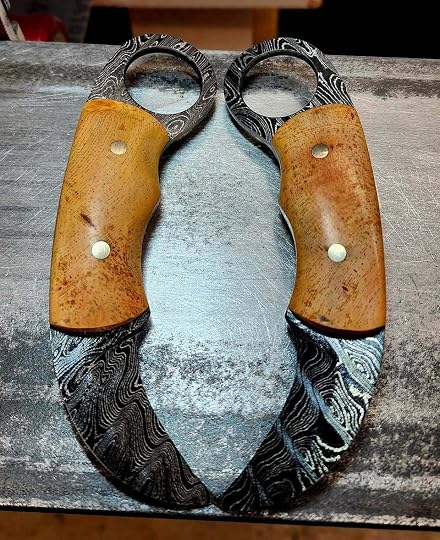
Back in the room, the woman smile and pull kerambits. Which, if you didn’t know, are short, curved knives with a ring in the handle, and traditionally considered women’s weapons in Indonesia.
Smash cut to Reacher running up the stairs, arriving at the room, and finding bodyguards and thugs’ bodies hither and yon, and the women, whom he has been helping, gone.
It’s a fun scene. Mindful violence, and imagined rather than shown
…
* This is an example of what we in the writing biz call “hanging a lantern on it.” Some event happens that is unlikely, such as murderous thugs pulling knives instead of guns, so the writer points it out in an effort to explain why they’d do that. Means the writer knew it made no sense, and did it anyway.
August 19, 2026
Supplements

Over the years, my supplements changed as I learned more about such things. Now and then, I discovered new research showed something I was taking was less effective, or had undesirable side-effects, so I dropped those.
My current stack is based on research studies I’ve read — and I have to point out these are things I think useful for me and what I’m trying to do, and not for everybody. For instance, creatine seems to be helpful for almost everybody; HMB seems to work, to a degree, for old folks, or people with muscle-wasting illnesses, but not younger and healthy people.
Some of the elements can be gotten in sufficient quantity through a healthy diet, some are more useful for offsetting deficiencies in food-sources. A couple of these below were recommended by my doctors.
Vitamins:
Daily multiple
Areds 2
C
D3
Muscle maintenance:
Creatine
HMB
Other:
low-dose Lithium
low-dose Melatonin
low-dose aspirin
Considering adding:
NMN
Nattokinase
If I elect to add nattokinase, I’ll stop the low-dose aspirin, since both are blood-thinners. Still reading studies on these. Not sure the jury is in on D3's blood-thinning effects at normal doses.
If you are thinking about adding any supplements, two things: 1) Check with your PCP — some supplements can interact with prescribed medications. 2) go online and read legitimate studies. Find these by using the name, then add “research.” This will bring up medical studies, pop-science sites, and folks selling things. Mostly ignore the latter two. See what a supplement will, won't, or might do, and the safety thereof.
An example: “HMB research” shows as the top-five sites on DuckDuckGo, as of now:
The American Journal of Clinical Nutrition
Healthline
myHMB
PubMed
August 18, 2026
Nattokinase
Been doing some research on Nattokinase, a supplement based on fermented soybeans. Supposedly one of the reasons Japanese people live longer than Americans do, on average.
When I say research, I don’t mean Bob’s Blog — this means reading the double-blind and placebo studies, which, unless you have a medical background, is like wading through mud up your hips. I have a medical background, and even so, the graphs and charts are mind boggling.I found a pretty good general overview, written in more understandable language, with links to the studies, here: https://www.supplementscience.org/supplements/nattokinaseThis includes in vitro, animal, and human studies.If you are thinking about adding this supplement into your stack, it’s a good idea to read enough to see which claims are legitimate — there are some — and which are pie-in-the-sky.You’re welcome. See less
August 14, 2026
The Haunted Refrigerator
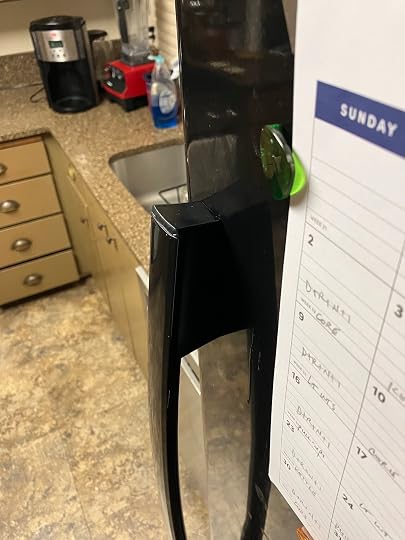
A few years back, during a serious heat wave where we hit 116º F., my eighteen-year-old fridge went on the blink. As did a lot of other refrigerators, the repair guy I called allowed. Be a while before he could get here.The repair guy eventually came out, said he could keep it going for bit, but that I needed to start looking for a new one, because the end was near.
What would you get to replace it? I asked.
As close to this one as you can find. No electronics, no ice or water from the door, no computers. Heat wave like this comes along, fridge is backed up against an outside-exposed wall? The circuit boards fry, and they are hard to come by. Might be weeks before you could get a replacement.
The current new models are mostly expensive, shitty, might not get five years before they start needing repairs. Stay analog.
My wife wanted one with a freezer compartment at the bottom. We were constrained as to size, the space we had was for an eighteen-cubic-foot model. I shopped around, found one that would work, ordered it, and the old one died while it was enroute. We did a couple days with ice in the bathtub and ice chests.
The new one had some quirks. It made burbly noises, moaned, groaned, probably haunted by the ghost of the old one, but it kept the food cold and -- knock on wood -- still does. I didn’t like the pull-out freezer, but okay.
The biggest quirk? Doors opened and closed fine; however, if you opened one, grabbed something, and closed the door, but forget there was something else you needed and tried to re-opened it immediately?It didn’t want to do that. The seal was so tight it created a vacuum, and it took considerable muscle to break that seal and get the door open. I mean, move-the-whole-fridge force.
YouTube suggested something like Vaseline on the rubber seal, but that didn’t do much. So either you waited thirty seconds after you shut the door to re-open it, or, you gave the handle a mighty tug to break the vacuum.
Which brings us to yesterday’s adventure.
All that mighty tugging on the handle resulted in the top screw of the handle getting loose. After a while, you could see the screw in the gap, and through that, the writing on the wall. Not “if,” but “when.”
Last night, the screw came out.
Well, shit.
And here’s a thing: There is no way to access the Phillips head end of the screw.
So, it was gonna be duct tape or the internet. I got the duct tape out, just in case. Armed with the fridge’s model number, I went looking.
Apparently on this unit, one removes the handle by pressing it toward the door and sliding it up, where the brackets allow it to be removed.
Well, no. Tried that, didn’t work.
Sometimes, the internet said, the thing gets stuck. Pressure and application of a mallet at the bottom might do it.
Yes, that did the trick. Yay!
Getting the tangled screw out of the bracket took some doing, more mallet-work and a screwdriver in the vise. That done, I was able to reassemble the pieces and presto! Handle repaired! Only took an hour.Understand, for most handy folks, this would be a three-minute chore. But for me, a man who has trouble operating anything more complicated than a wheelbarrow? It was a small, but serious victory.
Never a dull moment.
August 6, 2026
Leg Day
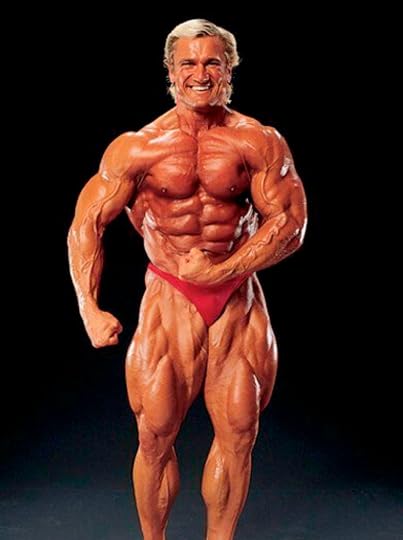
As we age, our balance tends to get worse. There are reasons, and chief among these are that leg strength lessens, and fast-twitch muscle fades. If you stumble or trip, slow-twitch muscles might not be quick enough to recover.
Most injuries to the elderly involve falls, and, really, you’d rather avoid that.
It is important to note that while the bigger muscles — quads, hamstrings, gluteus majors, calves, and core need to be worked, so too the smaller stabilizers we tend not to think about. There are stabilizers all over one’s body, but here I speak to the southernmost.
Here’s a simple way to see where those little ankle, leg, and hip muscles are, and what they do:
NOTE: ASSUMING GOOD HEALTH, DO THE FOLLOWING WITH SOME NEARBY SUPPORT — A WALL, A CHAIR, SOMETHING STURDY IN CASE YOU LOSE YOUR BALANCE. YOU HAVE BEEN WARNED.
Stand with your feet shoulder-width apart.
Shift your weight onto one foot, lift your other foot, doesn’t matter how high or what angle, where you keep your hands, just so all your weight is on the opposite foot.
After a few seconds, longer if you are fit, you’ll probably notice some adjustments your body makes to stay standing. Little motions, in the ankle, or knee, maybe the gluteus minimus, the hip. These are the stabilizers, and while they get worked with squats, leg-extensions, or -curls, calf-raises, they might need more.
If you can’t do this unaided, you can put one hand on a support until you can hold it, then move toward doing it without the support. When you hold the position comfortably, you can switch your weight to the other foot. Do this a few times, increasing the time you spend balanced on each side.
Keep your eyes open. There is another test with eyes closed, but not useful for walking around, since the sighted among us tend not to walk with their eyes shut.
Get good at this, then you can add weights.
Hereunder, a variation of a farmer’s walk. (Aka farmer’ carry — basically walking around holding a weight in each hand. This is good for legs, hips, torso (core,) shoulders, hands, all like that.)
Stand on one foot, switch, repeat, holding a dumbbell or kettlebells in each hand. Start with light weights. Count reps, or set a timer and go back and forth. I like to do five seconds, then switch, for a minute per set. Your mileage may vary.
There are things one can do to get better fast-twitch dynamics, tai chi, plyometrics, but that’s a different post.
Guitar Clerk's Bane (1969)
When guitar players go into music stores, they tend to want to pick up the axes and play a few riffs. The more popular a song is, the more likely it is that -- if you are a clerk in a guitar store -- you will quickly get real sick of hearing it, because every wanna-be who comes in will sure as hell play it.
Recall the sign on the guitar store wall in Wayne's World? No Stairway to Heaven ...
Now it's different, but back in my day, it was Deep Purple and Led Zep and Beatles, and for the acoustic guys, Mason Williams.
I thought it would be fun to put together a little parody of this, so I came up with this. Did it about … twenty years ago, when I was still playing guitar and ukuleles still
a few years in my future.
A mash-up of the oh-crap-not-again! pieces the guys behind the counter at Music City were hearing in the late sixties: Smoke on the Water, Stairway to Heaven, House of the Risin’ Sun, Classical Gas, Blackbird …
August 4, 2026
Inaccurate

Getting a lot of posts on my feed from gun-guys, praising the civilian shooter who engaged the killer in Twin Falls during the In-N-Out mass-murders Saturday.
To be fair, I don't fault the guy's bravery -- he stepped up. I believe that having the civilian and an off-duty Highway Patrol office firing at him almost certainly caused the killer to back off, and thus saved lives. Points for that.That the gun guys are having orgasms because a good-guy-with-a-gun was there? If he fired multiple times at a killer and missed hitting him? And the off-duty cop didn't do any better?
Nothing to brag about there. Where did those stray rounds go?
If you are going to take a shot in a crowded area and you can't hit your target? Don't shoot.
Wyatt Earp supposedly said, "Speed is fine, but accuracy is final."
As the late Bill Jordan -- a man who could pick aspirin tablets off a table with his duty revolver -- said: “The history of gun fighting fails to record a single fatality resulting from a quick noise.”
Temper your enthusiasm, guys. He missed.
Writing: Person and Tense

A brief explanation of two writing constructs — person and tense.
When you tell a story, the first thing you have to decide is, Whose story is it?
Person goes to the viewpoint character(s): First-person, Second-person, third-person. These can be limited to a character, a camera-view, or omnipotent viewpoint, depending on whose head you want to get inside to hear their thoughts. Can be one, none, or all.
These viewpoints are, respectively, “I,” “you,” “he/she/they.” Mixing them up in a single work tends to confuse readers.
Tense, goes to time — past, present, and future.
Combined, they give you a way to offer your tale.
Most commercial fiction is told in third-person, past-tense: Somebody did something, it’s a done deal, and the writer is telling readers about it.
“He traveled in another dimension.” This gives you options to switch viewpoint from him, to her, or them.
First-person:
“I traveled in another dimension.” Limits you to one person’s interior.
Second person:
“You traveled in another dimension.”
That’s with past-tense.
___________________
Present tense, first-person:
“I am traveling in another dimension.”
Present tense, 2nd-person:
“You are traveling in another dimension.” Thank you, Rod Serling. Don’t see this one a lot, but it has its uses. Choose-Your-Own-Adventure or Time Machine YA books, for instance.
Present tense, third-person:
“He/she/they are traveling in another dimension.”
Present-tense can give you a sense of immediacy — things are happening now.
____________________
Then one gets into future-tense, and future-perfect tense which tend to be a can of worms:
First-person:
“I shall be traveling in another dimension.”
Yadda, yadda, yadda.
____________________
Now I told you all that so I can tell you this:
I am not a fan of first-person, present-tense for a novel.
First-person, past-tense works really well for mystery stories, and a lot of the best ones use this. You solve the crime using only what your investigator knows. But first-person-present-tense? A lot of mainstream fiction uses this, and, to me, it always feels artsy and pretentious, trying to compel a reader to see the actions as deep and meaningful. It seems more about the writing, and less about the story. The first story I sold started out this way, got rejected several times, and when I redid it in third-person-past-tense, it found a buyer.
Now, that said, I have read and enjoyed books done in this style, but the caveat is that — for me — they are few and far between. So if pick up a book and it is written this way, it has two-strikes against it, and if it doesn’t pull me in on the first page or two? I am likely to put that book down.
Steve Perry's Blog

- Steve Perry's profile
- 378 followers
