
Andrew Paxman's Blog: UK-USA-Mexico
September 23, 2017
Wuthering Heights, by Emily Brontë
 Wuthering Heights by Emily Brontë
My rating: 1 of 5 stars
This 19th-century classic has not aged well. I confess I gave up half-way through, defeated by the self-absorption and mysoginy of its characters, the histrionics of their declarations, and the irksome artifice of its frame-tale device. I am aware that each of these criticisms could be countered with claims of needing to take into account Brontë’s social and literary context, but I don’t find Austen or Hardy nearly so problematic. Among other things, they were more artful wordsmiths and creators of more rounded characters.
The 1940s copy I read included a still from the Hollywood classic with Laurence Olivier as romantic hero Heathcliffe. This led me to wonder how much of the novel’s enduring popularity owes to screen adptations that have made more of its Yorkshire setting (the moors are barely mentioned after the opening chapters) and less of Heathcliffe’s cruelty, and indeed made the man more palatable still by casting Olivier (1939), or Ralph Fiennes (1992), or Tom Hardy (2009) to play him.
View all my reviews


The Woodlanders, by Thomas Hardy
 The Woodlanders by Thomas Hardy
My rating: 3 of 5 stars
There is a claustrophobia about The Woodlanders, which echoes Far From the Madding Crowd in its tale of a good man’s love for a woman above his social station. In part the mood flows from the firm hand of fate, shepherding Giles Winterborne through years of stoically endured heartache. In part it’s generated by the woodland where he and most of the characters live, which encloses them in what often feels like a heavy cloak of damp and darkness. Literally and metaphorically there’s little sunlight in this novel, not even much of the usual comic banter from Hardy’s Dorset yokels.
Of course it is beautifully written, the passages about the natural world reading like lengthy prose poems. Giles and his true love, Grace Melbury, are sympathetic with all their human foibles. But the end comes as something of a relief and lacks the tragic weight of the finale of Tess or Jude.
View all my reviews
September 17, 2017
Notes from a Small Island, by Bill Bryson
 Notes from a Small Island by Bill Bryson
My rating: 3 of 5 stars
This comic travelogue-cum-love letter to Britain was a calculated ploy by a bestselling author to make its core readership feel good about themselves. Because praise from an American, more than from any other kind of foreigner, is what Middle Englanders most like to hear. The ploy worked: the book sold 2 million copies and was reissued twenty years later. I thumbed through it when it first appeared and found it amusing if patchy. Returning to it now I had the same reaction, only more so.
Bryson’s brand of humour consists of latching onto a cultural oddity and exploring all its comic possibilities, with heavy doses of exaggeration for effect. At times this works very well, as when, at a hotel in Dorset, he riffs on the absurdly ornate language that upscale restaurants began in the ’90s to use in their menus, and then addresses his waiter with similar floridity. (Did he really do so? It doesn’t matter because the passage is deliriously funny.) At other times the effect is laboured. I found the laugh-out-loud parts fewer as the book progresses, a trait that reminded me of Bryson’s first book, The Lost Continent, about a trip along the backroads of America.
Travel books have to do something more than romanticize or poke fun (including at oneself) if they are going to go the distance. Bryson does offer insights – asking questions that the English don’t because “it’s always been like this” – but the one that lingers most is his admission that Paul Theroux was much more adept than he at striking up illuminating conversations with train passengers. Bryson records very few interesting (as opposed to comical) exchanges indeed. And he probably made a mistake by journeying in the autumn, as the repeated image of the rain-soaked author, bumbling along desolate streets muttering sarcasms, wears thin by the half-way stage. Well-informed meditations on Blackpool and Durham enliven the latter chapters, but the whole adventure peters out and little of it lingers in the mind.
View all my reviews
Prayers for the Stolen, by Jennifer Clement
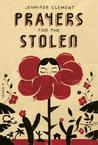 Prayers for the Stolen by Jennifer Clement
My rating: 5 of 5 stars
When we count the cost of Mexico’s drug wars, we think first of the number of dead and next of the bereaved. But what of those victims whose experience of violence is less bloody and more routine? We seldom hear their voices, even less if they are teenaged girls.
Ladydi lives on a hardscrabble mountain slope outside glitzy Acapulco. Hers is a village without men; coming of age they leave to be gardeners in the United States or hitmen with the cartels, and they rarely come back. She shares a dirt-floor hut with her embittered, hard-drinking mother, who named her after the British princess not out of admiration or aspiration but to assert that all men fail their women. Even Prince Charles did so.
Life would be hard enough amid the scorpions, black widows, snakes and red ants, in a climate so hot that pillows are kept in refrigerators, but this is one of the many corners of Mexico where the rural poor are afflicted by those who have and want more. Their community is rent in two by a tourists’ highway, on which speeding cars now and then collide with their animals and their grandmothers. Nearby poppy fields draw army helicopters carrying herbicide, but since the soldiers are in cahoots with the narcos they drop their poison elsewhere, drenching those who happen to be outside.
The greatest dread is of the narcos themselves, who show up in their black Escapades to kidnap whichever girl catches their eye. And so mothers strive to keep their daughters “ugly,” cutting their hair short, blackening their teeth with marker pens and their faces with charcoal, and at the sound of an approaching car they hide them under palm fronds in backyard holes.
When the prettiest of Ladydi’s friends fails to hide in time, she is snapped up, passed between men like a water bottle, then gifted to a capo as a sex slave. Ladydi herself suffers another kind of humiliation: unwillingly present when a cartel murder takes place, she finds herself jailed as an accomplice in Mexico City’s Santa Marta penitentiary. Yet she never gives in to despair.
U.S. author Jennifer Clement grew up in Mexico and Prayers for the Stolen is a novel of unusual documentary naturalism. It succeeds in saying as much about the awful impact of Mexico’s narco-economy as the very best long-form journalism. It is also astute on the racial marginalization of Mexico’s majority, a trait accentuated for the many Afro-descendant folk of Guerrero state. Again and again the strength of the female spirit is evident, especially in community, but—again realistically—not everyone proves a survivor.
Ladydi’s tale is also a work of great lyricism. Clement employs the voice of a smart adolescent, journeying from innocence to experience, her observations flipping between the whimsically poetic and the sickeningly frank. (The poetry borrows somewhat from magical realism, a bit oddly for the words of a 15-year old, but the images are nonetheless evocative.) The book’s power lies also in its compelling brevity; it can be read in one or two sittings.
At a time when Guerrero dominates the news in all the wrong ways—Acapulco shoot-outs, disappearances of students at towns inland—Clement gives clear-eyed testimony of the hell in which the poor of that state are living. In the social justice tradition of writers since Dickens and Zola, it provides yet another argument for a bilateral rethinking of the failed war on drugs.
View all my reviews
Mexico: Democracy Interrupted, by Jo Tuckman
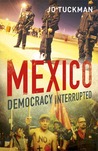 Mexico: Democracy Interrupted by Jo Tuckman
My rating: 5 of 5 stars
Every several years a foreign correspondent takes the pulse of contemporary Mexico, chiefly for the benefit of North American readers. High-profile examples include Andrés Oppenheimer’s Bordering on Chaos (1996) and Julia Preston & Sam Dillon’s Opening Mexico (2004), but none have attained the authority of Alan Riding’s still-in-print Distant Neighbors (1985). Mexico: Democracy Interrupted, by Jo Tuckman of The Guardian, is the best survey since Riding’s.
Tuckman arrived in Mexico in 2000 to see the PRI swept from power after 71 uninterrupted years. Her aim is to gauge how far the right-of-center PAN fulfilled the hope of democracy long-sought by a majority of the Mexican people and long-delayed by the “soft authoritarianism” and electoral fraud of the PRI. As her title implies, twelve years of PAN rule largely failed to deliver. On some fronts, things stagnated: poverty declined under Vicente Fox (2000-06) but rebounded, income-wise, under Felipe Calderón (2006-12); environmental policy, glib of promise, achieved next to nothing; political corruption gained more attention from a freer press but continued to be practiced and tolerated by the PAN, the PRI, and the left-wing PRD.
On other fronts the balance was negative, especially the “war on drugs” begun by Calderón. This naive initiative has not only resulted in tens of thousands dead – a substantial minority innocent bystanders – but also caused untold damage to the social fabric. Another negative is the rise of “de facto powers”: above all, state governors and business elites. These exploited a weakening of the presidency, which no longer commanded a push-button congress, and persistently fragile regulators and judiciaries.
The book is not, however, another exercise in apocalyptic pessimism, of the kind that mars Oppenheimer’s Bordering and saturates El Monstruo by the late John Ross (both of them riveting, all the same). Tuckman shows a remarkable even-handedness, refusing to vilify national leaders, and a healthy suspicion of the conspiracy theories to which Mexico is prone (an understandable trait given its history of propagandistic media). She fluidly interweaves a variety of angles and voices, from high politics and think tanks, to historical antecedents, to grass-roots organizing and the inhabitants of cinderblock homes. In the latter respect she improves on Riding, whose perspective was top-down.
Another pleasure is Tuckman’s lucid language and her ability to cap analysis with a deft turn-of-phrase. Army incompetence in cartel-torn Juárez, witnessed first-hand, is summed up as “riding around with lots of fire power and not much clue about what was going on, let alone how to prevent it happening” (29). Mexico’s hard-working poor find they have to “hold off the stream of structurally-rooted bad luck that haunts them” (192).
A couple of threads could have used more attention. State governors are termed feudal lords, but their power-mongering goes largely unexamined, as does their famed self-enrichment. Democratic immaturity is often attached to insufficient linkage between the parties and the people, but what such links might look like is rarely illustrated; comparative analysis with other nations might help. Historical errors, frequent in journalistic accounts, are relatively few, although the repeated reference to President Cárdenas (1934-40) as the architect of PRI rule ignores the equally important role of his predecessor Calles.
As a response to the common notion that, in 2000, Mexico “became a democracy,” Democracy Interrupted is a reality check. It argues that democracy cannot be defined by a free and fair ballot alone. It raises useful questions about Mexico’s political processes (and implicitly about Enrique Peña Nieto, soon to become president when the book was in completion). It shows sympathy for the have-nots, without elevating them to saintliness the way “subaltern studies” can do in academic texts. It evinces an ear for the telling quote yet suggests where opinions seem self-serving. Modest enough to admit when a trend is too opaque or too early for judgment, probing but not cynical, Tuckman is an authoritative and judicious guide.
View all my reviews
UK-USA-Mexico

Reviews of books about or set in the three countries in which I have lived.
- Andrew Paxman's profile
- 21 followers

