
Sandra-Jane Goddard's Blog
January 10, 2014
Some superstitions and folklore about birds
 For some reason, I think there must be more superstitions about birds than about almost any other creature of the countryside. Perhaps it is because they can fly to the heavens – where ordinary folk can’t go to see what they do – that birds are often viewed as messengers. I mean to say, ask almost anyone and they will tell you that to have a bird fly in to your house through an open window, down a chimney or tapping at your window glass, is an omen that the death of one of the occupants is imminent. But did you know that there are more specific superstitions as well:
To break an egg from a robin’s nest, means that very shortly, a possession of your own will be broken too.To bring a feather from a peacock’s tail into your home is to invite evil, the ‘eye’ on the feather being considered the eye of the devil.Blackbirds, however, are held to bring messages from those who have died and to see two cock blackbirds sitting together means that you will be favoured with good luck and that to have a pair build a nest in your home will bring good fortune that will accompany you all year.
And then of course there’s the magpie, a bird with more beliefs and superstitions attaching than it’s possible to count. Is there truth to any of them? Who knows but maybe I’ll keep respectfully greeting each one that I see, just in case…
Mary


December 15, 2013
A simple and natural way to soften cuticles
With your hands constantly in water and having to use lye soap to wash clothes, it’s not surprising that the cuticles of your fingernails become rough and dry. And if you let them deteriorate so much that they become cracked, then not only will they be painful but they can let infection set in, as well. So, here is a tip I learned from Annie, to help keep your cuticles in good condition.
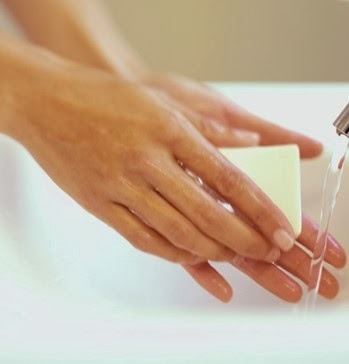 Firstly, wash your hands and make sure that your fingers are free from all traces of dirt.Then soak your fingertips in a small bowl of warm milk – the creamier the better – for ten minutes. Now, I know that this sounds odd but I’ve found that the milk does three things: removes dead skin, softens the cuticles and helps to moisturize dryness.Rinse the milk from your hands using only clear water and gently pat them dry.
This alone will help your cuticles, especially if you can repeat the treatment often. However, if you can get hold of some almond oil or olive oil – and yes, I know that’s asking a lot – then you can do as my friend, Geneviève does; warm a little to gently massage into the skin around your nails and use any left over to rub all over the rest of your hands. You’ll be amazed at the results.
Mary
 Firstly, wash your hands and make sure that your fingers are free from all traces of dirt.Then soak your fingertips in a small bowl of warm milk – the creamier the better – for ten minutes. Now, I know that this sounds odd but I’ve found that the milk does three things: removes dead skin, softens the cuticles and helps to moisturize dryness.Rinse the milk from your hands using only clear water and gently pat them dry.
This alone will help your cuticles, especially if you can repeat the treatment often. However, if you can get hold of some almond oil or olive oil – and yes, I know that’s asking a lot – then you can do as my friend, Geneviève does; warm a little to gently massage into the skin around your nails and use any left over to rub all over the rest of your hands. You’ll be amazed at the results.
Mary
December 13, 2013
The best methods for preventing moths from eating your linens and clothes
Over the years, I’ve tried a fair few methods to keep my linen-chest free from moths. After all, not only do I find it rather unsettling when a startled moth flutters out at me but also, it’s no fun to find that your linens and garments are riddled with moth-holes when you next come to use them. So here are three remedies that have worked for me:
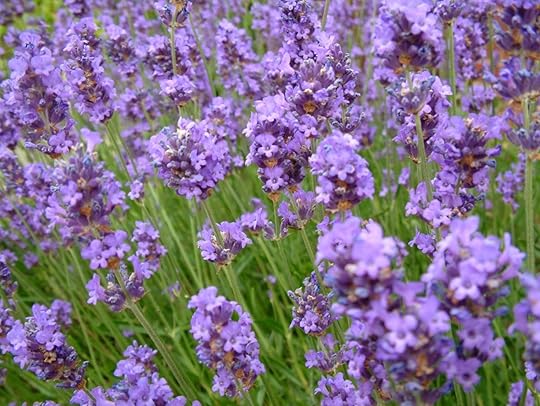 Layer a few sticks of cinnamon between the garments in your trunk. The downside with this remedy, is that cinnamon can be hard to find and expensive when you do, plus, George complains that it leaves a musty smell.Sprinkle some cloves among your clothes. This works well but again, it does leave a smell that reminds me of Christmas. For some reason, though, George doesn’t seem to mind this as much, claiming that it smells medicinal.By far the most reliable and pleasant to use – in my experience, at least – is lavender. Not only does a generous sprinkling of flowers keep away the moths but it also leaves a smell that no one seems to complain about!
Mary
 Layer a few sticks of cinnamon between the garments in your trunk. The downside with this remedy, is that cinnamon can be hard to find and expensive when you do, plus, George complains that it leaves a musty smell.Sprinkle some cloves among your clothes. This works well but again, it does leave a smell that reminds me of Christmas. For some reason, though, George doesn’t seem to mind this as much, claiming that it smells medicinal.By far the most reliable and pleasant to use – in my experience, at least – is lavender. Not only does a generous sprinkling of flowers keep away the moths but it also leaves a smell that no one seems to complain about!
Mary
December 10, 2013
A simple recipe for Swede and Carrot Mash
Swede is such a warming, winter vegetable, isn’t it? But it can also be a bit bland, so here is a simple way to make it a little different.
 Take an equal amount of carrots and swede sufficient for your needs. Remove both the top and root of the swede and do the same for the carrots. Then peel them and chop them into medium-sized chunks.Put them in a suitably-sized saucepan, cover with water and bring to the boil. Then keep the water at a bubbling roll until the chunks are soft – usually a little over a quarter hour.Drain all but a spoonful of water from the pot and then use a fork to mash the vegetables. There’s no need to mash it all to an even pulp; some small lumps are nice to add some variety.Then to finish, mix in some salt, coarse pepper, a knob of butter and you’re done.
A worthy accompaniment to any winter meal!
Mary
 Take an equal amount of carrots and swede sufficient for your needs. Remove both the top and root of the swede and do the same for the carrots. Then peel them and chop them into medium-sized chunks.Put them in a suitably-sized saucepan, cover with water and bring to the boil. Then keep the water at a bubbling roll until the chunks are soft – usually a little over a quarter hour.Drain all but a spoonful of water from the pot and then use a fork to mash the vegetables. There’s no need to mash it all to an even pulp; some small lumps are nice to add some variety.Then to finish, mix in some salt, coarse pepper, a knob of butter and you’re done.
A worthy accompaniment to any winter meal!
Mary
December 7, 2013
A Natural Remedy for Chilblains
Chilblains are those purply-red swellings on your toes and fingers that burn and itch you to distraction. They’re caused when you've been out in the ice and snow and then come indoors again and anxious to get warm, you do so too quickly – perhaps by offering your hands over the fire to get some feeling back into them. Yes, I know; we all do it! So I thought that perhaps now was a good time to remember a simple remedy; one that you can use even before your first sighting of those maddening and itchy swellings.
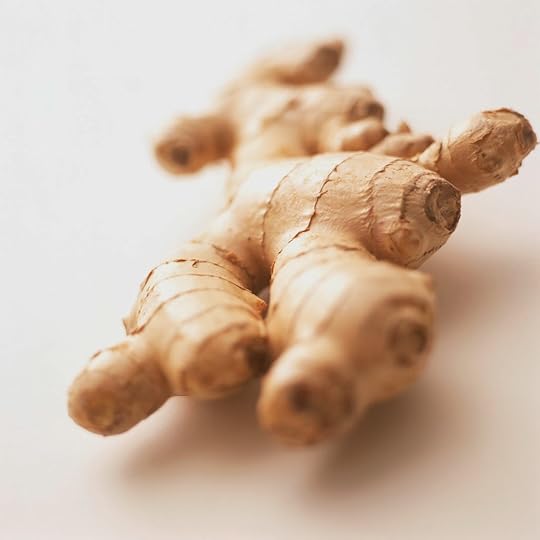 The remedy in question is Ginger Tea. I buy the ginger in town, cut off a small lump, peel it, slice it thinly and then place about three or four slices in a pan with about a pint of cold water. I put on the lid, bring the water to a boil and then let it simmer for about a quarter hour. I remove it from the heat, let it cool, strain out the ginger and then sip a cup of the tea. A pint makes about three large cupfuls and I try to keep it warm and sip it often. It gives you a nice warming feeling but if it seems as though it’s burning your mouth, then you’ve probably used too much ginger.
Not only does it make you feel snugly inside but Martha tells me that it can ease a stuffy head, soothe the griping pains you get with an upset stomach, aid digestion and help with flatulence.
Who would have thought that such an ugly piece of root would have such marvellous powers? And to be honest, even if it doesn’t much help with my chilblains, I shall drink it winter-long now anyway on account of the fact that I’ve developed quite a liking for both the lemon-y sort of a taste and the glow it gives me inside.
Mary
 The remedy in question is Ginger Tea. I buy the ginger in town, cut off a small lump, peel it, slice it thinly and then place about three or four slices in a pan with about a pint of cold water. I put on the lid, bring the water to a boil and then let it simmer for about a quarter hour. I remove it from the heat, let it cool, strain out the ginger and then sip a cup of the tea. A pint makes about three large cupfuls and I try to keep it warm and sip it often. It gives you a nice warming feeling but if it seems as though it’s burning your mouth, then you’ve probably used too much ginger.
Not only does it make you feel snugly inside but Martha tells me that it can ease a stuffy head, soothe the griping pains you get with an upset stomach, aid digestion and help with flatulence.
Who would have thought that such an ugly piece of root would have such marvellous powers? And to be honest, even if it doesn’t much help with my chilblains, I shall drink it winter-long now anyway on account of the fact that I’ve developed quite a liking for both the lemon-y sort of a taste and the glow it gives me inside.
Mary
December 2, 2013
The Full Moon of December
 I think it’s lovely that our ancestors saw fit to name each of the full moons that occur throughout the year and I like the way that the descriptions they chose tie so closely with the progress of the farming year. But did you know that originally, the full moons of mid-winter were given a name that reflected their proximity to the festival of Yule or Yuletide? The Moon Before Yule was the last full moon before the winter solstice – or Yule – and the first full moon after the winter solstice was called the Moon After Yule.
 Both are quaint names but I have to admit to preferring the Cold Moon and the Ice Moon – the names that we use now - since to me, they conjure all that wintertime is about.
Mary
November 30, 2013
Country Lore About December Weather
 In farming terms, not a great deal happens during the month of December but nevertheless, there is a great deal of lore and superstition about the weather and what it foretells for the sowing season ahead. For instance, here are some of the beliefs I’ve heard from Ma and Pa Strong:
The nearer the new moon to Christmas Day, the harder the winter.
A green Christmas will bring a white Easter while a white Christmas will bring a green Easter.
If Christmas Day is green and clear, there’ll be two winters in the year.
A star-filled sky on Christmas Eve will bring good summer crops. And in the same vein, If sun shines through the apple boughs on Christmas Day, come autumn they will much fruit display.
So as far as I can see, you can’t have it both ways: whether winter comes early or late, you can be sure that it’s coming…
Mary
November 26, 2013
A quick tip for dry, winter skin
At this time of year, skin that is exposed to the elements quickly becomes dry and flaky and that’s a sign that you need to take action before it becomes cracked and broken, which I can tell you from experience is a very painful state of affairs indeed.
 So here is a real easy remedy that comes straight from your larder: carefully apply a small amount of raw honey directly to the affected areas. Massage it very gently into the surface of your skin and leave it for at least five minutes. Then rinse it away with clean water and gently pat the area dry. Needless to say, if you’re one of those unfortunate people who can’t eat honey without developing a reaction, then this remedy isn’t for you.
Otherwise, it’s a good thing to do last thing at night before you go to bed but it’s such an quick remedy that you can use it several times a day as needed.
Mary
 So here is a real easy remedy that comes straight from your larder: carefully apply a small amount of raw honey directly to the affected areas. Massage it very gently into the surface of your skin and leave it for at least five minutes. Then rinse it away with clean water and gently pat the area dry. Needless to say, if you’re one of those unfortunate people who can’t eat honey without developing a reaction, then this remedy isn’t for you.
Otherwise, it’s a good thing to do last thing at night before you go to bed but it’s such an quick remedy that you can use it several times a day as needed.
Mary
November 24, 2013
Making Rushlights
 Thankfully, the powers that be have abolished the dreadful candle tax and candles have become a little more affordable but a good portion of most women's housekeeping is still spent on providing a little light after dusk.
Now, the nobility have beeswax candles, which burn with a good, clean light but since they must be individually dipped and poured, they are far too costly for the likes of you and me. There’s an even more costly candle now, too; spermaceti, which offers the whitest and brightest of light but being made from fat from the head of the sperm whale – or so I’m told – is beyond even most of the gentry to afford.
So if we’re fortunate and the coins stretch that far, we ordinary folk are left with tallow candles, which as everyone knows, are made from beef or mutton fat that smells and smokes and gutters and burns with a very poor light. But at least they are cheap.
But what can you do if even tallow candles are beyond your means? When I was little, such occasions were numerous and I remember how Ma used to fashion rushlightsfor us to burn. During the summer, she would gather the stalks of the tallest rushes, from which she would strip the outer greenery to leave just a thin strip on the central pith. This was to give the length of rush some strength. Then she would lay them out to dry. Next, she would steep them in mutton fat, which she would have accumulated for just such use. She favoured mutton over other fats, maintaining that it was easier to work with and dried to hold a firmer shape. Then her strips of rush would be left to harden until needed. She even had a curious, little holder fashioned from tin that held the lighted rush somewhere between upright and flat. That, she said, gave the perfect balance between a good light and a lasting one. Mind you, we would be fortunate indeed if even one of her longer rushes burned for more than an hour and there could never be any knowing from one to the next just how clearly or usefully they would last.
I’m glad to say that I’ve not yet had to resort to making rushlights for Keeper’s Cottage but at least thanks to watching Ma, I believe I could make a fair job of it if ever I have to.
Mary
November 19, 2013
Choosing the best firewood
I know that sometimes, so desperate are folk at this time of year for warmth and the means to cook, that they’ll burn anything that comes to hand. But if you have the choice between a number of different types of wood, this is what my husband, George, taught me:
 Apple, Pear and Cherry: both need to be well-seasoned but then they burn with a pleasant smell and don’t spit; nice for the fire of an evening.
Ash: this will burn before it’s properly seasoned, which is useful if you have nothing else to hand. George says it’s a very green wood and so it is easily split with an axe.
Birch will burn unseasoned as well but it burns very quickly, so if you want to sit in front of a nice fire or cook something for a long time, then you need to mix it with something slow-burning, like Oak.
Elm: burns real slow to provide lots of heat for the most bitter of winter days. But it needs to be seasoned for a very long time before you want to use it and George says it’s the very devil of a job to split.
Hazel: burns quickly but won’t spit.
Oak: the very best firewood around these parts. It gives lots of heat and burns only slowly. Good for just about everything as long as it has been well-seasoned.
What you want to avoid, is burning any of the firs – trees like Larch and Pine – because they spit like mad and make a nasty soot in the chimney. But if you can get the smaller twigs and cones and keep them dry, they’re fine for kindling.
Now, time to warm my poor, old feet.
Mary
Sandra-Jane Goddard's Blog

- Sandra-Jane Goddard's profile
- 9 followers
Sandra-Jane Goddard isn't a Goodreads Author
(yet),
but they
do have a blog,
so here are some recent posts imported from
their feed.
