Alejandra Reuhel's Blog
March 14, 2016
Seduced by the Goblin King: How we fell in love with David Bowie


March 12, 2016
On the Subject of Alice
Remembering Alice Through the Ages
September 16, 2015
I’m on the Tube…
September 6, 2015
There’s more to it than *that* – an interview with Susana
July 28, 2015
Lineup for what’s left of 2015
The wait for Zuleyka’s book of short stories, Sparks, is finally OVER. Editing this book was my main (to not say only) activity during July, so I appreciate everyone who put up with my cranky scowls, and understood my declining what seemed like really fun invitations. This is the first book I edit that is not one of my own (secrets just keep on popping up, don’t they?), but I treated the project with the same obsessive drive that I would have one of my own, if not more so. (For sure I did, actually.) Our artist friends joined in and provided us with varied, unique styles that make this book absolutely loveable.
Are you interested?
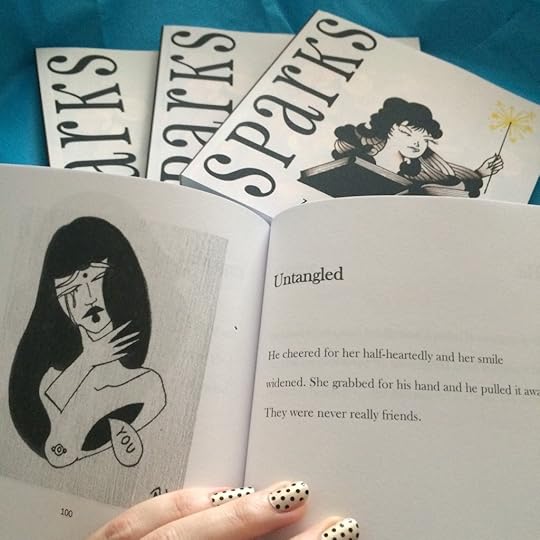
Illustration is one of many by Pamela Katerina
You can now purchase it from the subVERSE site directly by clicking here.
It’s only about $15 including shipping (give or take, US and PR).
I am also hosting a giveaway at Goodreads that anyone can enter, as long as you’re a member.
It will be available at bookstores, eventually, as we gather more funds for printing costs. We need to give copies to our illustrators, which is why those pre-orders meant SO MUCH (thanks again). And regular orders do, too! With one purchase, you allow us to print yours and 1.5 more.
A book presentation is due, I’ll be announcing it everywhere as soon as it’s scheduled.
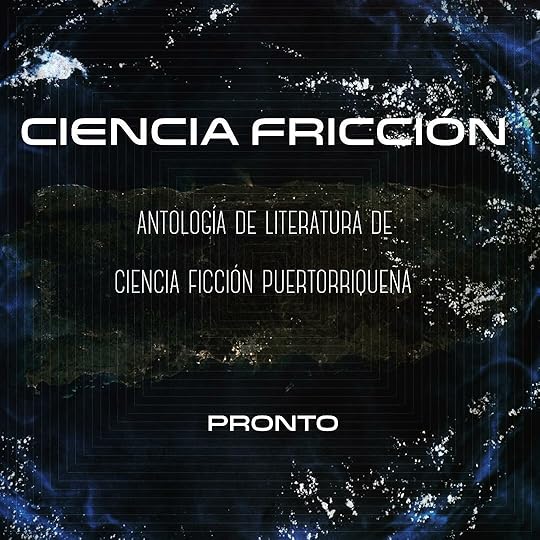
Anthology of Puerto Rican Sci Fi
This is what’s next.
You may remember a call for submissions we hosted a few months back.
David Caleb Acevedo, José Román and myself made our selections, now David Caleb and Pabsi Livmar are helping me out with editing the texts. This is a project I really look forward to completing, because it’s yet another kind of collaboration I’ll be taking part in for the very first time.
And also, THE TEXTS. There are poems, short stories, novel fragments, essays and comics from authors we know, ones we just discovered, were fans of, are new fans of, are our talented friends (or all of the above).
For my English-only followers (that I fantasize about having… are you out there?), the anthology is Spanish only. We hope to maybe not do this for the next. And it’s exclusive to Puerto Rican authors because, well, we thought it was necessary.
We are pushing to release this in about a month… I hope I don’t have a nervous breakdown in the process, since I’ll be teaching meanwhile. I might.
We would like to be somehow involved in this:

There’s more info out there, Google it if you’re curious or if you’d like the specifics.
I attended to all the conferences I humanly could at the UPR last year, it was such a success. I got to meet science fiction authors from Puerto Rico, elsewhere in the Caribbean and Latin America. I’m sure you can relate, authors are some of the best quality, fulfilling people to know and talk to. Usually.
I left with arms-fulls of books and a head full of memories.
If I can manage to push out Ciencia Fricción by then, which I think is possible, we will most probably be involved.
If not, I will have been killed by the co-editors, but the book will be on the margins anyway.
You’ll see.
Friends have asked me about what I’m working on myself. I always have ideas that run on their own, and suddenly grow claws and scales and wings, and they twitch and scratch from inside my skull until I have to process and mold them into something tangible. But nothing tangible for the moment, only intangible.
 There’s news that are either spectacular or tragic, only right now, I don’t know which it is – but will find out in two weeks or less.
Close friends know about it, most people don’t, but Lacan Read Through the Looking Glass (my MA thesis directed by Michael Sharp) was accepted to the event on the image you can appreciate on the right.
If all goes well, I’ll be presenting and representing at Cambridge.
Because I’m working class, on an adjunct professor’s salary, you might understand what I’m getting at…
… needing to say no more… if you catch my drift…
In the meantime, I’m adapting a lengthy text (that somehow, friends and mentors have actually enjoyed reading, bless your hearts) into something fun, a pretty Power Point presentation with pictures (alliteration accidental).
What I’m waiting on is for money to… well, fall from the sky, to put it simply (but not after having offered up blood sacrifices, offerings, chants and prayers to the corresponding gods – and it hurts).
If it doesn’t happen, well… I might cry in my room. For days, maybe weeks. And patiently wait for the next lifetime when Lewis Carroll’s Alice turns 250 or 300, when the economy or transportation as we know it has drastically changed for the better, or when I am born elsewhere (and somehow managed to write a thesis on the same books… getting carried away, maybe, but no, not really).
Fingers crossed.
June 9, 2015
About SPARKS
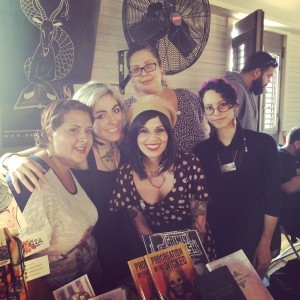
Author, Zuleyka Robles, myself, two illustrators (Pamela and Maricarmen) and Lian, at Tintero 2015. Look at that majestic mergoat.
My eyeballs are burning and, as I told my friend Zuleyka, the author of Sparks, “I’m kind of manic” because I’ve been working on her book for so long and it is ALMOST DONE. Almost. But before I sleep, I want to share my excitement with everyone.
This means you can get your hands on it pretty soon (July? Hopefully.) and it will be absolutely worth it.
Subverse is on facebook now, where I’ll be posting news, as well as on instagram (subversepub), please like or follow if curious.
Sparks consists of microstories (rejoice, commitment-phobic and/or lazy readers) that, in spite of being only a few sentences long, are concise and stab you right in the feels.
Our unexpected bonus was the willingness of our artist friends to collaborate with illustrations for many of the stories – as well as their enthusiasm. So this book will have tons of illustrations in a variety of styles that represent how the artist interpreted the stories. It even inspires me, so I might end up illustrating one or two.
I don’t want to share any of her stories because that will spoil the surprise. Some of the illustrations have already been shared, but there is so much more.
What I don’t mind sharing, however, is a fragment of the foreword I wrote. I’m really hoping to make you curious and want to read Sparks (as well as the rest of this introduction).
Do you remember the last time you lit sparklers? Think about it for a moment. If your memory is a recent one, you were probably in the company of other adults, laughing, cheering and having fun. Maybe you were even inebriated. If your memory is from childhood, you may remember getting accidentally burned by the crackling sparks, or having touched the glowing ember (against your better judgment). Then, lighting your sparklers with respect or apprehension, holding it a safe distance away from your body. The next day or after that special event, you may have had to dispose of the ugly, black wires making a mess on the floor, all with a hint of melancholy, now that the party is over and routine resumes.
Zuleyka’s stories exploit the moments we overlook. While we may reminisce about parties, the fun stories we prefer to tell, the sparks in this book reveal the most private events: the actions and interactions (the initial sparks) that light up fires of passion. The author leaves the fires and explosions to the reader’s imagination, but strategically so, that we may imagine an outcome according to our own values, experiences and individual traumas. Some are fires that melt away the biting cold, others, fires of shame, anger and despair that scorch the flesh and nerves. The most persistent dilemma throughout Sparks is that of love, but from different points of view: parent, small child, adult child, lover, ex-lover, spouse, friend, stranger, enemy, self. Some stories are about the strike of the match, some, about the burning. Some are about picking up the trash the day after the party.
Every story offers insight into hidden parts within our selves, even the most seemingly fantastical or unlikely. When have you not been so affected that you felt as if trapped in fiction? Overwhelmed to hyperbolic proportions, that you knew yourself to have become a beast, or have your soul float out of your body? On the other hand, there is the impossibly real: monsters in the mirror, self-injury, homicidal impulses towards those we love the most. In Sparks is a mirror: we are all neurotic. We have all had a few seconds of psychosis, of paranoid schizophrenia that, with a small change of events, revert us to mental and emotional “stability.” (…)
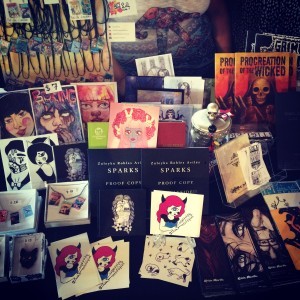
Just look at that table full of communion, friendship and beauty.
We had lots of fun at Tintero (back in March – establishing some continuity from my last post).
We could barely fit all of our stuff on the table, but mission accomplished. We took some emails from visitors interested in Sparks, gave them free stuff like pins, stickers and bookmarks (which seemed to scare most people, as in “why are you giving me things?”)… so if by chance you were one of those folks, expect some goodness coming your way soon.
January 28, 2015
… and there was subVERSE
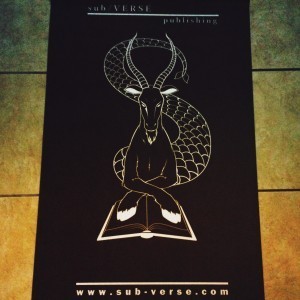 The infamous Mergoat has been making rounds since WELIF came out stamped as a subVERSE publication, but no questions were asked and nothing was revealed. Yes, this is my doing. All of it, including the logo design, though it was vastly improved by graphic designer Yellowfiv3 (Daniel Hornbek), without whom this goat would look like a chunky, fluffy little nerd (yes, I mean my original drawing). The website and facebook page have been around for a while as well, but only recently have I started plugging it, for two reasons:
1 – Ciencia Fricción. A friend of mine (let’s call him Joss Erdbrards) suggested myself and Elijah Snow team up and publish a Science Fiction anthology featuring only Puerto Rican authors. Of course, we didn’t even think about it. subVERSE was my still my little secret, with a pending project left in perpetual hiatus because of my overwhelming amount of work (as in employment), but I obviously took it. subVERSE took it. Hence, Ciencia Fricción will be coming out much later this year as an index of our coolest authors around.
2 – Sparks. 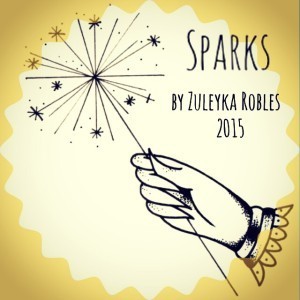 Sparks has been a project pending for a little over a year now. THE aforementioned. My friend, Zuleyka Robles-Avilés has written a beautiful collection of micro-stories that I am honored to put together in the form of a book. She came to me with the idea of combining it with illustrations by artist friends. (Ok, we’re all friends, but this buddy system has been extremely productive…) I didn’t have to think about that either. We’ve been adding illustrations by volunteer artists who keep on surprising us with their interpretations. We’re estimating this book to be published around Summer of this year. I’m not revealing names of artists – YET – because the list is rather long, but you will hear all about it soon. Some you may already know (everyone is in this book! Well, not everyone, but the artist nearest and dearest to myself and Zuleyka).
As soon as March!
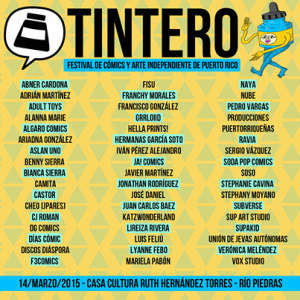 We will be at Festival Tintero with all the artists who make it. Our artists will be exhibiting their artwork and selling their goodies. We will also have proof copies of Sparks that you can flip through and special guest authors and artists that are subVERSE allies and family.
I am excited about all this and spending sleepless nights plotting, scheming, stitching, sketching and work, work, working.
The only downside is I’ve had to pause the plans I had for my own projects and publications, but only for the moment.
This is going to be delicious!
May 31, 2014
About that day I presented Daniel’s book…
In March I was invited by my friends, Daniel Pommers and Miguel Pruné (associated with their individual books, collaborations, and tons of other publications) also known as Gato Malo Editores, to present Daniel’s book of poetry, Que Así Sea (which you can google to read lots more about it, or check it out locally at bookstores – or HERE).
This picture is just for fun:
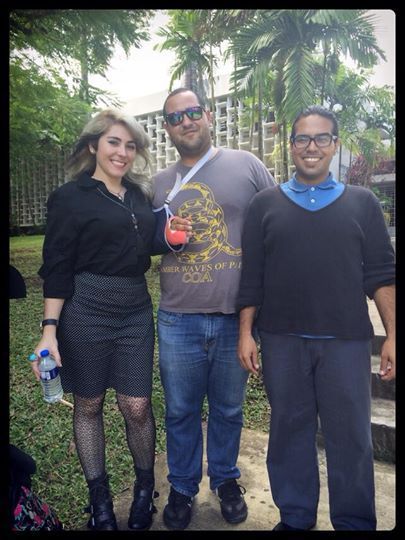
This is the first time I present a book (surely not the last), and my experience was both intimate and alienating. Mostly alienating at first… repeatedly I asked Daniel, “Me? Are you sure…?” because our styles and backgrounds are somewhat different. Then the doubts, “what if I’m getting this all wrong…?” – which is fine, when you don’t personally know the author, or if the author is dead in a literal sense. But then, inclusive… reconstruction of a person and his literary work through deconstruction.
I read this is front of a crowd of mostly his friends and family, whose expressions were quite difficult to read. But he smiled the entire time, so I suppose my analysis wasn’t too off.
Considering this will otherwise be lost forever in a sea of digital documents, I’m sharing a shortened version of it here… and perhaps, to awaken some curiosity in you and motivate you to go look for it and read it!
It’s in Spanish, by the way. I suppose you’ll notice that… (Also: No accents on account of not understanding shortcuts on Windows8. I suppose you’ll notice that, but I do know my rules, please don’t be mistaken.)
You can read more about the event on this link.
Links related to the boys:
Gato Malo Editores on facebook
Generación del Atardecer Presenta
Chocarreras
Dandyzetté Extravaganza
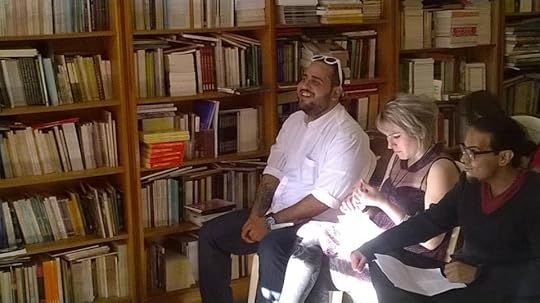
Photo by Abram Fuentes. I missed the joke.
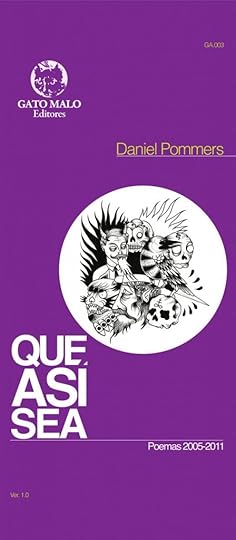
Que Asi Sea de Daniel Pommers
[...] en principio, es evidente que es el hombre en efecto quien da su sentido a la palabra. Y que, si posteriormente las palabras se encuentran en el común acuerdo de la comunicabilidad, es decir, que las mismas palabras sirven para reconocer la misma cosa, es precisamente en función de relaciones, de una relación de partida, que ha permitido a esas personas ser personas que comunican.
(Jaques Lacan, Seminario: Real, Imaginario, Simbolico)
“Articular
no es suficiente”
(Daniel Pommers: Epílogo)
Que Asi Sea. No hace falta ser una persona religiosa para comprender esta declaracion: Que Asi Sea, el deseo de lo que se acaba de pronunciar, como una encantacion magica (“y Asi Sera”) o, Que Asi Sea (“y Asi Es”), tu lo has dicho, eso es asi, asi es la cosa, has pronunciado verdad. Considerando estos significados, el titulo cumple lo que promete. El sujeto (ser social y voz poetica, el “yo” que narra o declama en primera persona) de Que Asi Sea es uno que a menudo se desplaza y se disuelve en su entorno. En otras palabras, al leerlo, podemos fundirnos, como si articulara por nosotros, como si afirmara lo que todos estamos pensando.
(Amen, hermano.)
Simultaneamente, es individuo que articula, en poesia, observaciones y vivencias subjetivas. A traves del poemario, domina una inquietud del individuo, sea el primero (el yo que tambien soy yo) o el segundo (el que yo que es él, Daniel Pommers). Sin embargo, no son meras quejas y observaciones: en muchas instancias, Pommers nos acerca un espejo al rostro, a veces diplomatica y cariñosamente, en otras, forzoandonos los parapados, para que podamos apreciar que nos hemos convertido en cucaracha. La frase “Que Asi Sea” a menudo es un sintoma de una enfermedad cultural/social, utilizada popularmente como afirmacion de la negacion. En otras palabras, wishful thinking, el que se da cuando la religion se utiliza como muletilla, como instrumento para librarse de toda responsabilidad en el pasado, presente y futuro. Como dice Pommers, “Articular no es suficiente.” Se me miro al espejo de Pommers y no veo que he sido convertido en insecto (el yo simbolico, el sujeto en sociedad), viendo en su lugar una imagen integralmente humana que, en el mundo material, es feliz, (el Yo imaginario), no me identifico (ese/esa NO soy yo) y al fin, se trata del otro. Pero si se articula de manera estrategica, articular, si verdaderamente existe comunicacion entre ambas partes, aunque no es suficiente, es un comienzo.
“A buen comienzo
se le debe trazar
el apetito infinito de caminar
de rumiar los años.” (Pommers 134)
El comienzo es la esperanza de que, aunque habiendo revivido escenas desagradables (internas o externas), Asi Es, pero podria ser diferente. Creando consciencia a traves del espejo, contemplando nuestra realidad (sujeta y subyugada, abyecta o abnegada), podemos comprender que Asi No Debe Ser/ no tiene que ser. El poema Justo (p. 59) por ejemplo, ofrece una posible solucion: el reinventarse. Y el reinventar una sociedad comienza con reinventarse el individuo, con abandonar muletillas materiales o espirituales, y pensar para encaminarnos hacia la resiliencia.
Las incomodidades de Pommers en Que Asi Sea, en algunos poemas, son manifestados en actos de violencia (sintoma). Agresion fisica o verbal hacia el otro, donde el yo aparenta defenderse del mundo, cuando en realidad, la infelicidad profunda emana de lo mas profundo del yo. Por ejemplo, el poema Desorbitados (p. 49) bien expresa el concepto de la pulsion de muerte: la repetecion de una accion que produce sufrimiento y a la vez, satisfaccion[1].
El poema no necesariamente se trata de un individuo aislado, sino del sujeto: la autodestruccion del sujeto puede tambien ser una via, hacia la evolucion (o como lo llamaria Miguel, la mutacion). Al destruir a los demas, yo me destruyo. Mi violencia hacia los demas, tanto como el amar a los demas, es un reflejo de lo que se origina en mi interior: “(…)en la culminación del enamoramiento amenaza esfumarse el límite entre el yo y el objeto. Contra todos los testimonios de sus sentidos, el enamorado afirma que yo y tú son uno, y está dispuesto a comportarse como si realmente fuese así.” (Freud)
Que Asi Sea re-liga en el sentido de que unifica sujetos que hablamos el mismo idioma (que nos comunicamos porque conocemos los significados de sinificantes particulares, como por ejemplo, La Winston Churchill y Luis Muñoz Marin). Aunque a menudo incluye el mas alla que esa un poco mas alla de lo inmediato (El Caribe), se trata de un sujeto puertorriqueño – sujeto enfermo que, como ha aprendido, calma el sintoma con remedios temporeros. Lacan dice,
[...] Para sintetizar diremos con Saussure, que ‘el sujeto alucina su mundo’ ; es decir que sus ilusiones o sus satisfacciones ilusorias no pueden ser de todos los órdenes. Evidentemente él va a desviarlas hacia un otro orden que el de sus satisfacciones, quienes encuentran su objeto en lo real puro y simple. Jamás un síntoma ha calmado el hambre o la sed de un modo duradero, si no es por medio de la absorción de alimentos que les satisfagan, aún cuando una baja general del nivel de la vitalidad pueda, en los casos límites, ser la respuesta; por ejemplo: la hibernación natural o artificial. Todo esto es concebible sólo como una fase que no podrá, ciertamente durar, si no es con el riesgo de arrastrar daños irreparables.
El sujeto puertorriqueño de Pommers, en muchas instancias, es uno que busca saciar necesidades (o, tratar sintomas de su malestar), confundiendo las ordenes (real con simbolico, o real con imaginario[2]) y por lo tanto, superando necesidades fisiologicas o psicologicas cuyos resultados son de poca duracion. (Antidoto Fiesta, p. 38)
Todos somos ese sujeto, en muchas instancias a traves del poemario, las tres partes incluidas. De cierto modo, hay un nivel palpable de religiosidad en Que Asi Sea. El microcosmos (el yo) proyecta el macrocosmos (“todos somos”). El otro no figura algun lugar en el “nosotros.” En el sentimiento oceanico nos fundimos, liquidos, con ilusiones de eternidad en la forma de pequeños destellos: en la purificacion de las llamas que permite un nuevo comienzo. (Postapoca, p. 104)
Pommers consistentemente rechaza la fe y la falsa ilusion, pero promete para todos esperanza real: “Mejor preparado. Mejores dias vendran.” (De la Muerte por Rendimiento, p.52)
En conclusion, en Que Asi Sea, Pommers articula un pais, una cultura, para ordenarla. Nuestro presente en tiempo y espacio, construido sobre y arrastrando rastros del pasado, mediante la articulacion, el lenguaje, como un intento de hacer ver, cuestionar, evaluar y concluir. Pommers crea un orden de deseo, pasado y futuro: Que Asi Sea (asi es y asi sera) – palabras que fulminan y, como encantacion magica pero no ingenua,“abren camino a la posibilidad, al renacimiento, la ambicion y la cognicion”. (Miguel Pruné)
Lacan, sobre el orden simbolico del lenguaje, comenta: “lo que hay que significar, a saber, las cosas hay que acomodarlas, dándoles un lugar.” Pommers nos obliga a contemplar recovecos incomodos del presente invita a un futuro donde aun se puede gozar.
———————————————————————————————-
[1] Lo que en el sentido más estricto se llama felicidad, surge de la satisfacción, casi siempre instantánea, de necesidades acumuladas que han alcanzado elevada tensión, y de acuerdo con esta índole sólo puede darse como fenómeno episódico. Toda persistencia de una situación anhelada por el principio del placer sólo proporciona una sensación de tibio bienestar, pues nuestra disposición no nos permite gozar intensamente sino el contraste, pero sólo en muy escasa medida lo estable. Así, nuestras facultades de felicidad están ya limitadas en principio por nuestra propia constitución. En cambio, nos es mucho menos difícil experimentar la desgracia. (Freud)
[2] La reversibilidad misma de los problemas neuróticos, supone que la economía de las satisfacciones en ella implicadas fueran de otro orden e infinitamente menos ligadas a ritmos orgánicos fijos, aunque determinando ciertamente una parte de ellos. Esto define la categoría conceptual que resuelve este tipo de objetos. Es justamente aquello que estoy en vías de definir: lo imaginario si se acepta y reconoce todas las implicaciones que le son apropiadas. A partir de ahí es muy simple, claro, fácil, de ver que este tipo de satisfacción imaginaria no puede ser encontrado nada más que en el orden de los registros sexualeso las discrepancias entre las ideas y las acciones de los hombres son tan amplias y sus deseos tan dispares que dichas reacciones seguramente no son tan simples. (Lacan)
Featured on Naelle Devannah’s blog!
Naelle Devannah is a long time friend whom I met about a decade ago on deviantART. (Well, she found me.)
She an all-around loveable person, anyone can confirm it. But we became friends immediately because of our mutual admiration. This is how I first started getting to know her, her visual art. I felt a kinship with her because of our similar circumstances (isolated goth girls from “the country,” creatures of the web) and our love for the aesthetic contrast of darkness and bold, bold color. (A tropical symptom, I suppose).
Visit her site, there’s lots to love that will keep your eyes busy for days.
I asked for her feedback on Stars Like Fish (which is printed on the back of the book) because I knew she would understand. Our imaginations are neighboring lands.
We plug each other often, but yet, I was beyond flattered to have a space in her blog (which is quote popular!)
This is part of her series “Getting to Know…” – where she asks personalized questions to artists of all kinds, giving an in-depth look into their intentions, motivations and personality.
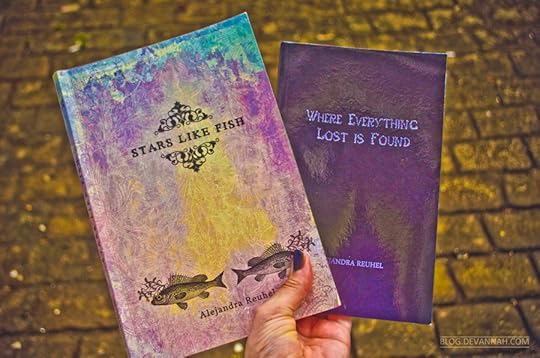
Photo by Naelle Devannah.
She also took some really fabulous photos of the insides of my books.
Here’s an excerpt:
You work with a combination of painterly words, photography and illustration. What’s your perception of the term visual art? What can you foresee in future creative generations?
Maybe my “painterly words” are my frustration… I know my writing is very visual. When I discovered photo editing, I got the same satisfaction as I did describing scenes. Illustration, you flatter me so, but yes, I like to doodle.
My perception of visual art is something arcane and academic that I am only vaguely familiar with and learn about through people like you and observing what they do… perhaps it shouldn’t be, but having spent so many years in academia can make you a little insecure before talking about something without a theoretical background. However, and this is a total contradiction, visual art is, at the same time, something so accessible to absolutely anyone with properly functioning eyes… we can interpret images as signs, in a manner that they should say something, or ask us something, but then again, we can also just enjoy something beautiful or ugly for what it is. So I guess I shift from one starting point to the other, depending on what’s comfortable at the moment. You can either have a long conversation about a piece of art, or write a long paper about it, or just like it. And I guess the same goes for the creation of visual art… you might transmit, transgress, transcend, or just make something.