Kevin Moore's Blog
June 1, 2018
Look up, little one
 I see my role as dad as a mandate to build the next generation of nerds. Thus far my two oldest children have been able to pick out their superheroes before their colors and I'm pretty okay with that. I've recently discovered a new activity for parents who like to explore science with their kids. Courtesy of a generous donation from the Toledo Astronomical Association, the Toledo-Lucas County Public Library has several quality, fairly large telescopes you can check out for free. (If you don't live in the 419, check out your local library. Having an expanded circulation collection beyond just books is becoming very popular among libraries.) These can be found at the Main Library and Point Place branches, but I think the telescopes are in pretty high demand so I recommend calling ahead and reserving one. With my library card, I was able to check out an Orion telescope for 7 days. I comes with several attachments like a constellation guide, star laser finder, and adjustable lens. The whole wheeled backpack the library barely fit in the backseat of my car. Space is an area where my daughter and I connect. Whether it will always be like this, I can't say, but for now I'll relish the chance for us to geek out together. This was the middle of May, and I knew Jupiter was easily visible in the eastern sky so I knew we were guaranteed to see something. I let my daughter stay up after her brother went to bed so we could stargaze, and she was very excited to look at a planet. We set up the telescope on a small table in our driveway and, even under low power, we could see Jupiter and its four major moons aligned to the planet's left. My preschooler's 4 year-old excitement at actually seeing the planet was palpable. I was also very impressed when she observed the planet kept moving. She wasn't totally wrong. Due to Earth's rotation and the high magnification, Jupiter did appear to drift out of our circle of view and we had to readjust about every minute.Every week my daughter learns so much: new words, how to color better, how to put on her own sandals. Sometimes it seems like I'm struggling to keep up. She's progressing so quickly that the things that inspired wonder in her yesterday bring yawns today. I know that someday she will have better things to do than looking at stars with her old man. But before we get to that point, I'm going to work hard to savor every moment of little girl awe.Before heading in to bed, we zoomed in as far as the telescope would allow and saw the bands in the planet's atmosphere. "Daddy! Jupiter has stripes!""Yes, love, it does."


May 25, 2018
Germs, amputations, and mercury: why I'm glad I live in 2018
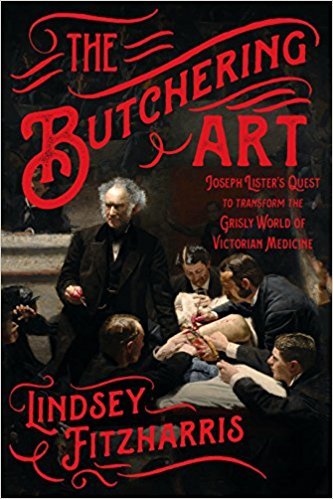 Let us all take a moment to practice an exercise in gratitude. For as much as we like to complain about the status of healthcare in America, I recently finished a book that made me incredibly grateful that I live in the world of 2018 medicine. I recent finished reading The Butchering Art: Joseph Lister's Quest to Transform the Grisly World of Victorian Medicine by Lindsey Fitzharris for an exhibit I'm putting together for work that deals with 19th century medical practices. After reading this fascinating read I don't think I'll ever complain the next time I have to go to the doctor. Fitzharris does a fantastic job of documenting the state of medicine, particularly surgery, in the era before the broad acceptance of Germ Theory. One of the most iconic anecdotes from the book involves London's famous surgeon Robert Liston, "the fastest knife in the West End." Since anesthesia had yet to be invented and unfortunate patients had to experience all the sensations of surgery, the best surgeons were the best surgeons, and Liston could amputate a leg at the thigh in under 30 seconds. (Yes, the man liked to time himself!) Keep in mind he did this while his patient screamed horrifically and needed to be restrained by several other physicians.Just shy of being biographic, The Butchering Art closely documents the life of Joseph Lister and his monumental medical accomplishments. As a prominent surgeon in Edinburgh, Scotland, Lister had the opportunity to observe that a chronic problem in not just his hospital but all hospitals was the extremely high mortality rates of those recovering from surgery. Deaths from gangrenous and septic infections were outright common. Following the work of Louis Pasteur, Lister began to believe that unseen microbes might be the hidden murderer in his surgical ward and he dedicated his career to finding ways to combat them in healing surgical sites. Lister not only had to persevere through the ups and downs of scientific trial and error, but also endure the persistent and vehement resistance of the medical community to his revolutionary ideas. Joseph Lister's work on Germ Theory was the pivotal breakthrough in 19th century medicine and we in the 21st century are the direct beneficiaries. About five years ago, I got some kind of tiny cut on my forearm. I'm not sure how I got it; it did't hurt whenever it happened. When I noticed it, I thought it was perhaps a spider bite. The site became red and slightly swollen over the next few hours. Later, I could see red streaks extending under the skin from the cut. Just to be on the safe side, I went to urgent care where the doctor on call was able to identify it as a septic blood infection, gave me antibiotics (a 20th century breakthrough) right there, and prescribed antibiotics that I was able to pick up the next morning.My whole experience with sepsis was at most inconvenient. However, had I lived in 1813 instead of 2013 and the infection allowed to progress, it's a strong possibility I could have died. At best, I would have experienced a number of ill symptoms such as: fever, chills, and rapid breathing as my body attempted to kill the bacteria growing in my arm. If things took a turn for the worst, I could have gone into septic shock as by blood pressure crashed and caused my internal organs to fail. All this from one little prick that I couldn't even remember happening. Our generation continues to wrestle with the problems of today's healthcare system like exorbitant drug prices and spotty insurance coverage. But let's take a grateful moment to recognize how far we've come from the icky, brutal world of our ancestors.
March 14, 2018
Nerds in training: Dungeons and Dragons with my 4 year-old
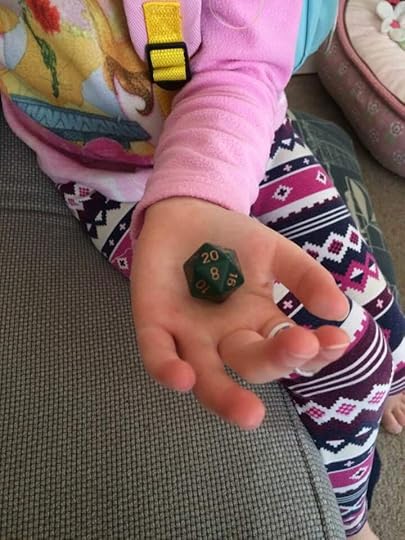 Last week my 4 year-old daughter walked into our living room from the kitchen and asked me, "What's this, Daddy?" I looked down to see her holding one of my 20-sided dice in the palm of her hand.She had no idea how many stories I could tell her that stem from that tiny die.I first started playing Dungeons and Dragons in 2006 when one of my destined-to-be best friends, Joe, invited me over to his basement (of course it had to be in a basement!) to try out this game.I was hooked from the start.As I think most newbies do, I wanted to play an elf as my first character. We all just want to be Legolas, after all. I went ahead and invited some of my longtime friends to join, and before we knew it, nearly every Saturday night was dedicated to the exciting sequential adventures of a campaign.Before long, my fellow rookies and I had learned enough of the basics and were ready for the big kids' table. We began a monthly horror campaign called "Dread" with one of our DM's (Joe's) friends who traveled nearly two hours to join weekend gaming marathon. Playing a winged-elf assassin with telekinetic powers, I joined my friends' characters: a immortal half-phoenix demigod, a living tattoo symbiote, and a malformed swordmage on what became an epic two-year campaign. We still swap war stories about the Dread Campaign to this day.In the years since Dread, I've played a pirate, a worm-riding desert giant, a fumbling history professor (I wonder where I got that idea?), a shape-shifting art thief, and most recently a young Hrothgar, the Danish king from the classic Beowulf who for my purposes was lost at sea and has been stranded in the magical Viking-themed world of our latest campaign.There is a lot of history behind that d20 my daughter found. I cannot wait for her and my other children to share this imaginary world with me someday.I decided to show her how to play right there on our living room floor. I was amazed at how well she responded to the game! I asked her what she wanted to pretend to be. She said she wanted to be a princess in a castle. I could roll with that.I described for her an adventure to save her castle from a mean dragon. She, of her own accord, said she wanted to shoot her bow at it and made archery gestures. Unlike her old man, my daughter rolls decent and bonked the dragon on the head, which she thought was quite funny. Note: DnD friends, I may have given her a handicap by ignoring the armor class of dragon's scales. On the dragon's initiative I told her he breathed fire at her, and she hid behind the couch to yell "I'm hiding behind a rock, Daddy. He can't get me." I had her roll with 90% cover and she survived unscathed. Finally, as it was her turn to counter attack, she spun around and said "I twirl my dress at the dragon!" I interpreted that to mean she had some kind of magical dress of dragon's bane that she neglected to inform her DM about. Having rolled high, she dispelled the dragon with a beam of light from her dress and it flew away.My daughter loved playing "The Imagination Game," as she calls it, with my dice set. She's asked to play it several times since, and in subsequent adventures she has had the chance to ride a lion like a horse and even travel to the Hundred Acre Wood to save Winnie the Pooh's stolen honey. As a dad, it is incredibly rewarding to watch the wheels of her mind spin with creativity and see what new turn she will take the game next.It make sense that Dungeons and Dragons would be the most fun with a preschooler. The whole concept of the RPG is built around having fun in an imaginary world. This is the kind of thing that small children were designed to do! In an age where I fear today's ocean of media and screen time could dampen the creative instincts of the next generation, I think I may have found one way to cultivate creativity and innovation in my children.
March 9, 2018
On being original: a review of The Sword of Shannara
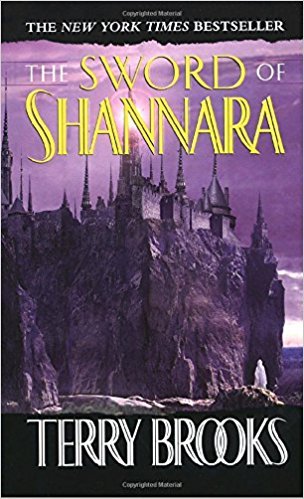 Let's just be upfront about something. Everything is derivative.There is very little out there that is truly original. And that's okay. Literary criticism tells us that there are only as few as seven unique narratives in all of literature. For example, Star Wars is simply a textbook heroes quest that has been perpetually rehashed over and over since Homer wrote The Odyssey. Unfortunately for comic book fans everywhere, Batman is The Shadow. I'll own up to this in my own work. As much as I would like to think my novel, The Golden Merra, is 100% a product of my own creativity, I'll admit my hero, Wil Driscoll, probably has a little bit of a certain Nazi-punching archaeologist embedded deep inside him somewhere...not to mention some hard-boiled detective from the 1920's pulps as well.I think this ever present problem of derivation is doubly problematic for writers in the fantasy genre. The entire genre owes itself to J.R.R. Tolkien and what he did with The Lord of the Rings (my favorite book by the way). And Tolkien even acknowledged he was strongly inspired by Beowulf and the Arthurian legends.This week I finished a classic of the fantasy genre which has been around for over 40 years, The Sword of Shannara by Terry Brooks. In the time since Shannara's original publication, which includes my entire lifespan and then some, Brooks has published around 30-ish prequels and sequels, and Netflix has even started to carry the MTV-produced The Shannara Chronicles, which has been beckoning me from my queue for several months.I discovered this book had one glaring issue that significantly hindered me from enjoying the narrative or wanting to become any further immersed in what could have been an interesting fantasy world. The book seems to me devoid of originality. The Sword of Shannara is essentially The Fellowship of the Ring, plus a bit from The Two Towers. Whether it's the two small protagonists fleeing their idyllic home or their black-cloaked pursuers or the council that is assembled when they reach their destination in a distant wood or the fantasy racially diverse company that sets out on a quest to use a magical relic to defeat the dark lord, it all felt onerously familiar. The feeling persisted as the company had to cross a precarious bridge single-file whilst being shot by archers, entered a canyon flanked by stonework warriors on either side, saw the on-again/off-again wizard Allanon use his staff to open a door in a cliff face, or meet a king who has been immobilized by poor counsel from his magical adviser who is secretly an evil servant of the dark lord. Perhaps all this could have been forgiven if not for the fact the magical items the party carries with them, while tempting to use with their great power, have the drawback of giving away their location to the black things hunting them when activated.Anyone who has seen or read The Lord of the Rings will surely recognize these as some of the most iconic scenes of the LOTR story, and I am not the first person (nor will I be the last) to point out these similarities.This is what I found so problematic with The Sword of Shannara. This is a 750-page novel, and the most I could do upon finishing it was to laugh at how absurdly and unabashedly similar it was. Despite one interesting story arc with two very compelling characters, the rogue Panamon Creel and his mute troll companion Keltset, I have little desire to carry on with the series. The same goes for watching the Netflix iteration.This experience has made me ponder what I value in a novel. Terry Brooks is a good writer. The Sword of Shannara is certainly entertaining; there is magic, large battles, some royal intrigue, and that standard heroic narrative. Shannara follows the fantasy "formula," if indeed there is such a thing. I think there are compelling reasons for why this book has been a seminal work of the fantasy genre for four decades.Then why was I so discouraged by this book? If not for the entertainment value, what is it that makes a book stand out as an exceptionally good read? I think it's creativity. A genuine, good-faith effort to be original. We need to understand that no work is going to be truly original, but I think that it is an author's drive to make their characters and plot their own that readers come to appreciate about the best books. Most of us strive to be unique and genuine in all areas of our lives. We are attracted to people who do the same. Should we not expect no less from what we read?
March 5, 2018
Finding Meaning with "The Art of Manliness"
 Hi, my name is Kevin, and I'm a podcast addict. I can't remember the last time I listened to the radio. If I'm not listening to an audiobook, I'm sure to have a podcast on. The beauty of podcasts is that they can be both entertaining and educational. I'm grateful that iTunes has no trouble keeping up with my scatterbrained interests. My podcast favorites cover a whole range of topics: history, running, science, true crime, philosophy and religion, politics, and the paranormal.With some podcasts, it is easy to tell the hosts are recording in what could potentially be their parents' basement, but most of the podcasts I've discovered are what I would call "DIY-professionally" produced and as a result deliver excellent, interesting content. I've learned a great deal of insight from listening to podcasts and one thing I've always wanted to do with this blog is share some of the shows that have had a positive impact on my life.It is perfectly fitting that the first podcast I want to share is the first podcast I ever subscribed to: The Art of Manliness.The Art of Manliness (AoM) was founded as a blog in 2008 by Brett and Kate McKay of Tulsa, Oklahoma as a way to educate guys in the lost art of being a decent man. Think of the class and character our grandparents' generation had that we all wish he had a little bit more of. Contrary to what you might think from the title alone, sexism and chauvinism have no place here. In fact, in researching a little more about the history of this podcast, I've seen McKay criticized by other men's blogs because they felt it wasn't as chauvinist as it should be! I've been a devoted listener to The Art of Manliness since 2015 when I was looking for tips and advice for men's fashion. I discovered a relevant article on the AoM blog and saw a link to the site's podcast. I can remember my first AoM experience clearly. Mowing the lawn one summer day, I was blown away by "Episode #105: Lessons from a Navy SEAL on Resilience". In this episode, McKay interviewed the author about some of the wisdom he had learned from SEAL training that was applicable for enduring, or being resilient, during the hard times in life. This was great stuff!I've listened to the show avidly ever since. Whether the topic is reaching the next level in physical fitness, building a flexible and functional wardrobe, approaching your role as dad with excellence, or maintaining strong and healthy friendships that last over time, McKay's interviews are always interesting and insightful. I close out a podcast usually feeling challenged to be a better husband, improve one of my life skills, or try something new in my workout program. I will also say that the guests on the show, provide endless opportunity for meaningful reading. In fact, some of the books on my "Most Insightful Books 2018" list to your right have come from listening to AoM. In a world where the nature of masculinity is debated and sometimes even maligned, AoM serves as a beacon for who men should strive to be. For me, this is the gold standard of what I look for in a podcast.The Art of Manliness blog can be found here, and recordings of the AoM podcast are available on iTunes, Soundcloud, and Stitcher.Brett and Kate McKay are also the authors of The Art of Manliness: Classic Skills and Manners for the Modern Man and The Illustrated Art of Manliness.
March 4, 2018
What do you want to be when you grow up?
Before her first day of preschool, we asked my daughter what she wants to be when she grows up. We took a picture of her smiling optimistically and holding a sign that reads "I want to be a: Doctor."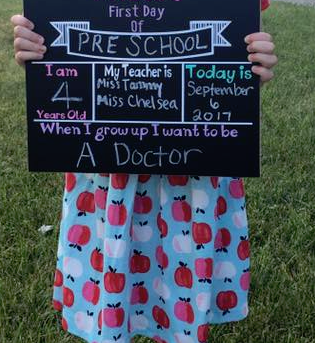 We as a society keep asking this question again and again.In high school, a guidance counselor will ask my daughter about her future plans and maybe even offer some kind of personality assessment to go along with it. This person will then place my daughter on a college or vocational track. Later on, a college adviser may ask yet again and recommend an "appropriate" class schedule. A good college program might even offer career placement services to help her land a job that lines up with her answers to the question.This is all nonsense. It is foolish to ask someone at 22, 18 or God-forbid 4 years old what they want to do for the rest of their lives. I'll grant that some little boys and girls announce early on they want to be an astronaut or a musician or a doctor and then relentlessly pursue that goal to success. But according to the Washington Post, only 27% of college graduates actually end up working in something related to their major. I would suspect that even fewer end up working in a field related to the plans they made in high school. I can gratefully attest to this.My 18 year-old self went on college visits with big plans to become either an engineer or architect. That kid liked to create things and was good at math and science. My 22 year-old self, after working hard to stay on "the plan," graduated with a degree in Civil Engineering. My 23 year-old self then discovered an economy that had gone to hell, and the only way to stay the course would be to look for jobs across the country far from friends and family. He learned he didn't really like engineering all that much anyway.I spent three years of my mid-twenties working minimum wage in retail, and I realized I was surprisingly happy with that decision. I wrestled with why I would rather make $7.60 an hour in Ohio when I could have been making much, much more somewhere else (and probably a somewhere else with a better climate!). Why had I devoted so much of my life pursuing the answer to "What do you want to be when you grow up?" These three "gap years," for lack of a better term, both forced and allowed me to discover myself and figure out what I wanted in an organic way. I wanted to study history for a living.I know! Where was that a decade earlier? Some of the best advice I ever received was from a woman in her late twenties when I was n my early twenties, and it went like this: "Don't ever buy furniture until you're 25. If you do, you'll hate it by the time you're 26." I think there is a kernel of truth here. We don't actually step into our adult selves until our mid-twenties. Neuroscience as reported by the BBC has started to bear this out as evidence suggests the rational portions do not complete their development until around 25. If people are incapable of picking out a suitable furniture style in their early twenties, what business do they have committing to a career before developing their full identity?In my social circle, I know several people now in their thirties who are happily cruising along the plan they started on out of high school. But I know far more who for various reasons decided to change course somewhere in their mid-twenties. Social circles are purely anecdotal, and any social scientist will tell you they are the worst kind of sample, but the statistics seem to support these observations. In my story, I totally abandoned the engineering track and returned to school to earn a master's degree in history. Job prospects in higher education being what they are (and that's a topic for another post in itself), I set out on Stalin-esque Five Year Plan in 2013 to locate a history-related career or reset again. Four years into the plan, I found my way into the career of a museum curator. I have never before felt so fulfilled by my work.When some many people asked me in school, "What do you want to be when you grow up?", I had no idea museum curator was the right answer. Let's not put so much pressure on the next generation
We as a society keep asking this question again and again.In high school, a guidance counselor will ask my daughter about her future plans and maybe even offer some kind of personality assessment to go along with it. This person will then place my daughter on a college or vocational track. Later on, a college adviser may ask yet again and recommend an "appropriate" class schedule. A good college program might even offer career placement services to help her land a job that lines up with her answers to the question.This is all nonsense. It is foolish to ask someone at 22, 18 or God-forbid 4 years old what they want to do for the rest of their lives. I'll grant that some little boys and girls announce early on they want to be an astronaut or a musician or a doctor and then relentlessly pursue that goal to success. But according to the Washington Post, only 27% of college graduates actually end up working in something related to their major. I would suspect that even fewer end up working in a field related to the plans they made in high school. I can gratefully attest to this.My 18 year-old self went on college visits with big plans to become either an engineer or architect. That kid liked to create things and was good at math and science. My 22 year-old self, after working hard to stay on "the plan," graduated with a degree in Civil Engineering. My 23 year-old self then discovered an economy that had gone to hell, and the only way to stay the course would be to look for jobs across the country far from friends and family. He learned he didn't really like engineering all that much anyway.I spent three years of my mid-twenties working minimum wage in retail, and I realized I was surprisingly happy with that decision. I wrestled with why I would rather make $7.60 an hour in Ohio when I could have been making much, much more somewhere else (and probably a somewhere else with a better climate!). Why had I devoted so much of my life pursuing the answer to "What do you want to be when you grow up?" These three "gap years," for lack of a better term, both forced and allowed me to discover myself and figure out what I wanted in an organic way. I wanted to study history for a living.I know! Where was that a decade earlier? Some of the best advice I ever received was from a woman in her late twenties when I was n my early twenties, and it went like this: "Don't ever buy furniture until you're 25. If you do, you'll hate it by the time you're 26." I think there is a kernel of truth here. We don't actually step into our adult selves until our mid-twenties. Neuroscience as reported by the BBC has started to bear this out as evidence suggests the rational portions do not complete their development until around 25. If people are incapable of picking out a suitable furniture style in their early twenties, what business do they have committing to a career before developing their full identity?In my social circle, I know several people now in their thirties who are happily cruising along the plan they started on out of high school. But I know far more who for various reasons decided to change course somewhere in their mid-twenties. Social circles are purely anecdotal, and any social scientist will tell you they are the worst kind of sample, but the statistics seem to support these observations. In my story, I totally abandoned the engineering track and returned to school to earn a master's degree in history. Job prospects in higher education being what they are (and that's a topic for another post in itself), I set out on Stalin-esque Five Year Plan in 2013 to locate a history-related career or reset again. Four years into the plan, I found my way into the career of a museum curator. I have never before felt so fulfilled by my work.When some many people asked me in school, "What do you want to be when you grow up?", I had no idea museum curator was the right answer. Let's not put so much pressure on the next generation
January 3, 2017
A culinary adventure to Sabor Brazilian Grill & Desserts
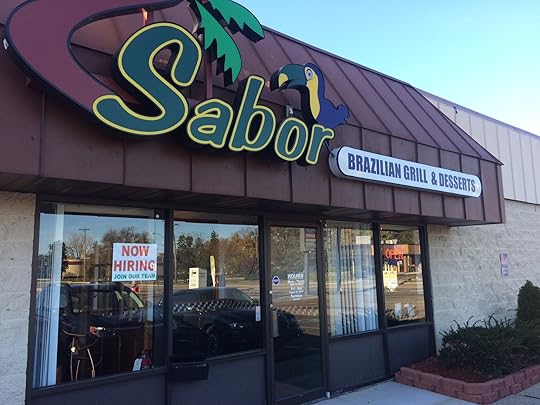 When was the last time you had Brazilian food? If you can't think of a time you've ever had Brazilian food, don't feel bad. Until November of 2016, I hadn't either. It's not the most commonplace style of cuisine to be found in the Midwest, especially in Toledo, Ohio. While we might be oversaturated with authentic Mexican restaurant, South American food is uncommon.My wife and I discovered Sabor Brazilian Grill and Desserts by perusing Yelp and noticing its high reviews. Our conversation went as you may expect:"Have you ever had Brazilian food?""Nope. Have you?""Nope."Given that we had just come off the 2016 Olympic Games in Rio, we were both eager to explore Brazil's culture. First and foremost, our culinary ignorance in this case prompted us to ask the obvious question: What exactly is Brazilian food?Poking around online led me toThe Brazilian Kitchenby Leticia Moraines Schwartz andThe Food and Cooking of Brazilby Fernando Farah where I learned that Brazilian cooking combines Portuguese, African and Native American flavors and techniques to form a unique style of food renown for being colorful and having bold flavors. Brazilians often cook with spices derived from native South American chilis, palm oil from Africa, indigenous root vegetables like cassava and manioc (think of a yam). From their history as a Portuguese colony, Brazil also adopted an Iberian affinity for beef and serving rice and beans with most dishes.We traveled to Sabor on a weekday afternoon and for whatever reason someone was watching our children so we could focus solely on enjoying our experience. Sabor's interior was not as flamboyant as the image my mind conjured up, and this is probably do to unrealistic cultural stereotypes informed by television. There was, however, plenty of soccer memorabilia lining the walls. As a side note to this particular restaurant for those considering going, the service was quick and friendly.I ordered theFrangoSandwich which is grilled chicken, sautéed red peppers and mushrooms on a bun. The meat coated in some kind of sauce was a delicious balance of slightly sweet and slightly spicy. To me it tasted a little like a more smoky, less spicy tikka masala. I had to do a little research to learn exactly what this tasty grilling method was.Francochicken in Brazilian cooking, I learned, is usually prepared using thechurrascotechnique.Churrascois a style of barbecuing meat popular through southern South America - Argentina, Uruguay, Paraguay, Chile and of course Brazil.Churrasco: Grilling the Brazilian Wayby Evandro Caregnato is an entire volume dedicated to this rustic style of grilling which dates all the way back to the days when Gauchos herded cattle across the South American plains. Somewhat unique to the Brazilian interpretation ofchurrasco(and they owe this to their Portuguese heritage) is the incorporation of a mild redpiri pirisauce during cooking. For the uninitiated, as I was,piri piriis chili pepper that grows wild along the West African coast.My wife ordered thePicanhaSandwich, which is essentially the same sandwich except withpicanhasteak instead of chicken all "churrascoed" up with onions and tomatoes. It's also worth noting thatpicanhais a uniquely Brazilian cut of sirloin steak that is often ignored in most U.S. cooking.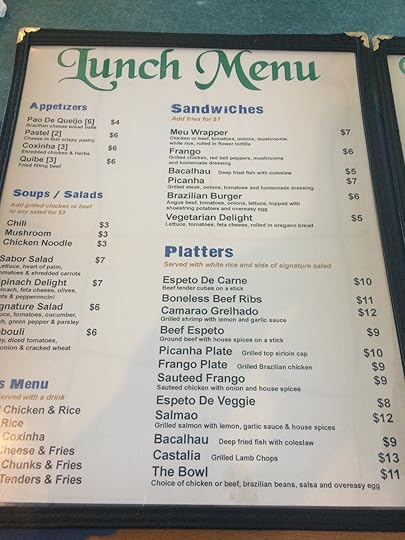


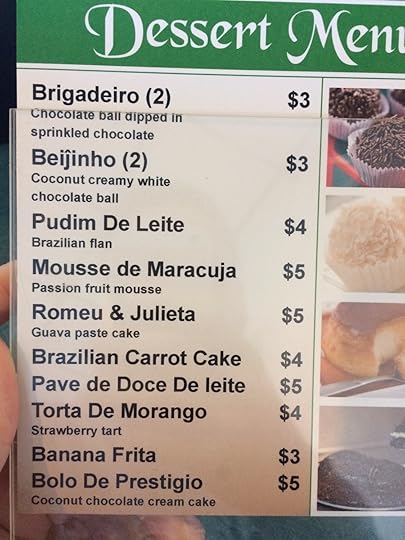
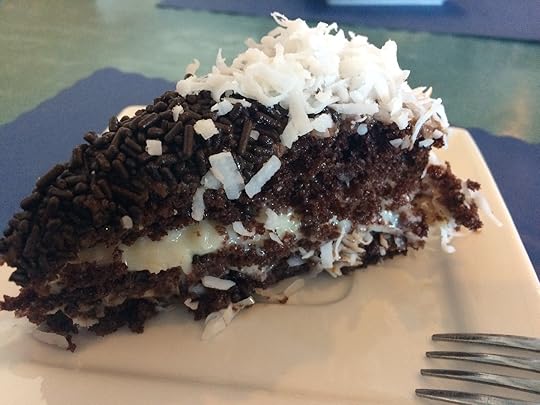
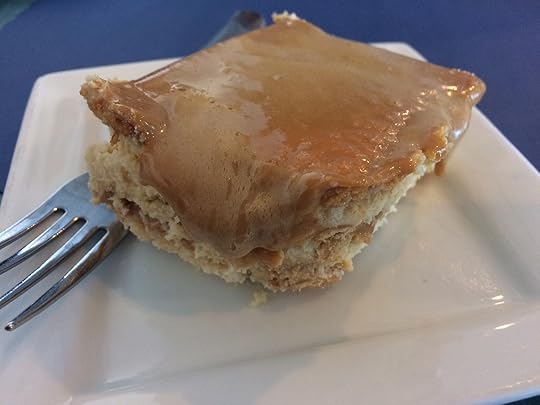 Between these two sandwiches, both of which were fantastic, I'd have to say theFrangowas slightly better only because the chicken took on more of thepiri pirisauce. At this point, I do have to offer one criticism of the way Sabor makes its sandwich. Both sandwiches have perfectly grilled meats with this flavorful unique sauce, why on earth would you put that in a very generic hoagie bun? That bun is not worthy of holding Sabor's delicious creation! Both sandwiches, I think, would be well served with more artisan bun with a crusty exterior.Lastly, we ordered desert. My wife had the Bolo de Prestige, or Coconut Chocolate Creame Cake, and I had the Pave de Doce de Leite, which is a heavy cake topped with "Sweet Milk Dessert" or a caramel sauce made with condensed milk. I will let their pictures speak for themselves.I encourage everyone in the 419 to give this place a visit. It is a unique experience to have under your culinary belt!Sabor Brazilian Grill and Dessert is located at 4751 Monroe Street in Toledo, Ohio. 419-214-1214. Check them out atwww.saborbrazilian.com
January 1, 2017
"Daddy, get off your phone!": On being present
 Children are brutal little people. They have no filter. They have yet to be tamed by the mores of society and they never ever weigh the politics of a situation before they speak. This tendency of children to say whatever comes into their minds is often a source of embarrassment for their parents. I'm reminded of a friend whose son blurted, "Dad, look at the chocolate man!" when an African-American gentleman stepped aboard their elevator. I can only imagine how long of ride that must have been! But their pint-size bluntness can be a Godsend for parents.This fall, my three-year old daughter and I were having one of our "You-Me Days" while mom was away at work. It was the afternoon, and we were watching her favorite show,Daniel Tiger's Neighborhood. This presented itself as a perfect opportunity to quickly get on my phone and check email and Facebook notifications. I had finished about half an email to a student when my daughter pierced me through the core. "Daddy, get of your phone. Pay attention to me!"I vaguely remember her saying some version of "Watch me! Watch me!" and replying something to the effect of "Just a second, honey," but let's call it what it is: I don't remember exactly what was said because I was focused on my email. My daughter's chastisement certainly got me to look up and I saw she was trying to do her impression of her favorite character onDaniel Tiger, Miss Elaina, who walks backward and generally likes to be silly. My negligence of her Miss Elaina impression, even though to me we were sitting side-by-side in a chair and having quality time together, caused her enough frustration to decide to call me out. Guess who felt like a terrible dad the rest of the day.I apologized to my daughter profusely and she seemed completely oblivious that anything had happened - as she lives her life moment to moment in the way that only a three-year old can - but our interaction weighed heavily on me. After meditating on this experience, I decided that instead of simply catching up on my notifications in a moment of downtime, I was actually communicating two things to my daughter: 1) This device matters more to me right now than you do and 2) This is how we conduct ourselves during family time.Let me ask those of you who are parents an honest question: have you ever been interrupted in the middle of writing a text or email only to respond, "Wait just a minute, honey" or "Just let me finish this, buddy"? While we adults may be able to understand that someone not giving us their full attention at the moment does not correlate to the value they place on our relationship, children's minds are not so compartmentalized. They equate time and presence with love and value. If you need verification, consider the behavior of some children in the wake of a very demanding baby brother or baby sister coming home for the first time.Children are very perceptive to prioritization, and many of us put a premium on our screen time. TheNew York Timesreported last year on new data about the activity of Facebook users that revealed that on average, we spend about 50 minutes per day using Facebook. That is nearly one of the sixteen waking hours the average person has at their disposal. Facebook is not our only culprit. A UK telecommunications company, O2, released its "Mobile Life Report" in 2016 which showed that the average Brit spends two hours (119 minutes) each day on his or her smartphone, according to theUK Daily Mail. Casually browsing the Internet made up the bulk of that time at 24 minutes while staying connected via social media came in second at 16 minutes. Talking and texting were the least utilized cell phone activities. The study even revealed that people spend more time interacting with their device than they do engaging with their partner! This has become such a common problem that they have a word for it called "phubbing."While I am sure that some of that two hour bloc is spent on somewhat important activities like work issues or coordinating plans with others, I would bet that most of it revolves around unnecessary habitual social media checking. How much of that time do you think bled over into dinner time or family walks or trips to the store with the kids? I challenge you to go to the playground and keep an eye out the line of parents tweeting as they watch their children play from afar.My role as a parent is not only to tell my children what to do but to model good behaviors for them. I have no right for me to expect them to become thoughtful, considerate and engaging people if I am not leading them in that direction. One commitment I am going to make for 2017 going forward, is to be more present with my family and specifically my children. I hope that you will consider doing the same.If you have experience with being a little too consumed with your phone, I'd love to hear your thoughts in the comments below.
November 24, 2016
Reflections on my first author fair
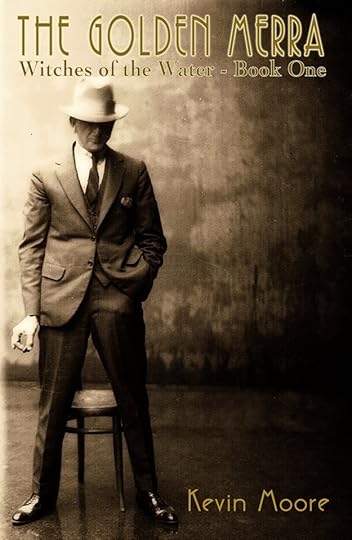
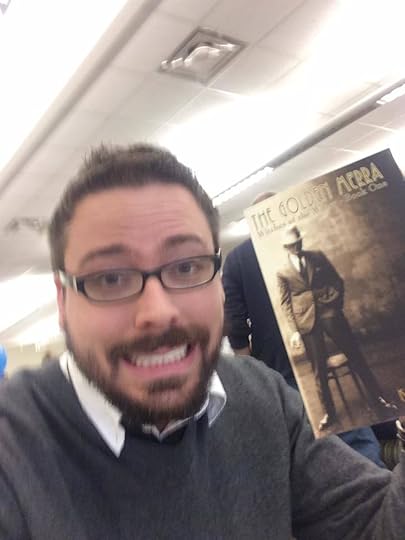
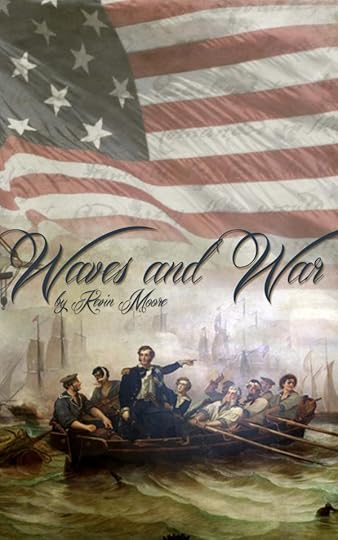
Two weeks ago on November 13, I had my first experience signing my work in print and selling it directly to the public. I attended the 2016 Local Author Book Fair at the Way Public Library in Perrysburg, Ohio, where I was one of twenty-five local authors from Northwest Ohio. I took two of my print books to share with the community,The Golden MerraandWaves and War. This was quite the unique experience for me as I had never put my books (or myself) out there in public fashion before.I had no idea what to expect going into this event. Would there be any other authors? Would anyone attend the fair? Would anyone actually want to buy my book? If they ask me to sign their book what do I write? As I think is the case with almost every new venture, there are a whole host of particulars you never really have reason to think about until you're faced with the new venture.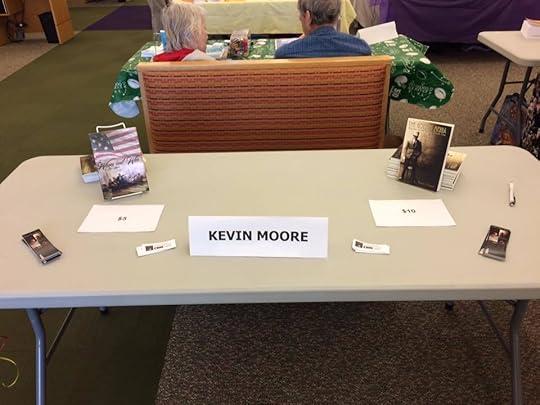
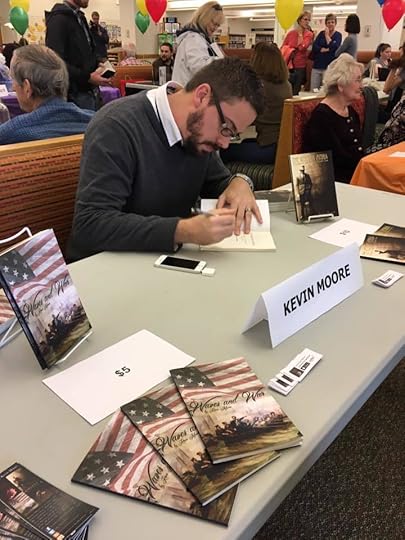 My first reflection (and this is more of a reflection of my character than it is about author fairs) is that book signing is, for me, as nerve-racking as can be. I am by nature a fairly introverted person. I'm not so introverted that I could spend my life tucked away as a hermit in a cubicle, but I do experience a fair amount of social anxiety whenever I have to meet new people. A book signing is nothing but. Meeting. New. People. The great irony in all this is that I have chosen a career in public speaking. Probably 10-15 hours of my week involves standing in front of a crowd and speaking. It doesn't bother me in the slightest, and I've come to look forward to it a great deal. It's highly possible I over prepare when I'm going to speak; I know whatever it is I'm going to talk about frontwards and backwards. In the end, I'm able to talk, ask questions, make jokes, and usually not look like a total fool. However, manning a table at a book signing event is an entirely different animal. I'm expected to make small talk with total stranger. Furthermore, there is no material to talk about. I am the material: "So what are you write about? What's the plot of your book? How long have you been writing? What do you do when you're not writing?" For me, there was a layer of vulnerability that came along with presenting myself for public scrutiny at this author fair, and it's something I will have to work on as I continue to go to these shows as a writer. I will add that my 20 year-old self would not have been capable of this amount interaction. I would have been far to timid to expose my personality and my writing to complete strangers. This is one area of growth in my life at 30 that I am grateful for.The next thing I realized at the author fair is that I had never even been to a book signing before even as a patron. Not only did I have to learn the author's role on the fly, I also had discover what kind of people attend an author fair. It seemed that many of the guests to come by my table were other writers who needed a break from sitting at their table or they were friends and family of the other writers. Few of the visitors seemed to be from the general public. I think that might have been due to the location and timing. If I lived in Seattle or Portland, an author fair would have no trouble attracting a crowd. For example, Seattle sustains one of the nation's largest independent bookstores, the Elliott Bay Book Company. Also, the event was held on a cold day in November and on a Sunday afternoon in competition with football.So the event was a little insulated, but I think this made for a rewarding experience for me as a writer. I met some local authors in the Toledo area, and I discovered there is a whole writing community in Northwest Ohio that I was not aware of! In the weeks since I have been able to make connections with some of the authors who were there, join a Facebook networking group for local authors, and add my voice to an awesome website calledHometown Reads. Hometown Reads is a newer website created by an author in Michigan who has created a community for independent authors in 30+ cities, including Toledo. I highly encourage readers to visit the site to see the authors in your backyard.Overall, this was a great experience. Writing is in many ways a lonely endeavor, and it was hugely beneficial to make connections with other people in the same boat. I have talked to entrepreneurs who have told me the value of networking with other entrepreneurs in similar industries to gain support and share ideas, and I am very grateful that such a community exists for my craft.You can learn more about my writing by visiting the "My Books" page of this blog.
My first reflection (and this is more of a reflection of my character than it is about author fairs) is that book signing is, for me, as nerve-racking as can be. I am by nature a fairly introverted person. I'm not so introverted that I could spend my life tucked away as a hermit in a cubicle, but I do experience a fair amount of social anxiety whenever I have to meet new people. A book signing is nothing but. Meeting. New. People. The great irony in all this is that I have chosen a career in public speaking. Probably 10-15 hours of my week involves standing in front of a crowd and speaking. It doesn't bother me in the slightest, and I've come to look forward to it a great deal. It's highly possible I over prepare when I'm going to speak; I know whatever it is I'm going to talk about frontwards and backwards. In the end, I'm able to talk, ask questions, make jokes, and usually not look like a total fool. However, manning a table at a book signing event is an entirely different animal. I'm expected to make small talk with total stranger. Furthermore, there is no material to talk about. I am the material: "So what are you write about? What's the plot of your book? How long have you been writing? What do you do when you're not writing?" For me, there was a layer of vulnerability that came along with presenting myself for public scrutiny at this author fair, and it's something I will have to work on as I continue to go to these shows as a writer. I will add that my 20 year-old self would not have been capable of this amount interaction. I would have been far to timid to expose my personality and my writing to complete strangers. This is one area of growth in my life at 30 that I am grateful for.The next thing I realized at the author fair is that I had never even been to a book signing before even as a patron. Not only did I have to learn the author's role on the fly, I also had discover what kind of people attend an author fair. It seemed that many of the guests to come by my table were other writers who needed a break from sitting at their table or they were friends and family of the other writers. Few of the visitors seemed to be from the general public. I think that might have been due to the location and timing. If I lived in Seattle or Portland, an author fair would have no trouble attracting a crowd. For example, Seattle sustains one of the nation's largest independent bookstores, the Elliott Bay Book Company. Also, the event was held on a cold day in November and on a Sunday afternoon in competition with football.So the event was a little insulated, but I think this made for a rewarding experience for me as a writer. I met some local authors in the Toledo area, and I discovered there is a whole writing community in Northwest Ohio that I was not aware of! In the weeks since I have been able to make connections with some of the authors who were there, join a Facebook networking group for local authors, and add my voice to an awesome website calledHometown Reads. Hometown Reads is a newer website created by an author in Michigan who has created a community for independent authors in 30+ cities, including Toledo. I highly encourage readers to visit the site to see the authors in your backyard.Overall, this was a great experience. Writing is in many ways a lonely endeavor, and it was hugely beneficial to make connections with other people in the same boat. I have talked to entrepreneurs who have told me the value of networking with other entrepreneurs in similar industries to gain support and share ideas, and I am very grateful that such a community exists for my craft.You can learn more about my writing by visiting the "My Books" page of this blog.
November 17, 2016
Book Review: Paris, A Novel by Edward Rutherfurd
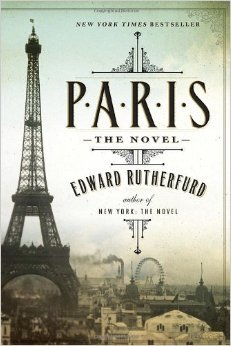 It goes without saying that I should be a fan of historical fiction. I come by it honest teaching history for a living. Fortunately, there is a lot of great historical fiction out there. What do I love about the genre? Well for one thing it is educational. The reader gets to learn a great deal about the setting first hand from the characters living in it. Humans are natural storytellers. Our earliest histories are oral traditions passed down through the generations. We have a very easy time learning through story. I think historical fiction is the modern equivalent of that process, thus a reason for its popularity.Edward Rutherfurd's niche is that he takes a location, often a city, and gives the reader the history of that place through his characters. He has done this withNew York,tracking the evolution of New Amsterdam into the financial center of the globe. His novelLondontook readers from the city's origins during the reign of the Roman Empire through the end of the twentieth century. Perhaps his most ambitious project dealt with nearly 2,000 years of Russian history inRusska. That leaves us withParis. As a historian, I have a tremendous amount of respect for the amount of research that Rutherfurd had to put into these books.Parisfollows six families (the noble de Cygnes, their ancient enemies the le Sourds, the Jewish Jacobs, as well as the Renards, Blanchards and Gascons) from the late 19th century through the 1960s. The primary story begins in 1889 with Thomas Gascon as a young iron worker on the Eiffel Tower. Thomas falls in love with a young woman who is a little above his station, and we then follow their burgeoning romance in post-Commune, Impressionistic Paris. The novel is then interspersed with several short stories or little vignettes from France's or, more precisely, Paris' past as early as the 11th century. As readers, we are given little snapshots of these families' ancestral connections that conveniently intersect every important event in Paris's history. For example, we encounter a de Cygne ancestor, Roland, philandering with multiple women on both banks of the Seine under the reign of King Louis IX with Sainte-Chapelle cathedral rising in the background. Later, after two more chapters of Thomas' story of building the Eiffel Tower, we are transported to the 12th century (Sainte-Chapelle now complete) to witness the Jewish artisan Jacob ben Jacob's experience with anti-Semitism during one of the inquisitions. This style of storytelling continues throughout Paris' history, with the "main storyline" that started in 1889 working its way through both world wars and the French Fifth Republic and the flashbacks continuing up to the French Revolution.You certainly can't criticize the book for skipping the details.I haven't left a book unfinished in quite a while. I usually stick it out to the end, but unfortunately withParisI had to hit the eject button. When I read a book I use a 51% Rule, meaning I need to read 51 percent of a book for it to sufficiently catch my interest before I let myself set it aside. Unfortunately,Parisis one of the books that I had to jump ship. I got about 350 pages through it, and there were 350 more pages to go. I didn't feel that there would be significant enough return on investment to continue on. My decision to bow out has nothing to do with Rutherfurd's writing style. I think his writing is engaging. It has nothing to do with his characters, all of whom, at least in the main story line, I thought seemed realistic. And it certainly has nothing to do with the quality of his research.It was the overall structure ofParisthat I didn't like. As the reader, I began in 1889 following Thomas Gascon and the creation of the Eiffel Tower. Before I was able to feel invested in Thomas, I was transported back to the reign of King Louis IX to witness the sexual conquests of Roland de Cygne. I barely had time to see what became of Roland's trysts before Gustave Eiffel was christening Thomas' work on his iconic tower. The next flashback did not pick up with Roland de Cygne's story as I had hoped but instead started an entirely new story 100 years later. At this point, I was left wondering whatever happened to Roland? I was given no closure for his story and now I was supposed to develop an attachment to another character, Jacob ben Jacob. By the end of this forty page story, I was taken back to the "present," except the "present" was now 10 years later and Thomas Gascon was no longer the protagonist. A new generation of characters had become the focal point of the story. But, of course, their plot was interrupted by two more flashbacks, one to 1572 and the other to 1604.I found it impossible to feel engrossed in this book. No sooner was I introduced to a character, especially those in the ancestry sections, than I was moved onto another set of characters. I understand why Rutherfurd did this. None of these characters is supposed to be the star of the show. That honor belongs to the city of Paris itself. Paris has a long and interesting history, and for me that's exactly what this novel became, the history of Paris. If I had wanted a history of Paris I could have selected any number of histories (How Paris Became Paris: The Invention of the Modern Cityby Joan DeJean,Paris Reborn: Napoléon III, Baron Haussmann, and the Quest to Build a Modern Cityby Stephane Kirkland, andThe Greater Journey: Americans in Parisby David McCullough), but in reading this book I had hoped for a novel first, history second with compelling characters who interact with Paris' history.In the end,Pariswas not for me, but I won't say this was a bad book. This will definitely appeal to other readers of historical fiction who enjoy more emphasis on detailed exposition. I think there's a reader out there for this book. It just isn't me.I hope you enjoyed this review. If you've read Edward Rutherfurd, I'd love to hear what you think. Please leave a comment in the space below. And if you're interested in readingParis, it's available at the following: