David Gee's Blog
February 10, 2016
LILLIAN AND THE ITALIANS
Here's the pitch for my new novel, currently going the usual gruelling round of literary agents and editors:
LILLIAN AND THE ITALIANS by David Gee
Tagline: Venice, Amalfi: secrets and danger
Market: Upscale women's fiction, romantic thriller.
Looking for her runaway son in Italy, an English widow encounters disturbing revelations and then begins a dangerous romance with a charismatic Sicilian prince.
Main themes: Second Chances, Sacrifice, Revenge. A book for fans of Rosamund Pilcher and Mary Wesley, with some echoes of Captain Corelli's Mandolin and The Godfather to broaden its appeal to male readers.
I wrote Lillian to show my mother (who adored Italy) that there would be Life After Fifty, although sadly fate brought her not an Italian Prince but a rendezvous with Alzheimer's.
Read an Extract on my website: www.davidgeebooks.com
LILLIAN AND THE ITALIANS by David Gee
Tagline: Venice, Amalfi: secrets and danger
Market: Upscale women's fiction, romantic thriller.
Looking for her runaway son in Italy, an English widow encounters disturbing revelations and then begins a dangerous romance with a charismatic Sicilian prince.
Main themes: Second Chances, Sacrifice, Revenge. A book for fans of Rosamund Pilcher and Mary Wesley, with some echoes of Captain Corelli's Mandolin and The Godfather to broaden its appeal to male readers.
I wrote Lillian to show my mother (who adored Italy) that there would be Life After Fifty, although sadly fate brought her not an Italian Prince but a rendezvous with Alzheimer's.
Read an Extract on my website: www.davidgeebooks.com


October 12, 2014
Wot I'm reading: The Lincoln Lawyer drives on
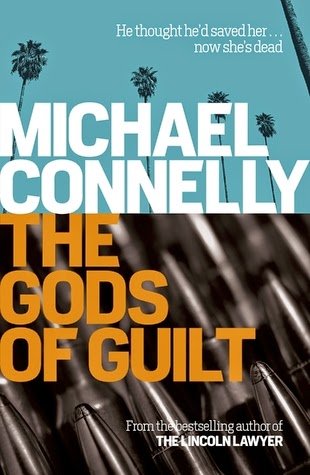 Michael Connelly: The Gods of Guilt
This is the Lincoln Lawyer's fifth outing. A callgirl is brutally murdered in LA. In today's digital world Gloria had an online pimp who is charged with killing her and asks Mickey Haller to defend him. Eight years ago Haller represented Gloria on a drugs bust that led to a key cartel figure being put away for life. Now it seems the ramifications of that case are connected with Gloria's killing.
Haller's investigations are more legal than procedural, so these books have more talk and a bit less pace than the ones featuring Detective Harry Bosch, Michael Connelly's first and foremost creation. The Gods of Guilt has almost as many lawyer meetings and courtroom scenes as a John Grisham, but Connelly's trademark is the sudden moment of violence and the surprise piece of testimony that cracks a case. The trial scenes in The Gods of Guilt are as tense as those in TV's LA Law (fondly remembered!); perhaps it's time the Lincoln Lawyer took to the small screen?
October 11, 2014
David at the movies: camp it up, Dracula!
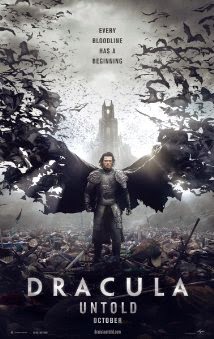 DRACULA UNTOLD
Francis Ford Coppola's stylish 1992 take on Bram Stoker's Dracula had a five-minute prologue that showed how the 15th-century Wallachian prince Vlad (known to history and folklore as 'Vlad the Impaler') came to be transformed into the legendary Count Dracula. Dracula Untold expands those five minutes into a 90-minute 'Origins' story without adding anything much to the mythology. There's a lot of sword-fighting and a few spooky scenes in the bat-cave where an ancient and barely recognisable Charles Dance shreds his victims or, in Vlad's case, offers transmogrification. There are scenes which show Vlad as a charming happy family man in his palace (obviously not when he's impaling hundreds of his enemies!).
Luke Evans is a more beefcake Vlad than Gary Oldman in the Coppola version, but he's mostly meat and not much substance, like Gerard Butler's take on the Count in Dracula 2001. Charles Dance seems not to mind slumming in a schlock movie but Dominic Cooper looks very uncomfortable as the evil Turkish Sultan, as well he might. This addition to the Dracula spin-offs is no worse than the 2012 Abraham Lincoln: Vampire Hunter but not as much fun as Stephen Sommers' 2004 Van Helsing. Luke Evans is cute but he hasn't got Hugh Jackman's charisma. Oddly, since Evans outed himself as a bi-guy on TV not long ago, there's a key ingredient that he doesn't bring to the movie which the best Draculas have always had, from Bela Lugosi through to Christopher Lee and Gary Oldman: Dracula has to be played with a touch of camp!
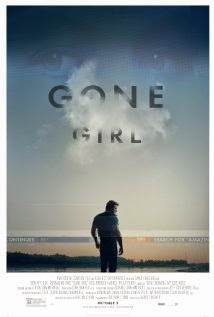 GONE GIRL
Adapted by Gillian Flynn from the novel which everybody (except me) has read, this is a theme - "The lady vanishes" - that has been much visited in the movies, as has the parallel theme of the husband suspected of making her disappear. Through brief but telling flashbacks, alternating the viewpoint from Nick (Ben Affleck) to Amy (Rosamund Pike), we are given a kaleidoscope view of a too-perfect marriage that has slowly come apart at the seams. The main plot twist, which could only be a surprise to those who haven't read the book, is very predictable, but some of the later twists are neatly executed, although often credulity-stretching. The ending is nicely unpredictable and brings a pleasing sense of Just Desserts.
Ben Affleck makes a good fist of Mr Nice-Guy who may not be such a nice guy, but the movie belongs to Ms Pike. Her threatened wife is definitely not from the school of Doris Day in Midnight Lace; the echoes are rather more of Glenn Close in Fatal Attraction or Jagged Edge, two movies to which this film owes a hefty debt. The sex-and-violence quotient is fairly high, but I'm surprised the film didn't sneak below its 18 rating. Leavened with some humour, particularly targeting the media vultures who descend on the family house in outlandish numbers, this is at heart just a spiced-up version of the earlier screen melodramas which must have inspired the author. Hokum, quality hokum even, well-scripted and stylishly directed, but not quite as "classy" as What Lies Beneath, another of the movies that I found myself remembering while I sat through this.
 MAPS TO THE STARS
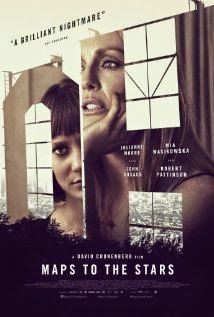
We used to expect gross-out horror from director David Cronenberg. Now he gives us weird and weirder. Maps to the Stars centres around self-obsessed Hollywood actress Havana Segrand (Julianne Moore) and her new personal assistant Agatha (Mia Wasikowska) who is a recently paroled arsonist from a mega-dysfunctional family. Agatha's brother Benjie (Evan Bird) is a teenage brat famous for playing teenage brats onscreen.
The lives of this trio, their families and friends, are acted out against a Tinseltown of designer homes, designer shops and exclusive restaurants. The background 'sheen' is reminiscent of an Almodovar movie, plus there's a gothic element borrowed from Shyamalan (Agatha and Benjie see dead people). Julianne Moore's performance is in the kind of hyper-drive she brought to Boogie Nights, which helps to power the movie's gearshift from Hollywood satire into violent melodrama. One of the themes is incest, which surely needed a deeper and subtler exploration.
Robert Pattinson takes another step away from the Twilight Zone in the role of a limo driver with screenwriting aspirations (like every other chauffeur in Los Angeles). Despite Monday being discount day in my local multiplex there were only three people in the afternoon audience, which suggests that Cronenberg's movies have lost their crowd-pleasing appeal since he moved away from horror. Clearly he is reaching out towards a more discerning class of viewer. Maps to the Stars is very much an 'auteur' movie, highly intelligent and stylized, but perhaps perched uncomfortably between satire and psychodrama.
 PRIDE
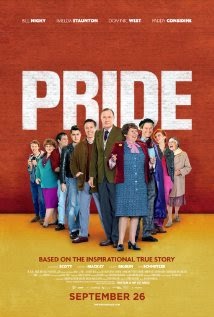
PRIDEIt's 1984 and the Prime Minister whom Bill Nighy is pleased to call "Margaret fucking Thatcher" has pitched phalanxes of policemen against the miners in their long-drawn-out strike against the latest wave of pit closures (the movie manages to avoid mentioning that many mines had already closed under previous Labour governments). A small band of London gays - and one lesbian - decide to show solidarity and start fund-raising to support the miners who, after a year of action, are facing real hardship. LGSM (Lesbians & Gays Support the Miners) descend on one small village in Wales which accords them a mixed welcome: all but one woman are quick to accept them; all but two of the men are hostile.
Prominent among the gays are earnest Joe (George MacKay), a 20-year-old from Bromley not yet out to his family (the age of consent was still 21 in 1984) and flamboyant Jonathan (Dominic West in a role very similar to Simon Callow's in Four Weddings) who breaks the ice by introducing the village people (excuse pun) to disco dancing. In what I suspect is a highly fictionalized episode, a group of the villagers come up to London and are treated to an eyebrow-raising tour of gay hot spots.
This 'culture-clash' comedy is scripted in the vein of TV's Miranda or Absolutely Fabulous. The ensemble cast perform with relish, especially. Paddy Considine and Imelda Staunton as two of the more gay-friendly villagers. Homophobia and Aids cast darker shadows to remind us that the 1980s was not only the decade of Margaret 'fucking' Thatcher versus the trade unions.
Very much in the spirit of Kinky Boots and Made in Dagenham, Pride takes a fragment of modern UK history and builds it into a sparky, spiky comedy. Another crowd-pleasing demonstration of British cinema at its very best. I hope the same team will look back at the Sottish referendum in a few years time!
David at the movies: the lady vanishes
 GONE GIRL
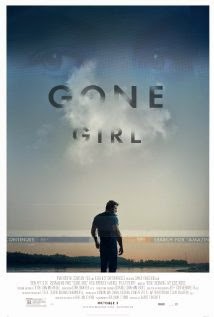
Adapted by Gillian Flynn from the novel which everybody (except me) has read, this is a theme - "The lady vanishes" - that has been much visited in the movies, as has the parallel theme of the husband suspected of making her disappear. Through brief but telling flashbacks, alternating the viewpoint from Nick (Ben Affleck) to Amy (Rosamund Pike), we are given a kaleidoscope view of a too-perfect marriage that has slowly come apart at the seams. The main plot twist, which could only be a surprise to those who haven't read the book, is very predictable, but some of the later twists are neatly executed, although often credulity-stretching. The ending is nicely unpredictable and brings a pleasing sense of Just Desserts.
Ben Affleck makes a good fist of Mr Nice-Guy who may not be such a nice guy, but the movie belongs to Ms Pike. Her threatened wife is definitely not from the school of Doris Day in Midnight Lace; the echoes are rather more of Glenn Close in Fatal Attraction or Jagged Edge, two movies to which this film owes a hefty debt. The sex-and-violence quotient is fairly high, but I'm surprised the film didn't sneak below its 18 rating. Leavened with some humour, particularly targeting the media vultures who descend on the family house in outlandish numbers, this is at heart just a spiced-up version of the earlier screen melodramas which must have inspired the author. Hokum, quality hokum even, well-scripted and stylishly directed, but not quite as "classy" as What Lies Beneath, another of the movies that I found myself remembering while I sat through this.
MAPS TO THE STARSWe used to expect gross-out horror from director David Cronenberg. Now he gives us weird and weirder. Maps to the Stars centres around self-obsessed Hollywood actress Havana Segrand (Julianne Moore) and her new personal assistant Agatha (Mia Wasikowska) who is a recently paroled arsonist from a mega-dysfunctional family. Agatha's brother Benjie (Evan Bird) is a teenage brat famous for playing teenage brats onscreen.
The lives of this trio, their families and friends, are acted out against a Tinseltown of designer homes, designer shops and exclusive restaurants. The background 'sheen' is reminiscent of an Almodovar movie, plus there's a gothic element borrowed from Shyamalan (Agatha and Benjie see dead people). Julianne Moore's performance is in the kind of hyper-drive she brought to Boogie Nights, which helps to power the movie's gearshift from Hollywood satire into violent melodrama. One of the themes is incest, which surely needed a deeper and subtler exploration.
Robert Pattinson takes another step away from the Twilight Zone in the role of a limo driver with screenwriting aspirations (like every other chauffeur in Los Angeles). Despite Monday being discount day in my local multiplex there were only three people in the afternoon audience, which suggests that Cronenberg's movies have lost their crowd-pleasing appeal since he moved away from horror. Clearly he is reaching out towards a more discerning class of viewer. Maps to the Stars is very much an 'auteur' movie, highly intelligent and stylized, but perhaps perched uncomfortably between satire and psychodrama.
PRIDEIt's 1984 and the Prime Minister whom Bill Nighy is pleased to call "Margaret fucking Thatcher" has pitched phalanxes of policemen against the miners in their long-drawn-out strike against the latest wave of pit closures (the movie manages to avoid mentioning that many mines had already closed under previous Labour governments). A small band of London gays - and one lesbian - decide to show solidarity and start fund-raising to support the miners who, after a year of action, are facing real hardship. LGSM (Lesbians & Gays Support the Miners) descend on one small village in Wales which accords them a mixed welcome: all but one woman are quick to accept them; all but two of the men are hostile.
Prominent among the gays are earnest Joe (George MacKay), a 20-year-old from Bromley not yet out to his family (the age of consent was still 21 in 1984) and flamboyant Jonathan (Dominic West in a role very similar to Simon Callow's in Four Weddings) who breaks the ice by introducing the village people (excuse pun) to disco dancing. In what I suspect is a highly fictionalized episode, a group of the villagers come up to London and are treated to an eyebrow-raising tour of gay hot spots.
This 'culture-clash' comedy is scripted in the vein of TV's Miranda or Absolutely Fabulous. The ensemble cast perform with relish, especially. Paddy Considine and Imelda Staunton as two of the more gay-friendly villagers. Homophobia and Aids cast darker shadows to remind us that the 1980s was not only the decade of Margaret 'fucking' Thatcher versus the trade unions.
Very much in the spirit of Kinky Boots and Made in Dagenham, Pride takes a fragment of modern UK history and builds it into a sparky, spiky comedy. Another crowd-pleasing demonstration of British cinema at its very best. I hope the same team will look back at the Sottish referendum in a few years time!
 THE GUEST
A family in rural America welcome a young soldier into their home; he claims to have been the best service buddy of their son who was killed in action. He's soon their other son's best friend, savagely beating three high school bullies. He also beats up a guy at a party who won't accept that his girl has dumped him. Only the family's teenage daughter (Maika Monroe) is suspicious and phones the military to check up on "David".
At this point it's impossible to go into any more plot detail without a spoiler. You kind of know from the beginning that this guest is not all that he seems to be, like Richard Gere in Sommersby. The casting against type of Downton Abbey's Dan Stevens was a good move. Seriously buffed up, he produces a convincing if stateless American accent and is very persuasive as the handsome stranger who is clearly too good to be true.
There's a sci-fi element in the storyline which needed a bit more detail. The fact that the high school is making elaborate preparations for Halloween brings in some strident echoes of John Carpenter's 'masterwork'. The Guest is a hokum movie with too much of the kind of violence younger audiences now expect and crave, but a sturdy performance from our Dan makes lifts his transition from Downton to Haddonfield out of the B-movie slot where the script would otherwise have left it.
September 30, 2014
David at the movies: more weirdness from Cronenberg
 MAPS TO THE STARS
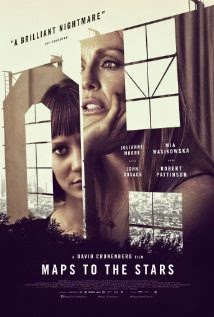
We used to expect gross-out horror from director David Cronenberg. Now he gives us weird and weirder. Maps to the Stars centres around self-obsessed Hollywood actress Havana Segrand (Julianne Moore) and her new personal assistant Agatha (Mia Wasikowska) who is a recently paroled arsonist from a mega-dysfunctional family. Agatha's brother Benjie (Evan Bird) is a teenage brat famous for playing teenage brats onscreen.
The lives of this trio, their families and friends, are acted out against a Tinseltown of designer homes, designer shops and exclusive restaurants. The background 'sheen' is reminiscent of an Almodovar movie, plus there's a gothic element borrowed from Shyamalan (Agatha and Benjie see dead people). Julianne Moore's performance is in the kind of hyper-drive she brought to Boogie Nights, which helps to power the movie's gearshift from Hollywood satire into violent melodrama. One of the themes is incest, which surely needed a deeper and subtler exploration.
Robert Pattinson takes another step away from the Twilight Zone in the role of a limo driver with screenwriting aspirations (like every other chauffeur in Los Angeles). Despite Monday being discount day in my local multiplex there were only three people in the afternoon audience, which suggests that Cronenberg's movies have lost their crowd-pleasing appeal since he moved away from horror. Clearly he is reaching out towards a more discerning class of viewer. Maps to the Stars is very much an 'auteur' movie, highly intelligent and stylized, but perhaps perched uncomfortably between satire and psychodrama.
PRIDEIt's 1984 and the Prime Minister whom Bill Nighy is pleased to call "Margaret fucking Thatcher" has pitched phalanxes of policemen against the miners in their long-drawn-out strike against the latest wave of pit closures (the movie manages to avoid mentioning that many mines had already closed under previous Labour governments). A small band of London gays - and one lesbian - decide to show solidarity and start fund-raising to support the miners who, after a year of action, are facing real hardship. LGSM (Lesbians & Gays Support the Miners) descend on one small village in Wales which accords them a mixed welcome: all but one woman are quick to accept them; all but two of the men are hostile.
Prominent among the gays are earnest Joe (George MacKay), a 20-year-old from Bromley not yet out to his family (the age of consent was still 21 in 1984) and flamboyant Jonathan (Dominic West in a role very similar to Simon Callow's in Four Weddings) who breaks the ice by introducing the village people (excuse pun) to disco dancing. In what I suspect is a highly fictionalized episode, a group of the villagers come up to London and are treated to an eyebrow-raising tour of gay hot spots.
This 'culture-clash' comedy is scripted in the vein of TV's Miranda or Absolutely Fabulous. The ensemble cast perform with relish, especially. Paddy Considine and Imelda Staunton as two of the more gay-friendly villagers. Homophobia and Aids cast darker shadows to remind us that the 1980s was not only the decade of Margaret 'fucking' Thatcher versus the trade unions.
Very much in the spirit of Kinky Boots and Made in Dagenham, Pride takes a fragment of modern UK history and builds it into a sparky, spiky comedy. Another crowd-pleasing demonstration of British cinema at its very best. I hope the same team will look back at the Sottish referendum in a few years time!
THE GUESTA family in rural America welcome a young soldier into their home; he claims to have been the best service buddy of their son who was killed in action. He's soon their other son's best friend, savagely beating three high school bullies. He also beats up a guy at a party who won't accept that his girl has dumped him. Only the family's teenage daughter (Maika Monroe) is suspicious and phones the military to check up on "David".
At this point it's impossible to go into any more plot detail without a spoiler. You kind of know from the beginning that this guest is not all that he seems to be, like Richard Gere in Sommersby. The casting against type of Downton Abbey's Dan Stevens was a good move. Seriously buffed up, he produces a convincing if stateless American accent and is very persuasive as the handsome stranger who is clearly too good to be true.
There's a sci-fi element in the storyline which needed a bit more detail. The fact that the high school is making elaborate preparations for Halloween brings in some strident echoes of John Carpenter's 'masterwork'. The Guest is a hokum movie with too much of the kind of violence younger audiences now expect and crave, but a sturdy performance from our Dan makes lifts his transition from Downton to Haddonfield out of the B-movie slot where the script would otherwise have left it.
September 26, 2014
20 people a year jump off here
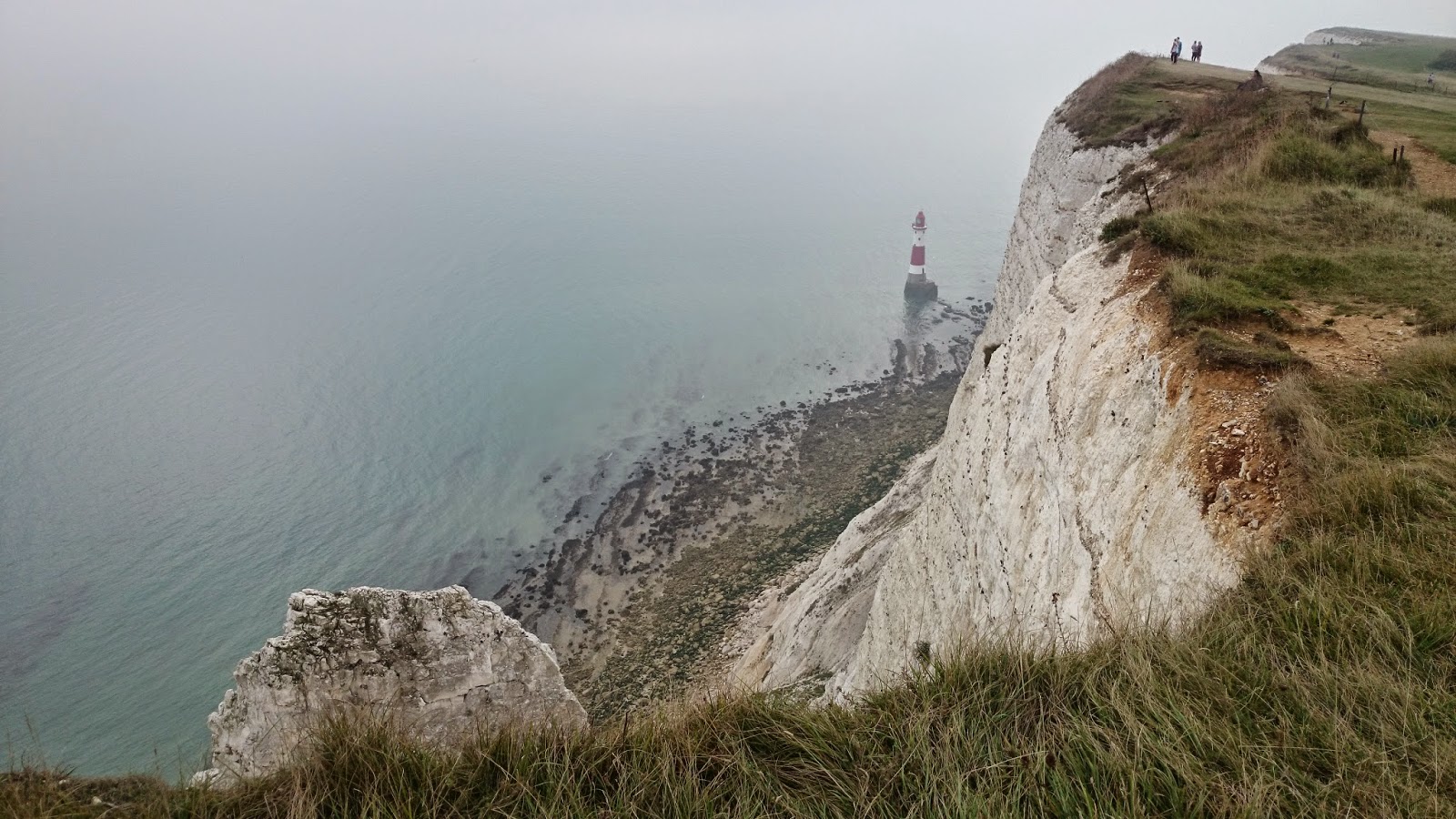
We were at Beachy Head on the Sussex Coast last weekend, where my inamorato took this photo. Behind us the rescue services were abseiling down the cliff (400 feet) to bring up a jumper. No, not a dropped sweater - the body of someone who had jumped off. About 20 people a year choose this short-cut to the morgue.This week 200 unsold copies of my novel The Dropout were pulped by my publishers. The cover features Beachy Head. Don't worry, folks: I'm pissed off but not suicidal. Not every book sells like Fifty Shades - alas!Read an Extract from The Dropout on www.davidgeebooks.com and read about my disastrous experience publishing it on the Save! Print! PUBLISH! pages.
Still available as a book (last few copies!) or as a download.
September 25, 2014
David at the movies: Four gays and a lesbian
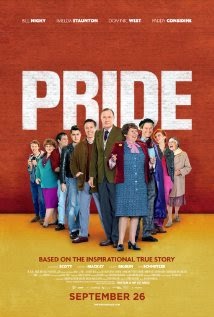 It's 1984 and the Prime Minister whom Bill Nighy is pleased to call "Margaret fucking Thatcher" has pitched phalanxes of policemen against the miners in their long-drawn-out strike against the latest wave of pit closures (the movie manages to avoid mentioning that many mines had already closed under previous Labour governments). A small band of London gays - and one lesbian - decide to show solidarity and start fund-raising to support the miners who, after a year of action, are facing real hardship. LGSM (Lesbians & Gays Support the Miners) descend on one small village in Wales which accords them a mixed welcome: all but one woman are quick to accept them; all but two of the men are hostile.
Prominent among the gays are earnest Joe (George MacKay), a 20-year-old from Bromley not yet out to his family (the age of consent was still 21 in 1984) and flamboyant Jonathan (Dominic West in a role very similar to Simon Callow's in Four Weddings) who breaks the ice by introducing the village people (excuse pun) to disco dancing. In what I suspect is a highly fictionalized episode, a group of the villagers come up to London and are treated to an eyebrow-raising tour of gay hot spots.
This 'culture-clash' comedy is scripted in the vein of TV's Miranda or Absolutely Fabulous. The ensemble cast perform with relish, especially. Paddy Considine and Imelda Staunton as two of the more gay-friendly villagers. Homophobia and Aids cast darker shadows to remind us that the 1980s was not only the decade of Margaret 'fucking' Thatcher versus the trade unions.
Very much in the spirit of Kinky Boots and Made in Dagenham, Pride takes a fragment of modern UK history and builds it into a sparky, spiky comedy. Another crowd-pleasing demonstration of British cinema at its very best. I hope the same team will look back at the Sottish referendum in a few years time!
THE GUESTA family in rural America welcome a young soldier into their home; he claims to have been the best service buddy of their son who was killed in action. He's soon their other son's best friend, savagely beating three high school bullies. He also beats up a guy at a party who won't accept that his girl has dumped him. Only the family's teenage daughter (Maika Monroe) is suspicious and phones the military to check up on "David".
At this point it's impossible to go into any more plot detail without a spoiler. You kind of know from the beginning that this guest is not all that he seems to be, like Richard Gere in Sommersby. The casting against type of Downton Abbey's Dan Stevens was a good move. Seriously buffed up, he produces a convincing if stateless American accent and is very persuasive as the handsome stranger who is clearly too good to be true.
There's a sci-fi element in the storyline which needed a bit more detail. The fact that the high school is making elaborate preparations for Halloween brings in some strident echoes of John Carpenter's 'masterwork'. The Guest is a hokum movie with too much of the kind of violence younger audiences now expect and crave, but a sturdy performance from our Dan makes lifts his transition from Downton to Haddonfield out of the B-movie slot where the script would otherwise have left it.
 DELIVER US FROM EVIL
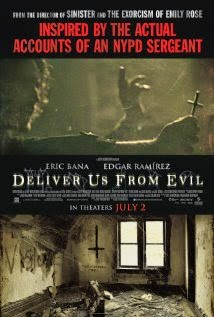
Inspired, they want us to know, by the 'actual accounts' of NYPD Sergeant Ralph Sarchie, this is the story of a series of gruesome murders in the Big Apple that prove to be linked to a demonically possessed ex-Gulf War soldier (British actor Sean Harris on overdrive). Sarchie (Eric Bana) has to enlist the help of a Jesuit priest (Edgar Ramirez) as the crimes he is investigating progress from abnormal to paranormal.
Bana and Ramirez are two strong-presence actors whose performances help to dilute the implausibility of a story which borrows too many elements from that old show-stopper The Exorcist - even down to the evil emanating from an excavation in Iraq. Almost every scene is shot in darkened rooms - the demon keeps blowing fuses and light-bulbs - saving thousands of dollars on sets and lighting. There are a few good jumpy moments in Sarchie's house where his small daughter is also submitted to borrowings from William Peter Blatty. The climactic exorcism scene almost makes Linda Blair look like Mary Poppins (Linda's pea-soup moments are thankfully not, excuse the pun, regurgitated here), but there is not enough originality in the script or the direction to make this more than a run-of-the-mill horror which, with a less A-list cast, would have gone straight to DVD.
September 18, 2014
How to be the new Jeffrey Archer, the next Anne Rice!
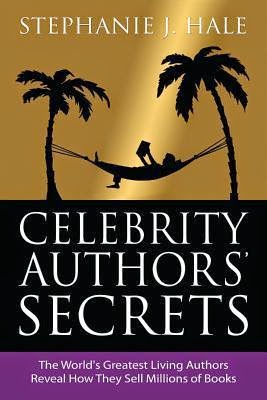 Literary lifestyle coach Stephanie Hale has interviewed twelve of the world's best-selling writers of fiction and self-help books, picking their brains for tips on How to Write a good book and, more importantly (if fame and fortune are your goal), How to Make It Outsell Everybody Else's. Jeffrey Archer believes that story-telling is a gift from God - gifted to him, of course, but not necessarily to us lesser mortals. Some writers, says Joanne Harris (Chocolat sold 30 million copies), "have bigger egos than others." Bigger sales too: Archer has sold over 270 million books!
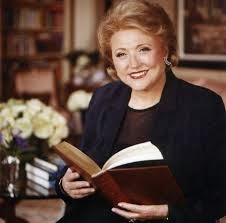 Barbara Taylor BradfordBarbara Taylor Bradford (89 million): "A novel is a monumental lie that has to have the absolute ring of truth". Substantial advice from a Woman of Substance. Mrs Bradford says she cannot start work on Chapter Two until Chapter One is not only written but edited. (That's my style too, Barbara.) Editing, of course, is key. Lord Archer does 13 or 14 drafts of each book - in longhand. Joanne Harris thinks four is enough. New Age guru James Redfield recommends leaving a completed book for 6 months, so that you then re-visit it as a reader.
 Taylor Bradford gets up at 5 a.m., Lord Jeffrey at 5.30. Alexander McCall Smith gets up at 4 and only writes for about three hours, but he reckons to produce around 3,000 words in those three hours and writes 4 or 5 books a year! The importance of discipline cannot be over-emphasized.
McCall Smith (only 40 million books sold, but he's written close to 100) is a big fan of Facebook and likes to discuss books-in-progress with his followers. " Joanne Harris prefers Twitter and Tumblr. Vampire queen Anne Rice (100 million plus) responds to all her fanmail and reviews/postings on Amazon/Facebook. New writers, Anne says, shouldn't try to sound like someone they admire. "Sound like yourself." Sound advice.
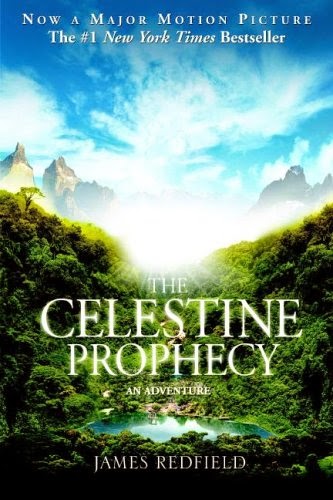
 Your book needs the Pick It Up factorJames Redfield gave away the first 1,500 copies of The Celestine Prophecy. He says a book must have the "pass along" factor: write a book people will buy again to give to friends. Financial planning expert Sharon Lechter's mantra is "Pick It Up": a book needs a title and a cover that people cannot resist. Hers is Think and Grow Rich. Lifestyle guru Brian Tracy says, "Do anything to get a real, live publisher." If self-published books reach a reviewer's desk, "they are immediately thrown in the waste-basket."
Bernard Cornwell (20 million) sees himself as a story-teller, like Lord Archer. He's very anti writer's groups and has a lot of common-sense advice: "Something has to happen on every page ... you cannot bore people." A splendid pronouncement from Sir Terry Pratchett (85 million and counting): "Write with passion about subjects that you're passionate about."
 Terry Pratchett:
"Write with passion"Your head will swim reading this book. So many ideas, so many tips. Which one will work for you? I think the Big Selling Point - the "hook" - of my latest novel The Bexhill Missile Crisis is the question I ask in the Prologue: When did Sexual Intercourse begin? Poet Philip Larkin said it was in 1963 - "between the end of the Chatterly ban and the Beatles' first LP ." I say it was in October 1962 when the Cuban Crisis made everyone fear that there might only be time for one last fling before the Superpowers blasted the world to pieces. The four characters in Bexhill unfortunately choose the Horseman of the Apocalypse for this final fling (he rides in on a motorbike).
A final word from Brian Tracy: "There are three keys to writing a bestselling book, and nobody knows what they are."
Stephanie Hale's interviewees have shifted a billion books between them. Does that daunt our spirits? Shall we lesser mortals continue our desperate, even futile, struggle? Bet your ass we will!
September 16, 2014
Theatre at the cinema: "The kindness of strangers"

A STREETCAR NAMED DESIRE
Screened live last night from London's Young Vic Theatre, this brash new production of Tennessee William's steamy old warhorse stars Gillian Anderson, who manages to breathe new life into the role of neurotic fading Southern belle Blanche Dubois.
Staged in the round with a revolving set the size of a wall-less Portakabin, the play has been moved forward from its traditional 1940s setting to the modern era, although the theme and much of the language still belong much more to Williams's own time. Anderson's Blanche is initially more predatory than the pathetic sparrow we remember from earlier productions; she pecks like a vulture at her spineless sister Stella (Vanessa Kirby) and her roughneck husband Stanley (Ben Foster), exposing their vulnerability, their neediness. But, of course, it's Blanche who's the true Queen of Need and in the second act she falls to pieces - magnificently. As in the last production I saw with Rachel Weisz, Anderson is directed to emphasize Blanche's weakness for the bottle, which provides the play with most of its funny moments.
Ben Foster makes a fine Stanley, the blustering bully with a soft heart painfully centred around Stella. But the play, as always, belongs to Blanche, and Anderson endows the character with an intensity that recalls Claire Bloom's performance in London in 1974 (I'm not a fan of Vivien Leigh in the 1951 movie version although Brando of course had already defined for all time the role of Stanley).
National Theatre Live are doing "Encore" screenings of Streetcar in the first week of October, so you can still catch it.
A Streetcar Named Desire has one of 20th-century theatre's most famous last lines. Another famous last line is Joe E. Brown's in Some Like It Hot: "Nobody's perfect." Gillian Anderson proves him wrong: in this play she is perfect. This year's Best Actress Olivier is in the bag! It may be time to remake the movie.
September 15, 2014
LINDFIELD ARTS FESTIVAL: my finest hour (not)
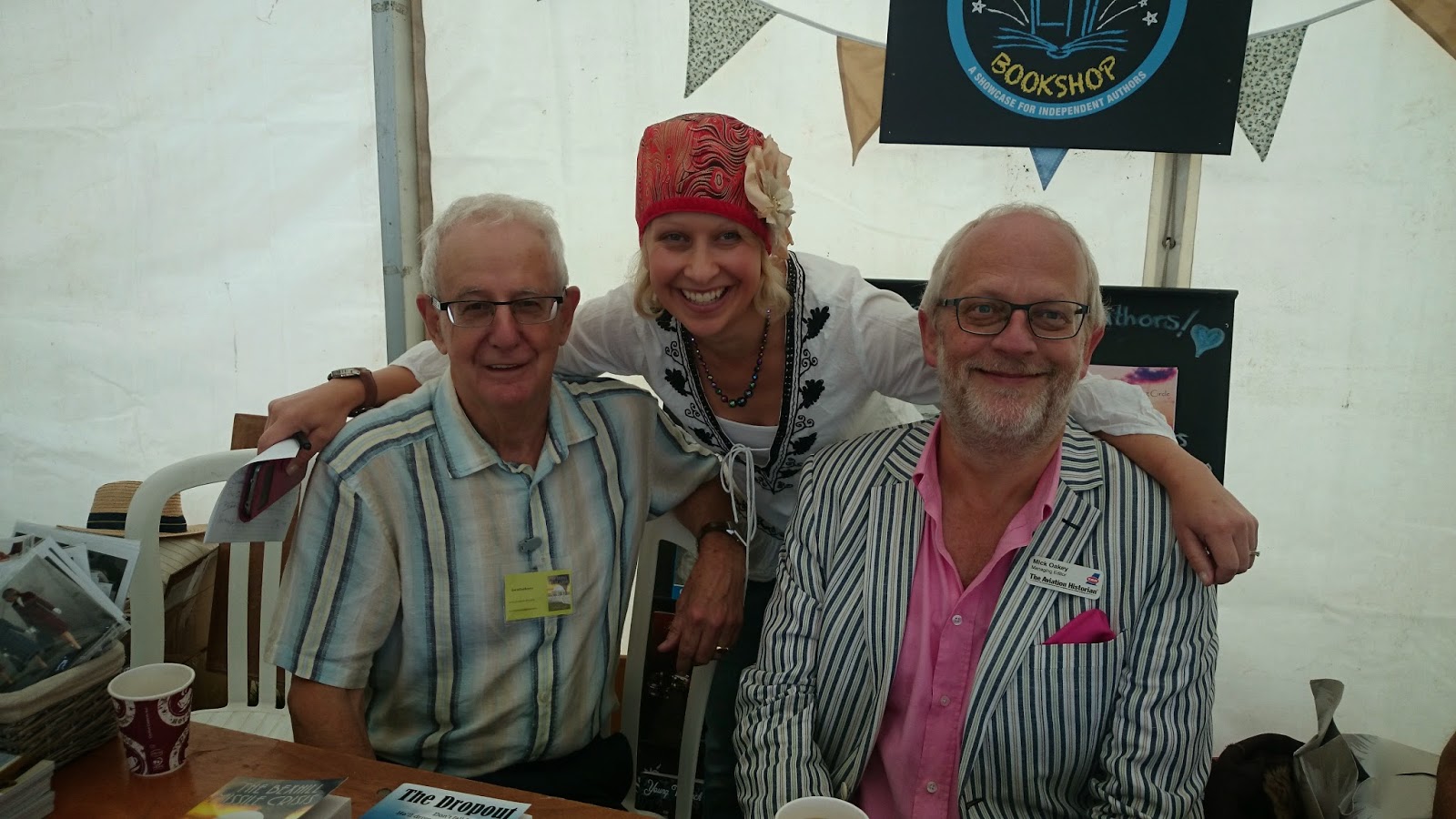 (David Gee with 'Booktique' founder Daisy White and
 aviation historian Mick Oakey)
Well, we had brilliant sunshine in West Sussex on Saturday, but my appearance at the Lindfield Arts Festival was something of a washout. There were only four people at my reading (plus my paramour who acted as my 'bearer'). Some of the other authors had even fewer. It was very generous of the owners of The Tollgate (a classy craft shop in a splendidly ancient High Street property) to allow us to strut our stuff in their tea garden, but the combined mass emailing and Social Networking by the whole group somehow failed to draw in the crowds. We should have invited one of the Duchesses - Cambridge or Cornwall - to introduce us!
Daisy White (who is a doll, by the way!) had worked very hard to set up her "Booktique" (also known as a pop-up bookshop) in a marquee on the village common. We had a trickle of sales throughout the day, but it seemed that reading (or listening to) a bunch of not-quite-celebrity authors was not high on the villagers' agenda. We should have invited Simon Cowell!
Self-promotion is, like everything else, a Learning Curve. Unfortunately our curve seems to have taken a downward turn. If anybody reading this has a Brilliant Idea to communicate with us, please make haste to communicate it.
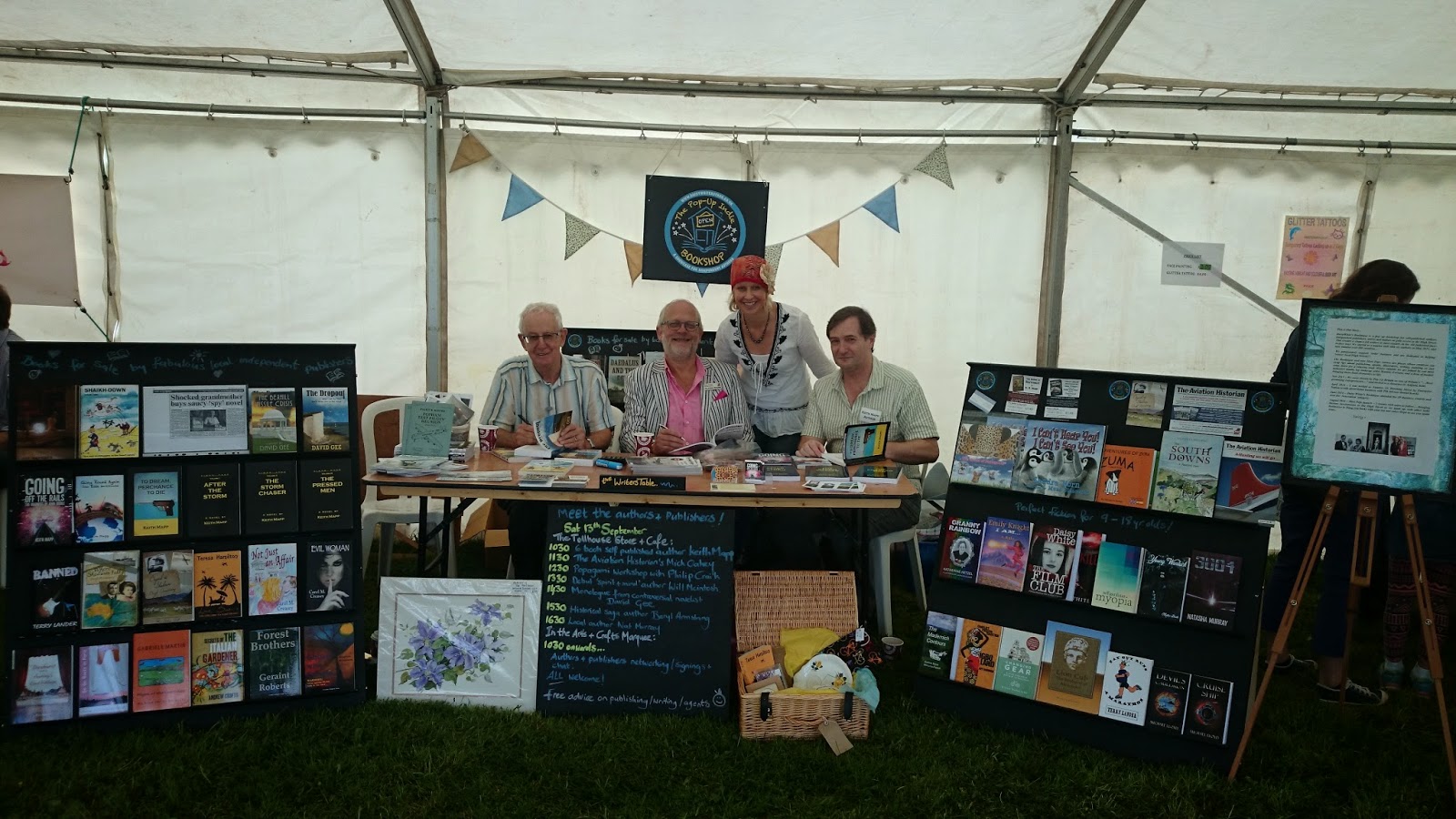 (David, Mick, Daisy and Keith Mapp
 in the marquee at Lindfield)