Sarah Guillory's Blog
October 25, 2016
IF I FIX YOU by Abigail Johnson
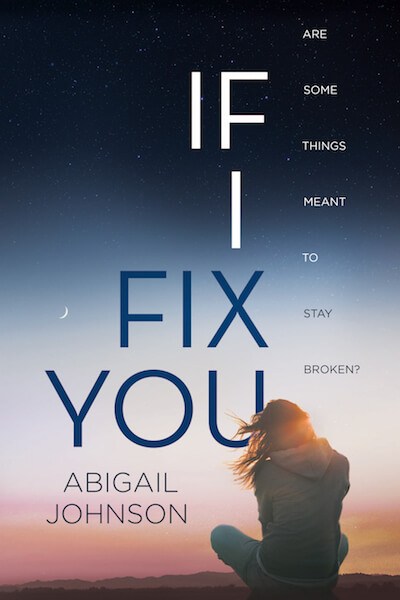 Today I am an aunt. Sort of. A book aunt, if you will. And I couldn’t be more excited.
My critique partner Abigail Johnson’s debut, If I Fix You, releases today, and I remember so vividly how I felt three years ago when my own debut released. But watching the dream of one of your writing besties come true might actually be better. I get all of the excitement and none of the anxiety.
I met Abigail and our other critique partner, Kate Goodwin, through Maggie Steifvater’s Love Connection back in early 2012. If I Fix You was the first thing I ever read of Abigail’s, and I loved it immediately. I have watched it grow and change over the years, and finally, I get to watch the world fall in love with this story as much as I did.
I can’t tell you how wonderful it is to see Abigail’s hard work pay off, and I love watching the process from this side of the desk. I’m so grateful she trusted me with her words when I was still a complete stranger on the internet. I believed in this book from the very beginning, and it’s immensely gratifying that I can now step back and watch it soar.
Click here for like ten different buy links. And do yourself a favor: READ IT!
ARE SOME THINGS MEANT TO STAY BROKEN?Readers of Sarah Dessen, Cammie McGovern and Morgan Matson will adore this thought-provoking, complex and romantic contemporary novel from debut author Abigail Johnson, about finding the strength to put yourself back together when everything you know has fallen apart.When sixteen-year-old Jill Whitaker’s mom walks out-with a sticky note as a goodbye-only Jill knows the real reason she’s gone. But how can she tell her father? Jill can hardly believe the truth herself.Suddenly, the girl who likes to fix things-cars, relationships, romances, people-is all broken up. It used to be, her best friend, tall, blond and hot flirt Sean Addison, could make her smile in seconds. But not anymore. They don’t even talk.With nothing making sense, Jill tries to pick up the pieces of her life. But when a new guy moves in next door, intense, seriously cute, but with scars-on the inside and out-that he thinks don’t show, Jill finds herself trying to make things better for Daniel. But over one long, hot Arizona summer, she realizes she can’t fix anyone’s life until she fixes her own. And she knows just where to start…“If I Fix You is a heart-rending story about life not being what you hoped for … and being okay anyway.”
—#1 New York Times bestselling author
APRILYNNE PIKE“Broken boys and broken cars and broken hearts. Heartfelt and romantic! Read it!”
—KASIE WEST,
AUTHOR OF THE FILL-IN BOYFRIEND“Adroit and strong-minded. If I Fix You is a whole-hearted page turner.”
— HUNTLEY FITZPATRICK,
AUTHOR OF THE BOY MOST LIKELY TO“I know readers are going to LOVE this book as much as I did. A feisty and strong heroine to root for, and a love interest who is dreamy and complicated in all the right ways. What a fabulous debut by a great new writer to watch!”
—CAMMIE McGOVERN,
AUTHOR OF A STEP TOWARD FALLING


October 5, 2016
RECLAIMED on Sale!
It's October--my favorite month! Reclaimed opens in October and debuted in October, so what better way to celebrate all things October than with an October ebook sale? (Wonder if I could work October in one more time?)
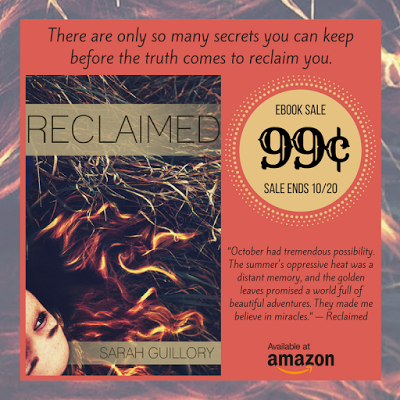
For a limited time, you can get the Kindle version of Reclaimed for only 99 cents! So if you're at all interested in small Southern towns, flawed characters seeking redemption, contemporary YA, or saving money, this might be for you.
December 5, 2015
On Hemingway and Hope
I fell in love with reading at a very young age and was so excited when I got to high school and was required to read novels for English. I loved every book assigned—except one. The Old Man and the Sea and I did not get along.
Ernest Hemingway’s Pulitzer-prize winning novella tells of an old fisherman who has gone eighty-four days without a fish. He finally catches the biggest one he’d ever seen or even heard of, only to have sharks eat it on the way home. When he gets back to his shack at the end of the story, he’s lost everything.
Teenage me was so angry when I finished the book. I hated it. To me, there was nothing more depressing than working your butt off for something only to have it taken away. I thought it was the worst ending of any novel ever and after reading a few more by Hemingway, I decided that man hated happy endings.
Which is why it’s funny that I now teach The Old Man and the Sea to my sophomores. Why in the world would I assign a book I hated when I was their age?
When I started teaching, I knew I wanted to help students fall in love with reading. I was aware that not everyone loved to read, but I wanted to change that. What I didn’t know was how many of my students would actively hate reading. Some of them actually spend way more time and effort avoiding it than they ever would just reading the dang thing. But I also wasn’t aware how many struggling readers I would have. Years ago I had a class that consisted of twenty boys and two girls. I have no idea why it turned out that way, but it did. This being Louisiana, the majority of my students was avid hunters and fishermen. The majority was also several grades below where they needed to be in reading. So I chose The Old Man and the Sea because it was short, easy to read, and accessible on several levels.
Obviously I feel it was the right choice, because I still choose to teach it every year. I love seeing my students succeed, seeing their pride at not just finishing a book, but understanding it. Who knew that the book I hated the most in high school would be the one I spent the most time with as an adult? But because I’ve spent so much time with it, and because I am no longer sixteen, I see it as a very different story indeed. It’s not depressing; it’s hopeful.
If you had told me this years ago, I wouldn’t have believed you. I read the book and saw nothing hopeful in it. That’s because as a high schooler, I didn’t want to believe that you could work hard for something and come away empty-handed.
As an adult, I know how very real that it.
The theme of the novel is “man can be destroyed but not defeated.” That is one of the most hopeful statements I’ve ever read, but it took me years to realize it. Life is hard. If you’ve lived it long enough, you know this to be true, no matter how lucky or privileged you are. It doesn’t matter who you are or what you do, sometimes life is just going to throw horrible things at you. You have no control over these things. You do have control over your response to them.
The old man went eighty-four days without a fish, but he went out every single day anyway, believing that today was his day. When he hooked a fish bigger than he could fight alone, he did not give up. When the sharks attacked, and he began losing his tools in the fight to save his fish, he did not give up. When he realized he was not going to bring the fish in, when he was bloody and bruised and more exhausted than he had ever been, he still did not quit.
The fact that we humans are capable of this kind of fight, this kind of determination, is the most hopeful thing of all.
It means we have the strength to keep going when faced with life’s adversities and disappointments. When we realize we will never get to be a parent. When we pour ourselves into our writing and fail to snag an agent. Or it fails to sell. Or it sells but no one reads it. Or people read it and hate it. It’s a helpful reminder when you’ve spent months training for a race only to have it storm all during said race. We can keep going, keep fighting, even when we are sick, or sorrowful, or so beaten up that we truly don’t think we can stand again.
We can’t control the world, but we can control our response to it. My response is to keep moving because I believe that even if I am destroyed, I am not defeated.
Huh. Maybe Hemingway did write a happy ending after all.
Ernest Hemingway’s Pulitzer-prize winning novella tells of an old fisherman who has gone eighty-four days without a fish. He finally catches the biggest one he’d ever seen or even heard of, only to have sharks eat it on the way home. When he gets back to his shack at the end of the story, he’s lost everything.
Teenage me was so angry when I finished the book. I hated it. To me, there was nothing more depressing than working your butt off for something only to have it taken away. I thought it was the worst ending of any novel ever and after reading a few more by Hemingway, I decided that man hated happy endings.
Which is why it’s funny that I now teach The Old Man and the Sea to my sophomores. Why in the world would I assign a book I hated when I was their age?
When I started teaching, I knew I wanted to help students fall in love with reading. I was aware that not everyone loved to read, but I wanted to change that. What I didn’t know was how many of my students would actively hate reading. Some of them actually spend way more time and effort avoiding it than they ever would just reading the dang thing. But I also wasn’t aware how many struggling readers I would have. Years ago I had a class that consisted of twenty boys and two girls. I have no idea why it turned out that way, but it did. This being Louisiana, the majority of my students was avid hunters and fishermen. The majority was also several grades below where they needed to be in reading. So I chose The Old Man and the Sea because it was short, easy to read, and accessible on several levels.
Obviously I feel it was the right choice, because I still choose to teach it every year. I love seeing my students succeed, seeing their pride at not just finishing a book, but understanding it. Who knew that the book I hated the most in high school would be the one I spent the most time with as an adult? But because I’ve spent so much time with it, and because I am no longer sixteen, I see it as a very different story indeed. It’s not depressing; it’s hopeful.
If you had told me this years ago, I wouldn’t have believed you. I read the book and saw nothing hopeful in it. That’s because as a high schooler, I didn’t want to believe that you could work hard for something and come away empty-handed.
As an adult, I know how very real that it.
The theme of the novel is “man can be destroyed but not defeated.” That is one of the most hopeful statements I’ve ever read, but it took me years to realize it. Life is hard. If you’ve lived it long enough, you know this to be true, no matter how lucky or privileged you are. It doesn’t matter who you are or what you do, sometimes life is just going to throw horrible things at you. You have no control over these things. You do have control over your response to them.
The old man went eighty-four days without a fish, but he went out every single day anyway, believing that today was his day. When he hooked a fish bigger than he could fight alone, he did not give up. When the sharks attacked, and he began losing his tools in the fight to save his fish, he did not give up. When he realized he was not going to bring the fish in, when he was bloody and bruised and more exhausted than he had ever been, he still did not quit.
The fact that we humans are capable of this kind of fight, this kind of determination, is the most hopeful thing of all.
It means we have the strength to keep going when faced with life’s adversities and disappointments. When we realize we will never get to be a parent. When we pour ourselves into our writing and fail to snag an agent. Or it fails to sell. Or it sells but no one reads it. Or people read it and hate it. It’s a helpful reminder when you’ve spent months training for a race only to have it storm all during said race. We can keep going, keep fighting, even when we are sick, or sorrowful, or so beaten up that we truly don’t think we can stand again.
We can’t control the world, but we can control our response to it. My response is to keep moving because I believe that even if I am destroyed, I am not defeated.
Huh. Maybe Hemingway did write a happy ending after all.
September 29, 2015
Banned Books Week
 I write a banned books post every year. Weeks ago I wrote a reminder in my planner to get it written so that I would be able to post it the first day of Banned Books Week. Here it is Tuesday, and I got nothing.
Know why? Because I’ve already written about why it’s so important for us as a society to celebrate our right to read. I even had a few of my teen students share their thoughts on banning books. I’ve written about literature being a light in the darkness, our way to gain knowledge and experience other cultures, other lives, other beliefs, teaching us empathy and compassionate and hopefully, little by little, eradicating our prejudices and ignorance. I wrote about why I read banned books, why I will continue to fight for books, even those books I find offensive and disagree with.
I became a teacher because, as idealistic and naïve as it may sound, I truly believe that education—books—can save this world. I believe it is the only thing that can. I love my job and my students so very much—every single day I’m excited to get in the classroom and work with an amazing group of teens. But that doesn’t mean it isn’t difficult, or frustrating, or that some days I don't wish I’d become a plumber because I’d probably make more money and wade through less…excrement. J
But I do my job, day in and day out, because I believe in what I do. I believe in the students that I teach, know the impact they will have on this world, and hope and pray that I am able to impart some wisdom, teach them to think, help them to navigate the harsh realities of this world and see the beauty in it.
I’m fairly quiet online because I am not quiet in my real life. I advocate for my students every single day. They make me better every single day.
Don’t tie my hands behind my back. Let me, as a teacher, use the tools I need. Books truly are a way to show students they are not alone. And they not only find themselves in those pages, but they see the face of humanity, they see those who do not look like them, speak like them, act like them, and they see that they, too, are human. They, too, are worthy of respect and compassion and consideration.
It’s not surprising that the highest percentage of challenged books are young-adult books. But as a teacher, as a writer, as a reader, I’m begging you: Don’t send the message that young-adult books are shameful. In doing so, we tell teens that they are shameful. We take away the chance to have them work through much of what they are experiencing in a safe and controlled way. We take away their chance to find understanding and truth.
I have dedicated my life to books, and I will passionately defend the right of each and every one of you to have access to those books.
Huh. Guess I had more to say than I thought.
August 22, 2015
Run Your Own Race
I’ll never forget watching the Women’s 2004 Olympic Marathon. It was the first Olympic marathon I’d ever seen, and it was even more special to me as I had run my first marathon not long before. I got up early that morning to watch it live. Two of my running idols, Deena Kastor and Paula Radcliffe, were in the race.
Watching that marathon was, and still is, such an emotional experience for me. I got chills watching Kastor strategically move from eighteenth place to third. As she moved from fourth to third, I jumped around my living room with joy. She ran her own race, not knowing how many women were in front of her. She didn’t even know she was in third place until she ran into the stadium. As she realized that she would be the bronze medalist, I cried.
This video is a bit long, but it’s worth watching. I still get chills, I still cry, every time I see it.
I often compare writing to running on this blog. It’s true in countless ways, and writers can take a lesson from Deena Kastor.
Like Kastor, we must run our own race. We have to focus on our pace, our course, not who is ahead of us. Kastor put in the work long before it paid off. Writers have to do the same. We must work hours, days, weeks, years, before we see the fruit. We have to do what is right for our story, our career, instead of focusing on what everyone else is doing. Stop worrying about how far behind you feel, how much faster other writers seems to be at drafting, revising, snagging book deals.
The great thing about writing is that it isn’t a competition. It doesn’t matter how many other writers have crossed their finish lines; there is room on the podium for anyone willing to put in the work.
Write a great story. Improve your craft. Learn. Create. Grow.
So many runners don't finish a race because they go out too fast. They get caught up in other runners' paces instead of their own, and eventually, their bodies can't keep up. They were running someone else's race, and it usually ends badly. I am quite certain that plenty of good writers have quit or become disillusioned because they spent too much time watching what others were doing instead of focusing on their own path. But Kastor's bronze medal just proves that great things come to those who put in the work and run their own race. You just may surprise yourself at how far you can go.
Watching that marathon was, and still is, such an emotional experience for me. I got chills watching Kastor strategically move from eighteenth place to third. As she moved from fourth to third, I jumped around my living room with joy. She ran her own race, not knowing how many women were in front of her. She didn’t even know she was in third place until she ran into the stadium. As she realized that she would be the bronze medalist, I cried.
This video is a bit long, but it’s worth watching. I still get chills, I still cry, every time I see it.
I often compare writing to running on this blog. It’s true in countless ways, and writers can take a lesson from Deena Kastor.
Like Kastor, we must run our own race. We have to focus on our pace, our course, not who is ahead of us. Kastor put in the work long before it paid off. Writers have to do the same. We must work hours, days, weeks, years, before we see the fruit. We have to do what is right for our story, our career, instead of focusing on what everyone else is doing. Stop worrying about how far behind you feel, how much faster other writers seems to be at drafting, revising, snagging book deals.
The great thing about writing is that it isn’t a competition. It doesn’t matter how many other writers have crossed their finish lines; there is room on the podium for anyone willing to put in the work.
Write a great story. Improve your craft. Learn. Create. Grow.
So many runners don't finish a race because they go out too fast. They get caught up in other runners' paces instead of their own, and eventually, their bodies can't keep up. They were running someone else's race, and it usually ends badly. I am quite certain that plenty of good writers have quit or become disillusioned because they spent too much time watching what others were doing instead of focusing on their own path. But Kastor's bronze medal just proves that great things come to those who put in the work and run their own race. You just may surprise yourself at how far you can go.
August 11, 2015
Don't Quit Your Day Job
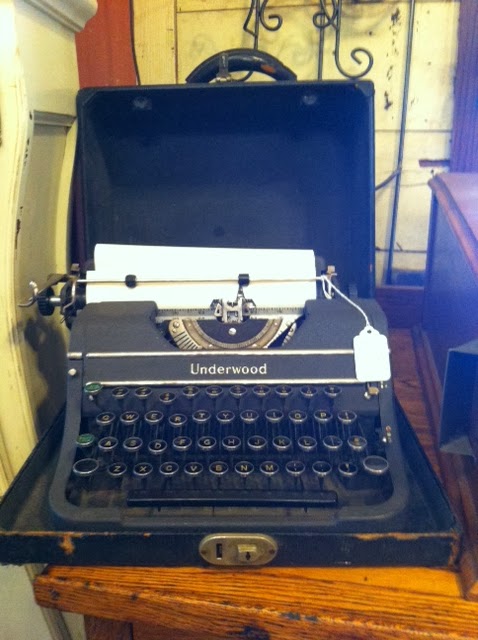 I need routine. Crave it. Thrive under it. I’m a teacher, so one would think that I would get so much writing done in the summers. One would be wrong.
I do get plenty of writing done in the summers—some summers more than others. But I find that my writing is often so much better once I go back to work. I believe it’s a combination of having only a certain about of time to write (versus having all day and frittering half of it away) and being forced to think about something other than writing eight+ hours of the day.
So often, writers dream of the day when they can quit their jobs and sit at home writing their next novel while surrounded by leather-bound books, fire crackling, sleeping dog at their feet. (That’s not just me, right?) And often they feel that they won’t be a “real” writer until they do it full time.
To that, I say bullshit. Yes, lots of writers are able to write full time. That works for them. Even more have day jobs—some out of necessity, others out of creative need.
I can only speak for myself, but judging from my writing life the past few years, my writing is better during the school year, when I’m listening to the cadence of language and having interesting conversations and keeping my mind busy until it’s time to pour myself onto the page.
You are living your life right now. There is no when, no waiting room. Your life is what you make it in this moment. In this moment, I am a teacher and a writer, and because I am both, I am better at both.
I started school yesterday. I’m exhausted. My feet hurt. It’s only 6 PM here and I’ve been craving bed for over an hour. But I’m also fulfilled, and in the last couple of days, I’ve managed to find the spark my revisions were missing. In that respect, I went back to work at both of my jobs.
And in this moment, I wouldn’t have it any other way.
July 22, 2015
Reconnected
As my summer is approaching its end (seriously, I go back to school in two weeks), I thought I’d share what I learned from my social media break.
I’m happier when I’m productive. I already knew this, but I needed reminding just how much this really affects me. In the six weeks or so while I was (mostly) away from social media, I managed to get so much done around the house. I cleaned closets and the oven, scrubbed tile, organized. Surprisingly, these things made me happy. I’m strange, I know. But there is just something about being able to see progress. As a teacher and writer, the pay-off is often years down the road. A small seed planted will grow, but damn it takes a long time. But scrubbing tile shows results immediately. I like that instant gratification. Thirty minutes organizing my closet made me feel a lot better than thirty minutes refreshing my feed.
I also managed to do a quick revision on my newest project. Now that my CPs have had their way with it, I’ll buckle down and do a major overhaul. I’m looking forward to it. The quick revision would have taken a lot longer had I been procrastinating on my phone.
I missed chatting with Twitter. I was definitely disconnected from current events, as I rarely turn the tv on in the summer and almost always get my news from Twitter. This was great in that, for the first time in a while, I was in a good head space. I found I’m less anxious when I’m not on social media all the time. I love the conversations and varied voices on Twitter, but sometimes it is just sensory overload, especially for someone who teaches school all day. I’m always dealing with current events, chatting about them with students, playing devil’s advocate. It’s hard to do that all day and then see that all evening without becoming extremely anxious.
I’m glad to have crawled out of the cave. I hope to do a better job at balancing online and offline time. I want to take what I learned this summer and keep it going without having to cut myself off completely.
I know what I need to live life well: running, writing, measurable progress, silence and solitude, breezes and sunshine. I need time to think without outside voices crowding my head. But I also need collaboration and stimulation. I need to be challenged and aware. I need balance. I want to be present.
Above all, I want to create. But I’m not going to lie: I really miss Candy Crush.
I’m happier when I’m productive. I already knew this, but I needed reminding just how much this really affects me. In the six weeks or so while I was (mostly) away from social media, I managed to get so much done around the house. I cleaned closets and the oven, scrubbed tile, organized. Surprisingly, these things made me happy. I’m strange, I know. But there is just something about being able to see progress. As a teacher and writer, the pay-off is often years down the road. A small seed planted will grow, but damn it takes a long time. But scrubbing tile shows results immediately. I like that instant gratification. Thirty minutes organizing my closet made me feel a lot better than thirty minutes refreshing my feed.
I also managed to do a quick revision on my newest project. Now that my CPs have had their way with it, I’ll buckle down and do a major overhaul. I’m looking forward to it. The quick revision would have taken a lot longer had I been procrastinating on my phone.
I missed chatting with Twitter. I was definitely disconnected from current events, as I rarely turn the tv on in the summer and almost always get my news from Twitter. This was great in that, for the first time in a while, I was in a good head space. I found I’m less anxious when I’m not on social media all the time. I love the conversations and varied voices on Twitter, but sometimes it is just sensory overload, especially for someone who teaches school all day. I’m always dealing with current events, chatting about them with students, playing devil’s advocate. It’s hard to do that all day and then see that all evening without becoming extremely anxious.
I’m glad to have crawled out of the cave. I hope to do a better job at balancing online and offline time. I want to take what I learned this summer and keep it going without having to cut myself off completely.
I know what I need to live life well: running, writing, measurable progress, silence and solitude, breezes and sunshine. I need time to think without outside voices crowding my head. But I also need collaboration and stimulation. I need to be challenged and aware. I need balance. I want to be present.
Above all, I want to create. But I’m not going to lie: I really miss Candy Crush.
June 18, 2015
RECLAIMED playlist
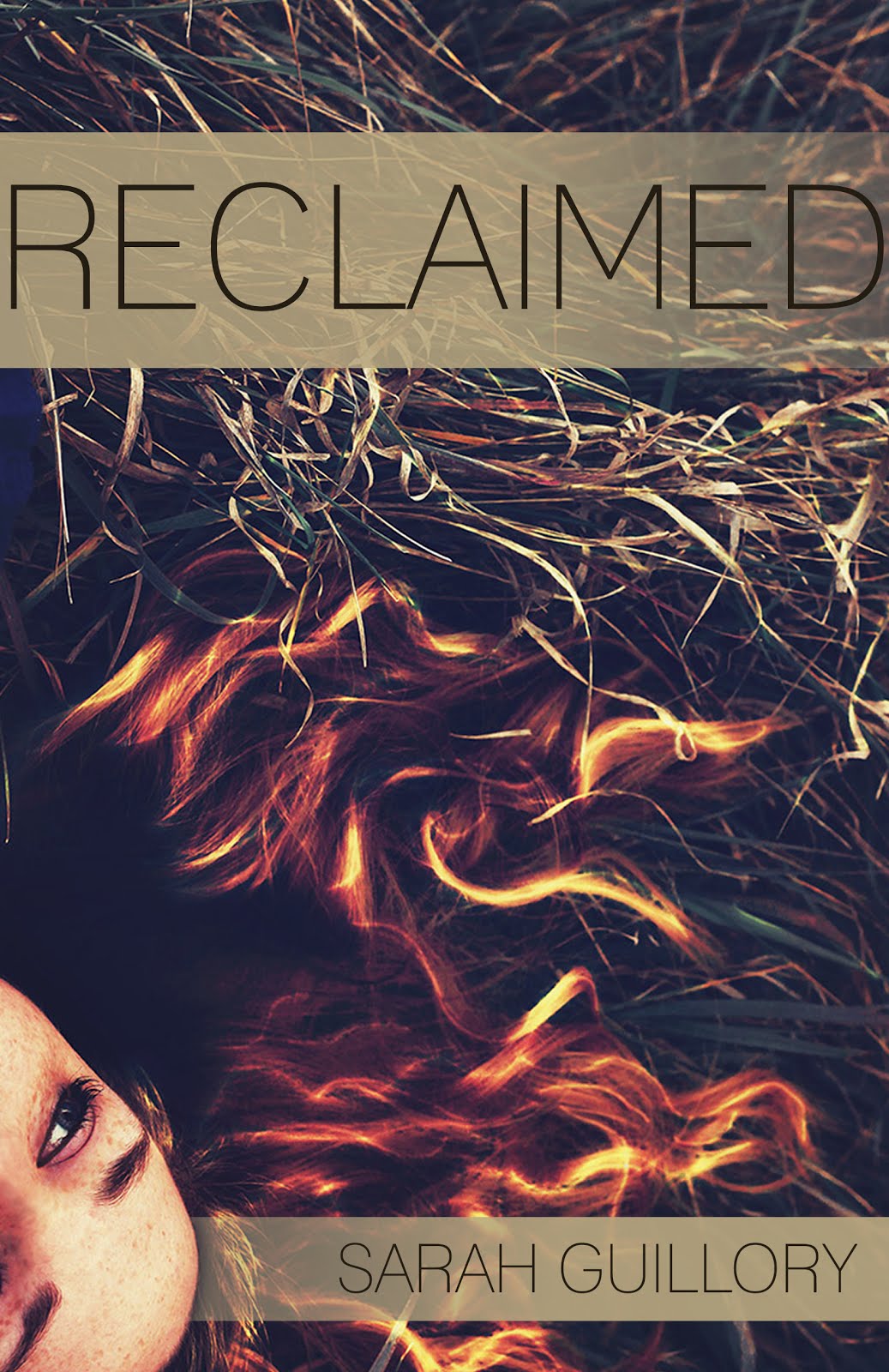 It was brought to my attention that the link to the Reclaimed playlist is broken, so I am re-posting it here.
Listen in Spotify.
Welcome Home – Radical Face
I listened to this album on repeat while working on RECLAIMED, so just hearing this song pulls me into Solitude. I see the pine trees, the lake, Solitude Point, and the abandoned train yard. Though Solitude is a town I made up, I have lived in several small towns. I grew up in Arkansas, where the novel is set, so writing the scenery was a homecoming for me.
The line “the backs of my eyes hum with things I’ve never done” makes me think of Jenna. Solitude is her home. She has lived in the small town her entire life, just like her mother and grandmother. But Jenna wants to see different places and be different people. She knows she will never be able to do all the things she wants if she stays in Solitude, and she is reminded daily of the things she’s never done.
“Peel the scars from off my back/I don’t need them anymore” also fits with Jenna because she feels like if she can just escape Solitude, she can escape those things which scarred her as well.
Picking up the Pieces – Blue October
Sometimes I feel like weeping
Awake and when I'm sleeping
Perfecting how to put a game face on
This puzzle I've been keeping
Has been in hiding creeping out the closet door
Spilling out onto the floor
How long will I be picking up pieces
How long will I be picking up my heart
I chose this song because all three characters hide things from the outside world, and all three feel like they are picking up the pieces left scattered by those secrets. Jenna has to deal with her mother’s drinking while trying to keep it a secret from everyone, especially her grandmother. Every time her mother gets drunk, Jenna is the one who has to put her back together again. Ian is always putting on his game face. He’s the peacekeeper, and he feels like he has to put his family back together after the divorce. Because he is the responsible one, it’s his job to try and repair the cracks in his family. Luke is keeping a secret from his brother, one that has consequences that he is still dealing with. But the secret he’s been hiding will eventually creep out, and all three characters will have to try and salvage the pieces.
This is How I Disappear – My Chemical Romance
This is mainly Luke’s song. He feels like being in Ian’s shadow causes him to disappear. Ian is the good student and athlete, while Luke is the one always getting in trouble. But Luke feels like Jenna sees through all that, sees who is really is. She makes him feel like he doesn’t have to disappear.
Better than Today – Wes Kirkpatrickno need to lie – cause I find the truth on your face and your ways
just realize, I don’t care if you like what I saywhen I leave, you’re still herethe same old place year after year
I want to see the smiles on different faces, I want to see the stars from other places, it will do no good to stay, you’ll never be better than today
Jenna is dealing with her mother’s alcoholism and lies. She wants to help her mother, but she always wants to leave Solitude. She is sick of being in the same place. The chorus is exactly Jenna – she wants to go places and experience new things. She is angry that her mother may jeopardize that by being selfish and having to be taken care of.
Falling Away with You – Museso I'll love whatever you become
and forget the reckless things we've done
I think our lives have just begun
I think our lives have just begun
The relationships in this story are complicated in that each is dealing with a lot at home and each finds something in the other that helps them cope. Add in the fact that Ian and Luke both need each other and have conflict with each other. I wanted to write a story about three teens who come together as their lives are falling apart. I think I’ve done that.
all of the love we've left behind
watching the flash backs intertwine
memories I will never find
memories I will never find
All of the characters have left things behind in the past, things they don’t really want to remember, and things they wish they could get back.
What if We Could – Blue October
What if we could
Put our lives on
Hold and meet some
Where inside of the world
I would meet you
Would you meet me?
This story is about the solid places we find when our lives are crumbing. Each of these characters needs something from the relationship, be it Jenna and Ian, Jenna and Luke, or Ian and Luke. While their worlds fall apart, they find something in each other that helps them get through it, or deal with it, or ignore it just for a little while.
I'm glad to say that we've met
But I'm sad to say that the circumstances weren't
On our side
And the circumstances aren’t on their side. Ian has lost three solid months. Luke doesn’t seem to be able to do anything right. And Jenna has to be the responsible adult when dealing with her mother. Add in that Jenna is falling for both boys, and the circumstances aren’t ideal at all. But none of them are willing to give those relationships up.
Fix You - Coldplay
When you try your best, but you don't succeed
When you get what you want, but not what you need
When you feel so tired, but you can't sleep
Stuck in reverse
I love writing broken, flawed characters. In some way, each of these characters tries and fails at something. Each needs something that may not happen. Jenna says at one point in the story that while she tries to do great things, she sometimes feels like she’s stuck, wading around in mediocrity, thinking she’s found her way out only to circle back to where she started. Ian is used to being successful (honor student and star athlete), but he can’t recover his memories as quickly as he wants to. And Luke feels he is always going backwards, stuck in a pattern of self-destruction.
And the tears come streaming down your face
When you lose something you can't replace
When you love someone, but it goes to waste
Could it be worse?
They all lose things that can’t be replaced. Jenna watches her mother destroy herself with alcohol. Ian and Luke, who were once inseparable, now have what feels like an irreparable rift between them.
Lights will guide you home
And ignite your bones
And I will try to fix you
Home is an important idea in this novel, and in the end, while these characters find things they need in their relationships with each other, they cannot fix each other. In the end, we can only fix ourselves.
Ghosts That We Knew – Mumford and Sons
You saw my pain washed out in the rain
Broken glass, saw the blood run from my veins
But you saw no fault, no cracks in my heart
And you knelt beside my hope torn apart
For Jenna, being with Ian is like having a blank slate. He hasn’t known her all her life, doesn’t remember every stupid thing she ever did, so she feels like she has a new start. For Ian, Jenna gives him hope that he will be normal again. When his memories fail, he can make new ones with Jenna.
Jenna sees through the dark version of himself that Luke throws at everyone. She knows Luke is broken, but she sees deeper than that, and she likes that they can be a little broken together.
So give me hope in the darkness that I will see the light
'Cause oh that gave me such a fright
But I will hold as long as you like
Just promise me we'll be alright
In the end, they help each other believe that things will be okay. Spending time with one another shows them there is hope and redemption, that the past might possibly be escaped, and that a life can be reclaimed.
June 5, 2015
The Summer of Disconnect
I’ve decided to conduct an experiment this summer. I’m disconnecting (or attempting to) from social media and deleting many of my apps and seeing just what kind, if any, of a difference that makes in my mental health and productivity.
I love Twitter. I’ve met so many awesome people on there, and for me, it’s mostly a positive place. I’ve been very lucky not to have any hate slung my way. But I find that lately, it has become a very negative place for some, and that bleeds into my timeline, even if I don’t want it to. This is not the only, or really the main, reason I am taking a break. I find that I check Twitter or Instagram or play a quick game of Candy Crush almost mindlessly. (Deleting that app was physically painful. I had made it to like level 450-something.) I pick up my phone without even realizing I’m doing it.
I worry that going dark will be bad for my writing career. People may forget me when my face isn’t in their feed daily. But I also know this is an unfounded worry, because the worst thing for my writing career is being distracted from writing. It’s not just (or even mainly) my writing time that is affected by distraction. I am pretty good about carving out time to work and staying focused. But it is those quiet moments when I’m not working, when my brain is free to wander, that some of my best ideas or lines find their way to me, and that can’t happen when I am constantly tuning those ideas out in favor of social media or games.
I worry the most about being absent because I won’t be there to support the writing community. I am on Twitter mainly for those connections, those conversations and pep rallies. I will miss out on awesome book recs, deal announcements, and cover reveals. The writing community has been so very supportive of me, and I want to be the same in kind. I hope I don’t hurt anyone’s feelings for bowing out for a bit.
Of course, I may flatter myself. You may not even notice I’m gone. J
But I want to reconnect with myself. My focus for this year is to “Be Present,” and right now, I’m not doing so well. I want to recover those lost moments and lost experiences. Maybe I will. Maybe I won’t. I may fail miserably and crawl back, hollow-eyed and in need of a fix, before the week is out. I may find that too much disconnect only makes me lonely. Like I said, this is just an experiment.
I’ll keep you posted.
June 3, 2015
"You Can't Add Awesome"
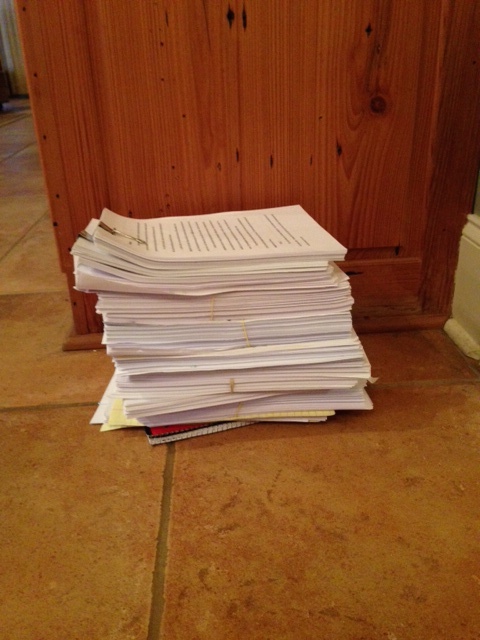 Copies of RECLAIMED revisions.
 The beginning of my writing life was spent in isolation. I didn’t know any other writers, and I was not on Twitter or Facebook. This was both a blessing and a curse. The good part about this was that I worked on my craft. I wrote and read basically in my own little cushioned bubble, and it was lovely inside, all warm and cuddly. Of course, the bad part was that I was missing out on awesome collaboration and conversation, advice I desperately needed, tips I could have used. Some days I needed to be alone; others, I needed to know I really wasn’t.
Once I decided to pursue publication and start querying, I spent a lot of time researching and finally, because all the cool writers were doing it, got on Twitter. (I still don’t have a Facebook.) One of the first pieces of writing advice I saw was “You can’t add awesome.”
It knocked me down a little.
I don’t know who said it, and maybe they were commenting on "you can’t fix a blank page" kind of thing, but if my memory is correct, the conversation went on to say that all the really good stuff has to come out during drafting or it won’t come out at all.
Bullshit.
But see, I was a beginning writer, and I didn’t know how much bad (read: doesn’t apply to me) advice was really floating around out there. I was comparing the crap I was working on with books and words I loved, so I felt very disillusioned to learn that I would never write something worthwhile because I knew just one thing about my own writing: my first drafts were abysmal. Truly. Like I should burn them they were (are) so bad. And while I knew I could clean up the grammar and reorganize the plot, at that point I worried I would never write something with that awesome in it because my awesome never showed up in the first draft.
Of course, now I know just how untrue that is. You can totally add awesome. Sometimes a funny bit of dialogue or a poignant piece of wording sneaks its way into my first drafts, but rarely. I smear that crap all over the page, and then I fix it. Yes, I whittle it down, exposing the good stuff. But I’m going to be honest—there’s not much good stuff to uncover that first go round. I delete and add, delete and add, until the story is a little better. And then I do it several more times before I am willing to even admit to myself that I might have something worth sharing.
One of my favorite lines of RECLAIMED was added during copy edits. The climax was rewritten (and vastly improved) at the eleventh hour. Neither my editor nor my CPs had told me that the climax was wrong, and it was fine, but there was just something about it that niggled at me. I’d worked on that story for three years, revised more times than I could count, but there was just a small feeling that it wasn’t where it was supposed to be. I couldn’t shake it. And then, on New Year's Day, driving home from the in-laws, one single sentence floated to the front of my mind. It was exactly the missing piece, and I rewrote the climax, even though my line edits were due in just a few days. I do feel that change added to the story.
The writing process looks differently for everyone. Don’t let anyone else’s experience invalidate your own. The end game is the only one that matters--writing a story you are proud of. How you get there is up to you.