Elle Alexander's Blog
August 4, 2015
Spanelli - An Excerpt
Hi readers. Because my first novel, Grimly Jane, is taking up so much of my time, I haven't really been promoting Spanelli. I thought you might like to read the first chapter since, you know, it's sort of a good story. Well, I won't ramble anymore. Remember, your comments are always welcomed. (Forgive the formatting and non-indenting. I have the hardest time trying to format things in Blogger)
Summary: Twelve year old Spanelli McQuillen works at The Museum of Oddities, the family owned antiques shop. When her mother purchases Hamley House, an abandoned home that sits on a hill at the edge of their small neighborhood, Spanelli gets the feeling that something isn’t right with the grand, old estate. After she discovers a letter tucked between the pages of an old book, her fears are confirmed and she is taken on a wild adventure as she discovers the frightful mysteries of the old house.
SPANELLI - Chapter One
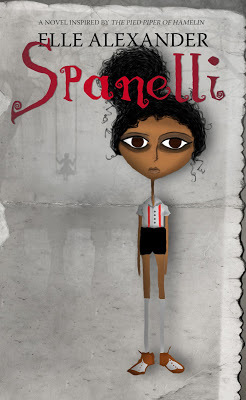 The house was large, much larger than the cozy, three bedroom they’d just moved from. And it was looming, its monumental structure casting a shadow upon the entire street. Spanelli ambled up the rocky walkway and observed the grounds. There were four, fretful looking sculptures perfectly aligned along the front of the house. A crooked, rusty fountain sat directly in front of the sculptures, struggling to produce water from its rotting spout. Walking still slowly toward the front door, her eyes widened as they followed the twisting, overgrown ivy that crawled up the bricks and covered most of the windows. She was overcome with uneasiness and she couldn’t understand why, for there was nothing immediately frightening about the house. It was a bit run down due to age and neglect but that was normal since Spanelli and her mother were its’ first occupants in twenty or so years. Still, the house seemed to curse her with a temporary disability, stifling her movements and burdening her mind with unimaginable thoughts. As she stood there staring at the crusty, brick mansion, a warm breeze surrounded her, whistling eerily and shocking her out of her daymare. Breathing heavily, Spanelli approached the front door. There were people all about the house as she finally made her way inside—movers, a home inspector, an electrician and a plumber—all of them working hard to prepare the house for her and her mother. “Be gentle with that lamp, it’s fragile,” said Spanelli’s mother as she directed the movers on where to place their numerous belongings. “Yes, right there. And take care not to damage the wallpaper, it’s delicate and extremely rare. I’ve no plans to replace it.” Widening her large, brown eyes as she examined the grand entryway, Spanelli walked toward her mother. “Voices. I hear voices in the walls. There’s someone here,” she said, setting her backpack on the floor. “Don’t be silly,” her mother replied, distractedly. “I don’t think I like this house very much,” continued Spanelli, frustrated at her mother’s dismissive response. Wiping her unruly coils out of her face, Ann turned and looked at Spanelli. “Nonsense. This was once the grandest home in the neighborhood. A little TLC and it will be grand once more, like new even.” She placed her elegant hands on Spanelli’s shoulder and smiled. “Besides kid, we make our living on making old things new again.” She’d made a valid point. She and Spanelli owned and operated The Museum Of Oddities, an antiques shop that had been in the family for sixty-five years. They had a strange fascination with the exceptionally old and rare, always managing to see the beauty in the most hideous of things. Like magicians, they brought out that beauty, making old things look even better than they might have looked when they were first made. Though Spanelli was only twelve, Ann quite depended on her opinions and expertise when it came to purchasing and restoring things, from old china to photos, toys and books. In fact, she’d consulted her on just about every purchase since Spanelli was six years old. But in the case of Hamley House, their new home which sat on a hill at the edge of town, she decided to surprise her clever daughter by going on with the purchase without her. “Spanelli,” began Ann, petting the top of her head, “now I know unfamiliar surroundings can appear strange at first, scary even. Perhaps you should go exploring, you know, take a look around and get to know the place before you write it off as unbearable. After all, we have a rule about judging things before we’ve tried them, right?” “But, I…” “No buts kid. Besides, I don’t want you in the way when those clumsy movers start hauling in the big stuff. Now run along and remember…” “I know, I know. There’s beauty to be found in everything. You just need the vision to see it,” Spanelli cut in, finishing her mother’s sentence. Although she’d become quite good at seeing the beautiful side of things, she was having a hard time seeing Hamley House as anything but a creepy, towering building filled with dark secrets. Climbing the right side of the double, curved staircase, Spanelli started down the narrow hallway. The left side of the hall was nothing but windows, most of them cracked and grimy, laden with pigeon droppings, cobwebs and overgrown ivy. The right side of the hall was a wall covered in floral wallpaper that was different shades of pink and peeling due to moisture and age. Lopsided portraits of odd looking people lined the walls. And if she didn’t know any better, she would’ve sworn that their eyes followed her as she passed by. Continuing her trek down the unusually long hallway, she finally arrived at her first door. As far as she could see, outside of the washroom, whatever room the door lead to was the only room on the entire floor. Looking around as if she were up to the worst possible mischief, she placed her shaking hand on the S-shaped handle. As she pressed down on the handle to open the door, she heard a Whoosh! The door wouldn’t budge. “What was that?” She gasped, reluctant to look behind her for fear some ghastly figure with razor sharp teeth might be hovering over her. She glanced over her shoulder. “Whew,” she breathed, relieved that her imagination had simply got the better of her. “Must’ve been the wind or something.” She was right. All she’d heard were the creaks and moans of the house settling as old homes are prone to do. Nervous and shaky, she once more fixed her focus on the door in front of her as she tried to open it. When pressing on the handle didn’t work, she turned to her side, using her shoulder to try and force it open. When the door still refused to open, she grew frustrated. “C’mon you stupid door,” she muttered, wildly kicking the bottom of the door with her foot. Kicking and pushing with all of her strength, the door begrudgingly crept open. Pushing on the door to open it wider, she stepped onto the wood floor. “A playroom,” she said, looking at all the vintage playthings as if they were some enchanted treasure. There were tea sets, porcelain dolls in beautiful dresses, old shoes and costumes, which no doubt were used for playing dress up, numerous stuffed animals and little wooden toys, even a working train set. As she walked further inside, taking in all the sights, smells and sounds, her body suddenly began to shudder. There was something unnerving about the room, something terribly odd that she couldn’t put her finger on. She bent down and picked up a chessboard. The pieces were placed on the board in such a way that the game seemed to have been in the middle of being played. In fact, everything in the room had that sort of feeling, as though children were in the middle of their activities but suddenly forced to abandon them. Unable to shake the nagging feeling that something about the room wasn’t right, she continued to explore, mentally absorbing all details in case she needed to draw upon them later. “This floor could use a good washing,” she thought, looking down at the dust prints her shoes had made on the floor. As she took her next step, she stumbled and fell over an area rug, which instead of lying flat, was humped and lumpy in one spot. Rising from the floor, she limped over to the lumpy area and lifted the rug to see what caused her to fall. “Beautiful,” she said, her eyes widening as she picked up a tarnished, jeweled box that was sitting on the floor under the rug. Careful not to disturb any of the box’s delicate adornments, she lifted the top. As it opened, a gold cat sprouted up, spinning to the lullaby that started to play as the box was opened. “A music box,” said Spanelli, studying the box. As she watched the cat spin, she noticed a small, silver button along the edge of the cat’s foot. When she pushed it, the music stopped playing and the cat stopped spinning. Suddenly it clicked open, leading to a hidden compartment in the bottom of the box. Lifting the cat all the way up, she looked inside. Though the color was faded and worn in spots, the pink velvet lining was rich and beautiful. Pressed into the velvet was a silver skeleton key. As she lifted the key from its resting place and put it in her pocket, a burst of cold wind blew about the room, so strong it sent her to the floor once more. She looked around, frightened, trying to see where the wind was coming from. All the windows in the room were sealed shut. There were no holes in the ceiling or any other noticeable openings where the wind could’ve escaped from. “It’s creepy in here,” she stuttered as she arose from the floor, shivering from coldness and fear. “I’m going to find mom.” Just as she turned to leave, she heard a voice whisper, “Spanelli, Spanelli.” Spanelli looked behind her. “Who said that?” She asked. She received no response. She ran toward the door when she again heard, “Spanelli, Spanelli.” She looked all around the room, noticing an archway that appeared to lead to a hidden room. “Funny, that wasn’t there before. At least, I don’t think it was,” she said, suspiciously. She walked over to the archway, down the half hallway and to the crooked, pink door that waited at the end of it. Putting her hand forward and placing it on the doorknob, she tried to turn it. It was locked. “Great,” she huffed, “a locked door. Well, so much for exploring.” Then she remembered the key that she’d planted in her jeans pocket. Filled with curiosity, she fetched the key from her pocket and examined it to see if it was a match for the keyhole in the door, but she couldn’t tell just from looking at it. The only way to know if the key would fit was for her to try it. Just as she put the key in the keyhole, she felt a hand on her shoulder. “Ahhh!” She screamed, covering her face from the creature that could very well be standing behind her. “Spanelli. What has gotten into you kid? I’ve been looking everywhere for you,” said Ann, looking puzzlingly at her daughter. “Whew. It’s just you mom,” replied Spanelli, relieved. She hugged her mother so tight it was as though she’d never see her again. “Of course it’s me. Who else were you expecting? Oh Spanelli, I keep telling you that that imagination of yours is gonna get you in a world of trouble one day. Come on, we’re eating out tonight,” she said as she and Spanelli left the room.
Summary: Twelve year old Spanelli McQuillen works at The Museum of Oddities, the family owned antiques shop. When her mother purchases Hamley House, an abandoned home that sits on a hill at the edge of their small neighborhood, Spanelli gets the feeling that something isn’t right with the grand, old estate. After she discovers a letter tucked between the pages of an old book, her fears are confirmed and she is taken on a wild adventure as she discovers the frightful mysteries of the old house.
SPANELLI - Chapter One
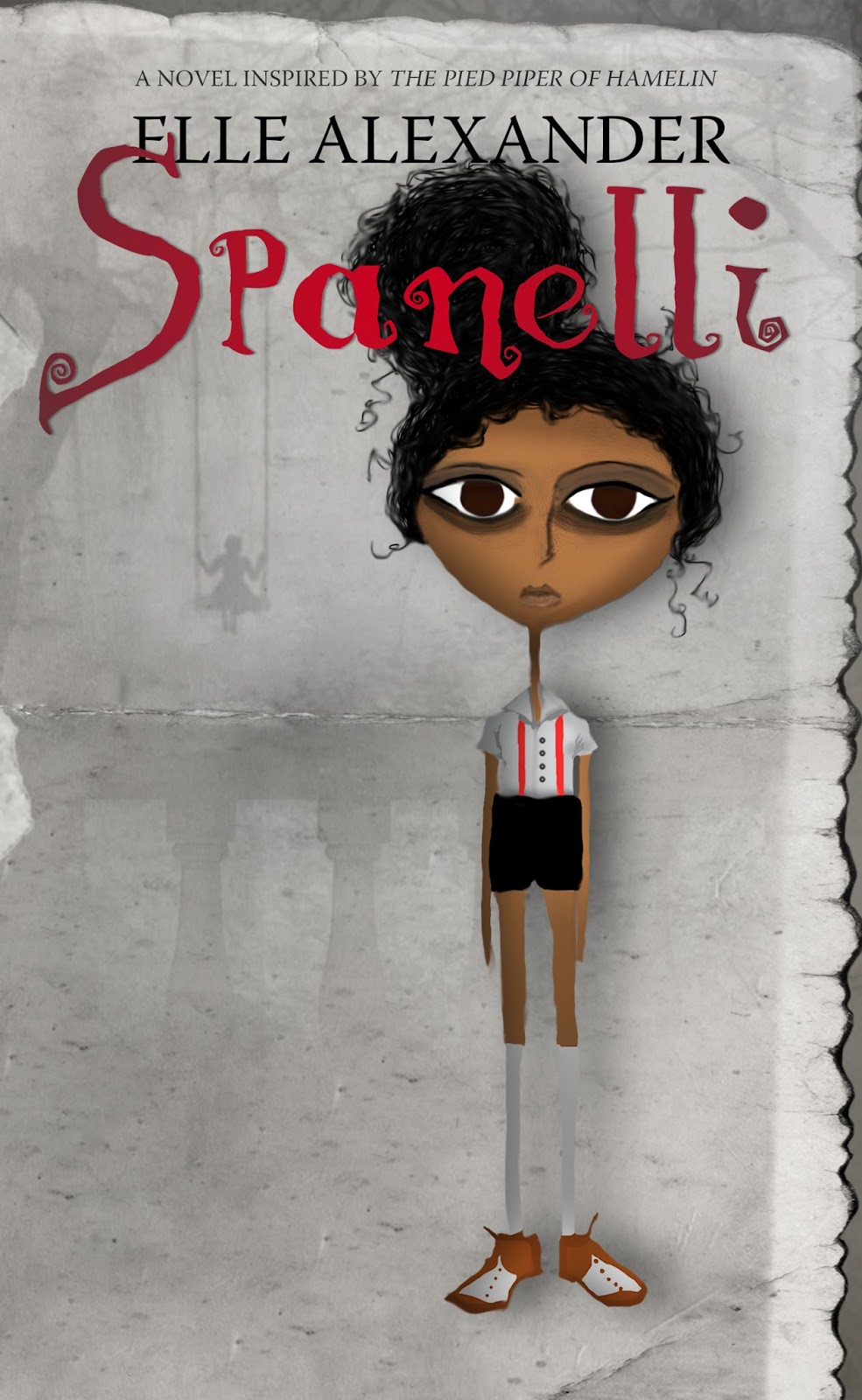 The house was large, much larger than the cozy, three bedroom they’d just moved from. And it was looming, its monumental structure casting a shadow upon the entire street. Spanelli ambled up the rocky walkway and observed the grounds. There were four, fretful looking sculptures perfectly aligned along the front of the house. A crooked, rusty fountain sat directly in front of the sculptures, struggling to produce water from its rotting spout. Walking still slowly toward the front door, her eyes widened as they followed the twisting, overgrown ivy that crawled up the bricks and covered most of the windows. She was overcome with uneasiness and she couldn’t understand why, for there was nothing immediately frightening about the house. It was a bit run down due to age and neglect but that was normal since Spanelli and her mother were its’ first occupants in twenty or so years. Still, the house seemed to curse her with a temporary disability, stifling her movements and burdening her mind with unimaginable thoughts. As she stood there staring at the crusty, brick mansion, a warm breeze surrounded her, whistling eerily and shocking her out of her daymare. Breathing heavily, Spanelli approached the front door. There were people all about the house as she finally made her way inside—movers, a home inspector, an electrician and a plumber—all of them working hard to prepare the house for her and her mother. “Be gentle with that lamp, it’s fragile,” said Spanelli’s mother as she directed the movers on where to place their numerous belongings. “Yes, right there. And take care not to damage the wallpaper, it’s delicate and extremely rare. I’ve no plans to replace it.” Widening her large, brown eyes as she examined the grand entryway, Spanelli walked toward her mother. “Voices. I hear voices in the walls. There’s someone here,” she said, setting her backpack on the floor. “Don’t be silly,” her mother replied, distractedly. “I don’t think I like this house very much,” continued Spanelli, frustrated at her mother’s dismissive response. Wiping her unruly coils out of her face, Ann turned and looked at Spanelli. “Nonsense. This was once the grandest home in the neighborhood. A little TLC and it will be grand once more, like new even.” She placed her elegant hands on Spanelli’s shoulder and smiled. “Besides kid, we make our living on making old things new again.” She’d made a valid point. She and Spanelli owned and operated The Museum Of Oddities, an antiques shop that had been in the family for sixty-five years. They had a strange fascination with the exceptionally old and rare, always managing to see the beauty in the most hideous of things. Like magicians, they brought out that beauty, making old things look even better than they might have looked when they were first made. Though Spanelli was only twelve, Ann quite depended on her opinions and expertise when it came to purchasing and restoring things, from old china to photos, toys and books. In fact, she’d consulted her on just about every purchase since Spanelli was six years old. But in the case of Hamley House, their new home which sat on a hill at the edge of town, she decided to surprise her clever daughter by going on with the purchase without her. “Spanelli,” began Ann, petting the top of her head, “now I know unfamiliar surroundings can appear strange at first, scary even. Perhaps you should go exploring, you know, take a look around and get to know the place before you write it off as unbearable. After all, we have a rule about judging things before we’ve tried them, right?” “But, I…” “No buts kid. Besides, I don’t want you in the way when those clumsy movers start hauling in the big stuff. Now run along and remember…” “I know, I know. There’s beauty to be found in everything. You just need the vision to see it,” Spanelli cut in, finishing her mother’s sentence. Although she’d become quite good at seeing the beautiful side of things, she was having a hard time seeing Hamley House as anything but a creepy, towering building filled with dark secrets. Climbing the right side of the double, curved staircase, Spanelli started down the narrow hallway. The left side of the hall was nothing but windows, most of them cracked and grimy, laden with pigeon droppings, cobwebs and overgrown ivy. The right side of the hall was a wall covered in floral wallpaper that was different shades of pink and peeling due to moisture and age. Lopsided portraits of odd looking people lined the walls. And if she didn’t know any better, she would’ve sworn that their eyes followed her as she passed by. Continuing her trek down the unusually long hallway, she finally arrived at her first door. As far as she could see, outside of the washroom, whatever room the door lead to was the only room on the entire floor. Looking around as if she were up to the worst possible mischief, she placed her shaking hand on the S-shaped handle. As she pressed down on the handle to open the door, she heard a Whoosh! The door wouldn’t budge. “What was that?” She gasped, reluctant to look behind her for fear some ghastly figure with razor sharp teeth might be hovering over her. She glanced over her shoulder. “Whew,” she breathed, relieved that her imagination had simply got the better of her. “Must’ve been the wind or something.” She was right. All she’d heard were the creaks and moans of the house settling as old homes are prone to do. Nervous and shaky, she once more fixed her focus on the door in front of her as she tried to open it. When pressing on the handle didn’t work, she turned to her side, using her shoulder to try and force it open. When the door still refused to open, she grew frustrated. “C’mon you stupid door,” she muttered, wildly kicking the bottom of the door with her foot. Kicking and pushing with all of her strength, the door begrudgingly crept open. Pushing on the door to open it wider, she stepped onto the wood floor. “A playroom,” she said, looking at all the vintage playthings as if they were some enchanted treasure. There were tea sets, porcelain dolls in beautiful dresses, old shoes and costumes, which no doubt were used for playing dress up, numerous stuffed animals and little wooden toys, even a working train set. As she walked further inside, taking in all the sights, smells and sounds, her body suddenly began to shudder. There was something unnerving about the room, something terribly odd that she couldn’t put her finger on. She bent down and picked up a chessboard. The pieces were placed on the board in such a way that the game seemed to have been in the middle of being played. In fact, everything in the room had that sort of feeling, as though children were in the middle of their activities but suddenly forced to abandon them. Unable to shake the nagging feeling that something about the room wasn’t right, she continued to explore, mentally absorbing all details in case she needed to draw upon them later. “This floor could use a good washing,” she thought, looking down at the dust prints her shoes had made on the floor. As she took her next step, she stumbled and fell over an area rug, which instead of lying flat, was humped and lumpy in one spot. Rising from the floor, she limped over to the lumpy area and lifted the rug to see what caused her to fall. “Beautiful,” she said, her eyes widening as she picked up a tarnished, jeweled box that was sitting on the floor under the rug. Careful not to disturb any of the box’s delicate adornments, she lifted the top. As it opened, a gold cat sprouted up, spinning to the lullaby that started to play as the box was opened. “A music box,” said Spanelli, studying the box. As she watched the cat spin, she noticed a small, silver button along the edge of the cat’s foot. When she pushed it, the music stopped playing and the cat stopped spinning. Suddenly it clicked open, leading to a hidden compartment in the bottom of the box. Lifting the cat all the way up, she looked inside. Though the color was faded and worn in spots, the pink velvet lining was rich and beautiful. Pressed into the velvet was a silver skeleton key. As she lifted the key from its resting place and put it in her pocket, a burst of cold wind blew about the room, so strong it sent her to the floor once more. She looked around, frightened, trying to see where the wind was coming from. All the windows in the room were sealed shut. There were no holes in the ceiling or any other noticeable openings where the wind could’ve escaped from. “It’s creepy in here,” she stuttered as she arose from the floor, shivering from coldness and fear. “I’m going to find mom.” Just as she turned to leave, she heard a voice whisper, “Spanelli, Spanelli.” Spanelli looked behind her. “Who said that?” She asked. She received no response. She ran toward the door when she again heard, “Spanelli, Spanelli.” She looked all around the room, noticing an archway that appeared to lead to a hidden room. “Funny, that wasn’t there before. At least, I don’t think it was,” she said, suspiciously. She walked over to the archway, down the half hallway and to the crooked, pink door that waited at the end of it. Putting her hand forward and placing it on the doorknob, she tried to turn it. It was locked. “Great,” she huffed, “a locked door. Well, so much for exploring.” Then she remembered the key that she’d planted in her jeans pocket. Filled with curiosity, she fetched the key from her pocket and examined it to see if it was a match for the keyhole in the door, but she couldn’t tell just from looking at it. The only way to know if the key would fit was for her to try it. Just as she put the key in the keyhole, she felt a hand on her shoulder. “Ahhh!” She screamed, covering her face from the creature that could very well be standing behind her. “Spanelli. What has gotten into you kid? I’ve been looking everywhere for you,” said Ann, looking puzzlingly at her daughter. “Whew. It’s just you mom,” replied Spanelli, relieved. She hugged her mother so tight it was as though she’d never see her again. “Of course it’s me. Who else were you expecting? Oh Spanelli, I keep telling you that that imagination of yours is gonna get you in a world of trouble one day. Come on, we’re eating out tonight,” she said as she and Spanelli left the room.


March 25, 2015
The Big Bad Book Reviewer
 I remember the worst book I’d ever read. It was a romance set in the 18th Century. The story was all over the place, the situations were unbelievable, the dialogue was flat as a stone slab and the relationships were unconvincing. It was the most unromantic romance I’d ever read and I was furious. How dare that author write such a horrible book? I’d wasted both my money and precious time on the horrible thing and I wanted it back, every dollar and ever second. I immediately went to Goodreads, determined to give that author a review she’d never forget. I knew exactly what I was going to say: “DO NOT READ THIS BOOK! It’s horrible, HORRIBLE I say! Probably the worst book I’ve ever read and I read a lot of books. (Insert author name) needs to pick another career because writing clearly isn’t her strongpoint.” But something happened as I typed that first sentence ‘DO NOT READ THIS BOOK!’ Conviction overshadowed me, pricking my conscience with thorns so sharp I could feel it in my spine. Here it was that this writer, artist, creative individual, poured her heart into her manuscript. She had a vision and she wrote it down, she finished something (starting a book is one thing but finishing it is another thing entirely), putting forth all her effort, using all her spare time, bearing her very soul. Who was I to rip her to shreds with my scathing opinion? Just because I didn’t like it doesn’t mean it was a bad book. Why would I, with my cruel words, discourage other potential readers from reading a book they may have liked? So I stopped typing, deleting the review before I pressed submit. Don’t get me wrong, there are plenty of books that I hate to my very bones, but I just hate them, quietly. I no longer believe in publicly criticizing a person’s creative work. The fact is, there are and always will be bitter, cruel people in this world with nothing better to do than pick apart someone else’s creations. I say, let them be. But I find great comfort in the fact that I will not be one of that pathetic lot. To all writers & artists, keep creating. Believe it or not, there’s someone in the world who’ll be inspired by what you’re doing.
January 25, 2015
Grimly Jane: An Excerpt
 “It’s the night of the witch.” Teased Pip, nudging Caroline on the arm as they walked around the fair. The sky, though speckled with stars, was ominous and unusually dark for an early summer evening. “I don’t believe in urban legends and mum says you shouldn’t either. Honestly Pip, I don’t see why you poison your mind with creepiness, especially with your imagination. Next thing you know that pile of dirt will turn into a beast and start chasing us let you tell it.”Pip’s face grew long and serious. She narrowed her large eyes and looked intently at her sister. “Yes well this is no urban legend or a myth or some wild fairy story. It’s a fact. Every ten years…”“Ugh, don’t start with that hideous tale.” Caroline interrupted, crossing her arms and rolling her eyes.“As I was saying,” Pip continued, completely ignoring her sister's whining. “Every ten years a child disappears without a trace, leaving no clue of their whereabouts. It happens on nights like tonight, when all is well and everything is as it should be. The children are idling about toying with their playthings when suddenly, one of them vanishes into nowhere, the unknown.” “I really don’t want to hear this.” Caroline insisted.“And it is said that soon after the child vanishes, you can hear the faint sound of a witch’s laughter.” “Will you stop with your theatrics? People are watching us like we’re a pair of loonies.” Whispered Caroline, pointing to the small crowd that’d begun to gather around them.But Pip continued to talk, her dramatic hand gestures and fancy footwork making her appear like an actress on a grand stage. She turned to face the crowd, her voice rising to a screeching roar. “Hear ye, hear ye good people of Ghastly Hollow, lock your windows, draw your curtains, and bolt your doors for who knows which of us the witch may take tonight?” The crowd gasped, a look of fear plastered across their faces. “Um, pay no attention to my sister.” Blurted Caroline, grabbing Pip by her arm. “She’s only kidding. That was just some dumb story she made up to get attention. Why, when we were very little she convinced me that our cat Mittens turned into a creature at night and pilfered my best dolls, until I found them all stashed away in her toy trunk.” The crowd sighed, relieved, though a few of them were adamant that the story must be true. Slowly, they began to disperse. “Why must you always be so impossible Pip?” Caroline scathed, peering at her sister. “If it’s just some dumb story then why do you look so scared?” Asked Pip. “I’m not scared, you’re just getting on my nerves. And look, because of you slowing us down with that stupid story the line at the ferris wheel is too long to stand in.” “Forget the ferris wheel, I know something we can do that’s way more exciting and it will prove my story is true.” “Not again with that story.” “I’m serious. You see that black and silver striped tent at the end of the path?” Asked, Pip, pointing in the direction of the tent. “Yea, so?” “There’s a storyteller in that tent, The Countess Du Estoire, the mistress of fables. She knew the witch when she was a little girl. She can tell you all about her and prove that my story is more than a childish myth.” Caroline was intrigued. What if her sister wasn’t so crazy after all? What if that outlandish story was as true as the ground on which they walked? “Forget it, I’m not wasting the last few hours on the last day of the fair listening to some old cuckoo lady tell crazy stories.” Pip gave her sister the side eye. “Or perhaps you’re just a scare baby.” She smirked. “I’m not a scare baby, I just…” Caroline paused, knowing that no matter what she said to convince her sister otherwise, she’d be known as the older, scare baby of a sister for the rest of her life if she didn’t go along. “Ugh, fine. Let’s go find this Countess of yours. Perhaps when we get there she can talk some sense into you and your crazy imagination.” The sky seemed to grow darker as they made their way toward the looming tent. The fair, filled with people and noise only minutes ago, seemed quiet and empty. “W-where is everybody?” Stammered Caroline, sweat forming in puddles on her forehead. “What are you talking about? There are people everywhere. Look, the line at the ferris wheel is still wrapped around the park.” Caroline turned to look at the line, which was now far behind them. “Oh, guess I hadn’t noticed. Then why does it feel like we’re the only ones here?”“I knew it! You are scared.” Said Pip. “For the last time I’m not scared. I just, well, shouldn’t we be getting back to mum? She’s probably worried by now.” “We still have an hour before curfew which leaves us plenty of time to hear The Countess’s story. Now quit stalling and let’s go.”
 December 14, 2014
Dear White People, It's Not All Your Fault
 I won’t do it. I refuse to do it. I refuse to perpetuate the lie that all of my problems are because of the white man. I refuse to lie to myself and others that because of the past, because of slavery and racism, I am where I am today. Instead, I will be brave. I will be bold. I will be transparent. I will, for once, tell the truth. It is my own fault that I got credit cards as a teenager and didn’t pay the bills so now my credit is a little messed up and it’s hard for me to get things. It is my own fault that I, being the rebellious girl that I was, had a child before I was financially prepared so I set myself back a few years. It is my own fault that I goofed off in college instead of taking advantage of my scholarships and getting the education that was so generously handed to me. It is my own fault that instead of being diligent and handling my tasks that should have been completed long ago, I procrastinated and now it’s harder for me to catch up for lost time. It is not because of white supremacy. It is not because of legalized racism. It is not because of the justice system. It is because of me and my injustice unto myself, because I didn’t seize the opportunities afforded to me, because I chose the easy route by latching on to any excuse I could get hold of, blaming others for my bad decisions. Now this is not to say that there is no injustice in this world. This is not to make any excuse for the poor devils who are of the frame of mind that they are indeed superior, perpetuating that mindset by oppressing others. I give people like that no excuse in the world for their actions. But I give myself no excuse either. It is only by admitting our faults that we may be healed and finally overcome the destitute situations we often find ourselves in. Pointing fingers at others and constantly feeding ourselves the lie that our problems aren’t our doing will only keep us oppressed. The fact is, there are many opportunities available to us now that were mere dreams not too long ago: We are allowed to be educated freely so that we can qualify for decent jobs to take care of our families. We are allowed to vote change into office, to have our voices heard, to let freedom ring. We are allowed to take advantage of the beauty in this great America, The Land of Opportunity. We are allowed to make something of ourselves and be better. We’re so busy looking at the problems that we don’t stop to appreciate the progress that we as a country have made. There are opportunities everywhere we look but they will not be handed to us. We must go out and grab them, make the most of them, and use them to help others to overcome, to be more. Yes there is injustice in this world but you can either let it defeat you or you can overcome and, as Nelson Mandela did, fight it peacefully, intelligently, and righteously. This is my plea to you black people. Let us work together like our people did during the Civil Rights Movement and positively affect change. Let us take control of our own actions and stop blaming our white counterparts for all of our problems. Let us raise a new generation of leaders, movers and shakers who will shape the world with their intelligence. Let us embrace other cultures and learn from them instead of fighting them. Let us work together to build a better future for all who come after us. Let us be more.
October 16, 2014
Because I'm Black
 I wish to speak to you about something that’s been on my heart sincerelyIt’s about being black, only not reallyI choose to straighten my hair for more manageability Because the natural thing wasn’t working for me seeNow I’m called a wannabe European beauty All because I’m black, but not reallyMy literary inspirations range from Jane Austen to Charlotte BronteWith a touch of Oscar Wilde, Gaskell and Thomas HardyAnd I love the sermons of the late, great Dr. KingBut still I am told that I’m black, but not reallyI know my history, how hard my freedom was to winHow my ancestors fought for my education, How Jesus died for my sinsI know all about my past, all this judgment against meYet still I am told that I am black, but not really Black girls are curvaceous it’s in their gene pool to beYet here am I with my thin frame and small physique Black men want curves not my thick-less bodyAnd it’s all because I’m black, but not reallyBlackness comes in all shapes, sizes, forms and waysIt’s strength and beauty varies, different likes, passions and tastesSo to everyone out there who’s anything like me Be proud of who you are. You are black, really.
 October 4, 2014
Grimly Jane - Chapter 1
 “Dead!” Said Jane, gasping for breath as she said the word. She lifted her head from her pillow and fixed her horrified eyes on the tall woman hovering over her. “That can’t be true. My parents are asleep in their room.”“I’m afraid it is true. They fell ill with diphtheria and died sometime last night.” Replied the woman.Jane sat up and scooted to the edge of her bed, her cold feet dangling lifelessly against the white bed skirt. “It’s a mistake.” She said, her voice shaky and cracked. She looked over at her arched window, watching the heavy rain as it spattered against the glass. “Who are you? Why have you come?”“I’m Mrs. Benton from Child Services. I’m here to take you to your new home.” Answered the woman, her eyes filled with sympathy for the newfound orphan.Jane sat paralyzed. Her skin grew pallid and cold. The room seemed to spin around her, closing in until she couldn’t breathe. She tried to stand up but her quivering body gave way, sending her straight to the floor. “You poor thing!” Said Mrs. Benton, hurrying over to help Jane back onto the bed. She sat down beside her, cupped her chin in her hand and looked into her dark, blank eyes. “I know this is hard for you but you must try and be strong. I’m going to pack your belongings and make you a light breakfast. After you’ve dressed you can meet me in the kitchen.” She stood up and started for the door. “I’ll leave you to gather your thoughts. Remember, your parents loved you very much.”Your parents loved you very much. Those words hung in the air like stars against the night sky, and for Jane, they were a bitter reminder that the only life she’d ever known and loved was gone forever, that her parents were never coming back.
 Stumbling over her feet as she struggled out of bed, Jane walked over to the portrait of her parents that hanged on the teal wall at the opposite end of her room. She examined every detail of the portrait, from the awkward glint in her father’s eyes to her mother’s bottom lip, which was always tucked under her teeth when she smiled.“Mom? Dad?” She called, slowly backing away from the portrait. “Mom? Dad?” She called again, walking down the hall toward her parents’ room. Arriving at the green door to their room, she closed her eyes, hoping that when she opened them, she’d wake up and realize that it was all a dream, a terrible nightmare that’d overtaken her mind. She gently pressed her trembling hand on the doorknob and stepped inside. Breathing heavily, she opened her eyes and looked over at her parents’ bed. It was empty, the outline of their bodies still molded onto the sheets. She walked over to the sitting area. It too was empty, the strange sort of empty where though she was awake she saw nothing, felt nothing, nothing but silence, an unnerving, deathlike silence that frightened her to her very core. She struggled to breathe, hypnotized and frozen. She couldn’t move. She couldn’t think. She couldn’t even cry. She just stood there, paralyzed, numb. “Jane?” Called Mrs. Benton, shocking her out of her stupor. “Are you alright up there? Your breakfast is getting cold and more than that we really must get going. Your new guardians are expecting you.” She explained as gently as possible. When she received no response, she decided to go up and check on Jane. Just as she started for the doorway Jane appeared before her, standing straight up with her arms hanging limply at her side. “Oh!” Said Mrs. Benton. “I didn’t hear you come in.” “I am ready now.” Said Jane, dryly. Mrs. Benton looked at her piteously. “You must try to eat something first, even if only a few bites.”“I’m not hungry. I just want to go.”“Very well then.” Replied Mrs. Benton.Jane took one final look around her little home, dropped her head, and silently followed Mrs. Benton to her car. Climbing into the backseat she fastened her seatbelt, placed her hand under her chin, and sadly stared out the window as they drove away.
 She sat in complete silence as the black Rover made its way up the twisting, long roads. The rain continued to pour as drops of water crept through the slight crack in the window. Just as she felt herself drifting off to sleep, they pulled up to a mammoth Victorian house that sat a mile back from the main road. Jane looked up in awe at the intricately designed house, with its turquoise shingles, fancy spindles and white pointed roof. “Where are we?” Asked Jane as the car approached the massive iron gate. “The Rudorf Home for Foundlings.” Answered Mrs. Benton. Jane watched nervously as the gate crept open, scraping against the gravel-covered driveway. “I don’t like it here.” Said Jane, frightened by the house and the grounds on which it stood. “Don’t be silly. You haven’t even been inside yet.”“I don’t like it here. I want to go home.” Repeated Jane adamantly. “You know that isn’t possible when you have no known relatives or friends who’d be willing to take you in.” “Then I’ll take care of myself.”“That’s a ridiculous thing to say. Why, you’re only eight years old. Who would feed you and care for you when you are sick? Children have to be under the protection of an appropriate guardian until they are at least eighteen.” She looked into Jane’s eyes, which were well on their way to tears. “This will be a lovely home for you. Perhaps, if you are very good, some family will come to like you and adopt you as their own child.” She said, offering her arm to assist Jane out of the car.They walked up the pathway to the cracked white door. Using the lion doorknocker, Mrs. Benton knocked. When no one answered, she banged on the door with her fist. Finally a tall woman with short black hair answered the door. “May I help you?” Asked the lady, fidgeting with the embroidered lace on the sleeve of her red dress. “I’m Mrs. Benton from Child Services. I’ve come to deliver your new ward, Jane Worthington.” She reached out her hand to lift Jane’s hanging head. “As you can see, she’s still in a bit of shock due to her recent loss.”The lady looked down at Jane curiously, her narrow, deep-set eyes much too long for her face. “What an odd looking thing ya are.” She began, snidely. “I’m Mrs. Bunton, the assistant steward here at the orphanage. Is that all ya’ve brought with ya?” She asked, pointing to the three, meager cloth bags that sat bes
ide Jane’s feet on the ground.
Jane, with her head hung and her eyes drowned in tears, gave no response.“What’s a matter with ya? Ya hard of hearin’ or somethin’?” She asked rudely with her heavy, Irish accent.“I’m sure she’s weary of strangers at present. After all, she did just lose her parents.” Cut in Mrs. Benton, her voice plagued with irritation.Mrs. Bunton squinted her eyes at Jane. “Very well. I’ll show ya in to the Dame.” She sharply turned her flat round head toward Mrs. Benton. “She’s the head steward here and she’ll be wantin’ to be formally acquainted with the new ward, that is, unless you have somethin’ more to say.”“No. I won’t keep you any longer.” She bent down to Jane, brushed her hair out of her eyes and said, “Remember, you must keep your wits about you and be strong. Your parents may be gone from earth but they will never leave your heart.” With one final glance at the sad little orphan, she gently kissed Jane on her cheek, walked to her car and waved goodbye. “Well, come on inside.” Barked Mrs. Bunton to Jane, standing with her arms folded under her small bust that heaved up and down as she spoke. Jane followed her inside, scanning every inch of the orphanage with great detail. Though she hadn’t seen every room, she knew one thing for certain, she was afraid of that place and she always would be.
Reader, imagine the secluded Victorian house as being surrounded by lush trees, green grass and white lilies, only it doesn’t feel as cheery as it looks, it is frightening, strange, unsettling. Once you open the cracked white door you step onto the polished wood floor in the entryway. The musty smell of the drapery is overpowering and it is chillingly silent with nothing but the sounds of the settling house and the howling wind blowing through the openings in the windows. That was The Rudorf Home for Foundlings and that is where our story begins.
Grimly Jane - Chapter 1
 “Dead!” Said Jane, gasping for breath as she said the word. She lifted her head from her pillow and fixed her horrified eyes on the tall woman hovering over her. “That can’t be true. My parents are asleep in their room.”“I’m afraid it is true. They fell ill with diphtheria and died sometime last night.” Replied the woman.Jane sat up and scooted to the edge of her bed, her cold feet dangling lifelessly against the white bed skirt. “It’s a mistake.” She said, her voice shaky and cracked. She looked over at her arched window, watching the heavy rain as it spattered against the glass. “Who are you? Why have you come?”“I’m Mrs. Benton from Child Services. I’m here to take you to your new home.” Answered the woman, her eyes filled with sympathy for the newfound orphan.Jane sat paralyzed. Her skin grew pallid and cold. The room seemed to spin around her, closing in until she couldn’t breathe. She tried to stand up but her quivering body gave way, sending her straight to the floor. “You poor thing!” Said Mrs. Benton, hurrying over to help Jane back onto the bed. She sat down beside her, cupped her chin in her hand and looked into her dark, blank eyes. “I know this is hard for you but you must try and be strong. I’m going to pack your belongings and make you a light breakfast. After you’ve dressed you can meet me in the kitchen.” She stood up and started for the door. “I’ll leave you to gather your thoughts. Remember, your parents loved you very much.”Your parents loved you very much. Those words hung in the air like stars against the night sky, and for Jane, they were a bitter reminder that the only life she’d ever known and loved was gone forever, that her parents were never coming back.
Stumbling over her feet as she struggled out of bed, Jane walked over to the portrait of her parents that hanged on the teal wall at the opposite end of her room. She examined every detail of the portrait, from the awkward glint in her father’s eyes to her mother’s bottom lip, which was always tucked under her teeth when she smiled.“Mom? Dad?” She called, slowly backing away from the portrait. “Mom? Dad?” She called again, walking down the hall toward her parents’ room. Arriving at the green door to their room, she closed her eyes, hoping that when she opened them, she’d wake up and realize that it was all a dream, a terrible nightmare that’d overtaken her mind. She gently pressed her trembling hand on the doorknob and stepped inside. Breathing heavily, she opened her eyes and looked over at her parents’ bed. It was empty, the outline of their bodies still molded onto the sheets. She walked over to the sitting area. It too was empty, the strange sort of empty where though she was awake she saw nothing, felt nothing, nothing but silence, an unnerving, deathlike silence that frightened her to her very core. She struggled to breathe, hypnotized and frozen. She couldn’t move. She couldn’t think. She couldn’t even cry. She just stood there, paralyzed, numb. “Jane?” Called Mrs. Benton, shocking her out of her stupor. “Are you alright up there? Your breakfast is getting cold and more than that we really must get going. Your new guardians are expecting you.” She explained as gently as possible. When she received no response, she decided to go up and check on Jane. Just as she started for the doorway Jane appeared before her, standing straight up with her arms hanging limply at her side. “Oh!” Said Mrs. Benton. “I didn’t hear you come in.” “I am ready now.” Said Jane, dryly. Mrs. Benton looked at her piteously. “You must try to eat something first, even if only a few bites.”“I’m not hungry. I just want to go.”“Very well then.” Replied Mrs. Benton.Jane took one final look around her little home, dropped her head, and silently followed Mrs. Benton to her car. Climbing into the backseat she fastened her seatbelt, placed her hand under her chin, and sadly stared out the window as they drove away.
She sat in complete silence as the black Rover made its way up the twisting, long roads. The rain continued to pour as drops of water crept through the slight crack in the window. Just as she felt herself drifting off to sleep, they pulled up to a mammoth Victorian house that sat a mile back from the main road. Jane looked up in awe at the intricately designed house, with its turquoise shingles, fancy spindles and white pointed roof. “Where are we?” Asked Jane as the car approached the massive iron gate. “The Rudorf Home for Foundlings.” Answered Mrs. Benton. Jane watched nervously as the gate crept open, scraping against the gravel-covered driveway. “I don’t like it here.” Said Jane, frightened by the house and the grounds on which it stood. “Don’t be silly. You haven’t even been inside yet.”“I don’t like it here. I want to go home.” Repeated Jane adamantly. “You know that isn’t possible when you have no known relatives or friends who’d be willing to take you in.” “Then I’ll take care of myself.”“That’s a ridiculous thing to say. Why, you’re only eight years old. Who would feed you and care for you when you are sick? Children have to be under the protection of an appropriate guardian until they are at least eighteen.” She looked into Jane’s eyes, which were well on their way to tears. “This will be a lovely home for you. Perhaps, if you are very good, some family will come to like you and adopt you as their own child.” She said, offering her arm to assist Jane out of the car.They walked up the pathway to the cracked white door. Using the lion doorknocker, Mrs. Benton knocked. When no one answered, she banged on the door with her fist. Finally a tall woman with short black hair answered the door. “May I help you?” Asked the lady, fidgeting with the embroidered lace on the sleeve of her red dress. “I’m Mrs. Benton from Child Services. I’ve come to deliver your new ward, Jane Worthington.” She reached out her hand to lift Jane’s hanging head. “As you can see, she’s still in a bit of shock due to her recent loss.”The lady looked down at Jane curiously, her narrow, deep-set eyes much too long for her face. “What an odd looking thing ya are.” She began, snidely. “I’m Mrs. Bunton, the assistant steward here at the orphanage. Is that all ya’ve brought with ya?” She asked, pointing to the three, meager cloth bags that sat bes
“Dead!” Said Jane, gasping for breath as she said the word. She lifted her head from her pillow and fixed her horrified eyes on the tall woman hovering over her. “That can’t be true. My parents are asleep in their room.”“I’m afraid it is true. They fell ill with diphtheria and died sometime last night.” Replied the woman.Jane sat up and scooted to the edge of her bed, her cold feet dangling lifelessly against the white bed skirt. “It’s a mistake.” She said, her voice shaky and cracked. She looked over at her arched window, watching the heavy rain as it spattered against the glass. “Who are you? Why have you come?”“I’m Mrs. Benton from Child Services. I’m here to take you to your new home.” Answered the woman, her eyes filled with sympathy for the newfound orphan.Jane sat paralyzed. Her skin grew pallid and cold. The room seemed to spin around her, closing in until she couldn’t breathe. She tried to stand up but her quivering body gave way, sending her straight to the floor. “You poor thing!” Said Mrs. Benton, hurrying over to help Jane back onto the bed. She sat down beside her, cupped her chin in her hand and looked into her dark, blank eyes. “I know this is hard for you but you must try and be strong. I’m going to pack your belongings and make you a light breakfast. After you’ve dressed you can meet me in the kitchen.” She stood up and started for the door. “I’ll leave you to gather your thoughts. Remember, your parents loved you very much.”Your parents loved you very much. Those words hung in the air like stars against the night sky, and for Jane, they were a bitter reminder that the only life she’d ever known and loved was gone forever, that her parents were never coming back.
Stumbling over her feet as she struggled out of bed, Jane walked over to the portrait of her parents that hanged on the teal wall at the opposite end of her room. She examined every detail of the portrait, from the awkward glint in her father’s eyes to her mother’s bottom lip, which was always tucked under her teeth when she smiled.“Mom? Dad?” She called, slowly backing away from the portrait. “Mom? Dad?” She called again, walking down the hall toward her parents’ room. Arriving at the green door to their room, she closed her eyes, hoping that when she opened them, she’d wake up and realize that it was all a dream, a terrible nightmare that’d overtaken her mind. She gently pressed her trembling hand on the doorknob and stepped inside. Breathing heavily, she opened her eyes and looked over at her parents’ bed. It was empty, the outline of their bodies still molded onto the sheets. She walked over to the sitting area. It too was empty, the strange sort of empty where though she was awake she saw nothing, felt nothing, nothing but silence, an unnerving, deathlike silence that frightened her to her very core. She struggled to breathe, hypnotized and frozen. She couldn’t move. She couldn’t think. She couldn’t even cry. She just stood there, paralyzed, numb. “Jane?” Called Mrs. Benton, shocking her out of her stupor. “Are you alright up there? Your breakfast is getting cold and more than that we really must get going. Your new guardians are expecting you.” She explained as gently as possible. When she received no response, she decided to go up and check on Jane. Just as she started for the doorway Jane appeared before her, standing straight up with her arms hanging limply at her side. “Oh!” Said Mrs. Benton. “I didn’t hear you come in.” “I am ready now.” Said Jane, dryly. Mrs. Benton looked at her piteously. “You must try to eat something first, even if only a few bites.”“I’m not hungry. I just want to go.”“Very well then.” Replied Mrs. Benton.Jane took one final look around her little home, dropped her head, and silently followed Mrs. Benton to her car. Climbing into the backseat she fastened her seatbelt, placed her hand under her chin, and sadly stared out the window as they drove away.
She sat in complete silence as the black Rover made its way up the twisting, long roads. The rain continued to pour as drops of water crept through the slight crack in the window. Just as she felt herself drifting off to sleep, they pulled up to a mammoth Victorian house that sat a mile back from the main road. Jane looked up in awe at the intricately designed house, with its turquoise shingles, fancy spindles and white pointed roof. “Where are we?” Asked Jane as the car approached the massive iron gate. “The Rudorf Home for Foundlings.” Answered Mrs. Benton. Jane watched nervously as the gate crept open, scraping against the gravel-covered driveway. “I don’t like it here.” Said Jane, frightened by the house and the grounds on which it stood. “Don’t be silly. You haven’t even been inside yet.”“I don’t like it here. I want to go home.” Repeated Jane adamantly. “You know that isn’t possible when you have no known relatives or friends who’d be willing to take you in.” “Then I’ll take care of myself.”“That’s a ridiculous thing to say. Why, you’re only eight years old. Who would feed you and care for you when you are sick? Children have to be under the protection of an appropriate guardian until they are at least eighteen.” She looked into Jane’s eyes, which were well on their way to tears. “This will be a lovely home for you. Perhaps, if you are very good, some family will come to like you and adopt you as their own child.” She said, offering her arm to assist Jane out of the car.They walked up the pathway to the cracked white door. Using the lion doorknocker, Mrs. Benton knocked. When no one answered, she banged on the door with her fist. Finally a tall woman with short black hair answered the door. “May I help you?” Asked the lady, fidgeting with the embroidered lace on the sleeve of her red dress. “I’m Mrs. Benton from Child Services. I’ve come to deliver your new ward, Jane Worthington.” She reached out her hand to lift Jane’s hanging head. “As you can see, she’s still in a bit of shock due to her recent loss.”The lady looked down at Jane curiously, her narrow, deep-set eyes much too long for her face. “What an odd looking thing ya are.” She began, snidely. “I’m Mrs. Bunton, the assistant steward here at the orphanage. Is that all ya’ve brought with ya?” She asked, pointing to the three, meager cloth bags that sat beside Jane’s feet on the ground.
Jane, with her head hung and her eyes drowned in tears, gave no response.“What’s a matter with ya? Ya hard of hearin’ or somethin’?” She asked rudely with her heavy, Irish accent.“I’m sure she’s weary of strangers at present. After all, she did just lose her parents.” Cut in Mrs. Benton, her voice plagued with irritation.Mrs. Bunton squinted her eyes at Jane. “Very well. I’ll show ya in to the Dame.” She sharply turned her flat round head toward Mrs. Benton. “She’s the head steward here and she’ll be wantin’ to be formally acquainted with the new ward, that is, unless you have somethin’ more to say.”“No. I won’t keep you any longer.” She bent down to Jane, brushed her hair out of her eyes and said, “Remember, you must keep your wits about you and be strong. Your parents may be gone from earth but they will never leave your heart.” With one final glance at the sad little orphan, she gently kissed Jane on her cheek, walked to her car and waved goodbye. “Well, come on inside.” Barked Mrs. Bunton to Jane, standing with her arms folded under her small bust that heaved up and down as she spoke. Jane followed her inside, scanning every inch of the orphanage with great detail. Though she hadn’t seen every room, she knew one thing for certain, she was afraid of that place and she always would be.
Reader, imagine the secluded Victorian house as being surrounded by lush trees, green grass and white lilies, only it doesn’t feel as cheery as it looks, it is frightening, strange, unsettling. Once you open the cracked white door you step onto the polished wood floor in the entryway. The musty smell of the drapery is overpowering and it is chillingly silent with nothing but the sounds of the settling house and the howling wind blowing through the openings in the windows. That was The Rudorf Home for Foundlings and that is where our story begins.
January 31, 2014
Happily Ever Alone
What a lovely surprise to finally discover how unlonely being alone can be. ~Ellen Burstyn
 I'm twenty-six years old and I have already accepted welcomed the possibility that I may end up alone. It's funny. You grow up hearing romantic stories about love and marriage and you spend your whole life anticipating the day when you'll finally be the chosen one, the one to walk down the aisle in a beautiful dress and be presented by your Prince Charming with a dazzling diamond ring from Tiffany's. It's all as if you're in a constant state of dreaming, careful to keep your eyes wide open in case your groom to be should be standing right next to you. Somewhere along the lines, you wake up. You realize that all the stories you've been told were only half truths, that relationships are more work than you bargained for, that often times, there's more sacrifice and pain than bliss. When you come to this conclusion, people tell you that if you don't stop being so cynical, you're going to end up alone. So I asked myself, why is ending up alone so taboo? Why is it looked upon as some dreadful disease? Why is it that if being alone is your fate, your choice, then there must be something wrong with you? Then I thought, how fortunate I'd be to be enraptured by the loving embrace of solitude and peace. What a freedom it is to know how to be by yourself and enjoy your own company. You see, it is a great gift to be able to find companionship in something other than a woman/man. I have a wonderful little boy who I am enjoying to watch as he grows into a man. I have my dear sweet books, the most wonderful companions a person could ever have. I have a loving family and quite a few acquaintances. More than anything, I have Jesus and He is the only man that I'll ever really need. I'm not saying that I will indeed end up alone, that I'll never get married or that I've given up on love. I'm simply living in the moment. Instead of always anticipating the future, I am enjoying the here and now with my books to keep me company. They say love is a many splendored thing. I agree with that wholeheartedly. I am alone but never lonely.
 I'm twenty-six years old and I have already accepted welcomed the possibility that I may end up alone. It's funny. You grow up hearing romantic stories about love and marriage and you spend your whole life anticipating the day when you'll finally be the chosen one, the one to walk down the aisle in a beautiful dress and be presented by your Prince Charming with a dazzling diamond ring from Tiffany's. It's all as if you're in a constant state of dreaming, careful to keep your eyes wide open in case your groom to be should be standing right next to you. Somewhere along the lines, you wake up. You realize that all the stories you've been told were only half truths, that relationships are more work than you bargained for, that often times, there's more sacrifice and pain than bliss. When you come to this conclusion, people tell you that if you don't stop being so cynical, you're going to end up alone. So I asked myself, why is ending up alone so taboo? Why is it looked upon as some dreadful disease? Why is it that if being alone is your fate, your choice, then there must be something wrong with you? Then I thought, how fortunate I'd be to be enraptured by the loving embrace of solitude and peace. What a freedom it is to know how to be by yourself and enjoy your own company. You see, it is a great gift to be able to find companionship in something other than a woman/man. I have a wonderful little boy who I am enjoying to watch as he grows into a man. I have my dear sweet books, the most wonderful companions a person could ever have. I have a loving family and quite a few acquaintances. More than anything, I have Jesus and He is the only man that I'll ever really need. I'm not saying that I will indeed end up alone, that I'll never get married or that I've given up on love. I'm simply living in the moment. Instead of always anticipating the future, I am enjoying the here and now with my books to keep me company. They say love is a many splendored thing. I agree with that wholeheartedly. I am alone but never lonely.
 January 30, 2014
The Dull and the Beautiful
“If something burns your soul with purpose and desire, it’s your duty to be reduced to ashes by it. Any other form of existence will be yet another dull book in the library of life”
~Charles Bukowski
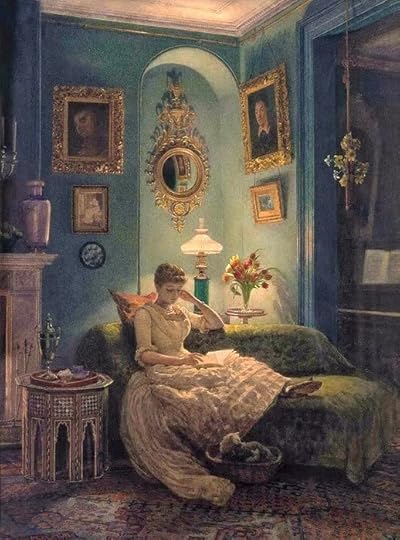 Whenever I begin a book, the voice of the character (as I would imagine them to sound) pops into my head. From then on, my mind reads the book in that voice. Sometimes they'll sound romantic, other times they may have a glorious English accent. Either way, it's different every time and I really have no control over it. I said all that to say that I've just put a book I was about fifteen pages into down for good. Not only did it miserably fail my Ten Page Rule, but the character's voice in my head was just so dull and flat. There was nothing magical, nothing romantic about her voice. It was plain, boring and uninviting, like Ben Stein's voice in the Clear Eyes commercials. In case you're wondering what my Ten Page Rule is, it means that if after reading the first ten pages and a story doesn't grab me or excite my curiosity, it's gone. Yup, gone, tossed helplessly into my donate pile. The way I see it, life is too short to waste on dull books just for the sake of saying you finished reading it. Before you judge me, I'm not close minded in the least. I simply refuse to waste my already limited reading time waiting for a book to finally get my attention. Sure I may have missed out on some decent literature by following this rule, but at the same time, I'm certain I've also been saved from those dreadful "I can't believe I just wasted two days reading this!" regrets. Well, it's on to Hollow City by Ransom Riggs. Until next time my lovely readers!
~Charles Bukowski
 Whenever I begin a book, the voice of the character (as I would imagine them to sound) pops into my head. From then on, my mind reads the book in that voice. Sometimes they'll sound romantic, other times they may have a glorious English accent. Either way, it's different every time and I really have no control over it. I said all that to say that I've just put a book I was about fifteen pages into down for good. Not only did it miserably fail my Ten Page Rule, but the character's voice in my head was just so dull and flat. There was nothing magical, nothing romantic about her voice. It was plain, boring and uninviting, like Ben Stein's voice in the Clear Eyes commercials. In case you're wondering what my Ten Page Rule is, it means that if after reading the first ten pages and a story doesn't grab me or excite my curiosity, it's gone. Yup, gone, tossed helplessly into my donate pile. The way I see it, life is too short to waste on dull books just for the sake of saying you finished reading it. Before you judge me, I'm not close minded in the least. I simply refuse to waste my already limited reading time waiting for a book to finally get my attention. Sure I may have missed out on some decent literature by following this rule, but at the same time, I'm certain I've also been saved from those dreadful "I can't believe I just wasted two days reading this!" regrets. Well, it's on to Hollow City by Ransom Riggs. Until next time my lovely readers!
The Dull and the Beautiful
“If something burns your soul with purpose and desire, it’s your duty to be reduced to ashes by it. Any other form of existence will be yet another dull book in the library of life”
~Charles Bukowski
Whenever I begin a book, the voice of the character (as I would imagine them to sound) pops into my head. From then on, my mind reads the book in that voice. Sometimes they'll sound romantic, other times they may have a glorious English accent. Either way, it's different every time and I really have no control over it. I said all that to say that I've just put a book I was about fifteen pages into down for good. Not only did it miserably fail my Ten Page Rule, but the character's voice in my head was just so dull and flat. There was nothing magical, nothing romantic about her voice. It was plain, boring and uninviting, like Ben Stein's voice in the Clear Eyes commercials. In case you're wondering what my Ten Page Rule is, it means that if after reading the first ten pages and a story doesn't grab me or excite my curiosity, it's gone. Yup, gone, tossed helplessly into my donate pile. The way I see it, life is too short to waste on dull books just for the sake of saying you finished reading it. Before you judge me, I'm not close minded in the least. I simply refuse to waste my already limited reading time waiting for a book to finally get my attention. Sure I may have missed out on some decent literature by following this rule, but at the same time, I'm certain I've also been saved from those dreadful "I can't believe I just wasted two days reading this!" regrets. Well, it's on to Hollow City by Ransom Riggs. Until next time my lovely readers!
~Charles Bukowski
Whenever I begin a book, the voice of the character (as I would imagine them to sound) pops into my head. From then on, my mind reads the book in that voice. Sometimes they'll sound romantic, other times they may have a glorious English accent. Either way, it's different every time and I really have no control over it. I said all that to say that I've just put a book I was about fifteen pages into down for good. Not only did it miserably fail my Ten Page Rule, but the character's voice in my head was just so dull and flat. There was nothing magical, nothing romantic about her voice. It was plain, boring and uninviting, like Ben Stein's voice in the Clear Eyes commercials. In case you're wondering what my Ten Page Rule is, it means that if after reading the first ten pages and a story doesn't grab me or excite my curiosity, it's gone. Yup, gone, tossed helplessly into my donate pile. The way I see it, life is too short to waste on dull books just for the sake of saying you finished reading it. Before you judge me, I'm not close minded in the least. I simply refuse to waste my already limited reading time waiting for a book to finally get my attention. Sure I may have missed out on some decent literature by following this rule, but at the same time, I'm certain I've also been saved from those dreadful "I can't believe I just wasted two days reading this!" regrets. Well, it's on to Hollow City by Ransom Riggs. Until next time my lovely readers!