Elizabeth Barrett's Blog
January 13, 2026
Review of “I Cheerfully Refuse”


December 22, 2025
Review of “Lolly Willowes”
January 24, 2025
Psychic Distance (in the Snow)
July 10, 2024
A Tale of Two Books
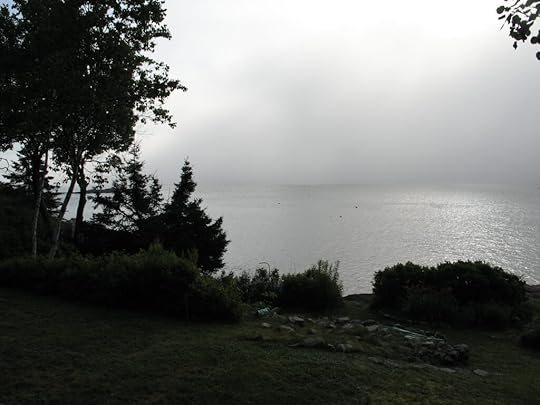
A couple of years ago, I started a book that is a sort-of sequel of an earlier book. I knew my main character but wasn’t sure what the story should be about, so it wasn’t surprising I kept running into dead ends. Every time I hit one, I went back and tried a different beginning, or a different narrative voice, or got rid of this or that character and added a new one. After the third or fourth try, the story was finally perking along. I was enjoying myself, my characters seemed to be having fun, and then—another dead end. Actually, not completely, but I’d landed my protagonist into an unexpected situation. She had options for what to do, but I honestly didn’t know what she should choose. Or what any of the wonderful secondary characters should do. The road ahead was lost in fog.
Let it sit, I told myself. You’ll figure it out. In the meantime, how about that story idea you’ve been tossing around for a while now?
So, in that creative lull, I started a new book. This is not something I’ve ever done before, begin a new project when another one is unfinished. But this new book truly had been simmering in my brain for years, and once I started it, I was transfixed. The story is different for me, focused tightly on the friendship between two women rather than a more traditional plot with a beginning, middle, and end and a substantial cast of characters. Within a year, the first draft was done and a writer friend agreed to read it.
I want to let the book rest, not look at it again until my friend shares her thoughts about it. So, what else to do but return to the book that I left half done? I reread it—it’s about half the book—and am pleased that it is a good story, that it has fun and sympathetic characters and a page-turning quality. And yes, it ends with a scene that makes me ask: What happens next? I’m still not entirely sure—still a bit foggy up ahead—but I’m ready to get back into this book and give my muse free rein. And I might be surprised to find that in this intervening year, my muse has come up with plenty of intriguing ideas.
The post A Tale of Two Books appeared first on Elizabeth Barrett.
July 5, 2024
I'm Doing the Best I Can
When the book finally reached the top of my to-read pile, my anticipation was rewarded. Morris is an excellent writer, and this is not a typical memoir. She largely focused on two times in her recent past, a bad accident in 2008 when she shattered her ankle, and then the trip she took to India—all the way to the tigers—a few years later. Interspersed were ruminations on her childhood and her parents; the wonderful story of how she met and fell in love with her husband; and other tidbits, particularly information about tigers. About two-thirds of the way through is a brief section, a few paragraphs, that doesn’t connect with what comes immediately before or after, and that contains the title of this post. I read it once and then read it again. And again. And bookmarked it. And wrote it down in my book journal.
To quote the beginning of the passage: The Tahitians don’t have a word that means “art.” The closest expression in their language translates to something like “I’m doing the best I can.”
That’s it. Not, as Morris notes, perfection. Your art requires only that you do the best you can. And then there’s her writing goal: “write a good scene every day or so.” This is significant. No, you don’t have to write like William Faulkner, or Toni Morrison, or Maggie O’Farrell, or whoever your writing hero is. (O’Farrell is one of mine.) And you don’t have to write for hours every day. You don’t have to write twenty pages every day. Challenge yourself to write one good scene a day. And then write another one the next day. And even if it’s not a “good” scene, don’t stop writing. Go back and try again.
It’s the best we can do.