Tom Pitts's Blog
May 12, 2020
Writing is Stupid: Rimbaud Edition
I watched the Dylan/Scorsese Rolling Thunder flick the other day and got a little uncomfortable during the clip of Patti Smith at the start. I mean, she’s in full bloom and it’s a great document of Patti in her prime, but it’s tense. Like, jaw-grinding tense. She does a wild and rambling intro that, at one point, extols Rimbaud. Hadn’t thought about him in years. With good reason too. I’ll admit, all that poet as shaman stuff seems pretty out there.

There are certain writers you can’t go back and read again.They’re great catalysts for creativity when you’re young, but it’s the literary equivalent of going back and listening to hardcore punk, it just doesn’t have the same pull. Kerouac, Bukowski, Hunter S. Thompson, Burroughs, and, to a certain degree, Hemingway. On top of the list of ‘you can’t go back’ writers is Arthur Rimbaud.

Remember him? Patti Smith, Jim Morrison, Richard Hell, people like that really dug him. That’s where I’d first heard of him. Or read his name, more specifically, because of course I mispronounced Rimbaud when I asked my English teacher. I remember reading him, buying that fancy bilingual edition of A Season in Hell and knowing instantly that I must be missing something in the translation. But I kept trying.
Years later, I cracked the same volume, took a peek, and guess what? That shit was unreadable. I thought to myself, what a bunch of pretentious shit! Was I wrong in saying it? No!
But, let’s consider the poor Rimbaud. Always getting kicked around by the literati. Don’t pity him, don’t morn his footnote in literary history either. He had some serious sense of self. He decided early on that writing was stupid. He recognized folly for what it was. Yeah, easy to judge him for basically inventing Emo. I mean, c’mon, Joy Division had nothing on Rimbaud. But he knew enough about life to realize he didn’t want to write about it. He wanted to live it!

Rimbaud quit writing at 19 and left for Africa to become a gun runner. Nice pivot. He never wrote again. At that tender young age, he realized it’s quite possible navel-gazing may not hold much significance in the great scheme of the existence. I mean, I guess he was wrong. He’s still read today, albeit by sensitive adolescences who are assuredly going to live life as social outcasts. You got to respect a guy who knew when to move on. I’ll save you the Kenny Rogers quotes, but I think you know where I’m going with this.
So let’s not get too hasty mocking our youthful dalliances with poetry and pretentious prose. They’ve got their place and they’re right where they’re supposed to be. Back there.


April 30, 2020
The Burden of Blurbs
I had this idea for a blog where I’d lay out my humble approach for getting blurbs as a way of steering some attention toward my new release. After a couple of tries, it was getting pretentious. All that “aw-shucks” I’m-so-humble shit.
It pretty much boiled down to this: I was too chickenshit to do the dance and ask the biggest names, so I decied to ask the kinds of writers who mattered to me. I mean, that’s what a blurb is for, right? If I saw thier names on a cover, I’d pick it up.

Besides, my “biggest” blurb was my first, and one I never even asked for. So really, what do I know?

Truthfully, I’m not sure there’s much evidence blurbs help sales anyway—at least at my end of the pool. 101, my last novel, I said, fuck it, and went with one of my heroes: TJ English. He’s a non-fiction writer, not even in my genre, but I figured, what the hell. It’s my fuckin’ cover, let me have this small triumph.
This time around, I did the same thing. Any book may be your last, so I figured, get somebody on there you’ll be proud to show off when the dust clears.
I asked Johnny Shaw and Matthew McBride.
Why? Because they both inspire me. There is a grace hiding in the simplicily of their prose that’s equally weighted with darkness with self-effacing humor that hardwires them to the human condition. And it’s that connection that makes me want to take the ride. Whoa, did I just accidentally simul-blurb those two?
This is what they gave me:
“A great American writer who knows his way around the gutter. Pitts is bold; his style his own. In Coldwater, he builds characters with heart, through layered storytelling and dialogue as real as a conversation between old friends. Tom Pitts at his very best.”
–Matthew McBride, author of Frank Sinatra in a Blender and A Swollen Red Sun
“You know those times when your reading slows down and you can’t find the right book to read next? Tom Pitts’s Coldwater was the book I needed to pull me out of those doldrums. I tore through it, gripped by every page. Simply put, Coldwater is a damn good book. A thoughtful and violent tale of bad luck and bad choices. I loved it.” —Johnny Shaw, author of Big Maria and Undocumented
I’ll take it.
I hope you enjoy the book, folks. It’s a weird one for me.
April 8, 2020
I’m gonna miss you, John Prine
Back ’round Christmas 2011, I was asked by a tech blog about The Song That Changed My Life. This is what I told ’em:
In 1992, I was 25 and stuck in rehab. Well, not really a rehab, but an Arizona horse ranch posing as a rehab. A place where we baked in the merciless heat outside of Tucson, shoveling horse shit, cut off from the real world and our lives. Not sure if you know, but rehabs are one of Arizona’s chief industries. Something about bleaching your soul clean in the sun, I guess. On the pitch, I was told there’d be music up there, that there were musicians—even the old drummer for Bob Seger’s Silver Bullet Band was hiding out at the ranch recovering from a massive coke problem. That’s what I was told. The pitch for a rehab facility, I found out, is not unlike the pitch for a time-share.
There were no musicians at the ranch, nor instruments. Bob’s old drummer had already relapsed and left. I was told, upon arrival, I wasn’t even allowed to possess a guitar.
Weeks and weeks into my stay, they brought on a renowned therapist who was rumored to have been simultaneously treating Steven Tyler, Joe Perry, and that poor drummer from Guns n Roses—not my punk rock heroes, but real live superstar mega-fiends just the same. I was vicariously  star-struck. It took some string pulling and some extra cash, but soon, I too was seeing the rock n roll therapist.
In his wisdom, he determined access to a guitar was paramount to my recovery. “Get this boy an axe, STAT!” is the way I’d like to remember it. His first assignment for me? Go and write a song about my addiction. As corny as that sounds, I came up with a pretty hip tune.
In our next session, I played it for him and, when I’d finished, he said, “Hey, you know who you remind me a little of? John Prine.”
I said, “Who’s John Prine?”

His jaw almost hit the floor. He was both astonished and disappointed. He went about assembling me a homemade cassette of John Prine Live and I drank it up. It was like reuniting with an old friend. 18 tracks into my new discovery, I hit the song, That’s the Way That the World Goes ‘Round. It was the most unpretentious thing I’d ever heard. It crystallized my view of the world. Its easy blend of pain and humor, framed in the joyous simple key of G, put my world back on its axis. Prine perfectly married the harsh reality of an abusive life with the whimsy of hope in just a few lines. It was a complete palette of emotion, a direct line right into the human experience, all with the sandwiched in a good-natured guffaw. I knew then that I’d never be able to write anything as good.

The therapist was deluded to compare me with Prine, but it worked. The song made me feel well-adjusted again. Everything under the unforgivable Arizona sun was in its place, imperfectly, where it was supposed to be. It was okay with John, and it was going to be okay with me.
Tom Pitts, Jan. 2012.
February 19, 2018
Piggyback is back!
It’s back. The little novella that could does it again.
The book that pulled me into this goofy game is being re-released by Down & Out Books today. Back in 2012, the idea was to write the most lean and pared down tale I could. One that kept moving, like a good short film. I figured, if Piggy turns out to be only a short story, so be it. Turned out to be just as long as it was supposed to be.
The new Piggy marks 6 years since its first publication, which really wouldn’t be a mark at all, except my third novel, 101, is coming out with Down & Out November this year. It builds on and delivers the promise I gave myself when I began—starry-eyed—to pen Piggyback: Keep the story moving.
If you don’t already own this one, don’t be shy up about snatching up the new and improved version. With 87% less typos, a jazzed-up Eric Beetner classic cover, and a nice-slice novella price.

And I’ll see y’all this November.
You can pick up Piggyback right here, or demand they order it wherever more respectable books are sold. Or even better, write me and get a signed copy.
And a big thanks to all you who’ve been picking up American Static and getting the word out. Whatever you’re doing, it’s been working.
December 6, 2016
Announcement: American Static
I’ve been lying low lately. Only tiptoeing through the minefield that is social media during election season. But I’m coming out of the bunker because I’ve got some news. Good news.
My new novel, American Static, the second in my Northern California Quartet, is coming out this June (2017) with Down & Out Books. Very excited to make this announcement. Down & Out has been kicking ass all over the indie scene and I’m pleased as punch to be in the same stable with such a talented crew.
 American Static is a fast-paced thriller that starts off in wine country, pulls you through the rough streets—as well as the ones paved with gold—of San Francisco, and ends up in the dark and dangerous Port of Oakland. It’s got one of the greatest villains to ever wield a weapon and a backbone of political intrigue to keep the pages turning. It’s bigger, badder, and better than HUSTLE and I can’t wait till June to prove it. Don’t believe me? That’s okay, we got testimonials: “American Static is a stunning achievement, and nobody could have written it but Tom Pitts. Pitts ain’t just the real deal: He set the mold for what the real deal is, and the rest of us are just plastic copies.” — Benjamin Whitmer (Cry Father, Pike)
The novels in the Northern California quartet aren’t joined by characters, but by setting and pace. All four have been completed and I’m looking forward to unleashing them all to you over the next couple of years. After HUSTLE and American Static, you can look for Coldwater and 101 (my opus to the marijuana trade.)
In other news, the HUSTLE adaptation has been written and it’s working hard to find a home. There’s all sorts of alchemy happening behind the scenes, but I’m bound by the laws of triviality not to dispense any details. Sorry, kids, but—as they say down south—you’ll have to wait for the movie.
That’s it for news from me. Oh, wait … I also grew a beard. Now I can finally call myself a bohemian!
April 12, 2016
Unloaded.
Next Tuesday, Down & Out Books is releasing Unloaded: Crime Writers Without Guns, an anthology with a stellar line-up from all reaches of the crime writing community. Seriously, from way up the food chain with names like Joe R. Lansdale and Joyce Carol Oates to names like … well, mine.

I thought I’d do a little disclaimer regarding my contribution. The story I chose is from my non-fiction files. It was an adventure I fell into in my first few months of living in the big city. It’s called Ioki and the Fat Jap (How I Became an Informant for the F.B.I.)
What’s to tell? It really happened to me. How does one get caught up in such a drama? I guess I was just more open to any experience as a young man. When I was 18, working as a bike messenger, and living all by myself in San Francisco, I was as green as they come. Stumbling into an insane adventure like the one I got pulled into that day was commonplace. You know, I really should write a book about that one day.
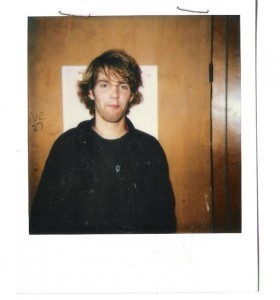
Admittedly, I went into the Unloaded submissions with a bit of a handicap. Mixed in the book are some of the best writers tapping their keyboards today. (See list at bottom of page) But me? I was tits-deep in a novel and trying to draw from a dry well in the short story department. I elected to use one of the first stories I’ve ever written. I’ll call it a bold move, but, really, it was the only move I had.
But when I went to edit said story, polish it up with my newly found skills, I found myself taken back to that place. I was that 18 year-old kid all over again. Fresh from Canada, fearful and naive.

Being a bike messenger in the 80s in San Francisco was a special time. You could be half-hobo, eccentric artist, or fantastic fool and still find yourself gainfully employed whizzing around the streets of San Francisco. There were hundreds of us, clogging the streets and stinking up elevators all over town. A glorious time. Mind you, a lot of those guys went from pedaling bikes to pushing shopping carts full of aluminum, but some went on to greatness too. I just found myself keeping more in touch with the carts than the stars.
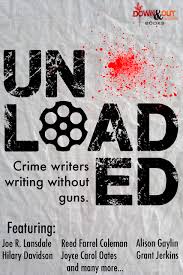
Editor Eric Beetner had plan with this anthology, a good one, a noble cause, but I took the proposal differently. To me, it was a brilliant deviation from the norm. I like anything that pushes the envelope. Besides, it was a perfect excuse to draw from my own true crime memoir. You see, you really can get pulled into a web of intrigue without guns, without violence. Real-life drama demands your attention whether you’re willing to give it or not. And did I learn a lesson from my experience with the F.B.I.? You’re damn right I did.
Unloaded. Pre-order it now for a special low price and get bullet-free works from the likes of J.L. Abramo , Patricia Abbott, Trey R. Barker, Eric Beetner, Alec Cizak, Joe Clifford, Reed Farrel Coleman, Angel Luis Colón, Hilary Davidson, Paul J. Garth, Alison Gaylin, Kent Gowran, Rob Hart, Jeffery Hess, Grant Jerkins, Joe R. Lansdale, S.W. Lauden, Tim O’Mara, Joyce Carol Oates, Tom Pitts, Thomas Pluck, Keith Rawson, Kelli Stanley, Ryan Sayles, and Holly West. It’s not only a good cause, but it’s a hell of an entertaining read. It’s great to see some of the best out of their comfort zone.
August 31, 2015
The Little Cesar Syndrome
Okay, so the last time I sat down to blog, I was halfway through Don Winslow’s Power of the Dog. Great fuckin’ book, by the way. As corny as it sounds, a major achievement is the best way to describe the Dog. Incredible. Anyway, I was pondering how fiction models itself after real life. At least it does if it’s good. The ol’ art imitating life thing. You know, contemplating, like we do.
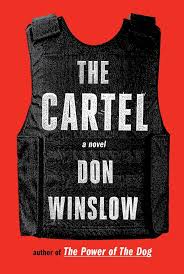 Cut to a month later, I’m reading the sequel to Power of the Dog, The Cartel. It’s another massive tome covering a huge space of time and history. But … it IS a sequel. And it feels like one. Some of my favorite characters from Dog were killed off before the end of the first book because, well, that’s what happens in good crime fiction. However, in The Cartel, their roles are filled with similar characters with similar arcs and it got me to thinking.
Are these replacement characters designed that way for a reason? Is there some sort of well-crafted balance between the traditional lines of good and evil–Joseph Campbell style–that must be adhered to? In order for the story to progress, is it necessary for these characters to be hammered into tropes? Into stereotypes?
Then it hit me.

Of course the damn thing is filled with tropes and stereotypes, because that’s what real life gives serves up. They call ‘em stereotypes for a reason. You know when frustrated law enforcement officers say, take down this bad guy and another will pop up to take his place? They say it because it’s true!
I started thinking about real life. About guys like John Gotti, or even Carlo Gambino. Gotti’s rags to riches story, Carlo’s quiet, unassuming reign. Text book, the both of ’em. Then I started thinking about some of my own criminal experiences and how I’ve seen guys react, even on a smaller scale, to sitting on the throne. How a guy–a mob boss, or a lowlife running a small crew–will develop what I call the “Little Cesar” complex. You kn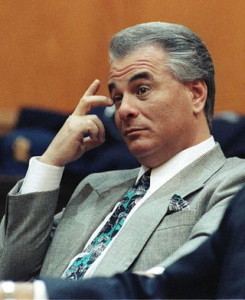 ow, the guy that fights his way to the top only to become a bigger asshole than the guy he’s toppled to get there. I’ve watched it happen in organized crime, and I’ve seen it up close with petty crime. It doesn’t take much power to get the “heavy is the head that wears the crown” syndrome. The backbiting, the betrayal, the jealousy, the paranoia (usually justified) play themselves out over and over again in the stories of our lives. Why wouldn’t they play out in fiction too?
Power really does corrupt and greed does drive bad decisions. And folks who are attracted to “that life” are, for the most part, unoriginal. Go spend some time in the prison visiting room or get in line at the methadone clinic and tell me if you see something completely different than what you thought you’d see.
If criminals and cops want to see different portrayals of themselves in books and movies, they’d better stop acting (and dressing) like they just walked out of central casting.
Okay, that’s enough contemplating for now.
July 21, 2015
Discovering the Cheatin’ Shortcuts of Our Literary Heroes.
If you can’t use your blog to pontificate and force your bloated opinions into the world, then what the hell is it good for? I was thinking of reviewing the book I’m reading—you know, on Amazon, Goodreads, all those important places that value my commentary—but then I decided my thoughts on this particular work aren’t a review so much as an op-ed. So I dusted off my blogging hat (the one with the tiny propeller on top) and wrote you all this love letter.
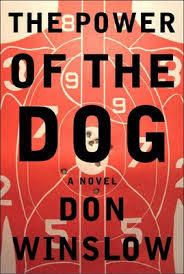
I’m about halfway through Don Winslow’s Power of the Dog. I purchased the book about a year ago, but was so put off by Savages, (a book Ken Bruen compared to my own Piggyback,) I decided to wait to read it. I know, I know, I know, I was supposed to like Savages, but I didn’t. Why? That’s a whole nother bog.
Anyway, I’m reading—and loving—Power of the Dog, but my knowledge of Mexican drug war history is limited. (I know, with the amount of Mexican tar heroin I’ve shot into my veins over the last 30 years, you’d think I’d know more.) They’re basically three angles in the first half of Power of the Dog: The battle between good and evil south of the border, a high class call girl’s California backstory, and the plot-line of one Irish gangster from Hell’s Kitchen. Now, I may not know a lot about the former two, but I do know A LOT about the history of American organized crime.

The Hell’s kitchen story is taken straight from the pages of La Cosa Nostra. The infamous deal the late Paul Castellano made with the Kitchen’s Westies, the rise of the Irish gangsters propelled by the possession of a little black book taken from a heavyweight (murdered) loan shark. The names have been altered, but I recognize the players. (Looking for the real scoop on the Westies? Look no further than T.J. English’s The Westies.) And that’s the way it’s supposed to work, right? That’s historical fiction, right? Remember E.L. Doctorow’s Billy Bathgate? Don DeLillo’s Libra? There’re plenty of examples of writer’s blending historical facts and character’s and brewing up tasty fiction. Sure there’s the loose examples like Caleb Carr’s alienist or TC Bolye’s The Road to Wellville. Boyle and Carr take characters and elements from history, but not the whole dang plot line. But what of the others?
When a book makes you question whether it’s fact or fiction, that’s a good thing. I often wondered how Don DeLillo was able to gather some of the data he did for Libra, then I remembered—oh yeah, he’s making some of this up. Some of it.

The reason I spotted the parallel plot in Winslow’s book was because I was so damn familiar with the Westies tale: the meeting with the Gambinos, the “don’t ask, don’t tell” policy on mafia drug sales in the 80’s, the goings-on of the Gotti crew. I mean, Winslow was detailed enough to depict the strange and permanent marital aid that Big Paulie Castellano had surgically inserted so he could couple with his Columbian maid.

What I don’t know is the details and arcs of the Mexican crime history. Does the south of the border portion of Power of the Dog line up with real-life facts like the New York portion of the book? And is that fair? I’ve got to assume the Mexican plot adheres closely to facts I’m unaware of. (And don’t think reading this book didn’t set me off on a fury of googling. I’ve upped my knowledge regarding why it’s almost impossible to find anything but Mexican heroin in California. My suspicions had been correct all along.)

As much as I’m enamored by these type of books, these epic tomes, I began to wonder if creating an alternate history was out of my reach. I closed my starry eyes for a moment, looked past the smoke and mirrors, and started to about think writing one myself. Then is hit me. An epiphany. With quite a few of these behemoths at least, the heavy lifting is already done—by history! The plot is neatly laid out in front of you. All you have to do is be diligent in your research and connect the dots. Could really be that easy? Is this the secret that fucker TC Boyle’s been hiding? When Robert Graves’ wife asked if, instead of drinking, shouldn’t he be working on I, Claudius, did he reply, “Oh, it’s fine. I’ve already finished the outline. It’s called the fall of Rome!” before tipping back another cognac? I think it’s entirely possible.
Okay, the title of this blog was a bit misleading. Perhaps I should scroll back up and rename it: Epic Schmepic.
April 20, 2015
Selective Memories …
Last week I went and saw The Replacements at the Masonic in San Francisco. While I was out there, alone in the crowd, being shoved and jostled by five thousand other Mats fans trying to recapture a bit of their youth, I was struck by a terrible thought. Well, actually, several terrible thoughts.
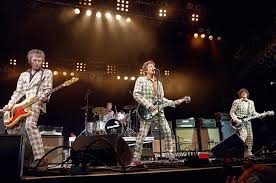
A lot of folks take a time like that to enjoy some nostalgia, remember what made the good times good. Me? I’ve never had much of a memory, so dredging up the past can be a precarious business.
I’m sure I’ve been accused in my life of having a selective memory (I can’t say for sure, ‘cause I can’t rightly remember), but it occurred to me in that moment: one can have a selective memory, but have NO control over the memories selected.

You see, the black smoke billowing up from my cavernous memory gland was asphyxiating. These weren’t clear-cut flashbacks either, not the celluloid trips into history that make you feel like your life is a bad made-for-TV movie, quite the opposite. These were half-formed scenes, half-remembered truths. More akin to the hard-to-place feeling when an olfactory response is triggered by a childhood smell like an empty lunchbox, or peanut butter and jelly. Or the copper taste of blood on your tongue.

As The Replacements blasted through their catalog, songs that seemed so goddamn important in my 20s, I was assaulted by the bad feelings paired with some of the awful decisions I’d made back then. I tried to articulate this to Joe Clifford (who graciously got me the ticket, forcing me to endure this bittersweet sensory nightmare) after the show and he just smiled at me like I I was nuts.

None of these recollections were clear. I’d be enjoying a song, trying half-heartedly to remember the words when I’d cringe. Really cringe. Not knowing why or what brought it on, but cringing nonetheless. Sometimes a scene, a picture, a face would float up and I’d know why. Shit. Deaths, deeds, delusions, drinking, and dope. They weren’t the memories I’d have chosen, but they were the ones I was stuck with.

Yeah, you can have a selective memory, but don’t think you’re going to have the luxury of lining its gallery with the pictures you want.
So, I’ll leave you here with a semi-appropriate quote from Joseph Conrad:
:
Oh, if it were only that easy …
March 24, 2015
Throwing Knuckleballs
Okay. I’ll be honest. It’s been tougher than hell to crank out a blog during these past few weeks. Mostly because I didn’t want to weep onto the page. Life has been throwing me its own series of Knuckleballs as I prepared for the release of the book. In fact it’s made me shy away from everything but pacing a well-worn patch in my living room floor.

I know many of you experience this syndrome: You sit down and begin to type a pleasant social media status update and realize you’re only tapping bitterness onto the keys. You don’t want to sound like a whiny son-of-a-bitch, so you bite your lip, clench your fists, and hold off. And then, you know, try to work the shit out in real life. Yeah, I said it: real life.

I could only do this for so long before duty called. I’d promised One Eye, the publisher of my new novella, that I’d be trying to squeeze out a few more blogs than normal.
Then I checked my blog and realized I hadn’t “squeezed” one out since my last book was released—a year ago! However, I’d made this promise before life’s minutia rose up in rebellion and decided to string me up like Saddam Hussein and thwack me like a piñata.

Thank God it was just the minutia rising up. My family is healthy and happy. We’ve always been a tight little unit and we were able to spend a lot of time together over the last week and I was reminded, one again, to focus on the positive, count my blessings, and otherwise shut the hell up! When you’re with your family, crowded around the grill cooking a tri-tip and there are grins on everyone’s faces, you’re reminded not to shake your fist at God, but to laugh and say, What else you got??
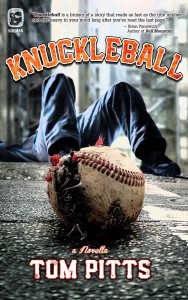
So, here it is: My new novella, KNUCKLEBALL. I’m a proud papa once again. Ron over at One Eye did a great job with the cover and the layout. Tweaking both as they needed it and ultimately coming out with a sharp-looking product that I’m pleased as punch to stick up on my shelf, and hopefully your shelves too.