Tom Acitelli's Blog
June 15, 2020
What is organic beer?
I thought it would be worthwhile to revisit some of the pivotal moments and precocious pioneers in the history of beer during these uncertain and frustrating times. Some of this content is older (if so, that’s noted at the end); some of it is newer, including from my forthcoming book PILSNER: How the Beer of Kings Changed the World . All of it, I hope, you will find interesting. Stay safe. – Tom
Some 2,000 people turned out for the inaugural North American Organic Brewers Festival in 2003. The first of its kind in the U.S., the festival, held in Portland, Oregon, spotlighted organic beers from 25 breweries.
By August 2015, the event, by then known simply as Organic Beer Fest, had grown considerably in size and scope, drawing 12,000 people to sample from 36 breweries. This August, organizers say 45 breweries will participate.
Such is the growth in popularity in the U.S. of organic beer, which carries on despite some considerable challenges.
In the late 1990s, there were perhaps only two American breweries producing at least one organic beer brand — the Lakefront Brewing Co. in Milwaukee and Eel River Brewing Co. in Northern California. Now there are dozens in several states, most in California and the Pacific Northwest.
U.S. organic beer sales have increased more than tenfold since 2003, from $9 million to $92 million in 2014, the latest year figures were available from the Organic Trade Association (which is expected to release its 2015 numbers imminently). That 2003 starting date is significant: Federal legislation enacted the year before standardized organic requirements nationwide; before then, states and private agencies were using all sorts of guidelines to certify.
So what, exactly, are organic beers?
A beer can be called “organic” if it meets the following federal guidelines:
At least 95 percent of its ingredients are organically produced (e.g., no GMOs, synthetic fertilizers, pesticides).
The brewery must prove that the remaining ingredients were not available in sufficient quantities or qualities in organic form.
And these non-organic ingredients must be on the federal Agriculture Department’s list of allowed and prohibited substances.
There is also a kind of super-duper organic certification, called 100 Percent Organic, that means exactly what it says: Everything that went into the product, including cleaning and processing materials, was organic. Such beers are understandably rare.
Finally, there is “Made With Organic…” This certification requires a lower threshold for organic ingredients: at least 70 percent, excluding salt and water.
Most organically labeled beers in the U.S. are comprised of ingredients that are at least 95 percent organic. The majority of entrants in the Organic Beer Fest, for instance, fall under this certification, which is usually denoted on packaging with that round “USDA Organic” label.
As for that 5 percent or so sliver of non-organic ingredients, those usually come from non-agricultural products, such as yeast, Irish moss (for clarity), and calcium sulfate (for adjusting the mineral content of water). Until January 2013, hops were among the likeliest non-organic ingredients in organic beer because some varieties were simply difficult to cultivate organically. Now, regulations mandate that only organically grown hops can be used in organically labeled beer.
The move, which involved a two-year transition beginning in late 2010, was a kind of watershed in organic brewing. Brewers already using organic hops praised the regulatory change as a way of leveling the playing field. Brewers had been able to label their beers “organic” without using such hops, so long as they met the 95 percent threshold with other ingredients. To some brewers, that seemed ridiculous given the centrality of hops in brewing, especially in ever-bitterer American craft brewing.
The changeover to solely organic hops did increase costs that much more for organic brewers, however. Organic hops can cost several more dollars per pound than conventional ones, if not twice as much more, depending on the variety. Like with any finished organic product — fruit, coffee, baby food — organic ingredients that go into organic beers are just generally more expensive than their conventional counterparts.
Regardless, brewers must often price their organic beers competitively with beers from more conventional ingredients or risk losing — or never gaining — customers. This drives up the cost even more, not allowing organic producers to make up too much of the difference on the sale.
For some brewers, the cost is worth it.
They cite concern for the environment — organic products require fewer possible contaminants, such as pesticides, and less-invasive farming techniques. Others might cite the assumed health benefits of a foodstuff created this way (though the alcohol from two or three beers might dispatch those gains pretty quickly). And for some brewers, organic beer fits tastily within a lifestyle already keen on organic everything.
Or it might just be a combination of all three.
Gabriel Heymann was a touring musician and a yoga instructor in 2015, when he launched Smart Beer, the first organic brewing company in New York state. Based in New Paltz, about a 90-minute drive north of New York City, it now brews a golden ale and an India pale ale under contract at the Olde Saratoga Brewing Co. farther up the Hudson.
“I wanted to create a beer that connected my healthy, active lifestyle with my social life and bring it all together,” says Heymann.
Organic brewing presented challenges to this ethos, beyond the cost. For one thing, sourcing the ingredients is more time-consuming and difficult. The same goes for getting the necessary OKs to slap that round label on bottles and cans. Breweries in general already navigate a warren of regulations to get started. Organic brewers must go that much further — plus accommodate regular inspections, sometimes surprise ones, to check if they are maintaining standards.
“One certification is difficult enough,” Heymann says. “When you start layering government agencies on top of each other, you have to put a longer timeline together in terms of getting your labeling ready, getting the product certified, all those things.”
For some, the exertions have proved too much. Craig Nicholls founded a Portland brewpub dedicated to organic brewing shortly after he founded the Organic Beer Fest. The festival continues, but the brewpub closed abruptly in 2010, buckling under expenses and unable to find a buyer.
The corporate parent of Wolaver’s Fine Organic Ales, a Vermont outfit dating to 1997 and one of the oldest organic labels east of the Mississippi, stopped making the beers at the end of 2015. “[T]he rising cost and availability of organic ingredients has made it increasingly challenging to create an affordable product,” Wolaver’s explained in a public message.
In the end, does the taste, that all-important measure, justify such effort and cost? Organic beers may taste and smell fresher than beers with more conventional ingredients. That’s in the palate of the beholder, though, and there’s only one way to find out.
This column originally appeared in Food Republic.


June 10, 2020
The History of Steam Beer, America’s Original Craft Brew
I thought it would be worthwhile to revisit some of the pivotal moments and precocious pioneers in the history of beer during these uncertain and frustrating times. Some of this content is older (if so, that’s noted at the end); some of it is newer, including from my forthcoming book PILSNER: How the Beer of Kings Changed the World . All of it, I hope, you will find interesting. Stay safe. – Tom
If the last 50 years of American craft beer has a liquid godfather, it’s Anchor Steam. “In my mind, it’s the first craft beer,” says Randy Mosher, author of Tasting Beer and one of the world’s leading experts on the drink. Even more than that, Anchor Steam is a singular achievement in American food and drink: It’s the sole commercial representation of the oldest indigenous beer style in the United States.
In fact, steam beer is one of the few styles born in the U.S. The others readily recognizable today are cream ale, kept alive in its dark ages 60 years ago by Rochester, New York-based Genesee Brewery; and modern light beer, introduced by Miller in 1975. Then there’s the steam-like Kentucky Common and the anise-flavored Pennsylvania Swankey, both long dead by the time interest from 21st-century beer geeks led to their reanimation.
But while cream ale waxed and waned — Genesee Cream Ale was a creature largely of the Northeast until just recently — and light beer had to await the Miller-Bud wars of the 1970s and 1980s, the at-least-150-year-old steam style chugged along uninterrupted, save for a Prohibition-related disruption from 1920 to 1933.
It owes that survival in large part to Anchor Steam, a slightly sweet, caramel-y standout that truly tastes different in a craft beer world of ever-bitterer India pale ales and increasingly funkier seasonals (spiced pumpkin beer, anyone?). It is a beer that cuts across tastes and events, a beer as perfect for spicy as for savory, one for the ball game as for the business lunch, a bibulous beacon in a beer world of dry, alkaline pilsners and impossibly bitter, strong IPAs.
From the bottle or the glass, Anchor Steam works. This reputation is hard won and, like its native land, a work in progress. But the Japanese brewing giant Sapporo took over Anchor Brewing Co., Anchor Steam’s maker and California’s oldest brewery, this past summer, leaving its fans to ask,what’s the future of steam?
In the mid-1800s, especially after the discovery of gold, Americans started pouring into territorial California. Most were of northern European descent, and so lager was one of their choicest drinks.
Lager dates from perhaps the Middle Ages, but really started to boom in the 19th century, when Bavarian brewers started experimenting with bottom-fermenting yeasts and, colder fermentation and aging using deep caves and cellars full of ice. (That was a departure from the top-fermenting yeasts and warmer temps that defined much older ale). The cold requirement made lager difficult to come by in the newly settled West Coast because, unlike back East, there were no ready sources of lots of ice. Plus, mechanical refrigeration would not emerge in the American brewing industry until the 1870s.
What to do when the new arrivals wanted beer? Rudimentary breweries like Anchor started cobbling together what ingredients they could, and brewing at ale-like temperatures with lager yeast, chemistry be damned.
The ingredients amounted to brewing potpourri. Malted barley or wheat would have been the top two traditional grains for brewing, but neither was readily available (for beer, at least), so early West Coast brewers used grits and cereals as sugary fuel that the yeast could convert to ethyl alcohol. Add some more sugar and some hops, plus that lager yeast, and there you had it: a new style of beer.
Native Americans in what’s now the Southwest were brewing a beer-like drink from corn for centuries by the time European descendants arrived; but the “steam” style, as it came to be known, was the first homegrown beer style in the U.S. “This beer is largely consumed throughout the state of California,” reads the “California Steam Beer” entry in the oft-cited 1901 work American Handy Book of the Brewing, Malting and Auxiliary Trades. “It is called steam beer,” authors Robert Wahl and Max Henius wrote in that entry, “on account of its high effervescing properties and the amount of pressure (‘steam’) it has in the packages.”
Except not exactly. There is no agreed upon etymological back story for “steam” beer, but many theories. It could have been that pressure, or the sound that release of that pressure made when barrels were tapped and bottles opened. There’s also the theory that early batches of the brew were cooled on San Francisco rooftops, and the Pacific breeze collided with the just-boiled, pre-fermentation beer, throwing off clouds of steam. Then there’s the one about American brewers of German descent naming this ad-hoc creation after dampfbier back in the old country. Dampf means “steam,” and that beer was born in a remote area of Bavaria with whatever ingredients were readily available. Sound familiar?
Whatever the origins of its name, the style took. Pre-Prohibition accounts have breweries throughout the West making this hastily invented, rudimentary lager-ale hybrid by the start of the 20th century.
And that might’ve been steam’s peak were it not for laundry money.
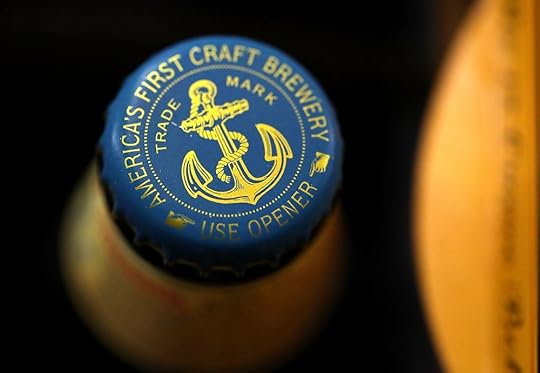 The bottle cap of Anchor Steam proclaims it’s “America’s First Craft Brewery.” Justin Sullivan/Getty Images
In its earliest decades, the Anchor Brewing Co., which debuted in 1896, endured a pair of fires that wiped out two locations, not to mention the death of two owners — one when he fell from one of San Francisco’s newfangled cable cars. Then it survived Prohibition and the post-World War II consolidation of the brewing industry that destroyed so many of its smaller brethren.
It limped into the 1960s with antiquated equipment and a single employee — probably the smallest working brewery in America and likely the only one making steam beer in large quantities.
In the 1960s, big operations such as Anheuser-Busch and Miller were hoovering up market share with uniformly made pilsner that tasted much blander and sweeter than its Czech original. These homogeneous beers could be bottled and canned, and then shipped far and wide, thanks to preservatives and refrigeration, never mind the new Interstate Highway System. Bud, Miller, Coors, Pabst, et al, tasted the same wherever it landed — that is to say, watery and slightly sweet (“alcoholic soda pop,” as Sam Adams’ originator, Jim Koch, once so perfectly described it).
Anchor Steam, on the other hand, was a culinary freak show. It was available only in kegs because a dearth of retail accounts did not justify the expense of bottling or canning — and the brewery probably couldn’t have done so without releasing case after case of sour or spoiled steam. Anchor Brewing and its signature beer would both surely be gone soon, dying embers in a once-blazing American beer landscape.
But, crucially, Anchor’s remaining retail accounts were loyal, if for no better reason than nostalgia for a San Francisco original. One of those accounts was the Old Spaghetti Factory, a campily decorated bar that served as an early counterculture siren. In August 1965, Old Spaghetti Factory owner Fred Kuh ambled over to one of his regulars, a trim, bespectacled, 20-something former Stanford graduate student in Japanese studies.
The young man was drinking the only beer that Kuh kept on draft: Anchor Steam. In an exchange now all but sacral to craft beer aficionados, Kuh asked his regular if he had ever been to the brewery; when he replied in the negative, Kuh encouraged him to pay it a visit.
The next morning, Kuh’s regular walked the roughly mile and a half from his apartment to the brewery then on Eighth and Brannan Streets; and, after poking around a bit, bought a 51-percent stake for what he later described as less than the price of a used car.
The young man could do so because he was Fritz Maytag, an heir to the home-appliance fortune his great-grandfather founded. The idea of owning the last small-batch, traditional brewery in San Francisco — maybe in America — appealed to him. “I was just enthralled with the idea of a business that had character, and history, and curiosity,” Maytag told the San Francisco Chronicle in 2015. “Plus, it was so little money.” Maytag would buy full control of the brewery in 1969, and then set about radically reforming its signature offering. He ditched the sugar and food coloring that the old Anchor was using, and switched to all malted grains, especially crystal malt (aka caramel malt). He started using the Northern Brewer hop, a relatively young breed from England.
Finally, Anchor introduced a yeast strain specific to its steam beer — improbably, the brewery had occasionally been using baker’s yeast out of desperation, according to Randy Mosher. The end result of these changes was a consistently delicious and unique beer ready for bottling, which Maytag finally did in April 1971. It was soon available beyond California, especially in Colorado and parts of the East Coast.
It was a curiosity at the time, a bubbly, malty, kind of bittersweet alternative to the watery pilsners dominating the marketplace. “We were what the whole craft brewing industry is today: a combination of modern food science technology and traditional brewing,” Maytag said in 2015. “It was a unique combination. That was really our secret.” Anchor Steam would remain largely a San Francisco curiosity throughout the 1970s, until that wider distribution and a cresting craft beer wave in the 1980s carried it farther and further than ever before.
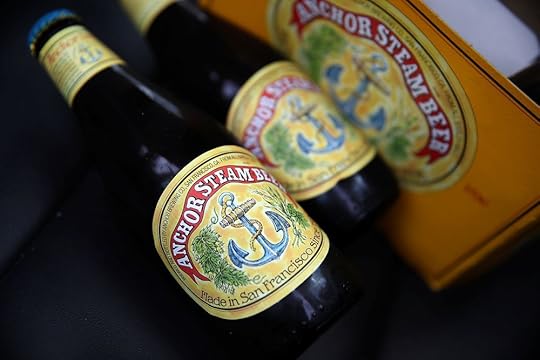 Anchor Steam was acquired by Japanese brewing conglomerate Sapporo in August 2017. Justin Sullivan/Getty Images
The wider net also meant the widest reach yet for steam beer. Anchor Steam, of course, was but a vestige of the frontier original. But it was the only steam beer in town, so to speak: Maytag’s brewery received federal permission to trademark “steam beer” in August 1982. Stylistically vestigial or not, steam beer was Anchor Steam, Anchor Steam was steam beer.
Any imitators since have used the “common” or “California common” on their own interpretations of the American style, perhaps a franker and more accurate nod anyway to the style’s origins. (Some have incurred Anchor’s for using “steam.”)
And beer-judging bodies such as the Brewers Association have used “common” rather than “steam” in their categorizations, largely in deference to Fritz Maytag. (Maytag also received a 2008 Lifetime Achievement Award from the James Beard Foundation, in part for his work in keeping the beer style alive.)
Maytag, who’s now 79 years old [note: This article was originally published in 2017], hasn’t been involved day-to-day with Anchor since 2010, when he sold control of the brewery to a pair of investors best-known for popularizing Skyy vodka. It was those investors who sold the brewery to Japanese giant Sapporo earlier this year.
According to the brewery, the new owner has no intention of meddling with Anchor Steam’s recipe. It would be incandescently stupid to do so.
Anchor Steam is a reinvented American original, a kind of Neanderthal of craft brewing that grew up alongside faster-evolving (European) styles such pale ale, India pale ale and pilsner, but never really interacted with them. Instead, there is Anchor Steam as it has been for decades, with a stylistic pedigree that has not left the lower 48 for at least a century and a half.
Given this status and that of Anchor Brewing as the Rosetta stone of American craft breweries, that coverage of the Sapporo deal brought a chorus of obituaries for Anchor Steam as a “craft” beer. It was of the same species of faddish obsequies that followed the acquisitions of other beloved brews such as Lagunitas (to Heineken), Goose Island (to Anheuser Busch-InBev), and Wicked Weed (to Anheuser Busch-InBev again).
Anchor Steam deserves the benefit of the doubt, though, for now. It’s earned it, after all.
This article originally appeared on Eater.
June 9, 2020
Delivering beer in a box
[image error]
I thought it would be worthwhile to revisit some of the pivotal moments and precocious pioneers in the history of beer during these uncertain and frustrating times. Some of this content is older (if so, that’s noted at the end); some of it is newer, including from my forthcoming book PILSNER: How the Beer of Kings Changed the World . All of it, I hope, you will find interesting. Stay safe. – Tom
On page 154 of the second edition of the Simon & Schuster Pocket Guide to Beer, published in 1988, author Michael Jackson described a brewery called Golden Pacific:
“Beer-in-a-box was an early innovation from this micro-brewery in Emeryville, a borough in the urban agglomeration between San Francisco and Oakland. The initial product, Golden Pacific Bittersweet Ale, has a full, darkish colour; a light-to-medium body; some malty chewiness; and an extremely dry finish. Too early to rate.”
Wait. Beer-in-a-box?
Indeed. “The idea was just to kind of box it up and deliver it like pizza,” Golden Pacific co-founder Tad Stratford told me recently. The boxes, too, seemed to Stratford a way around the potentially prohibitive cost of a bottling line (all smaller breweries back then started with either kegging or bottling—canning wouldn’t seem a viable option for many years yet).
Golden Pacific appears to have been the only American brewery selling its beer in a box 30 years ago, though several operations, big and small, now do so. Boxed wine had been circulating in the U.S. since the 1970s, having been introduced in Australia during the decade before. The technology worked well for that flatter libation.
For carbonated beer, things were different. The technology was much more rudimentary than today—essentially, it was beer stuffed in a bag stuffed in a box. Stratford said that he and early business partner Maureen Lojo ordered cardboard boxes with bladder-like plastic bags from a vendor in Southern California. They would pay to have the vendor wax the boxes as well. That was because they then used a hot glue gun to kind of solder them together to withstand the pressure from the carbonation.
They sold the boxes for about $25 a pop—and pop they would, the pressure finally released. Stratford often delivered the containers personally, just like pizza. The brewery sold about 30 to 40 a week, most of the sales coming on the weekends.
Golden Pacific, which launched in 1985, operated out of an old General Motors engine factory in Emeryville, the city between Berkeley and Oakland. True to form for smaller startup breweries then (and for a while after), Stratford and Lojo got their equipment secondhand and made it work—the commercial refrigerator came from a nearby music club, for instance, the original brewing kettle from a soup kitchen.
The pair, University of California-Berkeley graduates in their mid-20s by the time Golden Pacific started drawing local attention, were also self-educated brewing-wise. They perfected the recipe for Bittersweet Ale at home in Berkeley. Stratford described it 30 years later as a kind of India pale ale ahead of its time—hoppy, rich and dark (similar to Michael Jackson’s assessment published in 1988).
Stratford eventually left his job as an accounting assistant at the university and Lojo as a computer trainer at a local firm to focus on Golden Pacific. Part of that focus involved a shift away from the boxes and to proper bottles, which they filled initially with a rejiggered capper.
Lojo moved on early and is now on the business-administration faculty of Sacramento State. Stratford kept at it through the late 1980s, until he sold the operation in 1990 to his Emeryville landlords, who moved it to Berkeley. (Stratford now works in financial systems in the Bay Area.)
As for those beers in a box, they continued as a novelty through Stratford’s tenure. If a customer called the brewery to request one, Golden Pacific could generally make it work, he said. Asked what was the oddest place he ever delivered a box to, Stratford laughed. And demurred.
“If you think about where I was delivering, I was delivering in Berkeley. That might answer a little bit of the question.”
This column originally appeared in All About Beer magazine.
June 8, 2020
UTAH BREWERS: HOW THE BEEHIVE STATE GOT ITS BUZZ BACK
I thought it would be worthwhile to revisit some of the pivotal moments and precocious pioneers in the history of beer during these uncertain and frustrating times. Some of this content is older (if so, that’s noted at the end); some of it is newer, including from my forthcoming book PILSNER: How the Beer of Kings Changed the World . All of it, I hope, you will find interesting. Stay safe. – Tom
Greg Schirf’s mother dropped him at the side of the highway in Milwaukee so that he could hitchhike to Utah. It was 1974, and the recently minted Marquette University graduate, hair down to his waist, was unsure of what he wanted to do with his life. His older brother had gone to school out west, and had settled in a place called Park City, Utah.
Schirf would catch up with him. It was a 1,400-mile journey that would lead to Utah’s first new brewery in 19 years and its first small-batch, more traditional one since Prohibition.
He discovered a Park City far different than today’s. Many of the storefronts along Main Street were boarded up, the town still relatively undeveloped compared with the likes of Colorado’s Telluride and Aspen. Mining was the big industry around Park City then, skiing a boom-and-bust seasonal affair at best.
Schirf originally worked construction in Park City as well as in real estate development and brokerage with his brother. He started an alternative weekly newspaper with a friend, one aimed at the growing counterculture they represented. He realized he did not want to do real estate for the rest of his life, and he eventually sold his friend his stake in the newspaper.
Along the way, he took up homebrewing and began talking ceaselessly about launching a brewery. He had traveled to San Francisco in the early 1980s to see the Grateful Dead in concert, and visited the Anchor Brewing Co. while there. He’d also spent a year studying abroad in Rome while at Marquette, and that experience had whetted his appetite for the better beers and beer styles available in Europe.
The taste stayed with him.
Schirf incorporated the Schirf Brewing Co. with Utah in July 1982, and then not much happened until John Morse, an old college friend, invited Schirf to visit him in Seattle for Thanksgiving in 1984.
“You’re always talking about beer, and how you’re going to start a brewery,” Schirf recalled Morse saying to him.
In that case, Morse said, there was someone he wanted Schirf to meet. The someone was Tom Baune, who, along with his wife, had in 1984 launched the Hart Brewing Co. in Kalama, Washington, with a flagship pale ale called Pyramid.
Baune and Schirf hit it off, and Schirf hired Baune as a consultant on his brewery plan. He could not afford to pay him a regular fee, so he agreed to pay him a royalty on each barrel of beer Schirf sold. (As for Morse, he and his brother, who ran a frozen-foods company, would buy out Baune in the late 1980s with other investors and grow the reminted Pyramid brewery significantly.)
Schirf also consulted Ken Grossman at the barely 5-year-old Sierra Nevada Brewing Co., who helped him solve the puzzle of several stuck fermentations. It turned out that the ingredients were not getting sufficient oxygen because of Park City’s high altitude. Grossman suggested an oxygen tank for extra air.
That did the trick, and, soon, the Schirf Brewing Co. was off the ground—the first new brewery in Utah since Salt Lake City’s A. Fisher Brewing Co. shuttered in 1967.
Schirf Brewing started production on Oct. 24, 1986, in a warehouse at 1250 Iron Horse Drive, its first offering what Schirf called Wasatch Premium Ale, after the local mountain range.
Sales proved difficult in a state that the alcohol-averse Mormon Church dominated. To boost his numbers, Schirf decided to open a brewpub in Park City, one that might cater to the increasing number of skiers coming through and that would cut down on distribution costs. He had explored the phenomenon firsthand in Northern California, but he soon ran into a problem familiar to other craft brewing pioneers: Brewpubs were illegal in the Beehive State.
Schirf, with the aid of a sympathetic state legislator, would have to change the law before he could open the brewpub. This he and the legislator did, and in 1989 Schirf opened Utah’s first brewpub on Park City’s Main Street. A copper brewing kettle loomed from a window overlooking the once-blighted drag.
Schirf Brewing in 2000 formed the Utah Brewers Cooperative with fellow Utah concern Squatters Craft Beers. Boston-area private equity group Fireman Capital later acquired control of the cooperative; and Schirf, the man, retired in 2015, just under 30 years after bringing brewing back to Utah.
This column originally appeared in All About Beer magazine.
June 4, 2020
THE BACKSTORY ON MONTANA’S OLDEST BREWERY
As many of us continue to stick (very) close to home, I thought it would be worthwhile to revisit some of the pivotal moments and precocious pioneers in the history of beer. Some of this content is older (if so, that’s noted at the end); some of it is newer, including from my forthcoming book PILSNER: How the Beer of Kings Changed the World . All of it, I hope, you will find interesting. Stay safe. – Tom
Three decades ago, Reinhard and Trudy Schulte, a flush couple from Bavaria, had an idea: open a small, more traditional brewery in Montana.
The idea was born of the necessity of finding decent beer not only in an America awash in watery light lagers, but in one of the nation’s most sparsely populated states. In the mid-1980s, Montana had about 800,000 people spread over its more than 147,000 square miles (that’s nearly three North Carolinas).
The Schultes lived on several hundred acres outside of Missoula, a city near the Idaho border best-known as the home of the University of Montana, so they picked it for their brewery. The last brewery in Missoula had closed in 1964, and there was only one other brewery in the entire state—a 1984 resurrection of the Kessler Brewing Co. brand, which had operated in Helena until 1958.
The Schultes called their new brewery Bayern, after the German word for Bavaria, and hired a consultancy to get the brewery off the ground in a building they owned in Missoula. They already leased space in the property to a bar and a restaurant—a potentially built-in customer base in an otherwise inhospitable climate for more traditional beers.
The consultancy only took the Schultes so far: a basic setup with small-scale brewing equipment. To make Bayern a truly self-sustaining concern, they looked eastward—way eastward.
Trudy Schulte came from a brewery dynasty in what’s now Germany, and her family’s brewery had routinely tapped Doemens, a brewing school near Munich, for talent.
In early 1987, a student at Doemens named Jürgen Knöller was readying for graduation. Although only in his early 20s, Knöller already had nearly a decade of experience in the industry, starting with an apprenticeship in 1978.
Knöller planned to work for German brewing giant Spaten post-graduation, particularly in its international operations. He wanted to see the world and Spaten needed people on the ground in central China. That position was not going to open up for several months, and so Knöller took up the Schultes’ offer of a six-month job in Missoula.
Before he accepted the position and left West Germany with two suitcases—one full of books, the other of clothes—he got out a map. As he saw it, Montana was “on the upper left corner” of America, near Calgary, Canada, which would be the site of the 1988 Winter Olympics. Knöller figured he could bum around ski slopes while helping launch a brewery.
Bayern debuted in August 1987, the month Knöller arrived Stateside. It was a brewpub in all but the legal sense, as Montana did not allow such operations. Bayern had to go through a distributor to sell its beers at the restaurant and bar right on the other side of a glass wall separating the businesses—a perfect illustration of some of the juridical inanity regarding alcohol left over from Prohibition.
There were other challenges, too, ones that would likely be familiar to other pioneers in what was then called microbrewing. Equipment was basic—traditional does not necessarily mean better—and supplies sometimes difficult to come by. Yeast, in particular, gave Knöller headaches. He couldn’t rely on cultures at first, but liquid packs. “Sometimes it worked,” he recalled, “sometimes it didn’t.”
The brewery eventually found its technological and stylistic footing after a few months, in large part due to Knöller’s research, which included stop-ins at the nearby University of Montana.
The brewery specialized in lagers, and its offerings from the get-go were exotic for much of the United States. Its Amber Lager was a märzen, for instance, a German style that would become best-known in the States as the basis for Oktoberfest beers. In December 1987, Bayern released a strong, dark doppelbock, a lager rarely found in the U.S. even through imports. There would also be that first year a wheat ale, a departure from the company’s lager lineup and one of the first wheat-based offerings, period, from a smaller, more traditional brewery.
Bayern’s startup phase complete, Knöller turned his attention to preparing for the Spaten gig. On a trip home for Christmas, however, Knöller found that Spaten had pushed the China start date back again. Then, the German brewery nixed the plan entirely, following the Chinese government’s massacre of protesters in Beijing’s Tiananmen Square in April 1989.
Knöller would stay in Montana. By that point, too, the culmination of the Cold War had shredded the Iron Curtain, and the Schultes were looking to invest in the soon-to-be former East Germany. They divested themselves of their American holdings, including Bayern.
Knöller stepped in with a loan from a friend and acquired the brewery in January 1991. More than 25 years later, he and Bayern are still there—the oldest operating brewery in a Montana with more than 60 now.
This column originally appeared in All About Beer magazine.
HALE’S ALES: THE NORTHWEST’S OLDEST INDY BREWERY
As many of us continue to stick (very) close to home, I thought it would be worthwhile to revisit some of the pivotal moments and precocious pioneers in the history of beer. Some of this content is older (if so, that’s noted at the end); some of it is newer, including from my forthcoming book PILSNER: How the Beer of Kings Changed the World . All of it, I hope, you will find interesting. Stay safe. – Tom
Though his brewery shares an anniversary with America’s Independence Day, it was during an extended stay in Europe that Mike Hale was inspired to launch what has become the oldest independently-owned, small-batch brewery in the Pacific Northwest.
Hale’s wife was on a Fulbright teacher exchange in 1982 with an educator from England. The couple had upped sticks from Washington State and settled in for a while. Hale himself couldn’t work, so instead he spent time traveling the countryside, checking out smaller, often one-man breweries.
He had some experience with the genre.
Hale launched a business cultivating vines in Sonoma County, California, in the 1970s during that state’s initial fine wine boom. (He had earned a degree in forestry from the University of California-Berkeley in 1965, but soon discoveredthat the “job of forester seemed to have more to do with cutting forests down” than cultivating them—Hale didn’t like that and he left for wine and vines.)
It was while in Sonoma that he went to barbecue at a friend’s place. The friend’s neighbor was an ex-Navy mechanic with a bit of a reputation as a cantankerous eccentric—in particular, the neighbor did not like people dropping by his business unannounced. Jack McAuliffe’s business was a small brewery called New Albion, the first such new one in the United States since Prohibition.
McAuliffe’s neighbor—and Hale’s buddy—called over the fence during the barbecue: Hale had tried New Albion, would Jack mind if they dropped by? “Come on over,” McAuliffe called back.
Over they went to see McAuliffe’s gravity-powered brewery.
“It was very strange for those days,” Hale recalled during a recent interview. The impromptu visit to New Albion gave Hale an idea—even though it would be years, and a move out of the wine business and into semi-retirement in Washington State—before he realized it.
“The notion of a small brewery, it just seemed such a fun idea,” Hale said. “The thought of making better beer was pretty compelling.”
Not only that, but it seemed more interesting and challenging than wine. “I mean, wine, how boring can you get? The wine is actually made in the vineyard by the vines, and the winemaker tries not to screw it up. He gets one shot a year at it. Well, brewing beer is very creative, and you can do it every day—if you don’t like the result, you can do it different tomorrow.”
That was just some of the knowledge Hale picked up in England a few years later. He returned to Washington State, to the small town of Colville about 70 miles north of Spokane. He gathered investors and equipment—mostly of the used-dairy variety—and built a 10-barrel system that included open fermenters similar to the way things were done in England.
Washington State incorporated Hale’s Ales Ltd. on March 4, 1983. Four months later, the new company brewed its initial run of Hale’s American Pale Ale, an homage to the English ales its founder had fallen in love with (though with German-born Hallertau hops because that’s what Hale could find back then).
The brewery first brewed the pale ale on Independence Day—July 4, 1983. Hale did not plan it that way—it was just how things worked out (the kegs were delivered eight days later to a local bar).
Hale’s Ales would not start bottling until 1997. By that time, the brewery had moved to roomier digs in Seattle—via stops in Kirkland and Spokane—and it was surrounded by hundreds of new arrivals in what was being called microbrewing. There are now more than 350 micro or craft breweries in Washington State alone and more than 5,000 nationwide.
Mike Hale for his part is nonchalant about beating most to the punch. The more important thing is to be good, new or not. “There’s really no advantage,” he said, “to being the oldest guy on the block.”
This column originally appeared in All About Beer magazine. For more on the history of American craft beer, check out The Audacity of Hops: The History of America’s Craft Beer Revolution , now in its second edition.
May 1, 2020
August 7, 2018
Craft beer is booming. Is that bad news for the U.S. economy?
Beer: the cause of, and solution to, all of the economy’s problems? (Dixie D. Vereen for The Washington Post)
By Tom Acitelli
Not too long ago, craft brewers and their fans were worried about larger competitors putting them out of business.
The likes of Anheuser-Busch InBev were snapping up craft breweries at a brisk clip in the middle of the decade, changing little but the back-office management and creating a stable of what many derisively dubbed phantom crafts: They tasted and looked the same, but they weren’t legit.
Just last year, Jim Koch, co-founder and chairman of Boston Beer, the maker of Samuel Adams, warned in the New York Times of a “last call for craft beer”: “Drinkers buying cute-sounding brands like Goose Island or Terrapin or Ten Barrel are often unaware that these brands, some of them once independent, are now just subsidiaries of AB InBev or Molson Coors, which are not transparent about disclosing their true ownership anywhere on the bottle.”
The thing is, though, that while AB InBev and its peers have continued to gobble this or that craft competitor, the pace of such acquisitions has slowed — there was one AB InBev acquisition in 2017, for instance, vs. four in 2015.
[Why Budweiser is the last beer that should call itself ‘America’]
And the number of new craft breweries and brewpubs has continued to rise — to 995 in 2017, from 990 the year before and 877 in 2015, according to the Brewers Association, a trade group for smaller producers. There are well over 6,500 craft breweries in the United States as of mid-2018, more than triple the number at the start of the decade.
And that, not multinational corporations buying up independent brands, is the real problem for craft brewers — and maybe for the U.S. economy. The existential threat doesn’t come from AB InBev but from the small operation down the street coming out with its own IPA or Belgian sour.
Take the case of Smuttynose. A New Hampshire mainstay with national reach since the late 1990s, the brewery was sold at foreclosure auction in March. One of its founders, a former Brooklyn schoolteacher, said competition from newer breweries drove the distressed sale. Boston Beer, the second-largest U.S. craft brewery behind Yuengling, has itself endured drops in sales since Jim Koch’s Times op-ed. Why? Competition from other craft breweries.
It’s more than just that consumers want to gulp flavors and styles beyond Samuel Adams Boston Lager. There is that. The more alarming issue is that older and more recent craft brewers alike have all ridden a wave of investment, financing and consumer spending since the financial crisis in 2008, but that wave can’t take them that much higher. And we all know what happens when a wave crests.
A lot of the financing is in the form of loans that take advantage of historically low interest rates (here’s to you, Fed!) A sizable chunk, too, comes from angel investors and from private-equity firms flush with post-crisis investments themselves. Private-equity firms have invested heavily in well-known breweries such as Dogfish Head, Cigar City, Oskar Blues and Stone — which in June became the first independent U.S. craft brewery to open a taproom in China.
Then there’s consumer spending. Americans have money to drop, and they’re dropping it. Most of it is going toward services, but vices such as alcohol are benefiting. In 2017, Americans spent $241.8 billion on alcohol, up 2.7 percent from the year before; in general, Americans tend to spend more on alcohol in flusher economic times than in choppier ones.
Finally, a sharp per-barrel excise tax cut for beer included in the Republican tax legislation at the end of 2017 is rippling through the industry in forms of lower operating costs and greater output. The tax cut — the most significant since a mid-1970s slice that helped spark the modern craft beer revolution — applied almost entirely to smaller breweries.
Cheap financing. Consumer spending. Tax cuts. All sound familiar? The latest GDP figures, the same ones that showed 4.1 percent quarterly growth in that benchmark, showed consumer spending driving most of the economy — and nonmortgage debt (including credit cards and personal loans) and the effects of the tax cuts are driving much of that spending.
But how long can it last? Inflation is starting to drive up prices of goods. And we haven’t even discussed the tariffs proposed or executed by President Trump. One on imported aluminum, in particular, could end up walloping the bottom lines of craft brewers, who will probably pass along any extra costs to consumers.
[Yuengling’s Trump endorsement shows why beer and politics don’t mix well]
For now, though, things look sunny — for the overall U.S. economy. For craft beer, it’s another story, and a possibly predictive one at that.
In the 1990s, what turned out to be another decade-long economic expansion lifted craft beer to dizzying new heights. It entered the 1990s as a passing fad, but the larger wave of investment and spending helped it expand right along with the economy. Toward the end of the decade, there were more than 1,500 craft breweries and brewpubs, an improbable milestone.
Then the keg went dry. Loans on new breweries and brewery expansions came due. Breweries looked around and didn’t find as many customers as a few years before. Banks stopped lending. The economy overall started to wobble. Hundreds of breweries closed or reduced their footprints between 1999 and 2001.
The craft beer bust preceded the turn-of-the-century recession by about a year. It’s impossible, of course, to say whether history will repeat itself. But the times do taste familiar, and the good times in craft beer have turned out not to be so good. Will the good times in the economy end up the same?
This op-ed originally appeared in The Washington Post.
TAKING THE ALE TRAIN
In August 2011, Chris Harker, co-founder of Triple C Brewing Co. in Charlotte, North Carolina, walked down a platform along the city’s light rail system, a half-barrel keg of his brewery’s Light Rail Pale Ale on a green dolly as cameras clicked and well-wishers, including relatives, walked along with him.
Harker was delivering the beer to Triple C’s first commercial account—The Liberty gastropub, which also happened to be one stop away along the same light rail. He did not actually take the train the one stop to The Liberty—“the city got wind of it,” he says, and dissuaded him from taking alcohol aboard—but Harker says the brewery wanted to highlight the role the light rail had played in Triple C’s young life.
It was a small, but illustrative moment in the relationship between American small-batch brewing and public transit, in particular the nation’s warrens of subway, trolley and light-rail routes. In some places, the two have grown up around each other—Charlotte’s so-called LYNX system dates from only 2007, a few years before the city’s new wave of breweries would take off.
In all cases, the two have powered a symbiotic relationship: Get back and forth from sampling the latest brews, liberally or not, at a transit cost well under that of even an Uber. In fact, ride-hailing apps such as Uber and Lyft might be the biggest threat to this symbiosis.
In the meantime, anecdotal evidence abounds of the happy relationship between breweries and their proximity to a public transit stop. The hard numbers, too, suggest there’s something about hops and hopping a train.
Putting Beer Cities on the Map
In the summer of 2006, Gail Ann Williams and Steve Shapiro, a married couple living in San Francisco, were planning to attend an IPA festival at The Bistro, a groundbreaking bar in Hayward several miles to the south (the pub had hosted some of the nation’s first festivals dedicated to India pale ales and double IPA).
“You know, you should take BART there; it’s three blocks away,” someone suggested, given the strength of the beers that The Bistro would be serving.
The suggestion planted a seed in the minds of Williams and Shapiro that sprouted the following year into a website called Beer by BART—which is literally what its name implies: a curated guide to breweries, brewpubs, bars and bottle shops near Bay Area Rapid Transit stops.
Beer by BART has grown during the past 10 years from 34 recommendations within one mile of BART stops to at least 112 not only within one mile of a stop—the distance that Williams and Shapiro thought most Americans would be willing to walk before giving up—but near other trains and buses that connect with BART. (The recommendations reflect that some selections have closed or have been taken off the site.)
So great proved the appeal—inexpensive and safe transport to the region’s best beers—that the couple soon had prospective brewers assuring them that they were looking for locations near the San Francisco Bay Area’s trolley and subway system. Brewers wanted in, basically, on the publicity that Beer by BART could provide.
What’s more, Williams and Shapiro became mini-celebrities not just in their own city, but also the world over.
“It’s amazing how many people we meet traveling, including Europe, who say they use this as part of their vacation planning, including for where they should book a hotel,” Williams says.
Similar updated and one-off guides have sprung up in Beer by BART’s wake. And some cities and regions interweave brewery visits with their transit systems. In Phoenix, for instance, a downtown booster group sponsors an annual “Urban Ale Trail,” a “walkable beer tasting tour [that] runs along the light rail corridor from Downtown Phoenix to uptown.” In Charlotte, there’s the 4.5-mile “Light Rail Trail” that not uncoincidentally runs by several breweries and brewpubs (including the aforementioned Triple C).
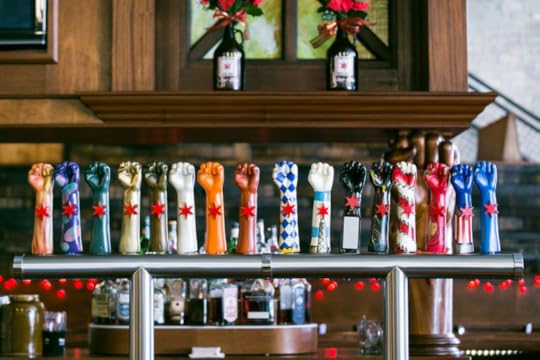
In Chicago, the Blue Line of the city’s vaunted L system happens to run right from O’Hare Airport into downtown—and past roughly 10 breweries and brewpubs. That includes Revolution Brewing, which opened near the Blue Line’s California stop in 2010 (the company opened a second location near the line’s Belmont stop two years later).
“Nelson Algren called the L Chicago’s ‘rusty iron heart’ because it forms the arteries that connect the city’s people and neighborhoods,” says Josh Deth, Revolution’s founder, referring to the 20th-century novelist. “I got an urban planning degree with a focus on transportation, so forgive me if I get a bit romantic here.”
The Benefits of Building Near Public Transit
Romance or not, that utilitarianism benefits breweries and even draws them close to public transit in the first place.
“We definitely searched out a space and weighed its proximity to public transit in choosing the location,” says Laura Dierks, co-founder of Brooklyn’s Interboro Spirits & Ales, which is less than one-third of a mile from New York City’s L train connecting Manhattan and Brooklyn. “It was part of our decision-making in locating the business from the beginning.”
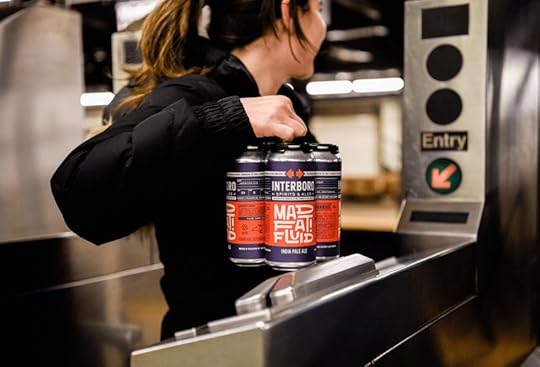
Fellow Brooklyn operation Other Half Brewing saw things the same way in its 2014 opening near the F and G lines. “We felt lucky that we found a space—really, a garage—that suited our needs and also happened to be on the edge of a great neighborhood, near a subway stop,” says Andrew Burman, co-founder of Other Half. “The reality is, in New York, location is key. Easy access to public transportation can mean a lot for a new business.”
The biggest reason is obvious, given the intoxicating core product of breweries and brewpubs.
“Especially when people are enjoying some fine craft brews, it’s great to have public transit around the corner so they don’t have to drive home,” says Revolution’s Deth.
The proximity can also have fringe benefits, brewery principals say, including lower-cost transportation for brewery staff and advertising opportunities onboard the transit itself (though some systems, including the nation’s largest in New York, forbid alcohol ads).
Perhaps the biggest benefit besides a safe, cheap way home after drinking is what public transportation can bring to a neighborhood. Triple C’s Harker noticed it in his South End surroundings in Charlotte.
Too-quiet streets and empty buildings, including the 20,000-square-foot, high-ceilinged building that Triple C eventually opened in, pocked its future neighborhood. The 4-year-old New Bern light-rail stop offered promise, though, Harker says. And now the brewery-plus-taproom is part of a more vibrant enclave with fresh condos and apartments. Hyde Brewing recently opened across the street from the brewery, and Triple C opened its own new event space next door as well.
“So we get a lot of walk-ins and repeat taproom business from people just because it’s easy for them to come see us,” says Harker.
Public transit stops not only facilitate such activity, but also sustain it once it’s there—sometimes for decades, in the case of the nation’s older systems. The L line in New York City, for instance, dates from the early 1920s, Chicago’s Blue Line from the early 1950s. They were in place long before the current brewing renaissance kicked off in the late 1970s, ready and waiting to help spirit it along.
And they might yet outlive their usefulness to it.
The Rise of Ride-Hailing Apps
Public transportation ridership nationwide spiked to 10.8 billion rides in 2014, the highest ridership in 58 years, according to the American Public Transportation Association, an advocacy nonprofit. In 2015, systems in Chicago and Boston recorded their highest ridership figures ever (the Chicago milestone was for trains alone). The same year, 1.76 billion people rode New York’s system—including a single-day record of 6.2 million straphangers on Oct. 29, 2015.
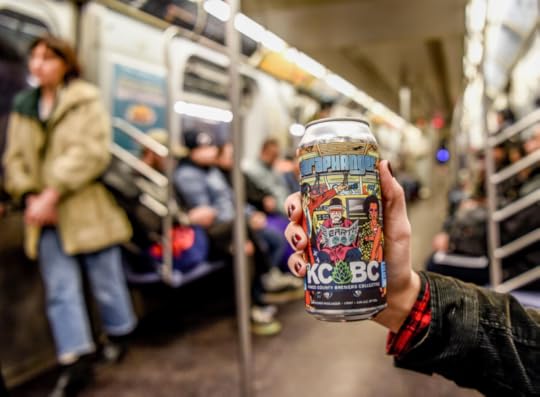
These mid-decade figures, however, might have represented a high-water mark for public transit. Figures from 2016 and 2017 show steep declines in some cases. In Charlotte, bus ridership was down 15 percent for the three years that ended in mid-2017. In Los Angeles, overall ridership was down about 19 percent over a similar period.
Part of the drop is due to aging or inadequate infrastructure. The tracks, tunnels, vehicles, fare machines and other systems simply aren’t up to the task of moving so many millions daily, and that fact manifests itself in delays, re-routings, and even accidents. New York officials, for instance, plan to close the tunnel that carries the L between Manhattan and Brooklyn for 18 months beginning in 2019. It needed repairs before Hurricane Sandy damaged it in October 2012, and now the need is particularly urgent.
Then there’s Uber and its ilk. The rapid rise of ride-hailing apps—Uber launched in 2009, and archrival Lyft in 2012, both initially in San Francisco—has upended the taxi industry. It has also, to a lesser extent, started to eat into public transit with sometimes-competitive fares and typical door-to-door service.
A survey of app users in seven major U.S. metro areas that University of California-Davis researchers administered showed that Uber et al have led to a 6 percent decline in bus use and a 3 percent decline in light rail use among those who have used the apps. The survey’s results, released in 2017, also showed that avoiding driving drunk was the second-most-cited reason for using the apps, right behind avoiding parking headaches.
For now, though, the symbiosis continues. The number of breweries in the U.S. continues to climb, with many opening in cities with already widespread transit systems, or ones that are on the fast train there. New York City has 30 breweries and brewpubs, according to the Brewers Association, and Chicago has 47.
Breweries continue to open near the LYNX light rail in Charlotte’s South End neighborhood, and a new extension will see it head north through the city’s North Davidson and University areas.
Existing breweries in its path stand to benefit, and new ones may spring up as a result. For Harker, there’s little doubt the light rail played a part in his brewery’s success over the years.
“Had it not been for the light rail,” says Harker, “it would’ve been a pretty sketchy proposition to do something here.”
This article originally appeared in All About Beer . Pictured at top: Chris Harker, founder of Triple C Brewing Co., wheels a keg of Light Rail Pale Ale along Charlotte’s LYNX light rail. (Photo by Justin Engel)
June 20, 2018
BEER’S PLACE AT THE TABLE
Shortly after he arrived on the Hyde Park, New York, campus of the Culinary Institute of America in 2004, Jared Rouben noticed something. Aside from a half-day during the esteemed trade school’s wine curriculum—and any beer-related publication that might be found at the library—students received no instruction in beer or the role it played in the culinary world.
The dearth gave Rouben, then 22, an idea.
“If this was the top culinary school in the country,” recalls Rouben, “then we needed a resource to learn about beer.”
So he started the Culinary Institute of America Brew Club, an informal conclave that endures to this day. The group tasted beers and hosted presentations from representatives of breweries such as Magic Hat, Dogfish Head and Boston Beer. Perhaps most importantly, club members used beers from these and other breweries to cook and to bake.
“What started out as a club of about 25 quickly grew into like 150 or 200,” says Rouben, now the brewmaster at Chicago’s Moody Tongue Brewing Co. and a faculty member at the Siebel Institute. “It’s inquisitive minds—I think that with cooks and chefs, they want to learn how to create with their hands. Whether it’s a foie gras or a beef tenderloin or an IPA, you’re still building with your hands and creating something that satisfies the palate.”
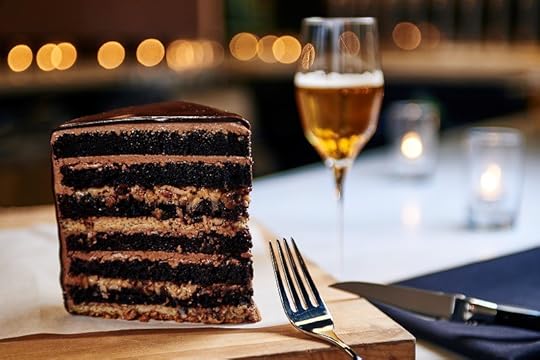
Rouben’s establishment of the Brew Club nearly 15 years ago would prove a prescient move. It was an early example of a gathering trend: The marriage of the culinary arts and fine dining with beer, including how to cook with it and to pair it with different dishes.
That trend can’t seem to shake a certain shadow, though, one that also looms from the culinary side: Some chefs and restaurateurs still see beer as an afterthought, meant more for the end of their shift than the front of the house.
“I would say that the angriest critiques I get from people about shows are when I’m drinking whatever convenient cold beer is available in a particular place, and not drinking the best beer out there,” Anthony Bourdain, the chef-turned-TV star, told an interviewer from the travel and entertainment newsletter Thrillist in 2016. “You know, I haven’t made the effort to walk down the street 10 blocks to the microbrewery where they’re making some fucking Mumford and Sons IPA.”
[Editor’s Note: Anthony Bourdain killed himself on June 8, 2018, while on location for his show in Strasbourg, France.]
Two years before, David Chang, best known for his Momofuku restaurants and award-winning but now defunct Lucky Peach magazine, wrote an essay for GQ in which he, like Bourdain, savaged not only beer beyond a certain species of light lager—Chang pronounced himself a Bud Light partisan—but fans of anything else.
“I have a tenuous relationship with the epicurean snob sets […] Beer snobs are the worst of the bunch.”
Such an animus is nothing new, but its persistence is surprising and maybe a little frustrating for the already converted.
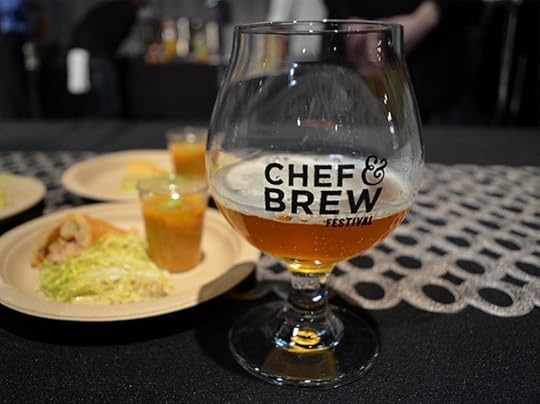
(Photo courtesy the Chef and Brew Festival)
Michael Long, a Culinary Institute of America-trained chef, sommelier and restaurateur, cofounded Chef & Brew festival in 2012 in Denver. The seventh annual one is scheduled for late August 2018, and will pair 23 brewers and 23 chefs to concoct dishes and pairings, and to compete for prizes. The fest grew from an epiphany in 2011.
“At that time,” Long says, “even though Denver was ground zero along with perhaps Portland for the craft beer movement, the perception at that time—and it still holds to a large extent outside of metropolitan areas—was that beer is for bar food. It goes with pizza and brats and soft pretzels and shepherd’s pie.”
Beer Culture and Cachet
On the week before Thanksgiving 35 years ago, the English critic Michael Jackson lamented “a snobbism” toward beer “which is particularly American.” Jackson didn’t mean that Americans looked down on beer. They didn’t look up to it, either—there were few commercial options then beyond Bud Light and similar ilk.
Instead, he meant that whatever vestiges of a beer culture that remained in the United States 50 years after Prohibition had largely petered out. In northern Europe, the Dutch, the English and others preferred beer because the climate was more conducive to grain production, Jackson wrote; in southern Europe, it was wine because of the grapes.
In the U.S., any such nuance had been lost—the Yanks drank uniformly thinner beers chilled to “American popsicle level” wherever they lived in the empire. Meanwhile, wine in the U.S. around the same time was flowering in ways unforeseen a generation before.
Seismic events such as the so-called Judgment of Paris, a 1976 blind tasting that saw California wines best ones from traditional leader France, and the opening of the nation’s initial wine bars (the first was in San Francisco in 1974) as well as the launch of publications such as Wine Spectator, Wine Advocate, Wine Enthusiast and Food & Wine throughout the late 1970s helped wine ascend to a level of perceived sophistication few consumer products had ever enjoyed.
That perception seeped into the culinary arts. Julia Child sipped wine on national television while prepping French dishes. Ronald Reagan retained the services of his Sacramento wine merchant from his days as California governor while entertaining in the White House. The old Four Seasons restaurant in Manhattan hosted a carefully catered dinner for the wine industry and its critics that would dictate many of the year’s trends.

Lucy Saunders
There was nothing like this for beer, no scrupulous pairings at famous restaurants—never mind the White House—no presence on television beside serious cuisine. Beer—bereft of culture and, some would say, taste a generation ago—didn’t stand a chance against this assault of oenophilia.
“I think there’s an undeniable cachet about wine and its packaging and its presentation at the table,” says Lucy Saunders, a writer who has been covering the intersection of beer and food since the late 1980s.
To satisfy demand for this cachet, culinary schools developed curricula covering the nuances of wine. Wine critics and other writers lectured on pairing for hospitality professionals and ordering for consumers—and some made serious money doing so. Robert Parker, a lawyer turned critic, would sell his Wine Advocate, developed on a shoestring out of his suburban Baltimore living room, for $10 million.
If beer was included in this training for chefs and other food professionals, as in the case of the Culinary Institute of America, it was usually included as an afterthought—at least early on. That would change as the number of U.S. breweries ballooned in the 1990s and 2000s, and the variety of styles, and iterations of styles, blossomed.
Coverage of beer and food increased, too, and training programs for the hospitality industry in general launched, including Siebel’s Doemens (in 2004) and Cicerone (in 2007). Also in 2007, the Brewers Association launched its annual SAVOR beer-and-food-pairing festival.
“It’s risen with the craft beer movement,” says Kevin Appleton, food and beverage program director at Wisconsin’s Madison College. “It’s been going on gradually for the last 20 years.”
The Tipping Point
The tipping point for beer and food, according to Saunders, seemed to arrive as the nation recovered from the Great Recession in the late 2000s. By the time consumers had more money to spend, the table had been set for beer and food, food with beer, etc., through a vast array of brewery and beer options and a flowering of expertise. The public was ready by around 2010, or at least readier than before.
Arlin Smith is another early 2000s Culinary Institute of America graduate, who now co-owns Big Tree Hospitality, the company behind Portland, Maine, eateries such as Eventide Oyster Co. and Hugo’s. He has seen the changes firsthand in how the customers out front and the staff in back approach beer. It’s an afterthought no more.
“I feel like if someone’s going to spend $90 on a tasting menu,” says Smith, “they’re not going to feel that comfortable buying a $4 beer. They’re ready in that moment to experience something different that they didn’t just pick up at the gas station.”
And the holdouts, then? The Anthony Bourdains and the David Changs, who either don’t perceive the shift or do perceive it but don’t care?
“I don’t know, bad habits?” wonders Appleton.
That’s one theory: For some culinary maestros, beer might forever remain an icy-cold, only slightly bitter, invariably bland finish to a long shift in the kitchen.
Then there’s the generational theory. Beer in the U.S. was so long subject to what Michael Jackson described as that “snobbism which is particularly American” that those who grew up around that can’t see past it.
The key part of Chang’s 2014 GQ essay was probably when he wrote about “watching my grandfather mow the lawn on a 90-degree day in Virginia, and, as soon as he finished, he’d ask me to fetch him a can of ice-cold beer. He’d tell me, ‘One day, you’ll understand what it’s like to drink a really cold beer when you’ve earned it.’”
“You can’t undo those kinds of experiences,” says Saunders.
Finally, there is the infancy theory. If the tipping point was the end of the Great Recession a little under 10 years ago, then the prominence of beer in the culinary arts and in fine dining is still a relatively new phenomenon.
Various programs and places turned out sommeliers since at least the 1950s, well before the position gained new stature with the rise of American wine in the late 1970s. Smaller, more esoteric restaurants such as Alice Waters’ Chez Panisse in Berkeley, California, had paired wine and food for years before Food & Wine magazine launched in 1978.
These things take time. Haters aside, beer’s place at the table looks only to grow more conspicuous.
“I think brewers and chefs are more similar than ever,” Rouben says, “and what’s wonderful now that I didn’t see back in 2004 is the communication—brewers working with chefs, and vice versa. I think that now more than ever we’ve broken down the wall between the kitchen and the brewery and just really started to focus more on the flavor, taste and aromatics.”
This story originally appeared in All About Beer. Top photo of Eventide Oyster Co. in Portland, Maine (courtesy Big Tree Hospitality for All About Beer).