Margaret Skea's Blog
July 3, 2024
Stop Press: Amazon surprise deal
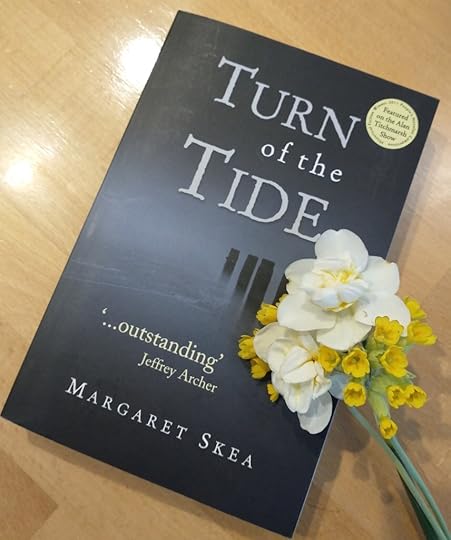
Well this was a surprise – unknown to me Amazon decided to offer Turn of the Tide for a limited time at 99p – so I wanted to share the joy with you! Here’s the link, if you want to grab yourself a bargain,
here’s the link – https://www.amazon.co.uk/Turn-Tide-Ou...
This was my first novel, and for those who may not know, it is the beginning of my Scottish trilogy – a little bit of real life murder and mayhem in a long-running historic feud, with a fictional family (the Munros) trapped in the middle of the opposing clans.
For me it is a looking back, which is appropriate just now as I have been doing a fair bit of that in the last month or so. Here’s a wee flavour of that –
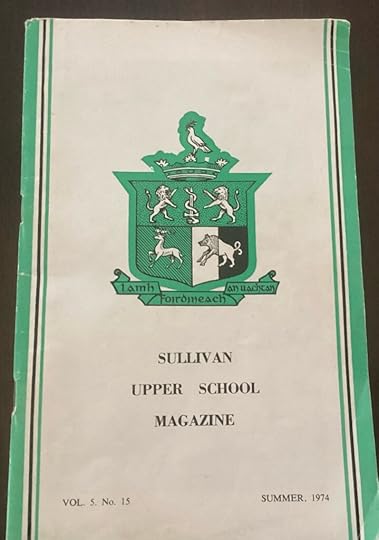
This is the cover of my school magazine from my Upper VI year – and I have a literary contribution in it – I will spare you my teenage angst, but it was interesting to see it again at a significant school reunion I attended recently. When the magazine was first being handed around I wondered why I’d never kept a copy – until re-read my contribution!!
It was a fabulous evening though – re-connecting with old friends and as one person put it – ‘It was amazing how recognisable most folk were – aside from hair colour, or (in the case of most of the men), no hair.’
There are no prizes for guessing which is me in the photo below, but the hair style is not one I’m going to replicate any time soon…
The years just melted away as we answered fairly random quiz questions on our school days – ‘How many people piled onto P H and broke her ribs?/ Name as many teachers and their nicknames as you can / What was the 3rd School rule? / What was played with books and scrunched up paper in the VI th form common room? (Table tennis following the confiscation of the real equipment – actually it worked quite well.)
I have to confess I was part of a group that exploded ink that marred the (brand new) lab 7 ceiling for some 30 years… We sang a new version of the school song – right tune – with much more amusing words, written for the occasion, and generally had a great time.
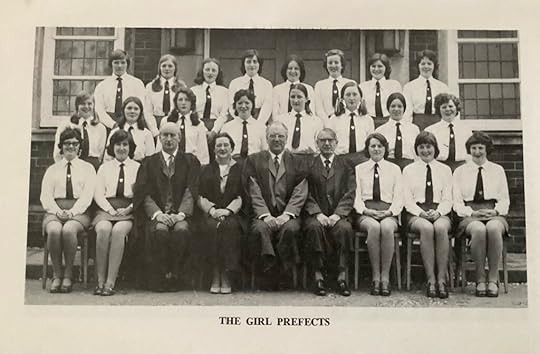
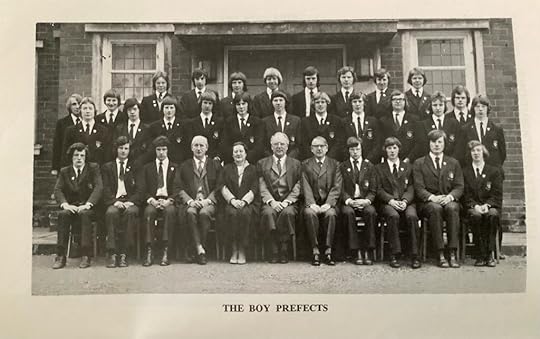
The pictures look like something from the 1970s – and of course they are… but we are already looking forward to our next reunion in 5 years time. (We can’t leave it too long, or half of us mightn’t be around to tell the tale.)
Ballyholme, Northern Ireland.

In another ‘looking back’ while I was over for the reunion, I found that the house I’d grown up in until the age of 12 (the right-hand as you look at it of these semis) had just been sold. In a moment of madness, I went and knocked the door and said I’d grown up there and would really like to see inside. (Ssh, don’t tell my husband, he’d be mortified.) Imagine my embarrassment when the man who opened the door said he’d have to go and ask his mum who was resting in bed… It was too late to backtrack when he returned to say if I’d care to wait until she got dressed she’d be happy to show me round. In the end it was a lovely experience – I was the first person she’d met who’d lived there before and she was really interested to hear stories from my childhood there – how I used to climb on the garage roof to read in peace; how we slid down the stairs on tin trays, until the day my sister overshot and her feet went through the stained glass window at the bottom; how I fell off the pillar at the gate and was impaled on a spike in the chain that hung between the pillars that bordered the garden…
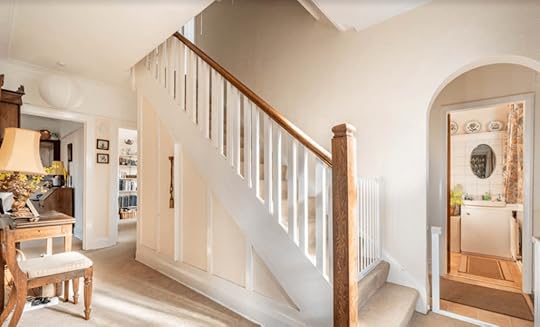

I was fascinated to see the kitchen had the same ‘Hygena’ cupboards from 50 years ago – very retro now, but still in excellent condition, and she was fascinated to learn that the archway between the front and back hall was my mum’s idea. Dad didn’t want to do it, but when he came home from school one day, he found she’d taken a sledgehammer to the wall and knocked a hole in it, meaning it was almost as easy to make the arch as mend the hole. (I think there is a bit of my mum in me!)
All in all it was good fun and if the lady hasn’t moved before I’m next in the area, I’ve even been invited back for tea!
In current news, Douglas Adams style, I am working on Book no 4 of my Scottish trilogy – but don’t hold your breath – it’ll be a while! And restricting my nostalgia trips to re-reading books I loved as a child – imagining myself back on that garage roof.
This month I am also going to be taking a trade stand at various Pop- up markets and agricultural shows so if anyone is nearby, please come and say ‘hello’. They are:
Pop-up Market, Paxton House, Berwickshire – Wednesday 10th July
Newbattle Summer Fair, Newbattle Abbey, Midlothian – Saturday 20th July
Kelso Agricultural Show, Scottish Borders – Friday and Saturday 26th / 27th July
And if you do go and grab yourself a copy of Turn of the Tide – at the bargain price of 99p do please let me know if you’ve enjoyed it – I love feedback. (And a wee review on Amazon would be great – they are so valuable to authors and helpful to other readers.)
Here’s the link again, https://www.amazon.co.uk/Turn-Tide-Ou...
Until next time – take care,
Margaret
The post Stop Press: Amazon surprise deal appeared first on Margaret Skea, Author.


March 22, 2024
Author event – Heron and Willow Bookshop, Jedburgh
Hugely looking forward to chatting to Dean at Heron and Willow Bookshop in Jedburgh on April 25th – the evening event is free, but please book ahead if you can to enable Dean to have an idea of numbers. (A pack-out would be great!!)
I’d love to see anyone who can come.
I will be focusing on the first book in the Munro trilogy – Turn of the Tide
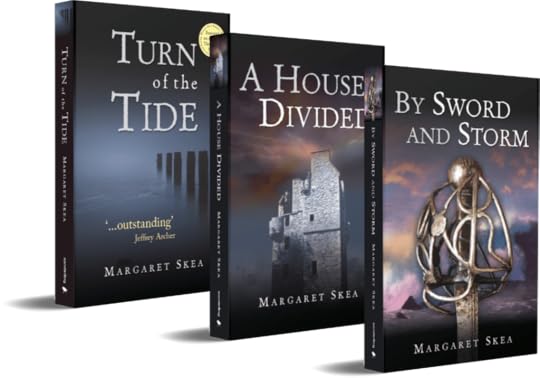 Murder and Mayhem in 16thc Scotland
And the first book in the Katharina series –
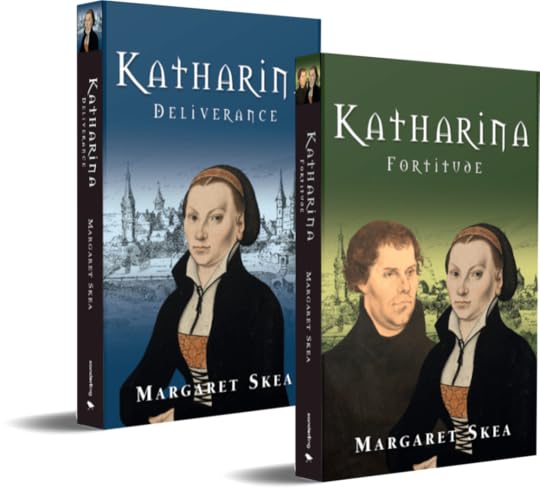 The woman behind the Reformation
Two series, two settings.
Some questions you might like to ask – (and which I will definitely answer!!) ‘Why a recurring focus on conflict?’ Why shadowy figures in history? The ‘how’ of research. Similarities and differences between the series. My favourite characters? And the characters I love to hate?
The post Author event – Heron and Willow Bookshop, Jedburgh appeared first on Margaret Skea, Author.
December 6, 2022
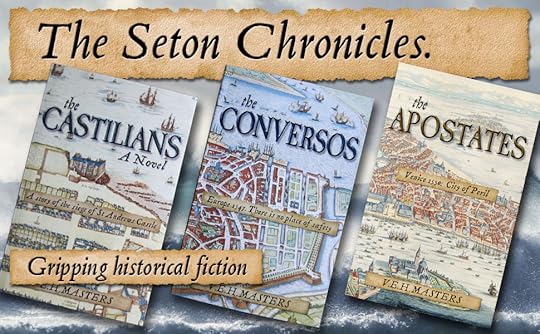
VEH Masters – New release – Apostates
Recently I met up with V E H (Vicki) Masters to chat about her third in series, The Apostates, which has just been released. The story is partly set in Venice and I asked Vicki how she goes about researching the settings for her books and how important she thinks it is to visit the place she’s writing about.
Vicki: How to get a sense of time and place is inevitably something I’ve spent a considerable amount of time puzzling over since my books are set in the mid 1500s. The Apostates is partly set in Venice so I had the perfect excuse to go there, just as travel opened up after lockdown. And Venice, a city without cars, has not changed as dramatically as most places have in the past five hundred years. Visiting the ghetto (the word originated in Venice and referred to the area the Jews were required to live) and especially walking through the gateway which was locked each night to keep them in was very atmospheric. But I already knew all of this before I went and my imagination would have conjured it up based on my research.
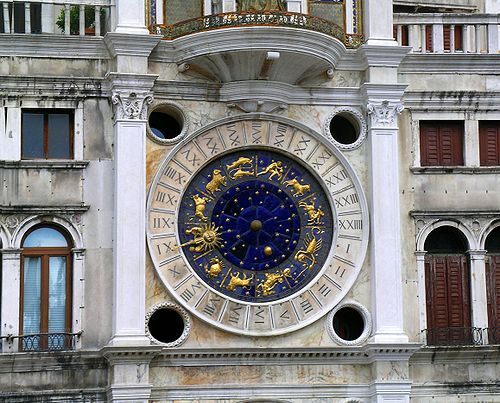 Torre Dell’Orologio
Seeing the Torre dell’Orologio, the amazing clock tower in St Mark’s Square did give me an idea for a plot point – I hadn’t really registered up until then that astrology and the movement of the stars was much studied in the Renaissance.
So yes, it was useful to visit but sometimes too much familiarity with a place can get in the way. For instance my first book, The Castilians, is the story of the siege of St Andrews Castle, Scotland, in 1546. There are a number of buildings in St Andrews still standing from that era, albeit some of them in ruins like the castle and the cathedral, and some, mostly owned by the university, which are still in use like St Salvators and St Mary’s College.
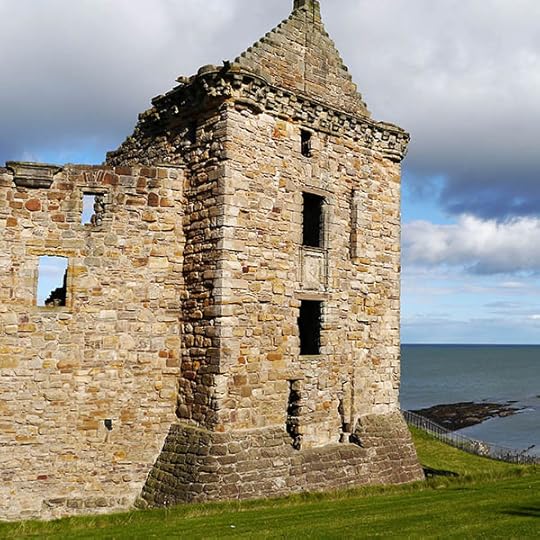 St Andrews Castle Tower
I grew up in St Andrews and feel a visceral connection to its streets and of course I knew all about its weather – the haars that blanket the town in chill mists; the times when the east wind blows straight from Siberia, or so it feels; waves breaking onto the long stretch of the West Sands on a sparkling day. It was easy to portray the setting, almost too easy with a place I was so familiar with for of course it had changed significantly in nearly five hundred years. For instance the harbour then had wooden piers, which were actually longer than the current stone piers (built from the stone of the cathedral destroyed during the Scottish Reformation).
[image error]Because I was writing about my hometown I worried a lot in case I got some historical detail wrong and in some ways my knowledge of the town constricted me as a writer. However I was lucky enough to find a course being run by Dr Bess Rhodes of St Andrews University about the town in the 1500s, and she was kind enough to read my book and join us at its launch, so I’ve relaxed about it more now.
The Conversos is mostly set in Antwerp. It was written during the second year of lockdown and published in November 2021 and there was no possibility of visiting the city. As it happened I had been in Antwerp in 2018 but on business and had no notion then of writing a book set in what was, albeit briefly, the most powerful city in the Western World in 1547. I had a general sense of the place but not much more. Several reviewers asked if I’d been to Antwerp for research, to the point I felt quite defensive. And again I reminded myself I was writing hundreds of years later.
I found the maps of the period (this was the great century of map making and the wealthy displayed maps of their city on their walls) extremely helpful as well as endless articles from JSTOR plus trawling the internet. Wikipedia is very useful for sourcing information since there’s usually a list of academic references at the end of any entry. And often there are accounts or diaries people have kept. In The Conversos one of my characters is enslaved on a galley. I found a heart wrenching memoir about life as a galley slave by a French Protestant, written in 1713 but somehow I doubted things would have changed much, and then another booklet with stunning drawings of the different types of Renaissance galleys – apparently the Ottoman Empire didn’t use slaves on their galley as they found free men worked better, and harder.
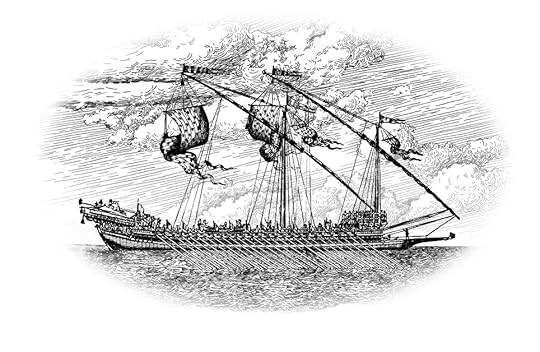 16th century Galley
Each place I’m writing about is very different and conveying the richness of setting and the world inhabited then certainly has me stretched. Three of my characters are Scots and I could sense how stunned they’d be to come from the relatively small confines of St Andrews, albeit one of the richest cities in Scotland of the time to what was, briefly, the most powerful city in the Western World of the mid 1500s, Antwerp – and then on to Geneva and ultimately Venice.
I think of the famous Dorothy Dunnett writing her Lymond Chronicles and doubt she visited Russia and Istanbul. What I do know is she researched what she wrote to the nth degree. There are even a couple of companion books available detailing her researches and sources. So, yes, in answer to your question, it can be helpful to visit the place you’re writing about (and is probably more essential if you’re writing current fiction), but of far more import is to do the research thoroughly… still my next in series is partly set in Constantinople so I definitely see a visit to Istanbul on the horizon.
Thank you, Vicki – and for those who want to know how readers feel – here is the blurb for Apostates and some reviews:
‘One of those books where you forget you’re reading and feel you’re there.’ Lexie Connygham
It’s 1550 and Bethia has fled Antwerp, with her infant son, before the jaws of the inquisition clamp down, for the family are accused of secret judaising. She believes they’ve evaded capture but her husband, Mainard, unbeknownst to her, is caught, imprisoned and alone.
Reaching Geneva, Bethia hopes for respite from a dangerous journey, but it’s a Protestant city state which tolerates no dissent – and she’s a Catholic. And why has Mainard not come?
Perhaps he’s already reached Venice where Jews can live openly, the Virgin gazes benignly from every corner and difference is tolerated, for the wealthy at least. Yet much is hidden beneath the smooth waters of this perilous city. Must they again flee to survive…
‘A series which never fails to get better and always leaves me wanting more.’ Esther Mendelssohn
On offer until 7 December at 99p/99c
Where to get your copy:
Amazon.co.uk: https://www.amazon.co.uk/Apostates-Enthralling-Historical-BESTSELLING-Castilians/dp/1838251553
Amazon.com: https://www.amazon.com/Apostates-Enthralling-Historical-Fiction-Chronicles-ebook/dp/B0B9LJGKCN
To find out more about V E H Masters and her books please go to:
Website: https://vehmasters.com/
The post VEH Masters – New release – Apostates appeared first on Margaret Skea, Author.
September 8, 2022
Guest Post: Linda Pennell – The Gilded Age
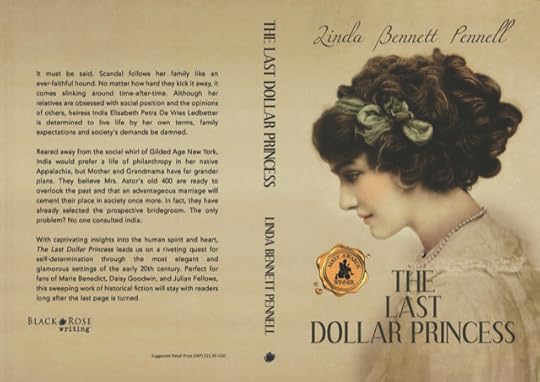
In 2016 Linda Pennell invited me onto her blog when I was launching book two in the Munro trilogy – A House Divided. It seems a lifetime ago now, but at last I am delighted to return the privilege and share this lovely guest post from Linda, explaining why The Gilded Age in America interests her and how she came to write her latest historical novel – The Last Dollar Princess. (What a fabulous cover – the image is so evocative of the age.)
Unless one has been completely out of touch for the last ten plus years, one is surely aware of the PBS series and subsequent feature films written by master storyteller Julian Fellowes. The Downton Abbey story begins in 1912 with the sinking of the Titanic and extends through the late 1920’s. My BA is in US and British history, so I am a true Downton addict. One will recall that Cora, Lady Grantham, was an American heiress who married into the British aristocracy. This love of all things Downton piqued my interest in the entire era, especially in the “brides for sale” aspect that began in earnest around 1865. Between 1865 and 1965, no fewer than 127 American heiresses married British peers. Being an author of historical fiction, I felt compelled to tell the story from the American perspective; and so, the premise for The Last Dollar Princess was born. My story begins in 1910, marked by many sources as the last gasp of the Gilded Age.
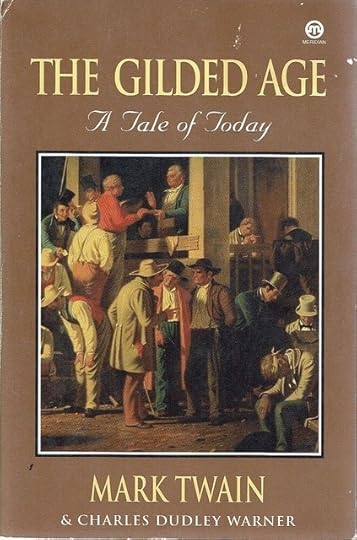
The period between the end of the American Civil War (1861-1865) and the beginning of WWI (1914-1918) is fascinating. It was a time when industrialists, investors, and businessmen accumulated unimaginable wealth, when regulations did not exist and wealth might made right in the political, business, and personal realms. This period of American history was given its name by beloved humorist, Mark Twain and his friend, Charles Dudley Warner, in their co-authored novel, The Gilded Age: A Tale of Today, published in 1873. In it, they satirize the unbridled greed and political corruption of post-Civil War America. One can see similarities in the circumstances that created America’s Gilded Age and the industrial age and expanding empire of Victorian England (reign: 1837-1901).
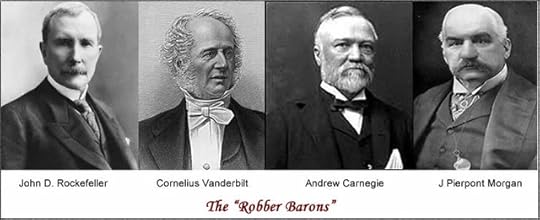
On my blog, History Imagined, I am exploring some of the social and political conditions that characterize the Gilded Age. I am addicted to research, which I enjoy almost as much as writing fiction. I am always on the hunt for those fascinating little footnotes of history that never quite make it into classroom curricula. When I find such nuggets, they are usually incorporated into my fiction or find a place in one of my blog posts. I enjoy sharing items of interest that may not be as well-known as the great figures of the period.
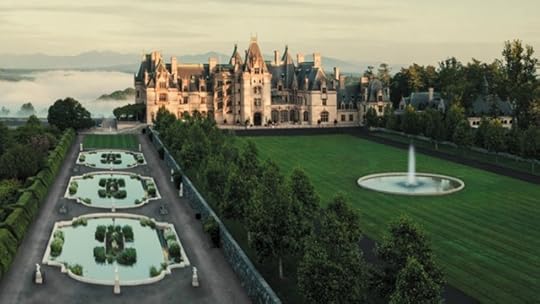
No matter on which side of the Atlantic one found oneself, the 19th century was marked by stark contrasts between astounding wealth and extreme poverty. The vestiges of this American wealth still exist today in places like Newport, New York City, and Asheville. Some of these, like Biltmore Estate (America’s Largest Castle), can be visited for a not insubstantial fee.
In my current offerings on History Imagined, I am exploring the lives of the real dollar princesses and the reasons they sought husbands abroad. Their lives were glamorous, but often filled with unhappiness. India, heroine of The Last Dollar Princess, is a young woman of great wealth, strength, and determination on a quest for independence in the last gasp of the Gilded Age.
The Last Dollar Princess
It must be said. Scandal follows her family like a faithful hound. No matter how hard they kick it away, it comes slinking around to insinuate itself into their lives again. Although her family is obsessed with social position, one thing is certain. Heiress India Elisabeth Petra De Vries Ledbetter is an outlier among her kin. She is determined to set her own course, family expectations and society’s demands be damned.
Reared away from the social whirl of Gilded Age New York, India would prefer a life of philanthropy in her native Appalachia, but Mother and Grandmama have far grander plans. They believe Mrs. Astor’s old 400 are ready to overlook the past and that an advantageous marriage will cement their place in society once more. In fact, they have already selected the prospective bridegroom. The only problem? No one consulted India.
With captivating insights into the human spirit and heart, The Last Dollar Princess leads us on a riveting quest for self-determination through the most elegant and glamorous settings of the early 20th century. Perfect for fans of Marie Benedict, Daisy Goodwin, and Julian Fellows, this sweeping work of historical fiction will stay with readers long after the last page is turned.
The Last Dollar Princess https://www.amazon.com/Last-Dollar-Princess-Independence-Coronation-ebook/dp/B0B2X9ZG4Q
Bio
I have been in love with the past for as long as I can remember. Anything with a history, whether shabby or majestic, recent or ancient, instantly draws me in. I suppose it comes from being part of a large extended family that spanned several generations. Long summer afternoons on my grandmother’s porch or winter evenings gathered around her fireplace were filled with stories both entertaining and poignant. Of course, being set in the American South, those stories were also peopled by some very interesting characters, some of whom have found their way into my work.
As for my venture in writing, it has allowed me to reinvent myself. We humans are truly multifaceted creatures, but we tend to sort and categorize each other into neat, easily understood packages that rarely reveal the whole person. Perhaps you, too, want to step out of the box in which you find yourself. I encourage you to look at the possibilities and imagine. Be filled with childlike wonder in your mental wanderings. Envision what might be, not simply what is. Let us never forget, all good fiction begins when someone says to herself or himself, “Let’s pretend.”
I reside in the Houston area with one sweet husband and one adorable, Labradoodle who is quite certain she’s a little girl.
“History is filled with the sound of silken slippers going downstairs and wooden shoes coming up.” Voltaire
BOOKS:
Women’s Historical Fiction:
The Last Dollar Princess https://www.amazon.com/Last-Dollar-Princess-Independence-Coronation-ebook/dp/B0B2X9ZG4Q
All That Glitters https://www.amazon.com/That-Glitters-Linda-Bennett-Pennell-ebook/dp/B089DLJZZ
Confederado do Norte http://amzn.com/B00LMN5OMI
Dual Timelines Historical Suspense/Women’s Fiction:
Al Capone at the Blanche Hotel http://amzn.to/16qq3k5
Miami Days, Havana Nights https://amazon.com/B07F7NFD8K
Historical Suspense/Romance:
Casablanca: Appointment at Dawn http://amzn.com/B0121Q6S88
When War Came Home http://amzn.com/B010RXNZRO
SOCIAL MEDIA:
Blog: History Imagined: For Readers, Writers, and Lovers of Historical Fiction https://historyimagined.wordpress.com/
Facebook: https://www.facebook.com/AuthorLindaBennettPennell
Website: http://www.lindapennell.com/
Twitter: @LindaPennell
Newsletter Sign Up: http://www.lindapennell.com/newsletter.html
The post Guest Post: Linda Pennell – The Gilded Age appeared first on Margaret Skea, Author.
December 31, 2020
A very personal reflection on 2020
2020
Looking back on 2020 it is tempting to focus on negatives – there have certainly been enough of them, and it’s impossible to minimize the impact of the pandemic. 2020 has been a horrible year for so many people – for those who have had covid; those who have lost family members to the virus; those working on the ‘front line’, who exhaust themselves to look after others; those isolated and lonely; and those fearful of what will come next for their family or their jobs.
But as I began to think about writing this it struck me that for me there is another way to look at the year –
2020 – the year of ‘Just in time’
January – Just in time (1)

5 days before I was due to visit, my lovely dad was ‘called home’ to heaven. It was and is a loss for us, but as a family we are all grateful for God’s timing – sparing him from all the difficulties of Covid and allowing us to have a joyous thanksgiving service with 220+ folk packing the church, as we remembered dad and thanked God for his faith-filled and faith- fuelled life.
February – Just in time (2)
Despite the faint rumblings of a virus in China, a writers’ retreat week I
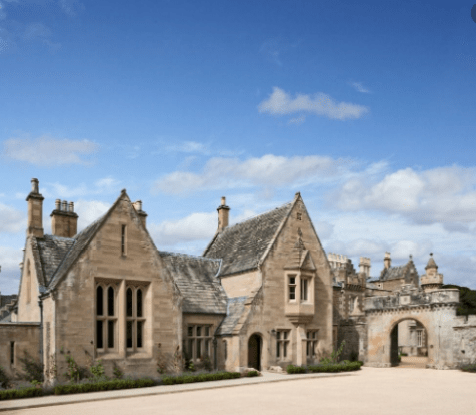
organised at Abbotsford (the home of Walter Scott) was wonderful. Good food, good company, lovely accommodation, and so conducive to work that I managed to both start and finish all the paper and computer-based research for a new novel (now sadly stalled due to inability to do ‘on location’ research). There were just seven of us – including Alanna Knight – who, at 97, was the life and soul of the party (slightly eclipsed on one evening by a visit from Sit Walter himself). You may have seen her recent obituary in the Guardian. I had the choice of a February week and a March week – boy was I glad I’d plumped for February. A bit of a gamble weather-wise – and we did have snow – but as it turned out, our last hurrah before lockdown.
Also in February Just in time (3) London Book Fair was cancelled only 2 weeks before it was due to take place – despite disappointment, most folk realised it would have been the worst kind of madness to have 25,000 people from all over the world concentrated in one building.

March – Just in time (4)
Our first grand-daughter – Esme Grace Skea – was born on the 10th March and we scooted up to Inverness the next day to see her – she’s beautiful (of course) and with three older brothers who totally dote on her, we almost had to make an appointment to get a cuddle!
We were so glad we’d made it – lots of grandparents haven’t been so fortunate.
April – Just in time (5) A new family had joined our church in December 2019 and though we didn’t realise at the time, it gave the husband time to get to know us all a little, before taking on the essential role of organizing the technical side of running church services on Zoom.
 Dave Gillies
May – Just in time (6) I found a fabulous narrator for my Scottish trilogy and while I couldn’t write anything, I concentrated on proof-listening to the audio files.
June –we found out that our daughter, stuck in a severe lockdown in Kurdistan, and wanting to come home, wasn’t on the Foreign Office list of UK nationals. And Just in time (7) they were able to rectify that and supply her with a ‘letter of request of passage’, so that she could make the four hour journey to the one airport still open for special flights. Just in time (8) a seat became available on an American repatriation flight to Dubai. Two more flights later and we had her at home on Scottish soil.
July – Just in time (9)After a long fallow period following the stalling of my new novel, when I’d begun to despair of knowing what I should write instead, along came a request to talk about a possible commission. Creative non-fiction is a new direction for me – but a challenge is good – right? I hope to start preparing for that in January.
August – Just in time (10) our alterations to make our church building covid secure were finished, just as restrictions eased sufficiently to allow us to recommence services, though with restricted numbers.
And Just in time (11) we managed another quick trip to Inverness before hospitality was shut again.
October – November – we were needed in Inverness, but of course couldn’t stay with our family, but Just in time (12 +13) a friend and then a friend of a friend successively lent us an empty house enabling us to go.
On the 30th December the last Just in time (14) as the AstraZenica (Oxford) vaccine was approved in the UK and will start to be administered next week. Great news, not just for Britain, but also for the world.
And while I don’t look back on my own brush with covid with any pleasure, it’s been helpful to also focus on some of the positives of the year and to look forward to better things for 2021.
Finally, the Bible reminds me that ‘At just the right time, God sent his son’ and in the words of one of my favourite carols:
‘Who would have thought,
One born so small,
Would grow from a child to a king
And become Saviour of all.’
Tidings of ‘comfort and joy’ – exactly what we all need as we leave 2020 behind and look forward with hope for a much better 2021.
The post A very personal reflection on 2020 appeared first on Margaret Skea, Author.
December 15, 2020
Jolabokaflod
Jolabokaflod – translated as ‘Christmas Book Flood’ – the lovely Icelandic tradition of giving books as gifts on Christmas Eve. If I only had an open fire that I could curl up beside it would be my perfect evening…
This December, members of the Historical Writers’ Forum are having their own Jolabokaflod, by offering free or discounted copies of our books.
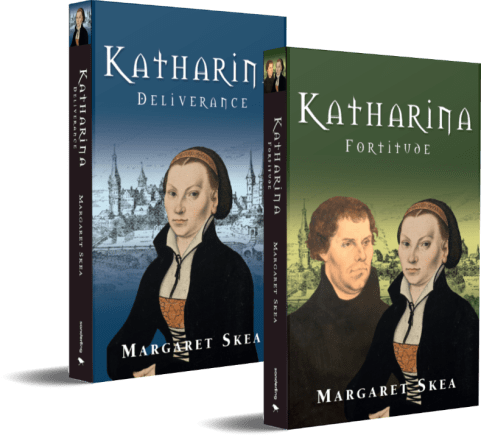
My gift is a copy of Katharina Deliverance (a signed paperback or ebook as desired in the UK; and an ebook elsewhere). To be in with a chance, please comment in the FB page or on my blog. In keeping with Jolabokaflod I shall choose the winners on Christmas Eve.
The early 1500s in Germany was a period of religious and political turmoil, none more so than that sparked by the monk Martin Luther’s challenge to the Catholic church. His writings, smuggled into many convents and monastries, led many monks and nuns to renounce their vows and resume secular lives.
The following extract illustrates the resulting unease in the Marienthron convent at Nimbschen. It is taken from Katharina: Deliverance the first in a two book series chronicling the life of Katharina von Bora, the nun who eventually became Martin Luther’s wife.
January 1521
The year turns, the darkness of December giving way to the brilliance of a landscape cloaked in snow. The hollows on the hill behind us are smoothed out, the river below sluggish, swollen with slush. Wind blows through the valley, piling the snow in drifts, obliterating the track, neither workers nor visitors able to reach us.
Within our walls, ice hangs in long fingers from roofs and windowsills, and crusts the tops of fences. Paths turn to glass and stray stems of plants snap like kindling when trodden on. In the orchard, branches bow under the weight of snow, sweeping the ground, so that we fear for their survival, and the root vegetables we would normally harvest as we needed them are set into ground so hard they are impossible to shift. Outside, the water in the troughs freezes solid, so that fresh supplies from the well must be drawn daily for the animals; and indoors, standing water forms a thick skin overnight. With no prospect of any new supplies arriving, the kitcheness rations what we have, the loaves smaller, the soup thinned.
Trapped inside by the inclemency of the season, the atmosphere in the cloister is as tempestuous as the weather; and with little else to distract, Luther and his writings find their way into every corner, whipping up dissensions, dividing us, it seems irrevocably, into three camps. Those who are in sympathy with what he has said and done; those who are equally vociferous in their condemnation of him, and who cite the hardness of the frost as a sign of God’s displeasure; and those who refuse to be drawn onto one side or the other, insisting that as we are removed from the world, what happens in it has no relevance to us. These last claim the greatest piety, with sanctimonious talk of praying: for us, whom the Devil is winnowing; for the Mother Church which is under attack; and yes, even for that renegade monk, whom God in his mercy may yet lead to recognise the errors of his ways. And saint or apostate, it seems that Luther’s name is mentioned as often between us as Our Lady’s is invoked for our protection.
To enter the giveaway comment here or on the FB page
Here is the full list of the blogs taking part in this event
Dec 3rd Sharon Bennett Connolly
https://historytheinterestingbits.com
Dec 4th Alex Marchant
https://alexmarchantblog.wordpress.com
Dec 5th Cathie Dunn
https://cathiedunn.blogspot.com/
Dec 6th Jennifer C Wilson
https://jennifercwilsonwriter.wordpress.com
Dec 8th Danielle Apple
Dec 9th Angela Rigley
Authory Antics | Angela Rigley (wordpress.com)
Dec 10th Christine Hancock
Byrhtnoth | A boy who became a man. The man who was Byrhtnoth.
Dec 12th Janet Wertman
Dec 13th Vanessa Couchman
https://vanessacouchmanwriter.com/blog
Dec 14th Sue Barnard
https://broad-thoughts-from-a-home.blogspot.co.uk
Dec 15th Wendy J Dunn
Dec 16th Margaret Skea
Dec 17th Nancy Jardine
https://nancyjardine.blogspot.com
Dec 18th Tim Hodkinson
http://timhodkinson.blogspot.com
Dec 19th Salina Baker
Dec 20th Paula Lofting
www.paulaloftinghistoricalnovelist.wordpress.com
Dec 21st Nicky Moxey
Dec 22nd Samantha Wilcoxson
samanthawilcoxson.blogspot.com
Dec 23rd Jen Black
JEN BLACK (jenblackauthor.blogspot.com)
Dec 24th Lynn Bryant
The post Jolabokaflod appeared first on Margaret Skea, Author.
December 12, 2019
Britain’s ‘Little Ice Age’

It’s hardly surprising in the UK that we are notorious for talking about the weather, for it is nothing if not unpredictable. Take the last 2 weeks – where I live in the south of Scotland we have had temperatures ranging from -5 at lunchtime to +11 at eleven pm at night. Which makes the decision of when to change to winter tyres rather difficult, and which is perhaps the reason that the weather is not just the subject of casual conversation, but also of jokes and of picture postcards – I’m sure you’ve all seen the ‘Summer in the… (fill in your own county name) cards – which is of course just a picture of rain…
Recently though ‘weather’ or rather ‘climate’ (for I’ve been reliably informed by those who know that they are two different things) has become a worldwide topic of hot debate, with Greta Thunberg named yesterday as the Times Magazine person of 2019. Programmes abound of ice melting in the Artic and Antarctic and the potentially catastrophic effects that will follow for us all if it cannot be halted.
But melting ice hasn’t always been a problem – quite the reverse. For over 100 years within the late Tudor, Stuart and Georgian periods Britain was in the grip of what became known as the ‘Little Ice Age’ when winters were harsh and long. There is ample evidence, in writing and in pictures, of frost fairs on the Thames – carnivals on ice, the most famous occurring in the winter of 1683 / 84, when even the seas around southern Britain are said to have frozen for up to 2 miles from shore!
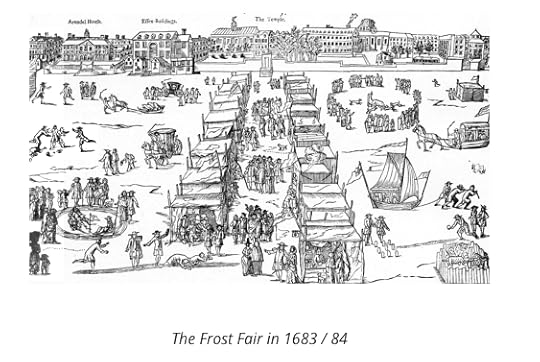
There were temporary booths selling everything from beer to bootlaces, hot food in abundance, entertainments of all kinds and sporting events – bowling matches and horse and coach races, (though quite how the horses managed on the ice I don’t know). Every trade and guild was represented – the city in miniature reproduced on the ice.
The frost fairs spawned souvenirs, which to judge by the advertising copy below, would likely have rivalled the seaside ‘tat’ of our modern era.
‘Here you PRINT your name tho’ cannot write
Cause numbe’d with cold: Tis done with great delight.
And lay it by: That AGES yet to come
May see what THINGS upon the ICE were done.’
‘To the Print-house go,
Where men the art of Printing soon do know,
Where for a Teaster, you may have your name
Printed, hereafter for to show the same’
It is the Thames Frost Fairs that have had all the press, but the ‘Ice Age’ wasn’t confined to the south of England, but to most of the Northern Hemisphere and so in my first Scottish novel I have set a Frost Fair on the Clyde – and what should have been a happy occasion for the Munro family, didn’t go entirely to plan – courtesy of William Cunninghame.
Here’s a wee extract from Turn of the Tide:
December came in hard, heralding a season of frosts that silvered the loch with ice a foot thick, so that Munro fashioned wooden skates for all but Ellie, the blacksmith fitting them with narrow blades. In January, when it was clear that the cold snap would last, frost fairs were held along the upper reaches of the Clyde and it took little persuasion for Munro to fit runners to the cart and take Kate and the two older children.
It was Maggie’s first experience of a winter fair and she hopped up and down on the shore, impatient for Munro to lace her skates. Kate and Munro each took one of her hands and they struck out towards the braziers burning on the ice and bought chestnuts so hot that even with mittens, they had to toss them from hand to hand until they cooled enough to eat. A flesher had set up a spit and was roasting a pig, the fat sparking like a scattering of bawbees. Maggie wrinkled her nose at the smell of mulled wine and roast meat and burning tallow, and wheedled three pennies from Munro to have her name and the date scribed on a card with a drawing of the fair.
Robbie came flying to drag them to see a man who played a whistle and had a monkey who danced and gibbered on the end of a rope. There were tents with ‘fat ladies’ and fortune-tellers and stalls selling simples: aloes, camphor and ginger, punguent salves of egg-white, rose oil and turpentine. One stall-holder brandished a pamphlet hailing tobacco as the cure-all for everything from toothache and bad breath to kidney stones and carbuncles.
Kate dragged Munro away. ‘Don’t even think on it. I have no wish to kiss a chimney, supposing it could do all that is claimed.’
There were entertainers of all kinds: tumblers in rainbow colours, spinning and wheeling like human kaleidoscopes. Jugglers spinning plates on the ends of long poles balanced on their chins. Musicians who scraped and beat and blew, so fine and so fast that those who hadn’t skates hopped and jigged on the ice around them. Best of all, a conjuror: his silver hair corkscrewed around his face, who began his act by plucking a groat from behind Maggie’s ear.
She was entranced: tipped forward onto the toe of her skates, leaning into Kate that she might not lose her balance; as he spun cards into spirals of kings and queens, aces and jokers, hearts and spades and clubs. He made coins appear and disappear from his hands, under pewter tankards, into a tiny, brightly coloured wooden box with a sliding lid. A dove placed in a tall-crowned hat was gone in a puff of smoke, replaced by a multi-coloured streamer yards long. And best of all: the rabbit that hopped from his sleeve. The act was finished, the conjuror bowing and smiling, Munro fishing for a penny for Maggie to drop in the bonnet he shook.
A slow, contemptuous clapping; a voice impossible to mistake. ‘Well, well. Munro . . . and family. This is an unlooked for surprise. Enjoying yourselves? I daresay this is cheap enough entertainment, even for you.’ William’s eyes raked over Kate, lingering on her breast and she tensed, but tilted her chin and returned his stare.
Beside her Munro smouldered, ‘You’re a step from Kilmaurs. Are you likewise straightened, or is it that Glencairn does not countenance the aggravation closer to home?’
‘I play where I choose and tonight I chose here, and might have been the sooner had I anticipated so pleasant company.’
A gust of wind lifted Kate’s hair, whipped her skirt around her legs, and against her will she shivered.
William leaned close. ‘But come, Munro, you do not treat your wife well. A pretty piece deserves to be kept warm . . . I have a horse-blanket that would serve.’
She was rigid with defiance, determined not to rise to his goading. ‘Thank you but no. I am not truly cold, and if I was I have a shawl in the cart I could put to use.’
‘Some mulled wine then? You will not refuse to drink with me?’
‘We would not, but that we have already had our fill and the bairns hope to see the conjuror’s next act.’
‘This fellow? He is scarcely proficient, or not to a discerning audience at least.’
Maggie, who had followed the sense of William’s comment, though not all the words, shot out a foot and caught him on the shin with the blade of her skate. ‘He is clever and magic and . . .’
Kate caught her round the waist, pulled her back, and though she would have dearly liked to kick William herself, reproved her. ‘Maggie! It is not well done. Apologize this instant.’
‘Shan’t.’ Maggie escaped from Kate’s grasp, her eyes fixed on William, hard and bright.
‘Already feisty . . . like mother, like daughter.’ William was rubbing at his leg. Have no fear Kate, I take no account of a child’s pettiness, how ever ill-bred. When she is grown, I shall take an apology then, no doubt the sweeter for the wait.’
Munro thrust Maggie behind him to turn on William, but Kate had beaten him to it, her hand whipping out, the crack as it met his cheek, echoing like a pistol shot. Off-balance he staggered and then Robbie was hammering at him with his fists, Maggie, who had ducked round Munro, kicking furiously at his shins. A small crowd was gathering, the conjuror, with an eye to further profit, offering odds on the bairns. Kate dived for Maggie, Munro for Robbie. William straightened, and then as if suddenly aware of the folk who gawked, that they made of him a laughing stock, ground out, ‘Ill-mannered as well as ill-bred. You would do well Munro to train your children better, or you may live to regret it.’ He spun on his heel and thrust his way through the crowd, daring any to stop him.
The silence lasted only as long as it took for the conjuror to re-start his show for the new audience that the confrontation had drawn. Maggie, no longer fighting Kate, was craning to see, but Munro, recognizing the wisdom of putting as much ground between themselves and William as possible, said, his voice brooking no resistance, ‘Home.’
They found their way to the cart in silence, the children unusually subdued, Munro and Kate, though both occupied with this new danger, neither wishing to air it. On the hill they stopped and turned to take a last look. Maggie, pointing to the moon riding high and full in the sky, whispered,
‘There is a man. I see his face.’
The lights of the lanterns twinkled all along the shore, the flames from the braziers flaring spasmodically, figures like dolls still skating on the ice.
Kate leant back against Munro, risked, ‘If it were not for William, I could have stayed all night.’‘If it were not for William . . .’ it hung between them, the thought of Anna: of what they had lost; the fear for what they still had.
If you have enjoyed this extract the remainder of the story and the two novels that follow it can be found on Amazon on kindle and both online and via UK bookshops in paperbacks (ideal Christmas presents?) https://www.amazon.co.uk/Margaret-Skea/e/B009B9HCUC/ref=dp_byline_cont_ebooks_1
This is part of a series of seasonal blogs – all of which can be enjoyed this month – the dates are below – do visit them all!
[image error]
[image error]
The post Britain’s ‘Little Ice Age’ appeared first on Margaret Skea, Author.
Britain's 'Little Ice Age'
It’s hardly surprising in the UK that we are notorious for talking about the weather, for it is nothing if not unpredictable. Take the last 2 weeks – where I live in the south of Scotland we have had temperatures ranging from -5 at lunchtime to +11 at eleven pm at night. Which makes the decision of when to change to winter tyres rather difficult, and which is perhaps the reason that the weather is not just the subject of casual conversation, but also of jokes and of picture postcards – I’m sure you’ve all seen the ‘Summer in the… (fill in your own county name) cards.
Recently though ‘weather’ or rather ‘climate’ (for I’ve been reliably informed by those who know that they are two different things) has become a worldwide topic of hot debate, with Greta Thunberg named yesterday as the Times Magazine person of 2019. Programmes abound of ice melting in the Artic and Antarctic and the potentially catastrophic effects that will follow for us all if it cannot be halted.
But melting ice hasn’t always been a problem – quite the reverse. For over 100 years within the late Tudor, Stuart and Georgian periods Britain was in the grip of what became known as the ‘Little Ice Age’ when winters were harsh and long. There is ample evidence, in writing and in pictures, of frost fairs on the Thames – carnivals on ice, the most famous occurring in the winter of 1683 / 84, when even the seas around southern Britain are said to have frozen for up to 2 miles from shore!
[image error]
There were temporary booths selling everything from beer to bootlaces, hot food in abundance, entertainments of all kinds and sporting events – bowling matches and horse and coach races, (though quite how the horses managed on the ice I don’t know). Every trade and guild was represented – the city in miniature reproduced on the ice.
The frost fairs spawned souvenirs, which to judge by the advertising copy below, would likely have rivalled the seaside ‘tat’ of our modern era.
‘Here you PRINT your name tho’ cannot write
Cause numbe’d with cold: Tis done with great delight. And lay it by: That AGES yet to come
May see what THINGS upon the ICE were done.’
‘To the Print-house go,
Where men the art of Printing soon do know,
Where for a Teaster, you may have your name
Printed, hereafter for to show the same’
It is the Thames Frost Fairs that have had all the press, but the ‘Ice Age’ wasn’t confined to the south of England, but to most of the Northern Hemisphere and so in my first Scottish novel I have set a Frost Fair on the Clyde – and what should have been a happy occasion for the Munro family, didn’t go entirely to plan – courtesy of William Cunninghame.
Here’s a wee extract from Turn of the Tide:
December came in hard, heralding a season of frosts that silvered the loch with ice a foot thick, so that he fashioned wooden skates for all but Ellie, the blacksmith fitting them with narrow blades. In January, when it was clear that the cold snap would last, frost fairs were held along the upper reaches of the Clyde and it took little persuasion for Munro to fit runners to the cart and take Kate and the two older children.
It was Maggie’s first experience of a winter fair and she hopped up and down on the shore, impatient for Munro to lace her skates. Kate and Munro each took one of her hands and they struck out towards the braziers burning on the ice and bought chestnuts so hot that even with mittens, they had to toss them from hand to hand until they cooled enough to eat. A flesher had set up a spit and was roasting a pig, the fat sparking like a scattering of bawbees. Maggie wrinkled her nose at the smell of mulled wine and roast meat and burning tallow, and wheedled three pennies from Munro to have her name and the date scribed on a card with a drawing of the fair.
Robbie came flying to drag them to see a man who played a whistle and had a monkey who danced and gibbered on the end of a rope. There were tents with ‘fat ladies’ and fortune-tellers and stalls selling simples: aloes, camphor and ginger, punguent salves of egg-white, rose oil and turpentine. One stall-holder brandished a pamphlet hailing tobacco as the cure-all for everything from toothache and bad breath to kidney stones and carbuncles.
Kate dragged Munro away. ‘Don’t even think on it. I have no wish to kiss a chimney, supposing it could do all that is claimed.’
There were entertainers of all kinds: tumblers in rainbow colours, spinning and wheeling like human kaleidoscopes. Jugglers spinning plates on the ends of long poles balanced on their chins. Musicians who scraped and beat and blew, so fine and so fast that those who hadn’t skates hopped and jigged on the ice around them. Best of all, a conjuror: his silver hair corkscrewed around his face, who began his act by plucking a groat from behind Maggie’s ear.
She was entranced: tipped forward onto the toe of her skates, leaning into Kate that she might not lose her balance; as he spun cards into spirals of kings and queens, aces and jokers, hearts and spades and clubs. He made coins appear and disappear from his hands, under pewter tankards, into a tiny, brightly coloured wooden box with a sliding lid. A dove placed in a tall-crowned hat was gone in a puff of smoke, replaced by a multi-coloured streamer yards long. And best of all: the rabbit that hopped from his sleeve. The act was finished, the conjuror bowing and smiling, Munro fishing for a penny for Maggie to drop in the bonnet he shook.
A slow, contemptuous clapping; a voice impossible to mistake. ‘Well, well. Munro . . . and family. This is an unlooked for surprise. Enjoying yourselves? I daresay this is cheap enough entertainment, even for you.’ William’s eyes raked over Kate, lingering on her breast and she tensed, but tilted her chin and returned his stare.
Beside her Munro smouldered, ‘You’re a step from Kilmaurs. Are you likewise straightened, or is it that Glencairn does not countenance the aggravation closer to home?’
‘I play where I choose and tonight I chose here, and might have been the sooner had I anticipated so pleasant company.’
A gust of wind lifted Kate’s hair, whipped her skirt around her legs, and against her will she shivered.
William leaned close. ‘But come, Munro, you do not treat your wife well. A pretty piece deserves to be kept warm . . . I have a horse-blanket that would serve.’
She was rigid with defiance, determined not to rise to his goading. ‘Thank you but no. I am not truly cold, and if I was I have a shawl in the cart I could put to use.’
‘Some mulled wine then? You will not refuse to drink with me?’
‘We would not, but that we have already had our fill and the bairns hope to see the conjuror’s next act.’
‘This fellow? He is scarcely proficient, or not to a discerning audience at least.’
Maggie, who had followed the sense of William’s comment, though not all the words, shot out a foot and caught him on the shin with the blade of her skate. ‘He is clever and magic and . . .’
Kate caught her round the waist, pulled her back, and though she would have dearly liked to kick William herself, reproved her. ‘Maggie! It is not well done. Apologize this instant.’
‘Shan’t.’ Maggie escaped from Kate’s grasp, her eyes fixed on William, hard and bright.
‘Already feisty . . . like mother, like daughter.’ William was rubbing at his leg. Have no fear Kate, I take no account of a child’s pettiness, how ever ill-bred. When she is grown, I shall take an apology then, no doubt the sweeter for the wait.’
Munro thrust Maggie behind him to turn on William, but Kate had beaten him to it, her hand whipping out, the crack as it met his cheek, echoing like a pistol shot. Off-balance he staggered and then Robbie was hammering at him with his fists, Maggie, who had ducked round Munro, kicking furiously at his shins. A small crowd was gathering, the conjuror, with an eye to further profit, offering odds on the bairns. Kate dived for Maggie, Munro for Robbie. William straightened, and then as if suddenly aware of the folk who gawked, that they made of him a laughing stock, ground out, ‘Ill-mannered as well as ill-bred. You would do well Munro to train your children better, or you may live to regret it.’ He spun on his heel and thrust his way through the crowd, daring any to stop him.
The silence lasted only as long as it took for the conjuror to re-start his show for the new audience that the confrontation had drawn. Maggie, no longer fighting Kate, was craning to see, but Munro, recognizing the wisdom of putting as much ground between themselves and William as possible, said, his voice brooking no resistance, ‘Home.’
They found their way to the cart in silence, the children unusually subdued, Munro and Kate, though both occupied with this new danger, neither wishing to air it. On the hill they stopped and turned to take a last look. Maggie, pointing to the moon riding high and full in the sky, whispered,
‘There is a man. I see his face.’
The lights of the lanterns twinkled all along the shore, the flames from the braziers flaring spasmodically, figures like dolls still skating on the ice.
Kate leant back against Munro, risked, ‘If it were not for William, I could have stayed all night.’‘If it were not for William . . .’ it hung between them, the thought of Anna: of what they had lost; the fear for what they still had.
If you have enjoyed this extract the remainder of the story and the two novels that follow it can be found on Amazon on kindle and both online and via UK bookshops in paperbacks (ideal Christmas presents?) https://www.amazon.co.uk/Margaret-Skea/e/B009B9HCUC/ref=dp_byline_cont_ebooks_1
This is part of a series of seasonal blogs – all of which can be enjoyed this month – the dates are below – do visit them all!
[image error]
[image error]
November 17, 2019
Dipping in to Viking era Scotland
Today I’m welcoming a fellow historical author, Jen Black onto the site to highlight her new book set in the 11th century. A wee bit before my period of expertise – so I’m looking forward to extending my knowledge as I read – I hope other folk will too. Those of you who know me know that I have scarcely a romantic bone in my body, so it’s good that there are other authors around to cover my deficiencies! I asked Jen why she chose to set her latest book on a Hebridean island in Scotland?
Over to you, Jen.
[image error]
Hullo – I’m Jen Black and
I’m stealing space on Margaret’s blog today to announce my latest publication ~
VIKING BRIDE. Briefly, it is a historical romance,
but there is action and excitement as well for those who like a little more adventure.
It is set on the Isle of Lewis around AD1040 when MacBeth was High King of Alba and the Vikings were settling down in various parts of Scotland as neighbours and farmers. More facts are emerging about the Vikings in the last few years and though they are no longer seen only as rampaging warriors anxious to lop off heads, they were still a dominant force in any area they chose to settle and very dangerous to those who dared to argue with them. Among themselves, I am sure they were as happy, miserable, compassionate, cruel, cynical, greedy, envious and bloody-minded as people everywhere can be today. All in all, a fascinating people.
Here’s the book’s blurb:
It was a marriage no
one wanted.
Least of all the Borgunna
and Asgeir.
When chieftain Ragnar and his friend Grettir force the marriage on their offspring they had no idea of the powerful feelings they would unleash, nor the dreadful consequences that would follow. Set in the Hebrides in the eleventh century, when Christianity was taking hold in Viking communities as they settled down as farmers and neighbours, the old familiar gods had not quite been forgotten.
If
any of you read Far After Gold then you will recognise
Flane ~ he re-appears in this story as wedding guest and distant cousin of
chieftain Ragnar.
Find it here: https://tinyurl.com/wras6vg
I live in Northumberland,
which nudges the border with Scotland and shares a good deal of its history.
Ullapool is almost as close as London, and most of my holidays have been spent
north of the border, including several in the Hebrides. I bicycled through the
Uists one year, stayed in an old farmhouse in Arnol in another year and various
B&Bs throughout the island later still. Got caught in a rainstorm on a
gorgeous beach opposite Scarp and I can tell you it was a long, wet walk back
to Hushinish!
I can’t say why I’ve always
been interested in Scottish history, except that it began when I was about
twelve with a book about ~ as you might guess ~ Mary Stewart. There is
something in the air and the landscape of the west coast and the islands that
resonates with me. A lady from Scotland turned up in my mother’s family tree
about four generations back, but I really cannot blame it all on her! The land
and the history simply proved more attractive to me than England and all those
kings named Henry.
I have a degree in English
and worked in academic libraries in the north east of England until retirement
a few years ago. That’s when I began writing seriously and there are now twelve
novels with my name on them – all historicals bar one.
[image error] [image error]
I have a Facebook Author page: @JenBlackauthor should find me.
and my books are listed on
Amazon Author Central: https://www.amazon.co.uk/Jen-Black/e/B003BZ8JNQ
My blog is https://jenblackathor.blogspot.com. I would be delighted to see you at
any or all of them!
Thanks, Jen, lovely to have you here and to hear about you new book – Twelve novels – wow! Puts me to shame…
August 23, 2019
That was the week, that was (well, two weeks, actually).
You know the feeling when you decide to do something and you’ve no idea how to do it and it’s probably crazy anyway?
Well, that was my position two weeks ago. I’d entered the newly released Fortitude into the Kindle Storyteller Award in the full knowledge that what I needed was ‘reader engagement’ on Amazon, but not a clue how to achieve it. (Not having a zillion followers on FB or Twitter or any other platform.) And with only a couple of weeks left before the closing date of the competition, things did not look hopeful.
They still don’t as a matter of fact – I’d need oodles of downloads per day from now till the 1st week September to have any chance at all of shooting for the shortlist, but what the last two weeks have shown me is how supportive the historical fiction community is. I have not only been given opportunities to guest post and be interviewed, but folk have squeezed me in at short notice – which is extremely kind of them.
Each focused on a different aspect, but taken together they give a brief overview of how I got from an idea to a finished product.
So here’s some links for your enjoyment – you may just discover some new blogs to follow.
Tony Riches posed questions on my writing routine and on the research for Fortitude.
Sharon Bennett Connolly gave me the chance to talk about how I approached this book and in particular finding a ‘voice’ for Katharina.
Mary Anne Yarde published an extract from the opening of the novel, to give a taster of my writing style.
M.K. Tod asked me about some of the unique challenges posed in writing about an historical character when the concrete information is scanty to say the least.
And there is at least one more interview to come.
All I can say is a huge thank you to each of them.
And a quick reminder to anyone reading this – Fortitude is still available to download at 99p / 99c and to read for free via KU / KOLL – if you haven’t got yours yet, there’s still time. And I only need about another 300 downloads or page read equivalent to stand a chance of the shortlist